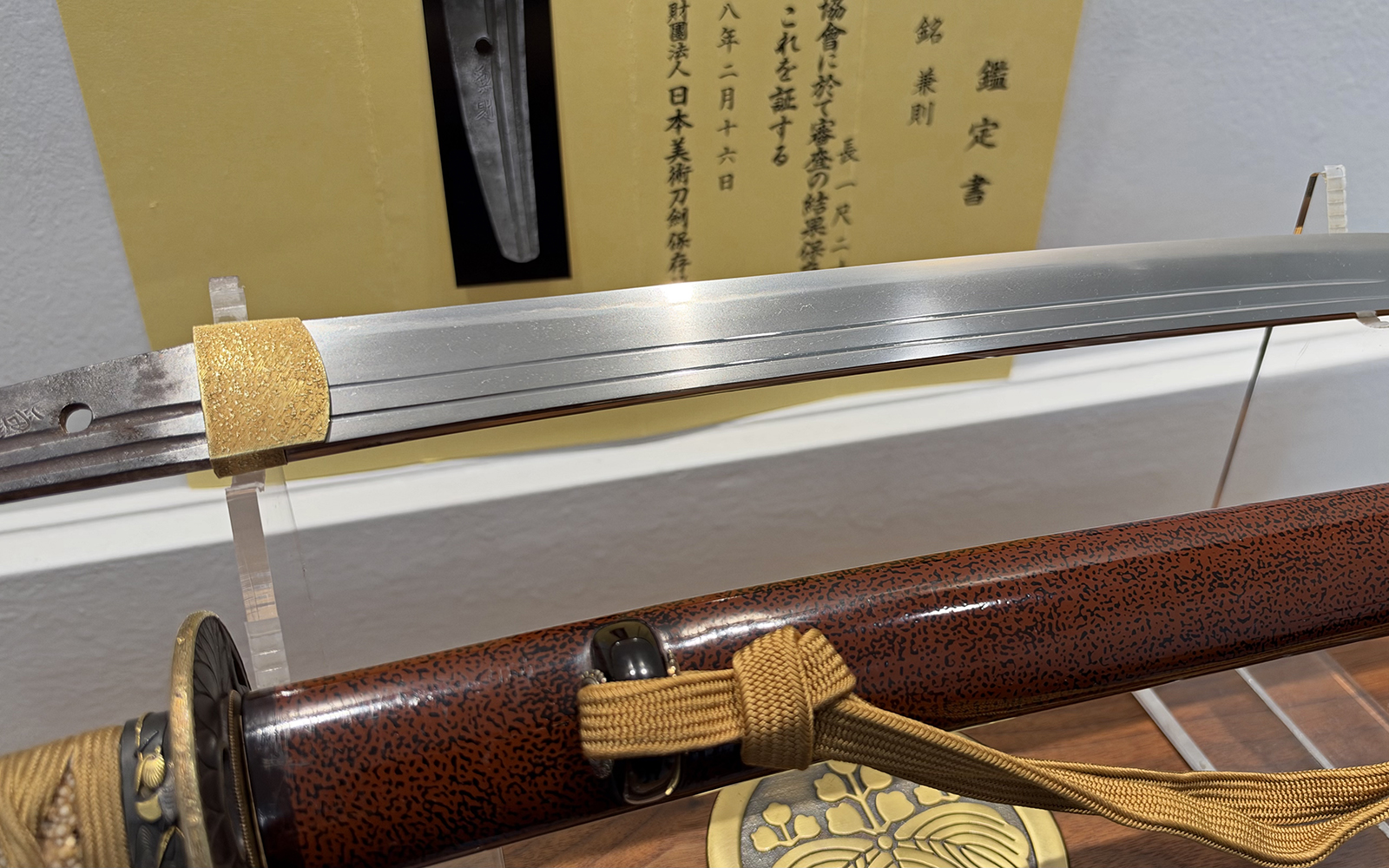
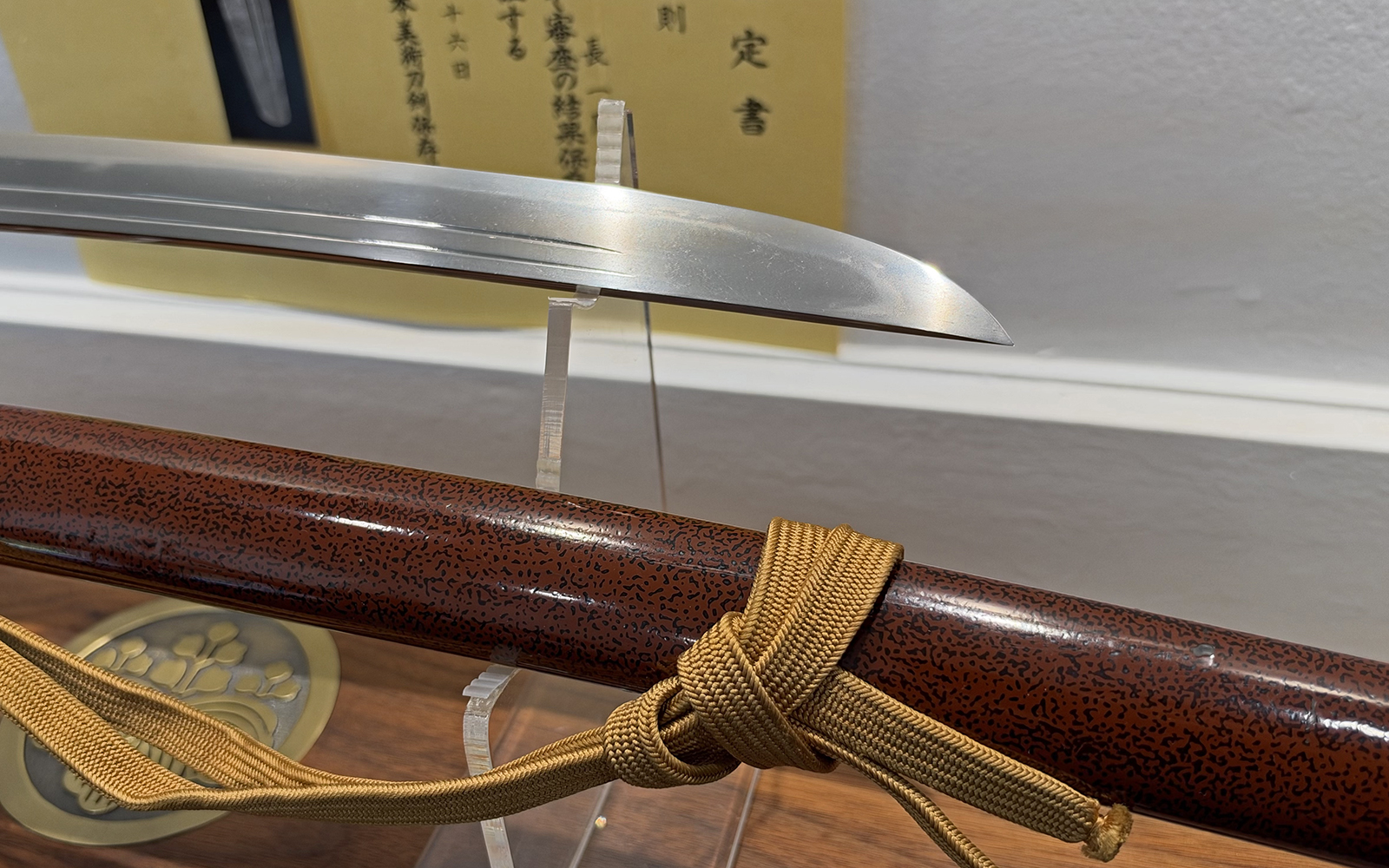
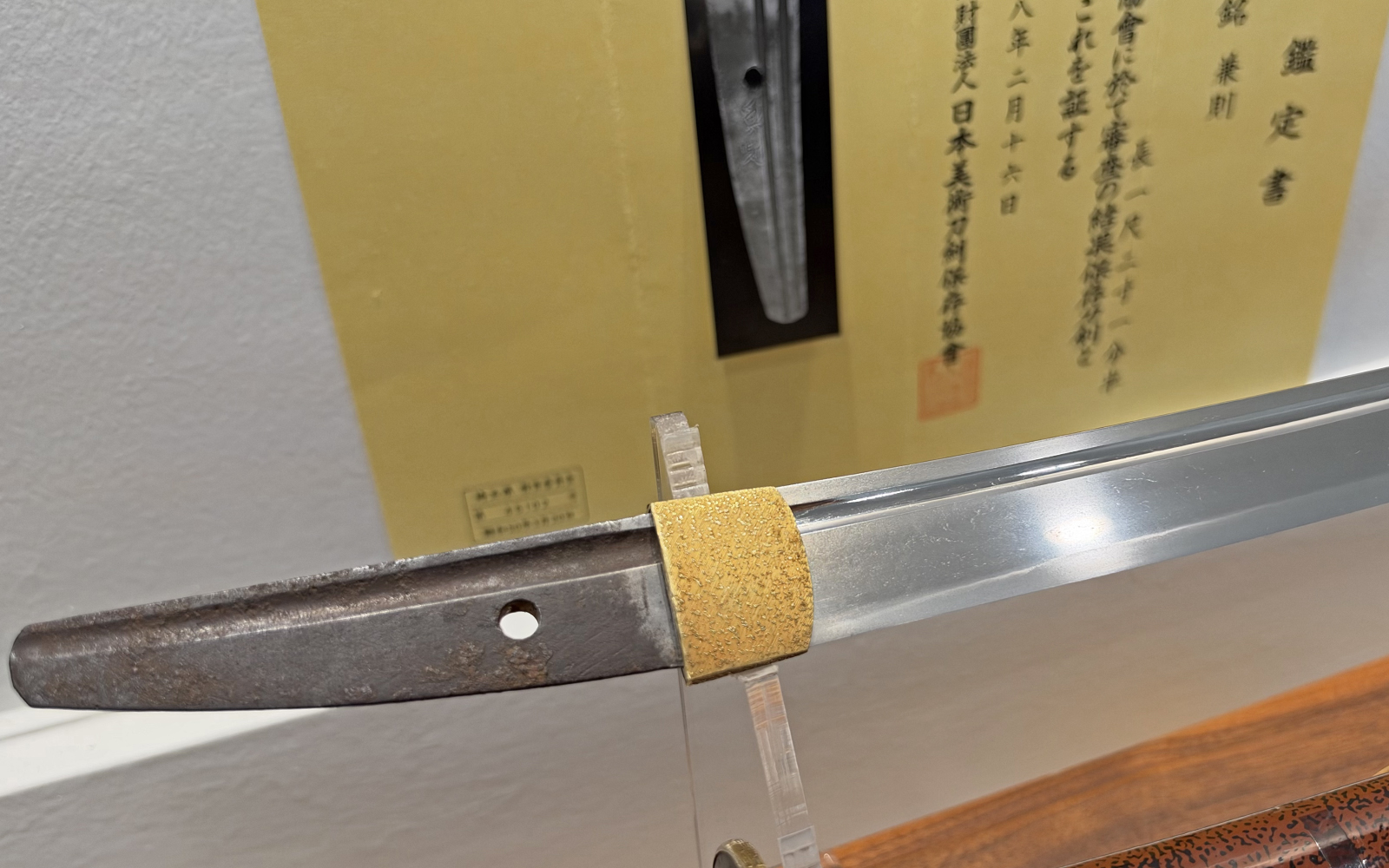
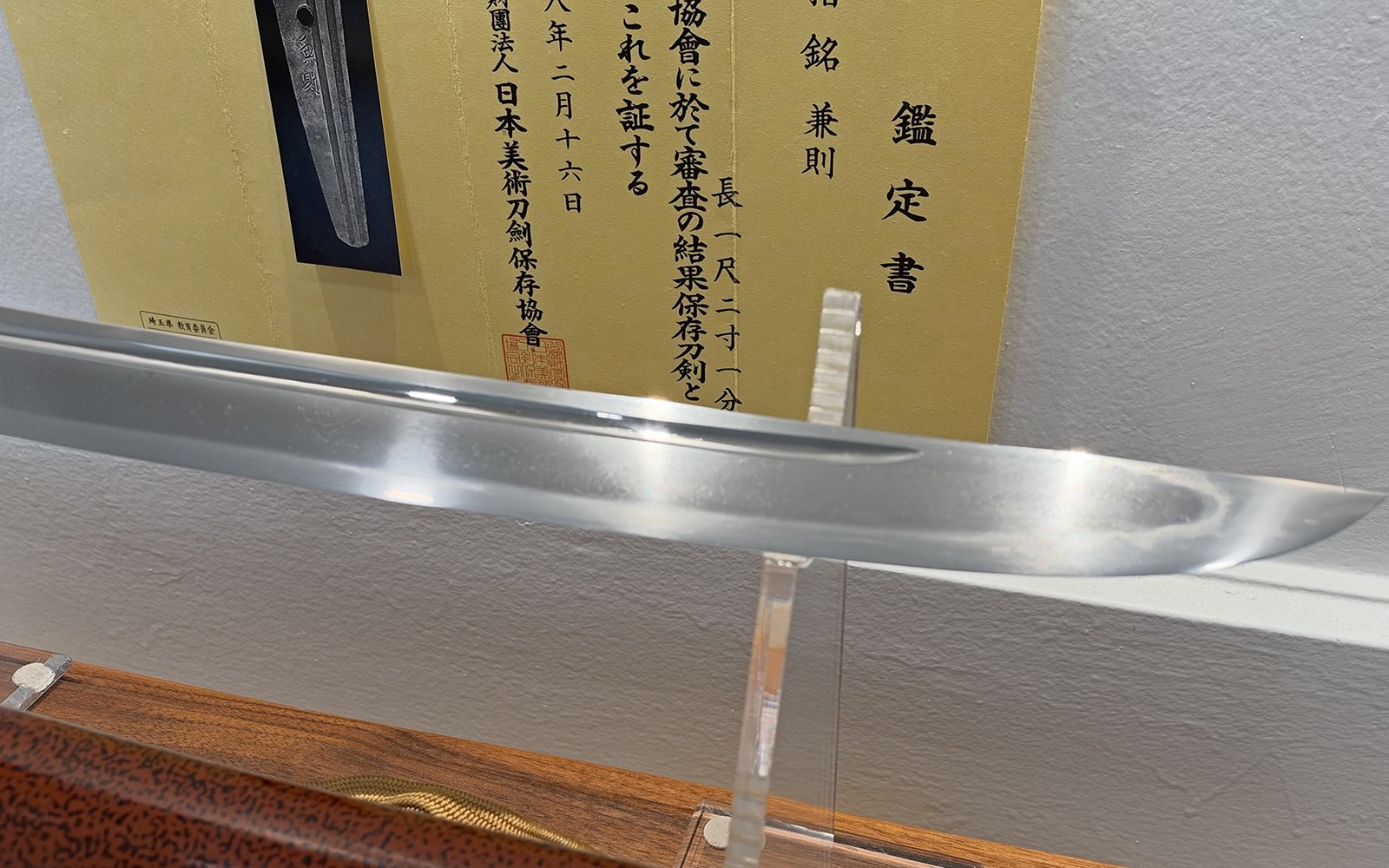
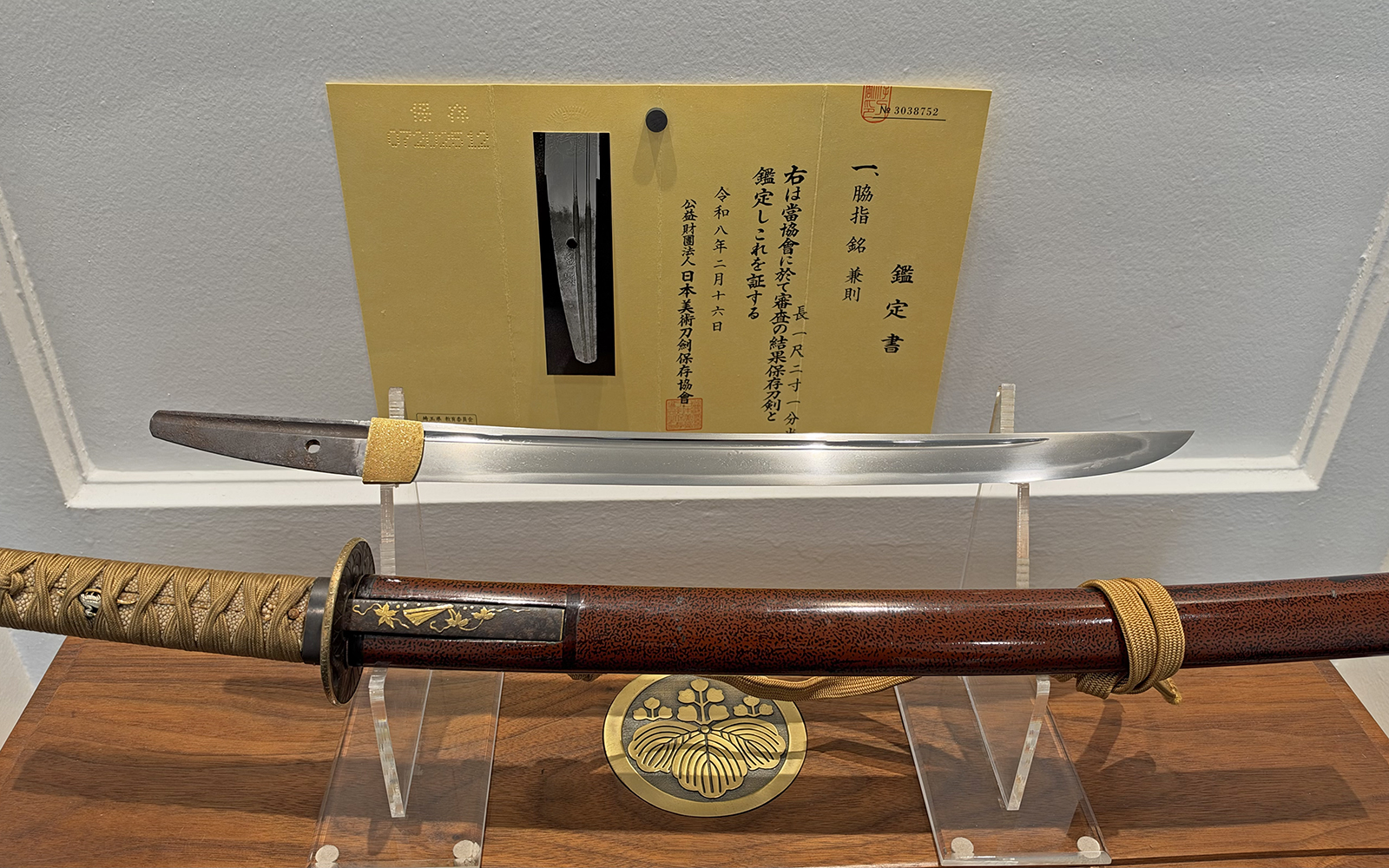
Kanenori was a smith of Seki in Mino Province working in the Tensho era. His one dated blade, designated Juyo at the 17th session, is a katana signed in five large characters with a thick chisel, Noshu ju Kanenori saku, and dated on the ura "an auspicious day in the eighth month of Tensho 7" (1579). A second katana, designated at the 16th session, is signed simply Seki Kanenori in four characters, again with a thick chisel, and the published sources appraise it as most likely the work of the Kanenori of around the Tensho era.
The published sources set him within the meikan's account of the name. According to the reference works, the first Kanenori is placed around Bunki (1501 to 1504) and the third in Tensho, and that line is recorded as later moving to Ichijodani in Echizen. The paper on the dated katana states that the reference works list the Tensho-dated Kanenori as the third generation of Seki Kanenori[[c:1]]. It adds at once that several smiths bore the same name and the matter is not yet clear, and it suggests that this Kanenori may be the one who later moved to Echizen.
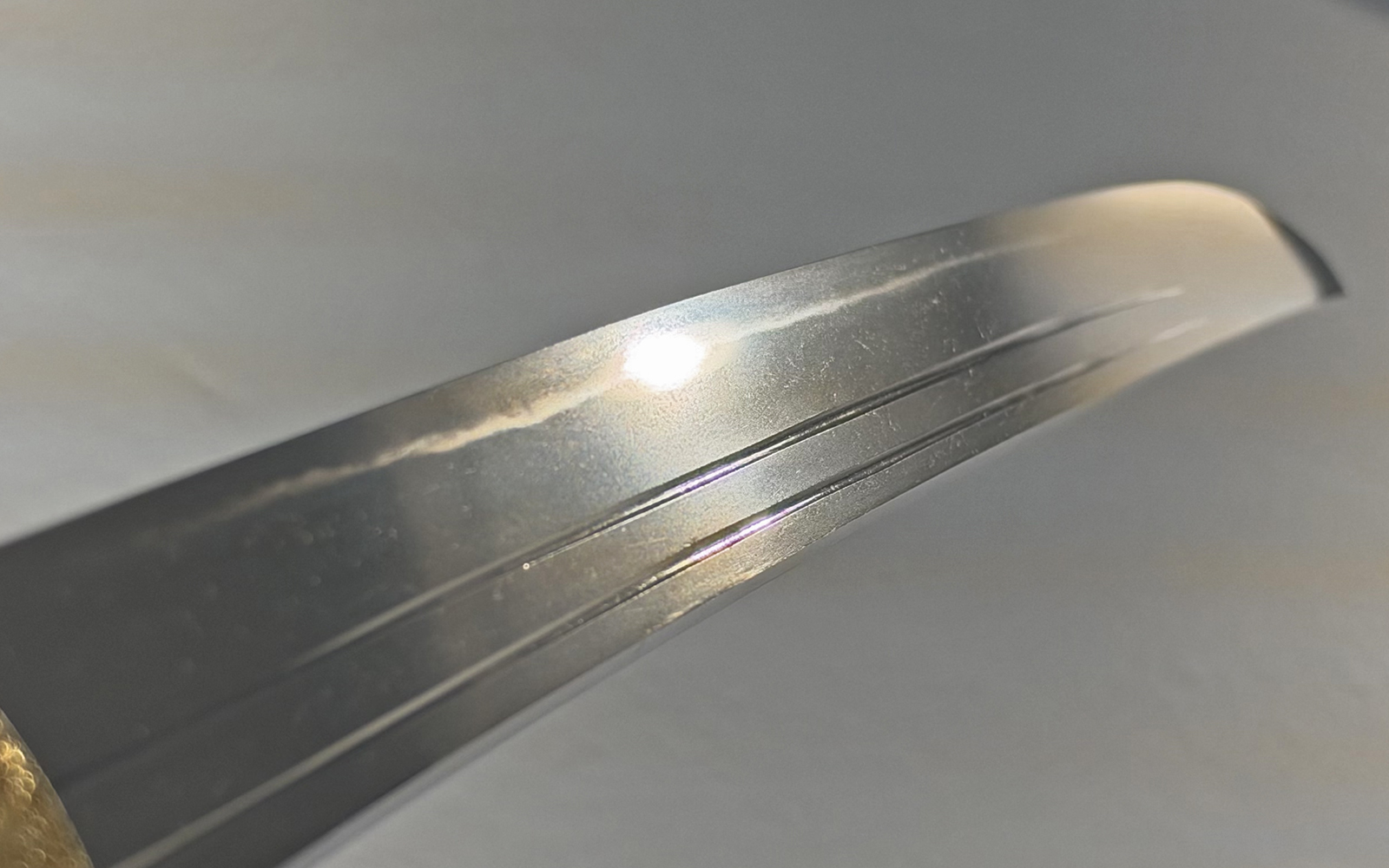
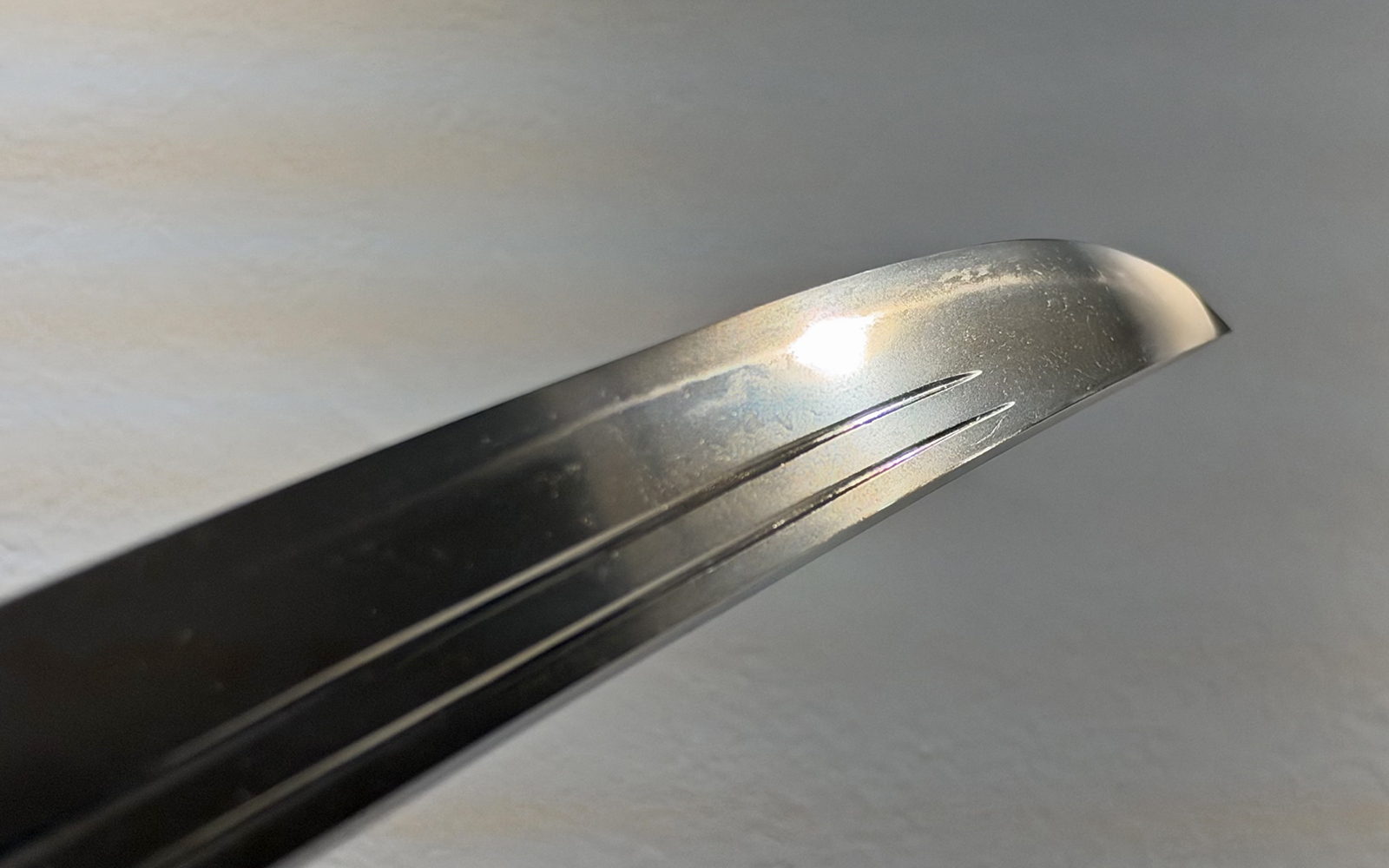
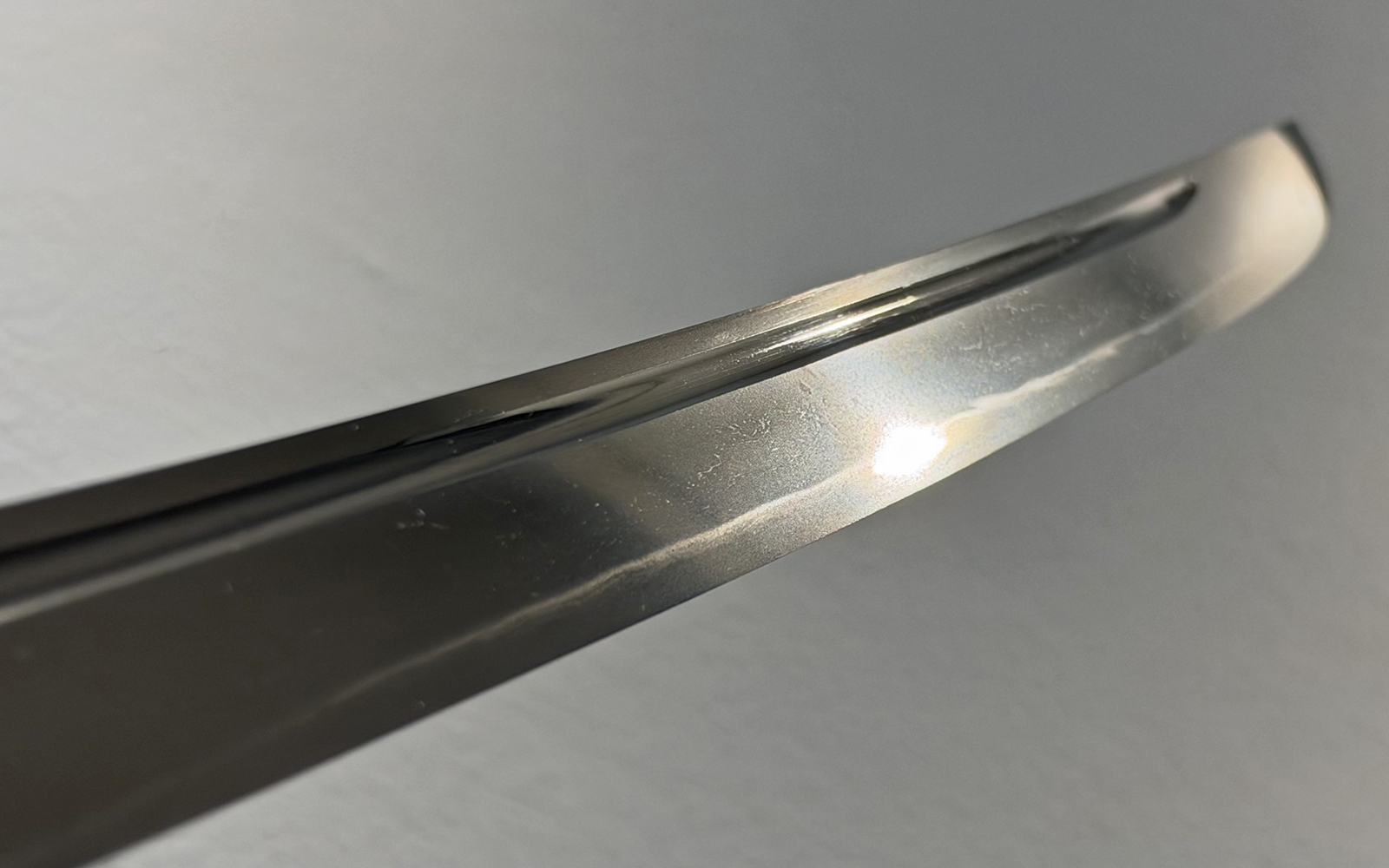
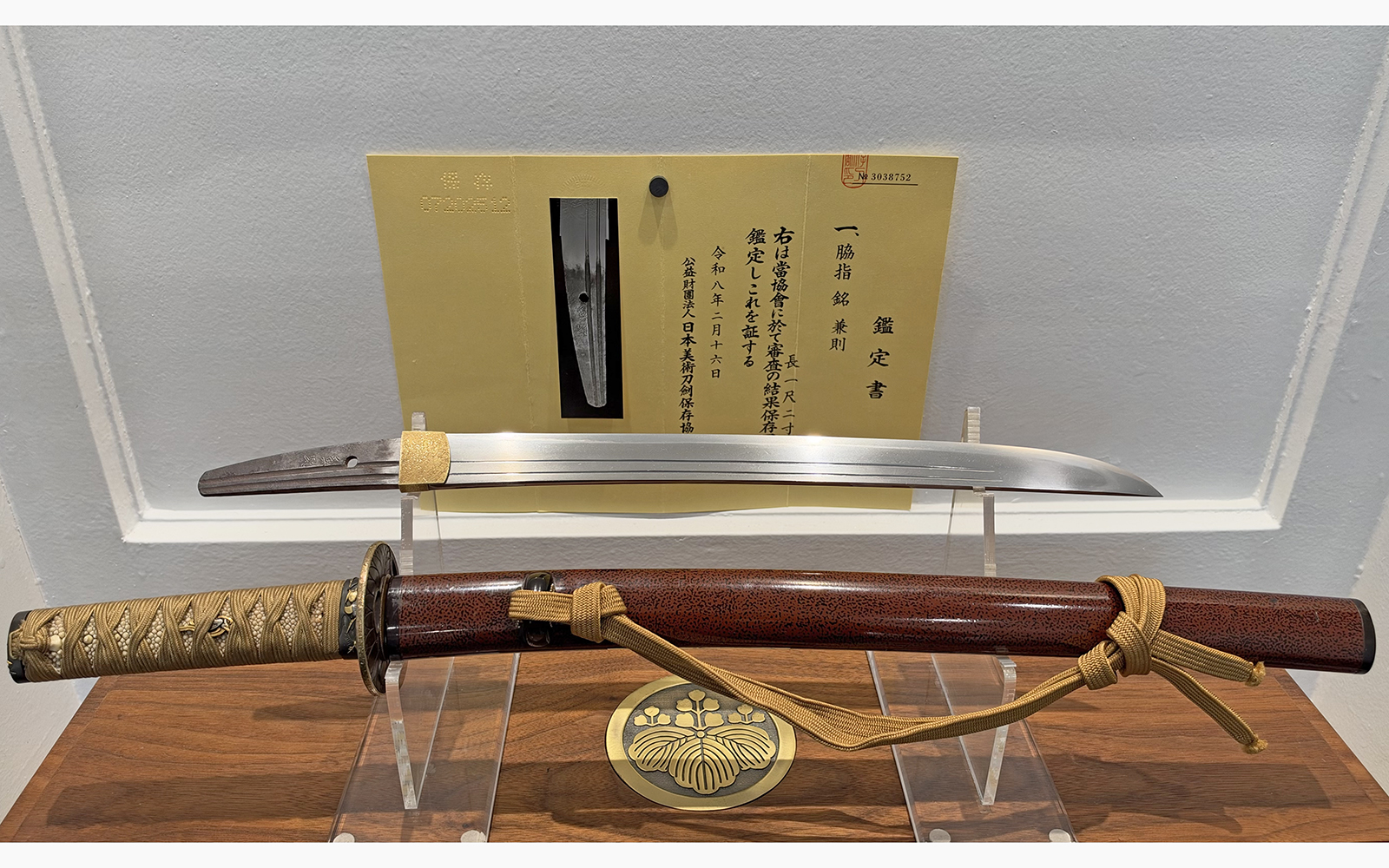
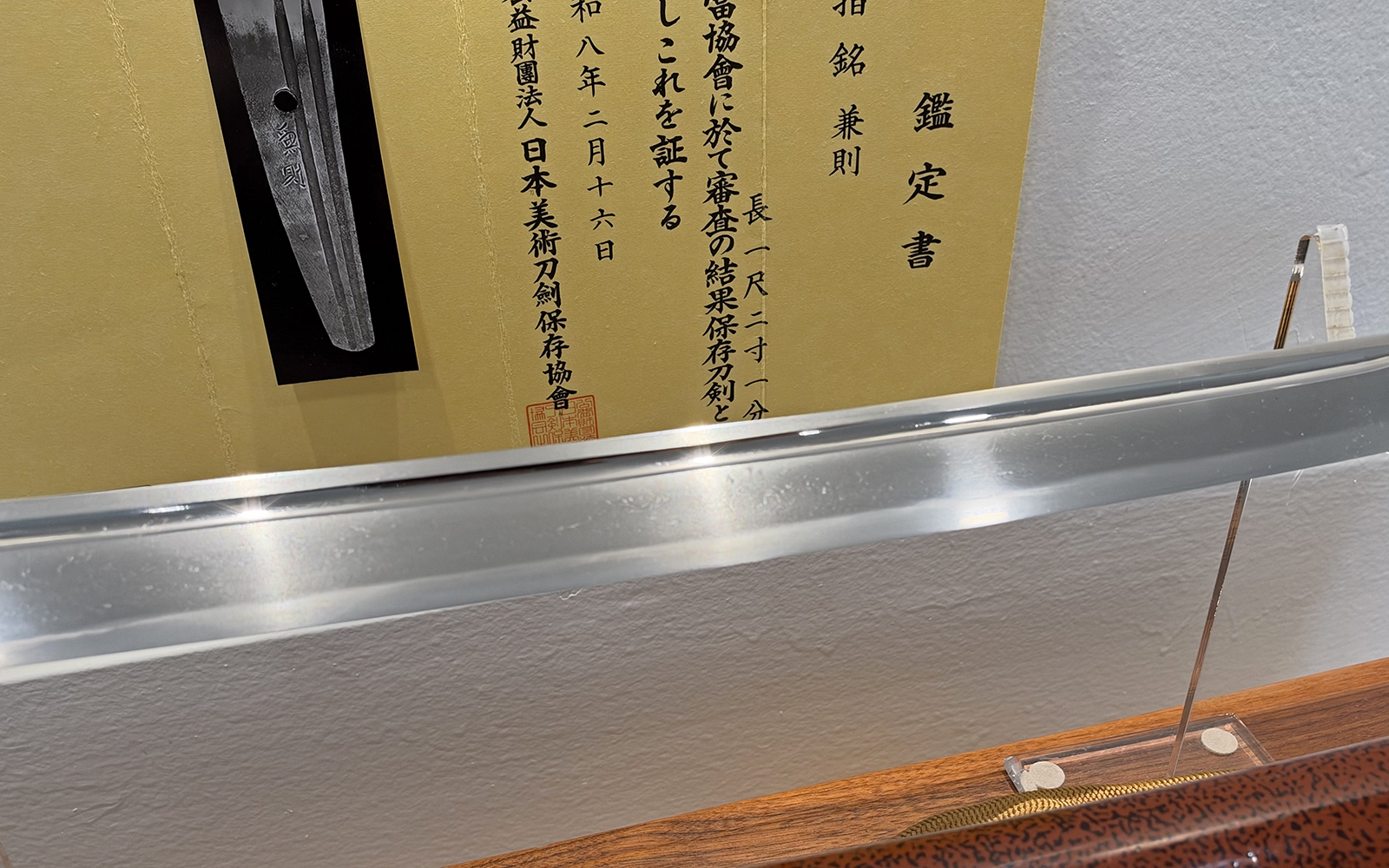
Both blades are wide katana with shallow sakizori, one ending in an extended chu-kissaki, the other in an o-kissaki. The jigane is itame that flows, tending to stand on the dated blade, with ji-nie; on the Seki Kanenori katana the shinogi-ji turns to masame. The hamon is ko-notare mixed with gunome. On the dated blade it has ashi, yo and sunagashi, with ko-nie and a nioiguchi that tends to be subdued throughout. On the other, pointed togariba enter, the habuchi frays with nie, sunagashi runs over the whole and kinsuji appear here and there. The boshi is midare-komi on both, straightening to a ko-maru on the one and forming an o-maru with hakikake on the other. The tangs are ubu with kurijiri, filed in higaki on the dated blade and in taka-no-ha on the Seki blade, and the dated katana carries a bo-hi with soe-hi on both faces.
The published sources value these blades as Sue-Seki work of quality. Of the Seki Kanenori katana they write that, as a Sue-Seki work, its workmanship is excellent and the manner of its signature is useful reference. Of the dated katana they observe that among the smiths known as Sue-Seki there are outstanding works, and that the blade, with its Tensho date, is valuable as material for future research. Two katana by him have been designated Juyo, and no provenance is recorded for either.
 NihontoWatch