Edo was the sword’s age of connoisseurship: the Hon’ami appraisers, the shogunal register of famous blades of 1719, and a thriving literature turned the sword into an object of study even as it ceased to be drawn in war.
 NihontoWatchNihontoWatch
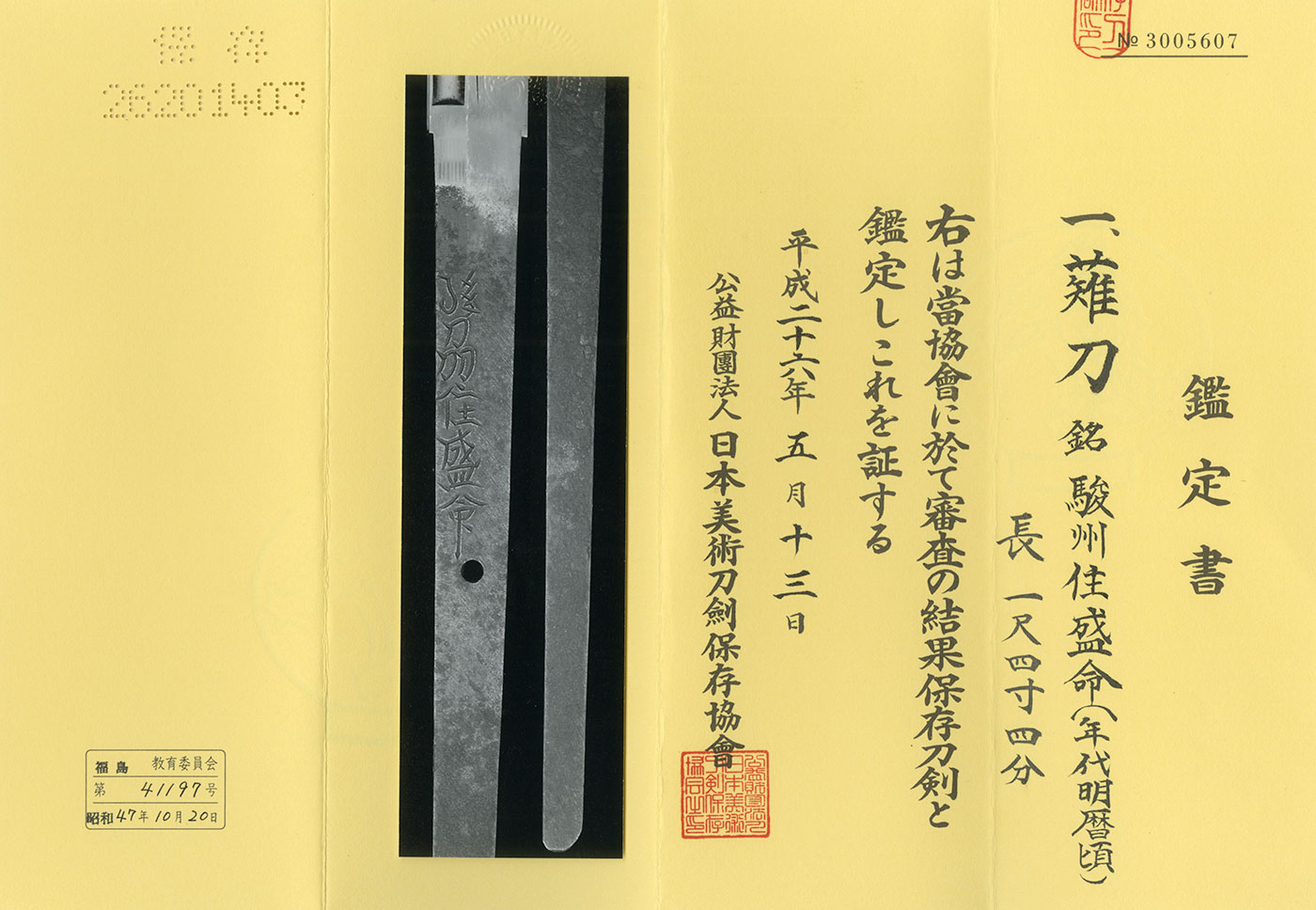
At our company, we classify the workmanship of swordsmiths as Saijo-saku, Jo-jo-saku, Jo-saku, or Futsu-saku. The workmanship of this piece is ranked as Jo-jo-saku for Sunshu-ju Morinaga. Taihai: Mihaba is standard, kasane is slightly thick, mitsumune naginata. Jitetsu: Ko-itame-hada that is tightly forged with ji-nie, making for a refined jitetsu. Hamon: Nie-deki suguha mixed with notare, with abundant nie and a deep nioiguchi. Features: Sunshu-ju Morinaga was a swordsmith from Suruga who is said to follow the Mino tradition. This is a work with beautiful jigane. It is said that the fire of Meireki 3 destroyed 60% of the city of Edo, including the Edo Castle keep, and that between 10% and 30% of the population died. Following this fire, the development of the surrounding areas was promoted as part of urban planning that emphasized disaster prevention, leading to the expansion of the city. Hozon Token Kanteisho Aoi Bijutsu Shoshin-saku Zenshin oshigata
Auction status: live on sword-auction.com.
NihontoWatchOffered by Aoi Art

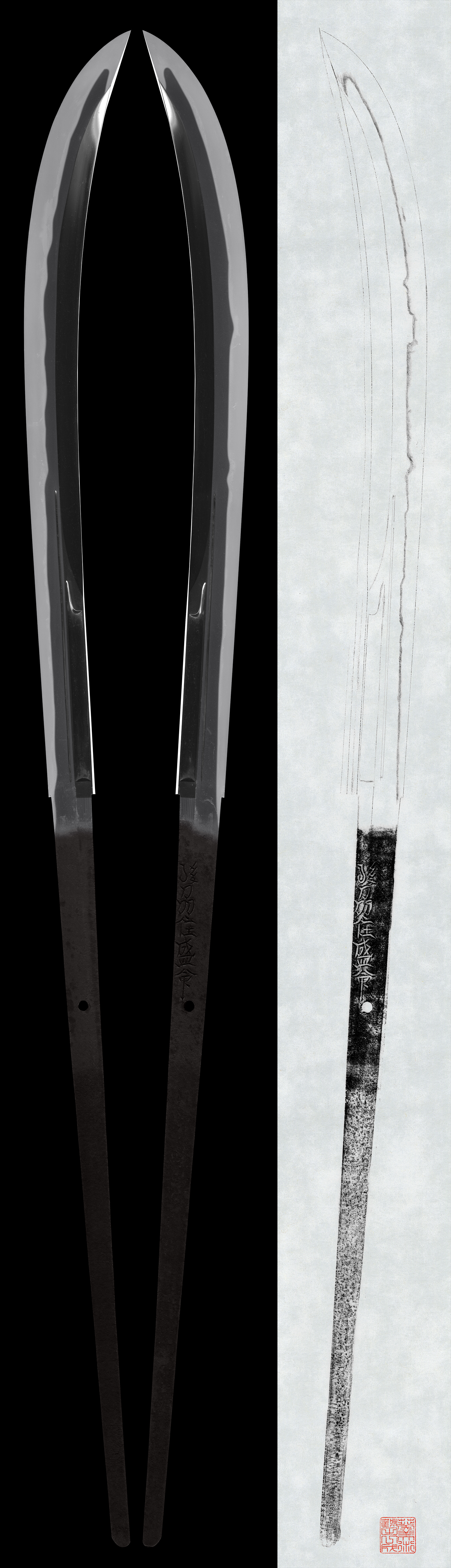
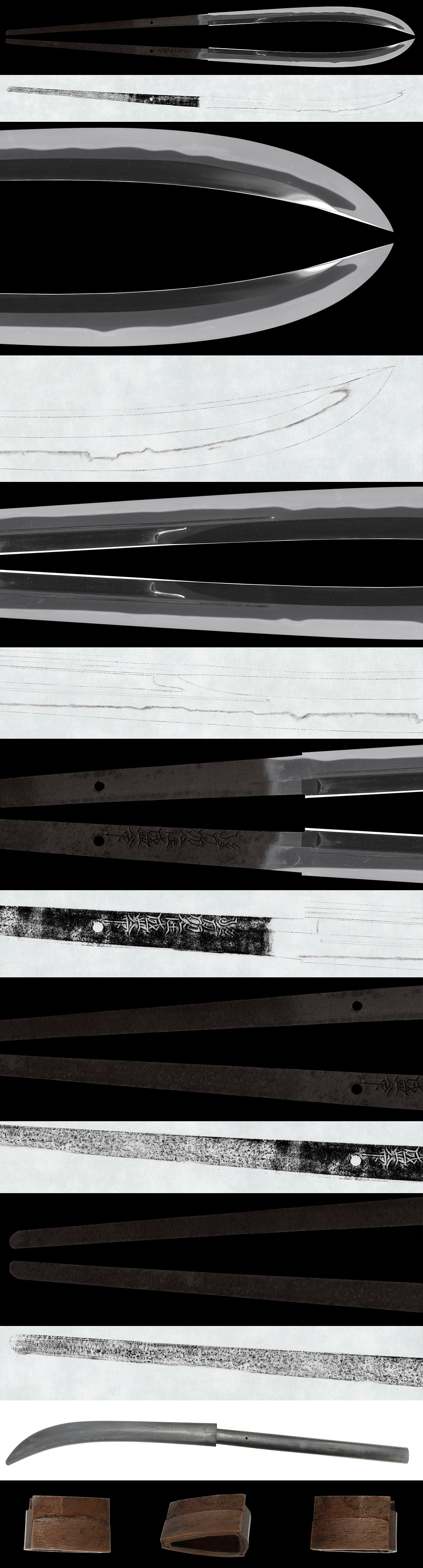
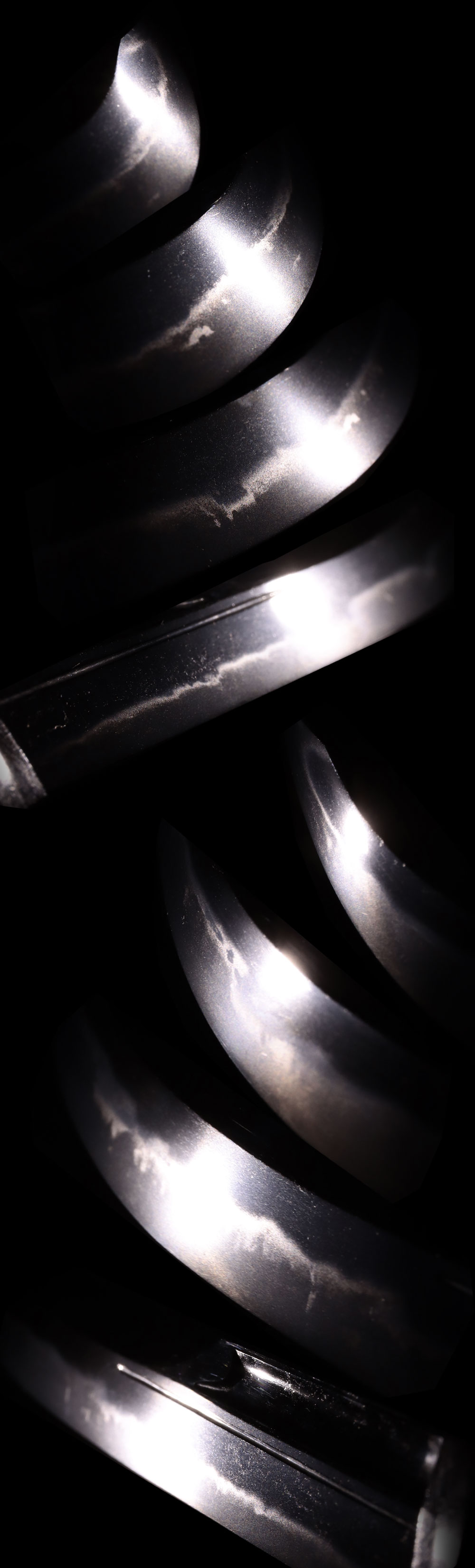
Machine translation of the shop's Japanese ·
Rows still in Japanese are as written by the shop
Machine translation from the shop's Japanese · may contain errors ·
Suruga · around 1655-1658
Tōken Taikan top 87%
2 pieces on the market now
The Edo period (1615 to 1868)
Edo was the sword’s age of connoisseurship: the Hon’ami appraisers, the shogunal register of famous blades of 1719, and a thriving literature turned the sword into an object of study even as it ceased to be drawn in war.
Certifies a genuine blade worth preserving: a signature confirmed correct, or, if unsigned, an era, province, and school that the NBTHK can reliably identify.
The NBTHK (Nihon Bijutsu Tōken Hozon Kyōkai, the Society for the Preservation of Japanese Art Swords) is a public-interest incorporated foundation founded in 1948 and supervised by Japan’s Agency for Cultural Affairs (Bunkachō); it is based at the Japanese Sword Museum in Tokyo. Its expert panels physically examine each submitted work (shinsa) and issue a certificate (kanteishō) ranking it by artistic and historical merit. NBTHK papers are the most widely recognized standard of authentication for Japanese swords and fittings.
NBTHK official siteIf you wish to return an item, please notify us within 3 days of receipt. After this period we cannot accept cancellations. Please ship the return to us within 5 business days. Cancellation is conditional on the item being kept in the same condition as at the time of sale, so please handle it with care.