Edo was the sword’s age of connoisseurship: the Hon’ami appraisers, the shogunal register of famous blades of 1719, and a thriving literature turned the sword into an object of study even as it ceased to be drawn in war.
 NihontoWatchNihontoWatch
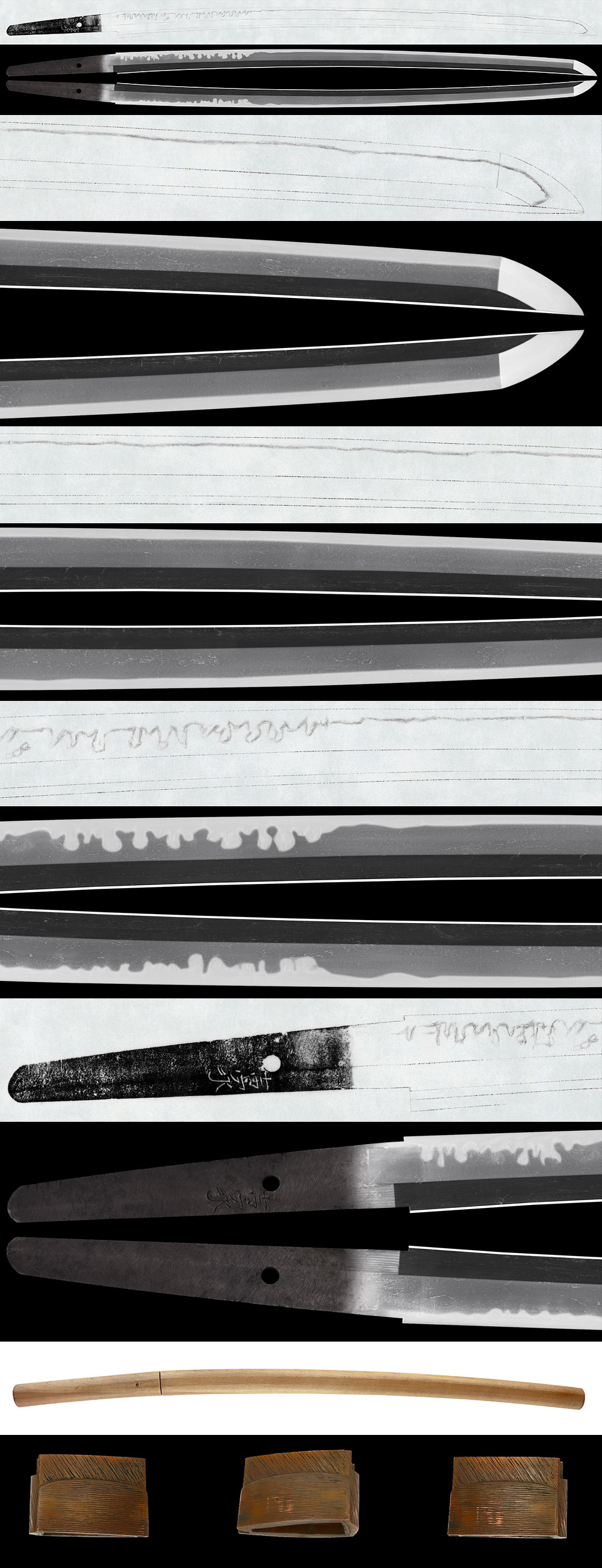
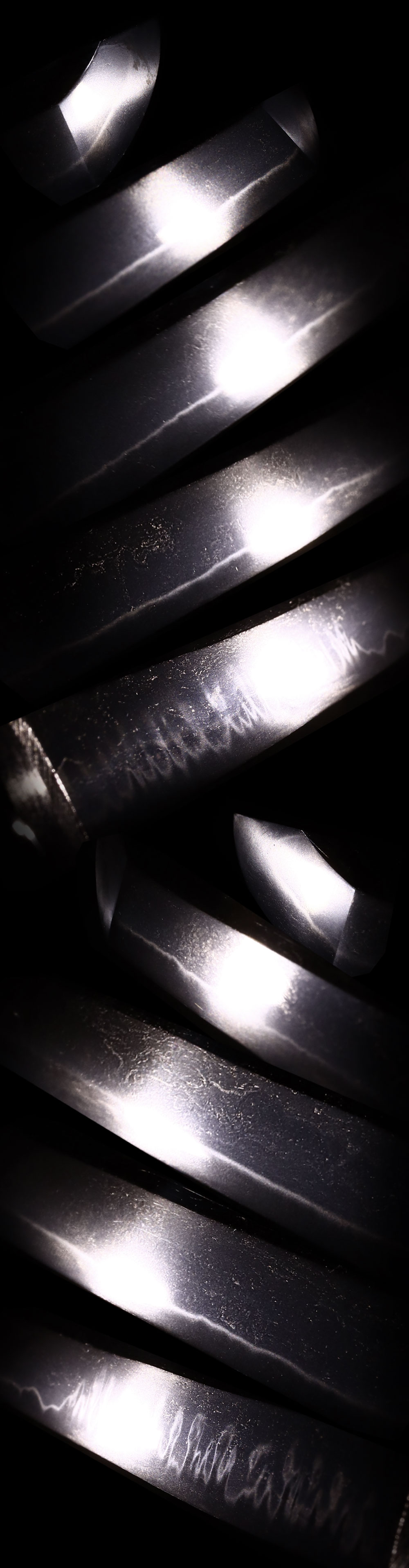
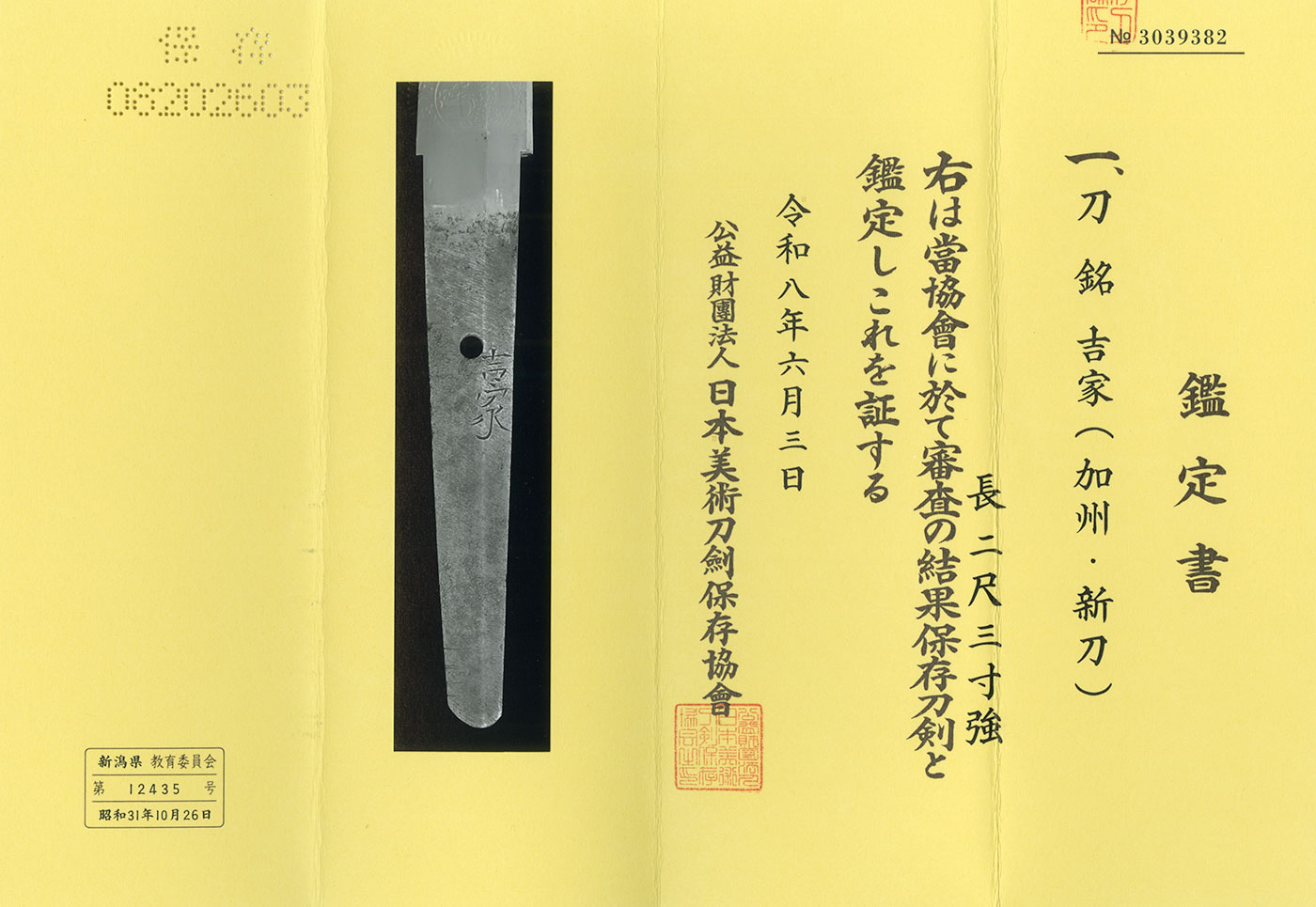
Katana in Shirasaya (NBTHK Hozon Token) (Consignment Sale) (We divide 4 sections for each sword as Saijyo Saku, Jyojyo Saku, Jyo Saku and Regular Saku). This blade is ranked as Jyo Saku among the works of Yoshiie. Darani School. Shape: A katana with relatively shallow curvature and an elongated kissaki. Jigane: Well-forged ko-itame hada with clearly visible grain patterns. Hamon: Gunome-midare begins at the hamachi and continues along the lower portion of the blade. From approximately 30 cm (11.81 in) above the hamachi toward the tip, the hamon changes to suguha. The boshi is rounded and turns back in a ko-maru pattern. Features: Yoshiie belonged to a lineage of swordsmiths dating back to the middle Muromachi period. The Darani School is known for its frequent use of pointed gunome (togari-gunome), and many of its works imitate the style of Kanemoto. The school is also recognized for producing blades with beautiful jigane. However, this particular katana resembles the workmanship of Sukesada from the Muromachi period. The hamon begins with gunome-midare near the hamachi and transitions into suguha toward the upper portion of the blade. This distinctive hamon pattern is frequently seen in the works of Sukesada, suggesting that Yoshiie may have intentionally modeled this blade after Sukesada's style. Historical Background: During the Enpo era (1673–1681) of the Edo period, Japan experienced a significant period of transition from the rule of the 4th Tokugawa Shogun, Tokugawa Ietsuna, to that of the 5th Shogun, Tokugawa Tsunayoshi. This period was marked by numerous important events, including major earthquakes, severe famines, and the emergence of new economic and cultural developments that transformed Japanese society. Tokugawa Tsunayoshi Becomes the 5th Shogun: Tokugawa Tsunayoshi succeeded to the position of the 5th Tokugawa Shogun in 1680. Although he later became famous for the Shorui Awaremi no Rei (Edicts on Compassion for Living Things), during the early years of his administration he promoted a transition from military-centered governance, known as Budan Seiji, toward Bunchi Seiji, a form of civil administration emphasizing scholarship, education, and proper etiquette. The Establishment of Mitsui's Drapery Business: Mitsui Takatoshi opened a kimono and textile shop in Nihonbashi, Edo, which later developed into the Mitsukoshi department store. He introduced an innovative business model known as Genkin Kakene Nashi, meaning cash payment at fixed prices without bargaining. This revolutionary retail approach proved extremely successful and attracted large numbers of customers. NBTHK Hozon Token.
Offered by Aoi Art


Machine translation of the shop's Japanese ·
Kaga · around 1673-1681
Tōken Taikan top 60%
1 piece on the market now
The Edo period (1615 to 1868)
Edo was the sword’s age of connoisseurship: the Hon’ami appraisers, the shogunal register of famous blades of 1719, and a thriving literature turned the sword into an object of study even as it ceased to be drawn in war.
Certifies a genuine blade worth preserving: a signature confirmed correct, or, if unsigned, an era, province, and school that the NBTHK can reliably identify.
The NBTHK (Nihon Bijutsu Tōken Hozon Kyōkai, the Society for the Preservation of Japanese Art Swords) is a public-interest incorporated foundation founded in 1948 and supervised by Japan’s Agency for Cultural Affairs (Bunkachō); it is based at the Japanese Sword Museum in Tokyo. Its expert panels physically examine each submitted work (shinsa) and issue a certificate (kanteishō) ranking it by artistic and historical merit. NBTHK papers are the most widely recognized standard of authentication for Japanese swords and fittings.
NBTHK official siteIf you wish to return an item, please notify us within 3 days of receipt. After this period we cannot accept cancellations. Please ship the return to us within 5 business days. Cancellation is conditional on the item being kept in the same condition as at the time of sale, so please handle it with care.
Starting price
¥400,000