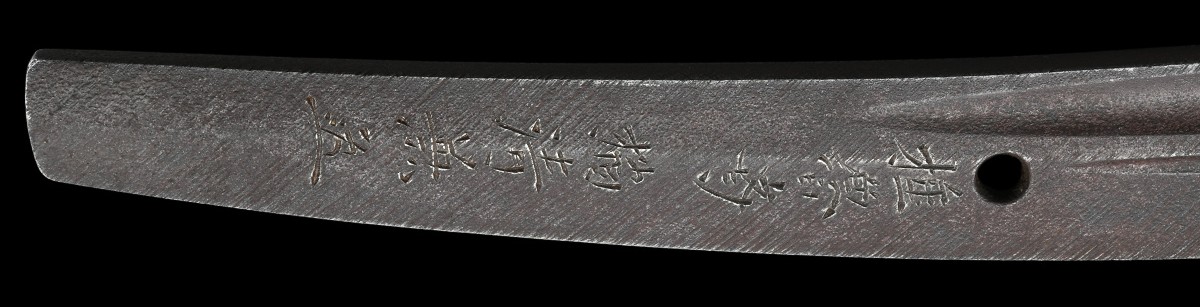
Shirosai Kiyokane was a swordsmith from Aichi Prefecture who was active during the Showa period. Born in Meiji 40 (1907), his real name was Tsutsui Seiichi. The Tsutsui family was a lineage of blacksmiths that continued from the Edo period in Zaimoku-cho, Okazaki City, in the same prefecture, and this smith is also considered to follow the genealogy of the Okazaki domain's swordsmiths. During the war, he was engaged in the production of military swords for army officers, and after the war, he continued to forge swords in Nagakute City and Tosaki-cho, Okazaki City, and in Showa 59 (1984), he was certified as a holder of an Aichi Prefecture designated intangible cultural property. He passed away in November of the same year. He also dedicated works to Atsuta Jingu, Sanage Jinja, Iga Hachimangu, and others, and is known as a swordsmith with deep ties to his local region. He excelled at horimono as well, and also worked on a replica of Honda Tadakatsu's beloved spear "Tonbogiri," and that work is housed at Ryujo Jinja in Okazaki City. Swordsmith mei include "Tachibana Kiyokane," "Mikawa no Kuni Okazaki-ju Tachibana Kiyokane kinsaku," and "Sanshu-ju Tsutsui Kiyokane."
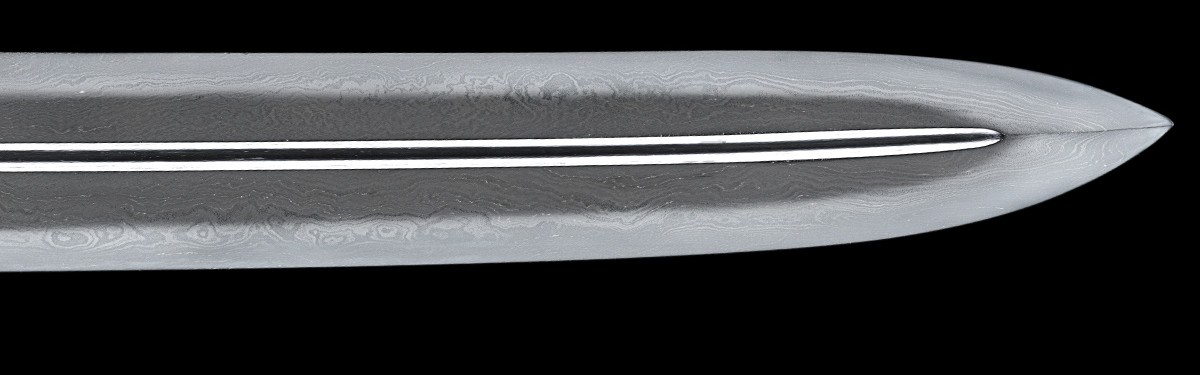
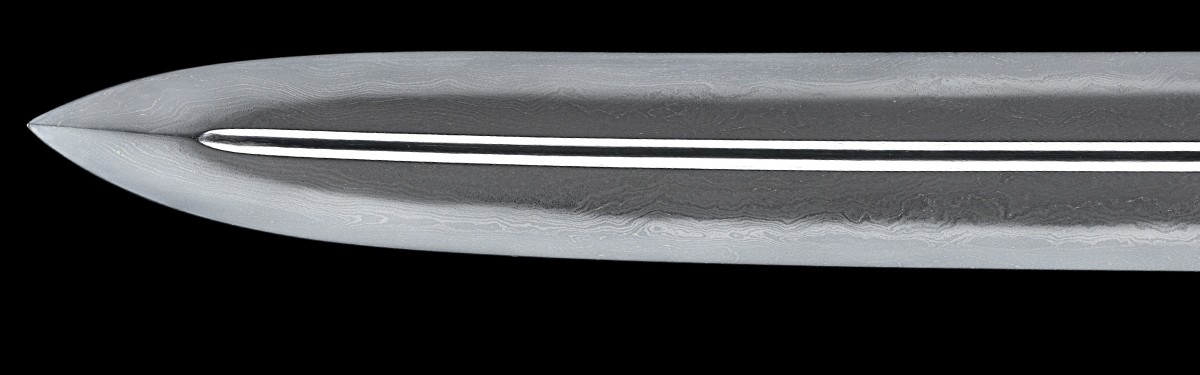
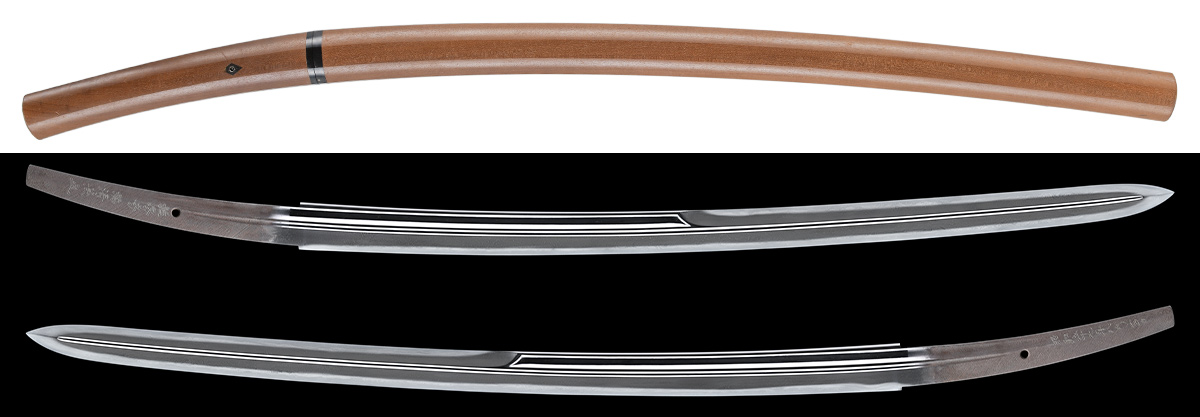
The original Kogarasu-maru is a Heian period tachi traditionally attributed to Amakuni, characterized by a unique construction that becomes double-edged from the kissaki to the middle of the blade. In ancient times, it was handed down as a treasured sword of the Heike clan, was presented to the Imperial Household in the Meiji period, and is currently preserved as a Gyobutsu.
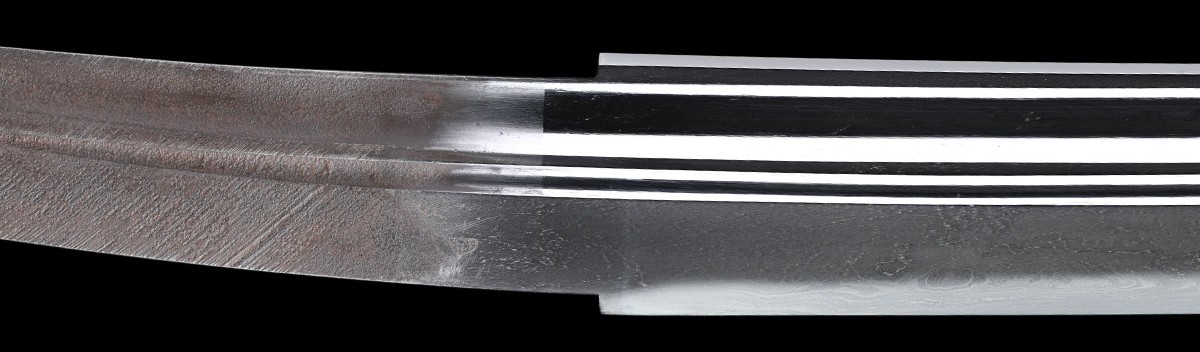
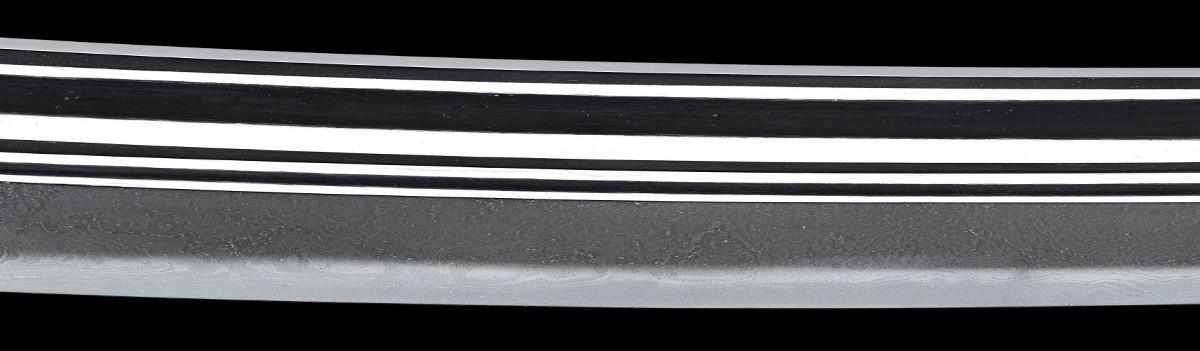
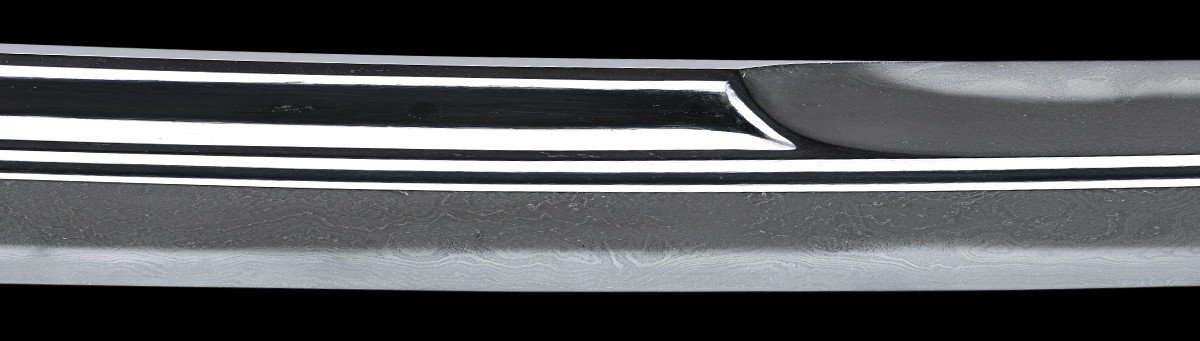
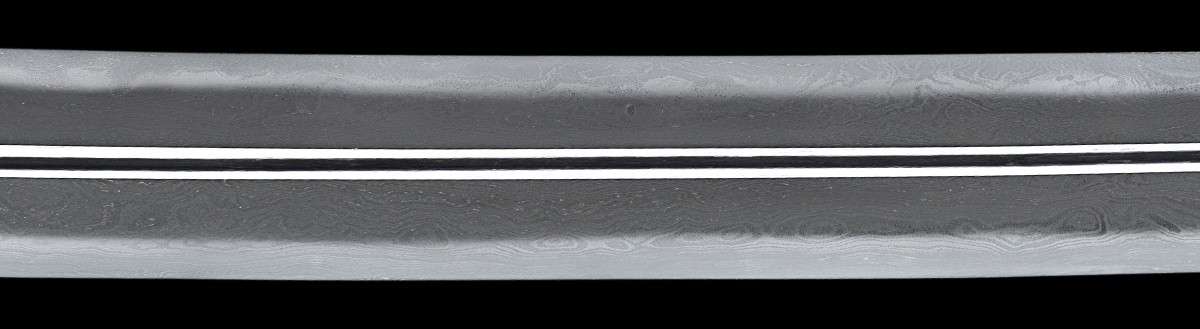
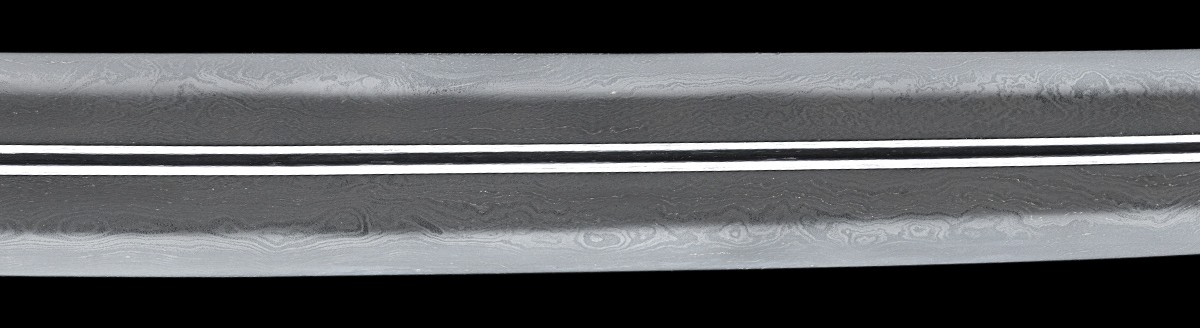
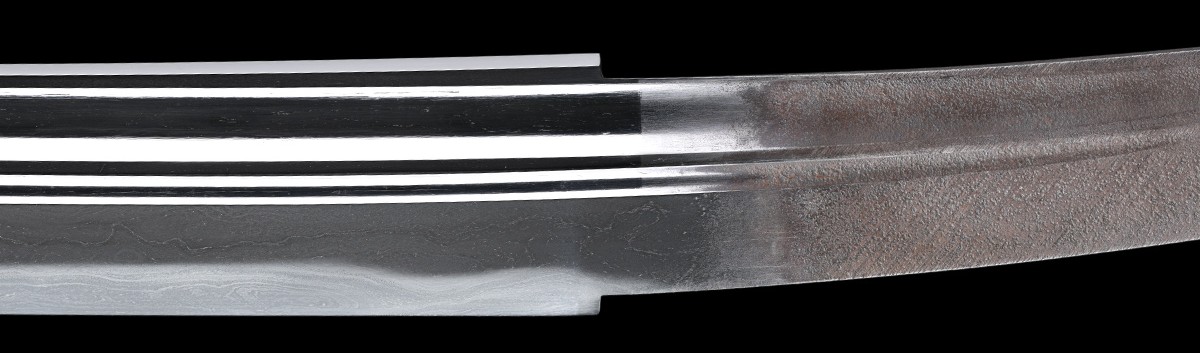
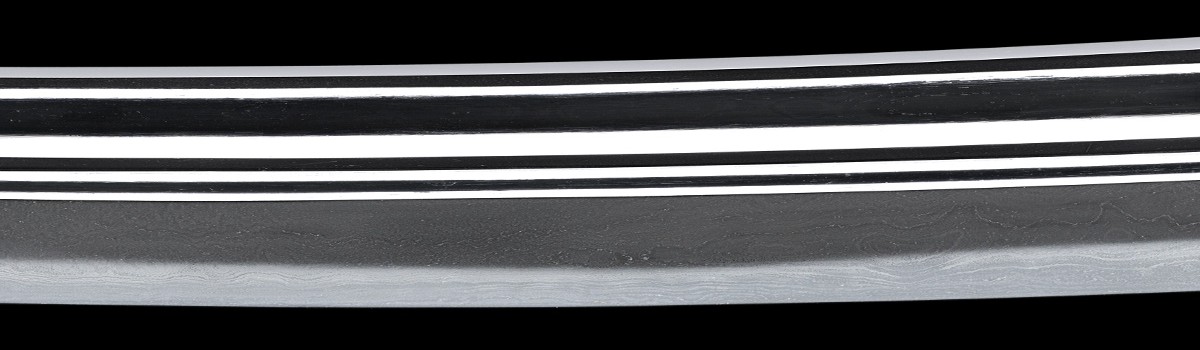
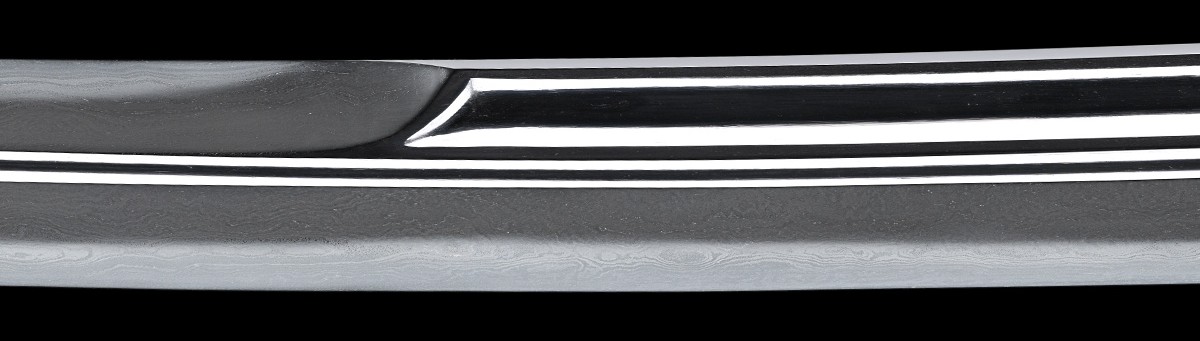
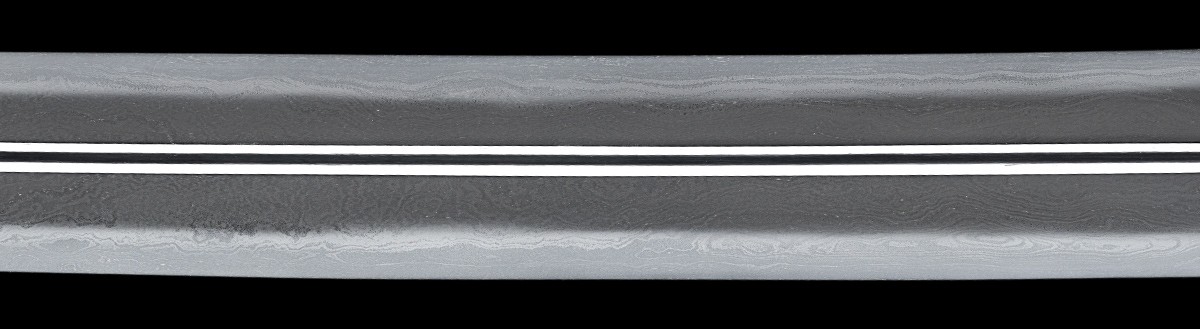
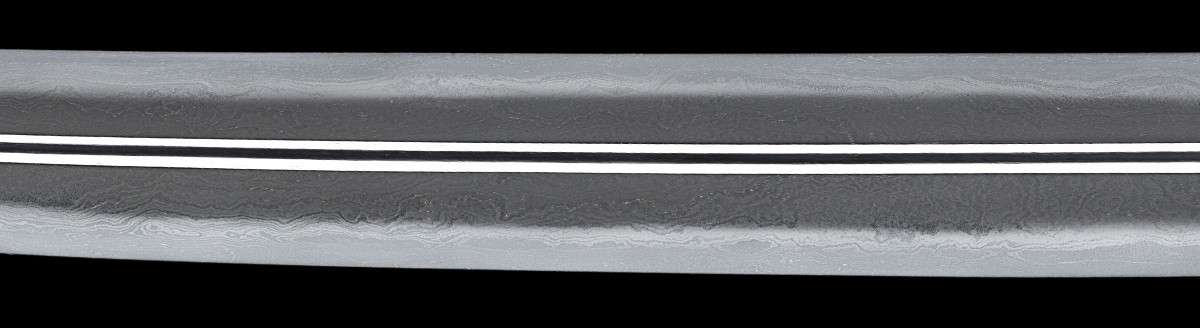
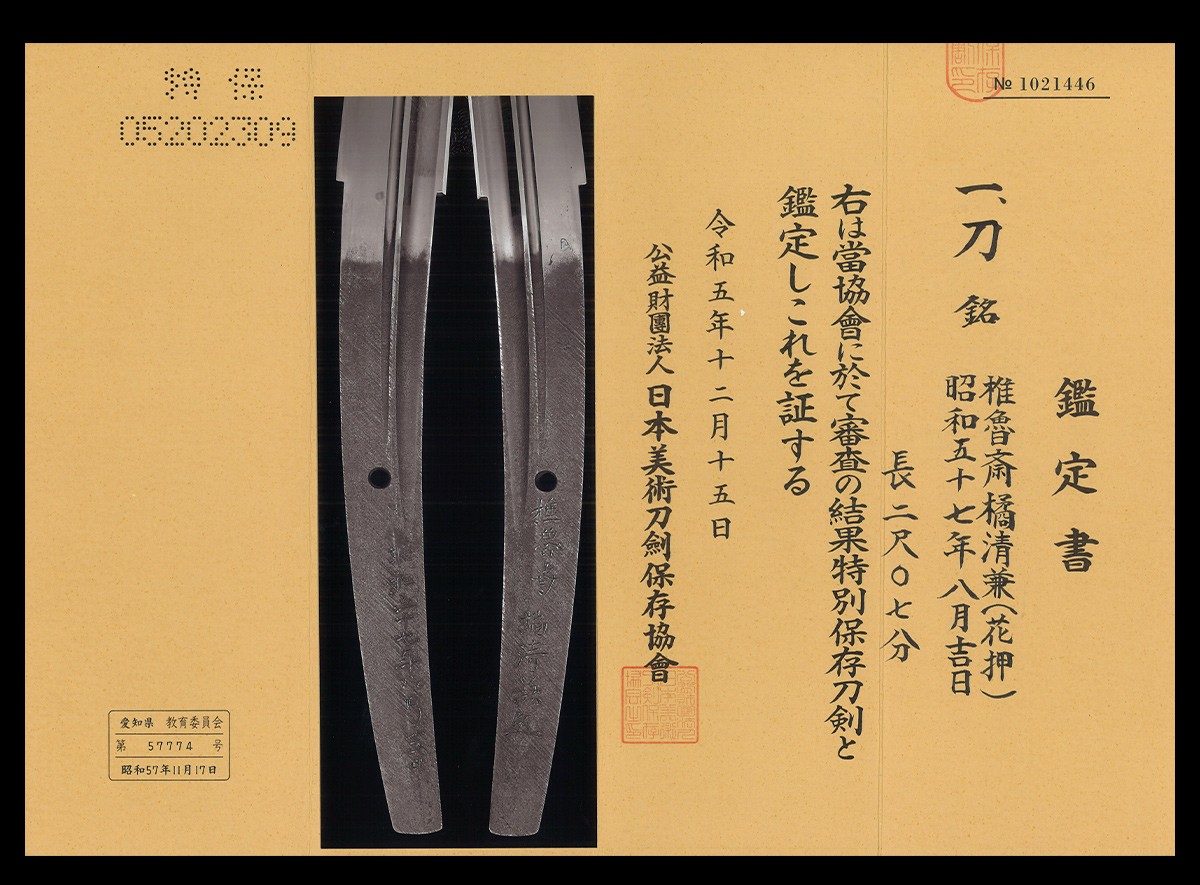
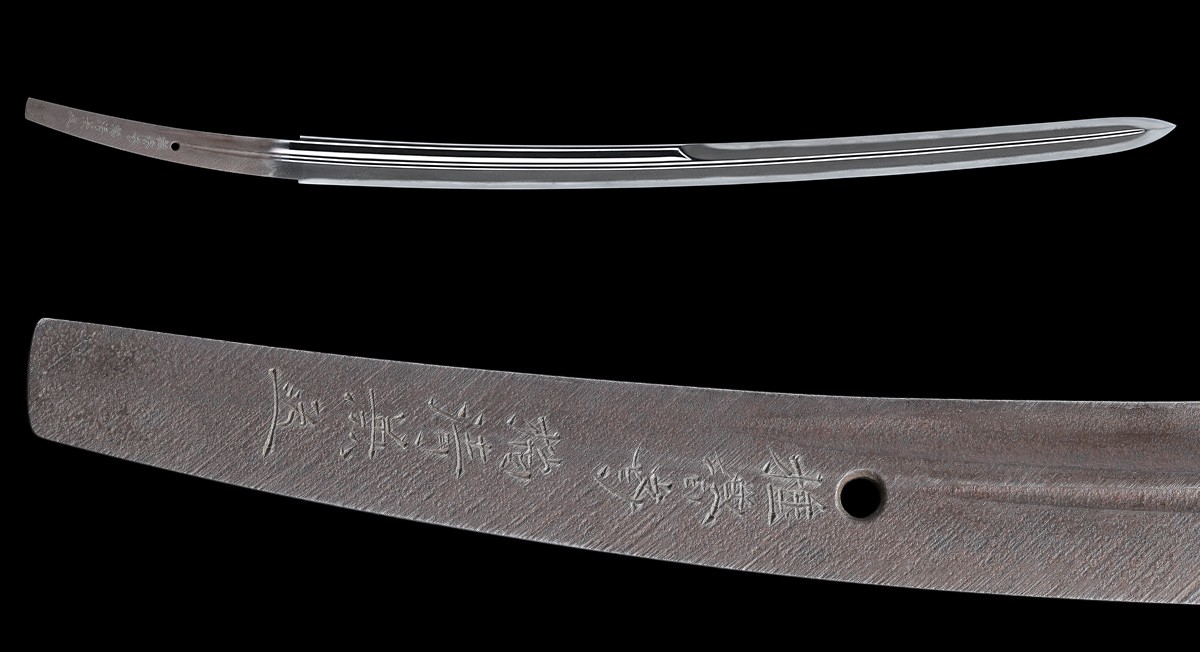
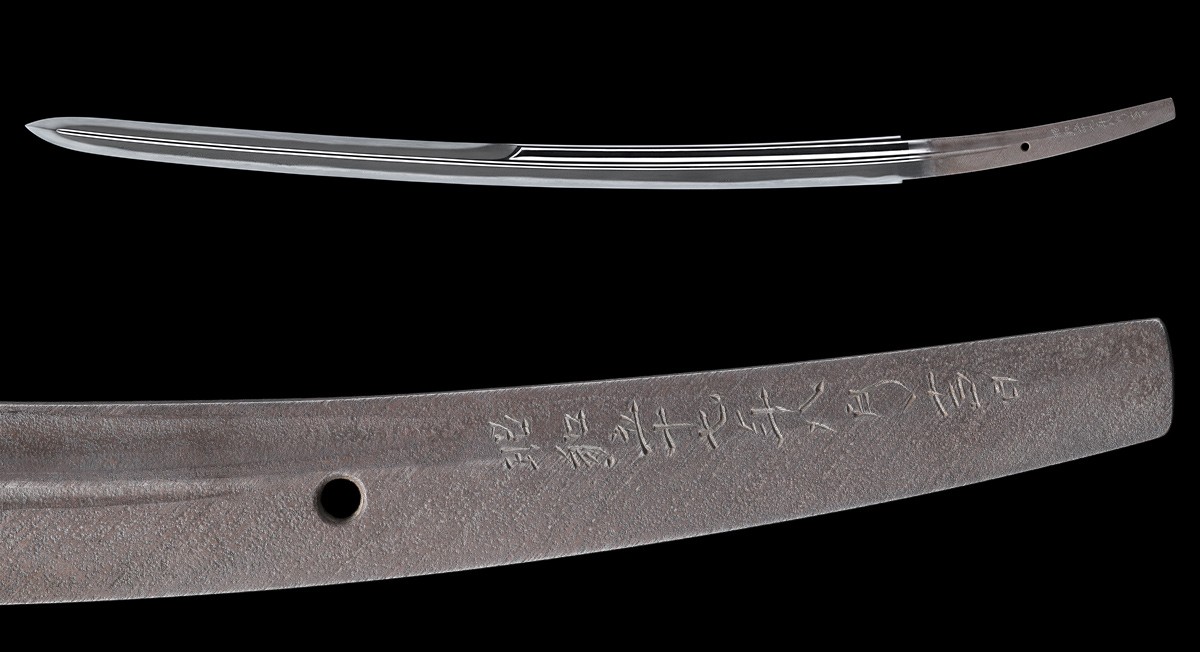
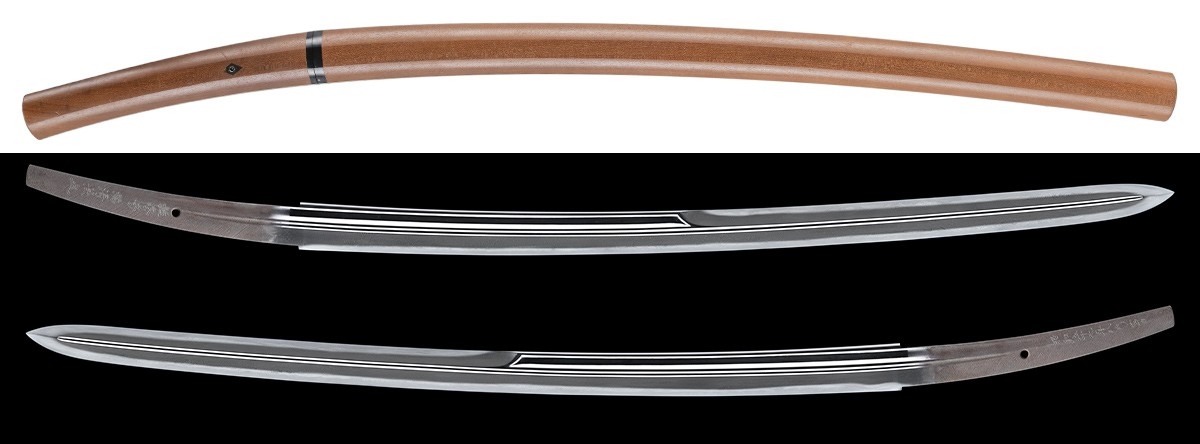
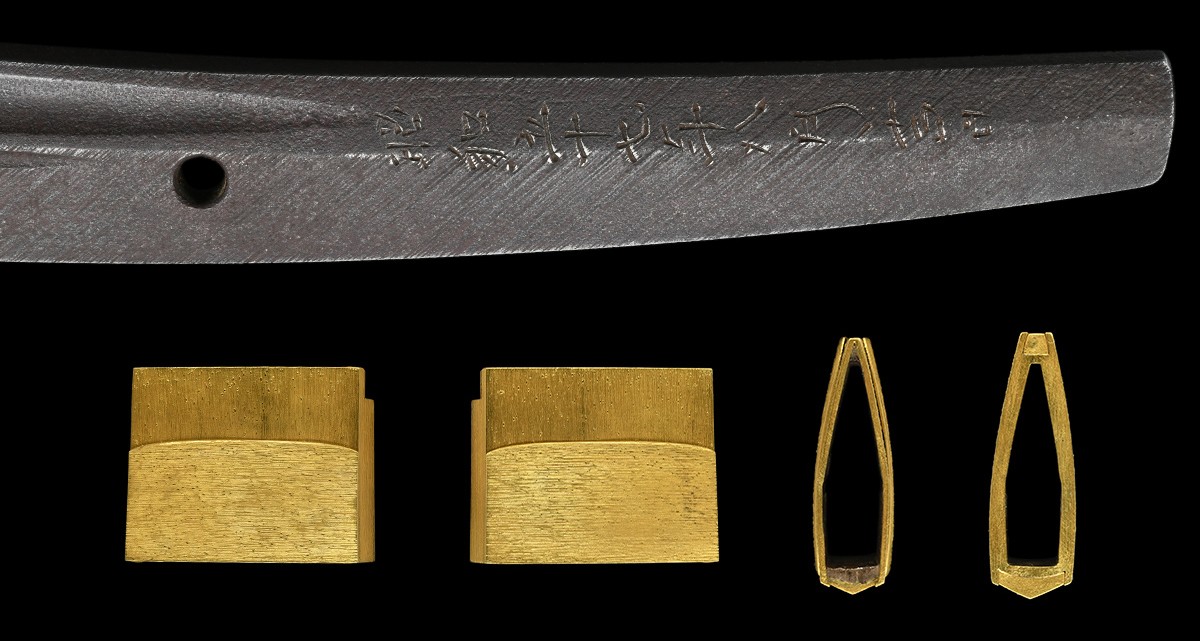
The taihai of this work has a nagasa of 2 shaku 0 sun 7 bu, which is almost the same dimension as the original, with a wide mihaba, thick kasane, slightly pronounced sori, and it presents a Kogarasu-zukuri with both edges from the middle to the kissaki. Naginata-hi and soe-hi are kakinagashi on both the omote and ura. The jitetsu is well-kneaded itame mixed with mokume, with nagare-gokoro in places, ji-nie attached, and chikei appearing, making the hada well-defined. The hamon is suguha, mixed with some shallow notare and gunome-gokoro, and influenced by the forging, hotsure appears on the ha-buchi, with kinsen and kinsuji frequently appearing and working. The boshi is straight as it is and returns with saki-hakikake. This is a truly rare Kogarasu-maru replica by the Showa period swordsmith Shirosai Kiyokane, who was from Aichi Prefecture. Shirasaya, gold-plated double habaki, Tokubetsu Hozon Token kanteisho.
Machine translation from the shop's Japanese · may contain errors ·
Shirosai Kiyokane was a swordsmith from Aichi Prefecture who was active during the Showa period. Born in Meiji 40 (1907), his real name was Tsutsui Seiichi. The Tsutsui family was a lineage of blacksmiths that continued from the Edo period in Zaimoku-cho, Okazaki City, in the same prefecture, and this smith is also considered to follow the genealogy of the Okazaki domain's swordsmiths. During the war, he was engaged in the production of military swords for army officers, and after the war, he continued to forge swords in Nagakute City and Tosaki-cho, Okazaki City, and in Showa 59 (1984), he was certified as a holder of an Aichi Prefecture designated intangible cultural property. He passed away in November of the same year. He also dedicated works to Atsuta Jingu, Sanage Jinja, Iga Hachimangu, and others, and is known as a swordsmith with deep ties to his local region. He excelled at horimono as well, and also worked on a replica of Honda Tadakatsu's beloved spear "Tonbogiri," and that work is housed at Ryujo Jinja in Okazaki City. Swordsmith mei include "Tachibana Kiyokane," "Mikawa no Kuni Okazaki-ju Tachibana Kiyokane kinsaku," and "Sanshu-ju Tsutsui Kiyokane."
The original Kogarasu-maru is a Heian period tachi traditionally attributed to Amakuni, characterized by a unique construction that becomes double-edged from the kissaki to the middle of the blade. In ancient times, it was handed down as a treasured sword of the Heike clan, was presented to the Imperial Household in the Meiji period, and is currently preserved as a Gyobutsu.
The taihai of this work has a nagasa of 2 shaku 0 sun 7 bu, which is almost the same dimension as the original, with a wide mihaba, thick kasane, slightly pronounced sori, and it presents a Kogarasu-zukuri with both edges from the middle to the kissaki. Naginata-hi and soe-hi are kakinagashi on both the omote and ura. The jitetsu is well-kneaded itame mixed with mokume, with nagare-gokoro in places, ji-nie attached, and chikei appearing, making the hada well-defined. The hamon is suguha, mixed with some shallow notare and gunome-gokoro, and influenced by the forging, hotsure appears on the ha-buchi, with kinsen and kinsuji frequently appearing and working. The boshi is straight as it is and returns with saki-hakikake. This is a truly rare Kogarasu-maru replica by the Showa period swordsmith Shirosai Kiyokane, who was from Aichi Prefecture. Shirasaya, gold-plated double habaki, Tokubetsu Hozon Token kanteisho.
The twentieth century nearly killed the craft twice: wartime distortion, then the occupation ban. The NBTHK’s founding in 1948 and licensed forging from 1953 rebuilt the sword as an art, crowned by Living National Treasures and the mukansa rank.
A Hozon-certified blade judged to show notably superior workmanship and a better state of preservation. The bar is higher: re-tempered blades and most unsigned Muromachi/Edo works are excluded.
About the NBTHK›
The NBTHK (Nihon Bijutsu Tōken Hozon Kyōkai, the Society for the Preservation of Japanese Art Swords) is a public-interest incorporated foundation founded in 1948 and supervised by Japan’s Agency for Cultural Affairs (Bunkachō); it is based at the Japanese Sword Museum in Tokyo. Its expert panels physically examine each submitted work (shinsa) and issue a certificate (kanteishō) ranking it by artistic and historical merit. NBTHK papers are the most widely recognized standard of authentication for Japanese swords and fittings.
No cooling-off period or returns; refund only if the purchased sword is proven fake, capped at purchase price (excludes commission sales, accessories, auction items).


 NihontoWatch