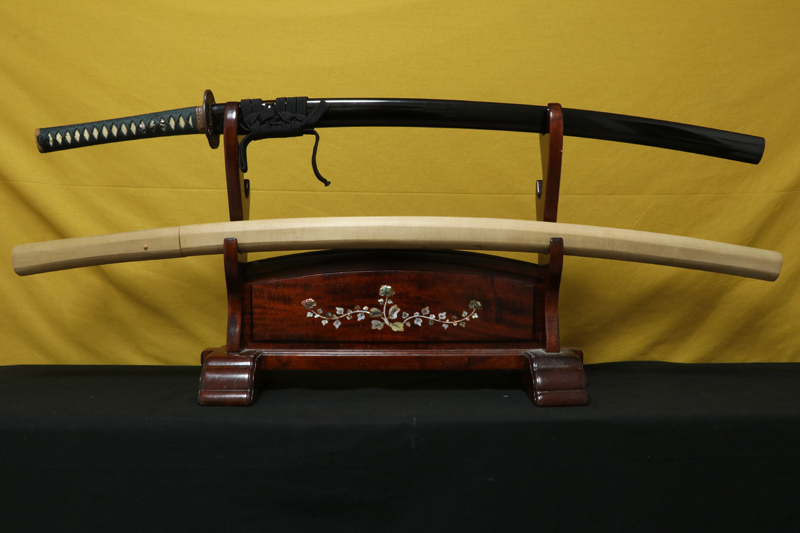
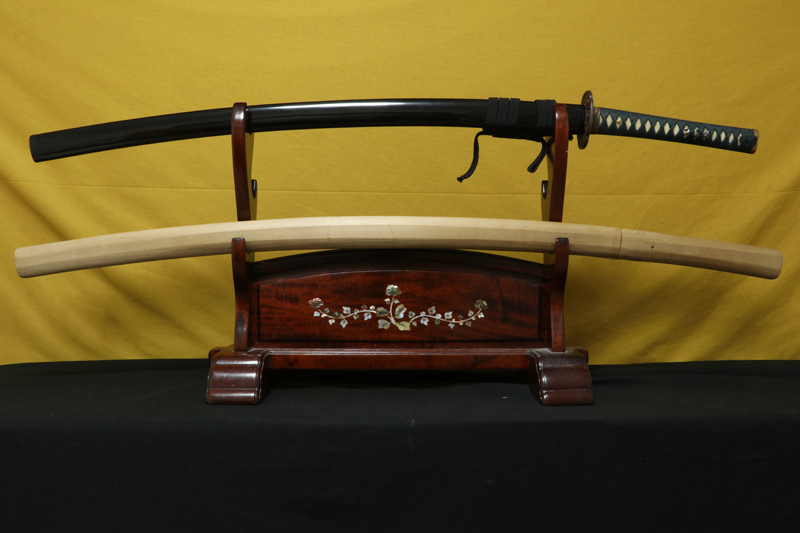
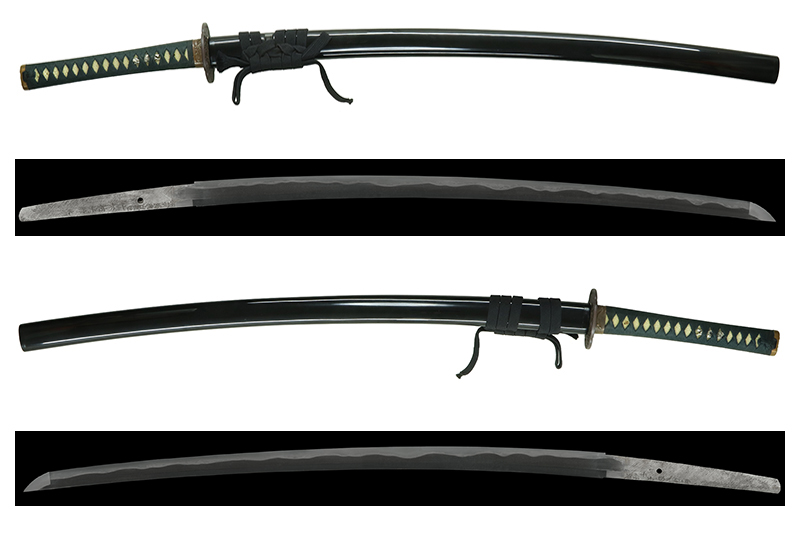
Modern sword Gosyu Suzuka sanroku ju Takeshita Sukemitsu kore tsukuru with Koshirae and Shirosaya.
Takeshita Sukemitsu is a highly skilled swordsmith whose works were selected 11 times for the Shinsaku Meito Exhibition.
This piece is a superior work from when he was 32 years old, featuring itame-hada that flows into masame, with a magnificent gunome-midare hamon full of activity.
Both the blade and koshirae are in good condition, with no history of use in Iaido or tameshigiri.
It is an exceptional piece recommended not only for appreciation and collection, but also for Iaido and tameshigiri.
「刀姿 sword figure」
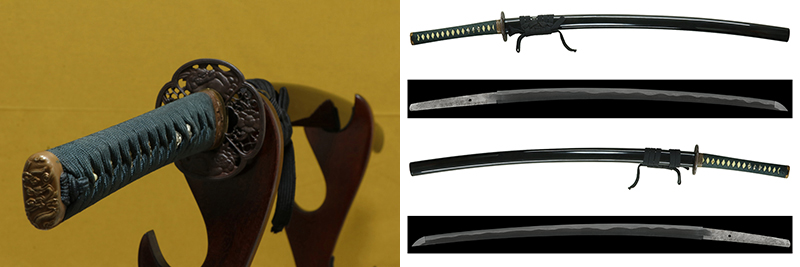
Shinogi-zukuri, iori-mune, standard mihaba and kasane, torii-zori, chu-kissaki, the nakago is ubu with kesho-yasuri, and the nakago-jiri is ha-agari kurijiri.
「地鉄 jigane」
The jigane is itame-hada that flows into masame, with ji-nie and chikei.
「刃紋 hamon」
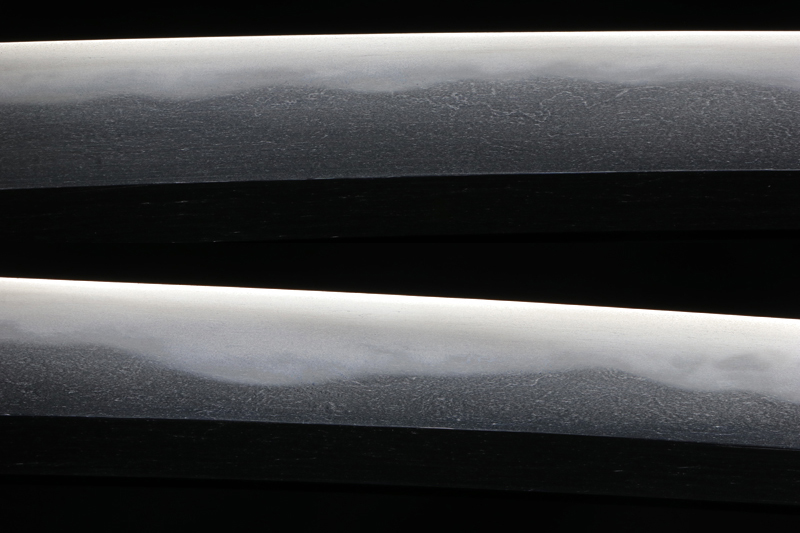
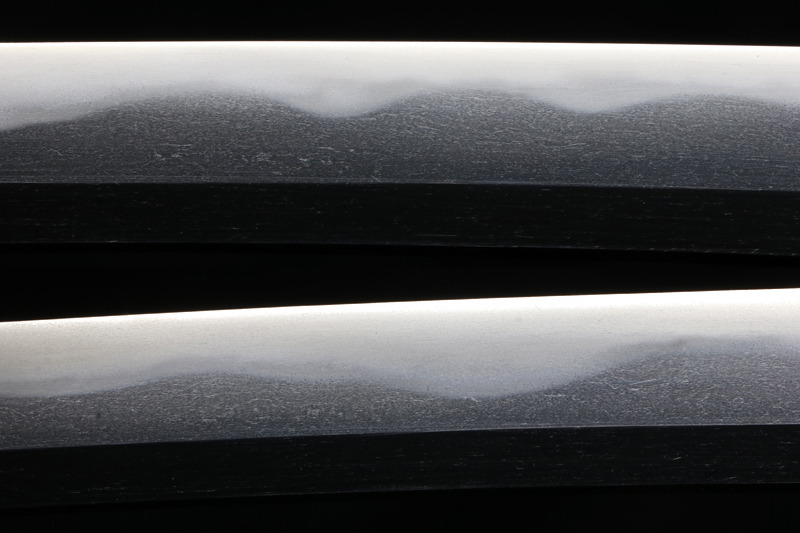
The hamon is gunome-midare, the habuchi has nie and sunagashi, and there is inazuma activity within the blade. The boshi is midare-komi and turns back in a komaru.
「特徴 detailed」
Takeshita Sukemitsu (real name: Takeshita Zenji) was born on May 20, Taisho 4 (1915), in Okubo Shimizu-cho, Hino-cho, Gamo-gun, Shiga Prefecture. He learned sword forging from his father, Eitaro Sukemitsu, and later studied under the swordsmith Okishiba Masatsugu in Osaka. He inherited his father's swordsmith name, "Sukemitsu."
In Showa 16 (1941), he was selected for the Japanese Sword Exhibition sponsored by the Ministry of Education, and in Showa 18 (1943), he received a Special Selection award. During the war, he was also active as an army-commissioned swordsmith. He received authorization to forge swords in Showa 29 (1954), and from Showa 39 (1964) to Showa 45 (1970), he was selected seven consecutive times for the Shinsaku Meito Exhibition sponsored by the Nihon Bijutsu Token Hozon Kyokai. He is a highly skilled swordsmith who achieved a total of 11 selections. In his later years, he moved to Misawa, Takahashi-shi, Okayama Prefecture (formerly Teso-cho), and continued to forge swords.
This piece is a work from when swordsmith Sukemitsu was 32 years old, forged in his hometown of Hino-cho, Shiga Prefecture, before his move to Okayama. It is a superior work that possesses both strength and delicacy, showing a magnificent finish without any flaws.
The blade has itame-hada that flows into masame with chikei, and the forging of the jigane is magnificent. The hamon is a gunome-midare with rich activity, resulting in a wonderful finish full of dynamism. The condition of the blade is also good.
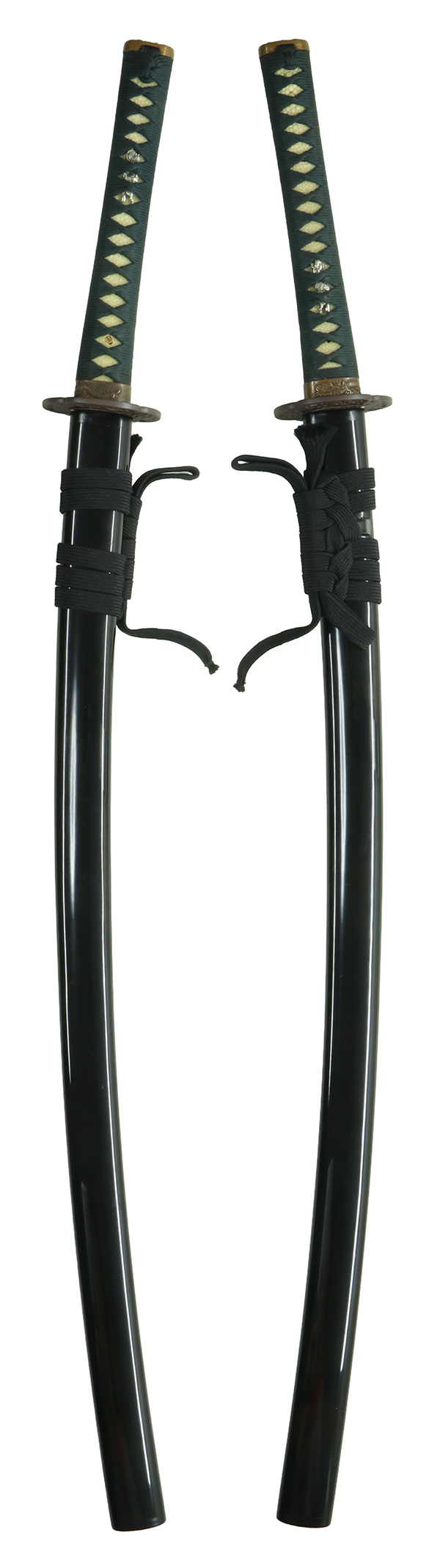
The koshirae is carefully crafted using high-quality modern fittings, and its state of preservation is also good.
This sword is a highly complete piece that ranks as a superior work among the works of swordsmith Sukemitsu. It was produced as an art sword and has no history of use in Iaido or tameshigiri.
It is an exceptional piece that is recommended, as it is not only optimal for appreciation and collection, but can also be used for Iaido and tameshigiri.
「拵 koshirae」
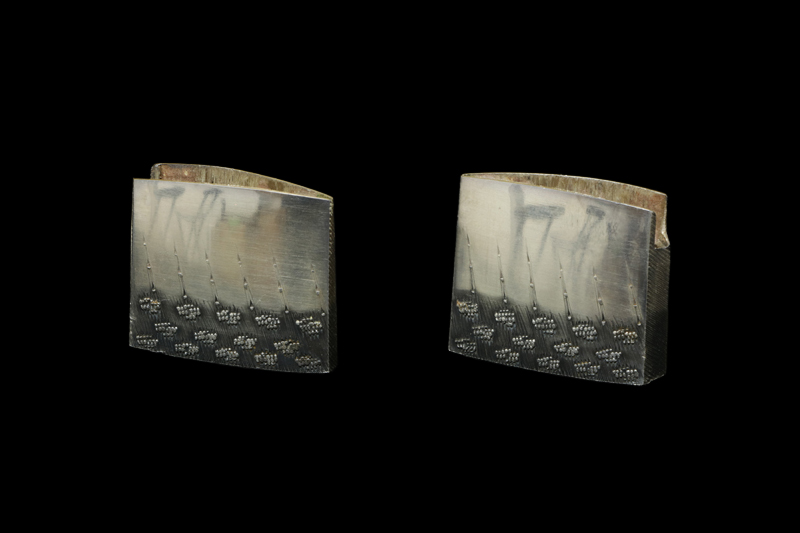
Habaki: Solid silver single-piece Botan Yujo.
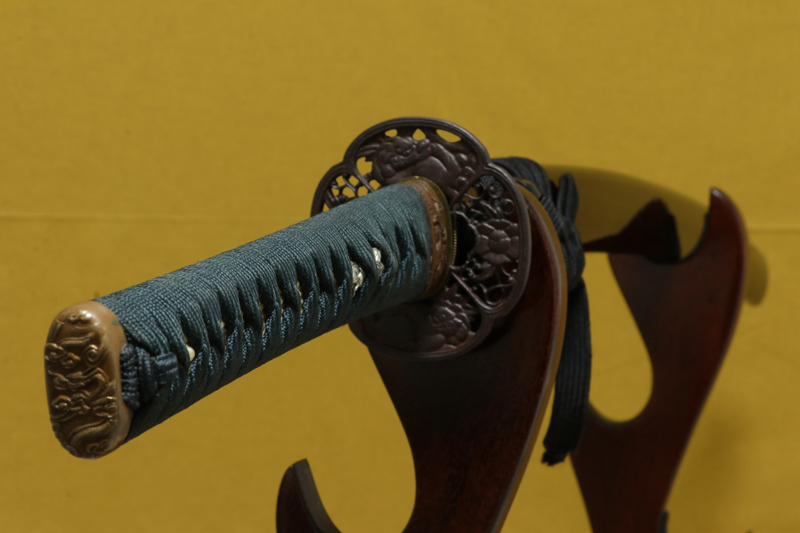
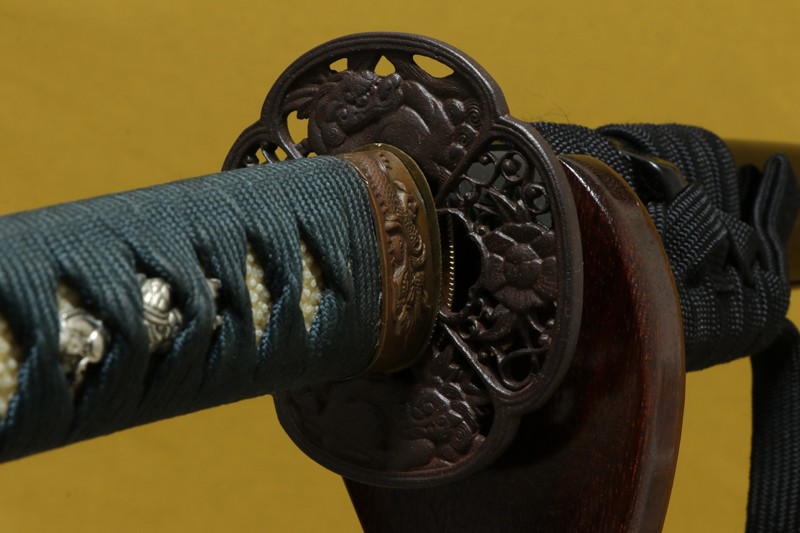
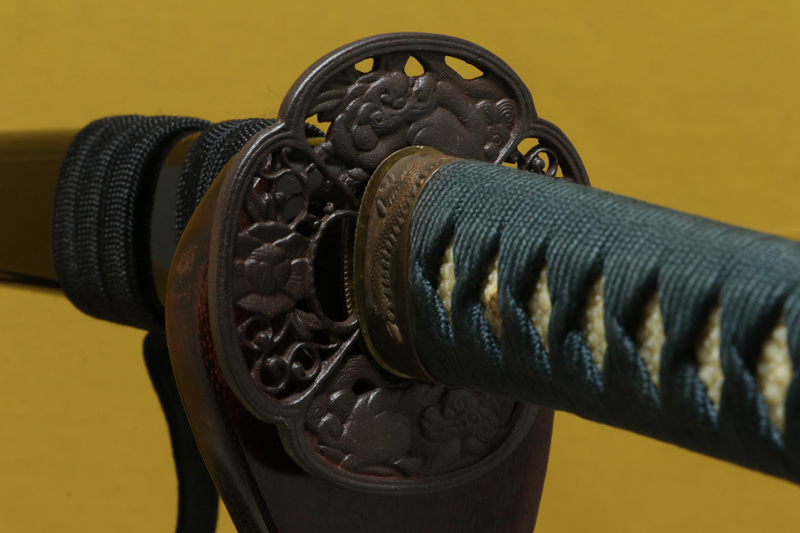
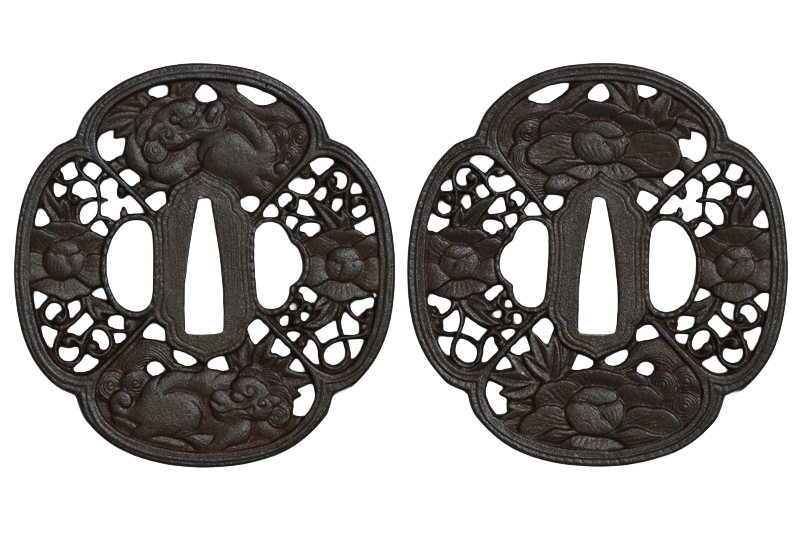
Tsuba: Iron base with Botan Shishi sukashi.
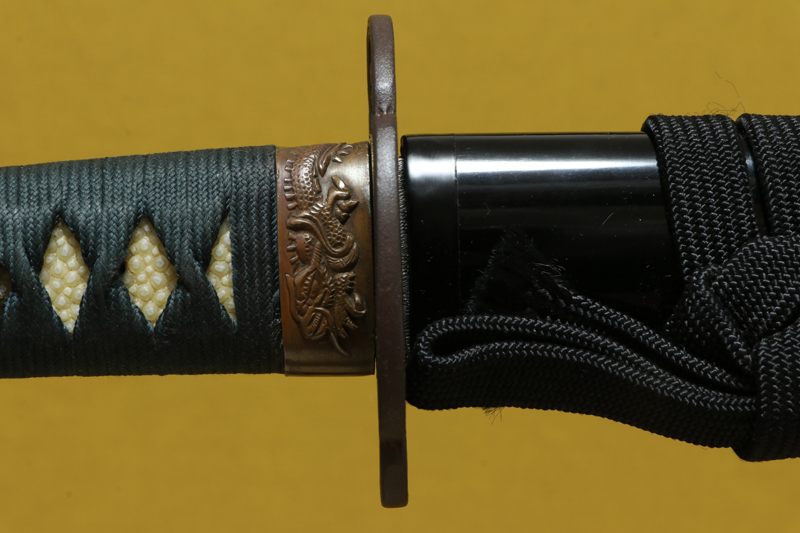
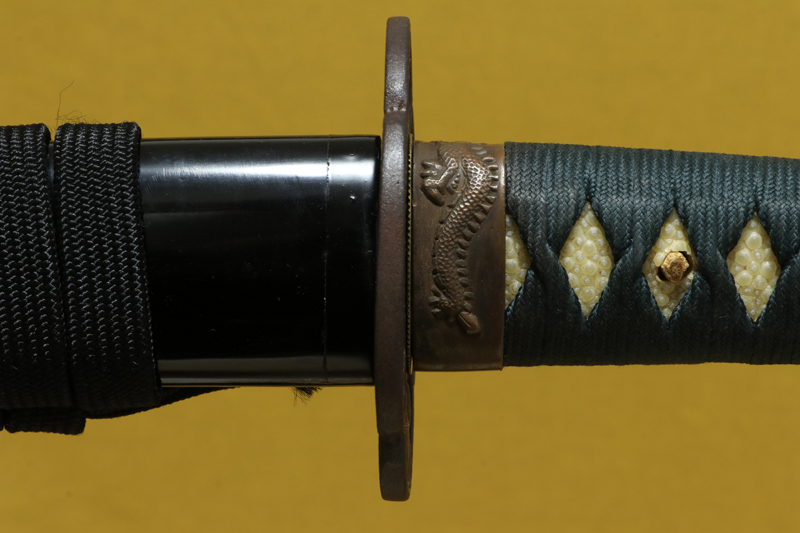
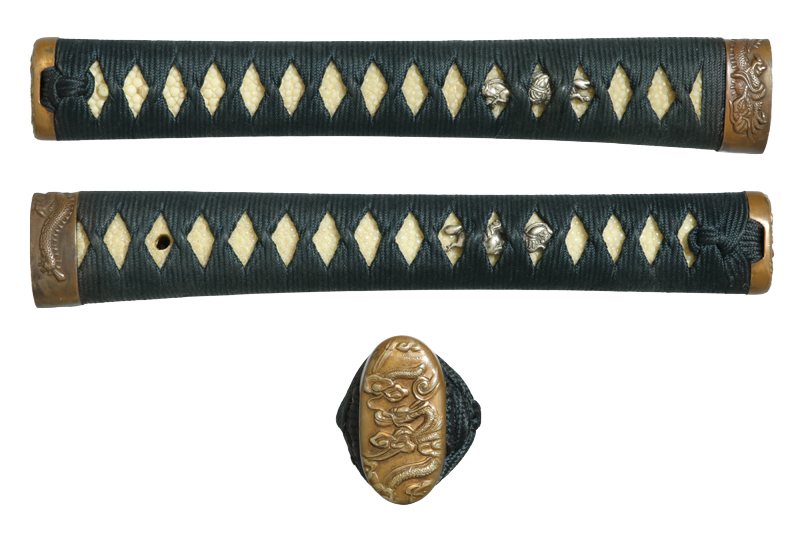
Fuchikashira: Copper base with dragon design.
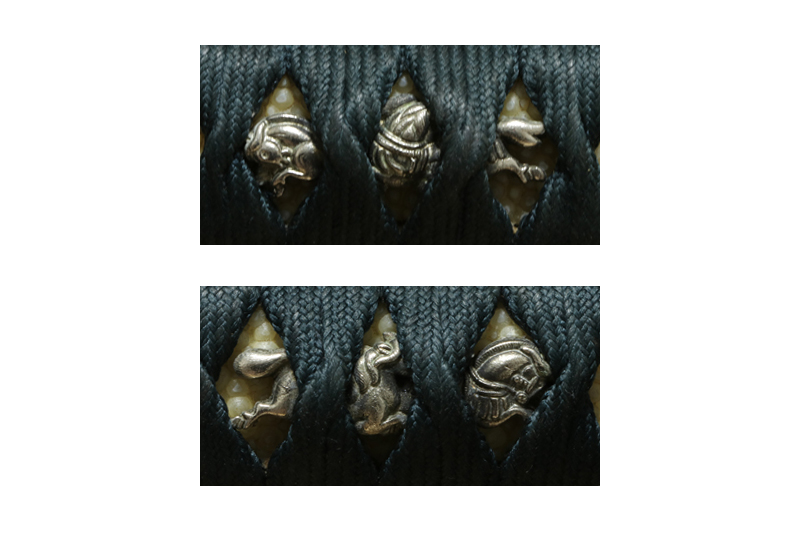
Menuki: Silver base with horse design.
Tsuka: The same has large nodes, and the tsuka-ito is wrapped in nando-iro moro-hineri-maki.
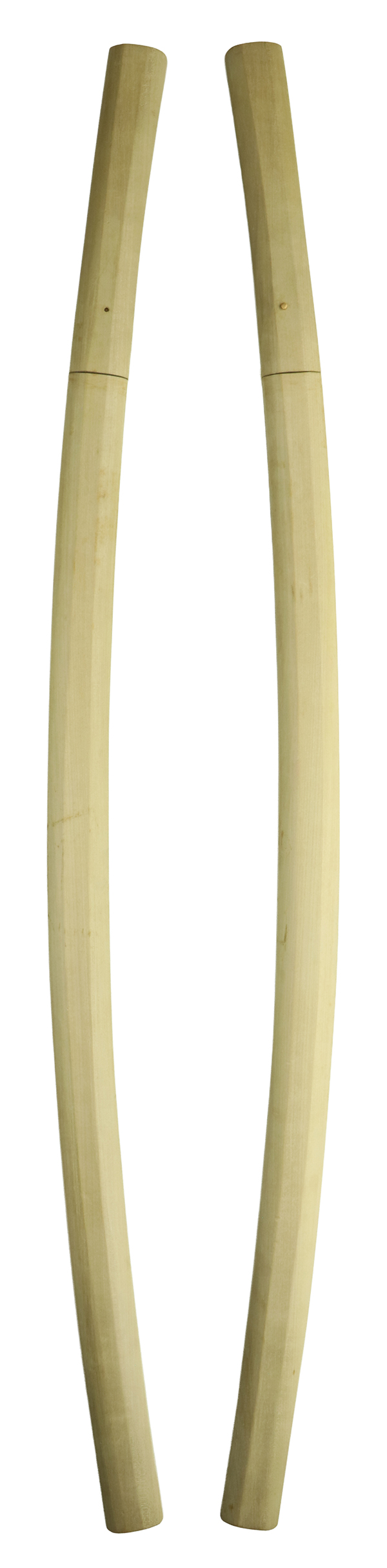
Saya: Kuro-ro, shirasaya.
「刀身の状態 condition of blade」
Polish: Good.
Scratches: There are no scratches that would constitute a defect.
Machine translation from the shop's Japanese · may contain errors ·
Modern sword Gosyu Suzuka sanroku ju Takeshita Sukemitsu kore tsukuru with Koshirae and Shirosaya.
Takeshita Sukemitsu is a highly skilled swordsmith whose works were selected 11 times for the Shinsaku Meito Exhibition.
This piece is a superior work from when he was 32 years old, featuring itame-hada that flows into masame, with a magnificent gunome-midare hamon full of activity.
Both the blade and koshirae are in good condition, with no history of use in Iaido or tameshigiri.
It is an exceptional piece recommended not only for appreciation and collection, but also for Iaido and tameshigiri.
「刀姿 sword figure」
Shinogi-zukuri, iori-mune, standard mihaba and kasane, torii-zori, chu-kissaki, the nakago is ubu with kesho-yasuri, and the nakago-jiri is ha-agari kurijiri.
「地鉄 jigane」
The jigane is itame-hada that flows into masame, with ji-nie and chikei.
「刃紋 hamon」
The hamon is gunome-midare, the habuchi has nie and sunagashi, and there is inazuma activity within the blade. The boshi is midare-komi and turns back in a komaru.
「特徴 detailed」
Takeshita Sukemitsu (real name: Takeshita Zenji) was born on May 20, Taisho 4 (1915), in Okubo Shimizu-cho, Hino-cho, Gamo-gun, Shiga Prefecture. He learned sword forging from his father, Eitaro Sukemitsu, and later studied under the swordsmith Okishiba Masatsugu in Osaka. He inherited his father's swordsmith name, "Sukemitsu."
In Showa 16 (1941), he was selected for the Japanese Sword Exhibition sponsored by the Ministry of Education, and in Showa 18 (1943), he received a Special Selection award. During the war, he was also active as an army-commissioned swordsmith. He received authorization to forge swords in Showa 29 (1954), and from Showa 39 (1964) to Showa 45 (1970), he was selected seven consecutive times for the Shinsaku Meito Exhibition sponsored by the Nihon Bijutsu Token Hozon Kyokai. He is a highly skilled swordsmith who achieved a total of 11 selections. In his later years, he moved to Misawa, Takahashi-shi, Okayama Prefecture (formerly Teso-cho), and continued to forge swords.
This piece is a work from when swordsmith Sukemitsu was 32 years old, forged in his hometown of Hino-cho, Shiga Prefecture, before his move to Okayama. It is a superior work that possesses both strength and delicacy, showing a magnificent finish without any flaws.
The blade has itame-hada that flows into masame with chikei, and the forging of the jigane is magnificent. The hamon is a gunome-midare with rich activity, resulting in a wonderful finish full of dynamism. The condition of the blade is also good.
The koshirae is carefully crafted using high-quality modern fittings, and its state of preservation is also good.
This sword is a highly complete piece that ranks as a superior work among the works of swordsmith Sukemitsu. It was produced as an art sword and has no history of use in Iaido or tameshigiri.
It is an exceptional piece that is recommended, as it is not only optimal for appreciation and collection, but can also be used for Iaido and tameshigiri.
「拵 koshirae」
Habaki: Solid silver single-piece Botan Yujo.
Tsuba: Iron base with Botan Shishi sukashi.
Fuchikashira: Copper base with dragon design.
Menuki: Silver base with horse design.
Tsuka: The same has large nodes, and the tsuka-ito is wrapped in nando-iro moro-hineri-maki.
Saya: Kuro-ro, shirasaya.
「刀身の状態 condition of blade」
Polish: Good.
Scratches: There are no scratches that would constitute a defect.
The twentieth century nearly killed the craft twice: wartime distortion, then the occupation ban. The NBTHK’s founding in 1948 and licensed forging from 1953 rebuilt the sword as an art, crowned by Living National Treasures and the mukansa rank.
We could not find an authenticity certificate on the seller’s listing. Japanese swords and fittings are normally papered by the NBTHK (or the NTHK). Without one, the attribution is the seller’s own assessment and has not been independently verified — treat it with caution and ask the dealer about certification before buying.
Within 3 days of the item's arrival, we offer a refund or an exchange. Return shipping and the bank transfer fee for the refund are at the customer's expense.


 NihontoWatch