 NihontoWatchNihontoWatch
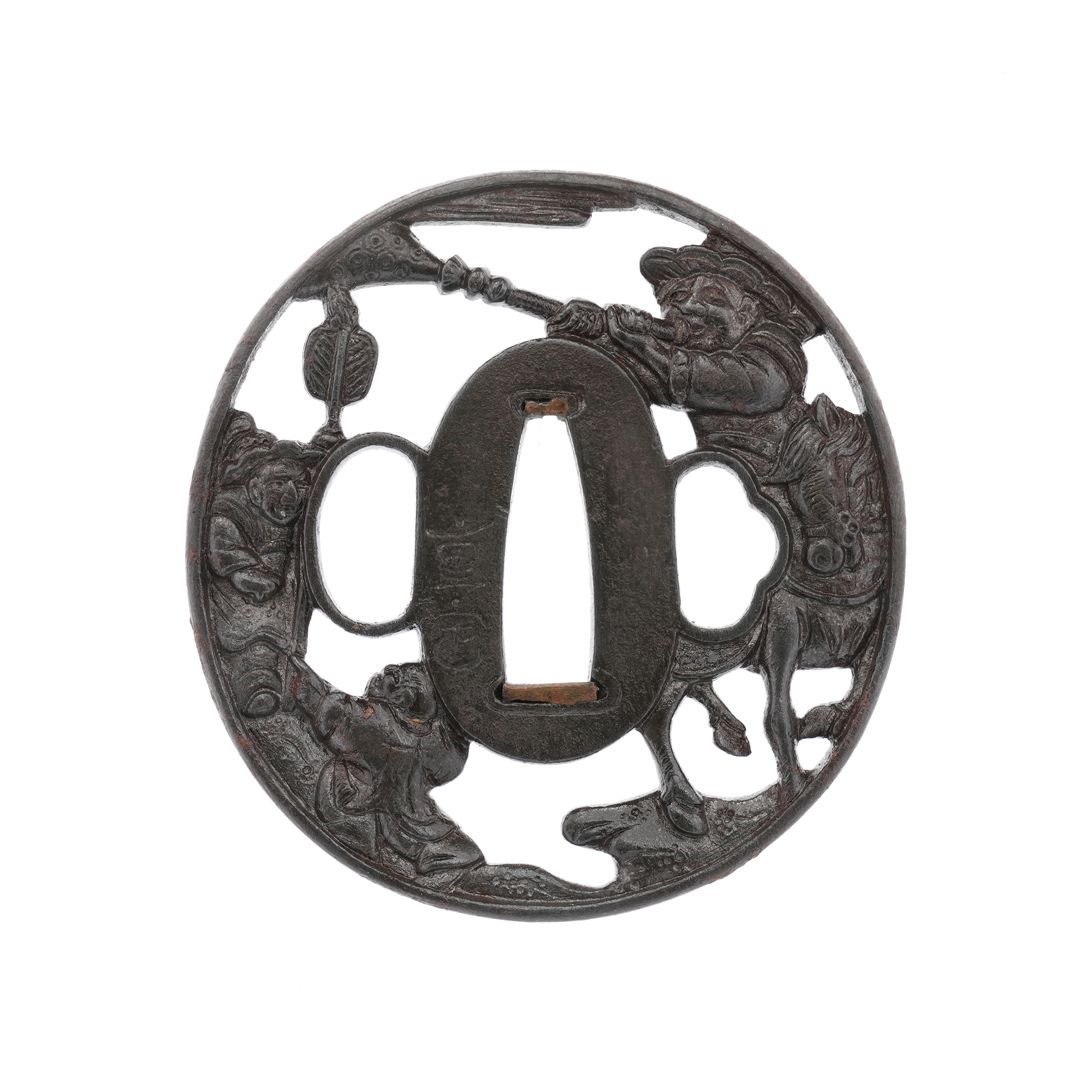
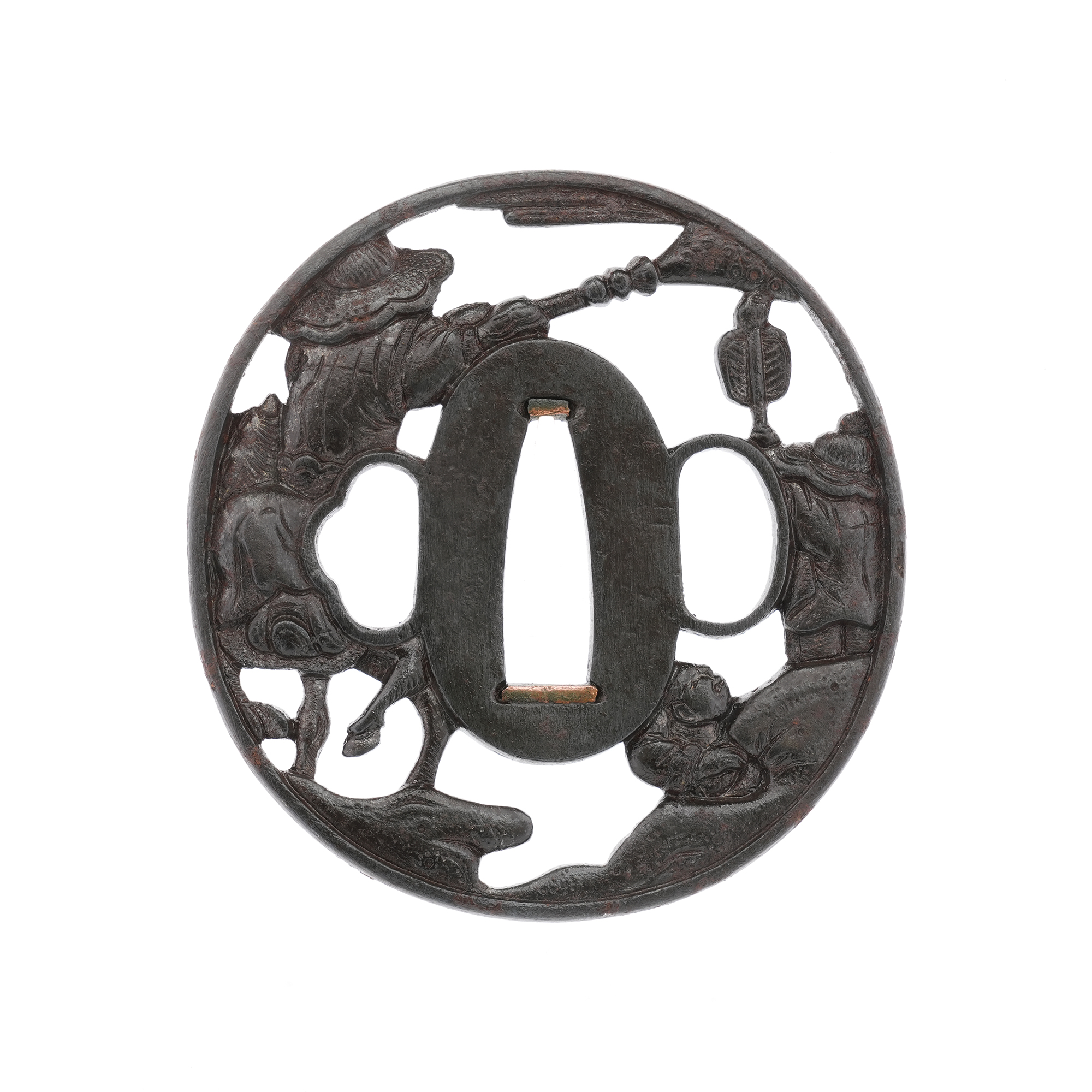
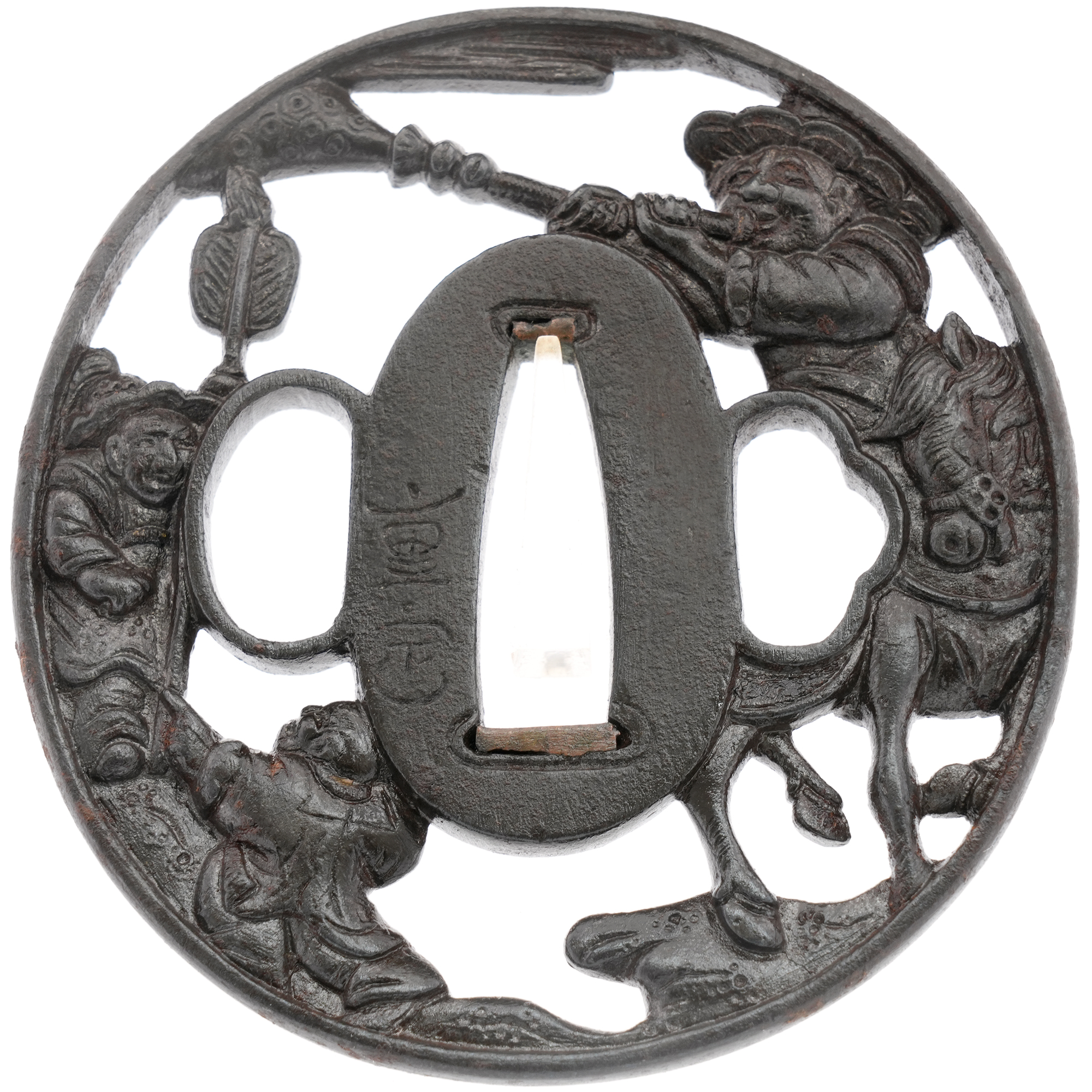
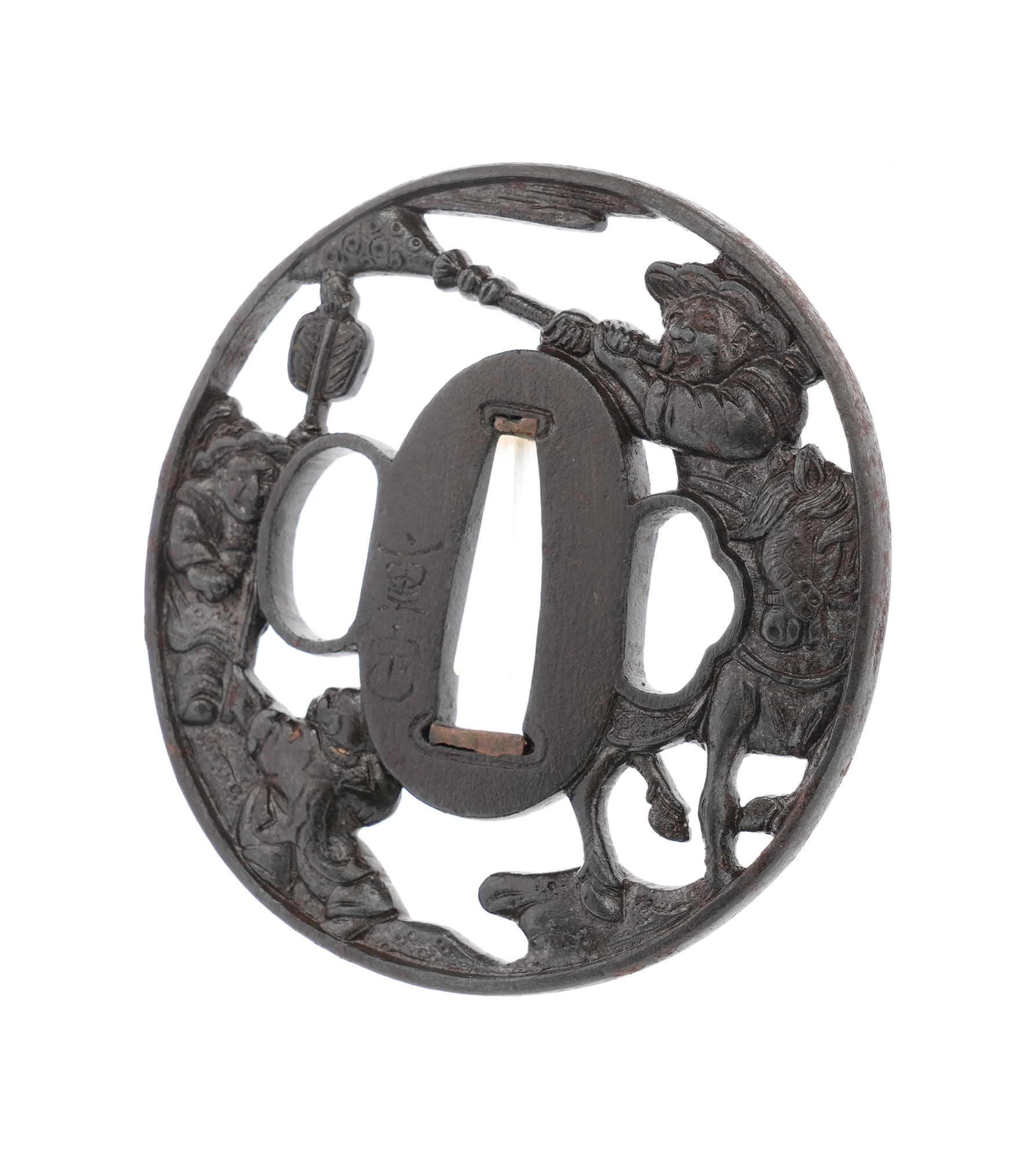
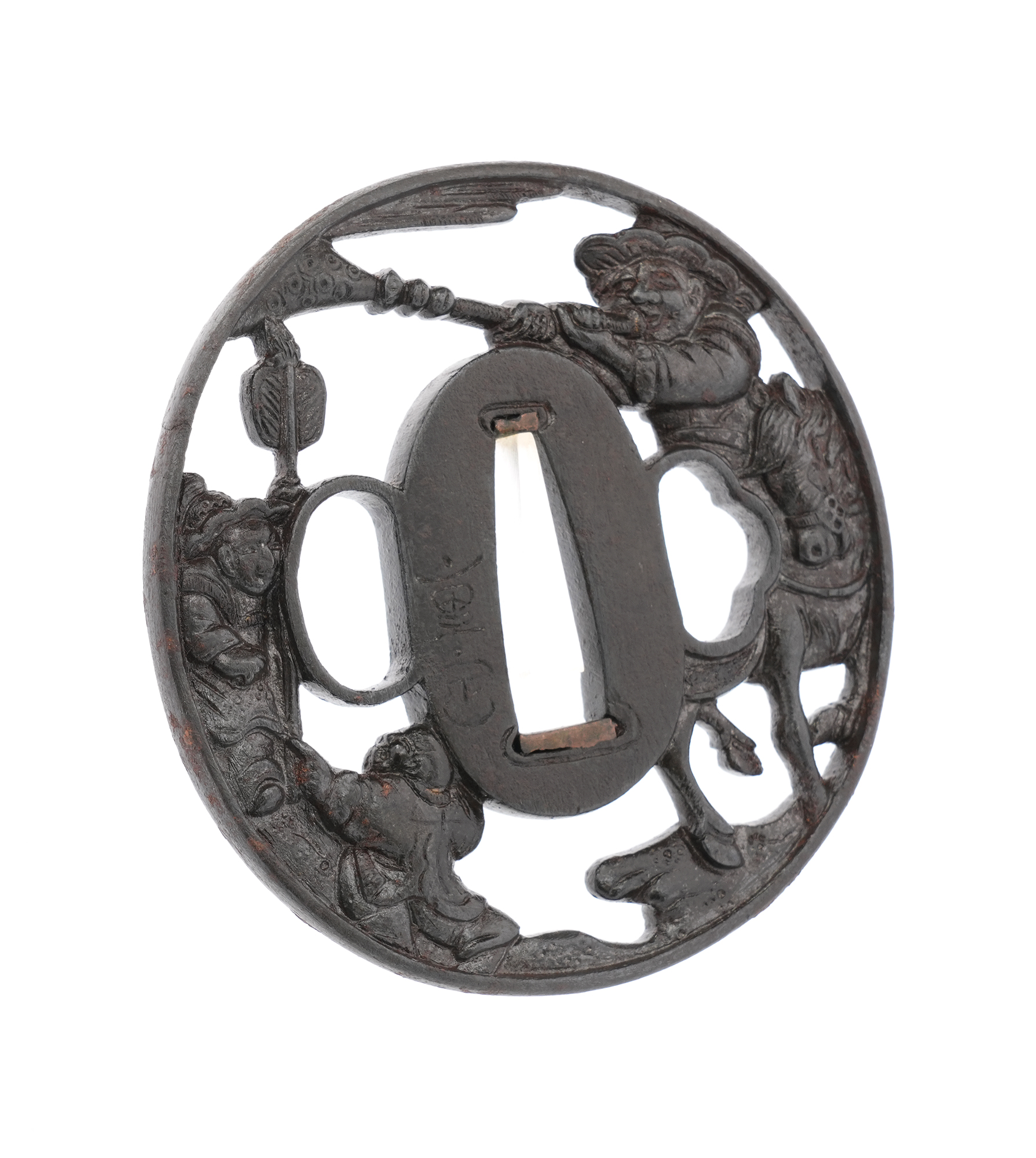
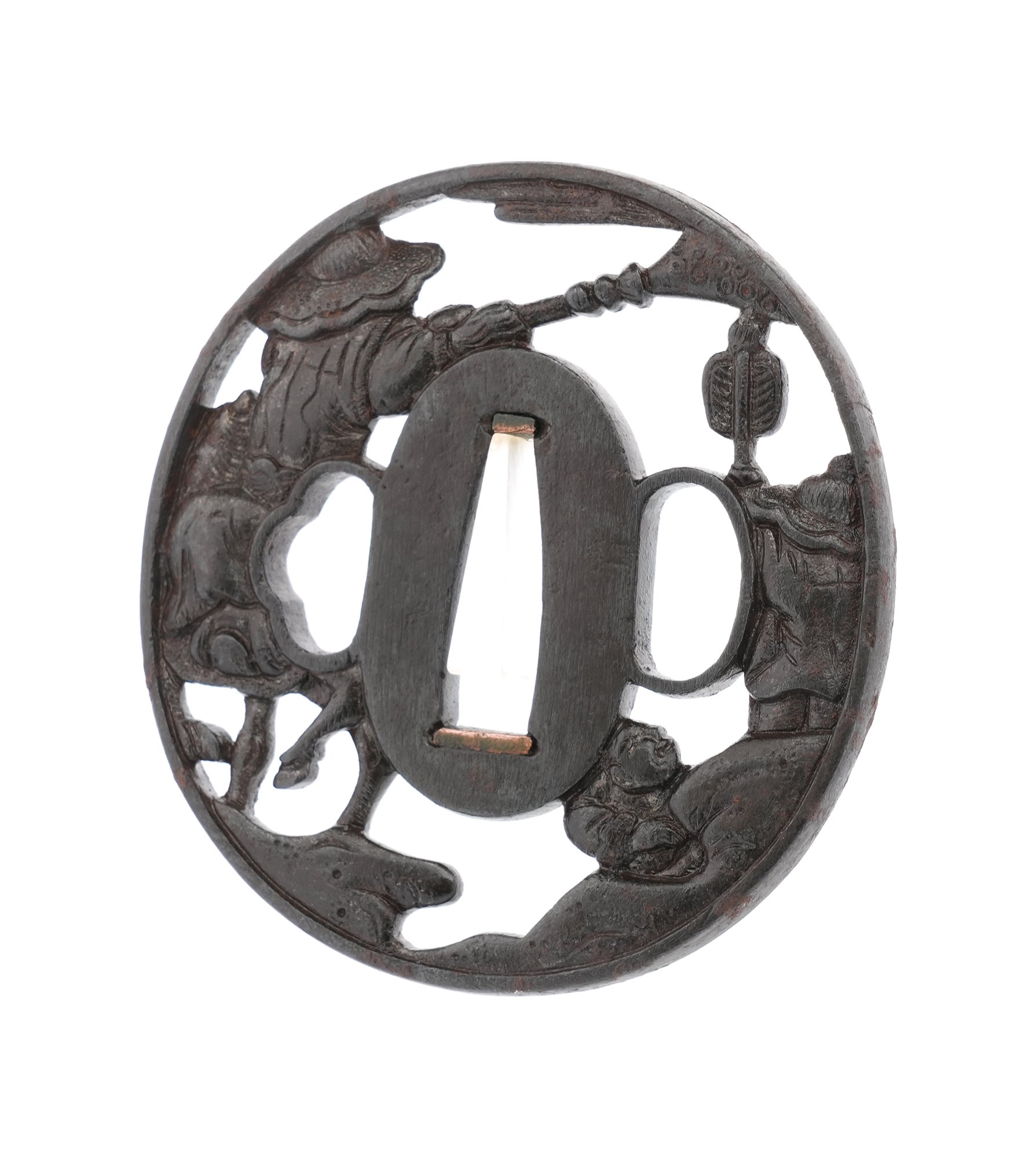
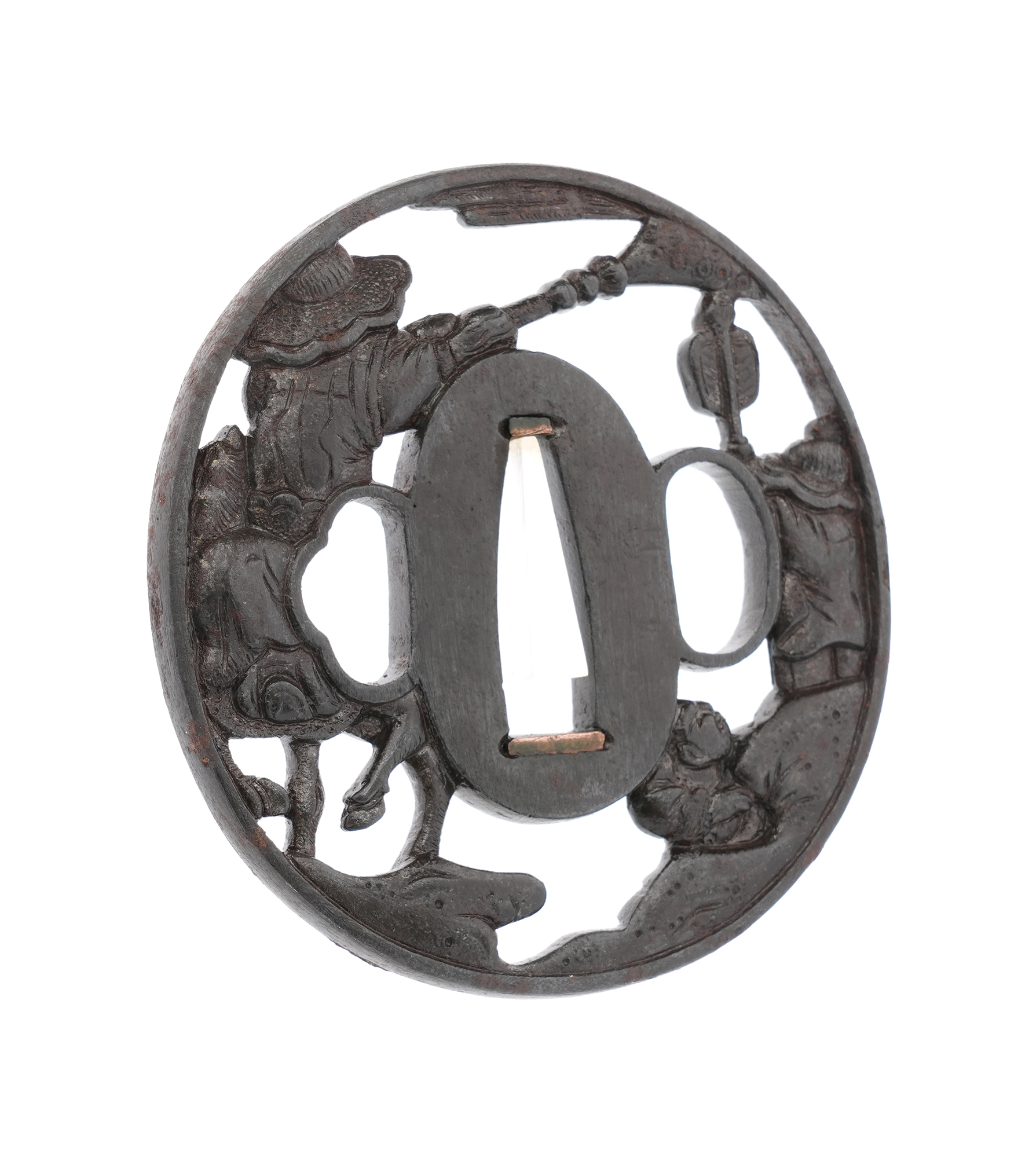
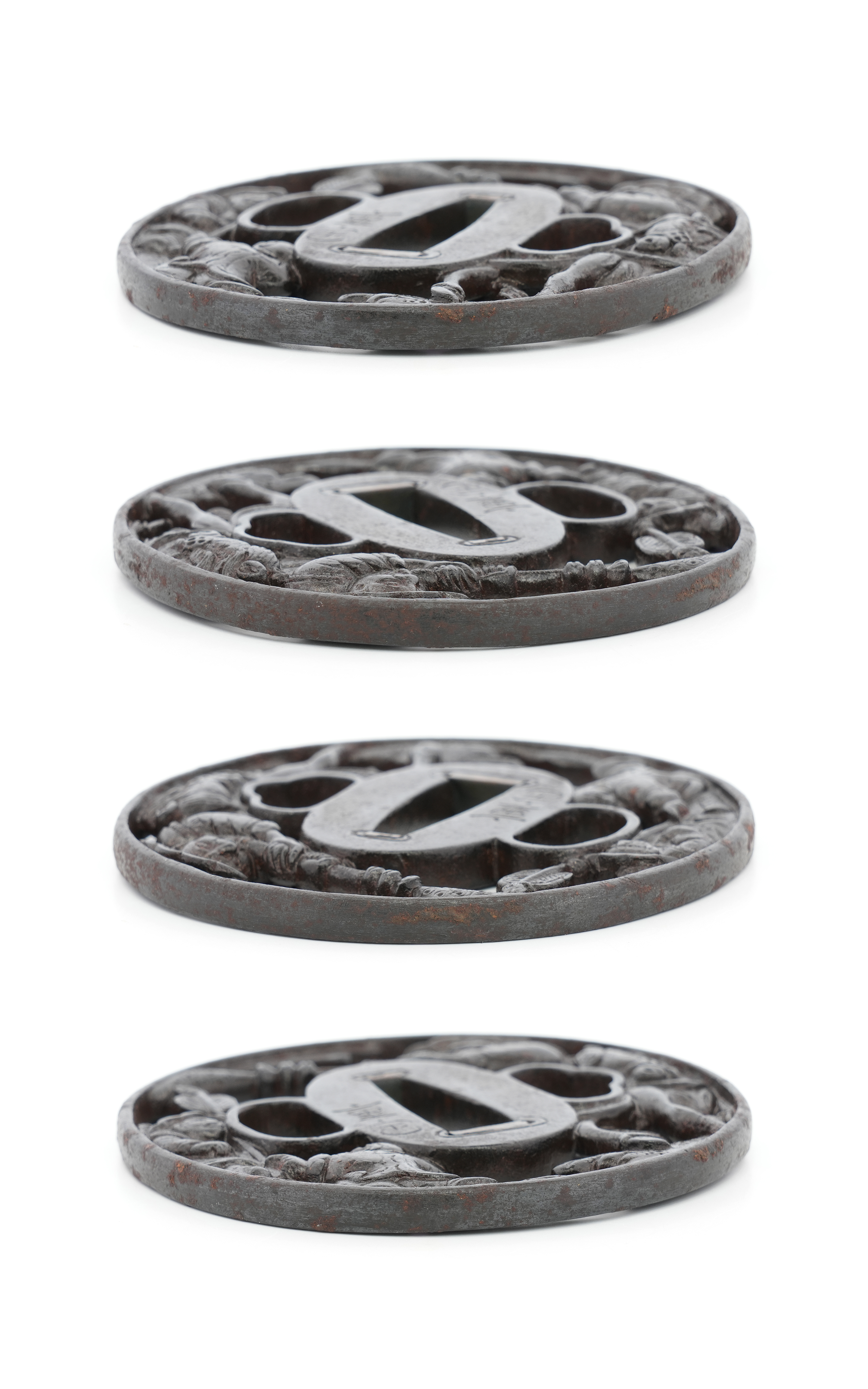
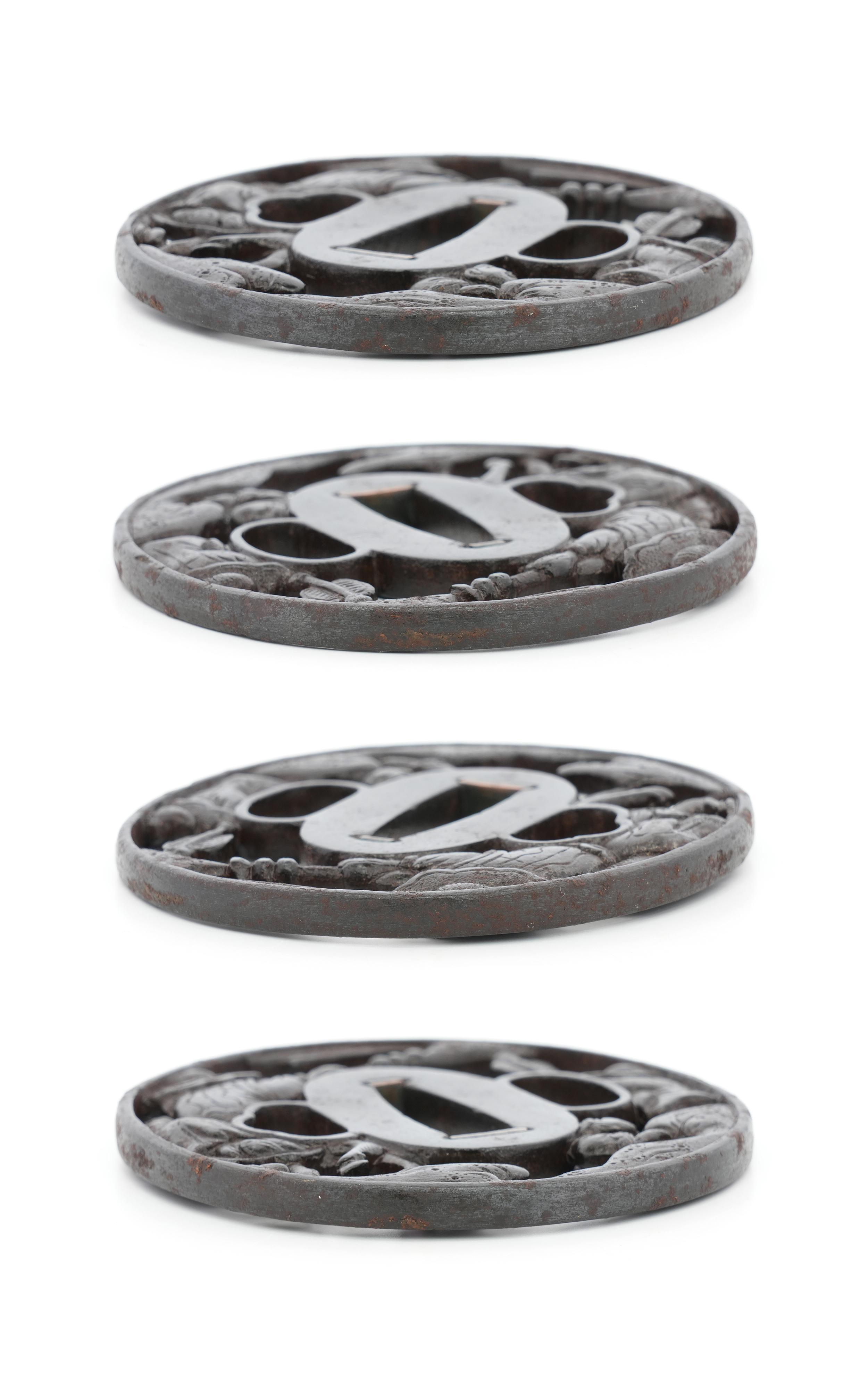
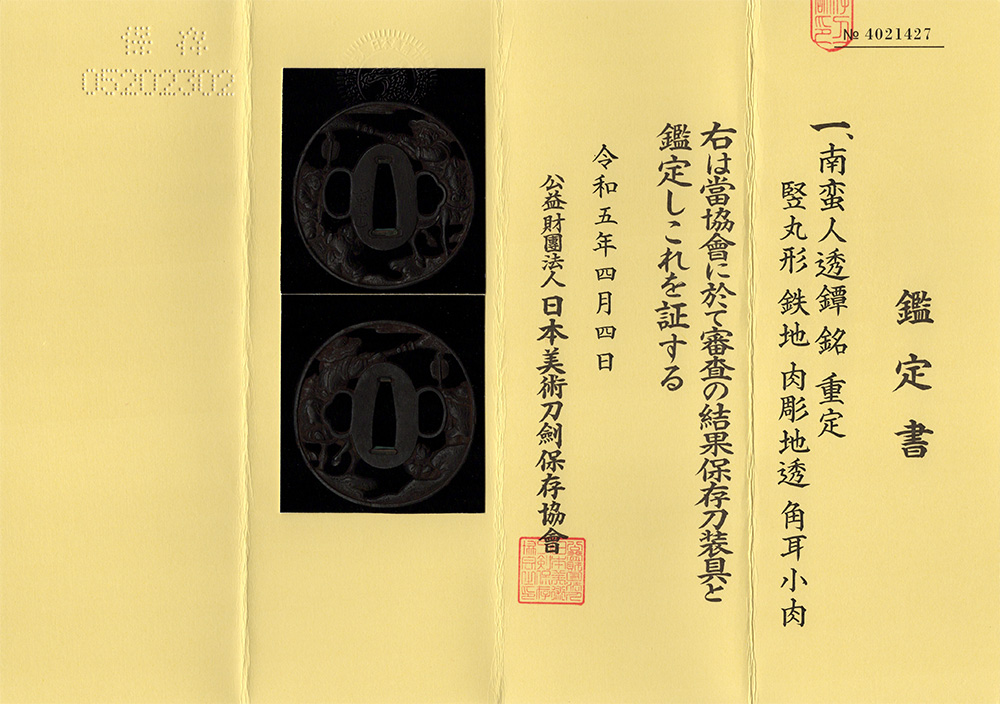
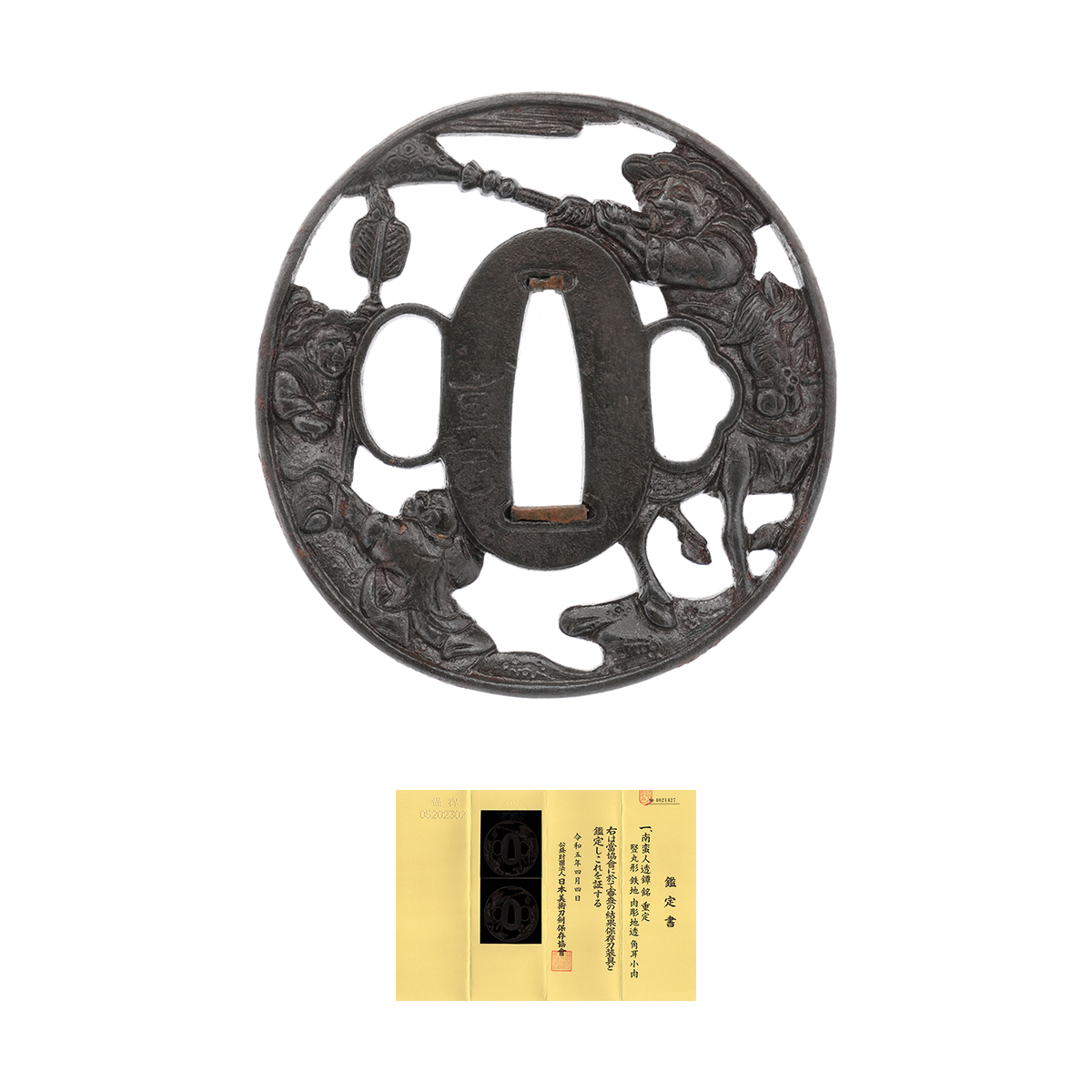
This piece has the mei "Shigesada" carved in a unique, soft, and rounded script, and it has been issued a Hozon Tosogu Kanteisho by the Nihon Bijutsu Token Hozon Kyokai. While there are smiths of the same name assumed to be among the soken kinko, and a Shigesada recorded as a kinko from Dewa no Kuni can be confirmed, this piece bears a two-character mei without a country, place of residence, or kao. As the appraisal paper also does not limit the school or country and is simply inscribed "Mei Shigesada," it is appropriate at this stage to treat it as a Nanban-jin sukashi tsuba signed by Shigesada without narrowing it down to a specific lineage. Corresponding to the rounded style of the mei, the figures and horses are carved in high relief with a rich sense of volume, and the composition, which spreads a party dressed in foreign attire across the entire surface of the tsuba, clearly expresses the artist's preference for narrative quality. The Nanban-jin zu is a subject that reflects the curiosity people of that time held toward overseas lands, using motifs such as hats, pleated clothing, long trumpets, and rare accessories to depict foreign customs of Portuguese and Spanish people and their attendants who arrived in Japan from the end of the Muromachi period onward. On the right side of the obverse, a figure is placed blowing a long trumpet from horseback, while on the left is a figure holding an accessory resembling a kara-uchiwa with a long handle, and just below to the right of that is another figure shown with a gesture as if stretching out their left hand to point at the previous figure, unfolding the scene of a foreign party advancing across the entire tsuba surface. The reverse does not depict a different scene but rather the back side of the figures, horses, and scenery drawn on the obverse; it is a three-dimensional composition unique to nikubori ji-sukashi where, by turning the tsuba over, one can view the same scene from the opposite side. In addition to the facial features of the figures, the brims of the hats, the pleats of the clothing, the fingertips, and the joints of the trumpets, the heads of the horses and their powerfully undulating manes are carved in thick relief. By extensively piercing the background, the silhouette of the darkened iron stands out clearly against both a white background and a dark saya. The construction, which leaves the seppa-dai wide and robust while applying line engravings that neatly border the area around the sekigane above and below it, and skillfully connects the figures, horses, and accessories to the mimi to achieve both strength and design, is also a highlight. From the front, it is a dense Nanban fuzoku zu, and from an angle, the volume of the takabori and the depth of the figures and horses layered in multiple levels stand out. There is a refined splendor unique to this piece in how it shows its beauty through the shadows of the iron alone, without relying on iroe. With a fulfilling scene centered on the figure blowing a trumpet on horseback, combined with the figure holding an accessory like a kara-uchiwa and an attendant figure, a skillful composition that carves the modeling of the obverse through to the reverse in three dimensions, and a reliable provenance accompanied by a Hozon Tosogu Kanteisho along with the collectability of being a signed work, this is a piece that is particularly hard to overlook for those who favor Nanban fuzoku zu, jinbutsu tsuba, and nikubori ji-sukashi. The subject is clear even from a distance, and in hand, the pleasure of deciphering the details of the figures' expressions, drapery, horse tack, manes, and accessories one by one is endless. It is a charming tsuba that possesses both a presence when displayed and a depth as a metalwork piece, allowing one to fully savor the range of Shigesada's work.
Offered by Toushin

Machine translation of the shop's Japanese ·
Machine translation from the shop's Japanese · may contain errors ·
Dewa
2 pieces on the market now
Certifies a genuine fitting worth preserving: a correct signature, or, if unsigned, an identifiable era and school, with recognized artistic and craft value.
The NBTHK (Nihon Bijutsu Tōken Hozon Kyōkai, the Society for the Preservation of Japanese Art Swords) is a public-interest incorporated foundation founded in 1948 and supervised by Japan’s Agency for Cultural Affairs (Bunkachō); it is based at the Japanese Sword Museum in Tokyo. Its expert panels physically examine each submitted work (shinsa) and issue a certificate (kanteishō) ranking it by artistic and historical merit. NBTHK papers are the most widely recognized standard of authentication for Japanese swords and fittings.
NBTHK official siteAs a rule we do not accept returns, except when we have sent a different item from the one ordered or when there is a significant discrepancy between the description and the item. If you wish to return an item, please contact us within 3 days of its arrival and then send it back.
¥385,000