Edo was the sword’s age of connoisseurship: the Hon’ami appraisers, the shogunal register of famous blades of 1719, and a thriving literature turned the sword into an object of study even as it ceased to be drawn in war.
 NihontoWatchNihontoWatch
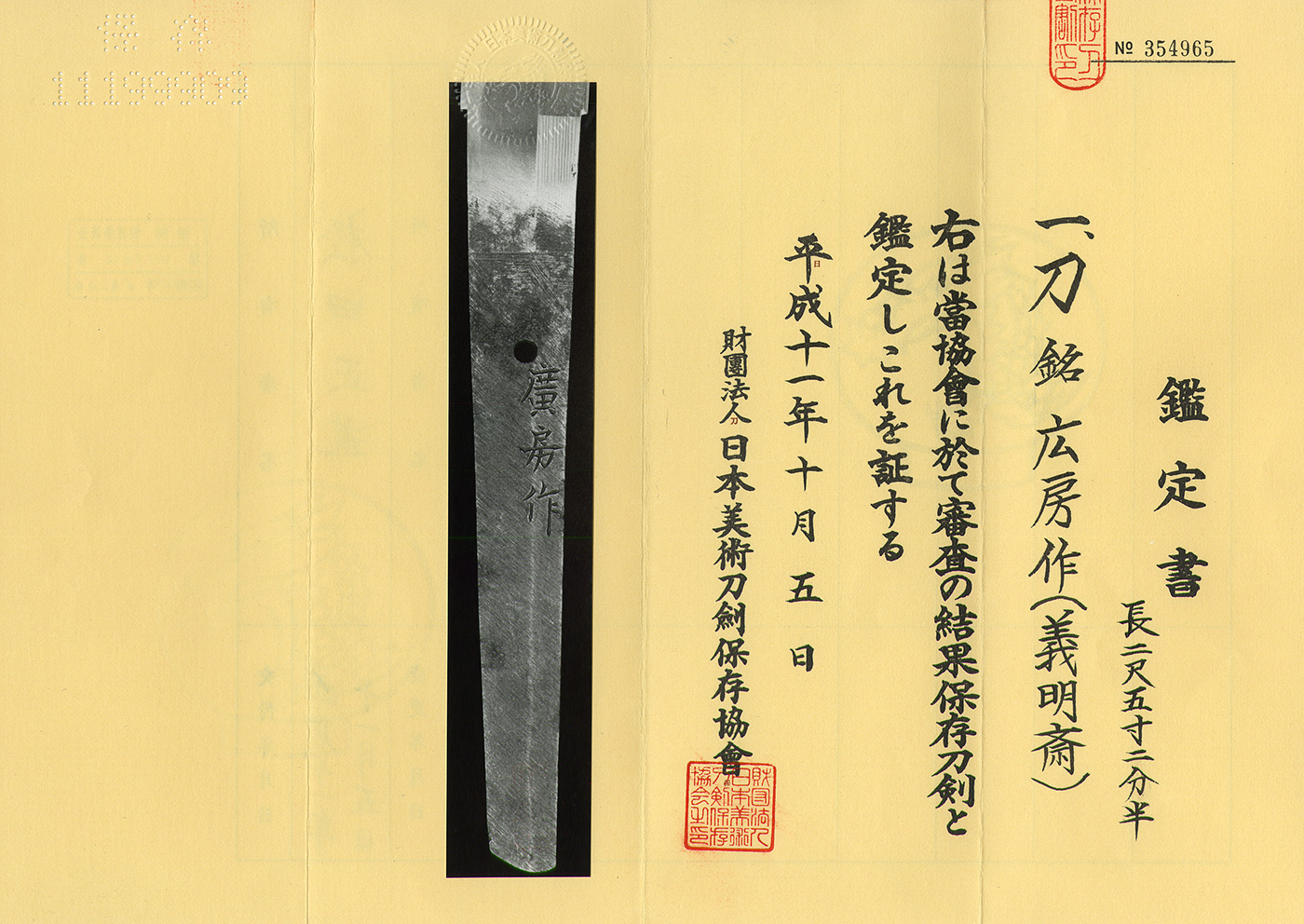
Katana in Shirasaya with Koshirae (NBTHK Hozon Token) (We divide 4 sections for each sword as Saijyo Saku, Jyojyo Saku, Jyo Saku and Regular Saku). This blade is ranked as Jyo Saku among the works of Hirofusa. Shape: A powerful and imposing katana with a wide mihaba, relatively shallow curvature, and an elongated kissaki. The blade has a robust and magnificent appearance. Jigane: Ko-itame hada with a slightly pronounced grain pattern. Areas of hardened steel are visible in places along the shinogi-ji. Hamon: Nie-deki ko-gunome-midare. The boshi displays a midare-komi pattern. Features: Hirofusa, who used the art name Gimeisai, was a swordsmith active in Kuwana, Ise Province. He was a disciple of Daido. Historical Background: The Bakumatsu period (approximately 1853–1869) was a turbulent time in Japanese history, beginning with the arrival of the American Black Ships and culminating in the collapse of the Edo shogunate and the establishment of the new Meiji government. The following were some of the major events of this period. 1853 – Arrival of the Black Ships: Commodore Matthew Perry's American fleet arrived at Uraga and demanded that Japan open its ports to foreign nations. 1854 – Convention of Kanagawa: Japan signed the Treaty of Peace and Amity with the United States, marking a significant step toward ending its policy of national seclusion. The ports of Shimoda and Hakodate were opened to American ships. 1858 – Treaty of Amity and Commerce: Ii Naosuke, the Tairo (Great Elder) of the shogunate, signed a commercial treaty with the United States without obtaining imperial approval. The treaty expanded foreign trade but contained unequal provisions that disadvantaged Japan. 1860 – Sakuradamon Incident: Ii Naosuke was assassinated outside the Sakuradamon Gate of Edo Castle by a group that included former samurai from the Mito Domain. 1867 – Restoration of Imperial Rule (Taisei Hokan): Tokugawa Yoshinobu, the 15th and final Tokugawa shogun, formally returned political authority to the Imperial Court, bringing the Tokugawa shogunate to an end. 1868 – Bloodless Surrender of Edo Castle: Through negotiations involving Katsu Kaishu and Saigo Takamori, Edo Castle was surrendered without a major battle, helping prevent widespread destruction in the city. NBTHK Tokubetsu Hozon Token.
Offered by Aoi Art
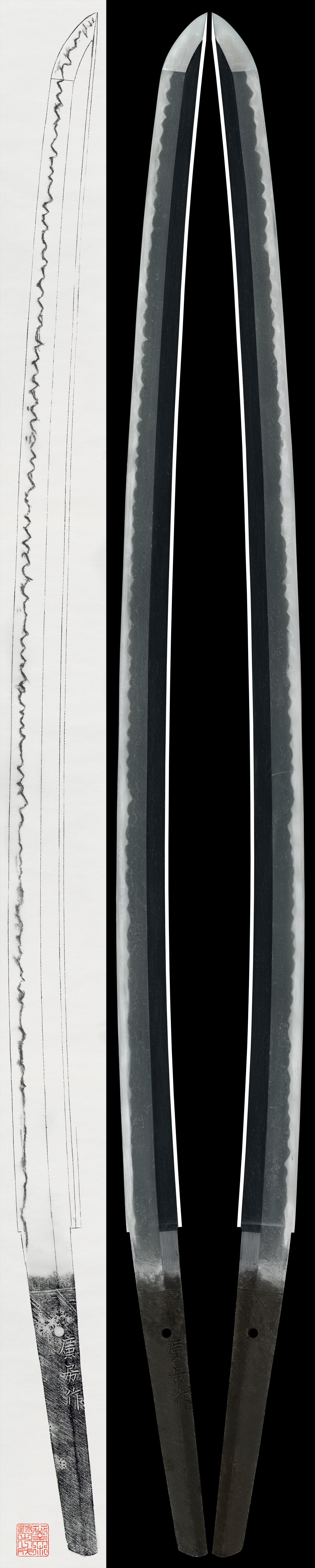



As written by the shop
The Edo period (1615 to 1868)
Edo was the sword’s age of connoisseurship: the Hon’ami appraisers, the shogunal register of famous blades of 1719, and a thriving literature turned the sword into an object of study even as it ceased to be drawn in war.
Certifies a genuine blade worth preserving: a signature confirmed correct, or, if unsigned, an era, province, and school that the NBTHK can reliably identify.
The NBTHK (Nihon Bijutsu Tōken Hozon Kyōkai, the Society for the Preservation of Japanese Art Swords) is a public-interest incorporated foundation founded in 1948 and supervised by Japan’s Agency for Cultural Affairs (Bunkachō); it is based at the Japanese Sword Museum in Tokyo. Its expert panels physically examine each submitted work (shinsa) and issue a certificate (kanteishō) ranking it by artistic and historical merit. NBTHK papers are the most widely recognized standard of authentication for Japanese swords and fittings.
NBTHK official siteIf you wish to return an item, please notify us within 3 days of receipt. After this period we cannot accept cancellations. Please ship the return to us within 5 business days. Cancellation is conditional on the item being kept in the same condition as at the time of sale, so please handle it with care.
Starting price
¥500,000