





The twentieth century nearly killed the craft twice: wartime distortion, then the occupation ban. The NBTHK’s founding in 1948 and licensed forging from 1953 rebuilt the sword as an art, crowned by Living National Treasures and the mukansa rank.
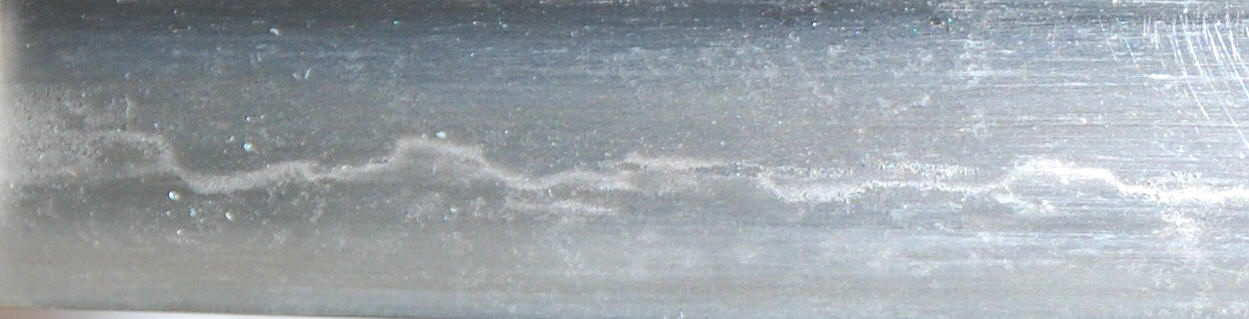
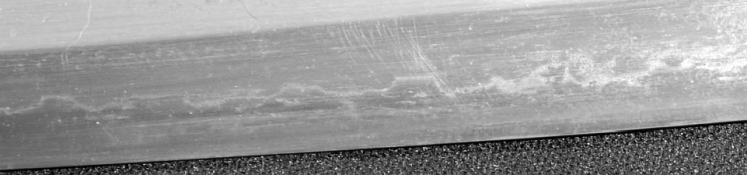
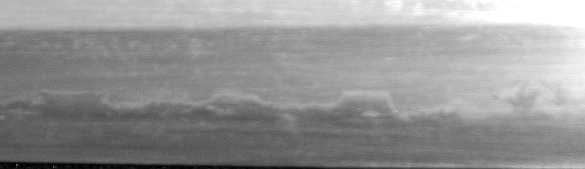
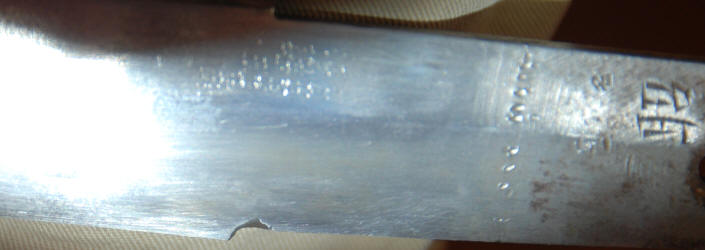
A star stamped tachi signed, Noshu ju Kaneshige (alternate reading would be Kinju). Dated Showa juhachi nen juni gatsu (December 1943). Shinozukure, iroi mune, chukissaki. Hawatare: 2 shaku 2 sun 7 bu 6.5 rin. (67.5 cm / 26.57"). Motohaba: 2.26 cm. Sakihaba: 2.398 cm. Kasane: 6.8 mm. Gunome notare midare, hotsure, yo, fine bright hanie, gifu, kinsuji, nado. The jigane is a bright tight masame, packed with konie, small chikei. The machi has been moved up slightly, to place a chip at the hamachi. Mounted in a shirasaya with a leather military cover. Shingunto tsuba and tsuka. Needs and deserves a polish. This is a high class gunto family sword, that found its way into service in WWII. The chip is unfortunate, but will remain under the habaki, and shouldn't detract from the appreciation of the workmanship. It does however impact the asking price. Chip Noshu ju Kaneshige Showa juhachi nen juni gatsu
Offered by Nihonto US
This piece has sold
Get an email when a new Sako Kaneshige piece hits the market.


Mino · around 1926-1989
1 piece on the market now
Shōwa to the present: destruction and revival
The twentieth century nearly killed the craft twice: wartime distortion, then the occupation ban. The NBTHK’s founding in 1948 and licensed forging from 1953 rebuilt the sword as an art, crowned by Living National Treasures and the mukansa rank.
Three day, no penalty, inspection on every item. Returns must be in the same condition as shipped. Actual costs will be charged on returned items. No restocking fee. If you did not like the item is a good enough reason for return.