 NihontoWatchNihontoWatch
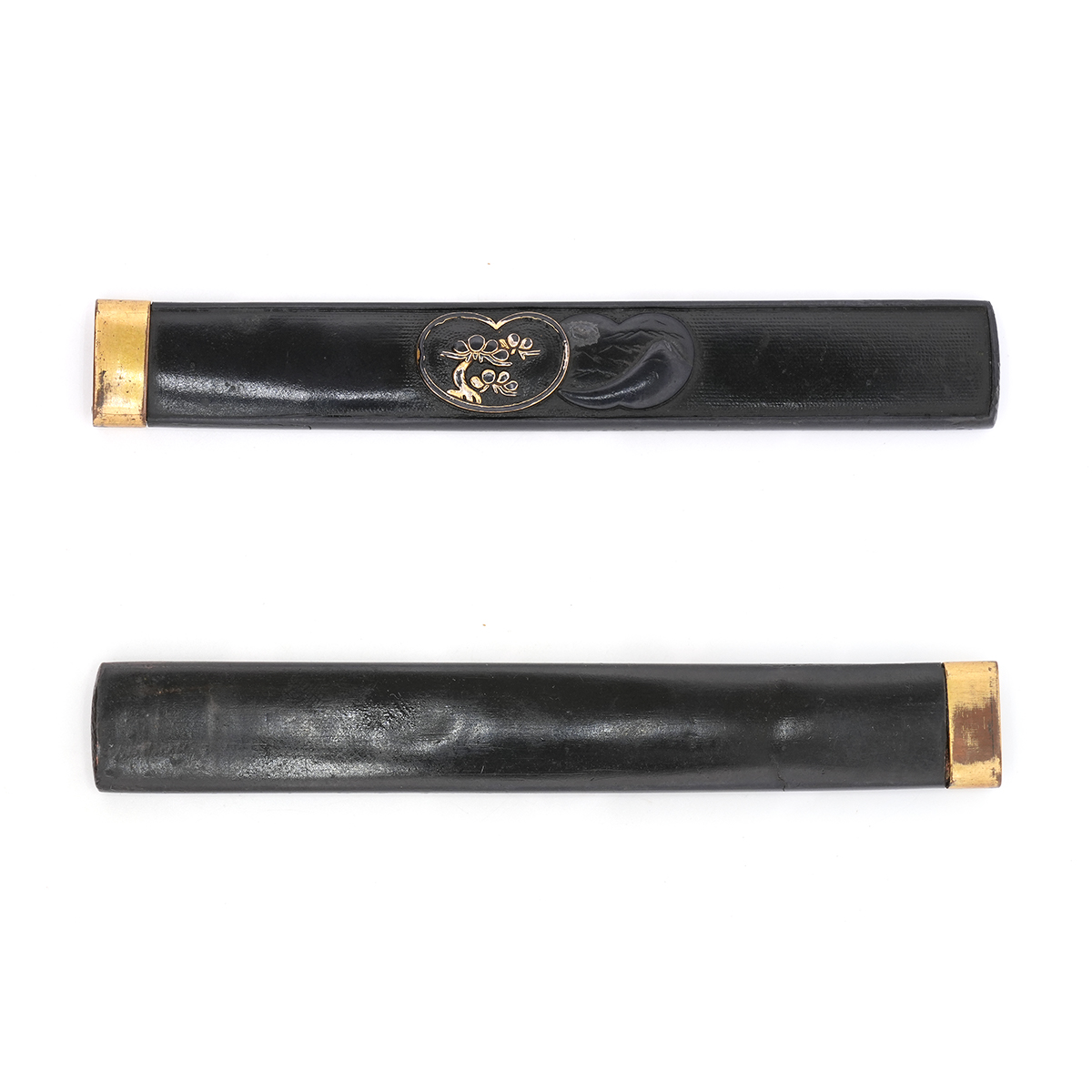
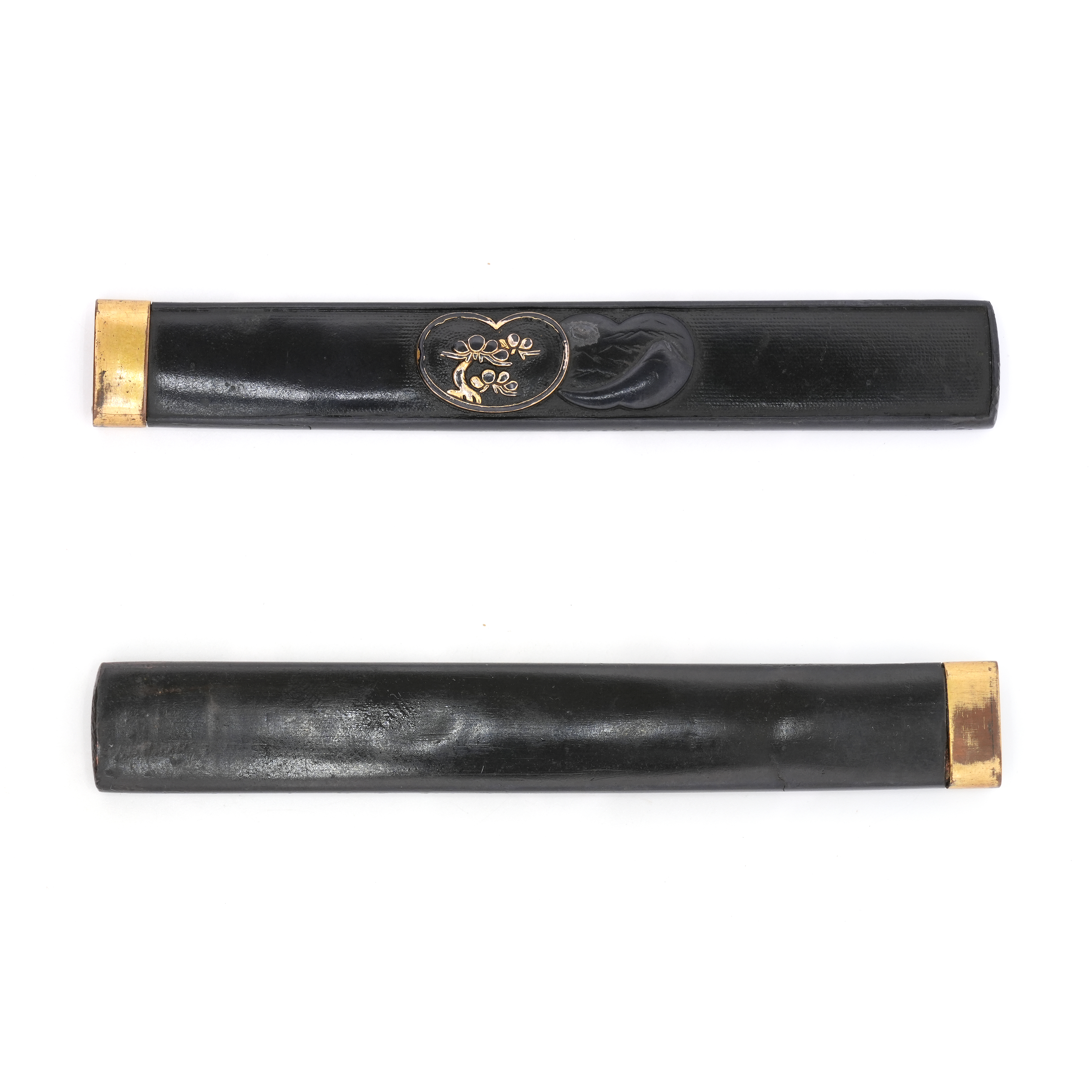
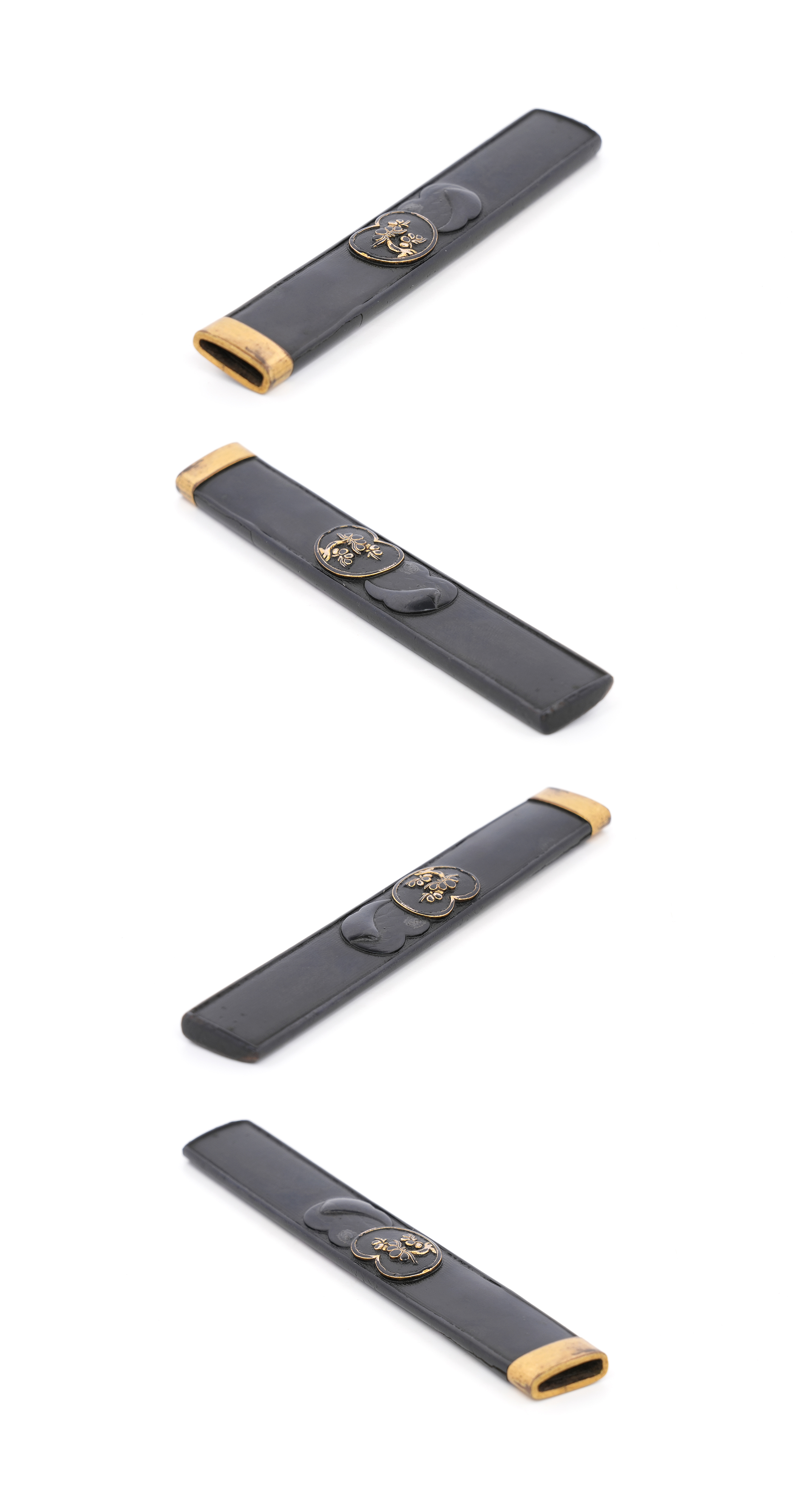
Inome-mado Kasane-zu Kozuka Mumei (Ko-kinko) -Mumei (Ko-kinko)- Zenjo 98.8 mm Haba 14.5 mm Omasa 24.3 grams Momoyama-jidai to Edo-shoki The Momoyama to early Edo period Fuzoku Kiri-bako Ko-kinko is a collective name for mumei irogane fittings produced primarily from before the Momoyama period through the early Edo period that are difficult to attribute to a specific school or maker. Unlike the precision seen in later machibori, a deep flavor unique to old works appears in the soft jigane, simple and powerful modeling, and the iroe and nanako-ji that have become familiar through long use. The inome is a design with an inwardly recessed top said to be modeled after the eye of a wild boar; it has been used since ancient times in shrine and temple architecture and on fittings for armor and weapons, and has been popular as a pattern associated with warding off evil and preventing fires. In this piece, rather than placing the inome shape as a mere mon, two windows are arranged to overlap front and back, creating depth and variation within the limited space while drawing the eye to the center of the slender kozuka. Originally, fine nanako was painstakingly struck into the jita, but through practical use over many years, the grain has worn down, and it currently presents a calm expression that at first glance looks like migaki-ji. This wear is different from the smooth finishes of later generations; it is a keshiki that tells the story of the time it spent being held in the hand and passed down as a mounting, and the way the remaining nanako faintly emerges when catching the light is also a highlight. Kin-iroe has been applied to the inome window in the left foreground to create a brilliant focal point, but here too, parts of the underlying jigane have appeared due to wear, and from the tone where the vivid gold and exposed old jigane meet, one can enjoy the heavy texture unique to old works. By overlapping the other inome window while leaving it dark, a quiet perspective is established with the golden-shining window in the foreground, and a koga charm connecting the Momoyama period to the early Edo period drifts from the softness of the outlines and the height differences of the suemon. At the toguchi (koguchi) where the kogatana is inserted, a kuchigane made of suakagane-ji with kin-tokin has been added as a later repair to compensate for a spot where the original brazing came loose over the long years. While this repair is a factor that lowers the price in terms of condition, it also indicates a history of being carefully mended during practical use, and along with the wear of the nanako and the rubbing of the iroe, it frankly conveys the long passage of time of this piece. It is a flavorful work where one can closely appreciate the charm of Ko-kinko, condensing into a single piece the simple strength characteristic of irogane kozuka from the Momoyama to early Edo periods, the inome design possessing auspicious qualities, and the keshiki of the jigane that has settled through extensive use.
NihontoWatchOffered by Toushin

We couldn’t find current papers for this piece. Ask the dealer whether it has been, or can be, submitted to shinsa. — Hoshi

Momoyama
Unsigned
Machine translation from the shop's Japanese · may contain errors ·
We could not find an authenticity certificate on the seller’s listing. Japanese swords and fittings are normally papered by the NBTHK (or the NTHK). Without one, the attribution is the seller’s own assessment and has not been independently verified — treat it with caution and ask the dealer about certification before buying.
As a rule we do not accept returns, except when we have sent a different item from the one ordered or when there is a significant discrepancy between the description and the item. If you wish to return an item, please contact us within 3 days of its arrival and then send it back.
¥220,000