 NihontoWatchNihontoWatch
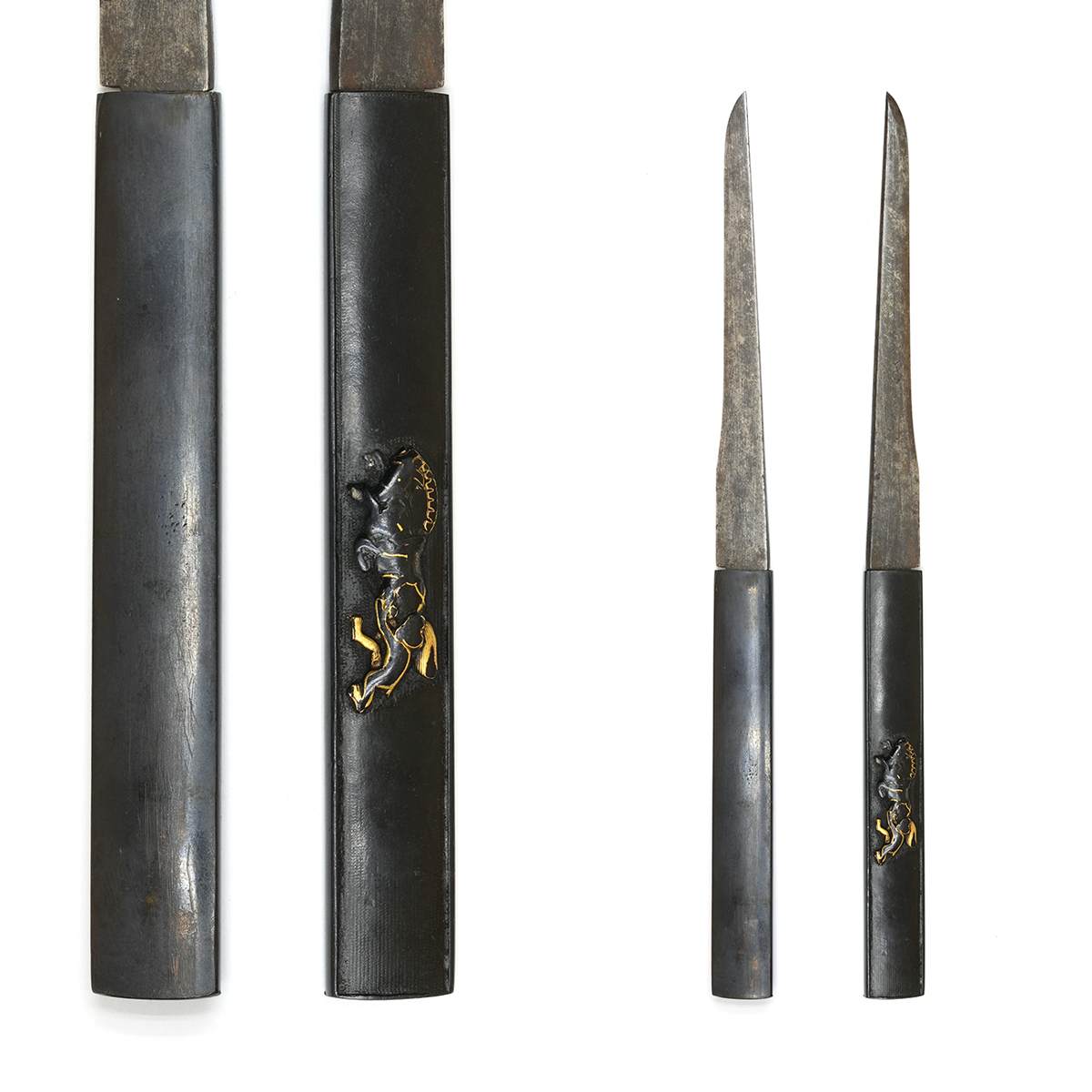
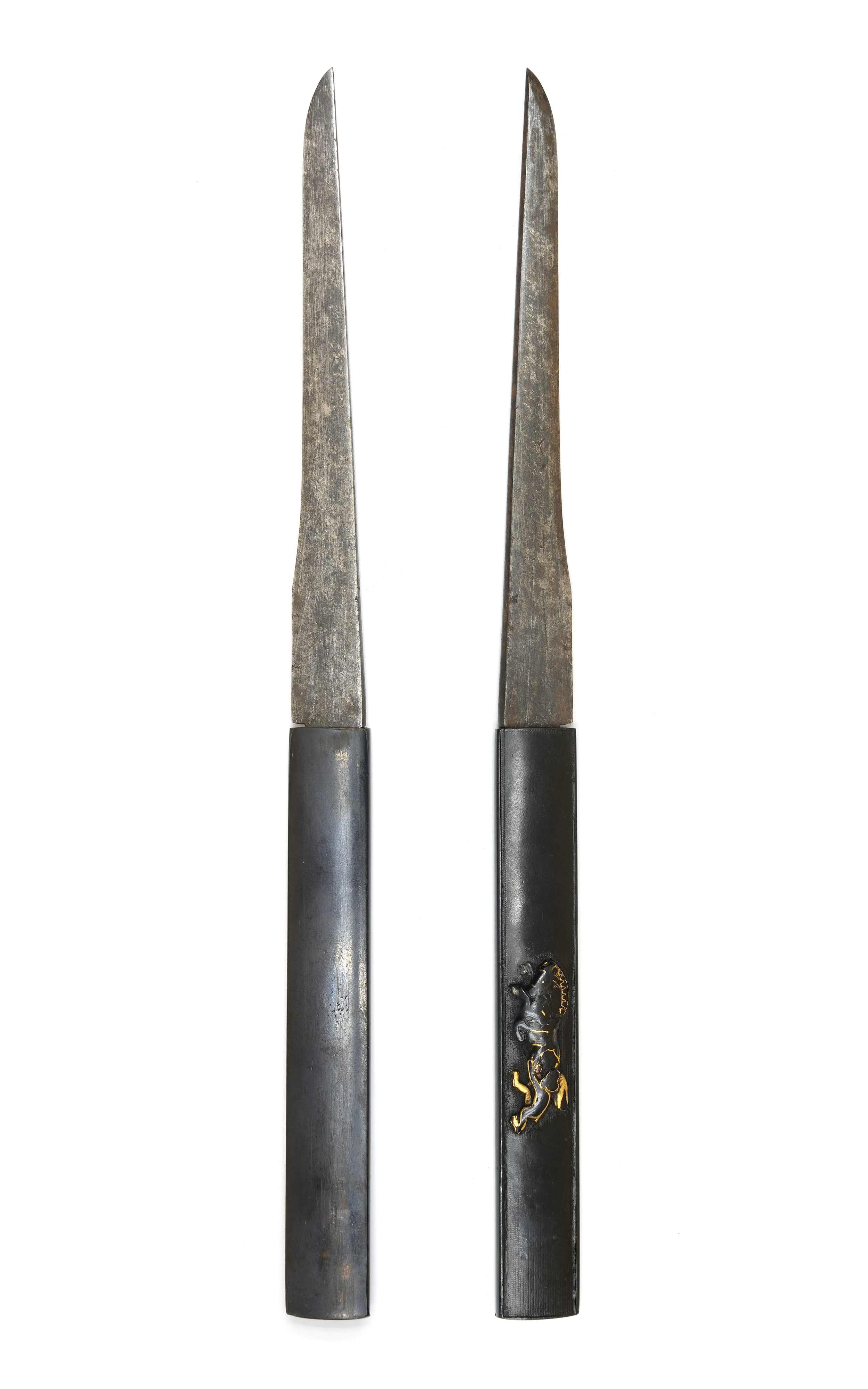
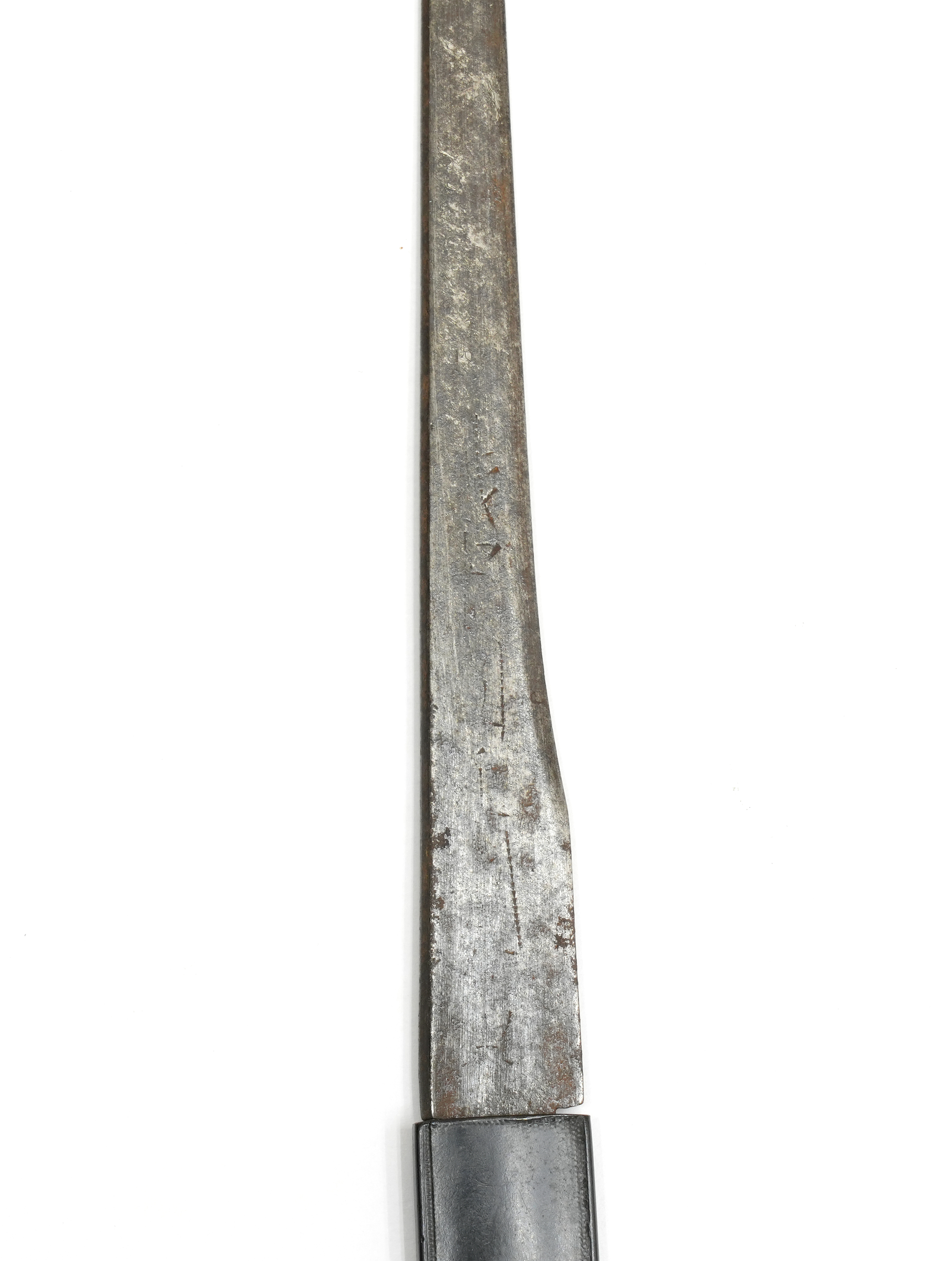
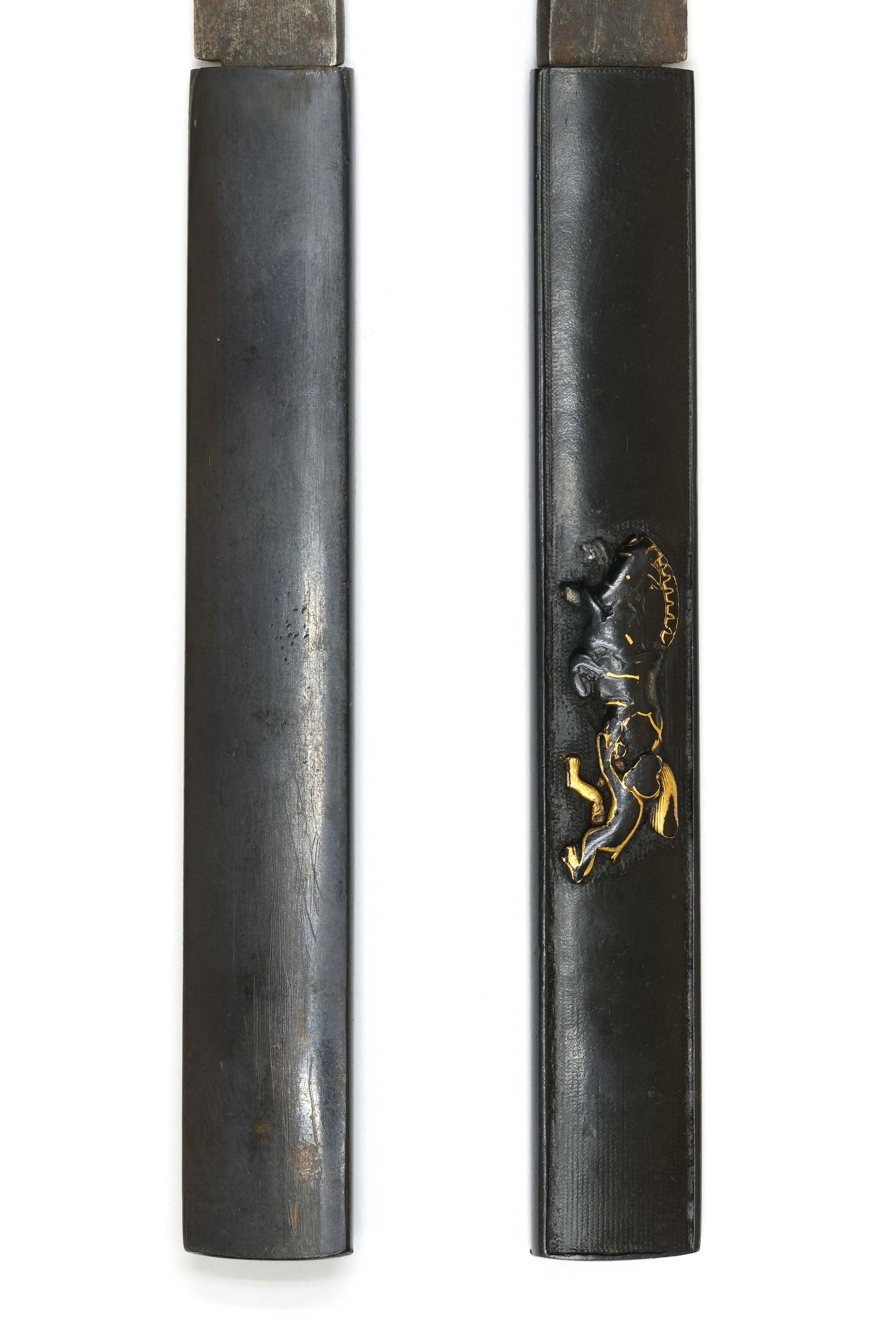
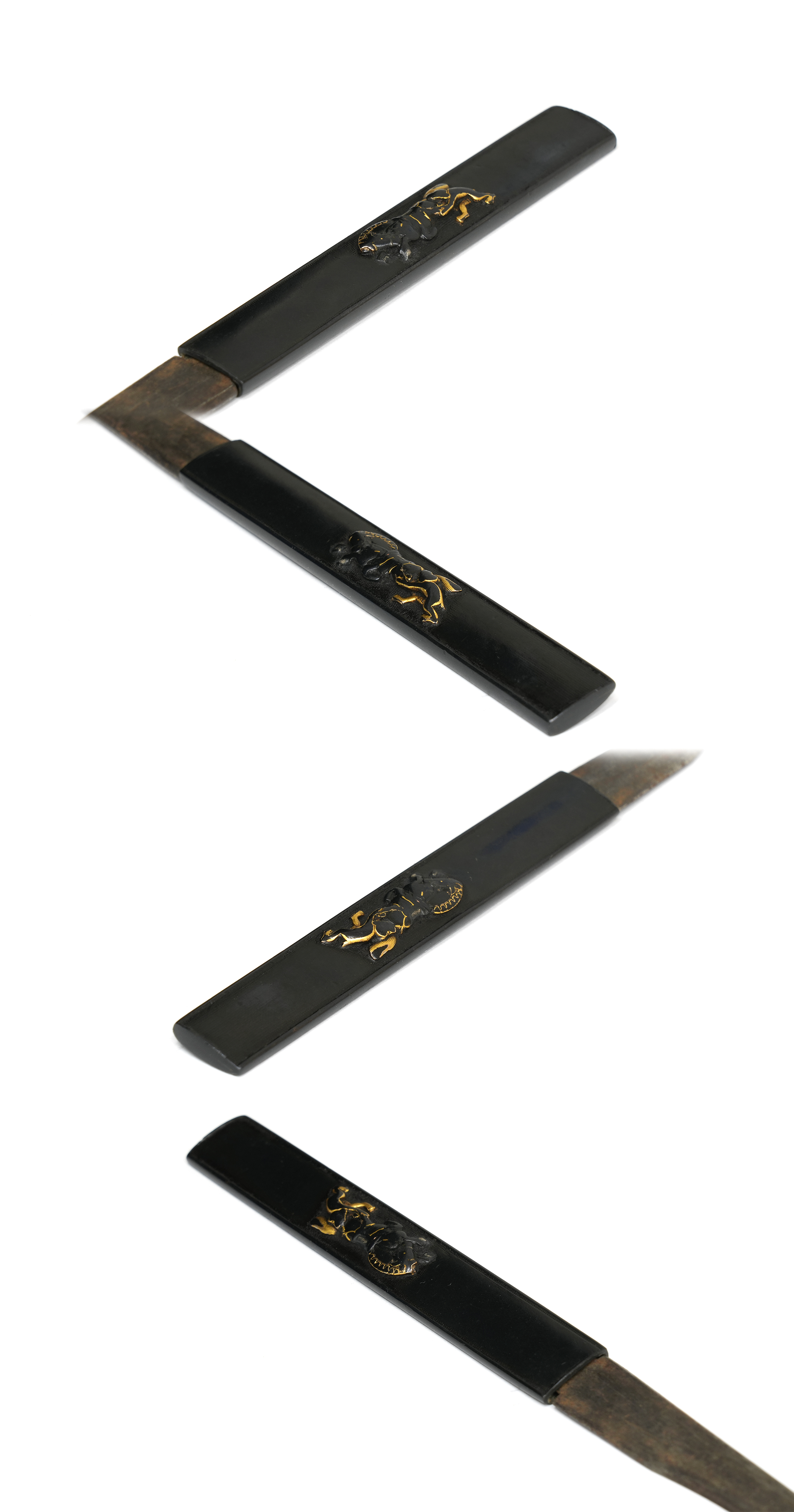
Koma-hiki Saru-zu Kozuka (with Mei-fushō Kodatana) Mumei (Ko-kinko) -Mumei (Ko-kinko)- Total length including Kodatana 205.1 mm, Kozuka total length 96.7 mm, width 14.1 mm, weight including Kodatana 37.4 grams Momoyama-jidai to Edo-shoki The Momoyama to early Edo period Included: Kiri-bako Ko-kinko is an appraisal designation used for mumei iroe metalwork produced primarily from the Muromachi period to around the early Edo period, which is not attributed to a specific school or maker, and exhibits archaic styles in its jigane, carving methods, nanako, iroe, and other features. These works possess a unique charm in their simple and powerful modeling, which differs in atmosphere from later machibori, their iroe surfaces that have gained depth over many years, and compositions that effectively utilize a limited palette; they are highly prized as tosogu that closely convey the buke culture from the Momoyama period to the early Edo period. The combination of a monkey and a horse is a motif linked to the ancient belief in monkeys as guardians of stables, and the custom of monkey trainers visiting stables to ward off equine diseases. For the buke, horses were important beings that supported both the battlefield and daily life, and the figure of a monkey wishing for their safety contains a prayer for the health of horses beneath its charming appearance. In this piece, the moment of a monkey leading a horse is condensed into the elongated frame, vividly preserving the memory of old folk beliefs and buke life within a small metal fitting. This piece is a kozuka with beautiful yohaku, leaving a wide area of shakudo-ji that exhibits a deep black color, with the horse and monkey carved in high relief (nikutabori) on one side of the frame. By capturing the voluminous torso of the horse, its stepping legs, and its flowing mane and tail with soft outlines, and pairing them with a small monkey at its side, it simultaneously creates a contrast of scale and the movement of a story. The kin-iroe applied to the horse's mane, harness, and key points of the monkey's body rises slenderly and vividly from the dark shakudo-ji, showing a skillful effect characteristic of Ko-kinko, where a small amount of color highlights the movement and outlines of both figures. Unlike later works that are orderly and polished, the warmth of handwork remains in the outlines, and a simple, powerful sense of life dwells in the undulations of the carving and the golden lines. The composition, which does not spread the design widely across the center but places a single scene within the yohaku, is also archaic, allowing one to thoroughly appreciate the dense luster of the shakudo, the volume of the nikubori, and the brilliance of the aged kin-iroe in hand. Synthesizing the jigane and carving style seen in the photographs, in addition to the conventional assessment of early Edo period, it is appropriate to label it "Momoyama-jidai to Edo-shoki" including the possibility of dating back to the Momoyama period; it is a highly collectible piece that combines the period characteristics of Ko-kinko with a motif deeply connected to the buke. The included kodatana has a mei incised, and one of the charms is that it can be appreciated in its original form housed within the kozuka. When the kodatana is drawn and inserted, the narrative carving on the front, the quiet shakudo-migaki-ji on the back, and the configuration as a practical tool equipped with a blade appear in sequence, making it an elegant and tasteful work that allows one to enjoy the sword fitting culture from the Momoyama period to the early Edo period as a whole.
NihontoWatchOffered by Toushin

We couldn’t find current papers for this piece. Ask the dealer whether it has been, or can be, submitted to shinsa. — Hoshi

Momoyama
Unsigned
Machine translation from the shop's Japanese · may contain errors ·
We could not find an authenticity certificate on the seller’s listing. Japanese swords and fittings are normally papered by the NBTHK (or the NTHK). Without one, the attribution is the seller’s own assessment and has not been independently verified — treat it with caution and ask the dealer about certification before buying.
As a rule we do not accept returns, except when we have sent a different item from the one ordered or when there is a significant discrepancy between the description and the item. If you wish to return an item, please contact us within 3 days of its arrival and then send it back.
¥242,000