 NihontoWatchNihontoWatch
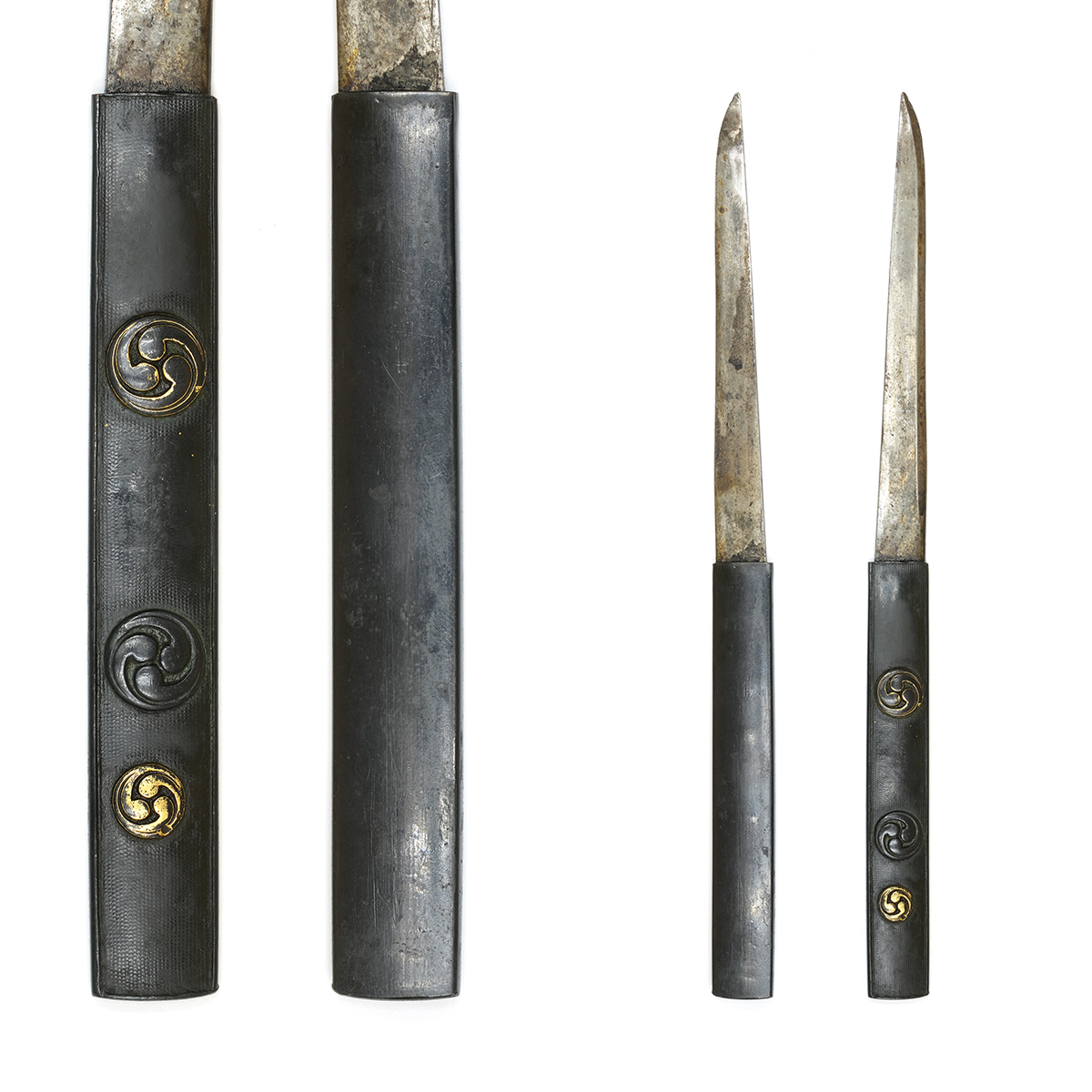
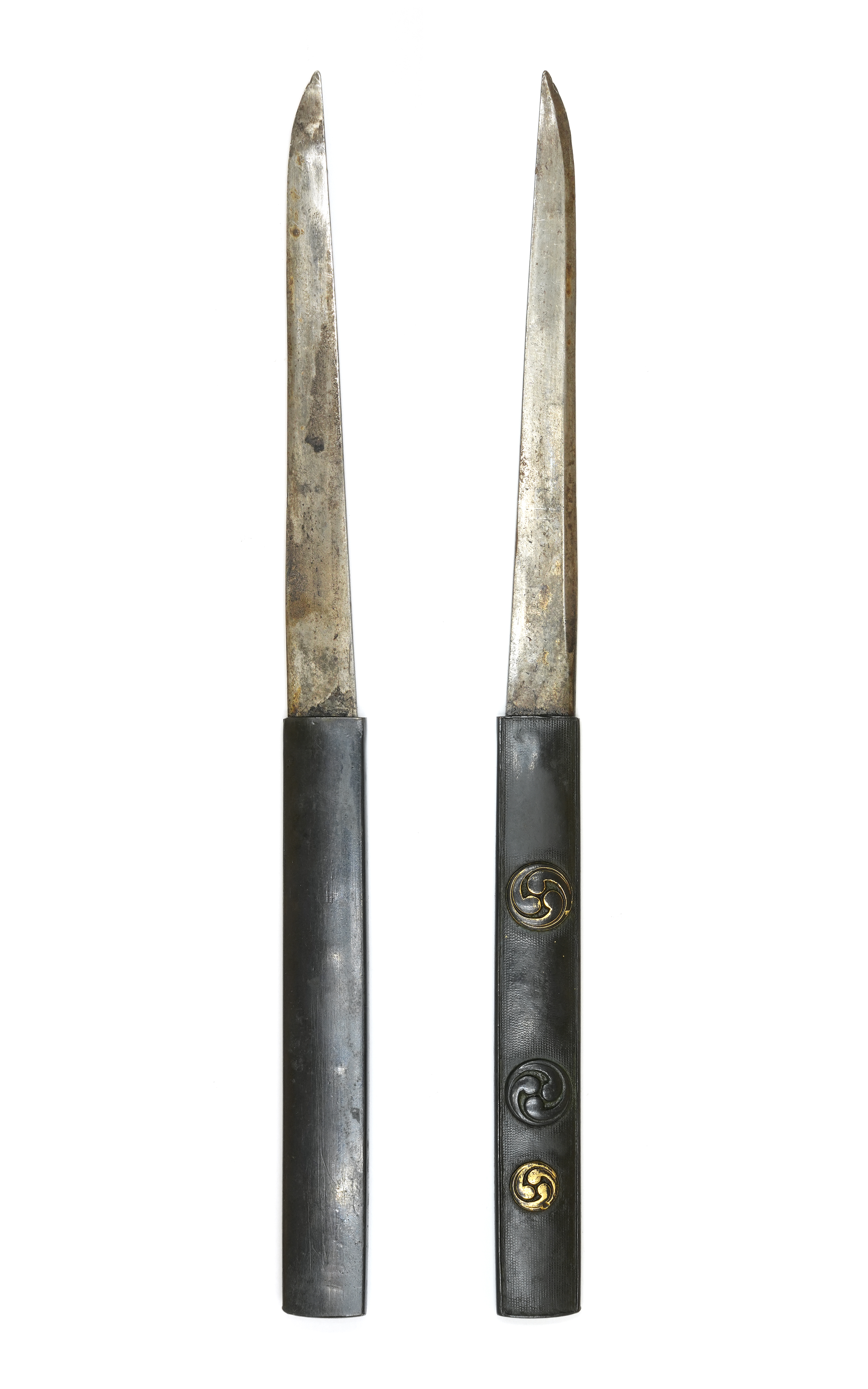
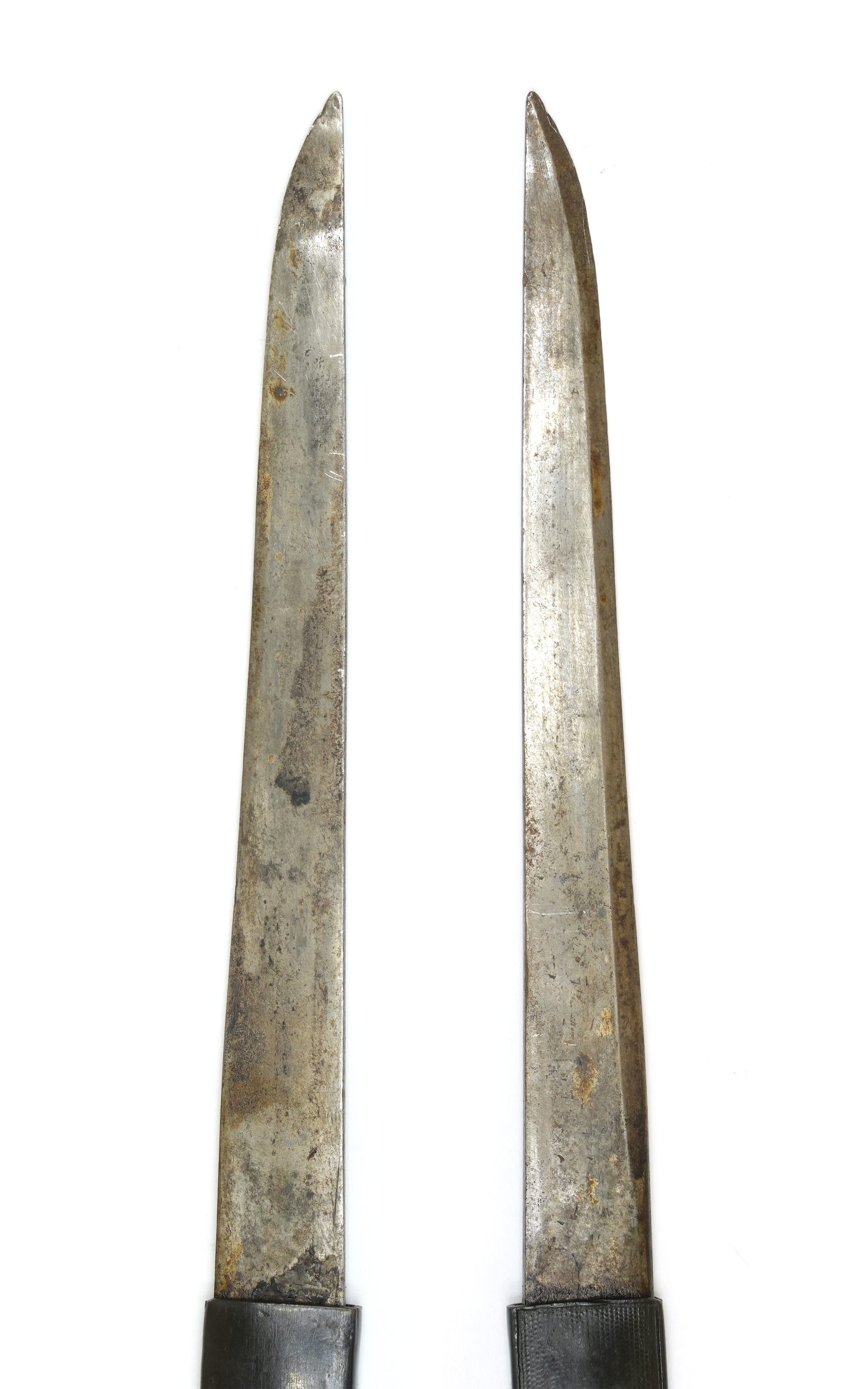
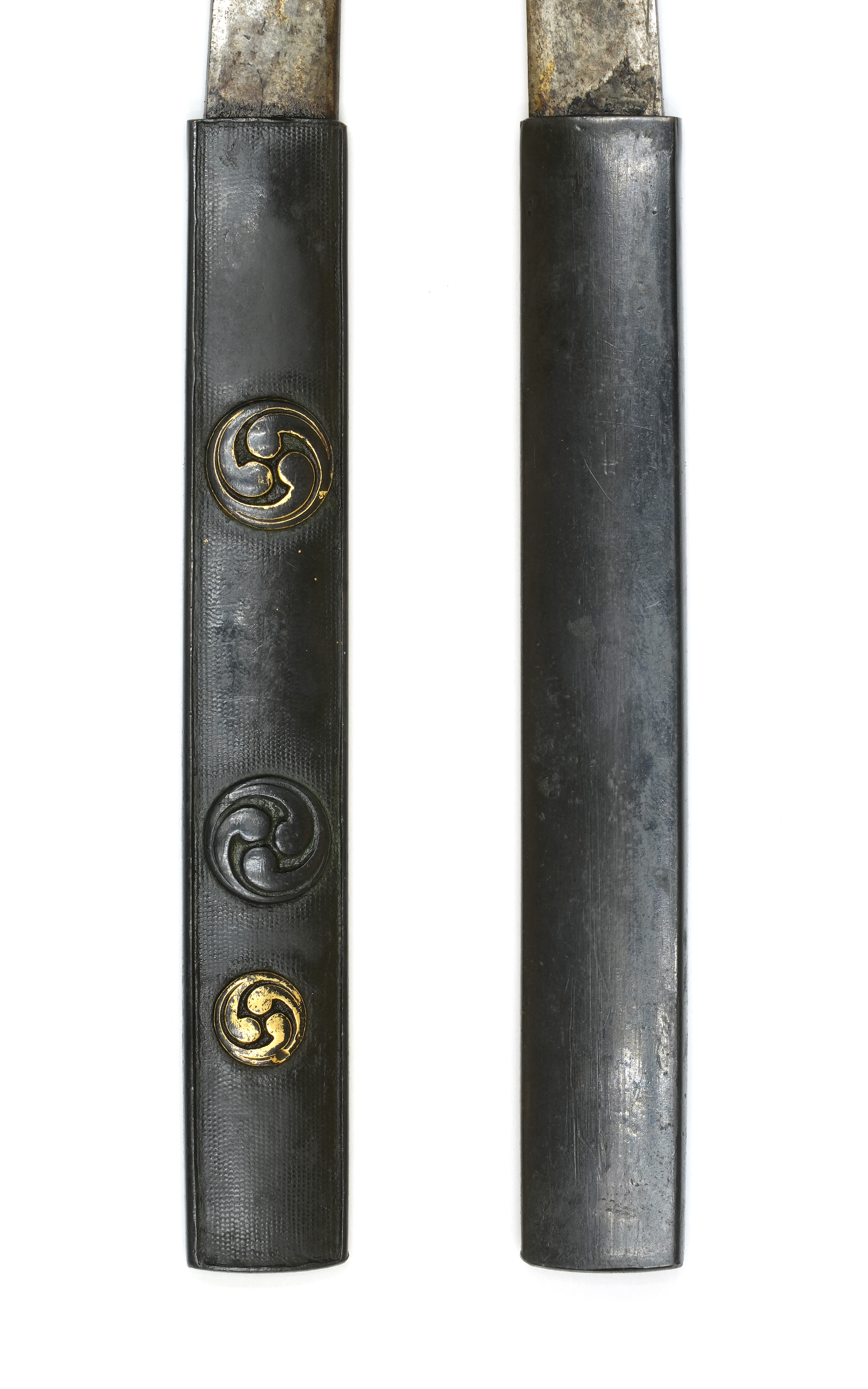
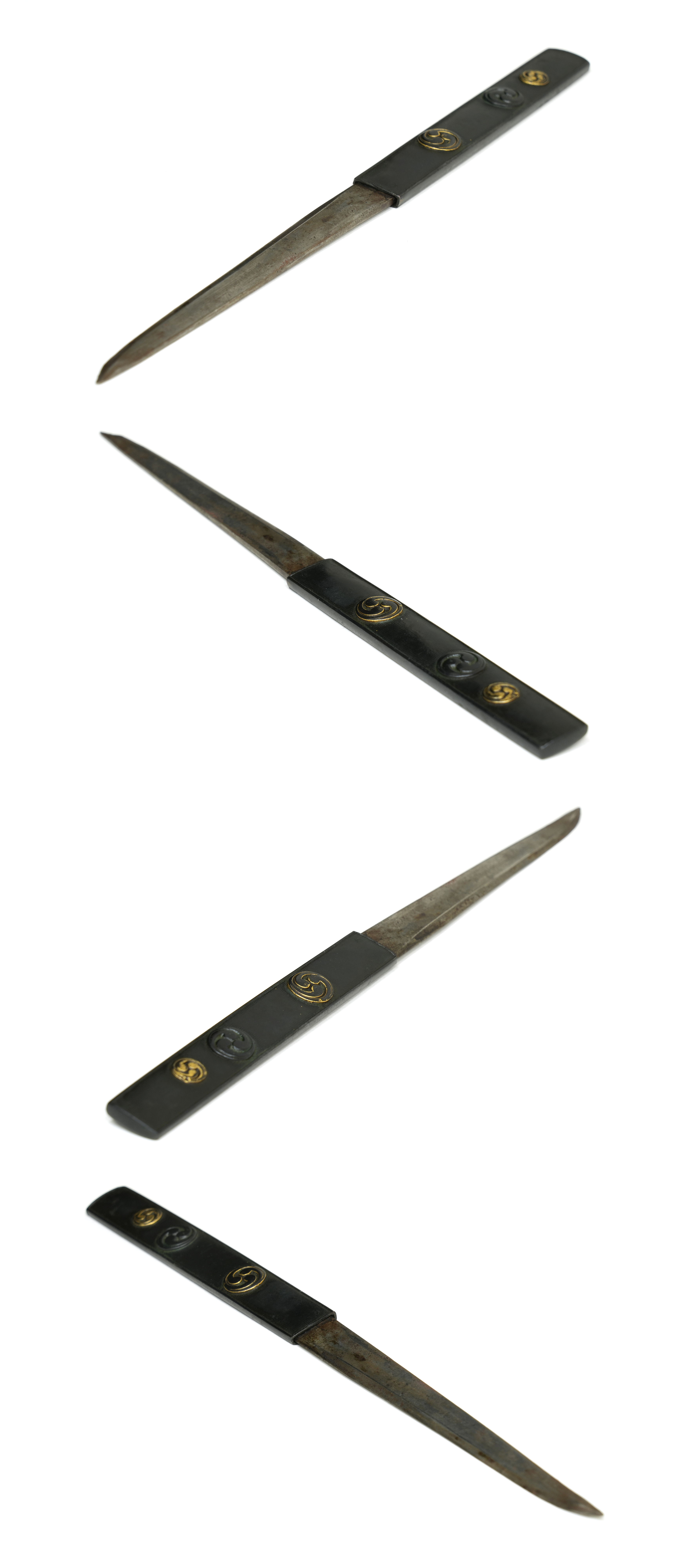
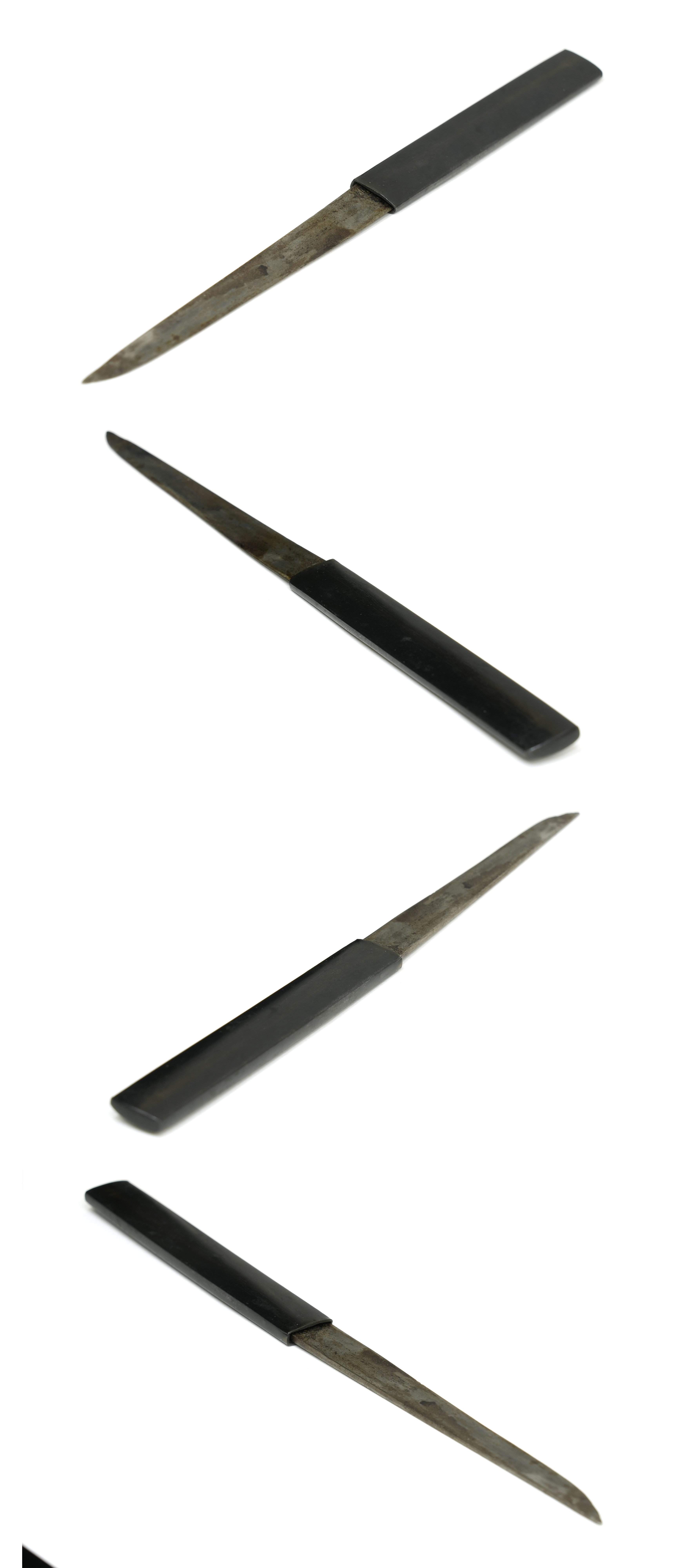
Hidari Mitsudomoe Mon Kozuka (with kogatana) Mumei (Ko-kinko) -Mumei (Ko-kinko)- Total length 201.0 mm, Kozuka total length 96.8 mm, Kozuka width 14.1 mm, weight 37.4 grams Momoyama period to early Edo period The Momoyama to early Edo period Included: Paulownia box Ko-kinko is a general term for mumei irogane fittings produced mainly from the Muromachi period to the early Edo period that are difficult to attribute to a specific maker or school. Unlike the precise and pictorial expressions seen in later machibori, they possess a unique charm in their high-quality shakudo, simple and powerful modeling, archaic nanako, and iroe that has become familiar through long use, allowing one to simultaneously appreciate the splendor of the time of production and the quiet koshoku of several hundred years. The tomoe mon is said to be a design of swirling water, or perhaps a stylized tomo worn on the arm when shooting a bow; from its rotating shape, it was linked to the power of water and the warding off of disaster, and has been widely used in the decoration of shrines and temples and as family crests for samurai families. In the mitsudomoe mon, where three tomoe circulate within a single circle, there is constant motion and balance within a concise outline, and as a design combining martial spirit and protective meaning, it shows well on tosogu. This work features three hidari mitsudomoe mon arranged orderly in a vertical row on a shakudo ji exhibiting a deep black color, with kin-iroe applied to the top and bottom crests while the center utilizes the blackness of the shakudo as it is, giving a change of light, shade, and color to the repetition of the same crest. Originally, fine nanako was painstakingly struck across the entire surface, but through practical use over many years, the grain has become worn, mainly in the center, and it currently bears a gentle luster that at first glance looks like migaki-ji. The kin-iroe applied to the top and bottom tomoe mon shows similar wear; in the top crest especially, the shakudo metal appears from beneath the gold, showing a keshiki unique to old works where vivid gold, black shakudo, and nanako softened by rubbing mix together. The outlines of the crests differ from the hard symmetry seen in later works, and while leaving a slight fluctuation in the nikutori and lines, they possess the generous presence characteristic of Ko-kinko. The reverse side is finished in shakudo migaki-ji without patterns, making the nanako-ji and three tomoe mon on the front stand out, and although the accompanying kogatana shows rust and togiberi appropriate for its age, its appearance when housed in the kozuka has the cohesiveness of an old tosogu. While the wear of the nanako and iroe are factors that lower the price in terms of condition, they eloquently convey the accumulation of time from being actually used over many years, which is difficult to obtain in pieces that have been given a faked koshoku in later years. Through the deep blackness of the shakudo, the archaic nanako, and the kin-iroe remaining on the concise tomoe mon, this is a refined and highly collectible piece that allows one to fully appreciate the charm of Ko-kinko.
NihontoWatchOffered by Toushin

We couldn’t find current papers for this piece. Ask the dealer whether it has been, or can be, submitted to shinsa. — Hoshi

Momoyama
Unsigned
Machine translation from the shop's Japanese · may contain errors ·
We could not find an authenticity certificate on the seller’s listing. Japanese swords and fittings are normally papered by the NBTHK (or the NTHK). Without one, the attribution is the seller’s own assessment and has not been independently verified — treat it with caution and ask the dealer about certification before buying.
As a rule we do not accept returns, except when we have sent a different item from the one ordered or when there is a significant discrepancy between the description and the item. If you wish to return an item, please contact us within 3 days of its arrival and then send it back.
¥275,000