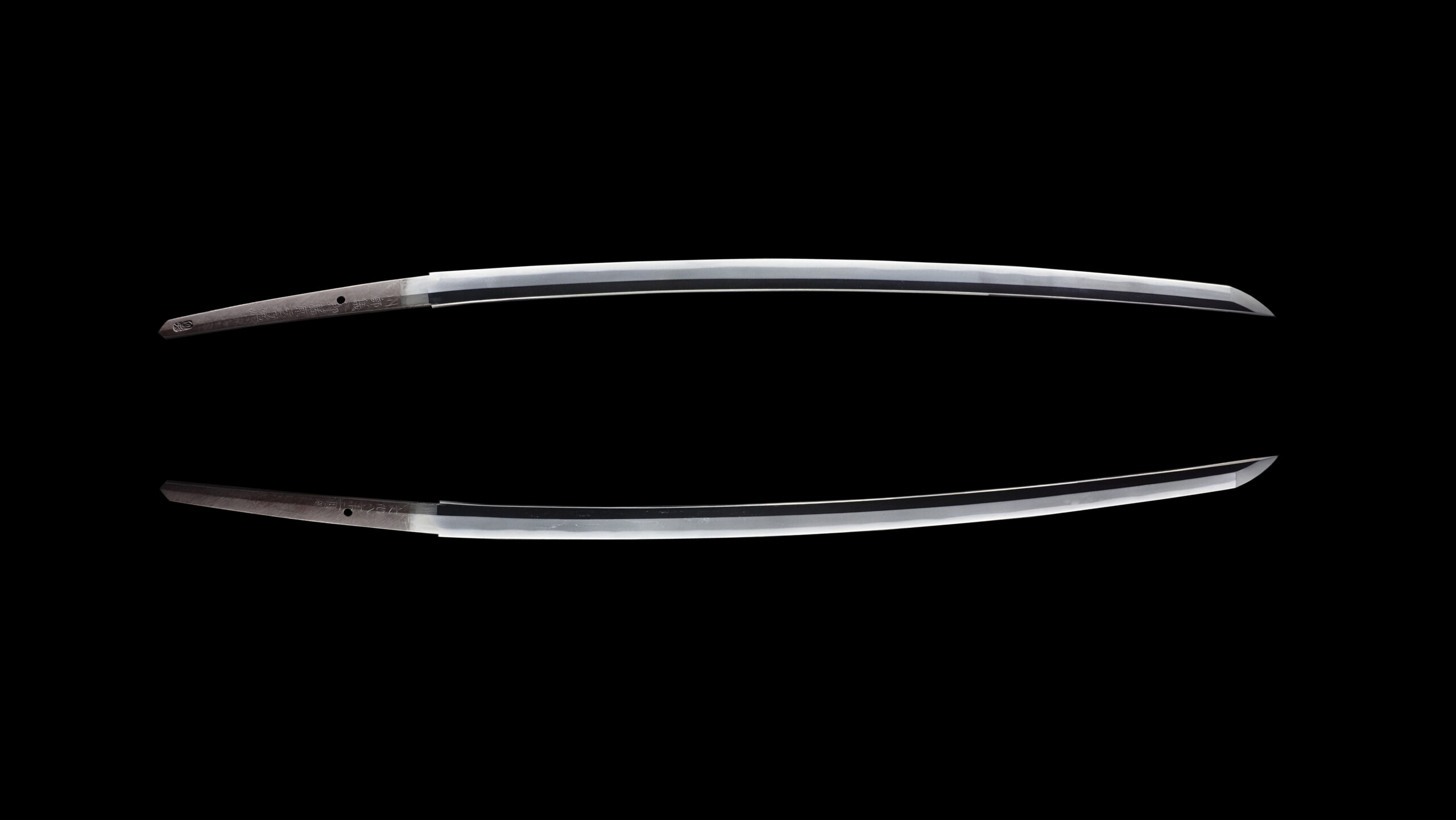
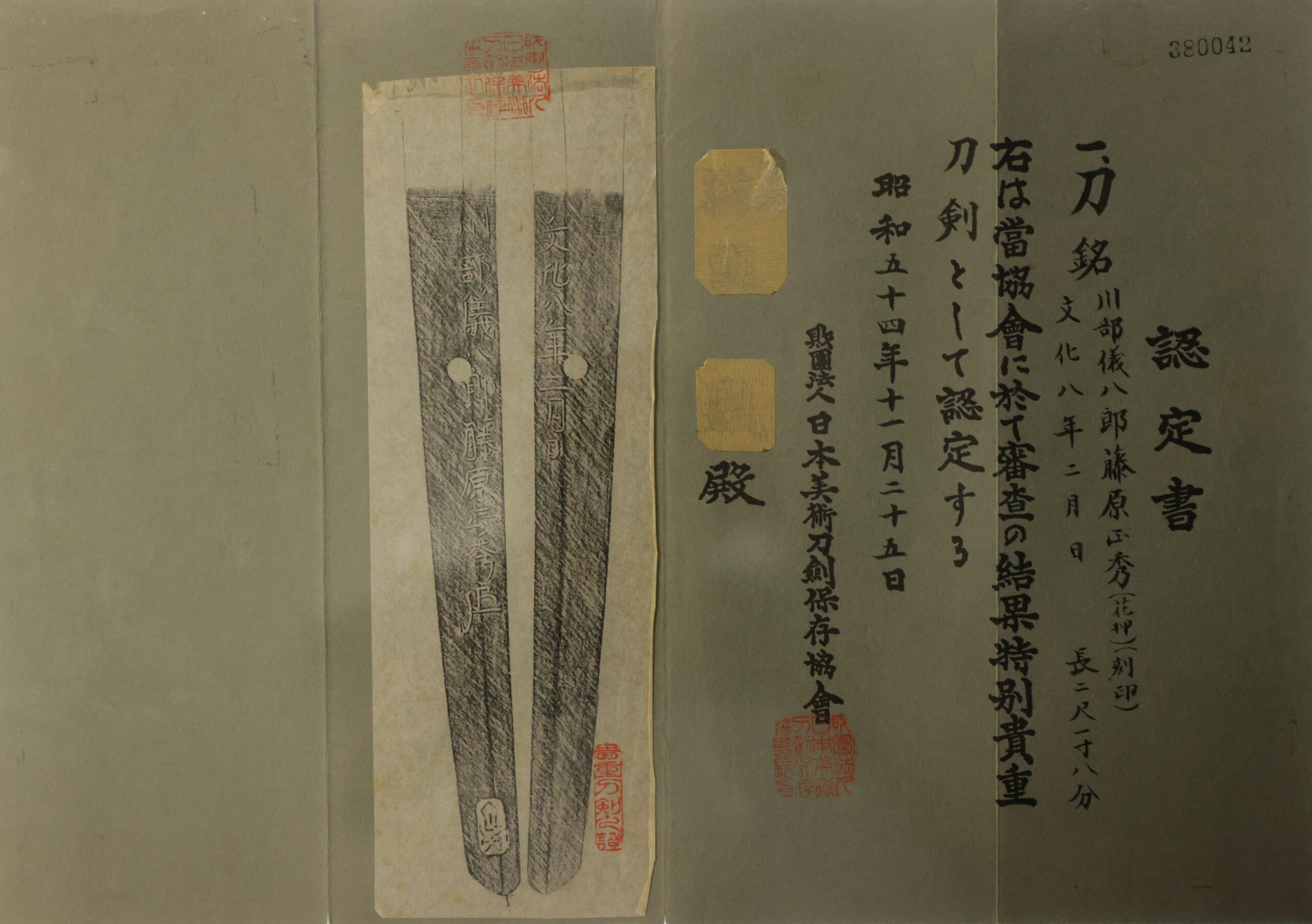
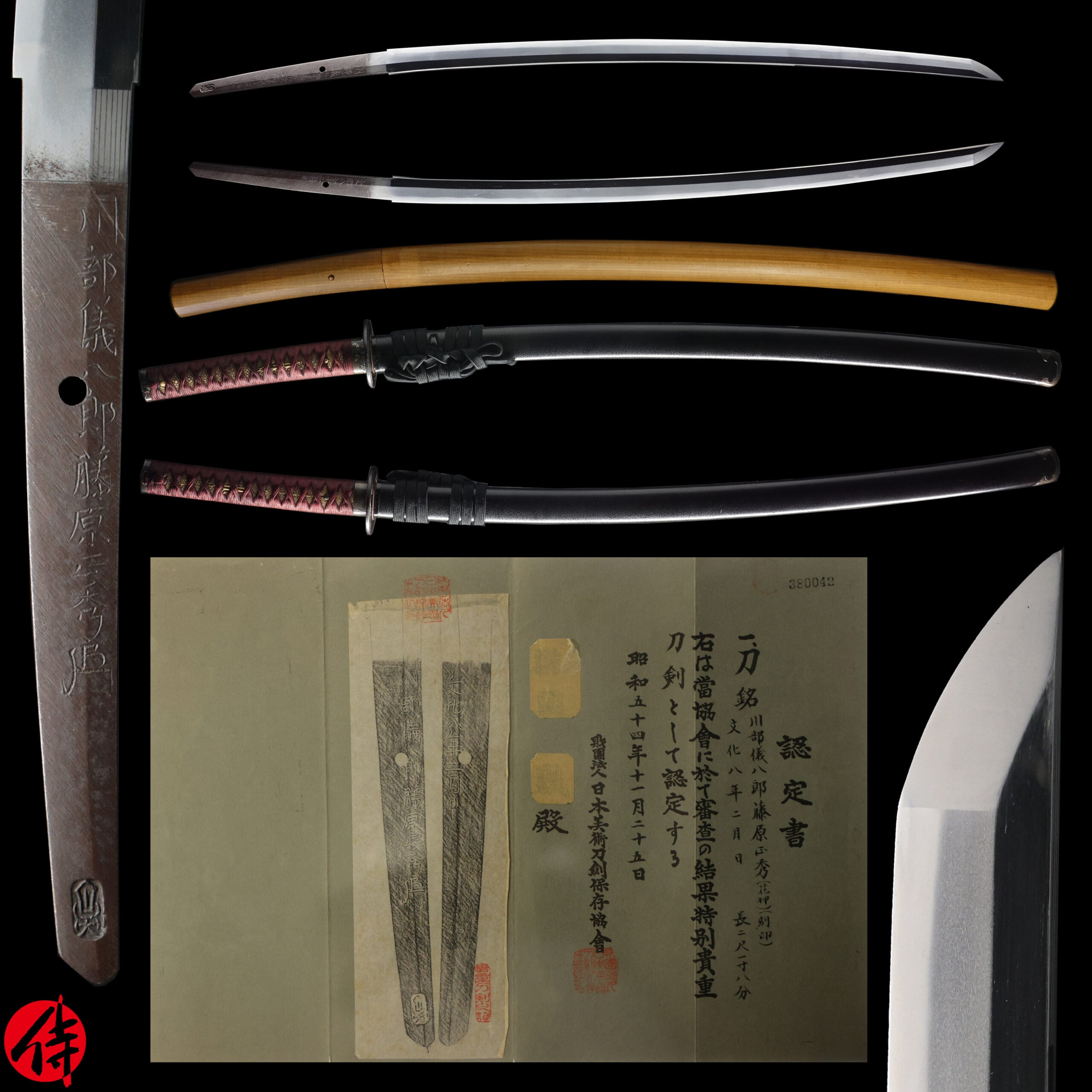
Antique Japanese Sword Katana Signed by Fujiwara Masahide with Tokubetsu Kicho
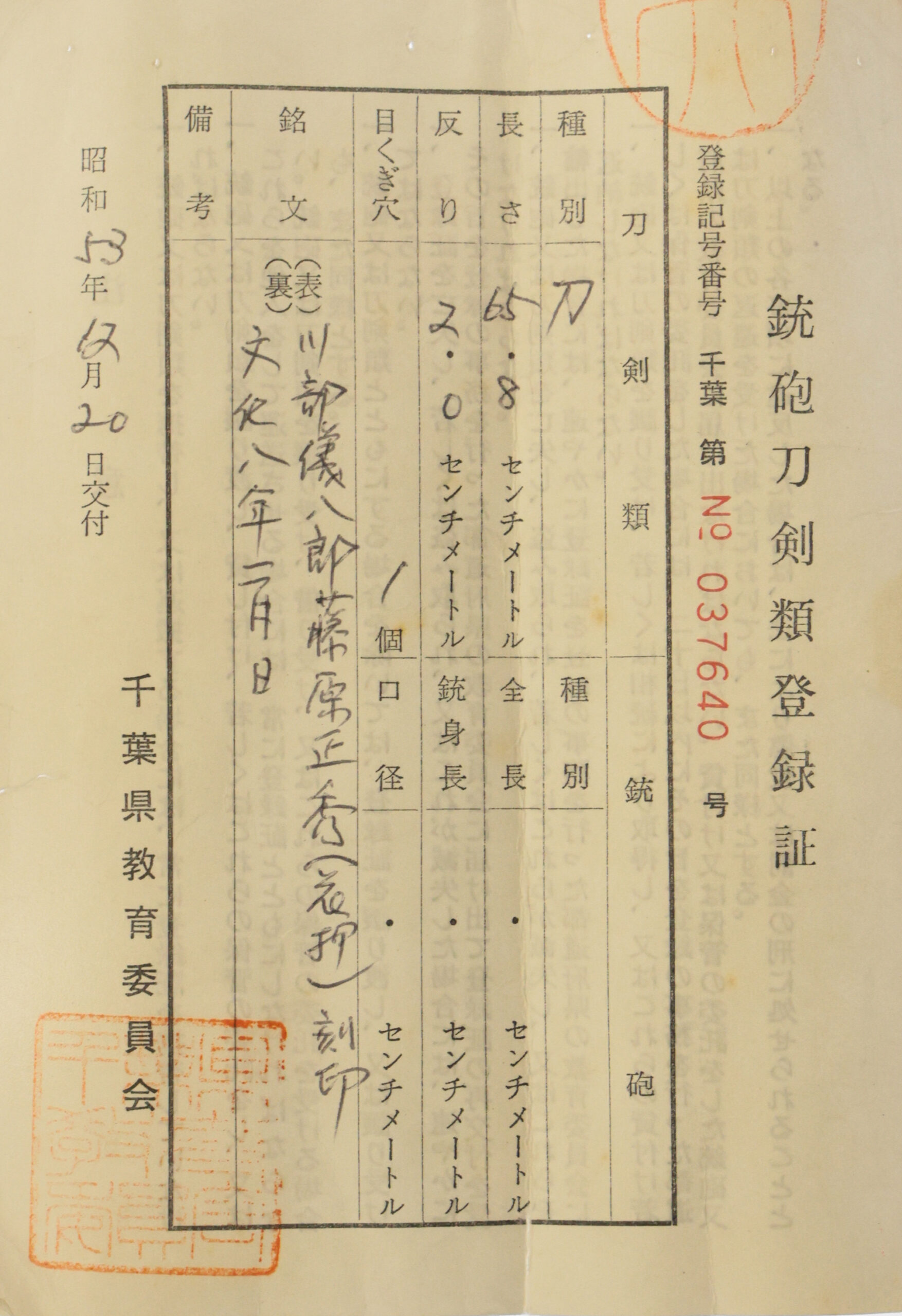
Certificate
【Description】
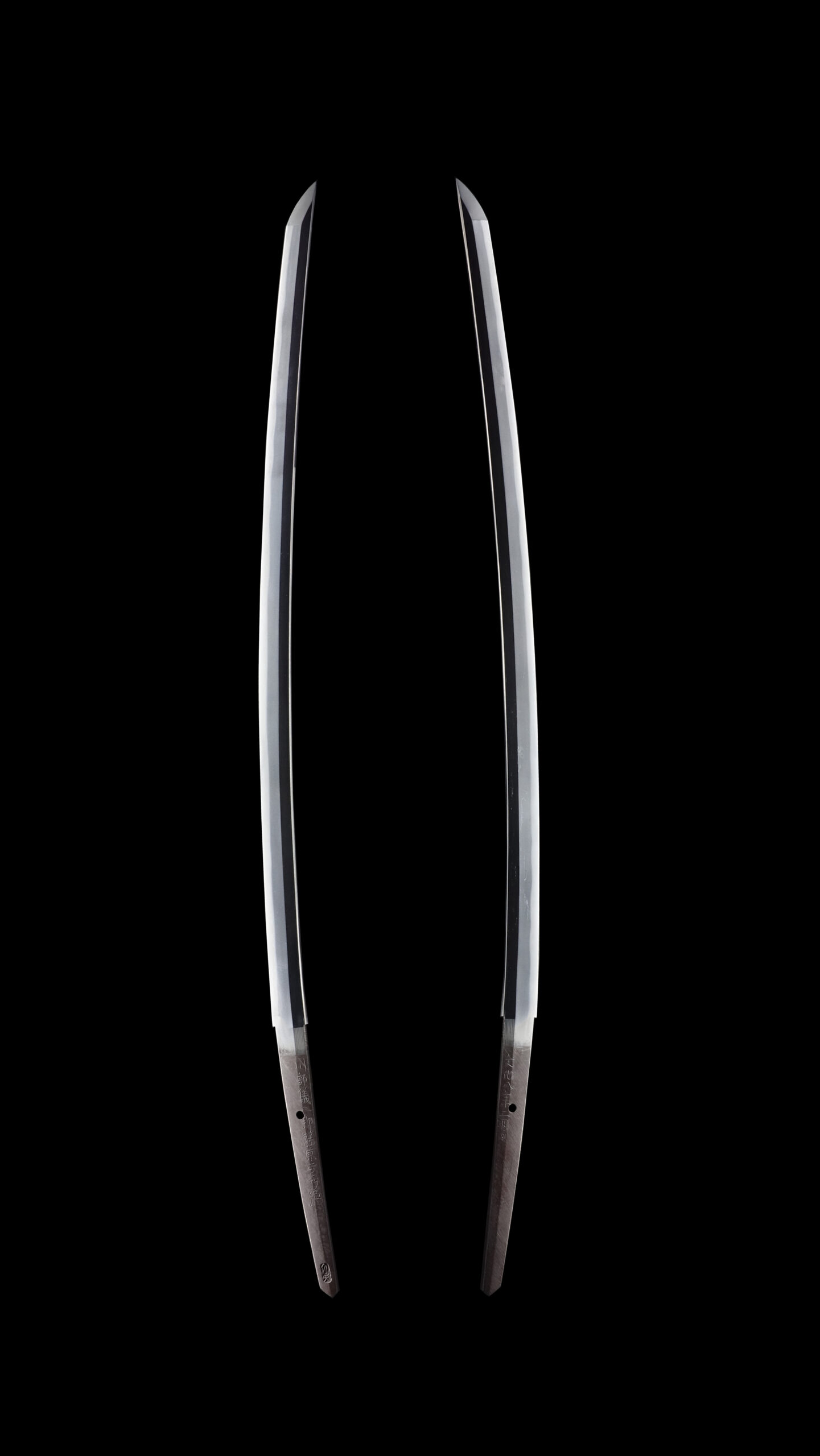
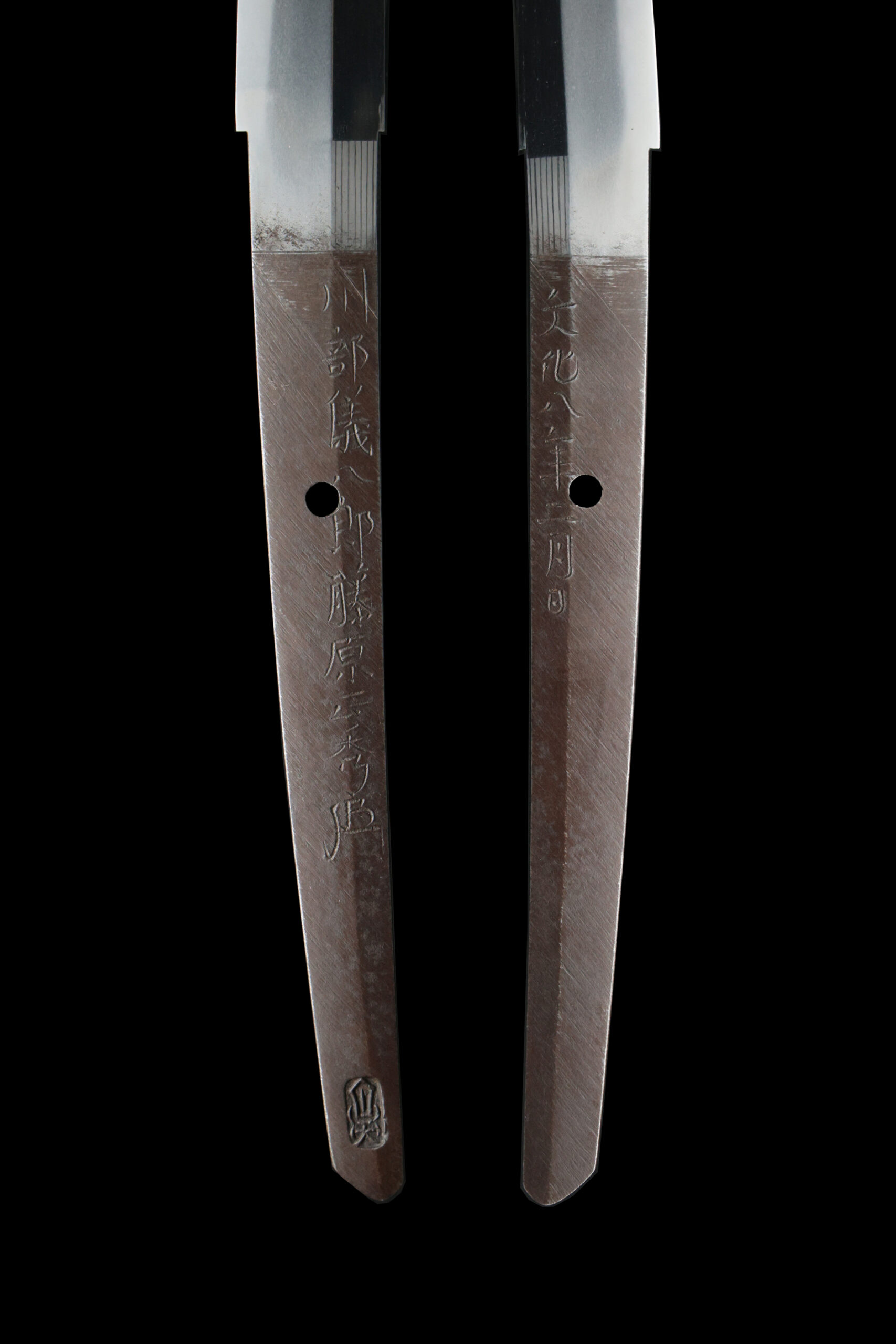
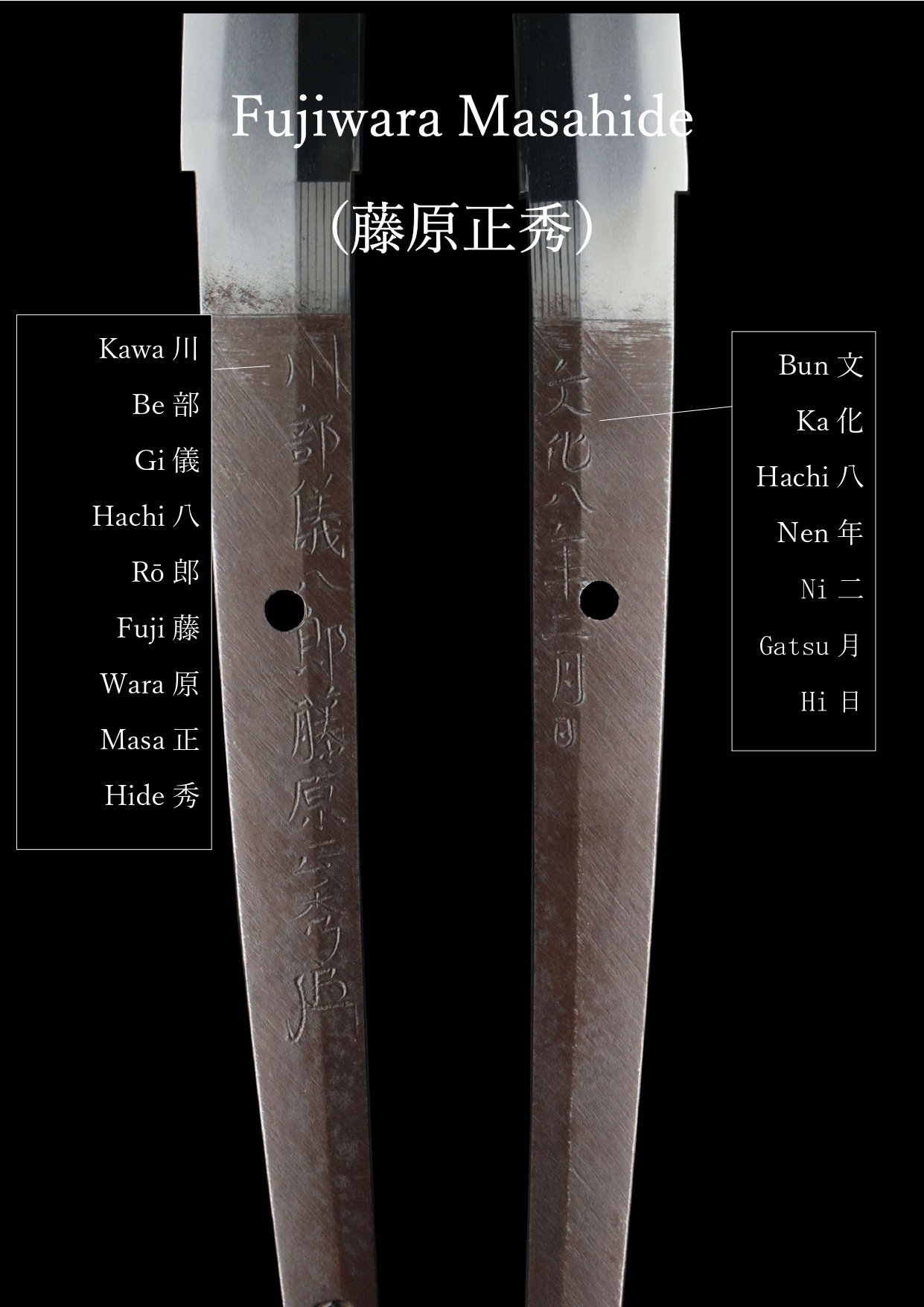
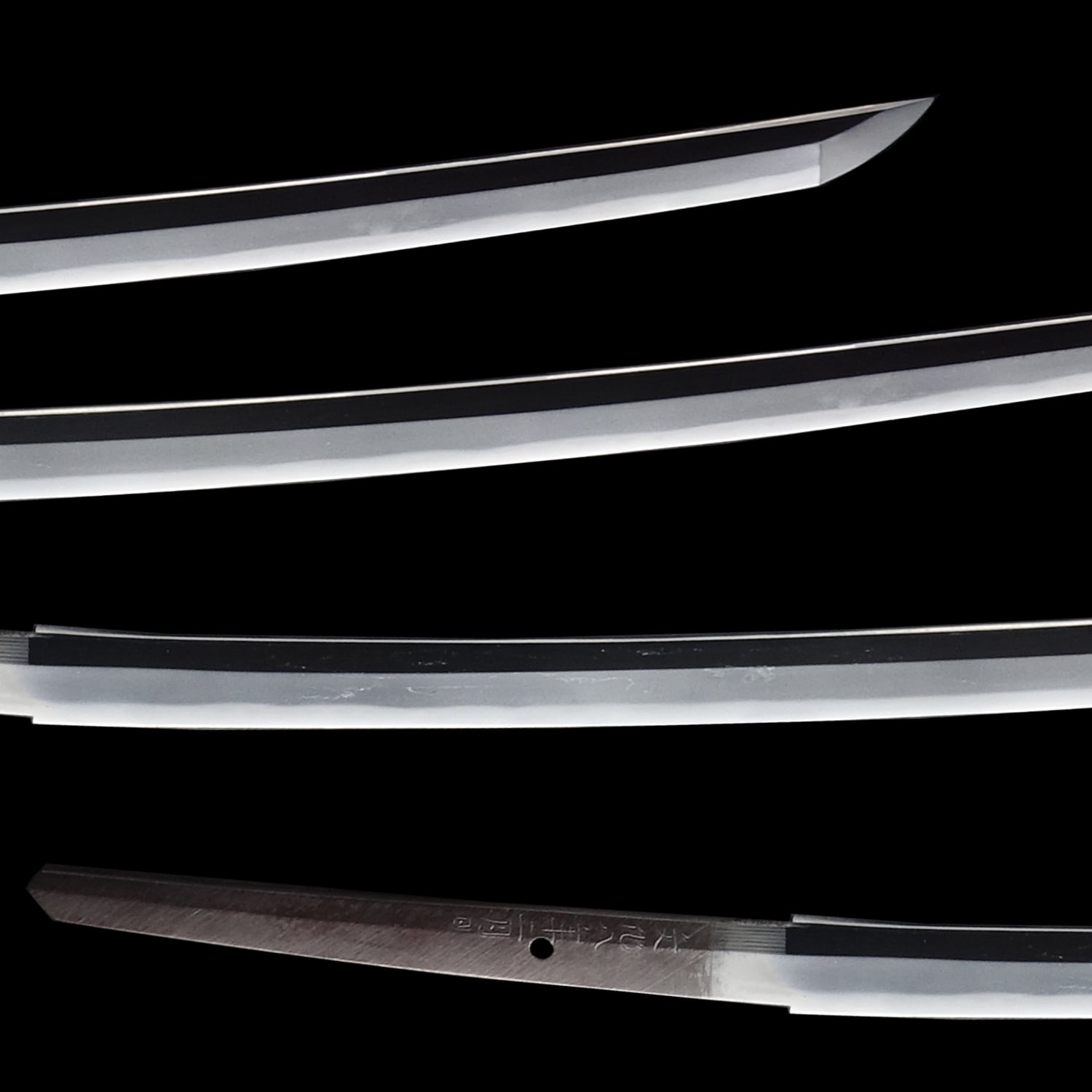
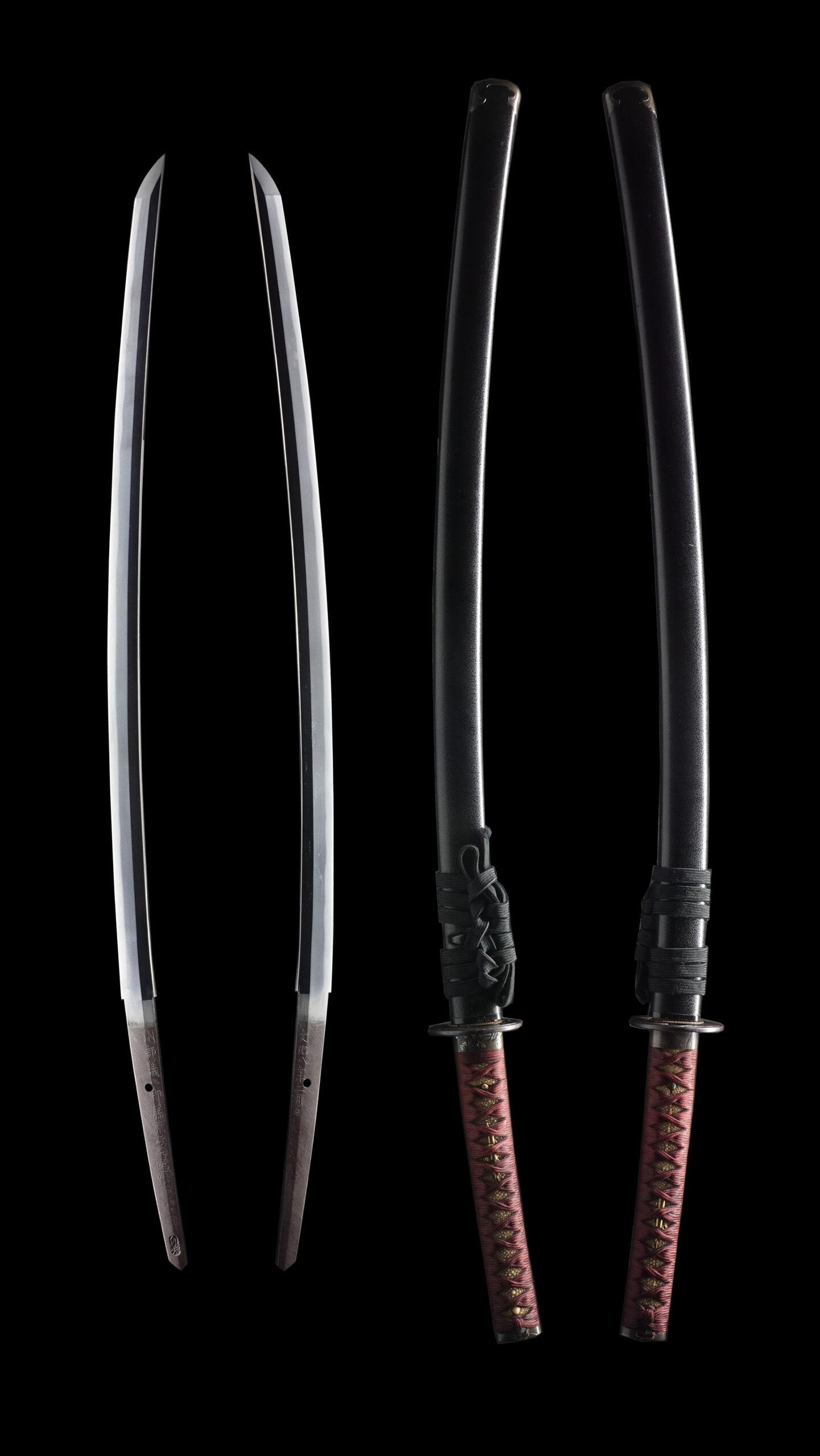
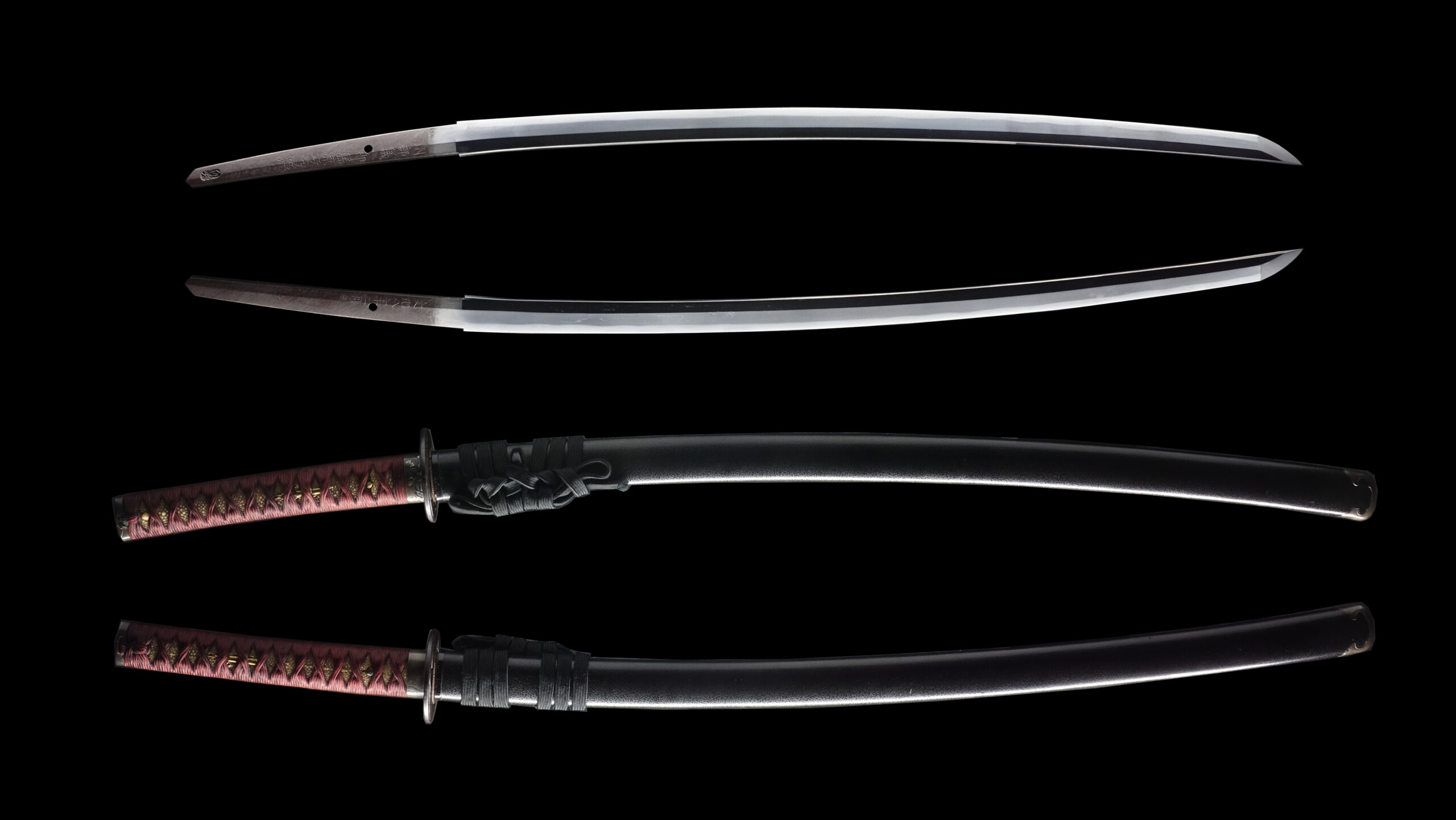
This blade bears the signature “Kawabe Gihachiro Fujiwara Masahide” (川部儀八郎藤原正秀) and is dated the eighth year of the Bunka era (1811). This maker is also known as Suishinshi Masahide, one of the leading swordsmiths of the late Edo period. In this inscription, “Kawabe” is his family name, “Gihachiro” is his customary personal name, “Fujiwara” identifies his clan name, and “Masahide” is his swordsmith name. “Suishinshi,” by contrast, is the artistic name he adopted. Although the inscription differs from the name by which he is best known, both refer to the same swordsmith. The signature has Kao (花押: stylized signature) and Kokuin (刻印: stamped signature). Suishinshi Masahide (水心子正秀) was one of the most famous and innovative swordsmiths at the end of the Edo period.
He was born in 1750, the third year of the Kan’en era, in Dewa Province, in what is now Nanyo City, Yamagata Prefecture. His childhood name was Sanjiro. He began learning metalworking at a young age and later studied swordmaking under Yoshihide, a swordsmith of the Shitahara school in Musashi Province. During his early career, he used names including Suzuki Takuei (鈴木宅英), Suzuki Saburo Takuei (鈴木三郎宅英), and Terukuni (英国). In 1774, the third year of the An’ei era, he entered the service of the Akimoto family, the lords of the Yamagata domain, and adopted the name Kawabe Gihachiro Masahide. These early names reflect the stages of his training and career before he became widely known as Suishinshi Masahide.
Masahide subsequently established himself in Edo, today’s Tokyo, where he devoted himself to swordmaking. Eager to deepen his knowledge, he investigated how the great masters of earlier periods had forged their blades, taking a particular interest in the Soshu and Bizen traditions. He sought instruction from swordsmiths who carried on these historical lineages and is said to have studied under Yamamura Tsunahiro.
Early in his career, Masahide produced blades with striking temper patterns inspired by celebrated Osaka swordsmiths such as Tsuda Sukehiro and Inoue Shinkai. Over time, however, he placed greater emphasis on the practical qualities of a sword. Looking to blades of the Kamakura and Nanbokucho periods as models, he sought to revive the techniques that had given these earlier works their excellence. His ideas, known as
Token Fukko Ron
(刀剣復古論, a call to revive traditional swordmaking), influenced many other swordsmiths. He is therefore regarded as the “father of Shinshinto,” the new era of swordmaking that emerged in the late Edo period.
Masahide was equally committed to passing on his knowledge. He wrote works such as
Token Jitsuyo Ron
(刀剣実用論) and
Token Bengi
(刀剣弁疑) and trained numerous apprentices. His pupils included distinguished swordsmiths such as Taikei Naotane and Hosokawa Masayoshi, through whom his teachings spread throughout Japan. His legacy lies not only in his own blades but also in his contributions as an author and teacher.
Together with Taikei Naotane and Minamoto Kiyomaro, Suishinshi Masahide is counted among the
Edo Sansaku
, the three great swordsmiths of Edo. In Fujishiro Yoshio’s
Nihon Toko Jiten
(Japanese Swordsmith Dictionary), he is ranked
Saijo Saku
, the highest of five classifications used to assess swordsmiths’ craftsmanship and standing.
*
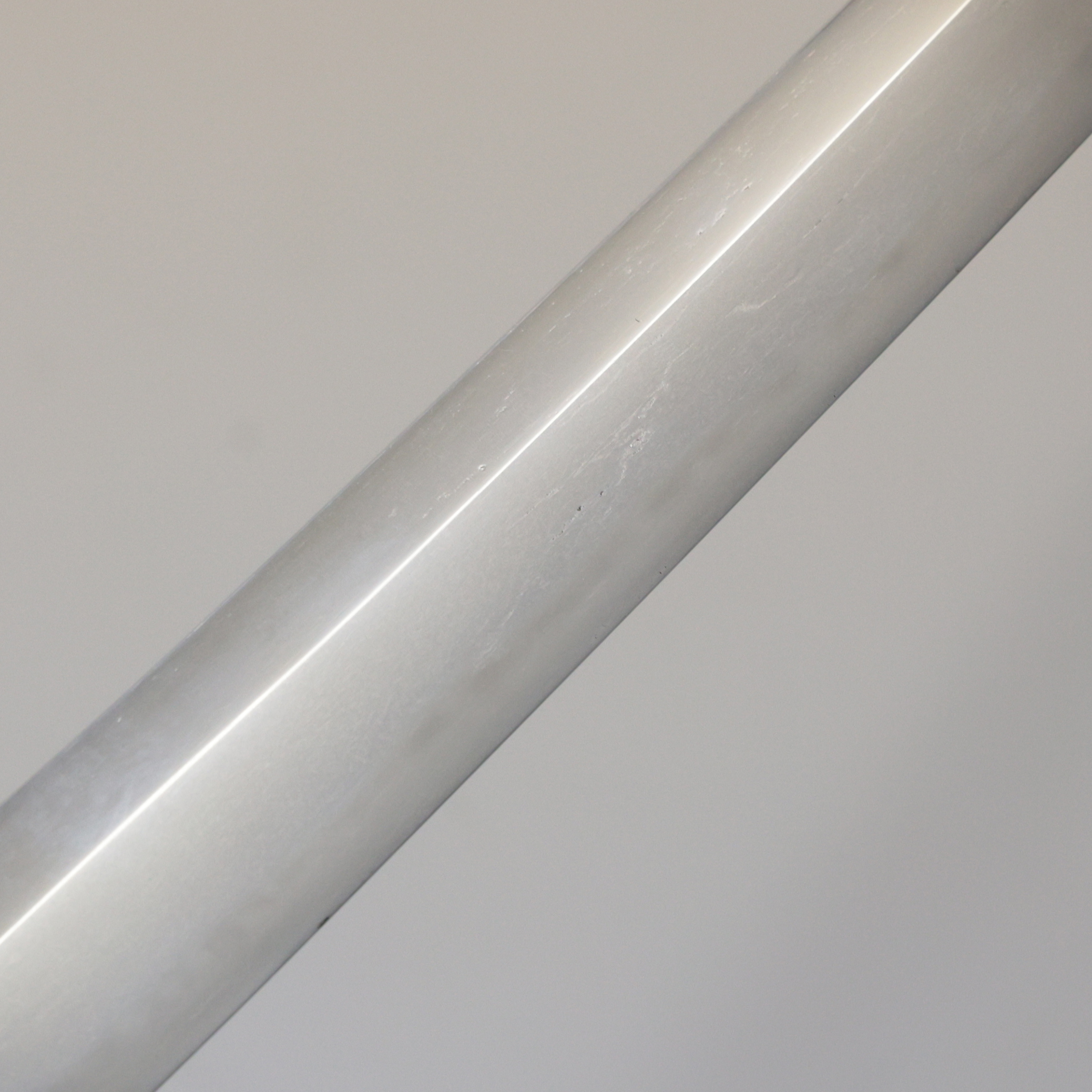
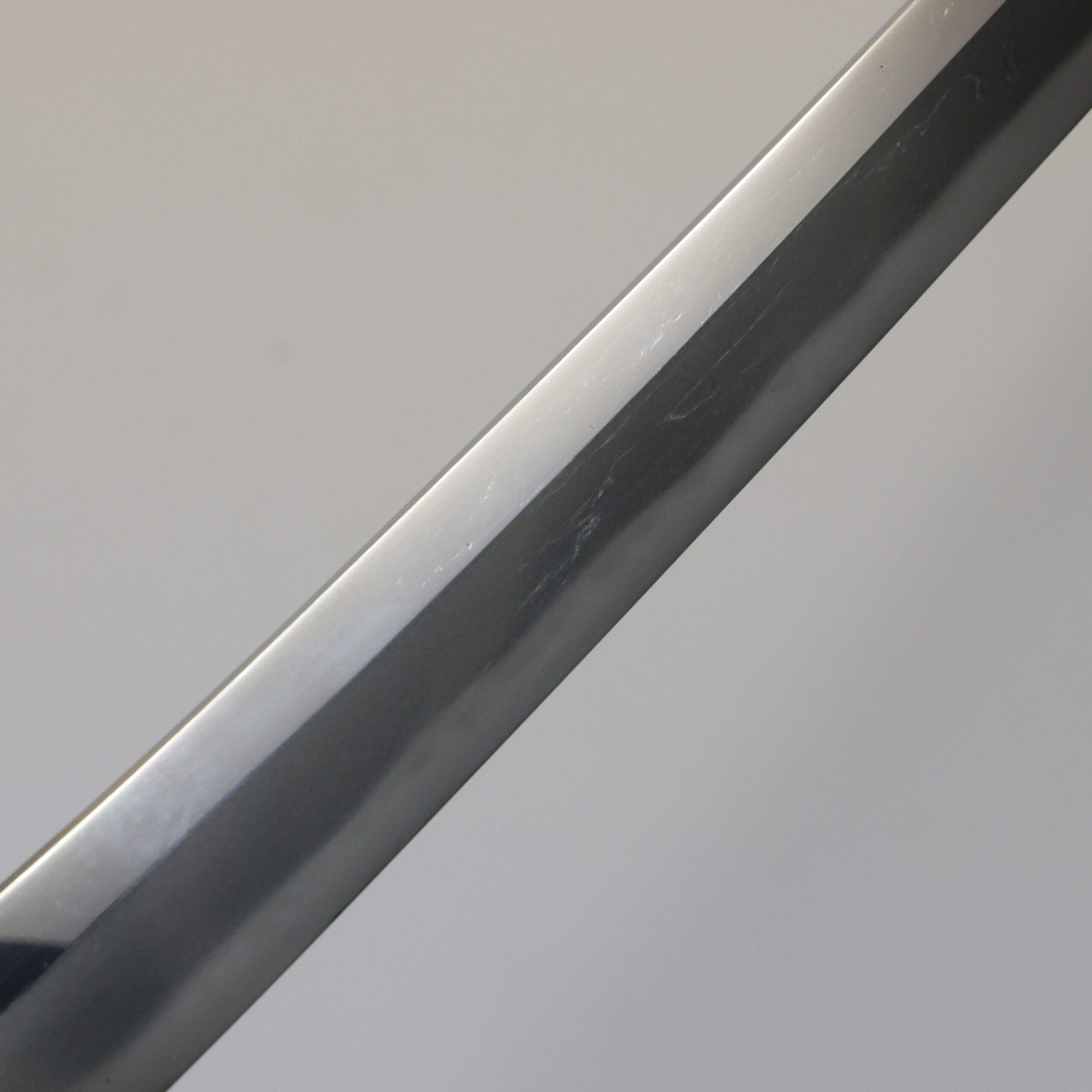
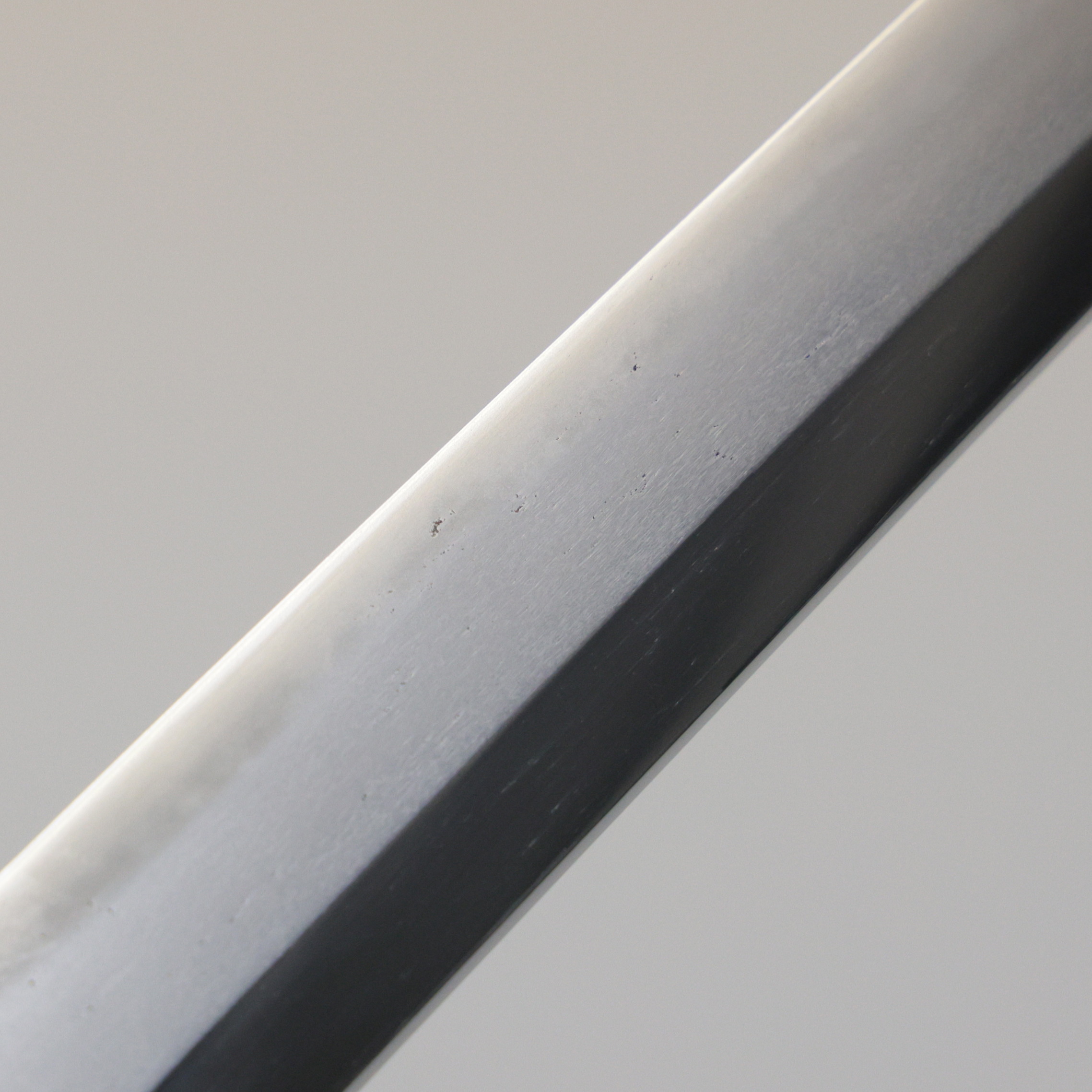
Please keep in mind that there are a couple of Kitae Kizu on this blade. If you like to know the detailed condition, please feel free to contact us.
【Blade】
Cutting Edge Length(Nagasa)
:
65.8cm (25.9 inches)
Curvature(Sori)
:
2.0cm ( 0.78 inches)
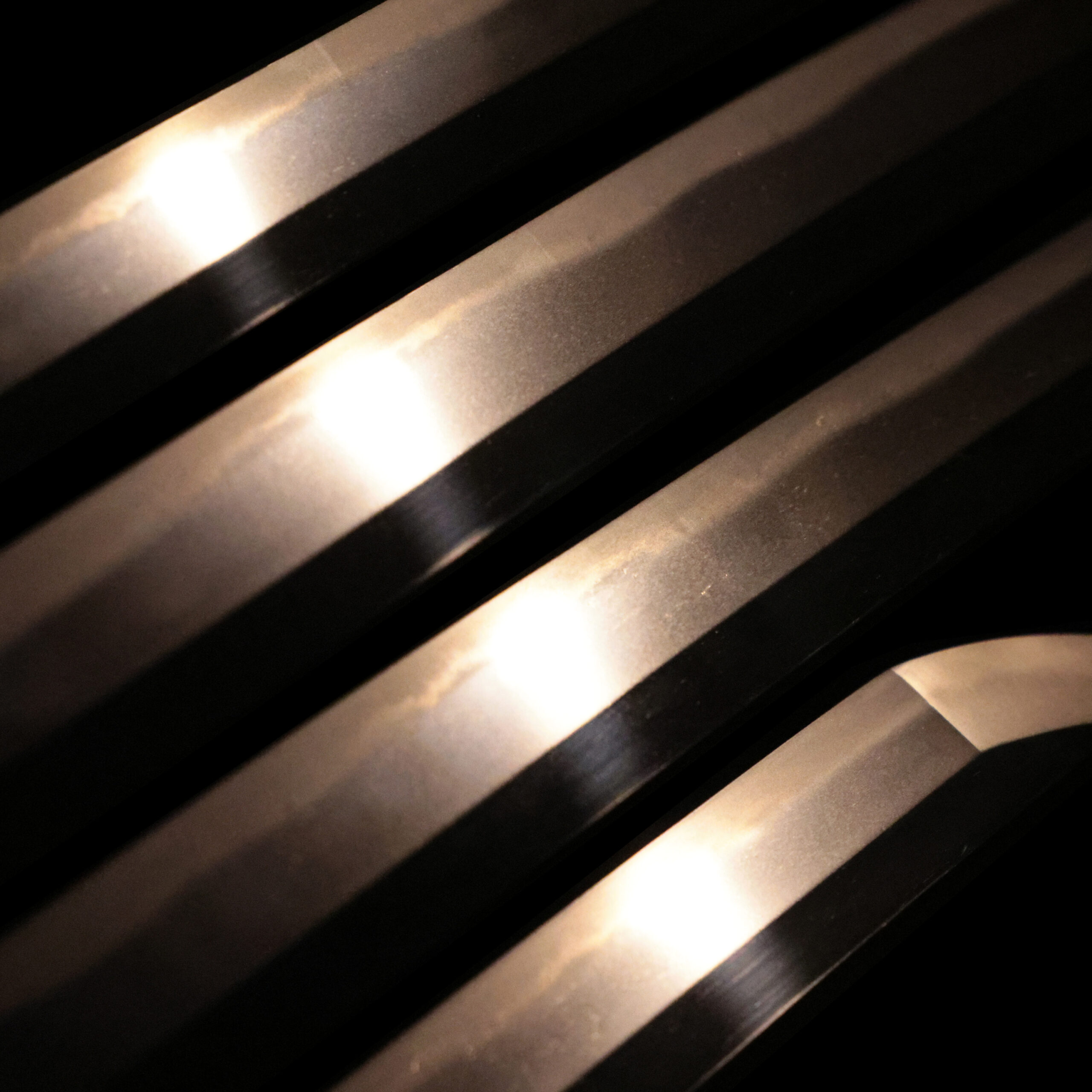
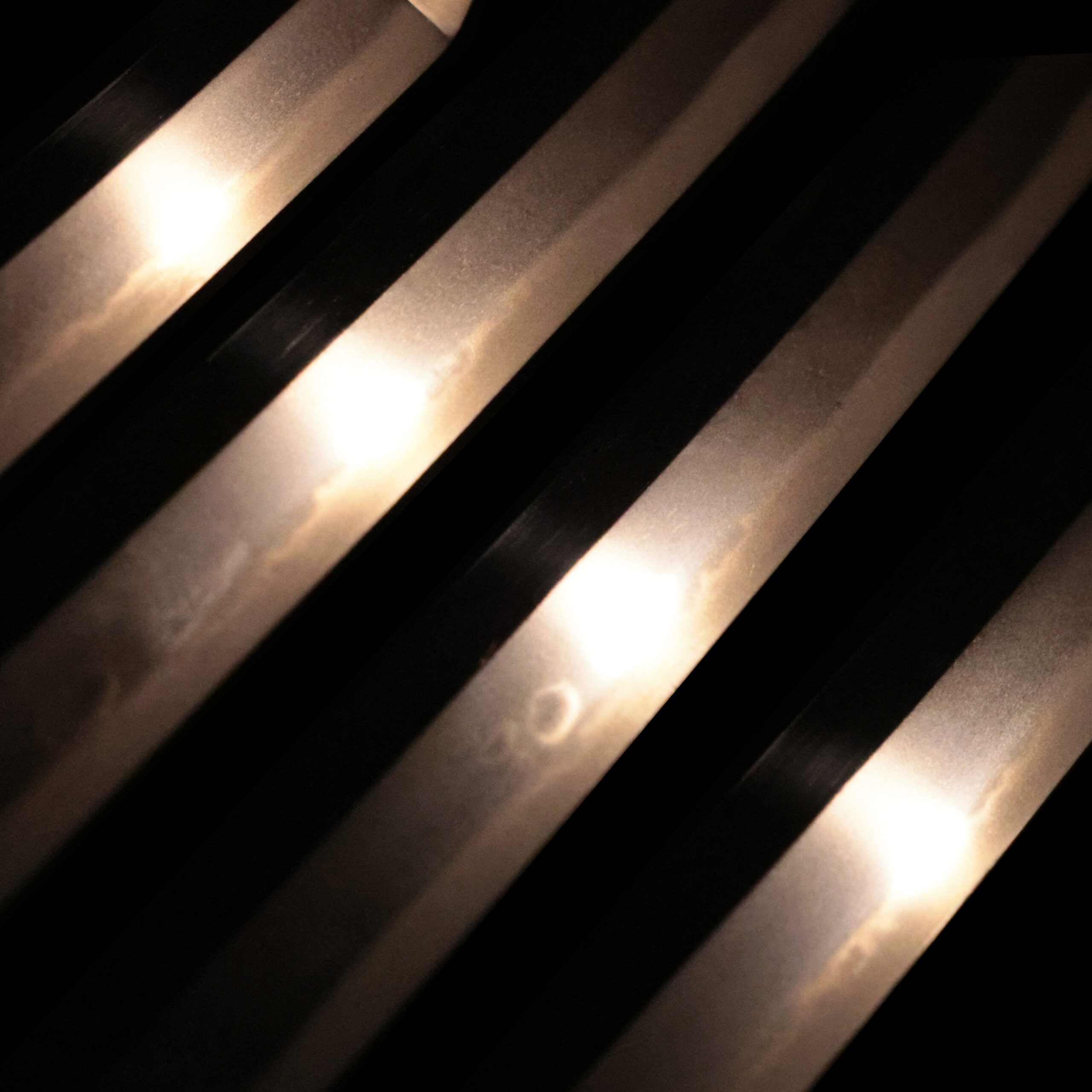
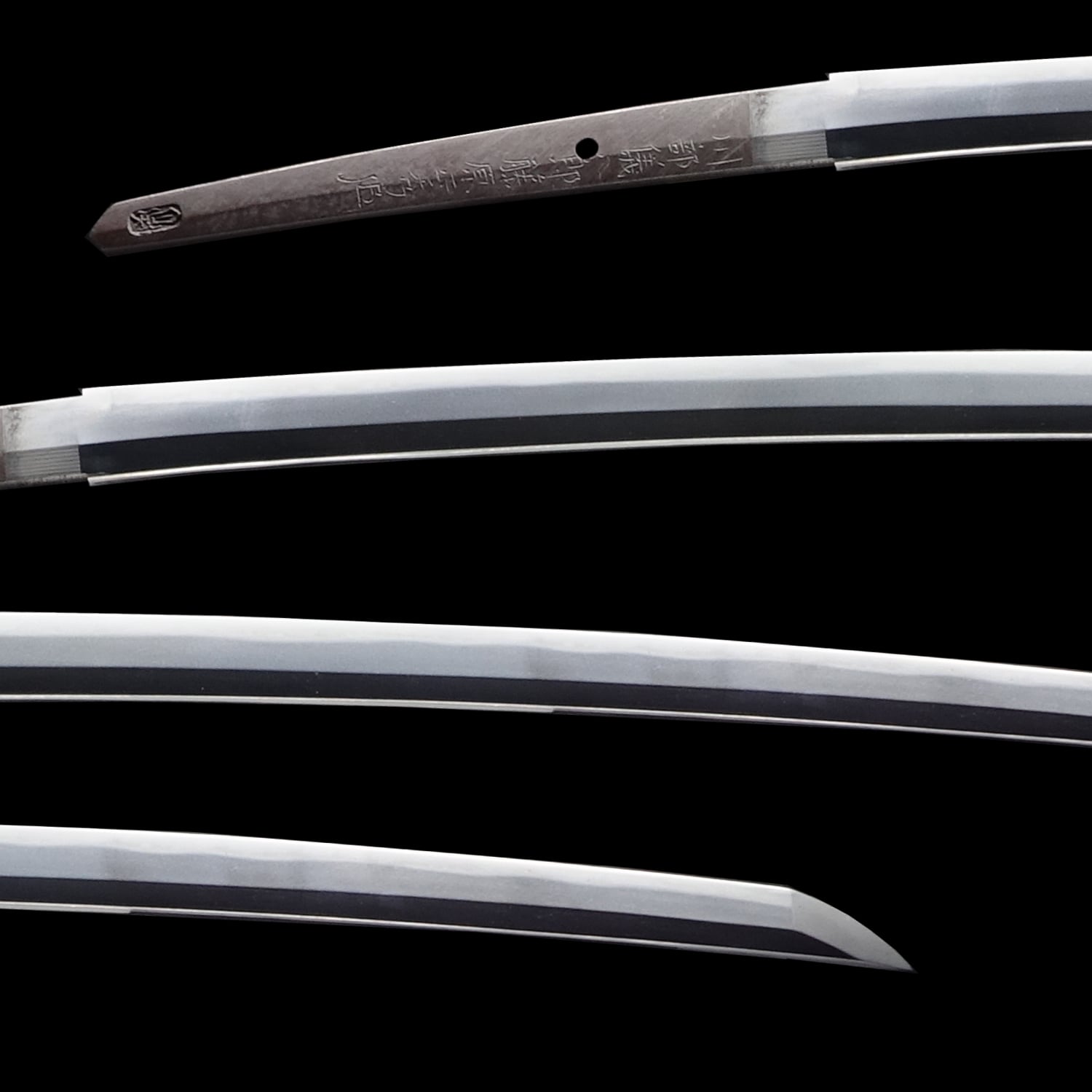
Hamon
:
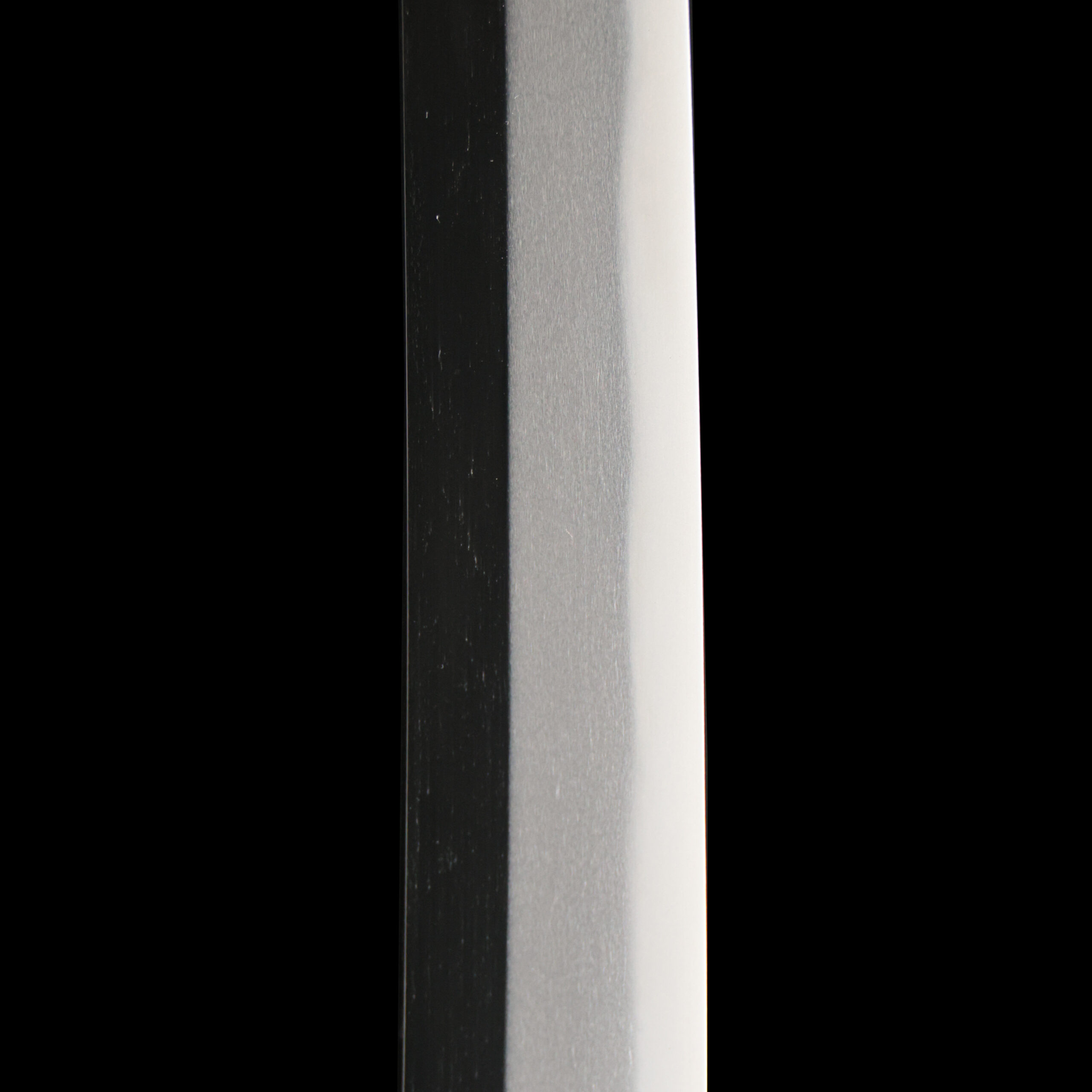
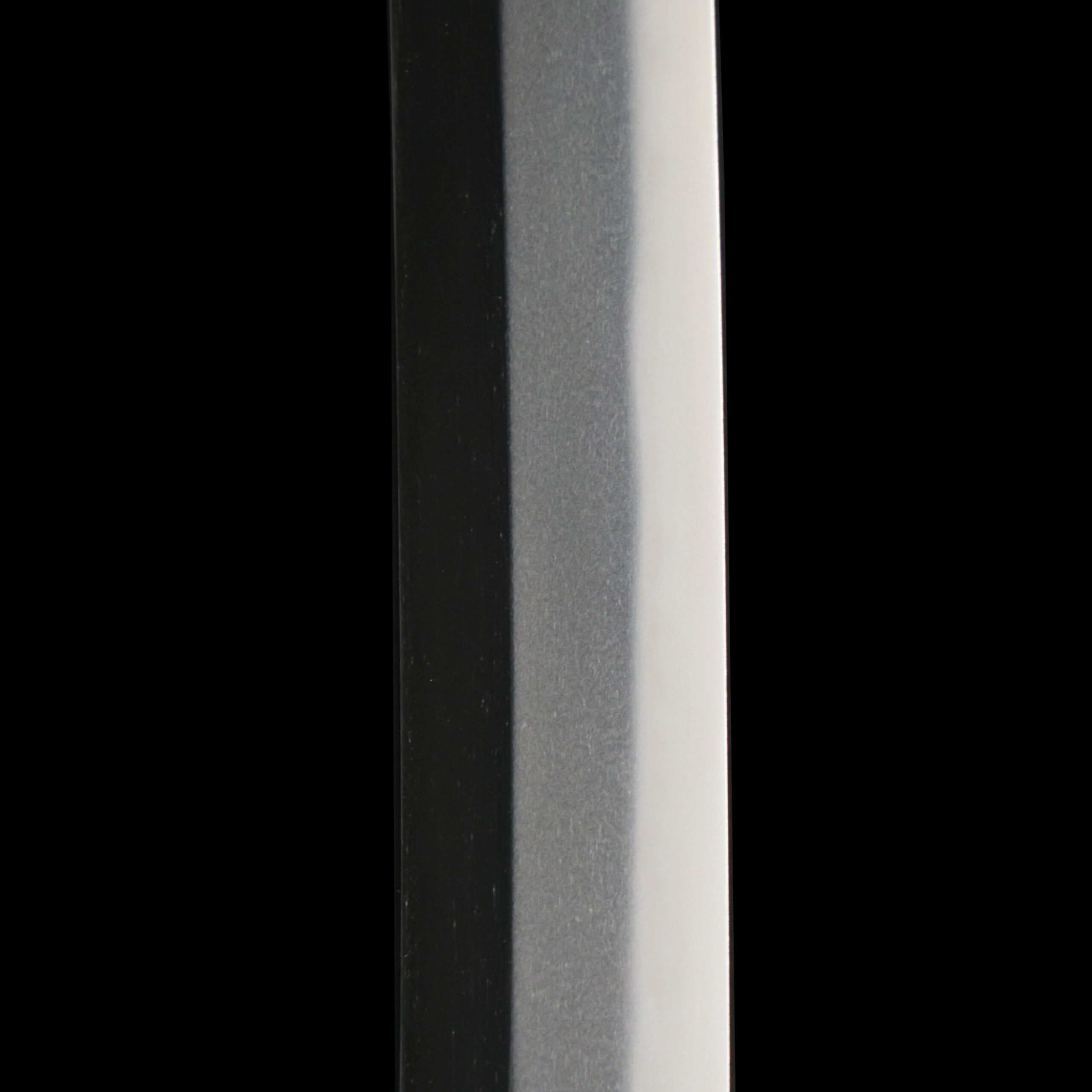
The crystalline structure which forms along the cutting edge of a blade as a result of the hardening process
Jimon(Jihada)
:
visible steel surface pattern created by folding and hammering during forging process
Kissaki
:
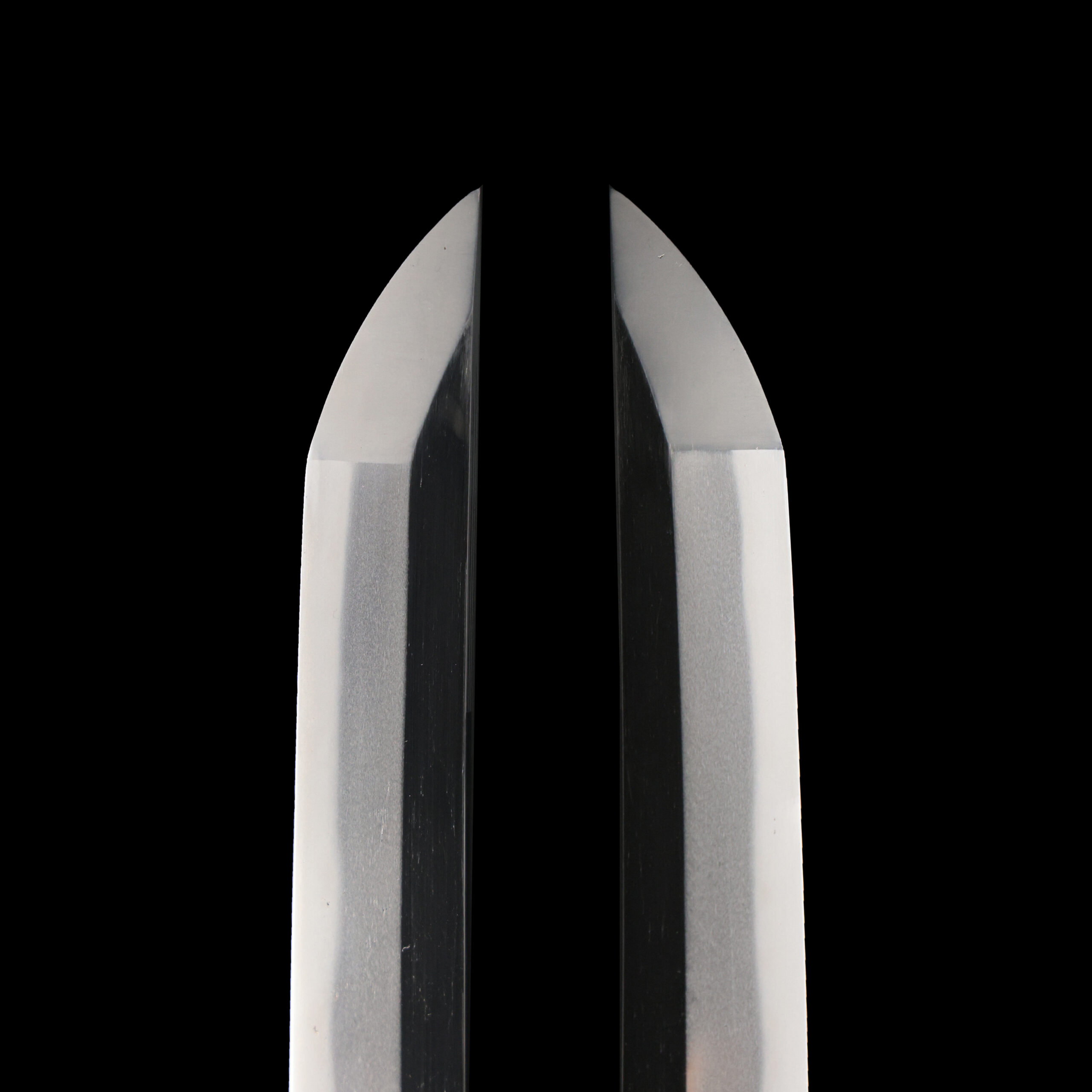
Kissaki is the tip of the Japanese sword.
Nakago
:
Nakago is the tang of the Japanese sword.
Japanese swordsmiths left the black

 NihontoWatch