売切れ
Tokuho売切れ
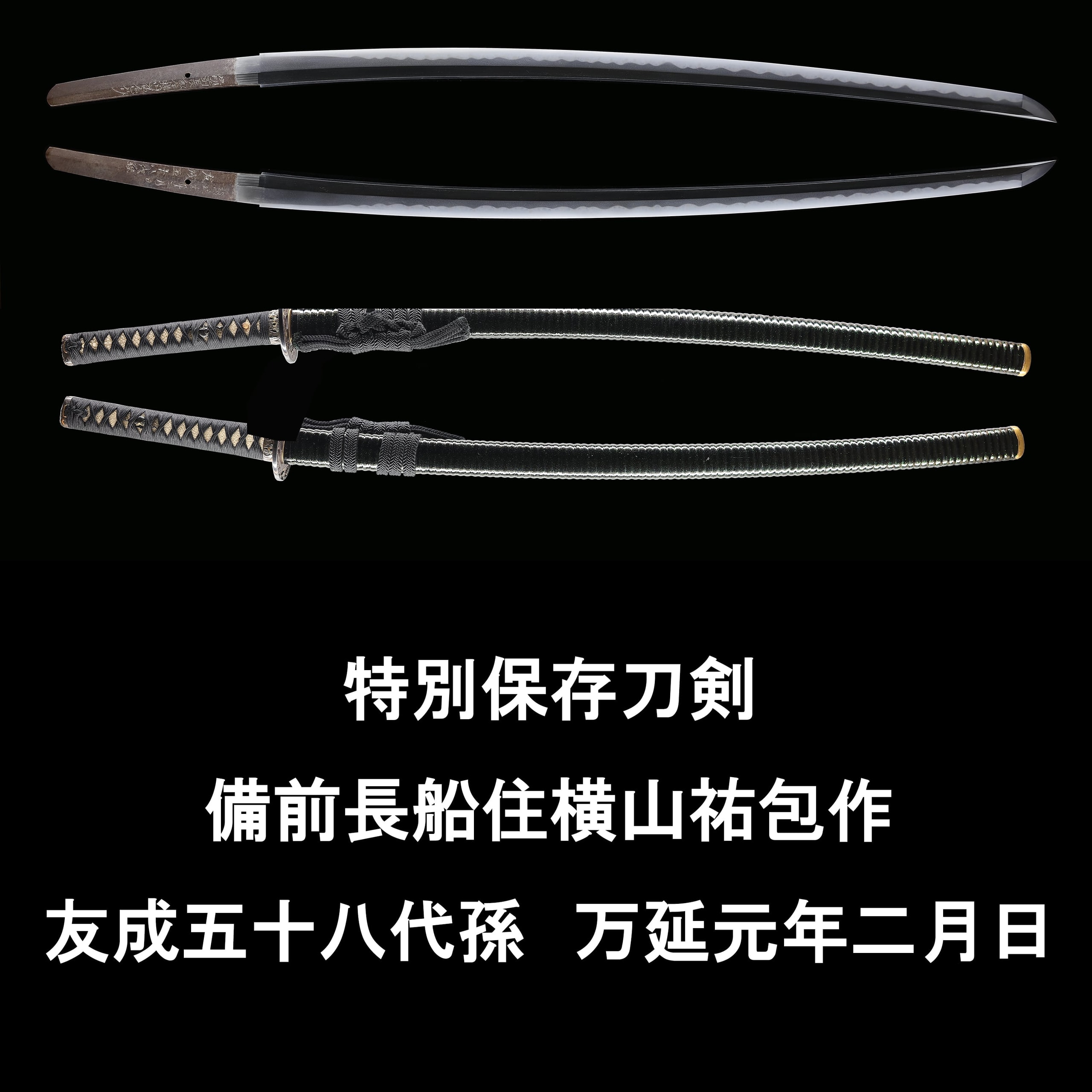
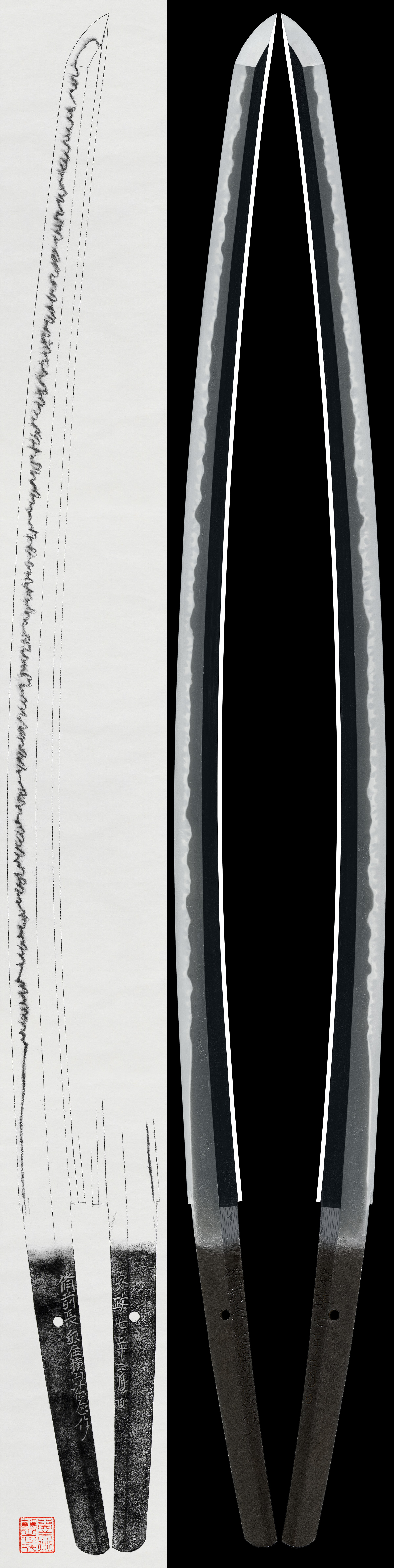
Katana: Bizen Osafune Ju Yokoyama Sukekane(Tokubetsu Hozon Token, NBTHK Tokubetsu Kicho Token)
売却済
世界81社の刀剣商を横断追跡 · 価格履歴 · 売却アーカイブ
仕様
長さ
70.4 cm
反り
2.2 cm
元幅
3.2 cm
先幅
2.05 cm
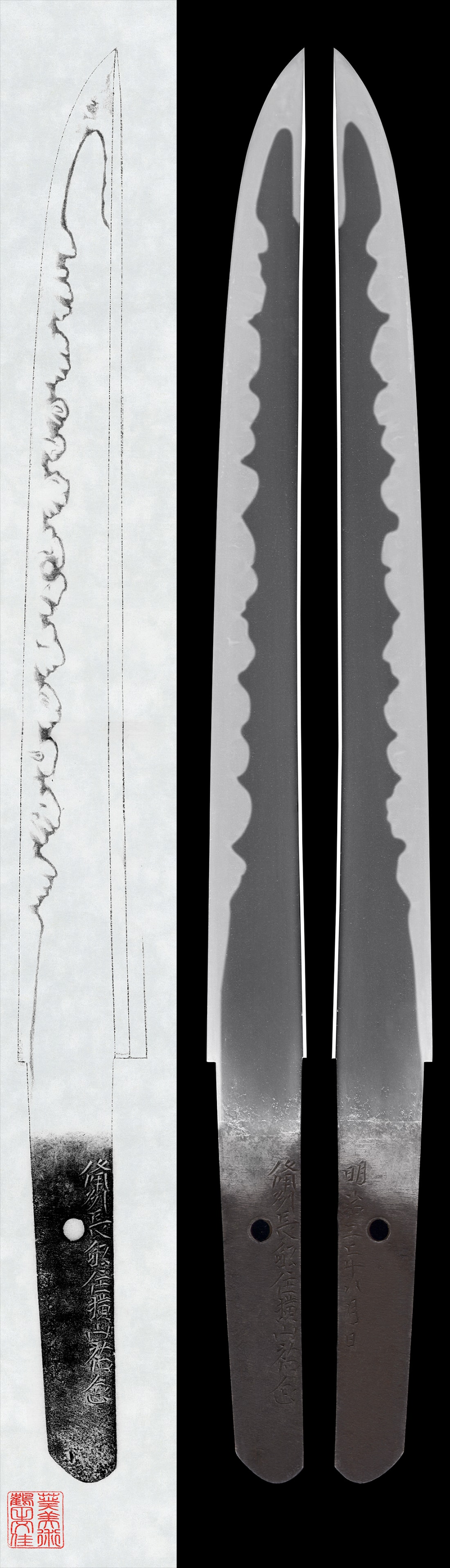
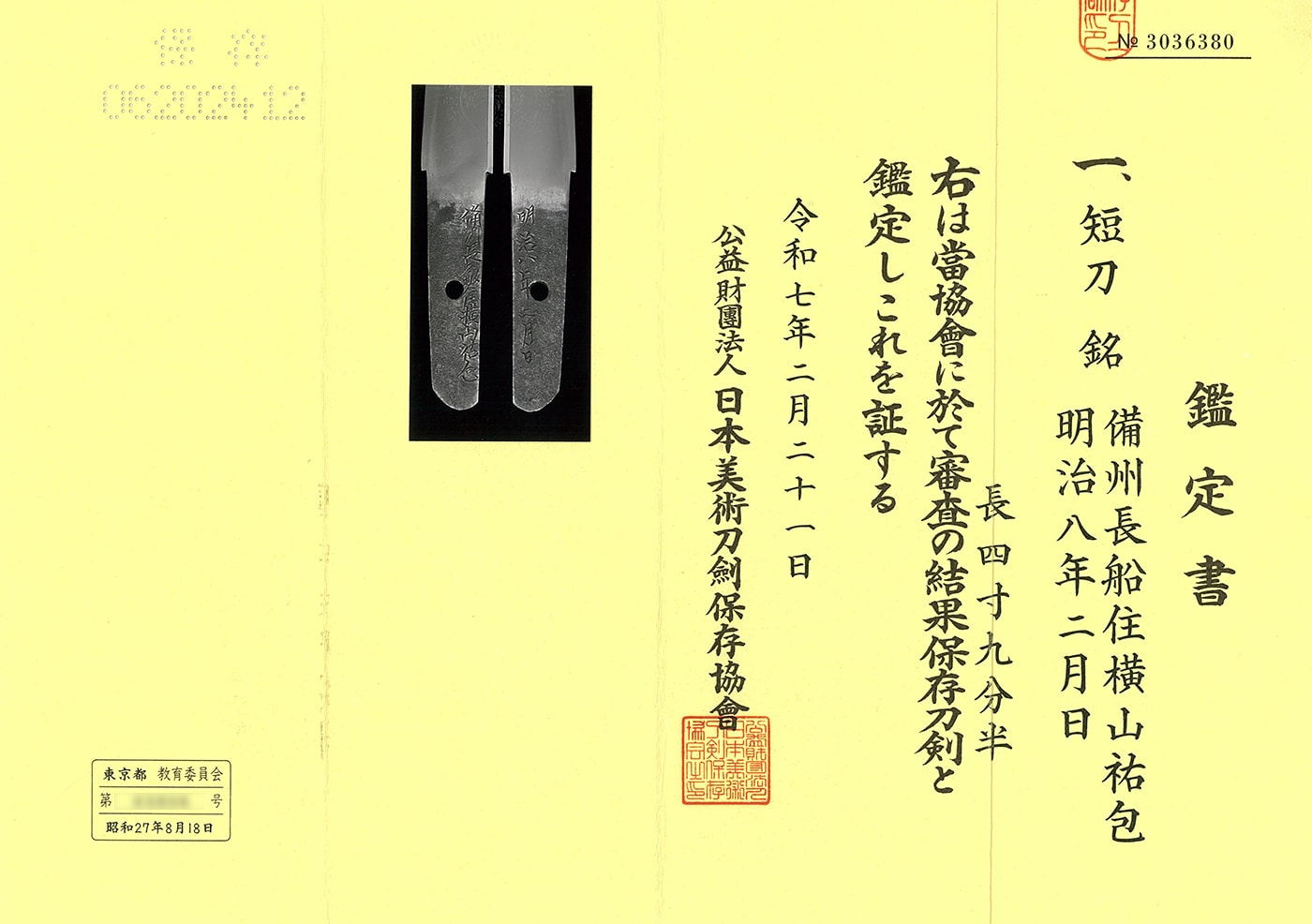
Ordering number:24030Katana in Shirasaya with Koshirae (Tokubetsu Hozon Token, NBTHK Tokubetsu Kicho Token)Signature: Bizen Osafune Ju Yokoyama SukekaneAnsei 7 Nen 2 Gatsu Hi (February 1860)備前長船住横山祐包安政七年二月日We divide four sections for each sword as Saijyo Saku, Jyojyo Saku, Jyo Saku, and Regular Saku.This work is ranked as Jyojyo Saku.Habaki: Single-layered gold-covered habakiBlade Length: 70.4 cm (27.72 in)Curvature: 2.2 cm (0.87 in)Mekugi Hole: 1Width at Base (Motohaba): 3.2 cm (1.26 in)Width at Tip (Sakihaba): 2.05 cm (0.81 in)Thickness (Kasane): 0.7 cm (0.28 in)Sword Weight: 695 gEra: Late Edo period, Ansei 7 (1860)Shape: A slightly thick blade with deep curvature and an extended kissaki.It retains its original ubu-ha (unpolished part near the habaki).Jigane:Finely forged ko-itame hada, resulting in an exceptionally refined steel texture.Hamon: Begins with a suguha at the hamachi, then transitions into a gunome-midare.The pattern consists of fine ko-gunome and chōji-midare, forming a continuous wave.The boshi is somewhat large and returns roundly.Features: Many of Yokoyama Sukekane's works are inscribed as the 58th generation descendant of Tomonari,but this particular piece does not bear that inscription.Instead, it is signed on the ura side with the date Ansei 7, February (1860).The hamon begins as suguha but transitions into a unique gunome-chōji-midare,showcasing the distinctive chrysanthemum chōji pattern.This style was pioneered by Yokoyama Sukenaga and later became a signature of the Yokoyama school.Its intricate and elegant design made it a hallmark style passed down to his disciples.Aoi Art’s Comment: The Yokoyama school was known for producing chrysanthemum-themed hamon,even more so than Yokoyama Sukenaga himself.This is an extremely refined piece, demonstrating an exceptional level of craftsmanship.The beauty and precision of this work invite admiration for the skill required to create it.NBTHK Tokubetsu Hozon Token CertificateNBTHK Tokubetsu Kicho Toke
 NihontoWatchBETA
売却済
世界81社の刀剣商を横断追跡 · 価格履歴 · 売却アーカイブ
70.4 cm
2.2 cm
3.2 cm
2.05 cm

Katana:Tajima Kami Ho-Jyoji Tachibana Sadakuni Kanbun 8 Nen 8 Gatsu Hi(NBTHK Tokubetsu Hozon Token)(Consignment sale)
¥1,000,000
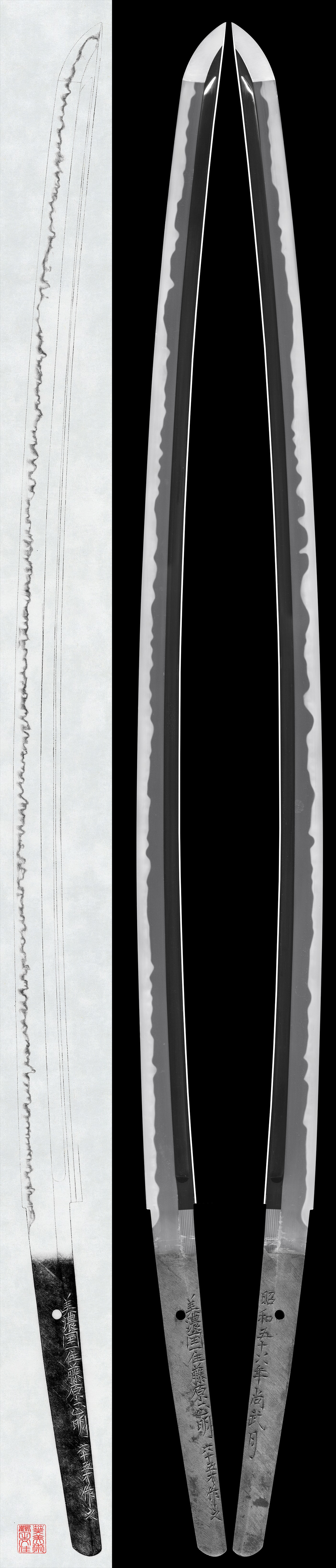
Katana:Mino-koku Ju Fujiwara Masaaki Rokuju-go sai Kore wo Tsukuru (guaranteed: NBTHK Hozon Token)
¥400,000

Katana:Kashu ju Fujiwara Kanesada Saku Kore 加州住藤原兼定作之 Keio San-nen, U, Hachi-gatsu Hi (August, 1867) (NBTHK Tokubetsu Hozon Token)
¥700,000
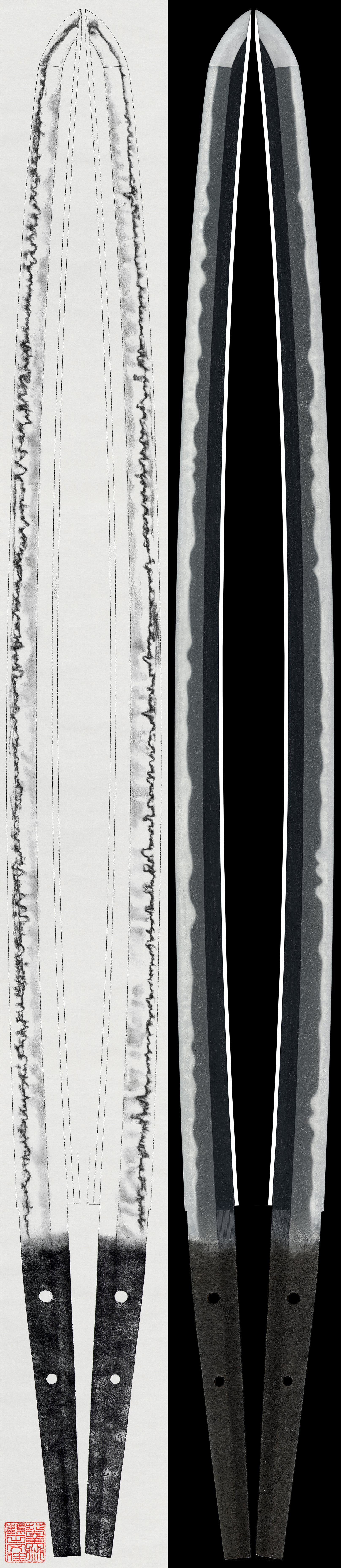
Katana: Mumei (Unsigned) (Hatakeda Sanemori) (12th Session Juyo Token)
¥6,000,000
Ordering number:24030Katana in Shirasaya with Koshirae (Tokubetsu Hozon Token, NBTHK Tokubetsu Kicho Token)Signature: Bizen Osafune Ju Yokoyama SukekaneAnsei 7 Nen 2 Gatsu Hi (February 1860)備前長船住横山祐包安政七年二月日We divide four sections for each sword as Saijyo Saku, Jyojyo Saku, Jyo Saku, and Regular Saku.This work is ranked as Jyojyo Saku.Habaki: Single-layered gold-covered habakiBlade Length: 70.4 cm (27.72 in)Curvature: 2.2 cm (0.87 in)Mekugi Hole: 1Width at Base (Motohaba): 3.2 cm (1.26 in)Width at Tip (Sakihaba): 2.05 cm (0.81 in)Thickness (Kasane): 0.7 cm (0.28 in)Sword Weight: 695 gEra: Late Edo period, Ansei 7 (1860)Shape: A slightly thick blade with deep curvature and an extended kissaki.It retains its original ubu-ha (unpolished part near the habaki).Jigane:Finely forged ko-itame hada, resulting in an exceptionally refined steel texture.Hamon: Begins with a suguha at the hamachi, then transitions into a gunome-midare.The pattern consists of fine ko-gunome and chōji-midare, forming a continuous wave.The boshi is somewhat large and returns roundly.Features: Many of Yokoyama Sukekane's works are inscribed as the 58th generation descendant of Tomonari,but this particular piece does not bear that inscription.Instead, it is signed on the ura side with the date Ansei 7, February (1860).The hamon begins as suguha but transitions into a unique gunome-chōji-midare,showcasing the distinctive chrysanthemum chōji pattern.This style was pioneered by Yokoyama Sukenaga and later became a signature of the Yokoyama school.Its intricate and elegant design made it a hallmark style passed down to his disciples.Aoi Art’s Comment: The Yokoyama school was known for producing chrysanthemum-themed hamon,even more so than Yokoyama Sukenaga himself.This is an extremely refined piece, demonstrating an exceptional level of craftsmanship.The beauty and precision of this work invite admiration for the skill required to create it.NBTHK Tokubetsu Hozon Token CertificateNBTHK Tokubetsu Kicho Toke
NihontoWatchBETA売却済
世界81社の刀剣商を横断追跡 · 価格履歴 · 売却アーカイブ
70.4 cm
2.2 cm
3.2 cm
2.05 cm
Katana:Tajima Kami Ho-Jyoji Tachibana Sadakuni Kanbun 8 Nen 8 Gatsu Hi(NBTHK Tokubetsu Hozon Token)(Consignment sale)
¥1,000,000
Katana:Mino-koku Ju Fujiwara Masaaki Rokuju-go sai Kore wo Tsukuru (guaranteed: NBTHK Hozon Token)
¥400,000
Katana:Kashu ju Fujiwara Kanesada Saku Kore 加州住藤原兼定作之 Keio San-nen, U, Hachi-gatsu Hi (August, 1867) (NBTHK Tokubetsu Hozon Token)
¥700,000
Katana: Mumei (Unsigned) (Hatakeda Sanemori) (12th Session Juyo Token)
¥6,000,000
![Katana [Bizen-koku Osafune ju Yokoyama Sukekane(Daimei Sukeharu)] [N.B.T.H.K] Tokubetsu Hozon Token](/_next/image?url=https%3A%2F%2Fitbhfhyptogxcjbjfzwx.supabase.co%2Fstorage%2Fv1%2Fobject%2Fpublic%2Flisting-images%2Fworld-seiyudo%2FL31324%2F00.jpg&w=2560&q=90)