Tokubetsu-Jūyō-Koshirae, 26th Session — Designated May 28, 2020
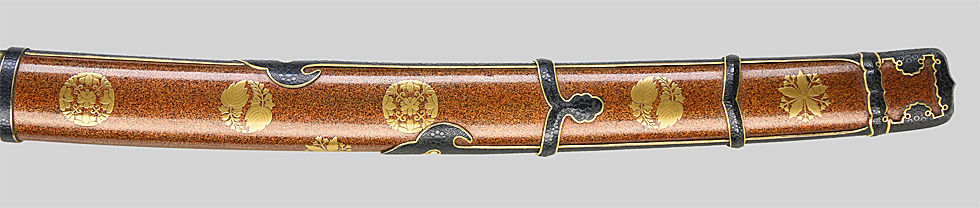
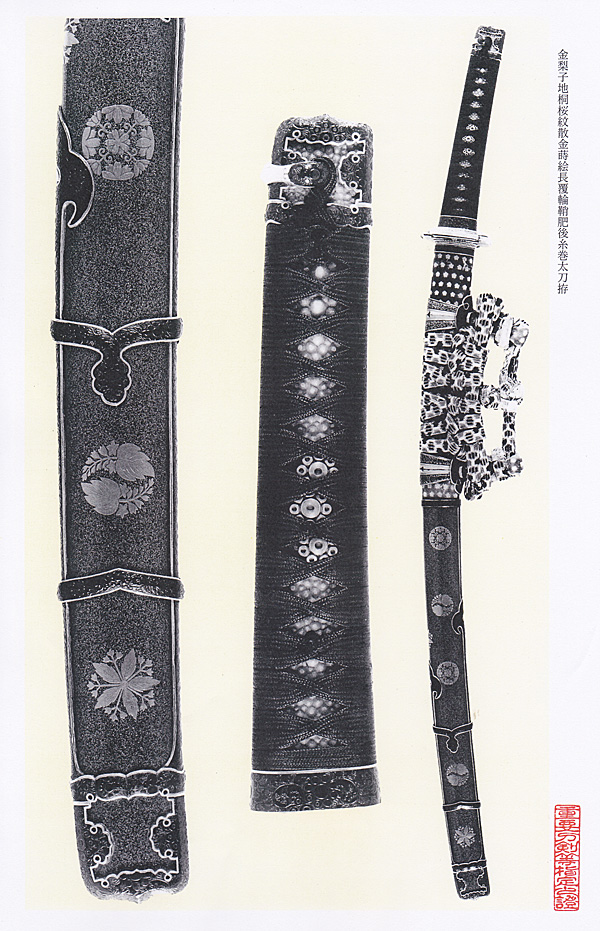
Tachi koshirae, kin-nashiji saya with scattered aoi crests in gold-shell and maki-e (金梨子地葵紋散金貝蒔絵鞘糸巻太刀拵)
Setsumei by Shimada Nobuo (嶋田伸夫)
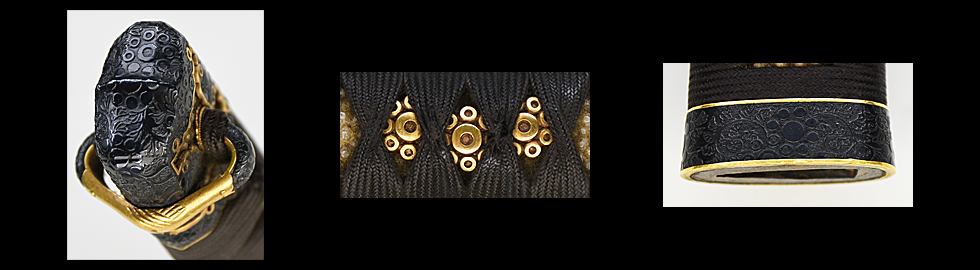
A formally appointed ito-maki tachi koshirae in which the aoi (mon) is dispersed across the entire ensemble. The mount combines sumptuous, courtly splendor—gold nashiji and gold-shell decoration on the scabbard—with orthodox Gotō-style fittings in shakudō nanako-ji enriched by high-relief carving and gold iroe.
Measurements Total length: 98.0 cm; overall curvature (sori): 5.3 cm; hilt length: 23.2 cm; hilt curvature: 0.2 cm; scabbard length: 74.5 cm; scabbard curvature: 3.5 cm.
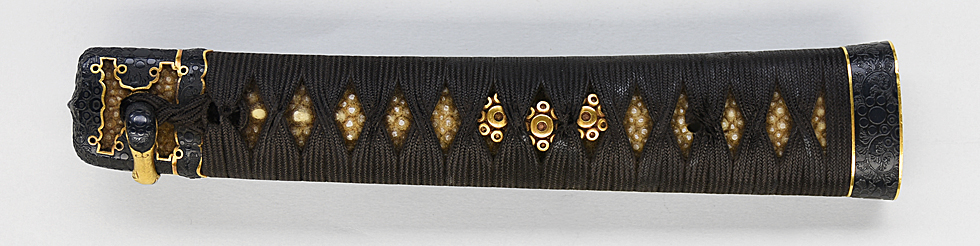
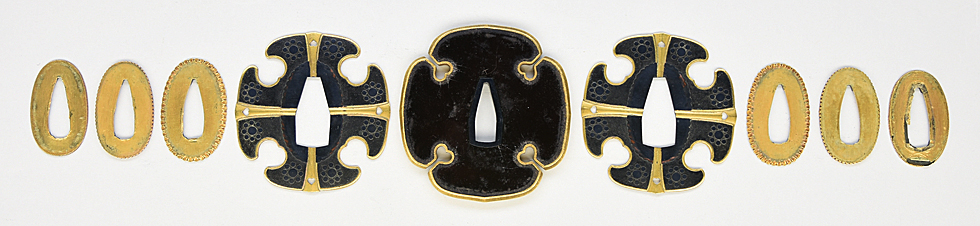
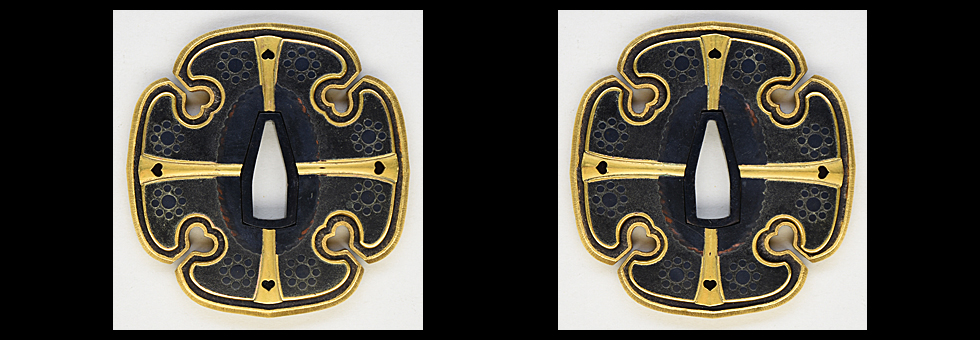
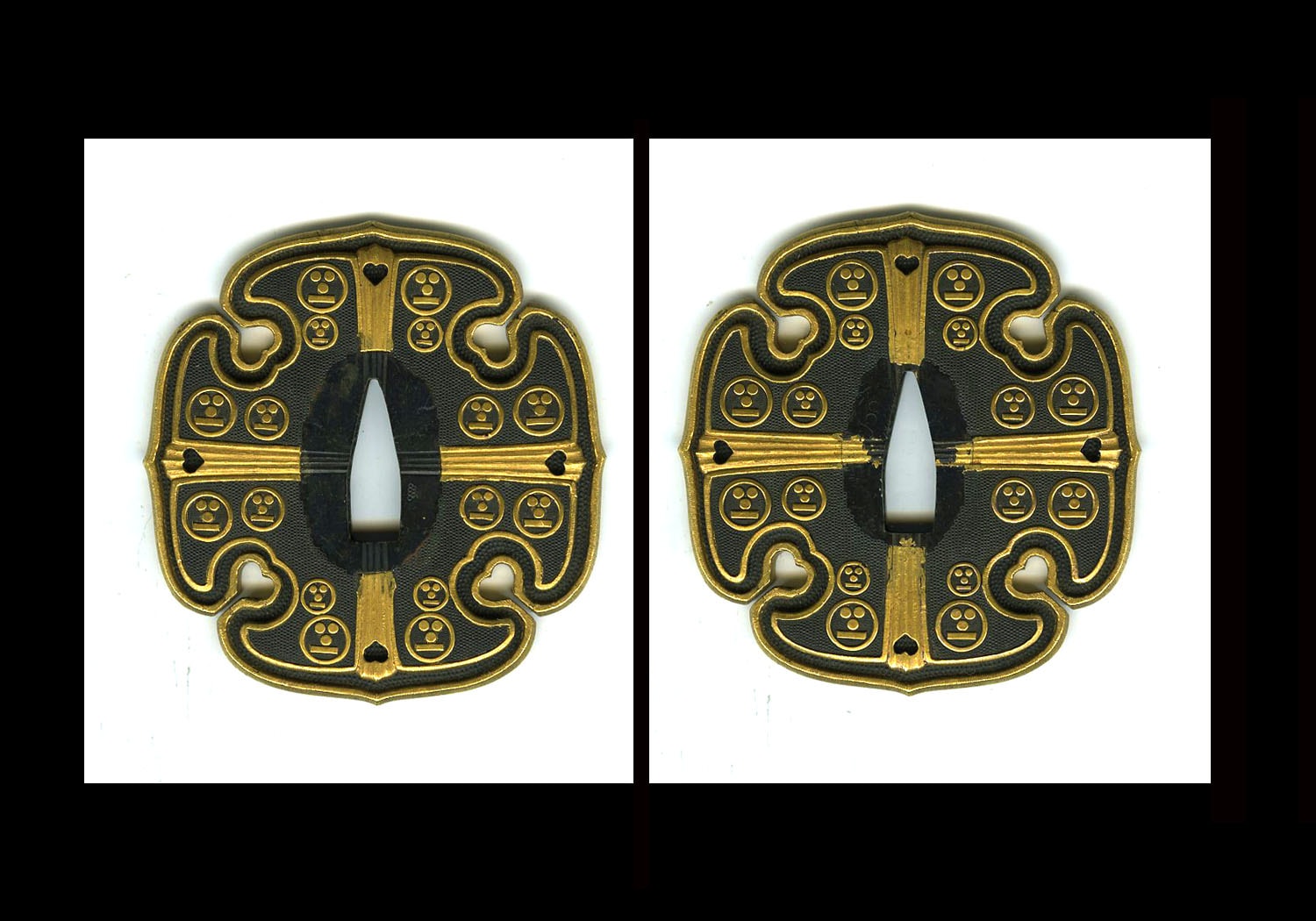
Components Saya: Gold nashiji (kin-nashiji) ground, decorated with scattered aoi crests executed in gold-shell (kin-gai) and maki-e (金梨子地葵紋散金貝蒔絵). Tsuka: Covered in gold brocade (kinran) dyed kuchinashi (梔染金襴着); wrapped in flat wrap (hira-maki) with “shrimp-brown” (ebicha) cord (海老茶色糸平巻). The watamaki is made in the same manner as the hilt wrapping (渡巻 柄巻に仕立同様). Tsuba: Carved-in (kurikomi) aoi-mokkō shape (刳込葵木瓜形); shakudō nanako-ji with bucket-bottom, three-ridge rim treatment and gold iroe (桶底三棟金色絵耳). Signed: Gotō Etsujō with kaō (銘 後藤悦乗〔花押〕). Fuchi-kashira: Included within the “overall fittings” (sō-kanagu): kabutogane, sarute, fuchi, ashi-kanamono, kashiwa-ba, and ishizuki—all with scattered aoi crests; shakudō nanako-ji; sukidashi takabori with gold iroe; small gold rim (kin ko-buchi); unsigned (総金具…葵紋散図、赤銅魚子地、鋤出高彫、金色絵、金小縁、無銘). Menuki: Three pairs of aoi crests; shakudō nanako-ji; rounded relief carving (yōbori) with gold iroe (目貫…赤銅魚子地、容彫、金色絵). Kogai/Kozuka: Not mentioned. Kojiri: Included within the “overall fittings” as the ishizuki (石突). Other fittings: Two large seppa: scattered aoi crests; shakudō nanako-ji; sukidashi takabori; cross-tasuki undercut carving (十字襷鋤下彫); four-direction inome openwork; gold iroe; unsigned (大切羽二枚…無銘). Small seppa: four with gold ground and two of shakudō ground (小切羽 金地四枚、赤銅地二枚). Taikōgane: aoi crest design; round; shakudō nanako-ji; yōbori with gold iroe (太鼓金…). Belt fastener (obi-tori): indigo-dyed leather (帯執 藍染革). Suspension cord (haio): silk in white, purple, light green, and orange; tortoiseshell-pattern braid (kikkō-gumi) (佩緒…糸亀甲組). The interval between suspension mounts (ashima) is wrapped in kinran (足間 金襴包).
Artisan/Origin* The guard is signed “Gotō Etsujō” with kaō (後藤悦乗〔花押〕). Given this, it is inferred that the remaining fittings were likewise assembled as a coherent set by Etsujō.
Era Early Edo period (江戸時代前期).
Explanation The ito-maki tachi koshirae is one of the early modern (kinsei) forms of warrior-class ceremonial and procession mountings (heijō / gijō tachi koshirae). It was also widely employed among high-ranking samurai as mountings for presentation purposes and for dedication to shrines and temples. Typically, the complete suite of fittings (sō-kanagu) is executed in shakudō nanako-ji, with the family crest scattered in gold. The scabbard is finished in gold nashiji—more rarely in a fully gold-lacquered ikakeji ground—and the crest is frequently expressed in maki-e and/or gold-shell decoration. Because the hilt and the watamaki are dressed in kinran and then bound with cord wrapping (ito-maki), this class of ceremonial tachi mounting is termed ito-maki tachi koshirae.
Etsujō was the second son of Jōjō, who succeeded as the ninth head of the Gotō main line. Born in Kyoto in Kan’ei 19 (1642), he used the personal name Mitsukuni (光邦). He strengthened the Rihei family line, and received a stipend of 150 koku from the Kaga Maeda house. Alternating by year with Enjō of the Kanbee line, he resided in Kanazawa in Kaga Province, served the Maeda house, trained many pupils, and worked toward the development of Kaga metalwork. In later life he was granted a residence in Shitaya, Edo, and together with the main family served the Tokugawa bakufu. He died at age sixty-seven in Hōei 5 (1708). He signed “Gotō Mitsukuni” with kaō and “Gotō Etsujō” with kaō. His workmanship adheres exclusively to the orthodox Gotō house style (o-ie-ryū), and his skill is in no way inferior to that of his father Jōjō.
This mounting is a formally correct (shikishō) ito-maki tachi koshirae unified by the aoi crest: the complete fittings set employs the crest, and the gold nashiji scabbard is likewise adorned with aoi crests in gold-shell and maki-e. Its manufacture is judged to date to the early Edo period. Because the guard bears the signature of Gotō Etsujō with kaō, the other fittings are also likely to have been organized as a set of his work. The scabbard’s gold-shell and maki-e are of high quality and possess refinement and dignity, producing a luxurious mounting commensurate with Etsujō’s fittings, a maker who contributed to the flourishing of the Kaga Gotō. The signature is also of high documentary value. In both fittings and scabbard, this is an elegant ito-maki tachi koshirae.
[Tōsō 44]