室町は刀剣業を産業に変えた。徒歩の集団戦とともに打刀が興り、長船と関は数打ち物と注文打ちを並行して産し、勘合貿易は日本刀を数万振の単位で海外へ運んだ。
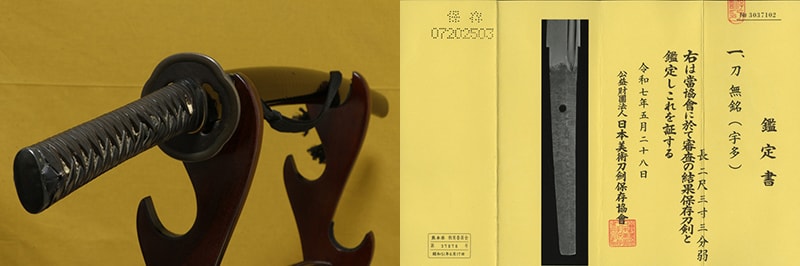
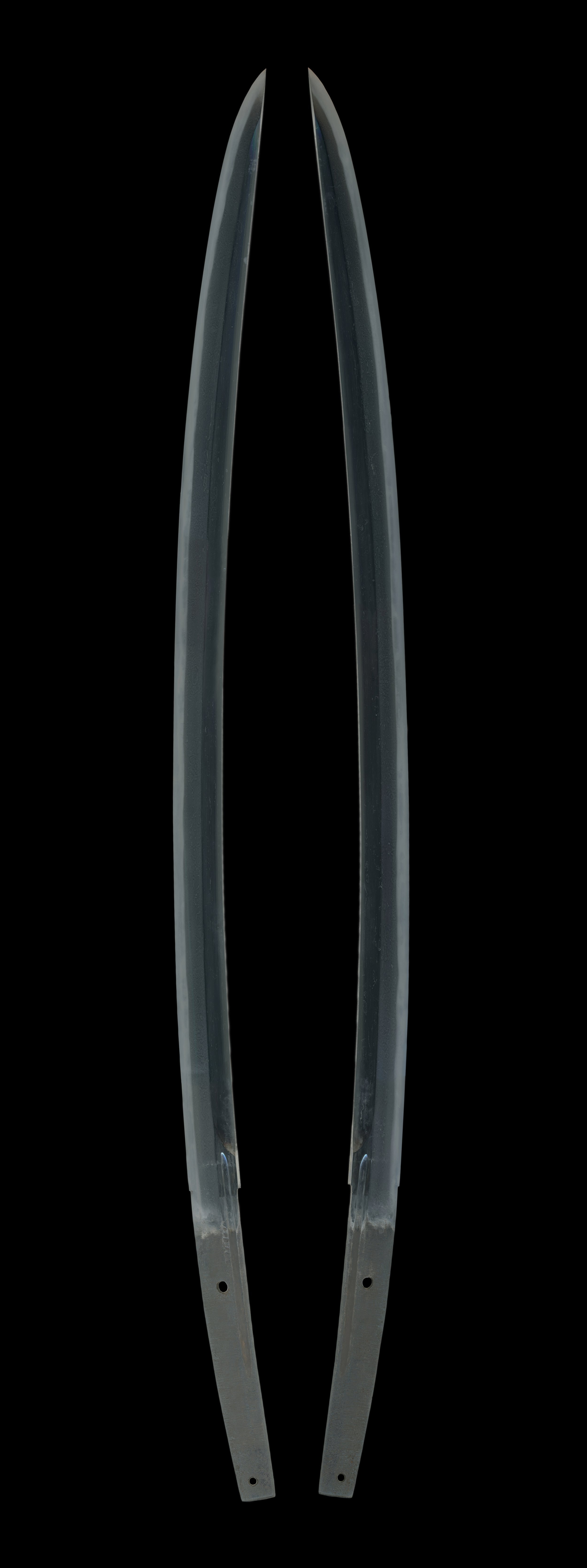
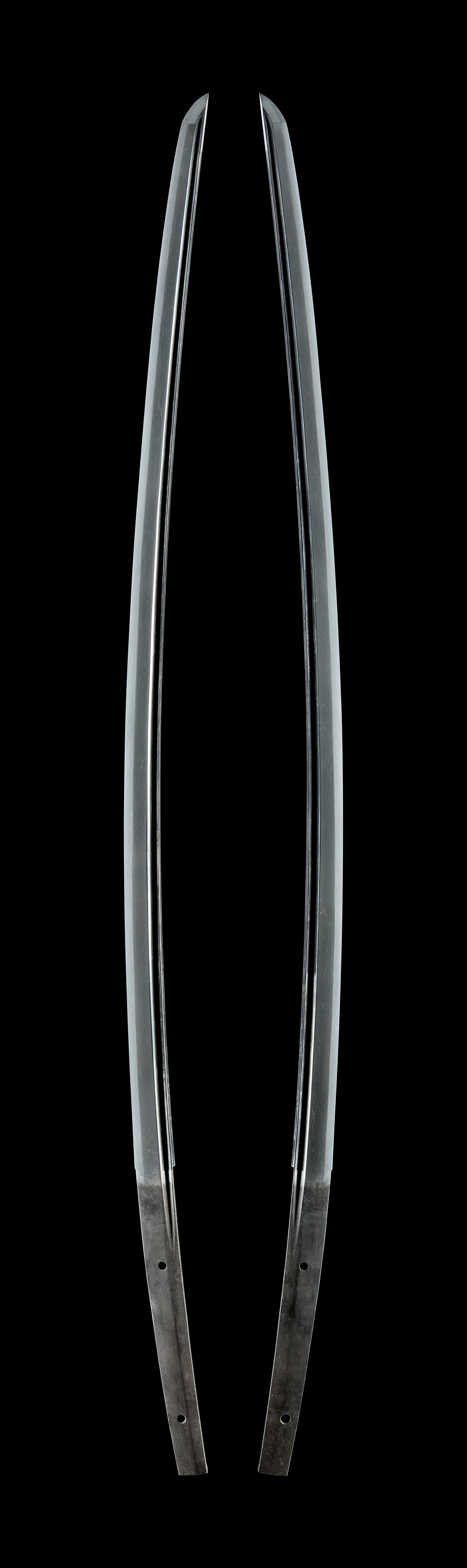
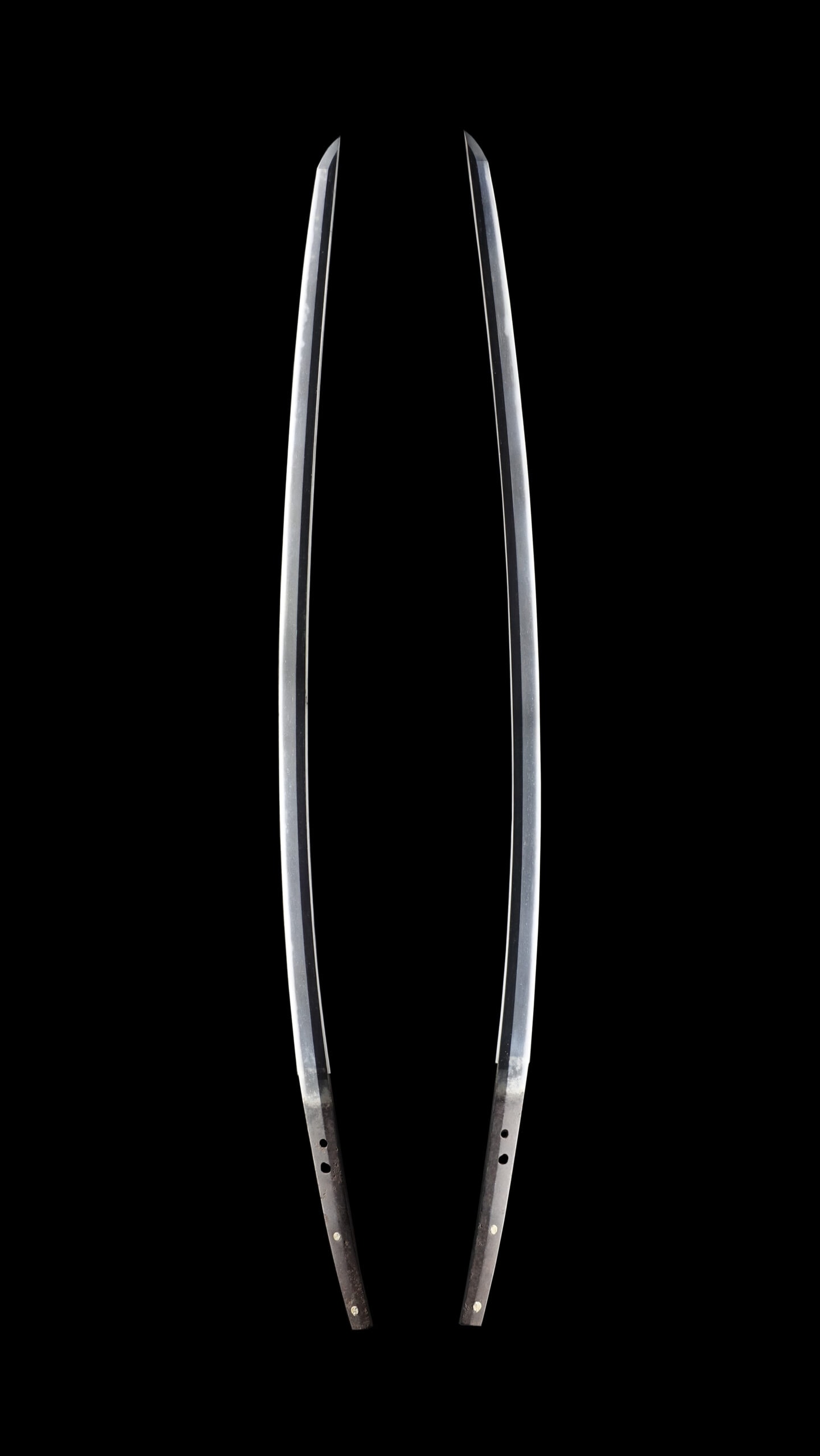
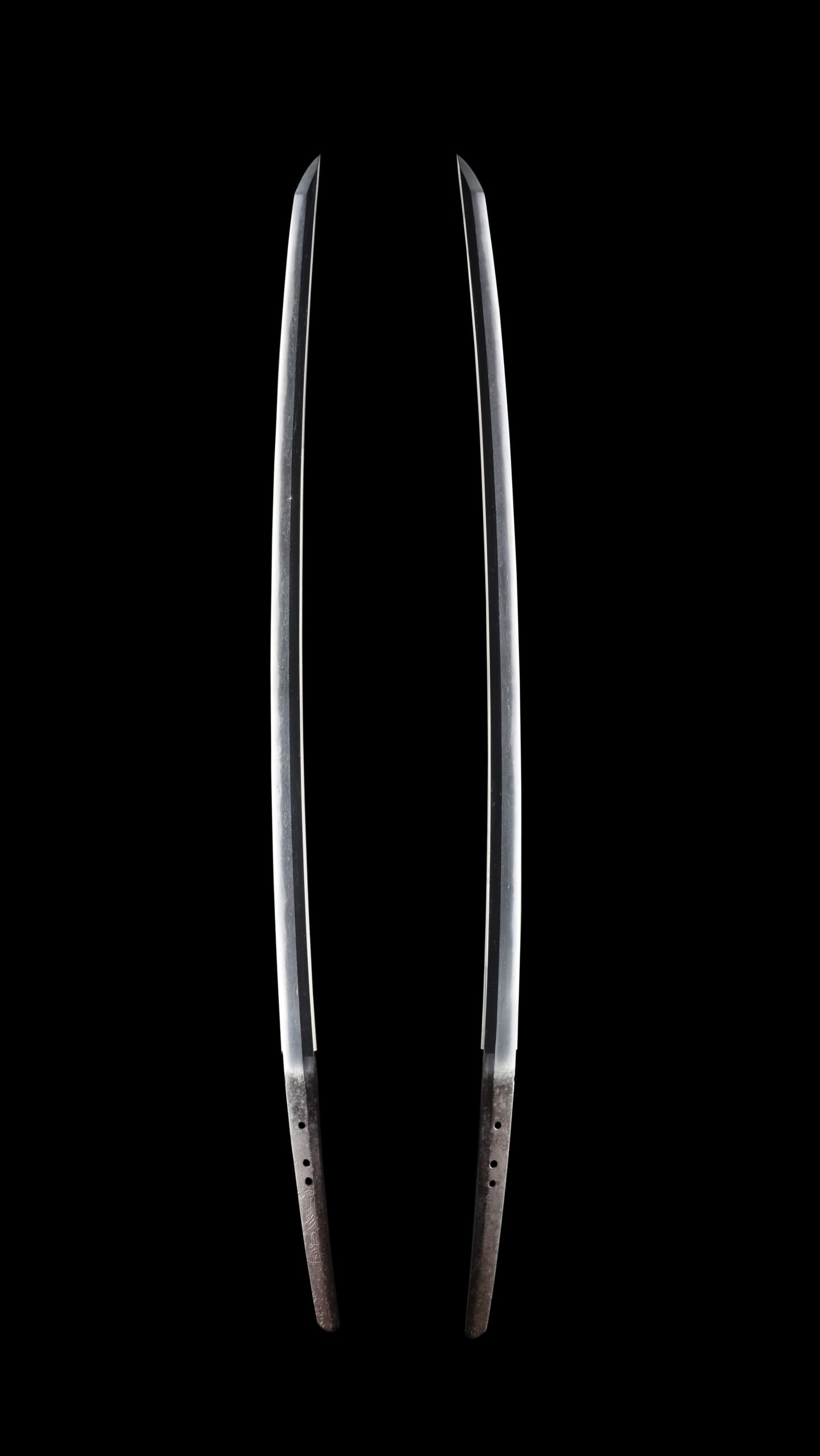
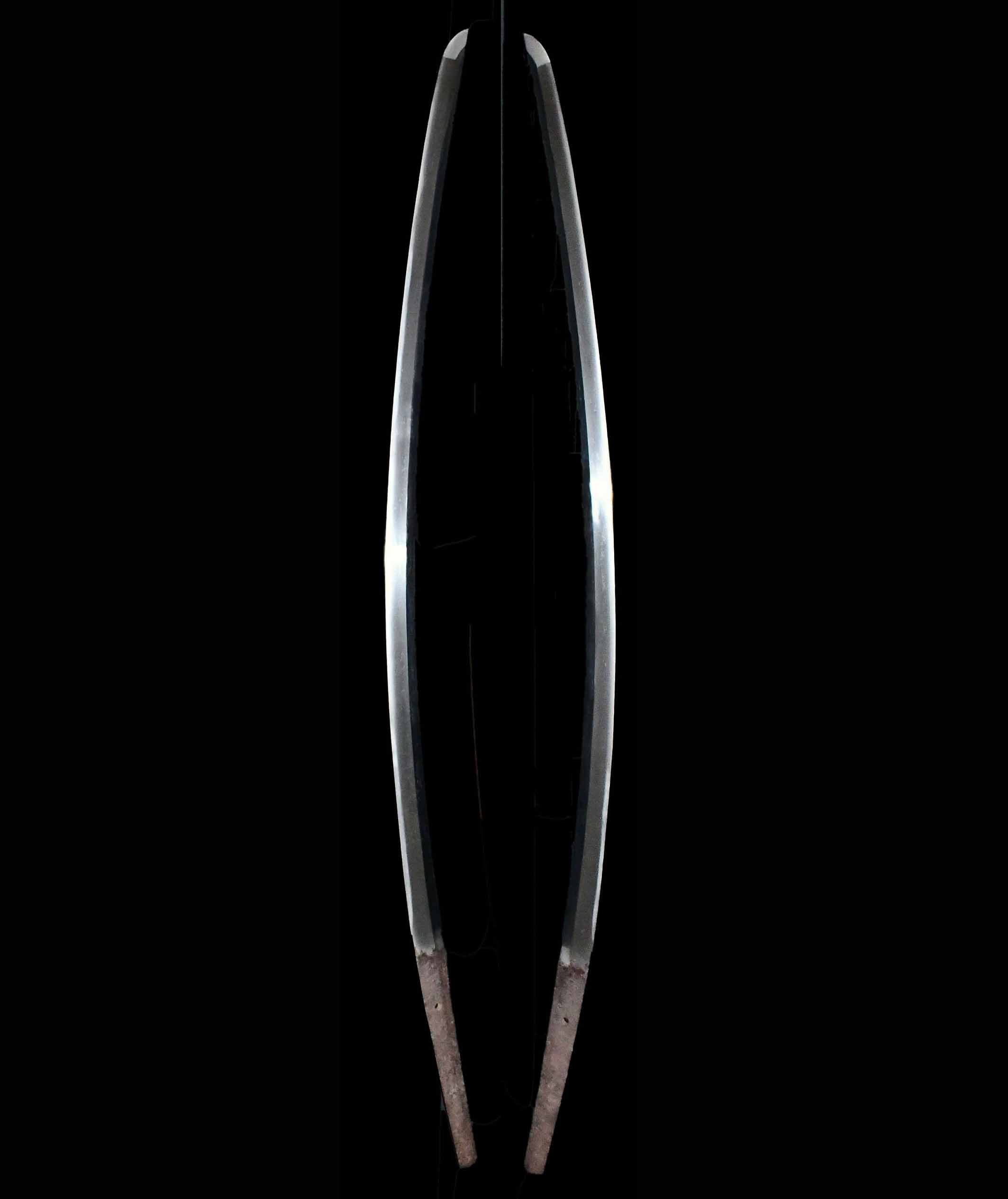
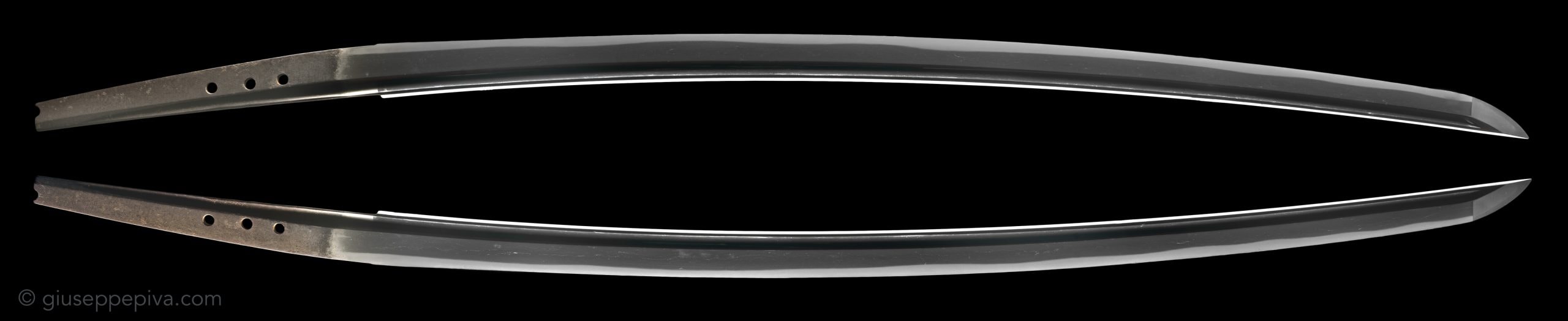
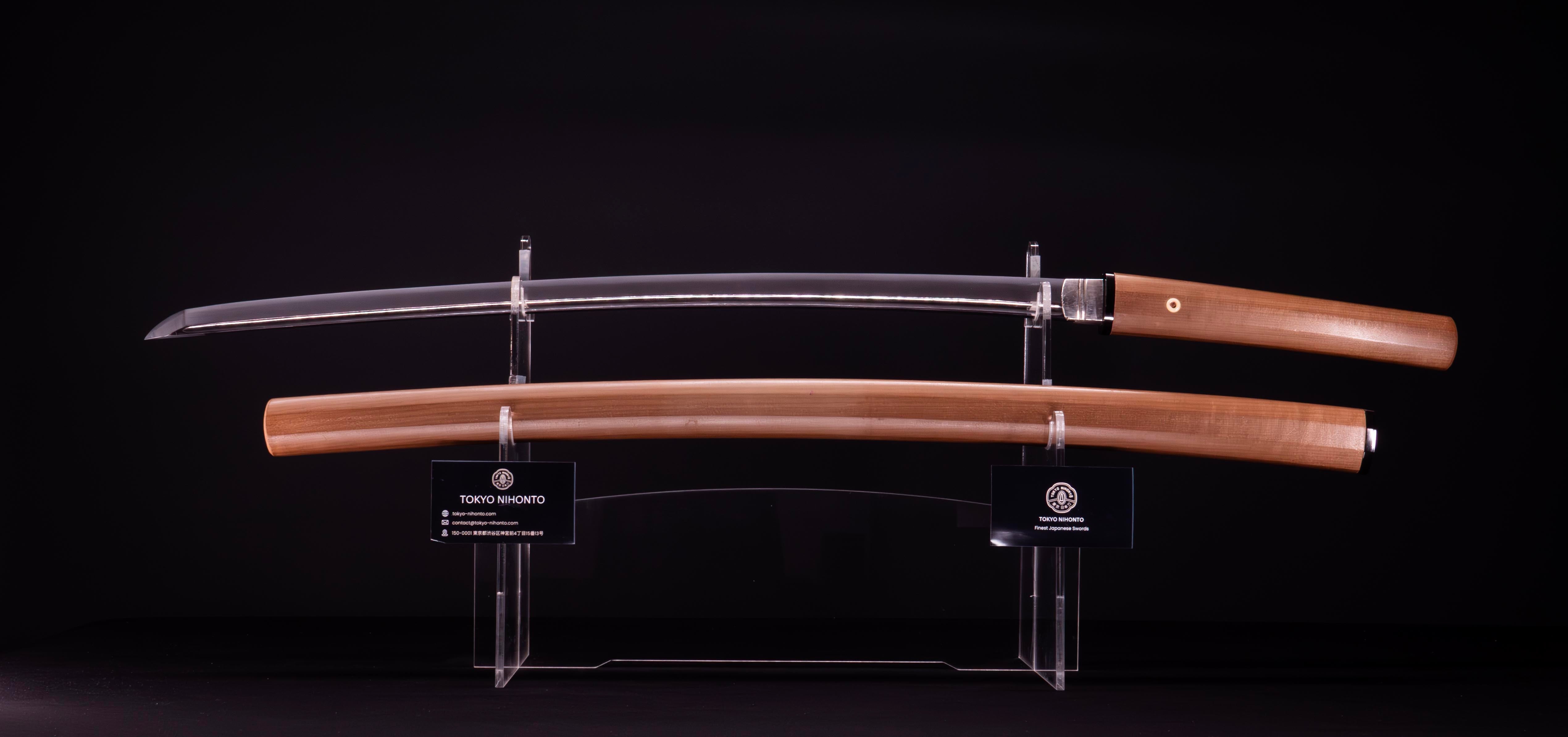
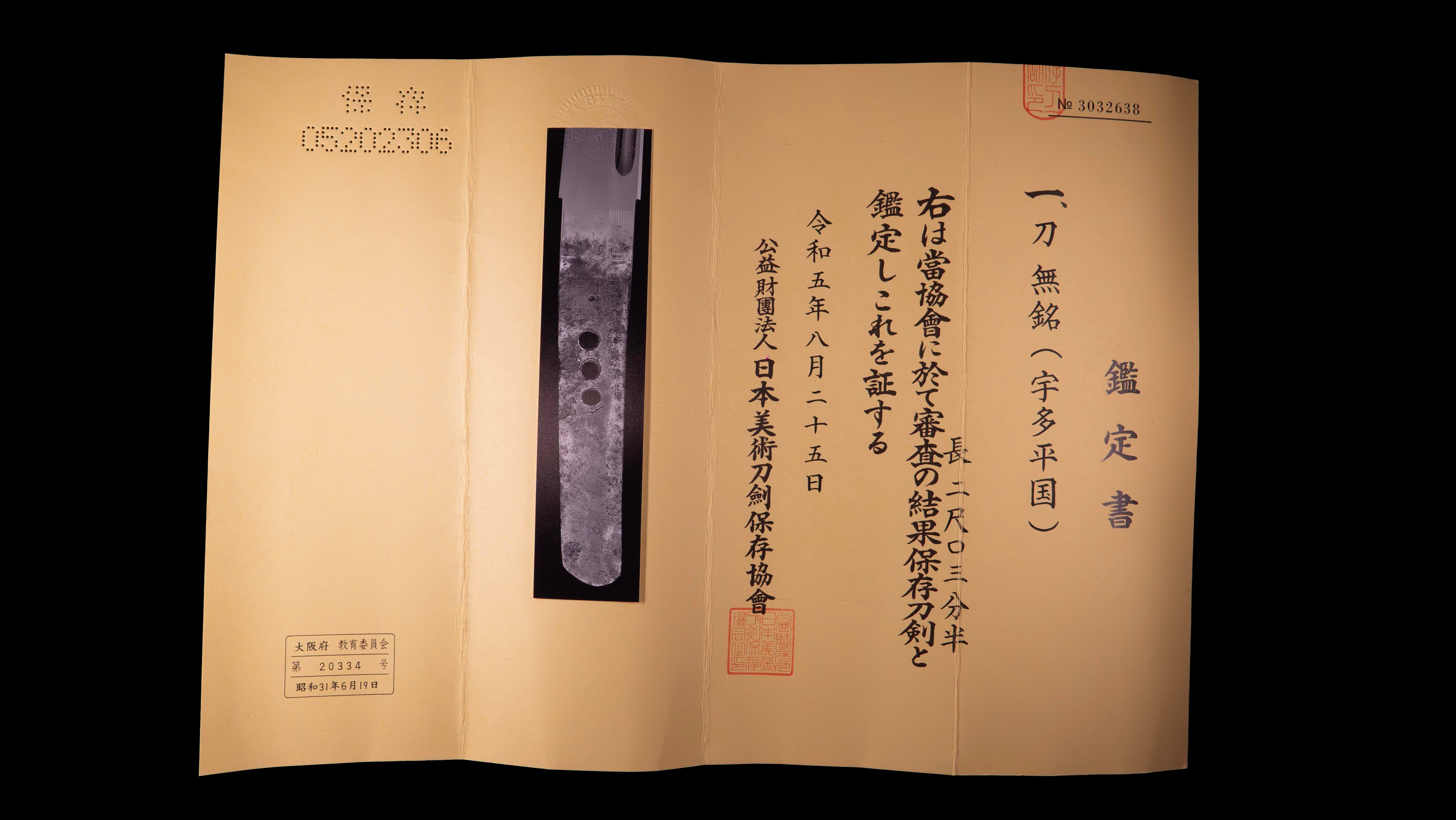
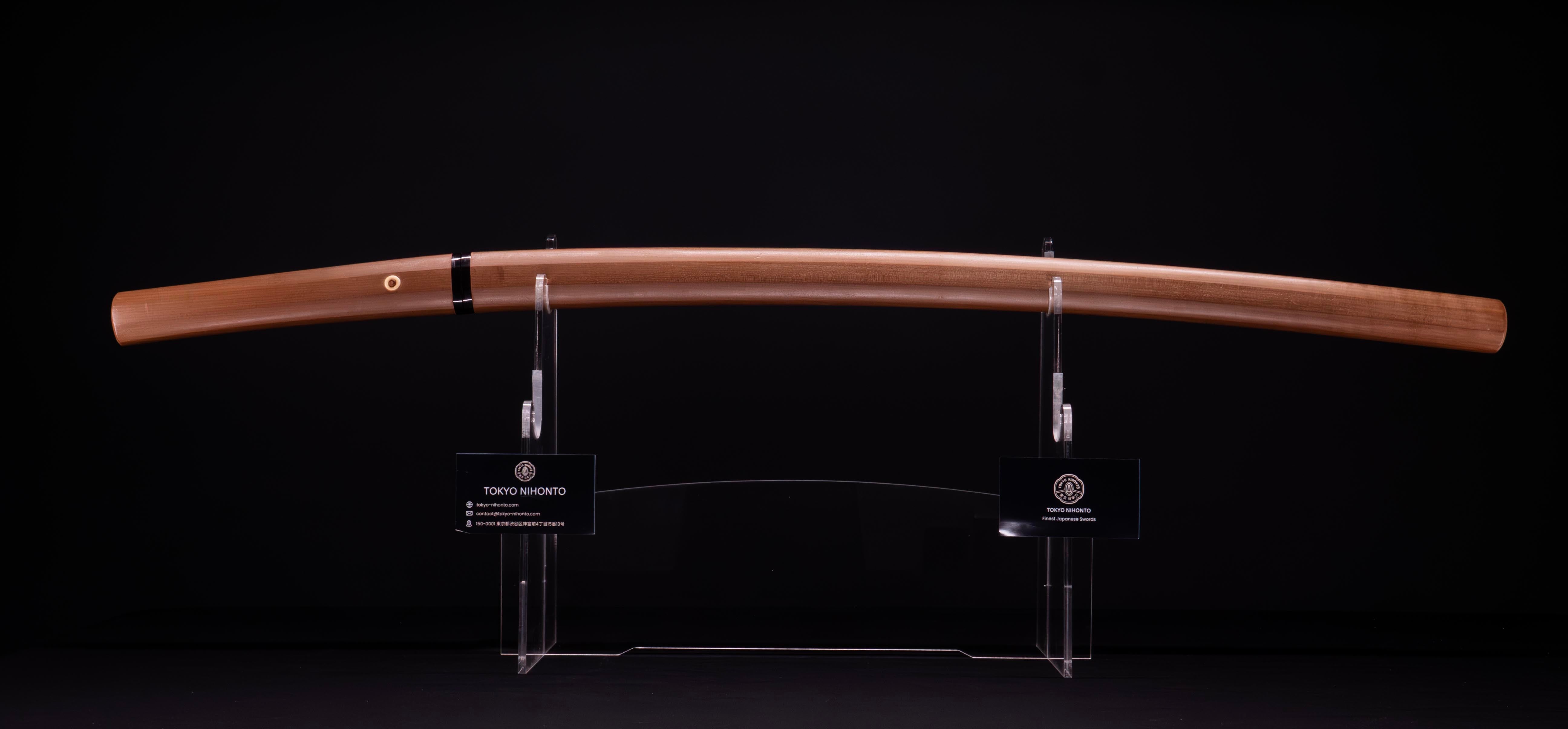
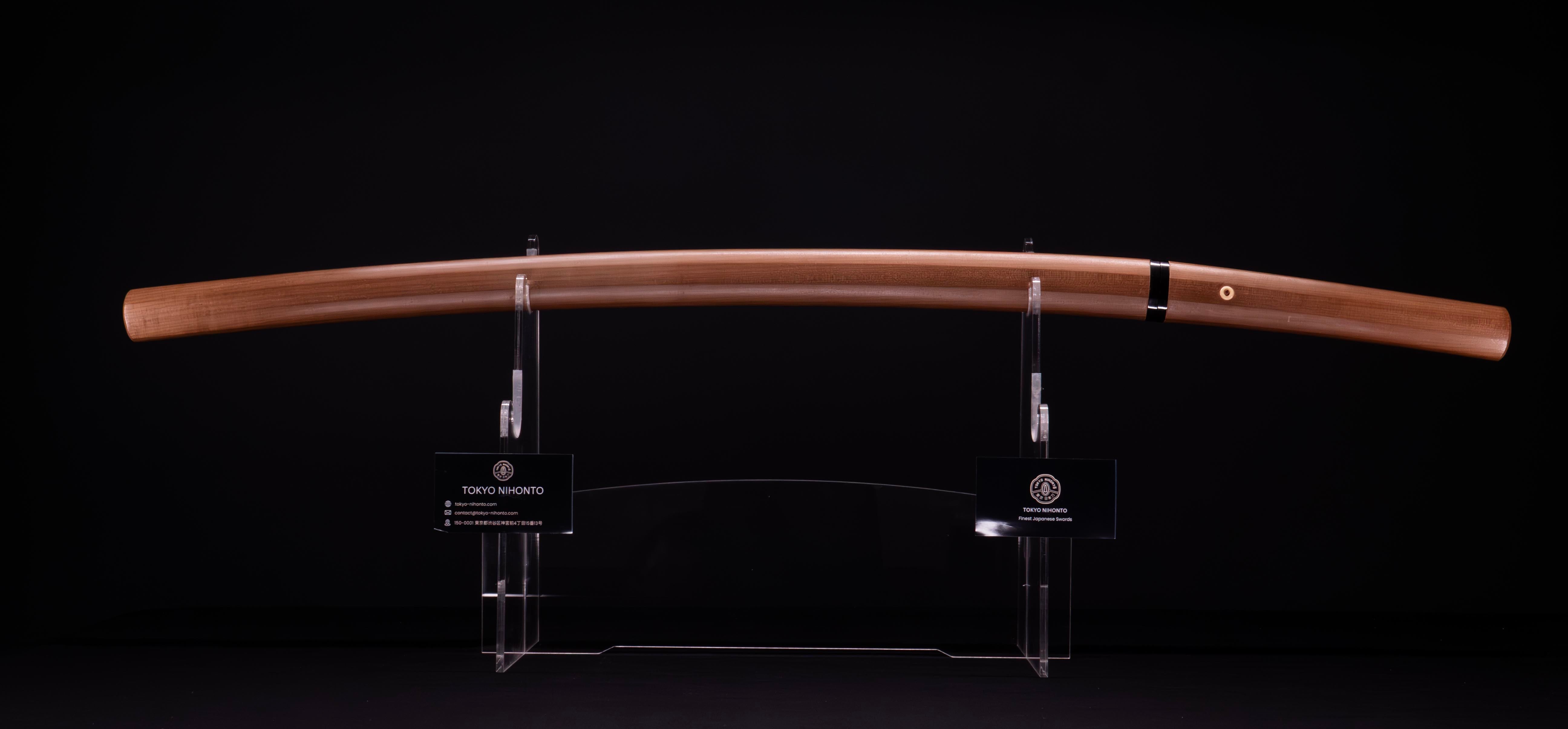
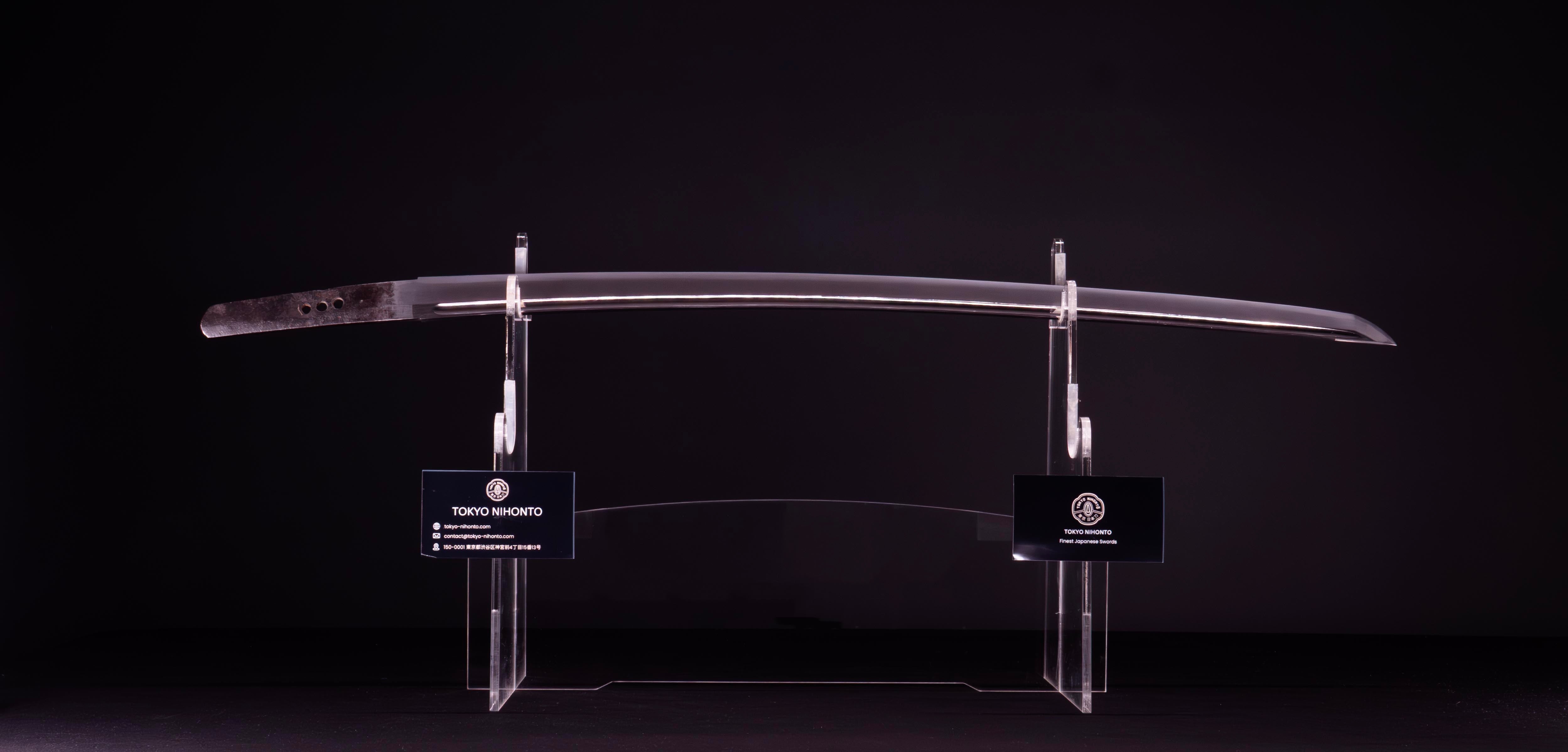
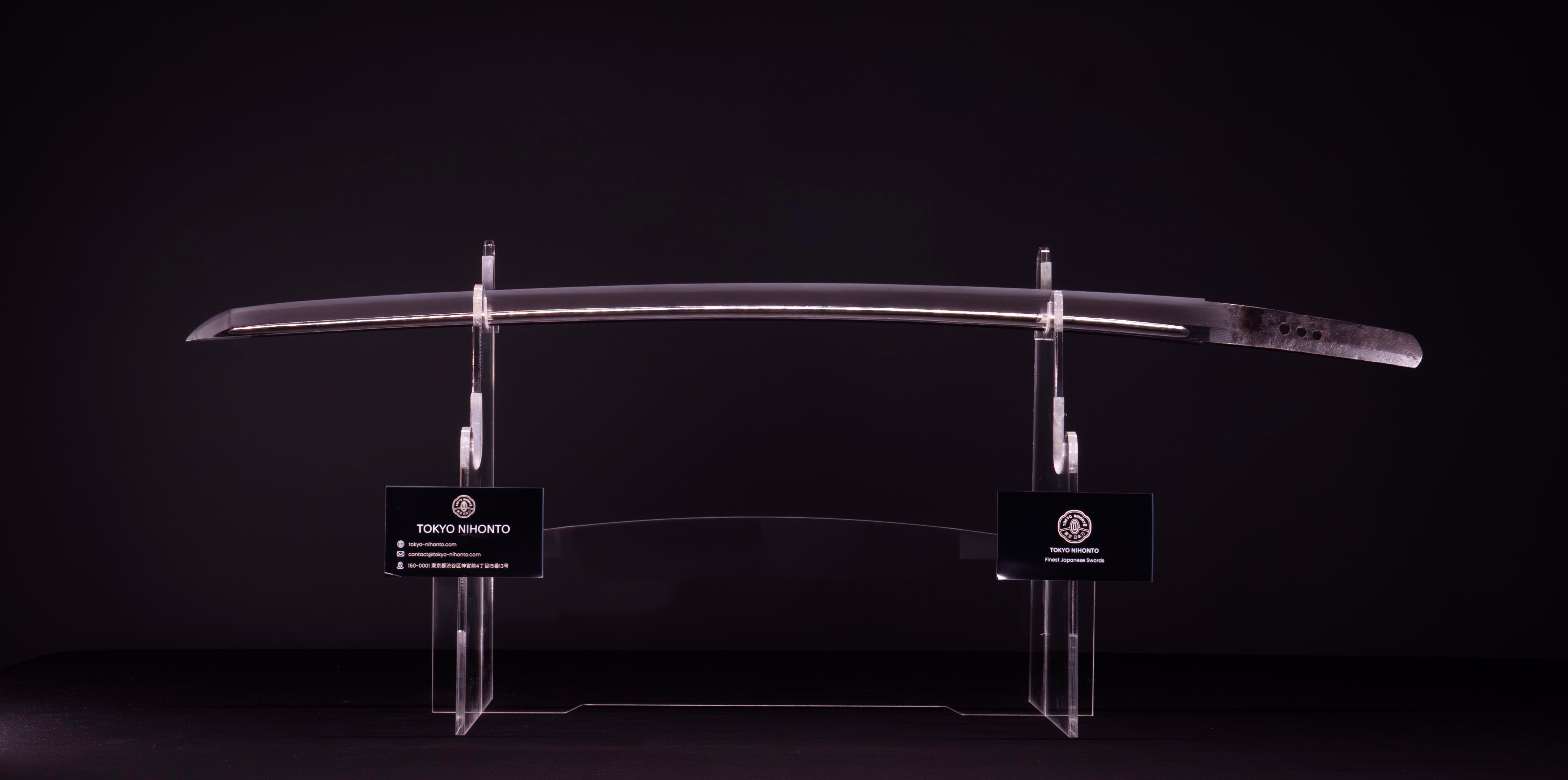
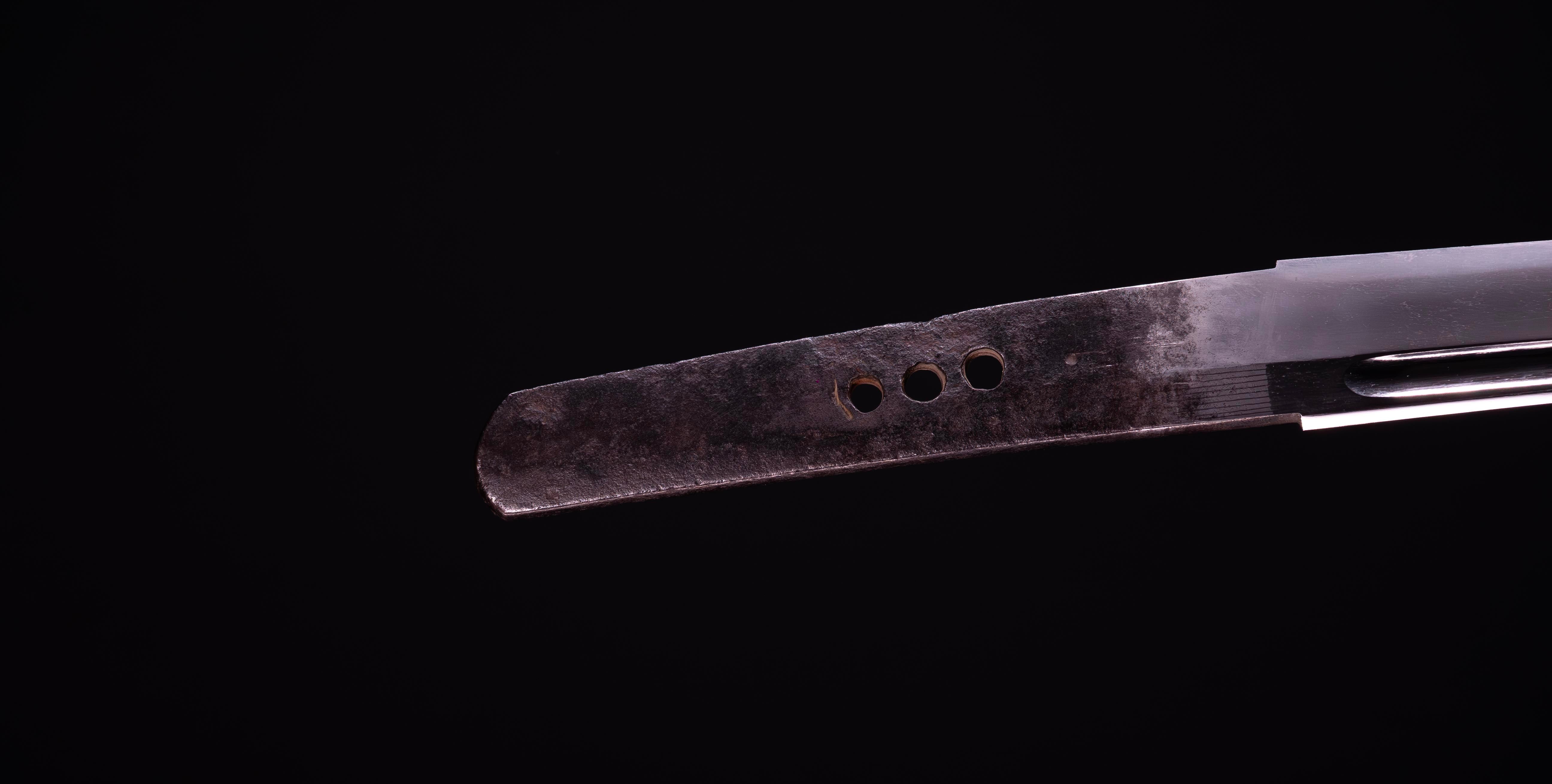
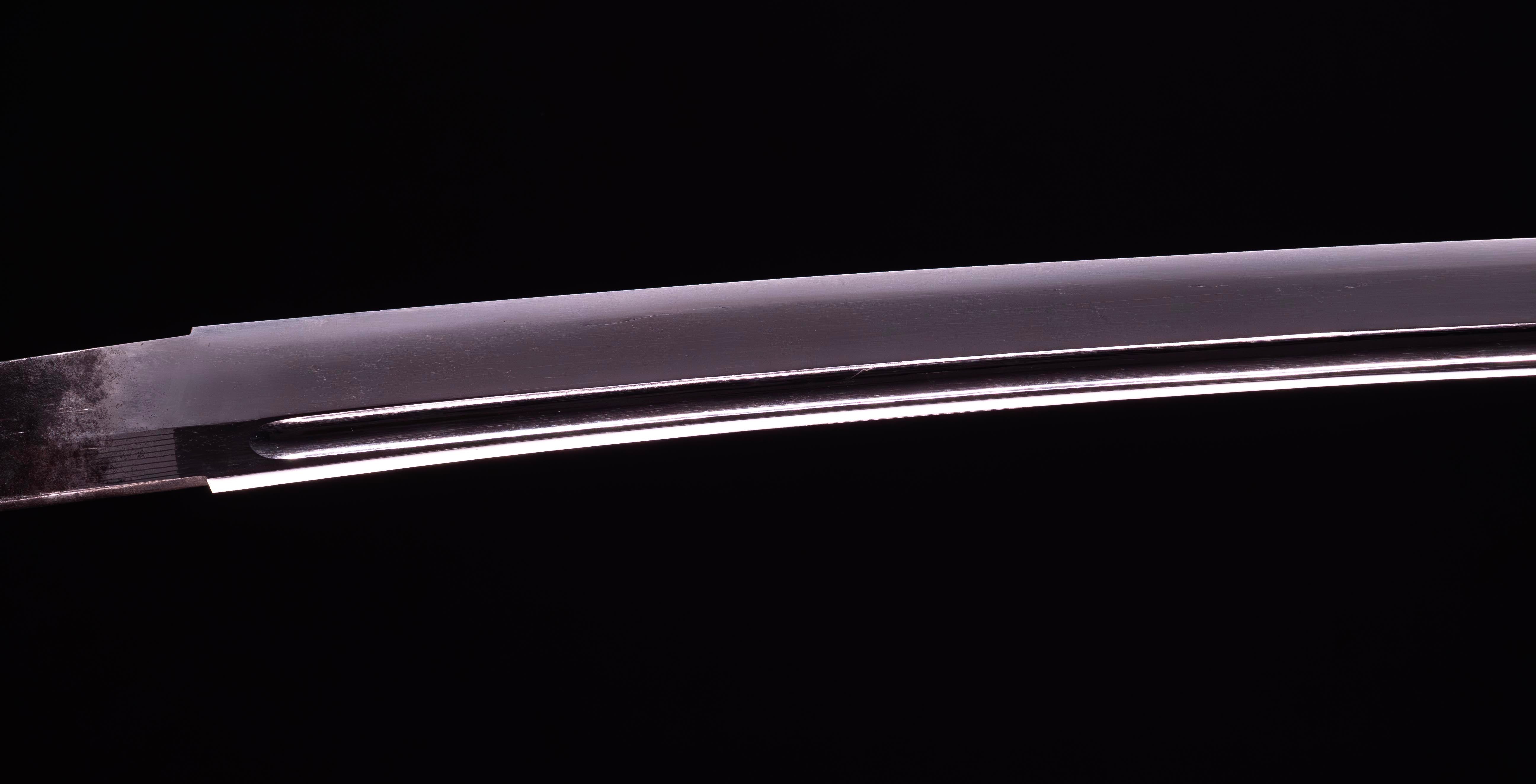
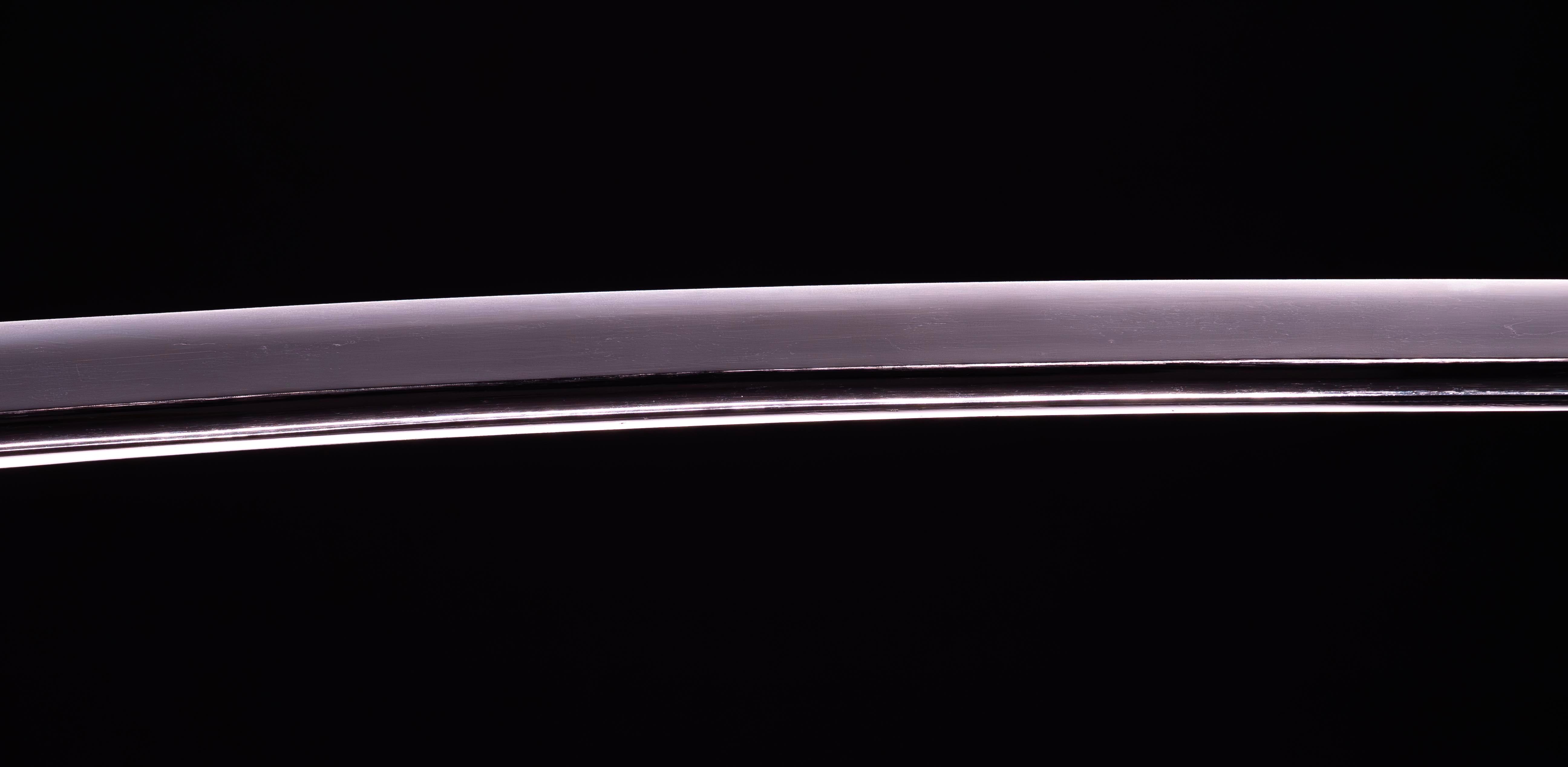
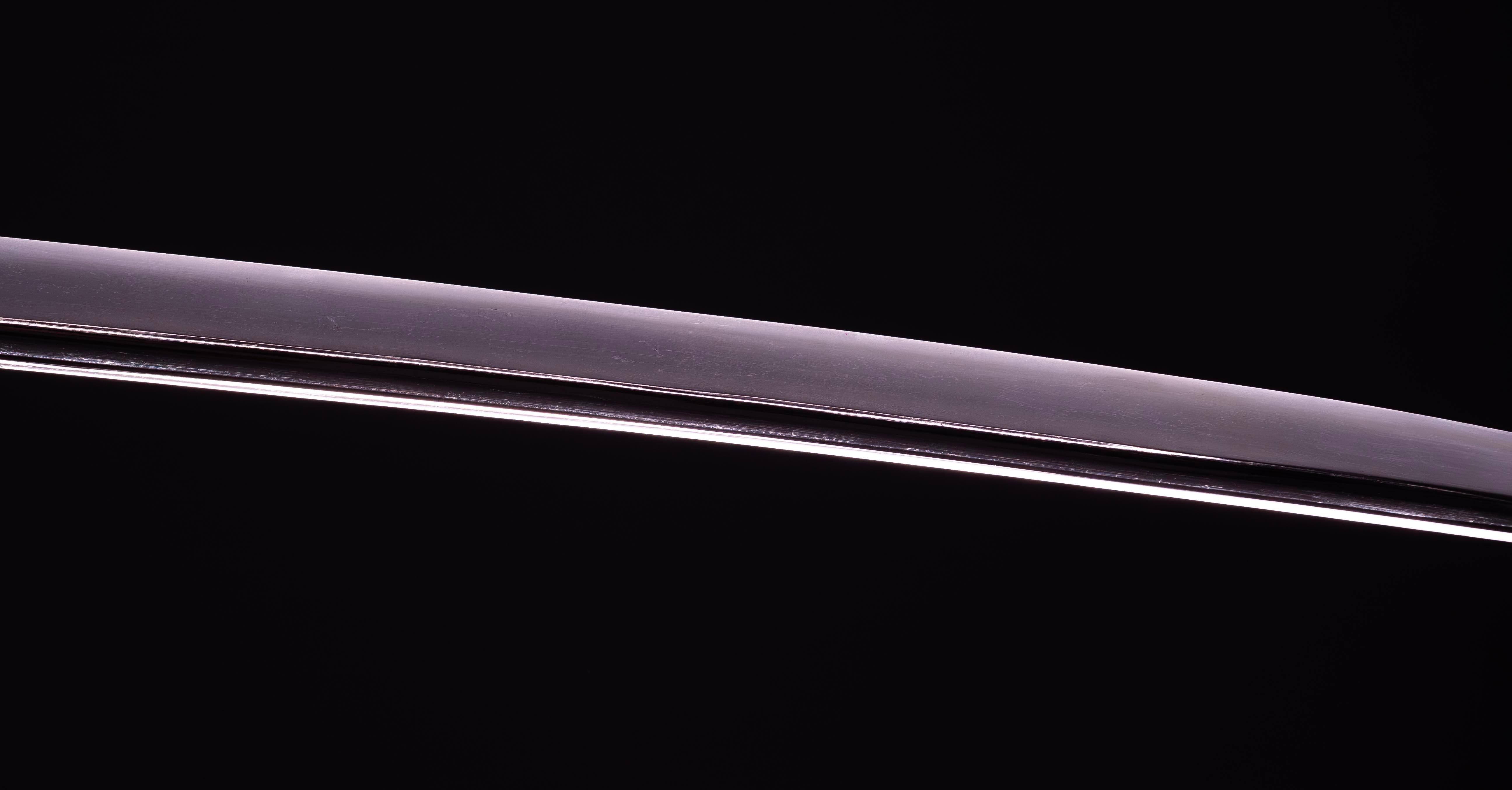
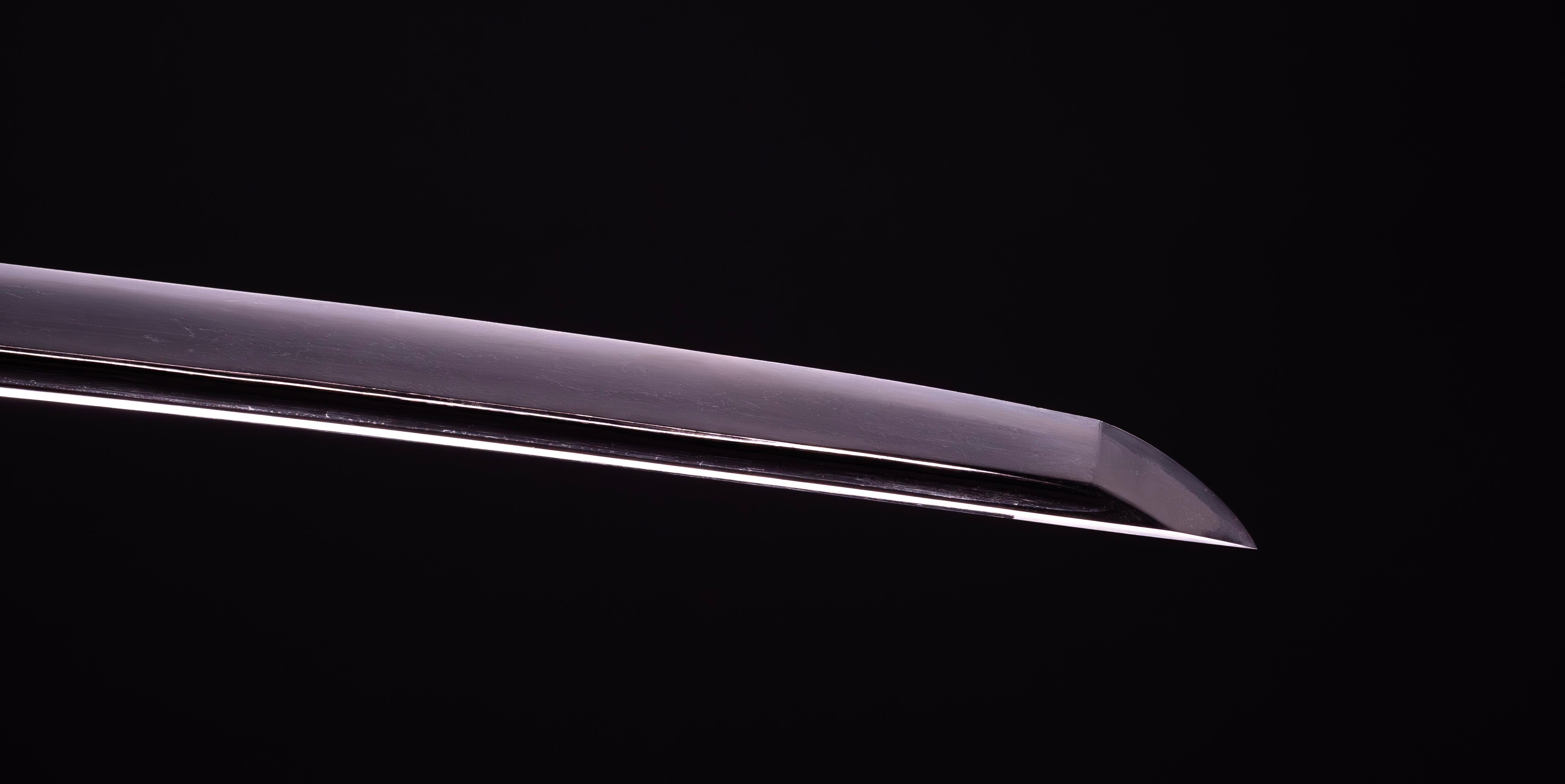
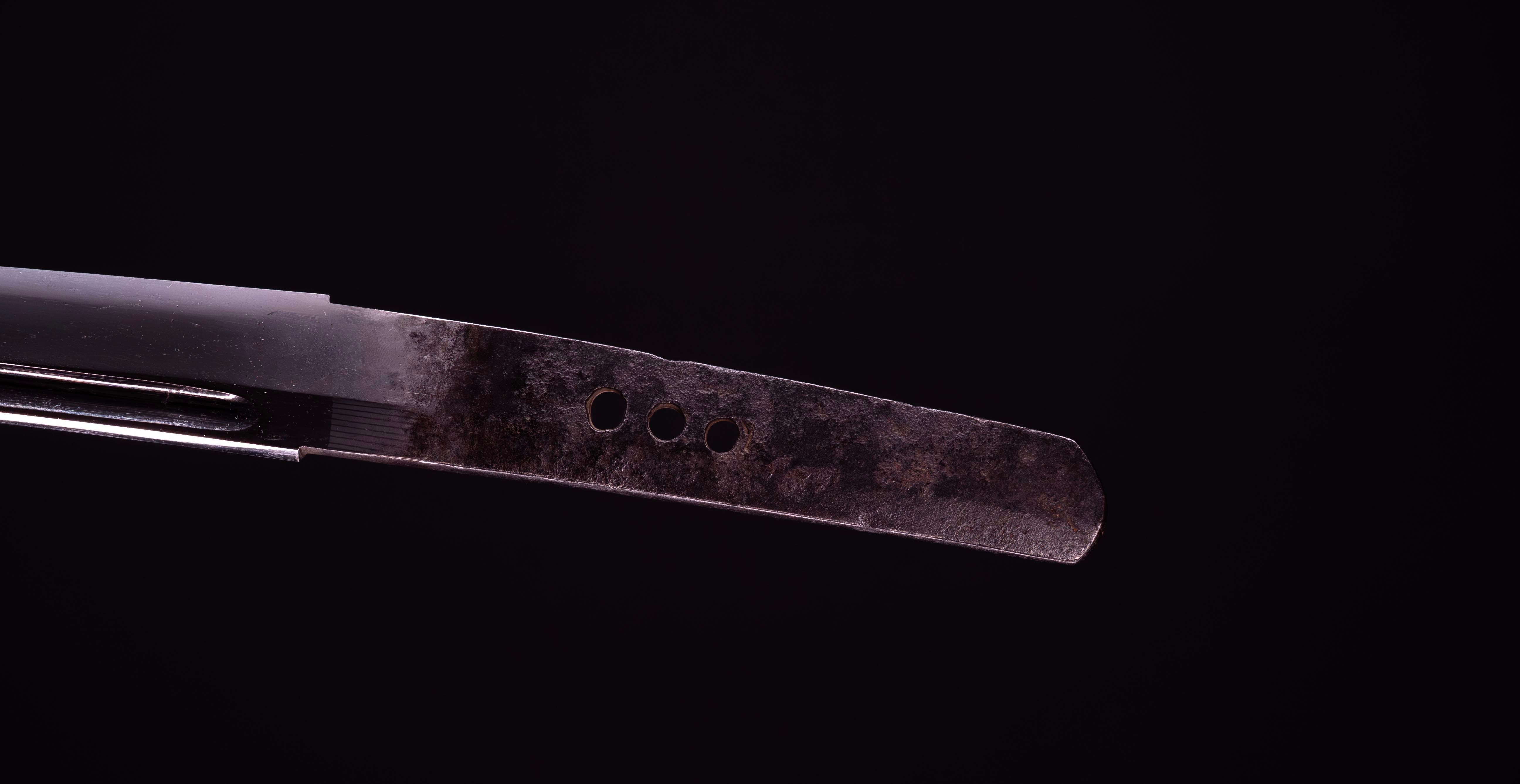
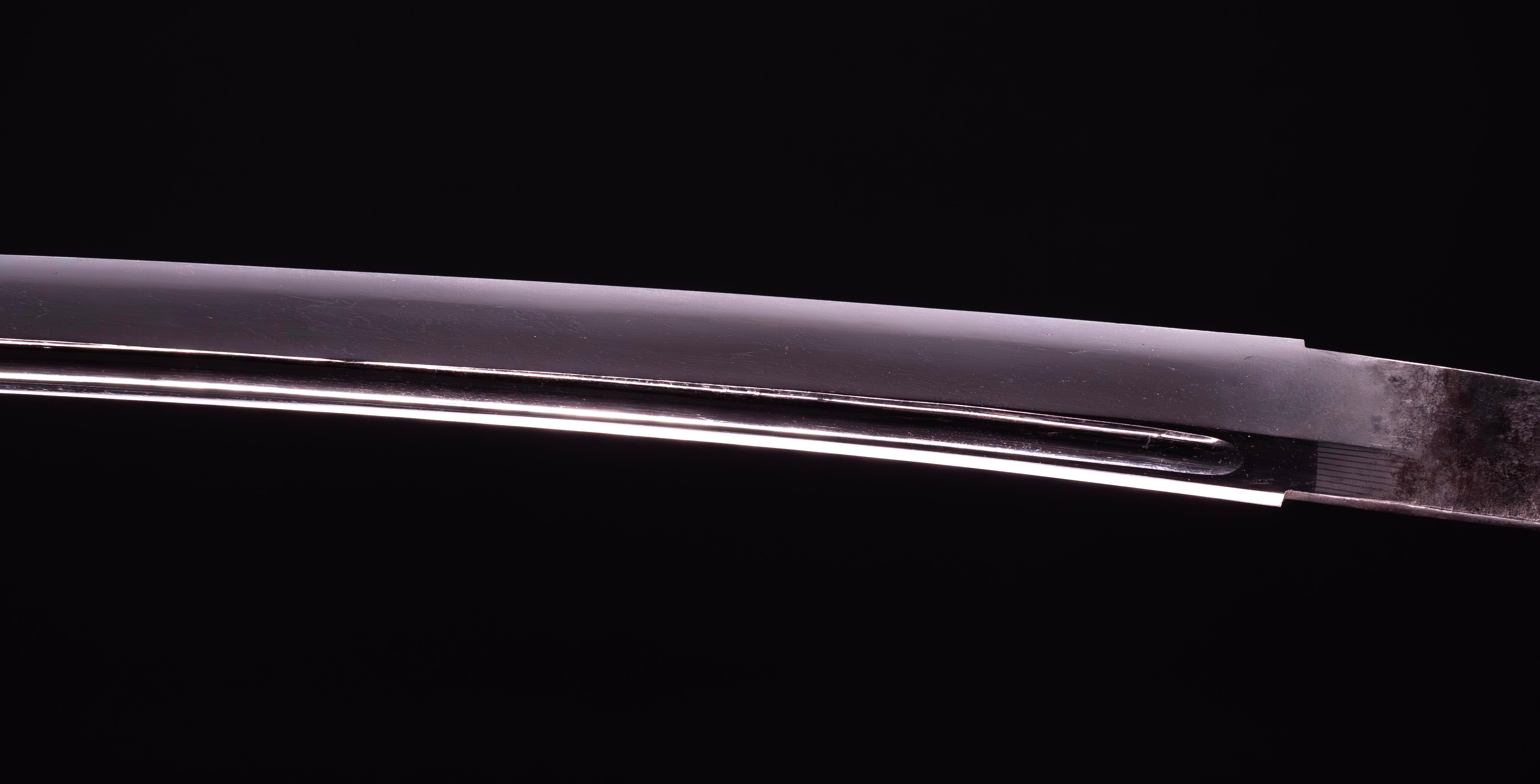
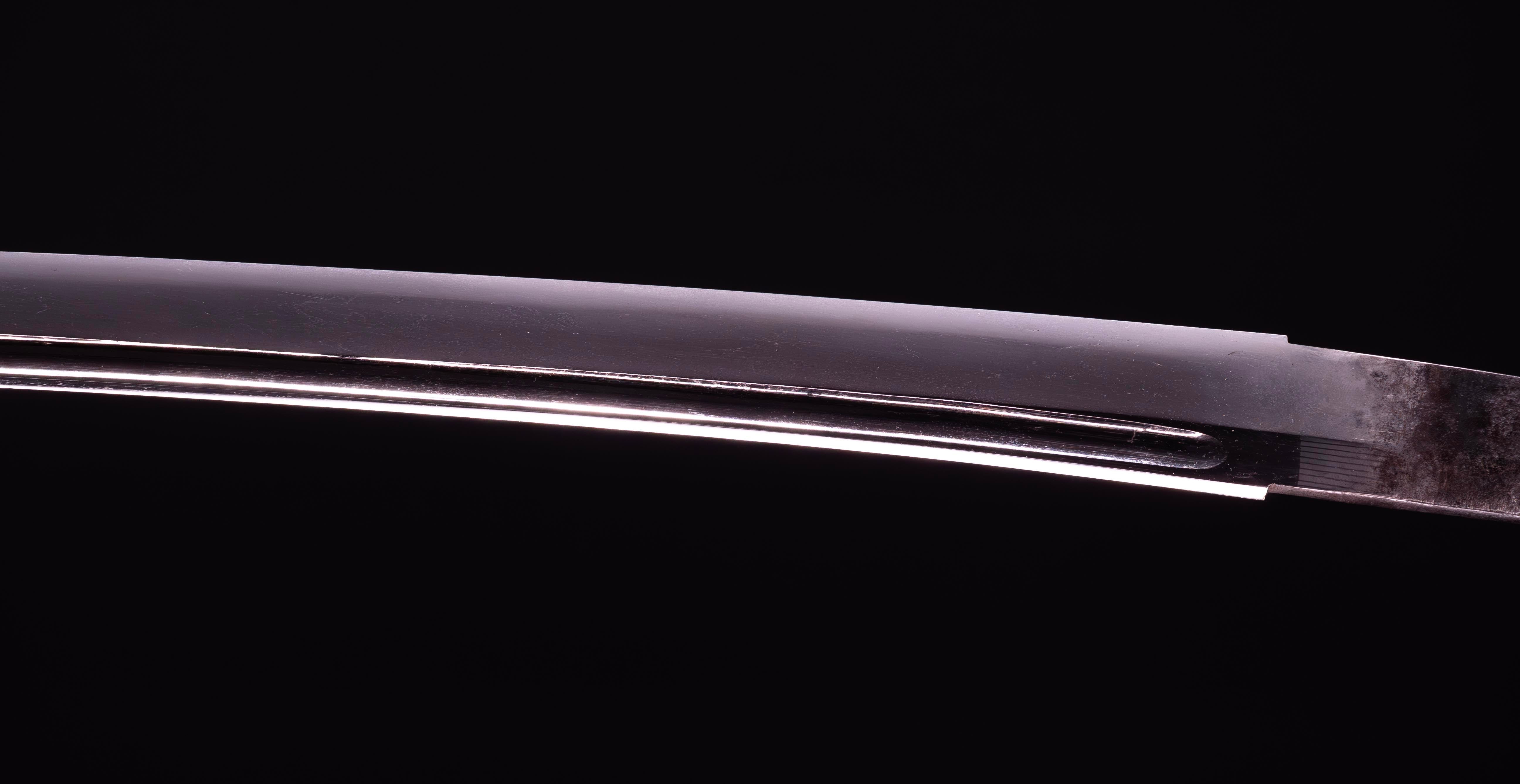
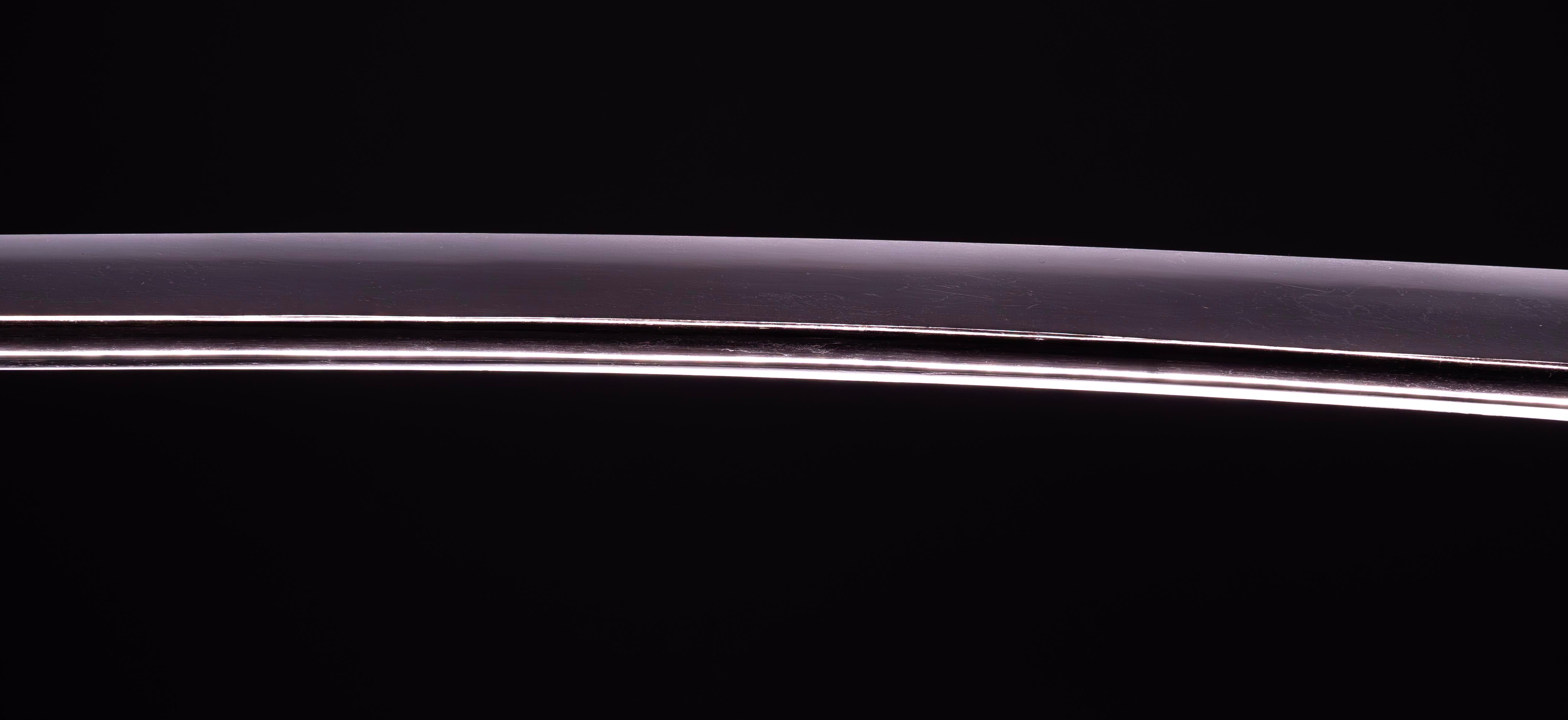
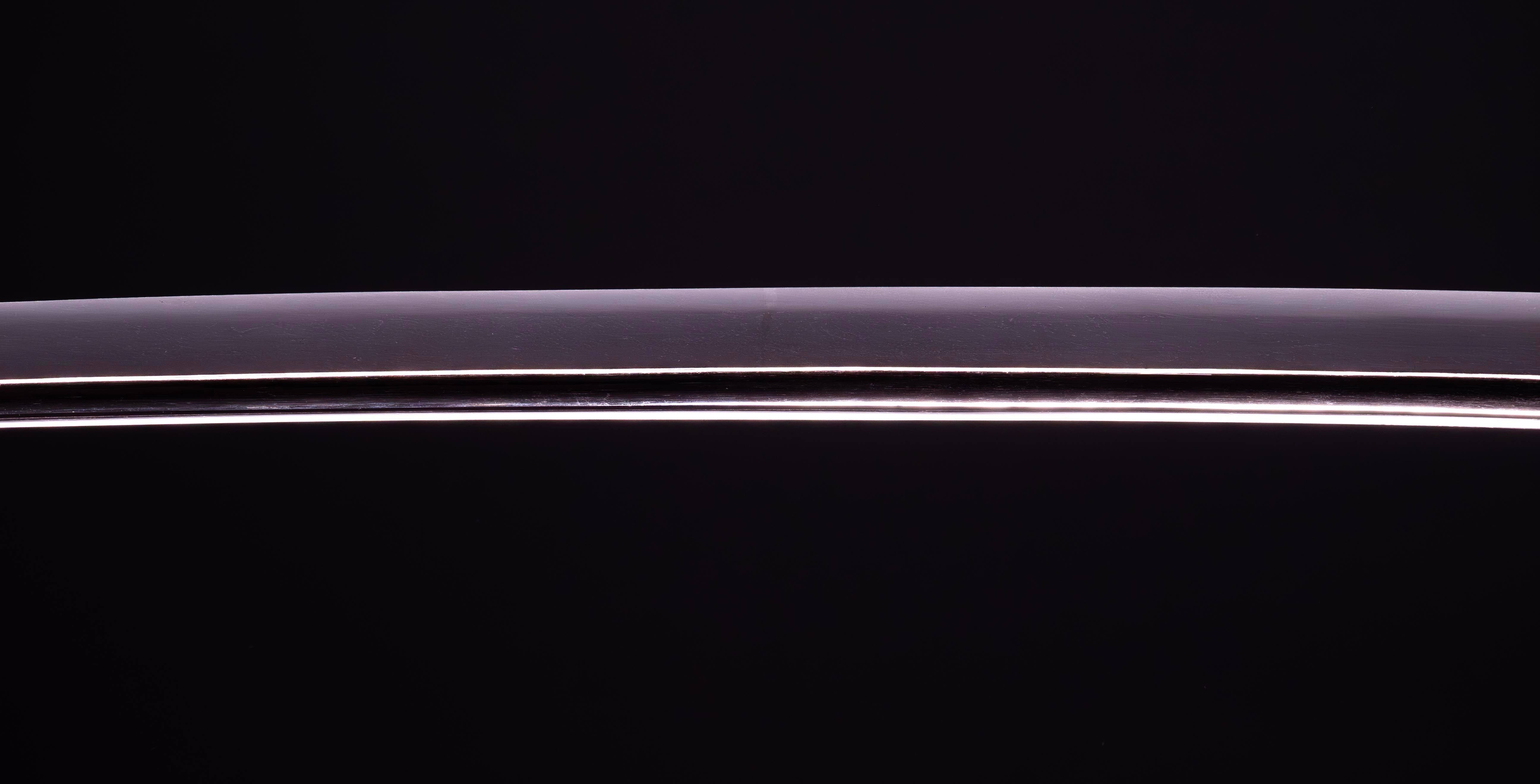
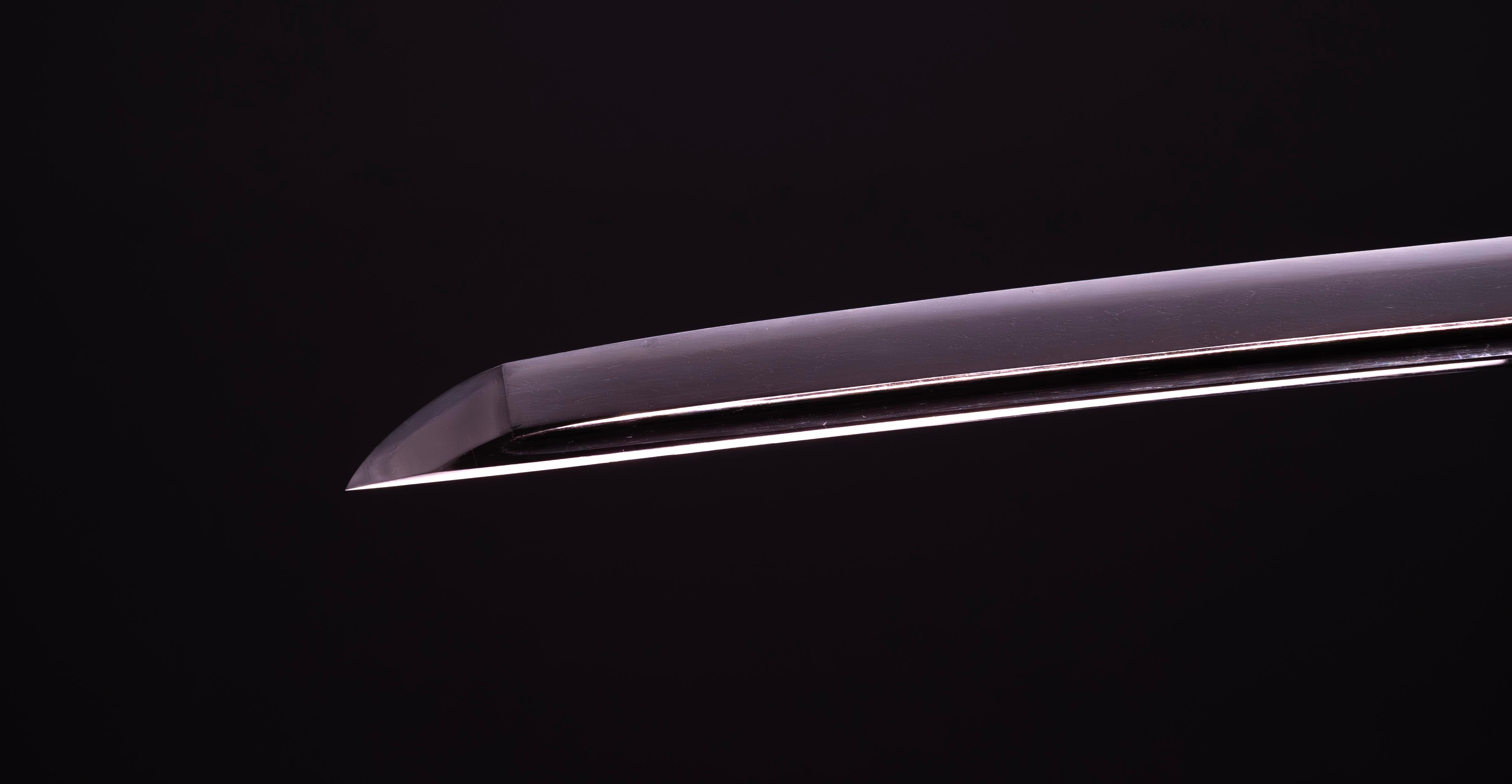
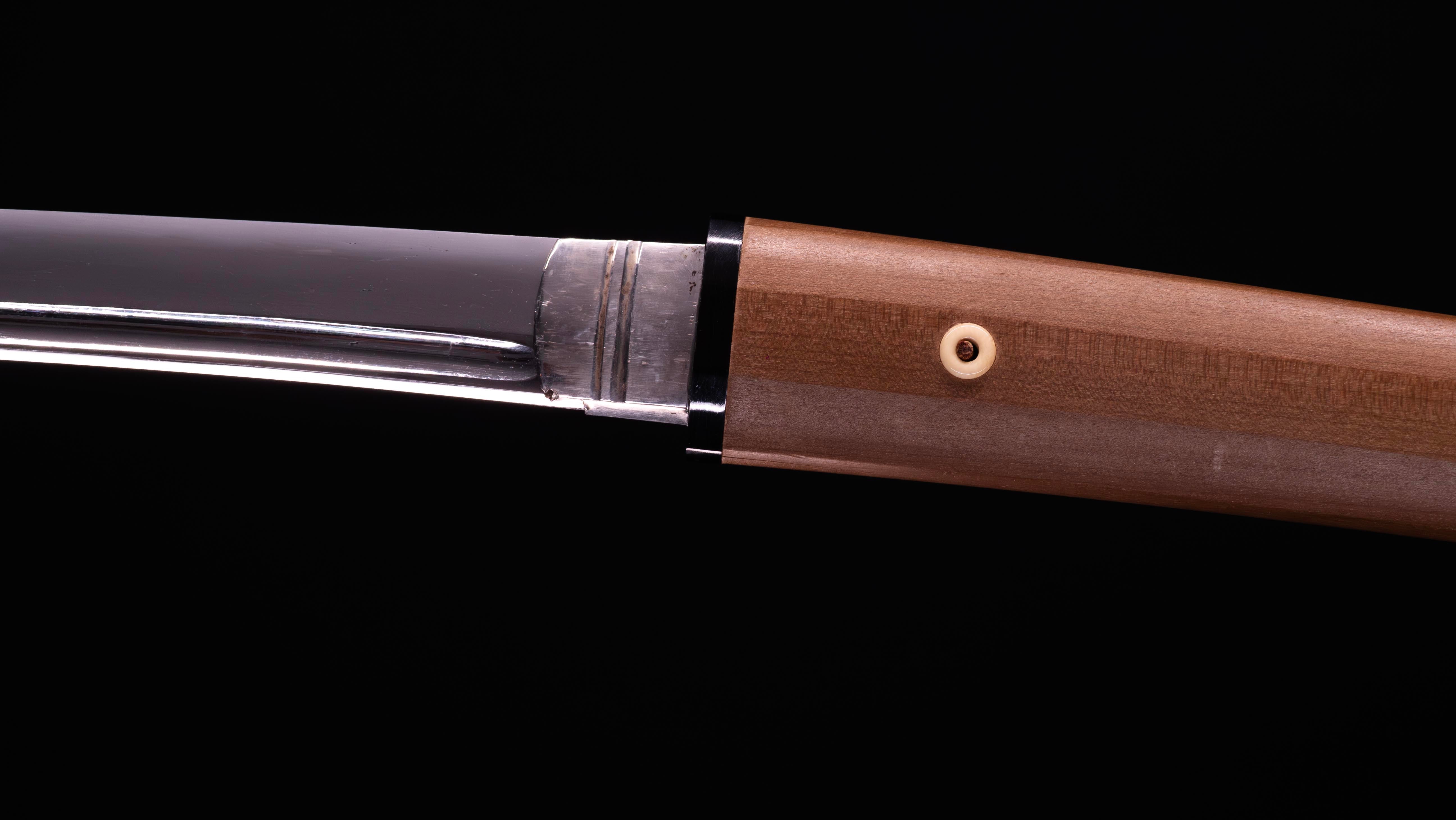
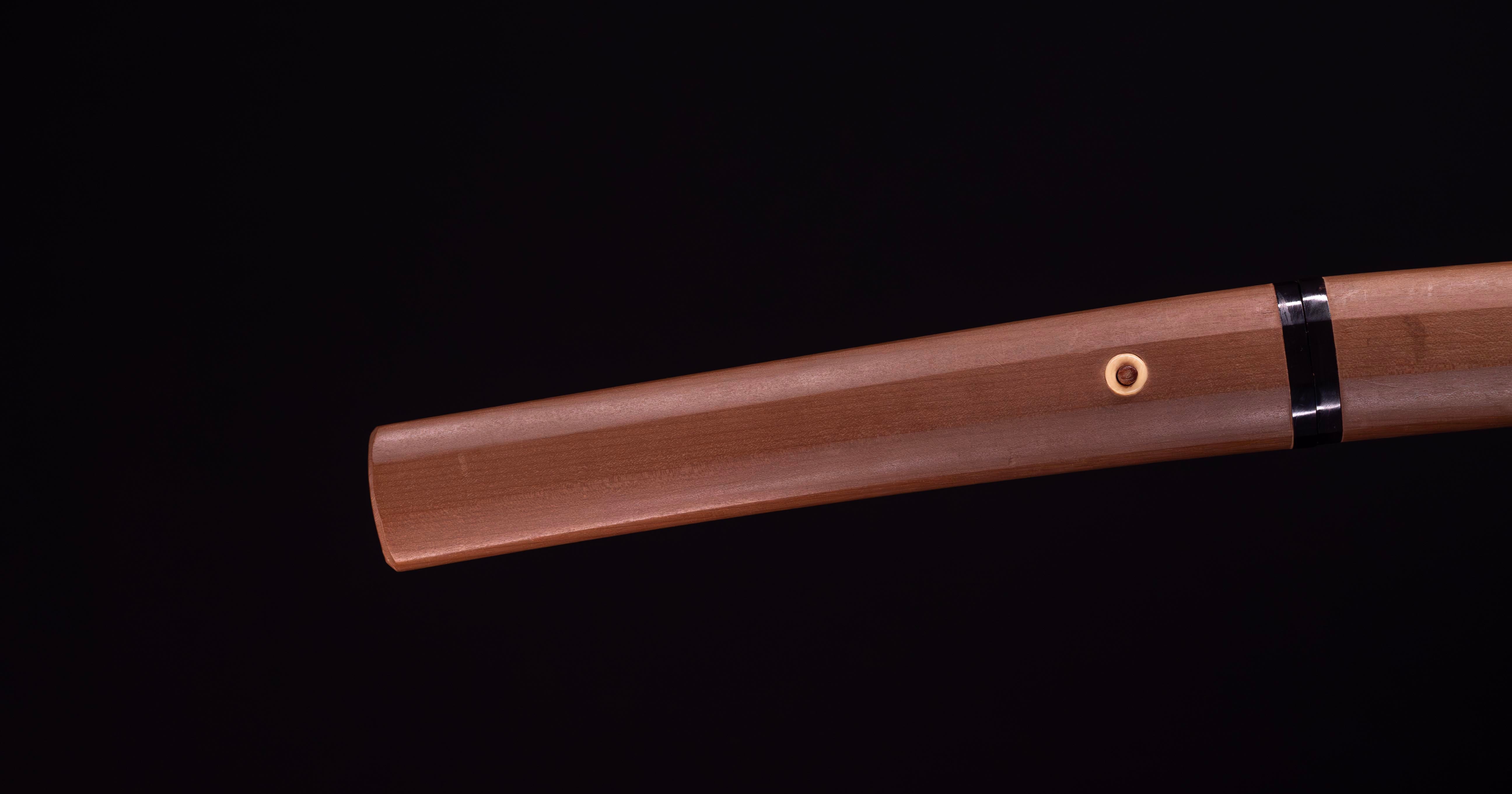
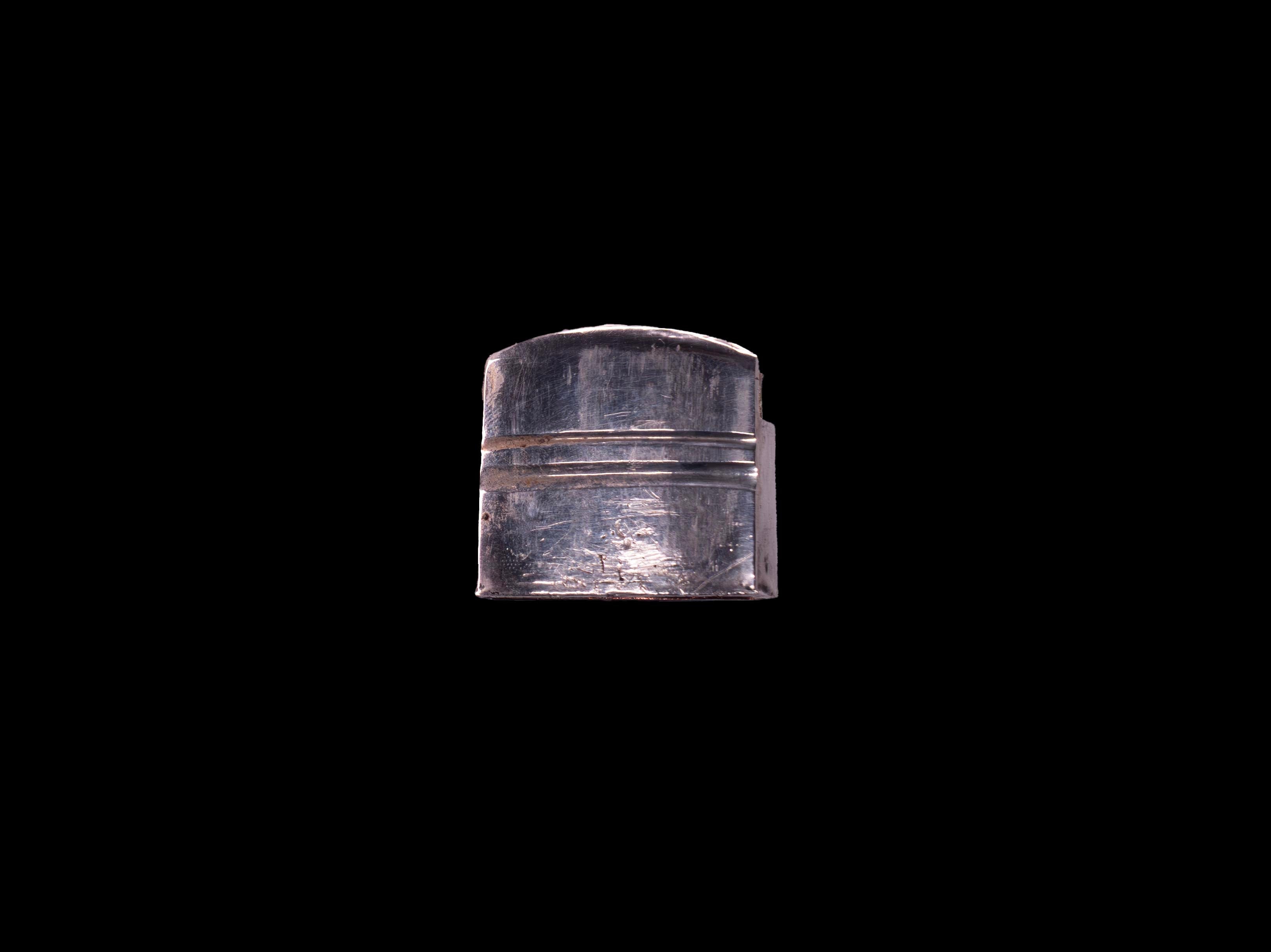
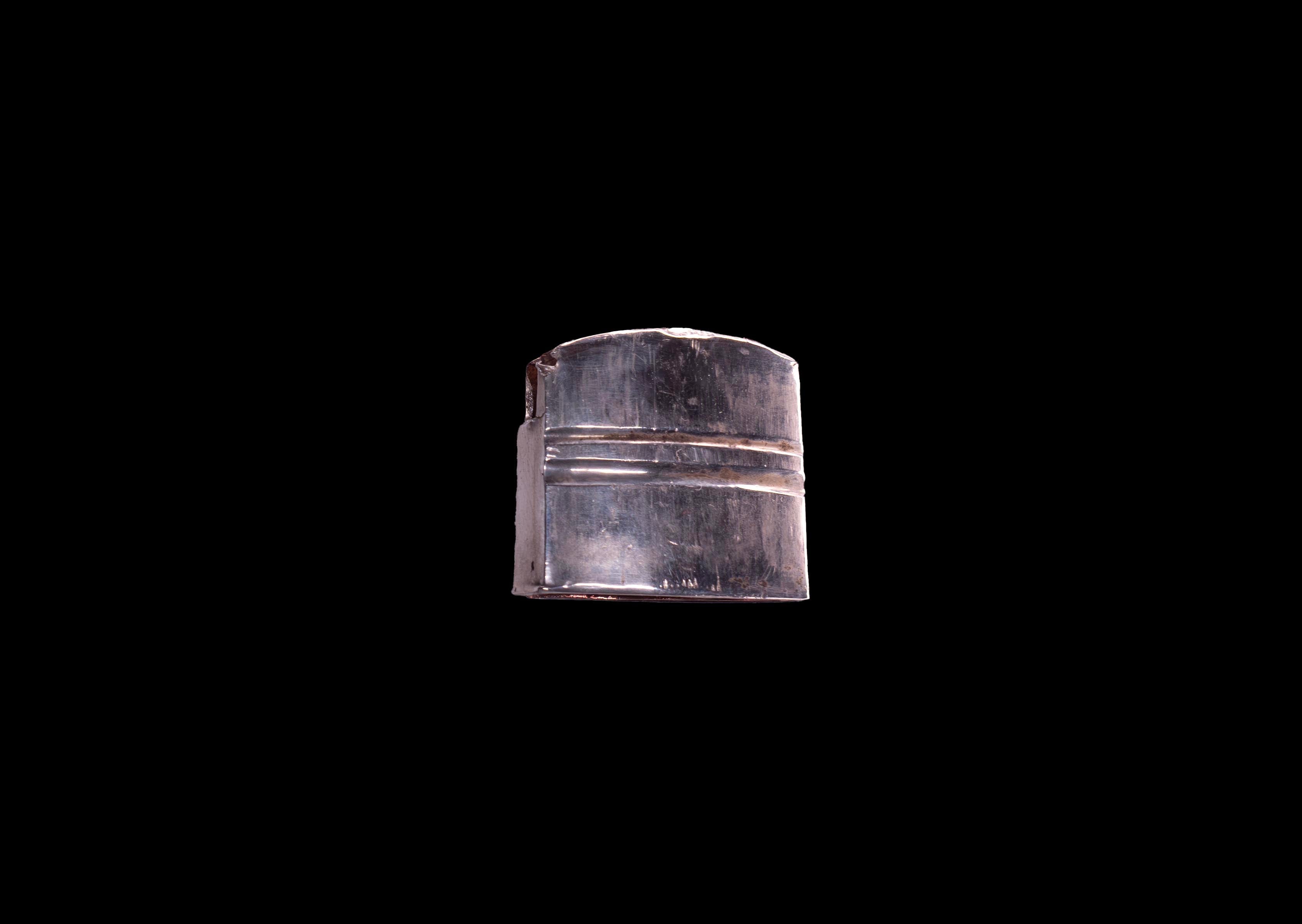
Sword Specifications Maker: Uda Hirakuni Mumei Period: Late Muromachi Certificate: NBTHK Hozon Blade Length: 62.0 cm Curvature: 1.5 cm Width at Base: 2.83 cm Width at Tip: 1.82 cm Thickness at Base: 7.2 mm Thickness at Tip: 5.0 mm Blade Weight: 523 g Mekugi-ana (Peg Holes): 3 This is an authentic Koto-era (古刀) katana attributed to the Uda School , a renowned sword-making tradition known for producing finely crafted, resilient blades. The sword has been officially designated as a Hozon Token (Preservation Sword) by the NBTHK certifying its historical and artistic value. The blade features a bohi , reducing weight while maintaining structural integrity. Expertly polished, the sword retains its cutting ability , making it suitable for iaido, battōjutsu . The craftsmanship of this katana reflects the distinct characteristics of Uda School swords, which originated in the Nanbokuchō to Muromachi periods (14th–16th centuries) . The blade exhibits a well-forged hada (steel grain structure) , with a balanced curvature ( 1.5 cm ) that enhances both aesthetics and functionality. Mountings & Special Features Shirasaya: Comes in a high-quality, newly crafted white scabbard for preservation. Bohi (Groove): Aesthetic and functional fullering, improving handling and reducing weight. Condition: Professionally polished, enhancing the visibility of the hamon and steel structure. About the Uda School The Uda School originated in Etchū Province (modern-day Toyama Prefecture) and was active from the late Kamakura to Muromachi periods. Uda smiths were known for their strong, practical swords, often featuring a refined itame-hada (wood-grain steel pattern) and an elegant suguha or midare hamon . Their blades were highly regarded by samurai for their durability and cutting performance.
 NihontoWatch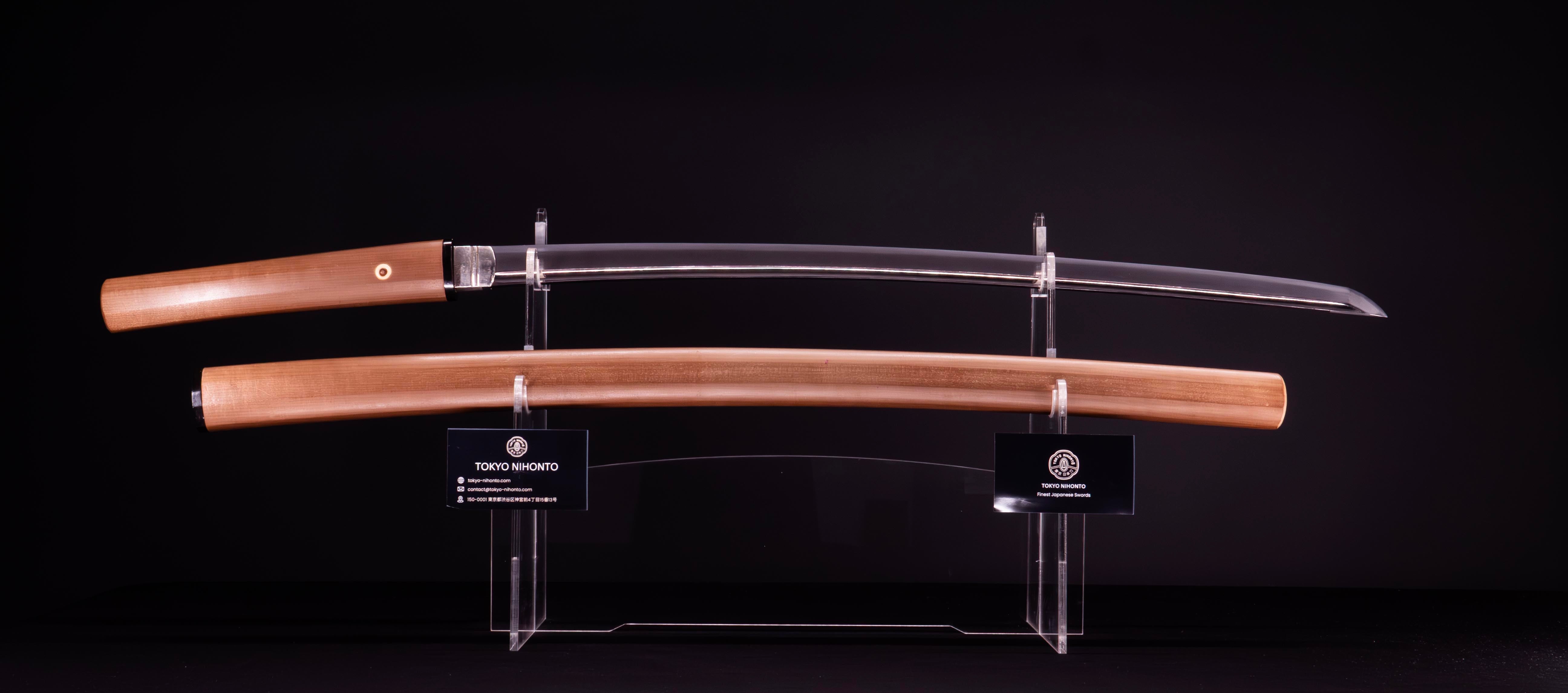
脇物 · 越中
現在34点販売中
宇多派は、鎌倉時代末期の文保年間(一三一七~一三一九)頃、大和国宇陀郡から越中国に移住した古入道国光を祖とする刀工集団である。国光の子と伝える国房を筆頭に、南北朝時代には国宗、国次、国光と同名が相継いで活躍し、室町時代末期まで栄えた。このうち、南北朝時代を下らぬ作品を特に「古宇多」と汎称している。元来大和国宇陀郡の出身であることから、自然に大和気質の強い作風が多くみられるが、同時に越中の先達である則重や江に倣ったとみられる相州伝風の作品も存在する。 古宇多の作風は、板目に杢目や流れ肌を交え、肌立ちごころとなり、地沸が厚くつき、地景が頻りに入る鍛えに、地鉄が黒みをおび、処々肌目が粕立つ点に北国気質が顕著に表れている。刃文は直刃調に浅く小のたれ、小互の目や小乱れを交え、匂深く沸がよくつき、刃縁がほつれて、金筋や砂流しが頻りにかかり、匂口が沈みごころとなる特色を示す。帽子は小丸に返り、頻りに掃きかけて焼き詰めごころとなるものが多い。一見すると相州上工の作を想わせる覇気に満ちた出来口であるが、黒みをおびた地鉄には北国物特有の肌合いの特色が看て取れ、また刃縁がほつれて砂流しが激しくかかる点に古宇多と鑑すべき要素がある。処々に荒めの沸が交じり、湯走りや打のけ、二重刃風の働きを交えるものもあり、地刃ともに変化に富む。 南北朝時代の典型的な姿を呈し、身幅広く重ね厚く、反りやや深く、中鋒延びごころまたは大鋒となる豪壮な体配のものが多い。地刃ともに健全で、覇気に満ちた出来口を示す作品が多く、同派極めの中でも優品とされるものが数多く残されている。越後中条家伝来の黒漆革巻太刀拵のように、南北朝時代を下らぬ貴重な太刀拵が完存する例も知られている。鎌倉末期から南北朝期にかけての越中における刀工集団として、大和気質と相州伝風を融合させた独自の作風を確立し、後世に大きな影響を与えた。 詳しく見る →
室町時代
室町は刀剣業を産業に変えた。徒歩の集団戦とともに打刀が興り、長船と関は数打ち物と注文打ちを並行して産し、勘合貿易は日本刀を数万振の単位で海外へ運んだ。
銘が正しい、または無銘でも年代・国・系統を確実に指摘できる、保存に値する真正の作と鑑定されたものです。
日本美術刀剣保存協会(NBTHK)は、1948年に設立され、文化庁の監督を受ける公益財団法人で、東京・刀剣博物館に本部を置きます。専門の審査員が出品作を直接審査し、美術的・歴史的価値に応じた鑑定書を発行します。NBTHKの鑑定書は、日本刀および刀装具の真正性を示す最も広く認知された基準です。
NBTHK公式サイト30-day money-back guarantee from receipt; items must be unused, complete, in original packaging. Sale items Final Sale. Antique swords non-returnable (Japanese export law). Damage reported within 72 hours. Customer pays return shipping unless seller error/defect. Refunds within 14 days of inspection.
Sword Specifications Maker: Uda Hirakuni Mumei Period: Late Muromachi Certificate: NBTHK Hozon Blade Length: 62.0 cm Curvature: 1.5 cm Width at Base: 2.83 cm Width at Tip: 1.82 cm Thickness at Base: 7.2 mm Thickness at Tip: 5.0 mm Blade Weight: 523 g Mekugi-ana (Peg Holes): 3 This is an authentic Koto-era (古刀) katana attributed to the Uda School , a renowned sword-making tradition known for producing finely crafted, resilient blades. The sword has been officially designated as a Hozon Token (Preservation Sword) by the NBTHK certifying its historical and artistic value. The blade features a bohi , reducing weight while maintaining structural integrity. Expertly polished, the sword retains its cutting ability , making it suitable for iaido, battōjutsu . The craftsmanship of this katana reflects the distinct characteristics of Uda School swords, which originated in the Nanbokuchō to Muromachi periods (14th–16th centuries) . The blade exhibits a well-forged hada (steel grain structure) , with a balanced curvature ( 1.5 cm ) that enhances both aesthetics and functionality. Mountings & Special Features Shirasaya: Comes in a high-quality, newly crafted white scabbard for preservation. Bohi (Groove): Aesthetic and functional fullering, improving handling and reducing weight. Condition: Professionally polished, enhancing the visibility of the hamon and steel structure. About the Uda School The Uda School originated in Etchū Province (modern-day Toyama Prefecture) and was active from the late Kamakura to Muromachi periods. Uda smiths were known for their strong, practical swords, often featuring a refined itame-hada (wood-grain steel pattern) and an elegant suguha or midare hamon . Their blades were highly regarded by samurai for their durability and cutting performance.
NihontoWatch脇物 · 越中
現在34点販売中
宇多派は、鎌倉時代末期の文保年間(一三一七~一三一九)頃、大和国宇陀郡から越中国に移住した古入道国光を祖とする刀工集団である。国光の子と伝える国房を筆頭に、南北朝時代には国宗、国次、国光と同名が相継いで活躍し、室町時代末期まで栄えた。このうち、南北朝時代を下らぬ作品を特に「古宇多」と汎称している。元来大和国宇陀郡の出身であることから、自然に大和気質の強い作風が多くみられるが、同時に越中の先達である則重や江に倣ったとみられる相州伝風の作品も存在する。 古宇多の作風は、板目に杢目や流れ肌を交え、肌立ちごころとなり、地沸が厚くつき、地景が頻りに入る鍛えに、地鉄が黒みをおび、処々肌目が粕立つ点に北国気質が顕著に表れている。刃文は直刃調に浅く小のたれ、小互の目や小乱れを交え、匂深く沸がよくつき、刃縁がほつれて、金筋や砂流しが頻りにかかり、匂口が沈みごころとなる特色を示す。帽子は小丸に返り、頻りに掃きかけて焼き詰めごころとなるものが多い。一見すると相州上工の作を想わせる覇気に満ちた出来口であるが、黒みをおびた地鉄には北国物特有の肌合いの特色が看て取れ、また刃縁がほつれて砂流しが激しくかかる点に古宇多と鑑すべき要素がある。処々に荒めの沸が交じり、湯走りや打のけ、二重刃風の働きを交えるものもあり、地刃ともに変化に富む。 南北朝時代の典型的な姿を呈し、身幅広く重ね厚く、反りやや深く、中鋒延びごころまたは大鋒となる豪壮な体配のものが多い。地刃ともに健全で、覇気に満ちた出来口を示す作品が多く、同派極めの中でも優品とされるものが数多く残されている。越後中条家伝来の黒漆革巻太刀拵のように、南北朝時代を下らぬ貴重な太刀拵が完存する例も知られている。鎌倉末期から南北朝期にかけての越中における刀工集団として、大和気質と相州伝風を融合させた独自の作風を確立し、後世に大きな影響を与えた。 詳しく見る →
室町時代
室町は刀剣業を産業に変えた。徒歩の集団戦とともに打刀が興り、長船と関は数打ち物と注文打ちを並行して産し、勘合貿易は日本刀を数万振の単位で海外へ運んだ。
銘が正しい、または無銘でも年代・国・系統を確実に指摘できる、保存に値する真正の作と鑑定されたものです。
日本美術刀剣保存協会(NBTHK)は、1948年に設立され、文化庁の監督を受ける公益財団法人で、東京・刀剣博物館に本部を置きます。専門の審査員が出品作を直接審査し、美術的・歴史的価値に応じた鑑定書を発行します。NBTHKの鑑定書は、日本刀および刀装具の真正性を示す最も広く認知された基準です。
NBTHK公式サイト30-day money-back guarantee from receipt; items must be unused, complete, in original packaging. Sale items Final Sale. Antique swords non-returnable (Japanese export law). Damage reported within 72 hours. Customer pays return shipping unless seller error/defect. Refunds within 14 days of inspection.