 NihontoWatchNihontoWatch
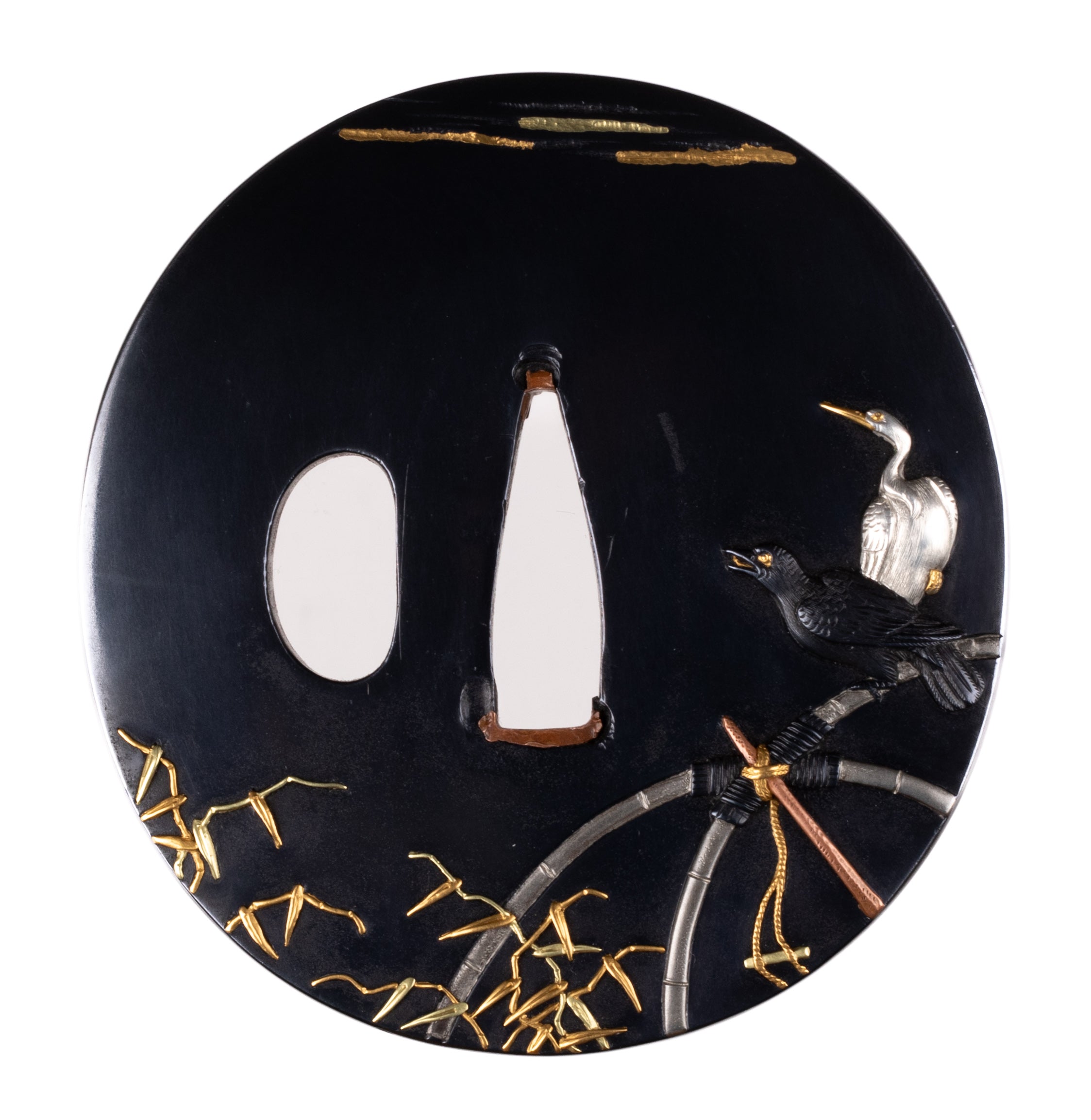
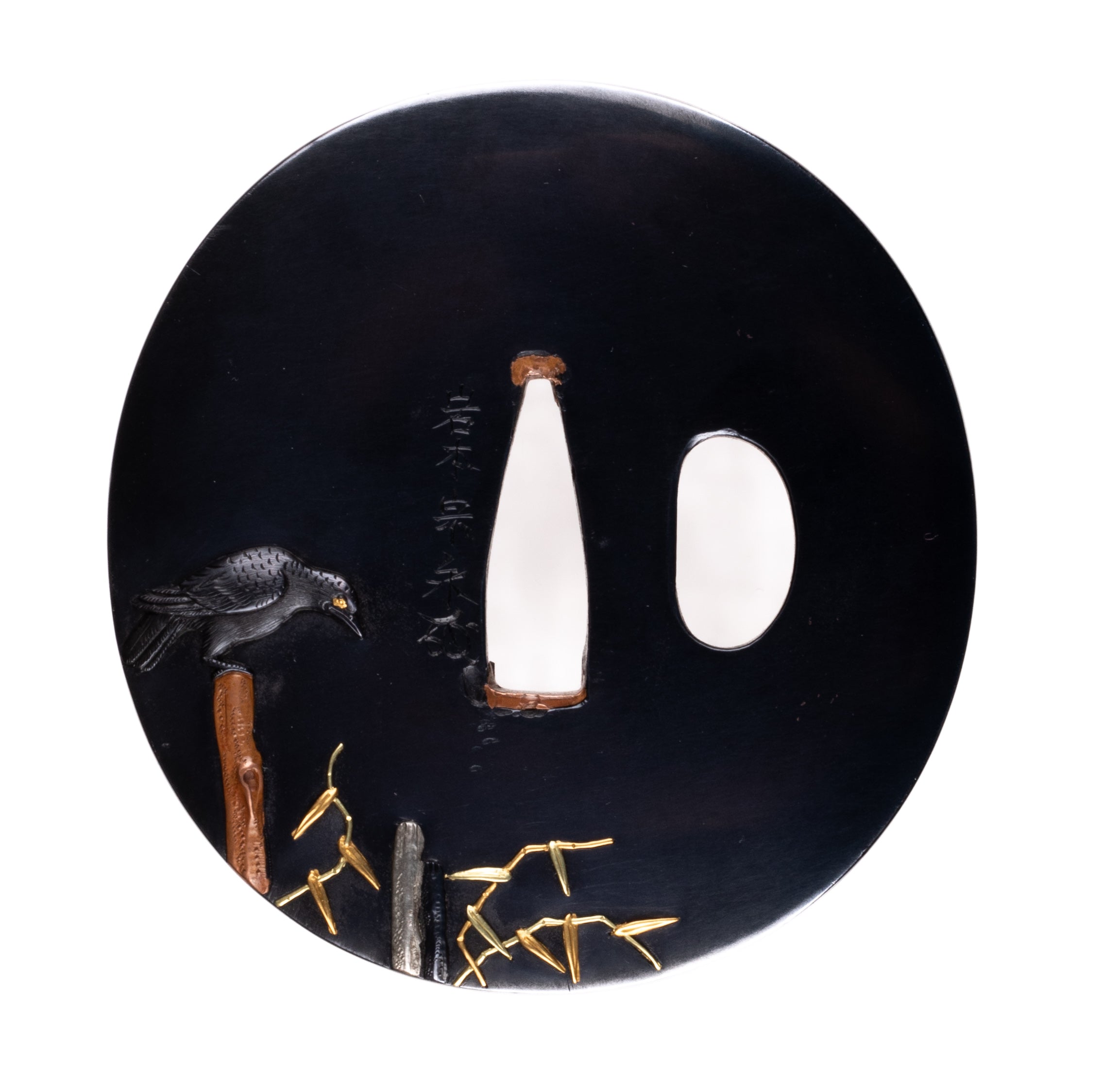
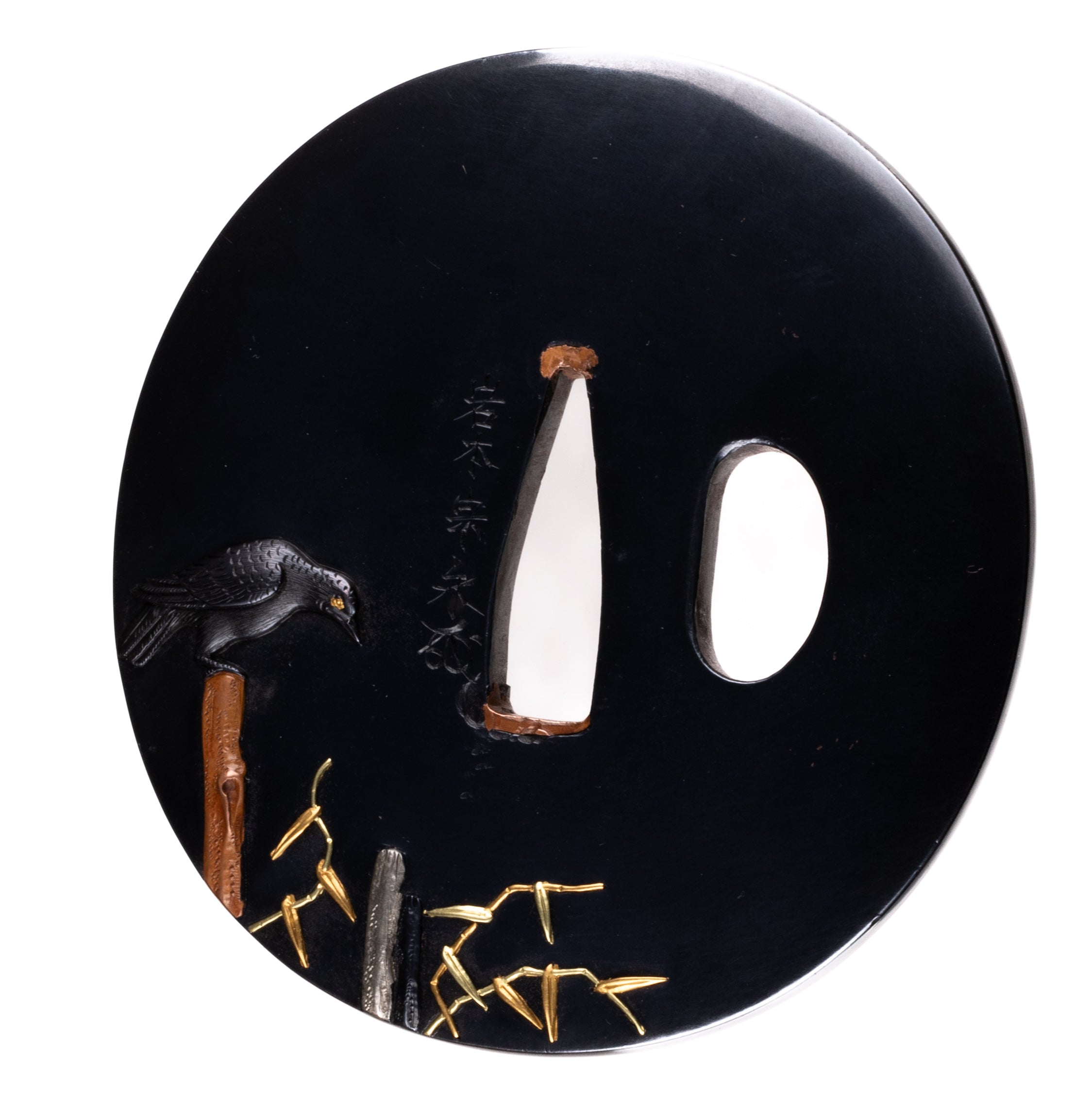
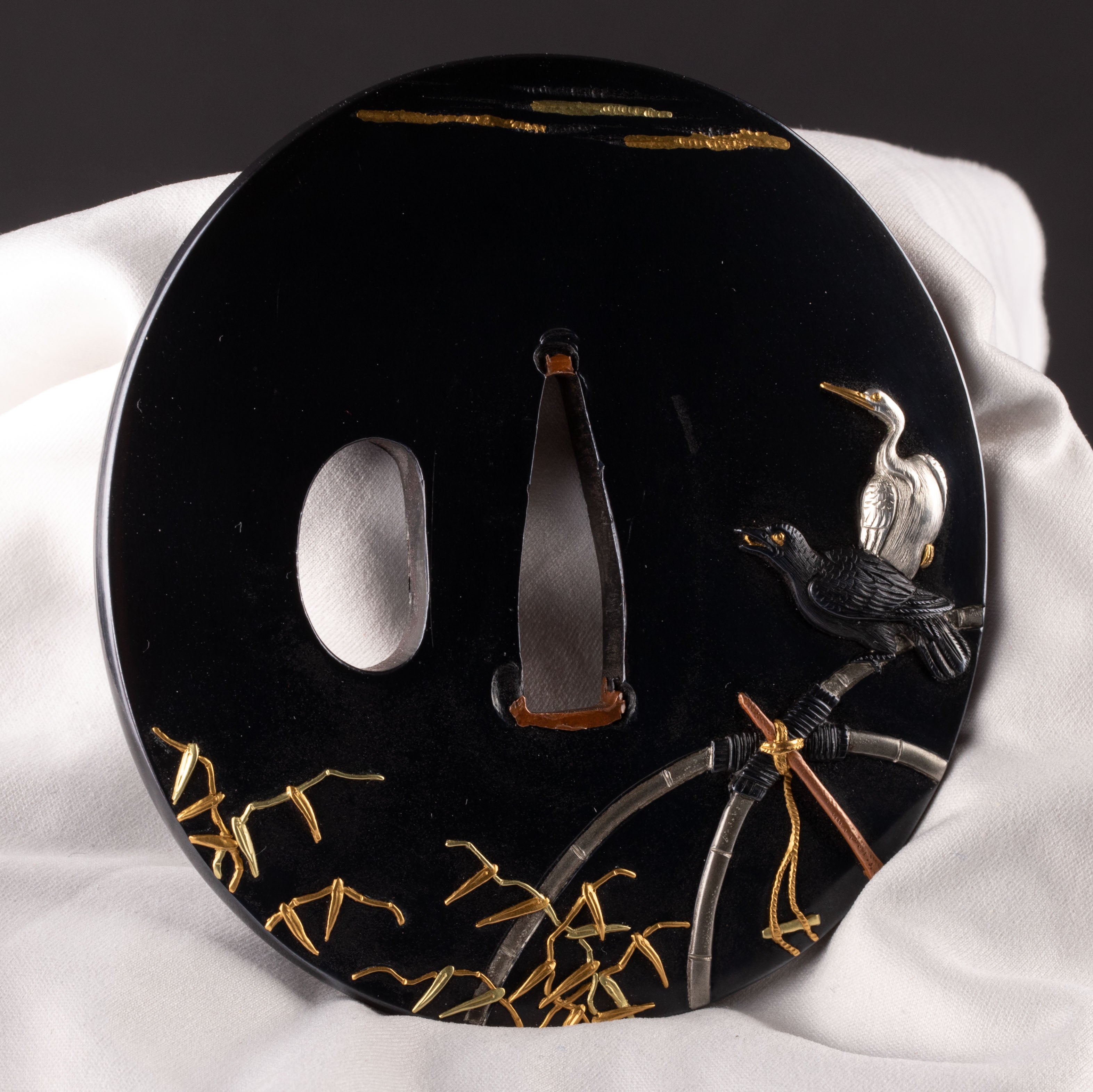
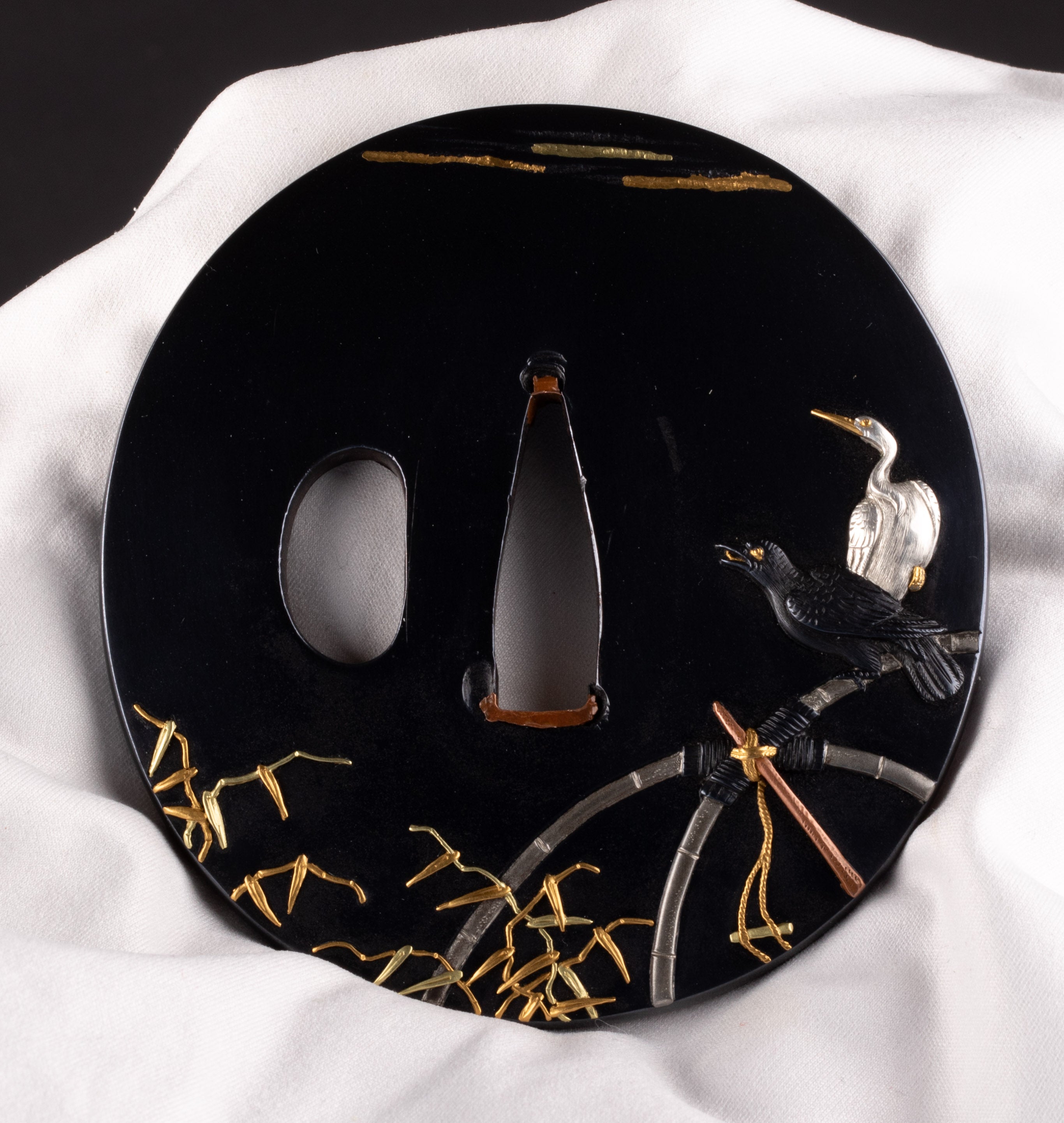
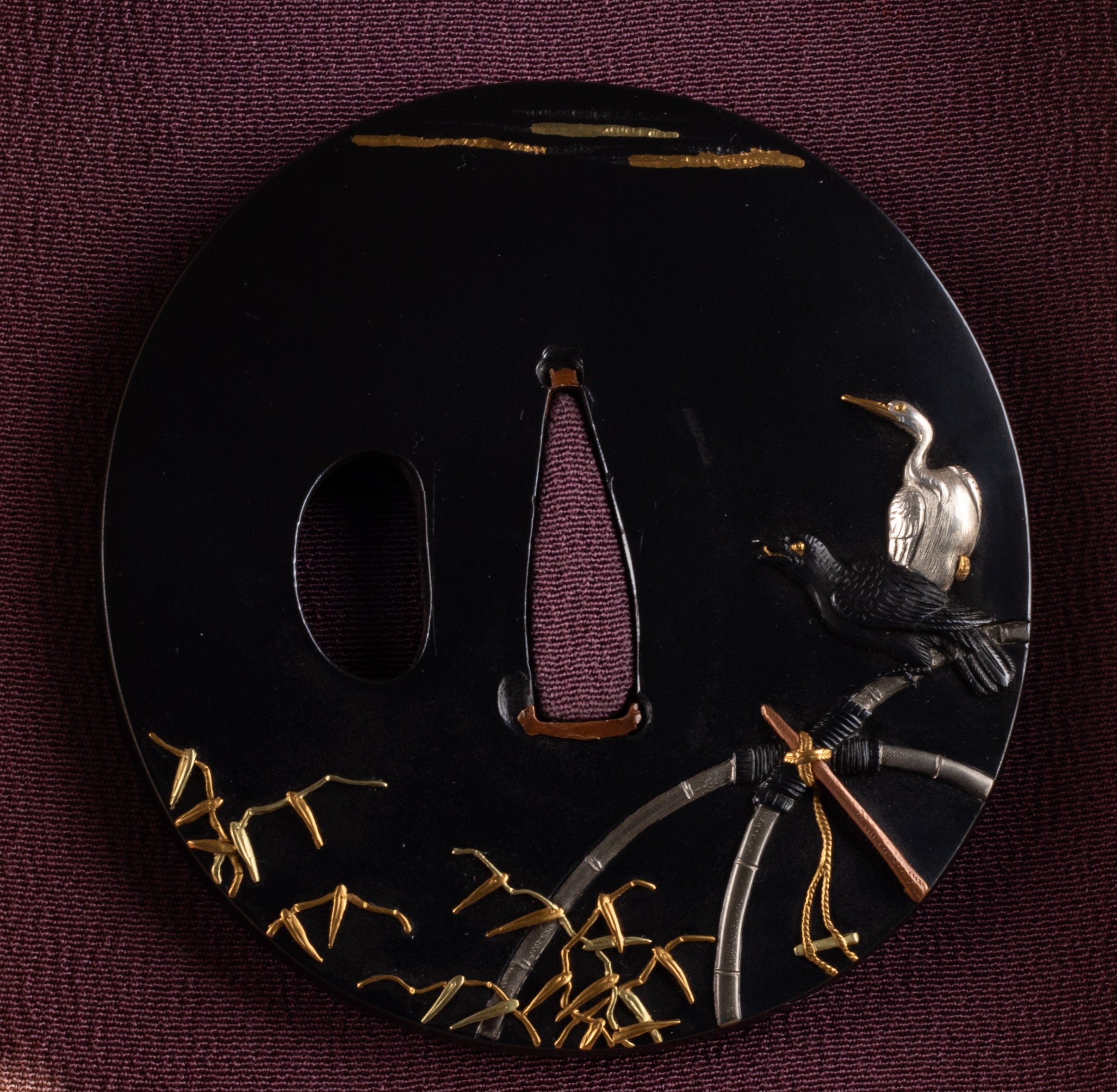
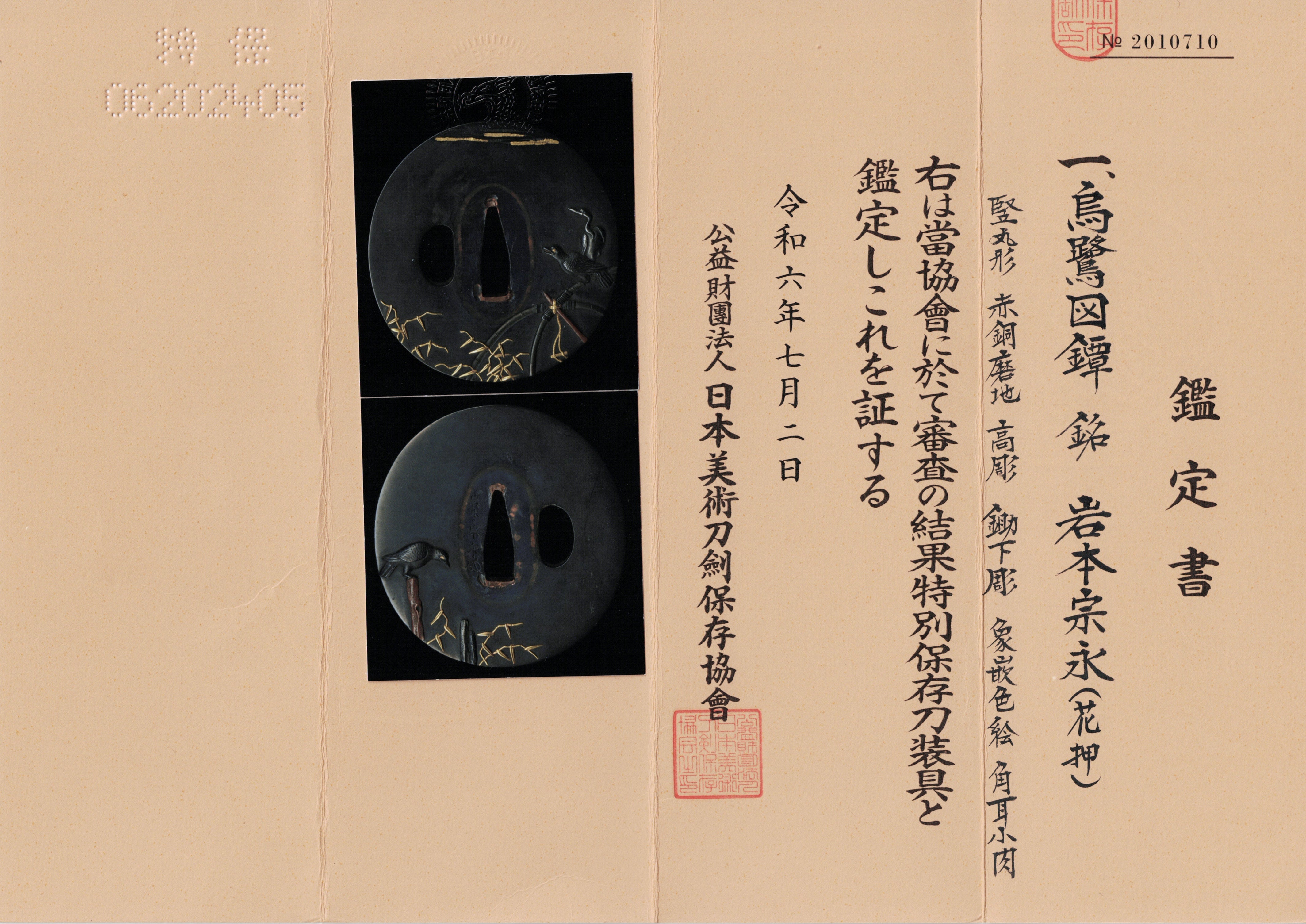
Tsuba signed "Iwamoto Munenaga" with NBTHK Tokubetsu Hozon Tosogu. Munenaga was active around 1825. Originally from Aizu in Iwashiro Province, later in life moved to Tokyo and became a student of Iwamoto Kanri. From him he received the right to sign Iwamoto. This kozuka is decorated with crows and herons. To be precise NBTHK describe the motive as "Uro" which means crows and herons or black and white. It is written the same way as board game Go, played with black and white stones. As far as I am aware this motive does not have a set interoperation. So here are few more interoperation ideas that I thought off. In Japan crow is a symbol of rebirth and rejuvenation, while heron is symbol of good luck. Therefore this tsuba might mean good luck on the new path of life? Two of the most legendary castles in Japan have those birds in their names. Himeji castle is called white heron, while Matsumoto is called a Crow Castle. There are a lot of white spots on the lower part of the front of the tsuba. They become much more visible due to flash photography. In real life they are almost invisible as long as this tsuba is not observed in a strong light. When I got this tsuba it was in much worse condition. After some care it looks way better. You can see the original condition on the NBTHK certificate. Size: 73 mm x 69 mm In custom made kiri box.
NihontoWatch
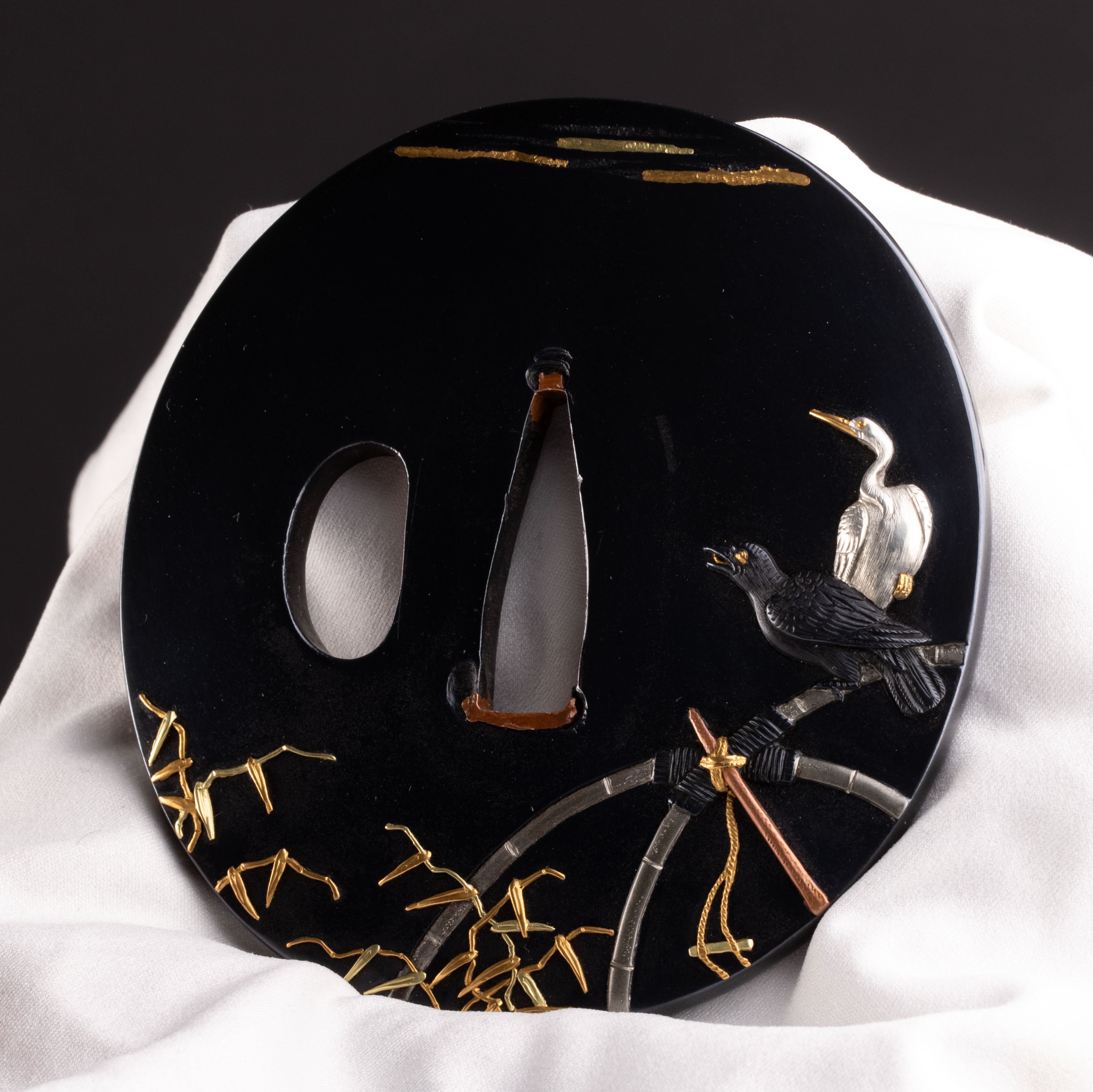
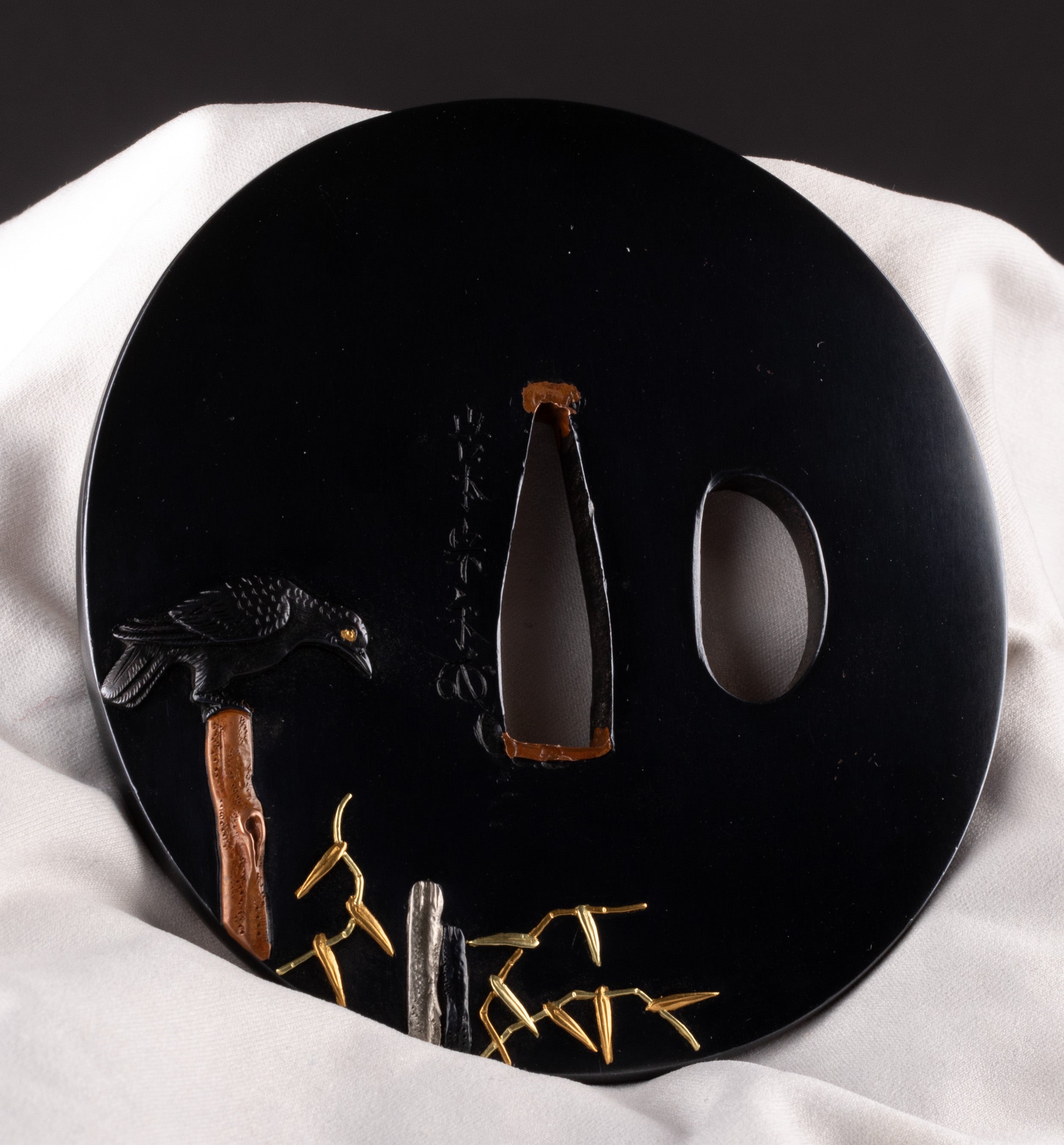
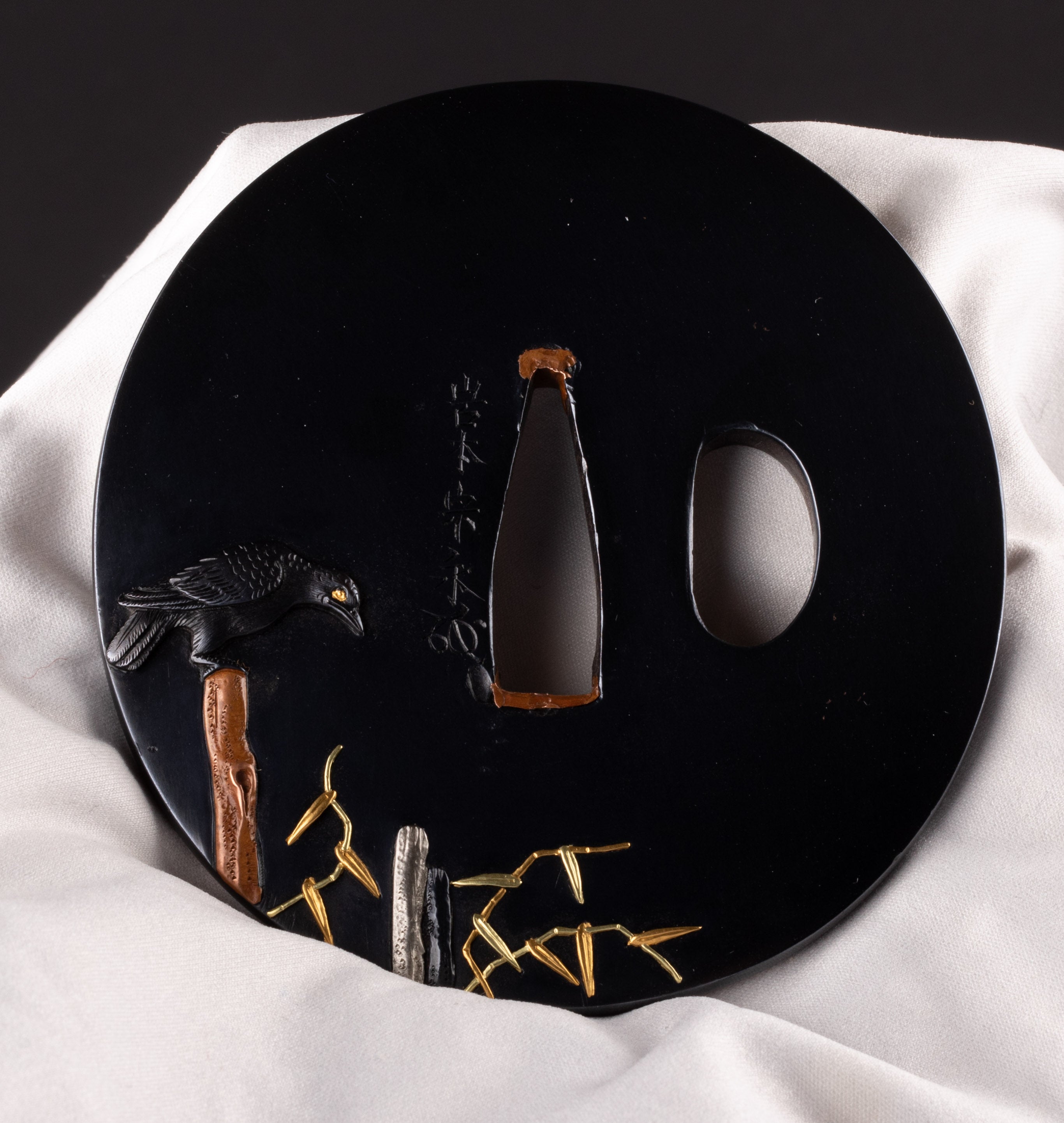
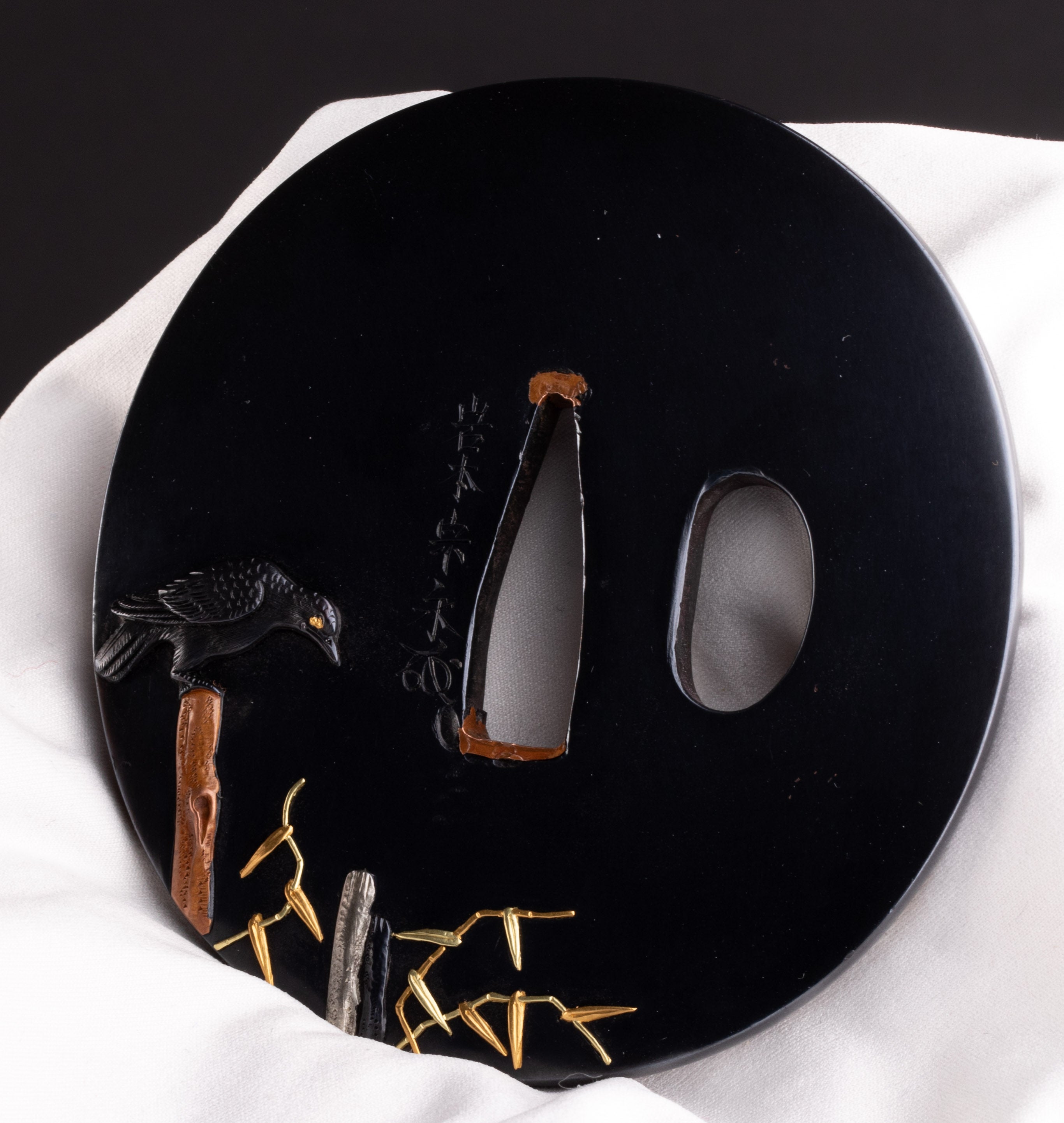
町彫 · 江戸
現在13点販売中
岩本派は、江戸に本拠を置いた町彫金工の一家であり、十八世紀初頭、横谷派に学んだ岩本忠兵衛を祖として興り、以後八代にわたって家系を継承した。審査説明に繰り返し記される如く、「岩本家は元来、横谷派である」[[c:2]]が、同家の歴史を画するのは六代目の継承である。五代目良寛が早世したため、弟弟子である昆寛が岩本家の六代目を継いだ。昆寛は延享元年に江戸で生まれ、本姓は浅井氏で、はじめ良(良云)といい、のち昆寛と改めた。横谷派の家系を継ぎながら、昆寛は安親を主とした奈良派の彫法を研究し、横谷・奈良派の長所を取り入れて完成したものが、江戸前のいかにも粋な昆寛の芸術である。銘には「春曙堂昆寛」「白峯亭岩本昆寛」の号銘も見られる。その後、通称を喜十郎という寛利が、はじめ昆寛の弟子で、後にその養子となって岩本家七代目を継ぎ、また江戸麹町に住した昆寿も名工昆寛の門人として活躍しており、一門の広がりを伝えている。 一門の作風は、横谷派の彫技と奈良派の彫法との融合の上に成り立つ。基調をなすのは赤銅魚子地に高彫を施し、金・銀・四分一・素銅の据紋象嵌色絵を加える手法であるが、現存する重要刀装具には、四分一磨地、鉄磨地、赤銅・四分一の縮緬石目地、真鍮石目地、金地など多彩な地金・地肌が認められ、鋤出高彫・鋤下彫・肉彫地透・毛彫、さらに青貝嵌入(魚の目に青貝を嵌め込む例もある)を自在に併用している。独特の三角鏨は一門の見所として説明中に度々指摘され、余白を巧妙に使用した絶妙な構図と配置、表裏の対照を計算した画面構成も特色である。画題は写生に根ざした自然物を得意とし、鱗の一枚一枚まで表現した彫りの精緻性をもって「魚があたかも一匹一匹種類が特定出来るほどの精緻さ」[[c:3]]と評される魚尽をはじめ、芦に白鷺、月下の雉子、藻鯉、鵜飼や調布玉川の風景、獅子、蘭、菊花、雲龍、さらに大日如来や仁王といった仏教的画題にまで及ぶ。昆寛は「写生派としても一流であった」[[c:4]]と評される一方、葵紋を手がけて揃いとした一作金具の打刀拵の如く、注文による正統派の仕事においても、赤銅魚子地、高彫、金色絵という伝統の技法のうちに存分に高い技術を顕示している。 岩本派の名声は、何よりも六代昆寛によって確立された。昆寛は岩本家を継いだ江戸金工の大家であり、常に「江戸前の粋」という言葉で賞される工人であって、その作は津軽家伝来、酒井伯爵家伝来の品が知られるなど、大名家においても珍重された。多彩にして多作なその芸術は後代に範を示し、七代寛利は師風をよく踏襲して昆寛に次いで力作を遺し、門人昆寿も作風は昆寛に似て彫口が引き締まり、色絵の手法も象嵌方式が多いと評されるなど、師の技法を確実に受け継いだ。横谷・奈良両派の長所を取り入れて江戸前のいかにも粋な作風を確立した岩本派は、江戸時代中期から後期の町彫金工を代表する一門として、刀装具史上に確固たる位置を占めている。 詳しく見る →
| 刀工 | 時代 | 指定 |
|---|---|---|
| 昆寛 | — | 50 |
| 寛利 | 1776-1815 | 3 |
| 政克 (Masamoto | — | 0 |
| 良寛 | — | 0 |
| 一寛 | — | 0 |
保存刀装具のうち、出来・保存状態が一層優れ、銘文や作風に資料的価値の高いものと認められたものです。
日本美術刀剣保存協会(日刀保)は、1948年に設立され、文化庁の監督を受ける公益財団法人で、東京・刀剣博物館に本部を置きます。専門の審査員が出品作を直接審査し、美術的・歴史的価値に応じた鑑定書を発行します。日刀保の鑑定書は、日本刀および刀装具の真正性を示す最も広く認知された基準です。
日刀保公式サイトInspection period (per the shop's shipping policy): after receiving the item, each customer has two weeks for inspection. In that time you may decide to return it, and the item will be refunded in full. Shipping costs are not refunded. Returns (per the shop's refund policy): the policy lasts 30 days; once 30 days have passed since purchase, no refund or exchange is possible. To be eligible for a return, the item must be in the same condition in which it was received and in its original packaging. Customized products cannot be returned. In certain situations only a partial refund is granted. Return shipping is at the customer's expense, and shipping costs are non-refundable.