 NihontoWatchNihontoWatch
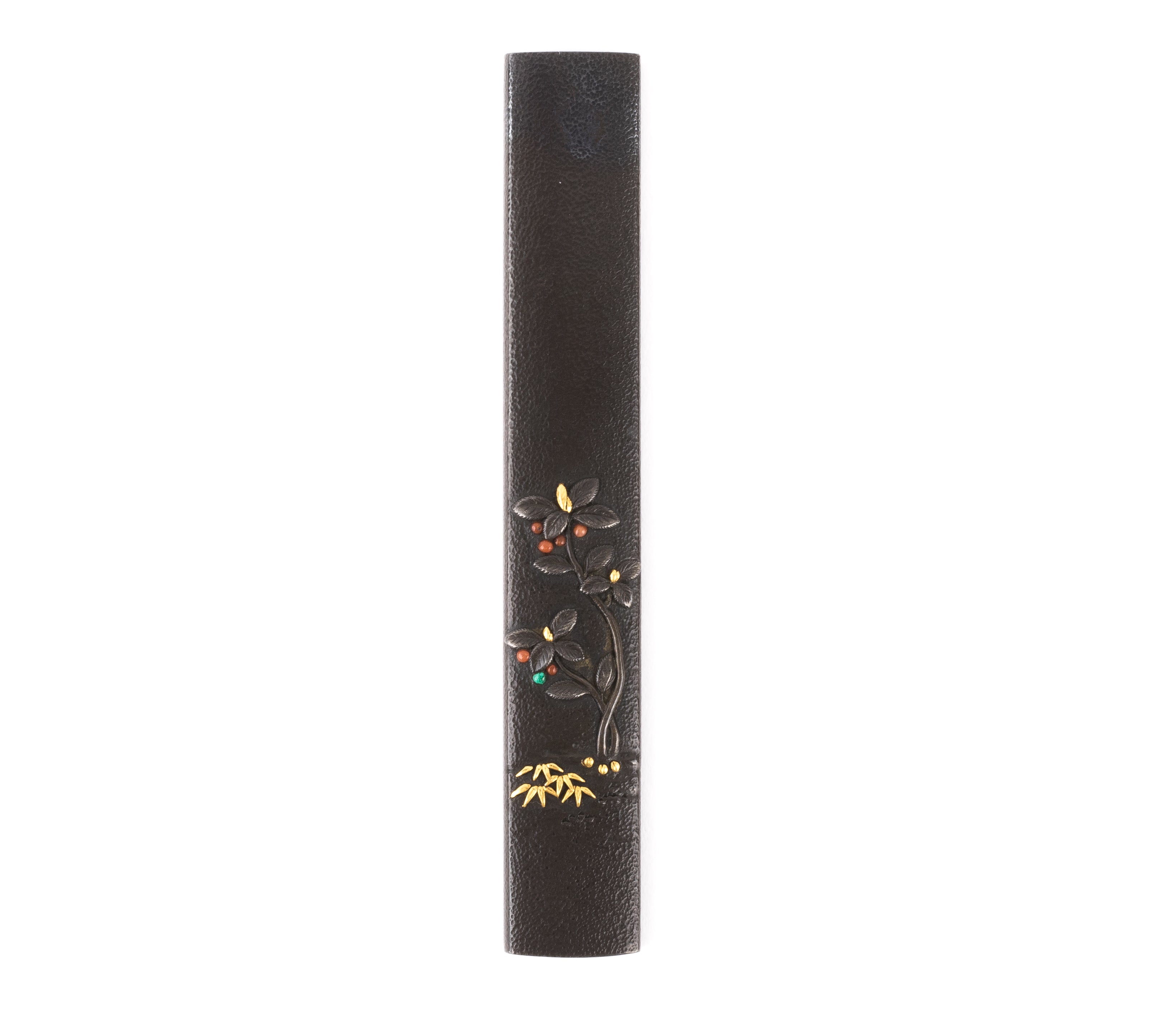
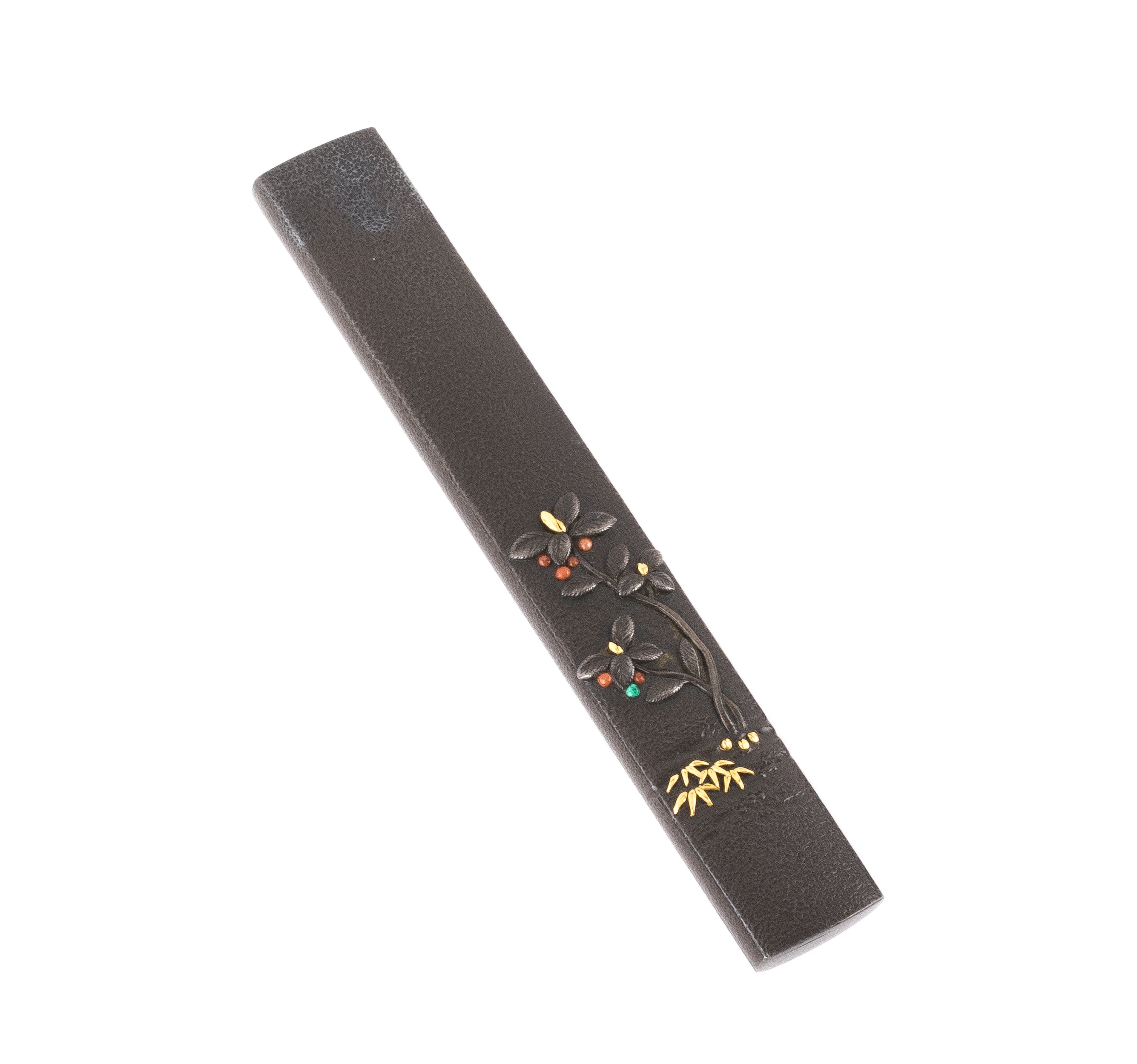
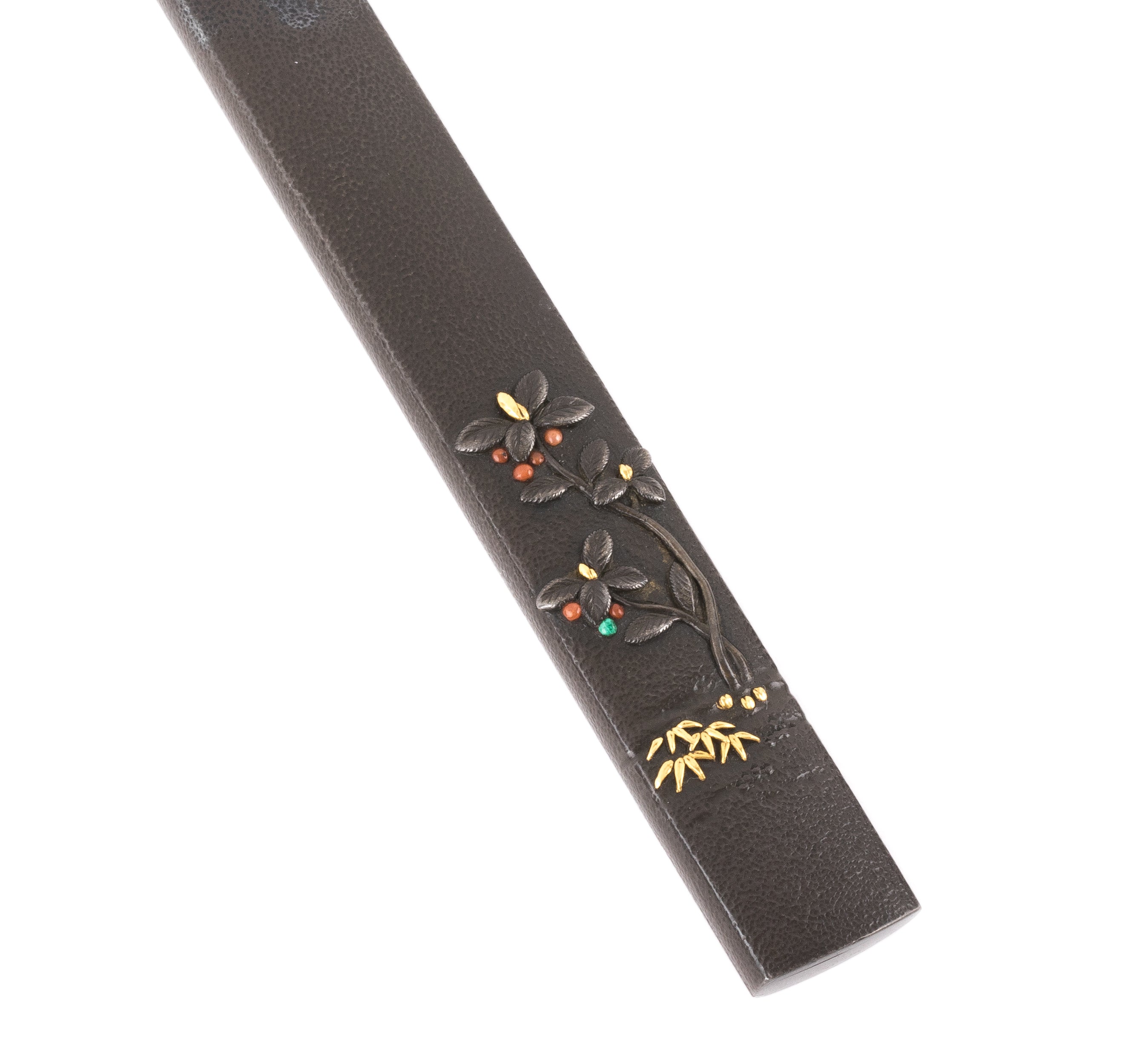
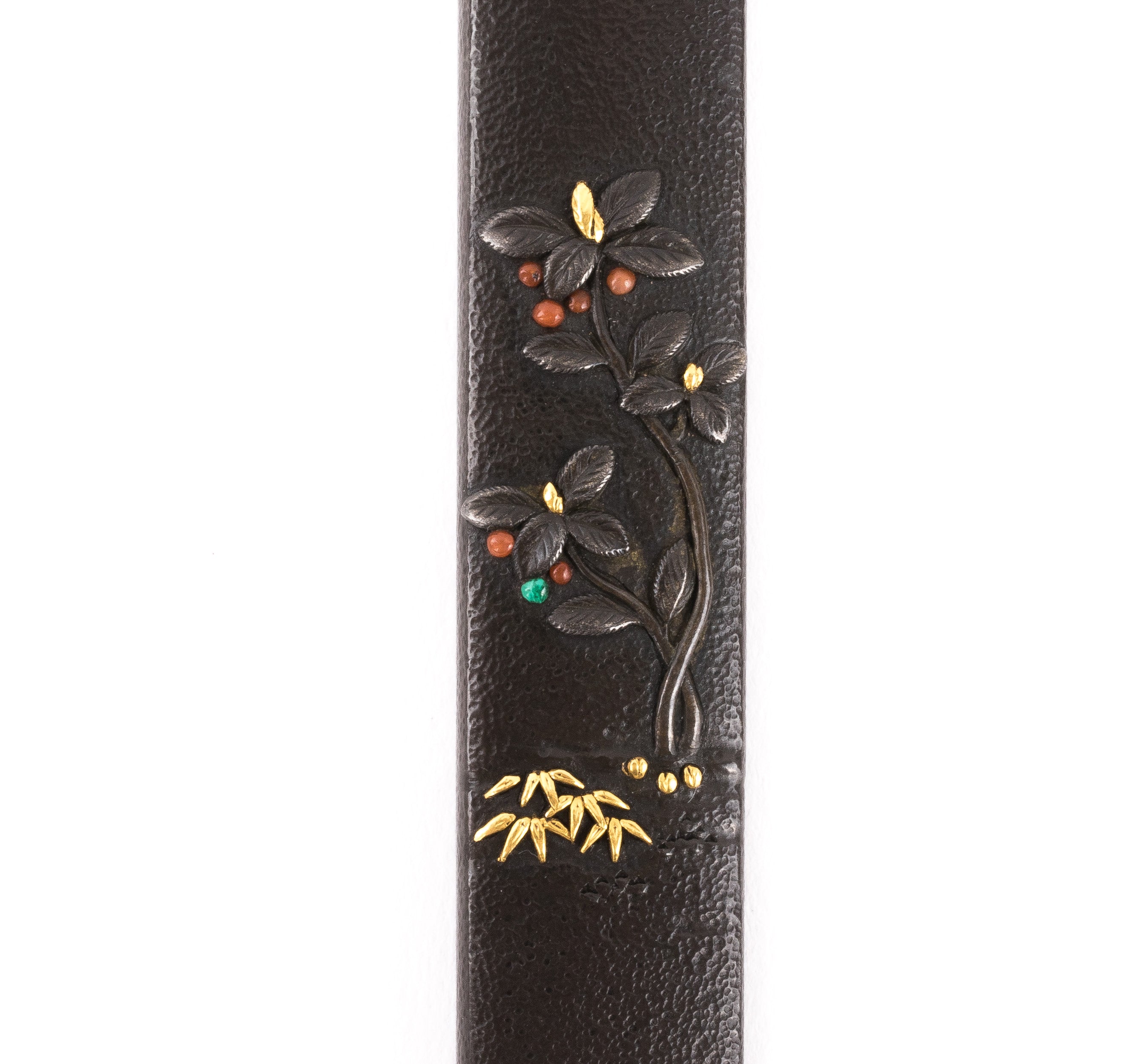
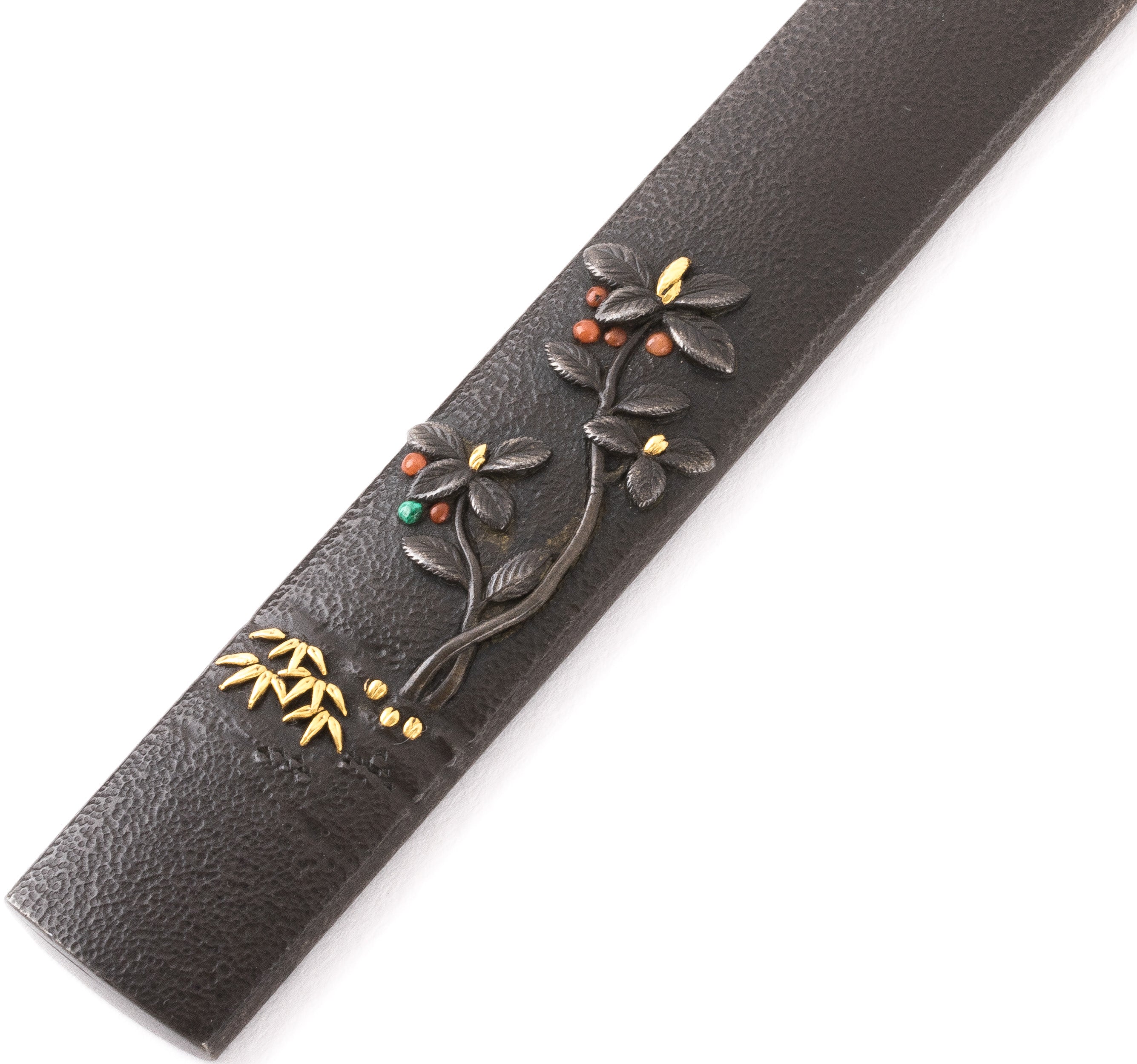
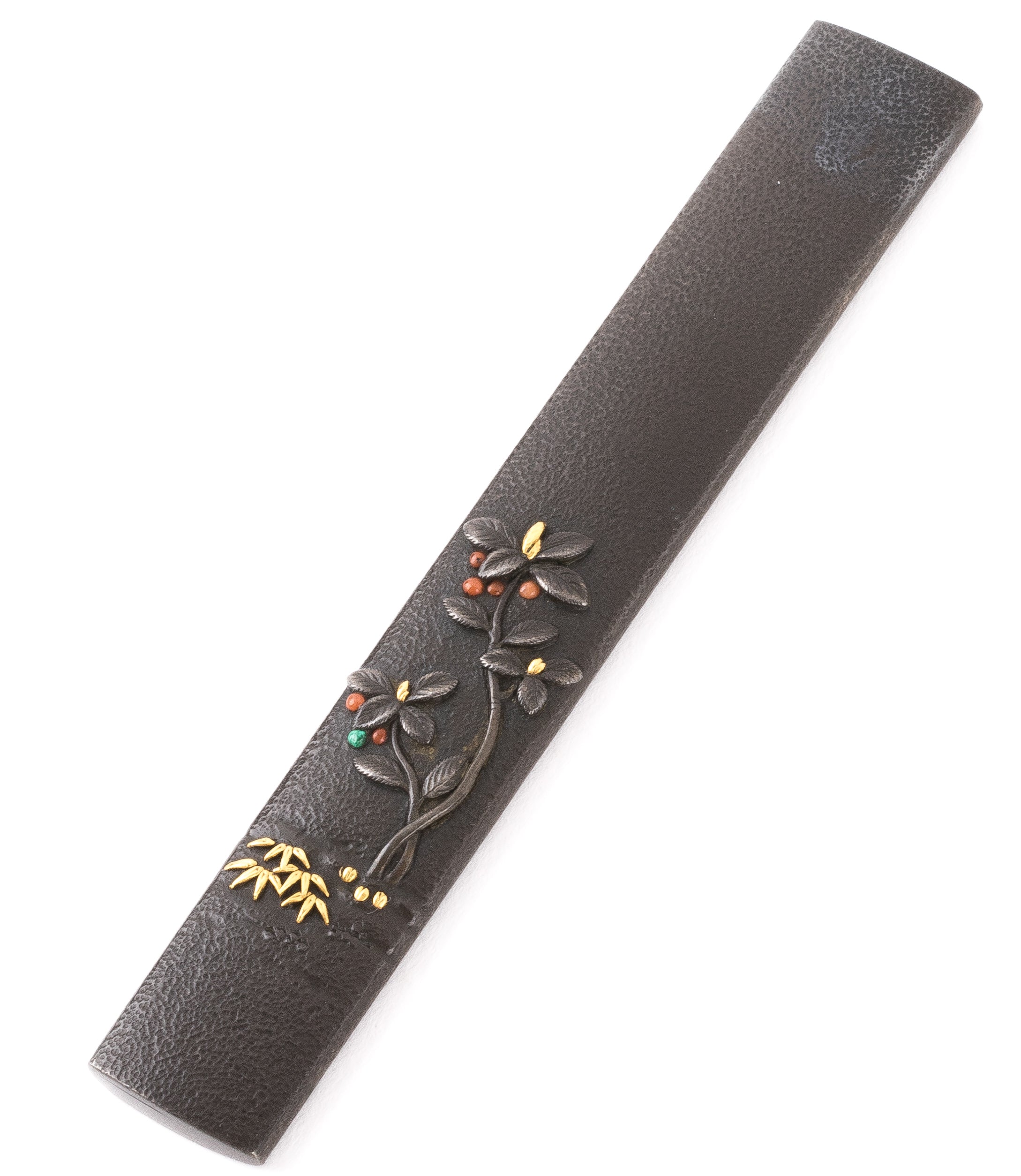
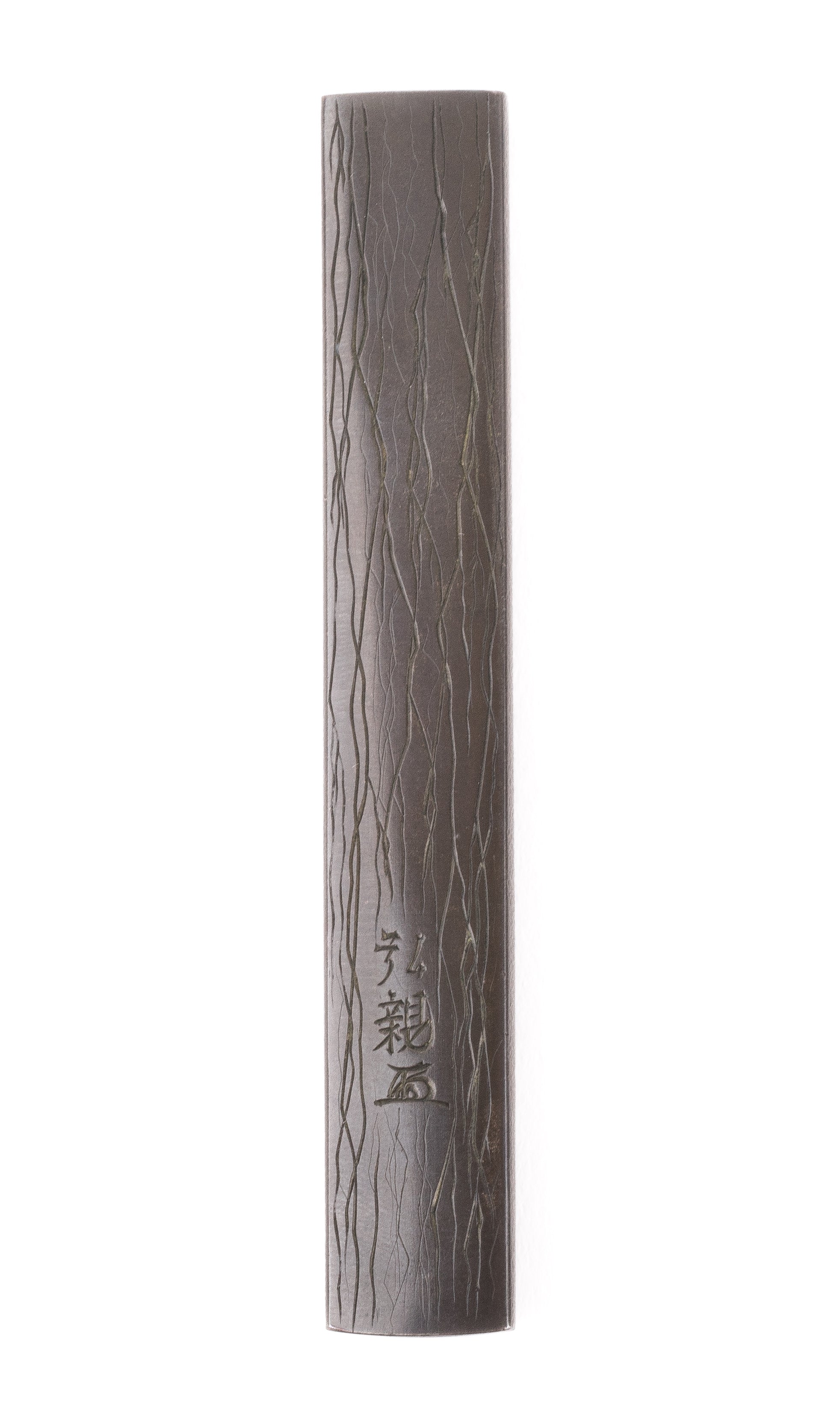
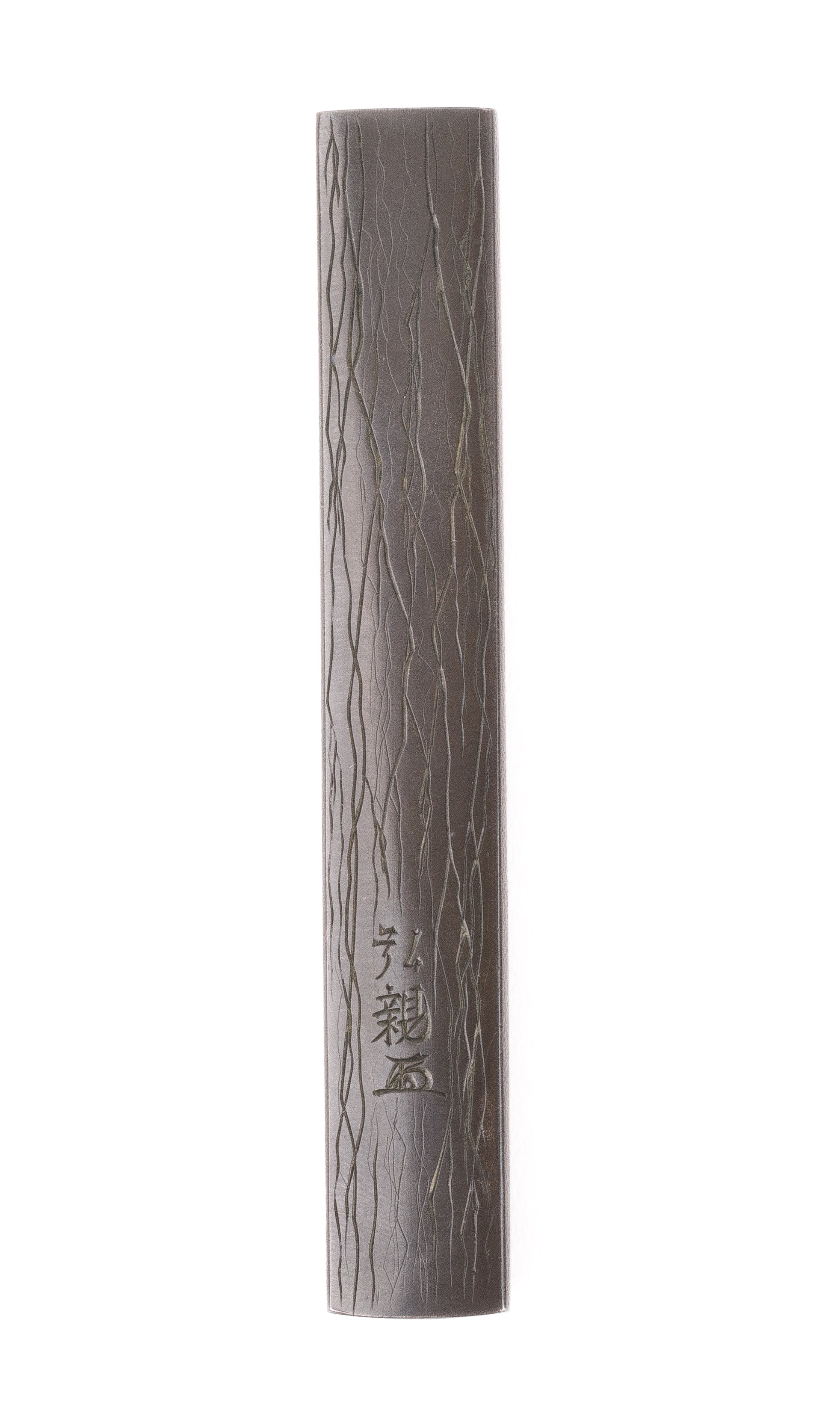
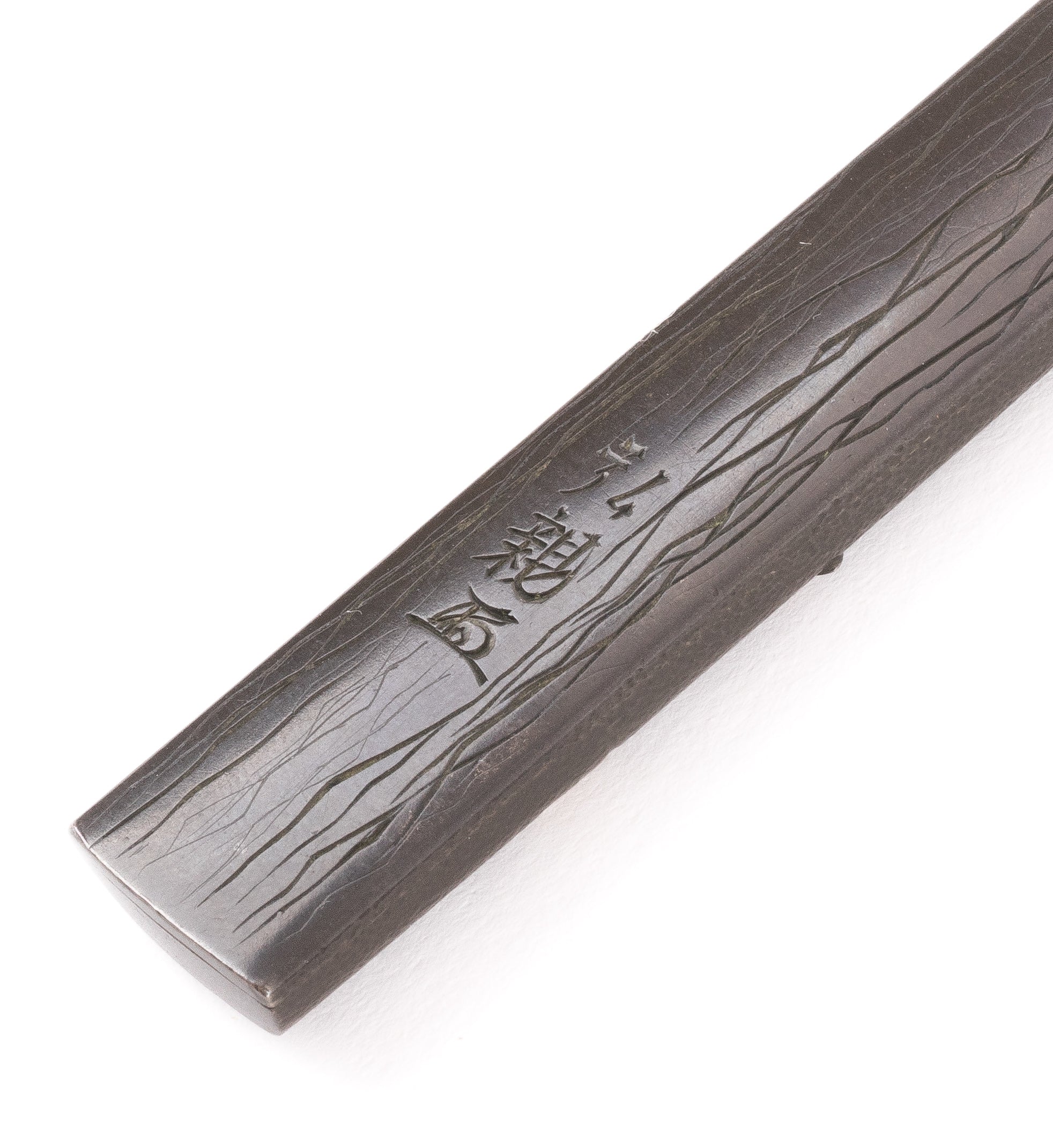
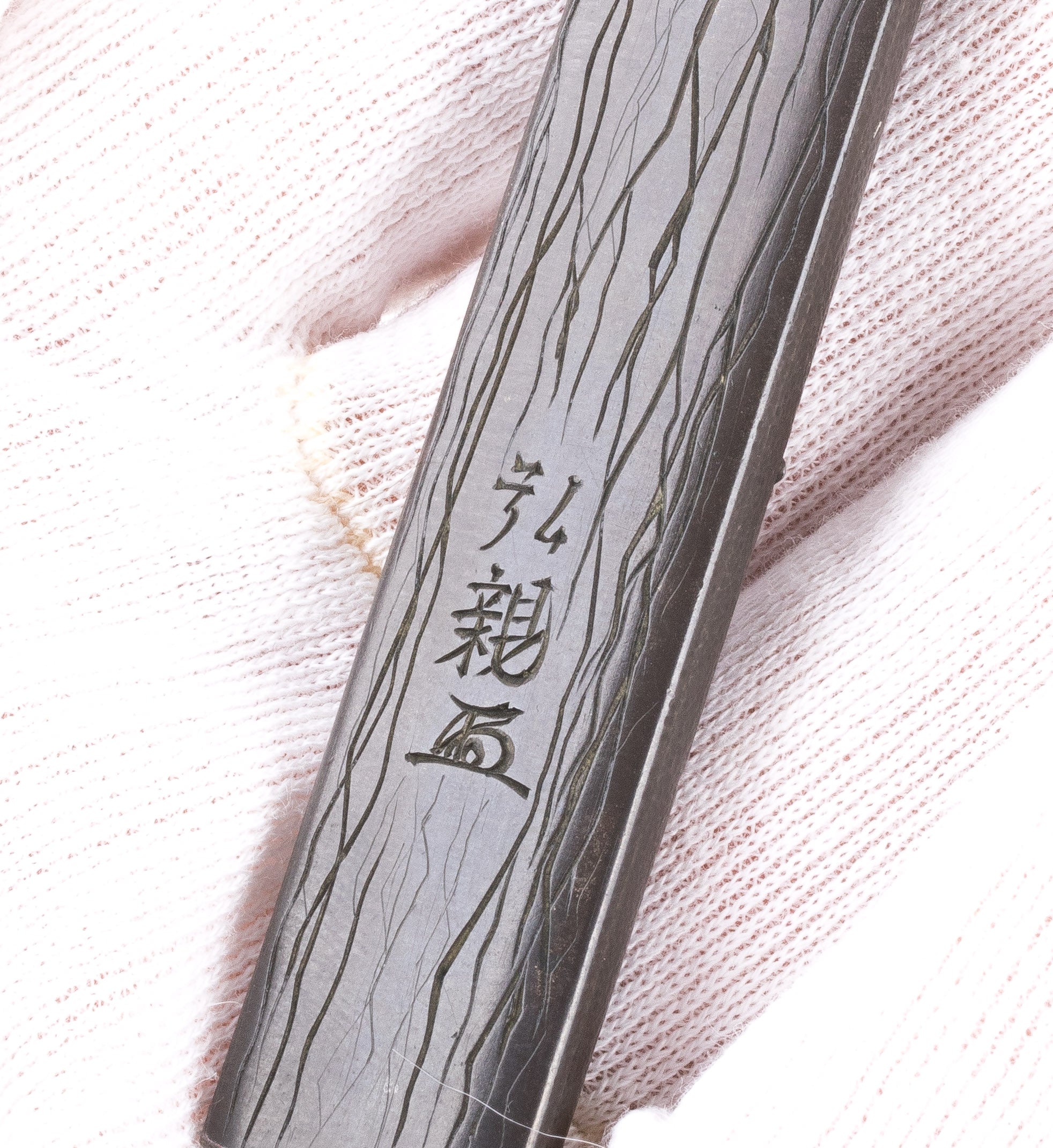
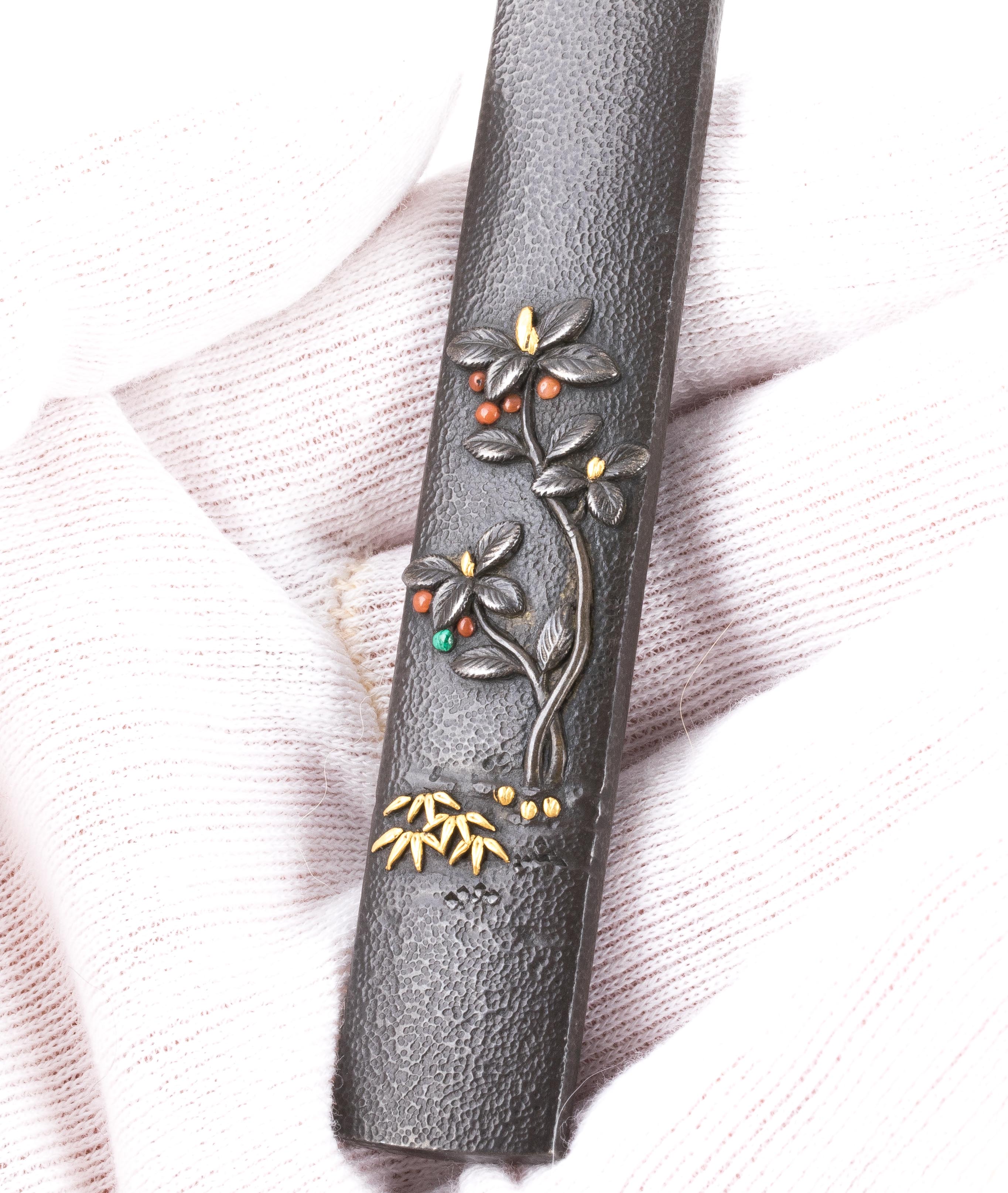
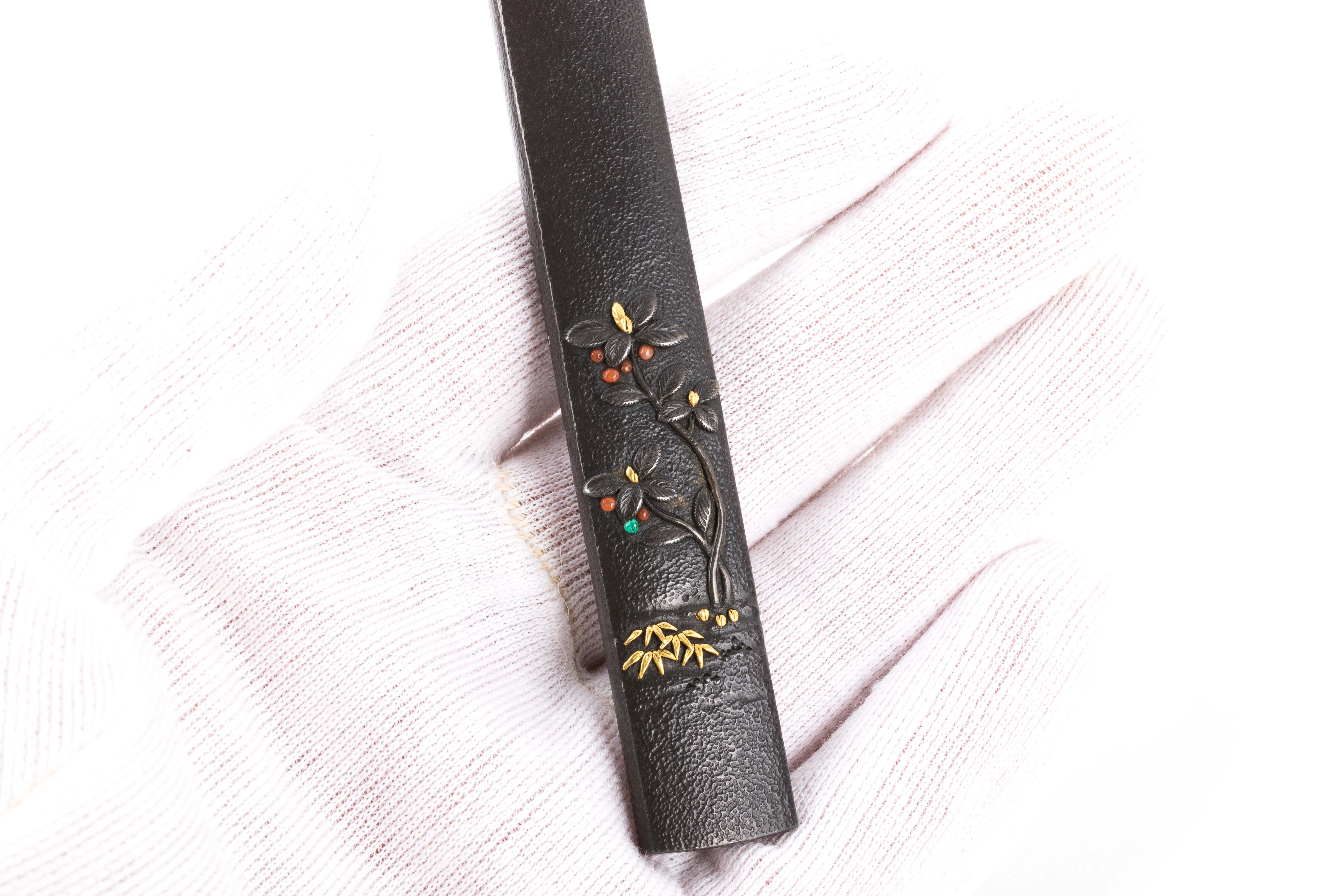
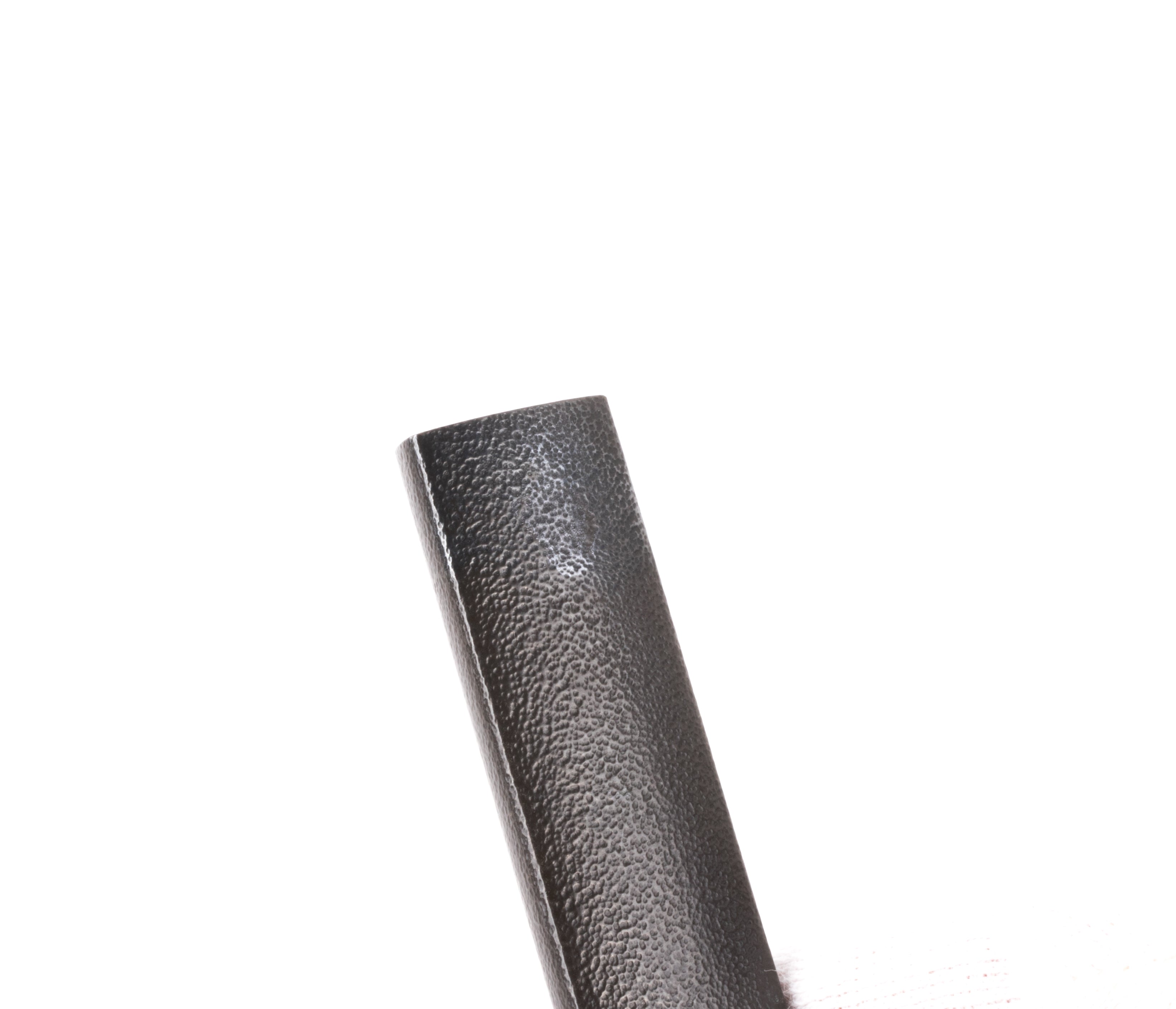
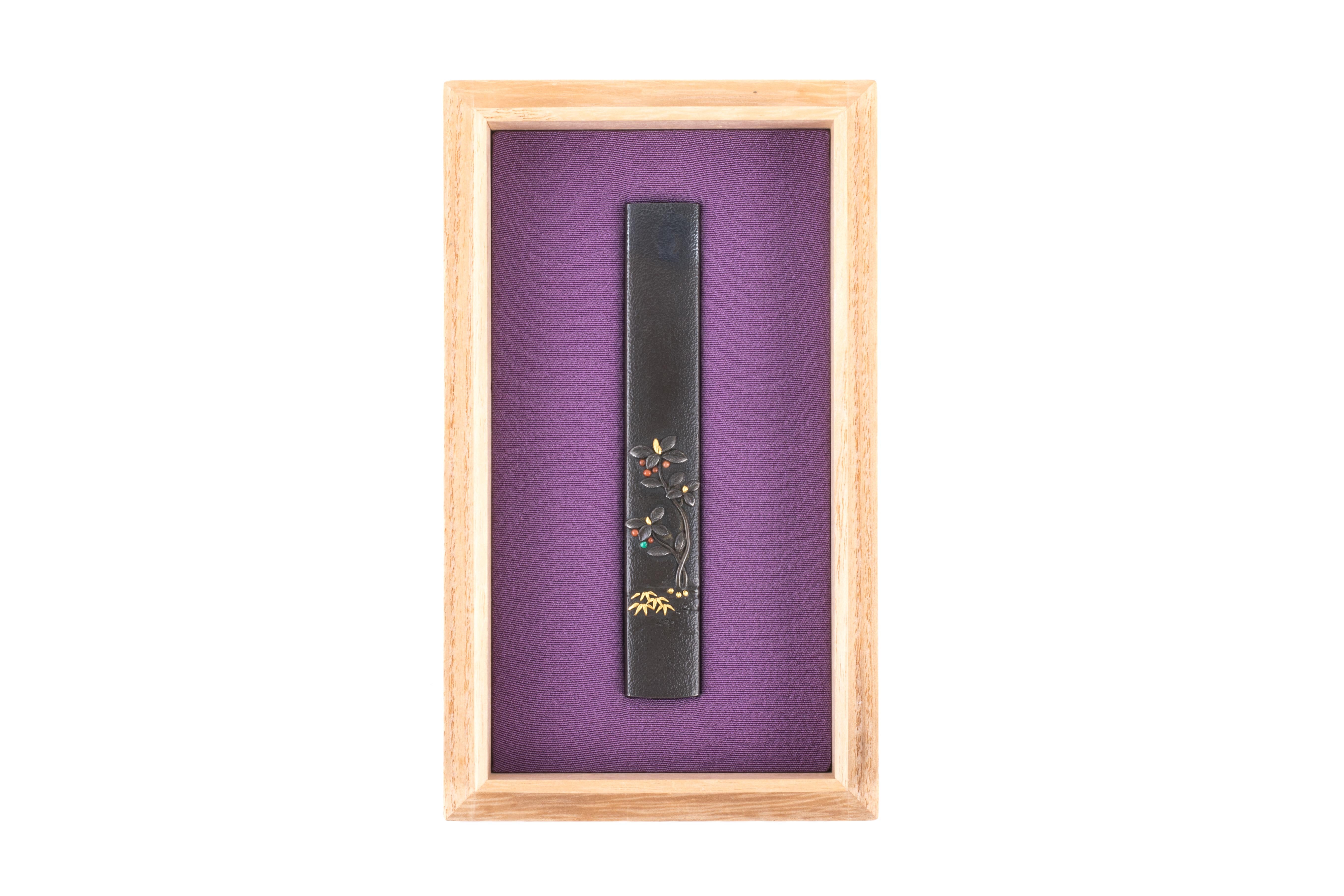
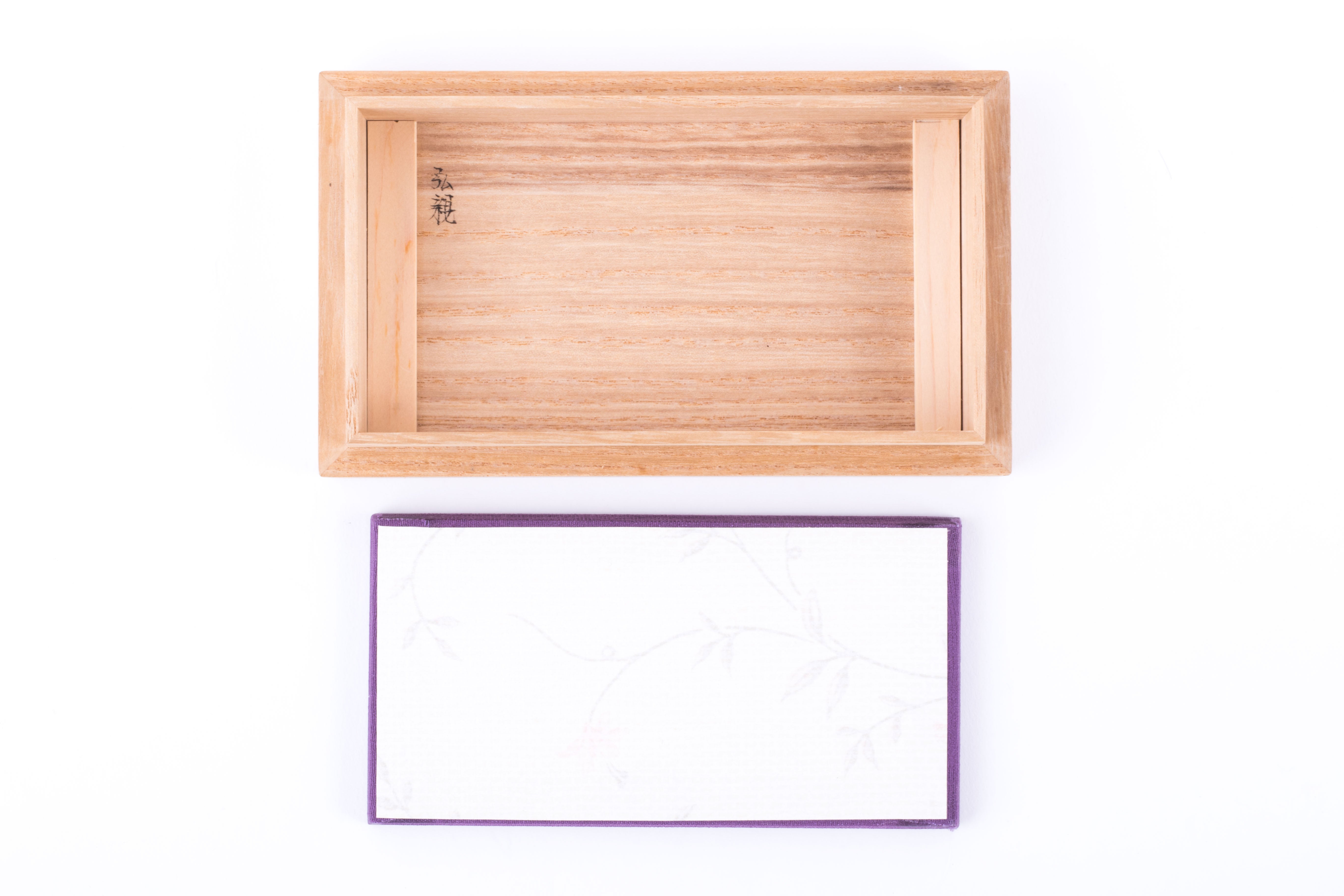
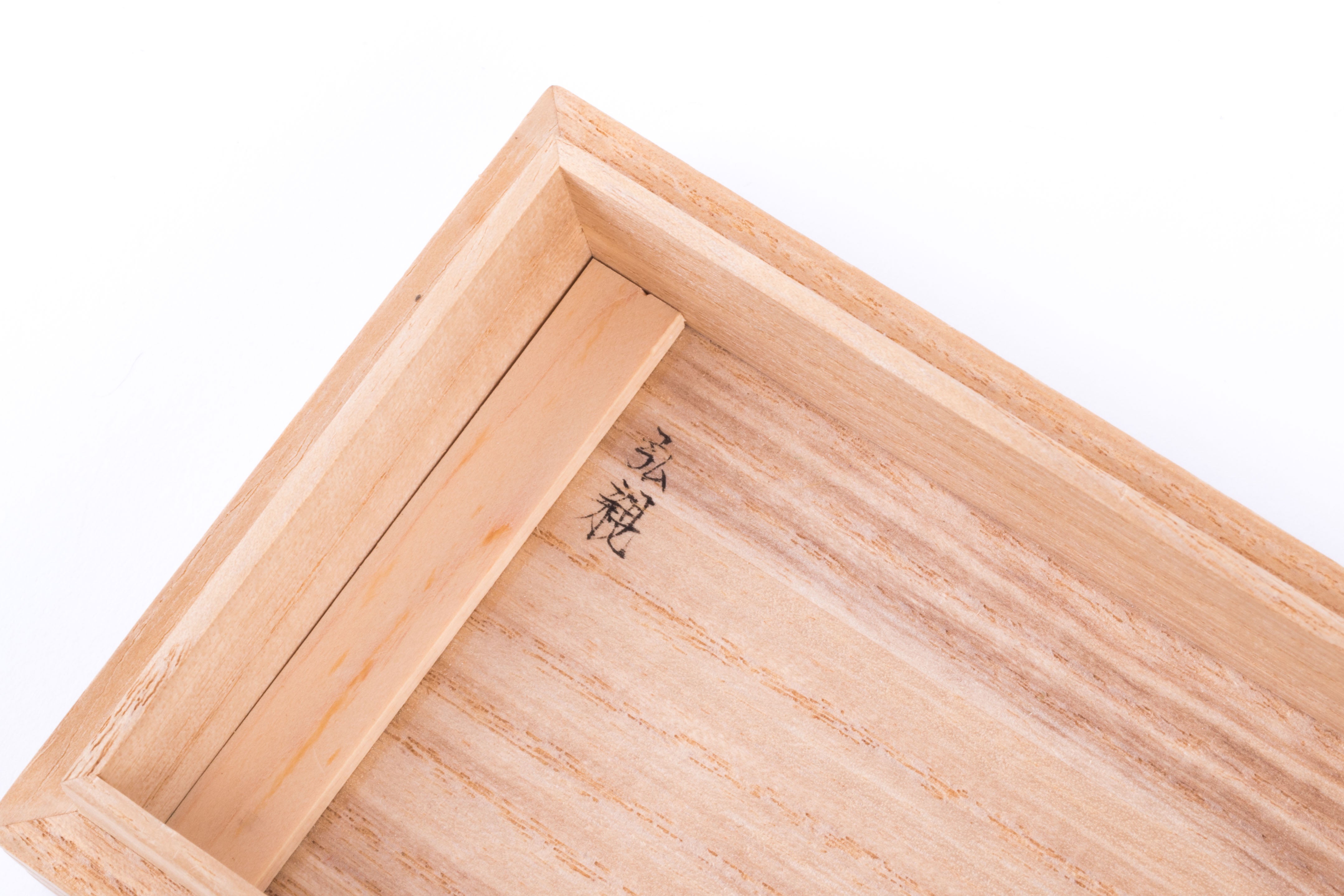
Kinko kozuka signed "Hirochika" with Kao. This kozuka received Tokubetsu Hozon Tosogu from NBTHK. Maine theme of this kozuka is Ardisia Crenata commonly called Coral Bush. It was made by Hirochika who was active around 1825. He was part of Kondo family and member of Uchikoshi School from Mito Province. He was a student of Uchikoshi Hirotoshi. It is made of shibuichi, alloy of copper and silver. Surface of the kozuka is decorated with Ishime-Ji (reassembles the surface of the stone). Back decorated with matsukawa yasurime, made to reassemble pine bark. Carvings are made with sukidashi bori technique. This means that large parts of the material was removed with chisels or hammered away. And what remained was shaped with finer chisels. In other words Coral Bush was not inlaid, shibuichi around It was removed to create picture that we see. What is most uncommon about this kozuka is the use of stone/coral to make berries on the plant. While this method was not often used to make sword fittings in Japan in this case it was very clever to apply it for "Coral Bush" kozuka. I simply love the effect that was achieved. Parts of the plant and grass are gilded. Size: 97 mm ×14 mm × 5 mm
NihontoWatch
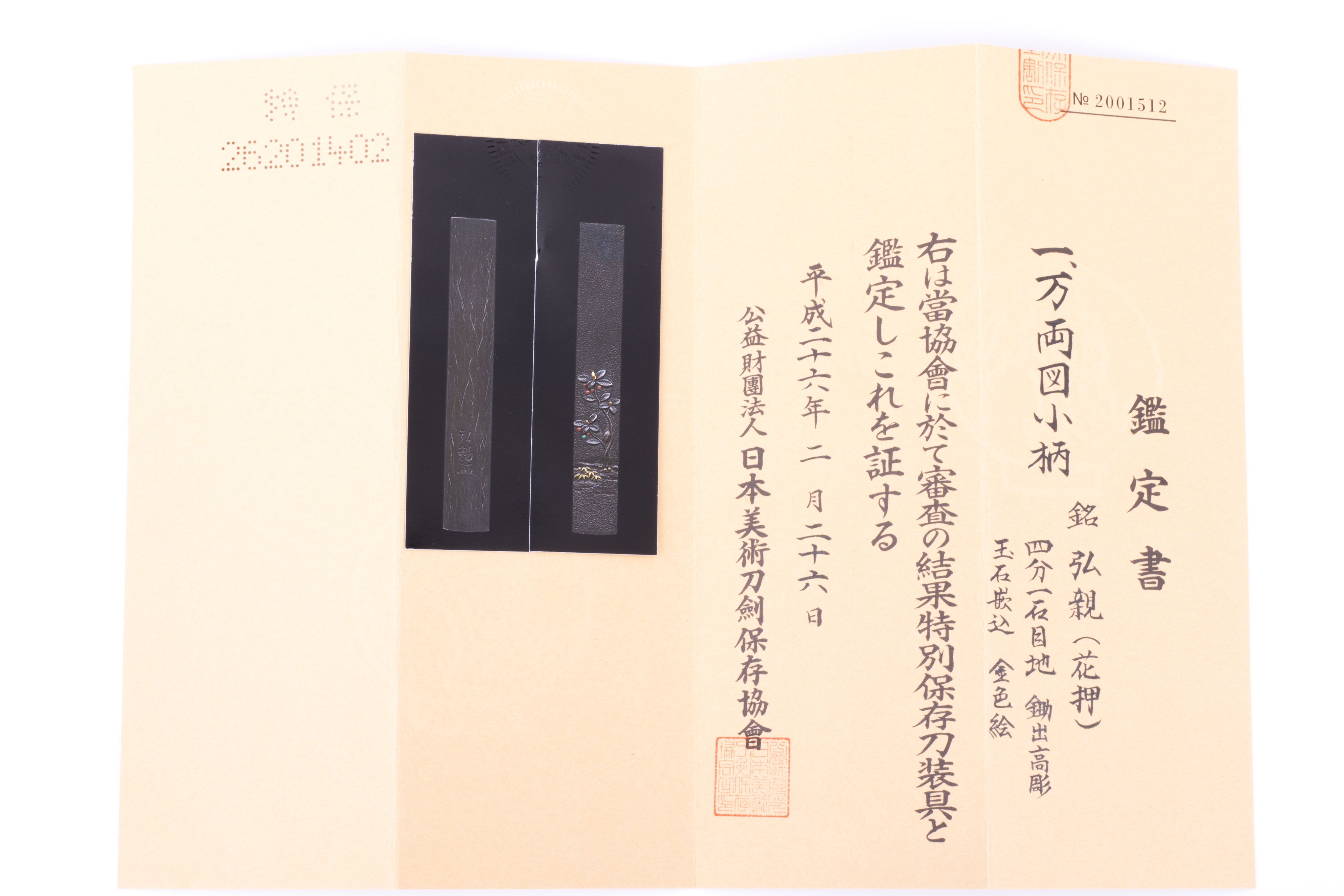
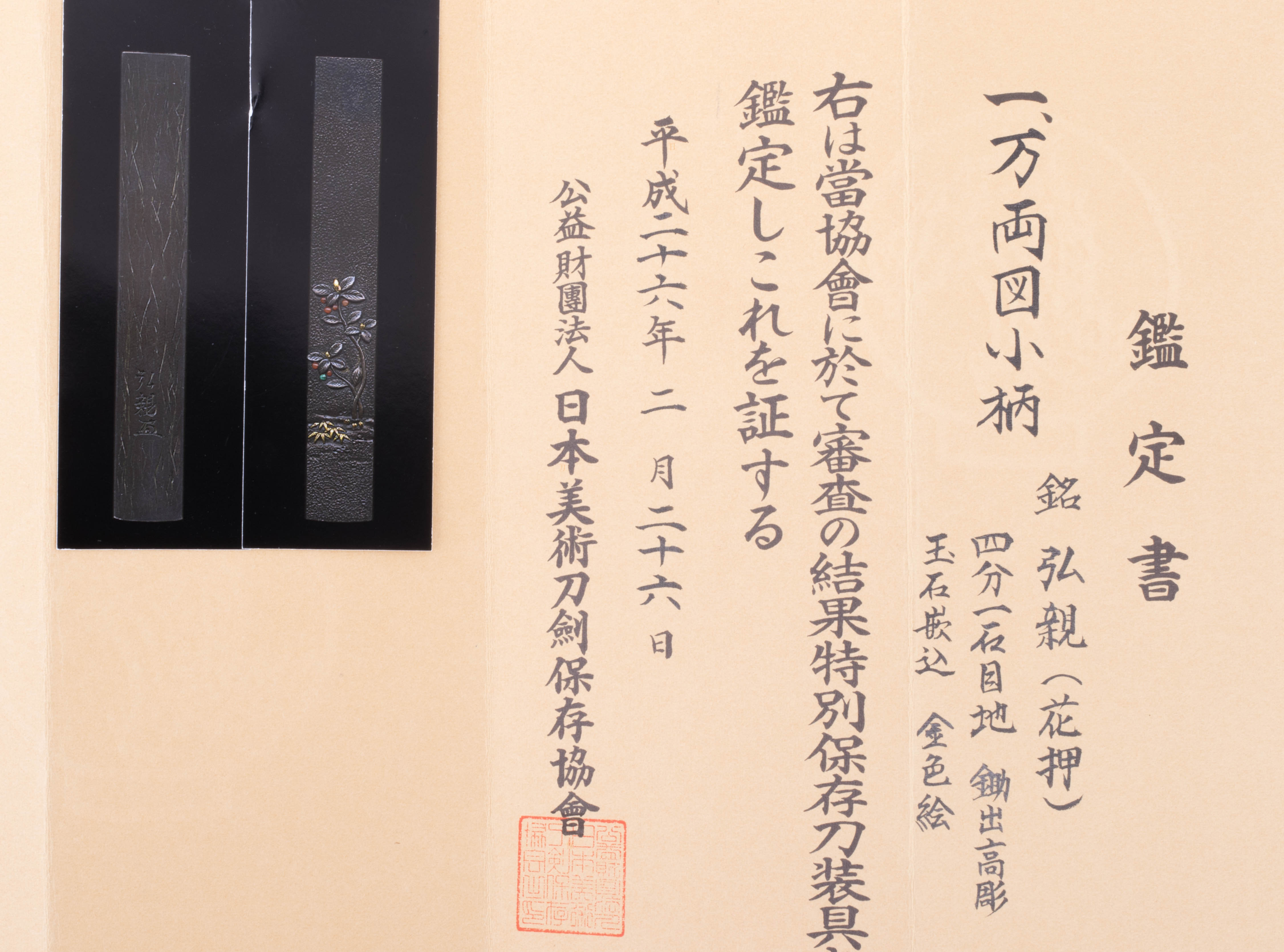
汎親
江戸
Mito
在銘
特別保存 (NBTHK)
町彫 · 武蔵(江戸)
現在1点販売中
町彫 · 武蔵(江戸)
現在15点販売中
土屋派は奈良金工の流れを汲む一派であり、奈良三作の一人に数えられる土屋安親を祖として江戸(武蔵国)に拠点を置いた。安親の名は六代にわたり嫡流が襲名し、元禄期より幕末に至るまで連綿と工房の系譜を維持した。門弟の安族は『庄内金工名譜』に「鈴木与平と称し初代安親門」[[c:1]]と記され、「江戸で安親の協力工として暮し、晩年は庄内に戻り安親より弥五八の名を授かり子孫も弥五八を襲名した」[[c:2]]と伝えられる。六代目の土屋昌親は五代国親の長男として下野国下館に生まれ、「青年時代に諸国を遊学して修業し、やがて江戸の芝新橋で開業した」[[c:3]]。出羽秋田の佐竹家の藩工として扶持を受け、後年には法眼の位に叙された。石燕子・東遷と号し、万延二年に歿している。別の一門、土屋守親(東燕舎土屋嵩僊守親)も一作金具の制作で知られる。 土屋派の作風は奈良派の彫金技法を基盤とし、鋤出高彫を根幹とする。地金には鉄・赤銅を主とし、石目地や槌目地を多用して、金・銀・四分一・素銅による色絵を豊かに施す。説示が一貫して強調するのは、一作の中に多彩な彫技を駆使する点である。昌親の脇指拵では「高彫色絵・肉合彫・片切彫・毛彫・甲鋤彫と様々の彫技が駆使されており、それぞれに昌親の高い技術が示されている」[[c:4]]と評される。意匠面では文学的・暗示的な構図を重んじ、守親の五節句大小拵では「行事そのものの風景ではなく、それを示唆させる景物描写によって各々を表現している」[[c:5]]とあり、「意匠は端的に、彫金技術は的確に纏めており、守親の技術の高さが窺える」[[c:6]]と記される。安族の猛馬山水図鐔においても「松樹に馬図の構図、鋤出高彫象嵌の彫法などには、奈良派及び安親の晩年作の特色をよくあらわしている」[[c:7]]と評され、初代の作風が門弟に深く継承されたことが窺われる。 説示は土屋派を、奈良派の原理を江戸中期から幕末にかけて継承・展開した一派として位置づけている。初代安親の工房における権威は絶大であり、安族は「安親の陰の存在」と推測されるほどであった。六代昌親に至っても、大名家(佐竹家・前橋松井家)の注文に応じた入念作において、金具・漆・柄の各要素を「拵全体が典雅な趣として結実」[[c:8]]させる統合力を示し、守親もまた五節句の各場面を大小金具に分配して「すっきりとした黒色の鞘に様々に描かれた金具のひとつひとつが冴える」[[c:9]]一作を完成させている。上層武家の需に応じ続けた事実は、土屋派が幕末に至るまで武家社会の上層において高い評価を保ち続けたことを証するものである。 詳しく見る →
保存刀装具のうち、出来・保存状態が一層優れ、銘文や作風に資料的価値の高いものと認められたものです。
日本美術刀剣保存協会(日刀保)は、1948年に設立され、文化庁の監督を受ける公益財団法人で、東京・刀剣博物館に本部を置きます。専門の審査員が出品作を直接審査し、美術的・歴史的価値に応じた鑑定書を発行します。日刀保の鑑定書は、日本刀および刀装具の真正性を示す最も広く認知された基準です。
日刀保公式サイトInspection period (per the shop's shipping policy): after receiving the item, each customer has two weeks for inspection. In that time you may decide to return it, and the item will be refunded in full. Shipping costs are not refunded. Returns (per the shop's refund policy): the policy lasts 30 days; once 30 days have passed since purchase, no refund or exchange is possible. To be eligible for a return, the item must be in the same condition in which it was received and in its original packaging. Customized products cannot be returned. In certain situations only a partial refund is granted. Return shipping is at the customer's expense, and shipping costs are non-refundable.