 NihontoWatchNihontoWatch
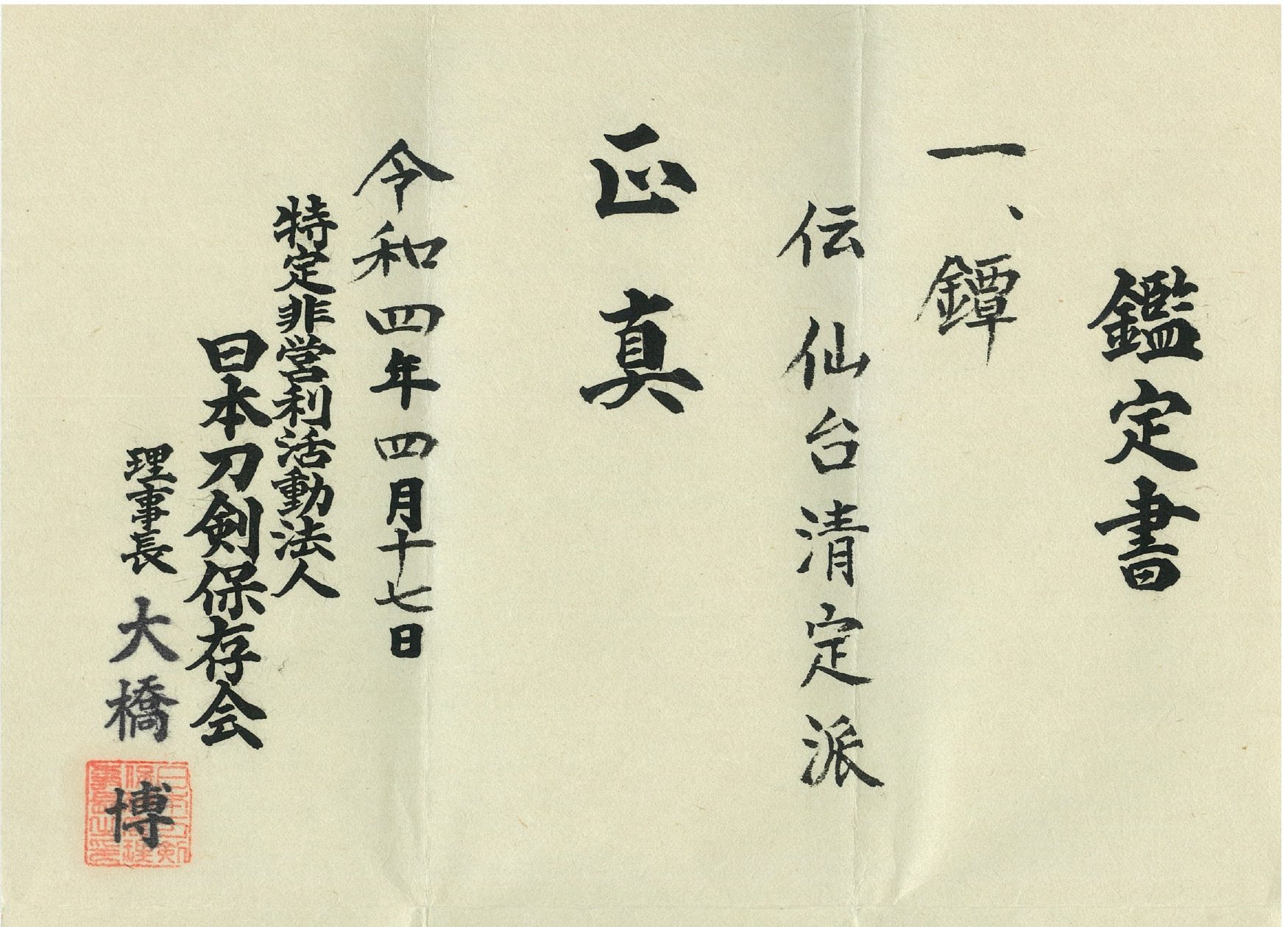
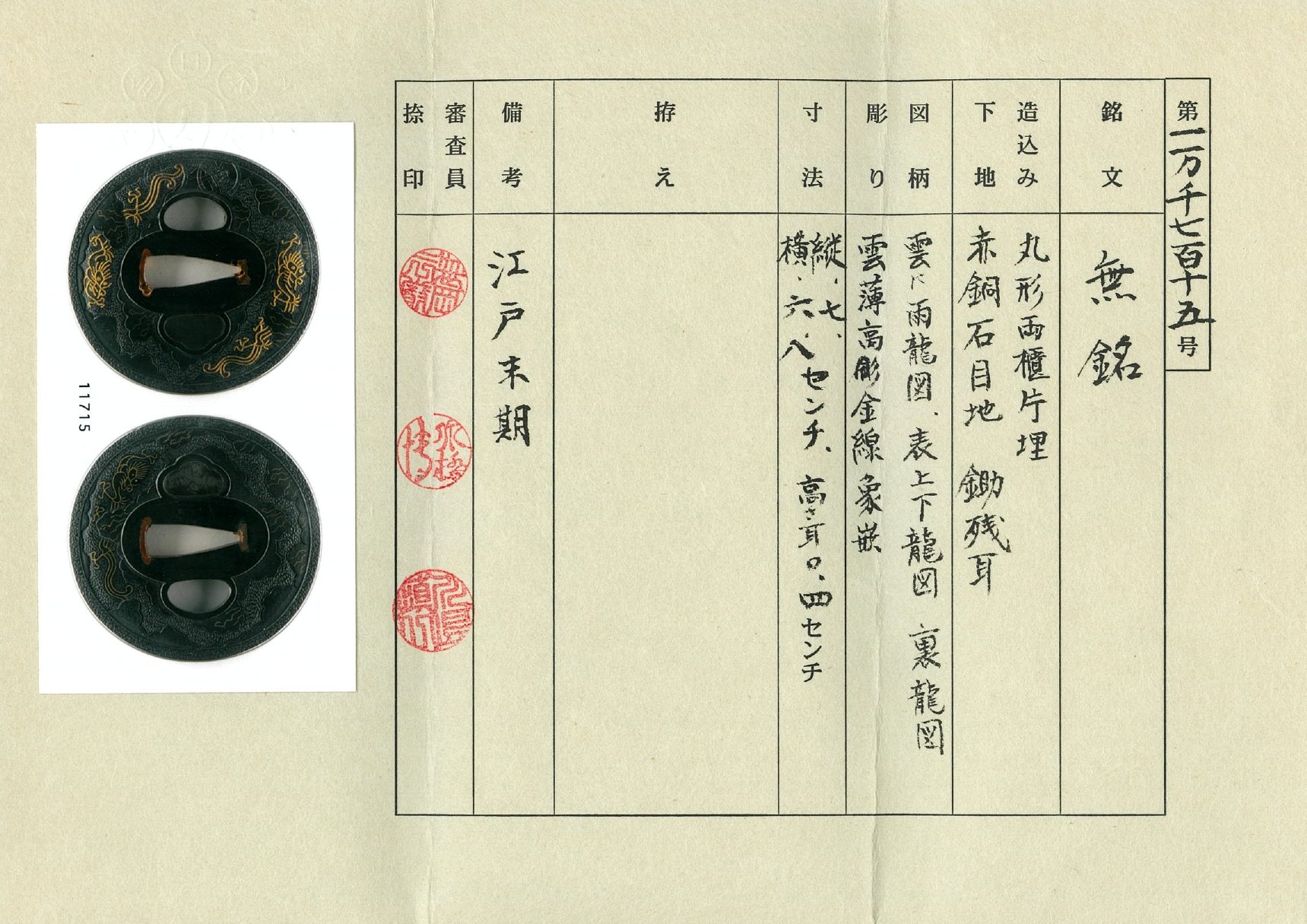
Title: Kiyosada-style, Kumo ni Ameryu Zu Description According to the certificate, this Tsuba’s maker is attributed to Kiyosada (清定). Kiyosada did well in Sendai (仙台) area in the late Edo period. He moved to Edo and learned under the Omori family. He was good at making Shakudou Tsubas with inlay decorations. About the design, the theme is the Kumo ni Ameryu Zu (雲に雨竜図). It is a combination of Ameryu (雨竜) and clouds. The Ameryu, also called the Amaryou, is a kind of dragon who controls the rain. It is believed that the Ameryu would make rain in the proof when God is blessed. A theory says an Ameryu is the young figure of a dragon. This creature has been thought to be a small spirit who lives in forests. As mentioned above, their appearance has a similarity to a dragon. That is why they are sometimes depicted with a charming look compared to other types of dragons. Moreover, snake worship was common in Japan because the serpent has a deep relationship with the water god faith. It might be the reason why Japanese people love the Ameryu pattern. Clouds bring rain and snow, and their movements significantly affect the day’s weather. Due to its supernatural power, a theory says that gods, spirits, and dragons dwell in the clouds. Also, as mentioned above, clouds are related to the Ameryu. Understandably, these motifs are designed together in works, as you see in this Tsuba. Initially, the dragon is an imaginary creature found in ancient traditions or myths. Furthermore, it is regarded as a symbolic beast of auspicious signs. Its body is likened to nine animals: antlers are deer, the head is a camel, eyes are demons, the neck is a snake, belly is the Mizuchi (蛟, a mythical animal in Japan that looks like a snake and has a horn and four legs), scales are fish, claws are falcons, palms are tigers, and ears are cows. It was thought that the dragon would reign at the top of all animals because of its odd-looking appearance. The dragon design is often seen in sword mountings. Dragons and Ameryu, we guess both motifs were highly favored among Samurais because of their auspicious images. *As this item is an antique, please check each photo and ensure its condition. What is Tsuba? Tsuba is the hand-guard of the Japanese sword. High-class Samurai wore his katana sword with its beautiful sword mountings such as Tsuba. Tsuba’s front design tends to be more decorative as this part was often seen by other Samurais when he was walking on the streets. Why is it that the sword mounting was important for Samurai? The sword mountings of the Japanese sword have many kinds of decorations such as handguards (Tsuba), sword hilt (Menuki), pommel (Fuchi Kashira). The Japanese sword worked as a weapon and as an object to show who he was. For example, it shows their personalities and beliefs. You could say that it is like decorations for smartphones today. We recommend you zoom in on the pictures of the sword fittings. When you do so, you can see the skill of Japanese metal engraving techniques. They are mainly made of iron and copper with inlays of gold, silver, and bronze. When it comes to handguard (Tsuba), each one has a different outline and weight. These sword fittings that have lived with Japanese swords of the same age might be worth as much as the Japanese swords. They are inconspicuous parts of the Japanese sword. Nevertheless, if you are knowledgeable or particular about it, you will become a connoisseur of the Samurai. Authentication Paper : NTHK Kanteisho Certificate NTHK, also known as NPO Nihon Touken Hozon Kai, is the oldest organization for sword authentication of Japanese swords in modern times. It was established in 1889 during the post-Samurai era. They authenticated the Tsuba on Apr 17th in the fourth year of Reiwa (2022). The purchaser will receive this original certificate as well. We can also translate what is written into English and make a PDF file for your record if you request. 【About us】 Samurai Museum is located in Tokyo, Japan, e
NihontoWatch
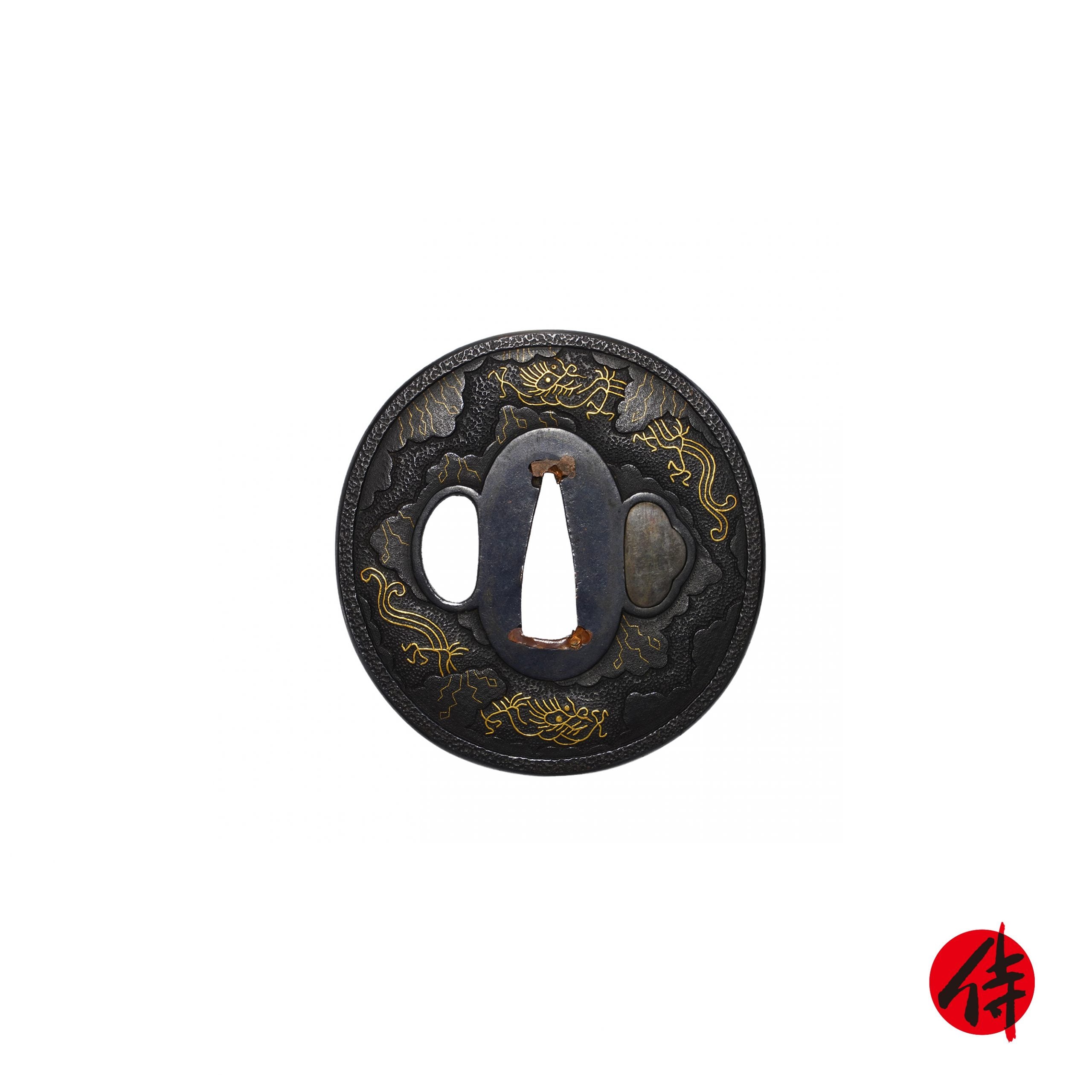
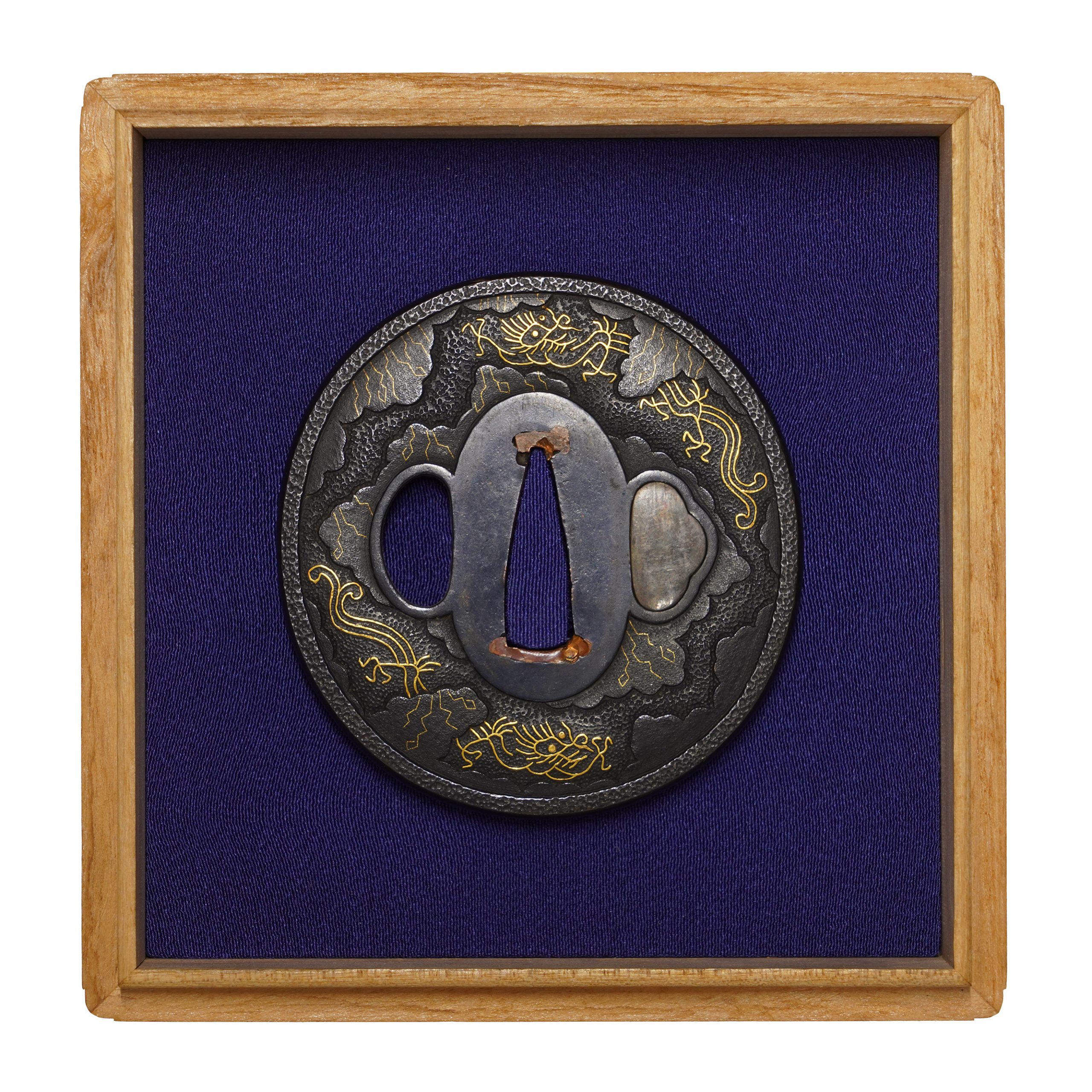
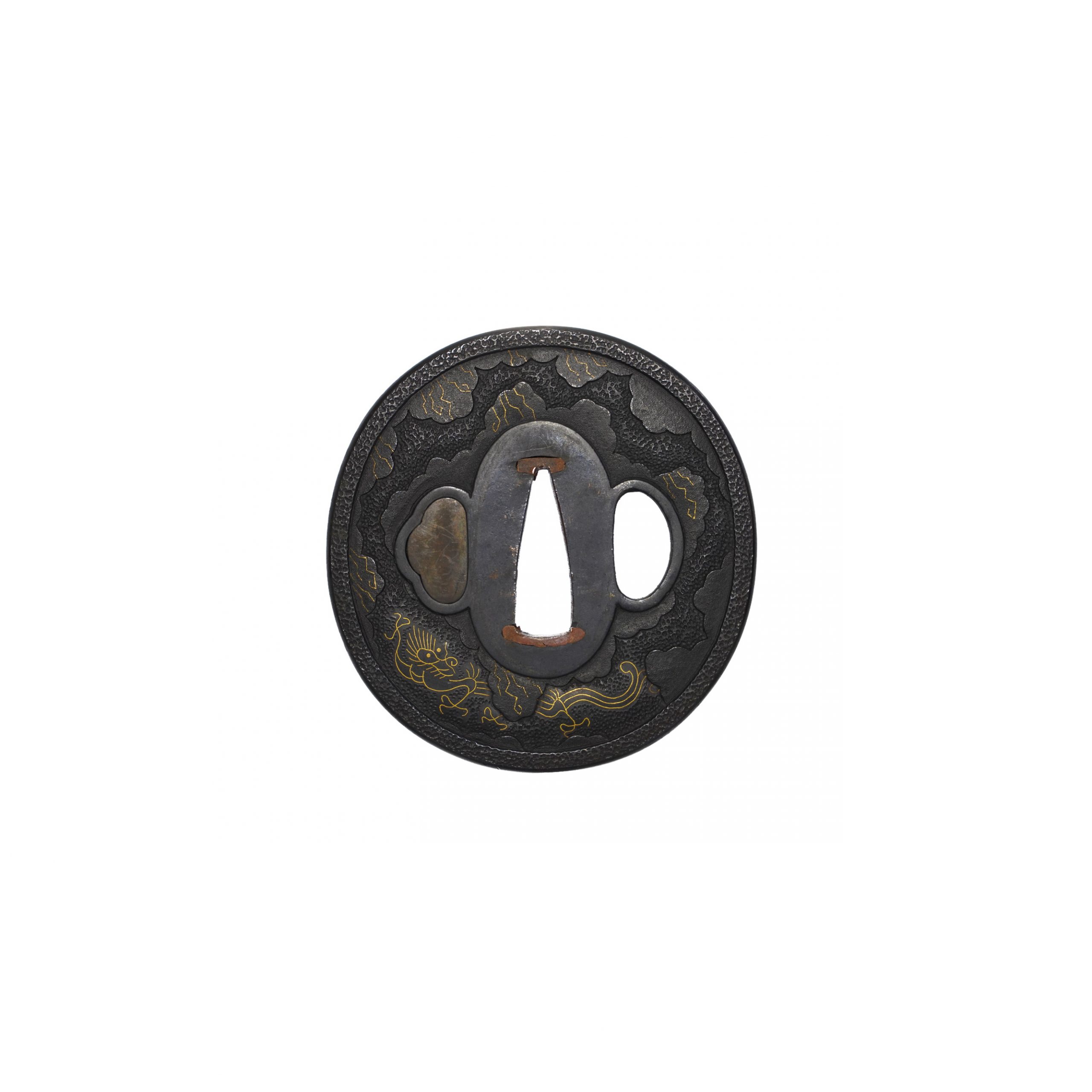
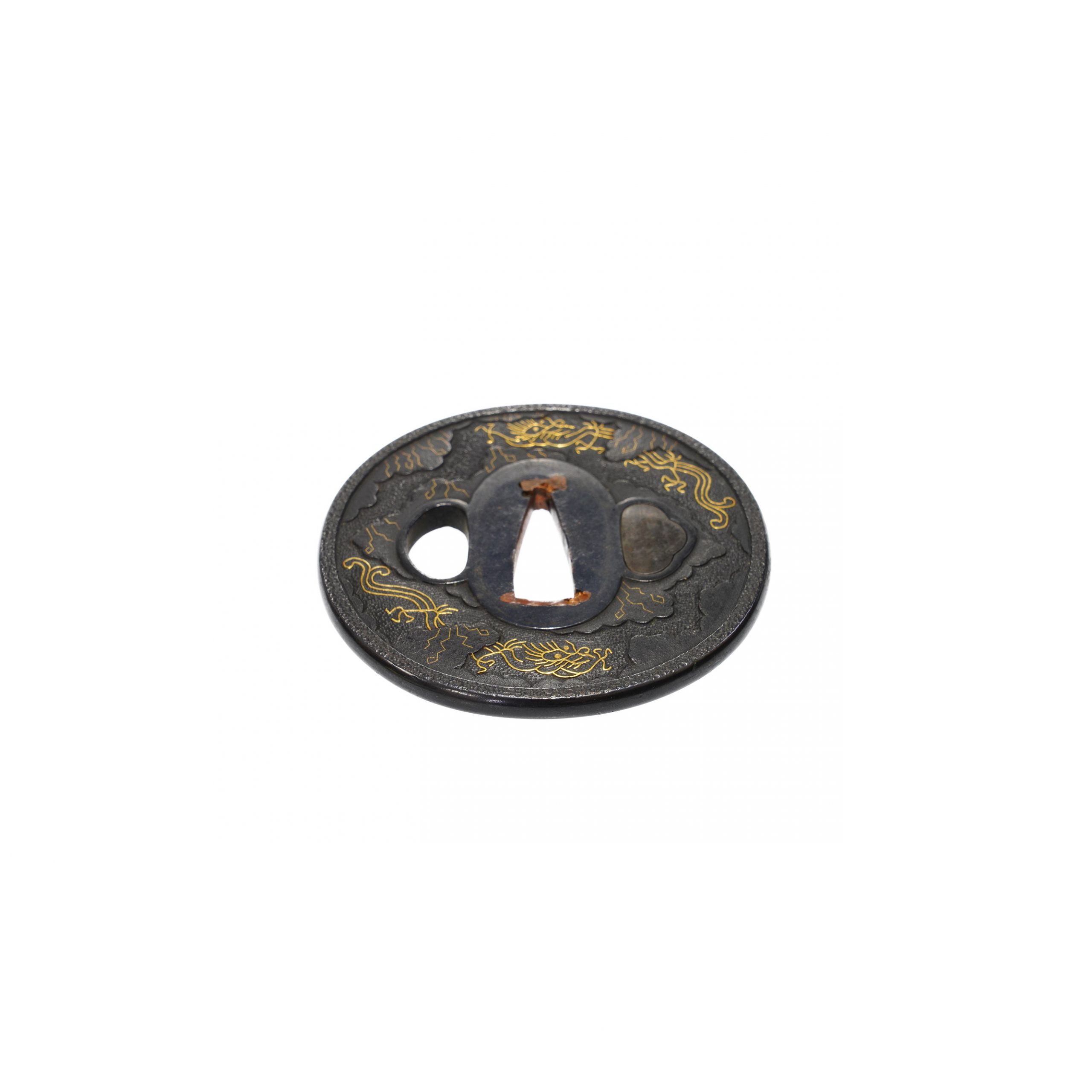
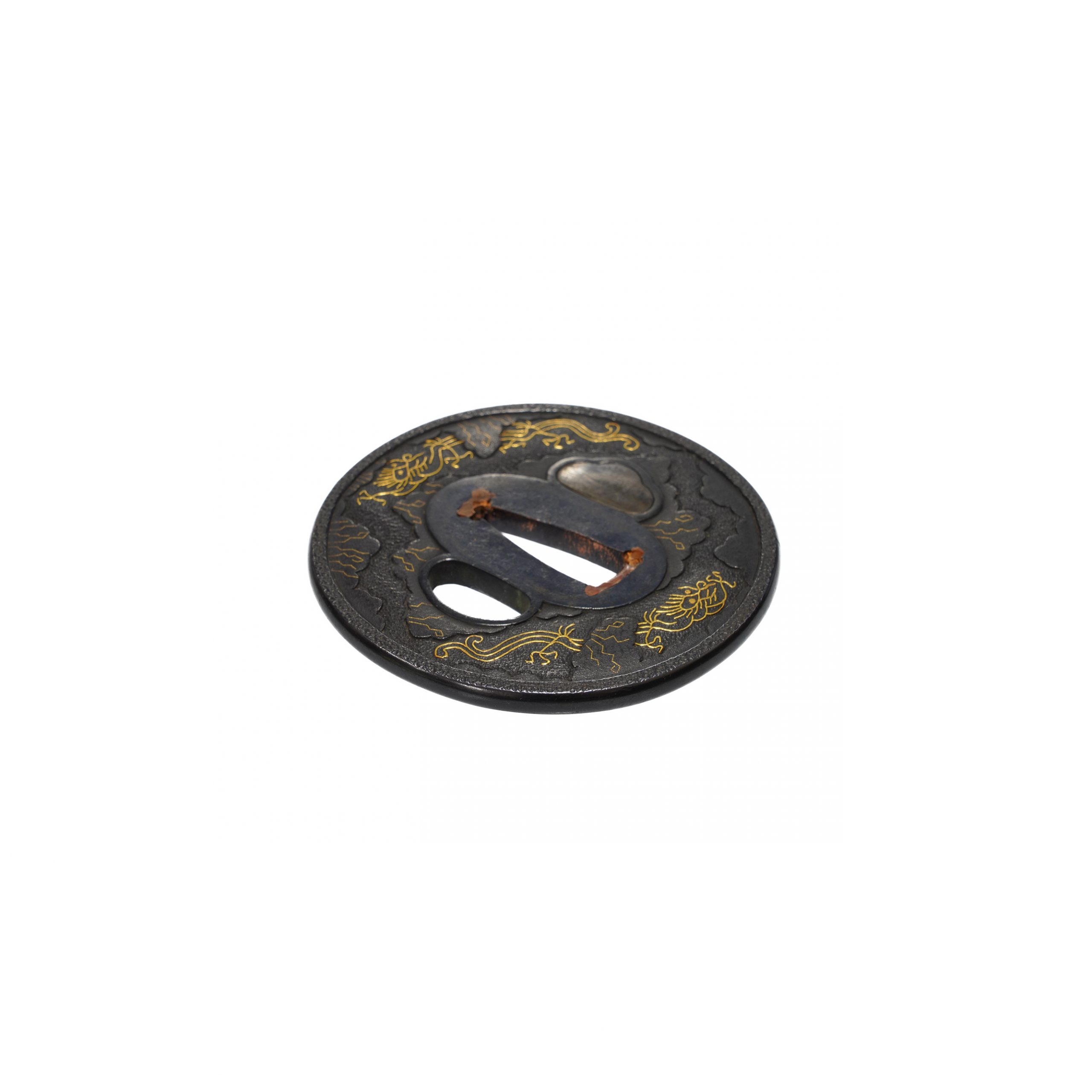
金工 · Mutsu (Sendai) · 江戸
現在1点販売中
初代草刈清定、通称を八三郎といい、草刈屋を家号とした、仙台の大藩・伊達家に抱えられた金工である。説明は、初め仙台藩工の正村七右衛門に師事し、のち江戸に出て大森家に学び、天明年間に仙台へもどって伊達家の藩工となったと伝える。伊達家では渋谷・草刈・小熊・斎藤・正村・助川の諸家が抱工として活躍し、中でも渋谷・草刈家の手によって平象嵌の技術が発展して世の喝采を博した。彼が最も得意としたのは、赤銅石目地に軍配模様を金象嵌する手法で、その象嵌法は金線で図柄の周囲を高肉に彫込んで象嵌し、その中は研出して地面とほぼ水平に、紗綾形・亀甲・枡形・麻葉文などの幾何文様を金線で象嵌するものである。銘は「仙台住清定」と無花押に切る。
清定の位置づけを、日本刀全体および伝法・時代・時期ごとに示します。各区分(随一・屈指・有数・著名)は、NBTHK および文化庁による指定に加え、三作や名物帳などの歴史的栄誉を加味したものです。
各項目を選ぶと評価方法が表示されます。
金工 · Mutsu (Sendai)
現在3点販売中
草苅派は、陸奥国仙台藩の大藩・伊達家に仕えた金工諸家の一つである。仙台伊達家のもとでは渋谷・草刈・小熊・斎藤・正村・助川等の諸家が抱え工として活躍したが、説示が繰り返し述べるとおり「中でも渋谷・草刈家の手によって平象嵌の技術が発展し、世の喝采を博した」[[c:1]]。初代清定は草刈屋を家号とし、仙台藩工の正村七右衛門に師事した後、江戸に出て大森家に学び、天明年間に仙台へ戻り伊達家の藩工となった。 草苅派の作風は、赤銅石目地に金象嵌を施す独自の技法に集約される。説示が定型的に記すその象嵌法とは、金線を用いて図柄の周囲を高肉で彫込み象嵌し、その中は研出して地面とほぼ水平の平象嵌で文様を表現するというものである。最も得意とした意匠は軍配文で、表裏に複数の軍配を配し、その一つ一つに亀甲・紗綾形・枡形・麻葉文・網代・七宝繫・波千鳥・双龍・流水蓮文・松葉といった幾何文様や吉祥文様を変化させて象嵌する。「ほぼすべての軍配図はその意匠を逐一変えて描かれている」[[c:2]]と評され、精巧かつ変化に富む意匠構成が特色である。地面は通常石目地であるが、魚子地を用いた稀少な例も伝わり、「清定の作で魚子地となるものは極めて少なく、特別な入念作であったものと推察される」[[c:3]]と説示に記される。また軍配図以外にも、猛禽が野猿を狙い降下する図を片切彫・毛彫と平象嵌を併用して描いた鐔があり、「常に見る手とは一種趣を異にして、斬新味が感ぜられ」[[c:4]]る作例として高く評価されている。金覆輪の耳や金内覆輪の櫃孔など、細部の仕上げにも格調の高さが窺える。 草苅派の意義は、仙台藩という大藩の金工文化を代表する平象嵌技法の完成にある。説示は一貫して「見事な手腕を発揮している優品」[[c:5]]「同工の持味と的確な高い技術が顕示された」[[c:6]]と称え、清定の作品に作家としての強い矜持を認めている。軍配文鐔の典型作から斬新な題材への展開まで、技術的完成度と意匠の多様性を兼ね備えた草苅派の仕事は、江戸時代有数の大名家に仕えた藩工金工の高い水準を今に伝えている。 詳しく見る →
| 刀工 | 時代 | 指定 |
|---|---|---|
| 清定 | 江戸 | 6 |
NTHKの中心的な鑑定書で、相応の出来を備えた作に発行されます。在銘作は銘の正真を、無銘作は審査員による刀工・流派の極めを示します。点数を記す詳細な審査表が付されます。
NTHK(日本刀剣保存会)は、NBTHK(1948年設立)に先立つ1910年に創立された、日本で最も古い刀剣鑑定団体です。長く会を率いた会長の没後、NTHKとNTHK-NPOの二つに分かれ、いずれも審査を続けています。NTHKの鑑定書は、点数と審査員の所見を併記する詳細な審査表が特徴で、特に無銘作の極めに定評があります。
Returns/exchanges limited to defects caused by shipping (except willful misconduct or gross negligence by the company); customers must contact within 72 hours of receiving the product.