1853年のペリー来航は徳川の泰平をほどき、二世紀ぶりに実用刀の大量需要を生んだ。四谷正宗と呼ばれた清麿はその前夜に世を去り、宗次や行秀が最後の好況を担った。
 NihontoWatchNihontoWatch
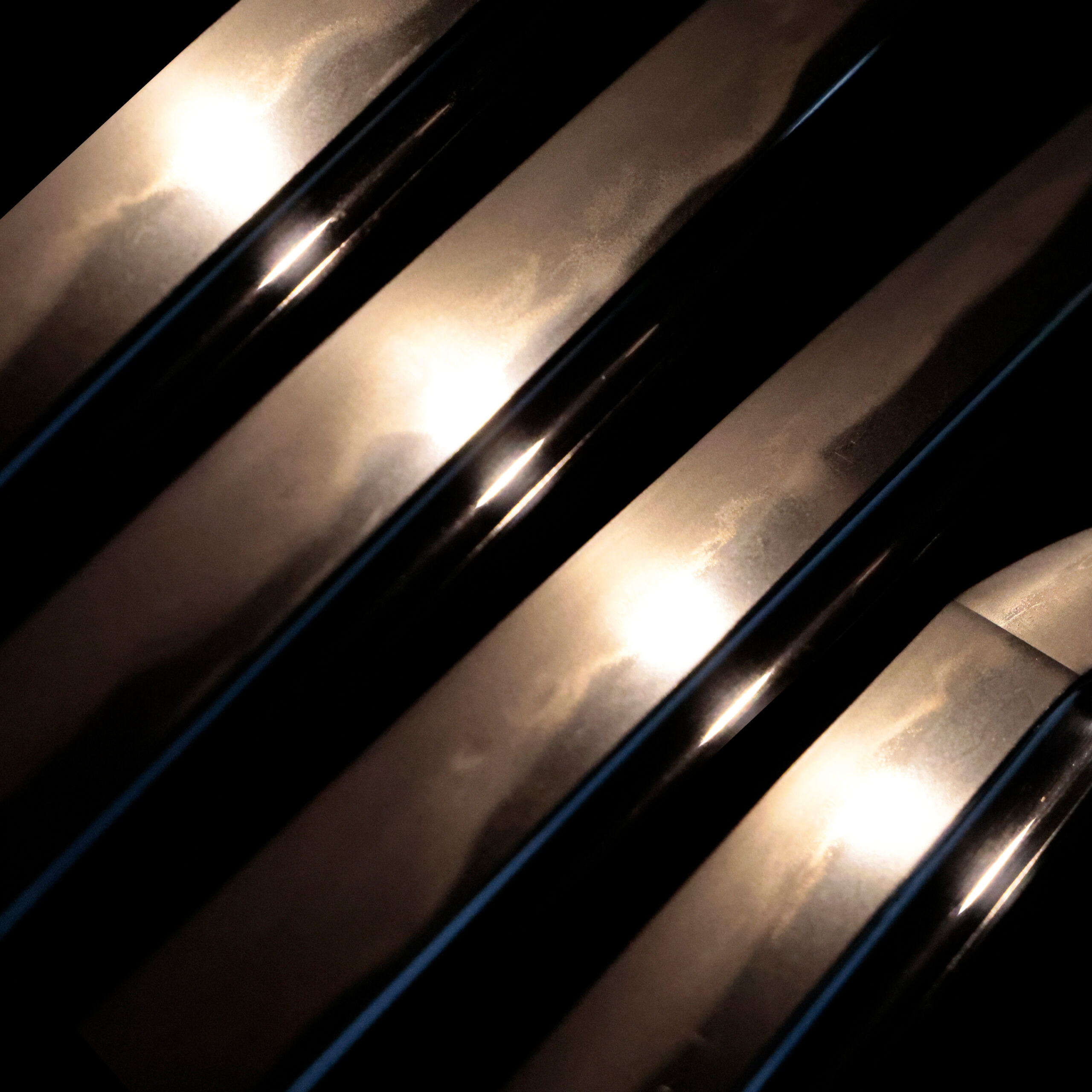
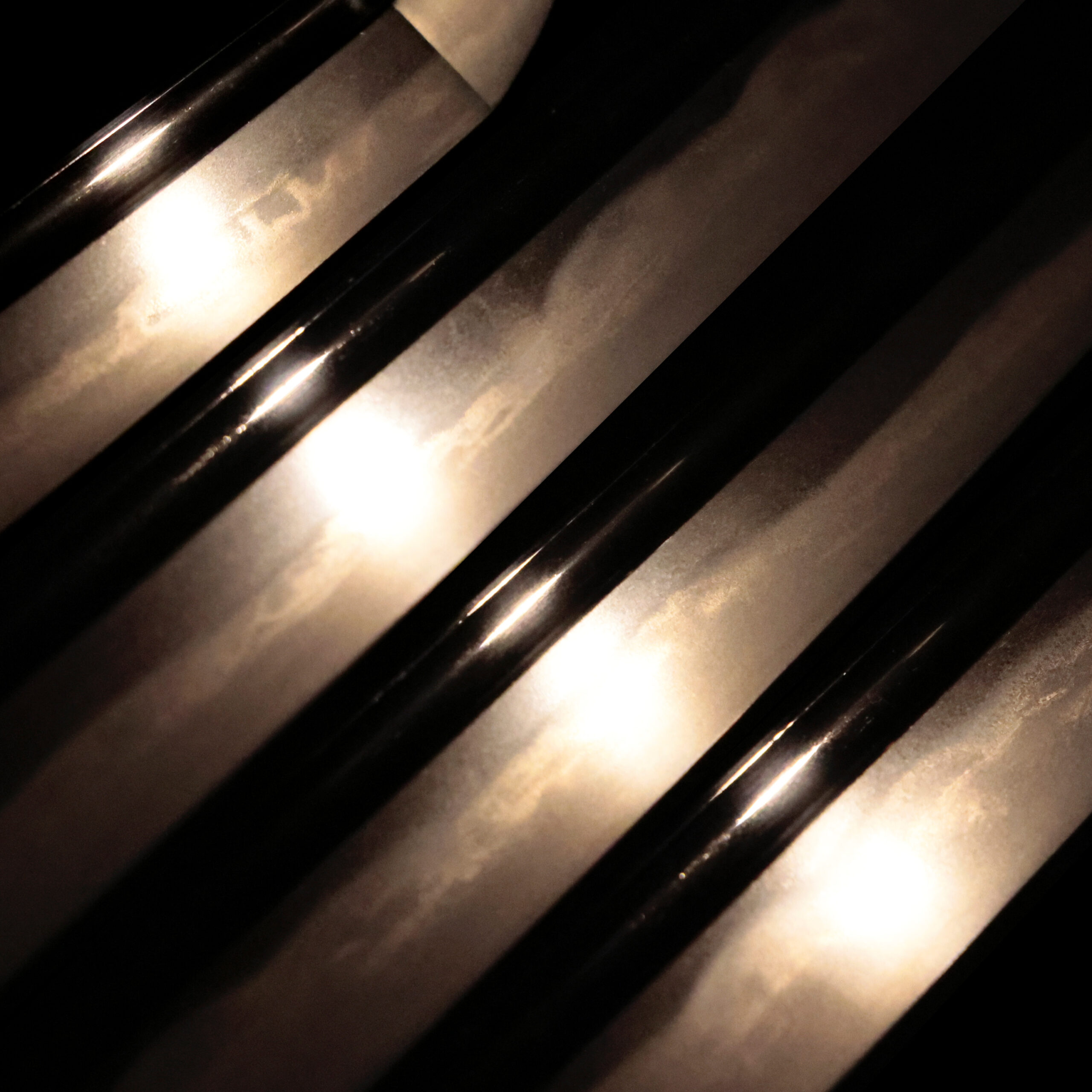
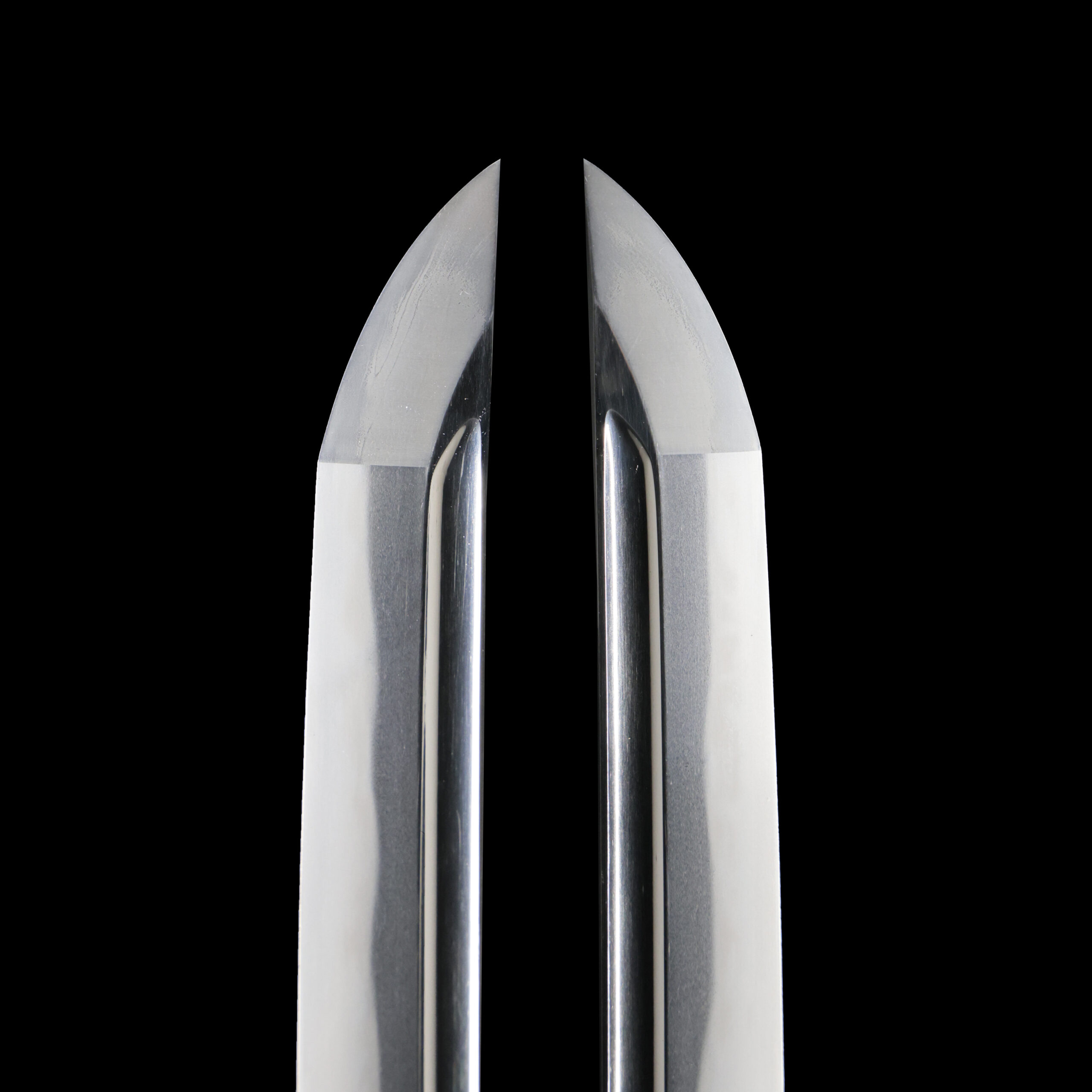
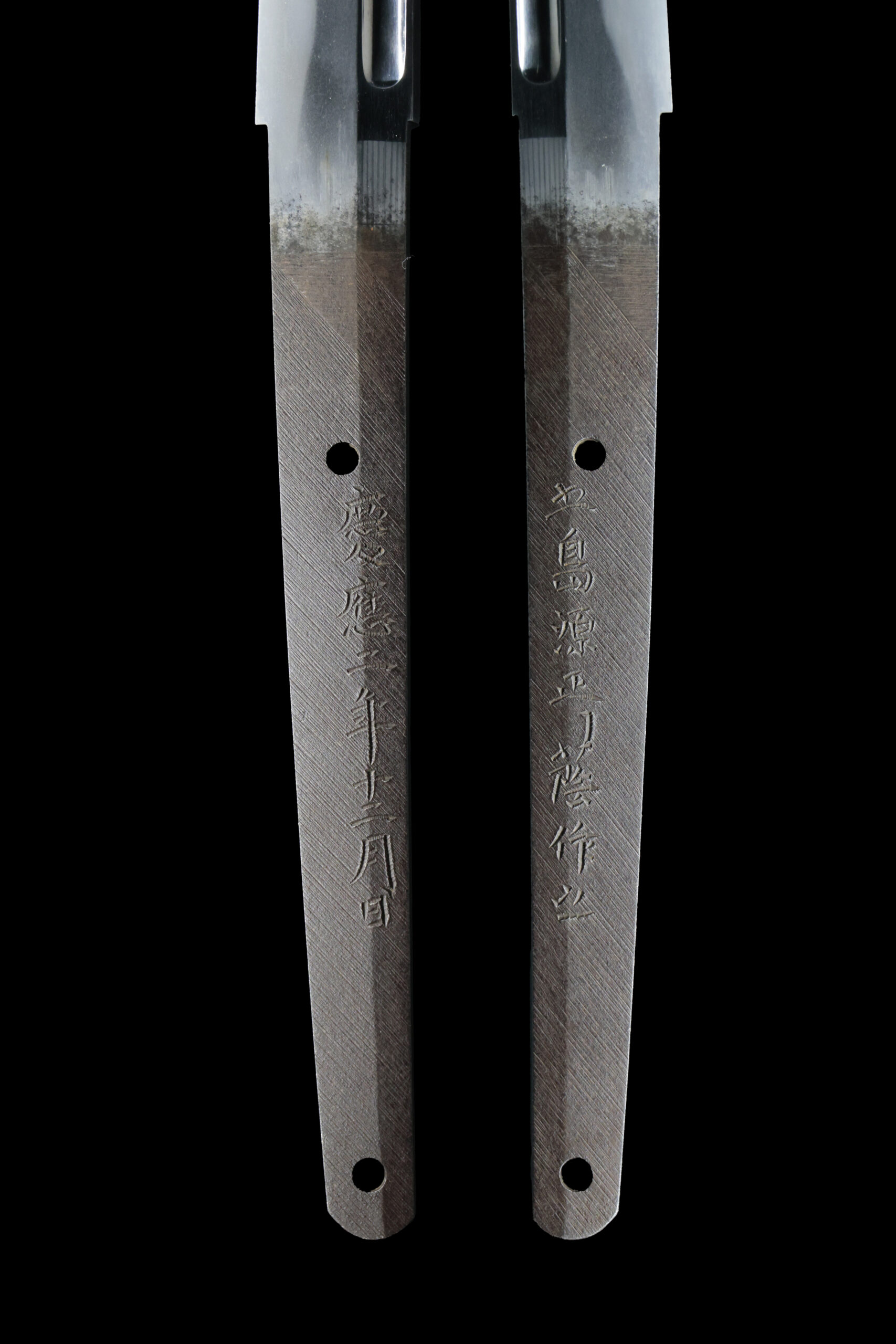
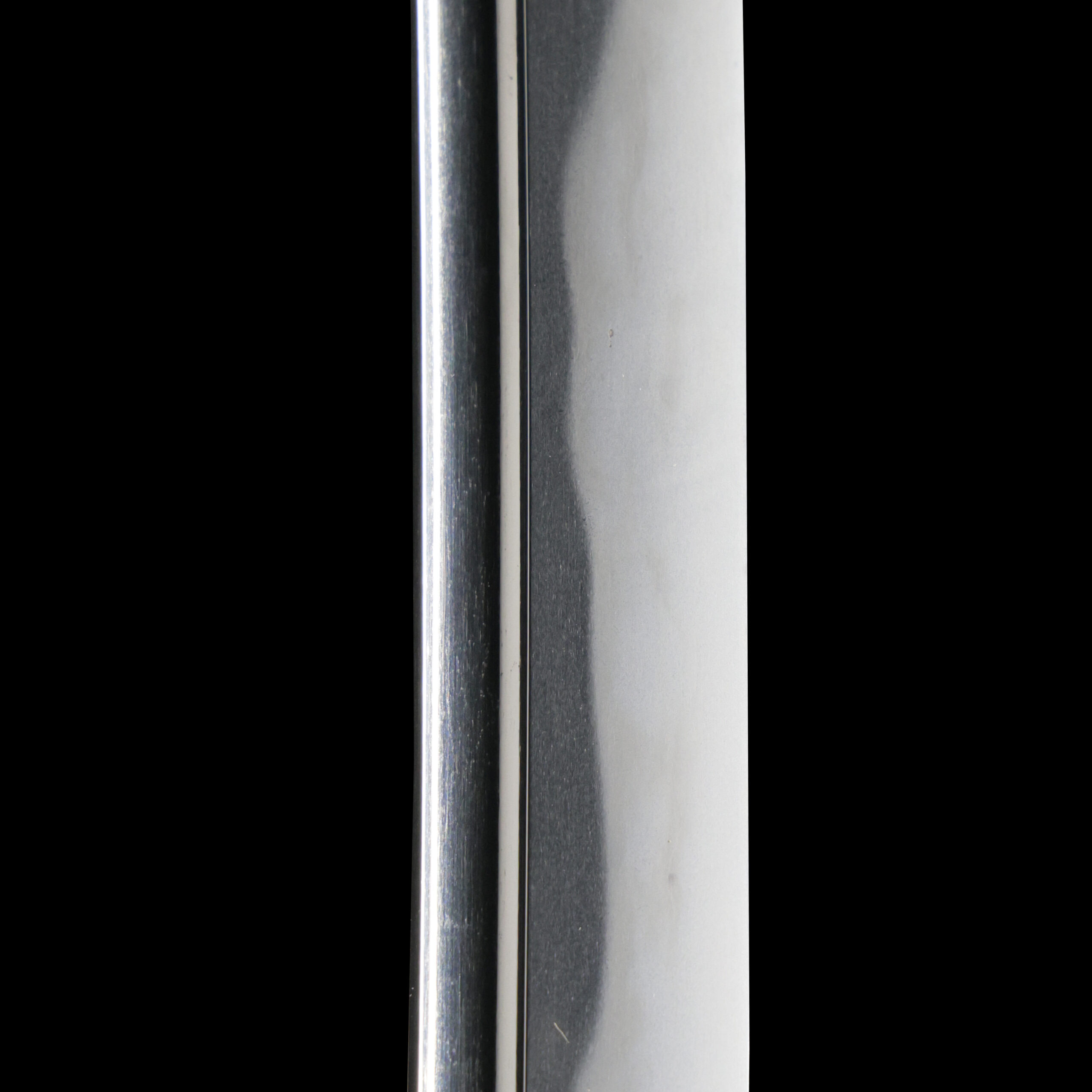
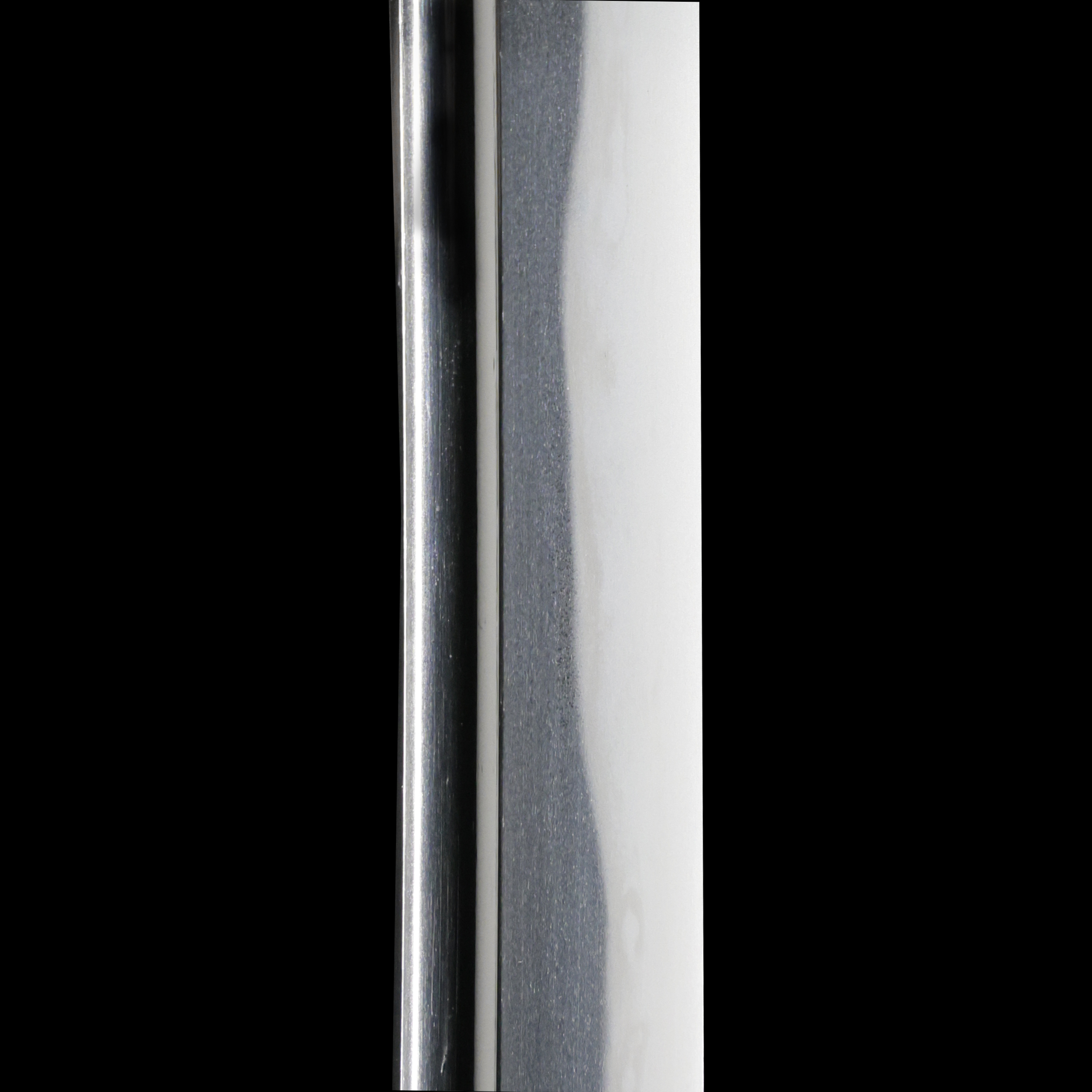
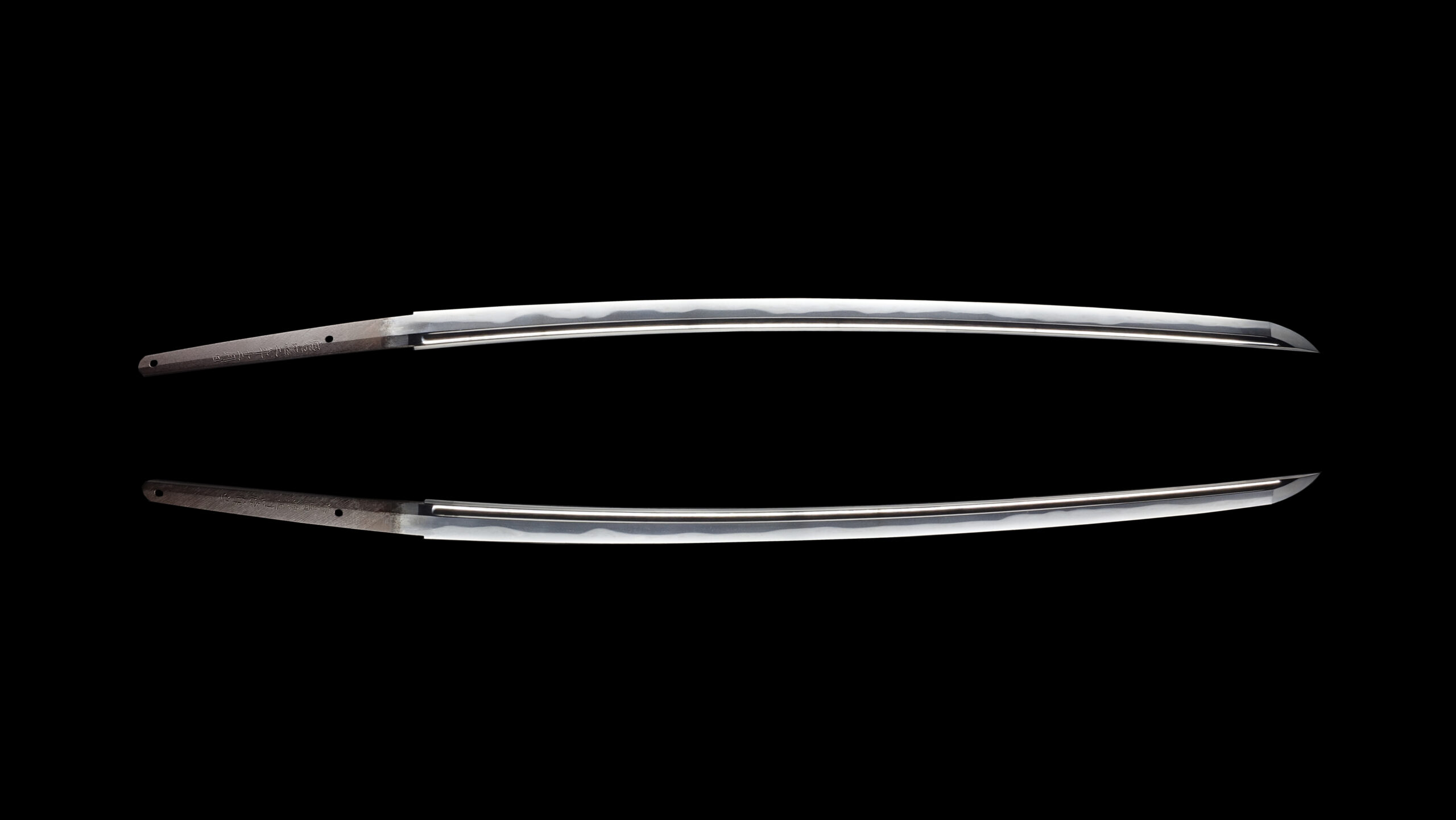
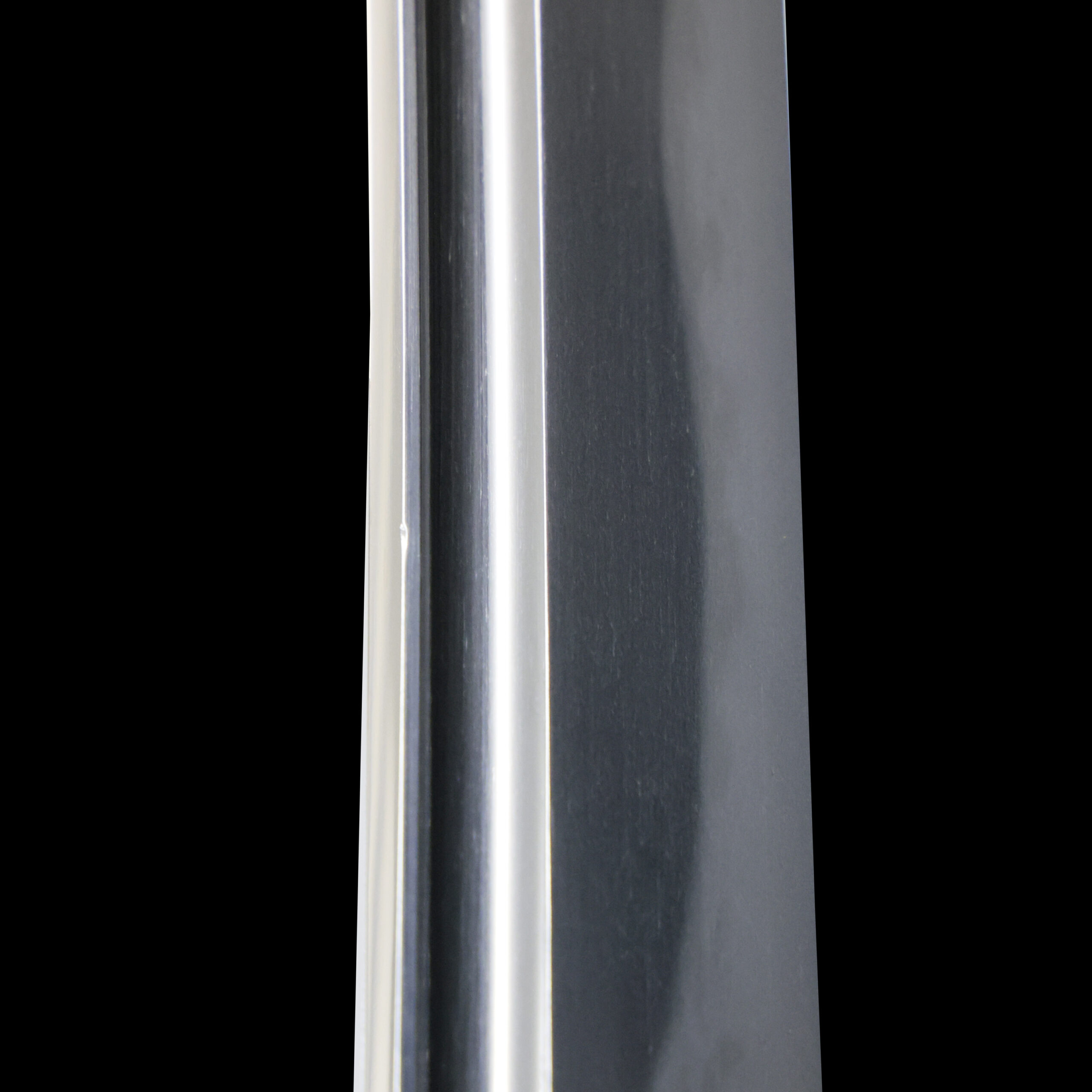
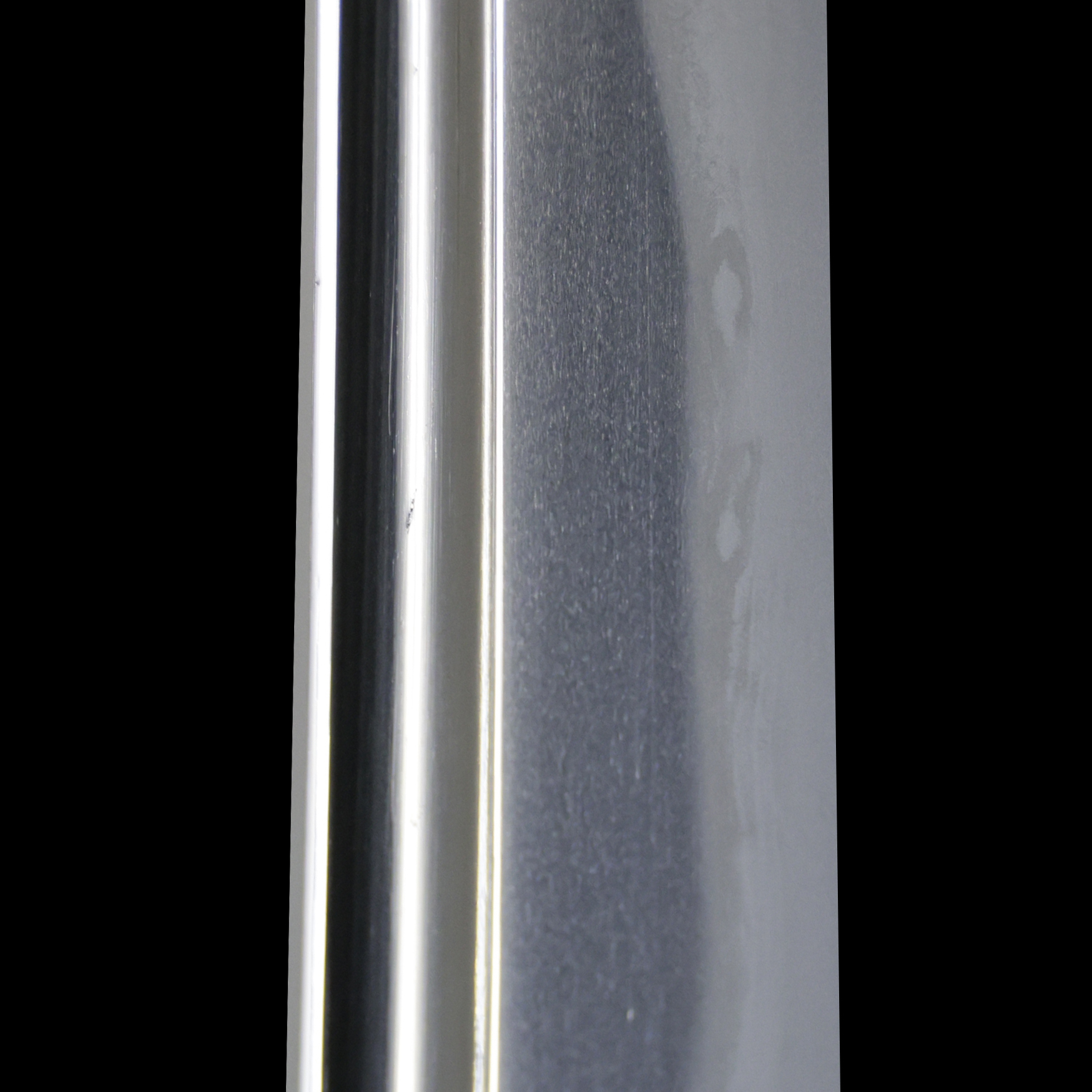
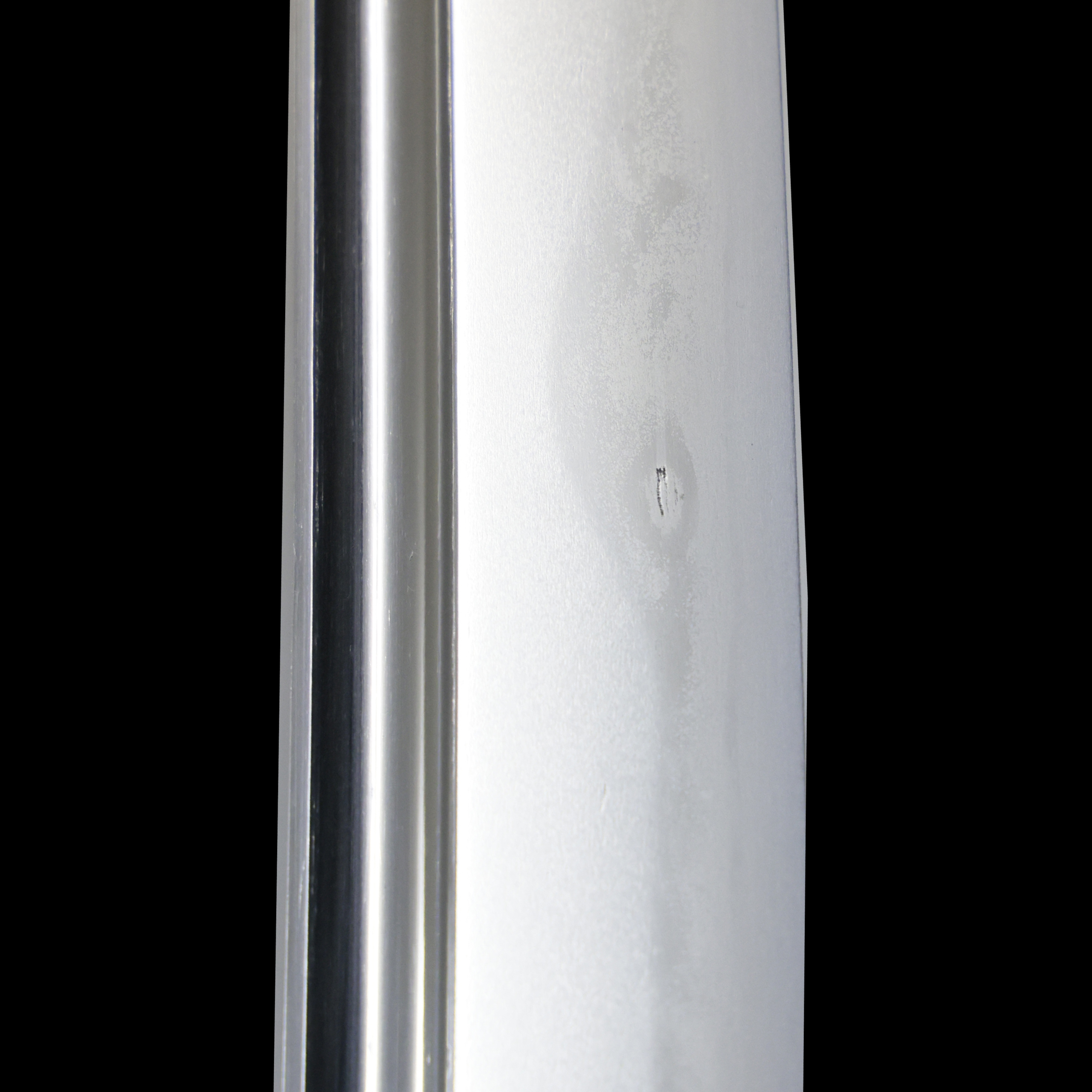
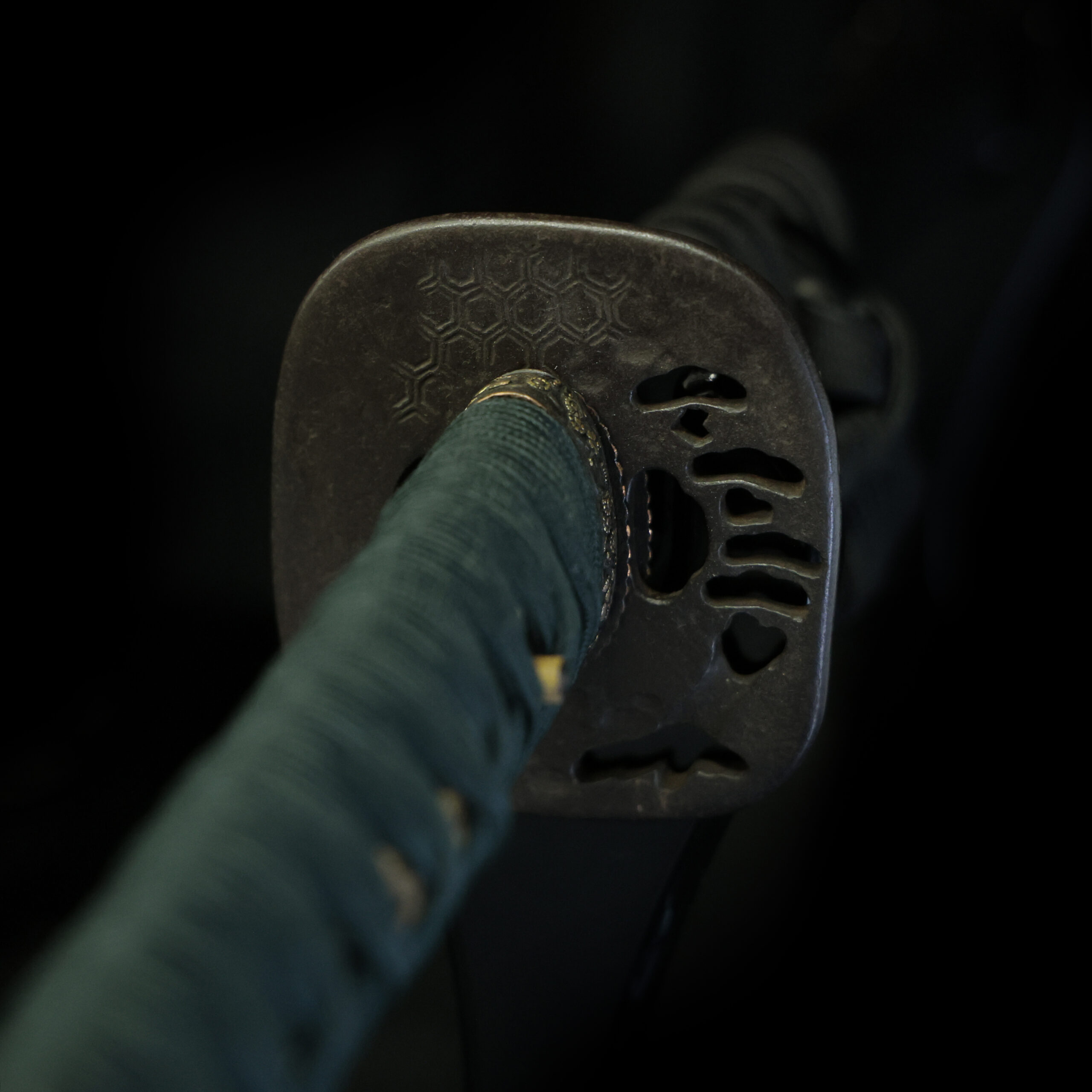
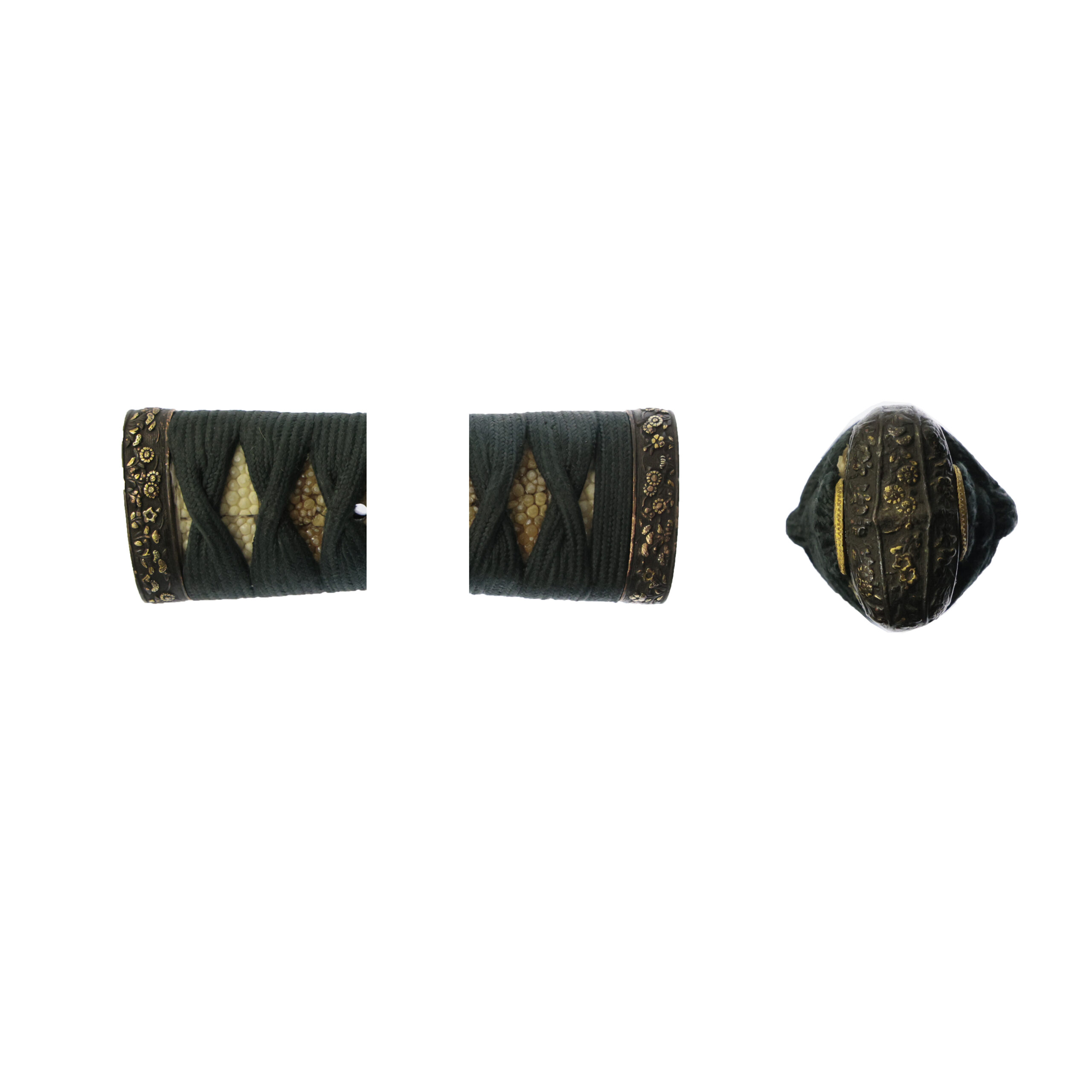
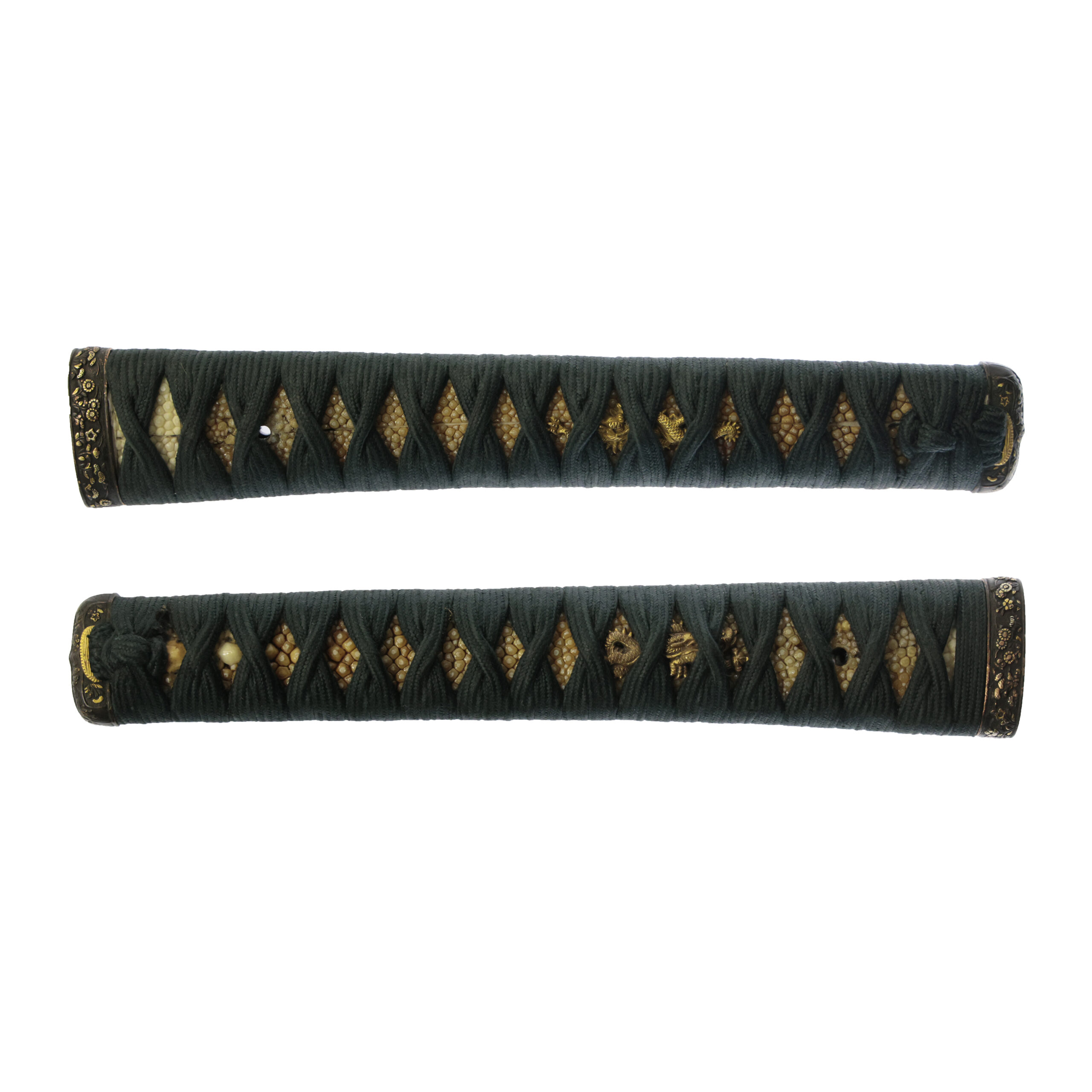
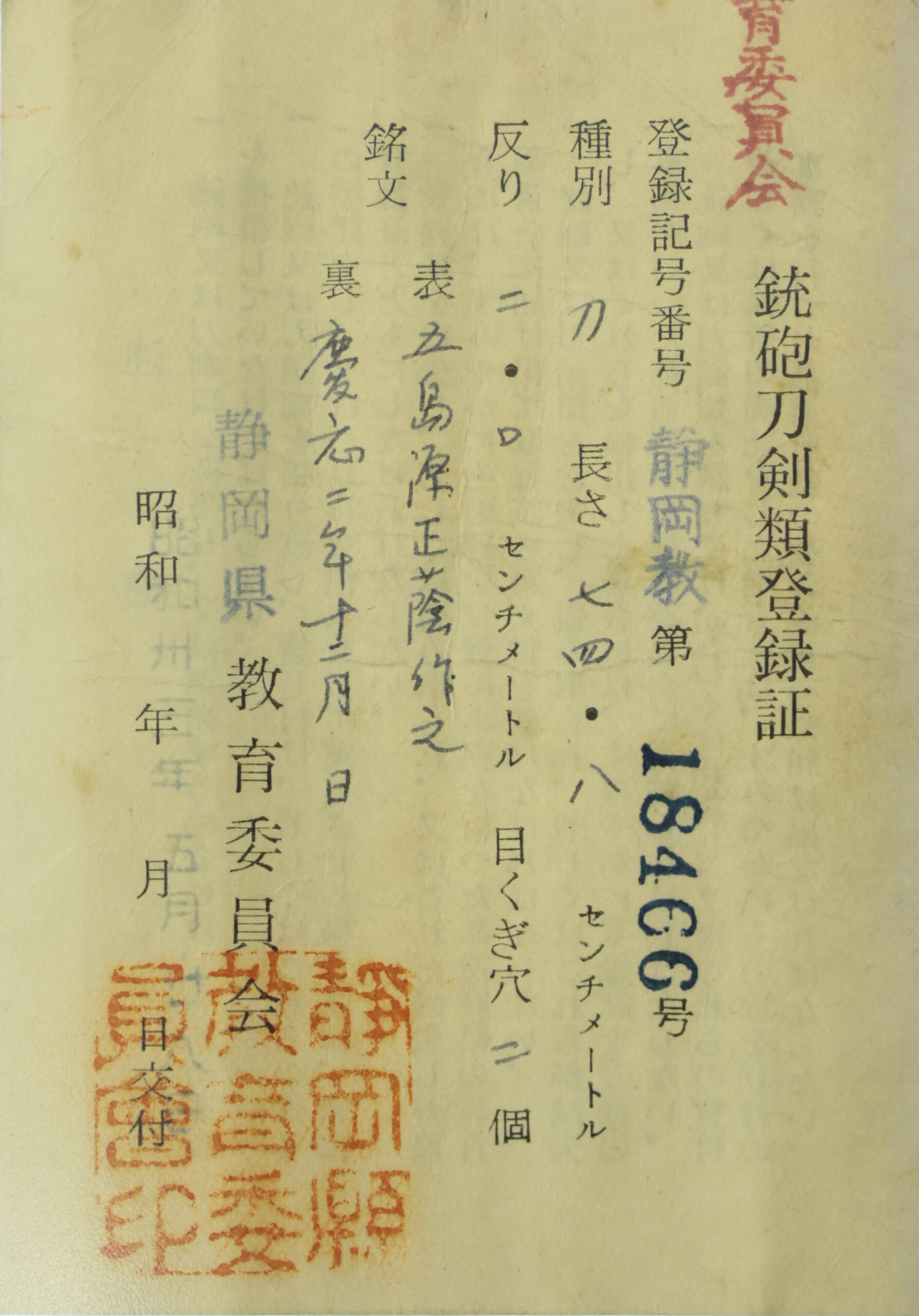
This blade was forged in December 1866 (the 2nd year of the Keio era) by Gotou Minamoto no Masakage (五島源正陰). Masakage was a disciple of Masao Minamoto (also known as Suzuki Masao), a distinguished student of the famous late Edo master Minamoto Kiyomaro, making Masakage effectively Kiyomaro’s grand-disciple. Born as Gotou Koisuke in Etchū Province (today’s Toyama Prefecture), he first studied under Masao in Edo and later refined his skills under Suishinshi Masatsugu. He eventually established his forge in Takada Castle town (Echigo Province), producing blades that met the high demand during the turbulent Bakumatsu era. Masakage is categorized as a swordsmith of the Kiyomaro school; however, with the Meiji government’s prohibition of swords, he had no choice but to abandon his career as a swordsmith. His signatures include “Minamoto no Masakage,” “Masakage,” “Gyokushinsai Masakage Saku,” and “Gotou Minamoto Masakage.” Inheriting the brilliant style of the Kiyomaro lineage, Masakage’s swords are regarded as fine works with great potential value for future generations. Minamoto Kiyomaro — The “Yotsuya Masamune” Minamoto Kiyomaro (源清麿, 1813–1855) is remembered as one of the most outstanding swordsmiths of the late Edo period, often regarded as the greatest master of the Bakumatsu era. He was born into a gōshi (郷士, farmer-samurai) family in Akaiwa village, Komoro domain (present-day Tōmi City, Nagano Prefecture). His real name was Yamaura Kurōsuke Tamaki. Kiyomaro first studied under his elder brother, Yamaura Saneo, before moving to Edo, where he entered the dojo of Kubota Sugane, a martial arts instructor. Kubota soon recognized his true talent in swordsmithing and encouraged him to dedicate himself fully to the craft. Kiyomaro studied ancient masterpieces directly, borrowing swords from retainers, and strove to recreate practical, battle-ready blades. He strongly embraced the Revivalist Sword Theory (刀剣復古論, Token Fukko Ron), introduced by Suishinshi Masahide in 1826. This movement called for a return to the robust and practical forms of Kamakura-period blades, in contrast to the straighter and less powerful styles of his own day. The influence of this theory was so profound that Japanese swords are now historically divided into “Shintō” (New Swords, pre-Masahide) and “Shinshintō” (New New Swords, post-Masahide). Together with Suishinshi Masahide and his disciple Taikei Naotane, Kiyomaro came to be celebrated as one of the “Three Great Edo Masters (Edo Sansaku).” He later established his forge in Yotsuya, Edo, where he developed a distinctive style that fused elements of the Sōshū-den and Bizen-den traditions. His blades, with their brilliant nie activity and bold, majestic form, were considered so remarkable that he was hailed as the “reincarnation of Masamune,” earning him the enduring nickname “Yotsuya Masamune.” Tragically, Kiyomaro’s life ended in suicide at the age of 42, following a decline brought on by heavy drinking. Despite his short life, his dramatic story and extraordinary craftsmanship cemented his place in history. Today, Kiyomaro’s swords remain among the most highly prized works on the market, admired as masterpieces that embody both the artistry and the spirit of the Bakumatsu era. Suishinshi Masahide Suishinshi Masahide (水心子正秀, 1750–1825) played an essential role in reshaping the sword-making world of the late Edo period. During his time, mainstream Japanese swords had become straighter and less robust compared to the masterpieces of the Kamakura era. By studying ancient swords, Masahide felt that something was lacking in contemporary blades. He therefore announced the Token Fukko Ron (Revivalist Sword Theory), declaring that swordsmiths should return to the old ways of forging. This theory deeply resonated with sword makers of the time and eventually became the mainstream of sword-forging. Masahide also wrote about ten books on swordsmithing and passionately trained many apprentices. Among his most famous students were Chounsai Tsunatoshi and Taikei Naotane, both of whom became renowned masters in their own right. His profound influence made him a central figure of the late Edo revival movement. He is counted as one of the Edo Sansaku (Three Great Edo Masters), together with Taikei Naotane and Minamoto Kiyomaro. In his biography, Masahide stated that he had forged 369 swords during his career. However, only about 100 of them have been identified in Japan today, most of which are wakizashi. It is extremely rare to find a katana signed by him, making such works highly valuable and historically significant. About late Edo period The Bakumatsu period (幕末) was the final part of Japan’s Edo period, lasting from around 1853 to 1868. It began when American ships led by Commodore Perry arrived in Japan and encouraged the country to open its ports to international trade. This moment was a turning point in Japanese history. Many people in Japan were surprised by Western technology and started thinking about how the country should respond to the changing world. At the time, there were strong debates between those who supported the traditional Tokugawa shogunate and others who believed Japan needed to modernize and return political power to the Emperor. These disagreements eventually led to conflict and the end of samurai-led government. Samurai were important figures during the Bakumatsu period. Their swords, known as Katana, were not just weapons but also powerful symbols of their values and way of life. However, as Japan began to build a modern army and adopt new weapons, swords became less common in battle. It is appraised as a Tokubetsu Hozon Token (特別保存刀剣) issued by NBTHK (Nihon Bijutsu Touken Hozon Kyokai:日本美術刀剣保存協会). *Please keep in mind that there is a couple of Kitae Kizu on the Mune. Fuchi-Kashira The motif of this Fuchi-Kashira appears to represent the “Seven Flowers of Autumn” (秋の七草, Aki no Nanakusa), delicately expressed in fine gold inlay. In Japanese culture, the Seven Flowers of Autumn are deeply associated with classical literature and poetry, especially the Manyoshu (the oldest anthology of Japanese poems). They were admired not for eating but for their beauty and for the way they symbolize the seasonal transition from summer to autumn. By adorning sword fittings with such motifs, samurai not only enjoyed their refined aesthetic but also carried with them symbolic wishes for resilience, purity of spirit, and dignity in life. The tradition of admiring the Seven Flowers of Autumn was a form of seasonal appreciation. In ancient Japan, people would stroll through flower fields and compose poems (waka and haiku) inspired by their beauty. The origin of this custom is attributed to two poems by the Nara-period poet Yamanoue no Okura (660–733), which are preserved in the Manyoshu. From these verses, the appreciation of the Seven Flowers of Autumn became an enduring part of Japanese seasonal culture. Tsuka and Menuki The motif of this Menuki is a dragon (龍, Ryū). The dragon was originally an imaginary creature from ancient Chinese traditions and myths. It is considered a symbolic beast of auspicious signs. Its body is described as a combination of nine animals: antlers of a deer, the head of a camel, eyes of a demon, the neck of a snake, the belly of a Mizuchi (a Japanese mythical creature resembling a horned, four-legged serpent), scales of a fish, claws of a falcon, palms of a tiger, and ears of a cow. Because of this extraordinary form, the dragon was believed to reign at the top of all creatures. In ancient China, dragon motifs were used exclusively for the emperor’s clothing, with strict rules regarding the design and even the number of claws. In Japan, however, such rigid regulations did not exist, and the dragon motif was widely used while still retaining its meaning as an all-purpose auspicious design. In addition, in Japan the dragon is also revered as a water deity, known as Ryūjin Shinkō (竜神信仰). Since rice cultivation has always depended on water, the dragon became a familiar and powerful symbol deeply connected to Japanese life and culture. Tsuba and Habaki The design of this tsuba features a hexagonal geometric pattern crafted using the technique known as sukashi-bori (透かし彫り, openwork carving). Sukashi-bori involves cutting through the surface of the metal to create open spaces, allowing a hard material like iron to be expressed in a delicate and airy form. Light and shadow interplay through the openings, producing a striking visual effect. Beyond its decorative appeal, this technique also served practical purposes, such as reducing the overall weight of the guard and distributing structural stress during use. Authentication Paper They authenticated the blade on March 10th in the 5th year of Reiwa (2023). They appraised it as Tokubetsu Hozon Touken, the blade especially worth preserving for Japanese society.

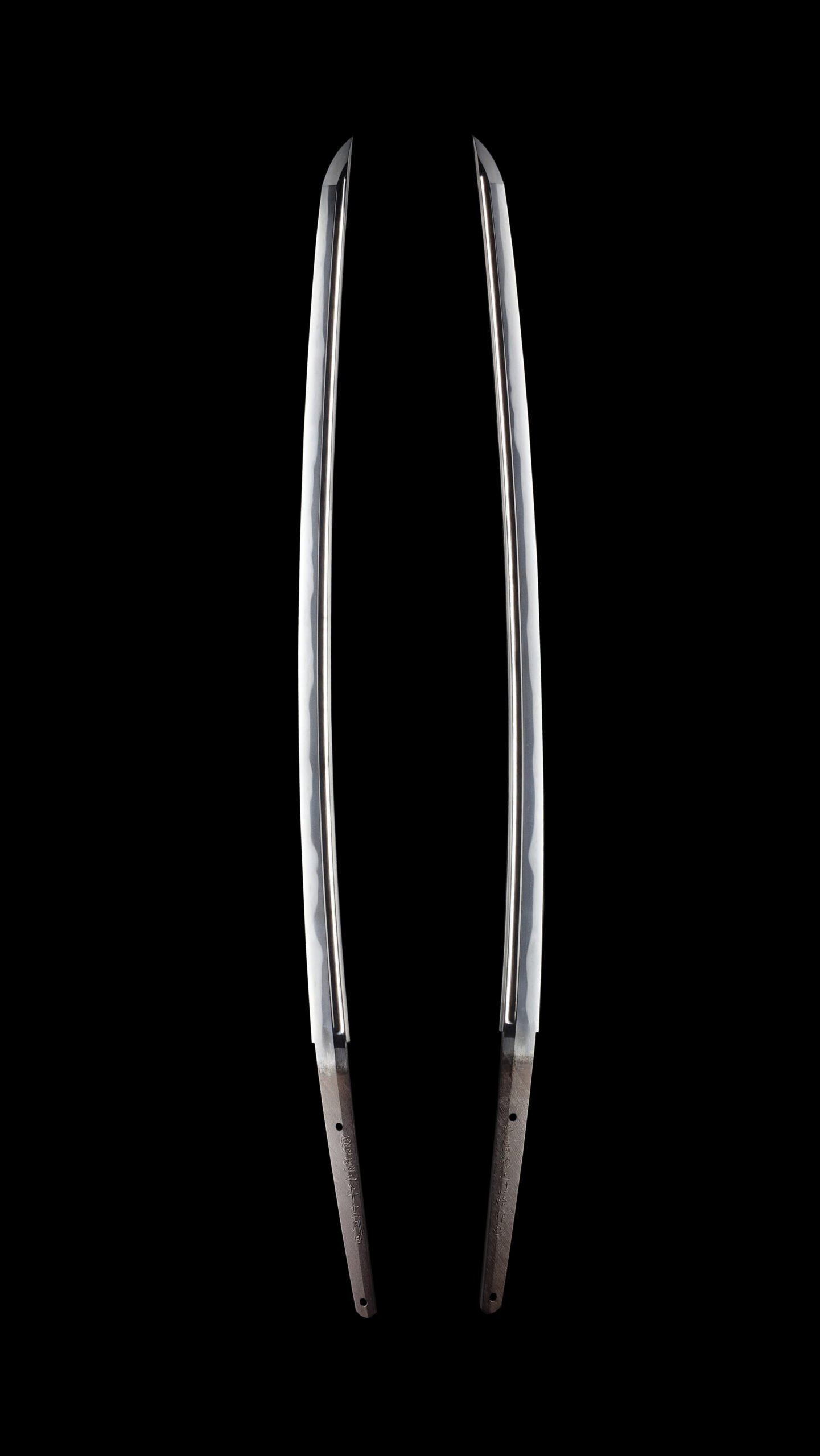
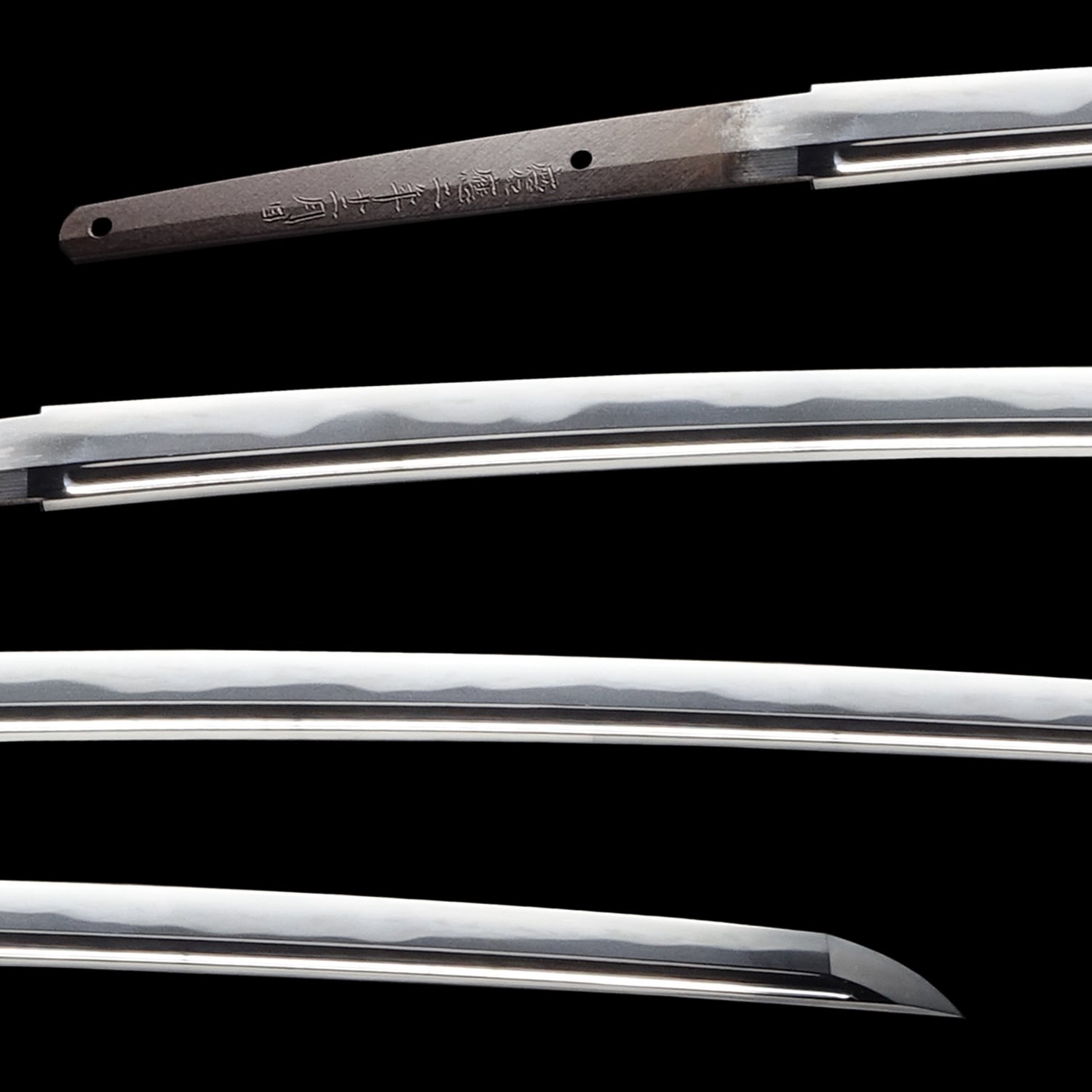
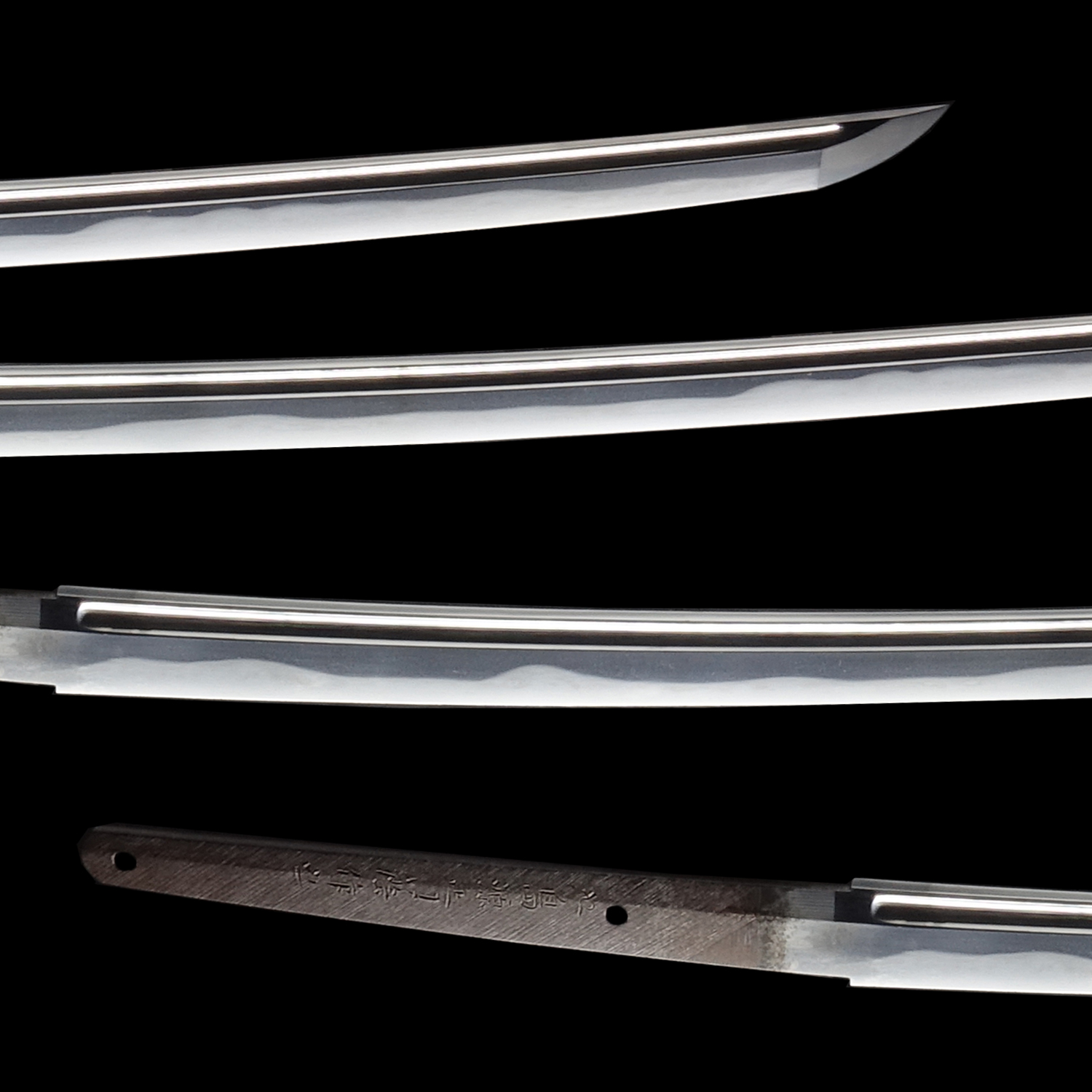
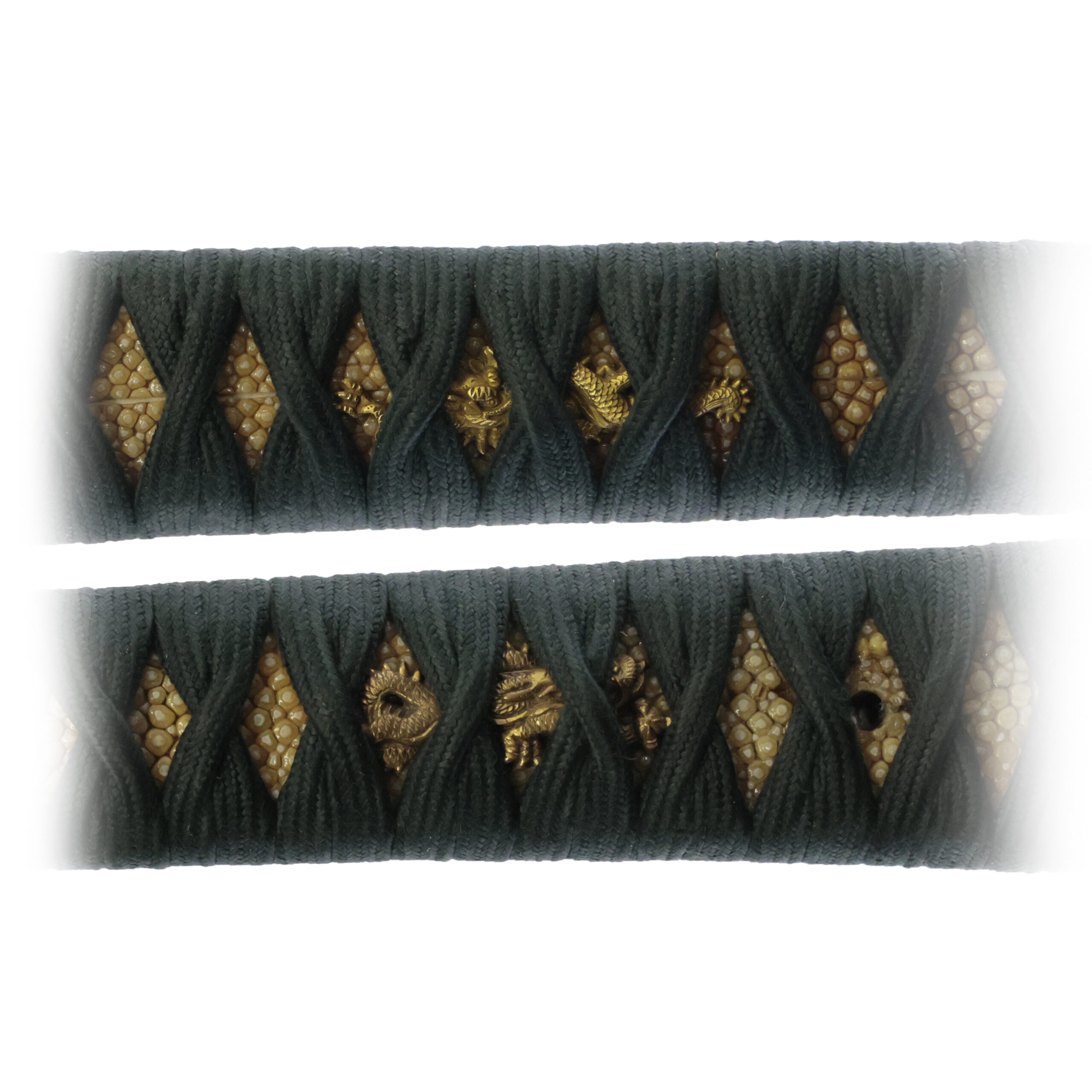
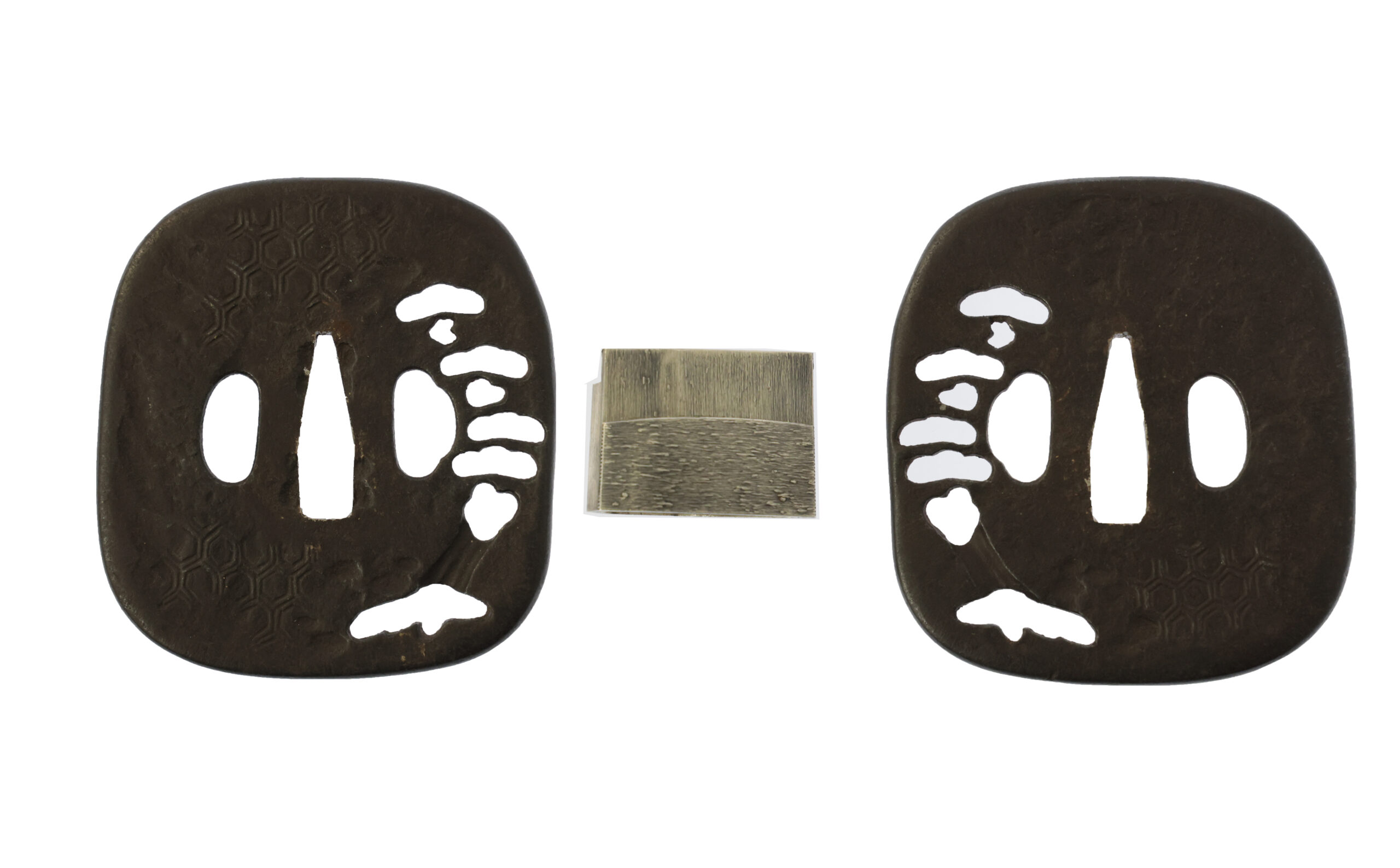
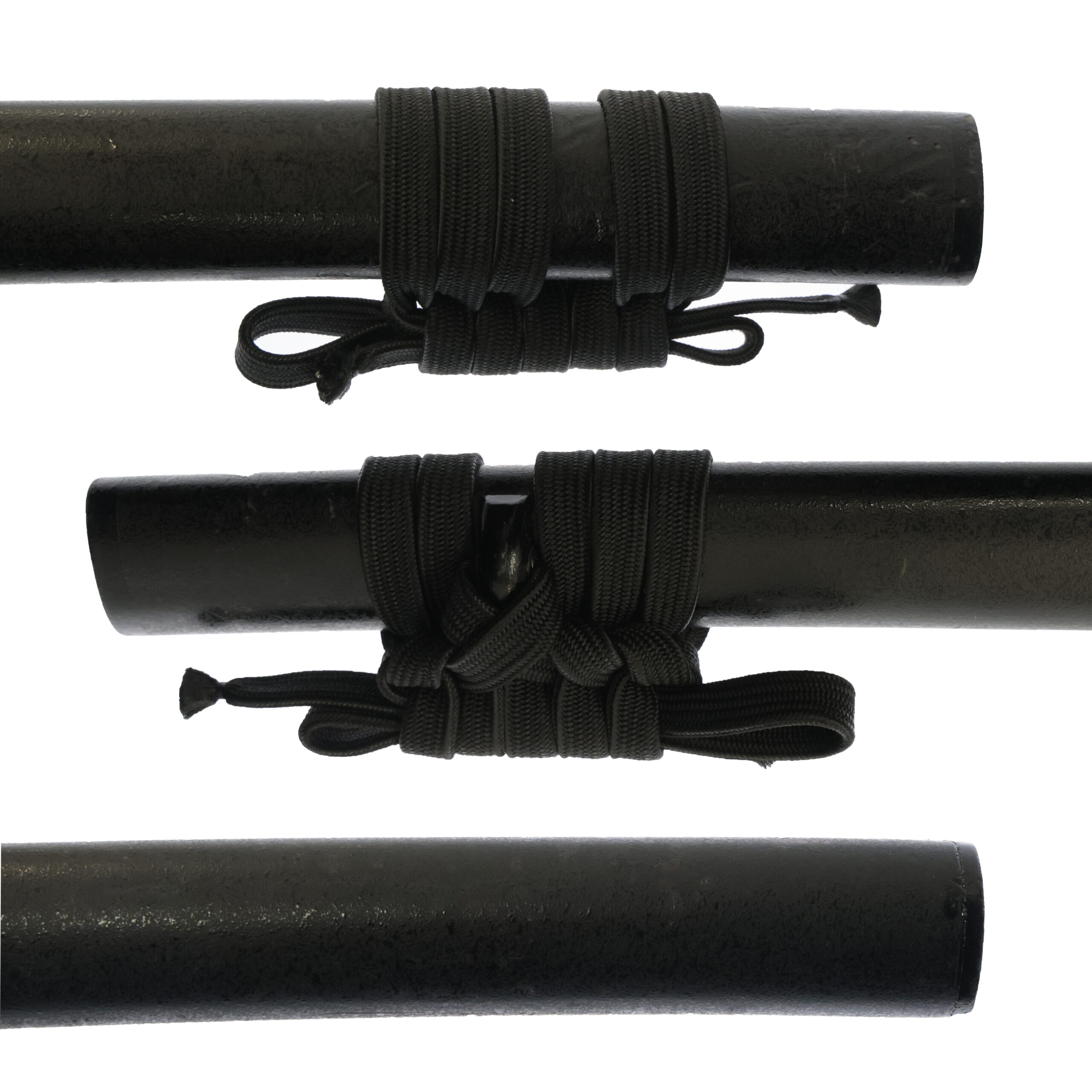
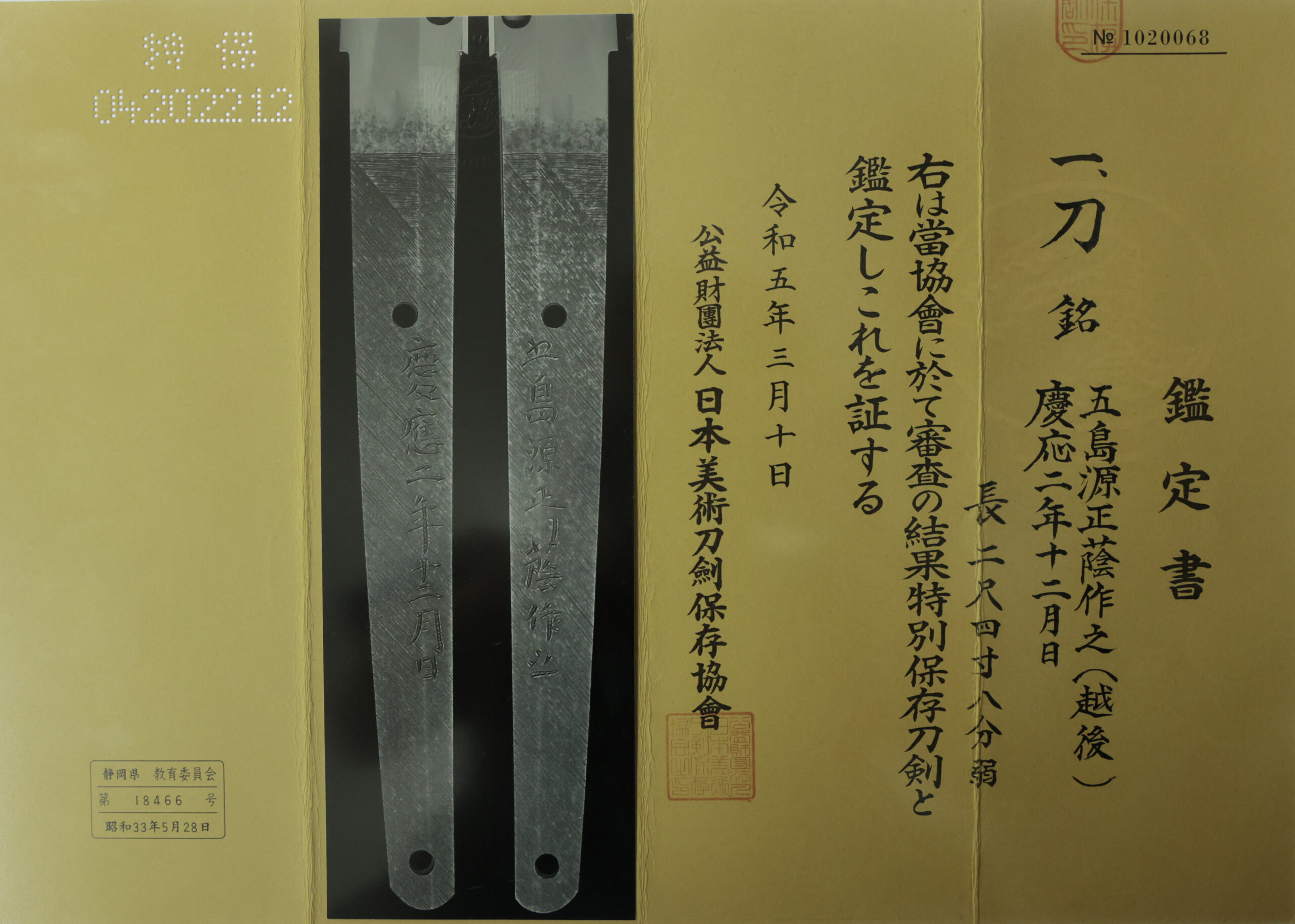
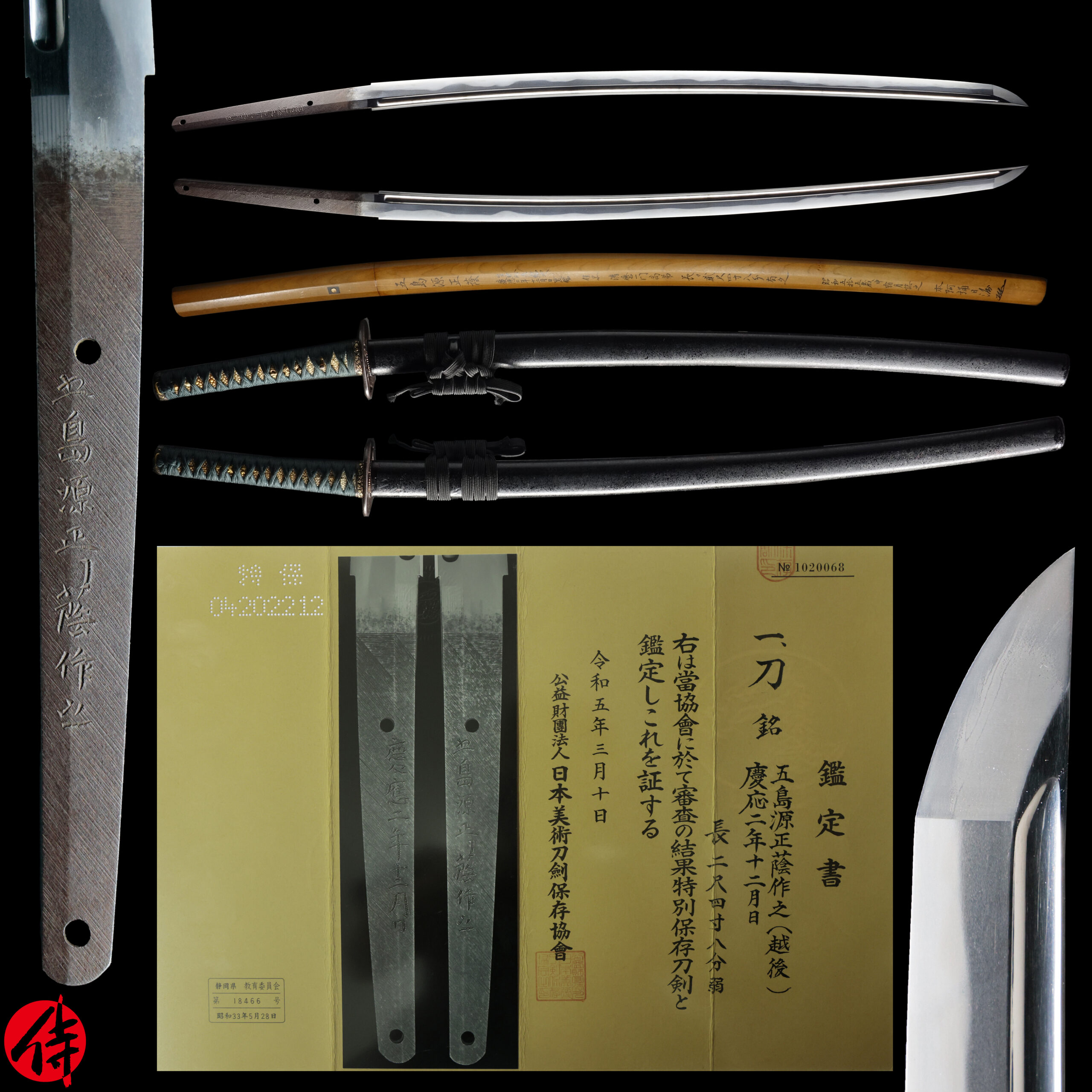
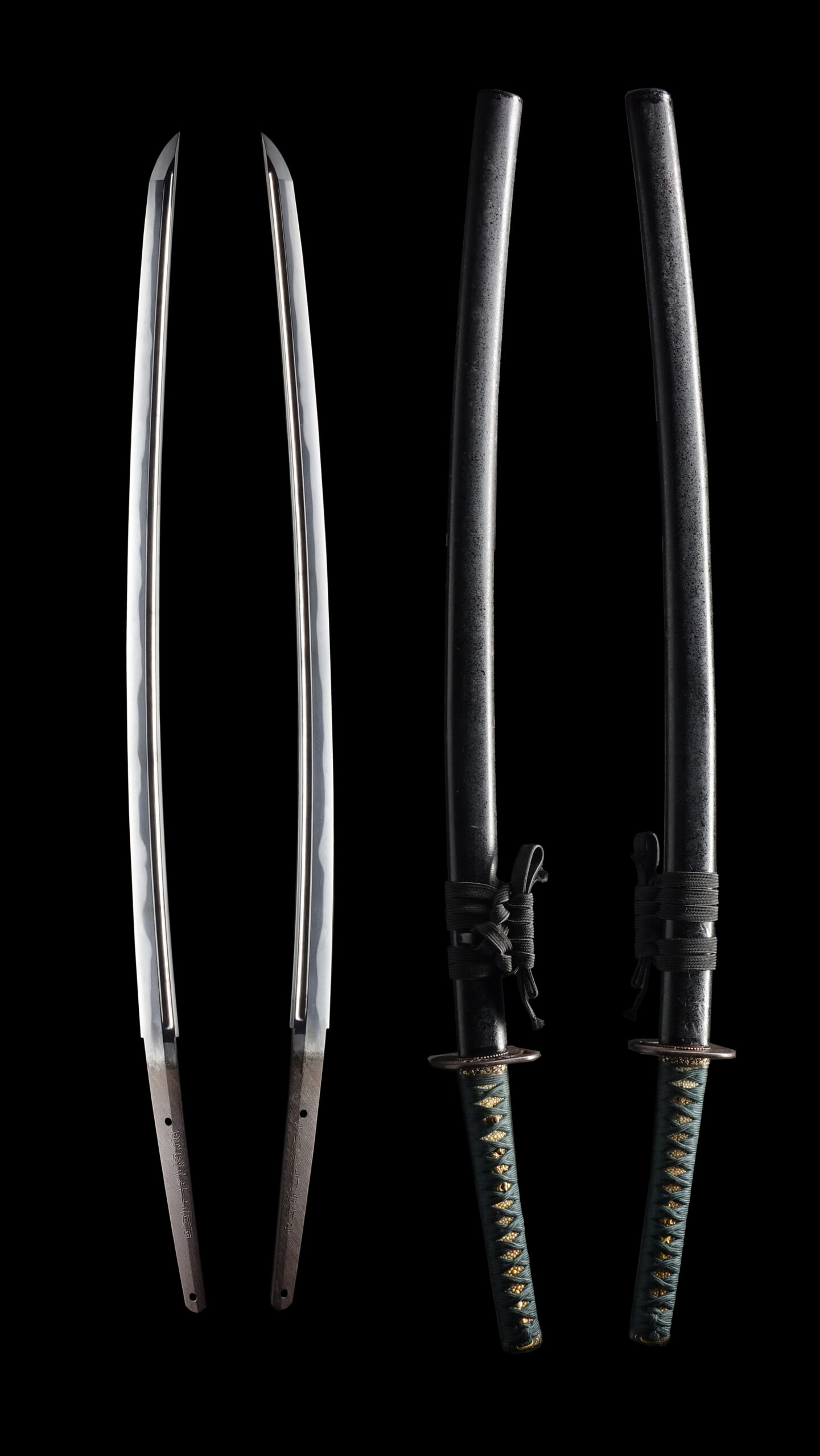
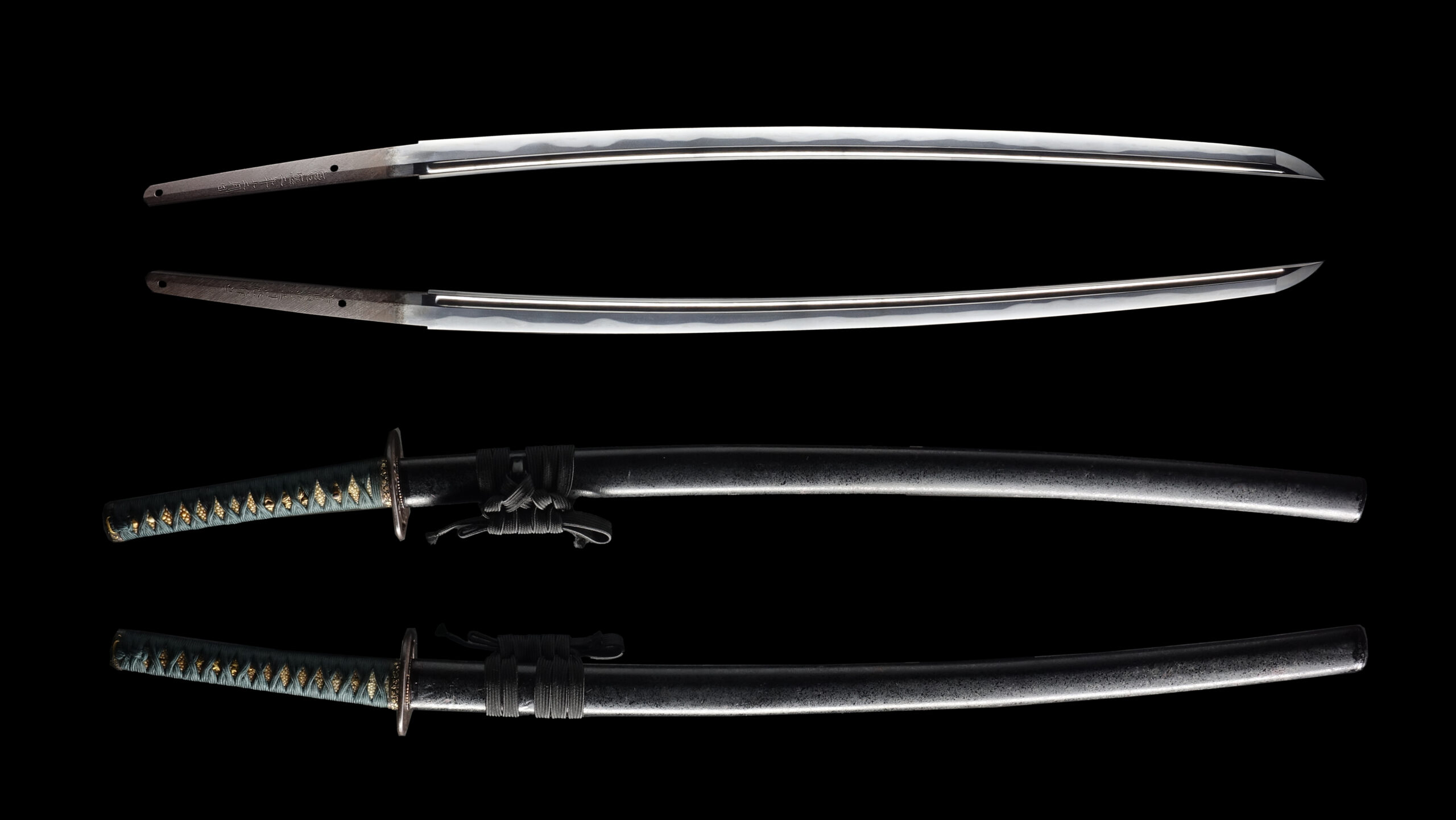
販売店の記載のまま
新々刀 · 武蔵
現在17点販売中
清麿一門は、十九世紀中頃の江戸に興った新々刀の一派で、相州伝の豪壮な復興をその核に据える。中心に立つのは山浦清麿で、文化十年信濃小諸赤岩村に郷士信風の次男として生まれ、はじめ内蔵助環と称した。上田藩工河村寿隆に鍛刀を学び、初銘を正行とし、一時師より贈られた秀寿と銘したのち同年のうちに正行へ復している。天保六年、兵法家として名高い幕臣窪田清音の後援を得て江戸に出で、天保十三年から一年を長州萩で送り、弘化二年に再び江戸へ戻って、翌三年秋に四谷伊賀町に住して銘を清麿と改めた。相州伝を得意とすること甚だしく、世に四谷正宗と称せられた。その糾合した門には、信濃以来の同じ道を歩んだ兄真雄、越後三条より鏡師を廃して入門した栗原信秀、羽州庄内より出府して師の刀債を後に完済した斎藤清人らが連なり、嘉永七年の清麿自刃の後も、その相州復古の手は幕末から明治初年へと伝えられた。 一門を貫く語法は、五百年を遡って相州に通う沸本位の作風にある。やや肌立つ流れごころの板目をよくつめ、地沸を微塵に厚く敷き、地景頻りに入って鉄が冴え、映りはない。その上に互の目乱れに小のたれを交え、沸厚く処々荒めに叢立ち、長い金筋と盛んな砂流しが頻りにかかる覇気ある刃を焼く。帽子は乱れ込み、尖りごころに掃きかけて返る。この共通の地刃の内に、各工の手が分かれる。清麿は志津三郎兼氏を仰いだ志津伝を得意中の得意とし、その地沸・地景の厚さと荒沸の富みにおいて一門を圧して、菖蒲造・冠落造の脇指や短刀に華やかな乱れを見せる。信秀はその志津の調子に最もよく迫った手で、説明書はその技を一門中最も師に迫るものとし、互の目に尖り刃・角互の目を交えて砂流し・金筋を頻りにかけるが、覇気と迫力は師に遠く及ばないとも率直に記す。彼ひとりの見どころは鏡師の修業に発する彫物で、草の倶利迦羅・珠追竜・竜乗り観音など多彩な図柄を刻み、一派中で彫物を伴うのは彼の刀のみである。真雄は寿隆風の丁子に始まって相州伝に転じた弟と同じ展開を辿るが、説明書は地景・砂流し・金筋がやや少なく出来が清麿に及ばないとし、なお優作では地沸厚く強い鍛えを称える。清人は頭の丸い互の目を主調に長い足と豊かな沸を保って師風を忠実に継ぐ一方、清麿には見られぬ大和伝の直刃を独り保ち、よくつんだ小板目に微塵の地沸を敷いて地刃の冴えた直刃を焼く。 鑑定の勘所は、まずこの相州への遡りにある。同時代の新々刀工が備前の丁子や虎徹の詰んだ地鉄を写したのに対し、本一門は地沸・地景厚く荒沸に富み金筋・砂流し頻りなる地刃を、借りものの模様によらずその力強さと明るさによって示す。姿もまた手がかりで、身幅広く元先の幅差少なく、鎬幅狭く平肉つかず、大鋒の延びてふくらの枯れた豪壮な体配が一門独特のものとされる。位列にあって清麿は晩年のあらゆる刀工の中でも最も人気の高い一人で、藤代はこれを最上作とし、真雄を上作、信秀・清人をこれに次ぐ手とする。国宝・重要文化財はなく、その地位は今日の指定の級と僅かな来歴に拠る。来歴は広汎というより確かで歴史に響くもので、清麿の作は岩崎家と静嘉堂文庫、後援者窪田清音、大小を註文した松代藩士、剣客中条金之助の手を経、信秀の片切刃の脇指は将軍慶喜への献上と伝え越後三条の八幡社にも伝わり、清人の一口は亡師の遺志を託されて稜威尾羽張の神号を刻む。多くは伝えられて市場には出ず、在銘の作が世に現れるのは時折に限られるが、年紀を備えたその一口は、相州が江戸に甦った瞬間を語る証として、新々刀を集める者の前に立つ最も報いある手の一つである。 詳しく見る →
幕末 最後の需要
1853年のペリー来航は徳川の泰平をほどき、二世紀ぶりに実用刀の大量需要を生んだ。四谷正宗と呼ばれた清麿はその前夜に世を去り、宗次や行秀が最後の好況を担った。
保存刀剣のうち、出来が一層優れ、保存状態も良好と認められたものです。再刃や、室町・江戸期の多くの無銘作は対象外となり、保存刀剣より高い基準が課されます。
日本美術刀剣保存協会(日刀保)は、1948年に設立され、文化庁の監督を受ける公益財団法人で、東京・刀剣博物館に本部を置きます。専門の審査員が出品作を直接審査し、美術的・歴史的価値に応じた鑑定書を発行します。日刀保の鑑定書は、日本刀および刀装具の真正性を示す最も広く認知された基準です。
日刀保公式サイトReturns/exchanges limited to defects caused by shipping (except willful misconduct or gross negligence by the company); customers must contact within 72 hours of receiving the product.