 NihontoWatchNihontoWatch
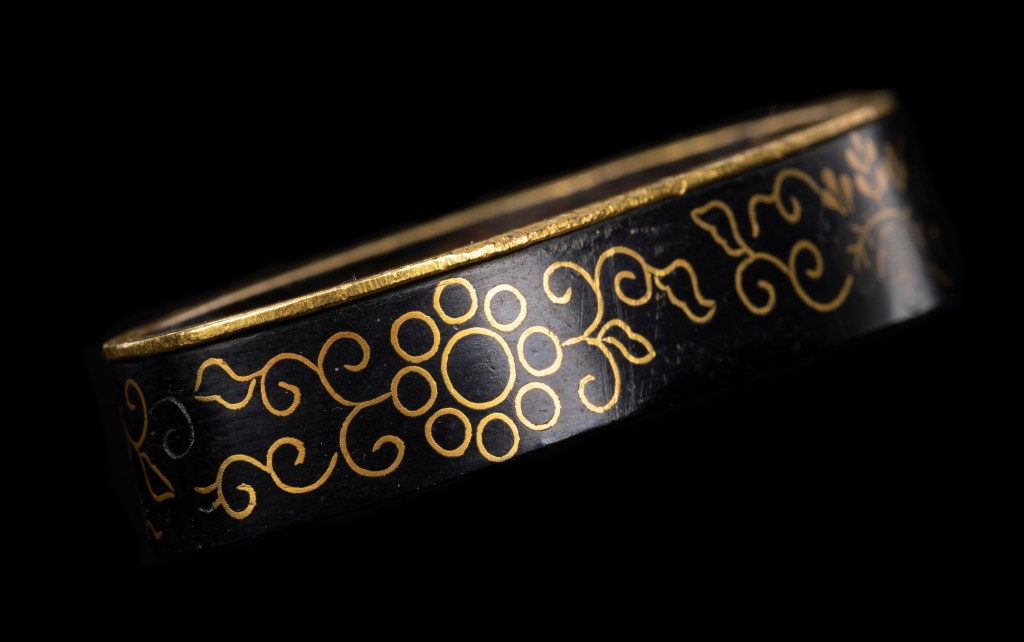
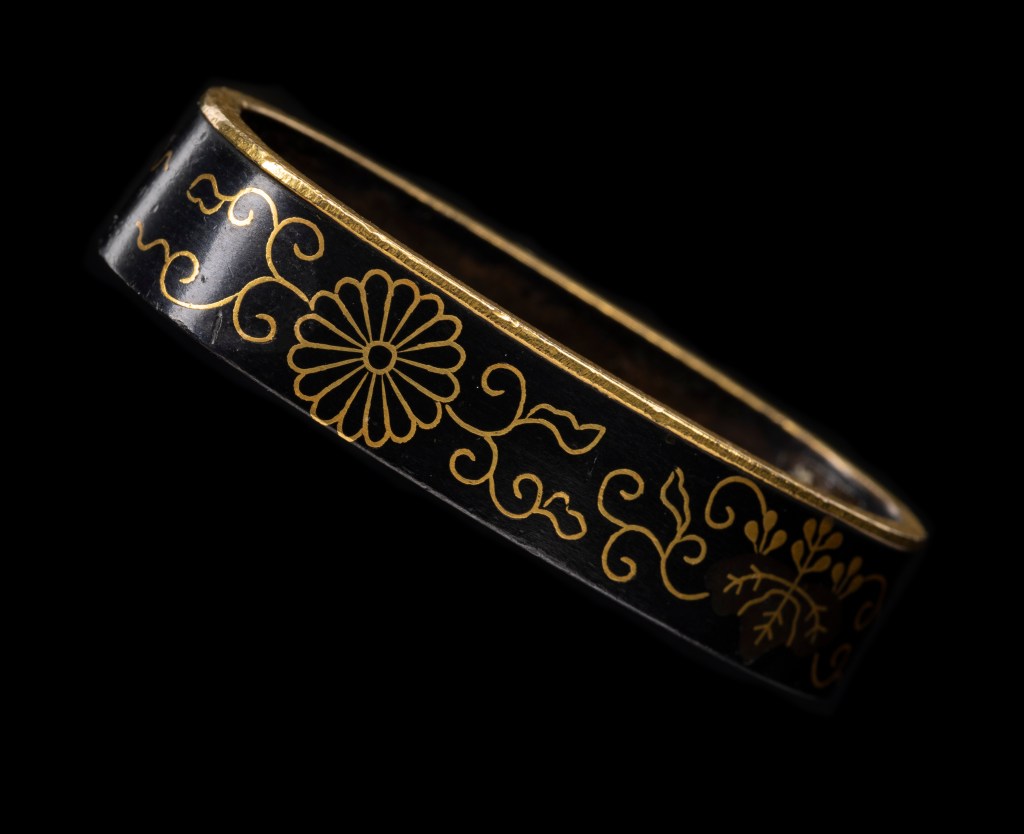
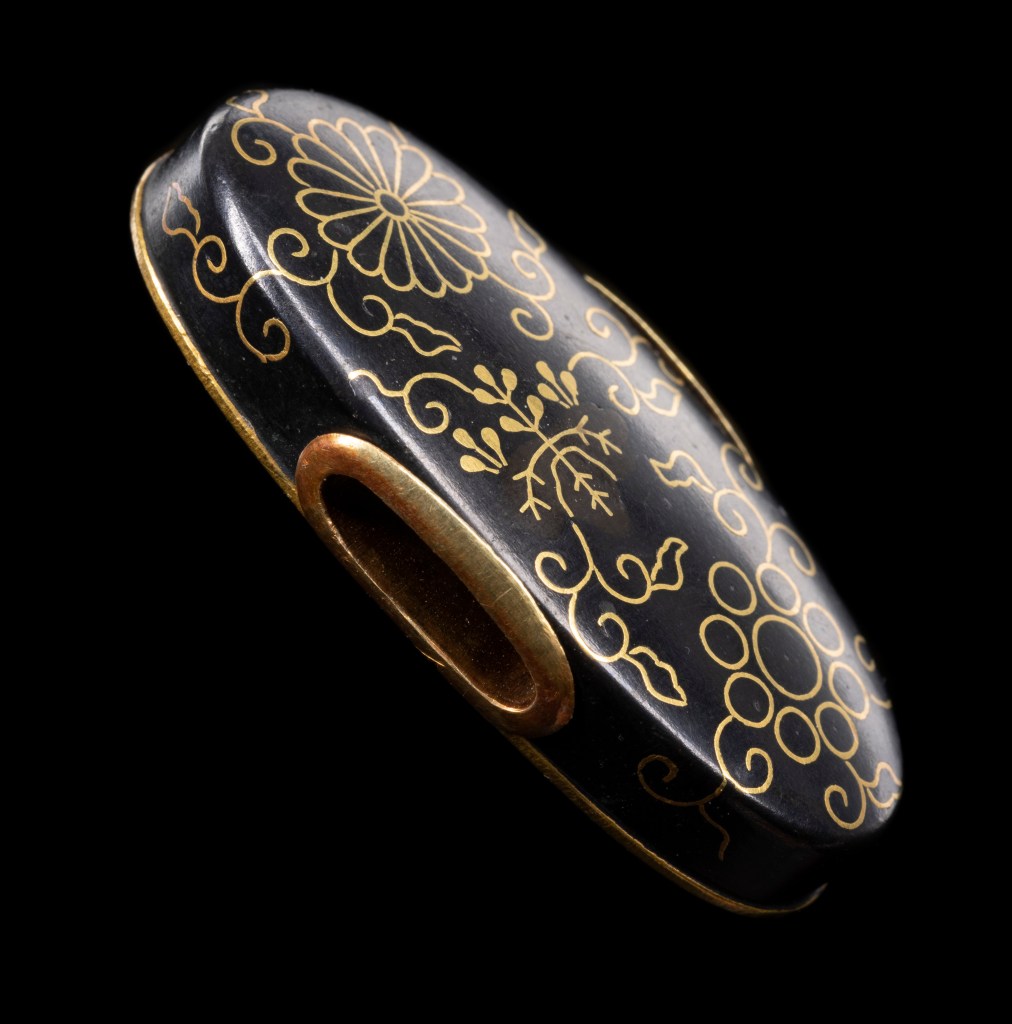
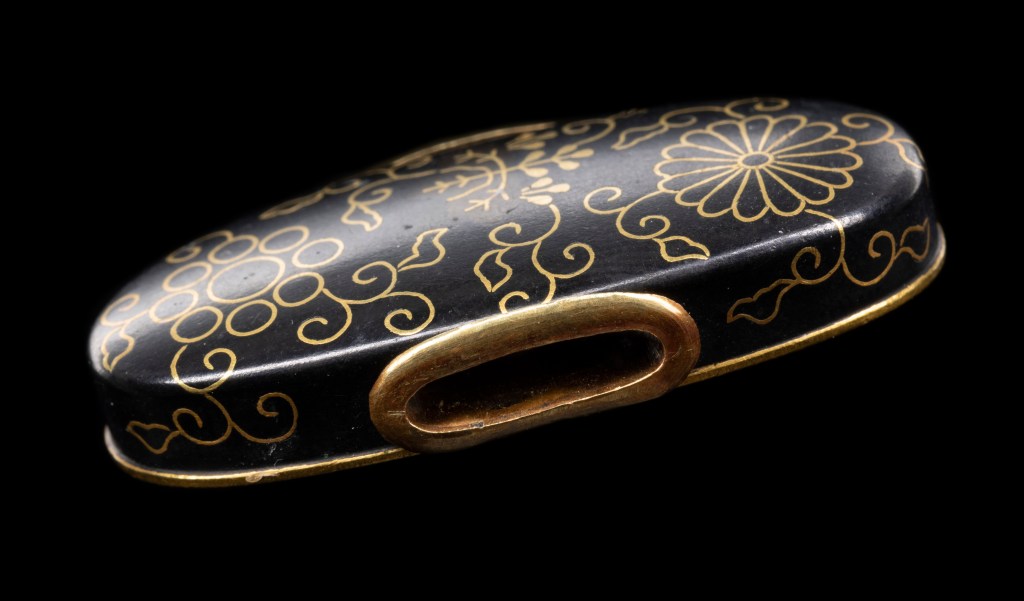
A rare set of fuchigashira from the Kozenji School of Owari province. The Kozenji School gleaned its name from the Kozenji (興善寺) Temple grounds on which the workshop was located. It’s theorized that a craftsman named Inusuke was also named Shinsuke and he made Tsuba at the Kozenji Temple complex. However, the production operations at workshops were rarely a single person effort and required division of labor that would consist of preparers, specialists, and the head of the school that would not only produce kodogu, but also mentor the various students, and oversee the entire operation. Kozenji works straddle aesthetics that are remarkably similar to both Mino-Goto subjects, and Kaga hirazogan techniques. The parallel to Mino-Goto is seen in the Kozenji interpretations of Akikusa (Autumn flowers and insects) thematics so frequently seen in Mino-Goto. It is reasonable to surmise that upon conquering the Mino province, Oda Nobunaga enabled a relocation of Mino craftsmen to Nagoya and thus began an Owari interpretation of the Mino style. In 1580, Nobunaga had gained control of Kaga province, home of the craftsmen working in the hirazogan (flat inlay). Some subsequent Edo period records suggest that there may have been about 10 individuals that resettled in the Nagoya regions from Kanazawa, but the kanji used to identify these individuals is both indistinct and incomplete. However, yet again we are confronted with clear technical and compositional similarities that bolster the likelihood that craftsmen from Kaga came to Owari. Naturally, Kozenji works are often mistakenly identified as either Mino, Mino-Goto, Kaga, or even Umetada works, but slight differentiation in design and composition become the elements that indicate Kozenji works. Kozenji works are unsigned so it’s difficult to paint anything other than a blurry picture of the background, lineages, time-lines, or identities of Kozenji craftsmen. This set of fuchigashira is directly attributed to Kozenji School buy the NBTHK. It shows an accurate and attentive inlay of gold and shibuichi on shakudo forming Karakuwa vine work between the Kamon of Paulownia (Kiri), Chrysanthemum (Kiku), and Kuyo (Nine Astronomical Objects). The Paulownia leaves are inlaid of a separate piece of shibuichi providing a very slight contrast against the surrounding shakudo plate. The engraving and inlay work on this set is exceptional and the condition is very good. The Kashira is fitted with a pair of gold shitodome that show kinsabi in the non-contact points. Kozenji works are quite rare as are all Kinko works from Owari at large. This is an excellent opportunity to acquire a unique and handsome set for your collection. NBTHK Hozon Tosogu paper issued December 11th, 2005. The set is contained in a custom fitted Paulownia wood box. On Consignment

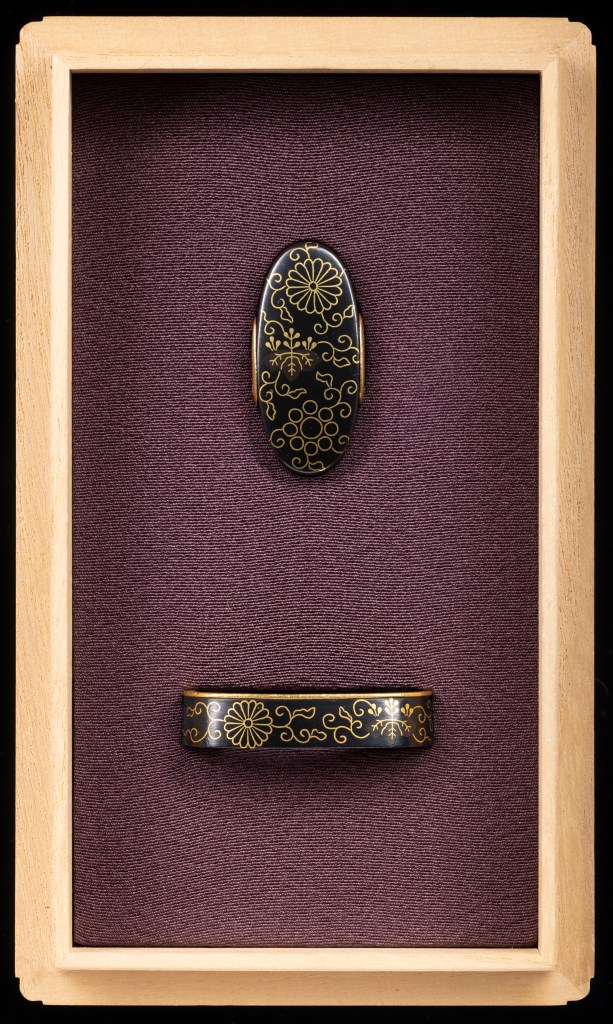
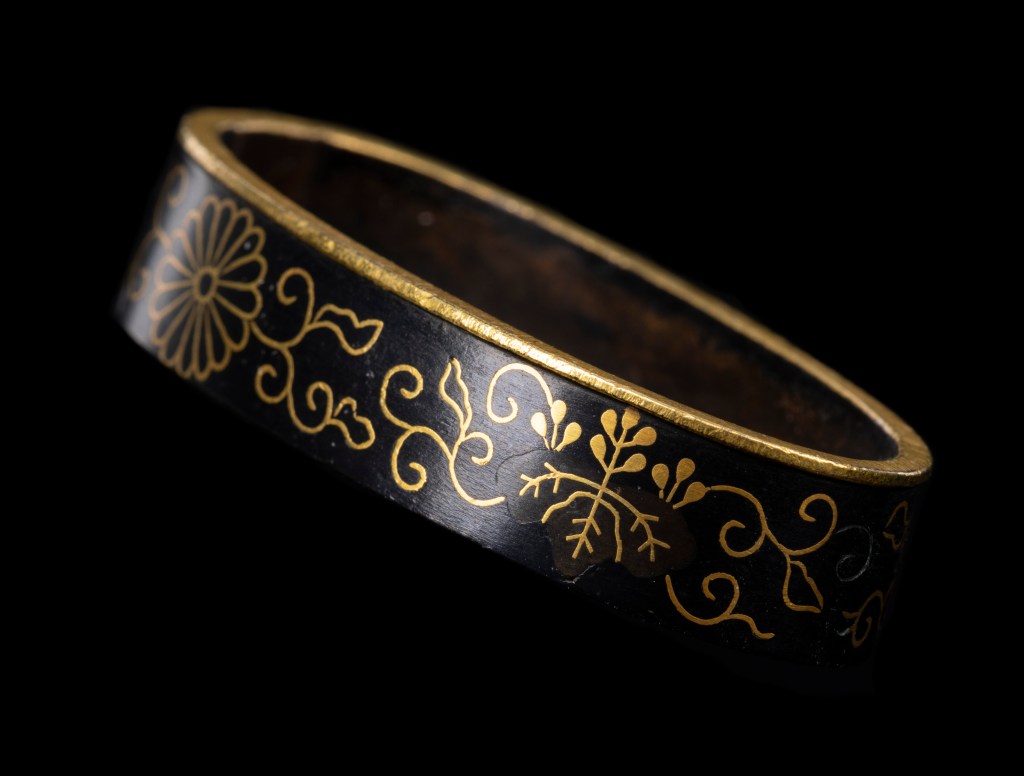
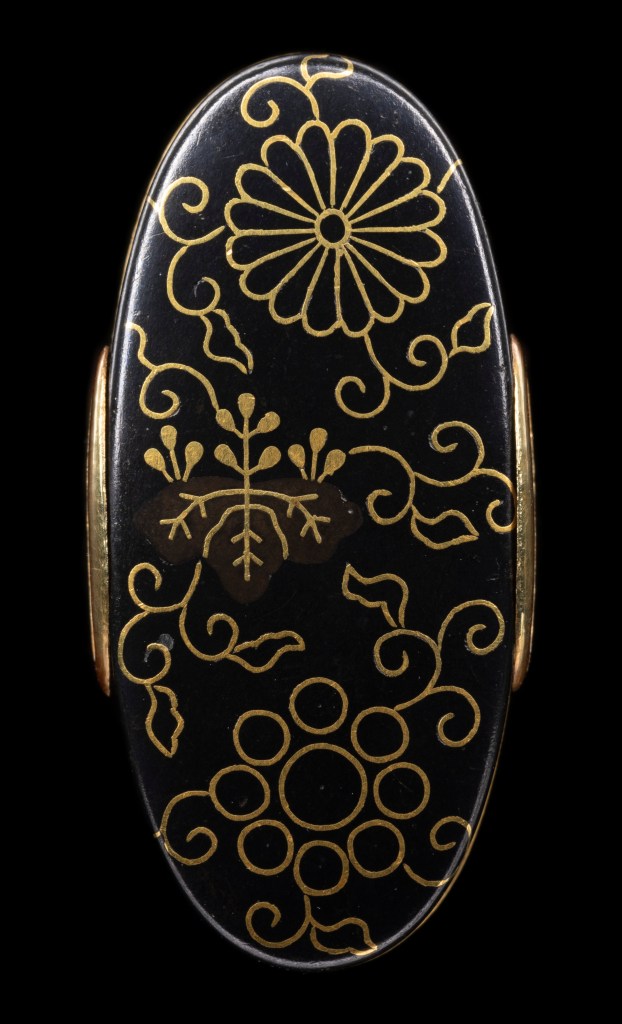
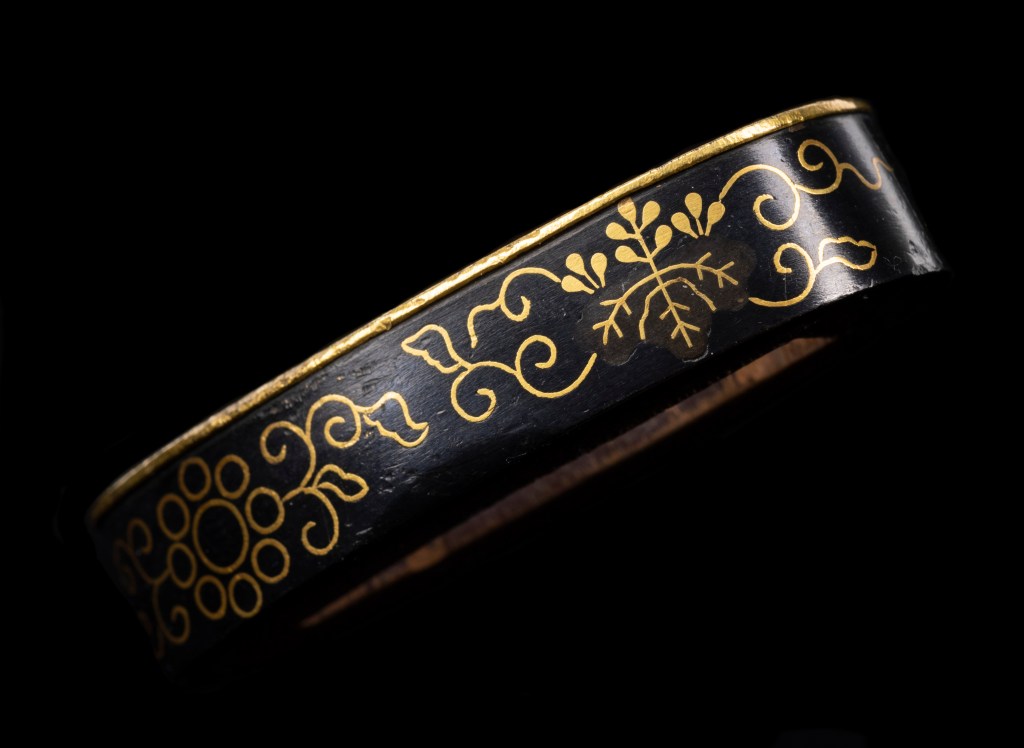
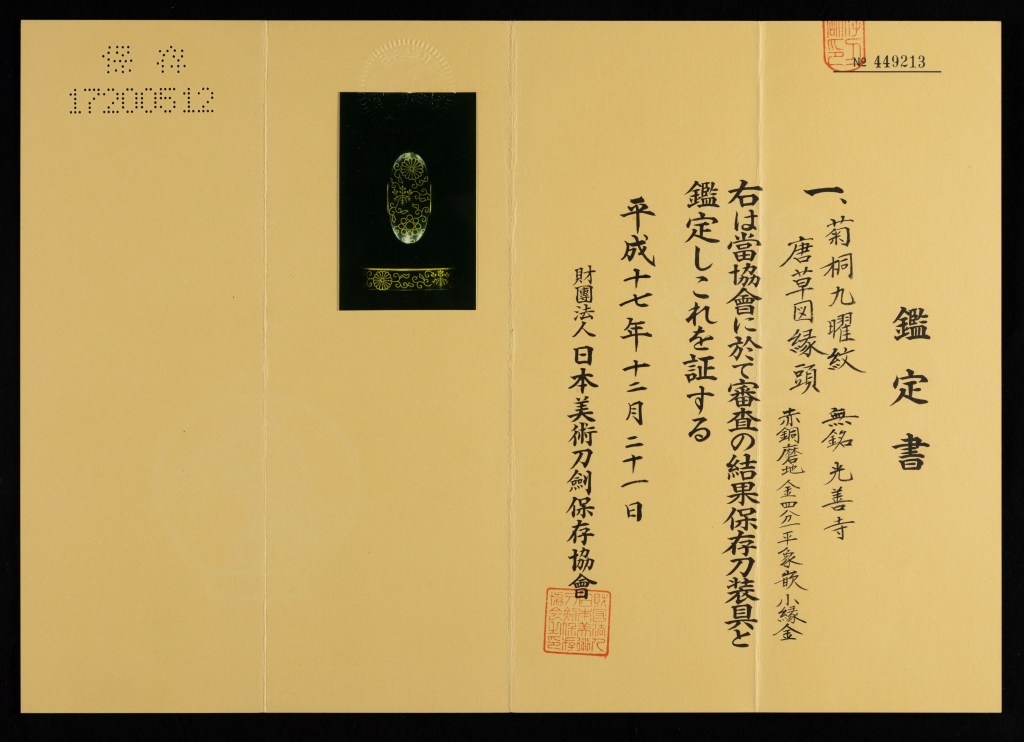
Kozenji
江戸
尾張
無銘
保存
銘が正しい、または無銘でも年代・流派を指摘でき、美術工芸的価値が認められる、保存に値する真正の刀装具と鑑定されたものです。
日本美術刀剣保存協会(日刀保)は、1948年に設立され、文化庁の監督を受ける公益財団法人で、東京・刀剣博物館に本部を置きます。専門の審査員が出品作を直接審査し、美術的・歴史的価値に応じた鑑定書を発行します。日刀保の鑑定書は、日本刀および刀装具の真正性を示す最も広く認知された基準です。
日刀保公式サイトCertificate reading — 無銘(光善寺)