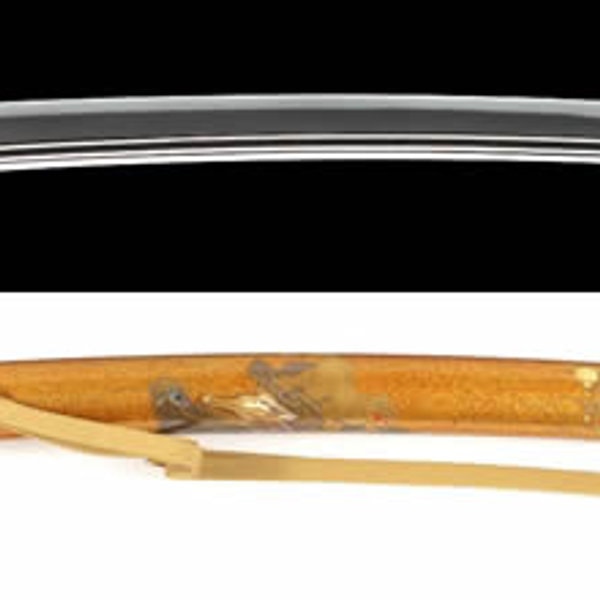
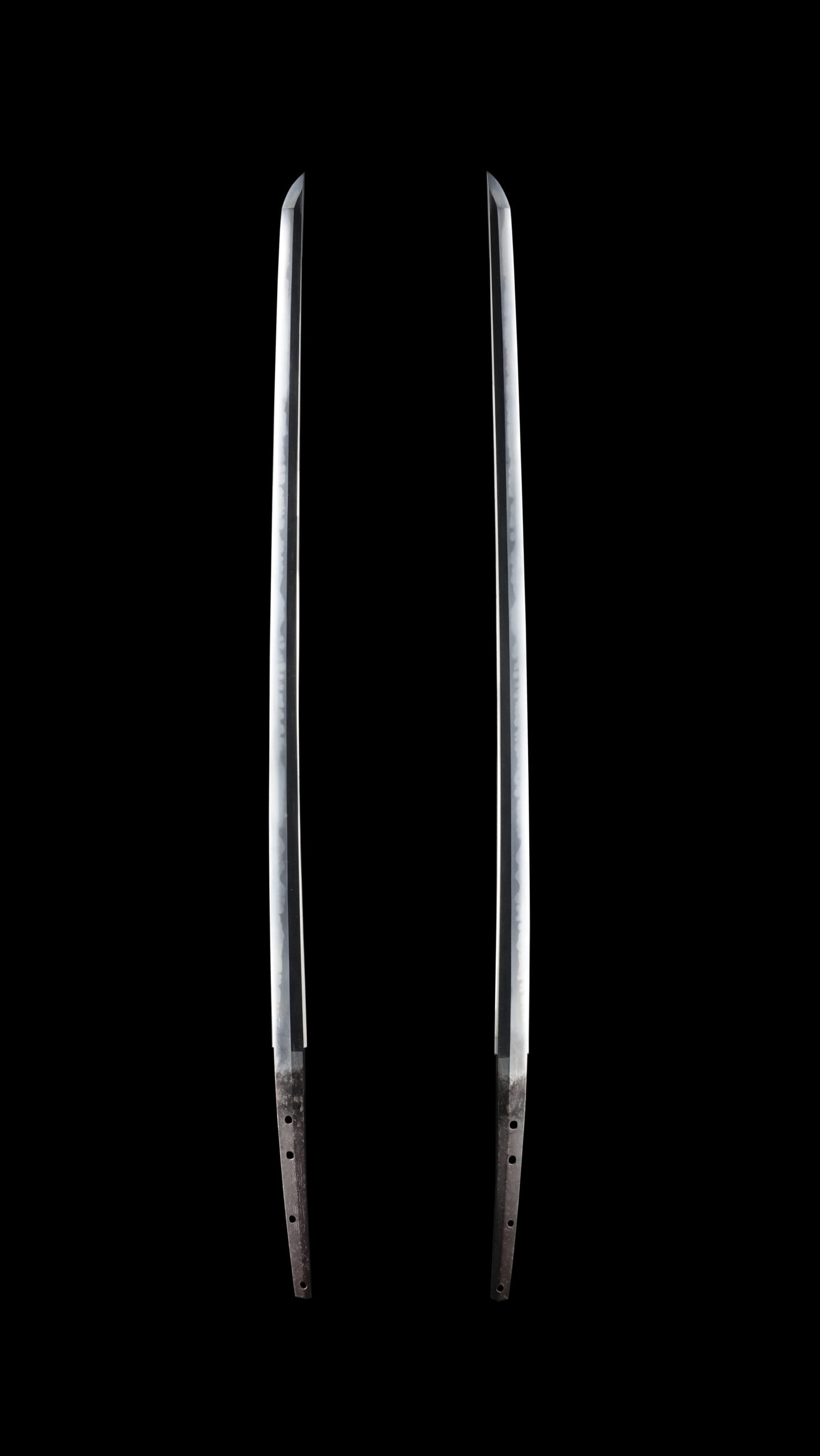
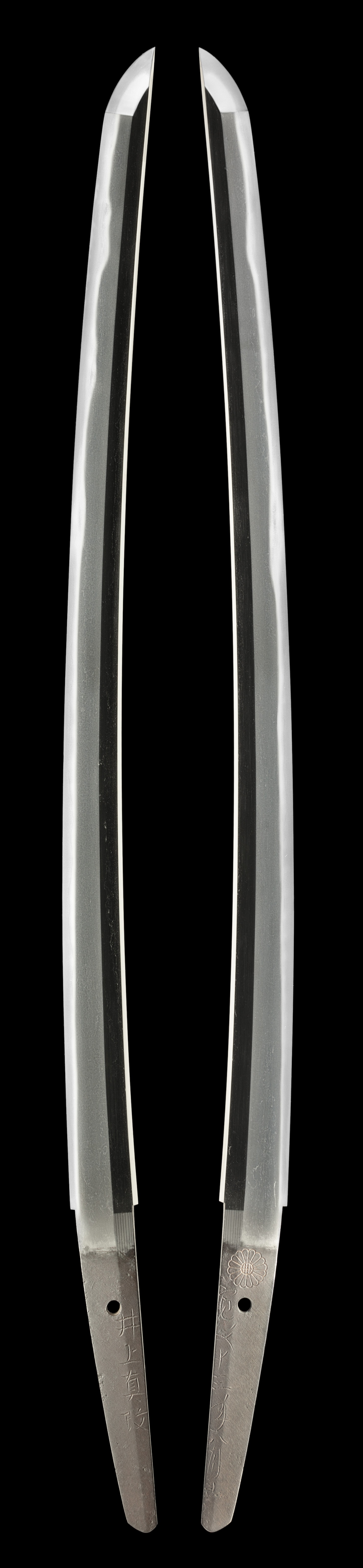
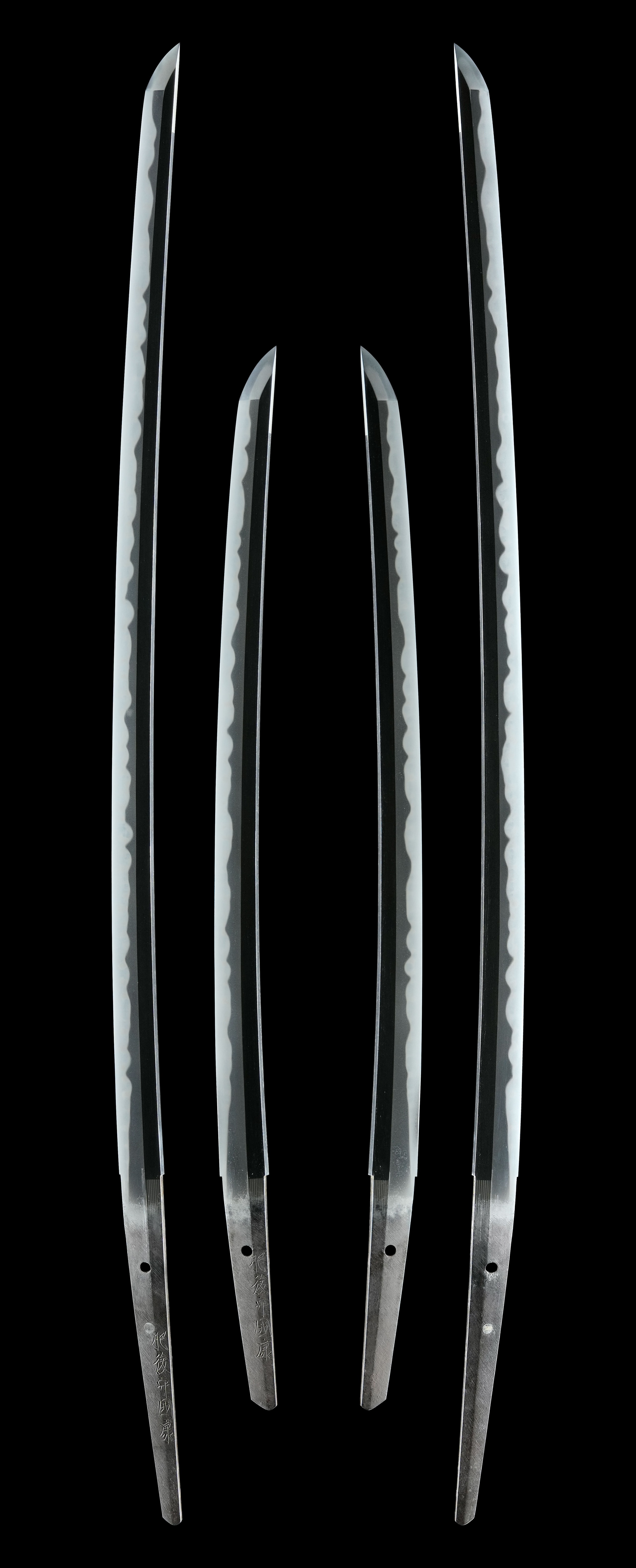
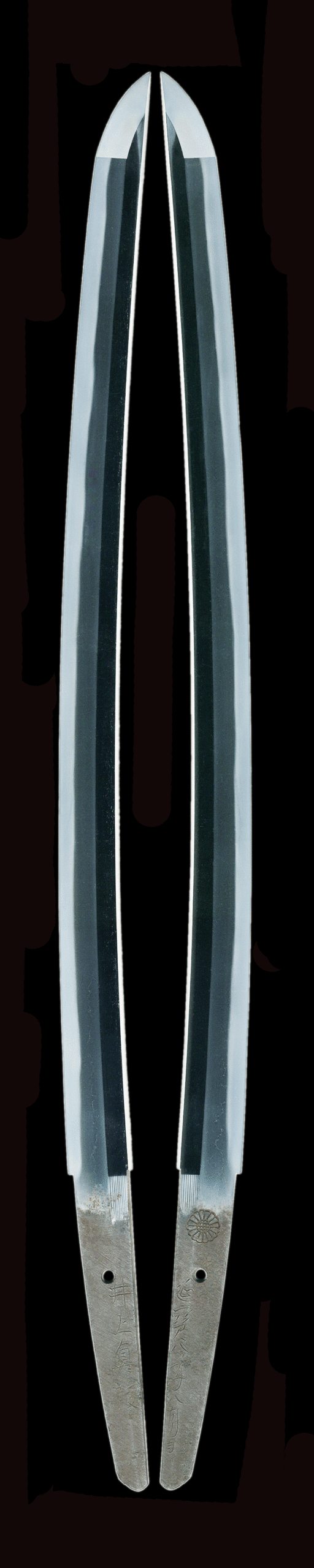
大坂は町人の都であり、刀も金の流れに従った。脇差一腰しか許されぬ町人のための贅沢な作、助広の濤瀾乱れ、大坂正宗と呼ばれた真改。率直に言えば、見られるために作られた刀である。
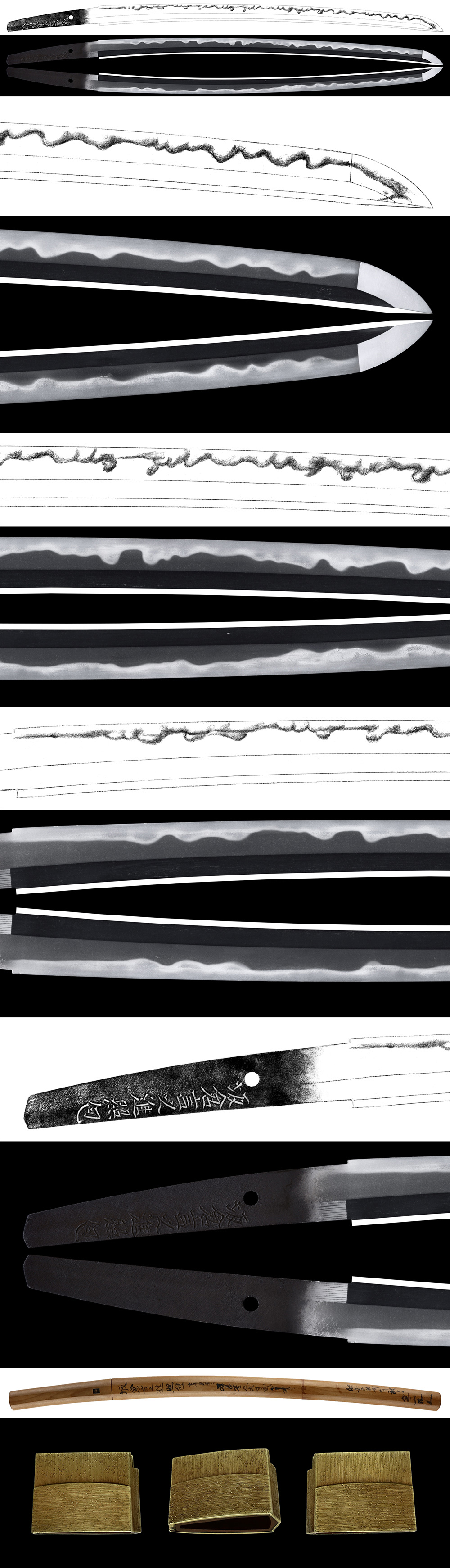
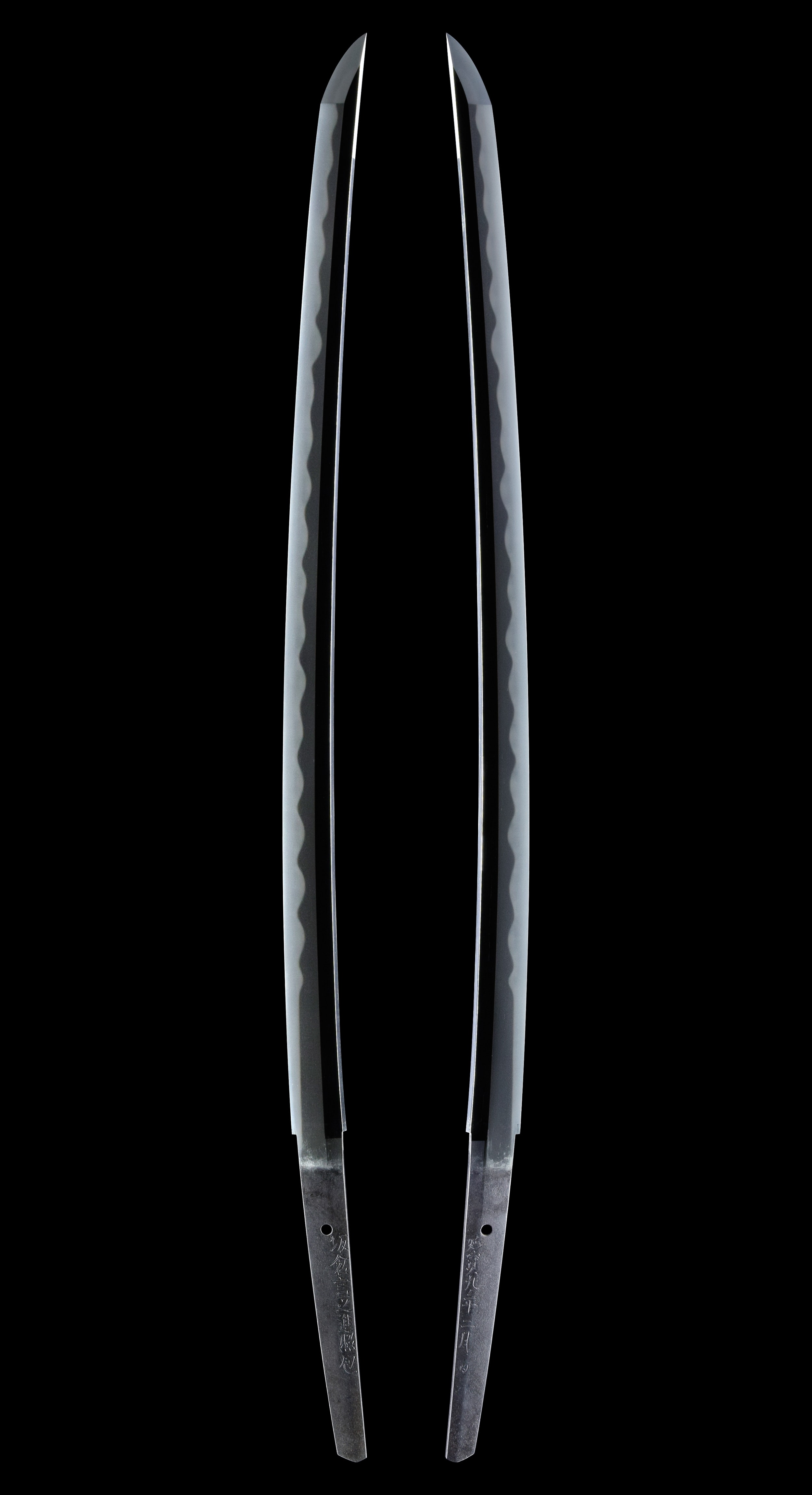
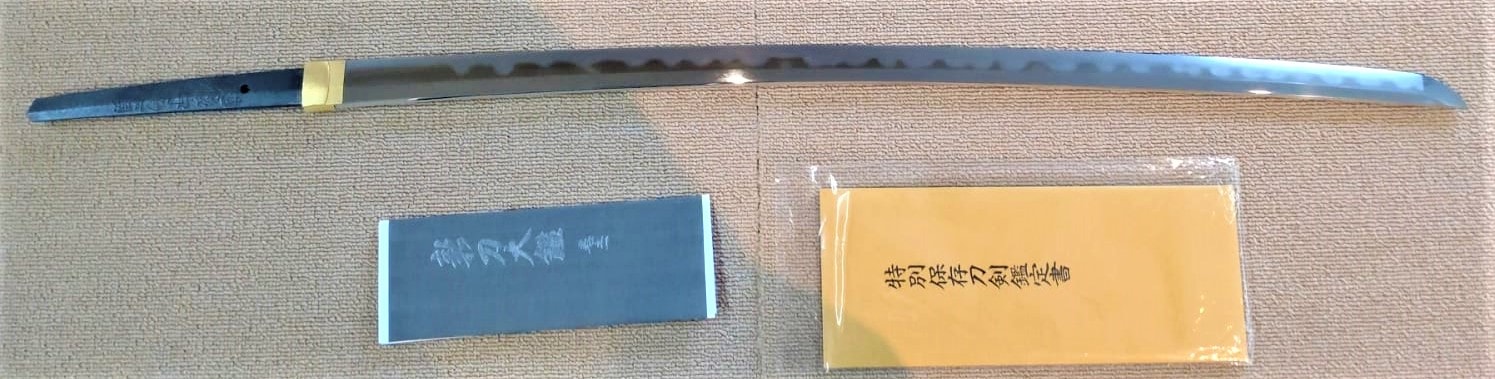
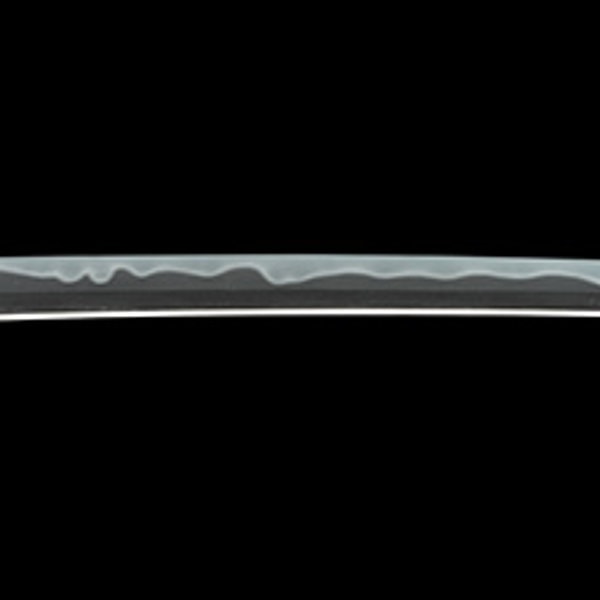
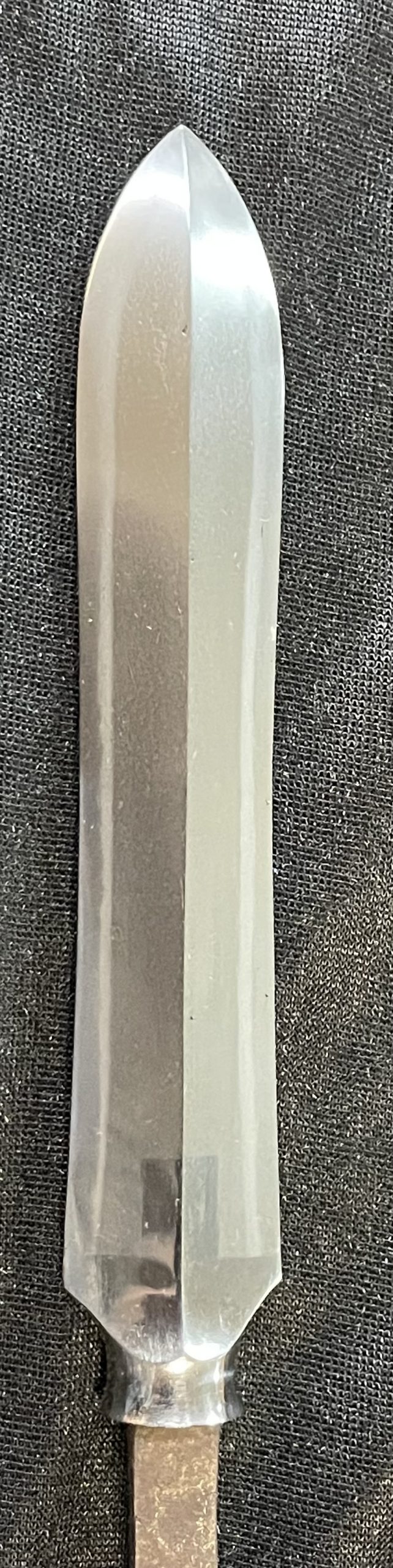
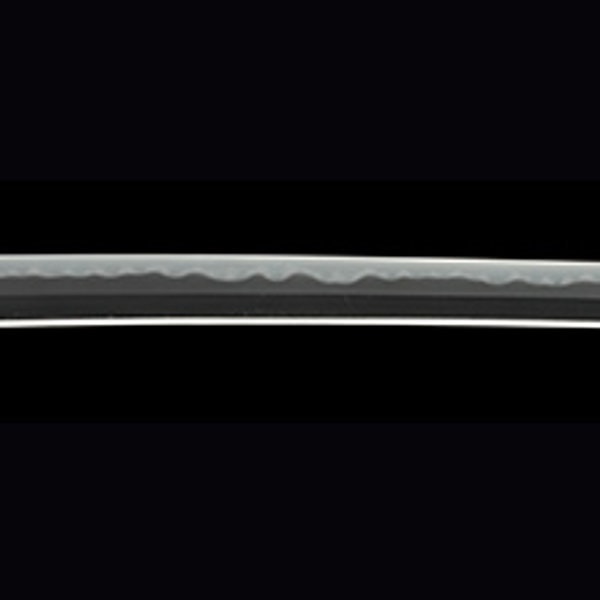
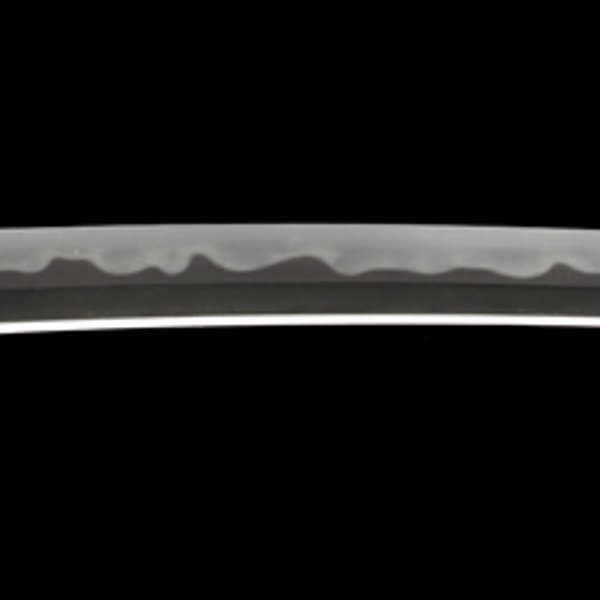
注文番号:24543 脇差:白鞘入り(NBTHK 特別保存刀剣鑑定書) 銘:坂倉言之進照包 鞘書き:寒山先生 新刀:上々作 最上大業物:摂津国 (当店では刀剣の出来を、最上作、上々作、上作、普通作の四段階に分類しております。本作、坂倉言之進照包は上々作にランクされる作品です。) ハバキ:金着二重ハバキ 長さ:58.3 cm (1尺9寸2分) 反り:1.4 cm (4分6厘) 目釘穴:1個 元幅:3.07 cm 先幅:2.15 cm 重ね:0.63 cm 刀身重量:545 g 時代:江戸時代中期 体配:身幅広く、重ねもしっかりとした長めの脇差。 地鉄:小板目肌よく詰み、地沸がつく。 刃文:沸出来の互の目乱れ。匂口深く足が入り、砂流し、金筋が働く。帽子は丸く返る。 特徴: 照包は初代越後守包貞の門人で、後に養子となり二代目を継承しました。延宝八年(1680年)頃、初代の実子に越後守包貞の名を譲り、自らは坂倉言之進照包と改名しました。後年の作風は助広を彷彿とさせる華やかな乱れ刃を焼き、新刀屈指の名工として極めて高く評価されています。 NBTHK 特別保存刀剣鑑定書 葵美術評価鑑定書 全身押形 価格:1,200,000円 注文フォーム 関連商品: 脇差:丹波守吉道(大阪初代) 脇差:大法師法橋来金道 脇差:出羽守藤原助信(NBTHK 特別保存刀剣) 脇差:出羽大掾藤原国路(NBTHK 特別保存刀剣) 脇差:但馬守法城寺橘貞国(NBTHK 特別保存刀剣) 脇差:以南蛮鉄 越前住下坂近江守藤原継広(NBTHK 特別保存刀剣)
Certificate reading — 銘 坂倉言之進照包
 NihontoWatch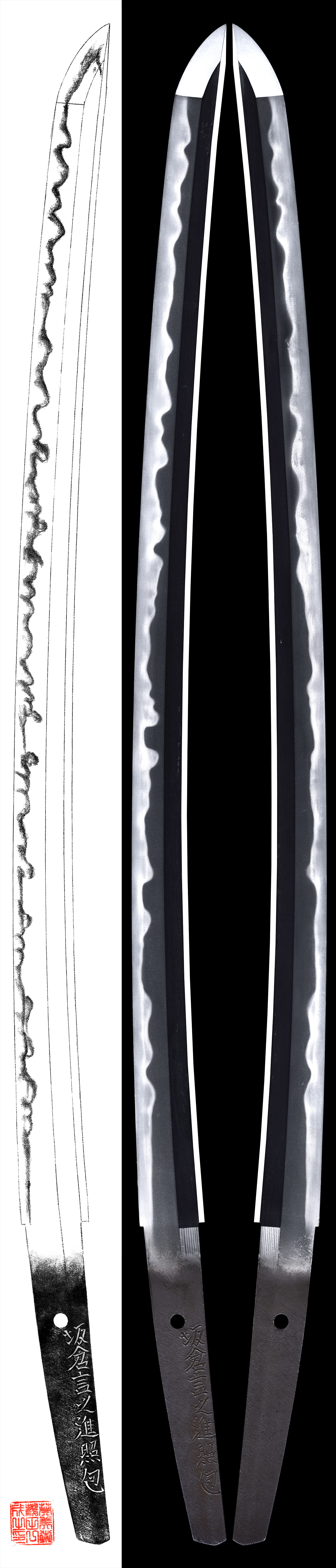
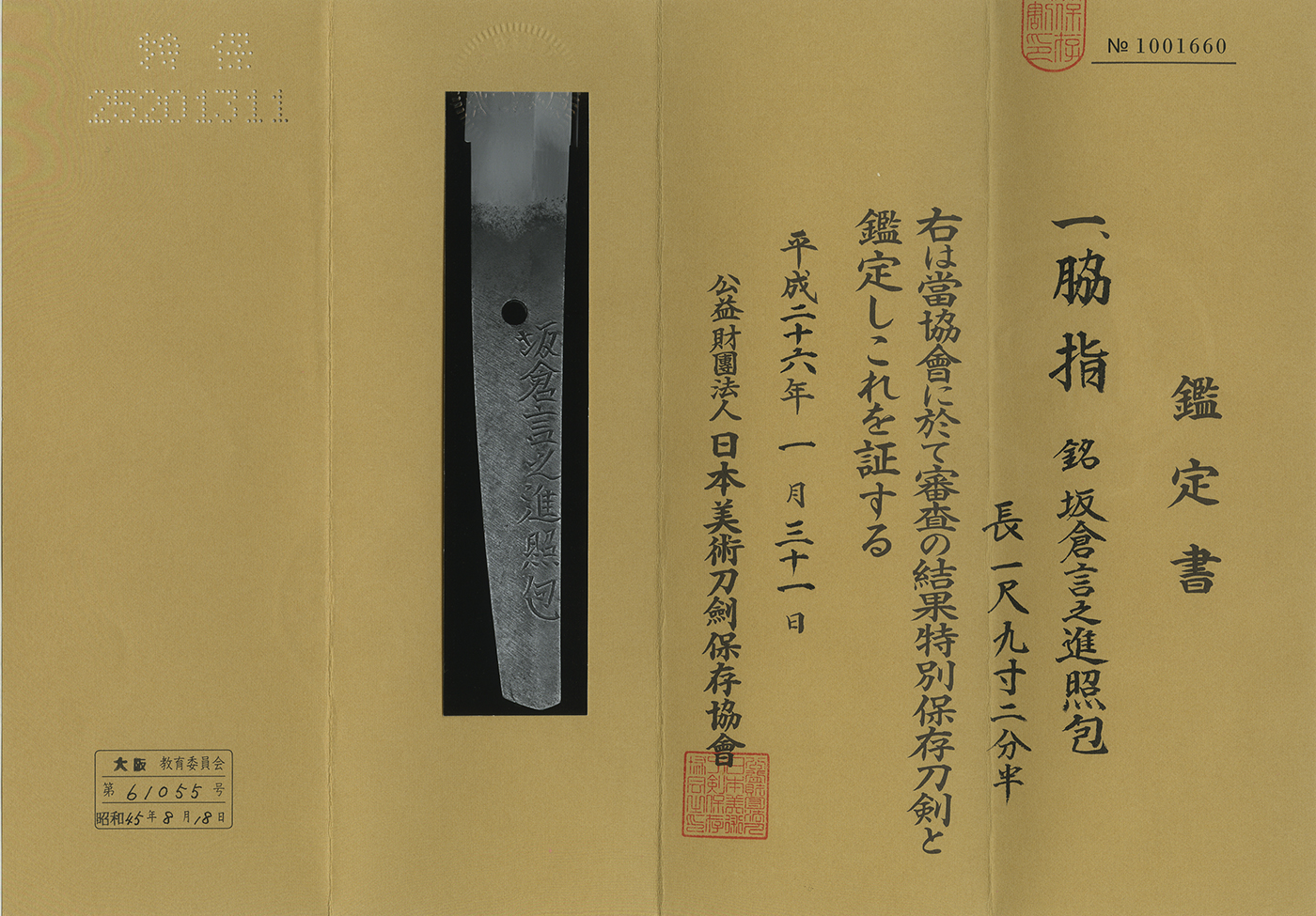
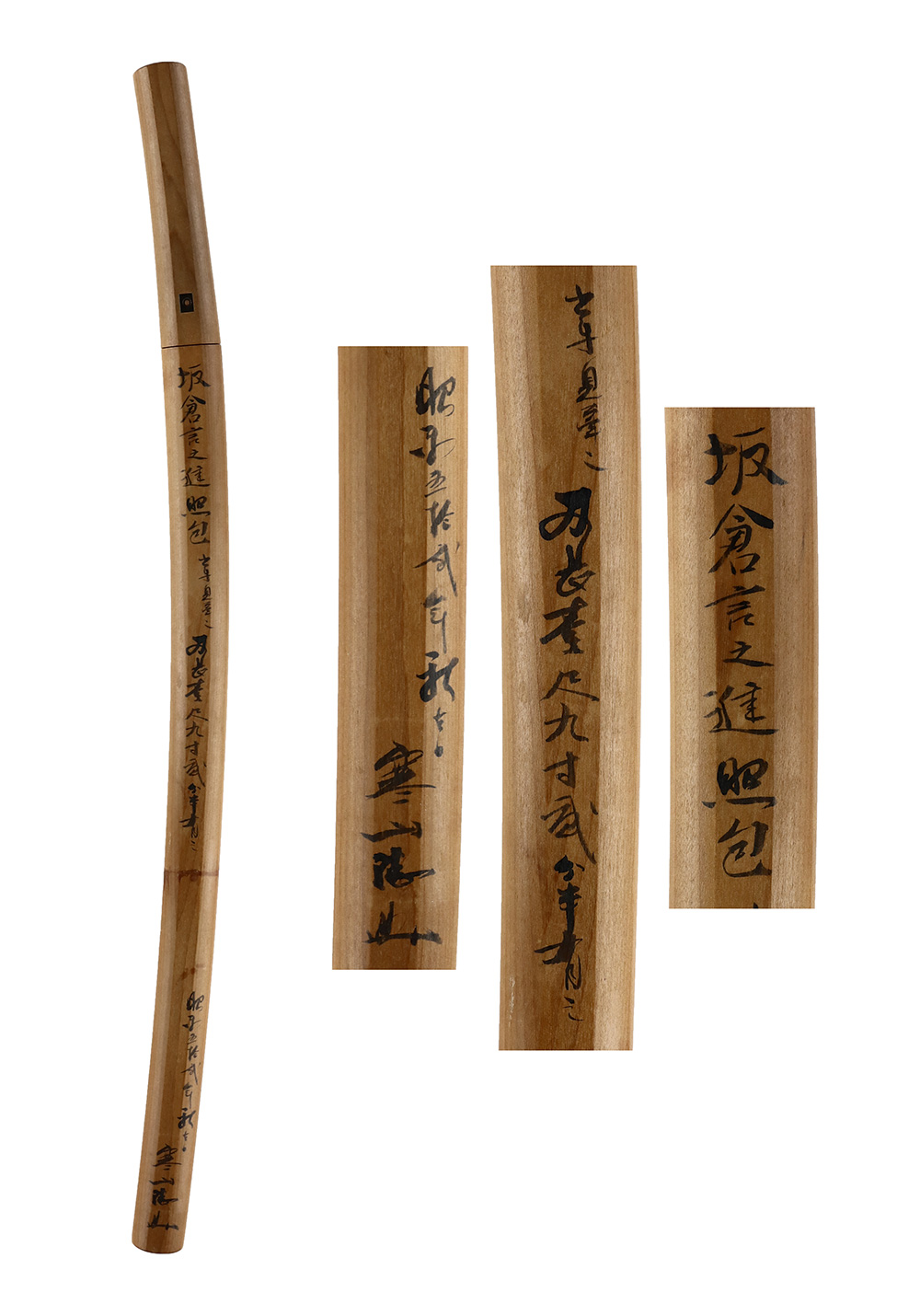
Ōsaka Shintō, the nidai Echigo no Kami Kanesada / Sakakura Gonnoshin Terukane (Settsu) · 摂津 · 1673-1682頃
刀剣大鑑 上位11%
現在10点販売中
二代越後守包貞は延宝四年(一六七六)紀の刀を二口遺し、ともに特別重要刀剣に上り、現存する本工の最も高く位置づけられた作である。彼は大坂の包貞家の二代で、延宝・天和の頃、大坂新刀を代表する刀工の一人として活躍した。説明書はその作を通じて一貫した伝記を伝える。すなわち初代越後守包貞に学んでその跡目を継ぎ養子となり、自らも越後守包貞と銘したが、初代の実子岩松が成人するに及んで包貞の名をこれに譲り、以後坂倉言之進照包と銘した。「坂倉言之進照包 越後守包貞隠居(裏に)延宝八年二月吉日」[[c:6]]と銘した作が現存することから、その改銘は延宝八年(一六八〇)頃に定まる。二つの名の背後にある人物について説明書は端的に、「二代包貞は初代に優る名工」[[c:1]]と記す。
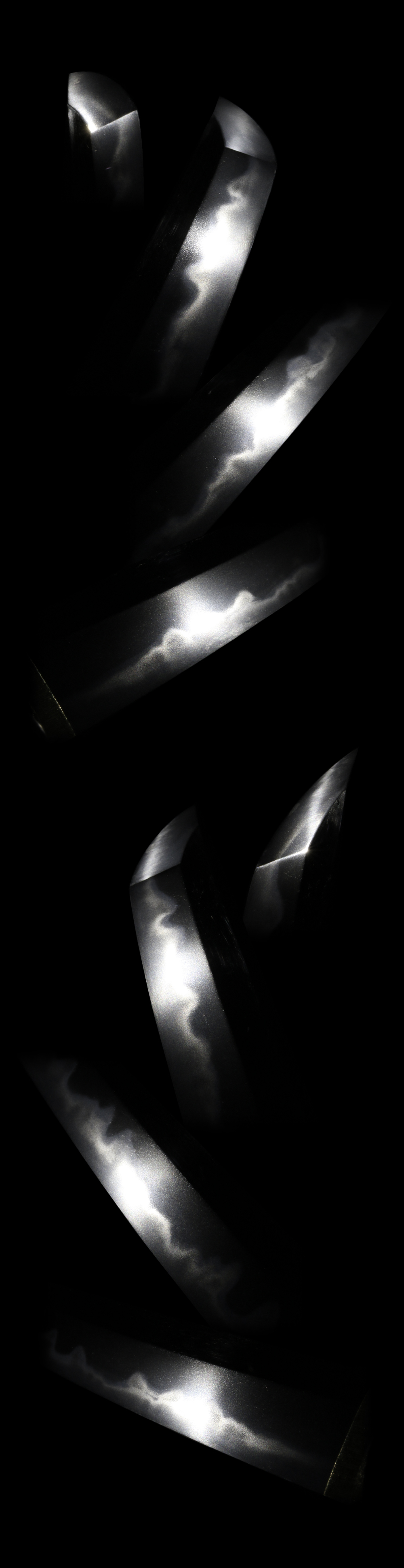
その手はまず、円熟の濤瀾乱れに読まれる。説明書がその最も得意とする所とする波打つ刃で、同時代大坂の津田越前守助広に倣って学んだものである。刃は元を直ぐの焼出しに起こし、その上は大互の目乱れに小のたれ・互の目・矢筈風の刃を交えて濤瀾風となる。そのうちに鑑者は本工自身の刃形を挙げる。すなわち「片山乱れと称する同工独特の刃形」[[c:2]]であり、しばしば横手下に互の目を三つ連れて焼く、片寄った乱れである。足長くよく入り、匂深く小沸厚く、総体に細かに砂流しかかり金筋入り、匂口明るく冴え、帽子は直ぐに小丸となる。その傍らに出自に由る揃った互の目を保ち、刃中に繰り返し通る細かな砂流しを、説明書は「彼の出自である文珠系の特色」[[c:3]]と読む。
地鉄はいずれの手の下にも変わらぬところである。よくつんだ小板目に時に杢を交え、地沸が微塵に厚くつき地景細かによく入り、鉄色は明るく冴える。最上の作では区際に水影が立つ。説明書はこの鍛えを精良で肌合よく鉄色明るしと賞し、地刃ともに明るく冴えわたるところを繰り返し本工の見どころとする。造込みも鑑定を支える。棟の卸し急峻、平肉乏しく、身幅広く寛文新刀の元先の幅差をつけた体配は、説明書が本工の見どころとする所である。
その作域は剣書の併せ挙げる三つの面に分かれる。最も早いのは延宝四年紀の二口の特別重要刀剣に見える、丁子ごころを交えた揃った大互の目で、初代に近いがすでに匂深く小沸のよくついた、初代に優る才と読まれる手である。円熟の最も個性的な面は片山形に寄る濤瀾で、その最上を、常にも増して大胆で変化に富み躍動感があるとする。第三は穏やかな直刃で、在銘作には比較的少なく、ある重要刀剣はこれを相州伝上工とりわけ郷義弘あたりに範をとったものとみ、その意が殊に焼刃の様態に汲み取れるとする。制作年紀の作は少なく、それゆえ延宝四年紀の刀は他を位置づける資料として貴ばれる。
二代を大坂一般から分かつのは、まさに鑑者が本工独特と呼ぶところである。明るく匂深い濤瀾が、片山形に寄る形と横手下の三つ連れた互の目を伴って、同時代の左右対称な波と分かたれ、棟の卸しの急峻と平肉の乏しさが造込みを際立たせる。刃中を縫う細かな砂流しは文珠の系を大坂の作域に伝え、稀な直刃は相州への遡及を示す。彼は包貞家の第二の柱であり、父の作域を継いで、説明書の評するところ、これを越えた工である。
収集の観点では、二代は確かなしかし限りある名である。特別重要刀剣・重要刀剣の級にその作は七十六口を数えるが、より高い特別重要刀剣に達するのは延宝四年紀の二口のみであり、最上手の作が世に出ることは稀で、典型的な重要刀剣も時折、辛抱をもって相見える程度である。説明書はその年紀の刀の一口を「彼の代表作の一口」[[c:4]]とし、所在の知られる別の一口を「二代包貞作域中傑出した出来映え」[[c:5]]と評する。その作は来歴の確かな蔵に伝わる。片山形の乱れと横手下の三つ連れた互の目を備えた坂倉言之進照包銘の脇指は土佐山内家に伝わり、また二口が御物として皇室の蔵に記録される。地刃明るく片寄った濤瀾を帯びた在銘の二代包貞は、第一級の大坂新刀の名跡の中では比較的相見えやすい部類にあり、手の届かぬものではないが、優れた年紀作が現れればなお一つの画期である。
包貞の位置づけを、日本刀全体および伝統・時代・時期ごとに示します。各位(随一・屈指・有数・著名)は、NBTHK および文化庁による指定に加え、三作や名物帳などの歴史的栄誉を加味したものです。
各項目を選ぶと評価方法が表示されます。
在銘年紀作が示す、確実に活動していた年代
新刀 · 摂津
現在82点販売中
大坂新刀は、商都大坂を本拠として江戸前期から中期にかけて興隆した摂津の一門である。その草創は京の堀川一門にあり、堀川国広の門に学んだ和泉守国貞、親国貞こと国貞と河内守国助とが、慶長十九年に師の没した後そろって大坂へ下り、この地に鍛刀の家を興した。国助は伝に伊勢国の出にして石堂の流れを汲み、堀川より受け継いだ枯れた肌合とともに、古備前を慕う石堂の丁子をこの地にもたらした。そこへ大和文殊系の包保・包道に承けた越後守包貞が摂州に居を構え、肥後菊池より出て井上真改の門を叩いた貞則のごとき遊歴の工も加わって、堀川と石堂と文殊の脈が大坂の地で一つの作域に結ばれていった。やがて親国貞の子真改、津田越前守助広、一竿子忠綱らがあらわれ、寛文・延宝・元禄の頃にこの一門は最も華やぐ。 一門の作風は、まず明るく冴える大坂鍛えに標識を持つ。鍛えはよくつんだ無地風の小板目で、地沸が微塵に厚くつき、地景が細かにさかんに入り、鉄色は明るく潤う。その地の上に、刃区を直ぐに焼き出し、その上から己の刃文を起こすのが一門に通じる約束で、収集家のいう大坂焼出しである。匂口は終始深く明るく冴え、刃縁は締まる。この共通の文法の上に、各工はおのおのの差を置く。井上真改は華やかな乱れを焼かず、よくつんだ精美な地に浅いのたれを帯びた沸深き直刃を本領とし、相州の郷義弘への意図的な写しにその沸の妙味を尽くして、大坂正宗と称された。津田助広は波濤のごとくうねる濤瀾刃を創始し、真改の小沸の直刃と並んで両大関と仰がれる。一竿子忠綱は揃った長足の丁子に簾刃の濤瀾を交え、何にもまして真の倶利迦羅や鯉の滝上りを刻んだ一竿子彫をもって分かたれる。河内守国助の家は丁子の旗頭で、二代中河内は握り拳の頭を戴く拳形丁子を創始して新刀一文字と賞され、その弟肥後守国康や四男国輝もこの石堂の丁子と津田風の濤瀾を担った。越後守包貞は助広に倣う濤瀾に片山乱れと文珠の砂流しを通わせ、貞則は師真改の沸深き直刃をよく継いだ。共通するのは明るい匂口と直ぐの焼出し、異なるのは真改の沈める沸、助広の濤瀾、国助一門の丁子という、地の上に置かれた手の差である。 収集家が大坂新刀を求める理由は、鑑定の勘所が明快で、主要工の格が高いことにある。明るく冴える大坂鍛えと、刃を起こす直ぐの焼出しという二つの見どころは、地と刃のいずれにも紛れなく現れて工と作域を定める手懸りとなり、真改の沸深き郷写し、忠綱の一竿子彫、中河内の拳形丁子といった各工独自の標識が、そこに重なって名を分かつ。一門の作はおおむね在銘年紀で、銘そのものが時の標識となるため、由緒の確かさをもって賞翫される。真改や助広や忠綱の最上手は市に現れることが稀で、現れれば一頭地を抜く出来事となるが、包貞・国助・国康・国輝のごとき名手の在銘作は、辛抱をもって相応に相見え、大坂新刀へ分け入る手近な入口を提供する。来歴の知られる作は谷干城や山内家、皇室の蔵を経て近代に伝わり、美術刀剣としての魅力は、真改の沸と助広の濤瀾が後世の刀鍛冶に及ぼした影響とともに、商都大坂が新刀期に成し遂げた一個の到達を今に伝える。 詳しく見る →
大坂は町人の都であり、刀も金の流れに従った。脇差一腰しか許されぬ町人のための贅沢な作、助広の濤瀾乱れ、大坂正宗と呼ばれた真改。率直に言えば、見られるために作られた刀である。
保存刀剣のうち、出来が一層優れ、保存状態も良好と認められたものです。再刃や、室町・江戸期の多くの無銘作は対象外となり、保存刀剣より高い基準が課されます。
日本美術刀剣保存協会(NBTHK)は、1948年に設立され、文化庁の監督を受ける公益財団法人で、東京・刀剣博物館に本部を置きます。専門の審査員が出品作を直接審査し、美術的・歴史的価値に応じた鑑定書を発行します。NBTHKの鑑定書は、日本刀および刀装具の真正性を示す最も広く認知された基準です。
NBTHK公式サイト返品をご希望の場合、お客様が受領されてから3日以内にお知らせください。この期間を過ぎますとキャンセルはお受けできかねますので何卒ご了承ください。なお当社へのご返送は、5営業日以内の発送をお願いしております。なおキャンセルは販売した当時の状態がそのまま保持されている事が条件となりますのでお取り扱いには十分ご注意下さい。
注文番号:24543 脇差:白鞘入り(NBTHK 特別保存刀剣鑑定書) 銘:坂倉言之進照包 鞘書き:寒山先生 新刀:上々作 最上大業物:摂津国 (当店では刀剣の出来を、最上作、上々作、上作、普通作の四段階に分類しております。本作、坂倉言之進照包は上々作にランクされる作品です。) ハバキ:金着二重ハバキ 長さ:58.3 cm (1尺9寸2分) 反り:1.4 cm (4分6厘) 目釘穴:1個 元幅:3.07 cm 先幅:2.15 cm 重ね:0.63 cm 刀身重量:545 g 時代:江戸時代中期 体配:身幅広く、重ねもしっかりとした長めの脇差。 地鉄:小板目肌よく詰み、地沸がつく。 刃文:沸出来の互の目乱れ。匂口深く足が入り、砂流し、金筋が働く。帽子は丸く返る。 特徴: 照包は初代越後守包貞の門人で、後に養子となり二代目を継承しました。延宝八年(1680年)頃、初代の実子に越後守包貞の名を譲り、自らは坂倉言之進照包と改名しました。後年の作風は助広を彷彿とさせる華やかな乱れ刃を焼き、新刀屈指の名工として極めて高く評価されています。 NBTHK 特別保存刀剣鑑定書 葵美術評価鑑定書 全身押形 価格:1,200,000円 注文フォーム 関連商品: 脇差:丹波守吉道(大阪初代) 脇差:大法師法橋来金道 脇差:出羽守藤原助信(NBTHK 特別保存刀剣) 脇差:出羽大掾藤原国路(NBTHK 特別保存刀剣) 脇差:但馬守法城寺橘貞国(NBTHK 特別保存刀剣) 脇差:以南蛮鉄 越前住下坂近江守藤原継広(NBTHK 特別保存刀剣)
Certificate reading — 銘 坂倉言之進照包
NihontoWatchŌsaka Shintō, the nidai Echigo no Kami Kanesada / Sakakura Gonnoshin Terukane (Settsu) · 摂津 · 1673-1682頃
刀剣大鑑 上位11%
現在10点販売中
二代越後守包貞は延宝四年(一六七六)紀の刀を二口遺し、ともに特別重要刀剣に上り、現存する本工の最も高く位置づけられた作である。彼は大坂の包貞家の二代で、延宝・天和の頃、大坂新刀を代表する刀工の一人として活躍した。説明書はその作を通じて一貫した伝記を伝える。すなわち初代越後守包貞に学んでその跡目を継ぎ養子となり、自らも越後守包貞と銘したが、初代の実子岩松が成人するに及んで包貞の名をこれに譲り、以後坂倉言之進照包と銘した。「坂倉言之進照包 越後守包貞隠居(裏に)延宝八年二月吉日」[[c:6]]と銘した作が現存することから、その改銘は延宝八年(一六八〇)頃に定まる。二つの名の背後にある人物について説明書は端的に、「二代包貞は初代に優る名工」[[c:1]]と記す。
その手はまず、円熟の濤瀾乱れに読まれる。説明書がその最も得意とする所とする波打つ刃で、同時代大坂の津田越前守助広に倣って学んだものである。刃は元を直ぐの焼出しに起こし、その上は大互の目乱れに小のたれ・互の目・矢筈風の刃を交えて濤瀾風となる。そのうちに鑑者は本工自身の刃形を挙げる。すなわち「片山乱れと称する同工独特の刃形」[[c:2]]であり、しばしば横手下に互の目を三つ連れて焼く、片寄った乱れである。足長くよく入り、匂深く小沸厚く、総体に細かに砂流しかかり金筋入り、匂口明るく冴え、帽子は直ぐに小丸となる。その傍らに出自に由る揃った互の目を保ち、刃中に繰り返し通る細かな砂流しを、説明書は「彼の出自である文珠系の特色」[[c:3]]と読む。
地鉄はいずれの手の下にも変わらぬところである。よくつんだ小板目に時に杢を交え、地沸が微塵に厚くつき地景細かによく入り、鉄色は明るく冴える。最上の作では区際に水影が立つ。説明書はこの鍛えを精良で肌合よく鉄色明るしと賞し、地刃ともに明るく冴えわたるところを繰り返し本工の見どころとする。造込みも鑑定を支える。棟の卸し急峻、平肉乏しく、身幅広く寛文新刀の元先の幅差をつけた体配は、説明書が本工の見どころとする所である。
その作域は剣書の併せ挙げる三つの面に分かれる。最も早いのは延宝四年紀の二口の特別重要刀剣に見える、丁子ごころを交えた揃った大互の目で、初代に近いがすでに匂深く小沸のよくついた、初代に優る才と読まれる手である。円熟の最も個性的な面は片山形に寄る濤瀾で、その最上を、常にも増して大胆で変化に富み躍動感があるとする。第三は穏やかな直刃で、在銘作には比較的少なく、ある重要刀剣はこれを相州伝上工とりわけ郷義弘あたりに範をとったものとみ、その意が殊に焼刃の様態に汲み取れるとする。制作年紀の作は少なく、それゆえ延宝四年紀の刀は他を位置づける資料として貴ばれる。
二代を大坂一般から分かつのは、まさに鑑者が本工独特と呼ぶところである。明るく匂深い濤瀾が、片山形に寄る形と横手下の三つ連れた互の目を伴って、同時代の左右対称な波と分かたれ、棟の卸しの急峻と平肉の乏しさが造込みを際立たせる。刃中を縫う細かな砂流しは文珠の系を大坂の作域に伝え、稀な直刃は相州への遡及を示す。彼は包貞家の第二の柱であり、父の作域を継いで、説明書の評するところ、これを越えた工である。
収集の観点では、二代は確かなしかし限りある名である。特別重要刀剣・重要刀剣の級にその作は七十六口を数えるが、より高い特別重要刀剣に達するのは延宝四年紀の二口のみであり、最上手の作が世に出ることは稀で、典型的な重要刀剣も時折、辛抱をもって相見える程度である。説明書はその年紀の刀の一口を「彼の代表作の一口」[[c:4]]とし、所在の知られる別の一口を「二代包貞作域中傑出した出来映え」[[c:5]]と評する。その作は来歴の確かな蔵に伝わる。片山形の乱れと横手下の三つ連れた互の目を備えた坂倉言之進照包銘の脇指は土佐山内家に伝わり、また二口が御物として皇室の蔵に記録される。地刃明るく片寄った濤瀾を帯びた在銘の二代包貞は、第一級の大坂新刀の名跡の中では比較的相見えやすい部類にあり、手の届かぬものではないが、優れた年紀作が現れればなお一つの画期である。
包貞の位置づけを、日本刀全体および伝統・時代・時期ごとに示します。各位(随一・屈指・有数・著名)は、NBTHK および文化庁による指定に加え、三作や名物帳などの歴史的栄誉を加味したものです。
各項目を選ぶと評価方法が表示されます。
在銘年紀作が示す、確実に活動していた年代
新刀 · 摂津
現在82点販売中
大坂新刀は、商都大坂を本拠として江戸前期から中期にかけて興隆した摂津の一門である。その草創は京の堀川一門にあり、堀川国広の門に学んだ和泉守国貞、親国貞こと国貞と河内守国助とが、慶長十九年に師の没した後そろって大坂へ下り、この地に鍛刀の家を興した。国助は伝に伊勢国の出にして石堂の流れを汲み、堀川より受け継いだ枯れた肌合とともに、古備前を慕う石堂の丁子をこの地にもたらした。そこへ大和文殊系の包保・包道に承けた越後守包貞が摂州に居を構え、肥後菊池より出て井上真改の門を叩いた貞則のごとき遊歴の工も加わって、堀川と石堂と文殊の脈が大坂の地で一つの作域に結ばれていった。やがて親国貞の子真改、津田越前守助広、一竿子忠綱らがあらわれ、寛文・延宝・元禄の頃にこの一門は最も華やぐ。 一門の作風は、まず明るく冴える大坂鍛えに標識を持つ。鍛えはよくつんだ無地風の小板目で、地沸が微塵に厚くつき、地景が細かにさかんに入り、鉄色は明るく潤う。その地の上に、刃区を直ぐに焼き出し、その上から己の刃文を起こすのが一門に通じる約束で、収集家のいう大坂焼出しである。匂口は終始深く明るく冴え、刃縁は締まる。この共通の文法の上に、各工はおのおのの差を置く。井上真改は華やかな乱れを焼かず、よくつんだ精美な地に浅いのたれを帯びた沸深き直刃を本領とし、相州の郷義弘への意図的な写しにその沸の妙味を尽くして、大坂正宗と称された。津田助広は波濤のごとくうねる濤瀾刃を創始し、真改の小沸の直刃と並んで両大関と仰がれる。一竿子忠綱は揃った長足の丁子に簾刃の濤瀾を交え、何にもまして真の倶利迦羅や鯉の滝上りを刻んだ一竿子彫をもって分かたれる。河内守国助の家は丁子の旗頭で、二代中河内は握り拳の頭を戴く拳形丁子を創始して新刀一文字と賞され、その弟肥後守国康や四男国輝もこの石堂の丁子と津田風の濤瀾を担った。越後守包貞は助広に倣う濤瀾に片山乱れと文珠の砂流しを通わせ、貞則は師真改の沸深き直刃をよく継いだ。共通するのは明るい匂口と直ぐの焼出し、異なるのは真改の沈める沸、助広の濤瀾、国助一門の丁子という、地の上に置かれた手の差である。 収集家が大坂新刀を求める理由は、鑑定の勘所が明快で、主要工の格が高いことにある。明るく冴える大坂鍛えと、刃を起こす直ぐの焼出しという二つの見どころは、地と刃のいずれにも紛れなく現れて工と作域を定める手懸りとなり、真改の沸深き郷写し、忠綱の一竿子彫、中河内の拳形丁子といった各工独自の標識が、そこに重なって名を分かつ。一門の作はおおむね在銘年紀で、銘そのものが時の標識となるため、由緒の確かさをもって賞翫される。真改や助広や忠綱の最上手は市に現れることが稀で、現れれば一頭地を抜く出来事となるが、包貞・国助・国康・国輝のごとき名手の在銘作は、辛抱をもって相応に相見え、大坂新刀へ分け入る手近な入口を提供する。来歴の知られる作は谷干城や山内家、皇室の蔵を経て近代に伝わり、美術刀剣としての魅力は、真改の沸と助広の濤瀾が後世の刀鍛冶に及ぼした影響とともに、商都大坂が新刀期に成し遂げた一個の到達を今に伝える。 詳しく見る →
大坂は町人の都であり、刀も金の流れに従った。脇差一腰しか許されぬ町人のための贅沢な作、助広の濤瀾乱れ、大坂正宗と呼ばれた真改。率直に言えば、見られるために作られた刀である。
保存刀剣のうち、出来が一層優れ、保存状態も良好と認められたものです。再刃や、室町・江戸期の多くの無銘作は対象外となり、保存刀剣より高い基準が課されます。
日本美術刀剣保存協会(NBTHK)は、1948年に設立され、文化庁の監督を受ける公益財団法人で、東京・刀剣博物館に本部を置きます。専門の審査員が出品作を直接審査し、美術的・歴史的価値に応じた鑑定書を発行します。NBTHKの鑑定書は、日本刀および刀装具の真正性を示す最も広く認知された基準です。
NBTHK公式サイト返品をご希望の場合、お客様が受領されてから3日以内にお知らせください。この期間を過ぎますとキャンセルはお受けできかねますので何卒ご了承ください。なお当社へのご返送は、5営業日以内の発送をお願いしております。なおキャンセルは販売した当時の状態がそのまま保持されている事が条件となりますのでお取り扱いには十分ご注意下さい。
![Wakizashi - Tokuho - by Shinto Kanesada - 脇差[坂倉言之進照包(大極上作・大烈公)][日本美術刀剣保存協会]特別保存刀剣](/_next/image?url=https%3A%2F%2Fitbhfhyptogxcjbjfzwx.supabase.co%2Fstorage%2Fv1%2Fobject%2Fpublic%2Flisting-images%2Fworld-seiyudo%2FL571718%2F01.jpg&w=2560&q=90)
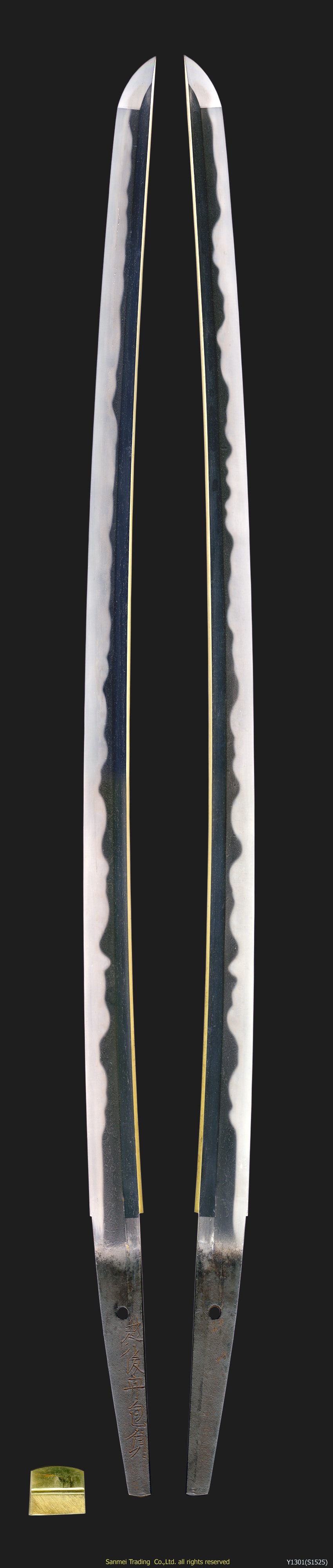




![Katana - Hozon - by Shinto Kanesada - 刀[越後守(二代兼定・坂倉言之進照包)(大業物)][日本美術刀剣保存協会]保存刀剣](/_next/image?url=https%3A%2F%2Fitbhfhyptogxcjbjfzwx.supabase.co%2Fstorage%2Fv1%2Fobject%2Fpublic%2Flisting-images%2Fworld-seiyudo%2FL284478%2F00.jpg&w=2560&q=90)
![Katana - Tokuho - by Shinto Kanesada - 刀[坂倉言之進照包(大武功)][日本美術刀剣保存協会]特別保存刀剣](/_next/image?url=https%3A%2F%2Fitbhfhyptogxcjbjfzwx.supabase.co%2Fstorage%2Fv1%2Fobject%2Fpublic%2Flisting-images%2Fworld-seiyudo%2FL31493%2F00.jpg&w=2560&q=90)