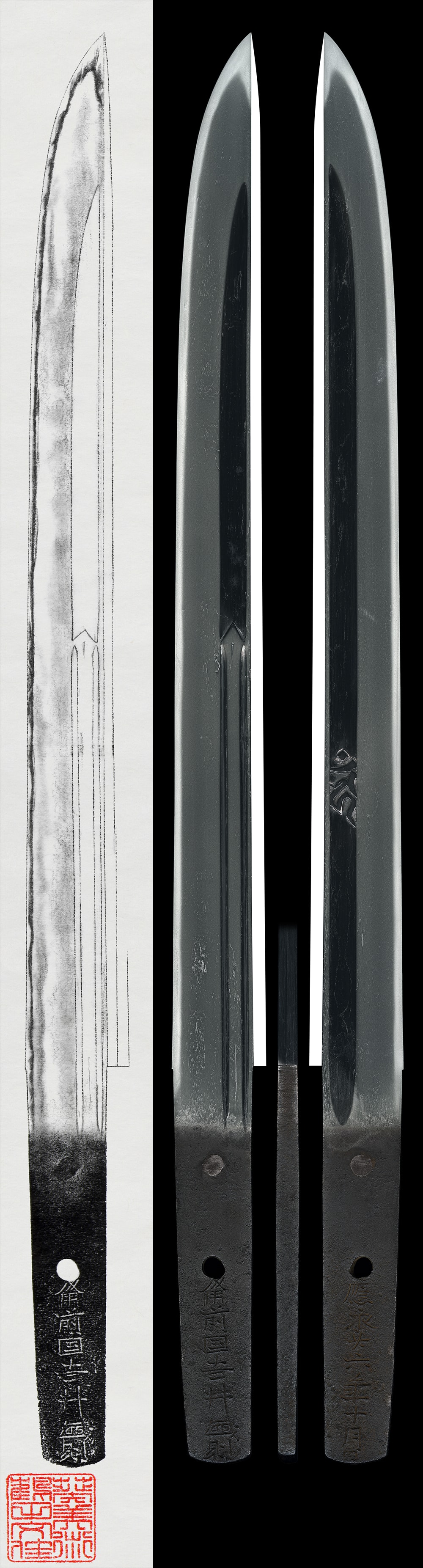
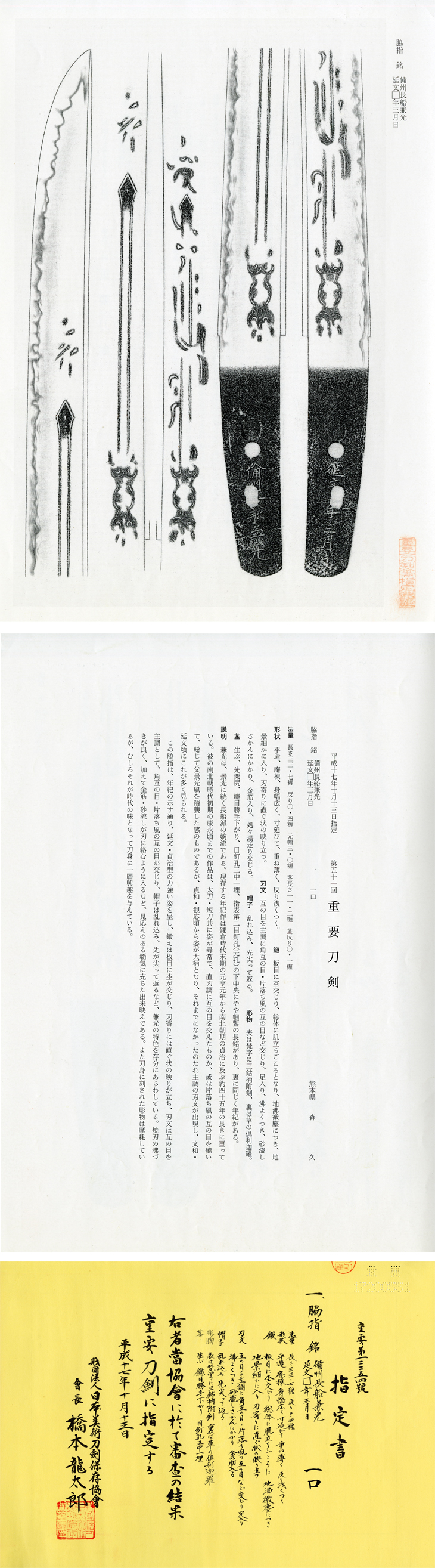
Juyo-Token, 51st Session — Designated October 13, 2005
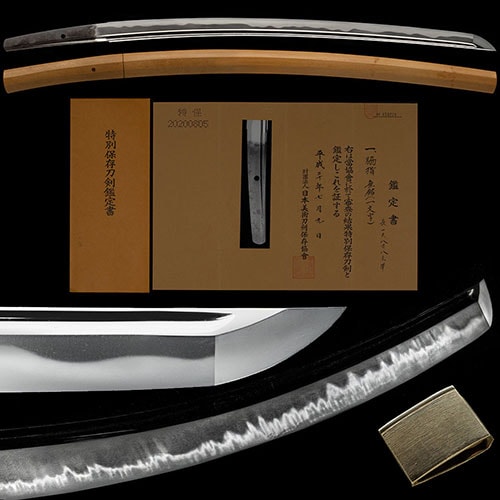
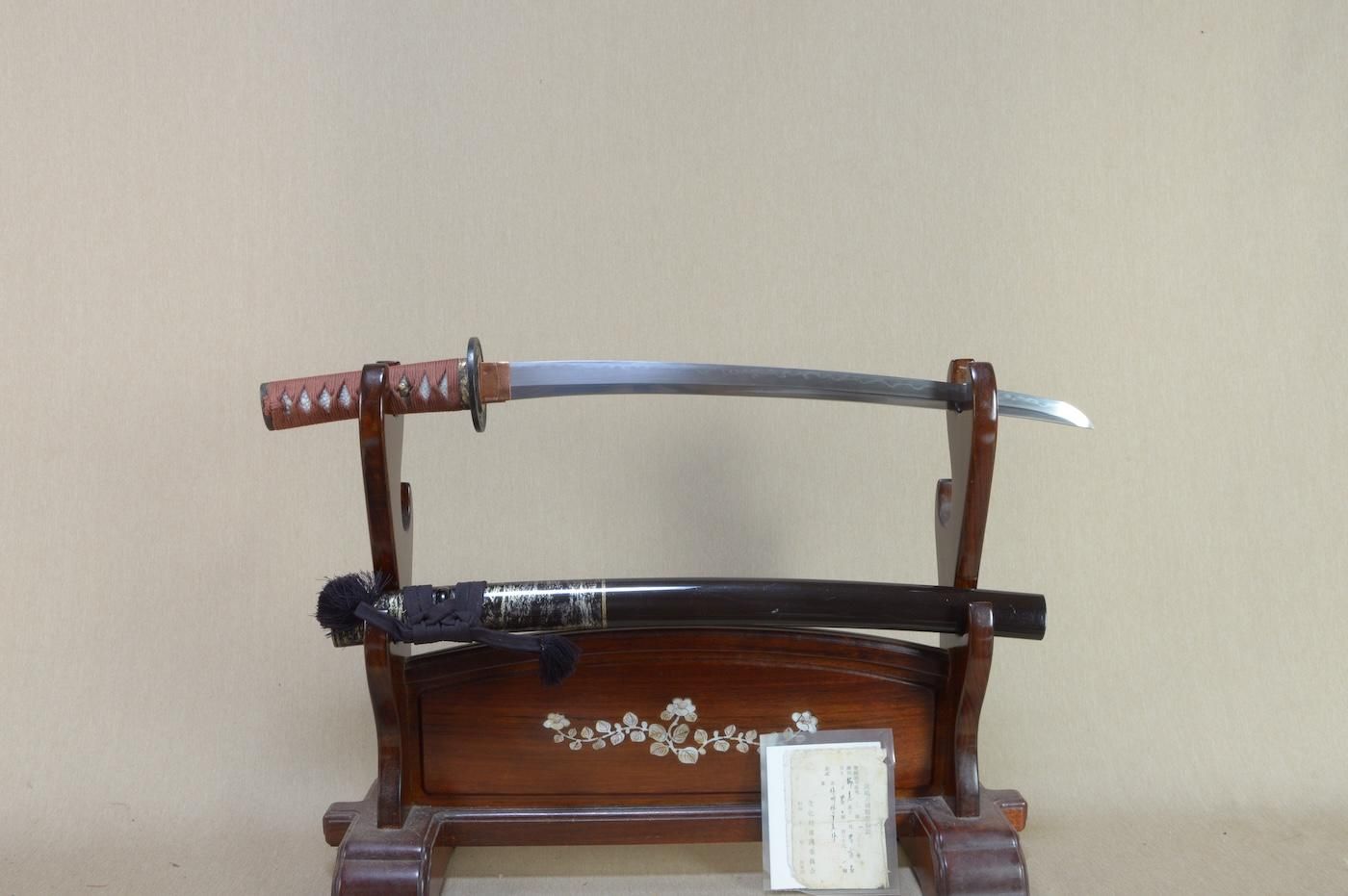
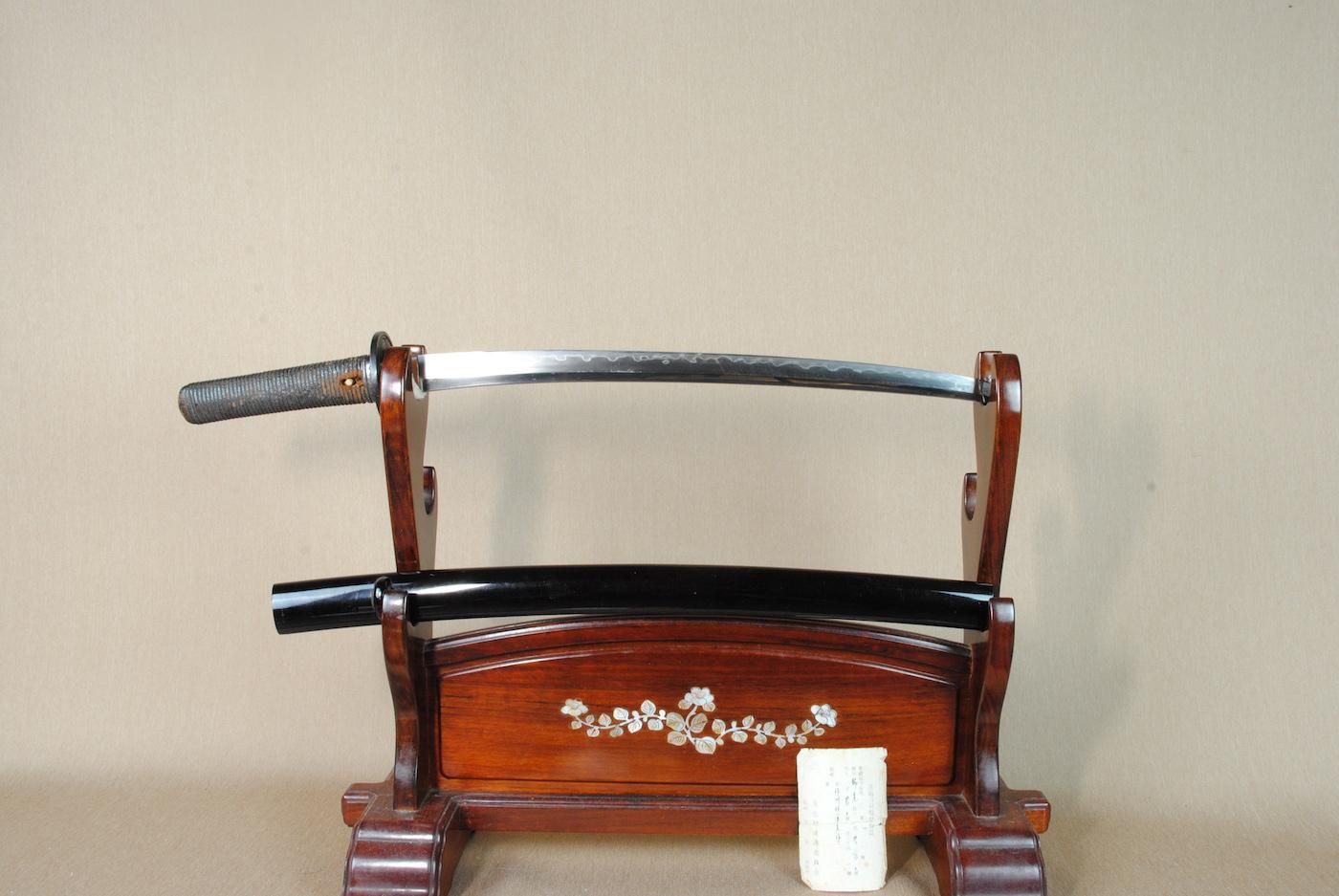
Wakizashi, mei: Bishū Osafune Kanemitsu (備州長船兼光)
Measurements Nagasa 33.7 cm, sori 0.4 cm, motohaba 3.0 cm, sakihaba 1.8 cm, nakago-nagasa 11.2 cm, nakago-sori 0.1 cm
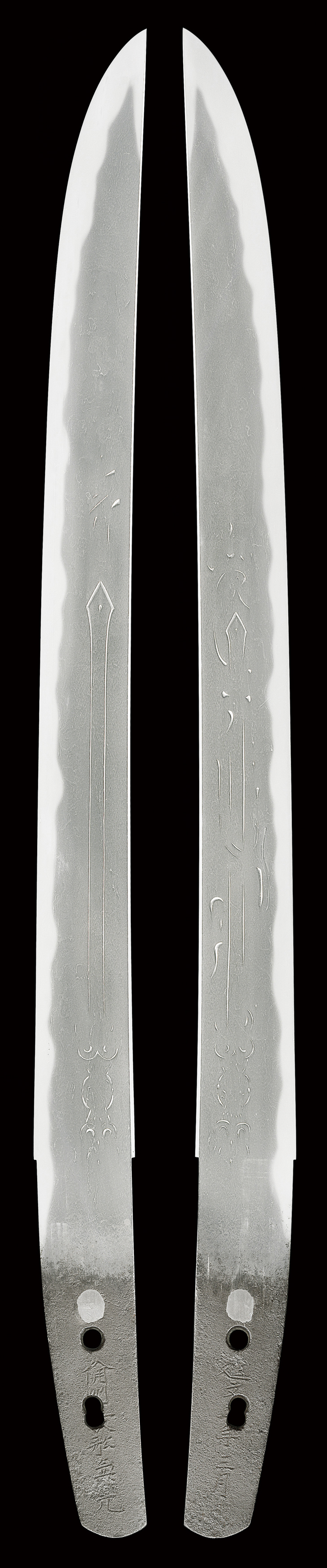
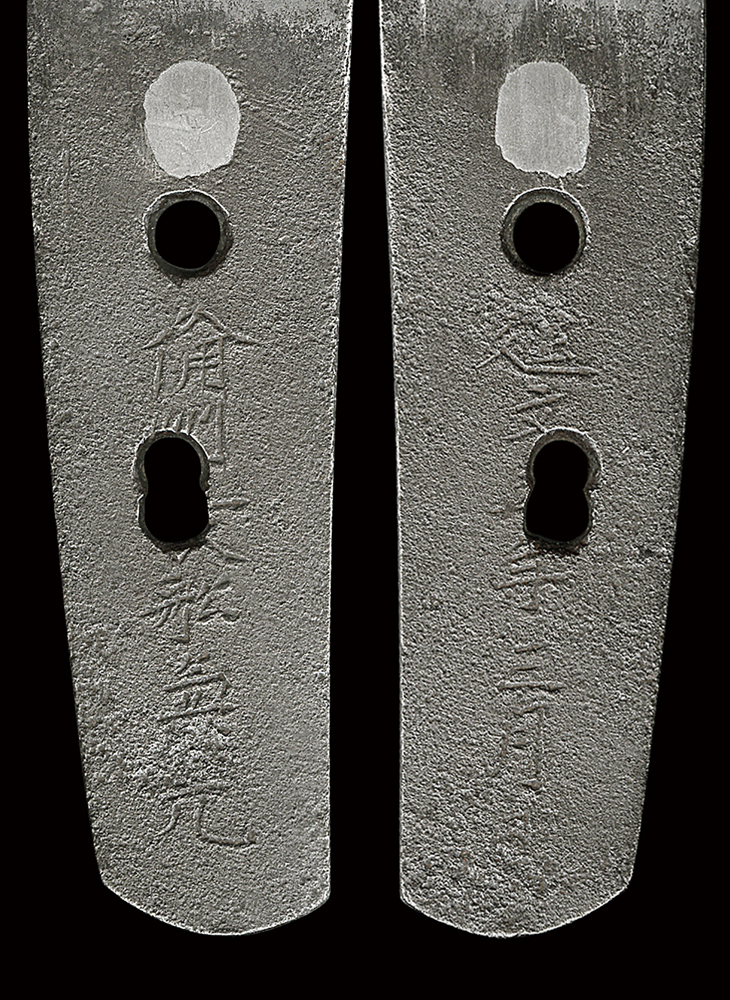
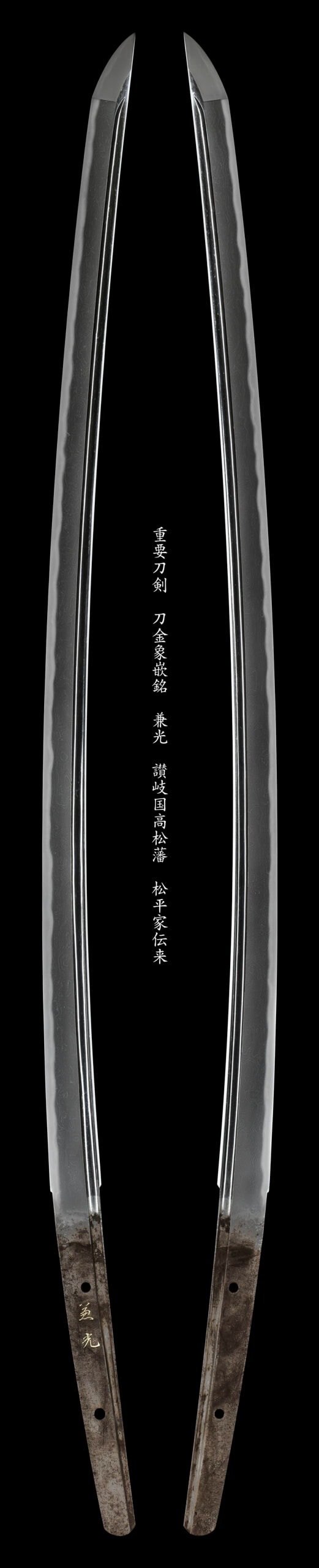
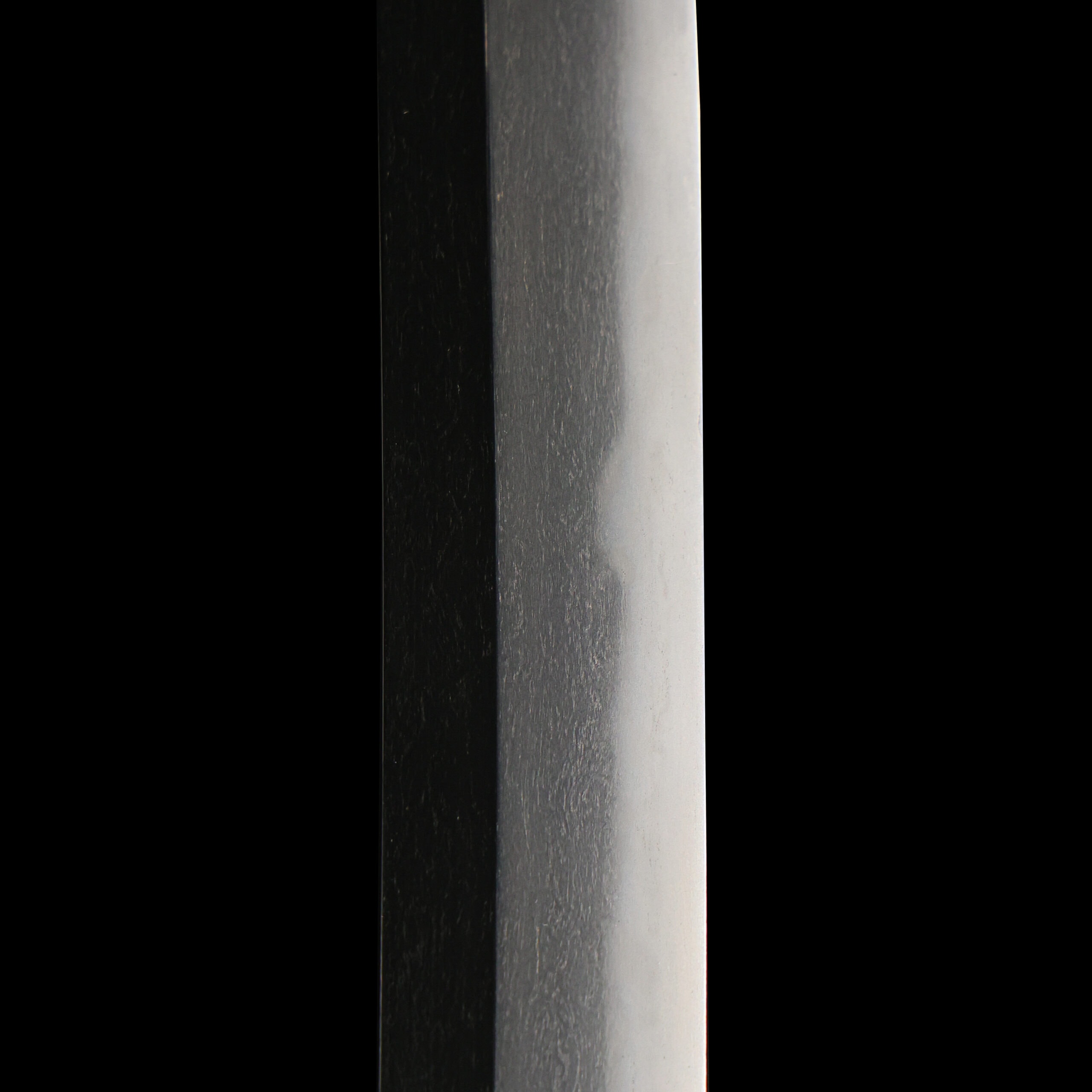
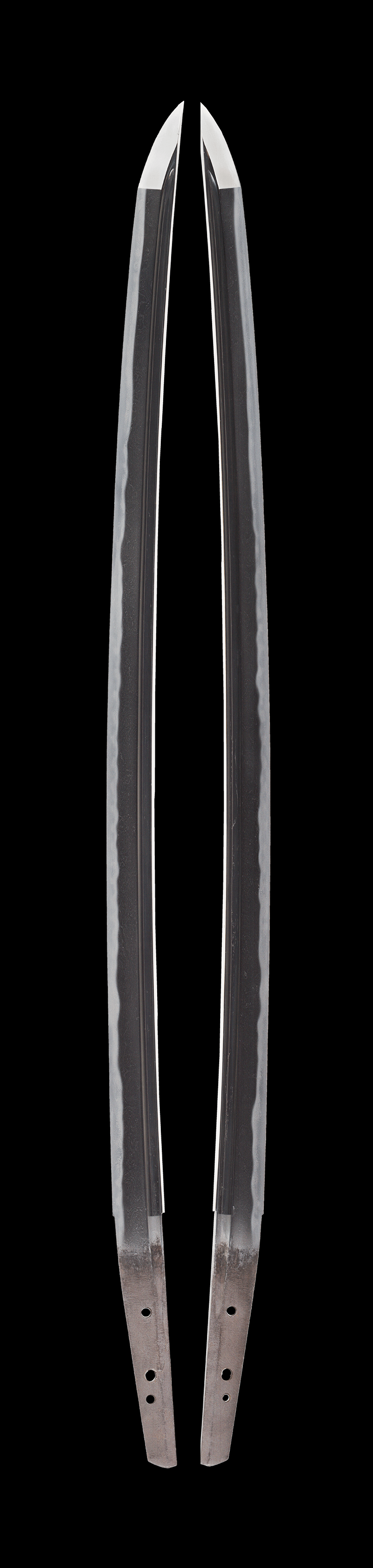
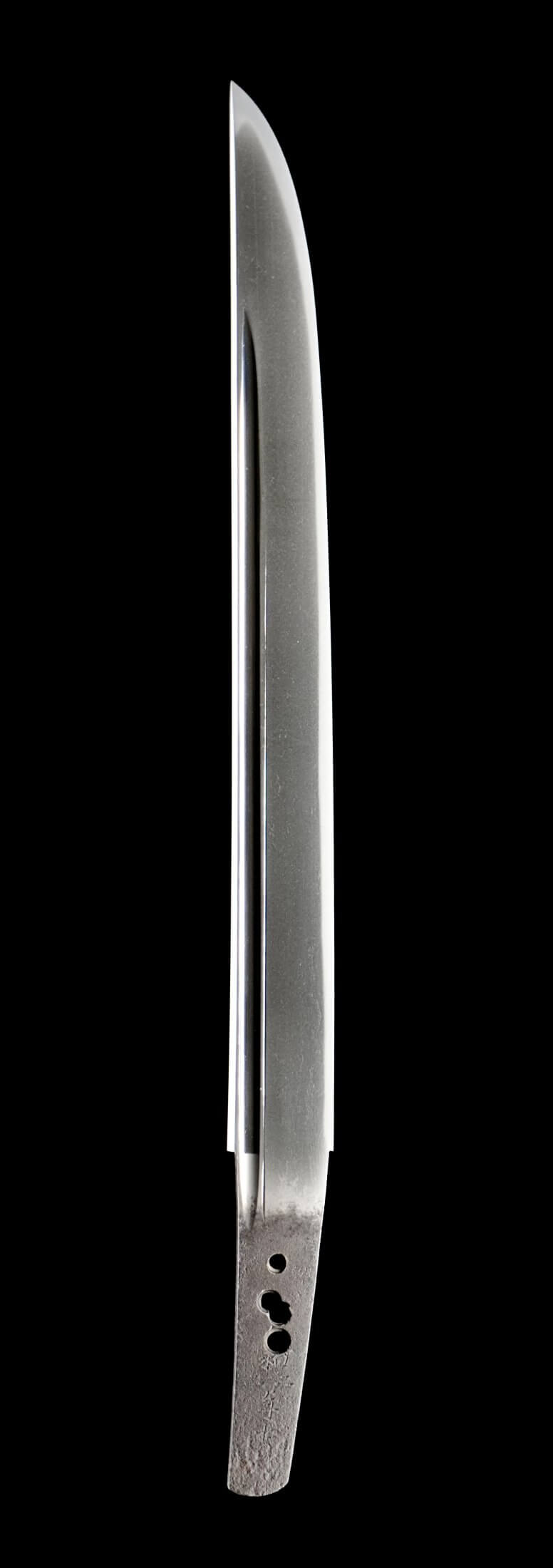
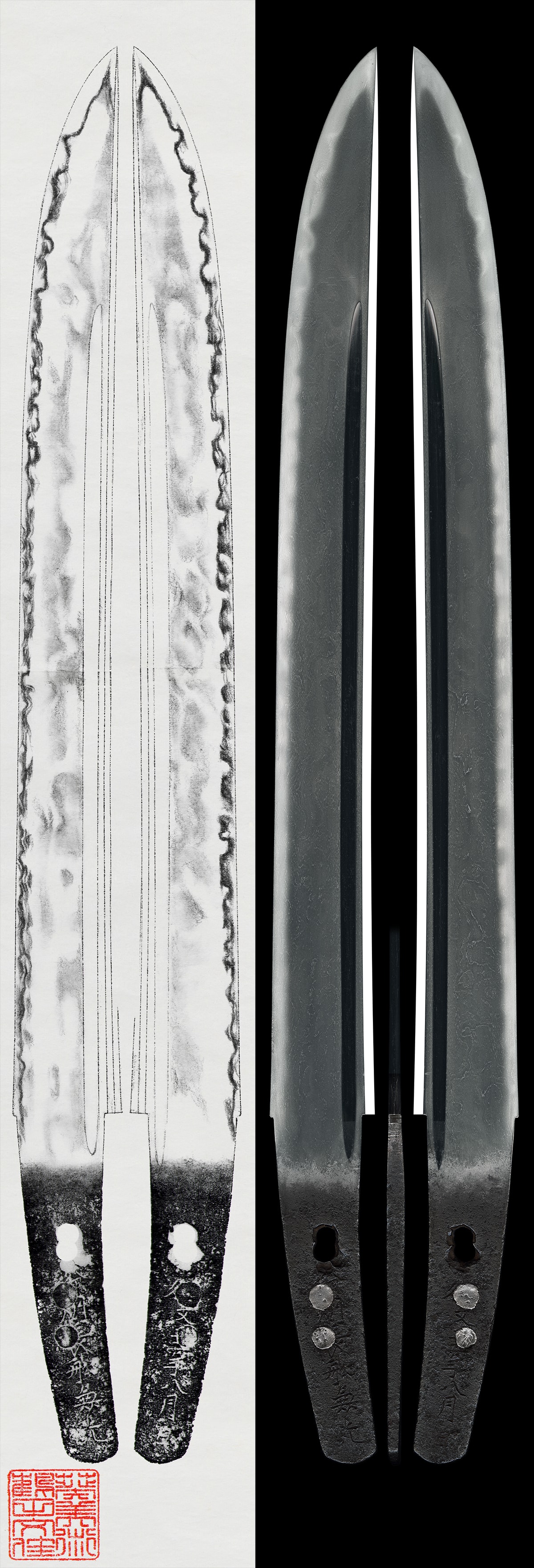
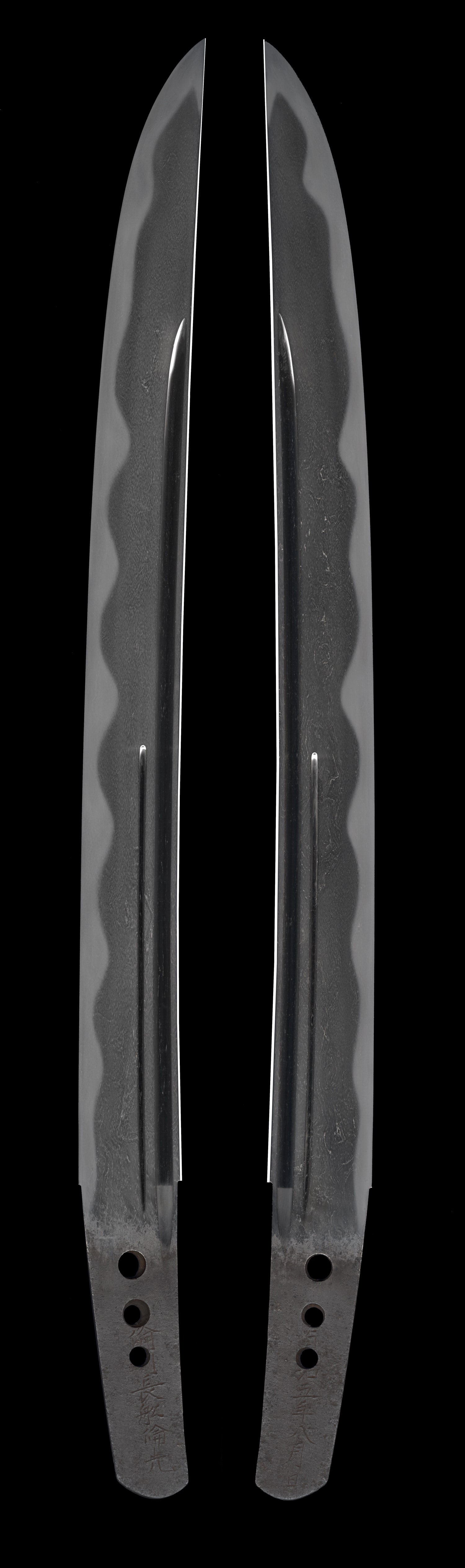
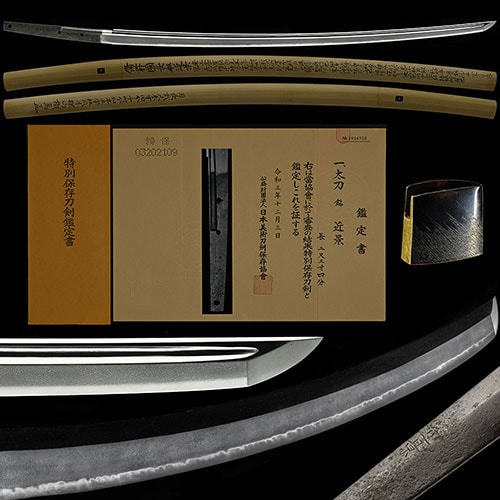
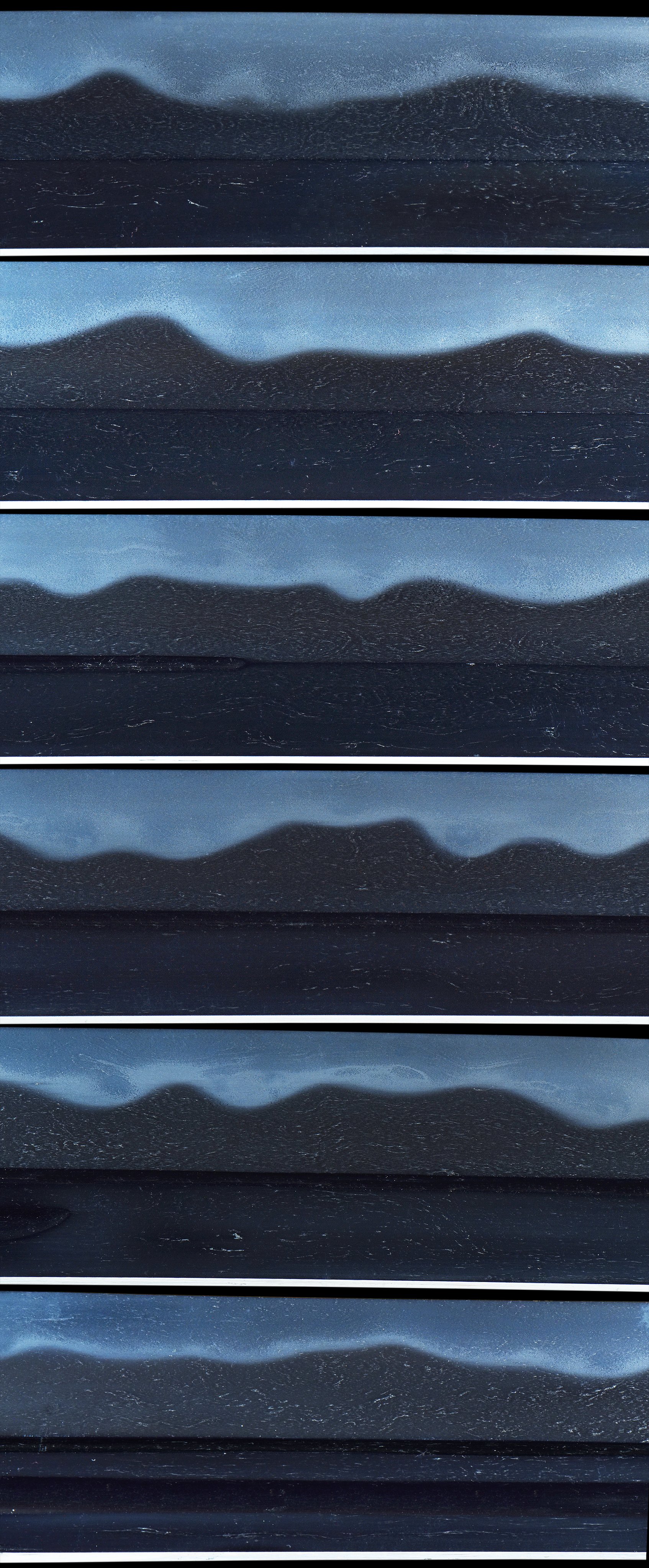
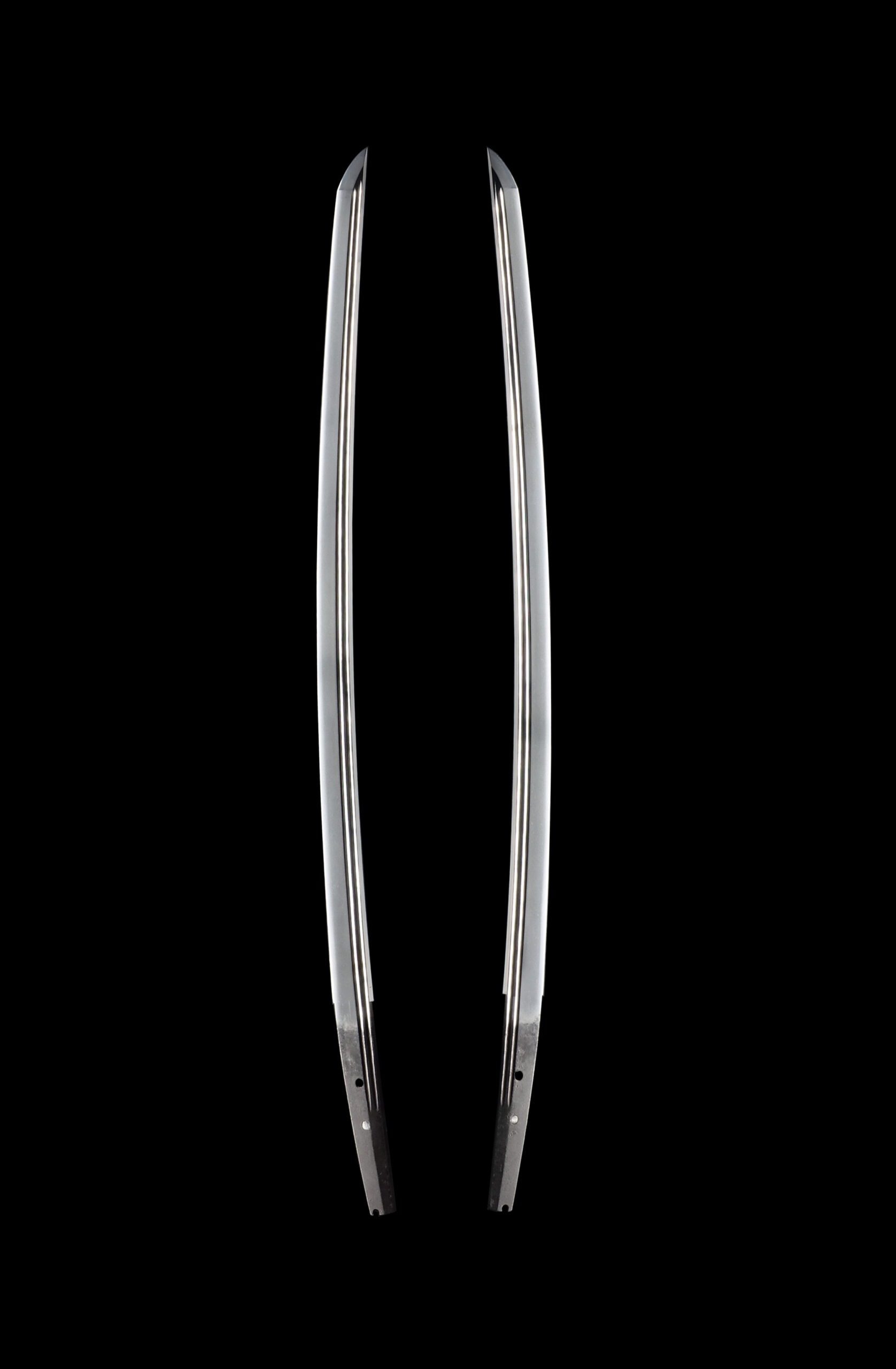
Description Keijo: hira-zukuri, iori-mune; wide mihaba, slightly elongated (sun-nobi), thin kasane, with shallow sori. Kitae: itame-hada mixed with mokume; overall tending toward slightly standing grain (hada-dachi-gokoro); fine ji-nie; delicate chikei; along the edge a straight utsuri appears. Hamon: gunome as the main theme, mixed with angular gunome (kaku-gunome) and kataochi-style gunome; ashi enter; nie adheres well; vigorous sunagashi; kinsuji appear; with yubashiri mixed in here and there. Boshi: midare-komi, turning back with a pointed tip. Horimono: On the omote, a bonji and a ken with a three-pronged vajra hilt (sankozuka-ken); on the ura, a kurikara in cursive script. Nakago: ubu; tip kurijiri; file marks katte-sagari; three mekugi-ana, one of them plugged; on the omote, below the second mekugi-ana (the original hole) and centered, there is a long signature cut with a somewhat fine chisel; on the ura there is a corresponding date inscription.
Artisan Osafune Kanemitsu
Era Dated: Enbun 6 (1361), 3rd month (day unspecified)
Explanation Kanemitsu stands in the main line (chakuryū) of the Osafune school following Kagemitsu. Extant works bearing dates span a notably long period—approximately forty-five years—from Genkyō 1 at the close of the Kamakura period through to Jōji in the Nanbokuchō period.
In his works up through the early Nanbokuchō period, both tachi and tantō generally show conventional forms, and the temper is either a suguha-based style with gunome mixed in, or a gunome resembling kataochi. Overall, these pieces give the impression of following the manner of his father Kagemitsu. From around the eras of Jōwa and Kannō, however, his blade forms become larger in scale, and a previously unseen notare-dominant hamon emerges—something frequently encountered around the periods of Bunwa and Enbun.
This wakizashi, as its date indicates, presents the powerful form typical of Enbun–Jōji. Its forging shows itame with mokume mixed in, and a straight utsuri stands up along the edge. The hamon is fundamentally gunome, incorporating angular gunome and kataochi-like gunome; the boshi is midare-komi and turns back with a pointed tip—features that fully express Kanemitsu’s distinctive characteristics. The hardened edge shows good nie adherence, and moreover kinsuji and sunagashi intertwine with the ha, producing a striking, spirited (haki) workmanship of strong visual impact. The carvings cut into the blade are worn, yet this very wear becomes a flavor of age, lending the blade an added fascination.









![Tanto - Tokuho - by Sukesada - 短刀[備前国住長船与三左衛門尉祐定][日本美術刀剣保存協会]特別保存刀剣](/_next/image?url=https%3A%2F%2Fitbhfhyptogxcjbjfzwx.supabase.co%2Fstorage%2Fv1%2Fobject%2Fpublic%2Flisting-images%2Fworld-seiyudo%2FL678996%2F01.jpg&w=2560&q=90)

![Wakizashi - Tokuho - by Sukesada - 脇差[河内守祐定 備前国長船住][日本美術刀剣保存協会]特別保存刀剣](/_next/image?url=https%3A%2F%2Fitbhfhyptogxcjbjfzwx.supabase.co%2Fstorage%2Fv1%2Fobject%2Fpublic%2Flisting-images%2Fworld-seiyudo%2FL684649%2F01.jpg&w=2560&q=90)