鎌倉時代は備前の頂点である。伝えでは一文字派の工が後鳥羽上皇の御番鍛冶に列し、世紀の半ばには光忠が長船派を興して、注文は公家からも武家政権からも流れ込んだ。国宝刀剣の数で備前に並ぶ国はない。
 NihontoWatchNihontoWatch
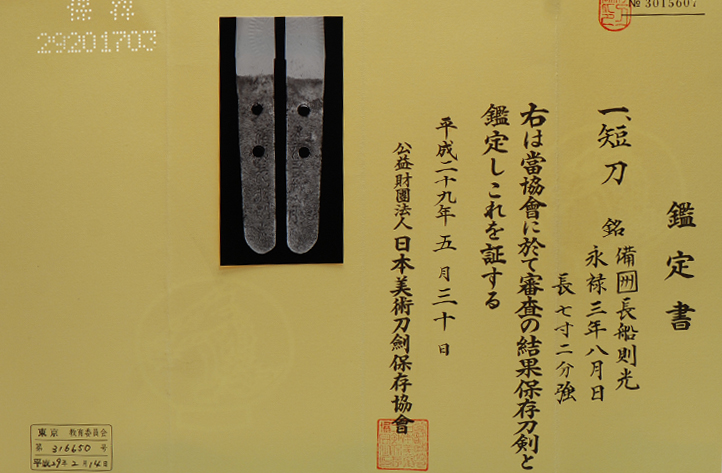
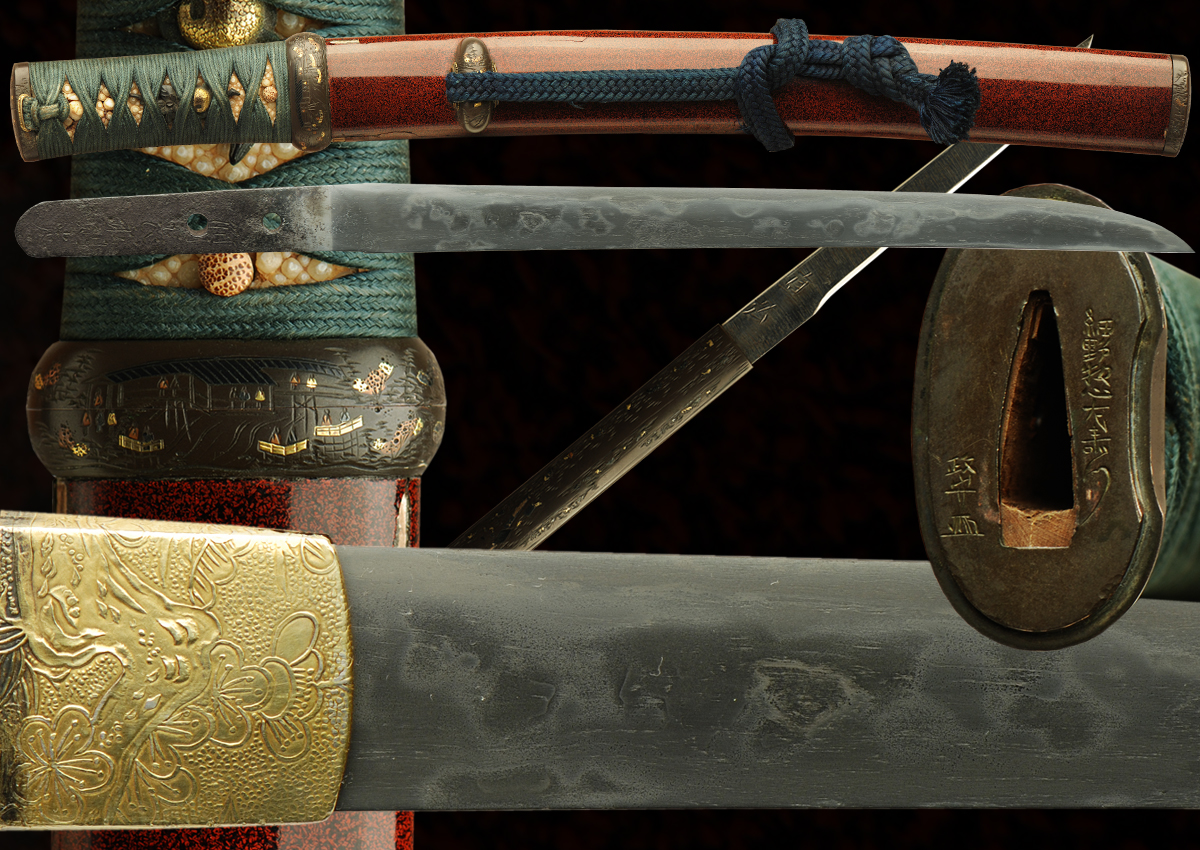
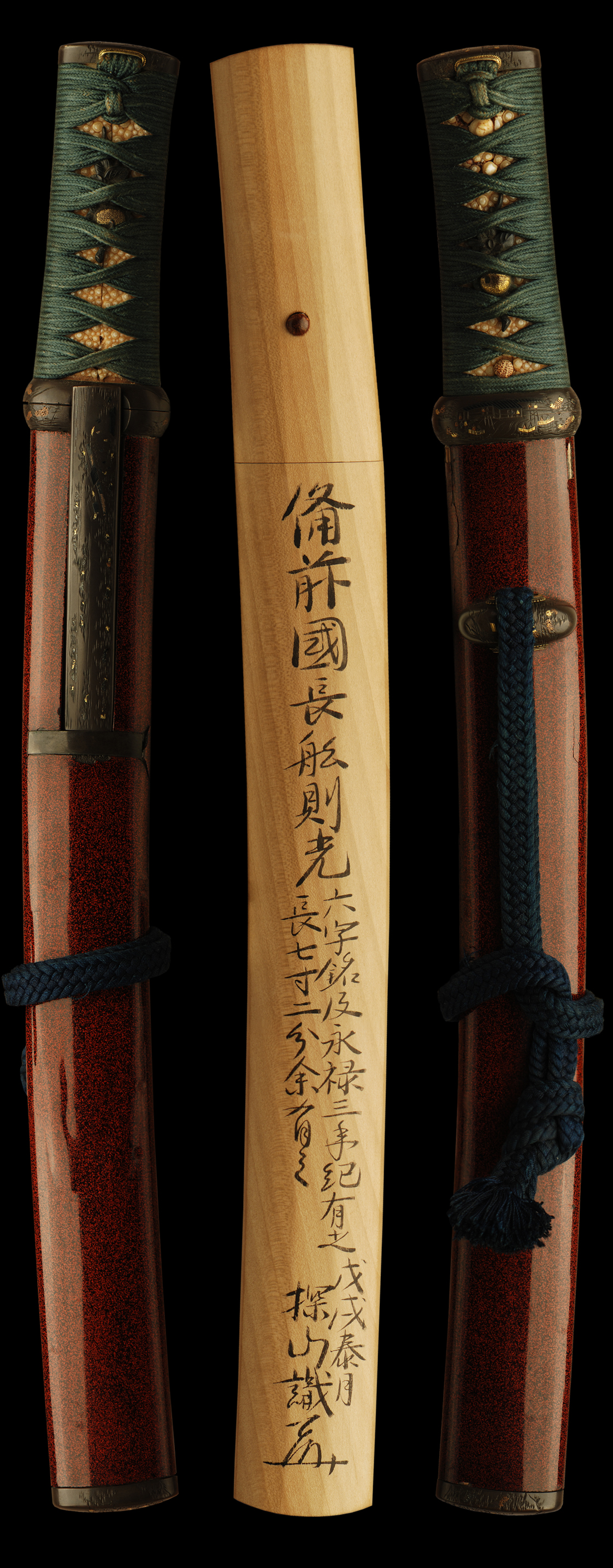
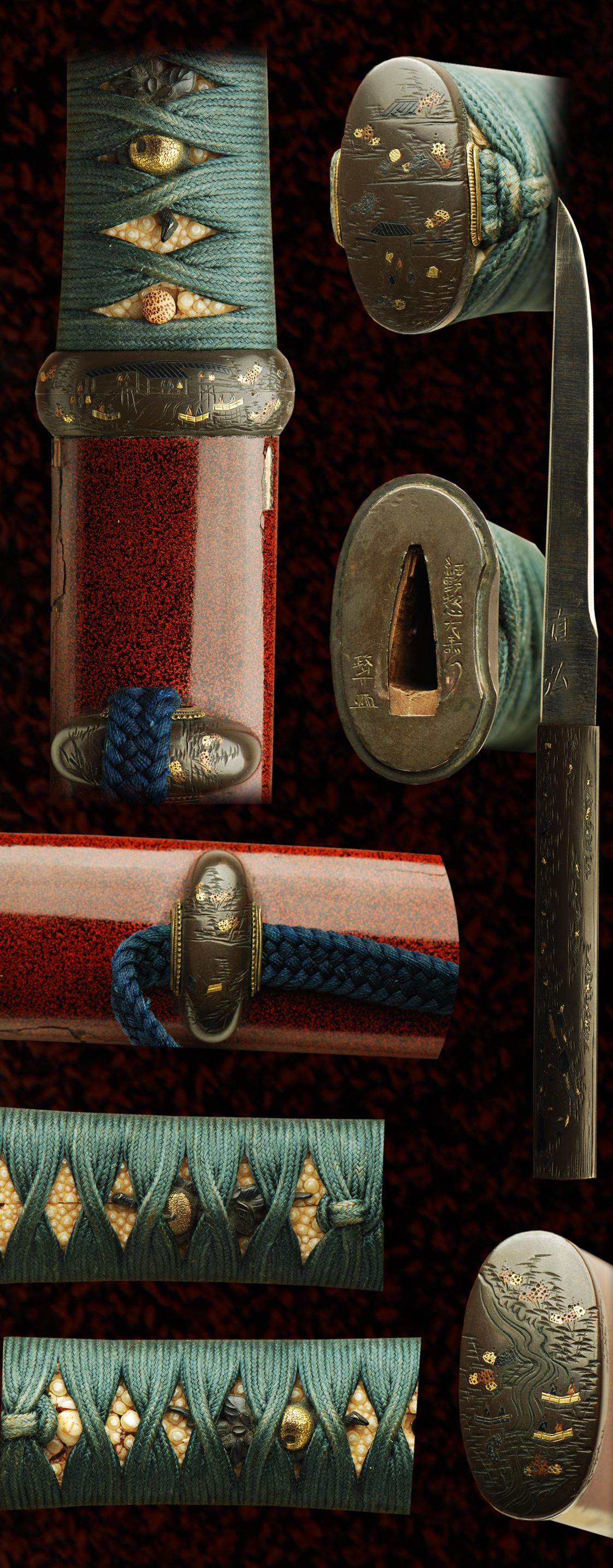
「備前長船則光 稀少な皆焼刃の短刀」 長船則光は、貞治頃を初代とし、室町時代末期まで連綿と続いた名門です。 室町期の備前鍛冶においては、盛光、康光らと並び称される高名な工です。 当時は相州伝が一世を風靡しており、正広や綱広に代表される華やかな皆焼(ひたちつら)の作風が諸派に大きな影響を与えていました。 本作は、板目に木目、そして肌立つ流動的な地景を交えた見事な鍛えに、身に踊るような激しい皆焼の刃文を焼いた、極めて珍しくも美しい一口です。鮮やかな映りも現れています。 長銘に加えて年紀が刻まれている点は、則光の代を特定する上でも資料的価値が高く、大変貴重です。 また、本作には格調高い合口様式の逸品拵が附随しております。 則光は長光の門流を汲み、室町後期まで数代を数えますが、本作のような相州伝の影響を強く受けた皆焼刃は非常に珍しく、個性が際立っています。 地鉄は板目に木目、さらに柾目が混じり、地景の現れた素晴らしい肌合いを見せています。 生茎(うぶなかご)で目釘孔は二つ。銘と年紀が完存する姿は、まさに愛蔵に値する稀少品と言えるでしょう。 ※注:本刀は研磨・修復前に審査に出されたものです。 【外装:合口拵】 本拵は、細野惣左衛門政守(花押)の銘が刻まれた一作金具による合口拵です。 全ての金具が同一の作者によって揃っている「一作」であることは、極めて稀で価値があります。 鞘は赤と黒の石目塗で仕上げられ、縁頭、小尻、栗形、そして小柄に至るまで、村の風景を描いた高彫の金具で統一されています。 柄糸は鴨頭草色(ティール)、下げ緒には紺色が用いられ、柄前には時代感のある大粒の親粒がついた見事な鮫皮が使用されています。 目抜きは赤銅地に金の色絵を施した「柿に花卉図」。 金箔押の地に見事な流水と花文様が施された二重の装飾元白(はばき)が、刀身と拵の品格を一層引き立てています。 白鞘には田野辺先生による「探山」の鞘書きがあり、日本美術刀剣保存協会(NBTHK)の鑑定書がその真実性を保証しています。 銘:備州長船則光 永禄三年八月日(1560年) 時代:古刀(室町後期) 長さ:7寸2分余(約21.8cm) 元幅:19.5 mm 元重:5.4 mm 体配:平造、庵棟 茎:生茎 鍛え:板目、木目交じり 刃文:皆焼 状態:指込研磨 【鞘書】 備前國長船則光 六字銘及永禄三年紀有之 長七寸二分余有之 戊戌泰月探山識「花押」 (備前国長船則光。六字銘および永禄三年の年紀あり。長さ7寸2分余。2018年1月、田野辺道宏記す。) 【鑑定書】 保存刀剣(第301560号) 短刀 銘:備州長船則光 永禄三年八月日 長さ:約21.8cm 平成29年(2017年)5月30日 公益財団法人 日本美術刀剣保存協会(NBTHK)
Certificate reading — 銘 備州長船則光 永禄三年八月日
NihontoWatch取扱店 Nihonto Antiques


備前伝 · 備前 · 1303-1306頃
藤代 上作 · 刀剣大鑑 上位11%
現在1点販売中
長船の初代則光は、一振の年紀作によって位置づけられる。平造の短刀で、表に「備前国長船住則光」[[c:1]]、裏に嘉元三年十二月日の年紀があり、第八回重要刀剣に指定されている。説明は「初代則光は長光の門人と伝え」[[c:2]]とし、ほかに長光・景光に見るような二字銘の太刀、及び長銘の太刀が現存すると記したうえで、「この短刀に見るごとき嘉元の年紀は貴珍であり、他には例を見ない」[[c:3]]と述べる。室町時代中期の所謂永享備前に属し「寛正則光」と称される同銘工とは別人であり、説明もこの点を区別して記している。
嘉元の短刀は重ねやや厚く、よろい通しに似た内反りの尋常な姿である。鍛えは板目肌流れごころとなり、乱映りが立つ。刃文は互の目に角がかった片落風の互の目が交じり、砂流しかかり、匂出来で冴え、帽子は乱れ込んで小丸に長く返る。説明は「一見地刃の出来が景光を思わせるものがあり」[[c:4]]と評する。表の素剣の下の梵字は後刻である。
この作風に拠って、二振の無銘刀が則光に極められている。一振は大磨上で細身、反り深く鎬高く小鋒の刀で、板目肌つみ地沸つき乱れ映り立ち、刃文は直刃調に小互の目・小丁子・やや角ばる刃などを交じえ、小沸つき、細かに砂流し・金筋がかかる。説明はこれを「鎌倉末期の備前物の中でも則光にもっとも擬せられるものであり、古則光の所伝は首肯し得る」[[c:5]]とする。もう一振は本阿弥家十八代光鑑による「則光」の金象嵌極めがある刀で、小板目肌に杢交じり総体につみ、地沸微塵につき、地景細かに入り、乱れ映り立ち、刃文は頭の丸い丁子に互の目・尖り刃など交じって華やかに乱れ、足・葉よく入り匂勝ちに小沸つく。説明は鎌倉時代後期の長船正系、就中「長光あたりを髣髴とさせるものがある」[[c:6]]とし、光鑑の極めを妥当と認めている。
初代則光の記録は、このように重要刀剣三振に拠る。景光風の片落ち互の目を焼く在銘年紀の短刀一振と、いずれも乱れ映りが立ち、直刃調の小乱れから長光一門風の華やかな丁子乱れまでを示す極めの刀二振である。
則光の位置づけを、日本刀全体および伝法・時代・時期ごとに示します。各区分(随一・屈指・有数・著名)は、NBTHK および文化庁による指定に加え、三作や名物帳などの歴史的栄誉を加味したものです。
各項目を選ぶと評価方法が表示されます。
在銘年紀作が示す、確実に活動していた年代
備前伝 · 備前
時期区分: 古長船· 1238–1335
現在187点販売中
片落ち互の目という一様式を完成させた景光をひとつの到達点として、古長船は鎌倉時代中後期(おおむね一二三八年から一三三五年)の長船派草創の核を成す。光忠を初代とし、その子長光、そして真長を加えた三作の世代がまず作風の幅を定め、続いて長光の子で嫡流三代目の景光がこれを受け継いだ。景光の年紀は嘉元から建武までの三十余年に及び、説示にも元応・元亨・正中・元徳・元弘・建武といった在銘紀年作が並ぶ。武家社会の中枢で太刀が需められた鎌倉末期にあって、この草創世代は長船の鍛法と銘の様式を確立し、のちの南北朝期相伝備前や室町応永備前が分岐していく母体を準備した。逆鏨を多用する近景の代銘が景光在銘作に交じる事実も、すでに一門が複数の手で量産しうる工房へ育っていたことを示している。 作風は地鉄に古長船の眼目がある。板目に杢を交えて総じてよく錬れて緩みなく詰み、地沸が微塵に厚くつき、地景が細かに入る。映りは乱れ映りまたは棒映りが鮮明に立ち、景光の太刀では暗帯部が逆がかって青江の段映りに通じる筋映りを表裏下半に現すものまで見える。刃文は華やかな丁子乱れを基調とした世代の作と、直刃調に小互の目・小丁子・角ばる刃を交えて逆がかり、片落ち互の目を主調とする景光の穏やかな出来とが併存し、足・逆足・葉がよく入り、匂勝ちに小沸がつき、匂口は明るく冴える。帽子は乱れ込んで先尖りごころに返る三作帽子を見せる。古備前が地斑映りと厚い沸を残す素朴な源流であったのに対し、古長船は映りを意識的に立て、鍛えを精緻に詰めた点で一線を画する。さらに後続の南北朝期相伝備前が相州伝の強い沸や飛焼を取り込んで大模様に乱れ込むのに対し、また応永備前が腰開きの互の目と尖り帽子へ向かうのに対し、古長船は匂本位の締まった作域にとどまり、映りの鮮明さと地鉄の精良さで識別される。 収集家が古長船をひとつの章として区別するのは、後続の相伝備前や応永備前とは別の鑑定上の指標が立つからである。要点は三つある。第一に、暗帯部の逆がかる地斑映りや筋映りといった、後代には薄れる映りの強さ。第二に、片落ち互の目と直刃調に小乱れを交えた匂勝ちの穏やかな焼刃で、これは長光の華やかさと相州色の濃い南北朝期の双方から本区分を分かつ。第三に、景光に多く現存する短刀の存在で、細直刃から片落ち互の目まで小振りの姿に一門の特質が凝縮される。説示には元応元年紀の生ぶ茎太刀、正中・元徳・元弘・建武紀の短刀、筑前黒田家伝来の一口など、紀年と伝来の確かな作例が並び、古長船を年代の定点として捉える基盤を与えている。 詳しく見る →
鎌倉時代の備前
鎌倉時代は備前の頂点である。伝えでは一文字派の工が後鳥羽上皇の御番鍛冶に列し、世紀の半ばには光忠が長船派を興して、注文は公家からも武家政権からも流れ込んだ。国宝刀剣の数で備前に並ぶ国はない。
銘が正しい、または無銘でも年代・国・系統を確実に指摘できる、保存に値する真正の作と鑑定されたものです。
日本美術刀剣保存協会(NBTHK)は、1948年に設立され、文化庁の監督を受ける公益財団法人で、東京・刀剣博物館に本部を置きます。専門の審査員が出品作を直接審査し、美術的・歴史的価値に応じた鑑定書を発行します。NBTHKの鑑定書は、日本刀および刀装具の真正性を示す最も広く認知された基準です。
NBTHK公式サイトWe offer a 48 hour inspection period for all Antique items shipped within the United States only. If the item is not to your satisfaction, we will gladly refund your money less any shipping and handling fees. All sales are final after the 48 hour inspection period. Please note that all discounted items are a final sale and not returnable.
$5,800