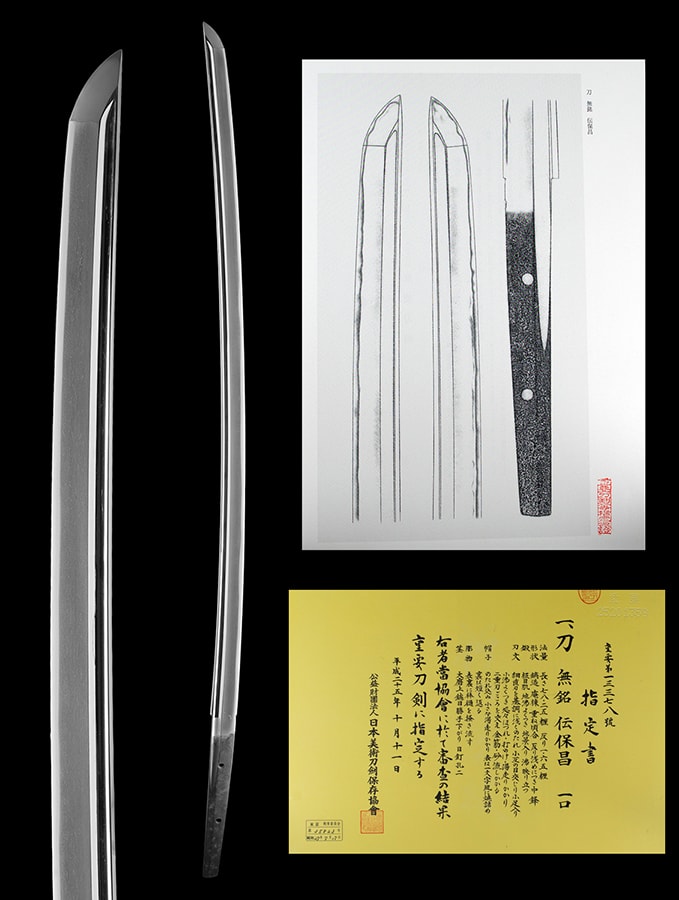
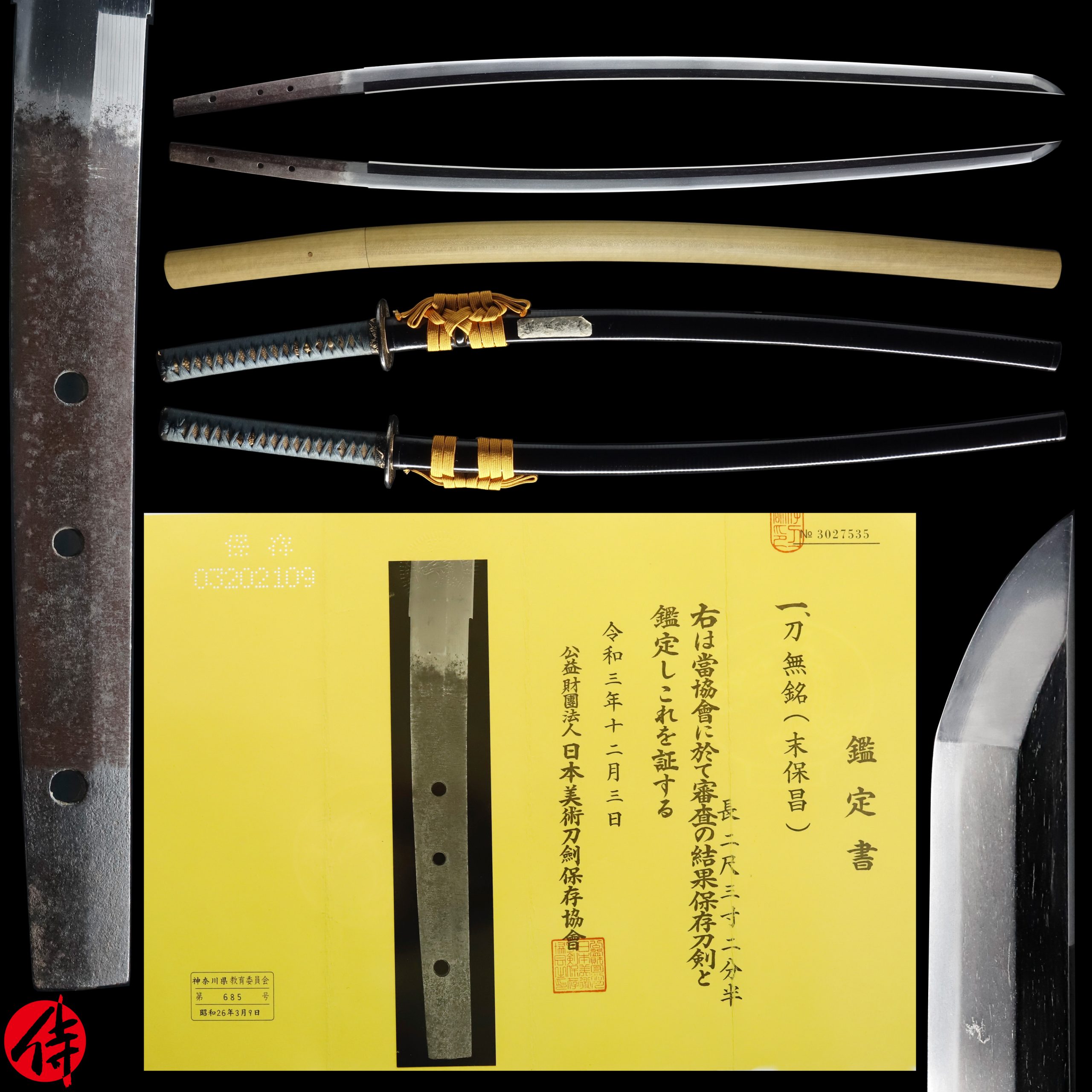
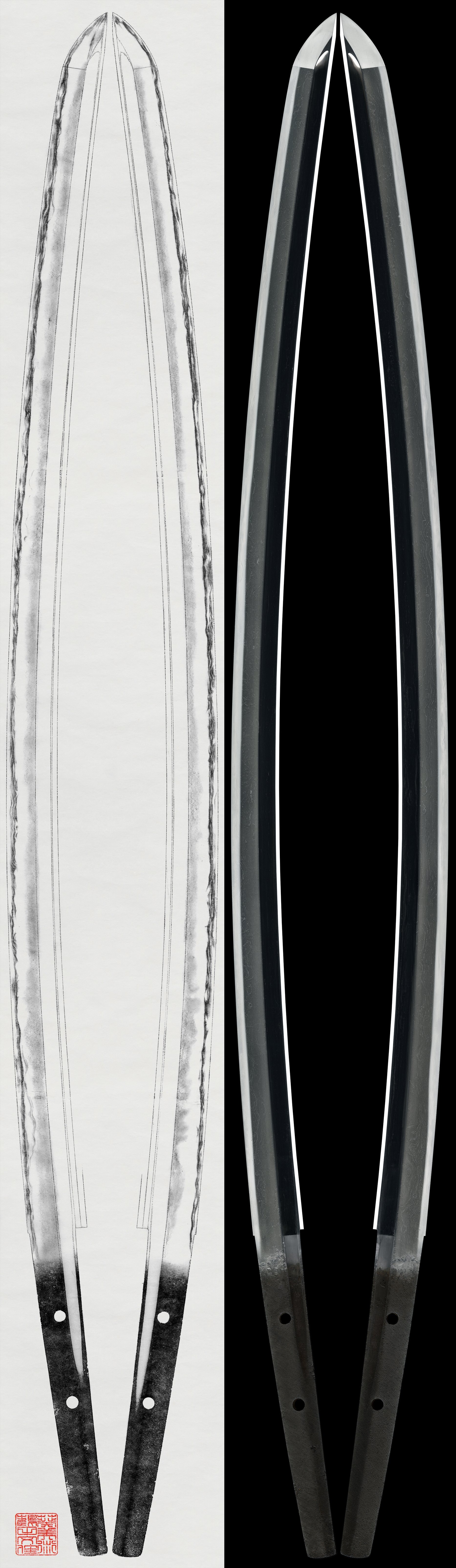
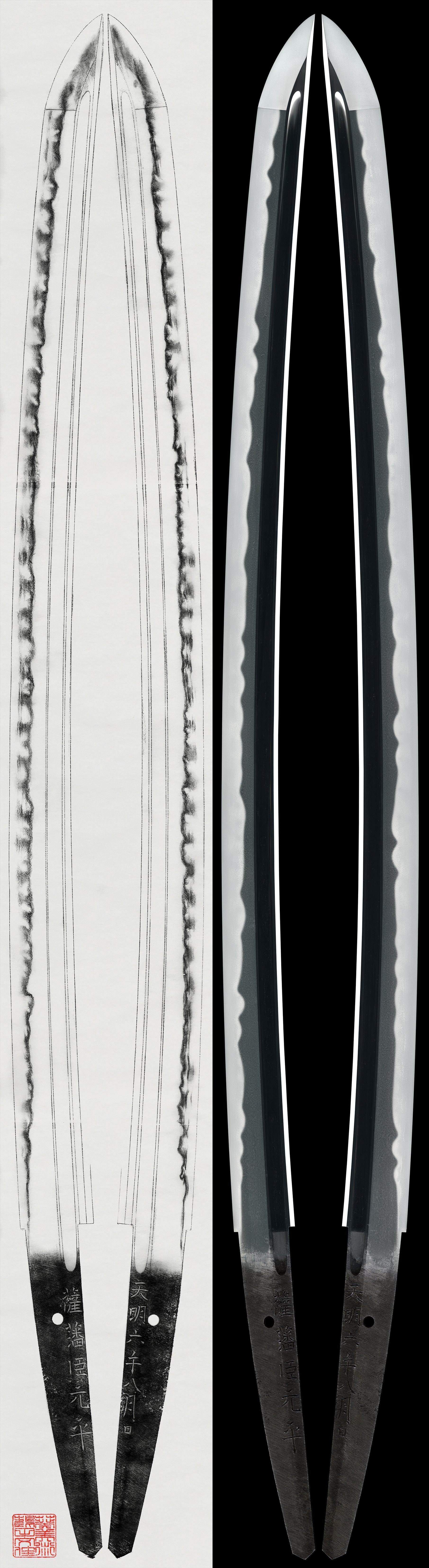
南朝が大和国吉野に都を置いたとき、大和の諸派は最盛期にあった。包永以後の手掻、尻懸則長、そして保昌の純然たる柾目である。その技はすでに諸国へ広がりつつあった。
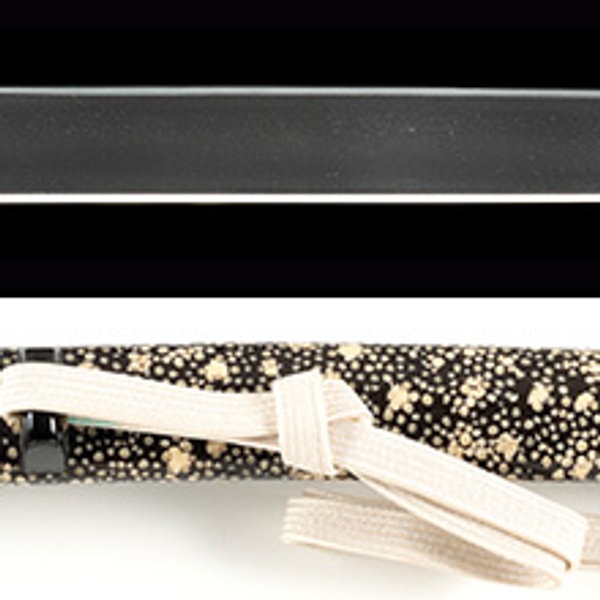
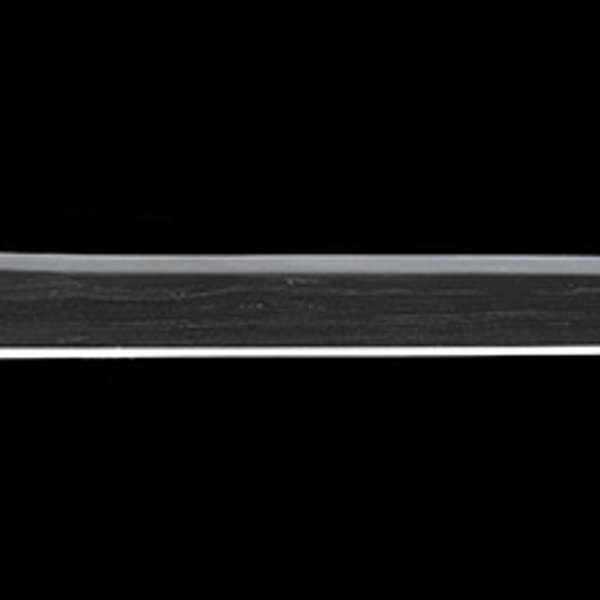
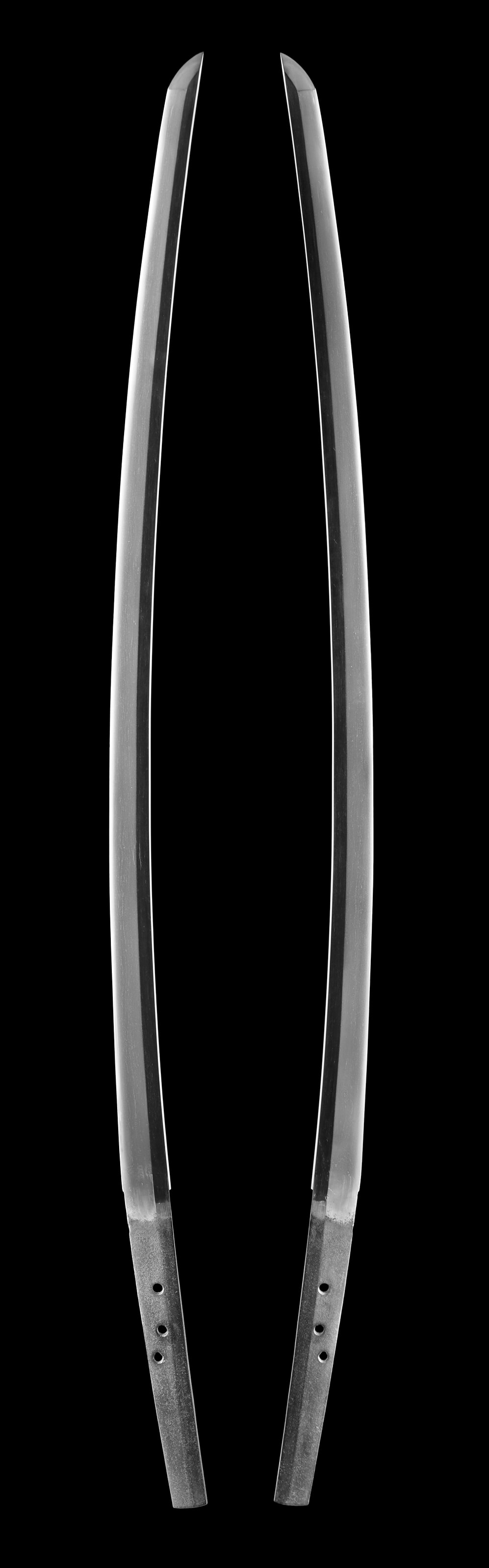
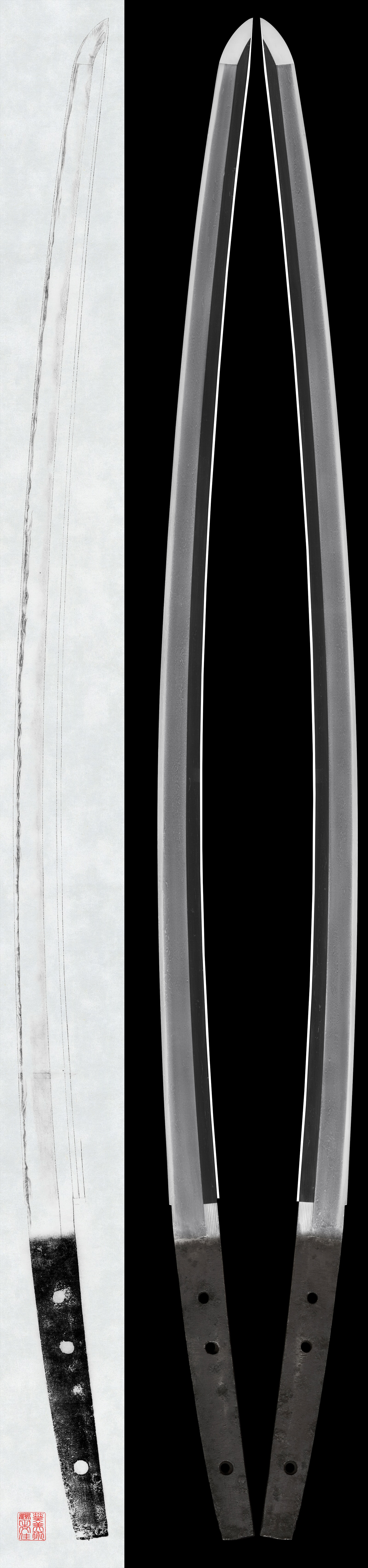
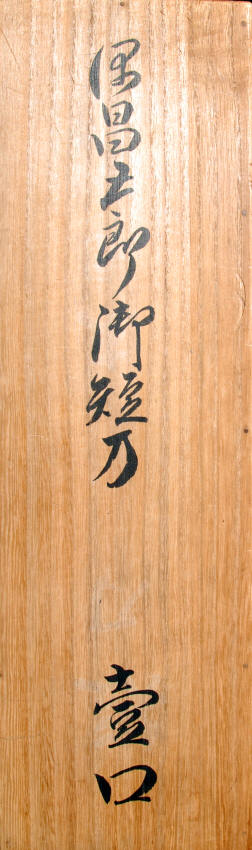
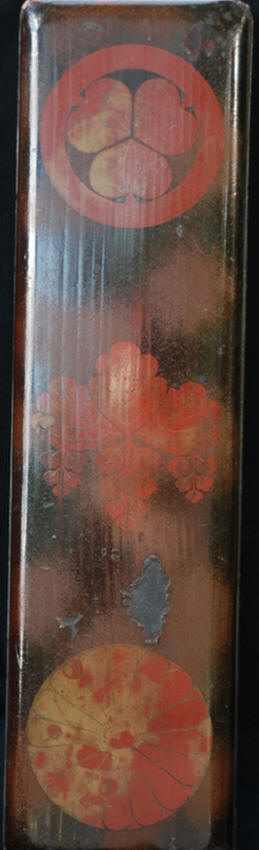
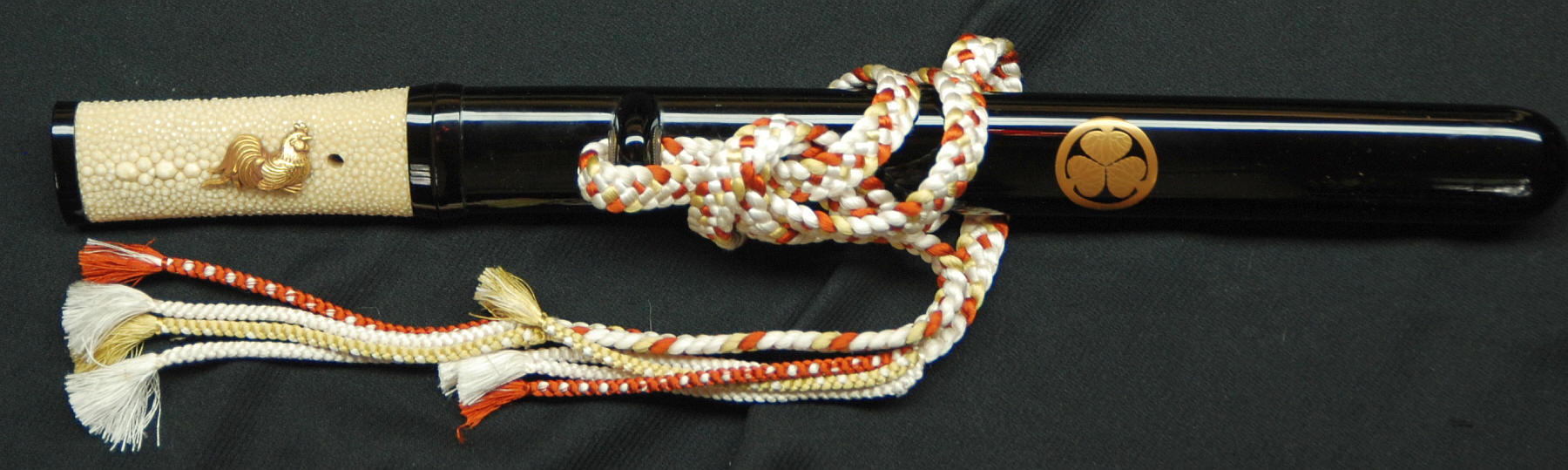
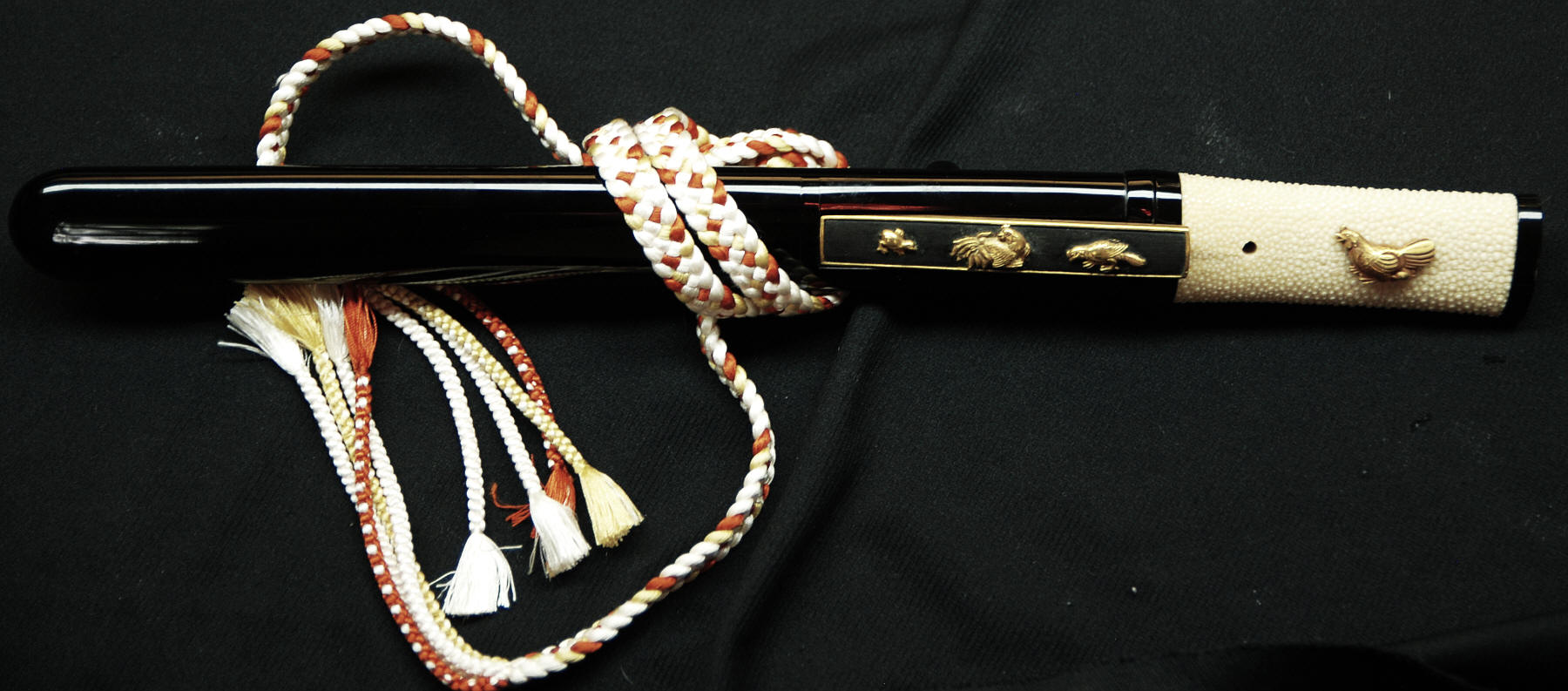
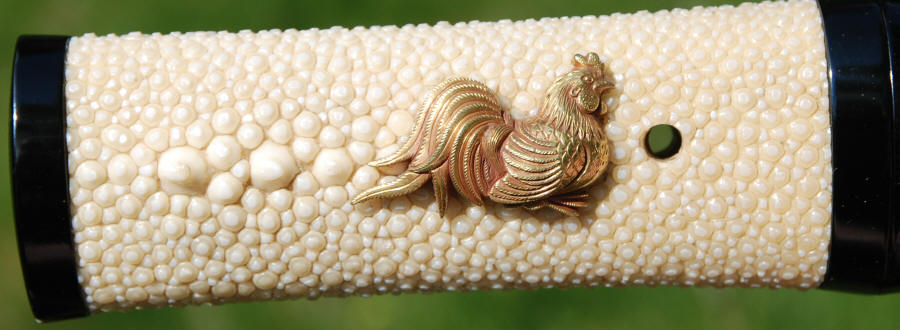
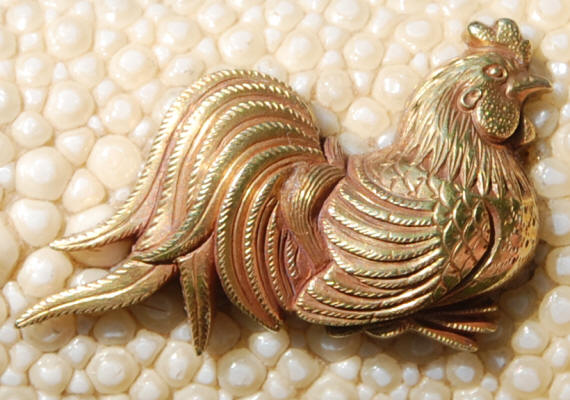
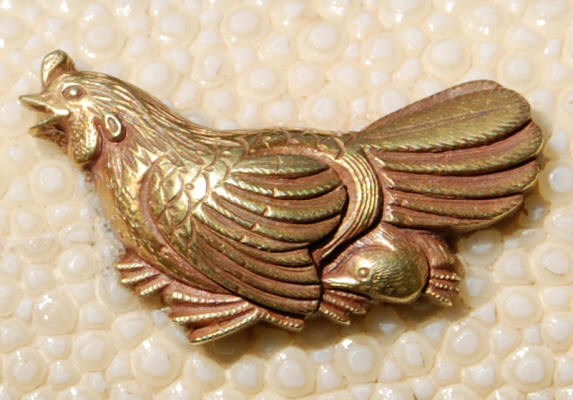
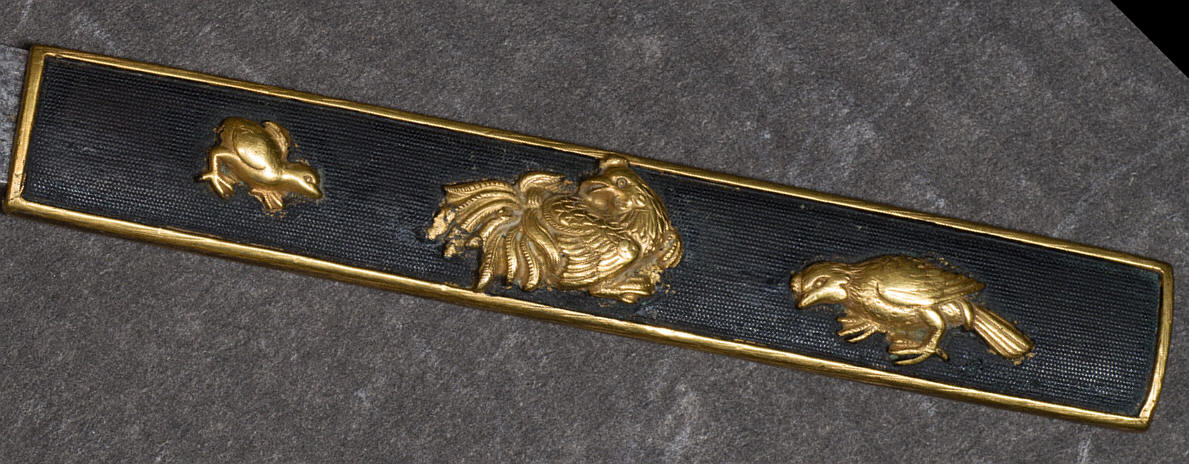
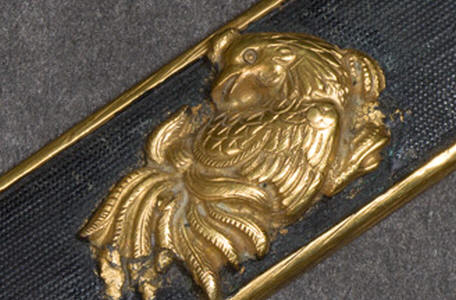
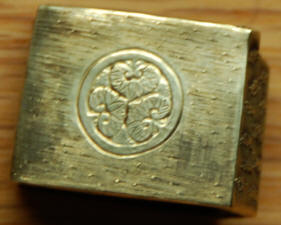
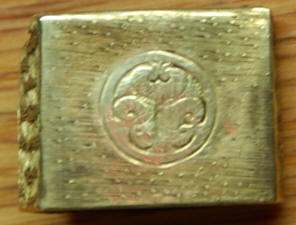
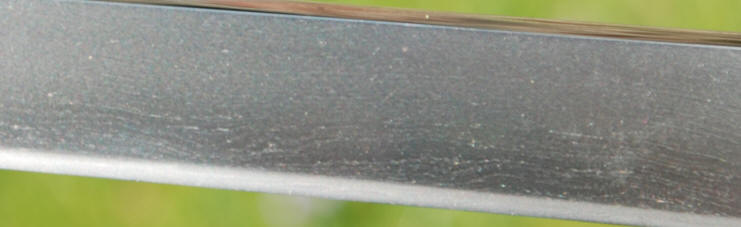
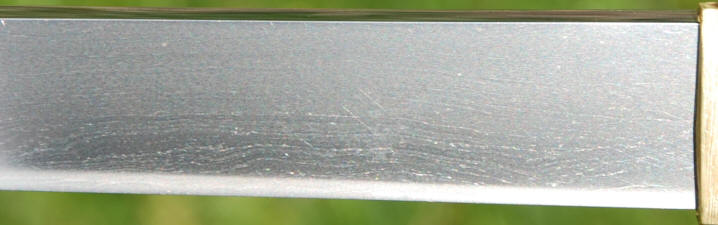
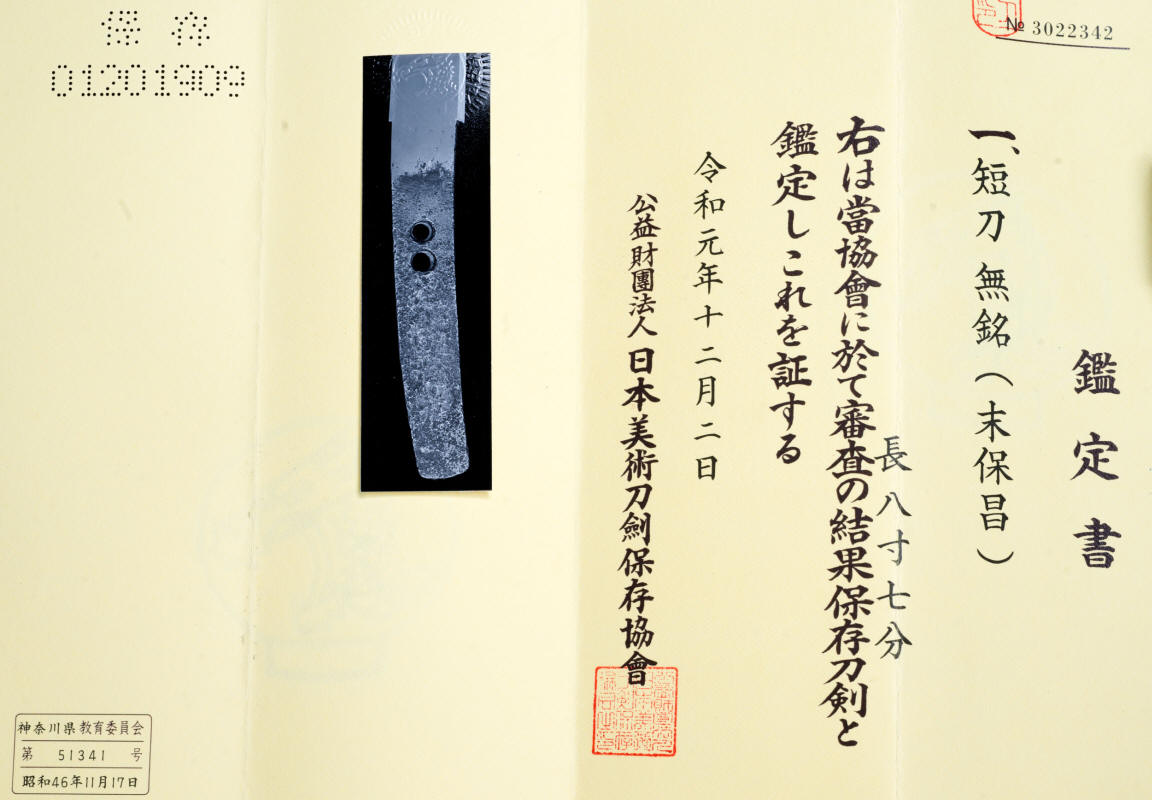
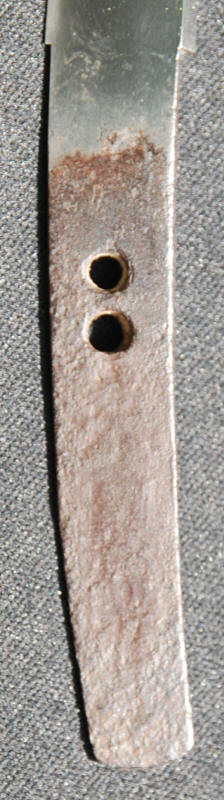
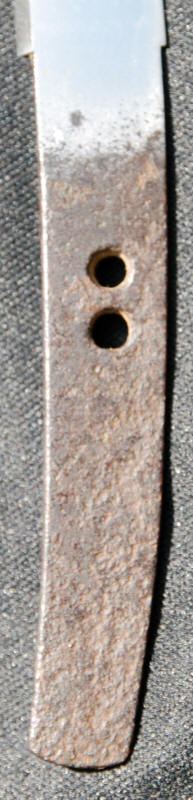
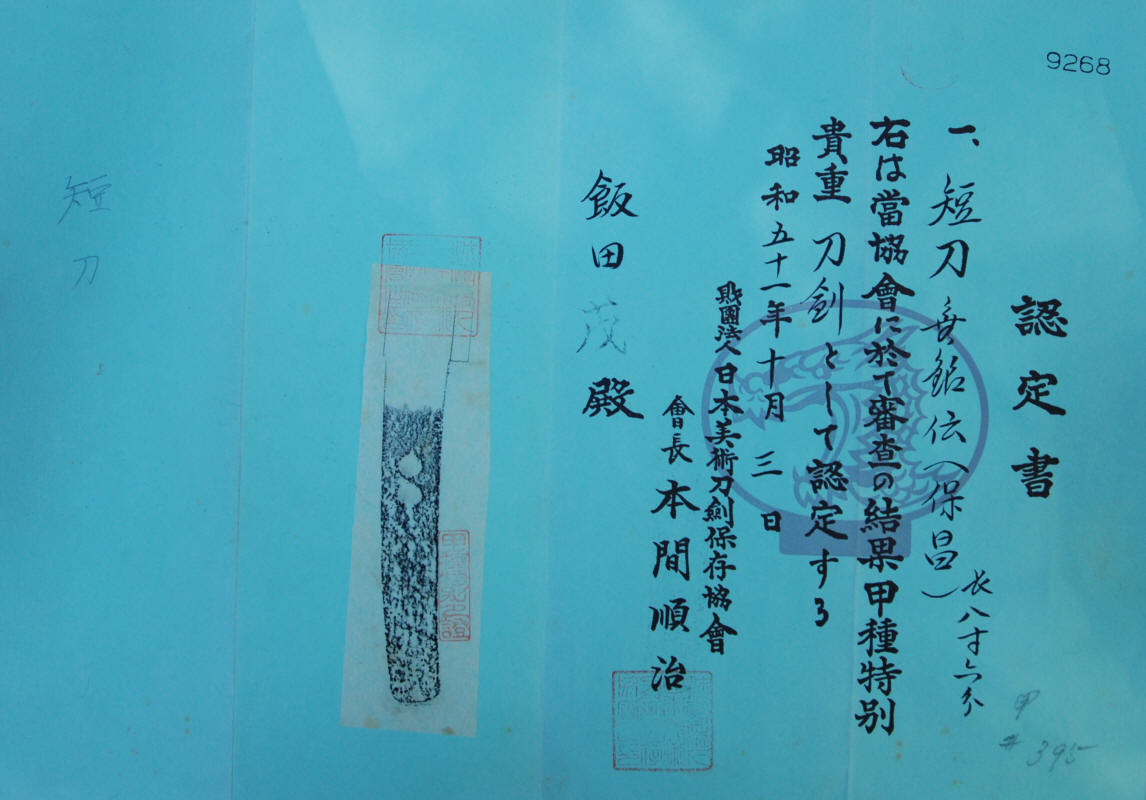
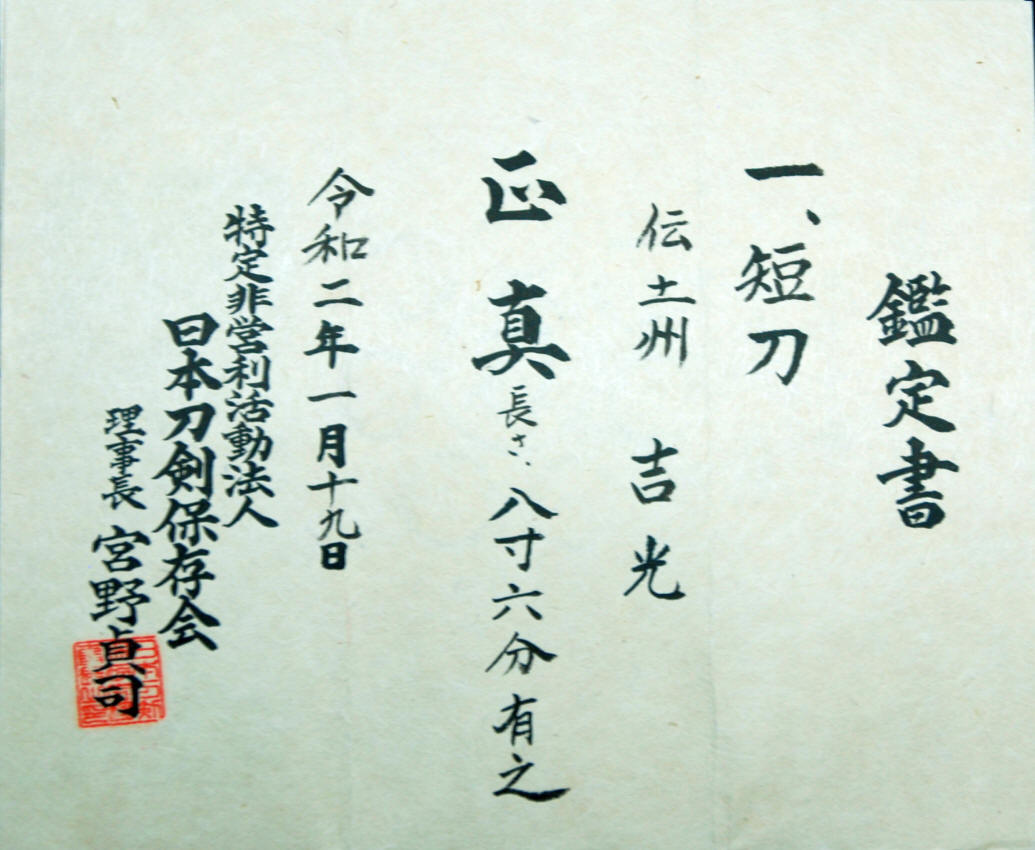
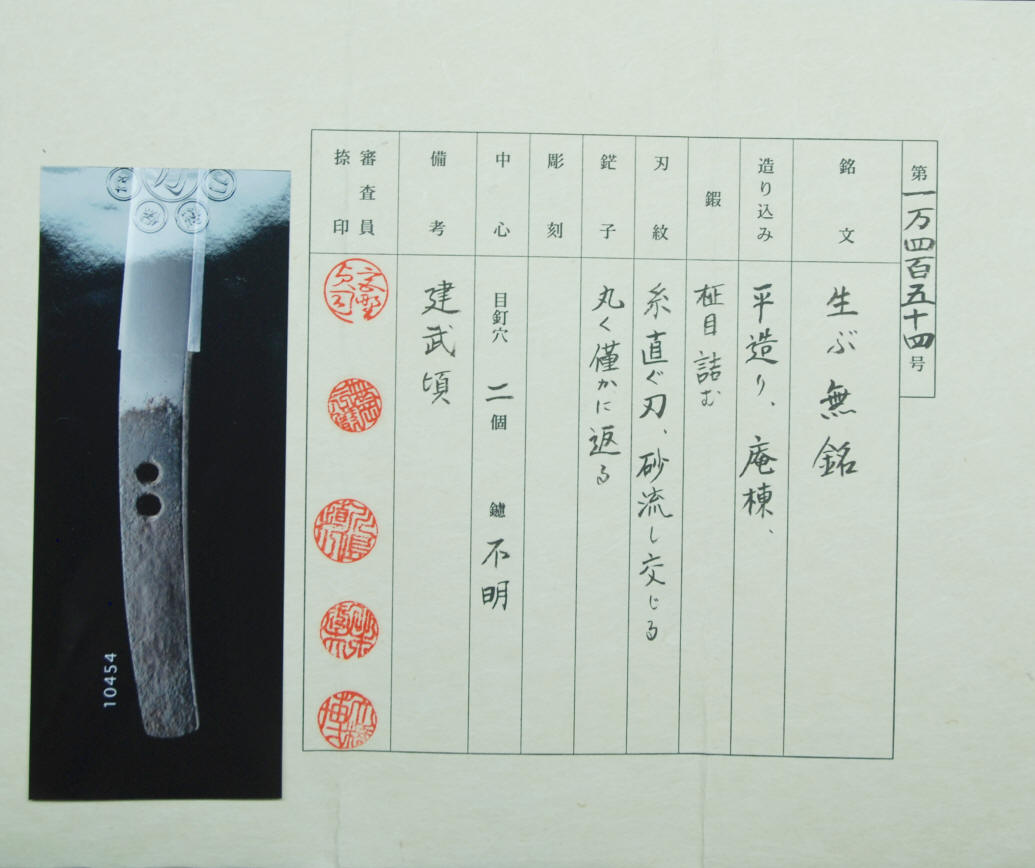
保昌 または 吉光 短刀 附 合口小柄仕込鞘(KK 0519)売約済 末保昌、あるいは大和吉光と極めが分かれる無銘の短刀です。 長さ:八寸七分(26.363 cm) 元幅:3.126 cm 重ね:8.49 mm 【体配】 平造、庵棟。 【刃文】 明るい保昌風の直刃で、小沸つき、砂流し交じる。 【地鉄】 詰んだ柾目肌に細かな地沸つき、柾目に沿って長い金筋がしきりにかかる。 【帽子】 丸く、返りは浅い。 【鑑定・附属品】 NBTHK(日本美術刀剣保存協会):甲種特別貴重および特別保存「末保昌」 NTHK/NPO(日本刀剣保存会):大和吉光(建武頃・1334-1336)に鑑定。 【外装】 格調高い合口拵。水牛角の縁頭。目貫は後藤家による見事な金無垢の鶏図で、異例の大きさを誇る。小柄は時代のある後藤家によるもので、赤銅精緻な七子地に金無垢の鶏・雛・若鶏を配す。 ロバート・ヘインズ氏の評によれば「小柄は後藤本家の上代作の可能性が高い。目貫も本家筋と思われるが、時代はやや下る」とのこと。 保管用の鞘は上質な肉厚の黒漆塗。目釘付の桐箱には保昌の箱書きがある。また、徳川家・桐・菊紋を配した漆塗の保管箱が附属する。 【解説】 短刀は13世紀後半の元寇を経て広く普及しました。相州伝の諸名工のみならず、諸国の刀工が短刀製作に心血を注ぎました。保昌派の短刀は、細身ながら重ねが厚い姿を特徴とします。代々の作風が安定しているため、無銘品の個別の代付けは非常に困難とされます。 保昌派の祖は弘安年間(1278-1288)頃の国光とされます。一説には貞光が祖とも言われますが、現存作がないため、国光(一説には貞光とも銘を切ったとされる)が実質的な祖と見なされています。紀州徳川家伝来の宝物で、保昌の特色を顕著に示し、より古雅な趣を持つ「貞継」二字銘の重要文化財の太刀がありますが、系図にはその名は見当たりません。 本刀にはNTHKにより、建武頃(1334-1336)の土佐吉光とする鑑定もあります。初代土佐吉光は鎌倉末期の徳治年間(1306-1308)頃に作刀を開始し、六代まで続きました。現存品の多くは短刀です。 初代吉光(本名:藤原五郎左衛門)は、粟田口正光の門人、あるいは大和千手院吉光の門人と伝えられますが、手掻派の出身とする説もあります。また、初代千手院吉光と土佐吉光は同一人物であるという推察もなされています。「正安二年八月六日吉光」銘の太刀は、かつては大和吉光とされていましたが、現在は土佐吉光の作と目されています。残念ながら、室町時代以前の土佐吉光の現存作は極めて希少です。
 NihontoWatch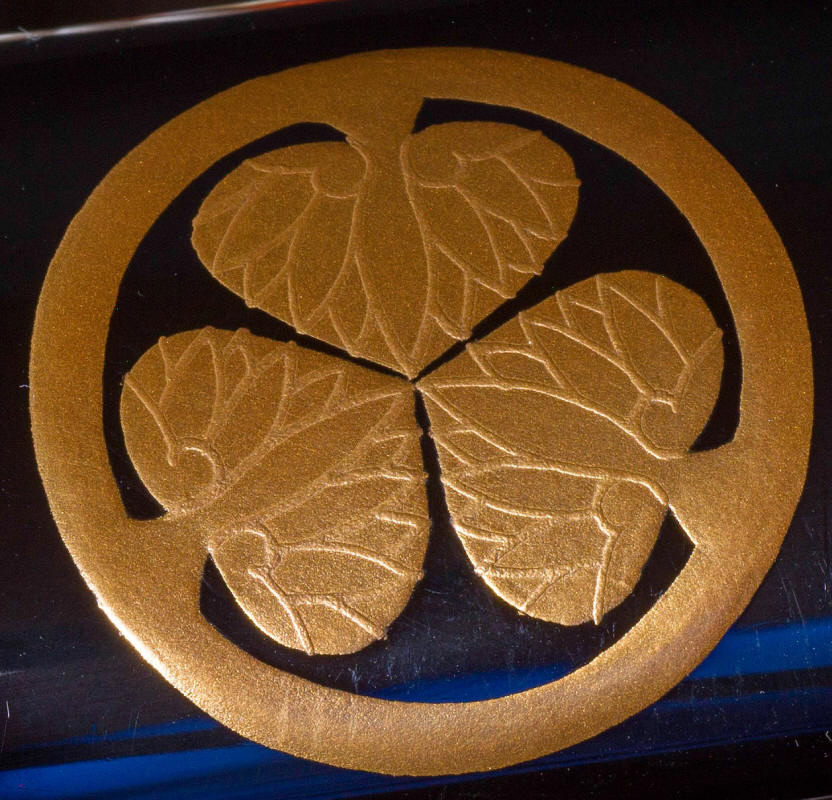







大和伝 · 大和
現在5点販売中
大和五派のうち、地鉄に総柾目を貫いたただ一門が保昌派である。その本拠は大和国高市郡、成立は鎌倉時代の末葉に置かれ、南北朝期へと続いた。古来寺院に付属して刀を鍛えた大和鍛冶の流れを汲み、同派の工は皆「貞」を通字とする。祖と仰がれるのは貞宗・貞吉で、両者は共に保昌五郎と称したと伝え、その下に貞清・貞興・貞光らが連なる。中にあって居住地と制作年紀を最も多く銘に記すのが貞吉であり、嘉暦三年紀の太刀に「大和国高市郡住」と切って活躍地・年代を明らかにする。貞清・貞興は貞宗あるいは貞吉に続く手とされ、現存する作はおおむね鎌倉末に収まる。 作風は一門を通じて均質で、まず地鉄に集約される。在銘・無銘を問わず総柾目肌を鍛え、柾が区より先まで通って棟へ抜け、地沸が厚くつき地景が頻りに入る。手掻・千手院・尻懸・当麻が柾がかった板目を鍛えるのに対し、保昌はこの純然たる総柾に徹し、説示も大和五派の中で最も作風の個性が顕著な一派と記す。刃文はその柾目に応じ、匂深く小沸のついた直刃を主とし、刃は地鉄と別に立つのではなく肌目にからんで頻りにほつれ、刃縁に喰違刃・二重刃・打のけを集め、金筋・砂流しがかかる。物打辺より上で焼幅が広がり一段と沸が強くつくのも一派の所作である。帽子は直ぐに掃きかけて焼詰めとなり、多くは返りを持たず、時に火焔風となる。茎には檜垣鑢をかけ先をぶっ切りとし、これも銘と並ぶ見どころをなす。工により振幅には差があり、貞吉の地刃は荒く沸が強く、やや時代の下る貞清・貞興の手は地刃ともに静かで精良に読まれる。短刀には小振りで重ねの厚い品のよいものが多い。 鑑定の勘所は何よりこの純然たる総柾目にあり、これによって同じ大和の手掻・千手院・尻懸・当麻と分かたれる。一門の諸工に際立った個性は見出しにくく、無銘作は個ではなく時代と作域から保昌と極められ、ゆえに在銘作では銘振りこそが工を分かつ。年紀と居住地まで記す貞吉が最も知り得る工で、藤代の極めでは最上作にあたり、貞清・貞興は二字銘や藤原を冠する四字銘を残すのみで年紀作を見ない。在銘作は短刀に多く、大磨上無銘の刀は後に金象嵌の極めを受け、埋忠家や本阿弥光一の銘を留めるものがある。伝来は大名家を貫き、肥後細川家を経た短刀をはじめ、毛利元康所持を記す大磨上の刀などが知られる。総柾目に徹したこの一門の作が市に現れることは稀で、ことに年紀ある貞吉の在銘作に接する機会は少ない。 詳しく見る →
南北朝時代の大和
南朝が大和国吉野に都を置いたとき、大和の諸派は最盛期にあった。包永以後の手掻、尻懸則長、そして保昌の純然たる柾目である。その技はすでに諸国へ広がりつつあった。
銘が正しい、または無銘でも年代・国・系統を確実に指摘できる、保存に値する真正の作と鑑定されたものです。
日本美術刀剣保存協会(NBTHK)は、1948年に設立され、文化庁の監督を受ける公益財団法人で、東京・刀剣博物館に本部を置きます。専門の審査員が出品作を直接審査し、美術的・歴史的価値に応じた鑑定書を発行します。NBTHKの鑑定書は、日本刀および刀装具の真正性を示す最も広く認知された基準です。
NBTHK公式サイトThree day, no penalty, inspection on every item. Returns must be in the same condition as shipped. Actual costs will be charged on returned items. No restocking fee. If you did not like the item is a good enough reason for return.
保昌 または 吉光 短刀 附 合口小柄仕込鞘(KK 0519)売約済 末保昌、あるいは大和吉光と極めが分かれる無銘の短刀です。 長さ:八寸七分(26.363 cm) 元幅:3.126 cm 重ね:8.49 mm 【体配】 平造、庵棟。 【刃文】 明るい保昌風の直刃で、小沸つき、砂流し交じる。 【地鉄】 詰んだ柾目肌に細かな地沸つき、柾目に沿って長い金筋がしきりにかかる。 【帽子】 丸く、返りは浅い。 【鑑定・附属品】 NBTHK(日本美術刀剣保存協会):甲種特別貴重および特別保存「末保昌」 NTHK/NPO(日本刀剣保存会):大和吉光(建武頃・1334-1336)に鑑定。 【外装】 格調高い合口拵。水牛角の縁頭。目貫は後藤家による見事な金無垢の鶏図で、異例の大きさを誇る。小柄は時代のある後藤家によるもので、赤銅精緻な七子地に金無垢の鶏・雛・若鶏を配す。 ロバート・ヘインズ氏の評によれば「小柄は後藤本家の上代作の可能性が高い。目貫も本家筋と思われるが、時代はやや下る」とのこと。 保管用の鞘は上質な肉厚の黒漆塗。目釘付の桐箱には保昌の箱書きがある。また、徳川家・桐・菊紋を配した漆塗の保管箱が附属する。 【解説】 短刀は13世紀後半の元寇を経て広く普及しました。相州伝の諸名工のみならず、諸国の刀工が短刀製作に心血を注ぎました。保昌派の短刀は、細身ながら重ねが厚い姿を特徴とします。代々の作風が安定しているため、無銘品の個別の代付けは非常に困難とされます。 保昌派の祖は弘安年間(1278-1288)頃の国光とされます。一説には貞光が祖とも言われますが、現存作がないため、国光(一説には貞光とも銘を切ったとされる)が実質的な祖と見なされています。紀州徳川家伝来の宝物で、保昌の特色を顕著に示し、より古雅な趣を持つ「貞継」二字銘の重要文化財の太刀がありますが、系図にはその名は見当たりません。 本刀にはNTHKにより、建武頃(1334-1336)の土佐吉光とする鑑定もあります。初代土佐吉光は鎌倉末期の徳治年間(1306-1308)頃に作刀を開始し、六代まで続きました。現存品の多くは短刀です。 初代吉光(本名:藤原五郎左衛門)は、粟田口正光の門人、あるいは大和千手院吉光の門人と伝えられますが、手掻派の出身とする説もあります。また、初代千手院吉光と土佐吉光は同一人物であるという推察もなされています。「正安二年八月六日吉光」銘の太刀は、かつては大和吉光とされていましたが、現在は土佐吉光の作と目されています。残念ながら、室町時代以前の土佐吉光の現存作は極めて希少です。
NihontoWatch大和伝 · 大和
現在5点販売中
大和五派のうち、地鉄に総柾目を貫いたただ一門が保昌派である。その本拠は大和国高市郡、成立は鎌倉時代の末葉に置かれ、南北朝期へと続いた。古来寺院に付属して刀を鍛えた大和鍛冶の流れを汲み、同派の工は皆「貞」を通字とする。祖と仰がれるのは貞宗・貞吉で、両者は共に保昌五郎と称したと伝え、その下に貞清・貞興・貞光らが連なる。中にあって居住地と制作年紀を最も多く銘に記すのが貞吉であり、嘉暦三年紀の太刀に「大和国高市郡住」と切って活躍地・年代を明らかにする。貞清・貞興は貞宗あるいは貞吉に続く手とされ、現存する作はおおむね鎌倉末に収まる。 作風は一門を通じて均質で、まず地鉄に集約される。在銘・無銘を問わず総柾目肌を鍛え、柾が区より先まで通って棟へ抜け、地沸が厚くつき地景が頻りに入る。手掻・千手院・尻懸・当麻が柾がかった板目を鍛えるのに対し、保昌はこの純然たる総柾に徹し、説示も大和五派の中で最も作風の個性が顕著な一派と記す。刃文はその柾目に応じ、匂深く小沸のついた直刃を主とし、刃は地鉄と別に立つのではなく肌目にからんで頻りにほつれ、刃縁に喰違刃・二重刃・打のけを集め、金筋・砂流しがかかる。物打辺より上で焼幅が広がり一段と沸が強くつくのも一派の所作である。帽子は直ぐに掃きかけて焼詰めとなり、多くは返りを持たず、時に火焔風となる。茎には檜垣鑢をかけ先をぶっ切りとし、これも銘と並ぶ見どころをなす。工により振幅には差があり、貞吉の地刃は荒く沸が強く、やや時代の下る貞清・貞興の手は地刃ともに静かで精良に読まれる。短刀には小振りで重ねの厚い品のよいものが多い。 鑑定の勘所は何よりこの純然たる総柾目にあり、これによって同じ大和の手掻・千手院・尻懸・当麻と分かたれる。一門の諸工に際立った個性は見出しにくく、無銘作は個ではなく時代と作域から保昌と極められ、ゆえに在銘作では銘振りこそが工を分かつ。年紀と居住地まで記す貞吉が最も知り得る工で、藤代の極めでは最上作にあたり、貞清・貞興は二字銘や藤原を冠する四字銘を残すのみで年紀作を見ない。在銘作は短刀に多く、大磨上無銘の刀は後に金象嵌の極めを受け、埋忠家や本阿弥光一の銘を留めるものがある。伝来は大名家を貫き、肥後細川家を経た短刀をはじめ、毛利元康所持を記す大磨上の刀などが知られる。総柾目に徹したこの一門の作が市に現れることは稀で、ことに年紀ある貞吉の在銘作に接する機会は少ない。 詳しく見る →
南北朝時代の大和
南朝が大和国吉野に都を置いたとき、大和の諸派は最盛期にあった。包永以後の手掻、尻懸則長、そして保昌の純然たる柾目である。その技はすでに諸国へ広がりつつあった。
銘が正しい、または無銘でも年代・国・系統を確実に指摘できる、保存に値する真正の作と鑑定されたものです。
日本美術刀剣保存協会(NBTHK)は、1948年に設立され、文化庁の監督を受ける公益財団法人で、東京・刀剣博物館に本部を置きます。専門の審査員が出品作を直接審査し、美術的・歴史的価値に応じた鑑定書を発行します。NBTHKの鑑定書は、日本刀および刀装具の真正性を示す最も広く認知された基準です。
NBTHK公式サイトThree day, no penalty, inspection on every item. Returns must be in the same condition as shipped. Actual costs will be charged on returned items. No restocking fee. If you did not like the item is a good enough reason for return.