説明

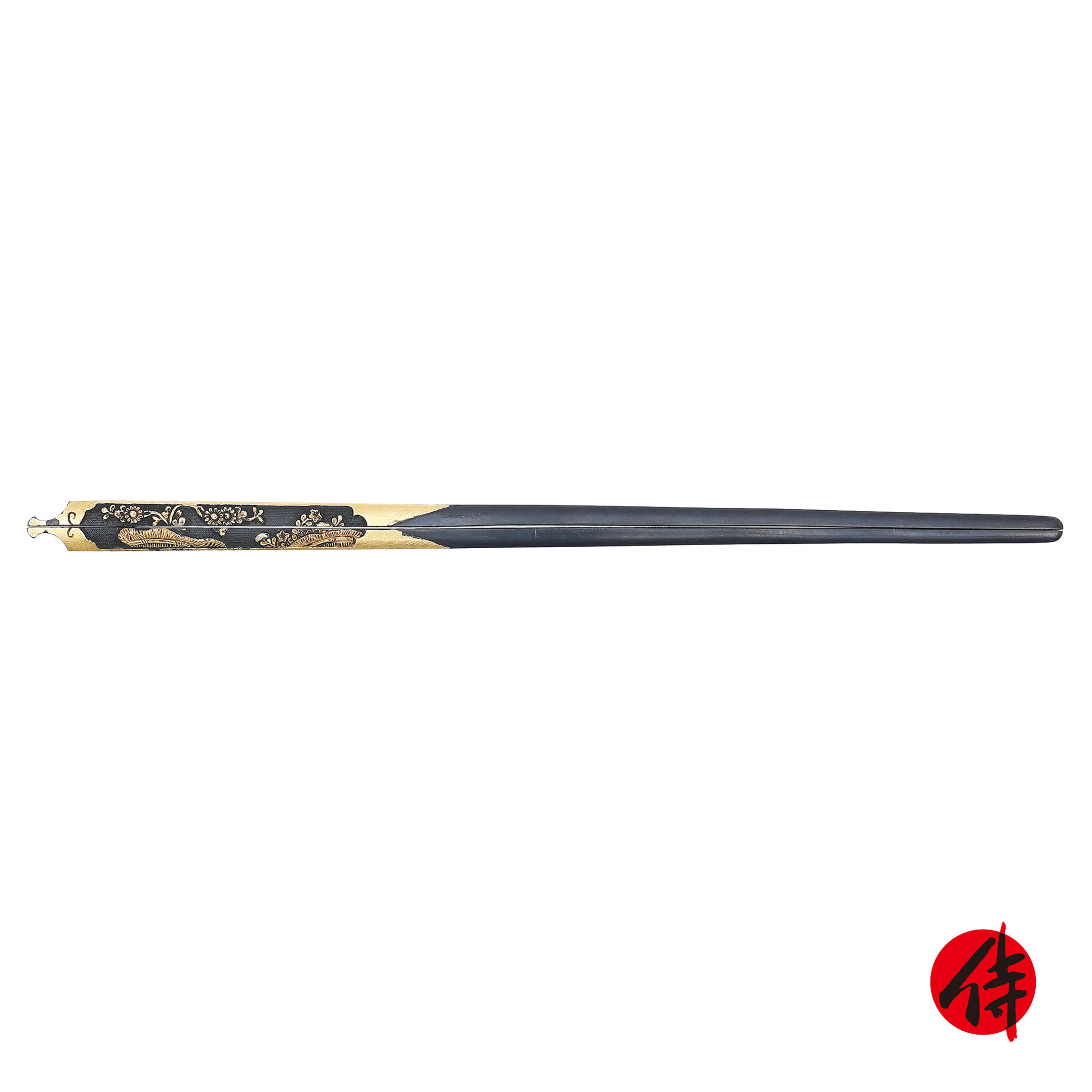
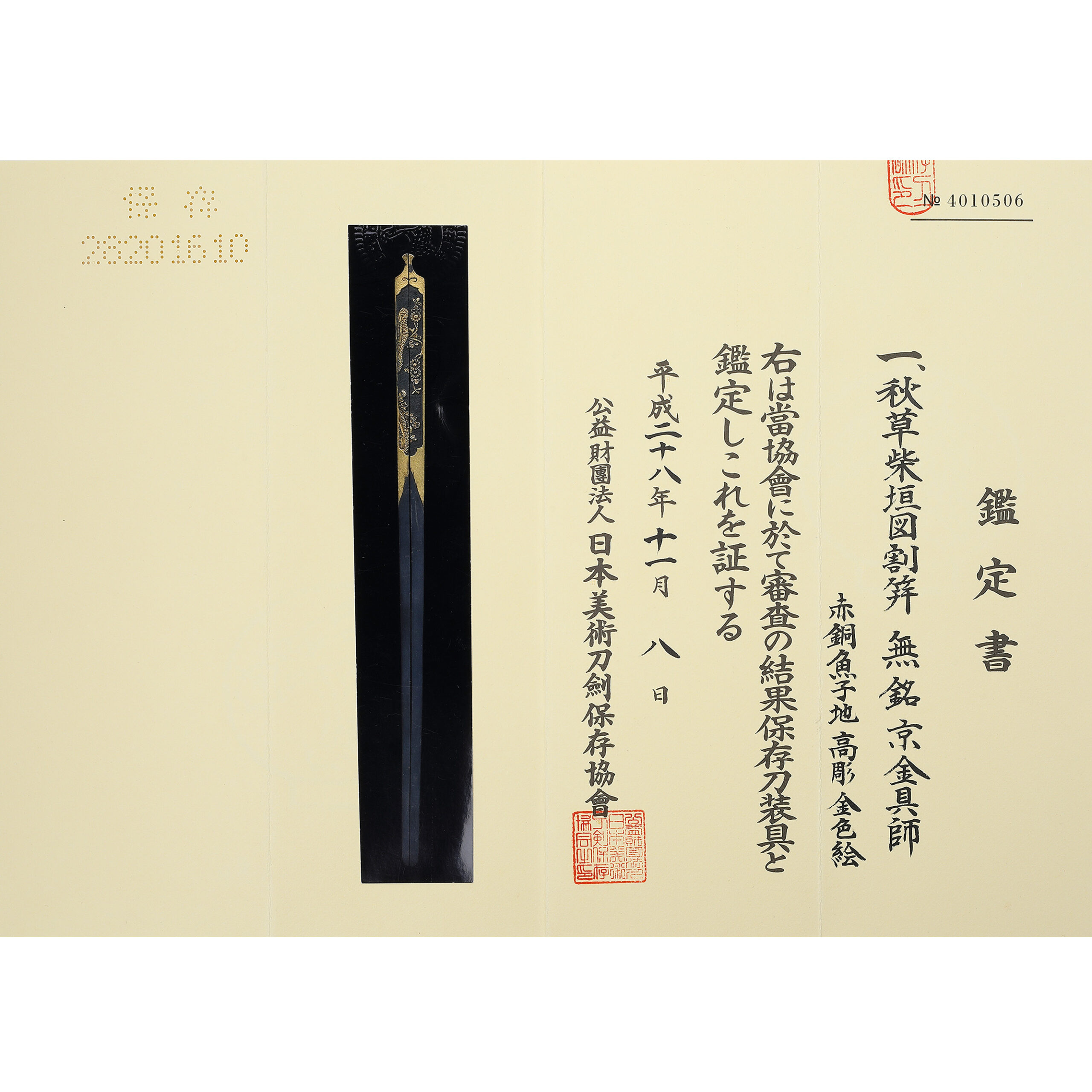
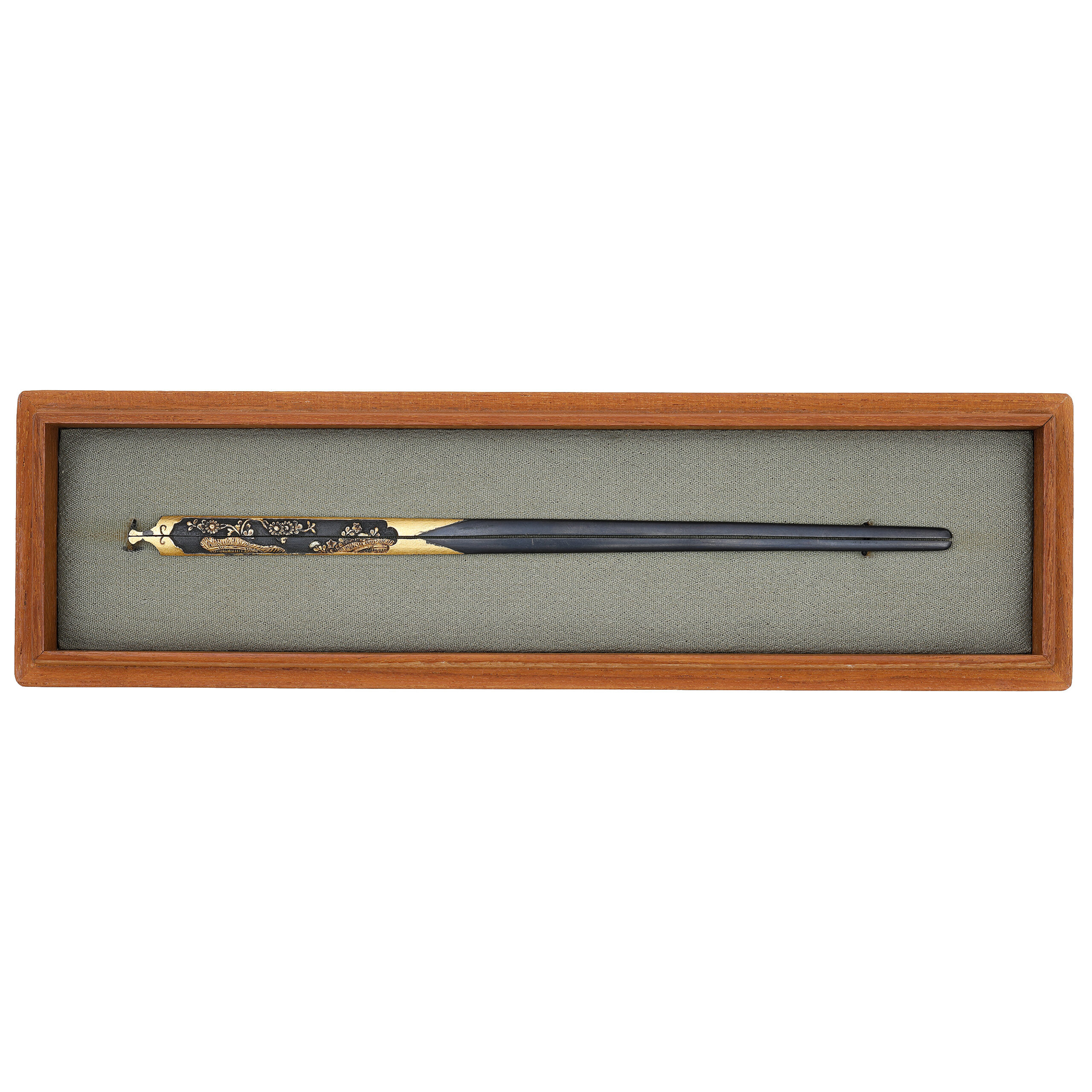
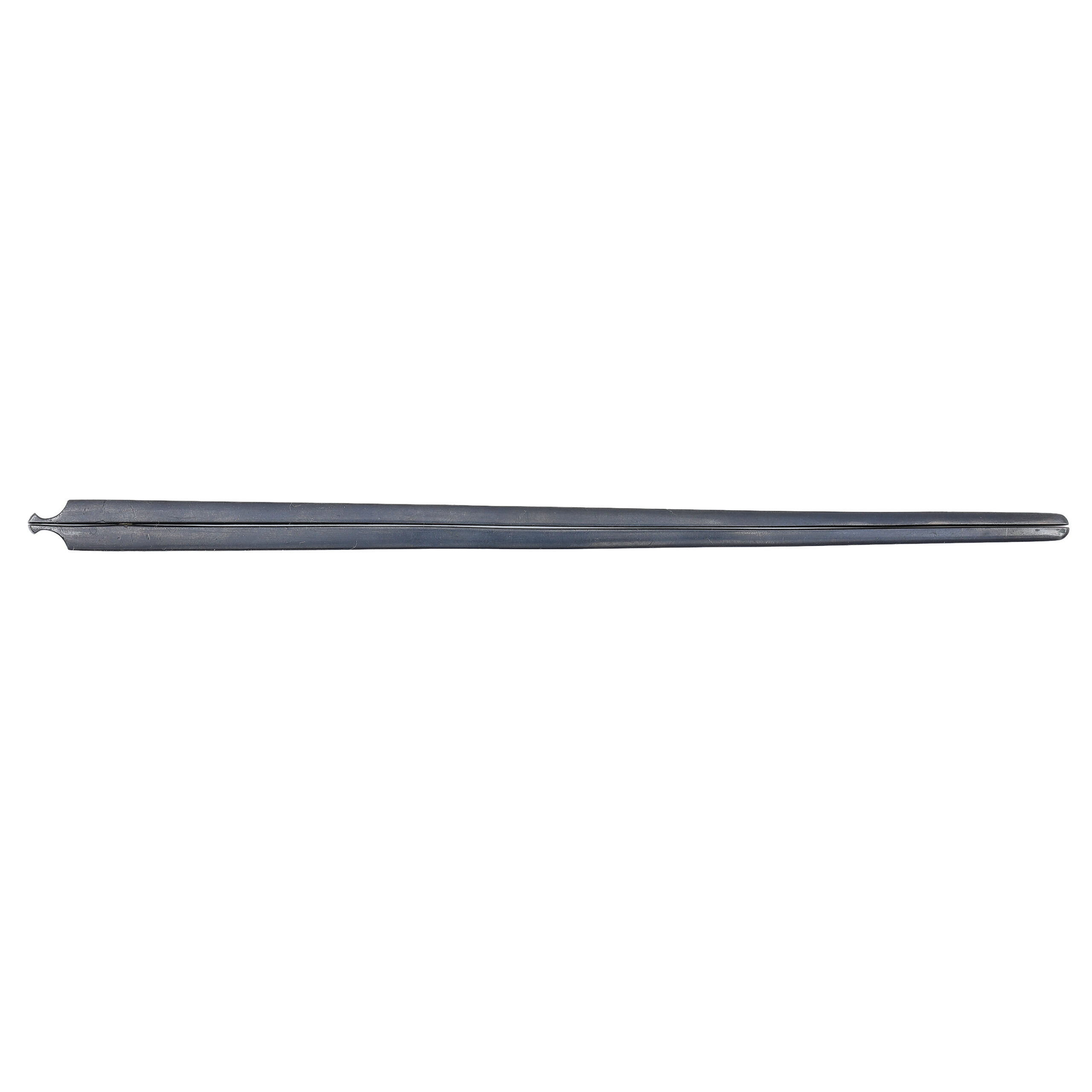
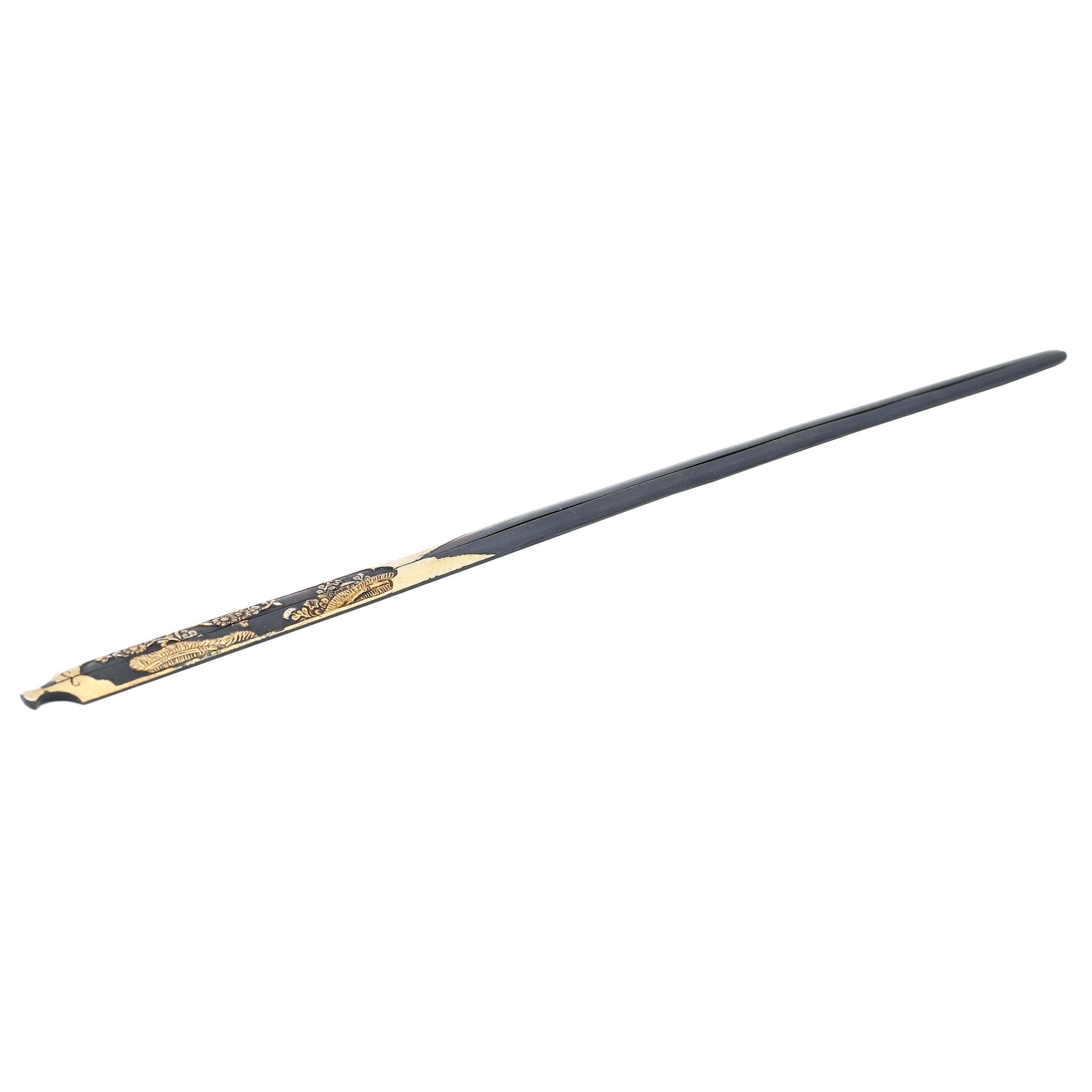
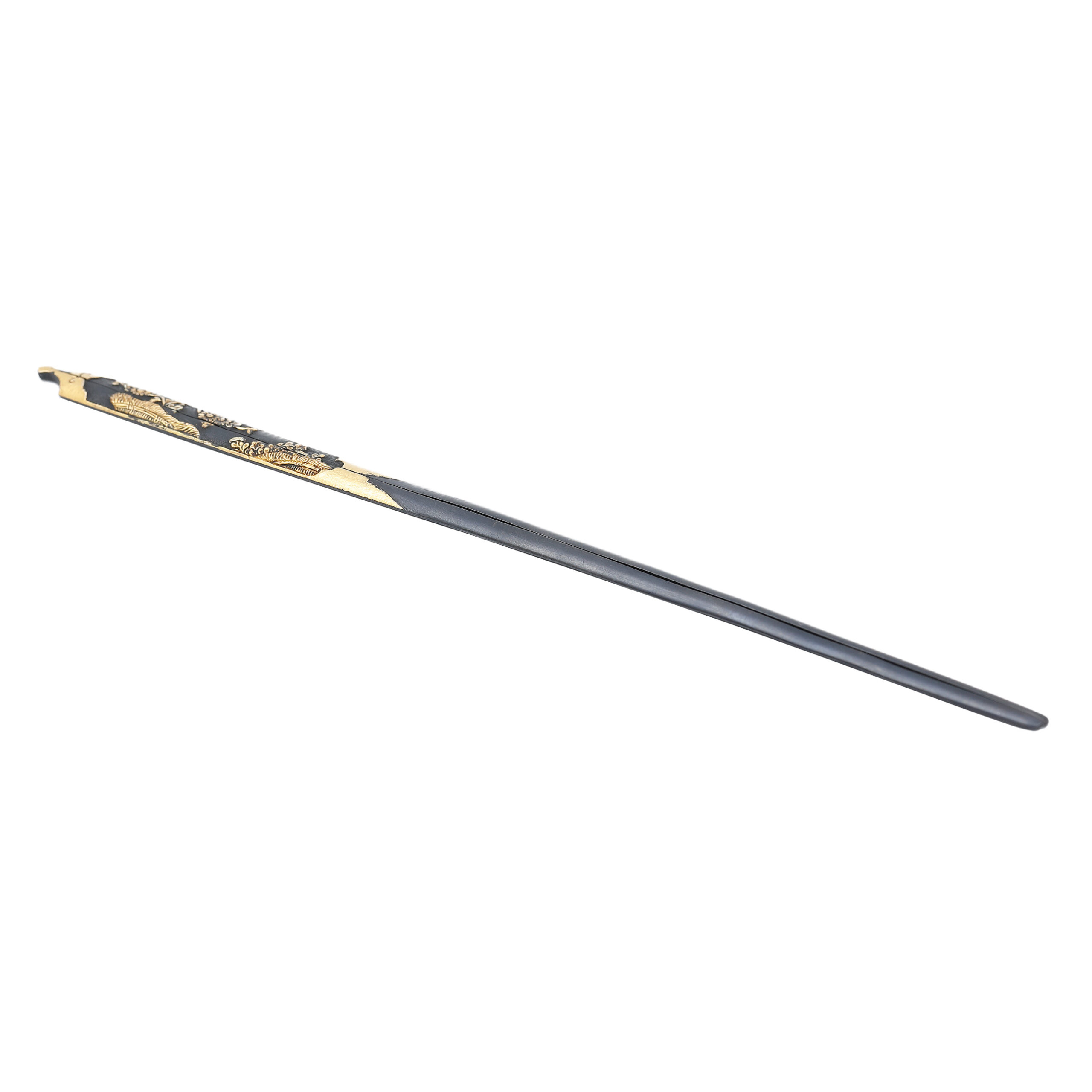
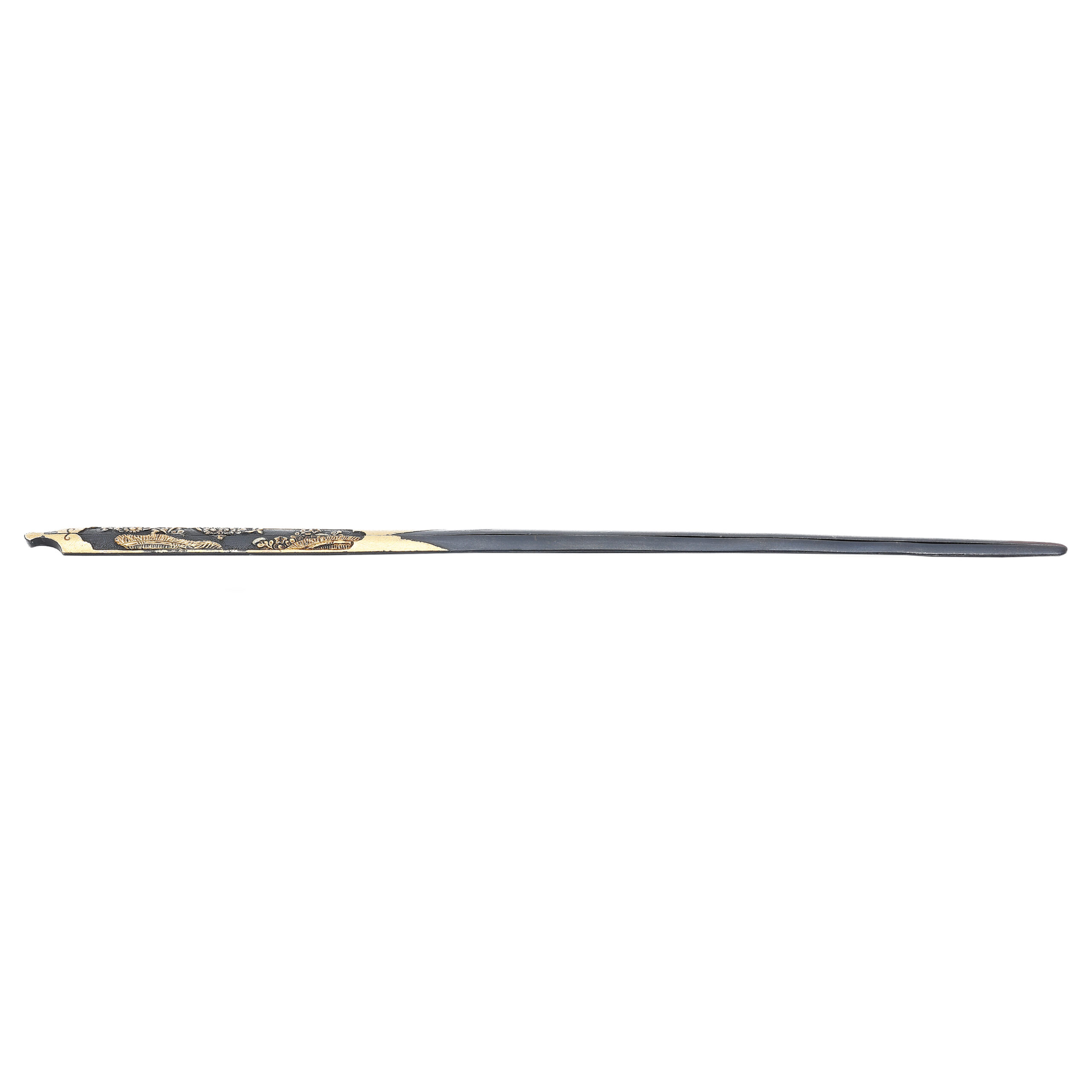
Title: Akikusa Shibagaki Zu Description This item is an antique Kougai (笄), which was used to arrange or fix the hairstyle of Samurai. The Kougai is usually stored in the Kougai Hitsu. The Kozuka (小柄) is often stored at the other side of the scabbard. About the Kozuka, please read the explication below (What is Kozuka?). This Kougai is recognized by The Society for Preservation of Japanese Art Swords, which is known as NBTHK. According to the certificate, this Kougai is attributed to the work of Kyo Kanagu shi (京金具師). The Kyo Kanagu shi refers to a metal fitting craftsman living in Kyoto in the Edo period. They created a variety of metal fittings, including Tsuba, Menuki, and Kougai. This Kuugai is made from the Shakudou (赤銅), it is an alloy of copper and gold. This material has often been used for making sword mountings due to its properties. Also, the Shakudou gives the works elegant black color. And the gold overglaze painting, called the Kin Iro-e (金色絵), was applied to this Kougai. It makes an elegant color contrast with copper’s black color. Also, it adds decorativeness to this work. In addition, the surface of this Kuugai is decorated with the Nanako-Ji (魚子地) technique. This process makes a uniform minimal protrusions pattern by hitting the Nanako-Ji Tagane (魚子地鏨, a chisel for this technique) on a metal surface. This decorative technique is often seen on sword mountings. You would find some kinds of flowers and brushwood fences (柴垣, Shibagaki) are depicted for this Kougai. These flowers and plants are categorized as the Akikusa (秋草, autumn plant). One of the flowers is Kiku (菊, chrysanthemum). A long time ago, the chrysanthemum was used as a medicine for obtaining a long life in the continent, and it was brought to Japan with this thought in the Nara period (648-781). The chrysanthemum symbolizes fall, and people have greatly appreciated it since ancient times. Since its petals form radially, a chrysanthemum has been likened to the sun. That is why this flower pattern is treated as the symbol of perpetual youth and longevity or good health. It seems that the Kikyou (桔梗, Japanese bellflower) is also depicted. Japanese bellflower is a small star-shaped flower. It is said its root has medicinal efficacy. The Kikyou pattern has often been used as a motif of Tanka (短歌, a kind of traditional Japanese poem) and pictures since the Heian period (794-1185). Its name was initially “Kichikou,” and it changed to “Kikyou” with time. It is said this flower was used for fortune-telling in the old days. This action is called Kikkyou-wo Uranau (吉凶を占う) in Japanese. The word Kikkyou (吉凶, good or bad omen) was associated with this flower’s name. “Kichikou” was compared to the word “Kichi Kou (吉更),” which means further good fortune. That is why this flower pattern is treated as a good omen design. Shibagaki is a fence or hedge made of woven bush. The combination of Shibagaki with plants and flowers has been favored as a motif in paintings and other works. They are still often seen in sightseeing spots such as ancient capitals because of their rusty and simple appearance that fits well in Japanese gardens. *Please keep in mind that this Kozuka can be separated into two parts. As this item is an antique, please check each photo and ensure its condition. What is Kozuka? Kozuka is the small knife stored in Kozuka Hitsu (groove of the sheath of the Japanese sword). Many Tsubas (handguard) have two holes to put Kozuka and Kougai (equipment for appearance) next to Nakagoana (a hole of the Tsuba to put sword), so that Samurai didn’t need to draw his sword out of the scabbard when he wanted to use Kozuka or Kougai. Initially, Samurai used it for cutting wood or attacking enemies in an emergency. It is said that Kozuka was used as a craft knife rather than a weapon. The decorative designs of Kozuka were more emphasized than its practical use in the Edo period when Samurai society enjoyed one of the most peaceful times. And there were many ornamental K

Antique Kougai for Samurai Sword with NBTHK Hozon Certificate (K-51)
売切れ
Hozon売切れ

Antique Kougai for Samurai Sword with NBTHK Hozon Certificate (K-51)

売却済

世界81社の刀剣商を横断追跡 · 価格履歴 · 売却アーカイブ

時代

Edo

流派について

Kyo-kanagushi School京金具師派

1 重要刀剣
刀剣商

サムライミュージアム

samuraimuseum.jp

売切れ