Sadamitsu of the Hosho school was a smith of Yamato Province based in Takaichi District, transmitted as a son of Hosho Sadayoshi. He is traditionally regarded as having been active around the Bunna era (1352-1356) of the Nanbokucho period, though reference works such as the Kokon Meizukushi Taizen and Kosei Koto Meikan vary in identifying his parentage -- some naming Sadayoshi, others Sadakiyo. A smith of the same name is also recorded around the Eiwa era. Like all Hosho smiths, Sadamitsu shares the character "Sada" as the common tsuji element in his name, alongside such able contemporaries as Sadamune, Sadayoshi, Sadakiyo, and Sadaoki.
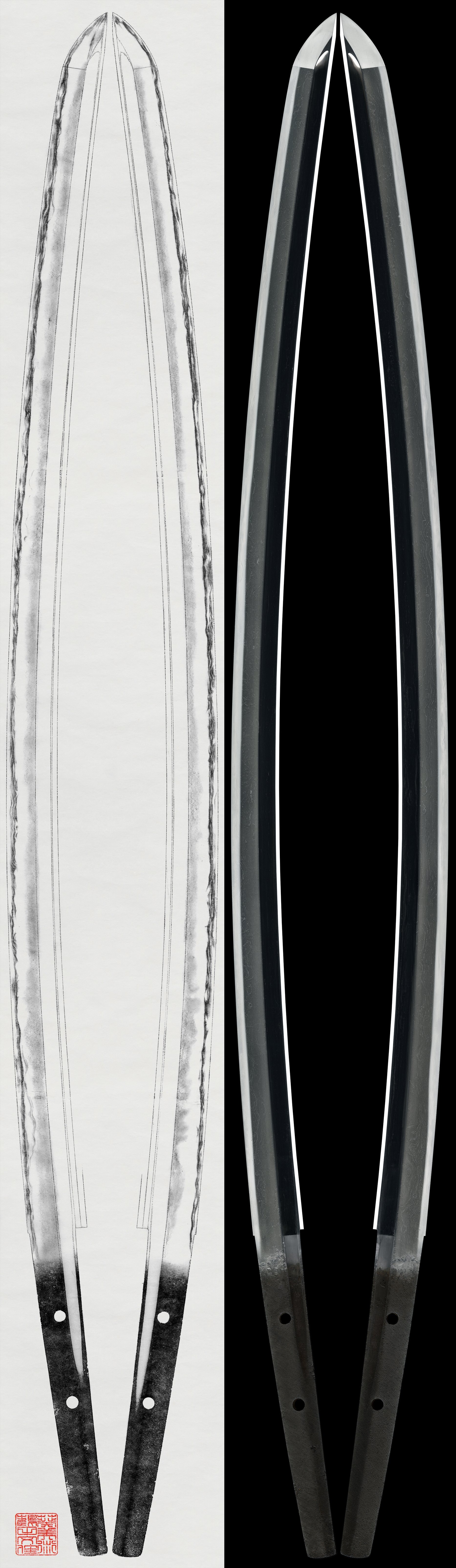
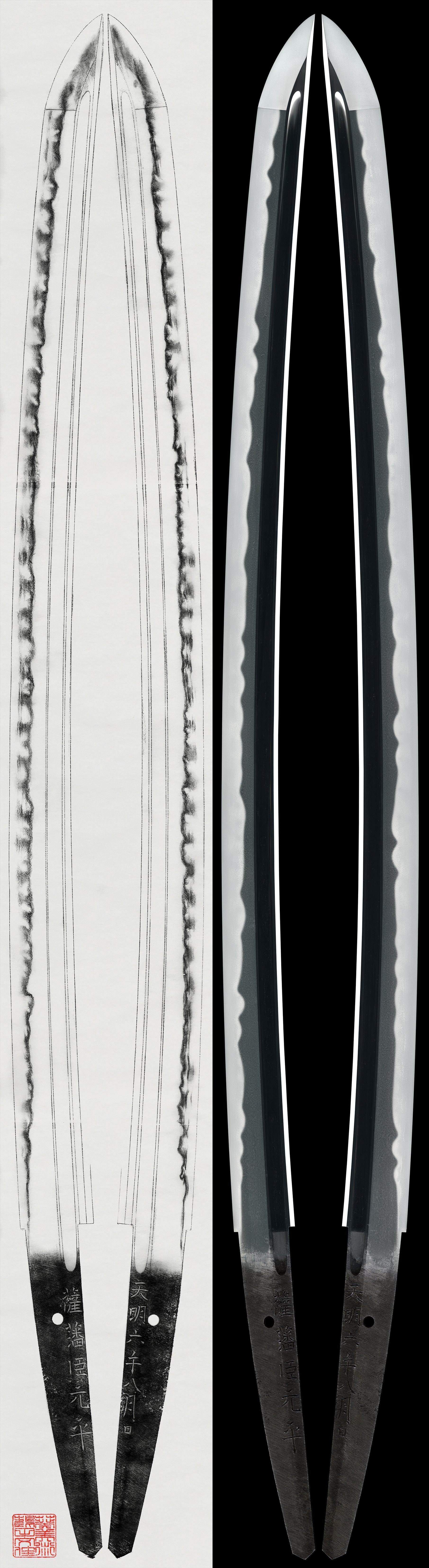
The Hosho school is recognized as displaying the most conspicuous stylistic identity among the five Yamato traditions. Sadamitsu's workmanship faithfully embodies this character: the jigane reveals an overall masame-hada with a nagare-tendency, with fine ji-nie thickly adhering and chikei entering frequently. Along the grain appear long stretches of yubashiri. The hamon is suguha-based, sometimes with an extremely shallow notare flavor, mixed with ko-gunome and ko-midare; along the habuchi appear hotsure, nijuba, and kuichigai-ba, while ko-nie adheres and fine kinsuji and sunagashi are seen. The boshi characteristically shows yakizume with vigorous hakikake. The nakago is finished with the hallmark higaki-yasurime file marks of the Hosho group, and signatures frequently record the place of residence as "Yamato Province."
Signed works by Sadamitsu are rare and therefore precious. The NBTHK consistently observes that both ji and ha in his pieces "inherit and clearly display the distinctive tradition of the Hosho group," while also recognizing his individual technical skill as readily appreciable from the quality of his workmanship. One tanto in hira-zukuri with mitsu-mune construction, bearing horimono of hata-hoko, bonji, and gomabashi, is singled out as extremely valuable reference material. His work is further distinguished by the exceptional preservation that certain pieces retain, with both ji and ha described as being in especially good condition.