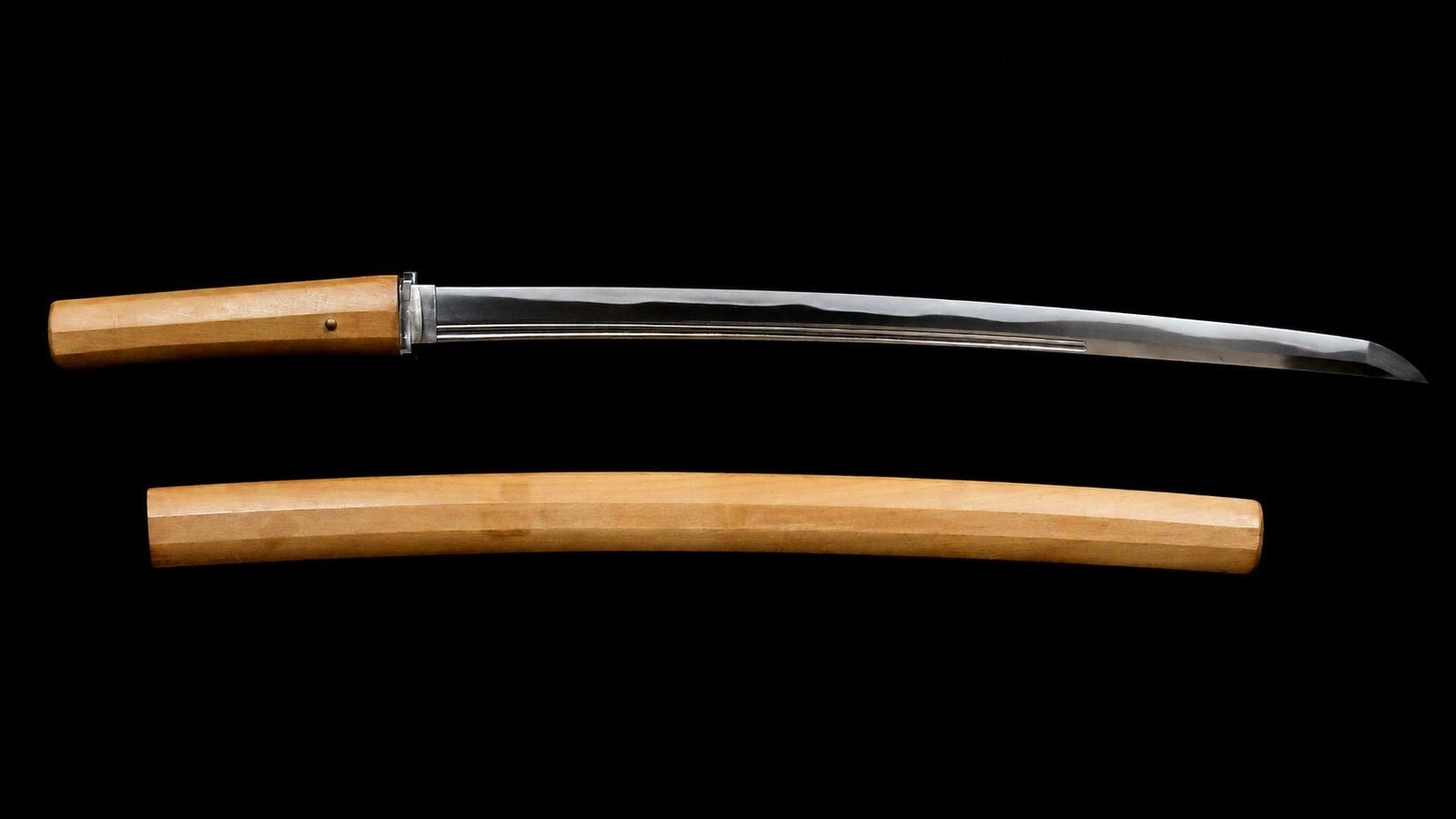
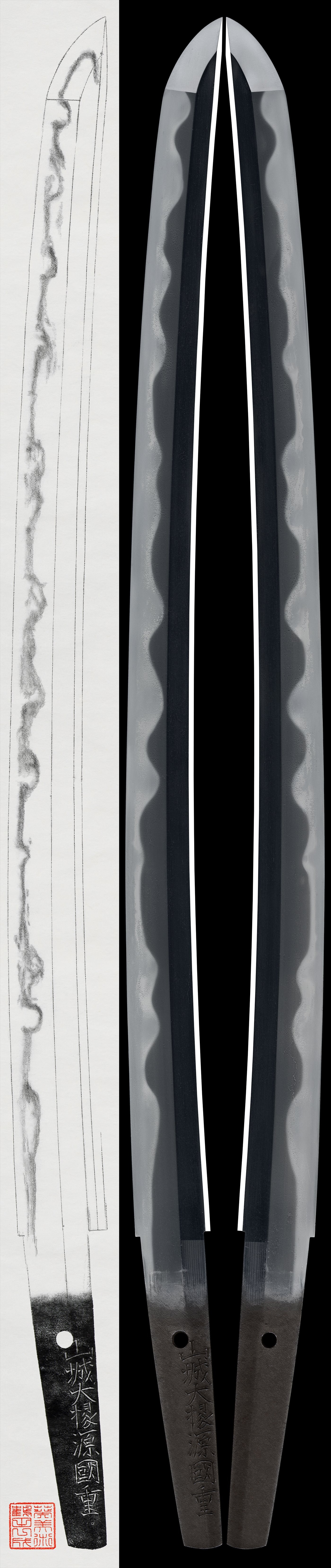
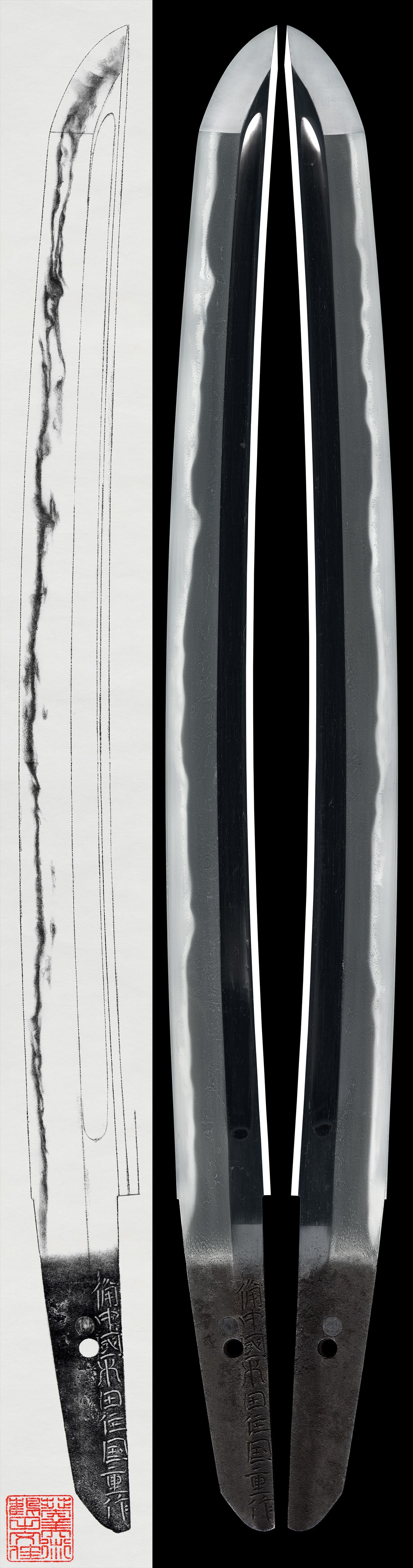
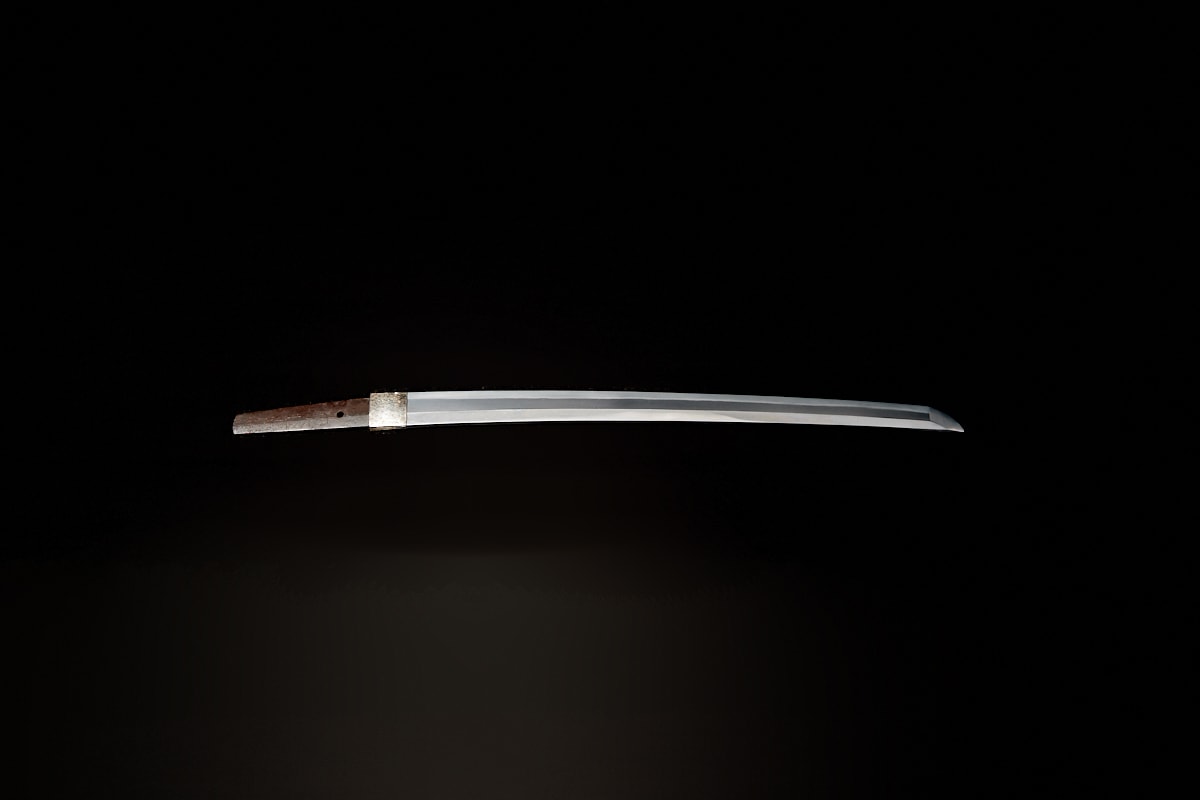
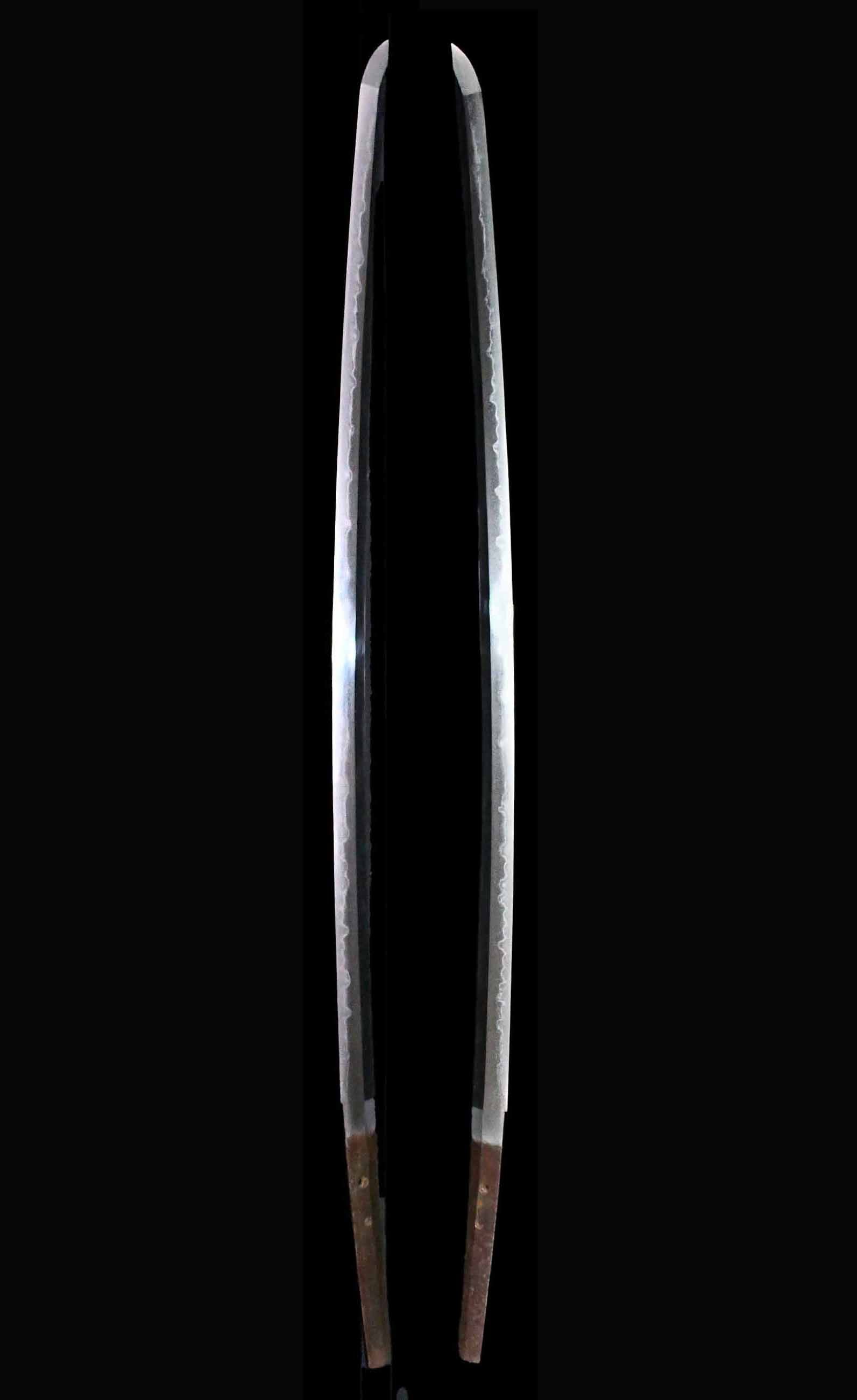
Kunishige worked within the Mizuta school of Bitchu Province, a lineage that flourished from the late Muromachi period into the Edo era. The most celebrated smith of this name is Otsuki Yogoro Kunishige, commonly abbreviated as "Daiyogo," who was the son of Otsuki Saburobei Kunishige and is recognized as the foremost master of the Mizuta school. The NBTHK observes that "the nationwide prosperity of this school during the Edo period was likely due to the presence of such superior craftsmen." Earlier work signed "Ko-Mizuta Kunishige" is dated to the late Muromachi period, with a katana bearing the date Tensho 20 (1592) among the few signed examples by the older lineage.
The Ko-Mizuta works display a kitae of dense ko-itame-hada with ji-nie and utsuri, and a hamon built around gunome-midare as the principal theme, incorporating small midare and ko-choji in what the NBTHK describes as an "overall somewhat busy" manner, with a tightly formed nioiguchi and attached ko-nie as the chief point of appreciation. The later Daiyogo Kunishige, by contrast, excelled particularly in the Soshu-den, producing itame-hada with prominent standing grain, well-adhering ji-nie, and chikei, tempered in bold notare-style o-midare that in the upper half becomes nearly hitatsura, with deep nioi and coarse nie. The boshi on such works enters in irregular midare-komi with hakikake, burning down long to the mune-machi. The tang tip in the Mizuta manner is characteristically ha-agari kurijiri.
Signed examples by both the Ko-Mizuta and Daiyogo lines are described as "comparatively few," lending particular significance to surviving blades. The Ko-Mizuta katana of Tensho 20 is called "not only a typical example, but also one of his representative works," while the Daiyogo Kunishige is praised as "a superior craftsman who exceeded his father's skill." This rarity of signed work is traditionally attributed to signatures being removed or blades being shortened and reworked into superior pieces -- a testament to the enduring regard in which Mizuta workmanship has been held.