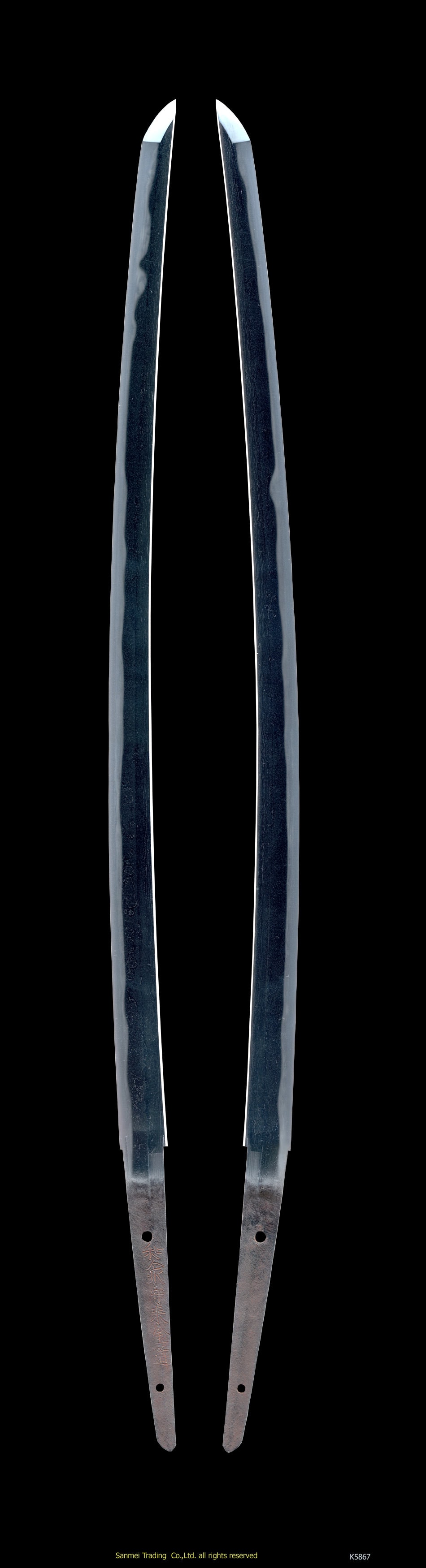
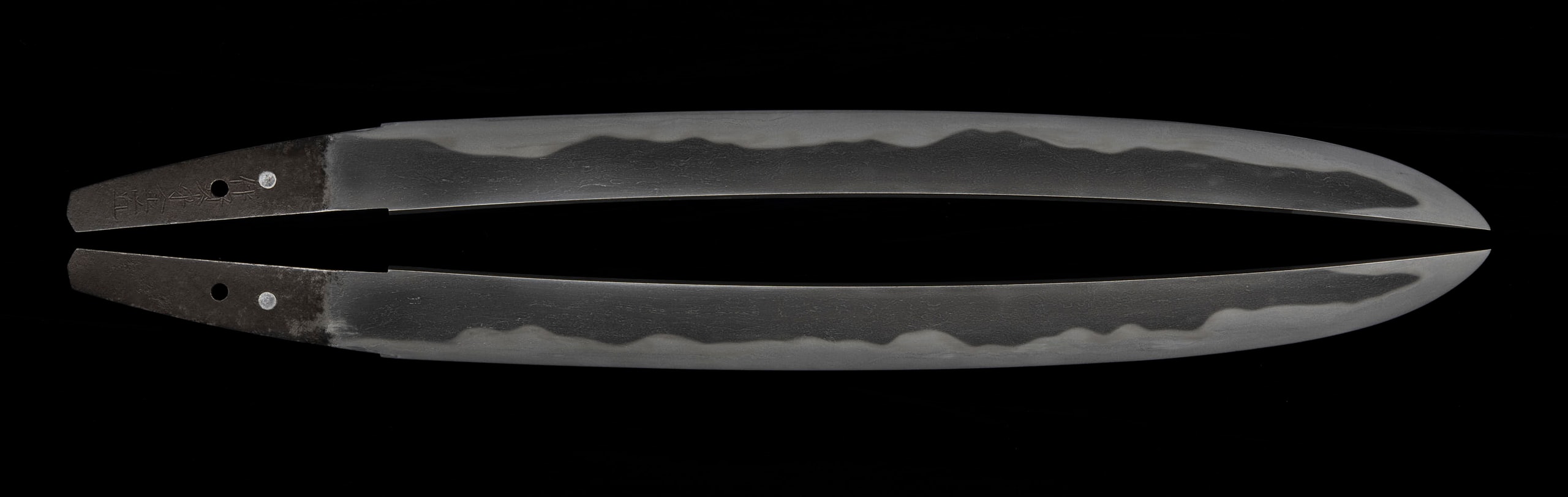
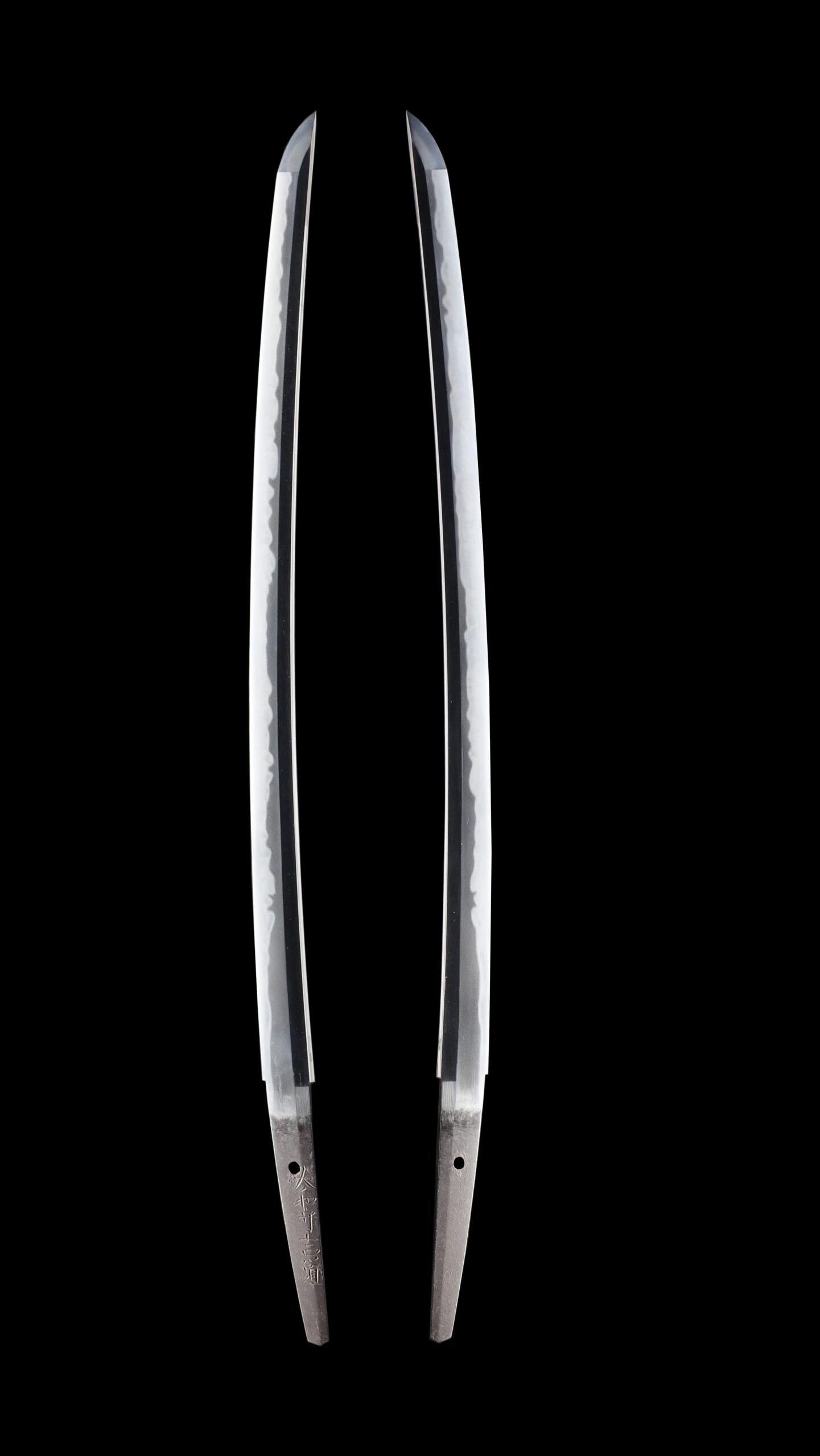
The Kanemichi name stands at the center of the Mishina lineage, one of the two dominant smithing groups in Kyoto during the Momoyama and early Edo periods. The founder of the line, Kanemichi of Mino, relocated to the capital together with his sons: Iga no Kami Kanemichi (the eldest), Rai Kanemichi, Tanba no Kami Yoshimichi, and Etchu no Kami Masatoshi. These brothers collectively established the school known as Sanpin-ha or Mishina-ha, and their descendants perpetuated the Kanemichi name across multiple generations and branches, including the Tango no Kami line active in Osaka during the Genroku era. Among the brothers, the shodai Iga no Kami is regarded as the one who most faithfully transmitted the original manner of their native Mino province, while subsequent generations increasingly absorbed the influence of Osaka shinto fashion.
The stylistic evolution of the Kanemichi line is well documented across its designated works. The shodai Iga no Kami's early output, before receiving his court title around the Tensho era, displays a "somewhat whitish style of forging, with pointed gunome tempering" and a tight nioiguchi with small nie -- "essentially that of late Mino (Sue-Seki)." In the later phase, the temper becomes "a large, turbulent midare based on small notare and mixed with large gunome, angular elements, and pointed tendencies," with strong nie, kinsuji and sunagashi, and the fully formed "Mishina boshi" -- a notare-tendency turn with a pointed return and vigorous hakikake. The setsumei describe how this renewed workmanship displays "a Shizu-like quality." By contrast, the nidai Tango no Kami Kanemichi departed from his father's hallmark sudare-ba to produce flamboyant toran-style large o-gunome-midare reflecting "the fashions current among Osaka shinto," as well as a distinct suguha-based mode with deep nioi "reminiscent of Shinkai." The nidai's toran works characteristically begin with suguha yakidashi, above which paired and triple gunome groups alternate in deliberate rhythmic sequence.
The designated corpus reveals both the breadth and the coherence of the Kanemichi tradition. The shodai's finest hira-zukuri wakizashi (Tokuju, 13th Session) is praised as the "hakubi of shodai Kanemichi" for its sudare-ba-like nie-kuzure and "boldly unrestrained approach," while the nidai's matching daisho (Juyo, 46th Session) demonstrates calculated ingenuity in its varied toran patterning, with the katana repeating a 3-3-2 gunome sequence and the wakizashi inverting it to 2-3-3 -- "allowing one to perceive the maker's ingenuity." A collaborative work (gassaku) by Rai Eizen and Rai Kanemichi, dated Tenna 3, is noteworthy for its inscription recording the use of nanban-tetsu, giving it "high documentary value." Across these branches, the family's ability to sustain technical excellence while adapting to successive aesthetic currents distinguishes the Kanemichi name as one of the most consequential in shinto swordsmithing.
![Katana - Tokuho - 作 兼道 - 刀[丹後守兼道(良武公)][日本美術刀剣保存協会]特別保存刀剣](/_next/image?url=https%3A%2F%2Fitbhfhyptogxcjbjfzwx.supabase.co%2Fstorage%2Fv1%2Fobject%2Fpublic%2Flisting-images%2Fworld-seiyudo%2FL868801%2F01.jpg&w=2560&q=90)
![Katana - Tokuho - 作 吉道 - 刀 [丹波守吉道(京四代目)(良工)][日本美術刀剣保存協会]特別保存刀剣](/_next/image?url=https%3A%2F%2Fitbhfhyptogxcjbjfzwx.supabase.co%2Fstorage%2Fv1%2Fobject%2Fpublic%2Flisting-images%2Fworld-seiyudo%2FL873488%2F01.jpg&w=2560&q=90)
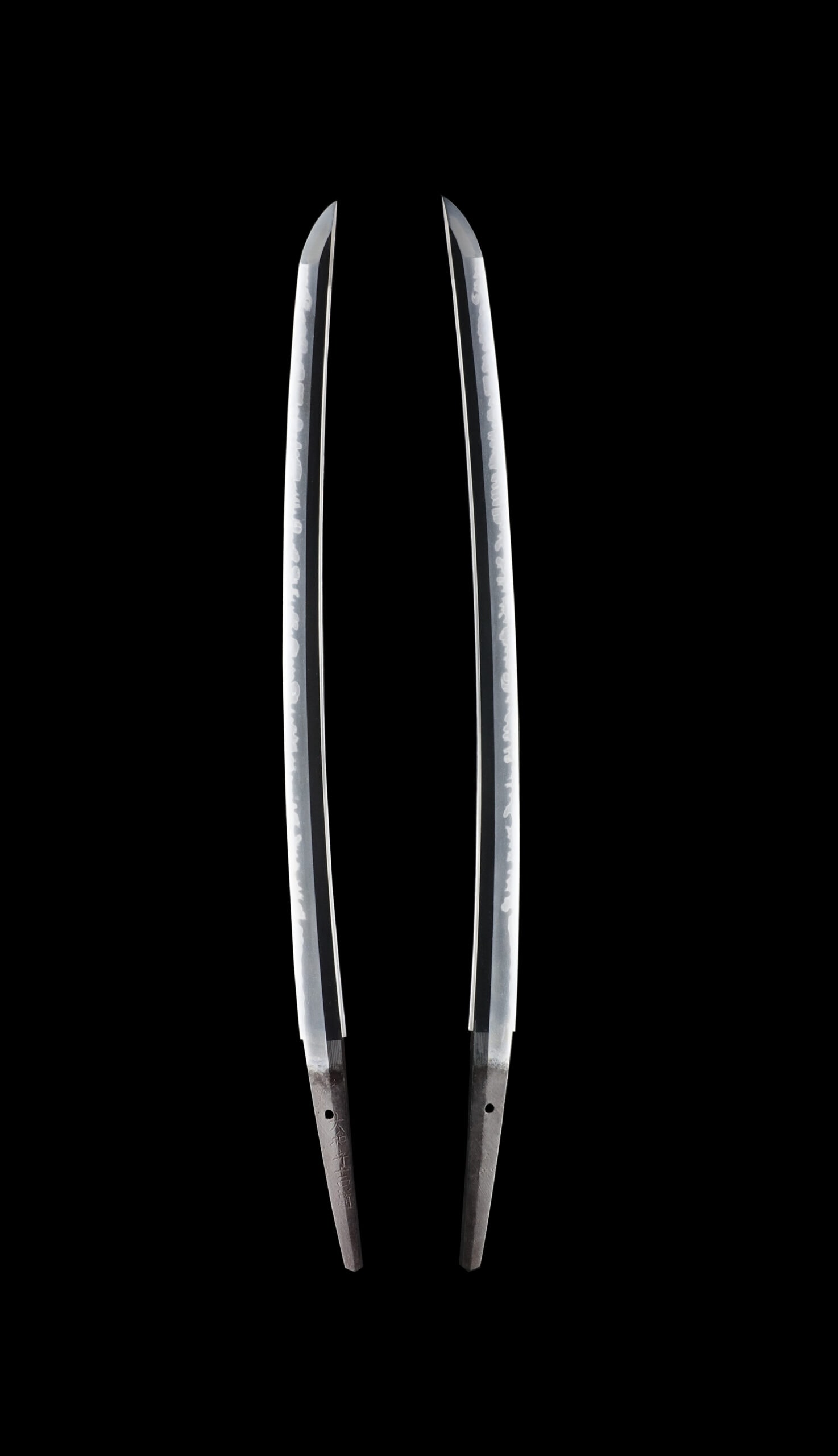
![Wakizashi - Tokuho - 作 吉道 - 脇差[大和守吉道(良武公)][日本美術刀剣保存協会]特別保存刀剣](/_next/image?url=https%3A%2F%2Fitbhfhyptogxcjbjfzwx.supabase.co%2Fstorage%2Fv1%2Fobject%2Fpublic%2Flisting-images%2Fworld-seiyudo%2FL837552%2F01.jpg&w=2560&q=90)