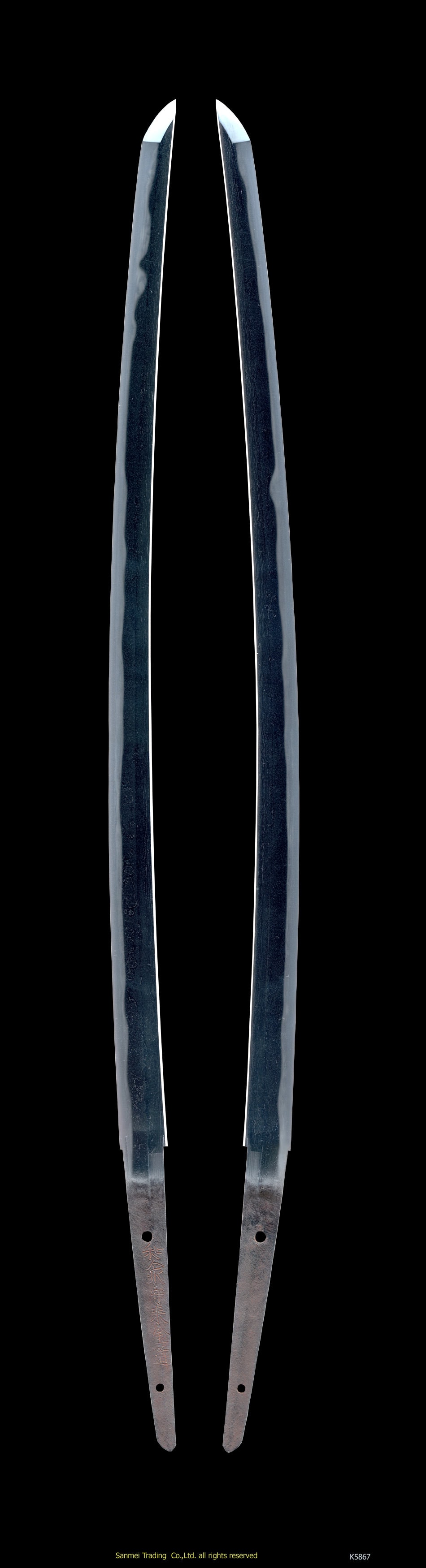
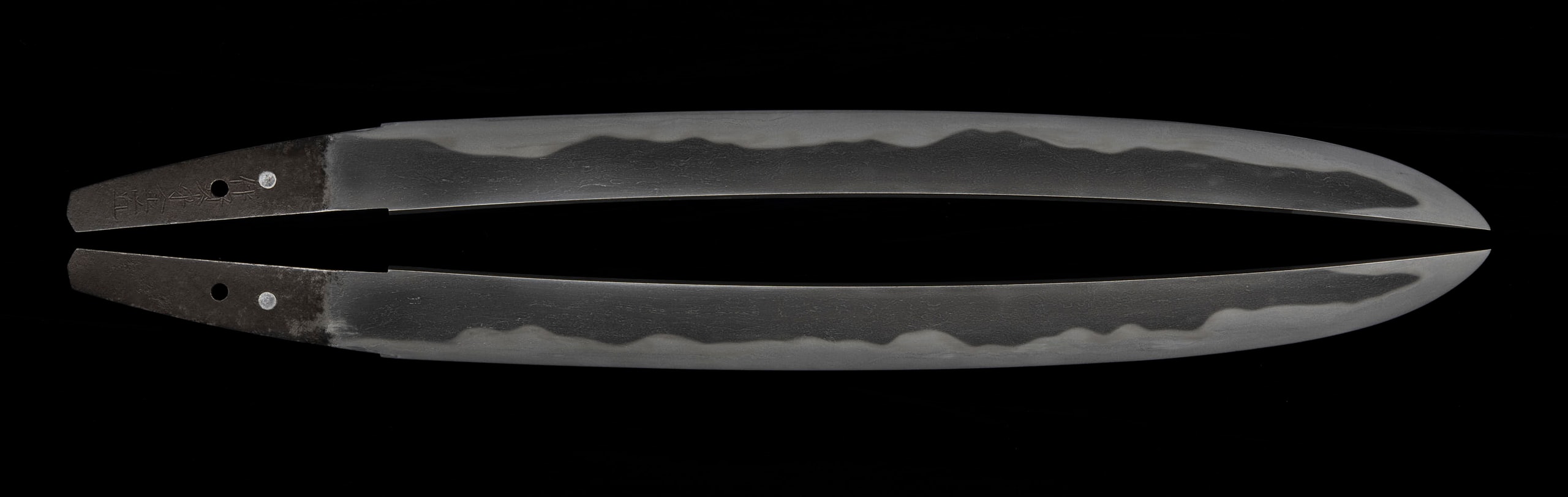
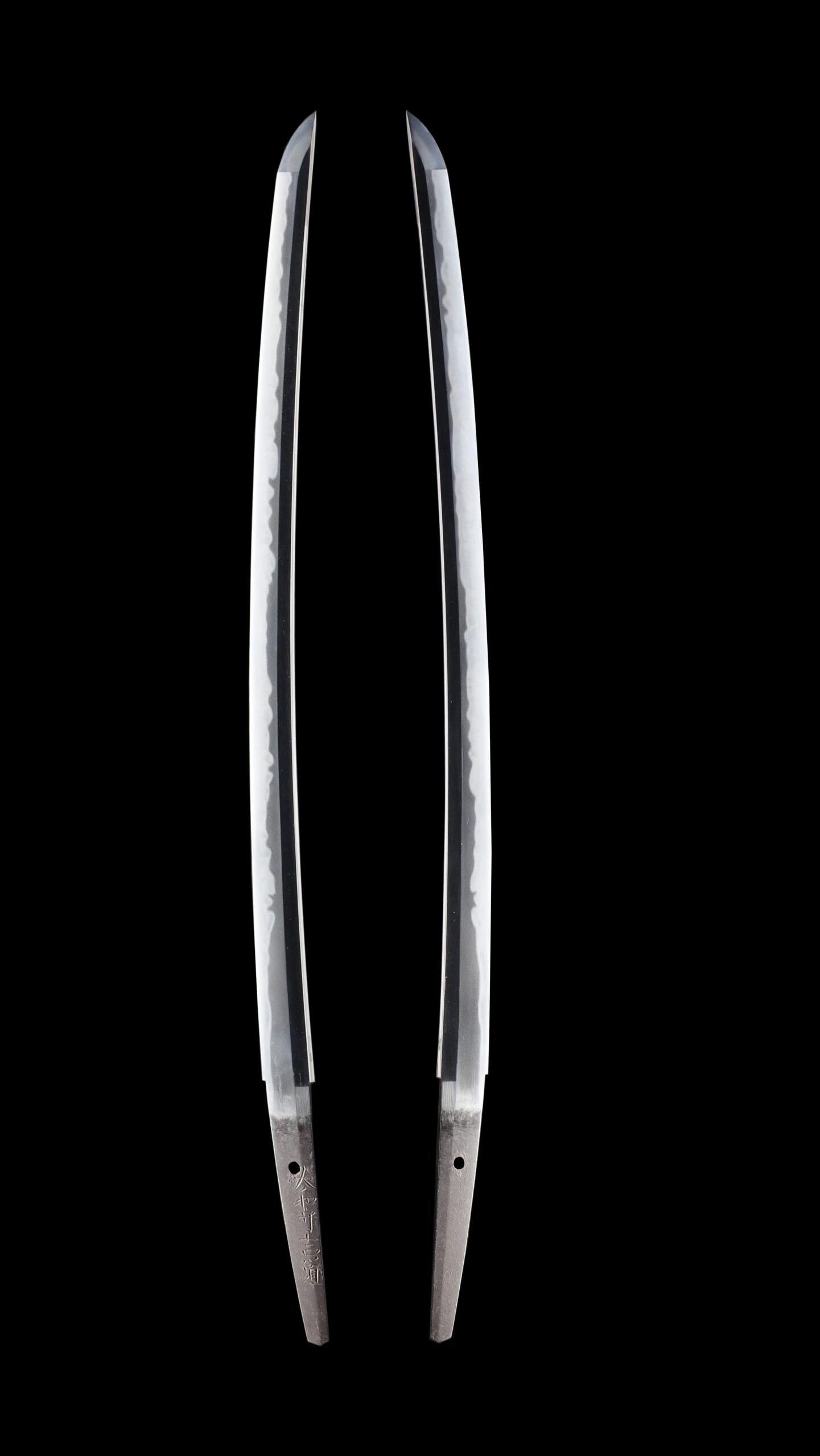
Kanemichi (兼道) was a swordsmith of Seki in Mino Province who, during the Eiroku era (1558--1570), moved to Kyoto together with his four sons -- Iga no Kami Kinmichi, Izumi no Kami Rai Kinmichi, Tanba no Kami Yoshimichi, and Etchu no Kami Masatoshi. This migration established the Mishina lineage, and the sons collectively became known as the founders of the sanpin-mono (Three Distinguished Products) of Kyoto. Dated works by the elder Kanemichi survive from the Tenbun, Eiroku, and Tensho eras. Among his sons, Iga no Kami Kinmichi is regarded as the one who "most earnestly transmitted the style of their native Mino province," and successive generations continued under the same name through the end of the Tokugawa period.
The kitae in Kanemichi's work shows itame-hada with areas of nagare tending toward masame, with ji-nie and chikei. His hamon ranges from gunome-midare mixed with gunome-choji, yahazu-like elements, and togariba, to ko-notare intermingled with gunome and kaku-ba in the manner of Mino work. Nie adheres well, with sunagashi, kinsuji, and occasional tobiyaki. The boshi typically shows shallow notare-komi with ko-maru and a somewhat long return, sometimes developing the sanpin-boshi associated with his school. In his son Kinmichi's rare naginata, the gunome-midare becomes vigorously disturbed with shima-ba, demonstrating the full expressive range of the lineage.
The NBTHK observes that Kanemichi's finest works are distinguished by jigane that is "notably well refined" compared with ordinary Sue-Seki production, and that the ha is "bright and clear." His katana dated Tenbun 16 is noted for possessing a "dignified, imposing overall presence," and his yari is praised as "of the highest class for this maker." The gold-inlaid kinzogan cutting-test inscriptions naming testers of the Yamano family are recognized as holding "great documentary value." Through his sons' establishment in Kyoto, Kanemichi stands as the progenitor of one of the most consequential smithing dynasties of the Shinto period.
![Katana - Tokuho - 作 兼道 - 刀[丹後守兼道(良武公)][日本美術刀剣保存協会]特別保存刀剣](/_next/image?url=https%3A%2F%2Fitbhfhyptogxcjbjfzwx.supabase.co%2Fstorage%2Fv1%2Fobject%2Fpublic%2Flisting-images%2Fworld-seiyudo%2FL868801%2F01.jpg&w=2560&q=90)
![Katana - Tokuho - 作 吉道 - 刀 [丹波守吉道(京四代目)(良工)][日本美術刀剣保存協会]特別保存刀剣](/_next/image?url=https%3A%2F%2Fitbhfhyptogxcjbjfzwx.supabase.co%2Fstorage%2Fv1%2Fobject%2Fpublic%2Flisting-images%2Fworld-seiyudo%2FL873488%2F01.jpg&w=2560&q=90)
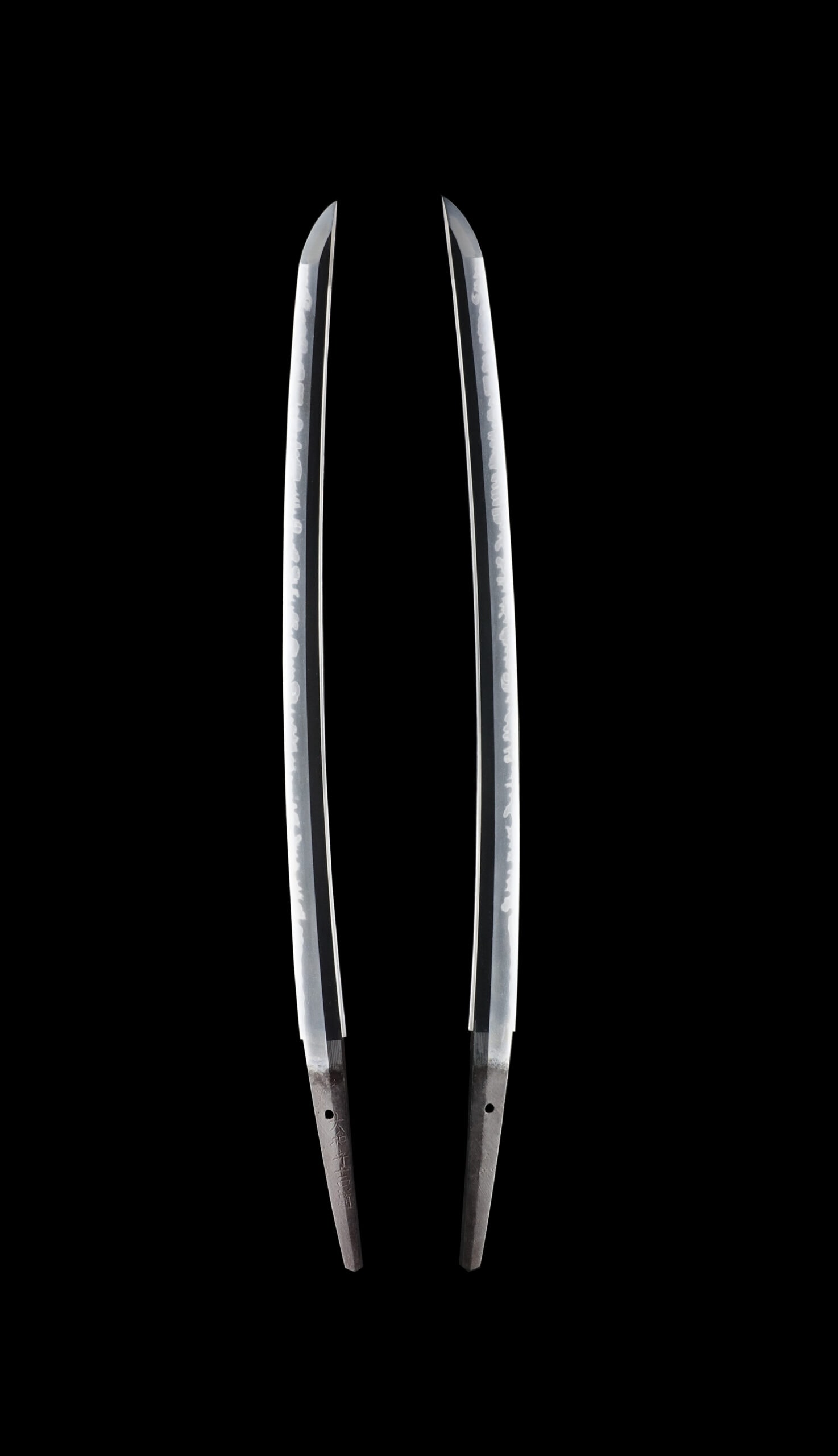
![Wakizashi - Tokuho - 作 吉道 - 脇差[大和守吉道(良武公)][日本美術刀剣保存協会]特別保存刀剣](/_next/image?url=https%3A%2F%2Fitbhfhyptogxcjbjfzwx.supabase.co%2Fstorage%2Fv1%2Fobject%2Fpublic%2Flisting-images%2Fworld-seiyudo%2FL837552%2F01.jpg&w=2560&q=90)