NihontoWatch MonNihontoWatchBETA
MarketEncyclopedia
NihontoWatch Mon

NihontoWatchBETA

Market
Encyclopedia
Overview·Kantei·Designations·Provenance·Work Types·Signatures·Lineage·School
OverviewKanteiDesignationsProvenanceWork TypesSignaturesLineageSchool
  1. Schools
  2. Yokoya
  3. Yanagawa
  4. Ishiguro
  5. Masatsune

Ishiguro Masatsune

政常

Tokujū
Vol. 9, No. 36 · Tsuba

Ishiguro Masatsune

政常

17 ranked works

ProvinceMusashiEraEnkyō-Bunsei (1746/1760–1828)SchoolYokoya>Yanagawa>IshiguroTraditionMachiboriTeacherKatō Naotoki (加藤直常); also studied under Yanagawa Naomasa (柳川直政)Specialtiestsuba, kozuka, fuchi-kashira, menuki, kogaiTypeTosogu MakerCodeISH001
4Tokubetsu Jūyō13Jūyō Tōken

Overview

Ishiguro Masatsune (stone inscription: 石黒政常), born in Horeki 10 (1760), was the founding master of the Ishiguro school of metalworkers and one of the most celebrated (town-carving) artists of the late period. He first apprenticed under Kato Naotsune of the Yanagawa branch, and subsequently studied with Yanagawa Naomasa himself, both part of the broader Yokoya lineage. Upon establishing independence, Masatsune combined one character from each teacher's name — masa (政) from Naomasa and tsune (常) from Naotsune — to form his professional name. He used the art names Togakushi (東嶽子, later written 東岳子) and, after passing the age of sixty, signed works as "Ishiguro-sai Jumyo Masatsune." His school attracted many gifted pupils, including Masayoshi, Masaaki, Koretsune, Masahide, and Masahiro, and the Ishiguro lineage continued to flourish through successive generations into the Meiji period. He died in Bunsei 11 (1828) at the age of sixty-nine.

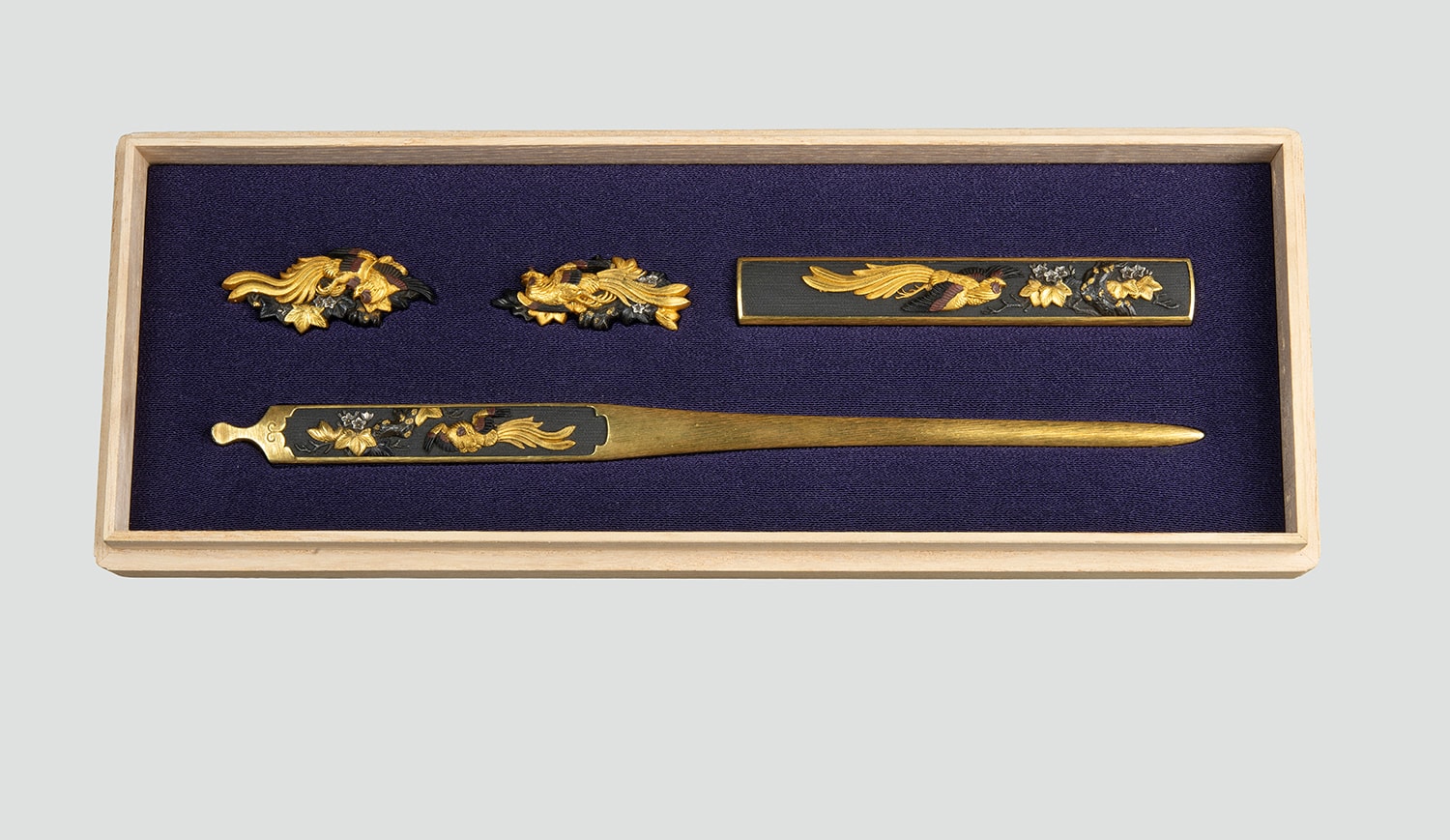
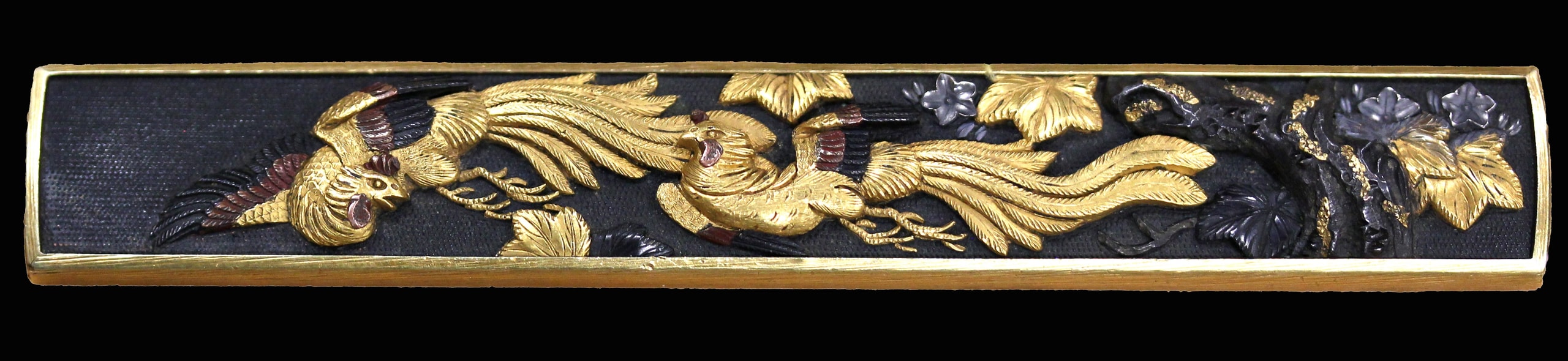
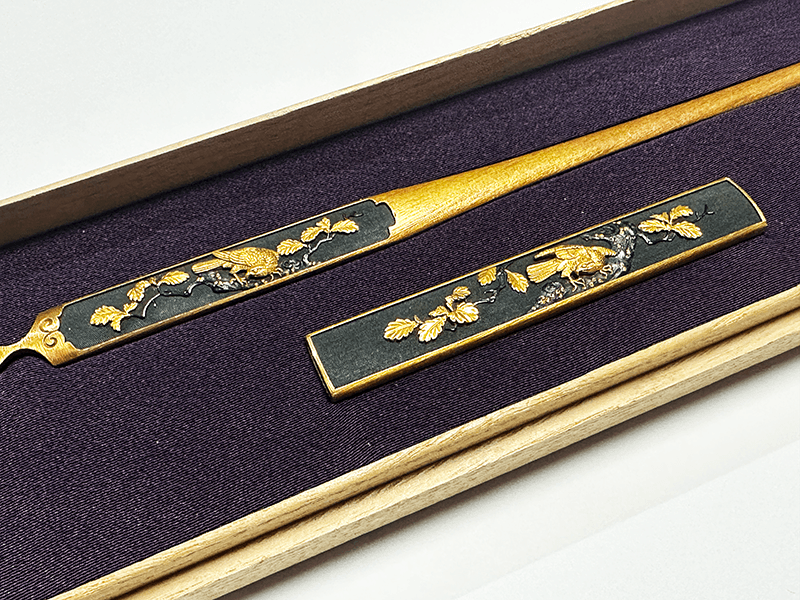
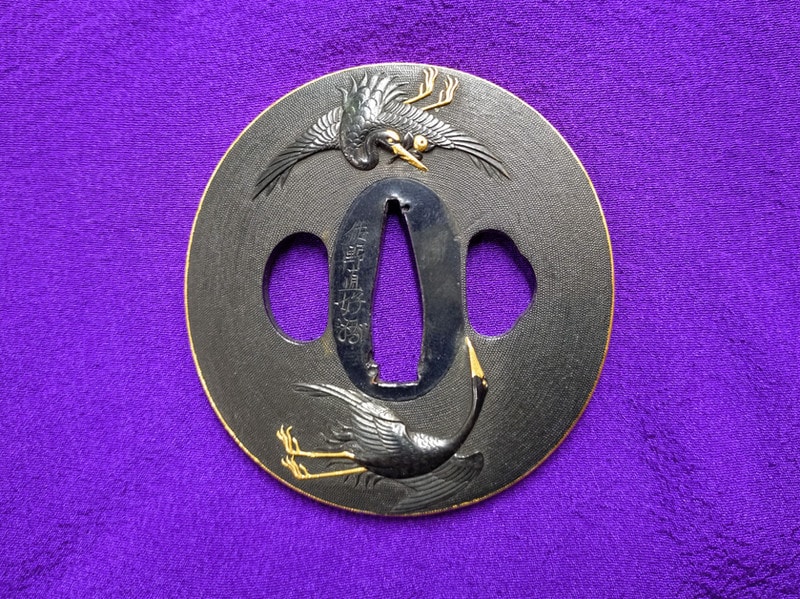
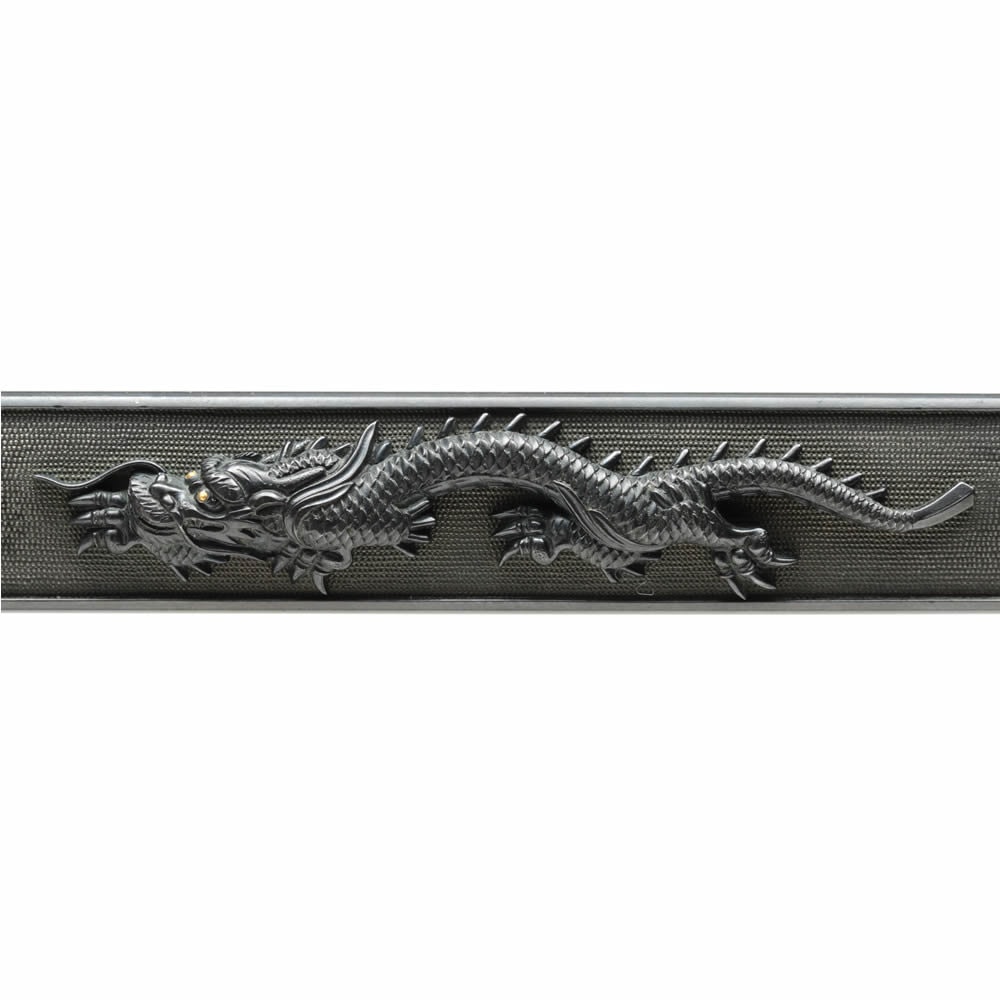
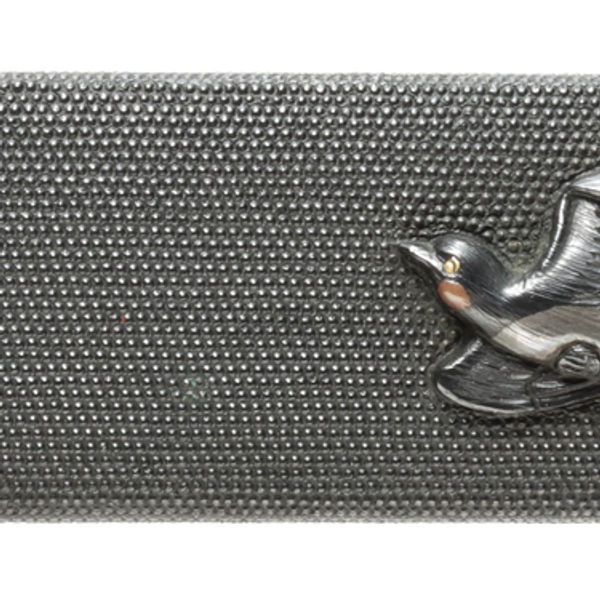
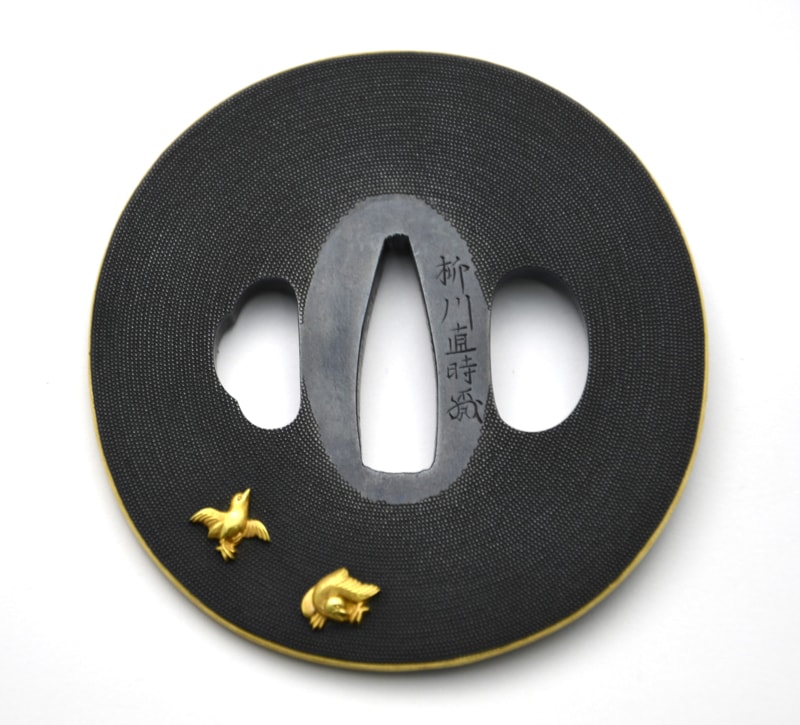
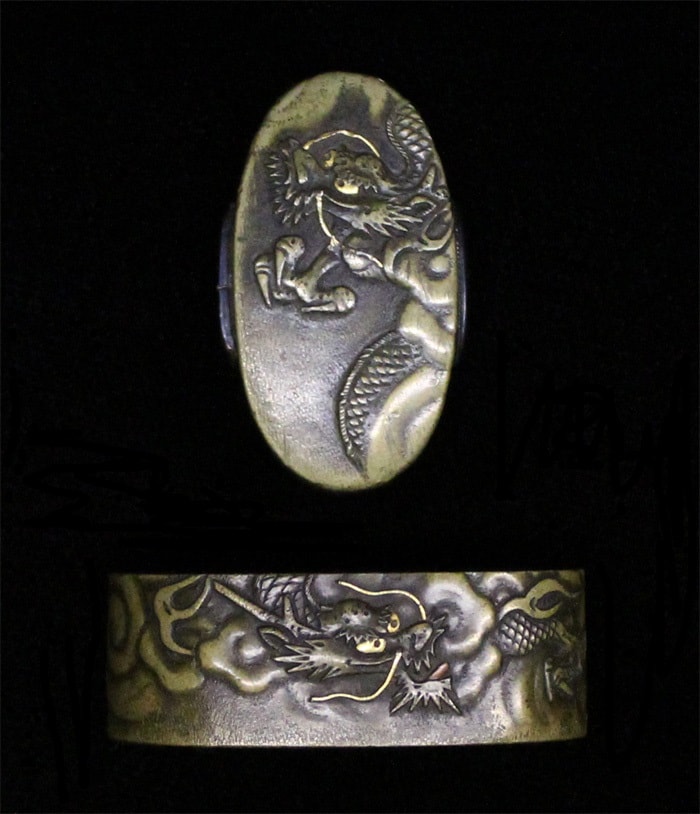
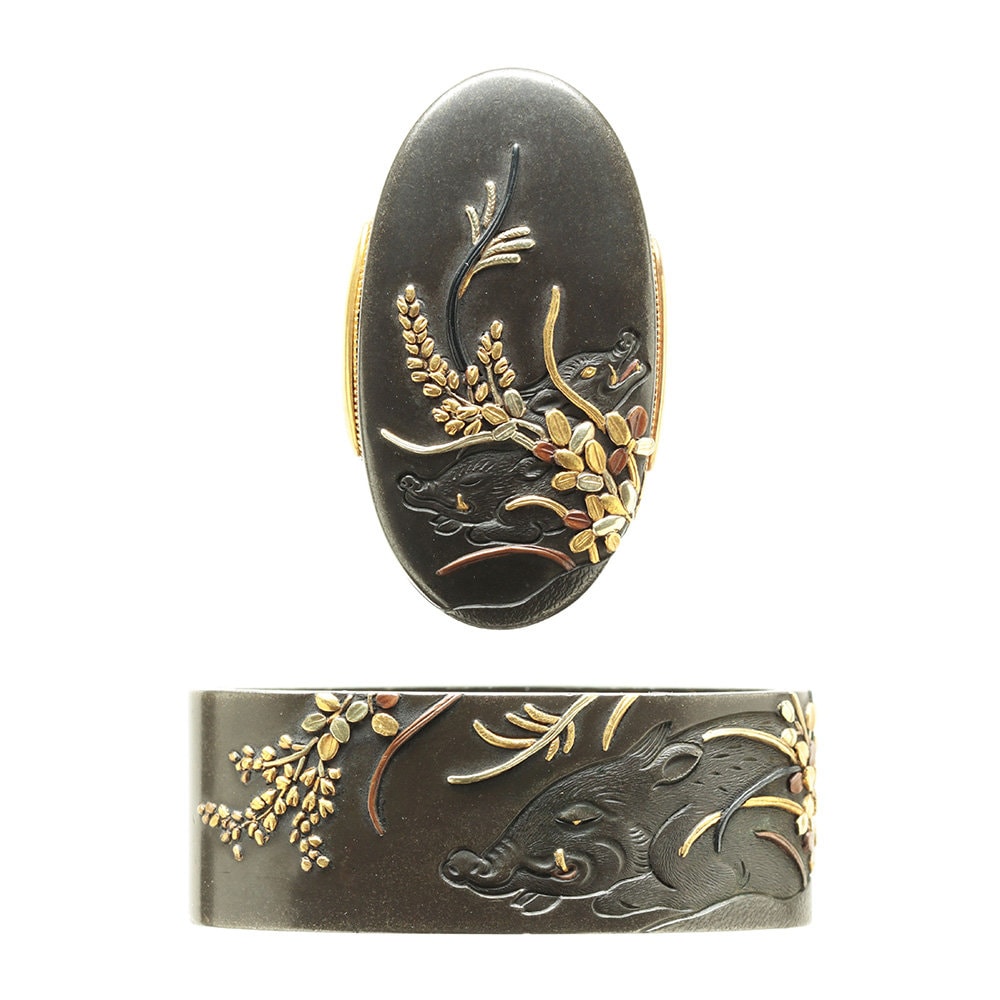
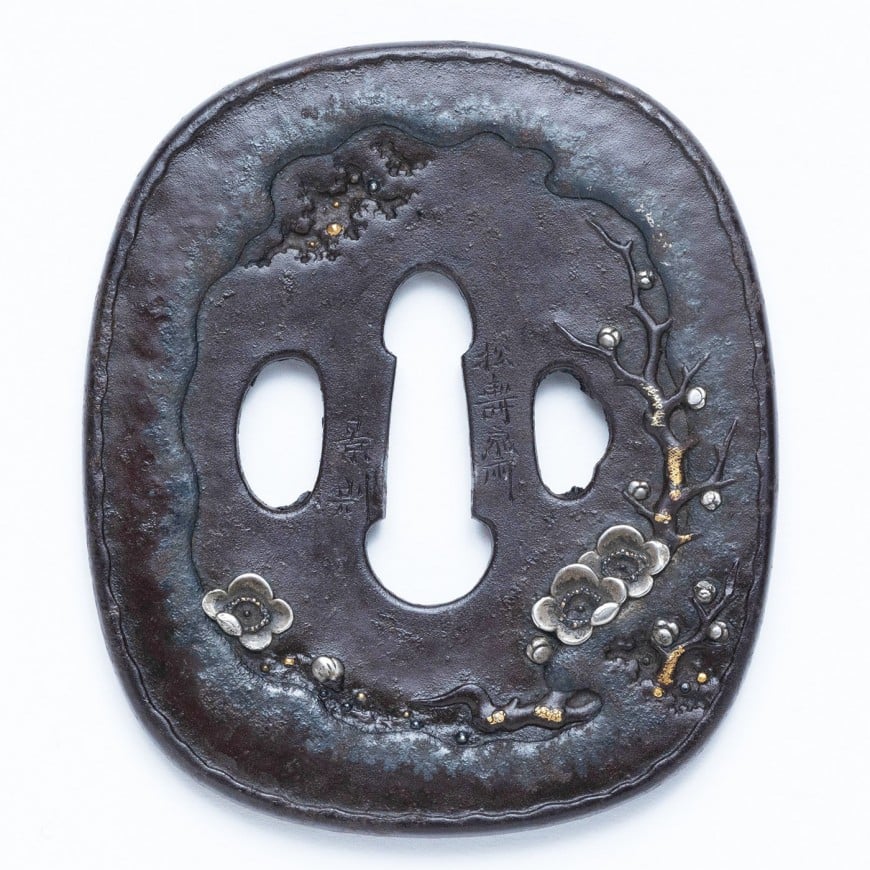
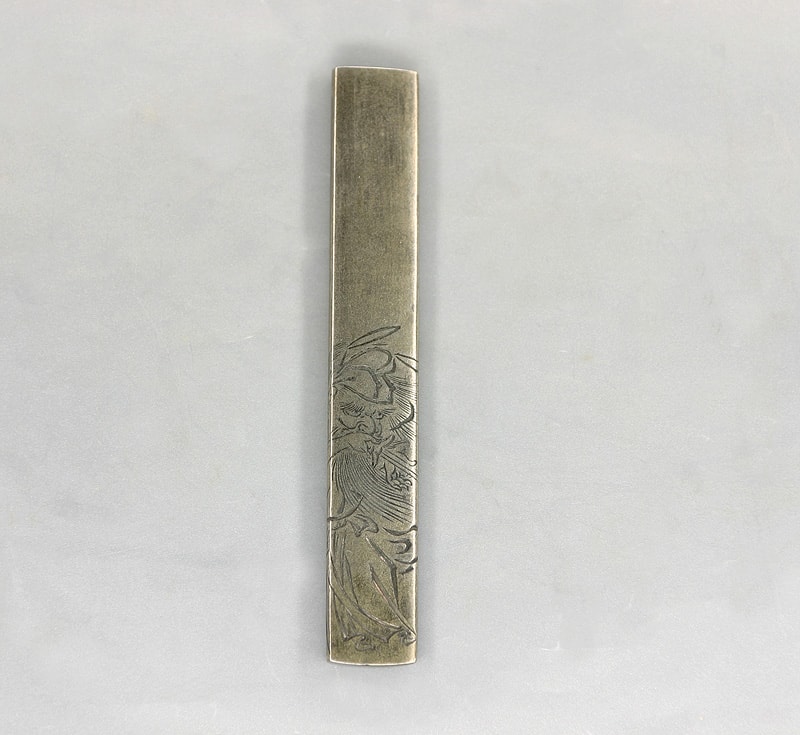
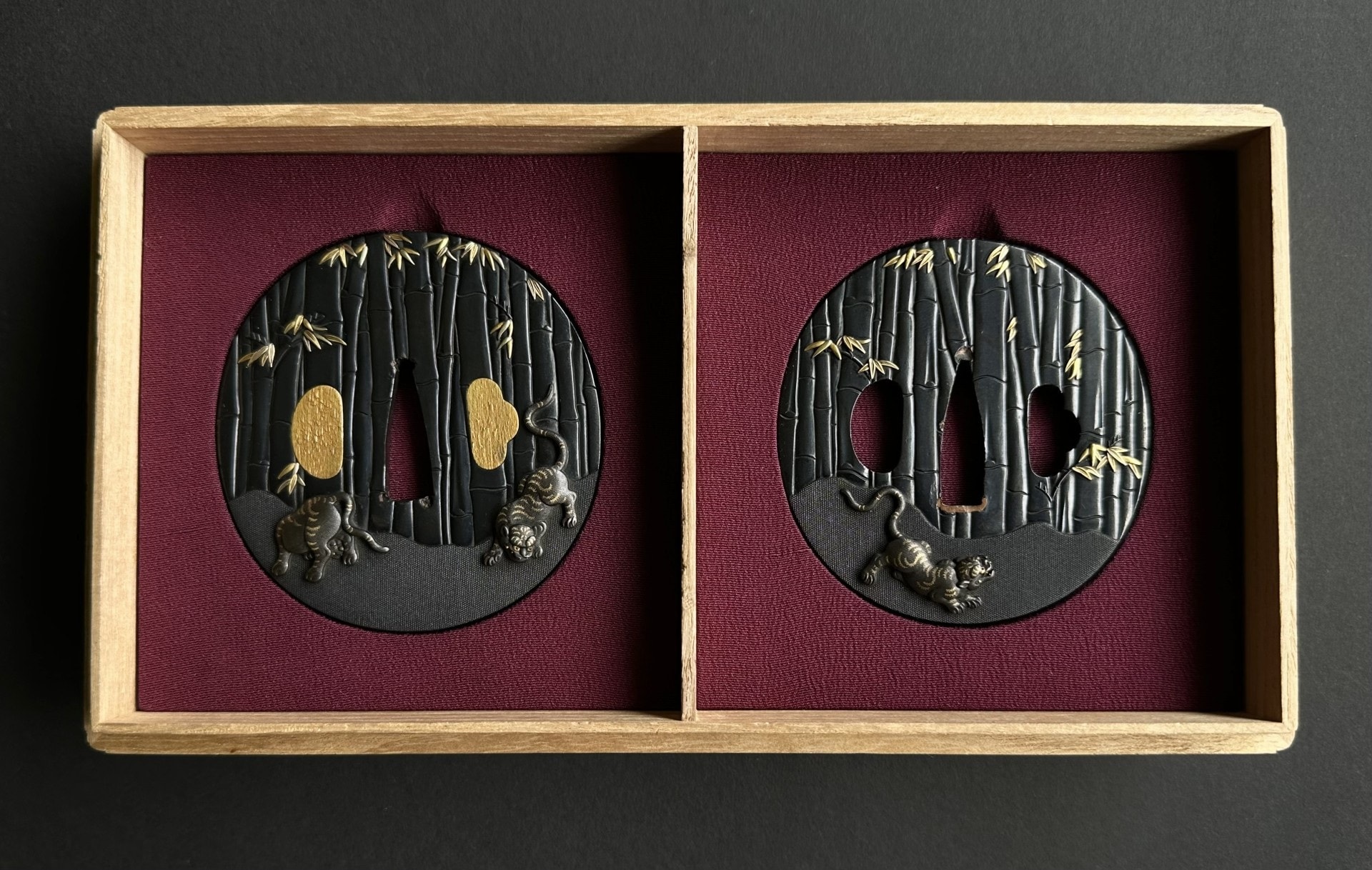
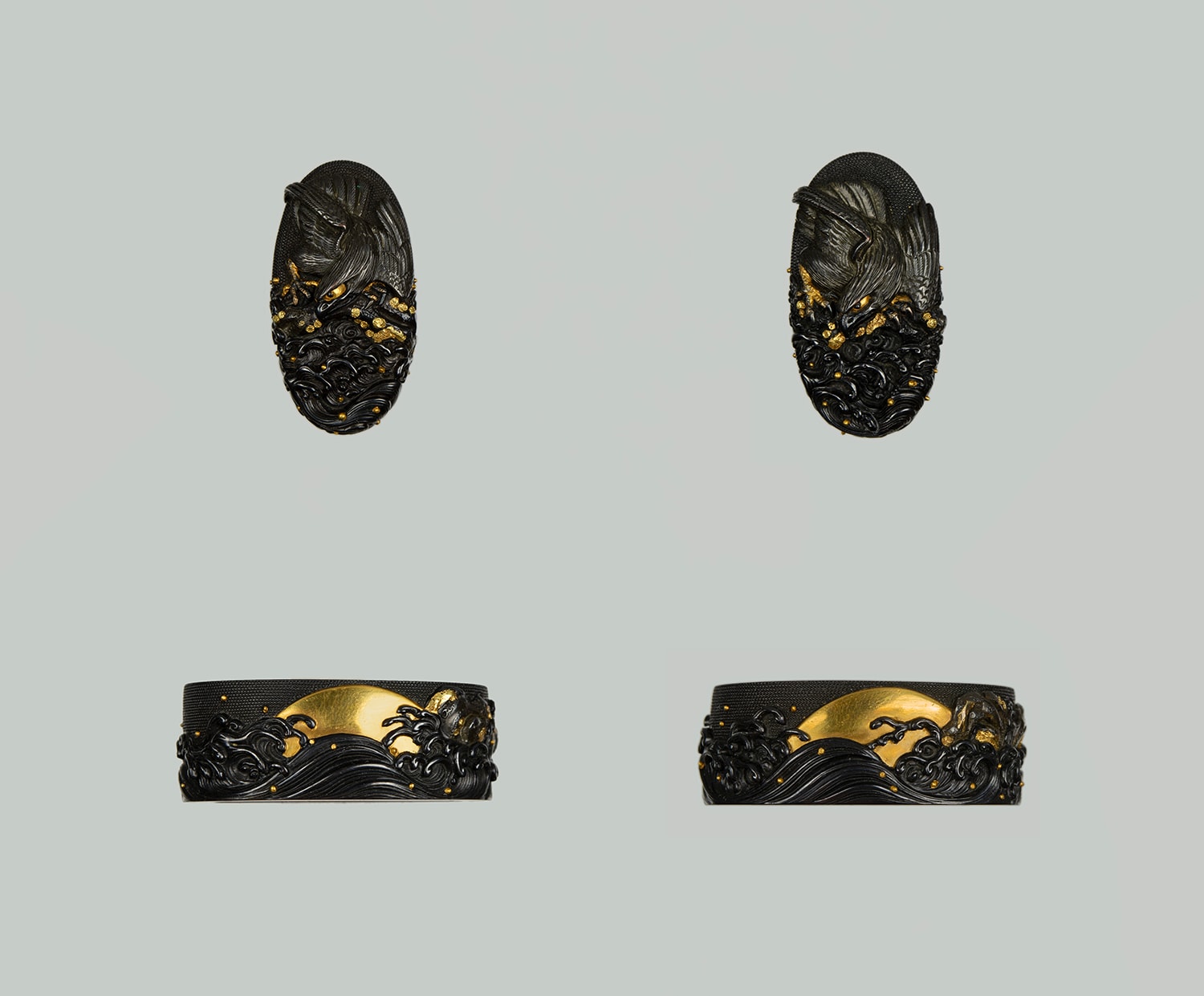
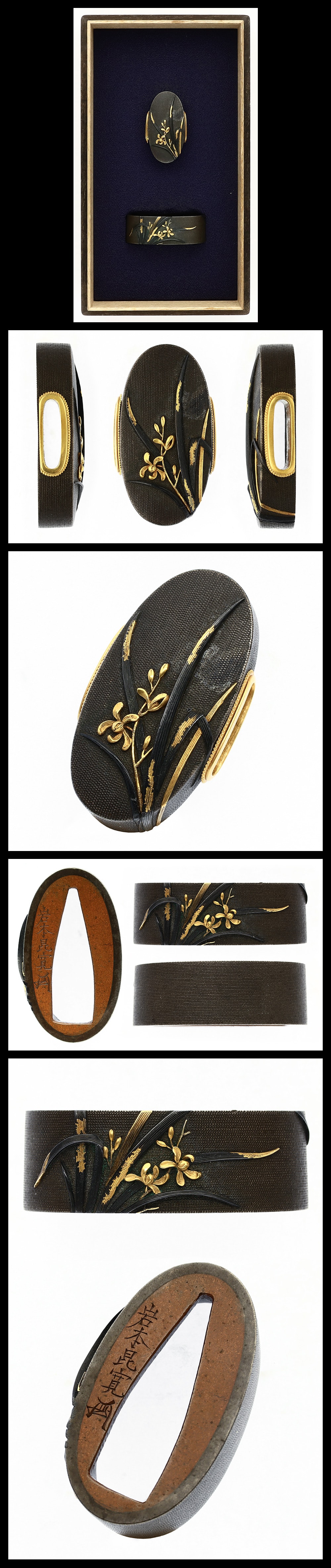
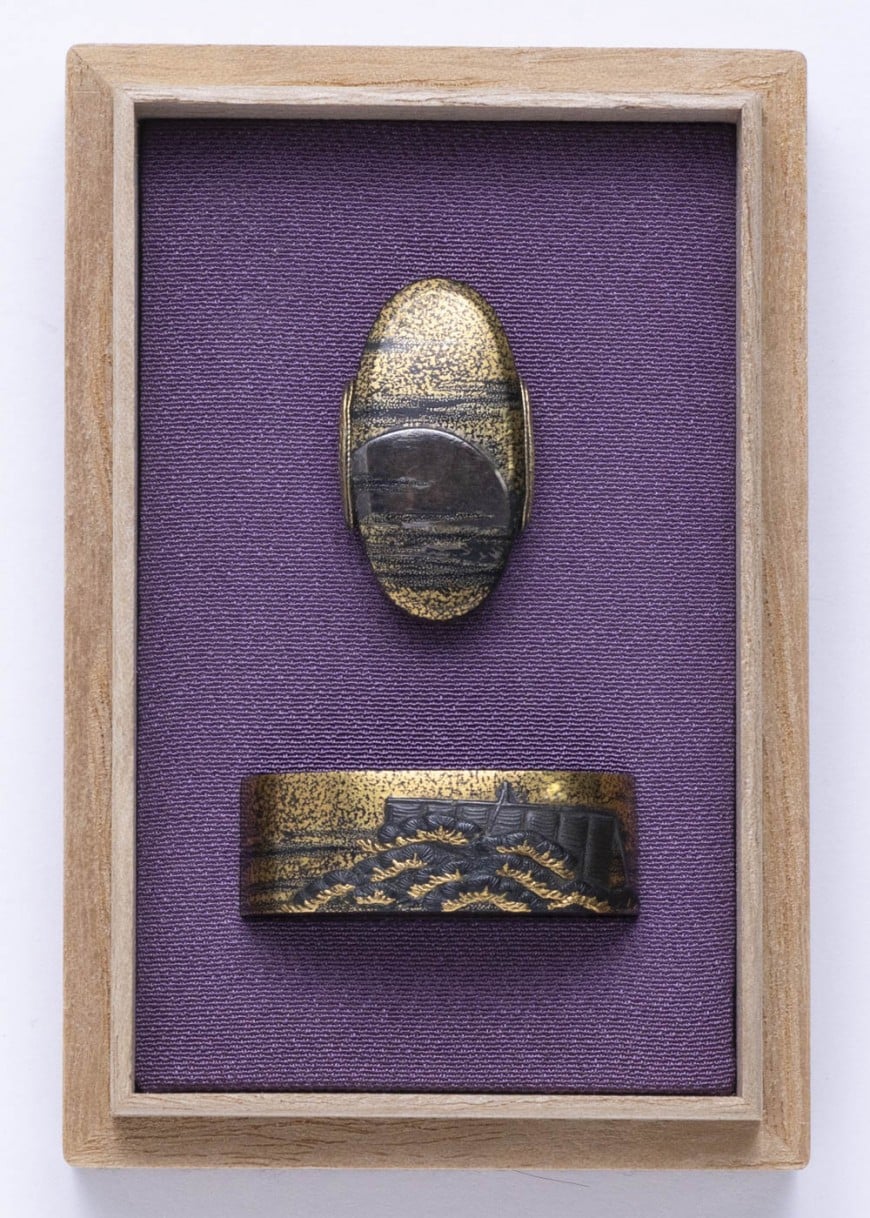
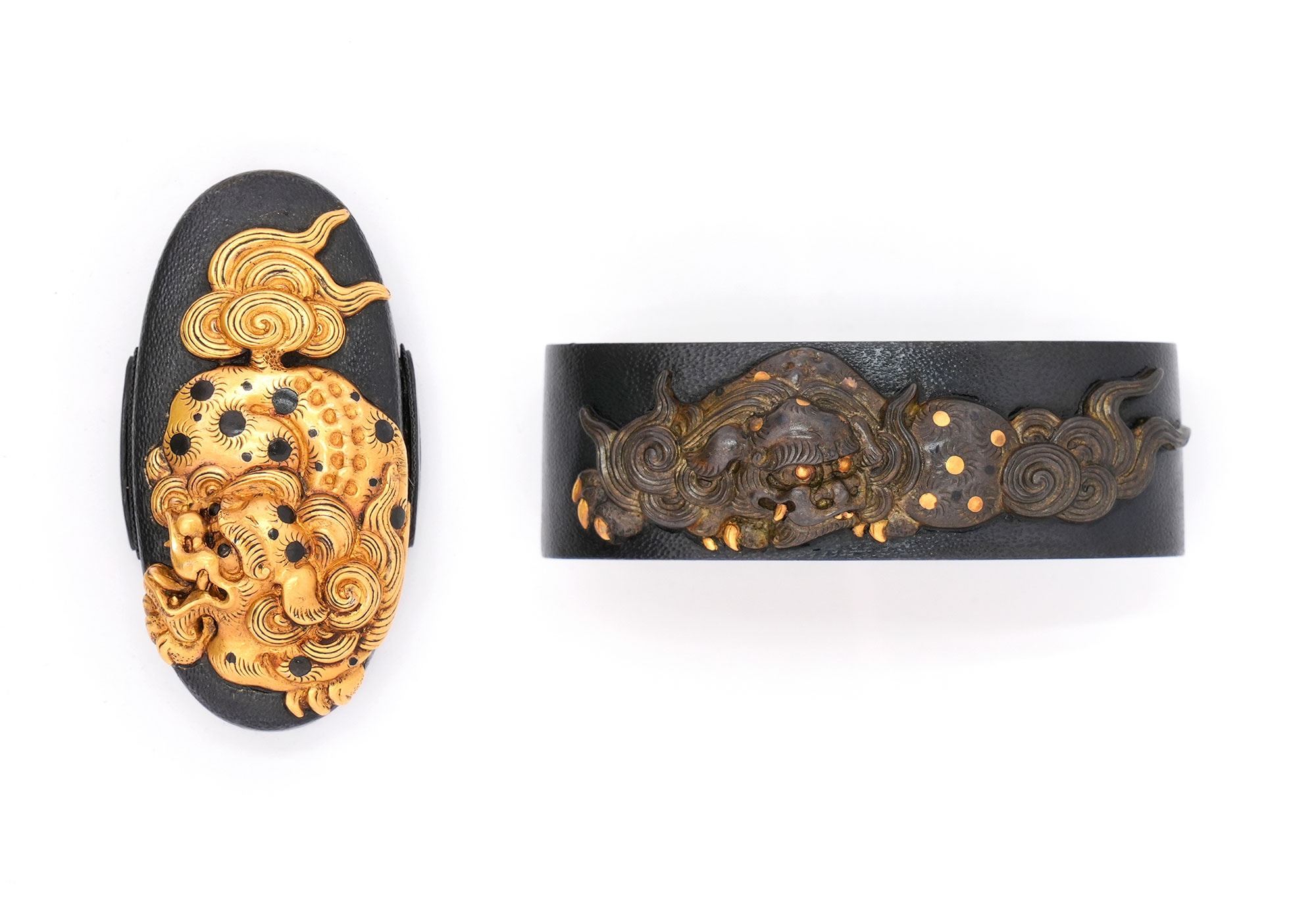
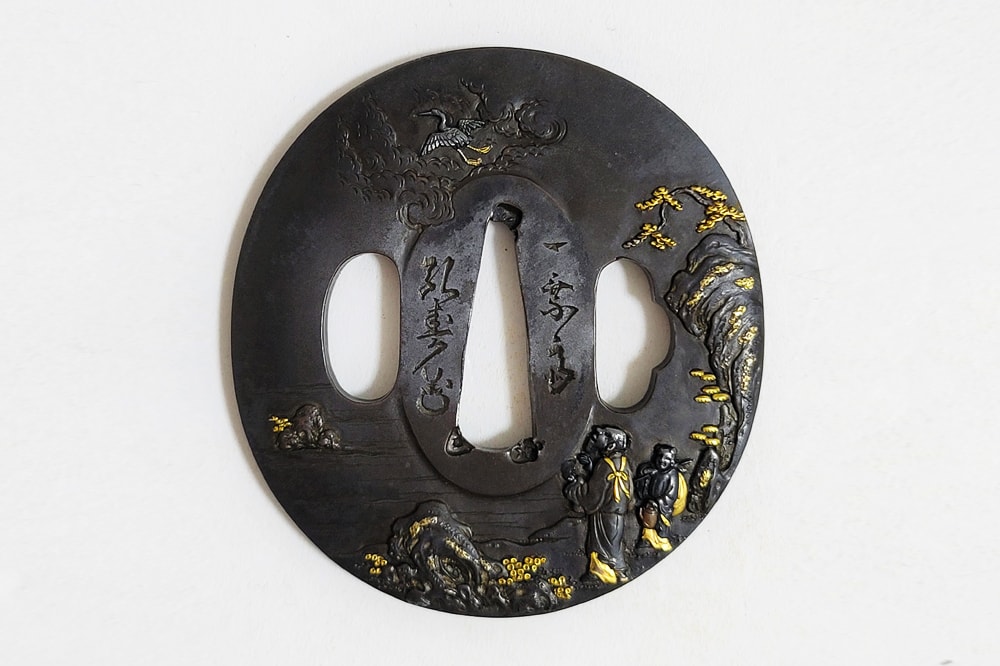
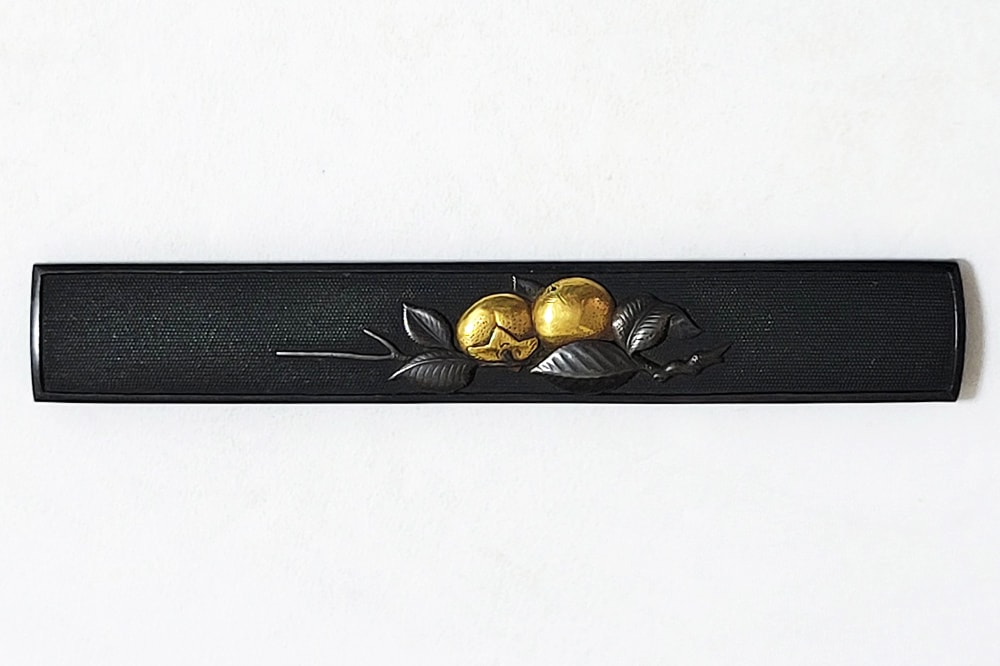
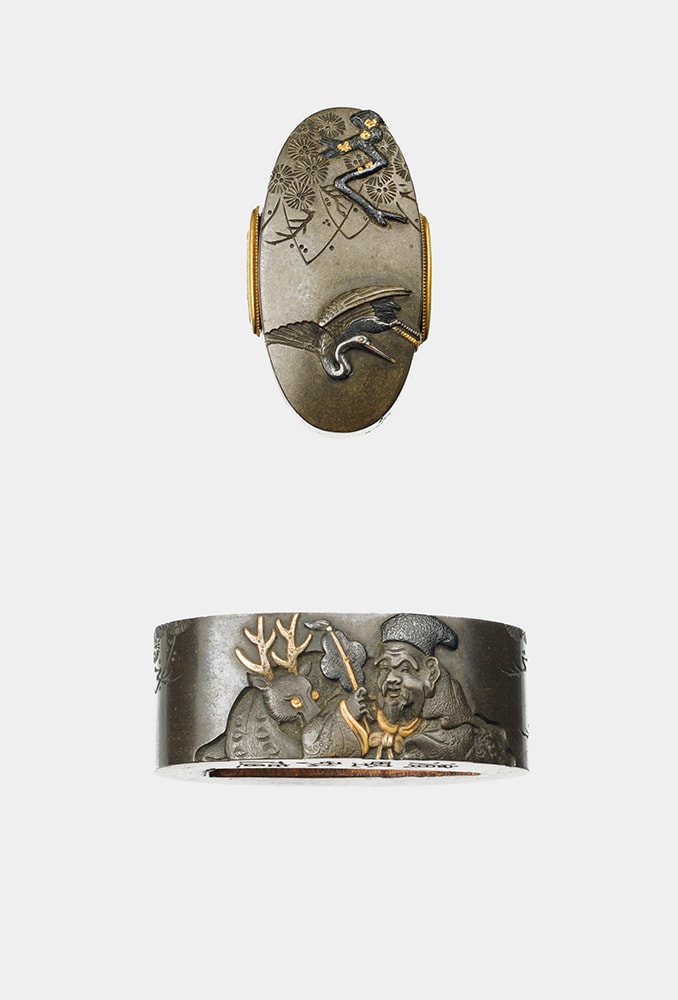
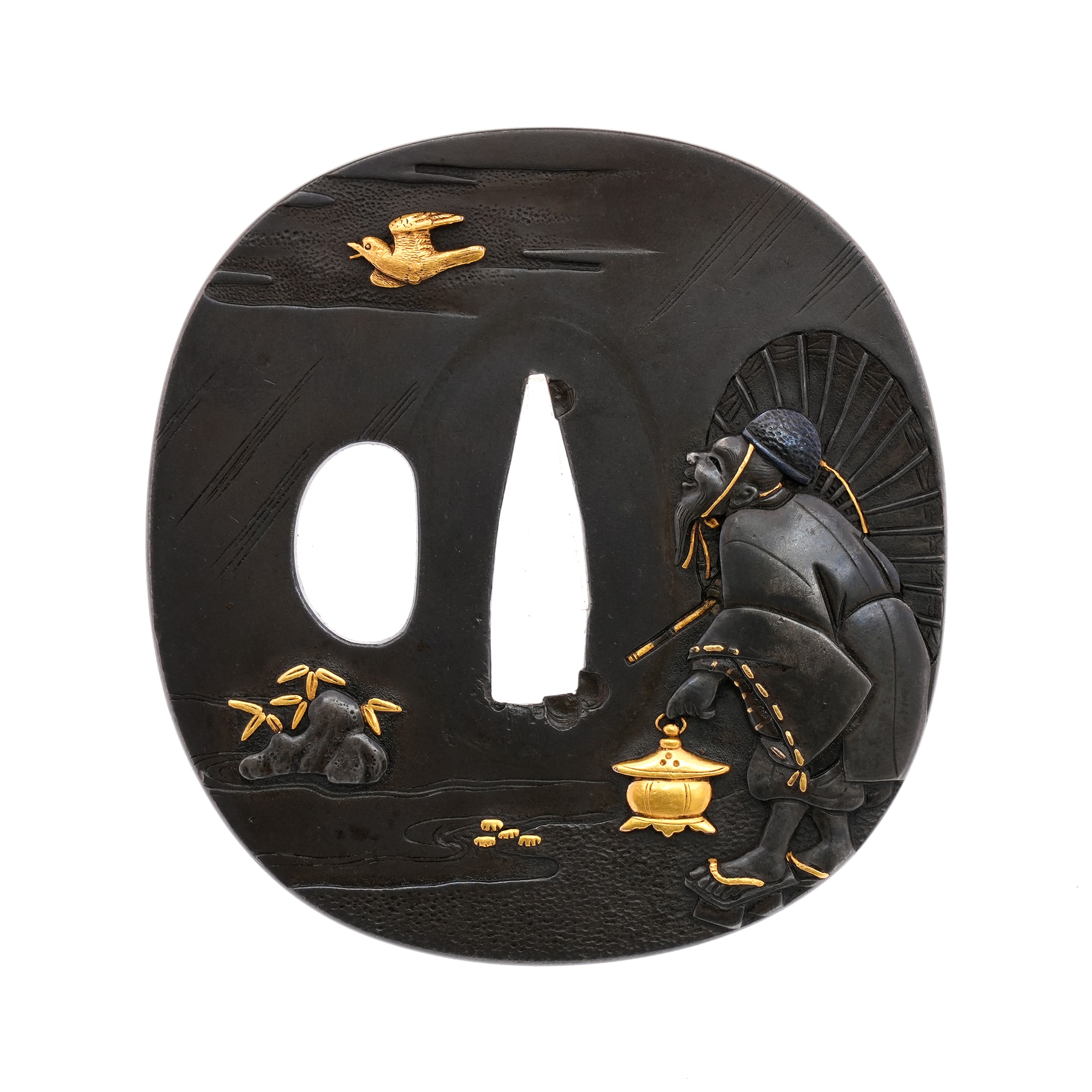
Masatsune's technical command encompassed the full repertoire of the kinko metalworker. His favored ground was finished with an impeccably regular , praised in designation records for its orderly precision. Upon this deep-black surface he executed designs primarily in (high relief) enriched with (polychrome inlay), deploying a remarkable palette of colored metals — gold, silver, , (scarlet copper), , and hi-irodo — to achieve effects of brilliant yet controlled chromatic richness. His demonstrate equal mastery of yobori (sculptural carving) and nikubori (fleshed relief) on solid gold grounds, often employing (applied metal) and - (applied inlay). A pair of dragon reveals his command of the dashi-keshi method and precise sankaku- (triangular chisel) work adapted from the Goto iebori tradition. Whether rendering the minutely differentiated plumage of a raptor, the undulating force of ocean waves expressed through polished relief with gold and silver ro- (dew inlay), or the delicate color gradations in a pheasant's breast, Masatsune's chisel strokes are characterized by an honest, finely detailed manner and a clean final polish that imparts an air of dignified refinement.

Masatsune's artistic significance rests upon his transformation of the Yanagawa manner into a distinctly personal idiom centered on bird-and-flower subjects and birds of prey — themes that became the hallmarks of his school. His compositions make masterful use of open space, creating what the examiners repeatedly describe as a "clear and limpid spirit." Yet within this decorative brilliance there persists a martial vigor suited to warrior taste, a quality that distinguishes the first generation's work from the more purely ornamental output of later Ishiguro artists. His oeuvre spans , , , , , and complete soroe- sets, demonstrating equal facility across every format of sword fitting. As an artist who bridged the Yokoya lineage's classical discipline and the expressive naturalism of the Bunka-Bunsei cultural efflorescence, Masatsune stands among the foremost representative metalworkers of -period Japan.

Kantei

3 descriptive axes: material (shakudo worked in fine nanako above all) x technique (dense, meticulous high relief and applied suemon with rich gold, silver and colour-metal iro-e) x themes (bird-and-flower realism, the hawk and bird of prey his particular forte). His load-bearing discriminators, as founder, are the establishment of the Ishiguro kacho idiom apart from the Yanagawa manner, and his command of the raptor subject.

Ishiguro Masatsune the First (1760-1828), common name Zenzo and later Shusuke, is the founder of the Ishiguro school of kinko, working in at Nihonbashi. He learned under Kato Naotsune of the Yanagawa line, itself a branch of the Yokoya, and took his name by joining one character from Yanagawa Naomasa (the 政) with one from Naotsune (the 常). Breaking from the Yanagawa manner, he established his own style: the brilliant, elegant bird-and-flower realism in dense high relief with rich colour-metal iro-e on - that became the Ishiguro house art, and that the records say begins with him. The metalwork artist who carries the school's headship, his ground is orderly , his carving close and meticulous, and the raptor, hawk above all, is his particular forte.

Diagnostic discriminators

unique vs the Ishiguro school he founded (inheritors, not originators)

raptors are depicted in about a third of the corpus and the setsumei single them out as his forte (the records say his raptor pieces are many and skilled, and the hawk is his house subject); rated on the raptor census, not the boilerplate kacho keyword that recurs in nearly every bio

Material (grounds)

worked in fine, orderly above all, with , and solid gold besides, and -grey on occasion; copper-red and brown- are used among the colour-metals.

Technique

Close, meticulous high relief and applied with rich gold, silver and colour-metal iro-e and inlay, the in ; his carving is praised as honest and minute, the finish cleanly polished.

Themes (bird-and-flower)

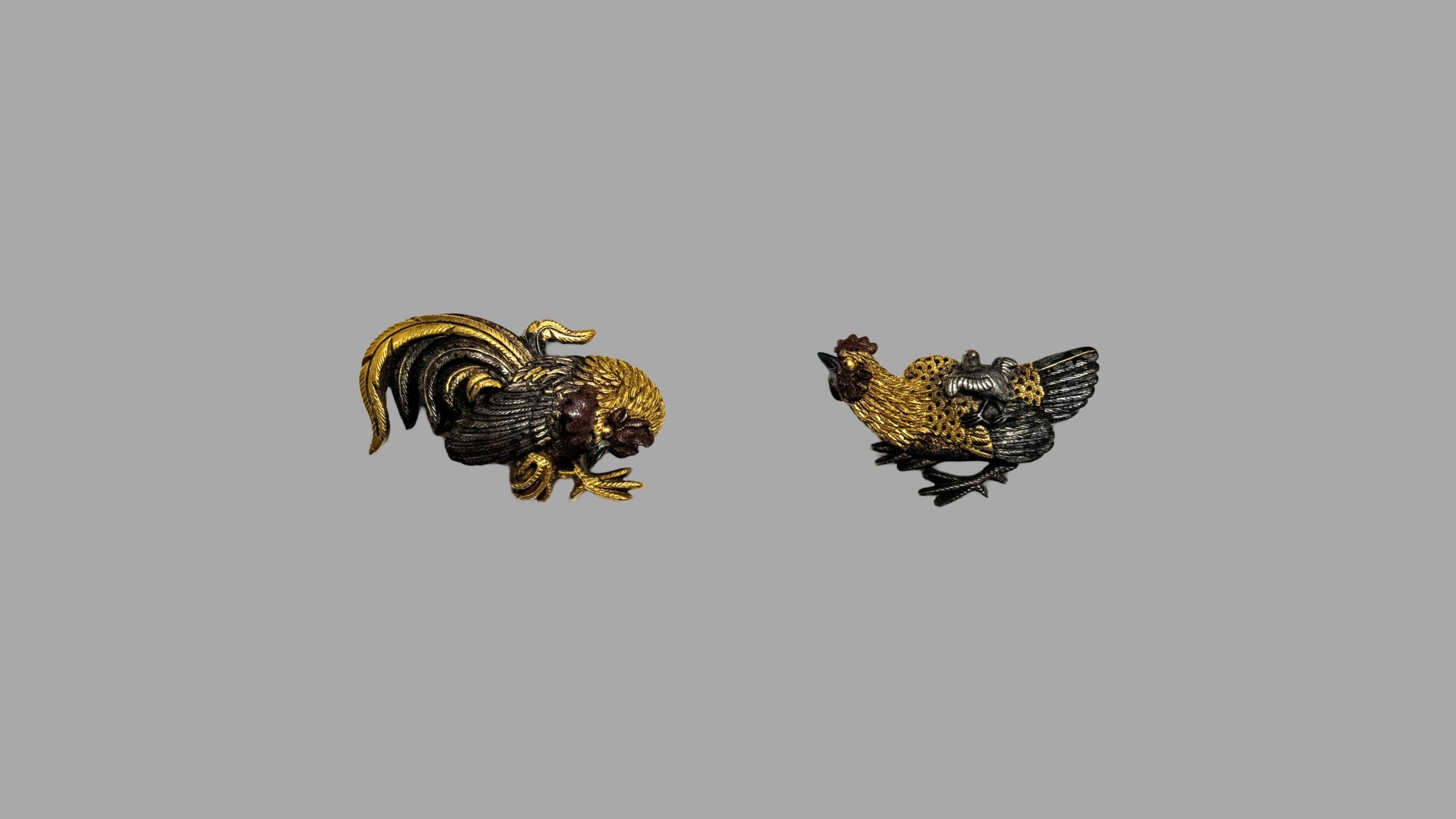
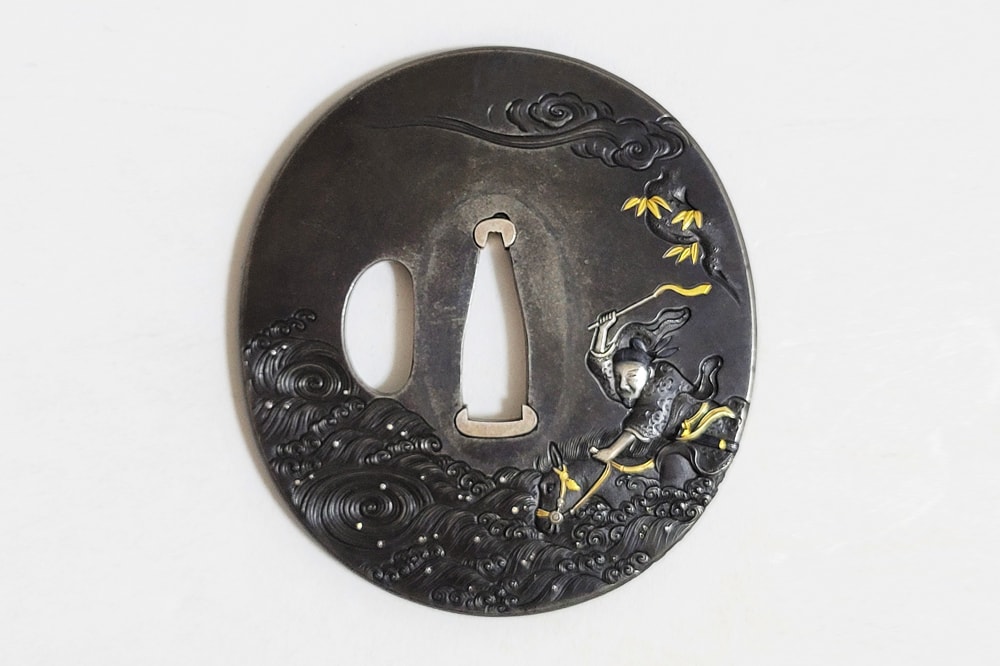
Bird-and-flower above all: raptors and the hawk, the gamecock with chrysanthemum, the warbler with plum, the parent-and-chick chicken, the pheasant; with a few non-avian pieces, a wave set, a racing-horse and a Mt-Kurama tengu scene.

Bird-and-flower realism

Hawks and birds of prey, the gamecock among chrysanthemum, the warbler among plum, parent-and-chick chickens, rendered with dense, colourful realism on orderly .

Full iconography

Signature chronology

Placement
Dated signatures
Recorded signatures

Documentary note

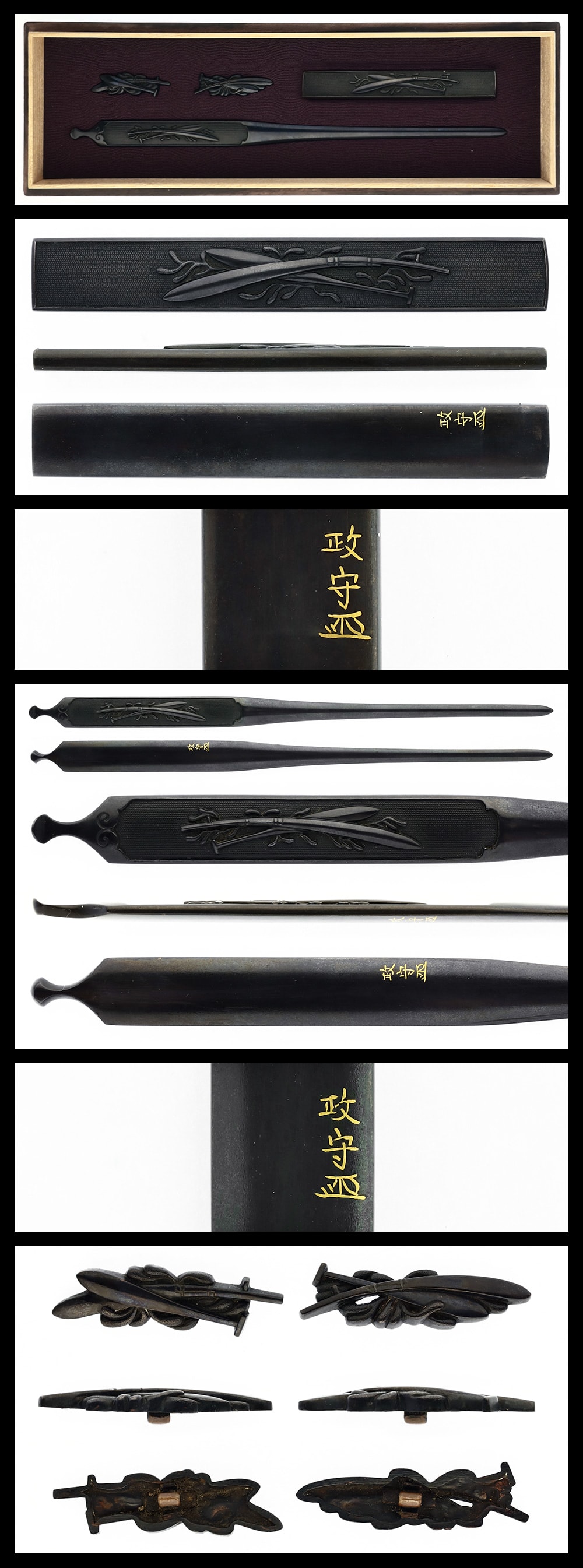
He signs Ishiguro Masatsune with a throughout, built up with the art-name go Togaku(shi) (東嶽子, later 東岳子) and, after reaching sixty, with the go Jumyo or Jucho prefixed as Ishiguro-sai Jumyo Masatsune; the are often cut as a split Ishiguro and Masatsune. Nearly all his work is signed. The records give his early name as Koretsune (是常), of which no work is known, and they recite his birth in 1760 and death in 1828 at sixty-nine. His pupils include Masayoshi, Masaaki, Koretsune, Masahide and Masahiro. Caution on near-homonyms: one in this group carries a signed Ishiguro Koreyoshi (石黒是美), a distinct later Ishiguro hand, not Masatsune; and the second-generation son, who signed Moritsune (盛常) and the young name Masamori (政守), is named only in passing.

Scholarship

A single Tokuju setsumei says the brilliant, elegant bird-and-flower design called the Ishiguro house art (oie-gei) is said to begin with him.

Designations

Kokuhō—
Jūyō Bunkazai—
Jūyō Bijutsuhin—
Gyobutsu—
Tokubetsu Jūyō4
Jūyō Tōken13

Elite Standing

0.21 across 17 designated works

Top 5% among makers

Provenance

1 documented provenance across certified works by Masatsune

Provenance Standing

1 works held in elite collections across 1 documented provenances

Top 82% among makers

Raw score: 1.88 / 10

Work Types

Distribution across 17 ranked works

Tsuba
635%
Menuki
529%
Other
318%
Mitokoromono
212%
Fuchi-Kashira
16%

Signatures

Signature types across 17 ranked works

Currently Available

Lineage

Masatsune
Students (6)
  1. 1.Masayoshi政美4 for sale30designated
  2. 2.Masaaki政明16designated
  3. 3.Koretsune是常2 for sale4designated
  4. 4.Masamori政守2 for sale
  5. 5.Masaharu政春1designated
  6. 6.Onuki Masaharu小貫政春

Ishiguro School

Other artisans of the Ishiguro school

  1. 1.Masayoshi政美4 for sale30designated
  2. 2.Masaaki政明16designated
  3. 3.Koreyoshi是美4designated
  4. 4.Koretsune是常2 for sale4designated
  5. 5.Mitsutsune光常1designated
  6. 6.Masatsune政恒1designated
  7. 7.Masaharu政春1designated
  8. 8.Masachika政近2designated

Masatsune

Masatsune(政常) was a maker of Japanese sword fittings (tōsōgu) of the Ishiguro school in Musashi province, active during the Enkyō-Bunsei (1746/1760-1828) period.

The work follows the Machibori tradition.

Designated works by Masatsune include 4 Tokubetsu Jūyō, 13 Jūyō.