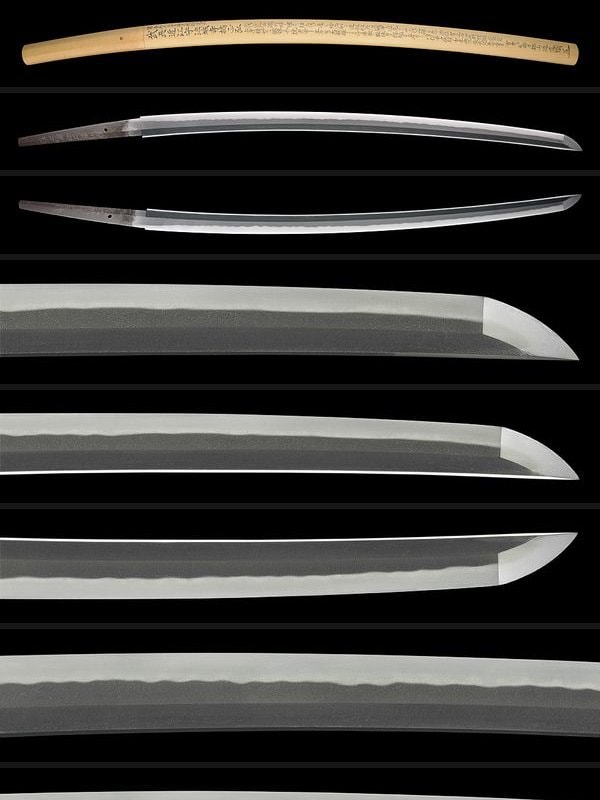
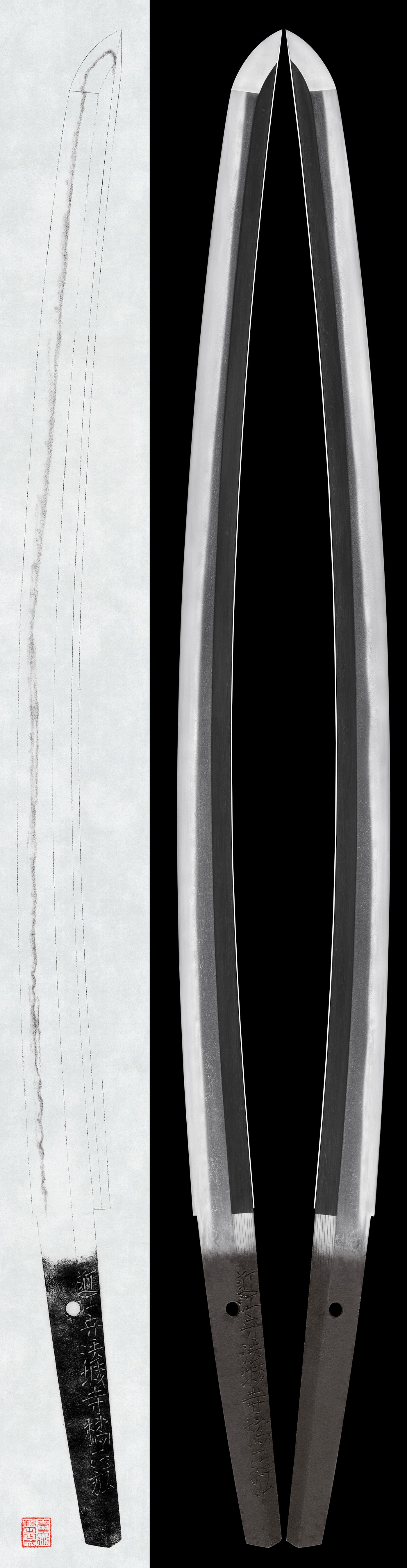
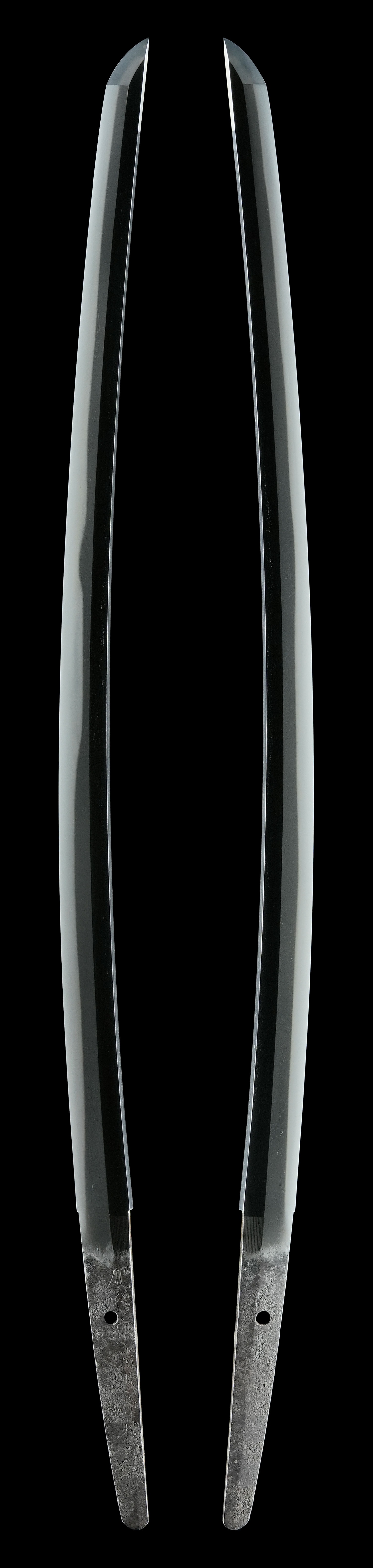
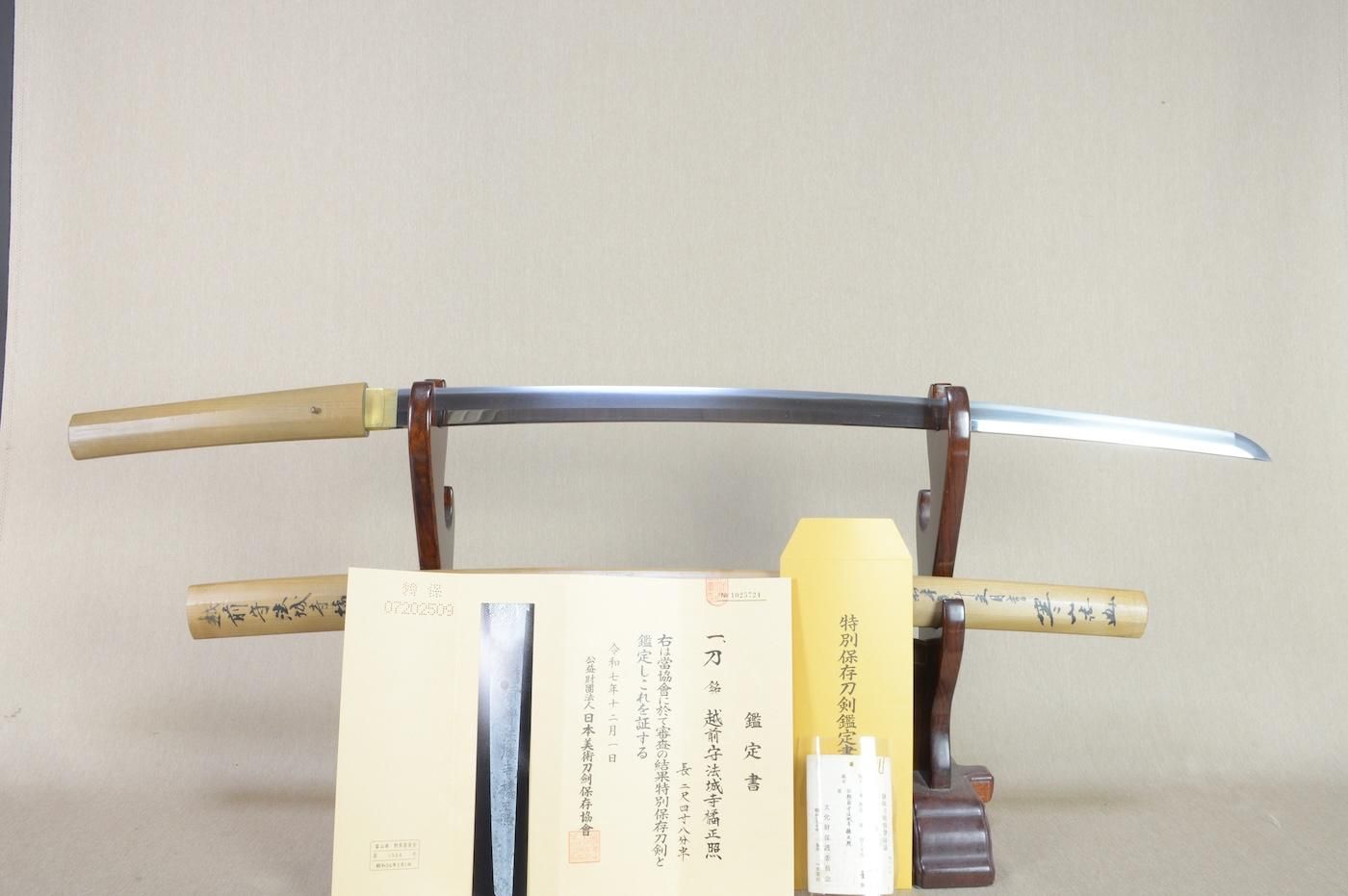
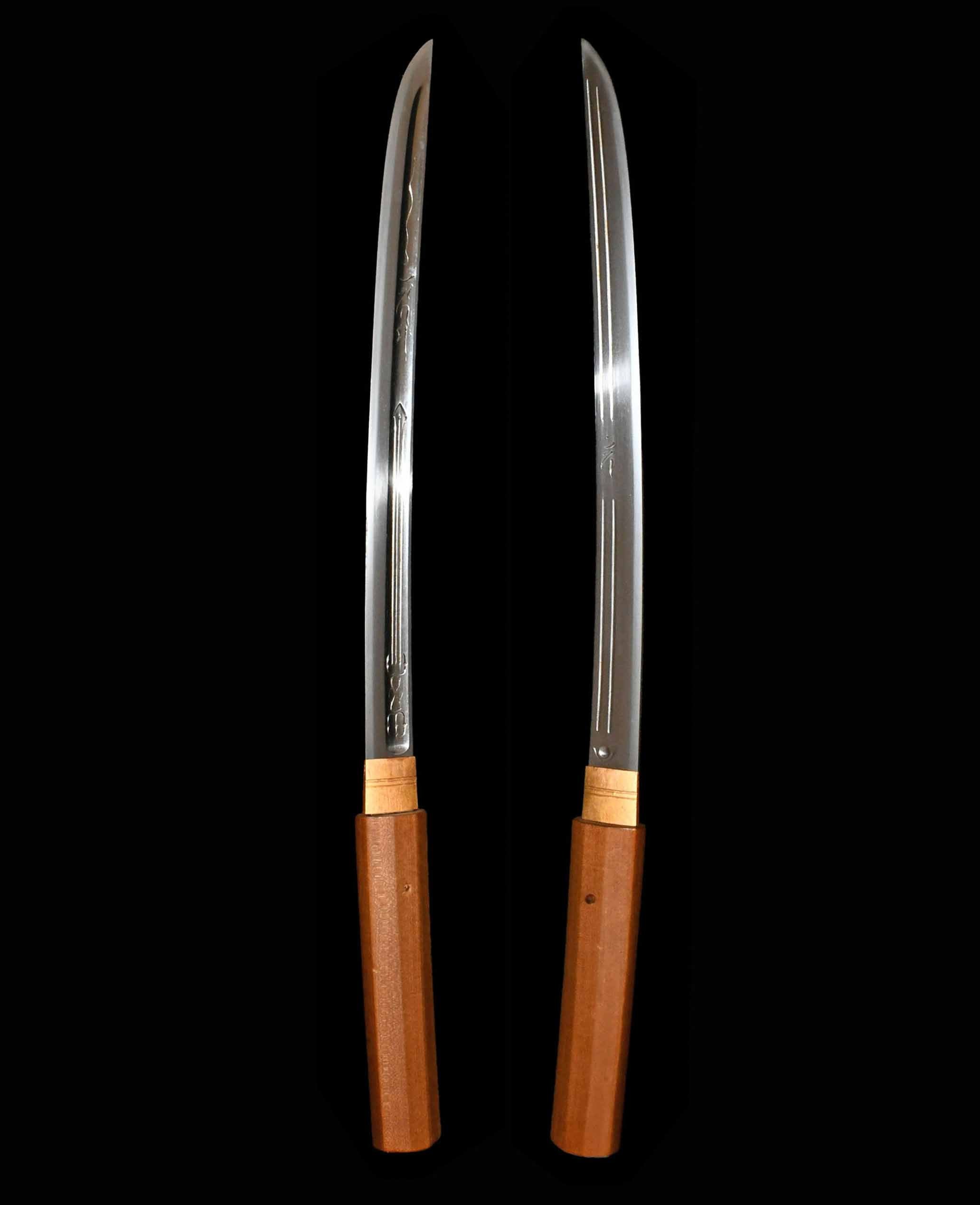
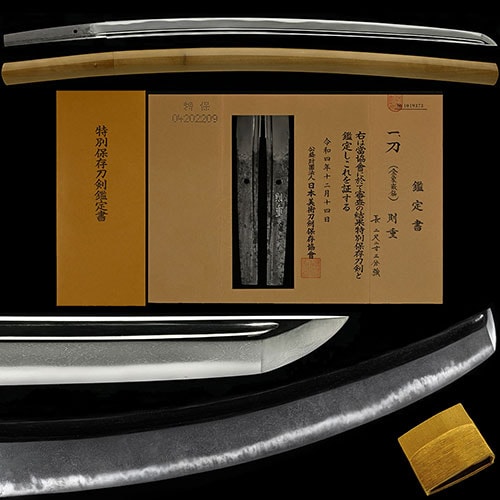
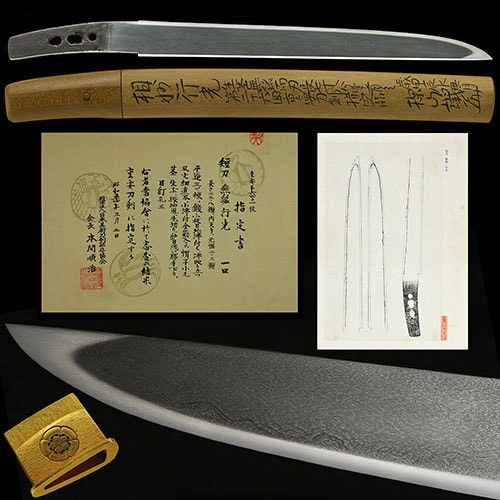
On the tenth day of the sixth month of Enpō 6 (1678) Yamano Kanjūrō Hisahide cut a two-body test through a signed " no Kami Tachibana Yoshitsugu" (肥後守橘吉次) and recorded the result in gold inlay across three lines of the , an inscription the published sources prize as documentary material because Yamano test signatures on this smith are exceedingly rare. Yoshitsugu was a native of Hitachi who went up to , a smith of the Hōjōji line, the -derived school whose root was in Tajima and whose branch he carried into the period; the published sources transmit him variously as a disciple of Hōjōji Masahiro or of Hōjōji Kunimasa. Around the era (1661-1673) he received the court title no Kami, and during the Genroku years he served for a time as a retained smith of the Shimazu house, forging in Kagoshima and exerting, by the sources' account, no small influence upon the Satsuma smiths before returning to . His Hitachi origin and residence are documented: an extant dedicated by Yamano Hisahide to Shiogama Shrine records that the dedicant, a man of Hitachi who reached fifty in , had the blade forged by no Kami Yoshitsugu.
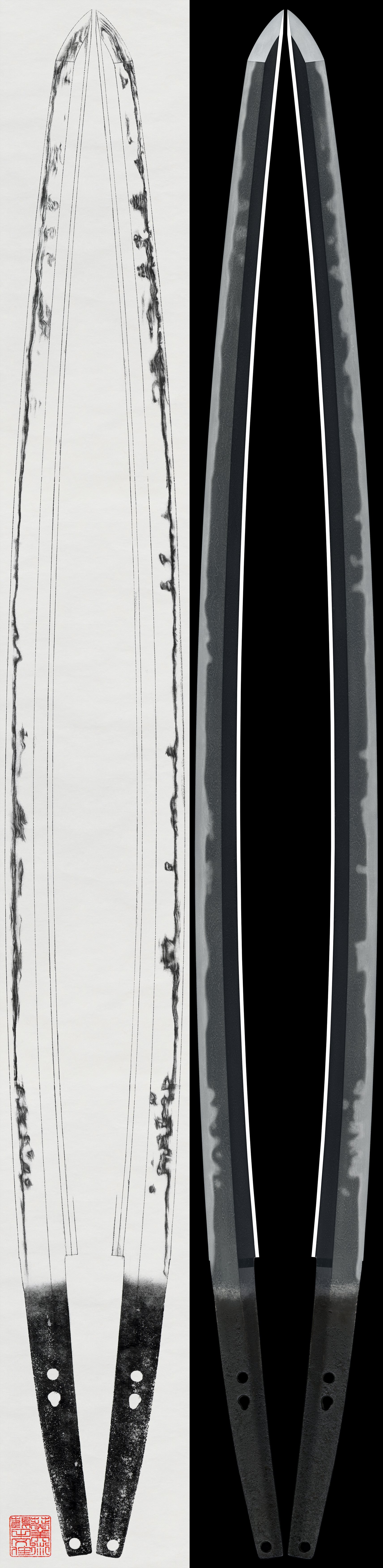
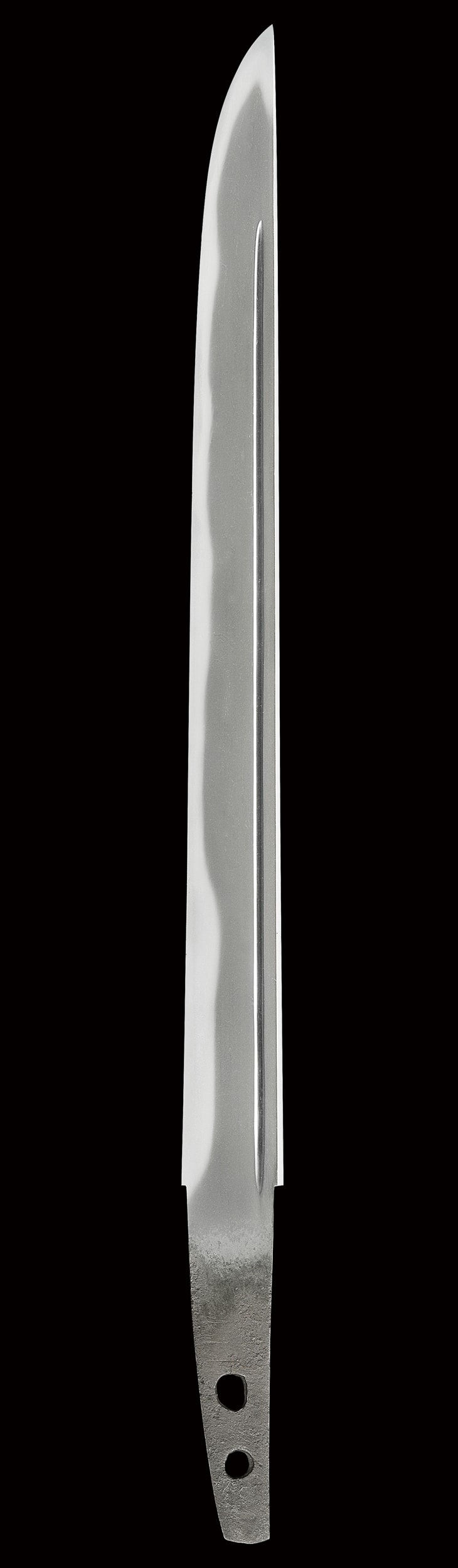
His characteristic hand is the the published sources call the most conspicuous of his school. Of his manner they write that "among the Hōjōji line his is the most conspicuous in make, with many works in the style" (法城寺門下の中でも互の目が最も目立った出来で、数珠刃風のものが多く), and of one that the way connected mingle over a base while enter profusely is "precisely Yoshitsugu's distinctive flavor" (正に吉次の持味). The line is built on a small with running together into the rosary-bead pattern, small mixing among them; the enter thickly and frequently, the is deep, and adheres well over a bright, clear . At his most expansive the thickens and strengthens, coarse mingling, drifting up to present a -like aspect in places, with fine running throughout and entering. The runs straight or -toned to a turnback with , deeply tempered with a long ; on one it narrows and rounds into a jizō-style head. The signature itself is part of the recognition: the long is cut on the toward the in bold, thick chisel strokes.
The is a tightly forged mixed with , the at times showing strong ; the adheres thickly in dust-fine particles and fine enter well, a clear, antique-feeling steel the sources single out. Over this the temper carries its full repertory of activity, and the published commentary reads the result against the great masters of the : the style most closely approaches "Kotetsu and Kaneshige" (虎徹や兼重などに似た), and at full strength his -laden is judged to "approach the level of Kazusa no Kaneshige" (上総介兼重などに迫るもの), so that within the lineage "his technique stands out as exceptional" (一門中でも技術が卓抜している). One of Enpō 6 is called, after a larger and bolder than his usual work, with the depth of and particularly great, "a powerful blade displaying outstanding workmanship" (迫力ある一口で、抜群の出来映えを示している), and a Reiwa-era designation of another describes "a working range filled with spirit beyond his usual level" (覇気に満ちた作域).
Within this one prime manner two registers stand out, both keyed to the rather than to a change of style. The first is the signature register: the long in its bold thick-chisel cutting, headed no Kami with the Tachibana clan name or with Hōjōji, the subject most often reading 肥後守橘吉次, and a small number of blades from the Kagoshima interval signed instead "Sasshū jū no Kami Tachibana Yoshitsugu" (薩州住肥後守橘吉次), the documentary trace of his Satsuma service. The second is the cutting-test register, conspicuous on his work: the gold-inlaid Yamano Kanjūrō Hisahide inscription of Enpō 6, recording two bodies severed; a Takaya Jintayū inscription of Enpō 5 recording "two bodies severed" (二つ胴截断); and an Aida Danjūrō inscription on another Enpō 5 blade. The published sources note that the Yamano signatures are the rare ones, the names of Takaya Jintayū and Aida Kunishirō appearing more often, and so weigh the gold-inlaid Yamano piece especially high as source material. The tradition that he was a pupil of either Masahiro or Kunimasa is presented by the sources as an open question, neither line settled.
The sources place him by his school and his resemblances rather than by contrast. His own grounded tells, the over , the deep and thick , the bright , the bold thick-chisel long , the dust-fine over a tight , set him within the Hōjōji line as its most conspicuous hand, and the resemblance the judges draw is upward, to Nagasone Kotetsu and Kazusa no Kaneshige, the masters of the -laden whose level his best work is said to approach. The Satsuma episode gives him a second standing: the published sources read his Kagoshima years as a documented bridge between his manner and the later Satsuma smithing, and his influence there is the reason a Hōjōji smith of Hitachi origin is remembered in the Satsuma record at all. One of his Enpō 5 , the sources note, was made by "special order for a Satsuma warrior" (薩摩武士の特別の注文) and is, "unusually for work, high in curvature" (新刀には珍らしく反りが高い).
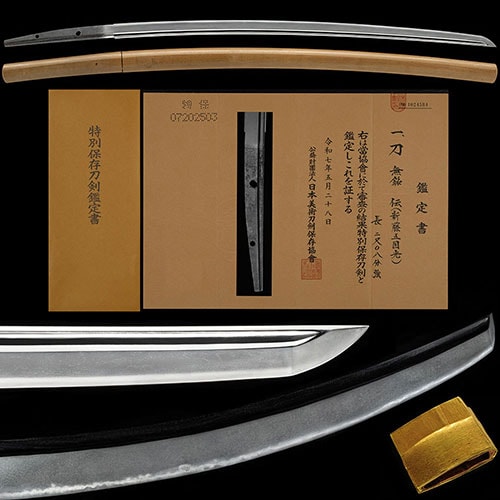
Fujishiro rates him Jō , and his designated record stands at six , none carried to a higher tier; all six are , five signed and one carrying the gold-inlaid Yamano cutting-test inscription. No early provenance to a house is recorded for these blades, but the mountings connected to them are documented: the Enpō 5 Takaya Jintayū descends with a Bakumatsu whose unified fittings are by Watanabe Issei Toshinobu, and the special-order Satsuma retains its vermilion Satsuma . None of his work is held as inalienable cultural property, so the whole of his designated output sits in the tradeable tiers; even so, a signed no Kami Yoshitsugu, and above all one bearing a documented cutting-test inscription, comes to the market only from time to time. The gold-inlaid Yamano Hisahide piece is the kind of blade a collector encounters rarely, a record as much as a sword, valued by the published sources for the testing inscription it carries as well as for the powerful it shows.