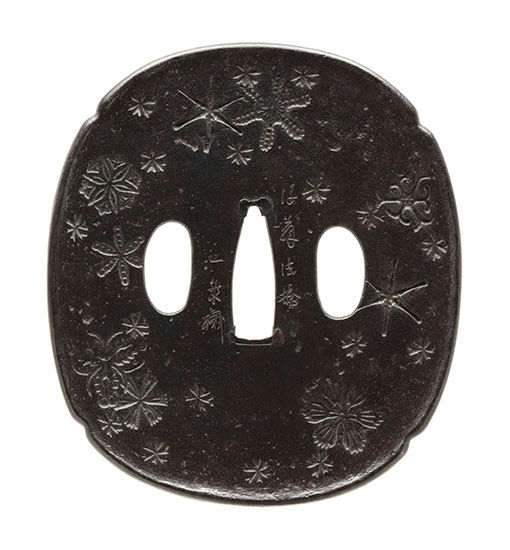
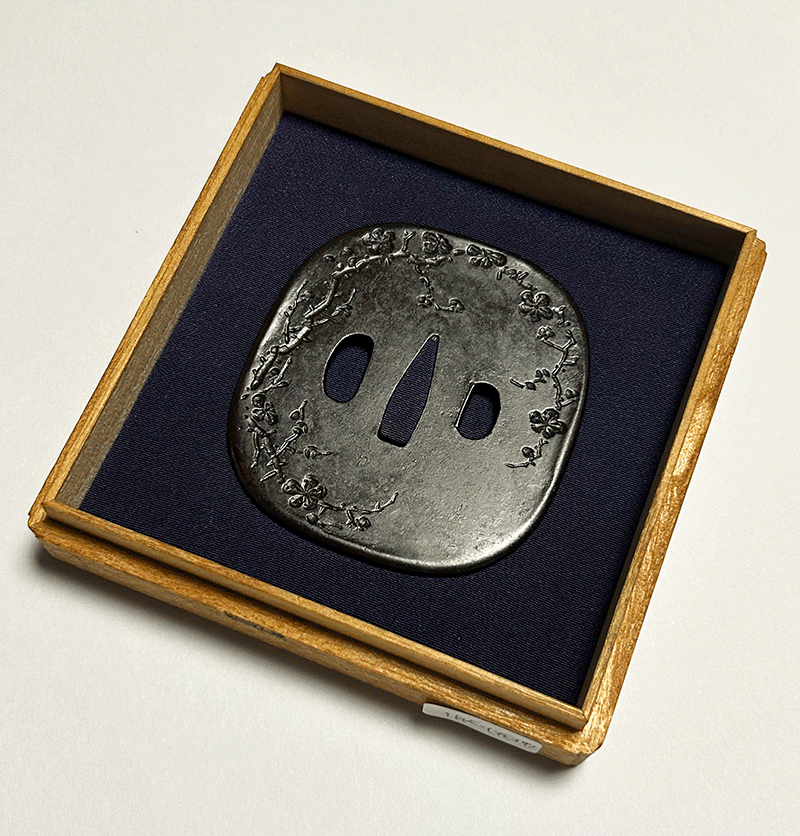
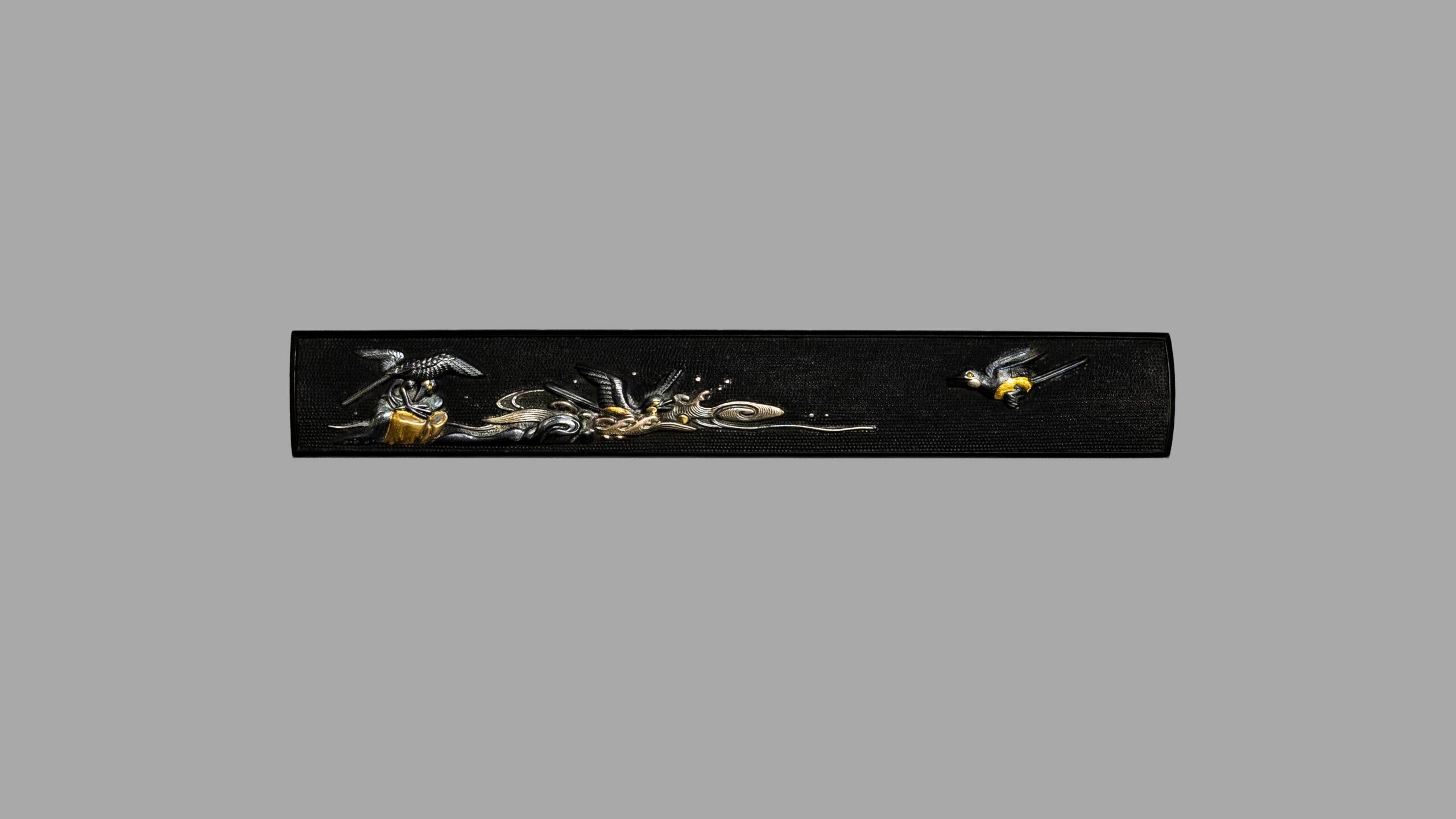
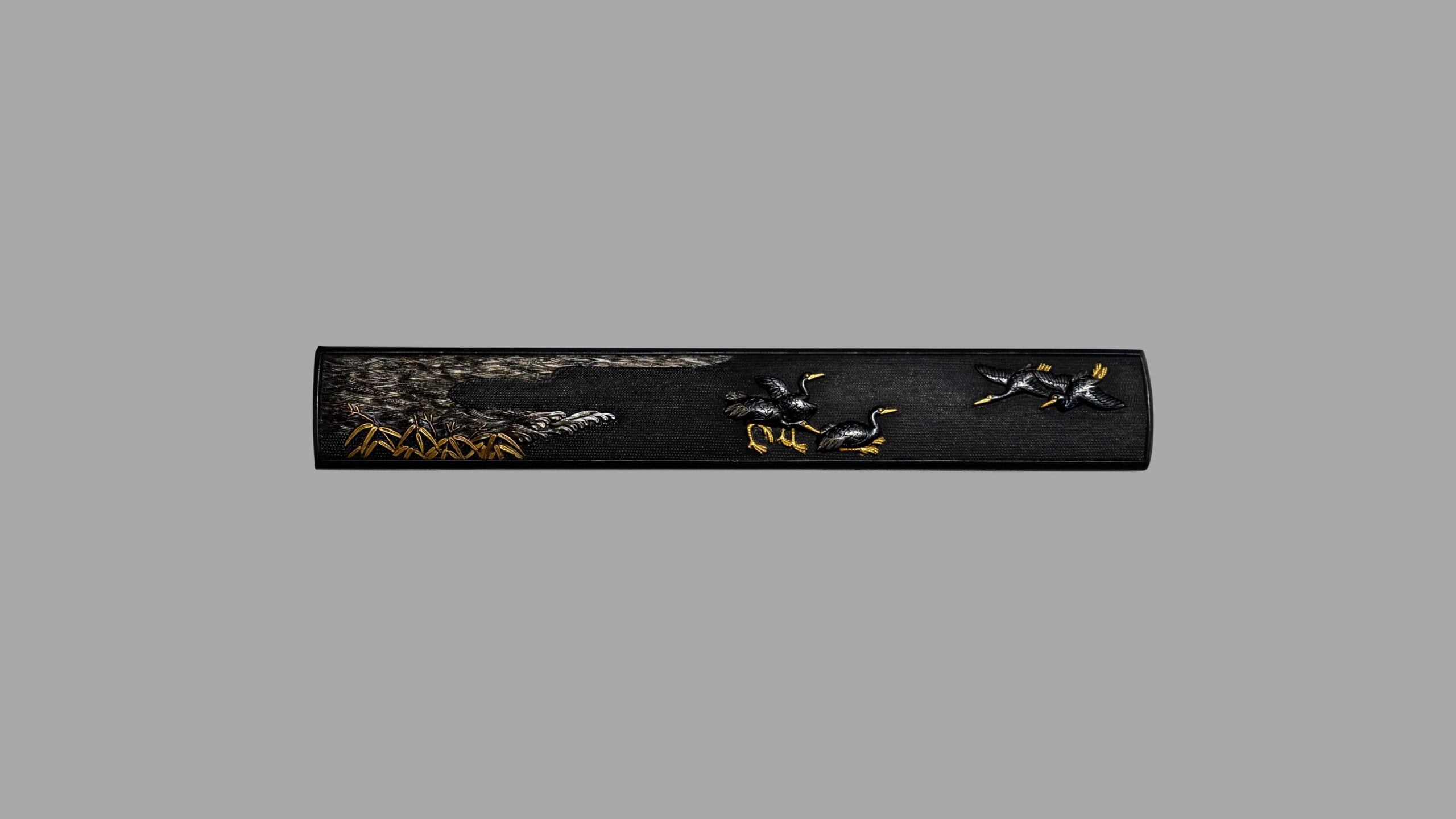
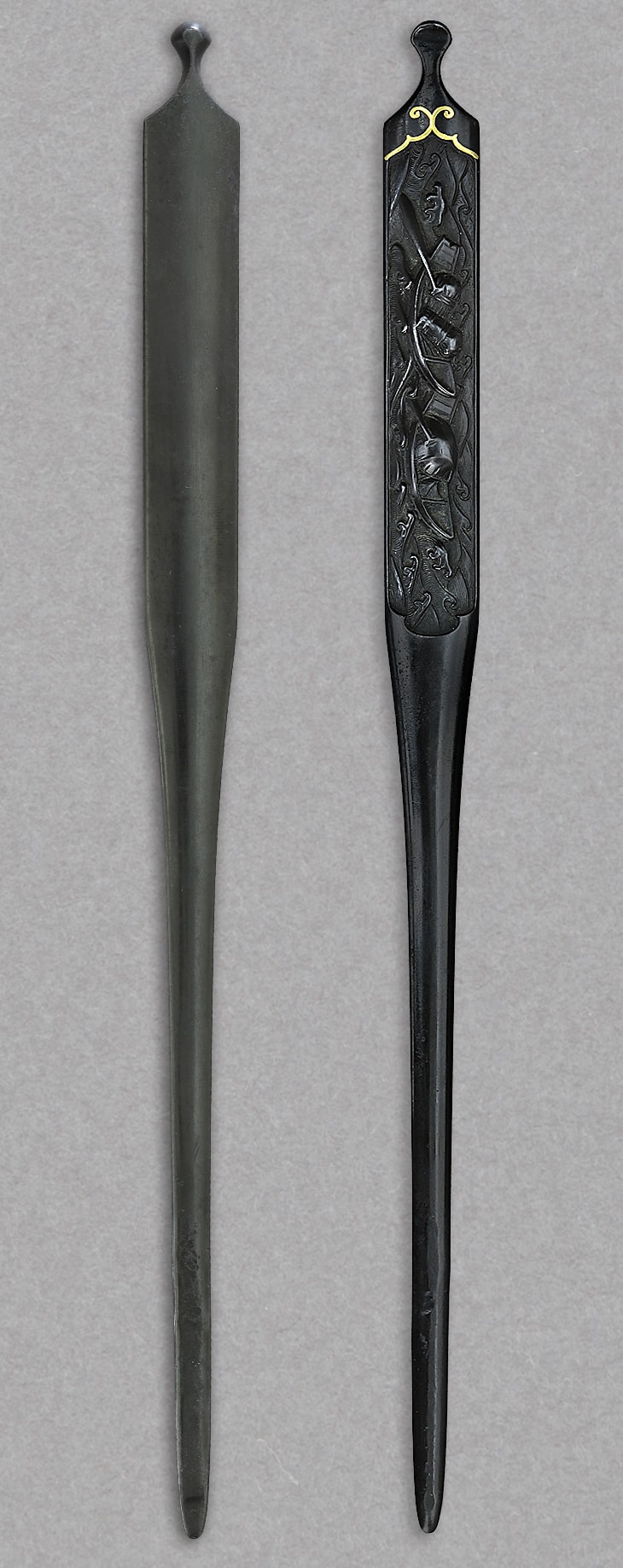
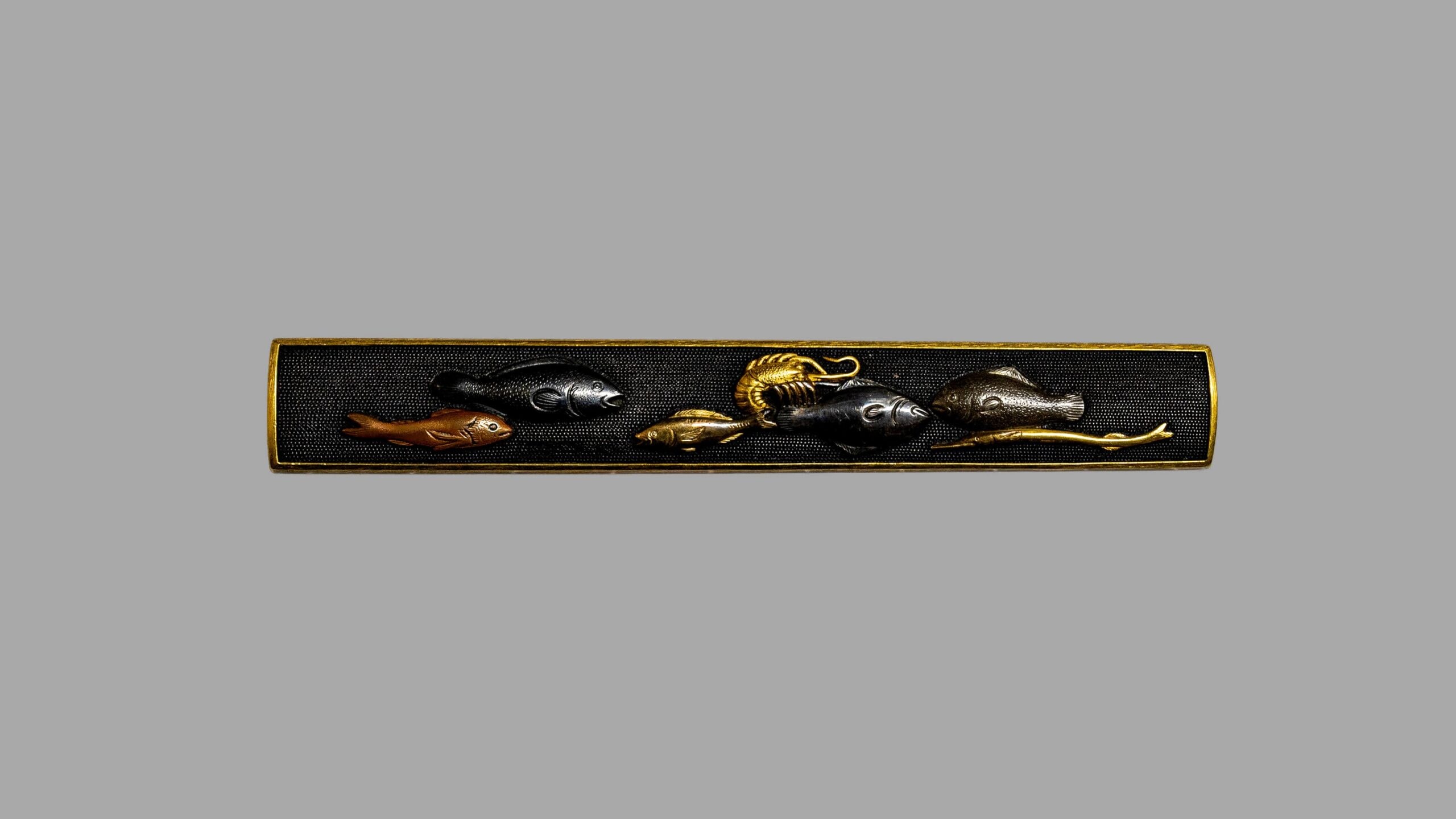
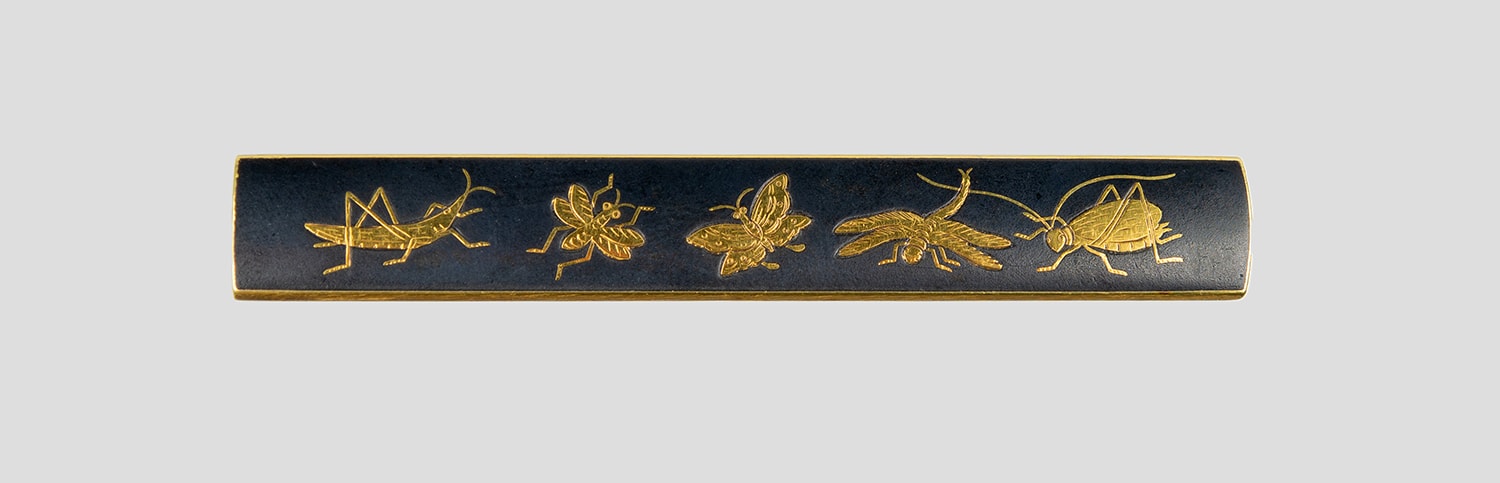
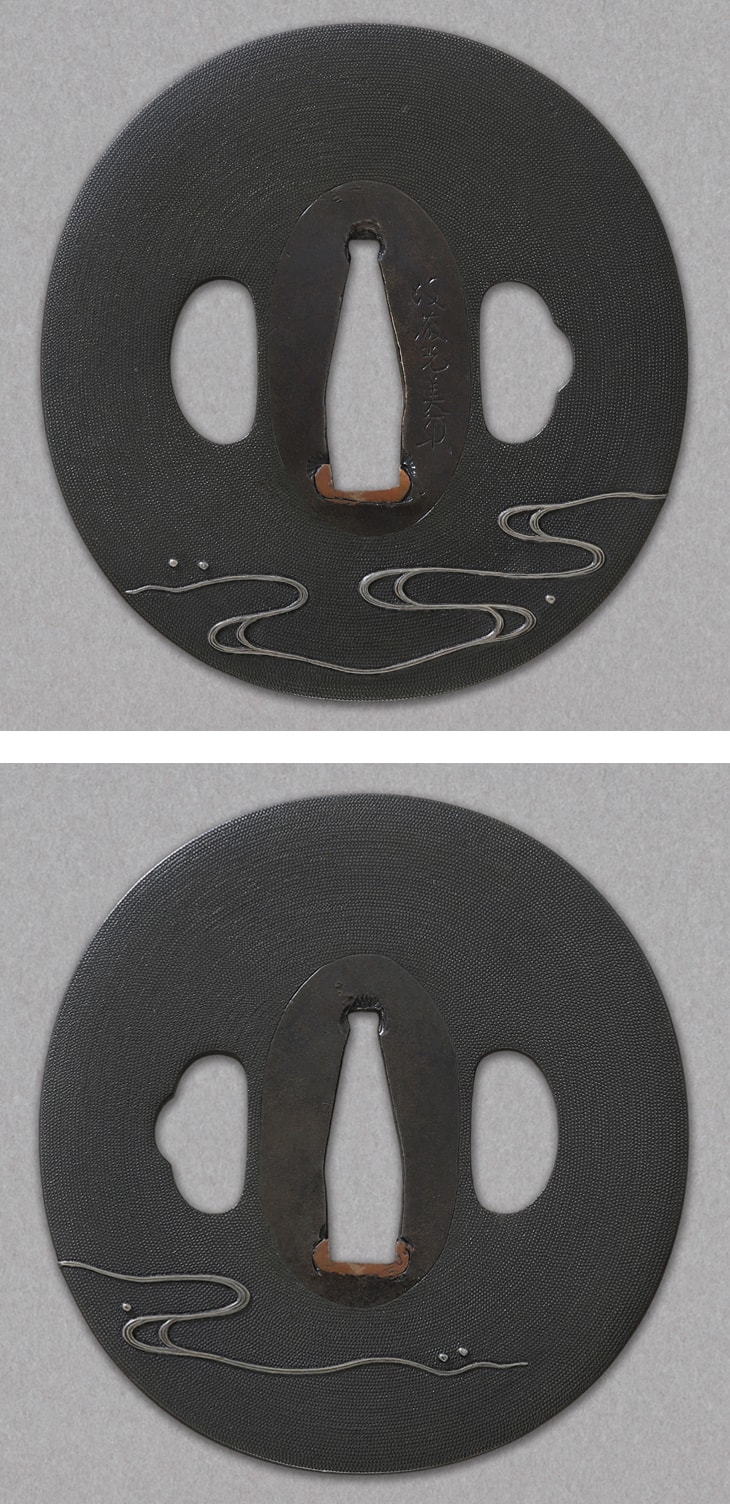
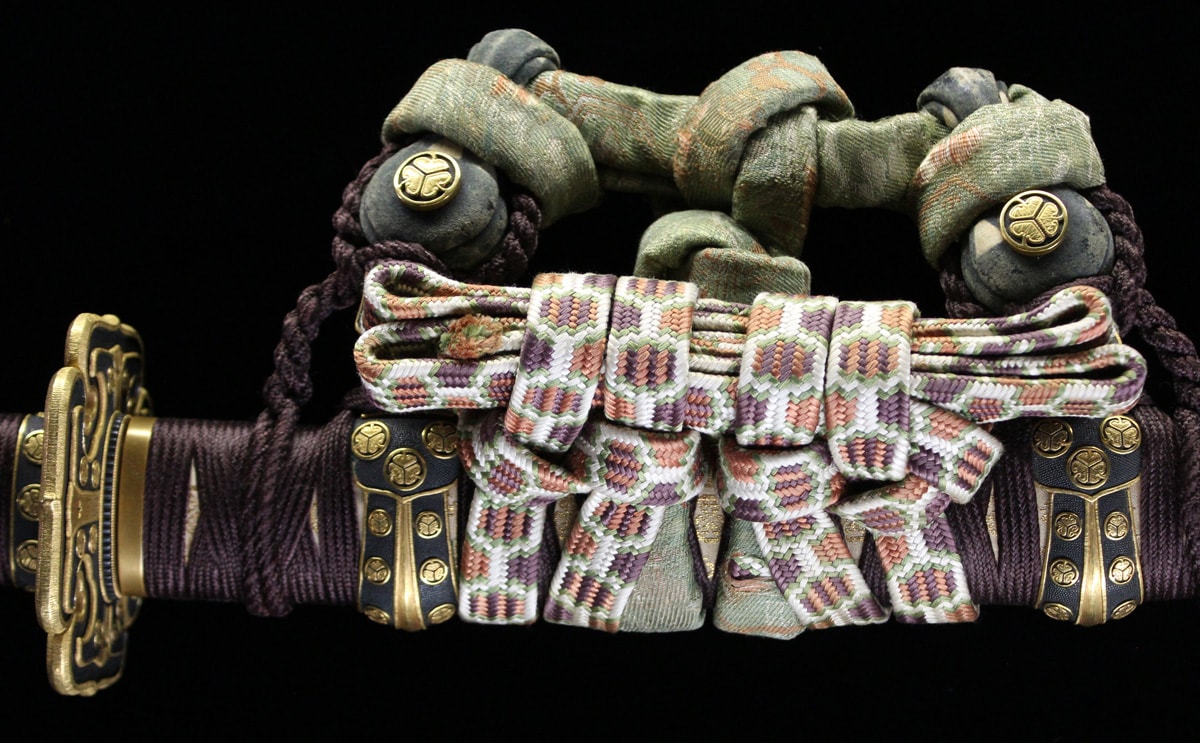
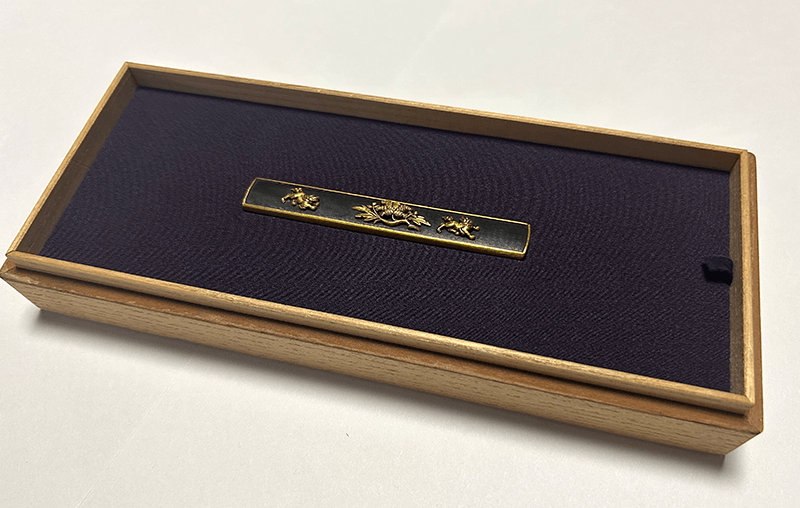
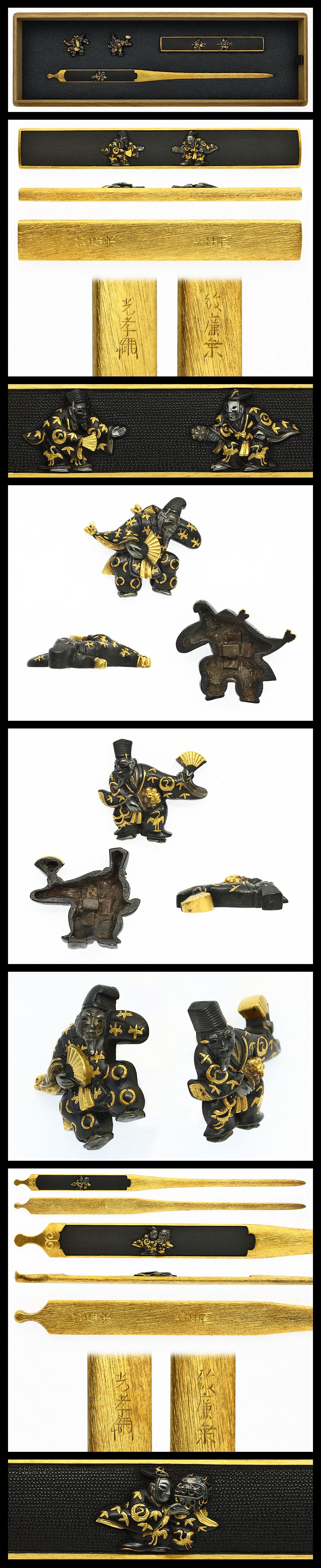
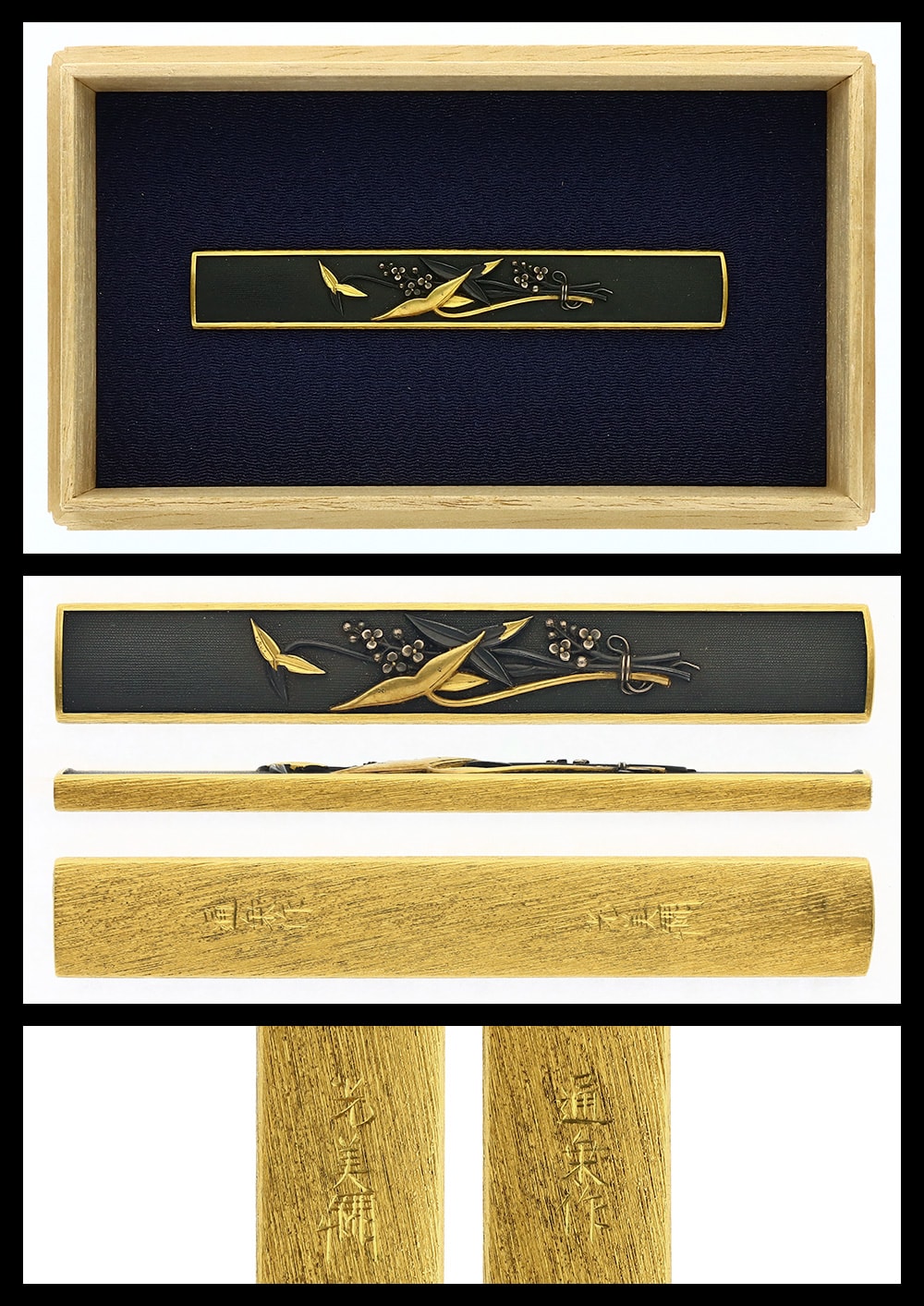
Hashimoto Isshi, whose common name (tsusho) was Genji, was born in Kyoto in Bunsei 3 (1820) and entered the studio of Goto Ichijo at the age of sixteen, where he trained for sixteen years. In Ka'ei 3 (1850) he received his master's permission, adopted the art name Isshi, and established himself independently under the studio name Yushisha. When Ichijo was summoned into shogunal service the following year, Isshi accompanied him to and worked energetically as a cooperative artisan assisting his master over a span of thirteen years, earning a strong reputation as a celebrated craftsman. According to a letter by the senior disciple Funada Ikkin, Ikkin took particular interest in Isshi and personally guided him, extolling him as among "one or two of the most capable hands" within Ichijo's circle. After returning to Kyoto, Isshi became a retainer of the Hirohata family and was permitted to wear a sword. Following the haitorei, he temporarily abandoned metalwork but later took up the chisel again, and beginning with his entry at the First National Industrial Exhibition in Meiji 10 (1877) he received numerous honors before his death in Meiji 29 (1896) at the age of seventy-seven. A second generation, Yoshitaro, succeeded to the working name in Meiji 10, though he remained largely in the shadow of the first.
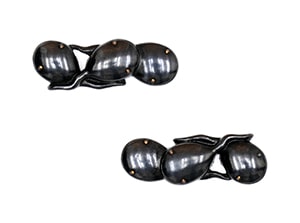
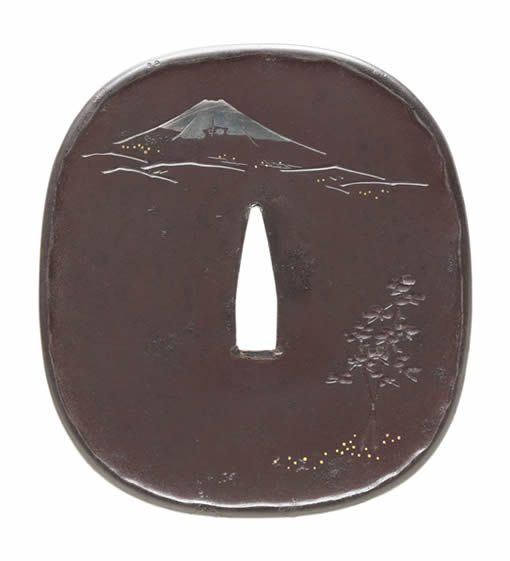
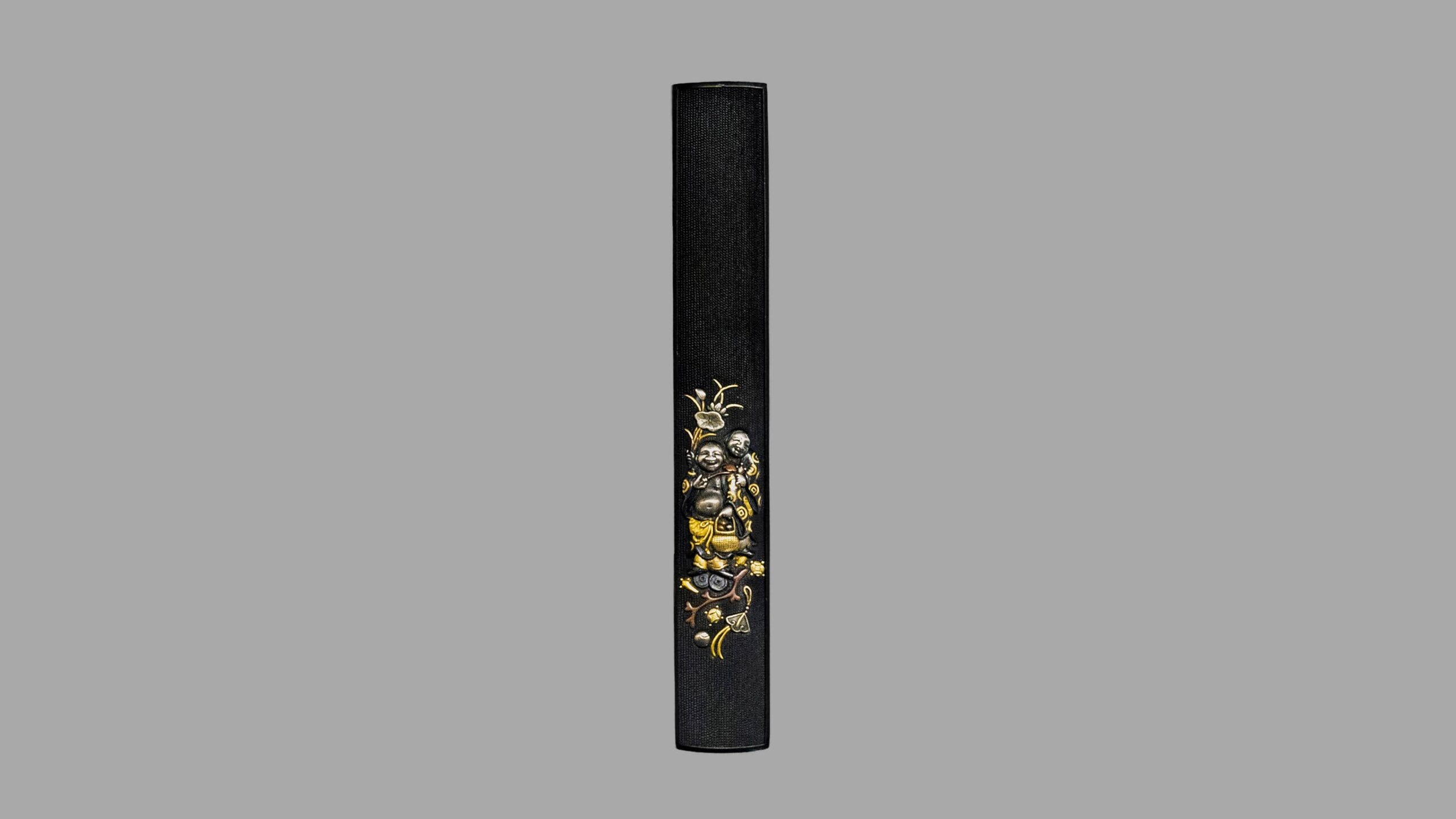
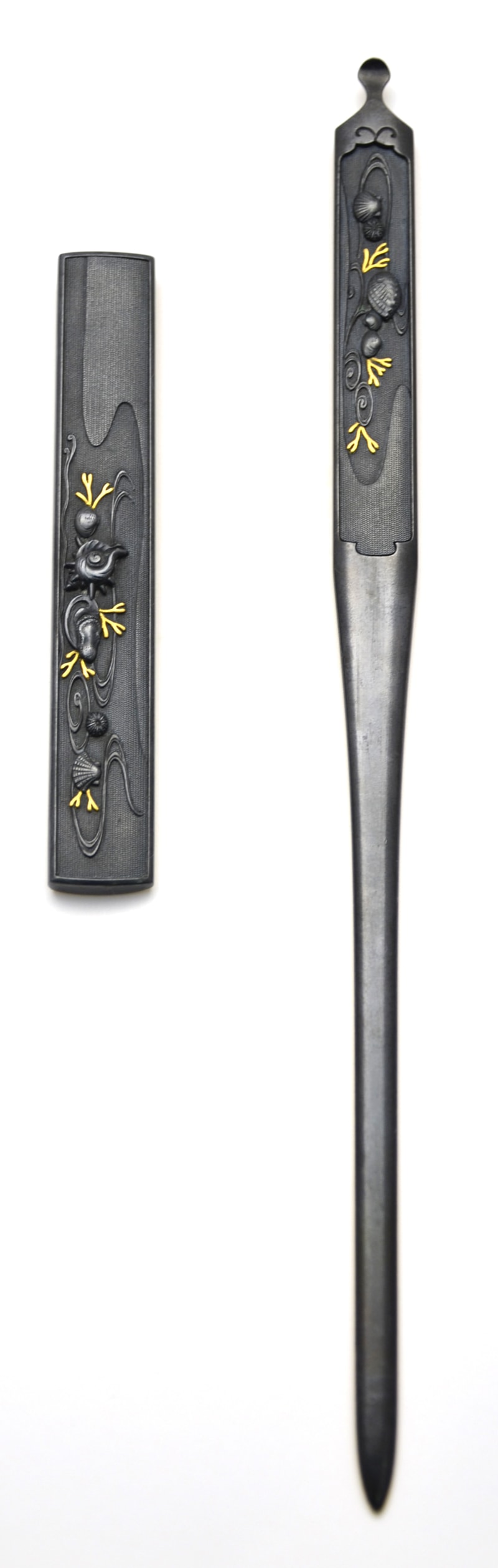
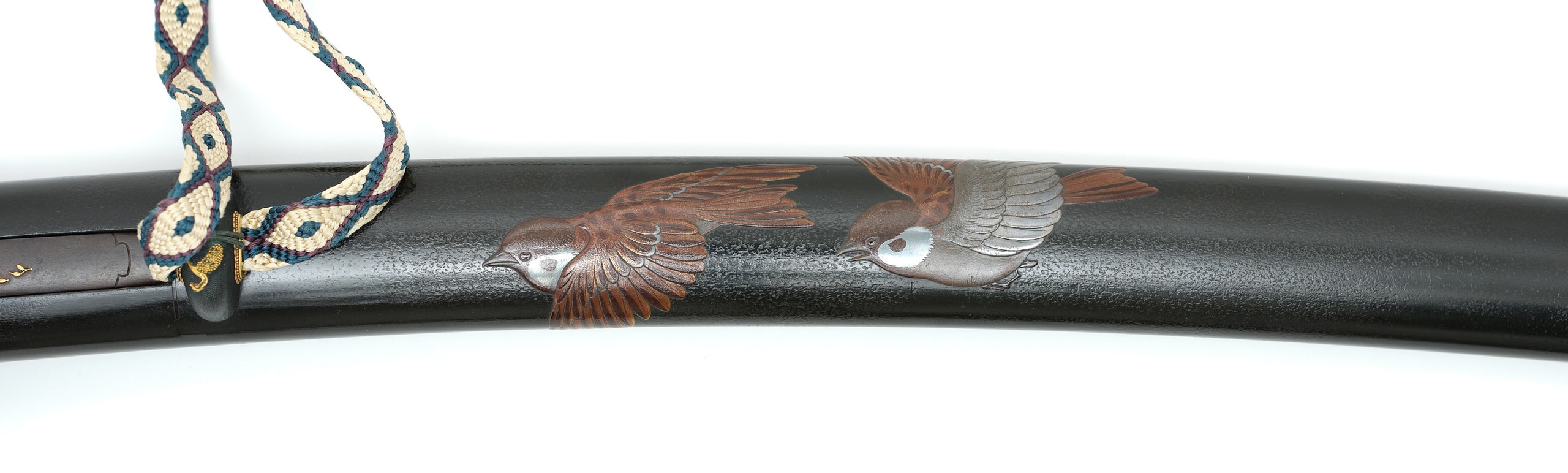
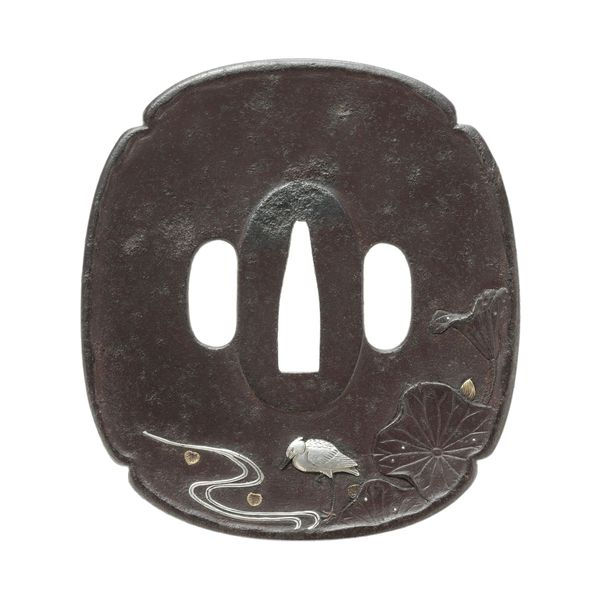
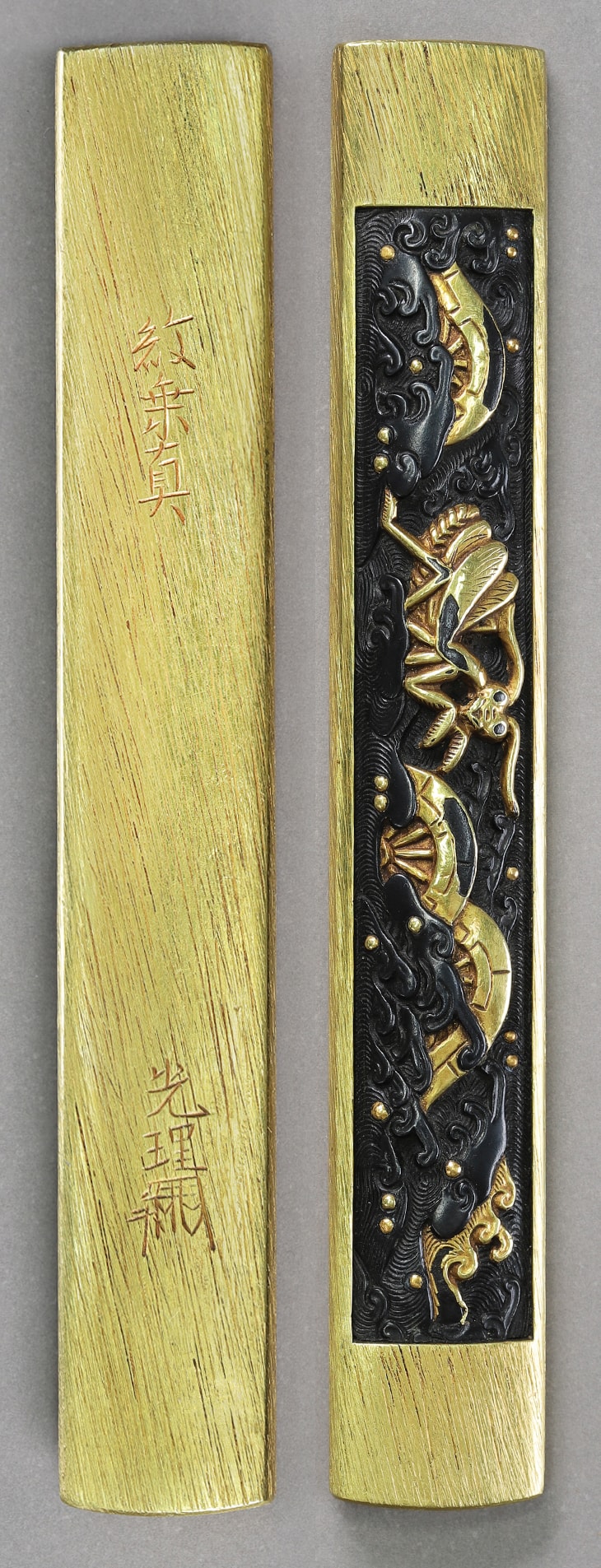
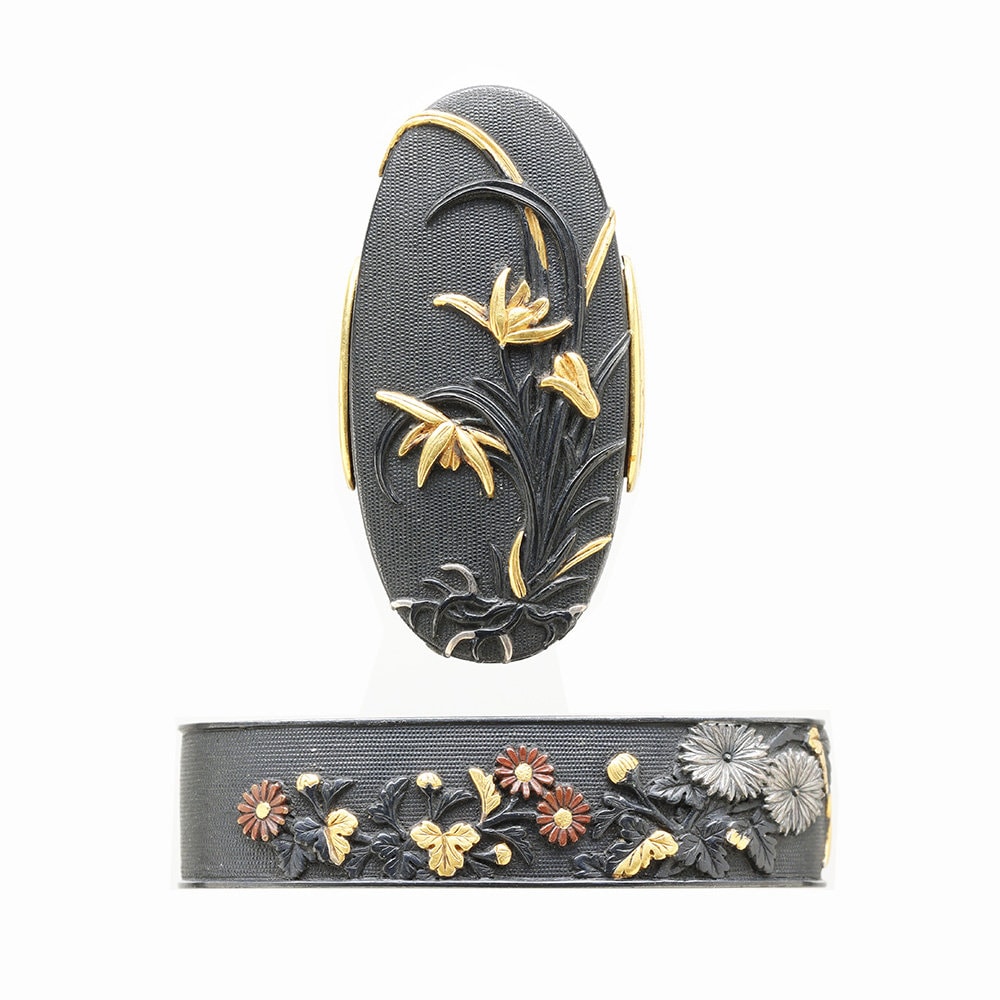
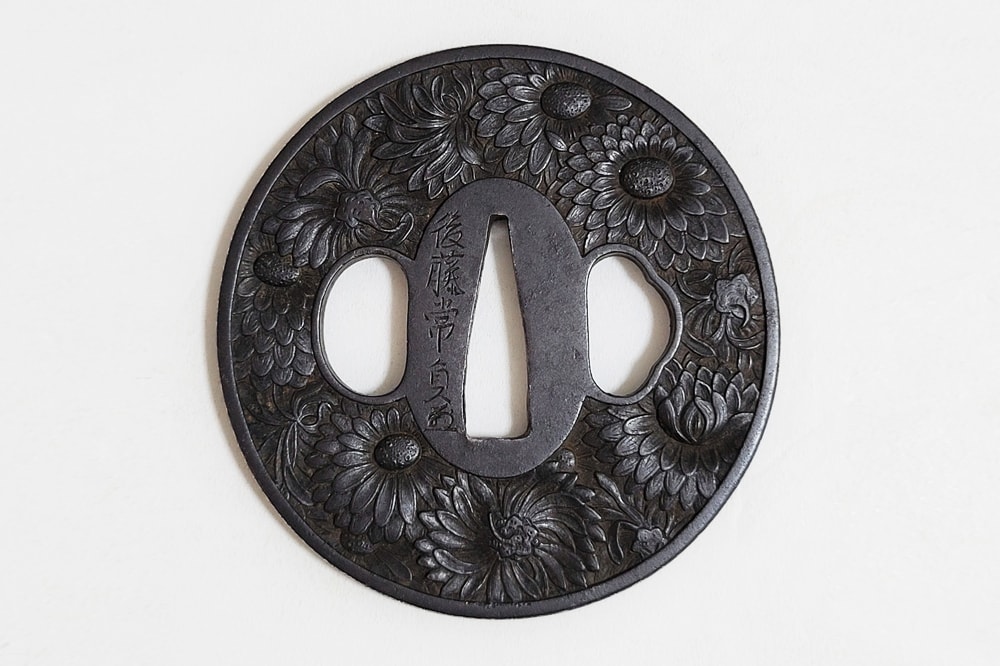
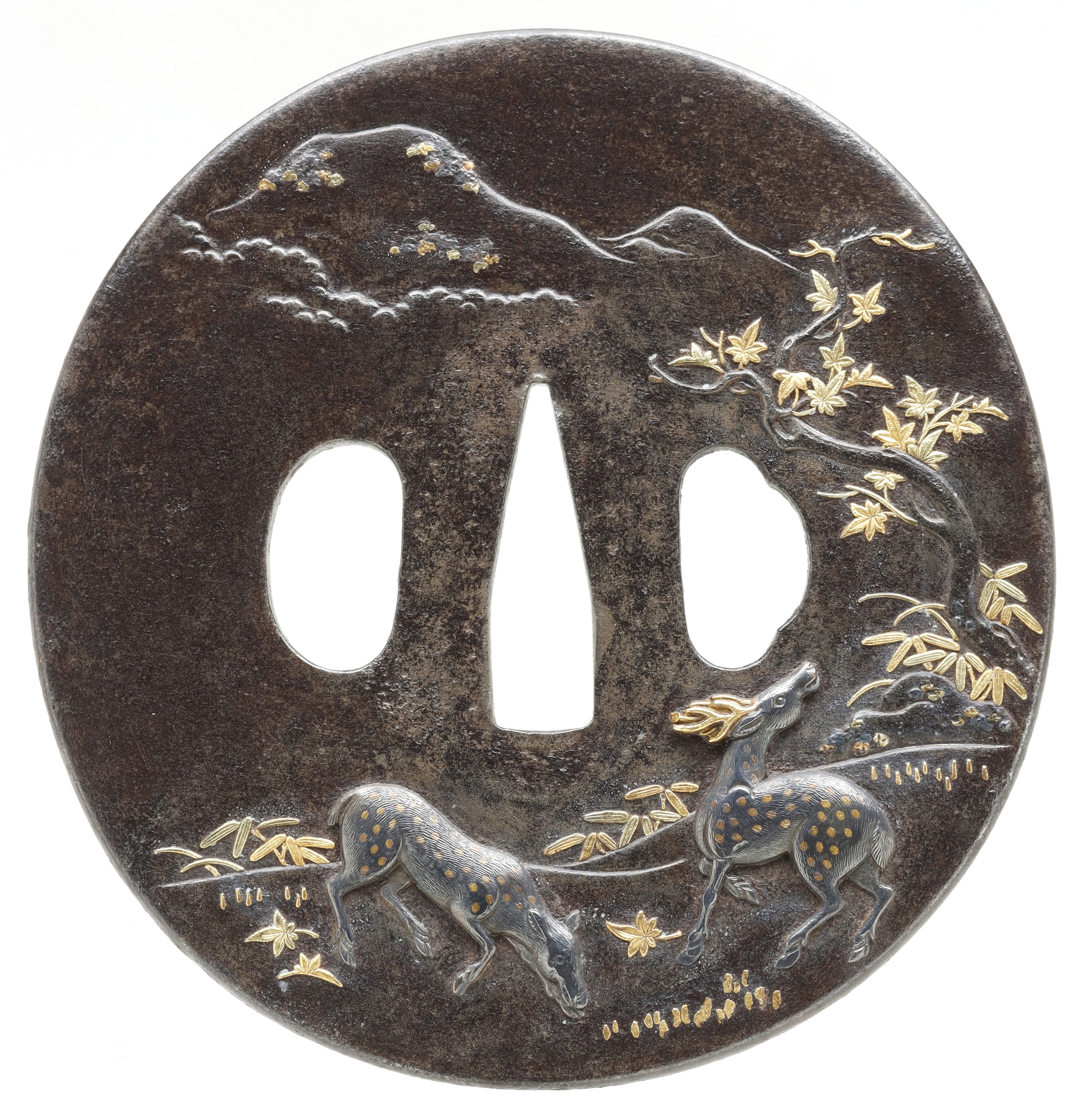
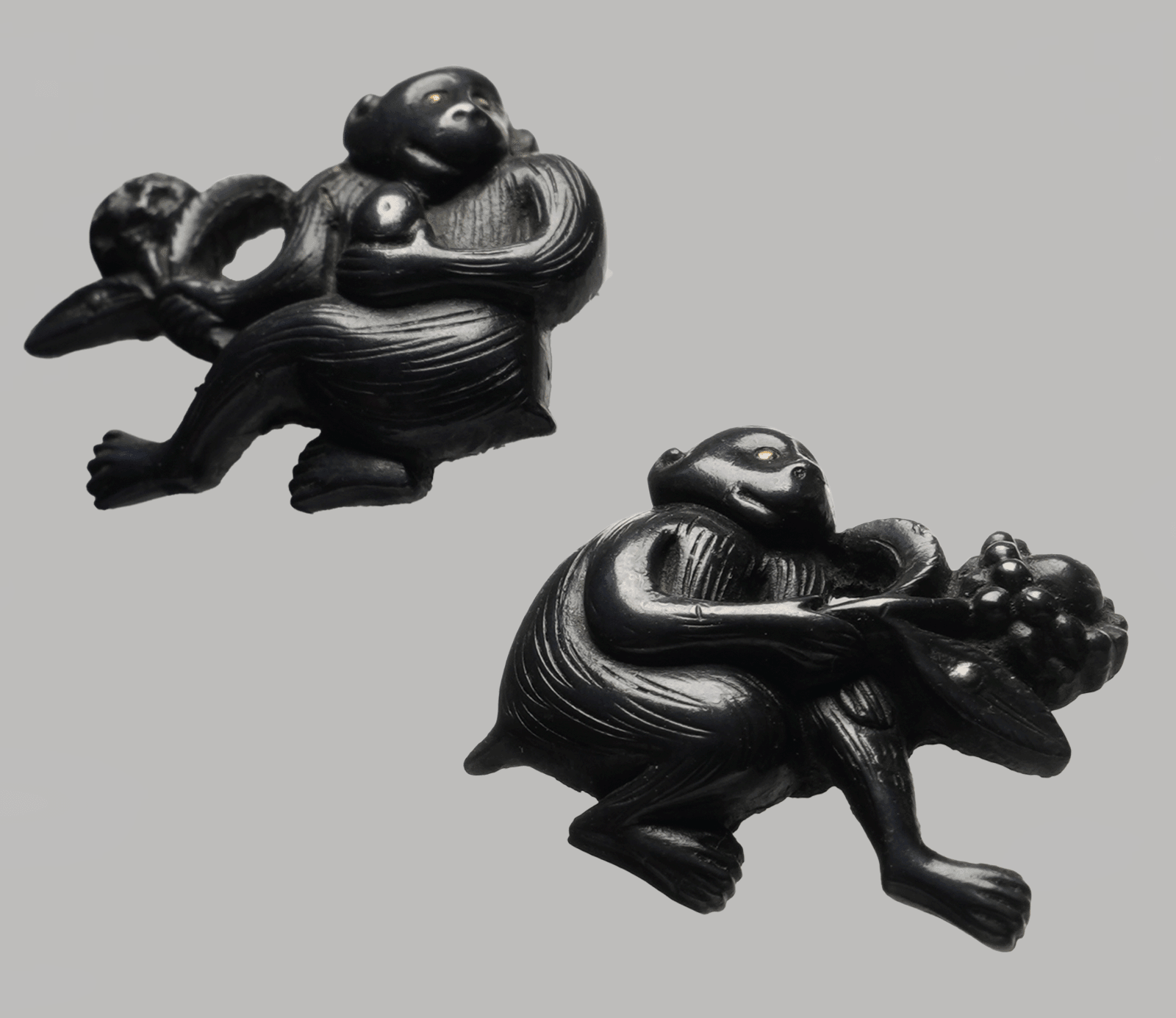
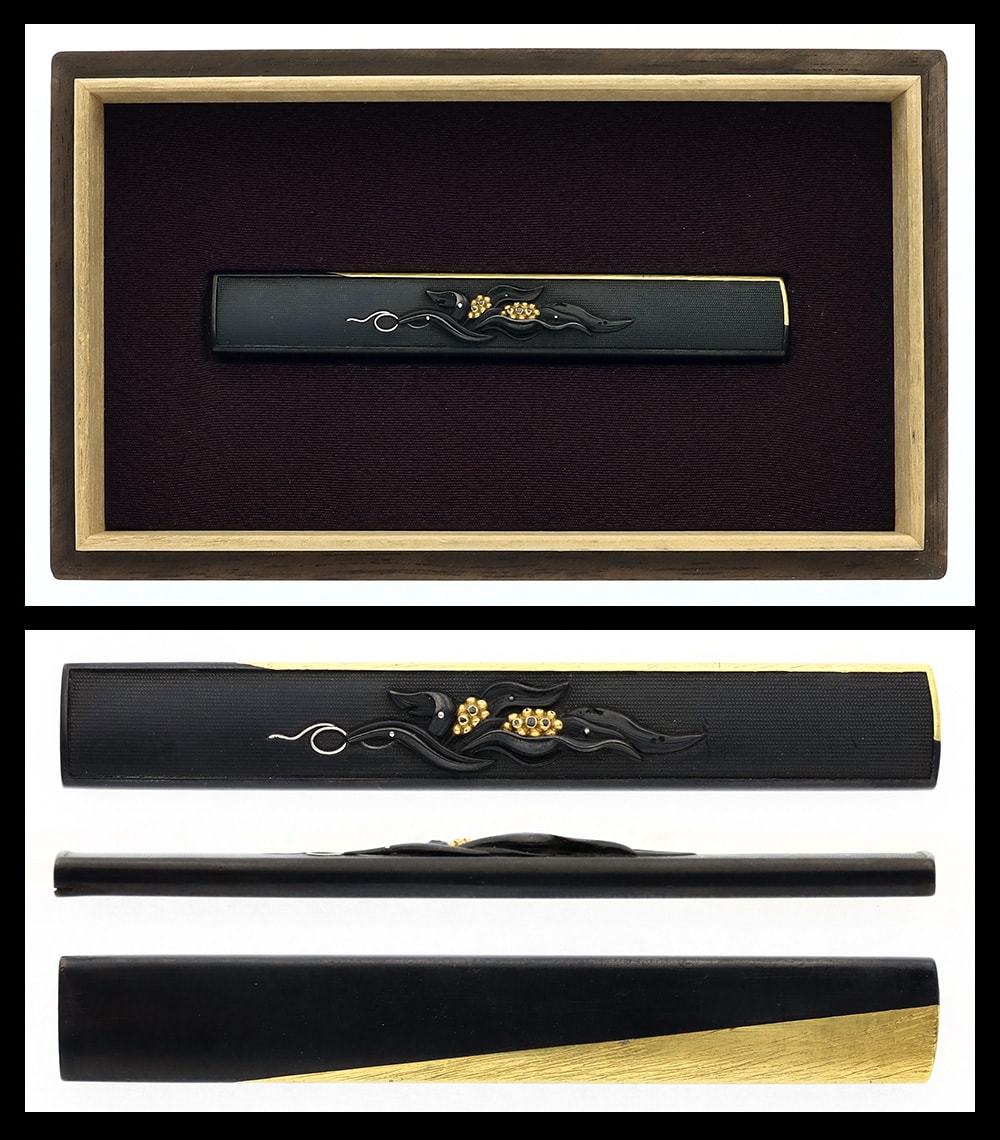
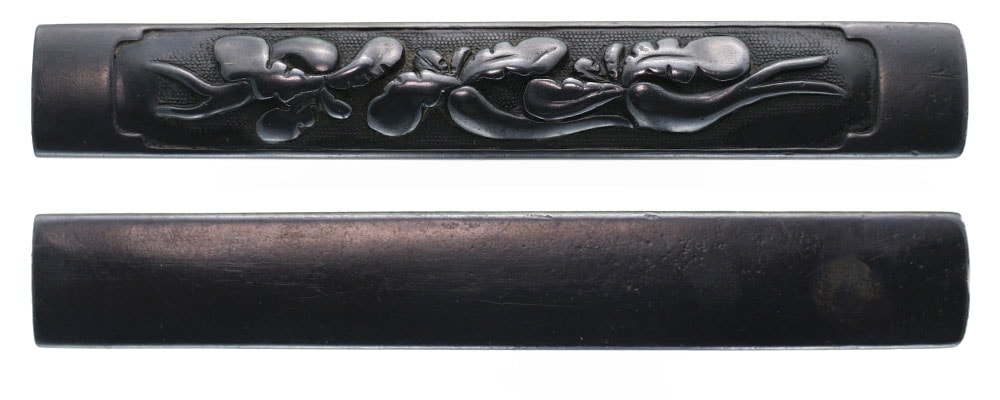
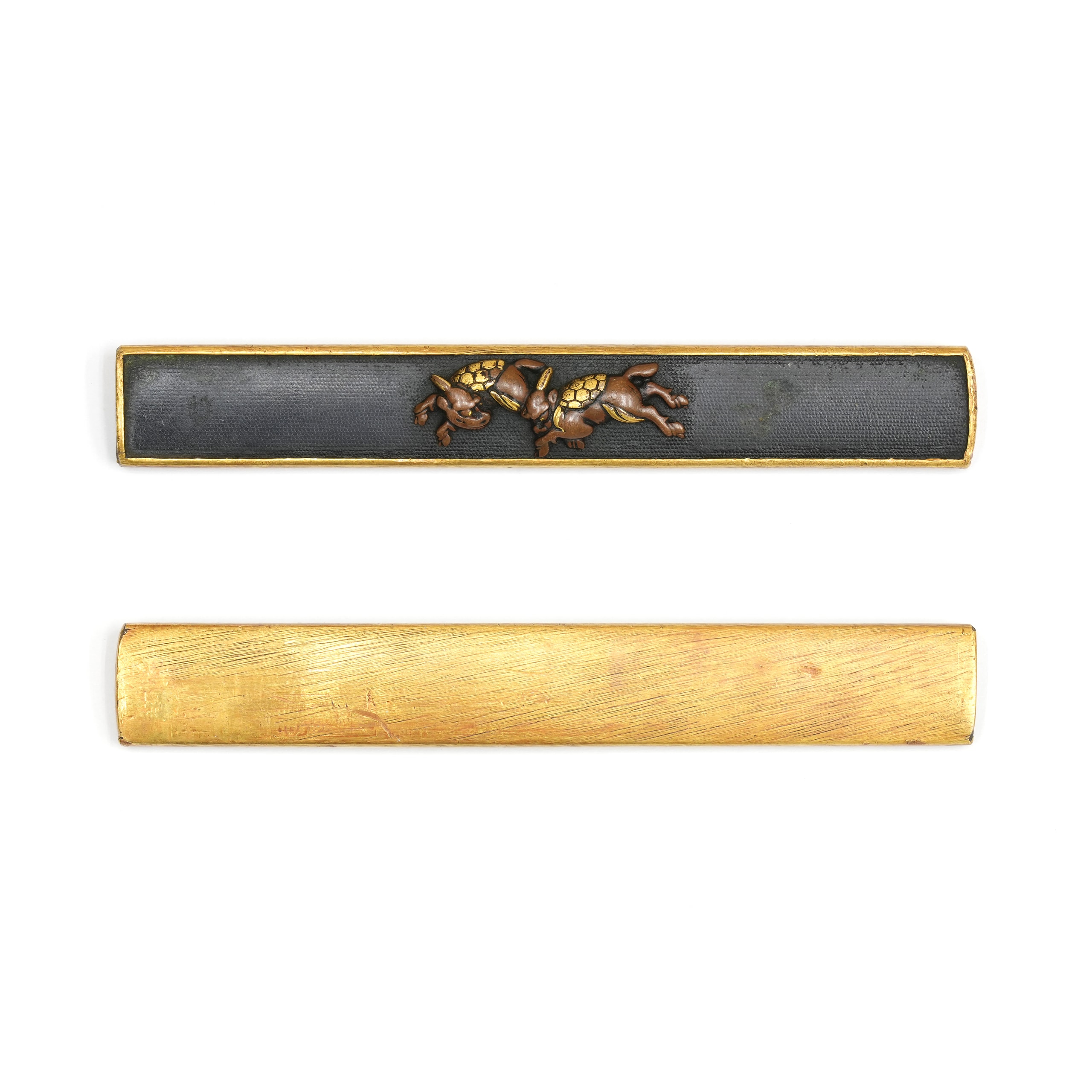
Among the works of the Ichijo school, Isshi's manner is considered "the closest to that of his master Ichijo." He excelled particularly in refined compositions of flowers, birds, and insects executed with exceptionally minute and elegant carving, and the has observed that in his finest pieces there is "virtually nothing to choose between it and that of Ichijo himself." His command of , -, and polychrome is consistently praised, and his work displays a wide range of techniques while sustaining intensity of execution down to the smallest details. Notably, even inherently brilliant materials such as shippo are deliberately restrained in his hands; amid varied hues the controlled palette "effectively draws out and heightens the intended mood of the landscape." His kosuki-bori is rendered with an unforced, light touch, and his grounds exhibit the refined handling characteristic of the Ichijo lineage.
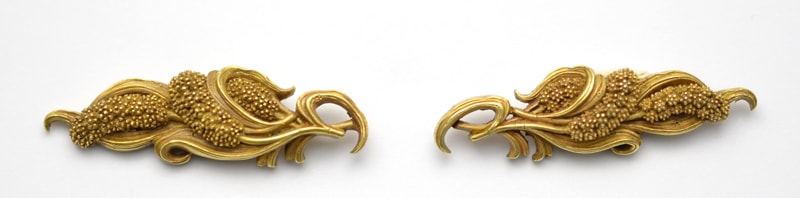
Isshi's designated works encompass unified fittings sets, complete mountings in solid gold, and collaborative pieces produced under Ichijo's direct supervision, attesting to his central position within the workshop. Across the designations, the repeatedly emphasizes his ability to compose coherent thematic ensembles -- seasonal kacho programs, auspicious-cloud suites, dragon-and-wave cycles -- in which the carving is "steady and assured" and the overall impression "forceful in character" yet possessed of "a notably elevated sense of formality and taste." His commissioned sets are characterized as full-force works representing "Isshi's utmost effort," and his oeuvre remains essential to understanding the productive output and artistic standards of the late Goto Ichijo school.