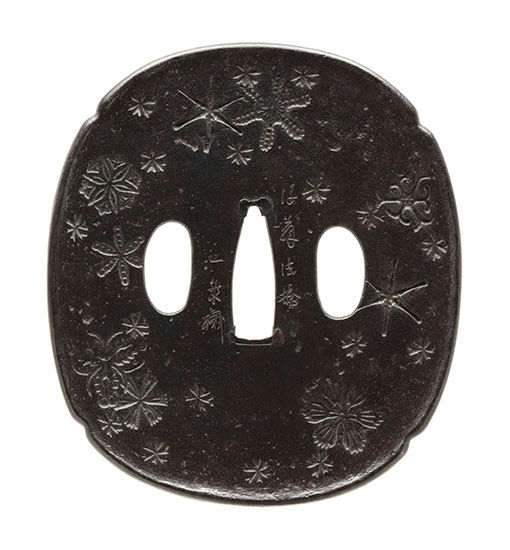
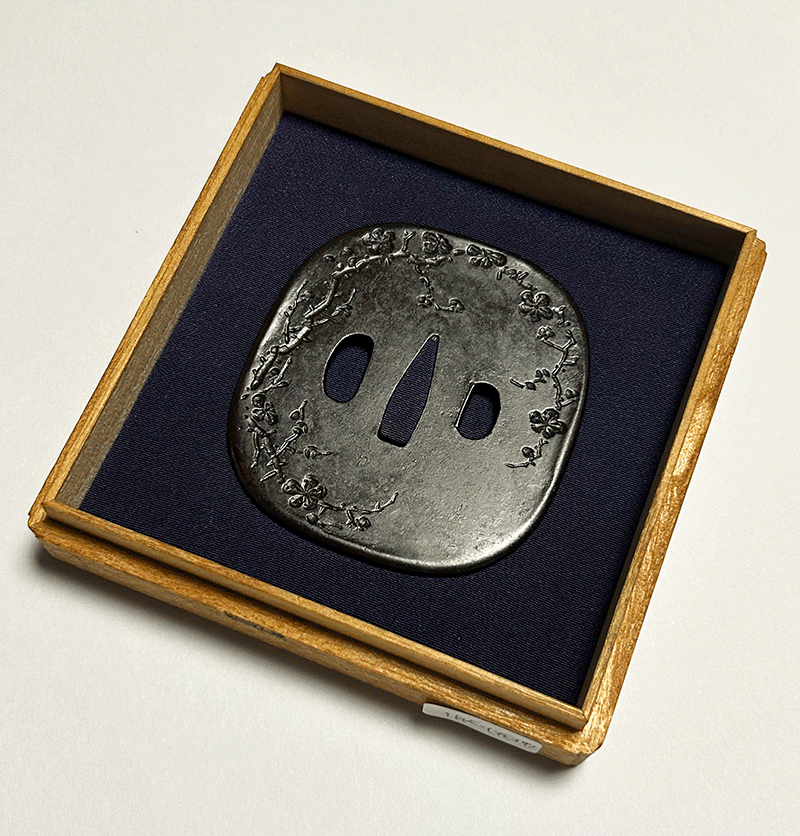
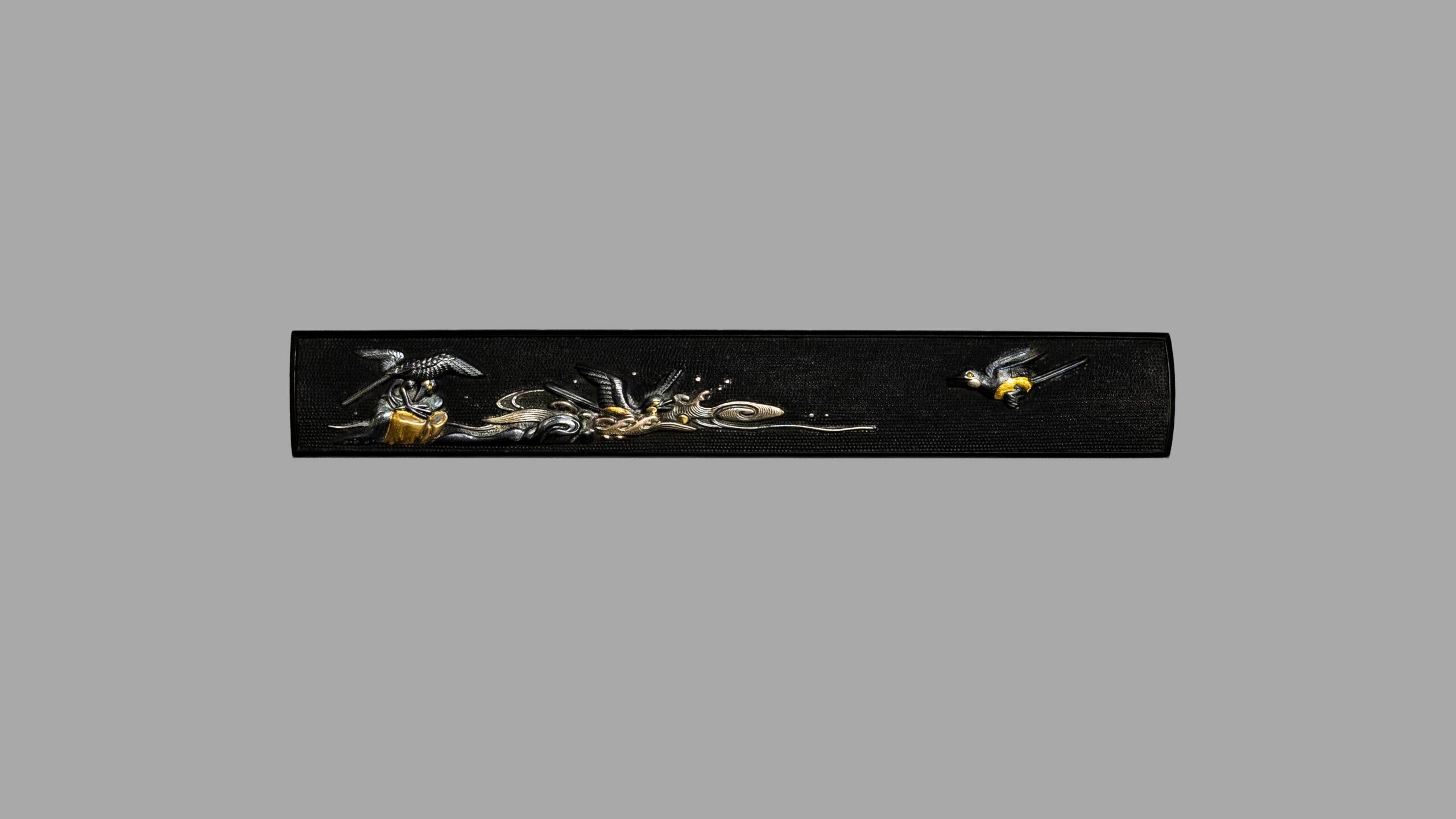
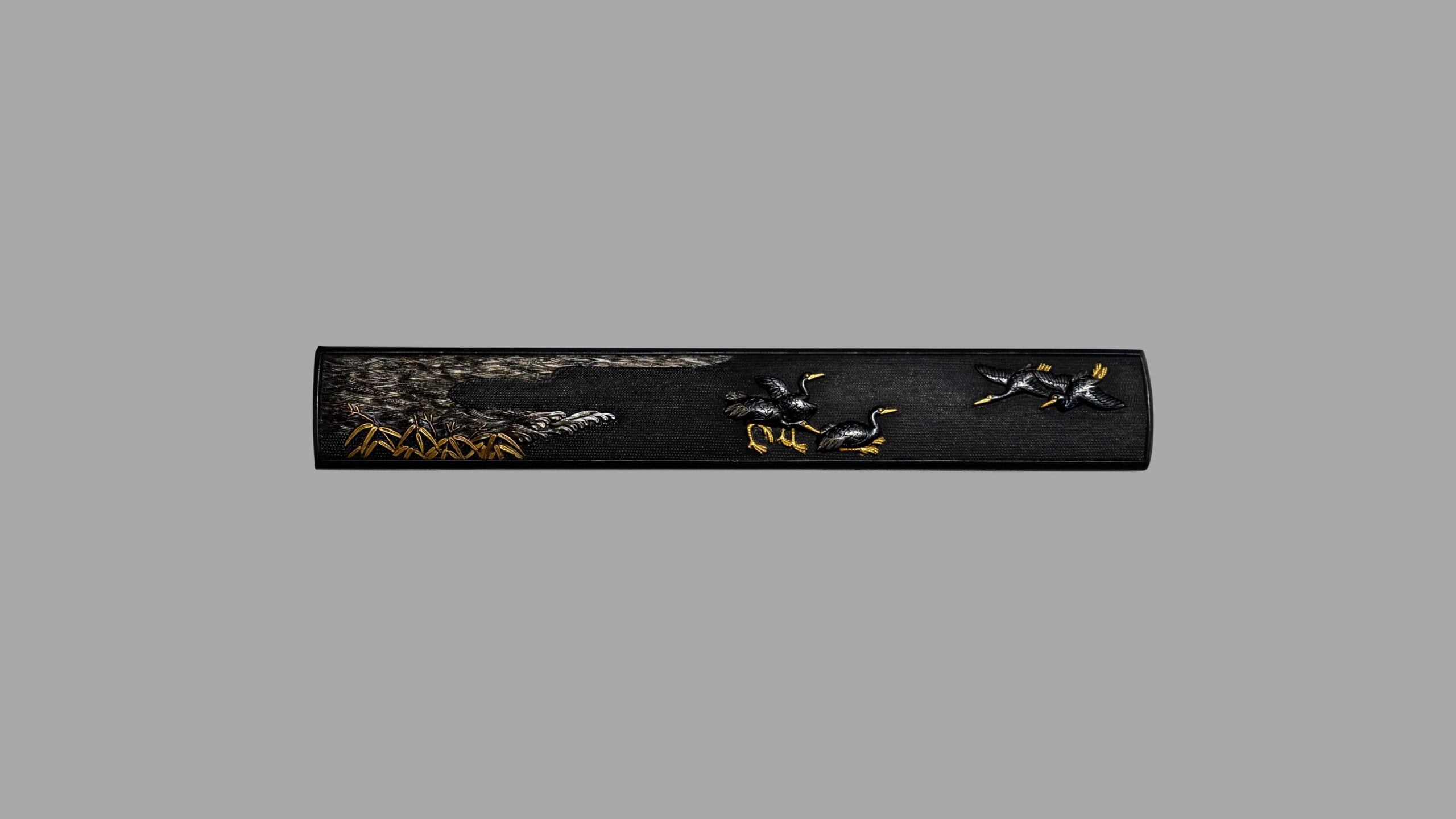
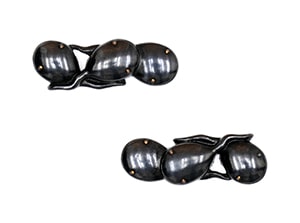
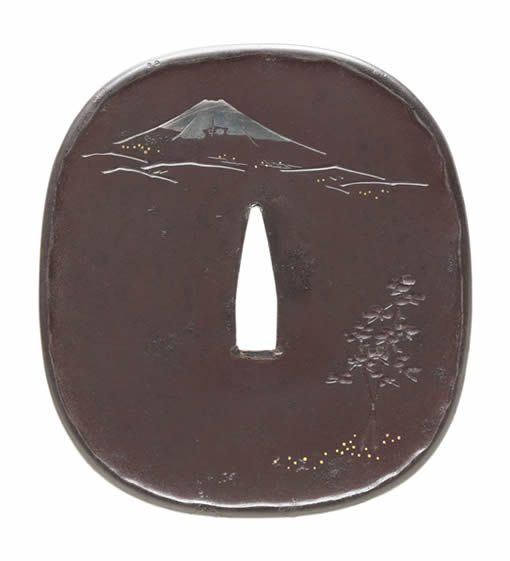
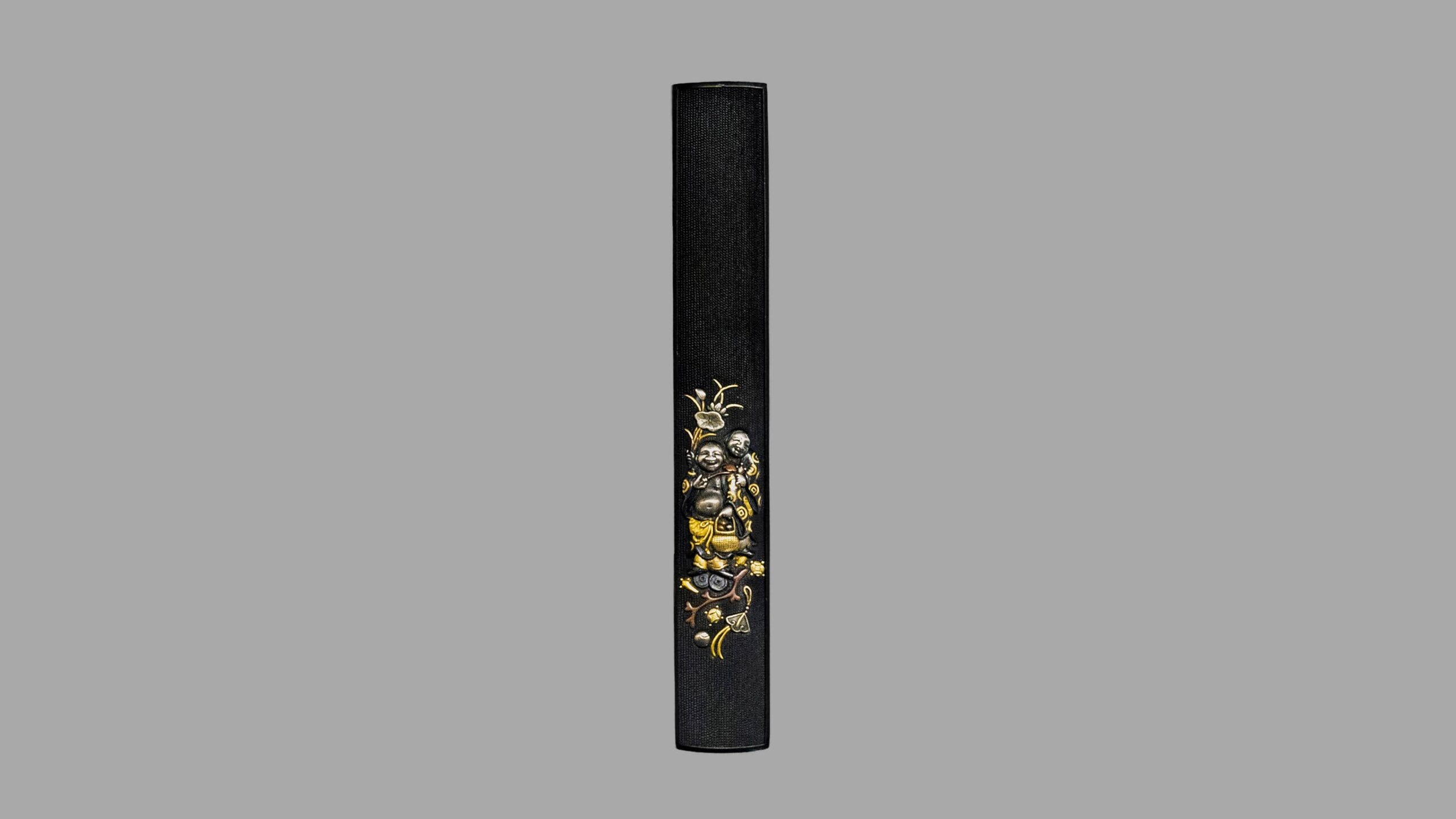
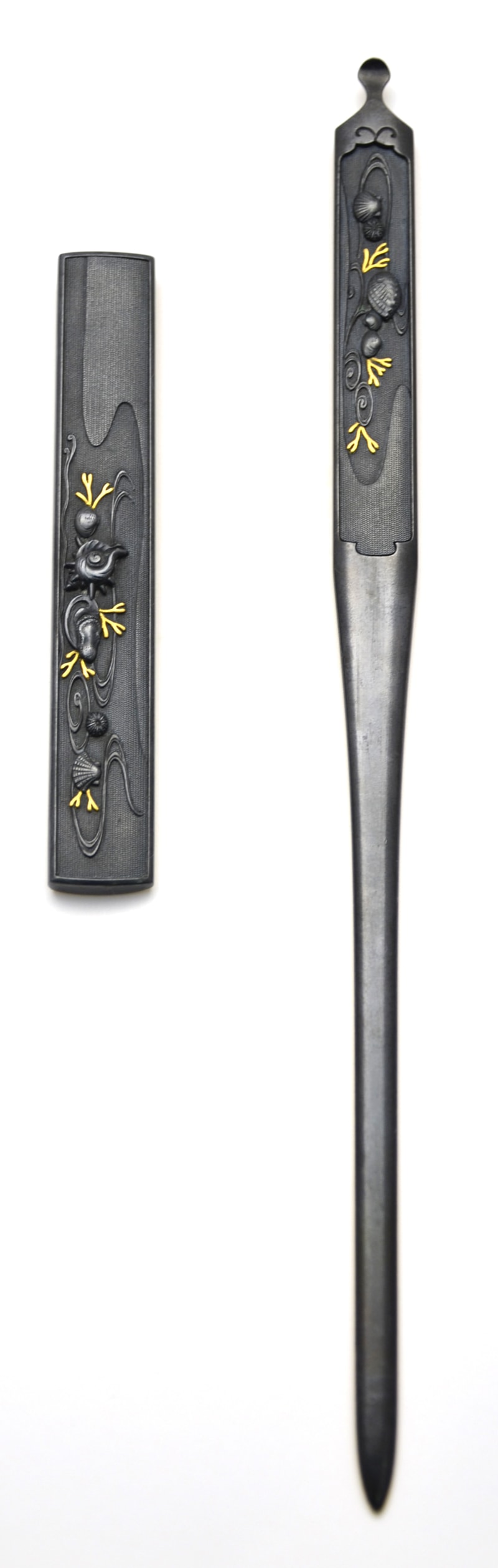
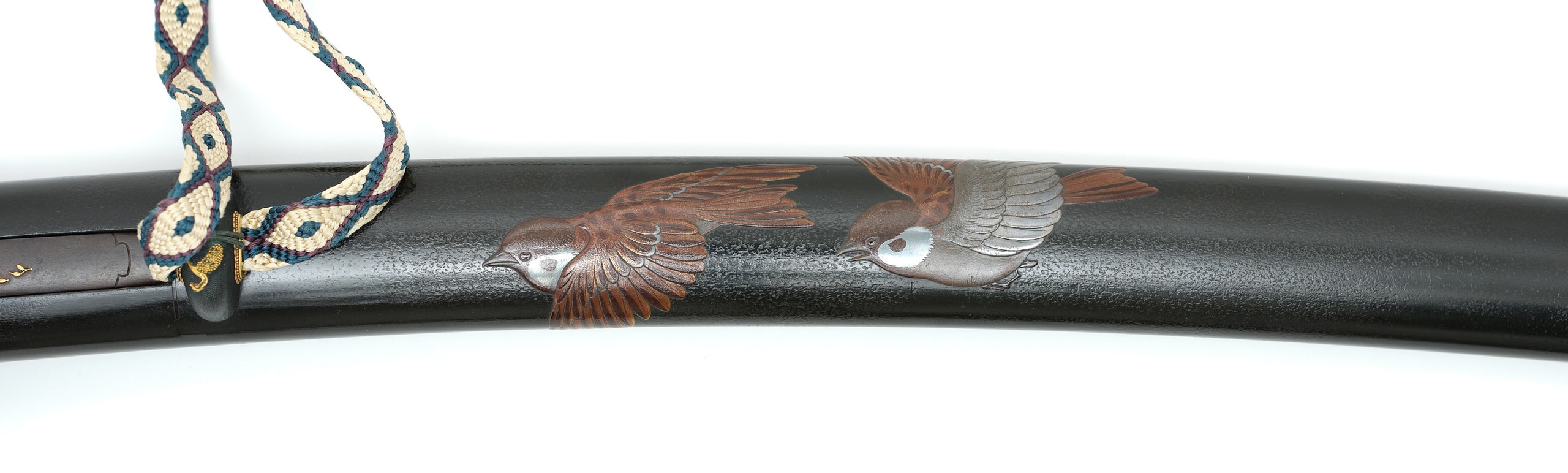
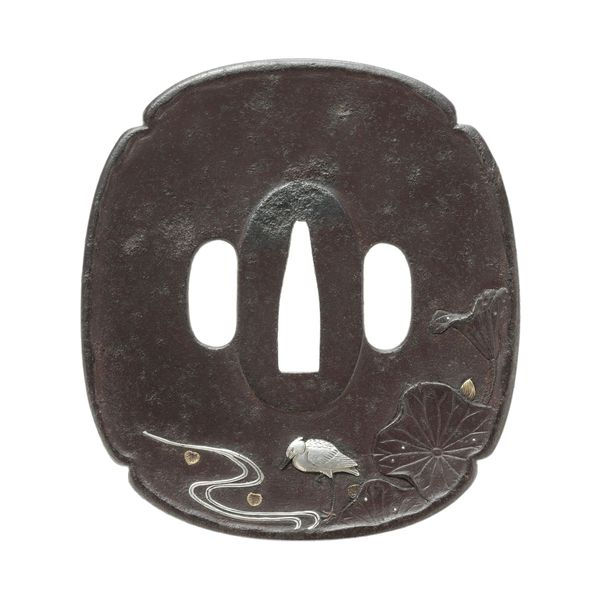
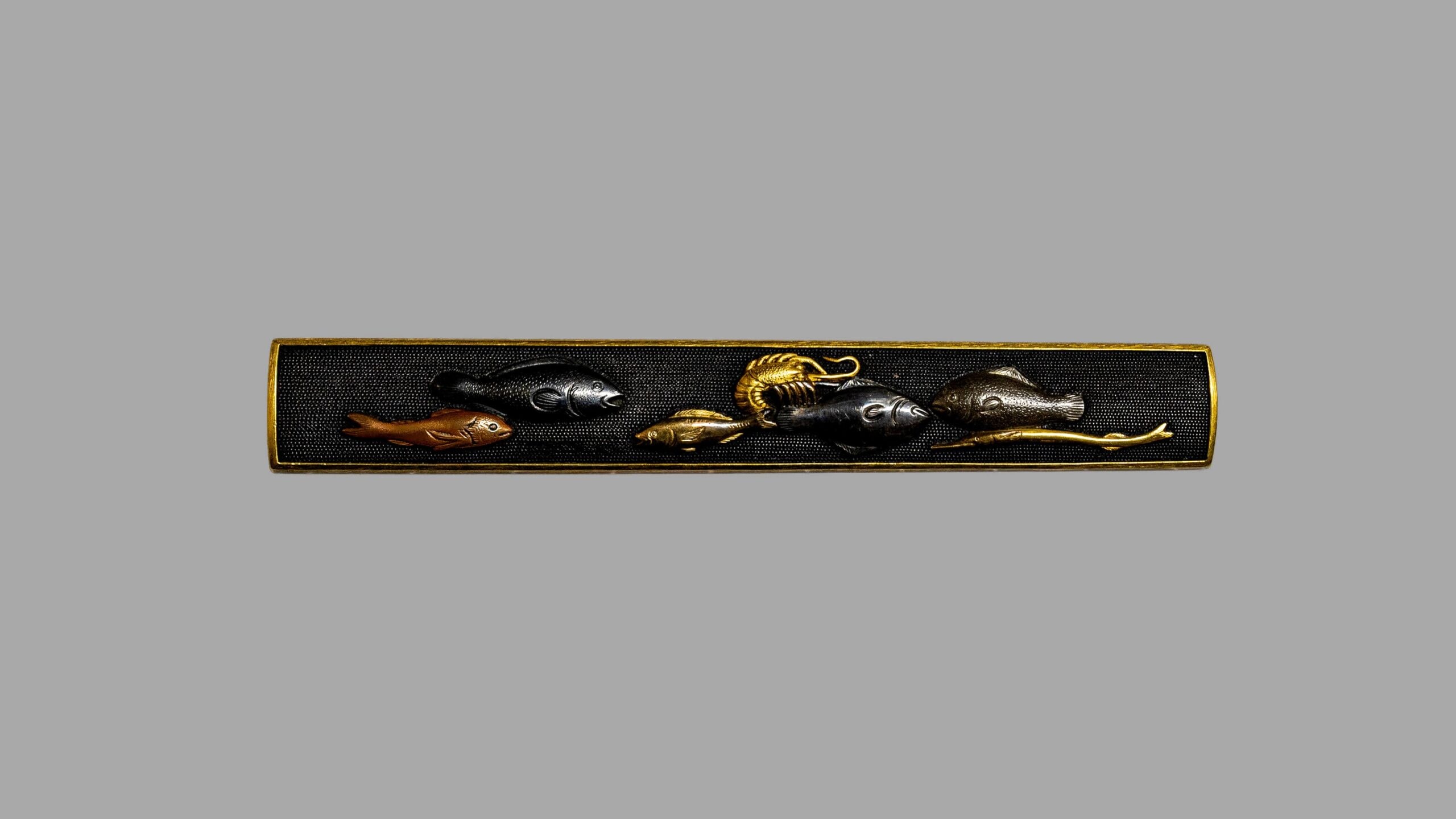
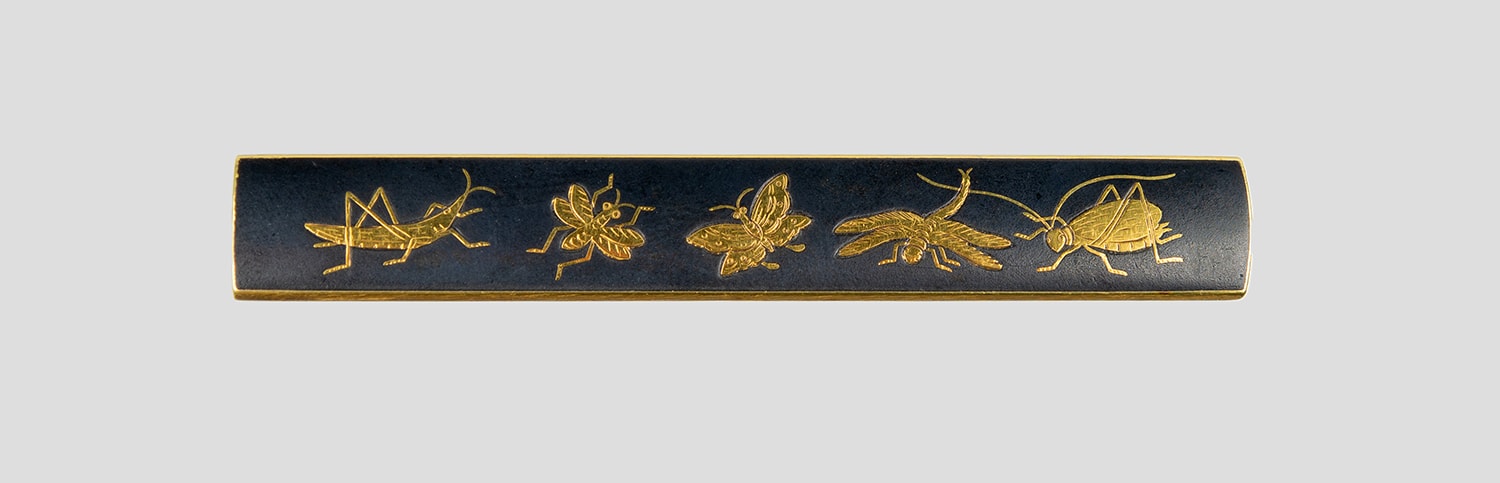
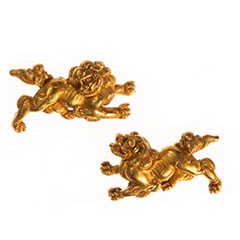
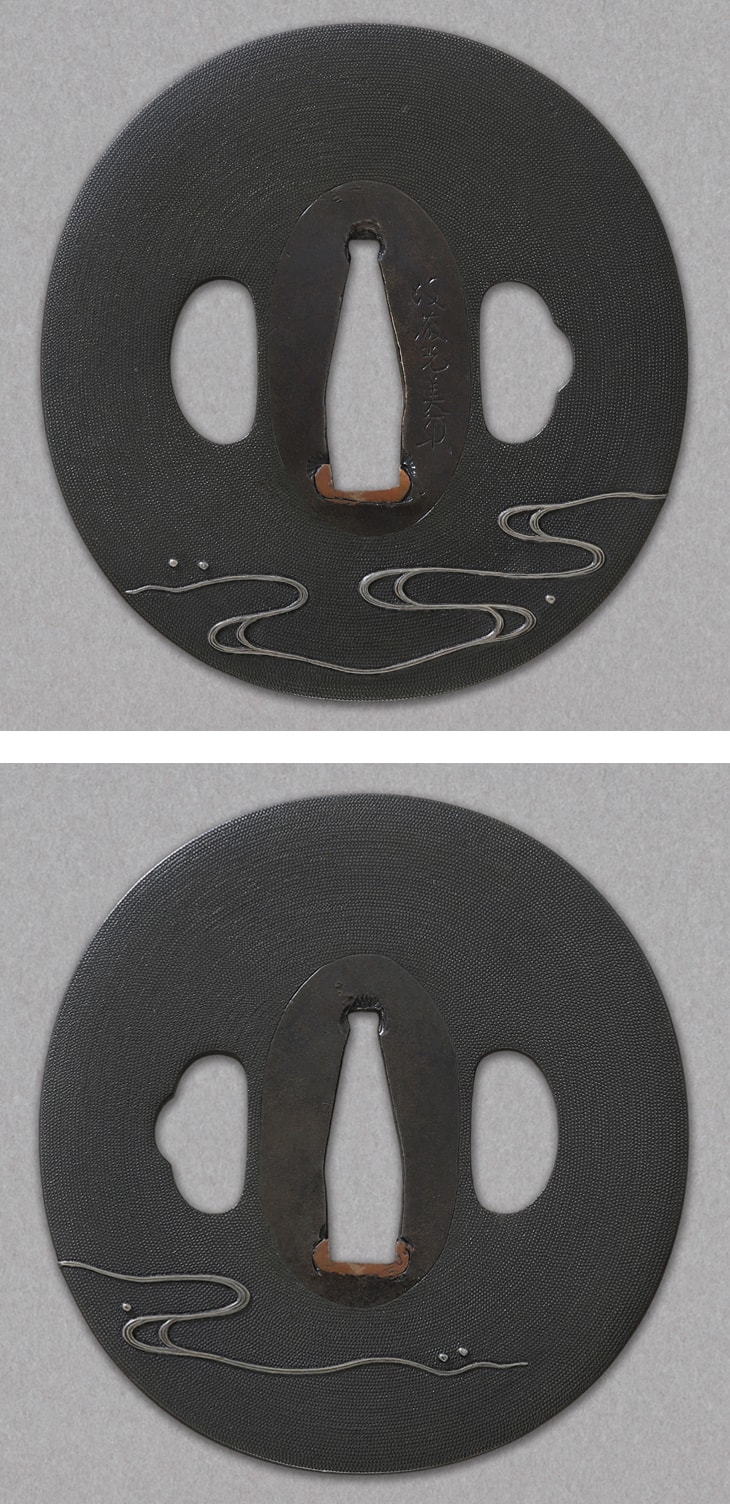
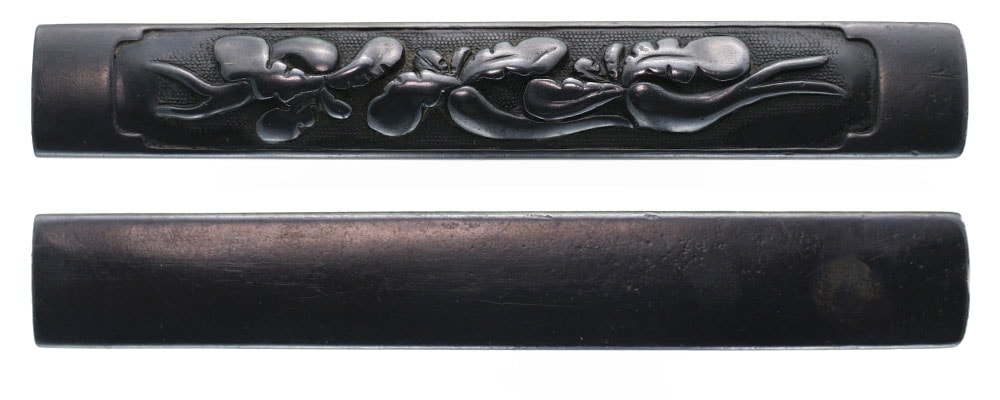
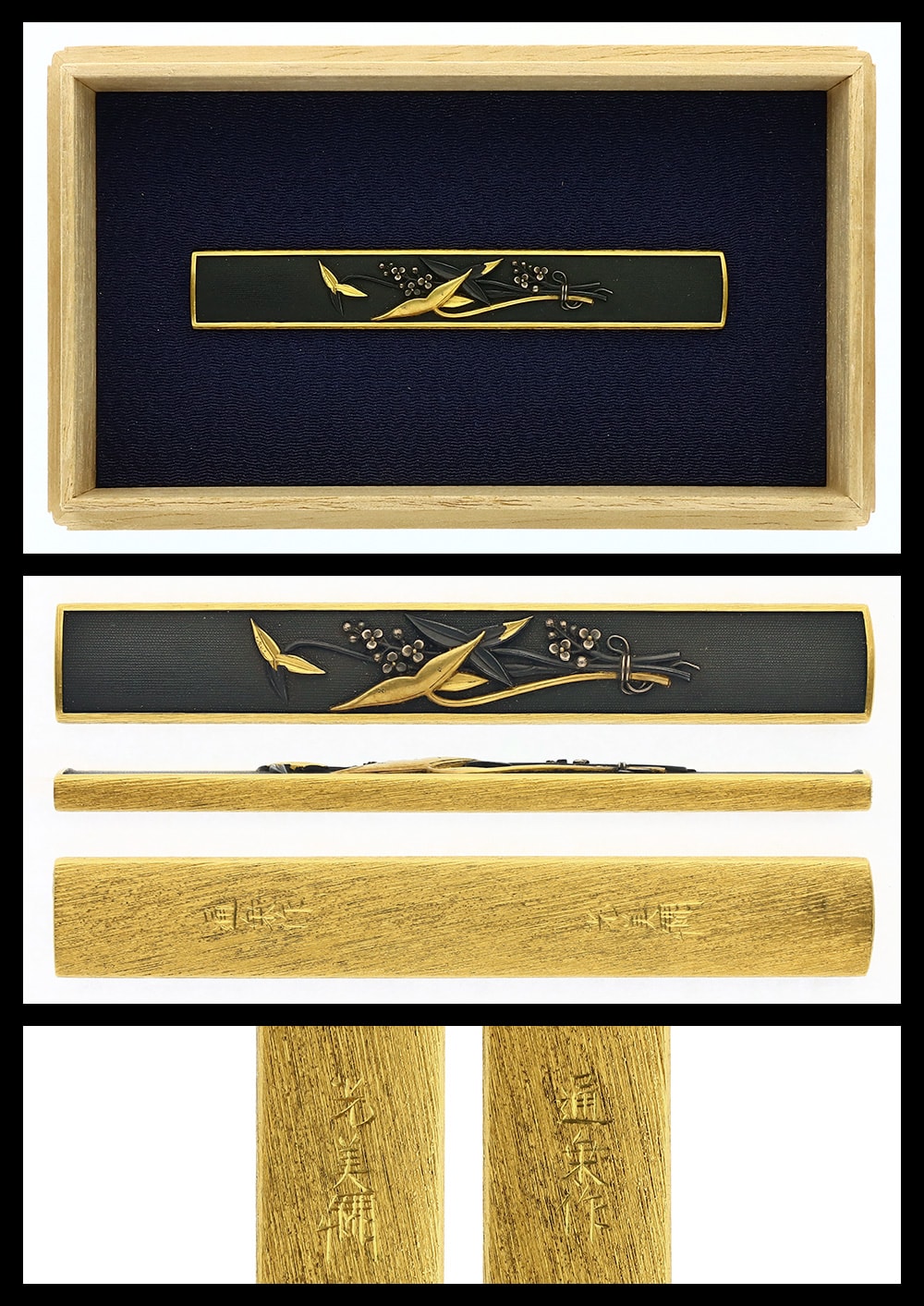
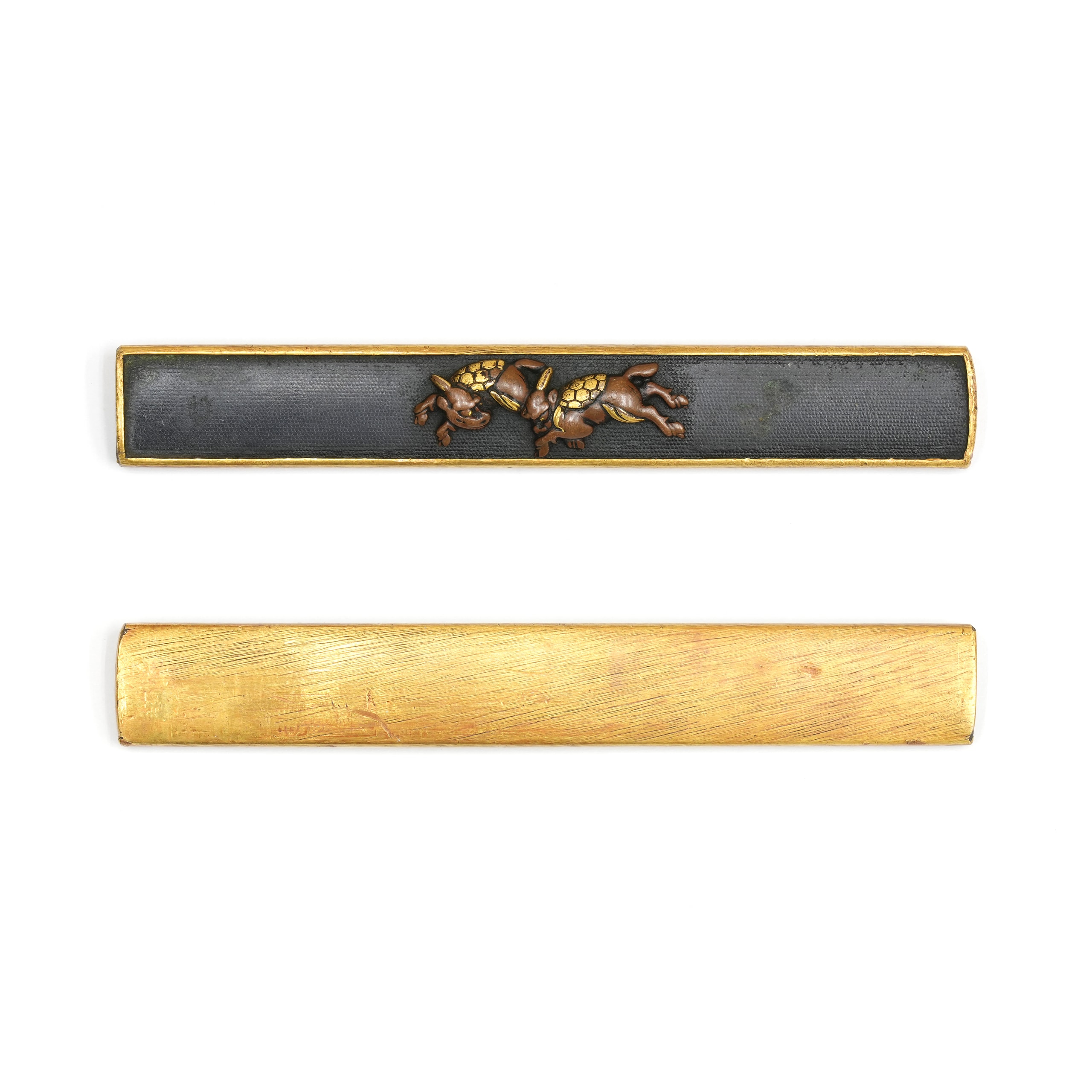
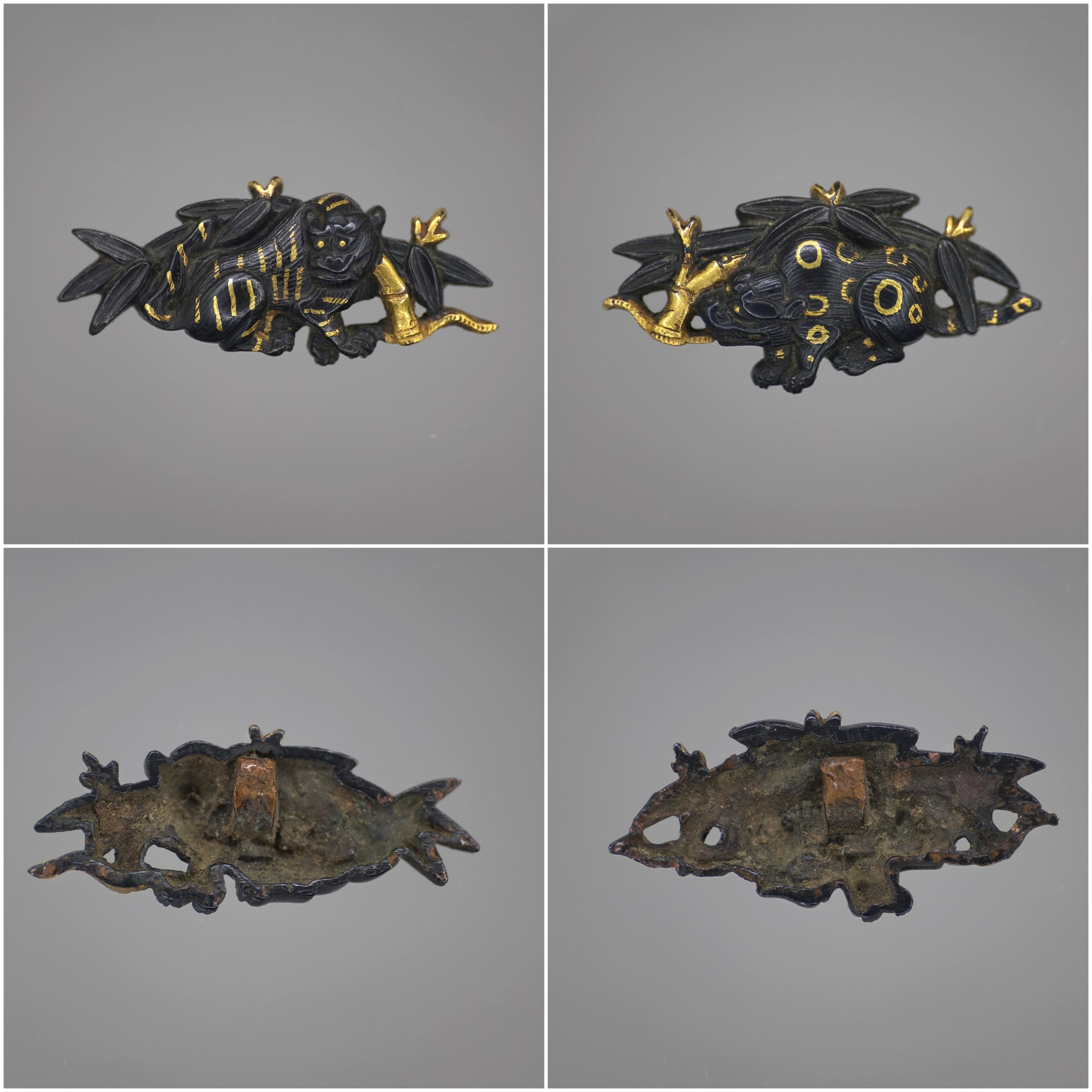
Tōgintei Yoshiteru, whose former surname was Nose, was born in Kyoto in Bunka 11 (1814). He first studied under Araki Tōmei, himself a disciple of Gotō Ichijō, before entering the school of Satō Tōhō. Upon establishing himself independently, Yoshiteru married into the Satō house, succeeding to its name and lineage. The Satō family maintained long-standing connections with the Fushimi-no-miya imperial-princely household and held the privilege of wearing swords — a distinction that naturally conferred an elevated social standing upon its members. Yoshiteru also employed the art names Kōfukutei and Tōgintei, the latter meaning "Pavilion of Eastern Chant," reflecting his personal devotion to yōkyoku (Nō chanting).
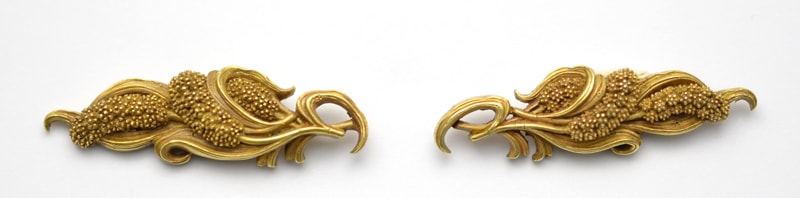
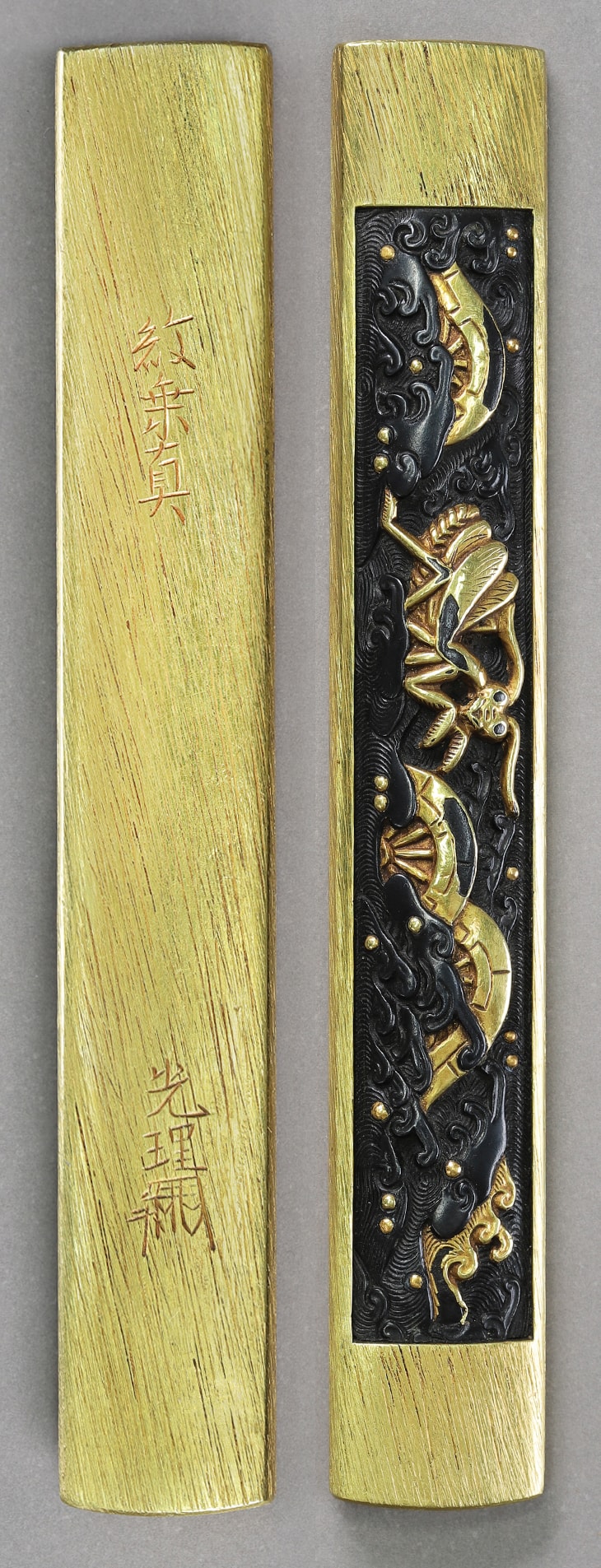
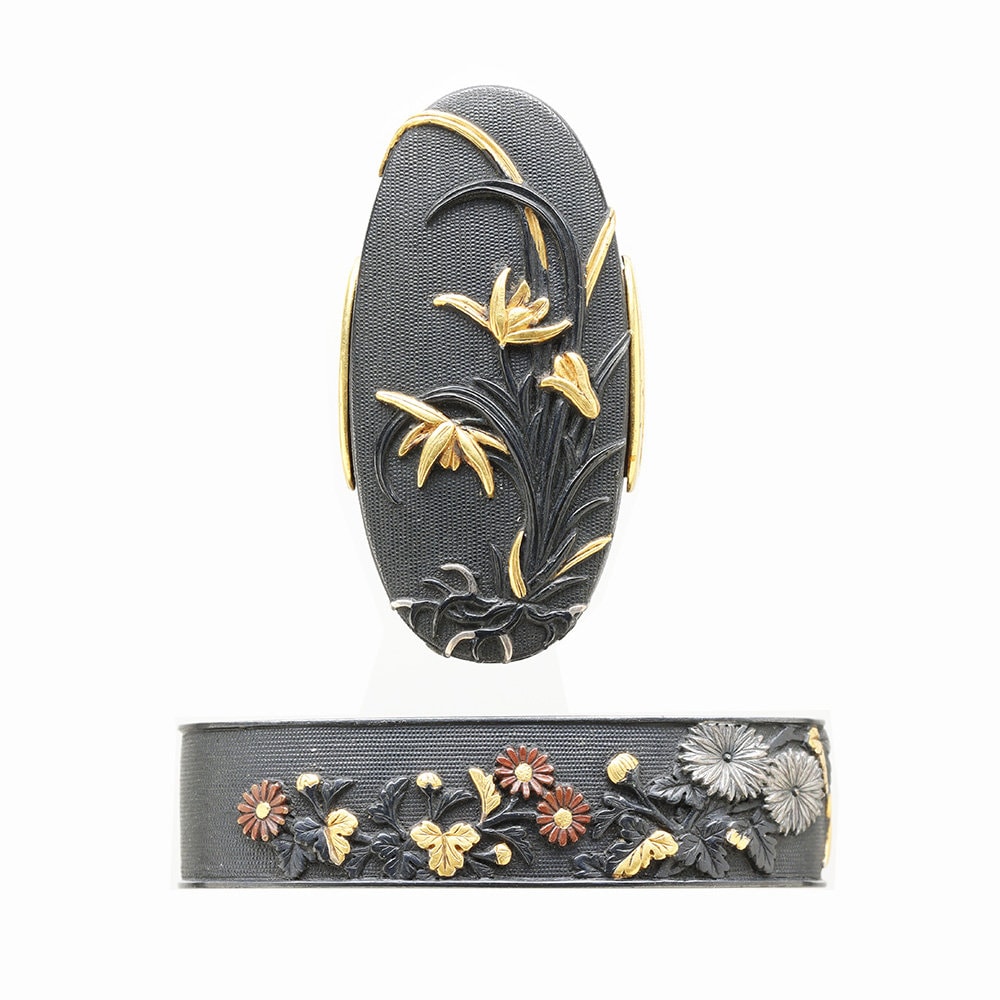
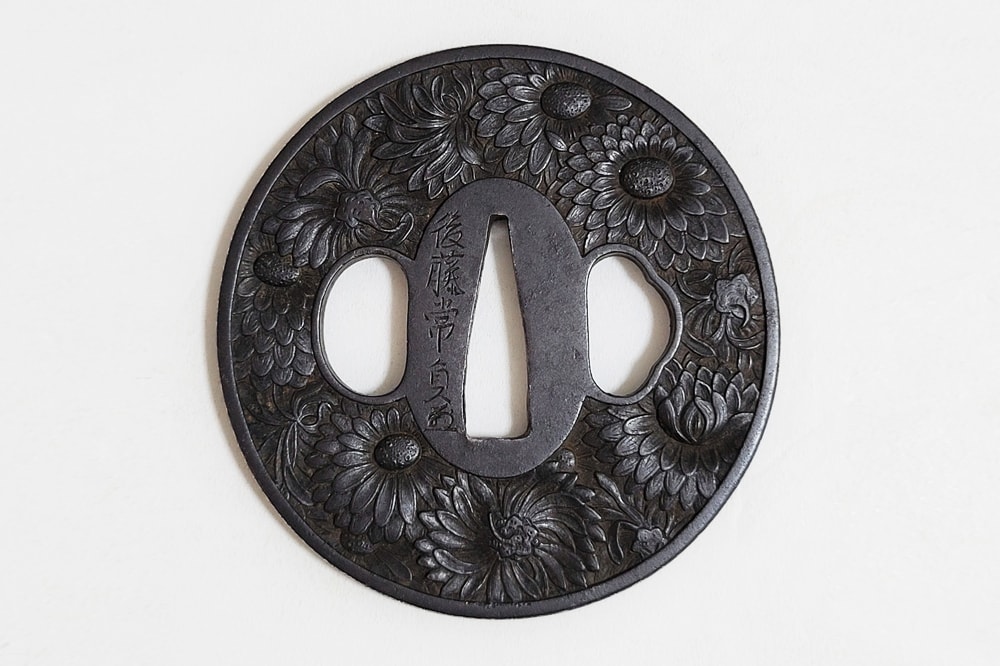
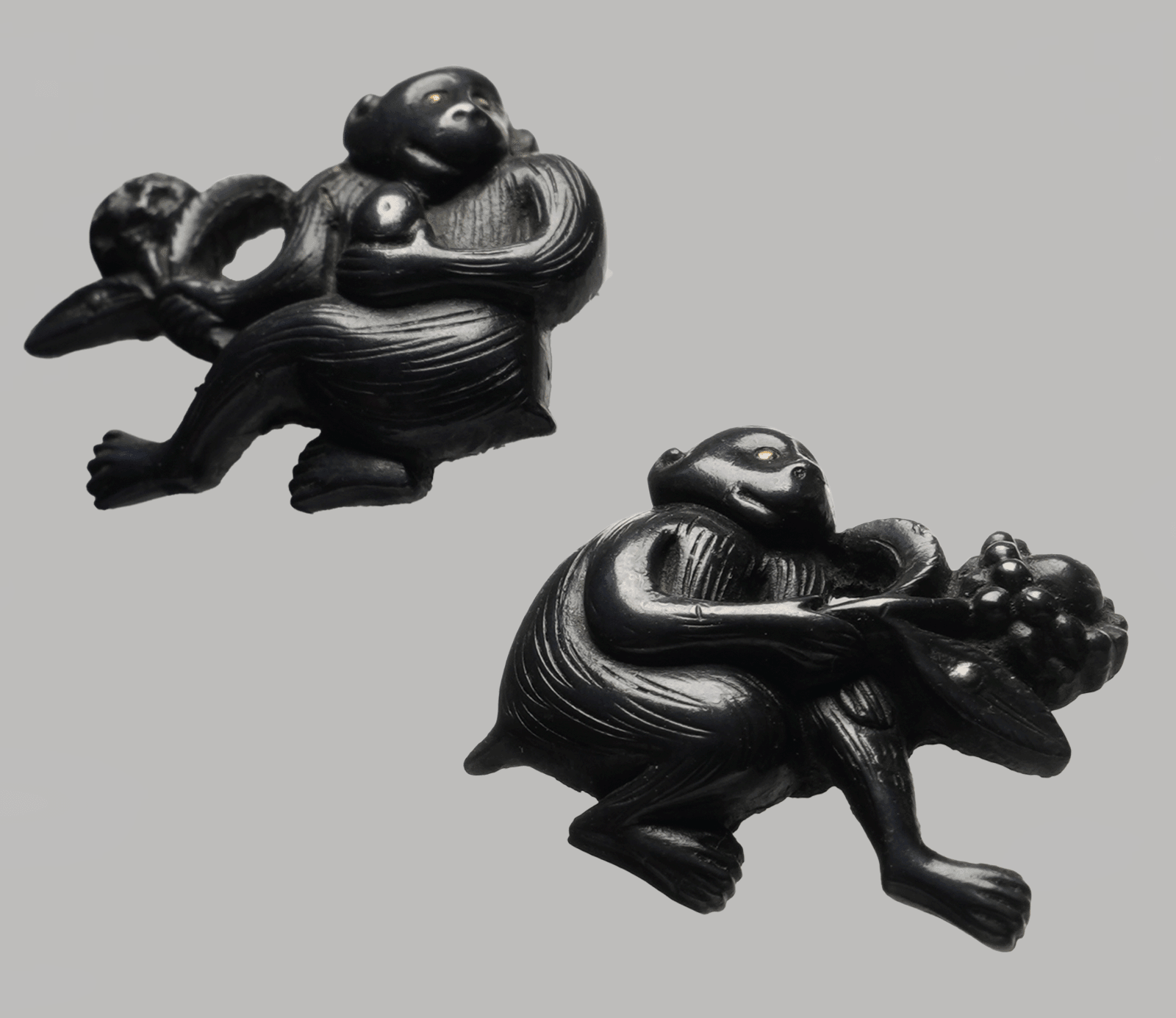
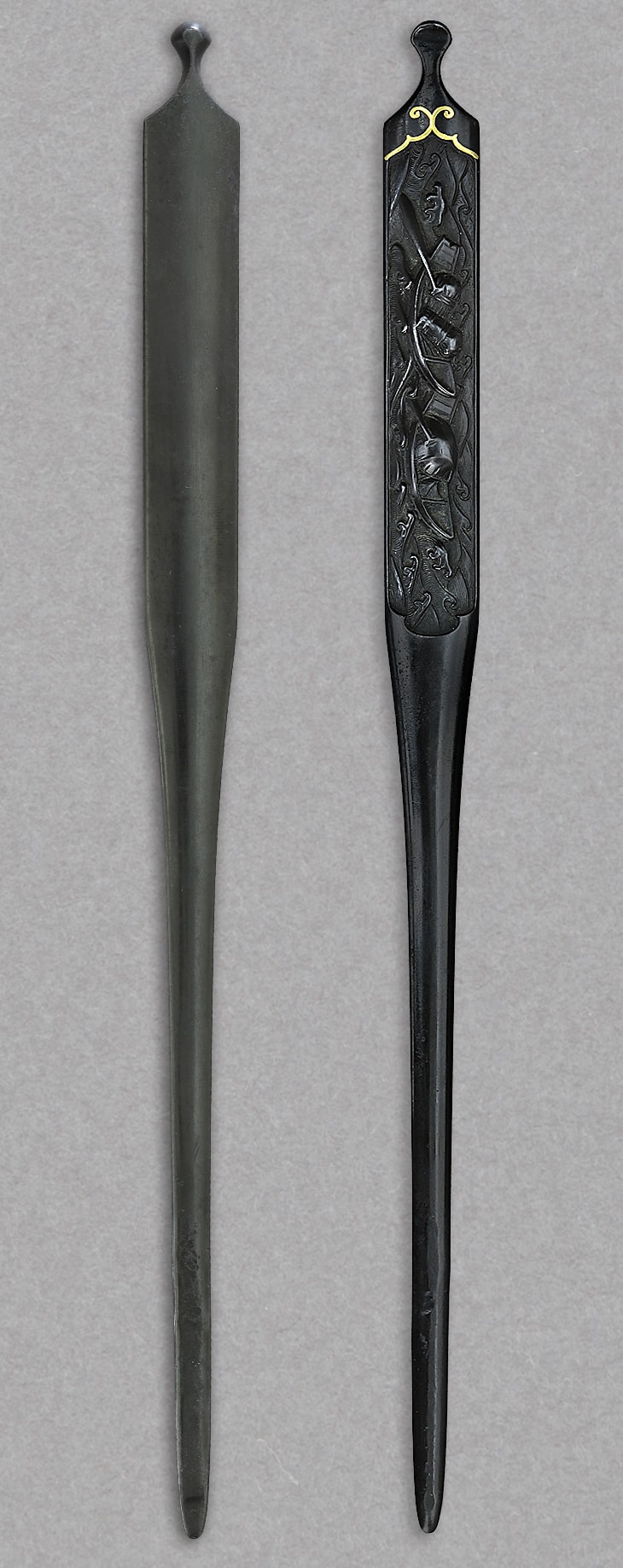
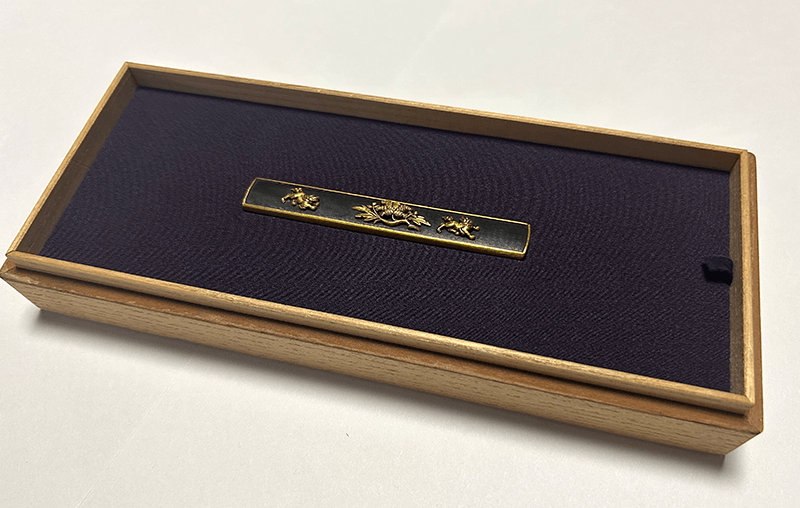
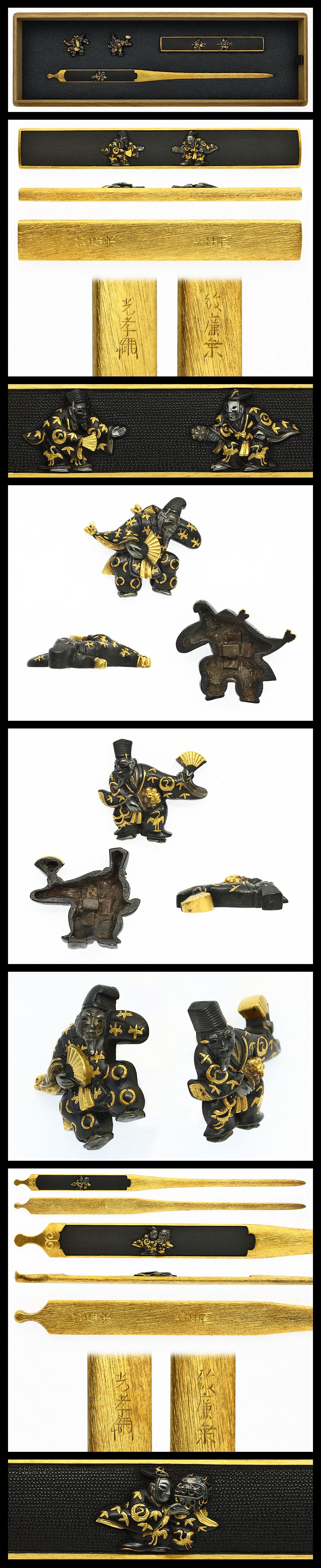
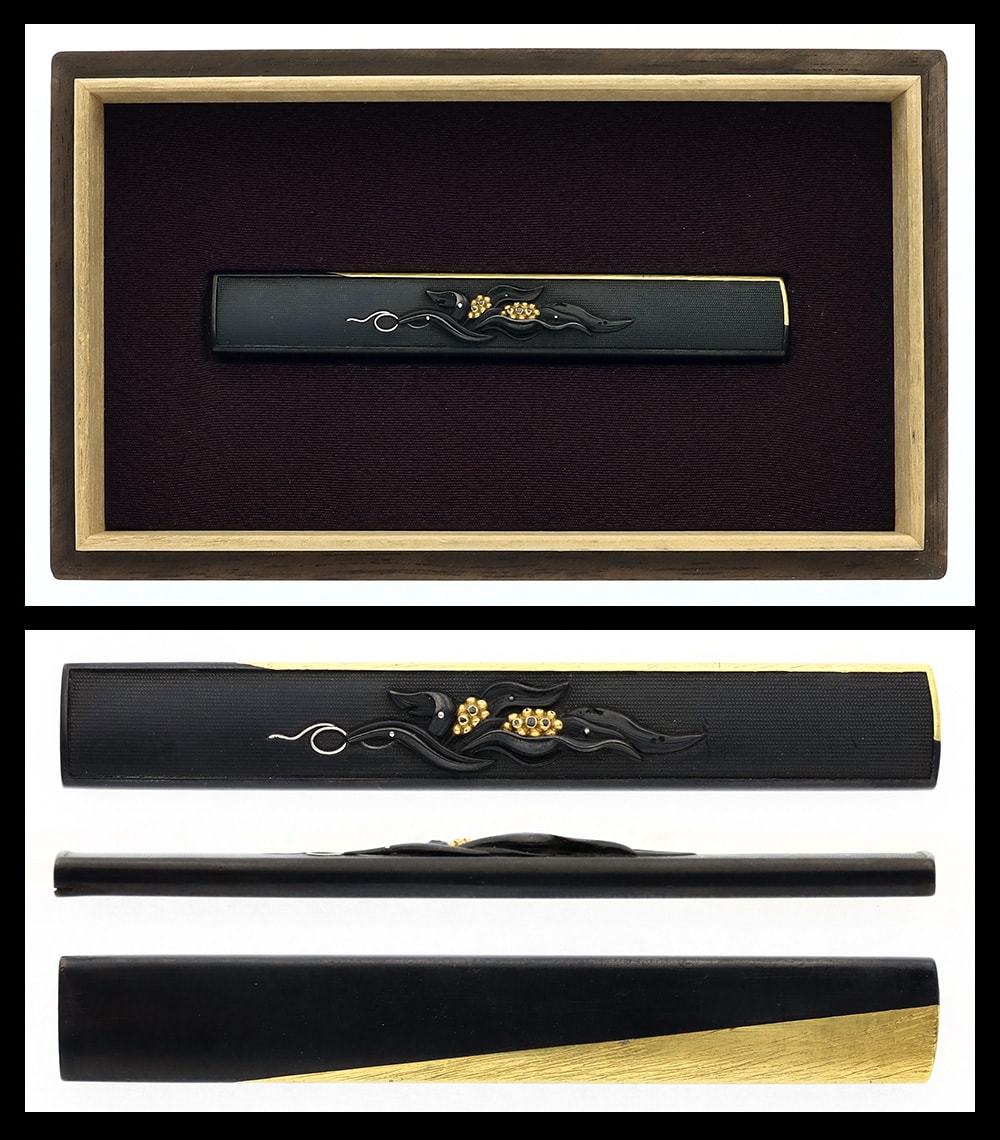
Yoshiteru's oeuvre is characterized by compositions of refined dignity executed on finely worked grounds in or silver. His preferred technique is — orderly high-relief carving raised from the plate surface — enriched with polychrome in gold, silver, , and hi-irodō. A painterly, sketch-from-life sensibility governs his compositions, whether depicting flowers and birds of the four seasons, autumn grasses with descending wild geese, water dragons, or the implements of Shiki Sanban Nō performance. Both the sumi-iri and forms appear among his , consistently finished with rims and demonstrating unmistakable Kyoto character in their carving.
The repeatedly identifies Yoshiteru's works as possessing a high sense of dignity in both design and technique, conveying throughout "an unmistakably Kyōto-style refinement and elegant taste." His pairs are cited as achievements that "fully reveal Yoshiteru's elevated technical accomplishment," with compositional sense and carving technique recognized as among the finest of his oeuvre. As a Kyoto metalsmith active at the close of the shogunate period, Yoshiteru occupies a distinguished position within the late tradition, producing works enveloped in what the designating body describes as "a clear, tasteful atmosphere."