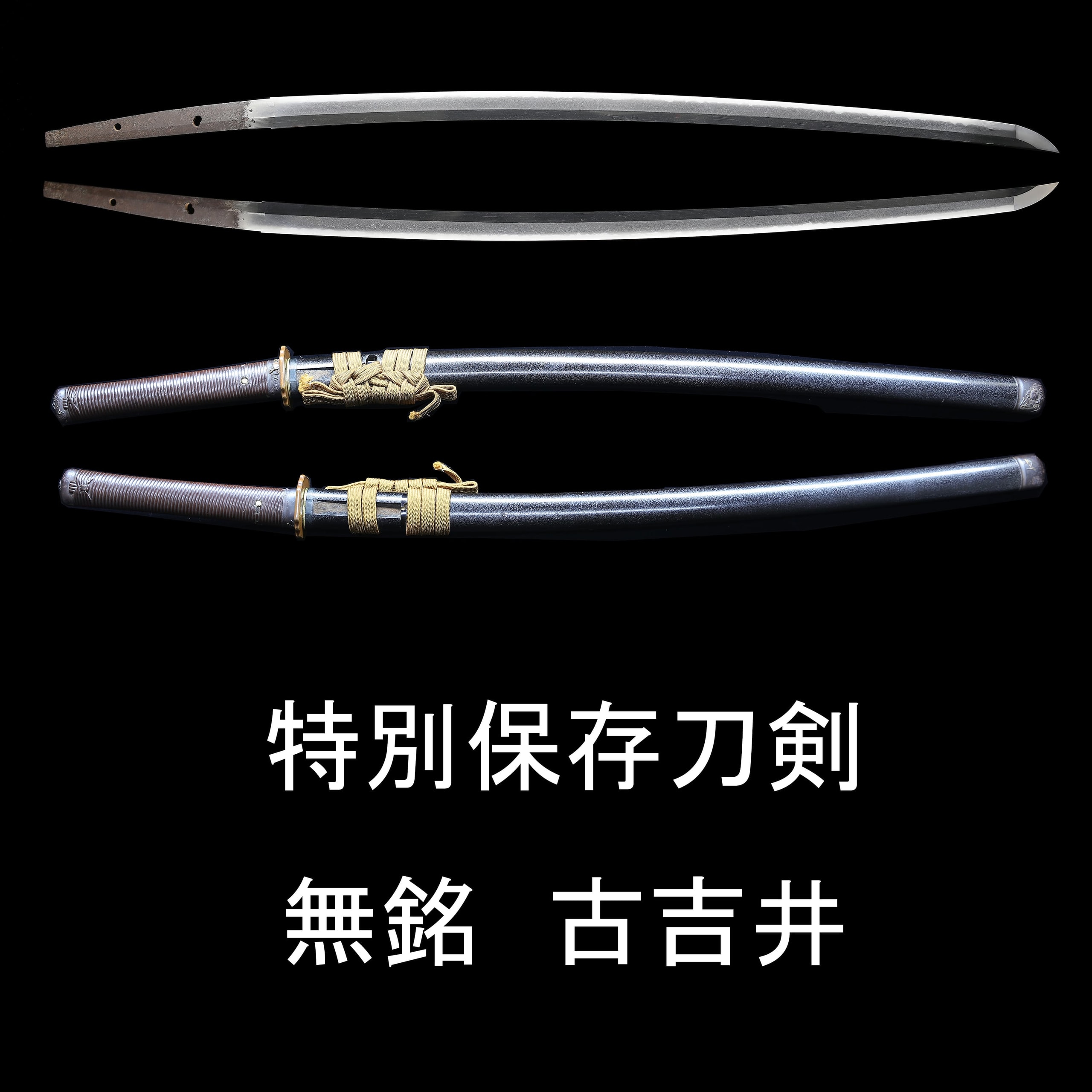
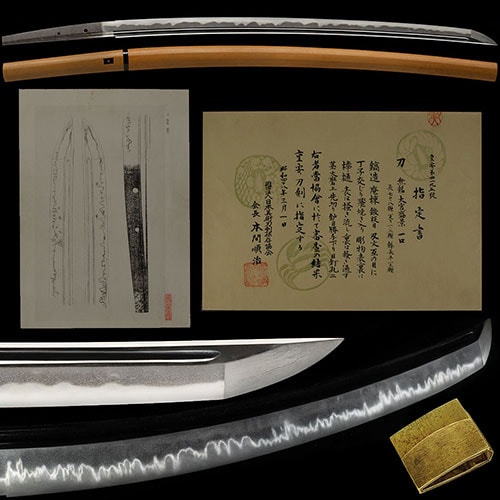
Kiyonori signed as Fujiwara Kiyonori and worked within the Yoshii school, a lineage traditionally said to have begun with Tamenori in the late period. While works traceable to the era are exceedingly rare, pieces produced through the period are classified as , and those of the period simply as Yoshii. Unlike other lineages that were consolidated into during the period, the Yoshii school alone continued independently, maintaining a distinctive style. Kiyonori is transmitted as a son of Yoshinori and was active from the Kakitsu through Hotoku eras, with dated works spanning 1442 to 1451.
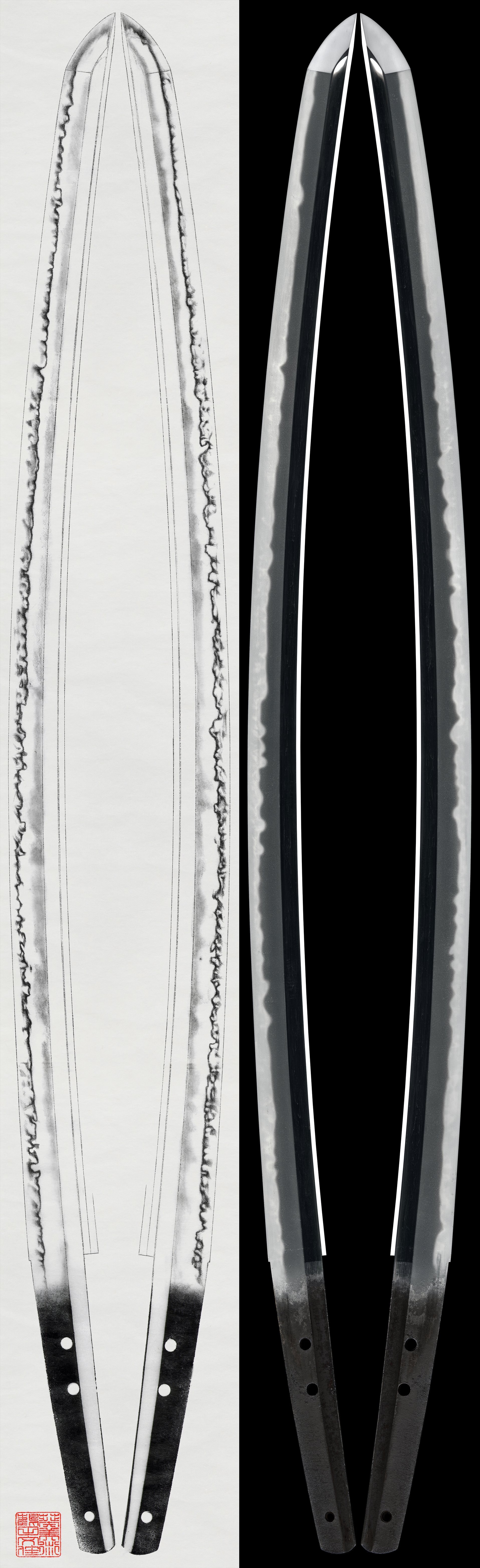
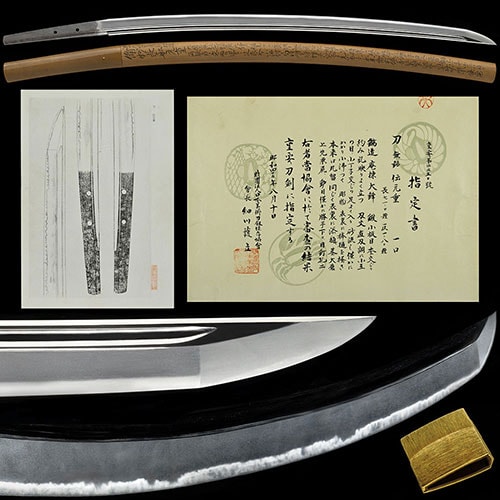
The hallmark of Kiyonori's work lies in a of running in a regular, continuous sequence, a defining trait of the Yoshii school that he consistently exemplifies across both and . His is typically a tight mixed with , showing fine densely applied, and bearing the school's characteristic -- an effect in which the form of the itself appears projected as a shadow into the . The enters in a corresponding manner, and the signature makes frequent use of - (reverse chisel strokes). In several examples the is soft, with and , imparting what the has described as an archaic flavor approaching the artistic range of . His demonstrate a mixed with small , and one such piece preserves a finely executed of no -- being extremely rare in Yoshii school production.
Kiyonori's dated works are of high documentary value for the study of the Yoshii school, and several have been praised for their thick , sound condition, and strong sense of hand. That his work at times approaches caliber within a -period framework attests to the quality of craftsmanship he sustained.