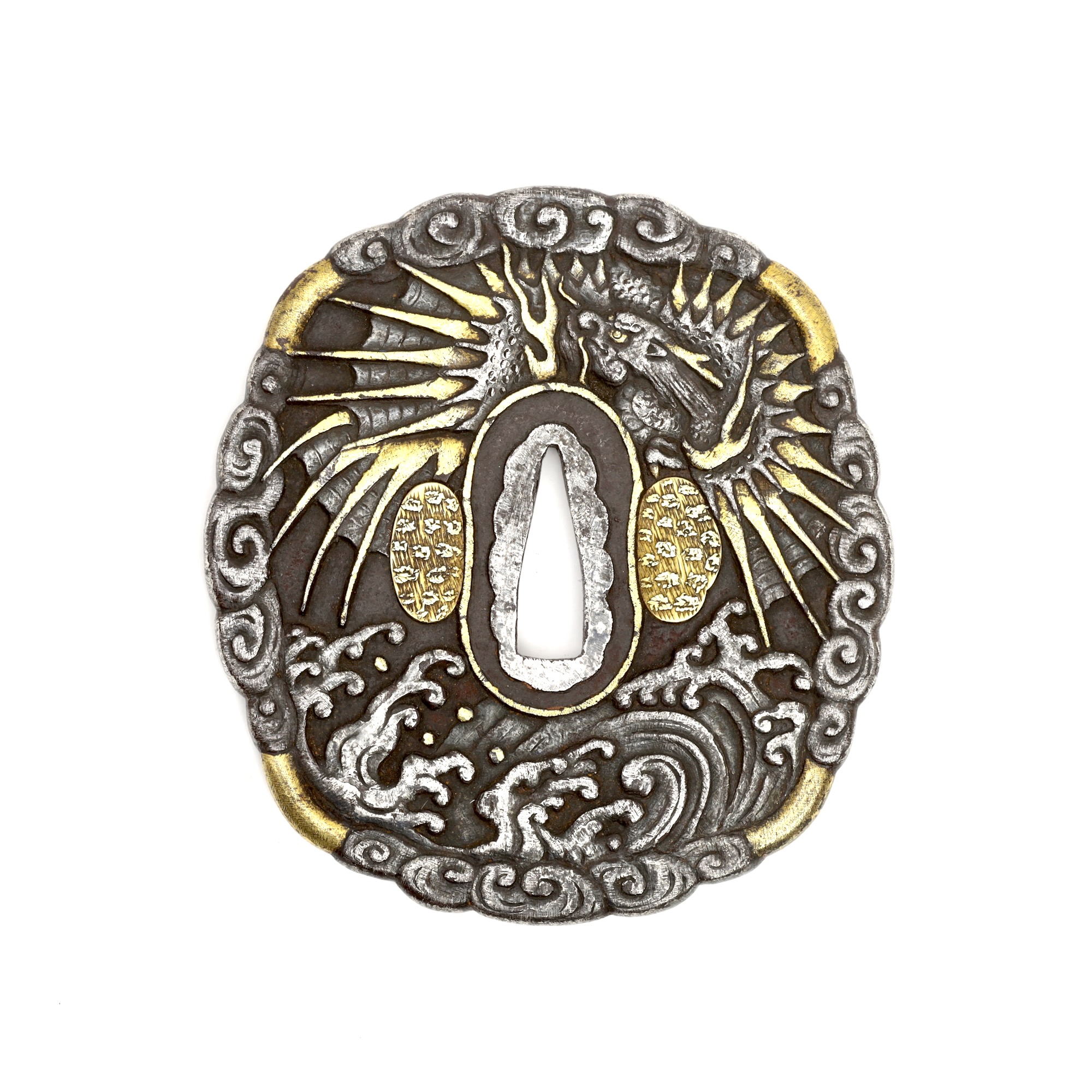
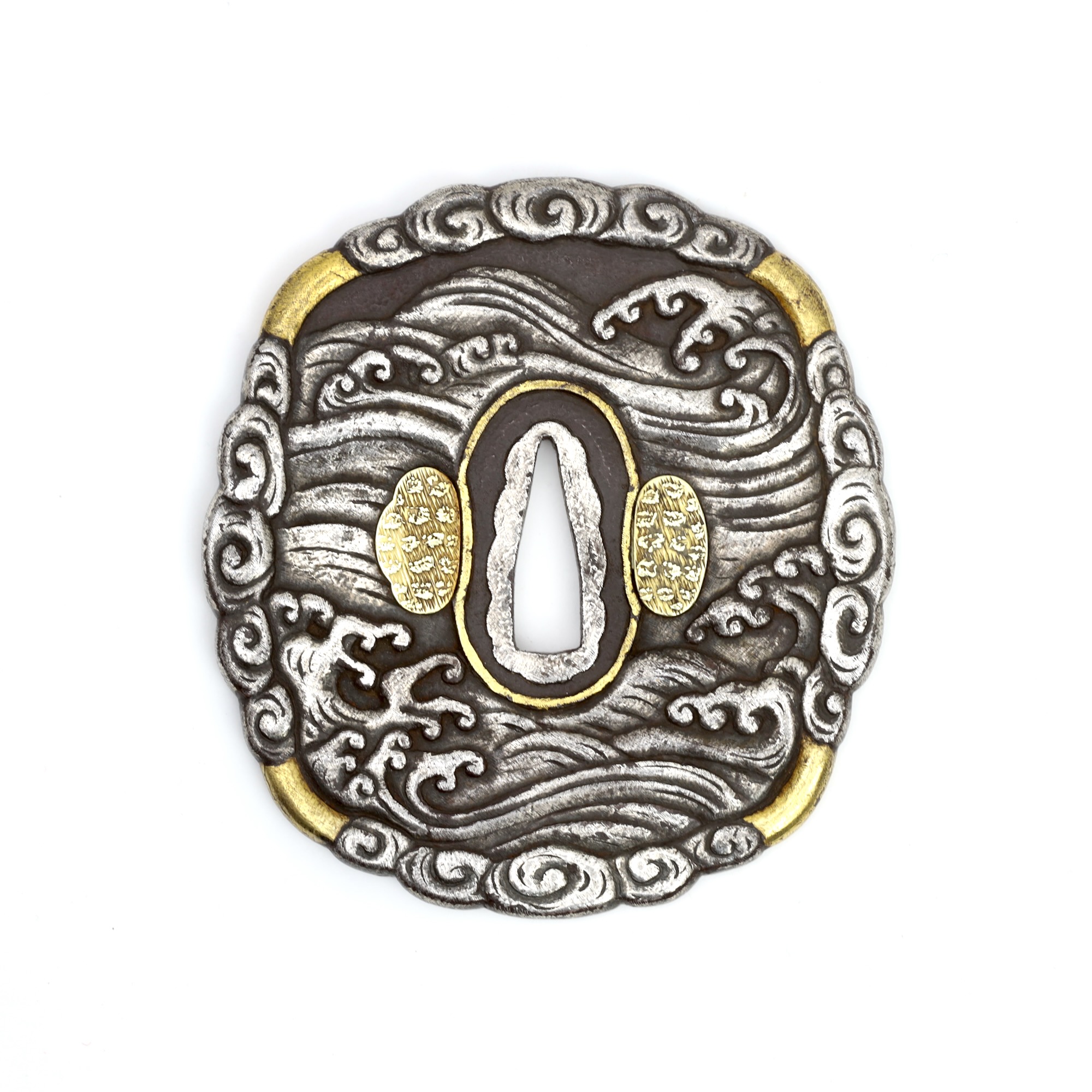
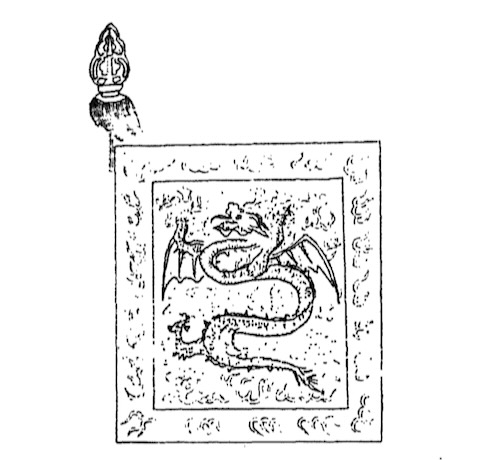
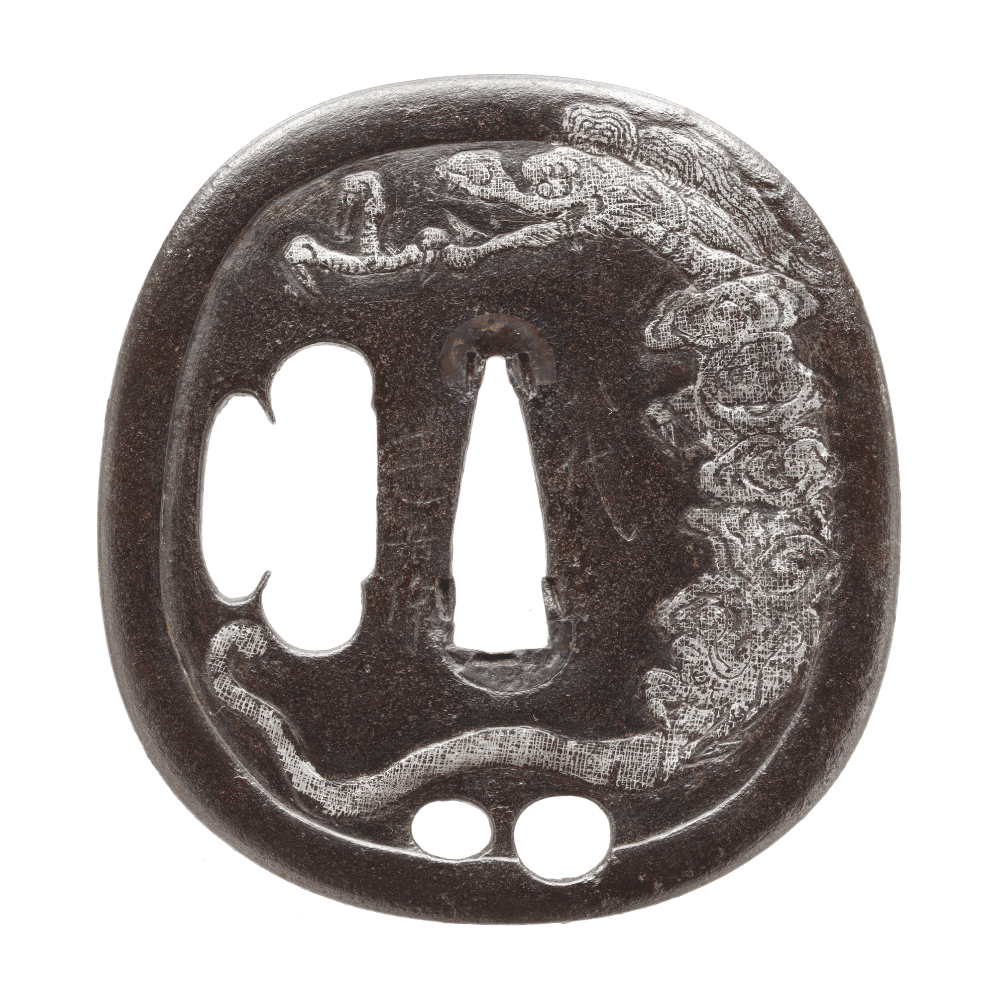
A very large iron tsuba for a katana or tachi, decorated with a winged dragon flying above a rough sea on the front, and stylized waves and clouds on the reverse. The work features hammering, chiseling, and nunome zogan in gold and silver, with two gold-filled hitsu-ana and a decorated seppa-dai in Chinese style. It is attributed to Hizen, possibly made by Chinese carvers in Nagasaki Chinatown, dating to the 17th or 18th century.
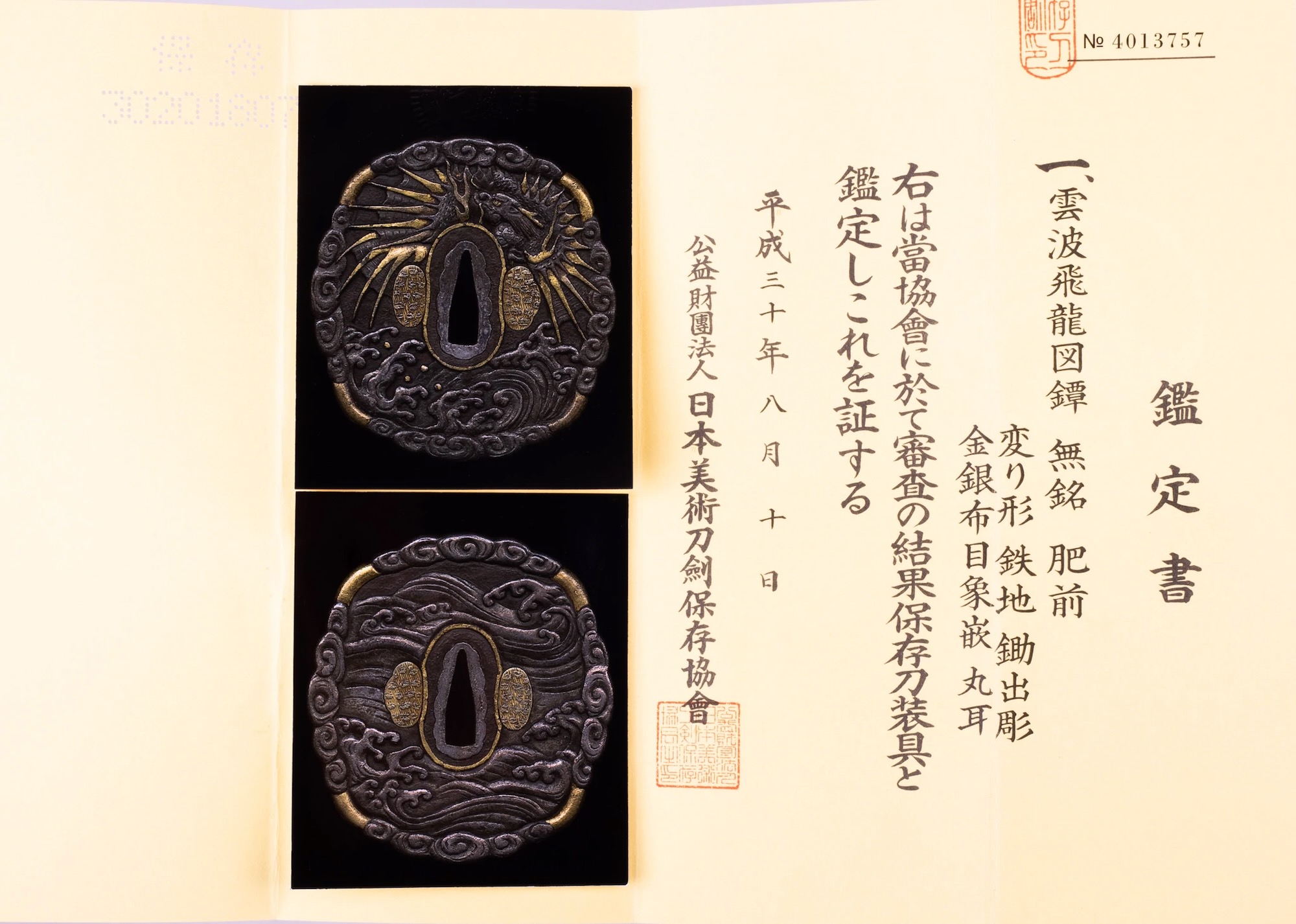
Certificate reading — 無銘(肥前)
Edo


Edo
Hizen
Hozon (NBTHK)
Certifies a genuine fitting worth preserving: a correct signature, or, if unsigned, an identifiable era and school, with recognized artistic and craft value.
The NBTHK (Nihon Bijutsu Tōken Hozon Kyōkai, the Society for the Preservation of Japanese Art Swords) is a public-interest incorporated foundation founded in 1948 and supervised by Japan’s Agency for Cultural Affairs (Bunkachō); it is based at the Japanese Sword Museum in Tokyo. Its expert panels physically examine each submitted work (shinsa) and issue a certificate (kanteishō) ranking it by artistic and historical merit. NBTHK papers are the most widely recognized standard of authentication for Japanese swords and fittings.
NBTHK official siteReturns accepted on items ordered from the site when an item does not appear to be as depicted and described; buyer must notify via email within 7 days of receipt. Refund covers purchase price minus shipping, bank fees, and currency conversion. Sales on items paid in terms are final, as are sales of items personally inspected.
A very large iron tsuba for a katana or tachi, decorated with a winged dragon flying above a rough sea on the front, and stylized waves and clouds on the reverse. The work features hammering, chiseling, and nunome zogan in gold and silver, with two gold-filled hitsu-ana and a decorated seppa-dai in Chinese style. It is attributed to Hizen, possibly made by Chinese carvers in Nagasaki Chinatown, dating to the 17th or 18th century.
Certificate reading — 無銘(肥前)
Edo


Edo
Hizen
Hozon (NBTHK)
Certifies a genuine fitting worth preserving: a correct signature, or, if unsigned, an identifiable era and school, with recognized artistic and craft value.
The NBTHK (Nihon Bijutsu Tōken Hozon Kyōkai, the Society for the Preservation of Japanese Art Swords) is a public-interest incorporated foundation founded in 1948 and supervised by Japan’s Agency for Cultural Affairs (Bunkachō); it is based at the Japanese Sword Museum in Tokyo. Its expert panels physically examine each submitted work (shinsa) and issue a certificate (kanteishō) ranking it by artistic and historical merit. NBTHK papers are the most widely recognized standard of authentication for Japanese swords and fittings.
NBTHK official siteReturns accepted on items ordered from the site when an item does not appear to be as depicted and described; buyer must notify via email within 7 days of receipt. Refund covers purchase price minus shipping, bank fees, and currency conversion. Sales on items paid in terms are final, as are sales of items personally inspected.