The twentieth century nearly killed the craft twice: wartime distortion, then the occupation ban. The NBTHK’s founding in 1948 and licensed forging from 1953 rebuilt the sword as an art, crowned by Living National Treasures and the mukansa rank.
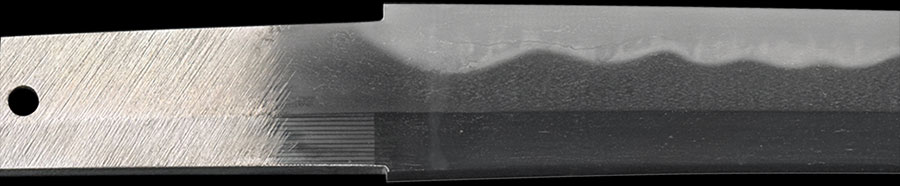
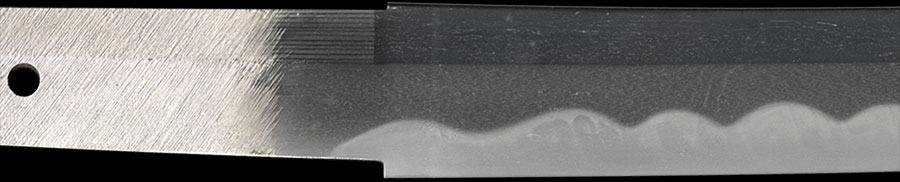
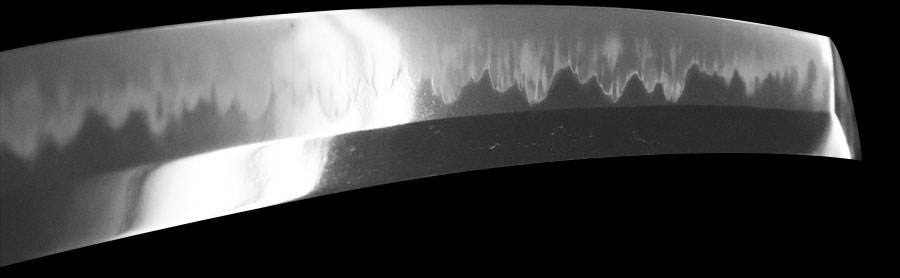
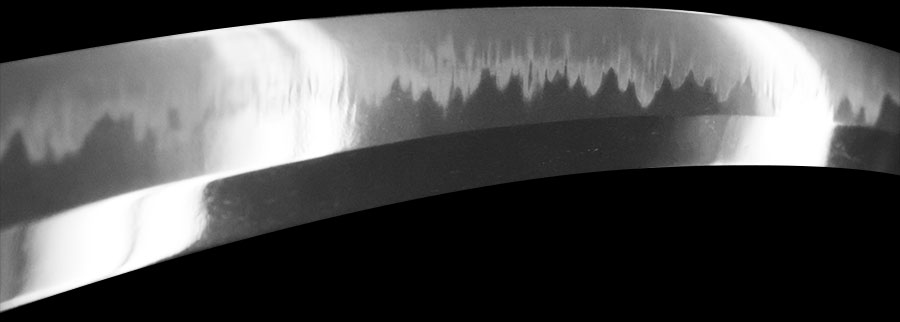
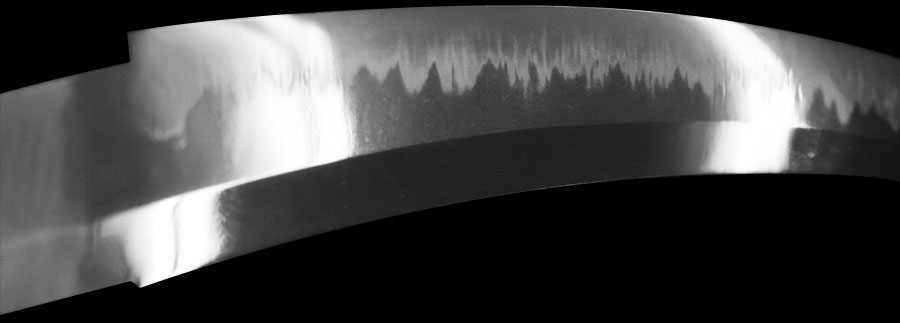
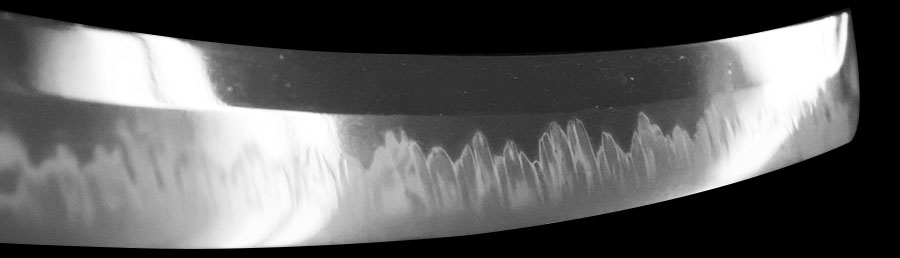
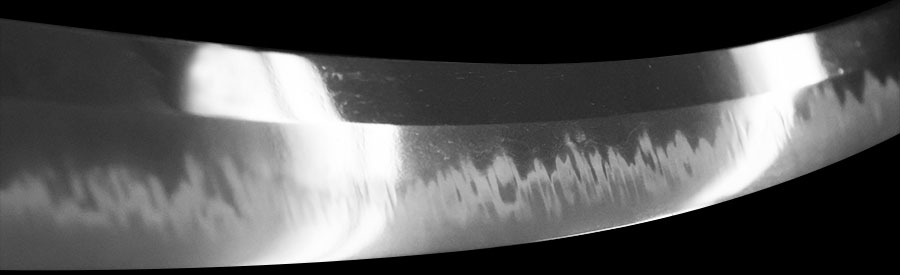
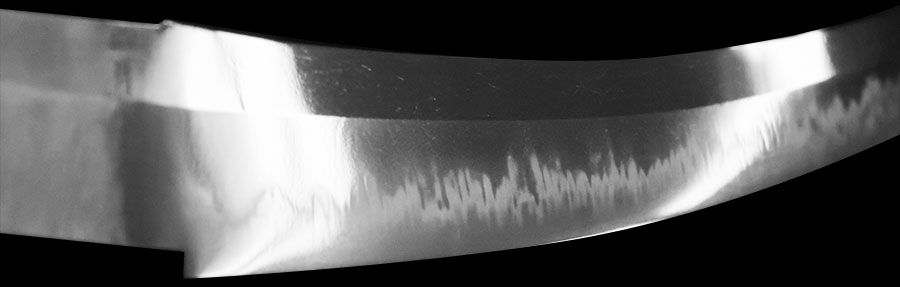
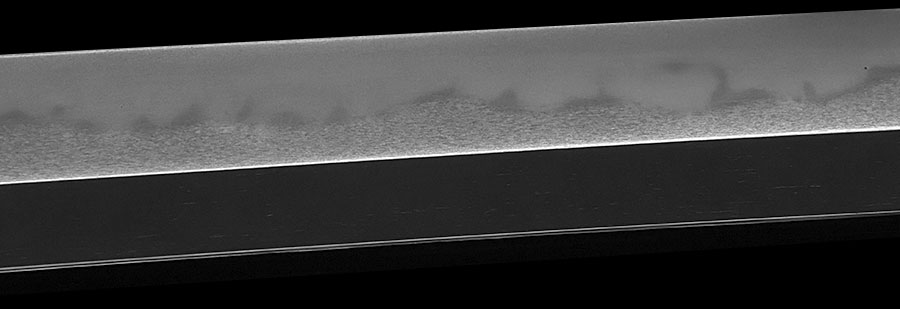
Weight: 833g (toushin only) It has arrived, it has arrived! It is incredibly famous in the token world that the renowned Oda Nobunaga exerted all his power, wealth, and omniscience to collect 34 swords by Mitsutada—the founder of the Bizen Osafune smiths—which were rare and precious even at that time. Now, a meito has arrived by the smith Bitchu no Kuni-ju Hidemitsu, the father of Bitchu no Kuni-ju Yoshihisa, who was the exclusive smith for the Hayashibara Museum of Art in Okayama Prefecture. This sword is a utsushi of Bizen Osafune Mitsutada. The smith Hidemitsu, whose real name was Fujimoto Akira, was born in Showa 9 (1934). His eldest son, Fujimoto Yoshihisa, entered the apprenticeship of Yoshihara Yoshindo in Tokyo, and later became an exclusive smith for the Hayashibara Museum of Art at their sword forging dojo alongside Ono Yoshimitsu, who is famous for his Yamatoroge-utsushi. His second son is the famous smith Fujimoto Masamitsu. Hidemitsu is a renowned master who also signed his mei as "Shinmei Nyudo Fujiwara Hidemitsu." He was a master smith who devoted himself to reproducing old meito, starting with Kamakura period Bizen Osafune Mitsutada, and won numerous awards at the Shinsaku Meito Ten (New Masterpiece Sword Exhibition). This katana, a utsushi of the Bizen no Kuni Osafune Mitsutada loved by Oda Nobunaga, displays a fine tachi sugata of the mid-Kamakura period with a slight difference between the moto-mihaba and saki-mihaba. The jigane is forged in itame-hada, possessing a wonderful moisture and splendor. The hamon is a nioi-deki with konie, featuring gunome-choji and gorgeous juka-choji fired high, with abundant ashi and yo within the ha. It is a masterpiece of Bitchu no Kuni-ju Hidemitsu's full devotion, brilliantly recreating the magnificent work of Mitsutada, the founder of the Bizen Osafune smiths, and creating a meito that should become a future National Treasure of Japan. On this occasion, an elderly connoisseur who had this Mitsutada-utsushi specially commissioned has entrusted it to us, saying, "I have grown old, so please pass this on to someone who desires it at a low price." Therefore, we are offering this masterpiece meito, a utsushi of the Bizen Osafune Mitsutada loved by Oda Nobunaga, at a special bargain price. Please enjoy it.
 NihontoWatch
signed · 備前長船 · Gendaito · nagasa 71.9cm · sori 1.8cm












Shōwa to the present: destruction and revival
The twentieth century nearly killed the craft twice: wartime distortion, then the occupation ban. The NBTHK’s founding in 1948 and licensed forging from 1953 rebuilt the sword as an art, crowned by Living National Treasures and the mukansa rank.
We could not find an authenticity certificate on the seller’s listing. Japanese swords and fittings are normally papered by the NBTHK (or the NTHK). Without one, the attribution is the seller’s own assessment and has not been independently verified — treat it with caution and ask the dealer about certification before buying.
For returns due to customer circumstances, the cost is the customer's responsibility. For returns due to our mis-shipment or a defective item, we bear the cost.
¥650,000
Weight: 833g (toushin only) It has arrived, it has arrived! It is incredibly famous in the token world that the renowned Oda Nobunaga exerted all his power, wealth, and omniscience to collect 34 swords by Mitsutada—the founder of the Bizen Osafune smiths—which were rare and precious even at that time. Now, a meito has arrived by the smith Bitchu no Kuni-ju Hidemitsu, the father of Bitchu no Kuni-ju Yoshihisa, who was the exclusive smith for the Hayashibara Museum of Art in Okayama Prefecture. This sword is a utsushi of Bizen Osafune Mitsutada. The smith Hidemitsu, whose real name was Fujimoto Akira, was born in Showa 9 (1934). His eldest son, Fujimoto Yoshihisa, entered the apprenticeship of Yoshihara Yoshindo in Tokyo, and later became an exclusive smith for the Hayashibara Museum of Art at their sword forging dojo alongside Ono Yoshimitsu, who is famous for his Yamatoroge-utsushi. His second son is the famous smith Fujimoto Masamitsu. Hidemitsu is a renowned master who also signed his mei as "Shinmei Nyudo Fujiwara Hidemitsu." He was a master smith who devoted himself to reproducing old meito, starting with Kamakura period Bizen Osafune Mitsutada, and won numerous awards at the Shinsaku Meito Ten (New Masterpiece Sword Exhibition). This katana, a utsushi of the Bizen no Kuni Osafune Mitsutada loved by Oda Nobunaga, displays a fine tachi sugata of the mid-Kamakura period with a slight difference between the moto-mihaba and saki-mihaba. The jigane is forged in itame-hada, possessing a wonderful moisture and splendor. The hamon is a nioi-deki with konie, featuring gunome-choji and gorgeous juka-choji fired high, with abundant ashi and yo within the ha. It is a masterpiece of Bitchu no Kuni-ju Hidemitsu's full devotion, brilliantly recreating the magnificent work of Mitsutada, the founder of the Bizen Osafune smiths, and creating a meito that should become a future National Treasure of Japan. On this occasion, an elderly connoisseur who had this Mitsutada-utsushi specially commissioned has entrusted it to us, saying, "I have grown old, so please pass this on to someone who desires it at a low price." Therefore, we are offering this masterpiece meito, a utsushi of the Bizen Osafune Mitsutada loved by Oda Nobunaga, at a special bargain price. Please enjoy it.
NihontoWatchsigned · 備前長船 · Gendaito · nagasa 71.9cm · sori 1.8cm
Shōwa to the present: destruction and revival
The twentieth century nearly killed the craft twice: wartime distortion, then the occupation ban. The NBTHK’s founding in 1948 and licensed forging from 1953 rebuilt the sword as an art, crowned by Living National Treasures and the mukansa rank.
We could not find an authenticity certificate on the seller’s listing. Japanese swords and fittings are normally papered by the NBTHK (or the NTHK). Without one, the attribution is the seller’s own assessment and has not been independently verified — treat it with caution and ask the dealer about certification before buying.
For returns due to customer circumstances, the cost is the customer's responsibility. For returns due to our mis-shipment or a defective item, we bear the cost.
¥650,000