Edo was the sword’s age of connoisseurship: the Hon’ami appraisers, the shogunal register of famous blades of 1719, and a thriving literature turned the sword into an object of study even as it ceased to be drawn in war.
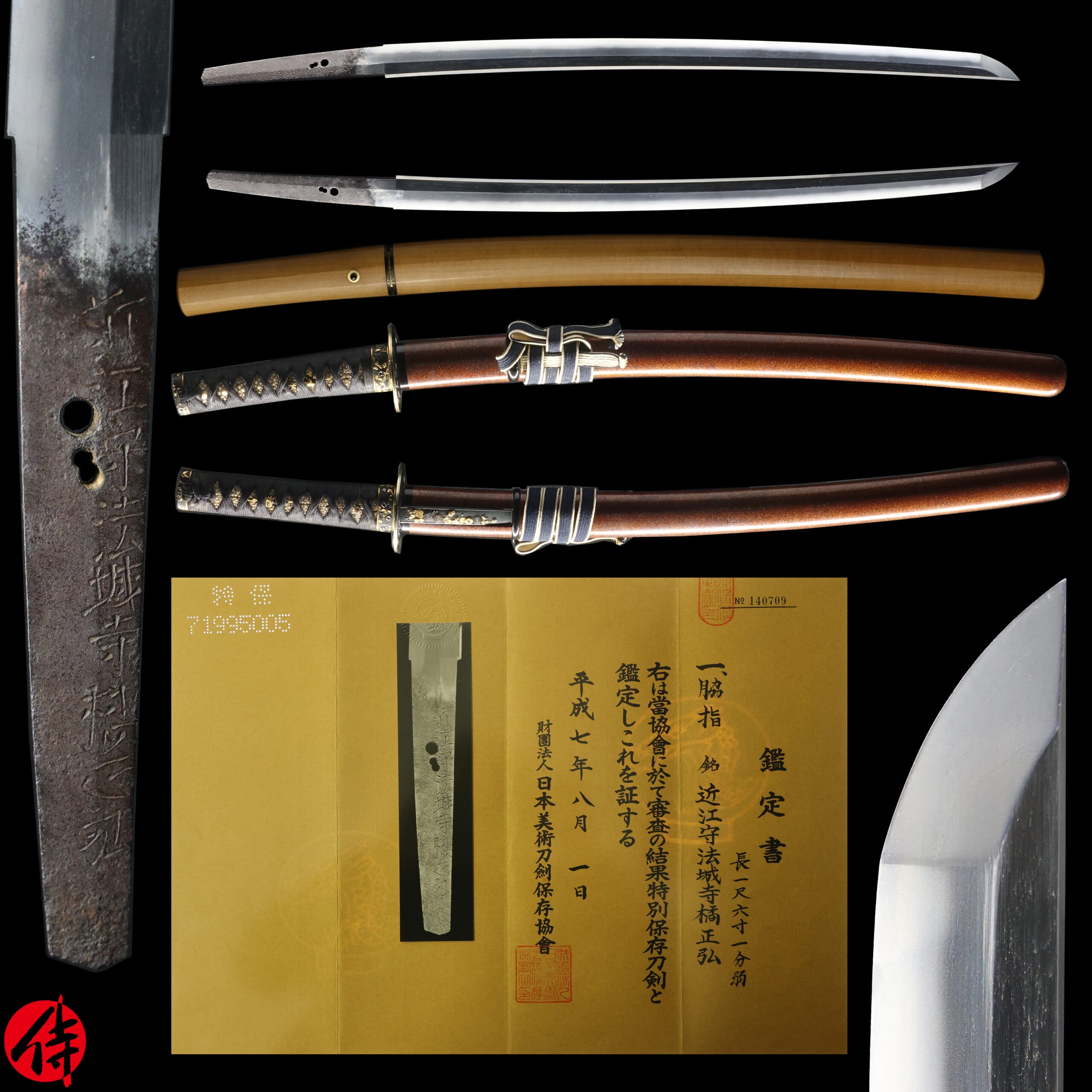
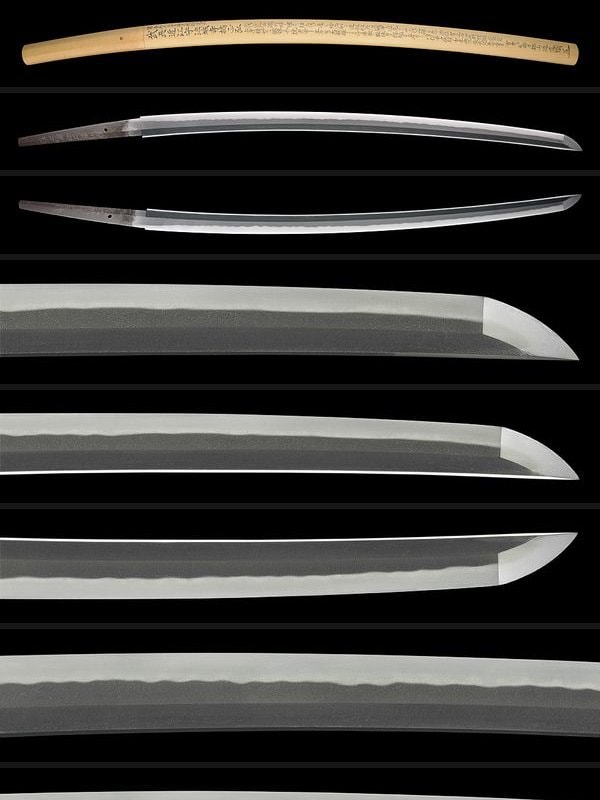
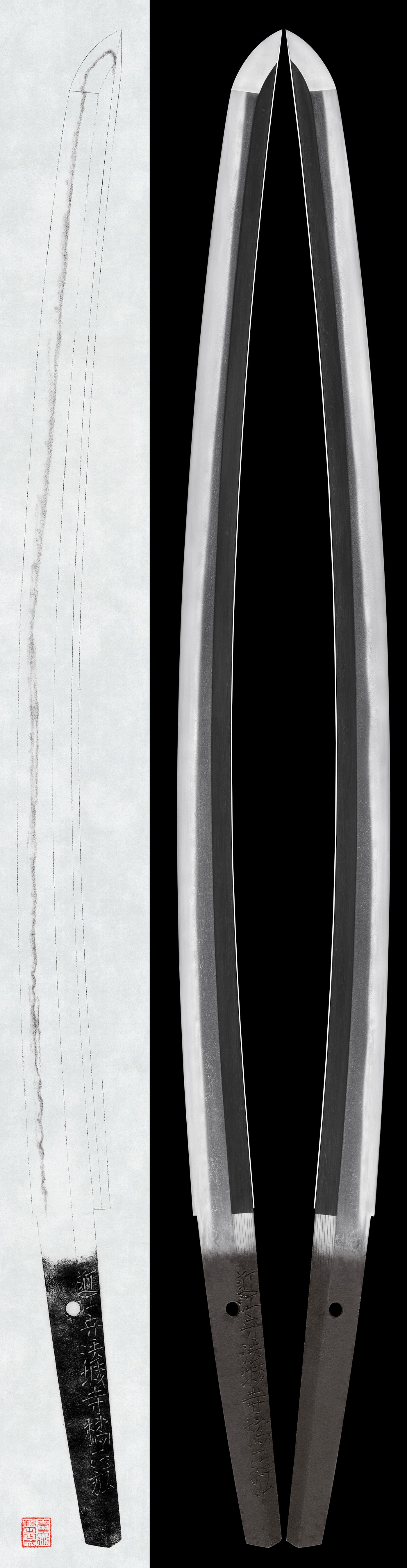
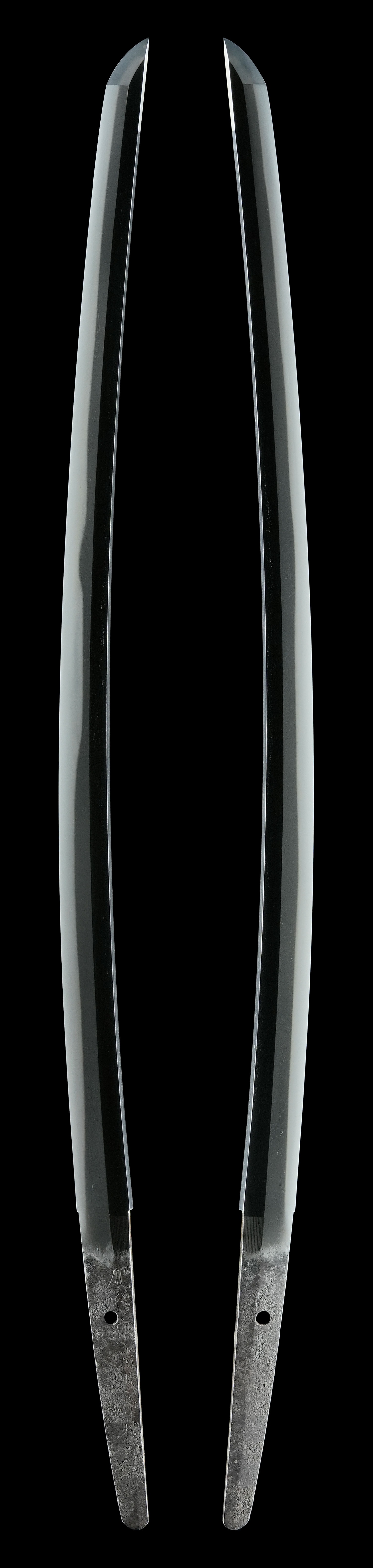
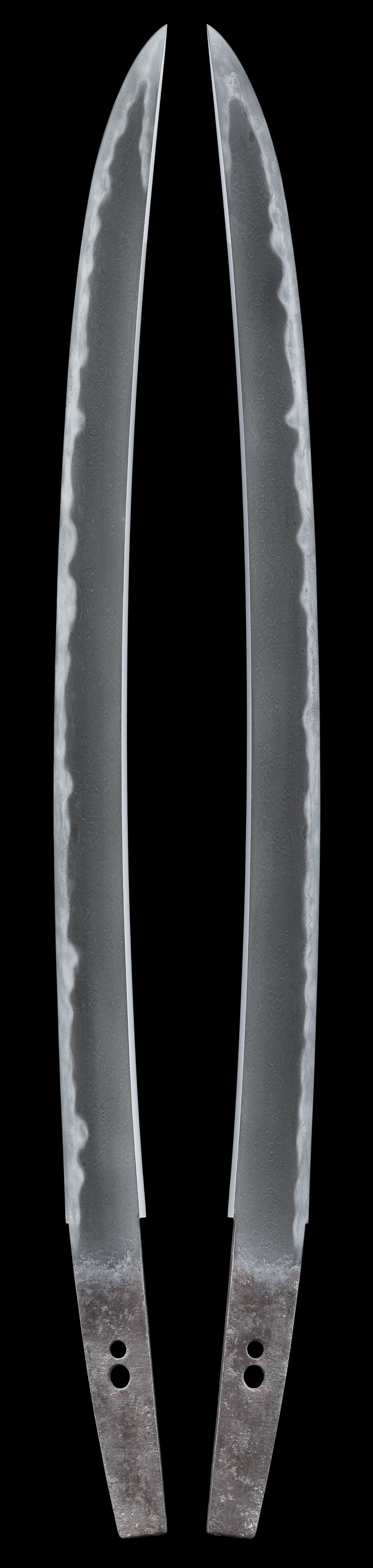
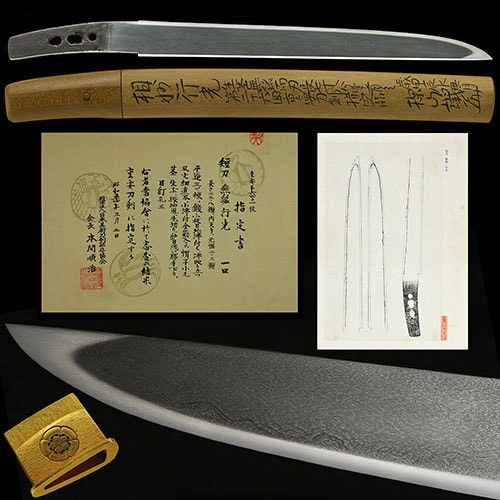
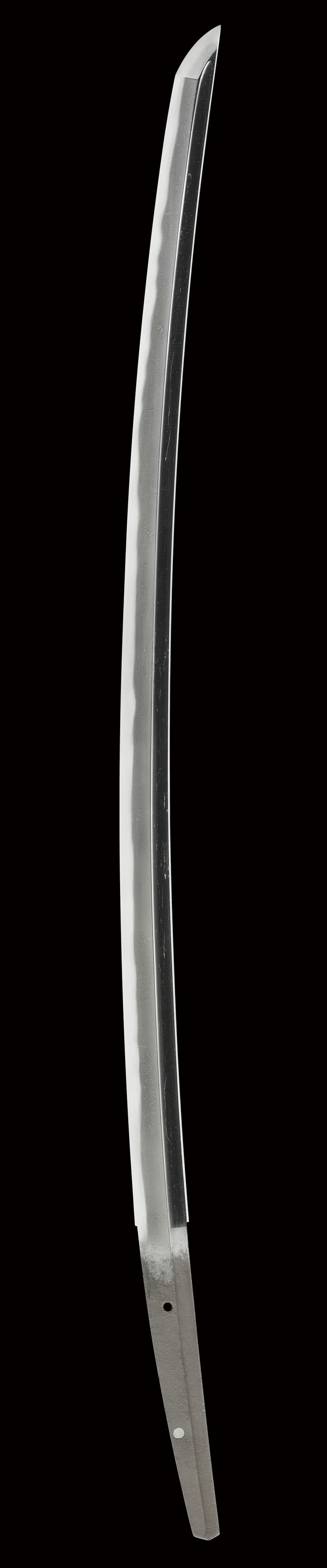
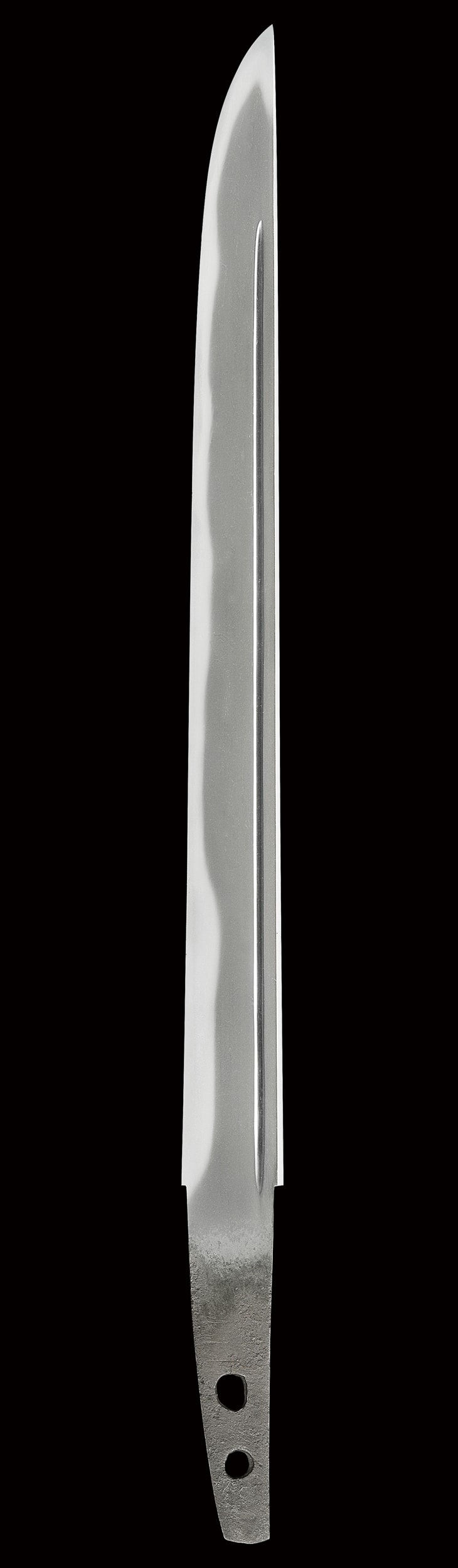
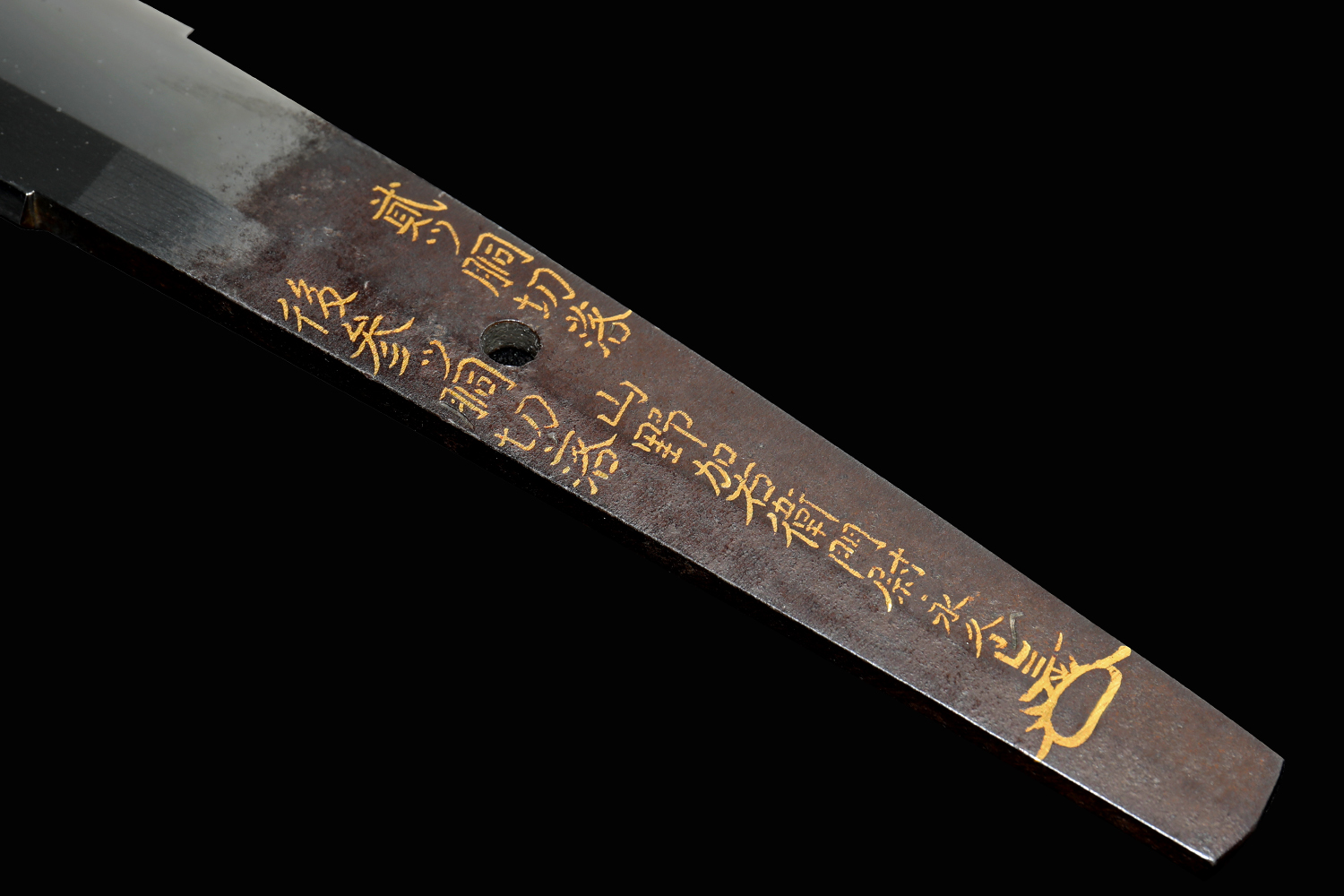
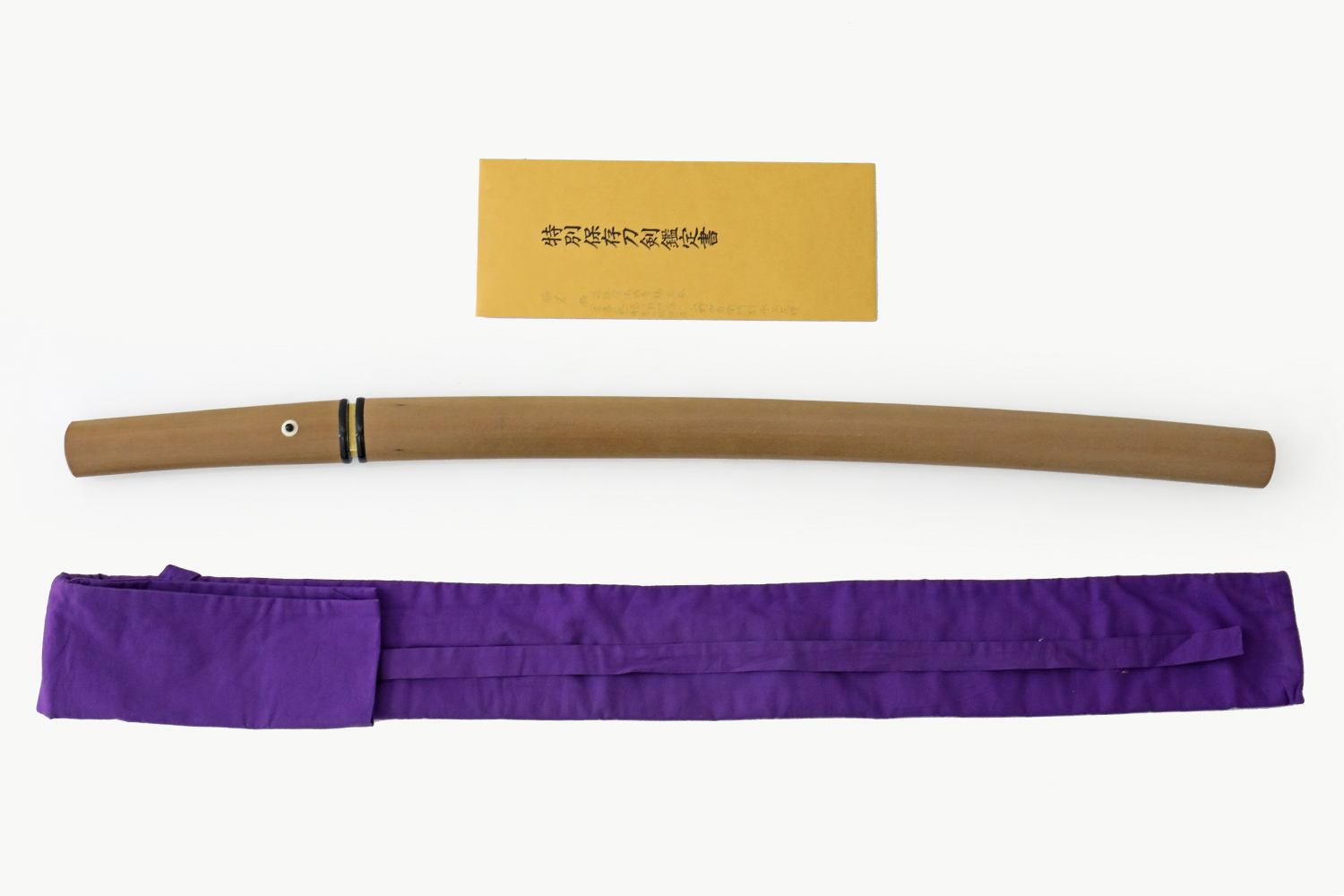
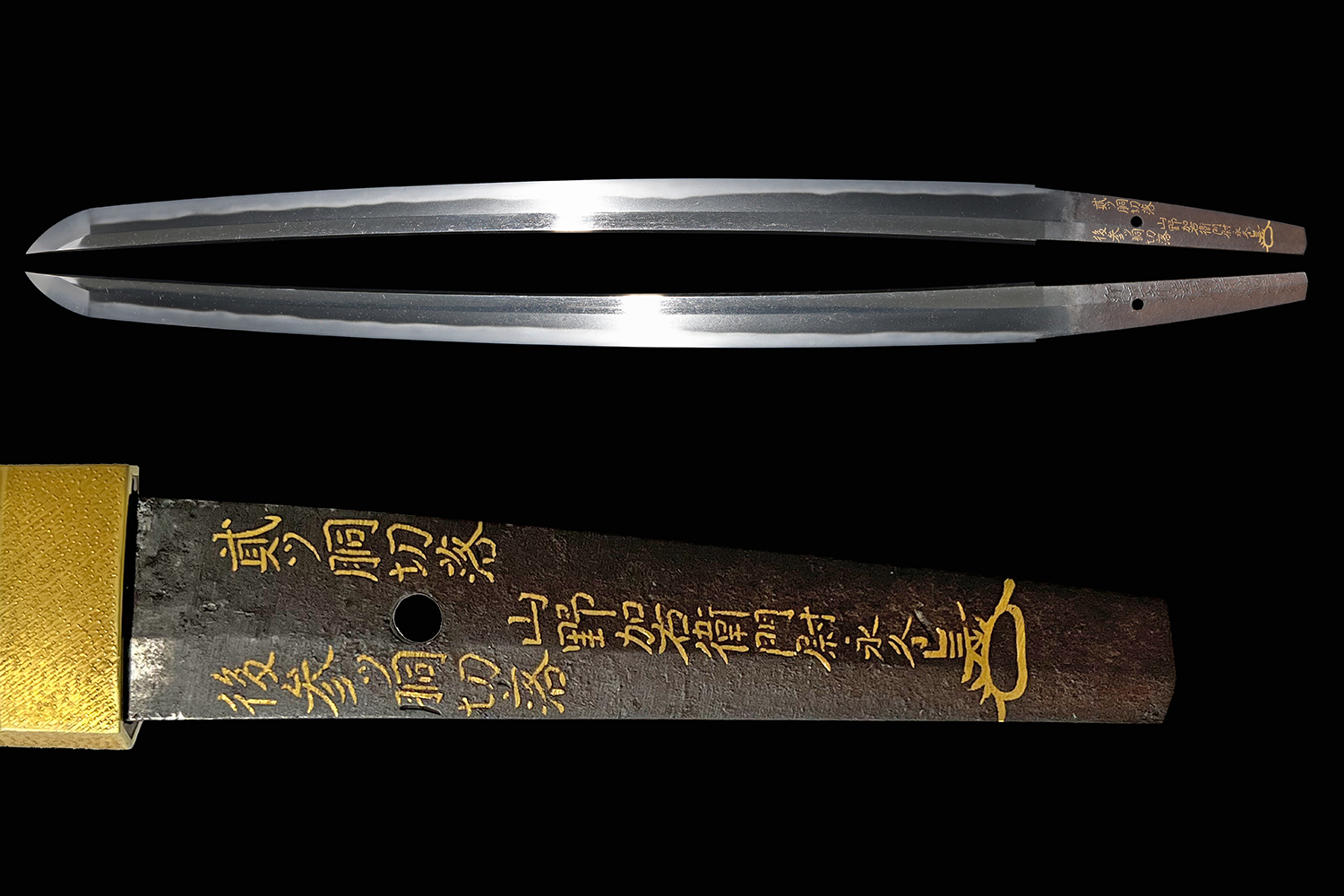
This listing features a well-balanced wakizashi signed by Omi no Kami Hojoji Tachibana Masahiro, which underwent a 5-body test cut by Yamano Nagahisa. The blade is healthy and beautiful, dating to the Early Edo period (circa 1665AD). It comes with an NBTHK Tokubetsu Hozon certificate.
 NihontoWatch
mei · Kanbun (1661-1673)
Soshu-den · Tajima
20 pieces on the market now
The Hojoji name (法城寺) begins as a place in Tajima province, where, the published sources relate, the Nanbokucho naginata master Kunimitsu lived at that spot and so took the place for his name, the man and the locality becoming one. The Meikan records a first generation of this Kunimitsu working in the Joji era (1362-68) and a second at Oei, the koto root from which the line descends. The old genealogies count this Tajima Kunimitsu among the three great pupils of Soshu Sadamune[[c:1]], a claim the NBTHK reports only to set aside as wanting plausibility and unwarranted[[c:2]], the texts finding the influence of Bizen work rather the stronger. From this Tajima stock an Edo branch carried the name into the shinto period, where it grew, in the words of the published sources, into the largest body of swordsmiths active in Edo through the Kanbun and Enpo years. Its founder was Omi no Kami Hojoji Tachibana Masahiro, named the head of the group and its most accomplished hand, and after him followed Tajima no Kami Sadakuni, Higo no Kami Yoshitsugu, Echizen no Kami Masateru, and Kunimasa, with Kawachi no Kami Nagakuni filed by common opinion within the same lineage, the whole bearing the Soshu-derived idiom out of Tajima and into a productive Edo workshop of many capable smiths. Two manners separate the koto root from the Edo branch, and the members describe each in its own vocabulary. The Tajima Kunimitsu survives almost wholly as mumei attribution: flamboyant choji-midare that can at first sight be mistaken for Bizen Ichimonji, settled against Bizen by the markedly stronger nie of ji and ha, chikei entering a large-patterned standing forging, and kinsuji and sunagashi worked incessantly through the ha, the build that of the long converted naginata with thin kasane and a large kissaki, the boshi often ending yakizume from the filing of the mune. The Edo smiths share a different and unified hand.
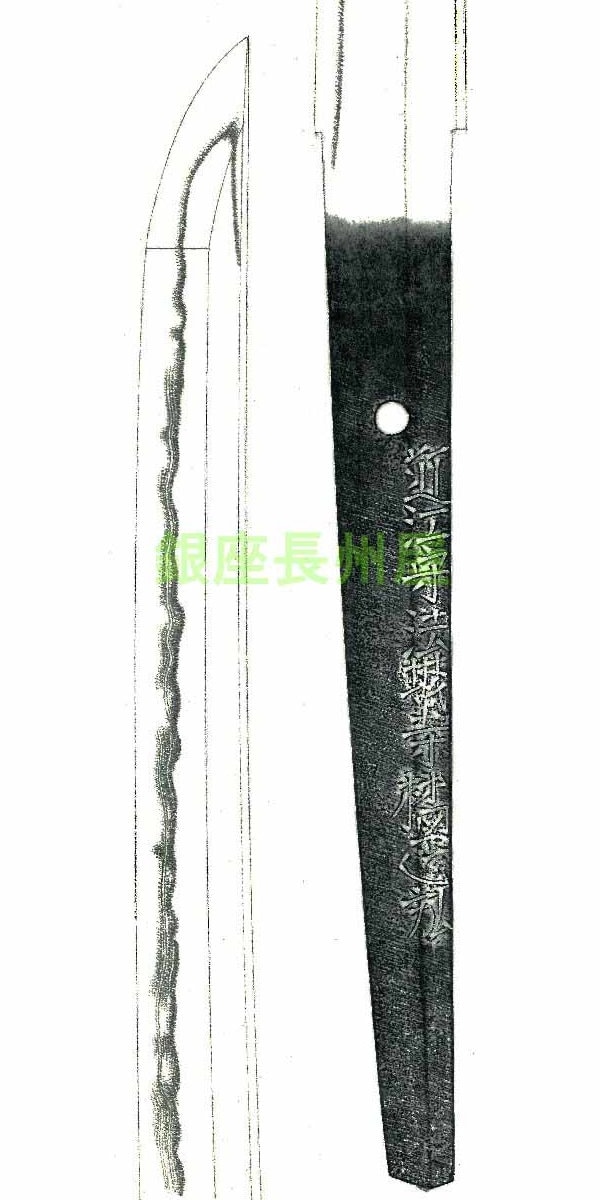
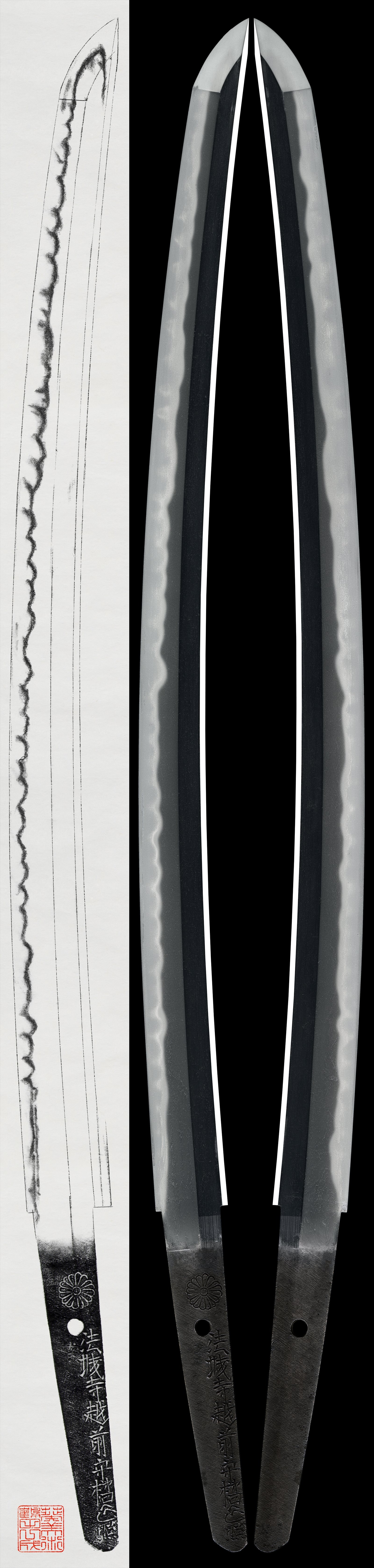
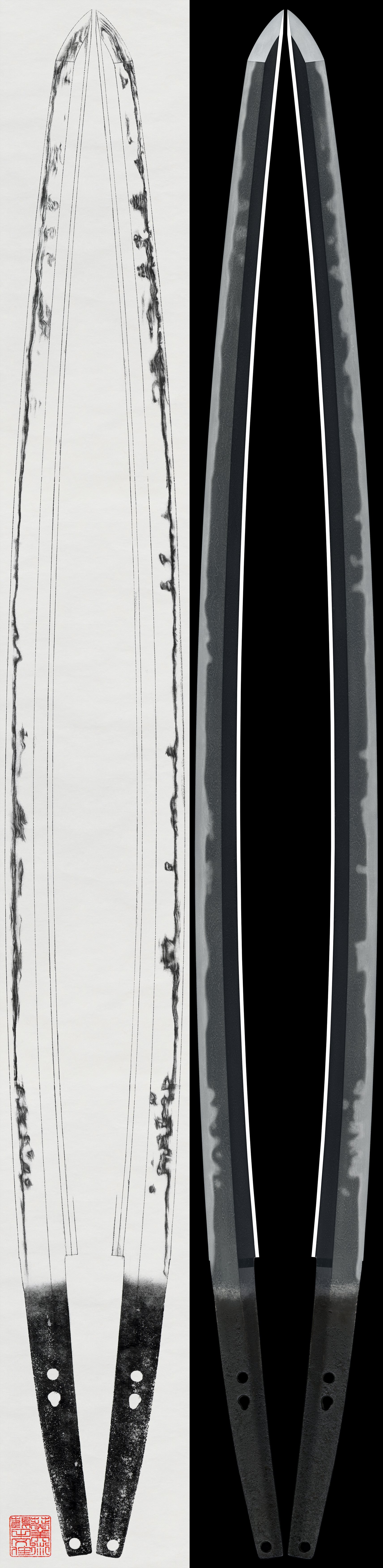
Over a tightly forged ko-itame, at times mixed with mokume, the ji-nie lies dust-fine and chikei enter, and the temper resolves into two registers across the branch: a suguha base, deep in nioi with ko-nie gathering, in which Masahiro, Sadakuni, Masateru, and Nagakuni excel, the nioiguchi bright and nijuba mixing in places; and a gunome hand, most conspicuous in Yoshitsugu, whose connected gunome run into a rosary-bead juzu-ba over ko-notare. Through nearly every Edo blade the sunagashi and kinsuji run, and the boshi turns back straight into ko-maru. The divergences are of degree: Sadakuni falls a small margin short of Masahiro in the clarity of the jihada and the strength of the nioiguchi; Nagakuni links his gunome into broader midare; Masateru keys his chu-suguha to a chrysanthemum crest cut above the signature. To kantei Hojoji Edo work, the published sources direct the eye to the deep nioi and bright nioiguchi over a tight, chikei-laden ko-itame, the sunagashi and kinsuji that keep the quiet suguha from reading flat, and the long thick-chisel signatures cut on the sashi-omote; the resemblance the judges draw runs upward to Nagasone Kotetsu and Kazusa no Suke Kaneshige, the Edo masters of the nie-laden temper, whose level the best work of Masahiro, Yoshitsugu, and Nagakuni is said to approach, the Kotetsu group and the Hojoji line held to stand in a fairly close relationship through the shared Yamano testing house. For the koto Kunimitsu the tells are the well-covered ji-nie with weak utsuri and the ko-nie of the ha, the points that part his work from the Bizen it resembles. The standing of the members ranges with their tier: Kunimitsu is the school's apex, graded Jo-jo saku, his blades vouched for across centuries by Honami attribution inscriptions and his finest tracing to the Akimoto and Maeda houses, with the tea master Kobori Enshu among his owners; Masahiro and the Edo hands are graded Jo saku, attainable signed shinto names whose blades carry their pedigree in the gold-inlaid Yamano cutting-test inscriptions rather than in named daimyo provenance. Yoshitsugu's Satsuma service for the Shimazu house left its trace on the later Kagoshima smiths, and a signed Hojoji blade, above all one bearing a documented test-cut, comes to the market only from time to time, rewarding patience. Learn more →
| Smith | Era | Designated |
|---|---|---|
| Kunimitsu國光 | 1345-1350 | 22 |
| Masahiro正弘 | 1658-1671 | 26 |
| Sadakuni貞國 | 1658-1673 | 8 |
| Yoshitsugu吉次 | 1661-1673 | 6 |
| Masateru正照 | 1684-1688 | 5 |
Edo was the sword’s age of connoisseurship: the Hon’ami appraisers, the shogunal register of famous blades of 1719, and a thriving literature turned the sword into an object of study even as it ceased to be drawn in war.
A Hozon-certified blade judged to show notably superior workmanship and a better state of preservation. The bar is higher: re-tempered blades and most unsigned Muromachi/Edo works are excluded.
The NBTHK (Nihon Bijutsu Tōken Hozon Kyōkai, the Society for the Preservation of Japanese Art Swords) is a public-interest incorporated foundation founded in 1948 and supervised by Japan’s Agency for Cultural Affairs (Bunkachō); it is based at the Japanese Sword Museum in Tokyo. Its expert panels physically examine each submitted work (shinsa) and issue a certificate (kanteishō) ranking it by artistic and historical merit. NBTHK papers are the most widely recognized standard of authentication for Japanese swords and fittings.
NBTHK official siteIf the item fails to meet the description, it may be eligible for a return (at the seller's discretion). Item(s) must be shipped back only via FedEx or UPS within 48 hours of receipt, in original undamaged state. Costs are the purchaser's responsibility.
This listing features a well-balanced wakizashi signed by Omi no Kami Hojoji Tachibana Masahiro, which underwent a 5-body test cut by Yamano Nagahisa. The blade is healthy and beautiful, dating to the Early Edo period (circa 1665AD). It comes with an NBTHK Tokubetsu Hozon certificate.
NihontoWatchmei · Kanbun (1661-1673)
Soshu-den · Tajima
20 pieces on the market now
The Hojoji name (法城寺) begins as a place in Tajima province, where, the published sources relate, the Nanbokucho naginata master Kunimitsu lived at that spot and so took the place for his name, the man and the locality becoming one. The Meikan records a first generation of this Kunimitsu working in the Joji era (1362-68) and a second at Oei, the koto root from which the line descends. The old genealogies count this Tajima Kunimitsu among the three great pupils of Soshu Sadamune[[c:1]], a claim the NBTHK reports only to set aside as wanting plausibility and unwarranted[[c:2]], the texts finding the influence of Bizen work rather the stronger. From this Tajima stock an Edo branch carried the name into the shinto period, where it grew, in the words of the published sources, into the largest body of swordsmiths active in Edo through the Kanbun and Enpo years. Its founder was Omi no Kami Hojoji Tachibana Masahiro, named the head of the group and its most accomplished hand, and after him followed Tajima no Kami Sadakuni, Higo no Kami Yoshitsugu, Echizen no Kami Masateru, and Kunimasa, with Kawachi no Kami Nagakuni filed by common opinion within the same lineage, the whole bearing the Soshu-derived idiom out of Tajima and into a productive Edo workshop of many capable smiths. Two manners separate the koto root from the Edo branch, and the members describe each in its own vocabulary. The Tajima Kunimitsu survives almost wholly as mumei attribution: flamboyant choji-midare that can at first sight be mistaken for Bizen Ichimonji, settled against Bizen by the markedly stronger nie of ji and ha, chikei entering a large-patterned standing forging, and kinsuji and sunagashi worked incessantly through the ha, the build that of the long converted naginata with thin kasane and a large kissaki, the boshi often ending yakizume from the filing of the mune. The Edo smiths share a different and unified hand.
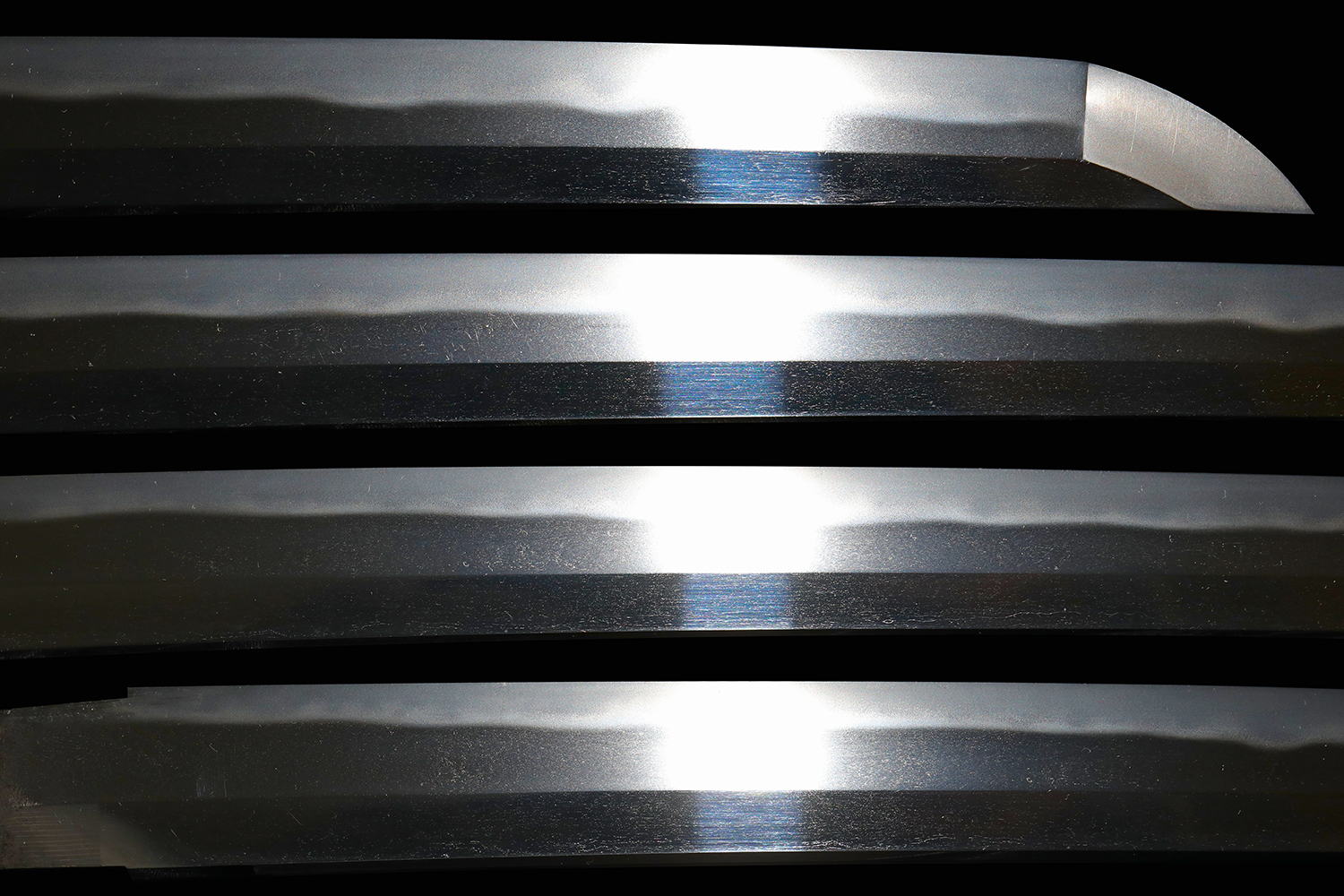
Over a tightly forged ko-itame, at times mixed with mokume, the ji-nie lies dust-fine and chikei enter, and the temper resolves into two registers across the branch: a suguha base, deep in nioi with ko-nie gathering, in which Masahiro, Sadakuni, Masateru, and Nagakuni excel, the nioiguchi bright and nijuba mixing in places; and a gunome hand, most conspicuous in Yoshitsugu, whose connected gunome run into a rosary-bead juzu-ba over ko-notare. Through nearly every Edo blade the sunagashi and kinsuji run, and the boshi turns back straight into ko-maru. The divergences are of degree: Sadakuni falls a small margin short of Masahiro in the clarity of the jihada and the strength of the nioiguchi; Nagakuni links his gunome into broader midare; Masateru keys his chu-suguha to a chrysanthemum crest cut above the signature. To kantei Hojoji Edo work, the published sources direct the eye to the deep nioi and bright nioiguchi over a tight, chikei-laden ko-itame, the sunagashi and kinsuji that keep the quiet suguha from reading flat, and the long thick-chisel signatures cut on the sashi-omote; the resemblance the judges draw runs upward to Nagasone Kotetsu and Kazusa no Suke Kaneshige, the Edo masters of the nie-laden temper, whose level the best work of Masahiro, Yoshitsugu, and Nagakuni is said to approach, the Kotetsu group and the Hojoji line held to stand in a fairly close relationship through the shared Yamano testing house. For the koto Kunimitsu the tells are the well-covered ji-nie with weak utsuri and the ko-nie of the ha, the points that part his work from the Bizen it resembles. The standing of the members ranges with their tier: Kunimitsu is the school's apex, graded Jo-jo saku, his blades vouched for across centuries by Honami attribution inscriptions and his finest tracing to the Akimoto and Maeda houses, with the tea master Kobori Enshu among his owners; Masahiro and the Edo hands are graded Jo saku, attainable signed shinto names whose blades carry their pedigree in the gold-inlaid Yamano cutting-test inscriptions rather than in named daimyo provenance. Yoshitsugu's Satsuma service for the Shimazu house left its trace on the later Kagoshima smiths, and a signed Hojoji blade, above all one bearing a documented test-cut, comes to the market only from time to time, rewarding patience. Learn more →
| Smith | Era | Designated |
|---|---|---|
| Kunimitsu國光 | 1345-1350 | 22 |
| Masahiro正弘 | 1658-1671 | 26 |
| Sadakuni貞國 | 1658-1673 | 8 |
| Yoshitsugu吉次 | 1661-1673 | 6 |
| Masateru正照 | 1684-1688 | 5 |
Edo was the sword’s age of connoisseurship: the Hon’ami appraisers, the shogunal register of famous blades of 1719, and a thriving literature turned the sword into an object of study even as it ceased to be drawn in war.
A Hozon-certified blade judged to show notably superior workmanship and a better state of preservation. The bar is higher: re-tempered blades and most unsigned Muromachi/Edo works are excluded.
The NBTHK (Nihon Bijutsu Tōken Hozon Kyōkai, the Society for the Preservation of Japanese Art Swords) is a public-interest incorporated foundation founded in 1948 and supervised by Japan’s Agency for Cultural Affairs (Bunkachō); it is based at the Japanese Sword Museum in Tokyo. Its expert panels physically examine each submitted work (shinsa) and issue a certificate (kanteishō) ranking it by artistic and historical merit. NBTHK papers are the most widely recognized standard of authentication for Japanese swords and fittings.
NBTHK official siteIf the item fails to meet the description, it may be eligible for a return (at the seller's discretion). Item(s) must be shipped back only via FedEx or UPS within 48 hours of receipt, in original undamaged state. Costs are the purchaser's responsibility.