Muromachi turned sword making into an industry: the uchigatana rose with massed infantry warfare, Osafune and Seki produced bundle swords beside custom orders, and the Ming trade carried Japanese blades abroad by the tens of thousands.
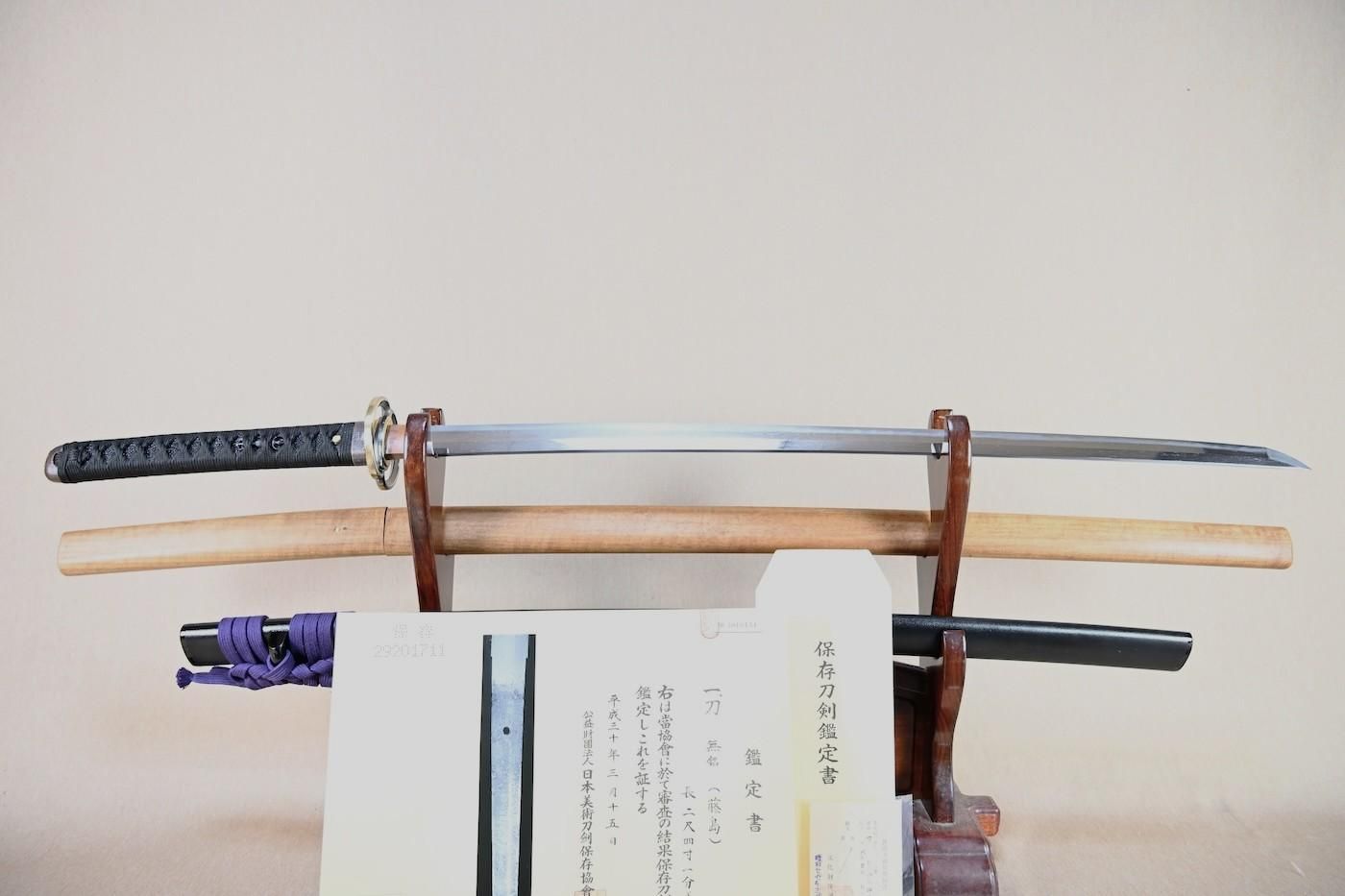
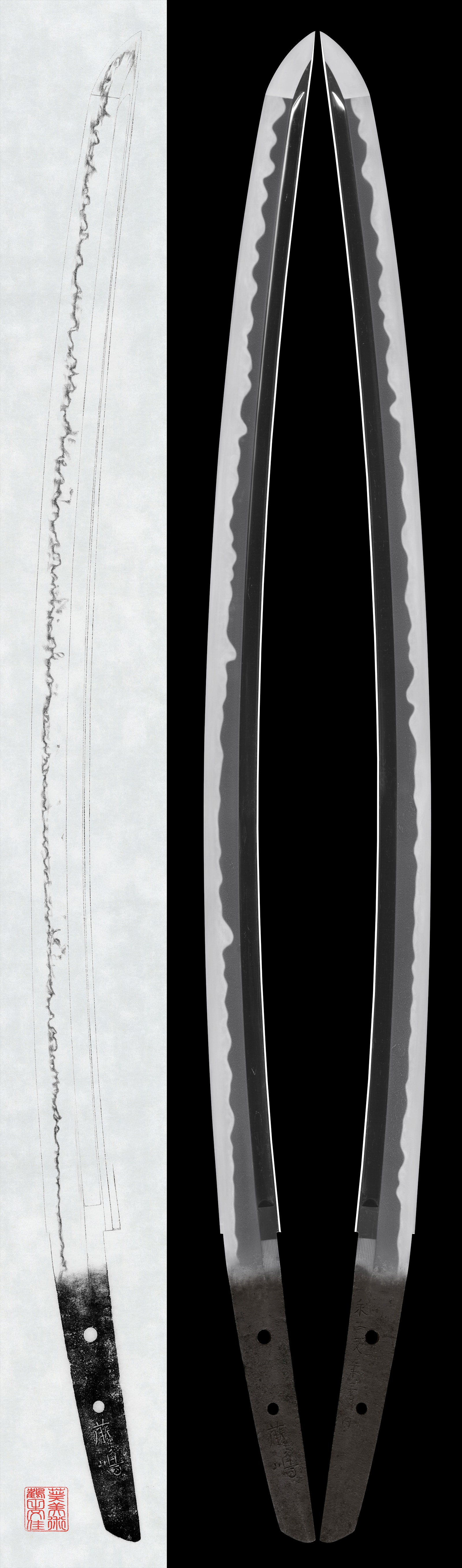
This is an unsigned katana attributed to Fujishima, a smith from Kaga province active during the mid-Muromachi period. It features a shinogi-zukuri sugata, itame hada, and gunome-midare hamon with ashi. The blade is in good condition with no rust or chips, and comes with a newly made shirasaya and an NBTHK Hozon Token certificate.
 NihontoWatch
mumei · Muromachi · nagasa 62.4cm · sori 1.7cm

Kaga · around 1504-1521
1 piece on the market now
Muromachi turned sword making into an industry: the uchigatana rose with massed infantry warfare, Osafune and Seki produced bundle swords beside custom orders, and the Ming trade carried Japanese blades abroad by the tens of thousands.
Certifies a genuine blade worth preserving: a signature confirmed correct, or, if unsigned, an era, province, and school that the NBTHK can reliably identify.
The NBTHK (Nihon Bijutsu Tōken Hozon Kyōkai, the Society for the Preservation of Japanese Art Swords) is a public-interest incorporated foundation founded in 1948 and supervised by Japan’s Agency for Cultural Affairs (Bunkachō); it is based at the Japanese Sword Museum in Tokyo. Its expert panels physically examine each submitted work (shinsa) and issue a certificate (kanteishō) ranking it by artistic and historical merit. NBTHK papers are the most widely recognized standard of authentication for Japanese swords and fittings.
NBTHK official siteThis is an unsigned katana attributed to Fujishima, a smith from Kaga province active during the mid-Muromachi period. It features a shinogi-zukuri sugata, itame hada, and gunome-midare hamon with ashi. The blade is in good condition with no rust or chips, and comes with a newly made shirasaya and an NBTHK Hozon Token certificate.
NihontoWatchmumei · Muromachi · nagasa 62.4cm · sori 1.7cm
Kaga · around 1504-1521
1 piece on the market now
Muromachi turned sword making into an industry: the uchigatana rose with massed infantry warfare, Osafune and Seki produced bundle swords beside custom orders, and the Ming trade carried Japanese blades abroad by the tens of thousands.
Certifies a genuine blade worth preserving: a signature confirmed correct, or, if unsigned, an era, province, and school that the NBTHK can reliably identify.
The NBTHK (Nihon Bijutsu Tōken Hozon Kyōkai, the Society for the Preservation of Japanese Art Swords) is a public-interest incorporated foundation founded in 1948 and supervised by Japan’s Agency for Cultural Affairs (Bunkachō); it is based at the Japanese Sword Museum in Tokyo. Its expert panels physically examine each submitted work (shinsa) and issue a certificate (kanteishō) ranking it by artistic and historical merit. NBTHK papers are the most widely recognized standard of authentication for Japanese swords and fittings.
NBTHK official site