The Haitōrei edict of 1876 ended sword wearing and nearly ended the craft itself. Military demand and imperial patronage kept a remnant alive, and in 1906 Gassan Sadakazu and Miyamoto Kanenori were named Artists to the Imperial Household.
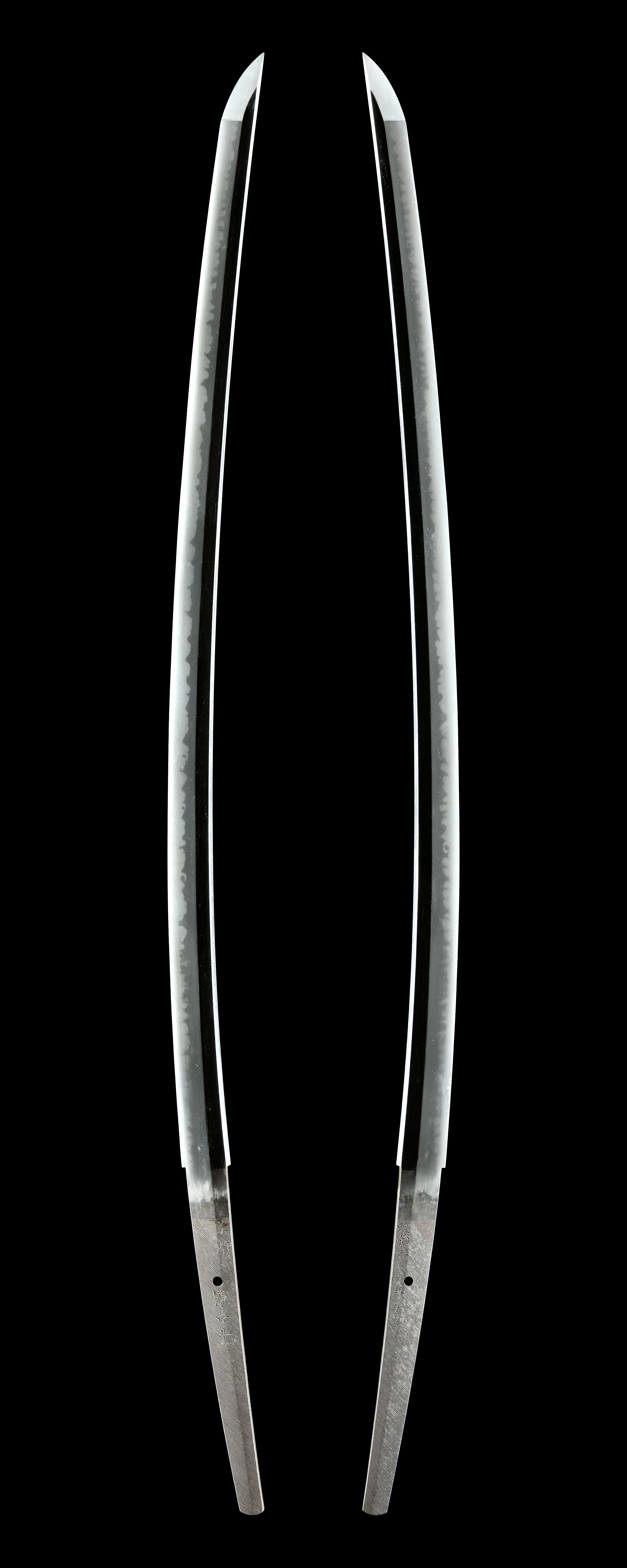
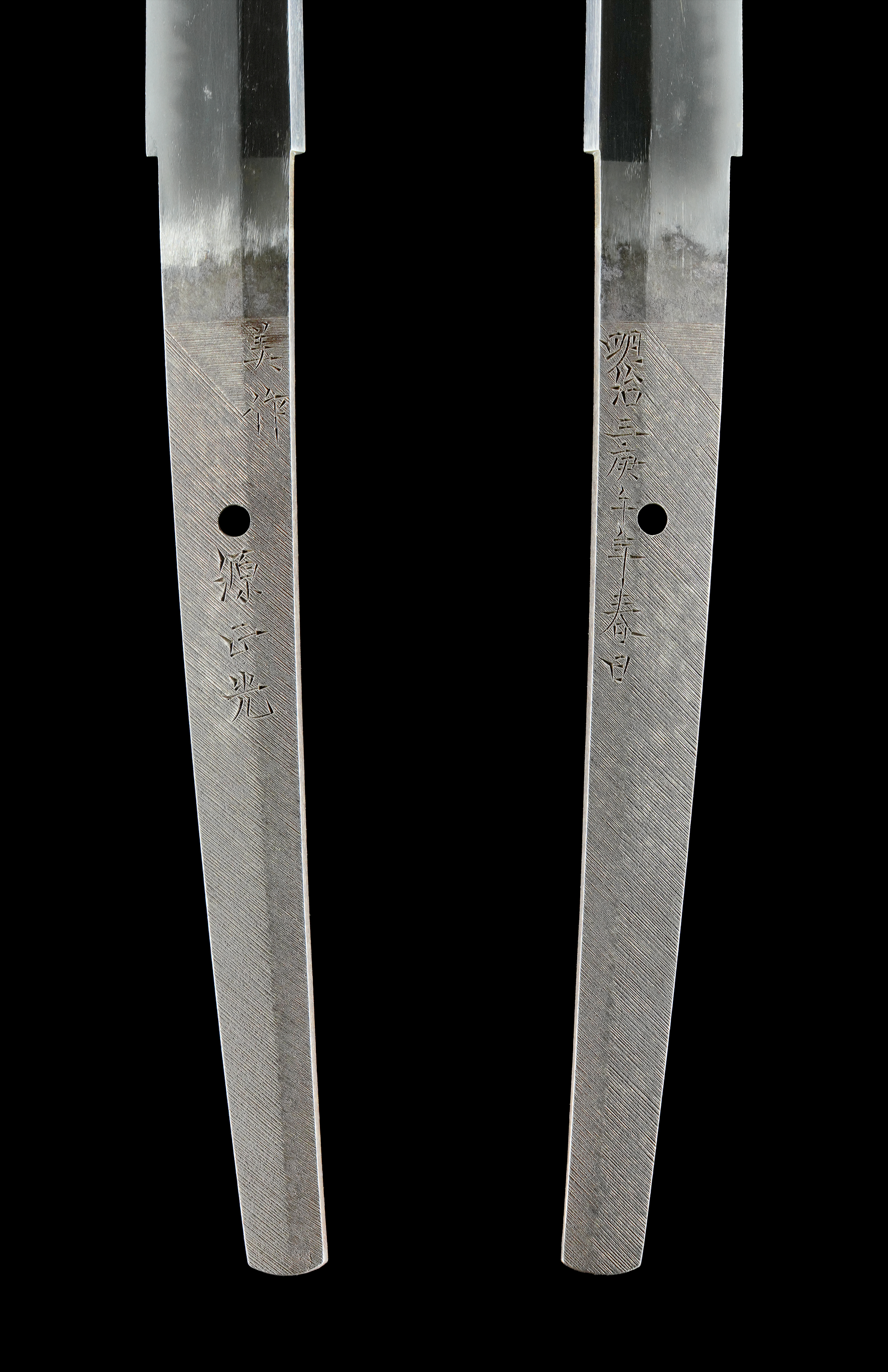
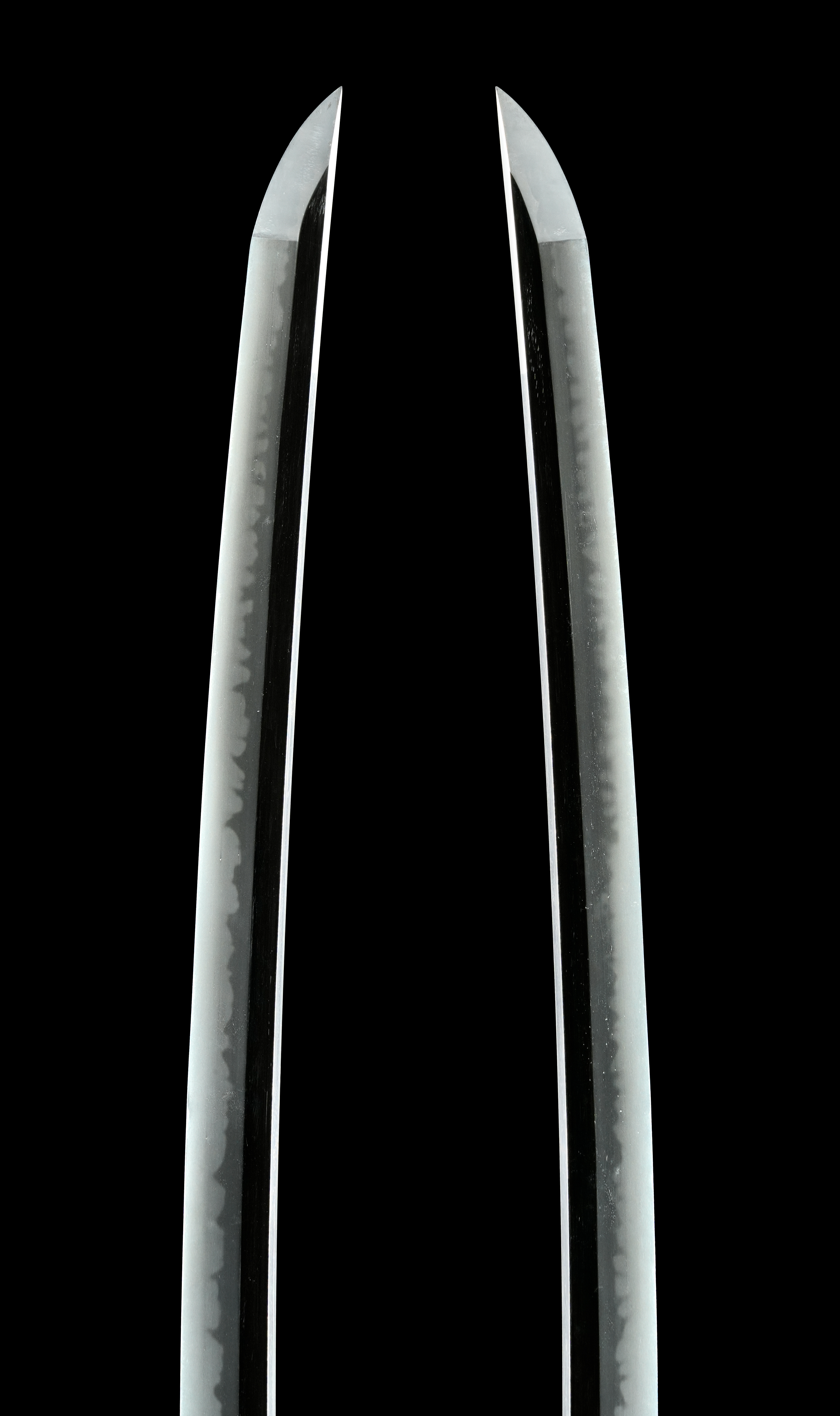
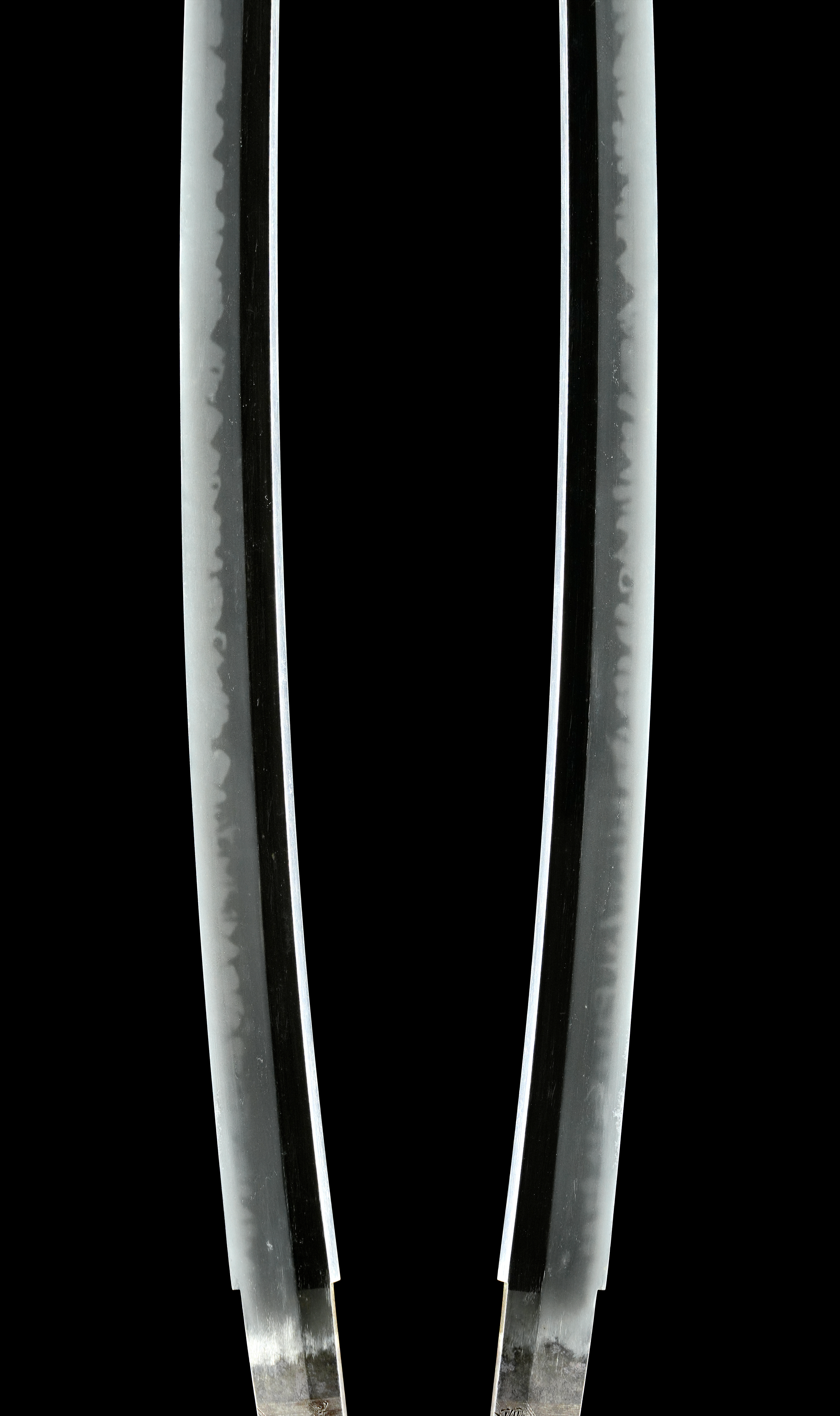
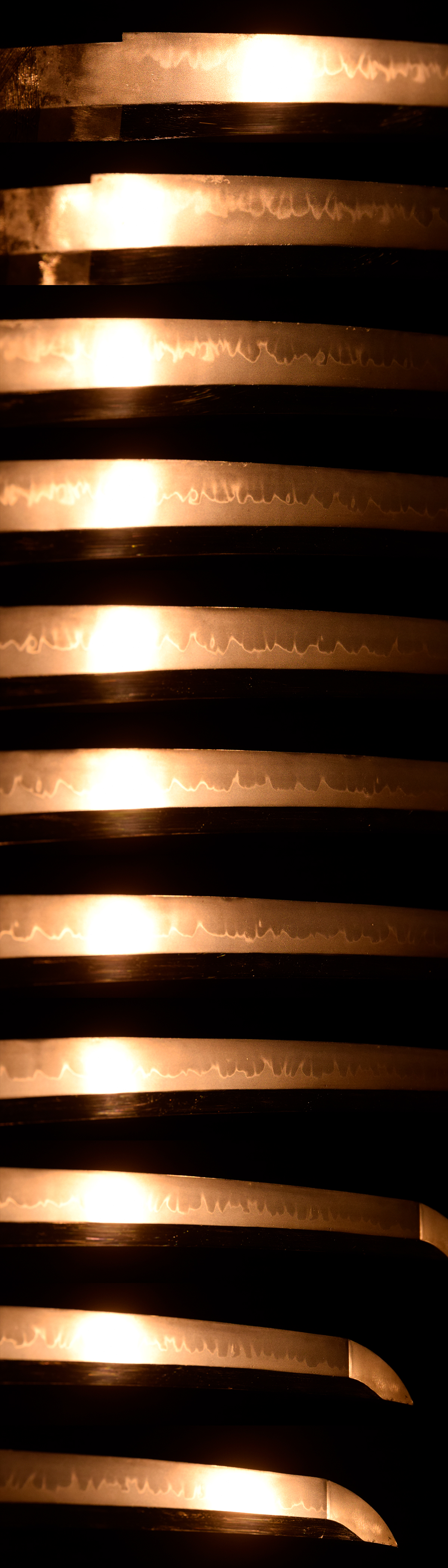
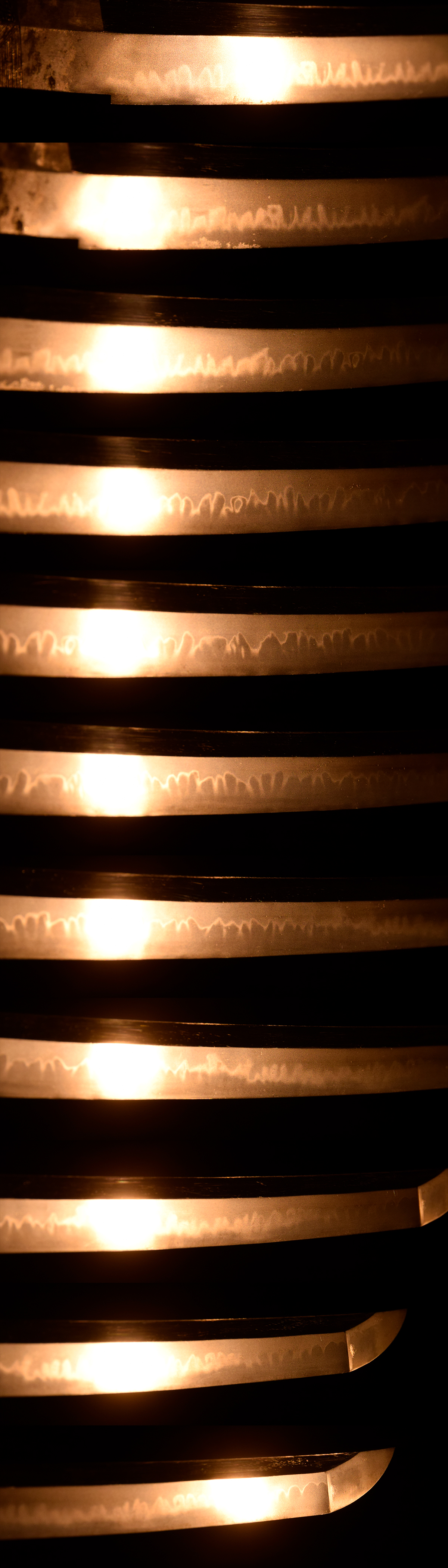
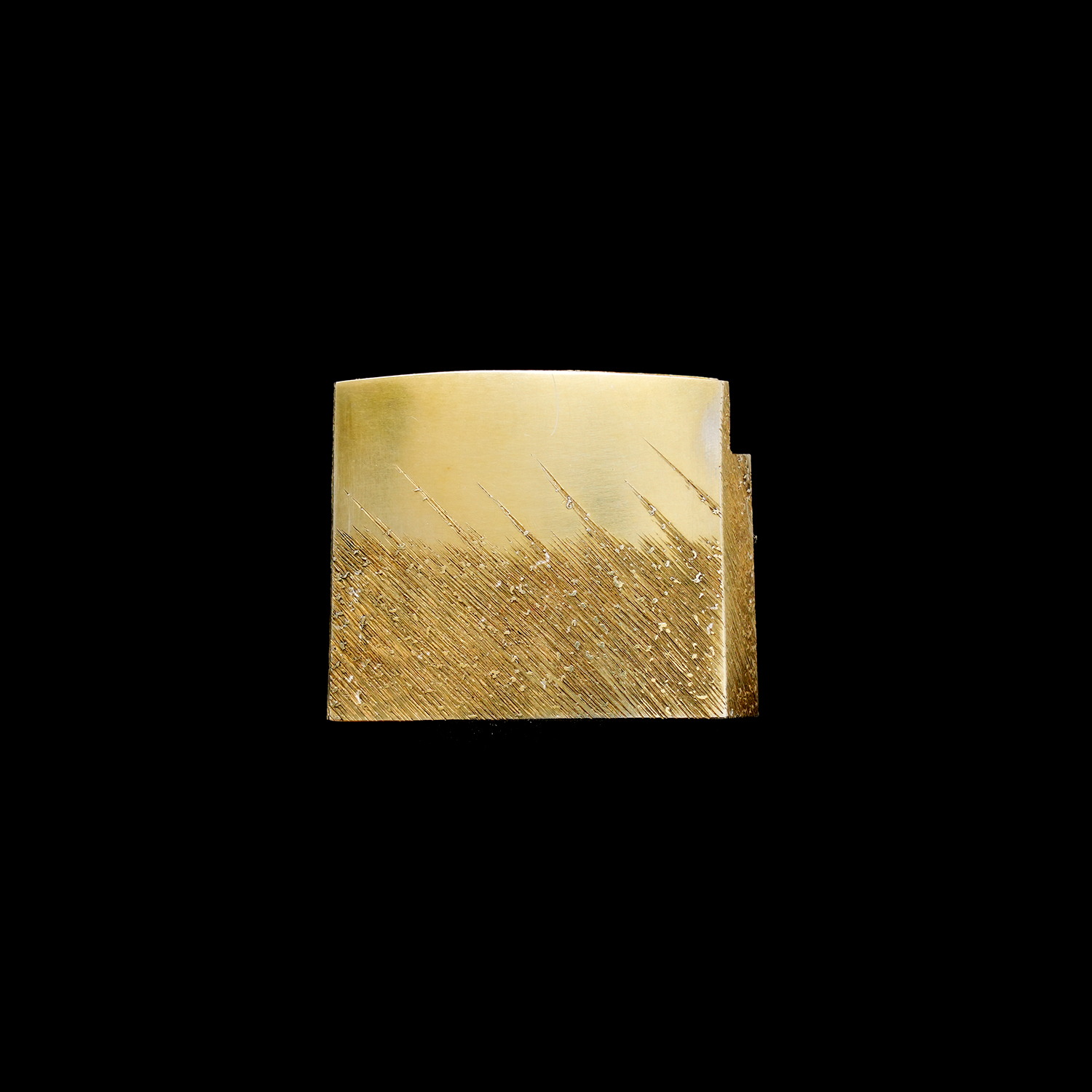
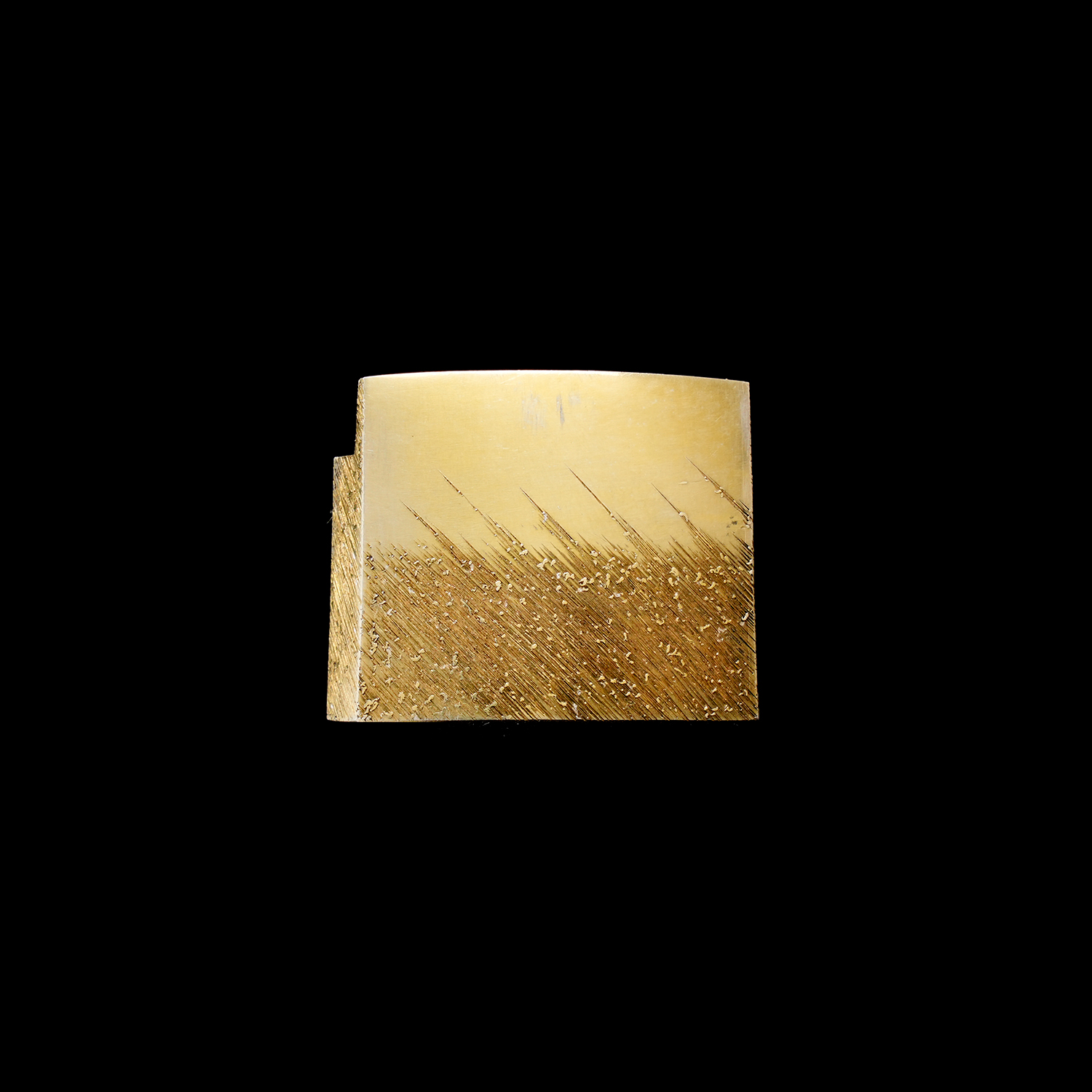
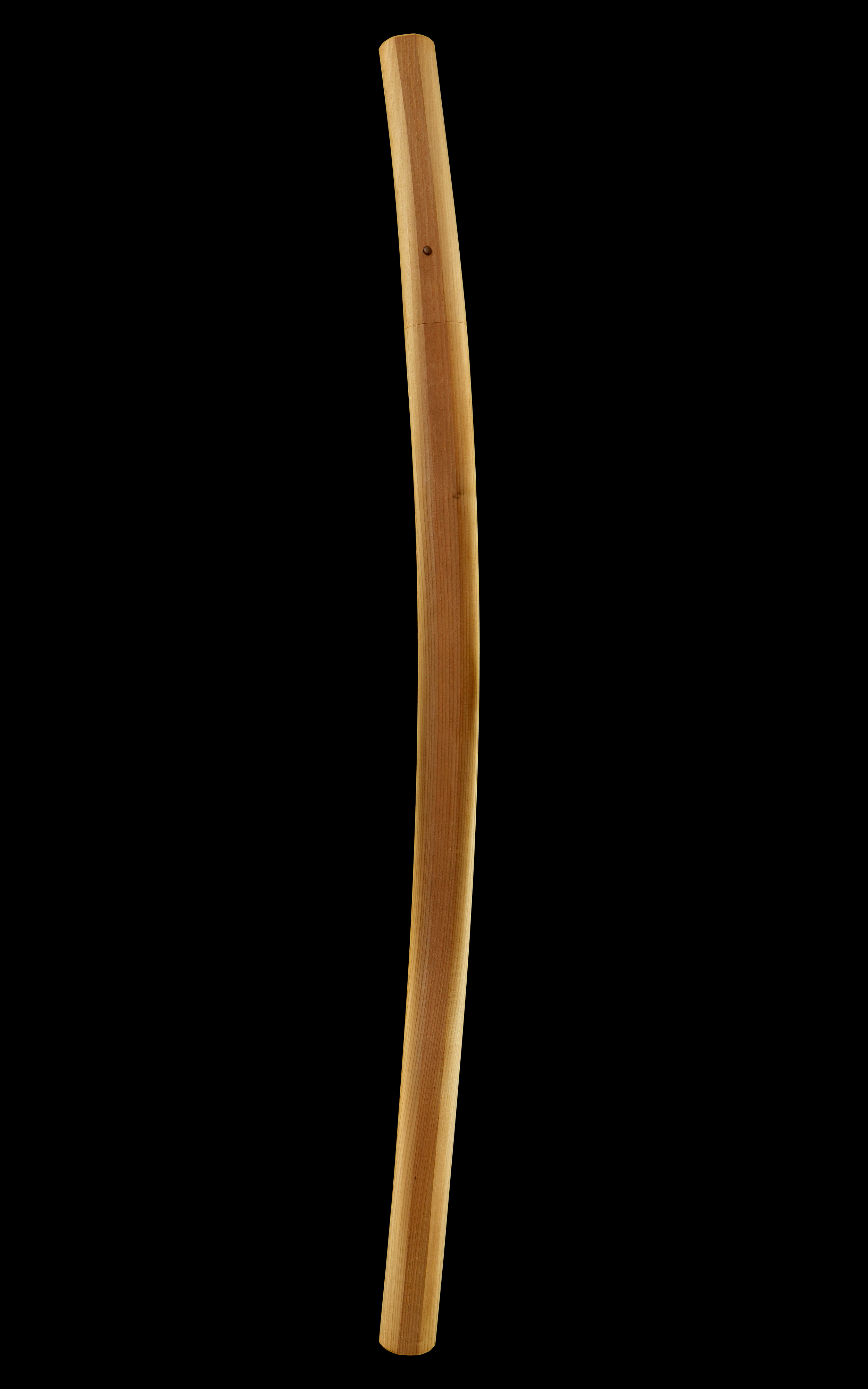
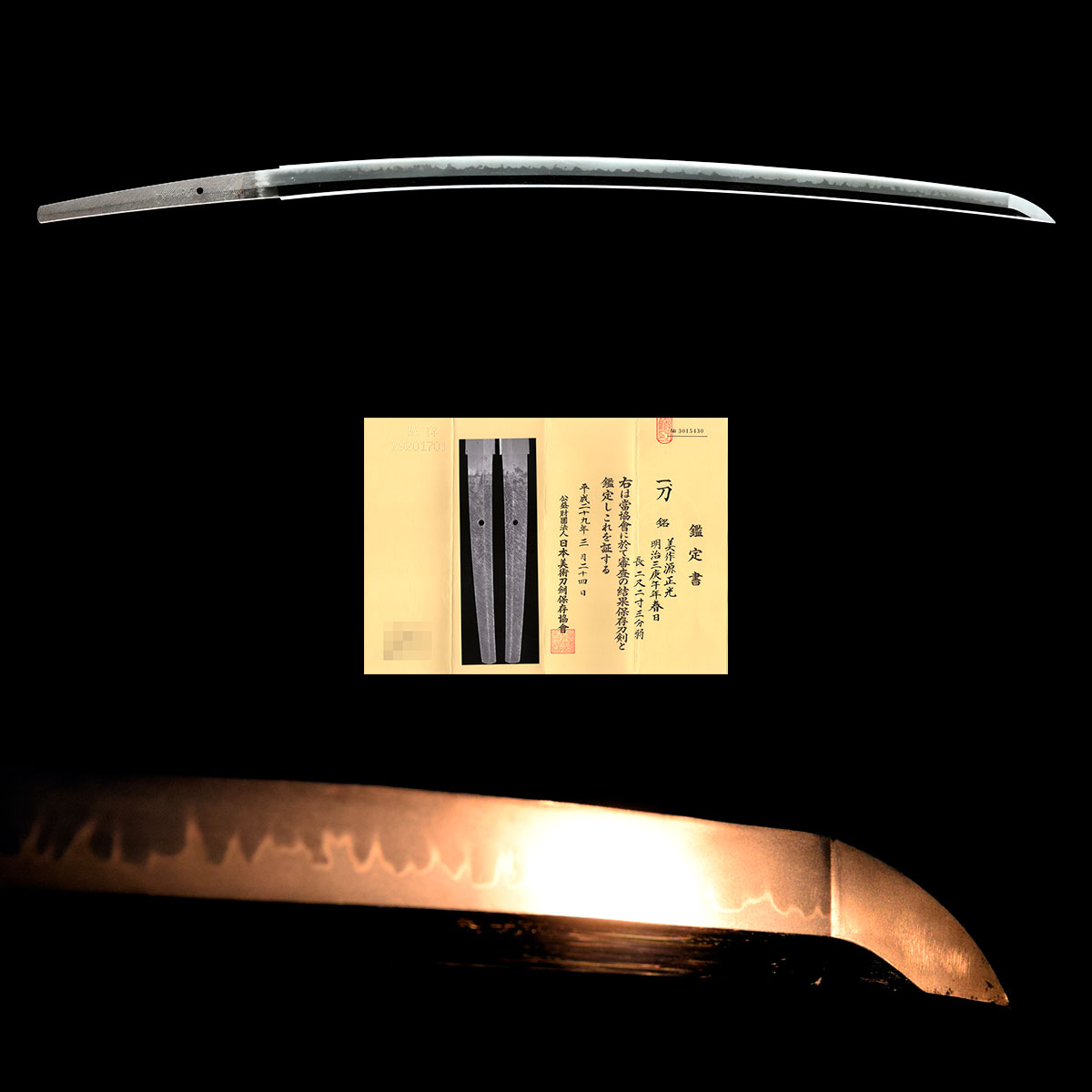
This is a katana made by Mimasaka Minamoto Masamitsu in 1870 during the Meiji era. The blade has a length of 67.7 cm and comes with a Hozon certificate. It features a koshirae with black lacquer and sharkskin handle, and the blade has a well-forged small itame hada and a bright hamon with many activities.
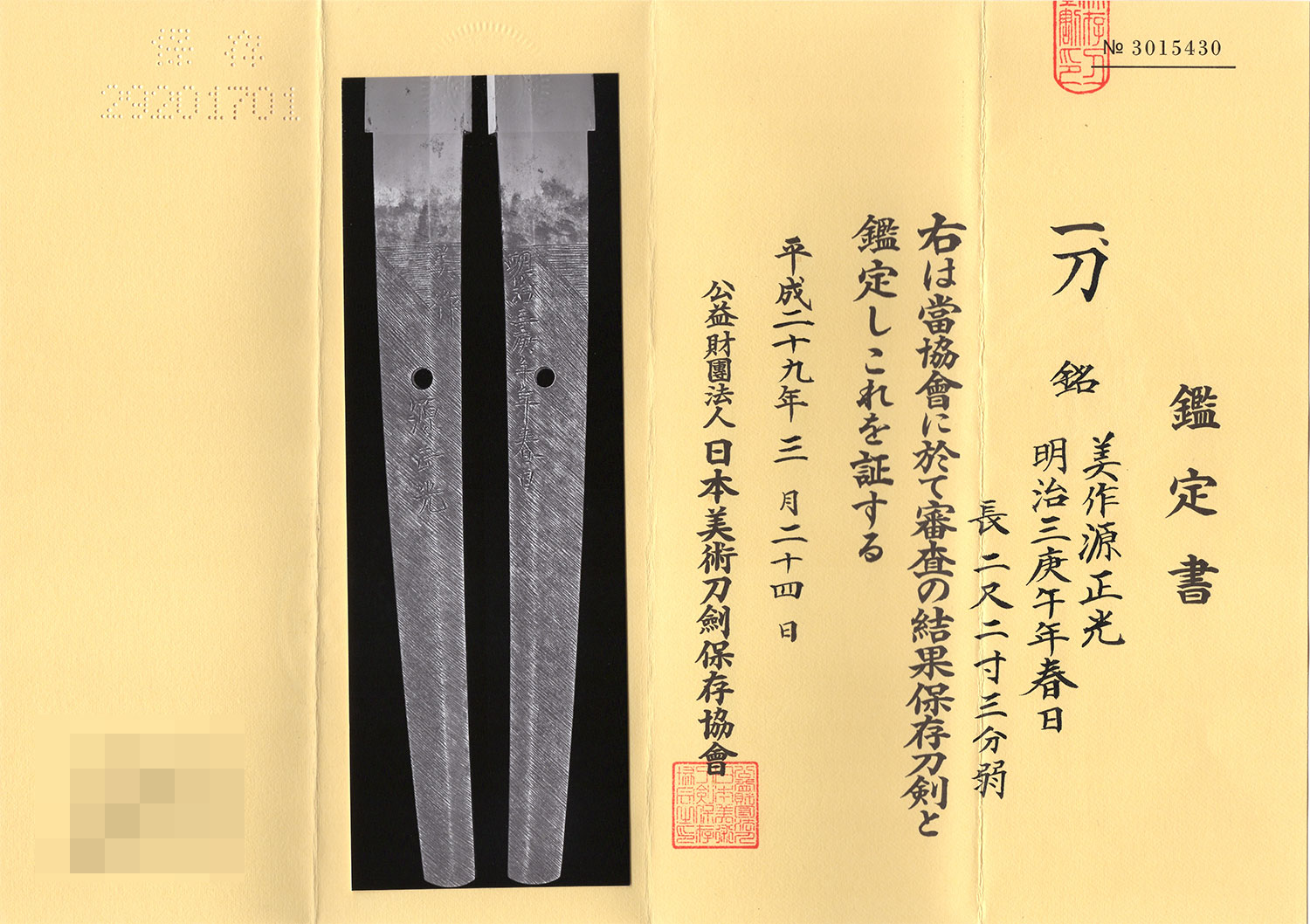
Certificate reading — 銘 美作源正光 明治三庚午年春日
 NihontoWatch
mei · Meiji · nagasa 67.7cm · sori 2cm
Mimasaka · around 1870-1876
2 pieces on the market now
The Haitōrei edict of 1876 ended sword wearing and nearly ended the craft itself. Military demand and imperial patronage kept a remnant alive, and in 1906 Gassan Sadakazu and Miyamoto Kanenori were named Artists to the Imperial Household.
Certifies a genuine blade worth preserving: a signature confirmed correct, or, if unsigned, an era, province, and school that the NBTHK can reliably identify.
The NBTHK (Nihon Bijutsu Tōken Hozon Kyōkai, the Society for the Preservation of Japanese Art Swords) is a public-interest incorporated foundation founded in 1948 and supervised by Japan’s Agency for Cultural Affairs (Bunkachō); it is based at the Japanese Sword Museum in Tokyo. Its expert panels physically examine each submitted work (shinsa) and issue a certificate (kanteishō) ranking it by artistic and historical merit. NBTHK papers are the most widely recognized standard of authentication for Japanese swords and fittings.
NBTHK official siteReturns accepted within 3 days of delivery for defective items or significant discrepancies; customer bears return shipping and bank fees.
This is a katana made by Mimasaka Minamoto Masamitsu in 1870 during the Meiji era. The blade has a length of 67.7 cm and comes with a Hozon certificate. It features a koshirae with black lacquer and sharkskin handle, and the blade has a well-forged small itame hada and a bright hamon with many activities.
Certificate reading — 銘 美作源正光 明治三庚午年春日
NihontoWatchmei · Meiji · nagasa 67.7cm · sori 2cm
Mimasaka · around 1870-1876
2 pieces on the market now
The Haitōrei edict of 1876 ended sword wearing and nearly ended the craft itself. Military demand and imperial patronage kept a remnant alive, and in 1906 Gassan Sadakazu and Miyamoto Kanenori were named Artists to the Imperial Household.
Certifies a genuine blade worth preserving: a signature confirmed correct, or, if unsigned, an era, province, and school that the NBTHK can reliably identify.
The NBTHK (Nihon Bijutsu Tōken Hozon Kyōkai, the Society for the Preservation of Japanese Art Swords) is a public-interest incorporated foundation founded in 1948 and supervised by Japan’s Agency for Cultural Affairs (Bunkachō); it is based at the Japanese Sword Museum in Tokyo. Its expert panels physically examine each submitted work (shinsa) and issue a certificate (kanteishō) ranking it by artistic and historical merit. NBTHK papers are the most widely recognized standard of authentication for Japanese swords and fittings.
NBTHK official siteReturns accepted within 3 days of delivery for defective items or significant discrepancies; customer bears return shipping and bank fees.
