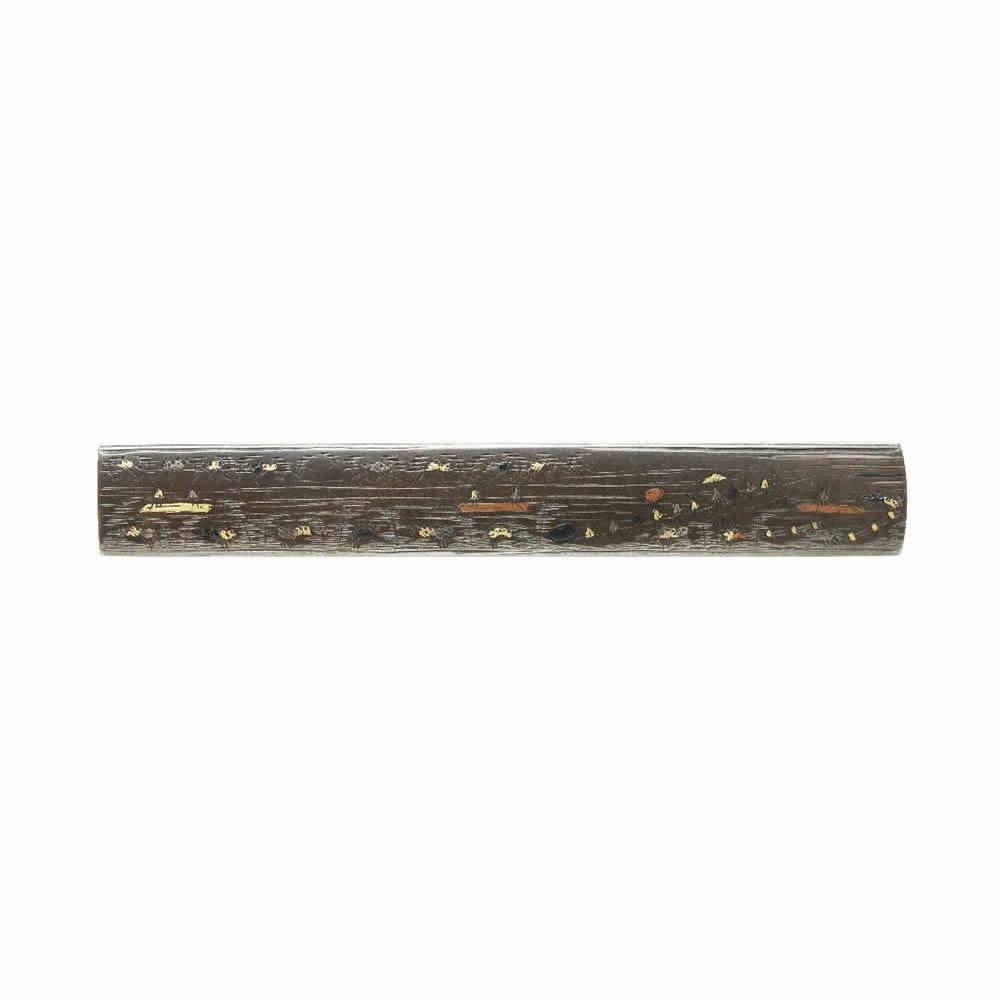
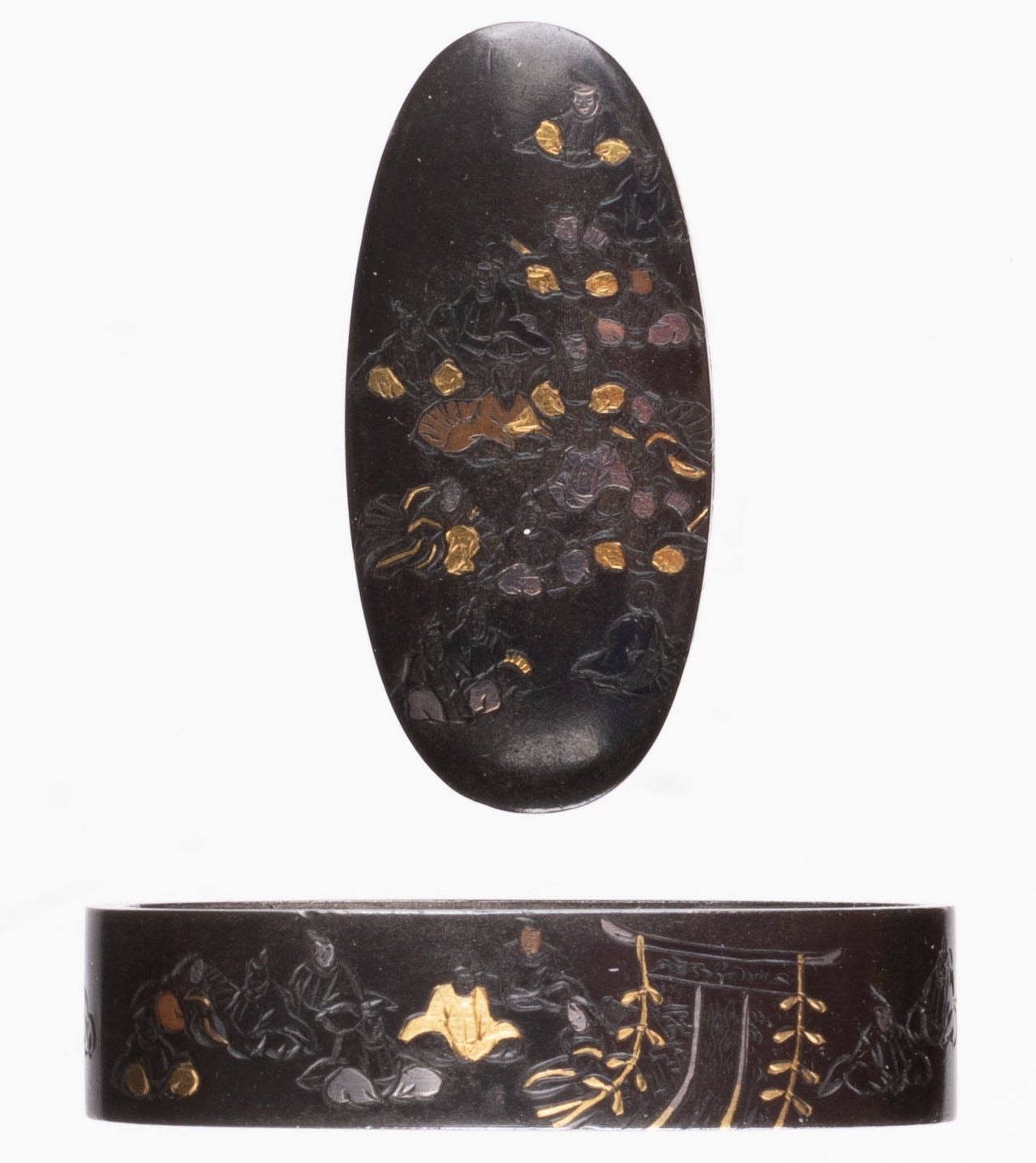
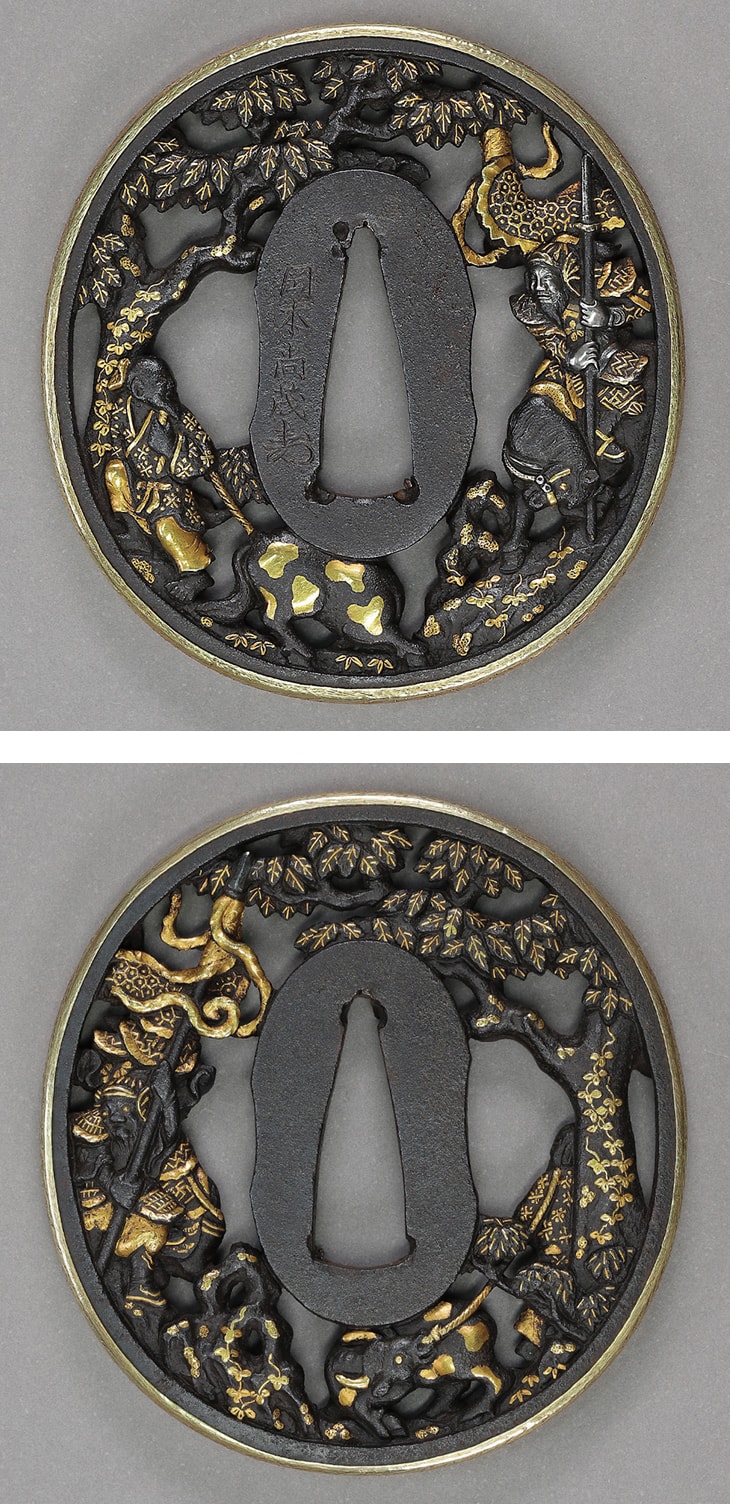
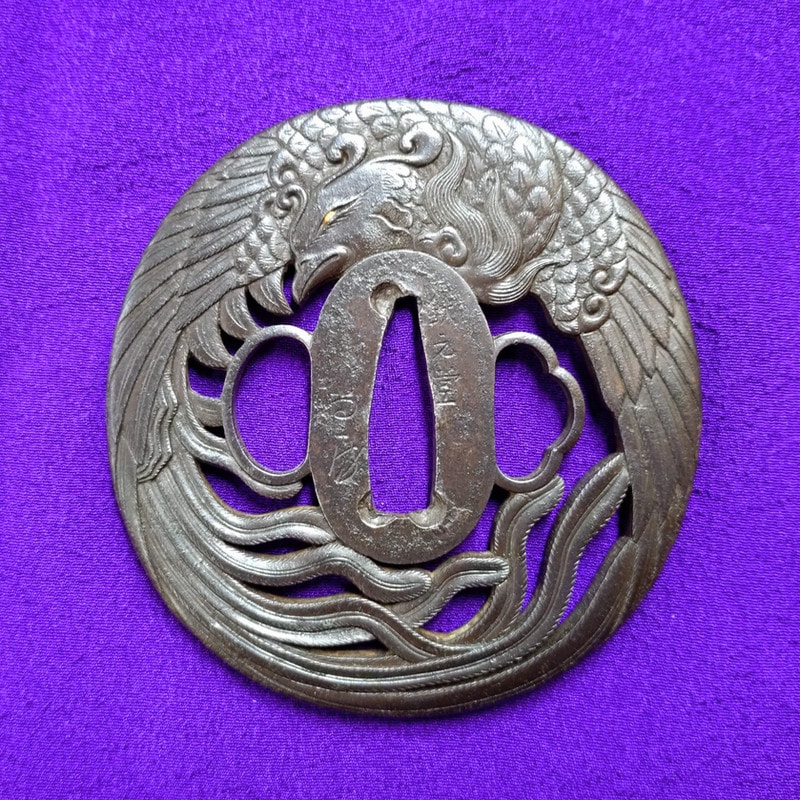
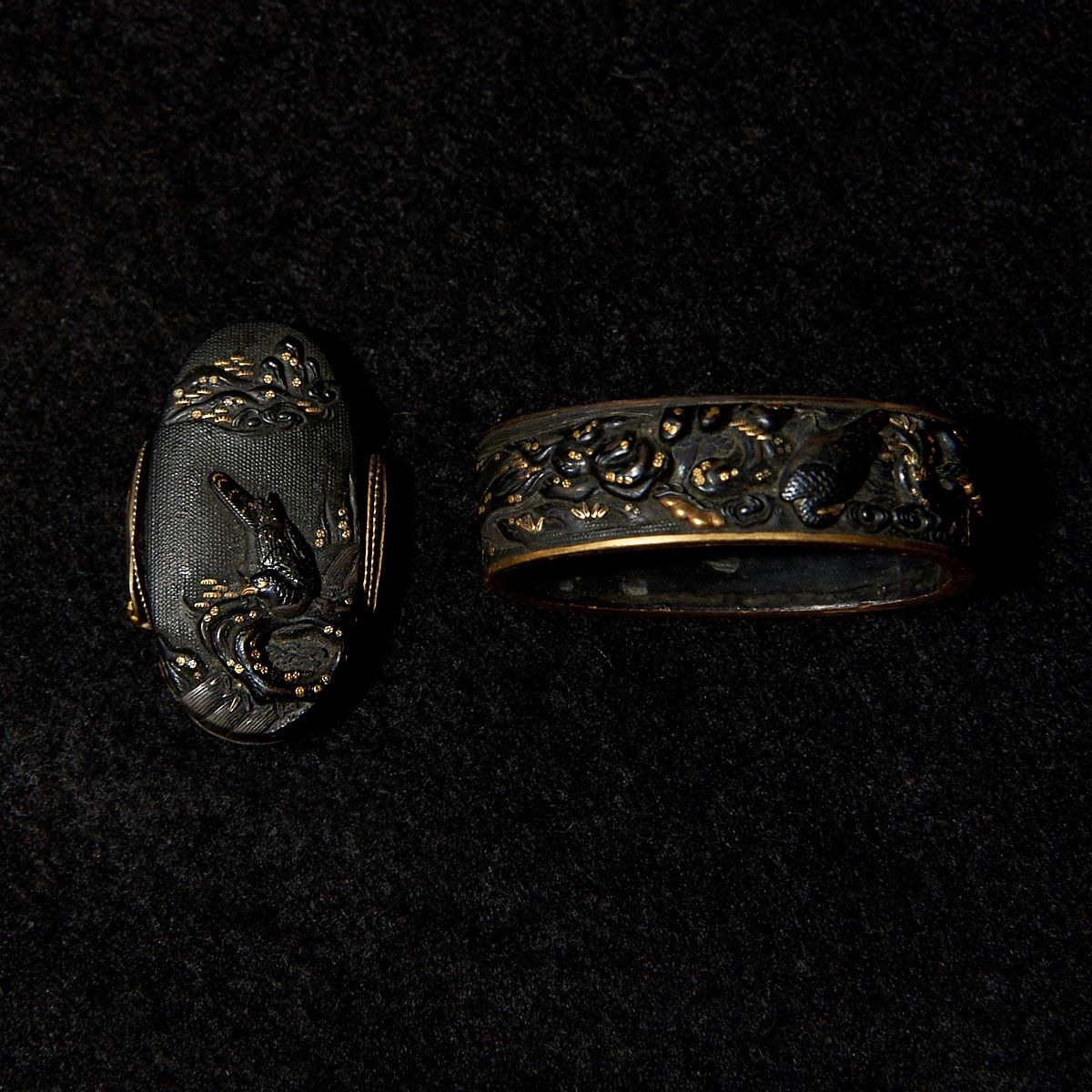
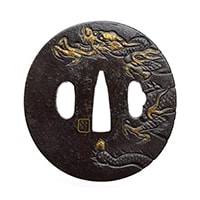
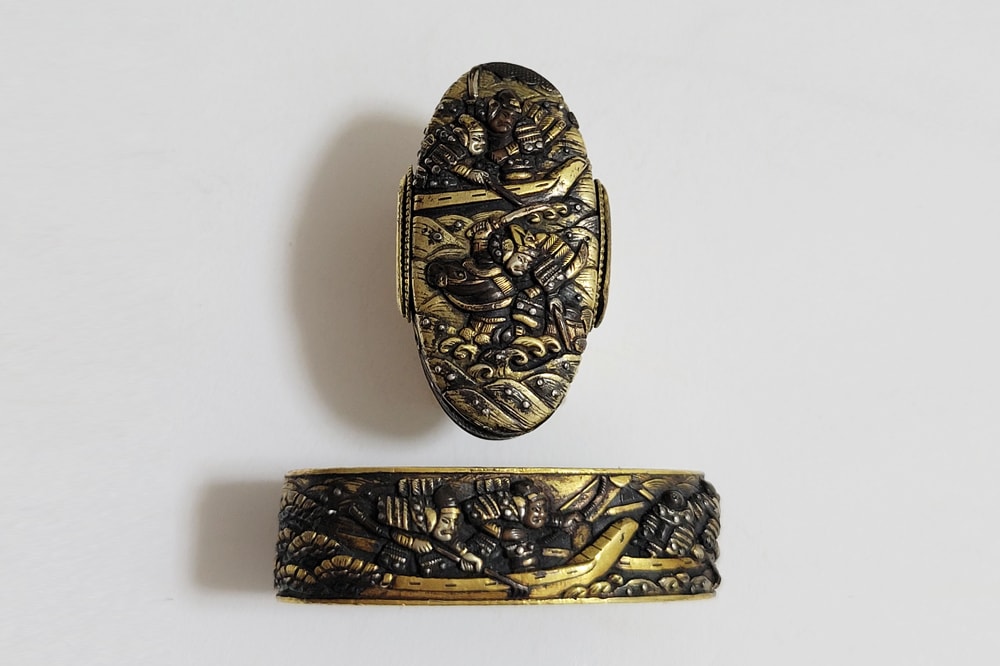
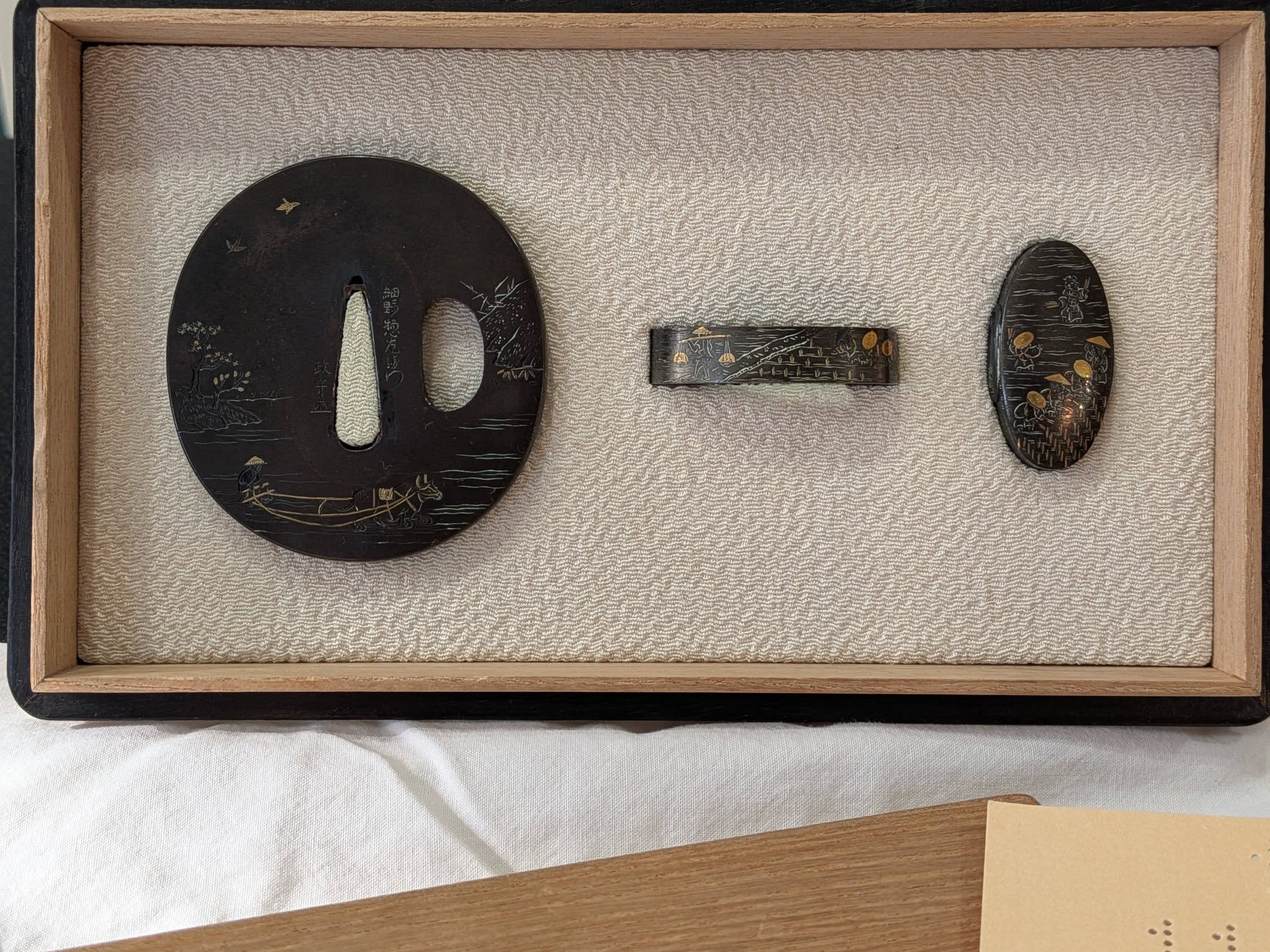
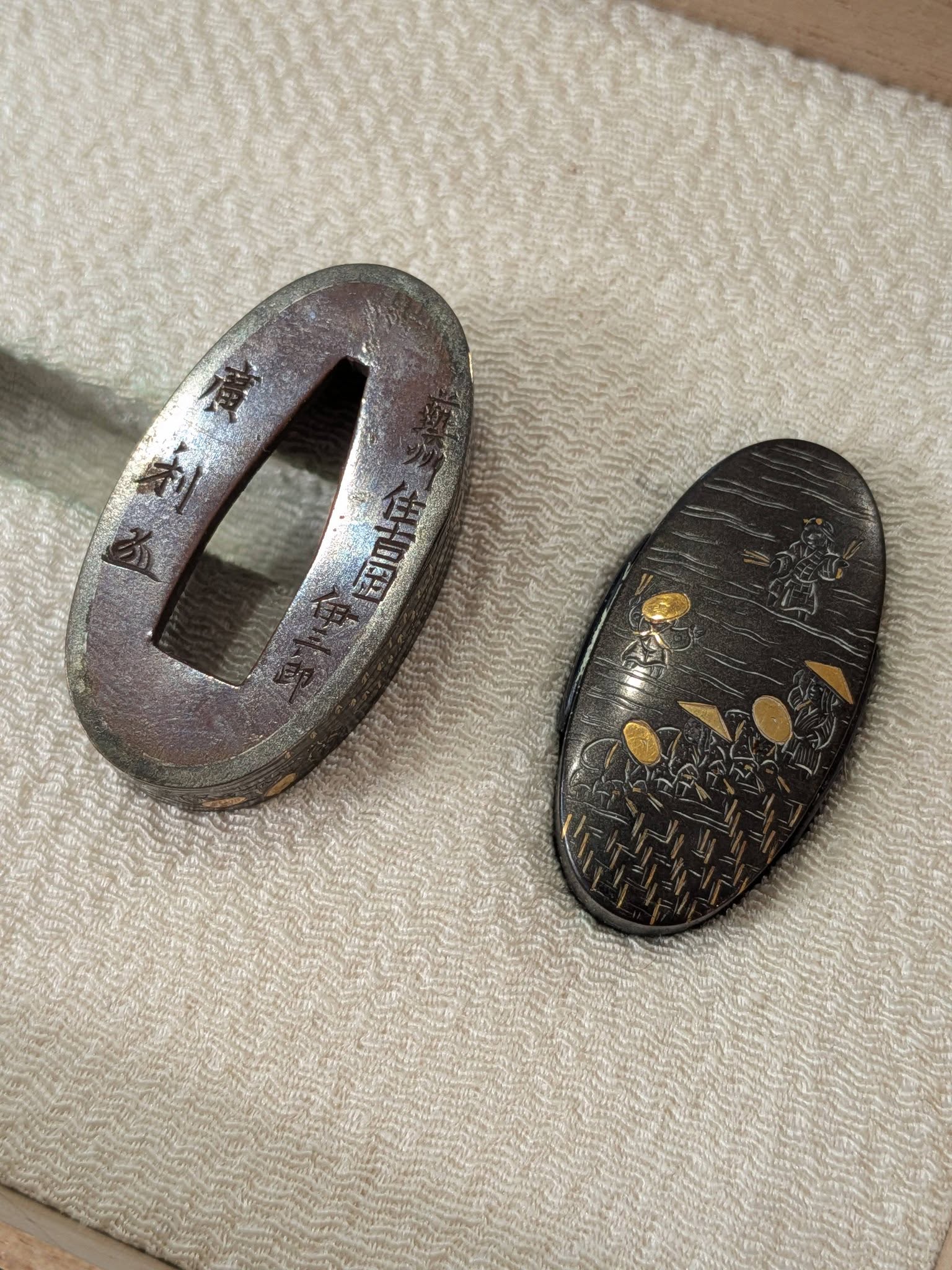
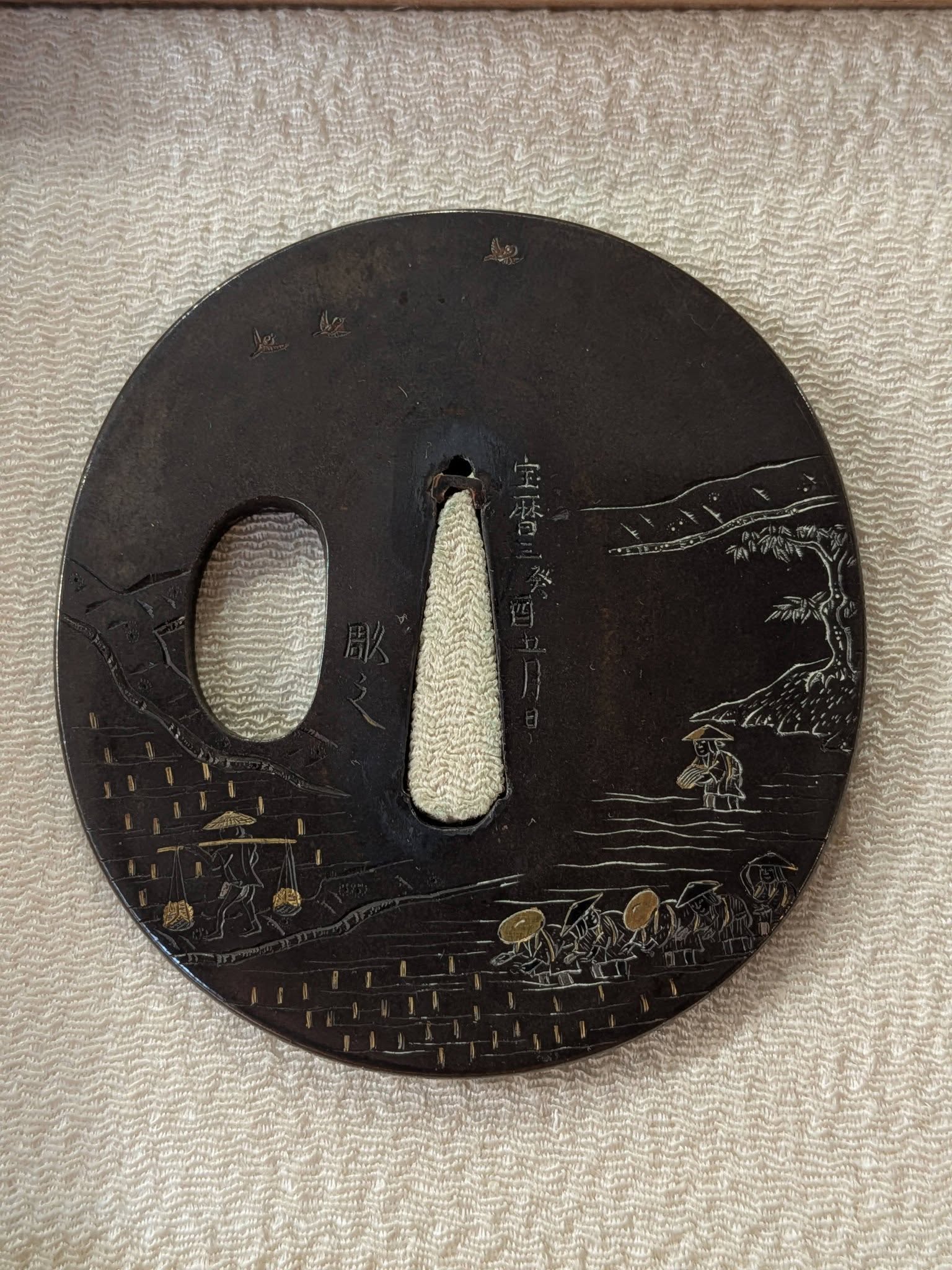
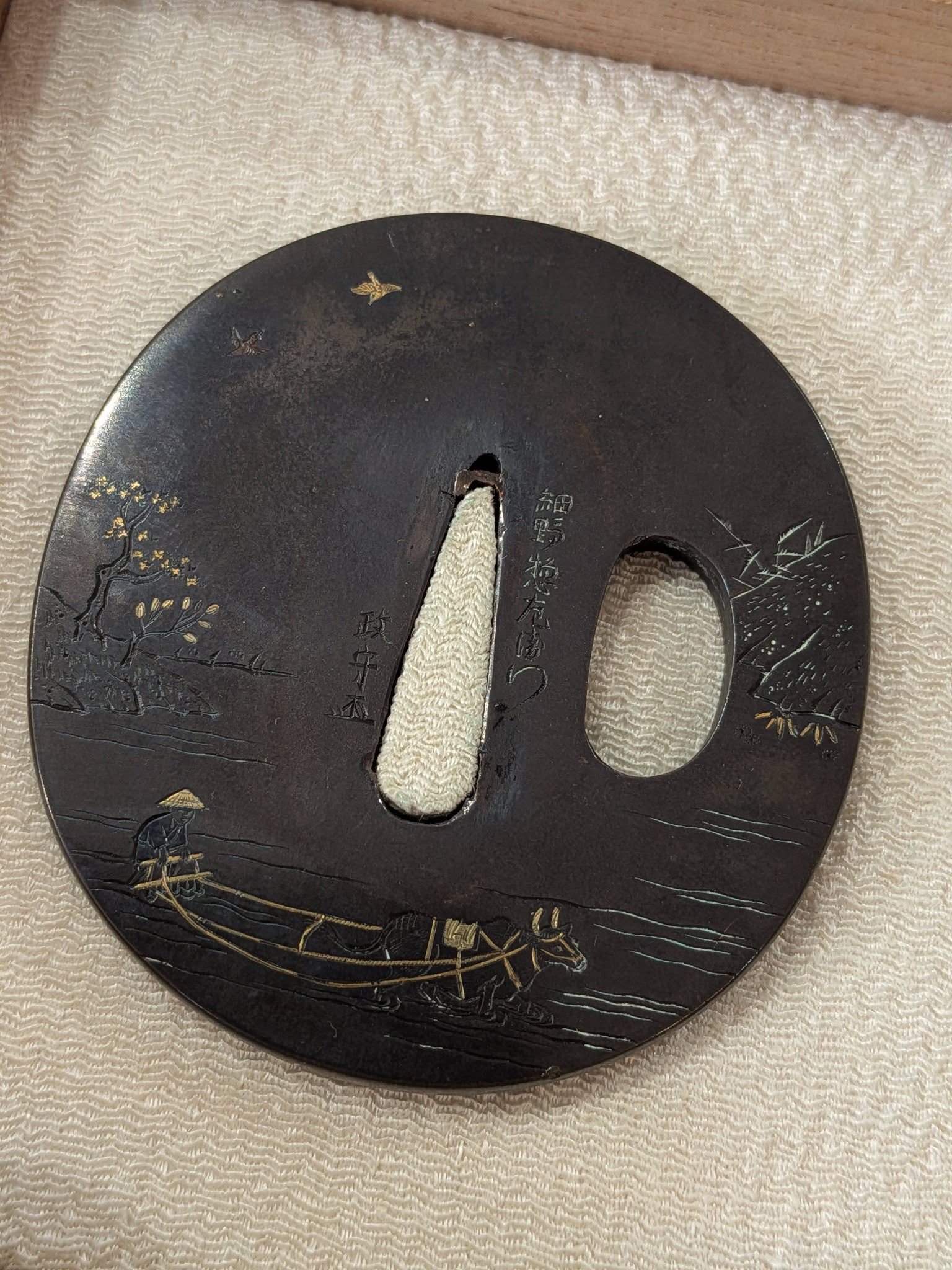
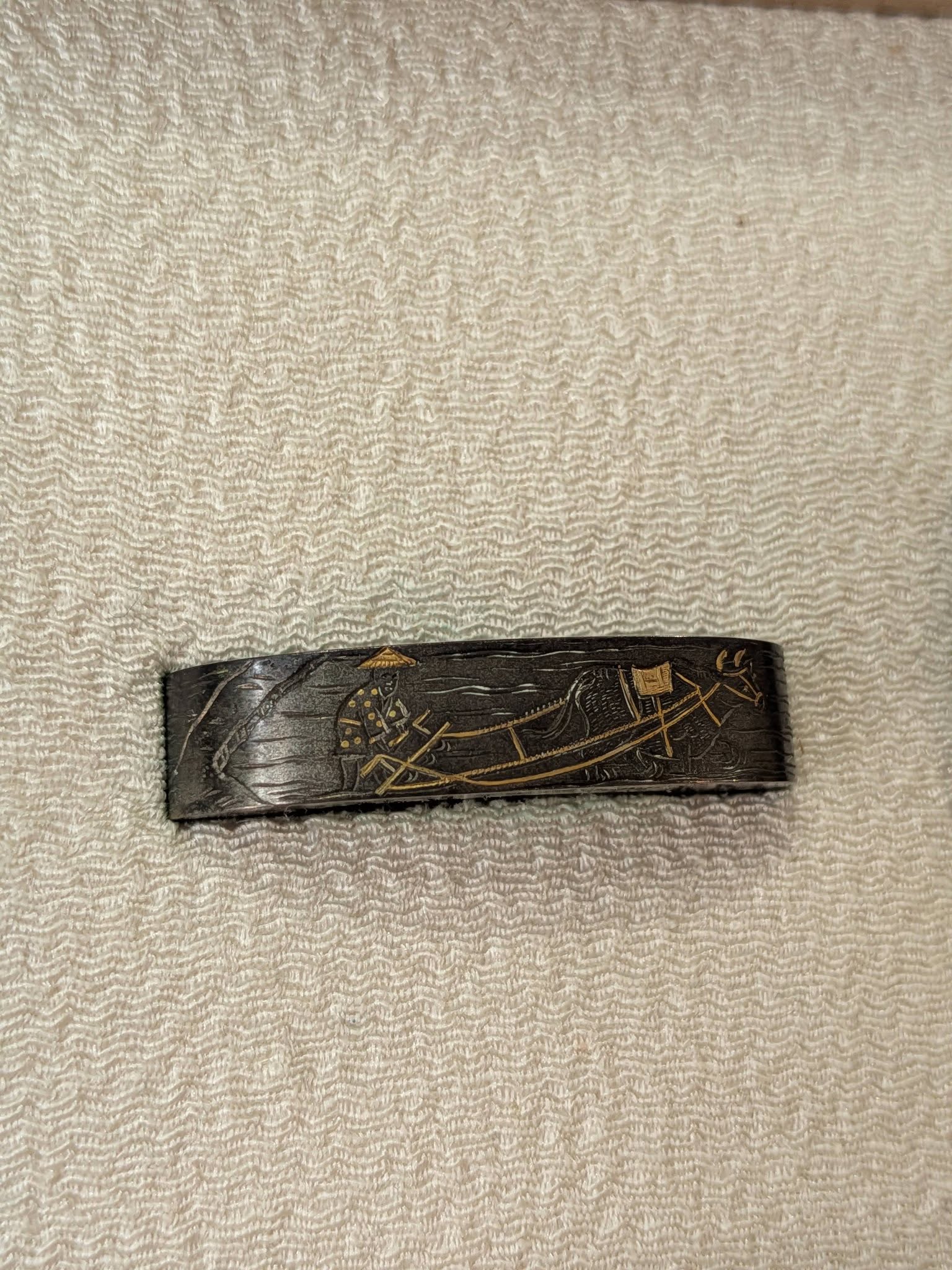
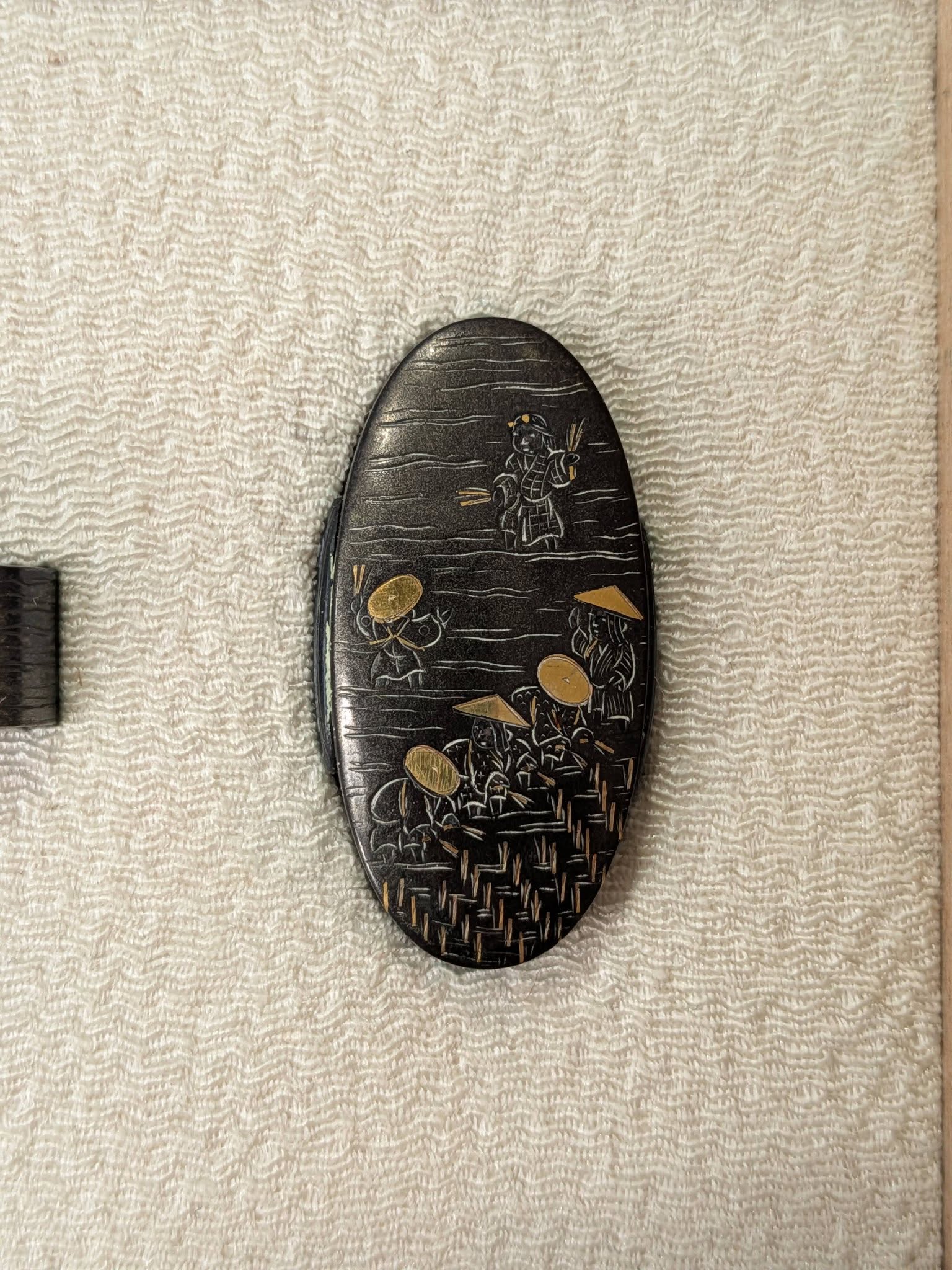
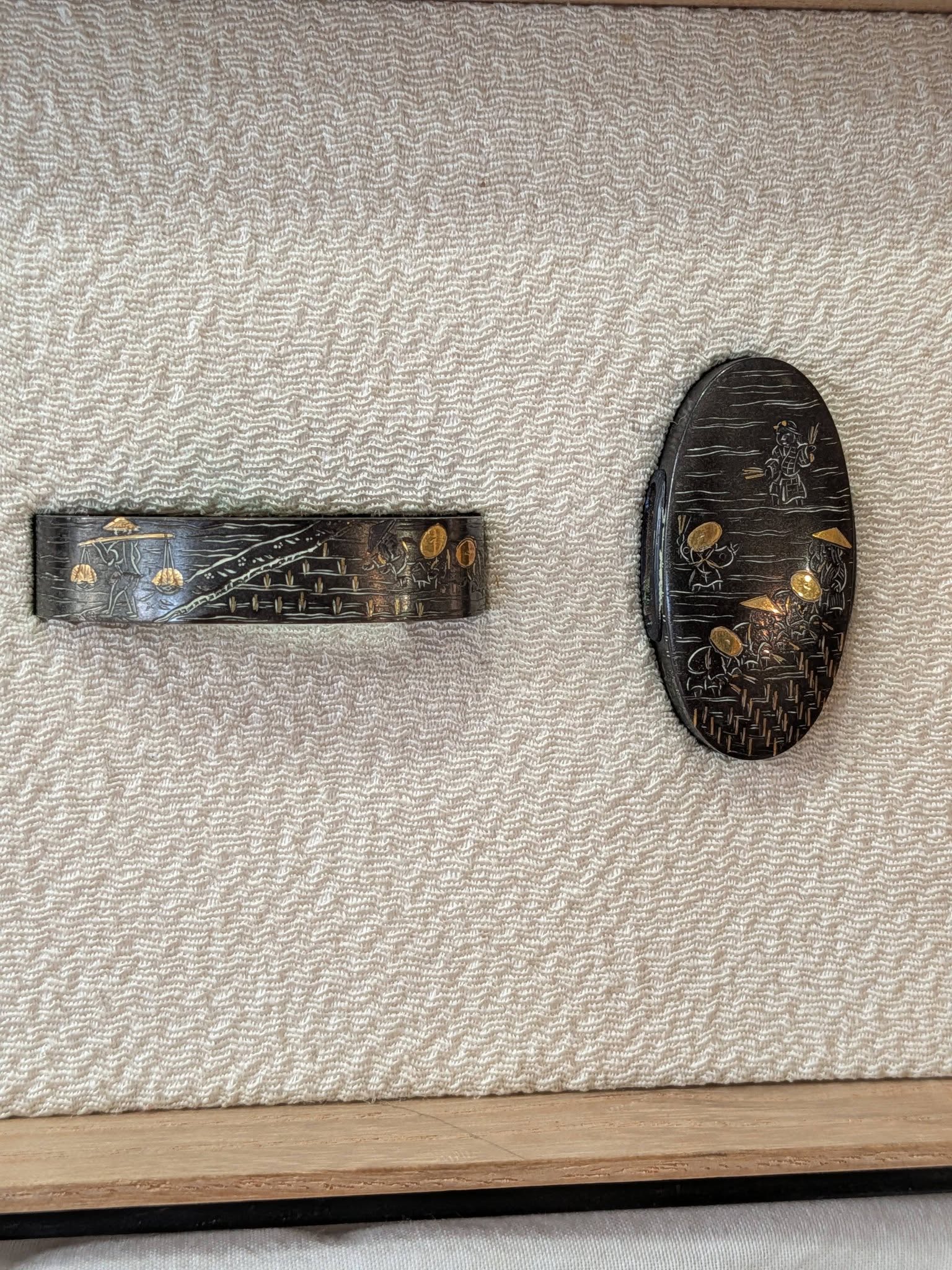
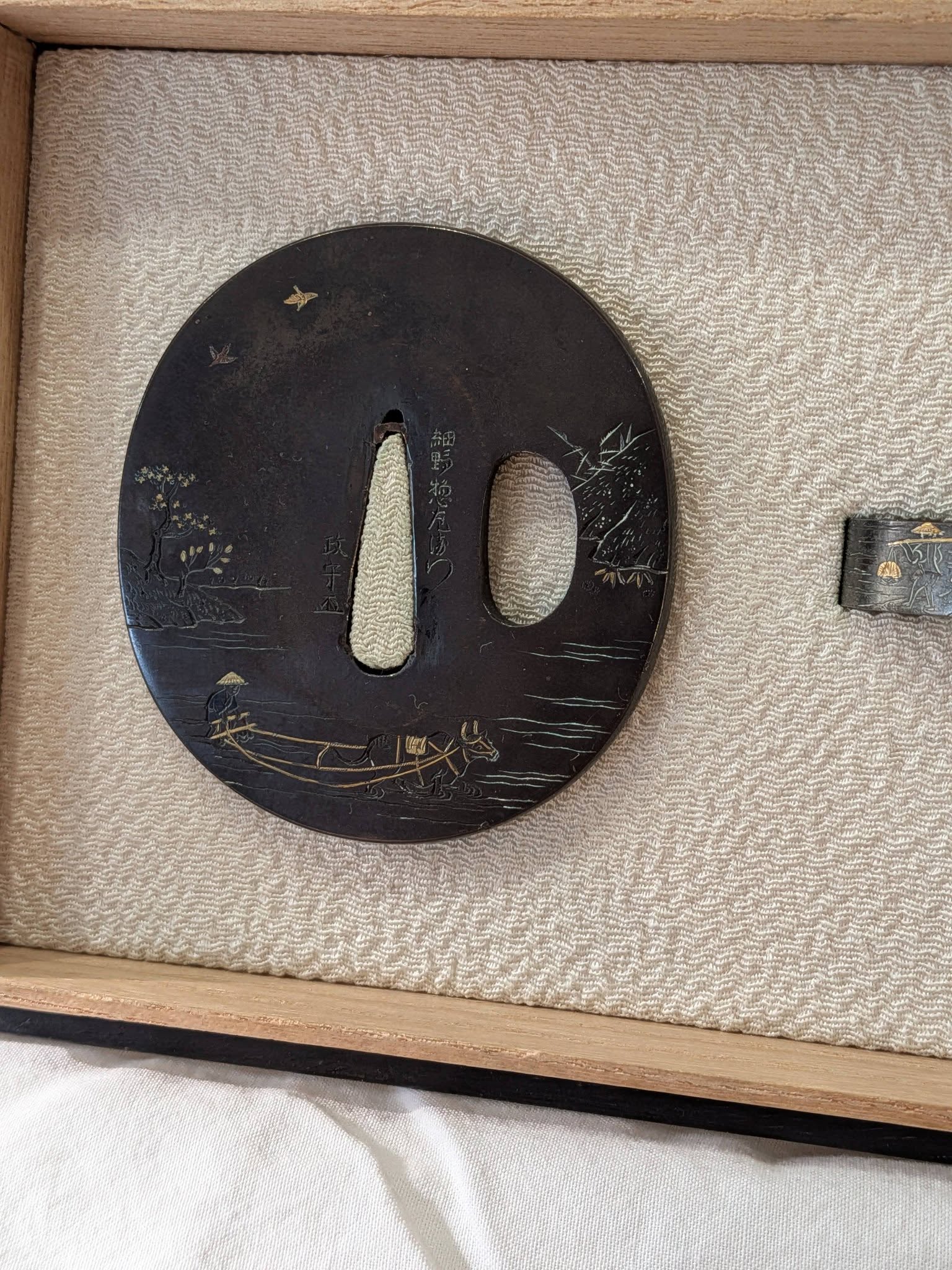
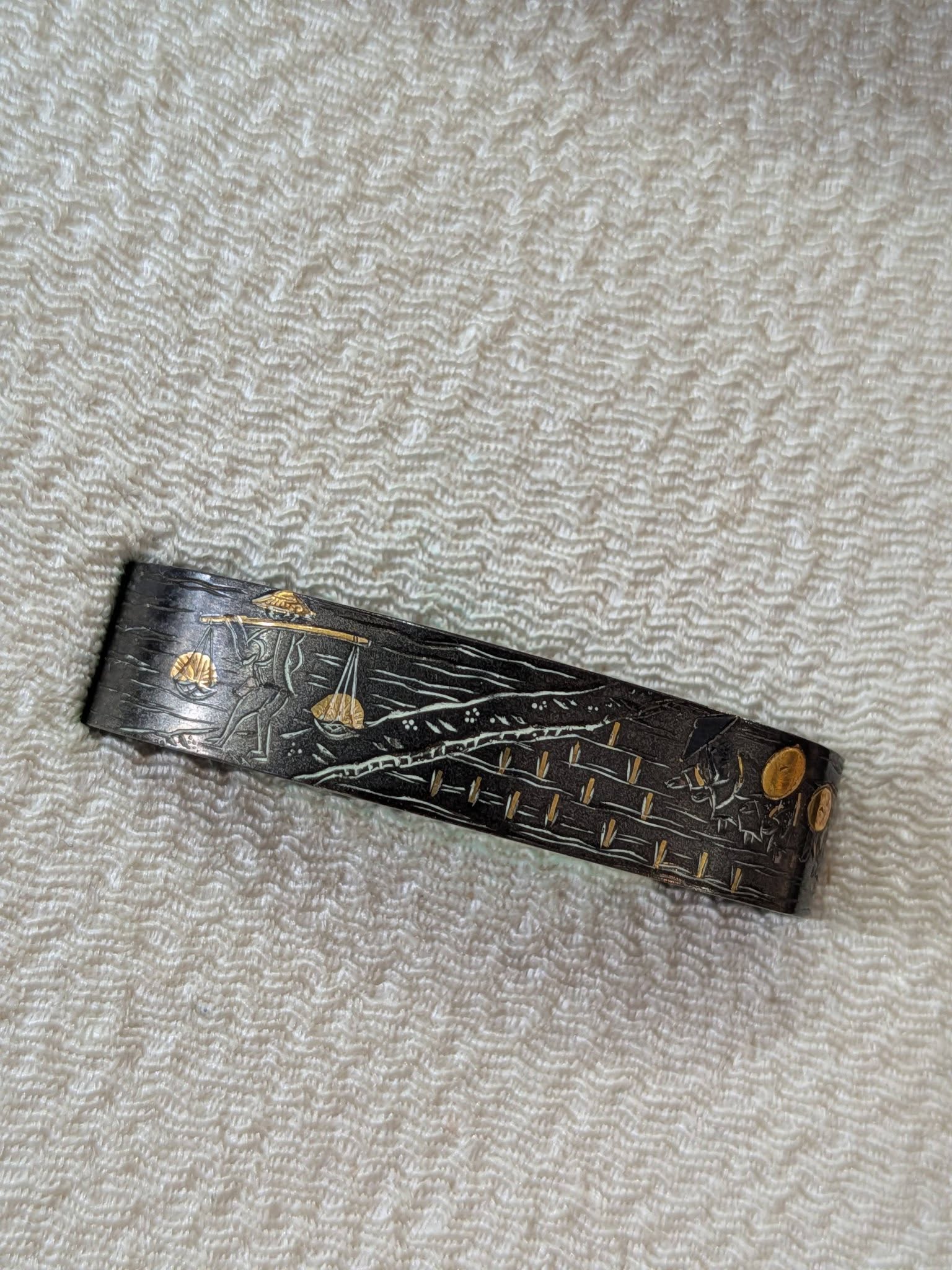
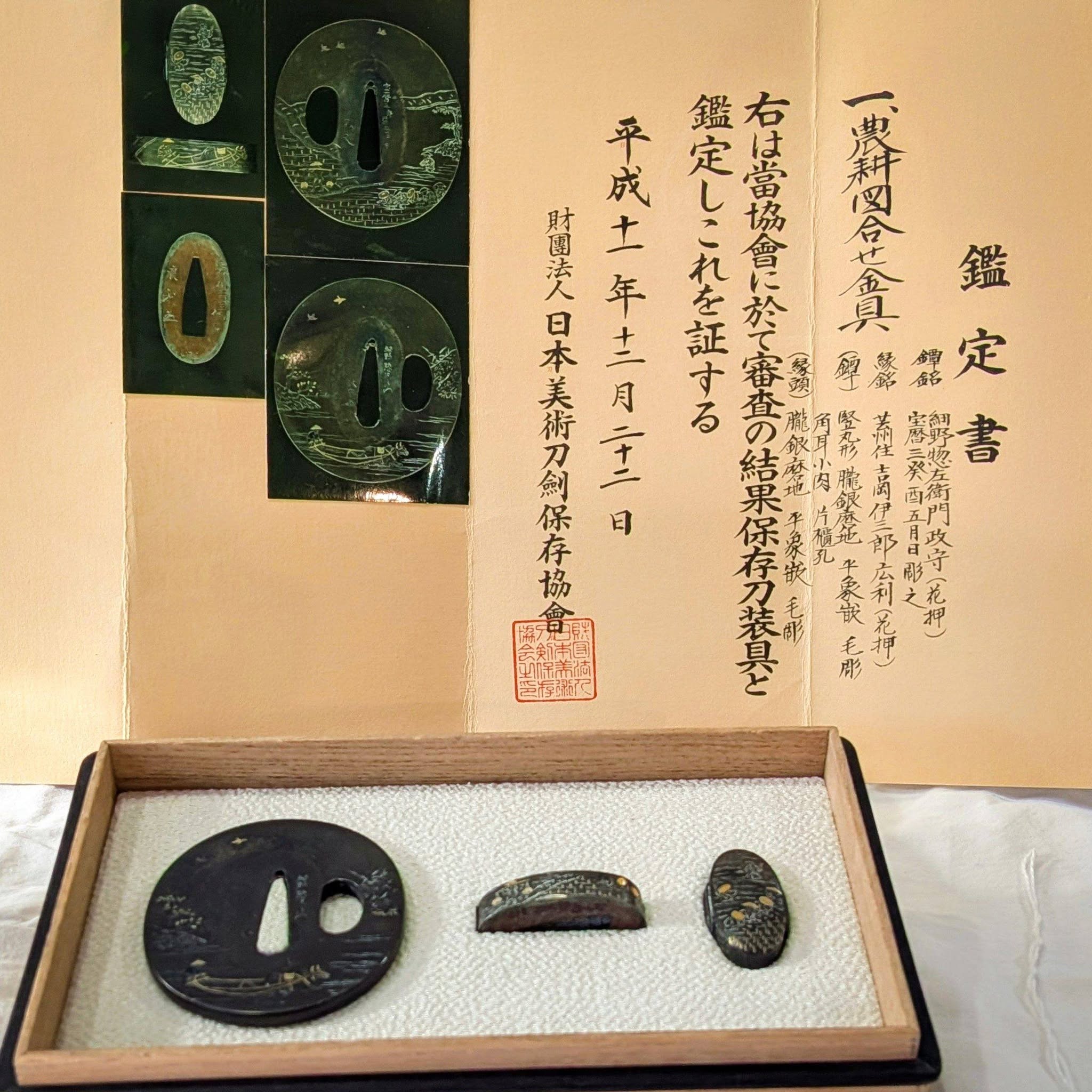
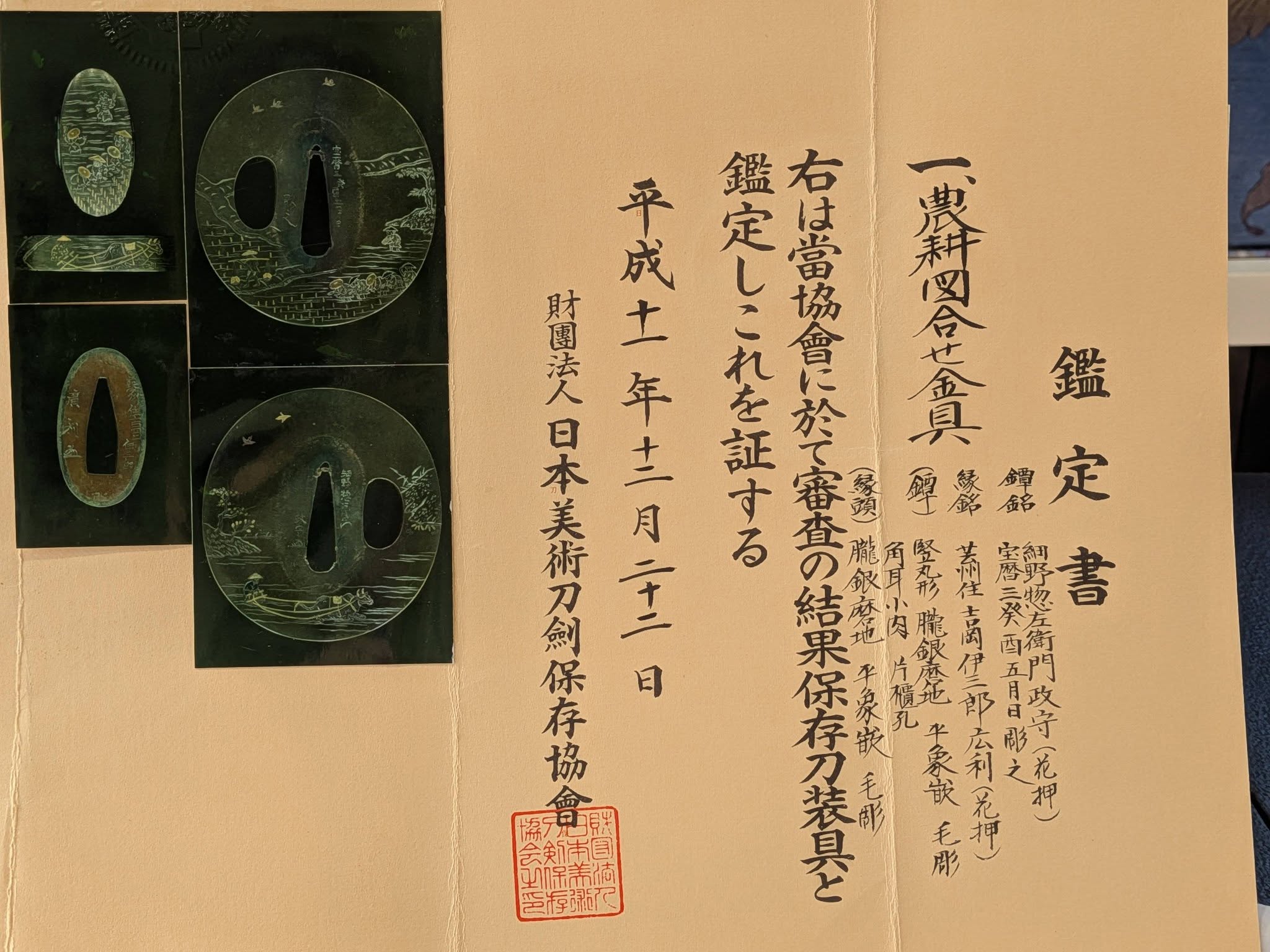
This is a mitokoromono set, a collection of three sword fittings, crafted by two renowned artists. The tsuba is signed by Hosono Sōzaemon Masamori and dated May 1693, while the fuchi-kashira is signed by Geishūjū Yoshioka Isarō Hirotoshi. The set is accompanied by an NBTHK Hozon certificate.
 NihontoWatchBETA
mei · Sa · Edo
Tetsugendo Hosono Masamori
Edo
Sagami, Aki
Signed
Hozon (NBTHK)
Machibori · Sagami
1 piece on the market now
Where Hosono Masamori stands among comparable artisans: across all of nihontō, and within tradition, era, and period. The tiers (Foremost · Leading · Major · Notable) weigh official designations from the NBTHK and Japan's Agency for Cultural Affairs, together with historical honors of lasting repute such as the Sansaku and Meibutsu-chō.
Select a lens to see how it's measured.
Machibori · Yamashiro
23 pieces on the market now
The Tetsugendo (鉄元堂) lineage emerged in Kyoto during the mid-Edo period, founded by Okamoto Genbei Toshiyuki, who trained under Tetsuya Denbei Kuniharu (鉄屋伝兵衛国治). Known by his working name Naoshige (尚茂), the founder later adopted the art name Shoraku (正楽) after taking Buddhist tonsure, and died in An'ei 9 (1780). The lineage passed to a second generation, Naofusa (尚房), whose works also survive. Learn more →
| Smith | Era | Designated |
|---|---|---|
| Shoraku正楽 | — | 13 |
| Yamazaki Ichiga山﨑一賀 | — | 3 |
| Ayanokoji Nagamine綾小路永峯 | — | 0 |
| Chikusai竹斎 | — | 0 |
| Tomotsune知恒 | — | 0 |
Certifies a genuine blade worth preserving: a signature confirmed correct, or, if unsigned, an era, province, and school that the NBTHK can reliably identify.
The NBTHK (Nihon Bijutsu Tōken Hozon Kyōkai, the Society for the Preservation of Japanese Art Swords) is a public-interest incorporated foundation founded in 1948 and supervised by Japan’s Agency for Cultural Affairs (Bunkachō); it is based at the Japanese Sword Museum in Tokyo. Its expert panels physically examine each submitted work (shinsa) and issue a certificate (kanteishō) ranking it by artistic and historical merit. NBTHK papers are the most widely recognized standard of authentication for Japanese swords and fittings.
NBTHK official siteThis is a mitokoromono set, a collection of three sword fittings, crafted by two renowned artists. The tsuba is signed by Hosono Sōzaemon Masamori and dated May 1693, while the fuchi-kashira is signed by Geishūjū Yoshioka Isarō Hirotoshi. The set is accompanied by an NBTHK Hozon certificate.
NihontoWatchBETAmei · Sa · Edo
Tetsugendo Hosono Masamori
Edo
Sagami, Aki
Signed
Hozon (NBTHK)
Machibori · Sagami
1 piece on the market now
Where Hosono Masamori stands among comparable artisans: across all of nihontō, and within tradition, era, and period. The tiers (Foremost · Leading · Major · Notable) weigh official designations from the NBTHK and Japan's Agency for Cultural Affairs, together with historical honors of lasting repute such as the Sansaku and Meibutsu-chō.
Select a lens to see how it's measured.
Machibori · Yamashiro
23 pieces on the market now
The Tetsugendo (鉄元堂) lineage emerged in Kyoto during the mid-Edo period, founded by Okamoto Genbei Toshiyuki, who trained under Tetsuya Denbei Kuniharu (鉄屋伝兵衛国治). Known by his working name Naoshige (尚茂), the founder later adopted the art name Shoraku (正楽) after taking Buddhist tonsure, and died in An'ei 9 (1780). The lineage passed to a second generation, Naofusa (尚房), whose works also survive. Learn more →
| Smith | Era | Designated |
|---|---|---|
| Shoraku正楽 | — | 13 |
| Yamazaki Ichiga山﨑一賀 | — | 3 |
| Ayanokoji Nagamine綾小路永峯 | — | 0 |
| Chikusai竹斎 | — | 0 |
| Tomotsune知恒 | — | 0 |
Certifies a genuine blade worth preserving: a signature confirmed correct, or, if unsigned, an era, province, and school that the NBTHK can reliably identify.
The NBTHK (Nihon Bijutsu Tōken Hozon Kyōkai, the Society for the Preservation of Japanese Art Swords) is a public-interest incorporated foundation founded in 1948 and supervised by Japan’s Agency for Cultural Affairs (Bunkachō); it is based at the Japanese Sword Museum in Tokyo. Its expert panels physically examine each submitted work (shinsa) and issue a certificate (kanteishō) ranking it by artistic and historical merit. NBTHK papers are the most widely recognized standard of authentication for Japanese swords and fittings.
NBTHK official site