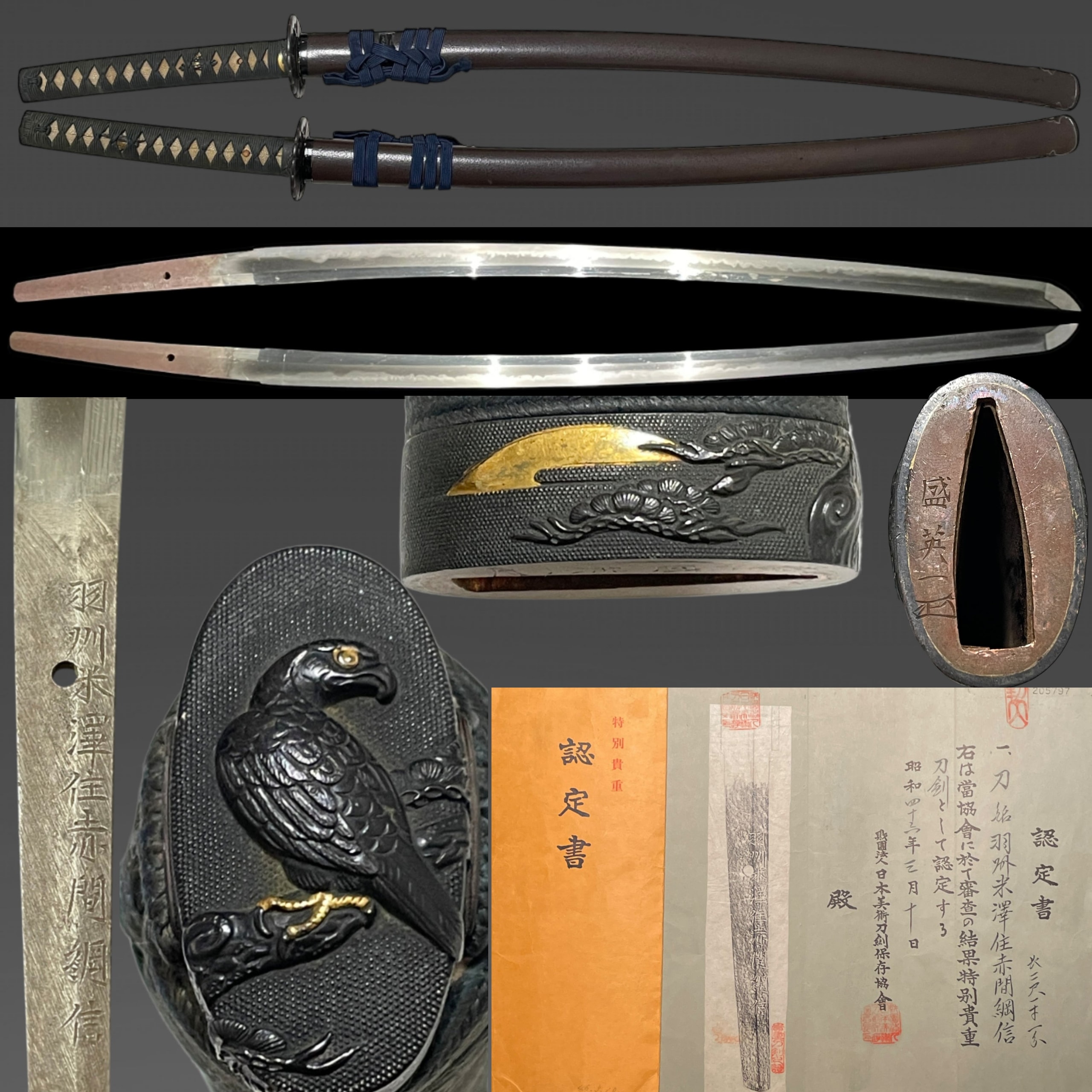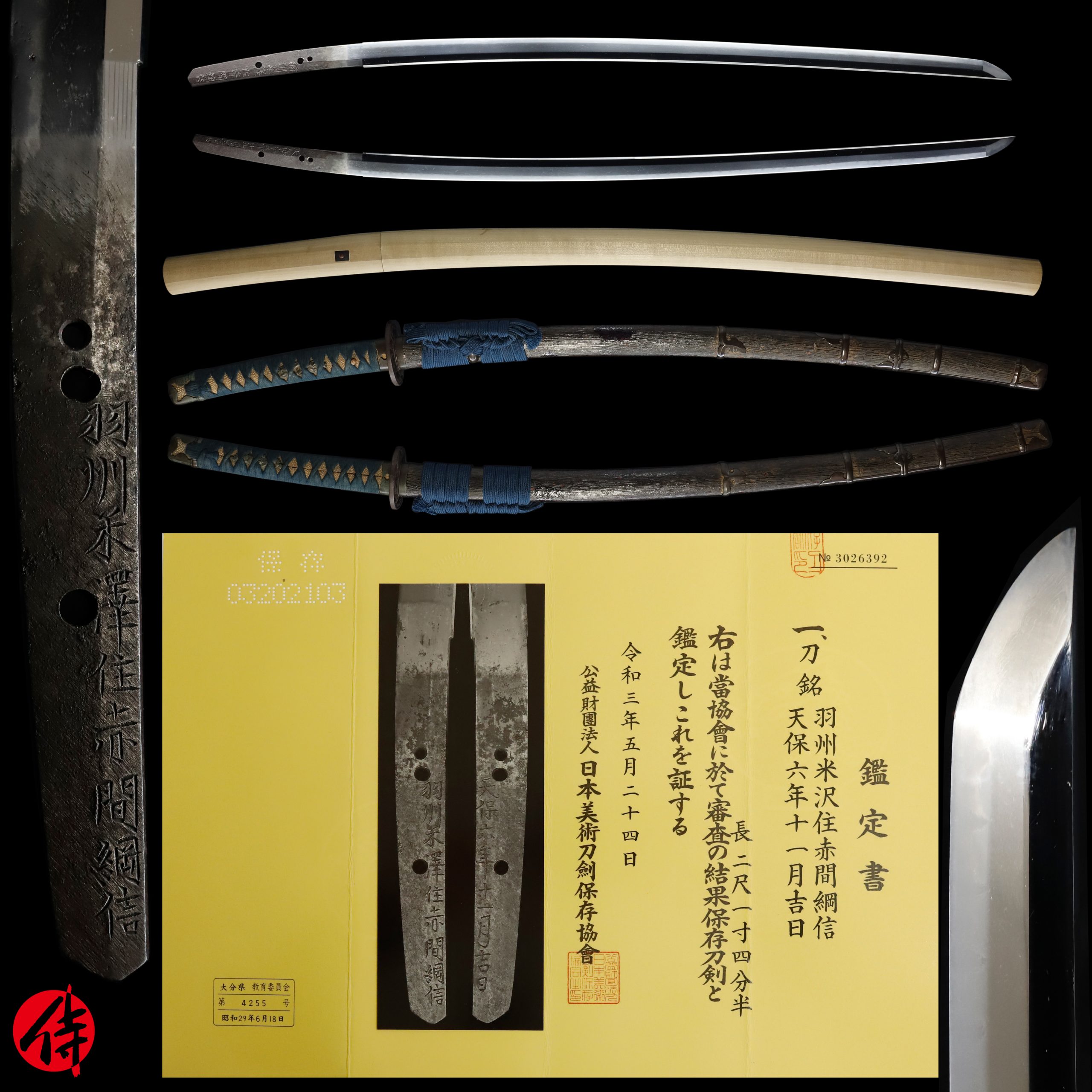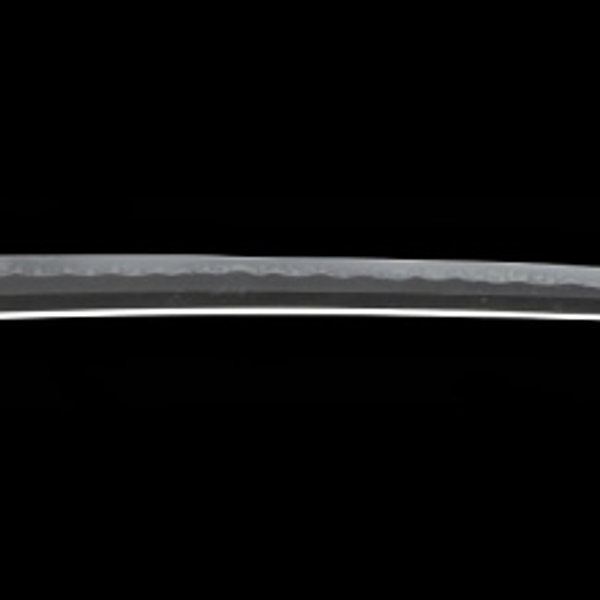
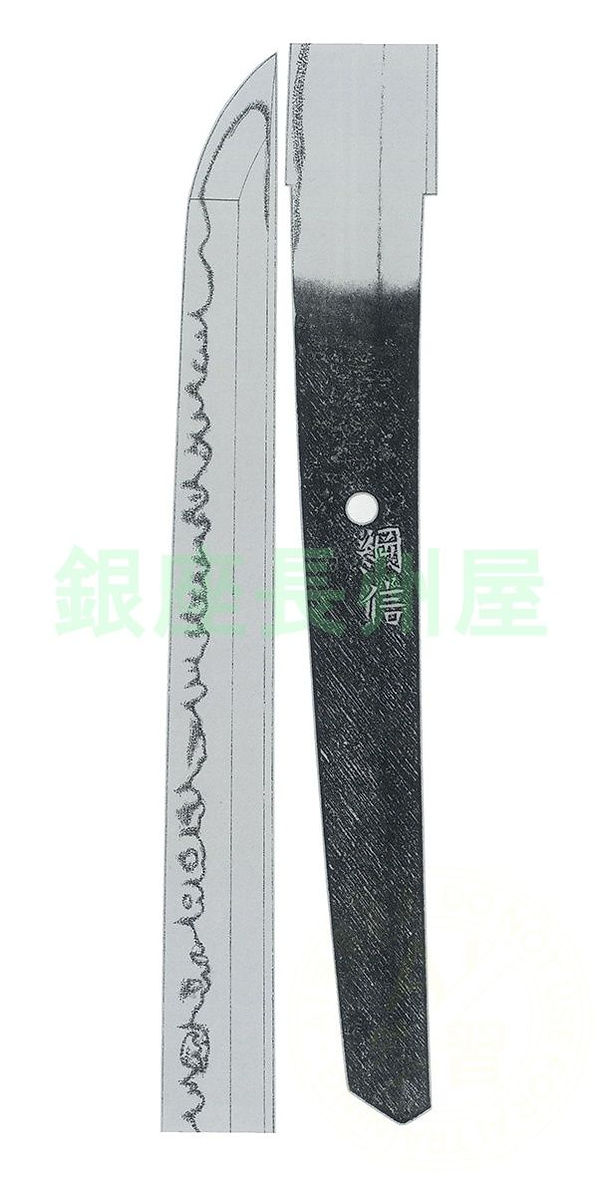
This listing from Ginza Choshuya features a katana by Tsunanobu, also known as Akama Tsunanobu. Active around the Bunsei era (1818-1830), he was a student of Kato Tsunaie. Tsunanobu was known for his wide range of skills, producing blades with beautiful nie-based hamon, including toran-midare and gunome-midare, as well as tanto in the yoroi-doshi style.
mei · Tenpo (1830-1844)


Dewa · around 1830-1844
Fujishiro Chu-jo saku · Tōken Taikan top 76%
We could not find an authenticity certificate on the seller’s listing. Japanese swords and fittings are normally papered by the NBTHK (or the NTHK). Without one, the attribution is the seller’s own assessment and has not been independently verified — treat it with caution and ask the dealer about certification before buying.
If, due to our fault, the item differs significantly from its proper condition, the item may be returned. Cooling-off is within one week of the item's arrival.
This listing from Ginza Choshuya features a katana by Tsunanobu, also known as Akama Tsunanobu. Active around the Bunsei era (1818-1830), he was a student of Kato Tsunaie. Tsunanobu was known for his wide range of skills, producing blades with beautiful nie-based hamon, including toran-midare and gunome-midare, as well as tanto in the yoroi-doshi style.
mei · Tenpo (1830-1844)


Dewa · around 1830-1844
Fujishiro Chu-jo saku · Tōken Taikan top 76%
We could not find an authenticity certificate on the seller’s listing. Japanese swords and fittings are normally papered by the NBTHK (or the NTHK). Without one, the attribution is the seller’s own assessment and has not been independently verified — treat it with caution and ask the dealer about certification before buying.
If, due to our fault, the item differs significantly from its proper condition, the item may be returned. Cooling-off is within one week of the item's arrival.