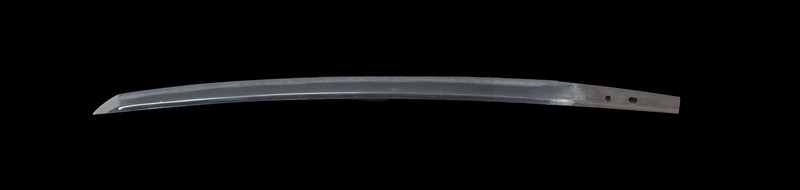
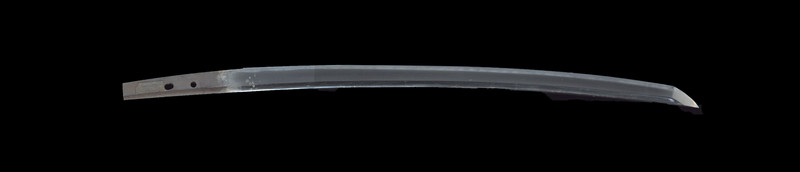
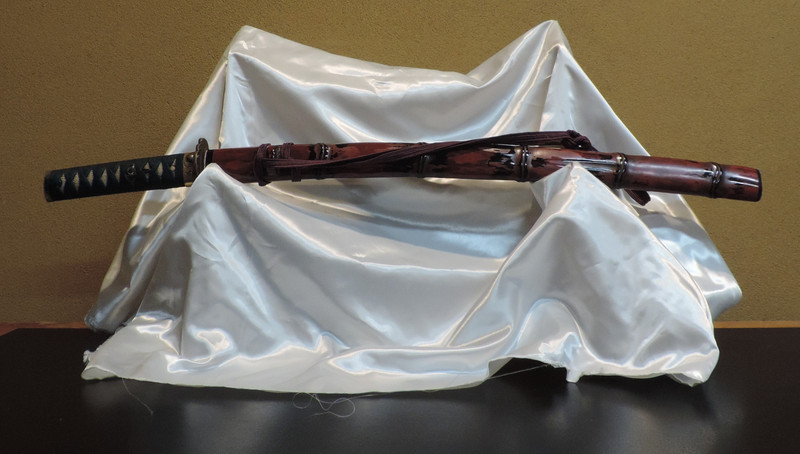
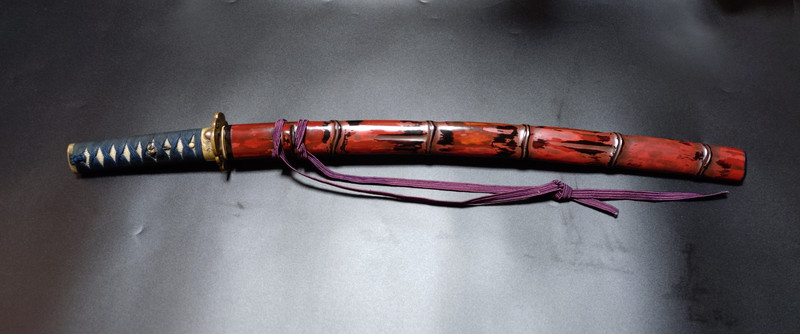
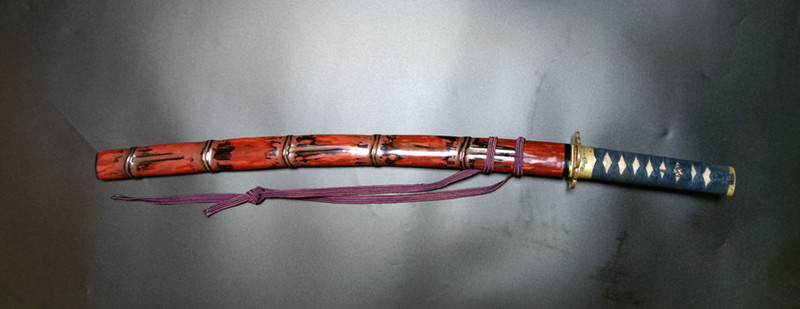
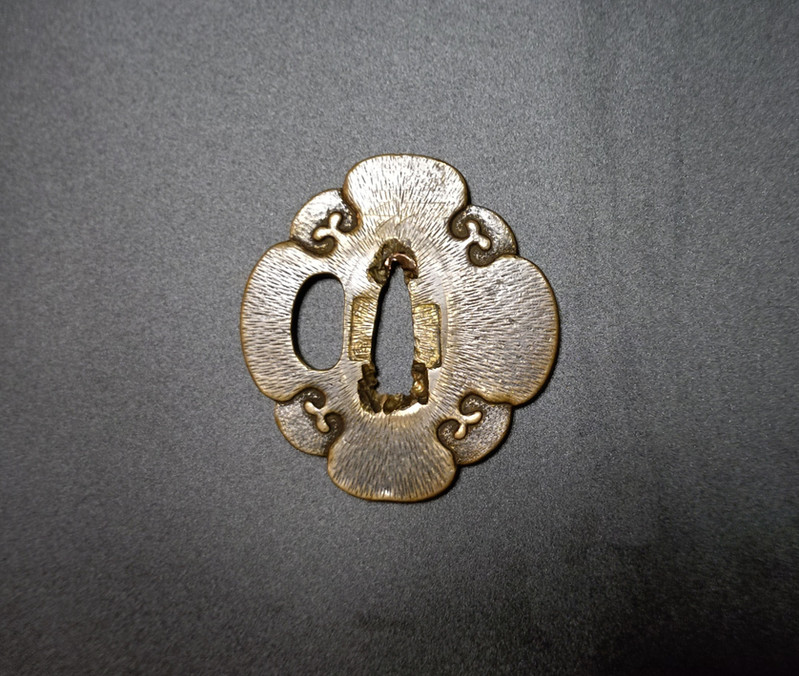
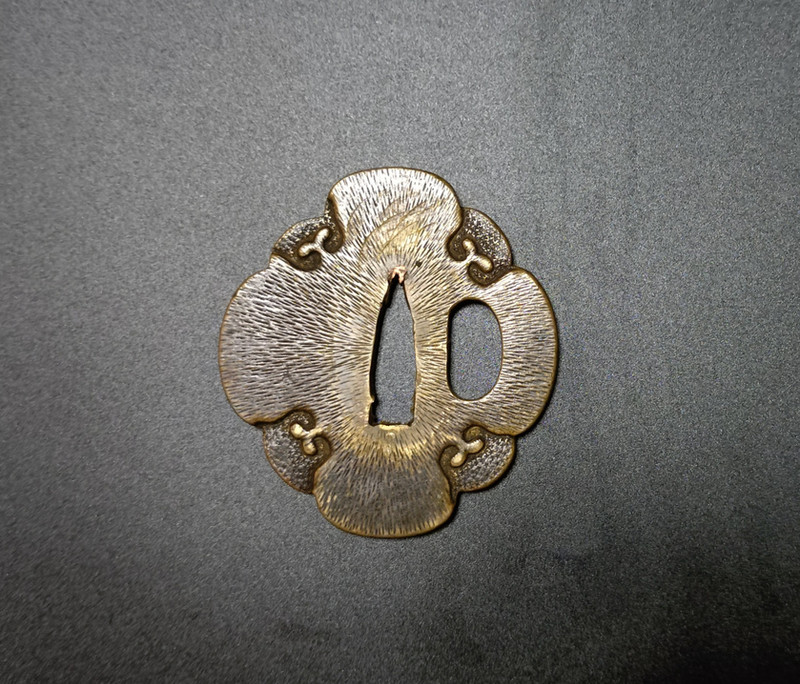
Nobunaga [Asako Taima], a wakizashi in kawari-nuri koshirae. (Nagasa) 1-shaku 5-bu 2-rin-han (Sori) 1.3cm (Motohaba) 2.5cm (Sakihaba) 1.9cm (Jigane) Jinie attaches, itame-hada flows and mixes with masame. Shirake-utsuri can also be observed. (Hamon) Nioi-deki, overall tempered with sharp gunome, with some areas appearing hako-gatta. (Horimono) Bo-hi present. The hada is itame-hada mixed with masame, and the jitetsu is characteristic of a swordsmith descending from the Yamato Taima lineage; it is a work that allows one to feel the Yamato-den and is considered a typical example of the Asako Taima school. The koshirae features a lacquer finish where shu-nuri (red lacquer) is applied over kuro-nuri (black lacquer), reminiscent of period Negoro-nuri, and the shape is an interesting design imitating take-no-fushi (bamboo joints). Asako Taima is a school that flourished for several generations from the Oei to Choroku eras, after the first generation Nobunaga of the Yamato Taima school moved to Asako in Echizen Province. There are several generations of swordsmiths using the same mei, Nobunaga. Because they draw from the Taima lineage, there are works in suguha with masame-kitae, but there are also works that resemble Hokugoku-mono (Northern Province items) similar to Kashu Tomoshige. These were recommended as wazamono for sashiryo (personal wear), and are famous for being included in the collection of Hosokawa Sansai. Swordsmith: Nobunaga (Asako Taima school in Echizen domain) Period: Middle of 14th century Certification: Hozon (NBTHK) Length: 46.2cm Curvature: 1.3cm
 NihontoWatchBETA
nagasa 46.2cm
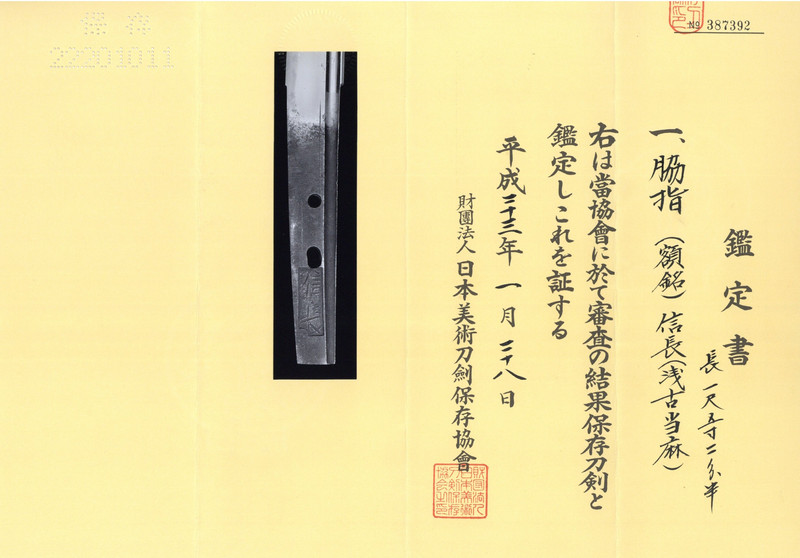
Certifies a genuine blade worth preserving: a signature confirmed correct, or, if unsigned, an era, province, and school that the NBTHK can reliably identify.
The NBTHK (Nihon Bijutsu Tōken Hozon Kyōkai, the Society for the Preservation of Japanese Art Swords) is a public-interest incorporated foundation founded in 1948 and supervised by Japan’s Agency for Cultural Affairs (Bunkachō); it is based at the Japanese Sword Museum in Tokyo. Its expert panels physically examine each submitted work (shinsa) and issue a certificate (kanteishō) ranking it by artistic and historical merit. NBTHK papers are the most widely recognized standard of authentication for Japanese swords and fittings.
NBTHK official siteFor purchases made through the website, we accept returns of the item as a cooling-off period within one week of its arrival.
Nobunaga [Asako Taima], a wakizashi in kawari-nuri koshirae. (Nagasa) 1-shaku 5-bu 2-rin-han (Sori) 1.3cm (Motohaba) 2.5cm (Sakihaba) 1.9cm (Jigane) Jinie attaches, itame-hada flows and mixes with masame. Shirake-utsuri can also be observed. (Hamon) Nioi-deki, overall tempered with sharp gunome, with some areas appearing hako-gatta. (Horimono) Bo-hi present. The hada is itame-hada mixed with masame, and the jitetsu is characteristic of a swordsmith descending from the Yamato Taima lineage; it is a work that allows one to feel the Yamato-den and is considered a typical example of the Asako Taima school. The koshirae features a lacquer finish where shu-nuri (red lacquer) is applied over kuro-nuri (black lacquer), reminiscent of period Negoro-nuri, and the shape is an interesting design imitating take-no-fushi (bamboo joints). Asako Taima is a school that flourished for several generations from the Oei to Choroku eras, after the first generation Nobunaga of the Yamato Taima school moved to Asako in Echizen Province. There are several generations of swordsmiths using the same mei, Nobunaga. Because they draw from the Taima lineage, there are works in suguha with masame-kitae, but there are also works that resemble Hokugoku-mono (Northern Province items) similar to Kashu Tomoshige. These were recommended as wazamono for sashiryo (personal wear), and are famous for being included in the collection of Hosokawa Sansai. Swordsmith: Nobunaga (Asako Taima school in Echizen domain) Period: Middle of 14th century Certification: Hozon (NBTHK) Length: 46.2cm Curvature: 1.3cm
NihontoWatchBETAnagasa 46.2cm
Certifies a genuine blade worth preserving: a signature confirmed correct, or, if unsigned, an era, province, and school that the NBTHK can reliably identify.
The NBTHK (Nihon Bijutsu Tōken Hozon Kyōkai, the Society for the Preservation of Japanese Art Swords) is a public-interest incorporated foundation founded in 1948 and supervised by Japan’s Agency for Cultural Affairs (Bunkachō); it is based at the Japanese Sword Museum in Tokyo. Its expert panels physically examine each submitted work (shinsa) and issue a certificate (kanteishō) ranking it by artistic and historical merit. NBTHK papers are the most widely recognized standard of authentication for Japanese swords and fittings.
NBTHK official siteFor purchases made through the website, we accept returns of the item as a cooling-off period within one week of its arrival.