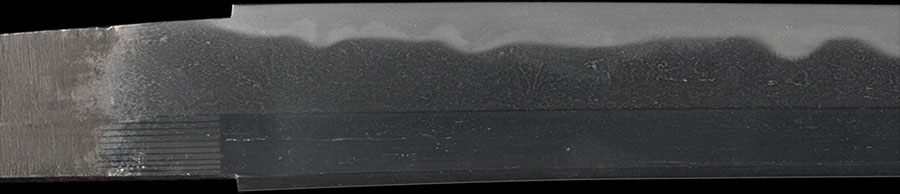
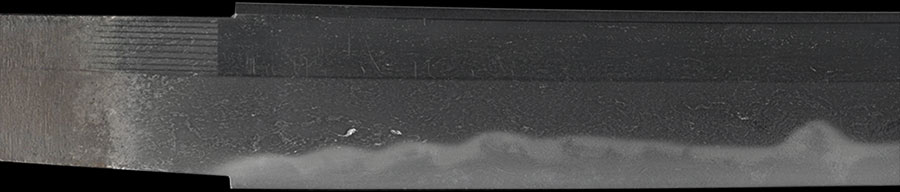
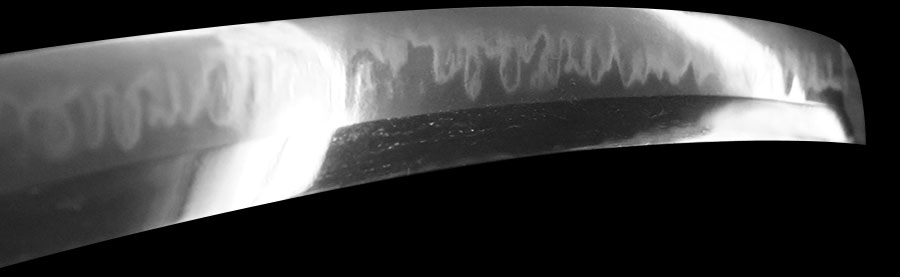
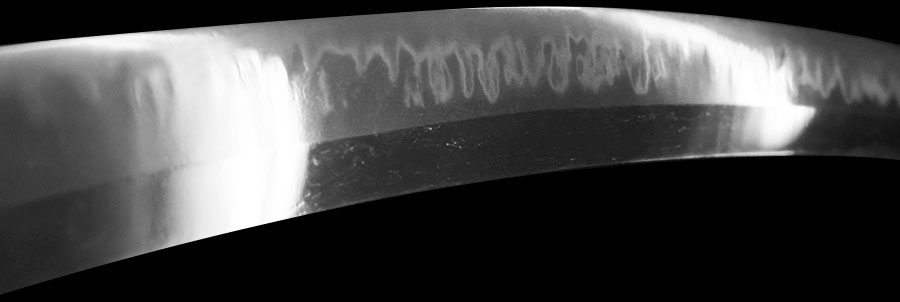
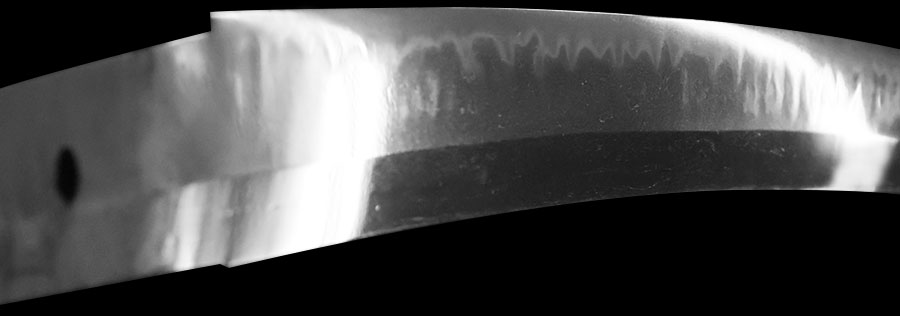
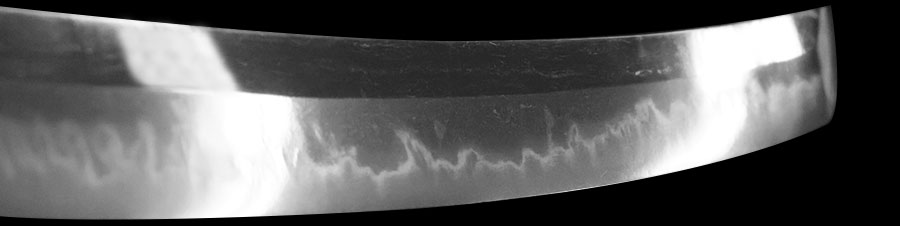
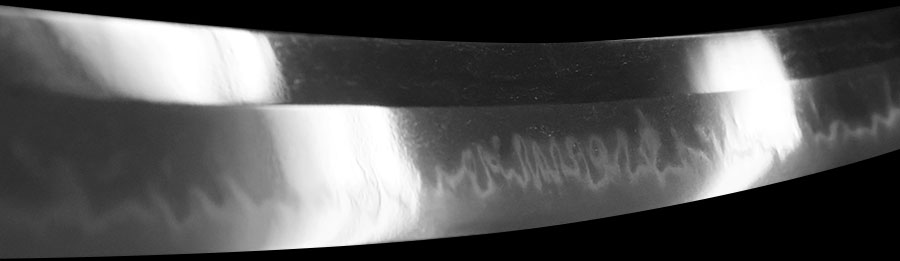
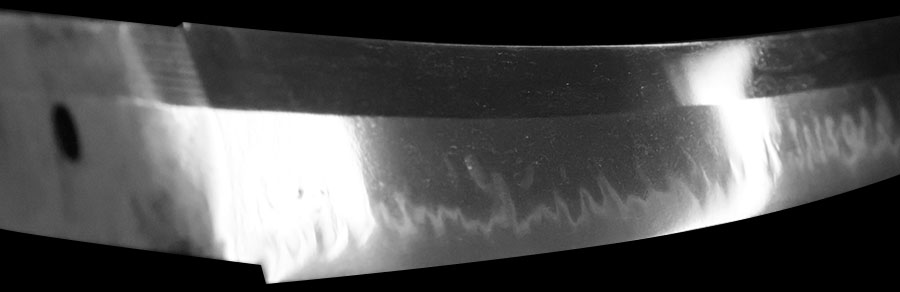
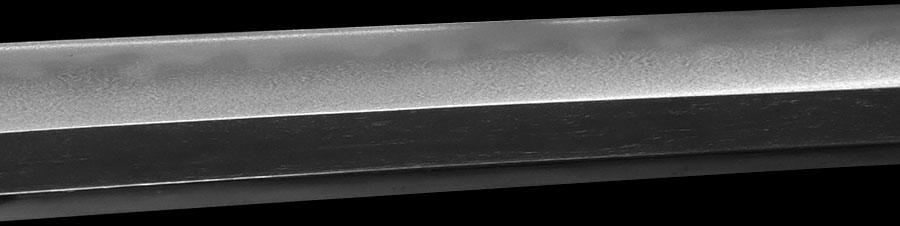
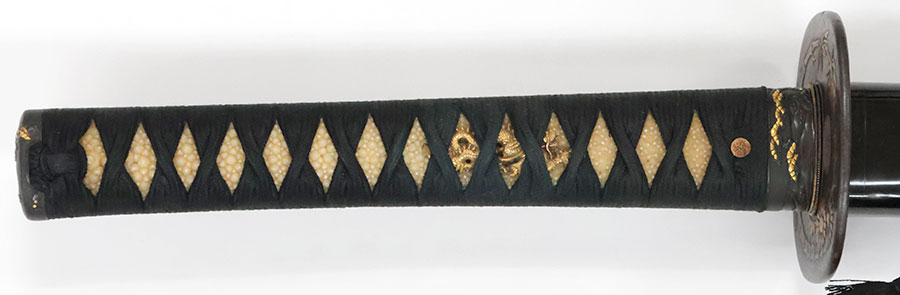
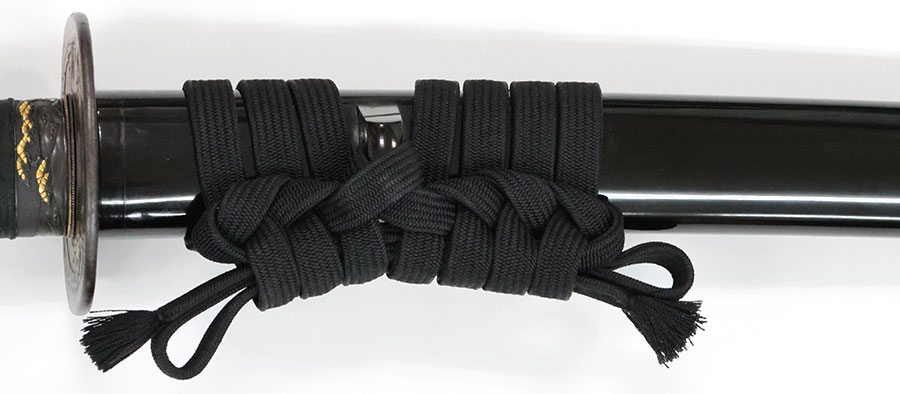
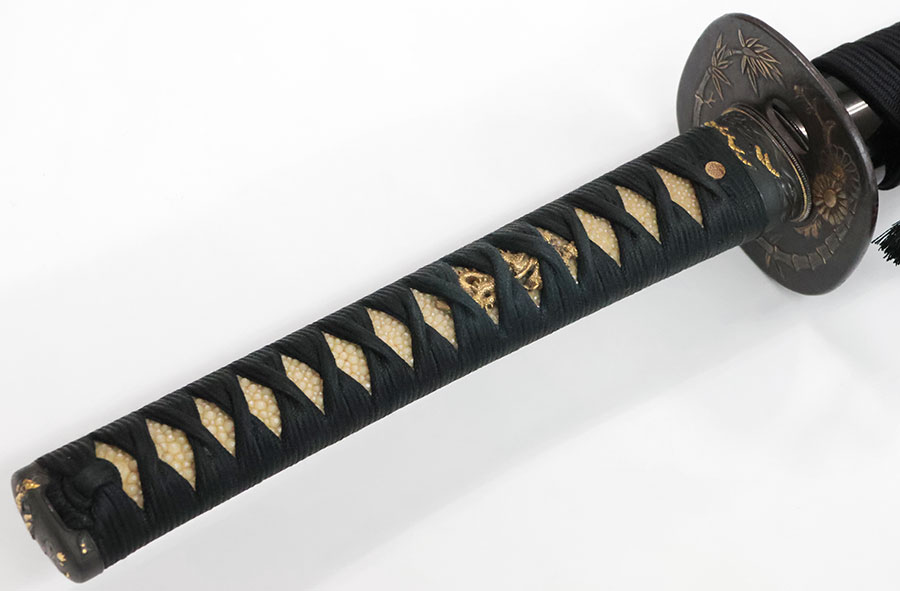
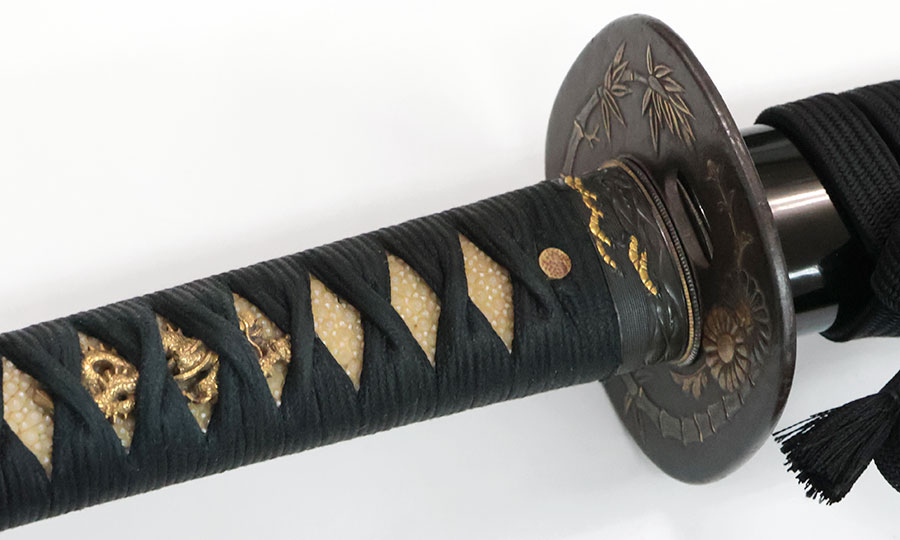
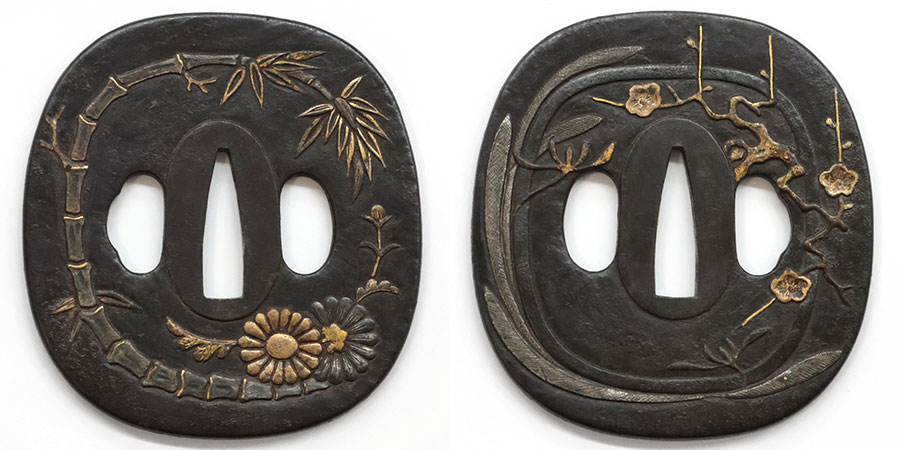
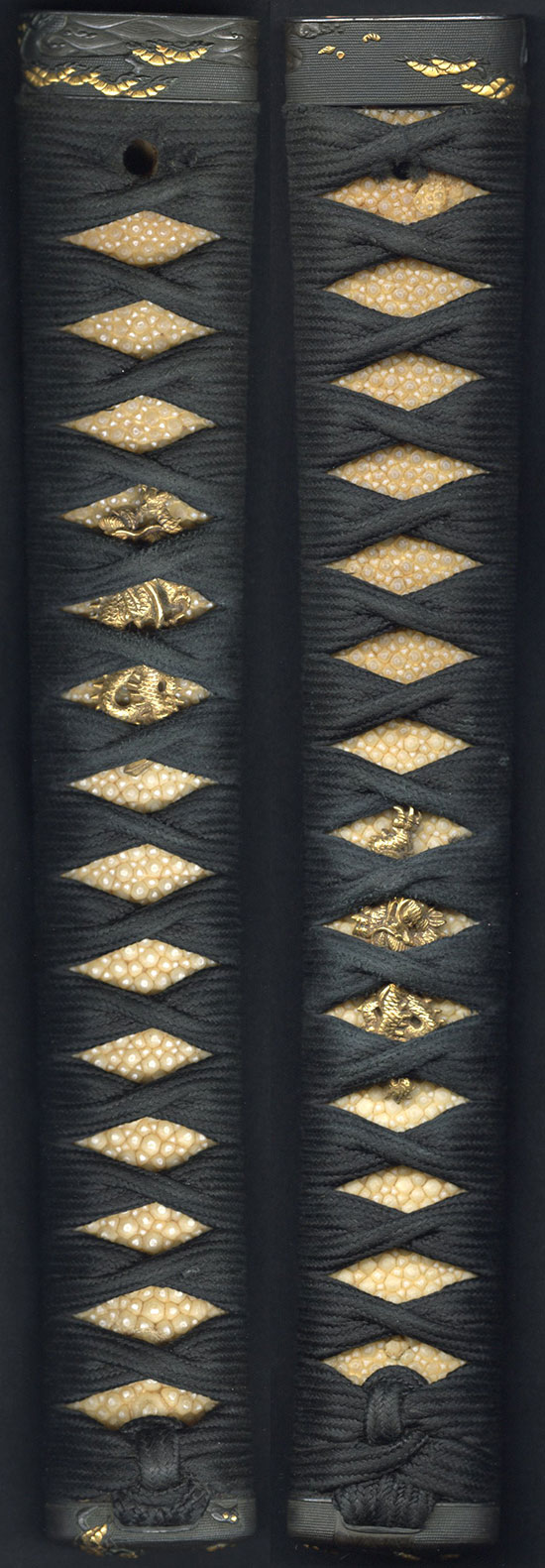
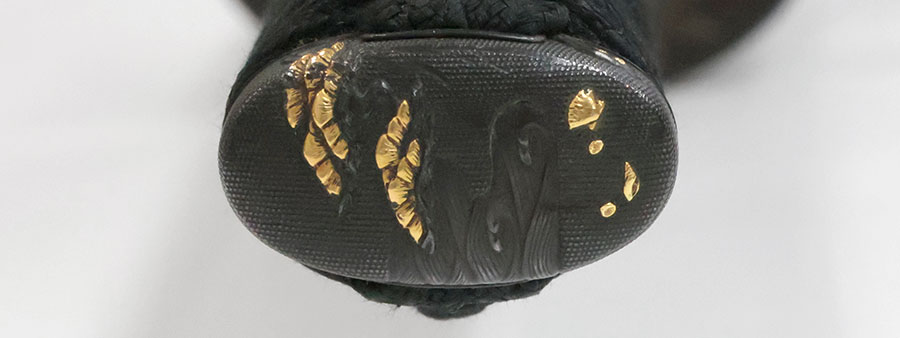
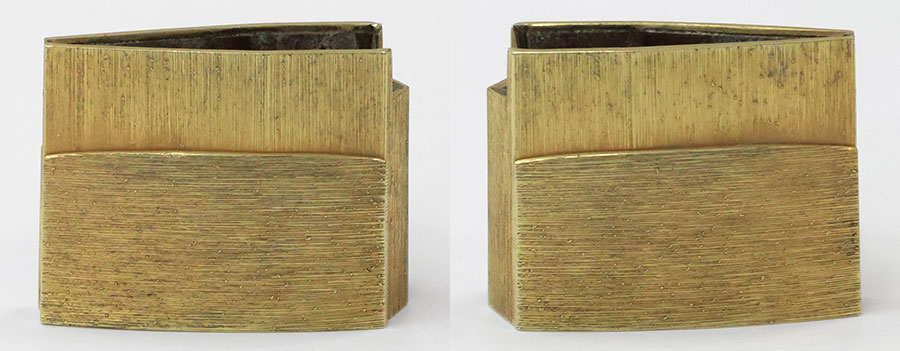
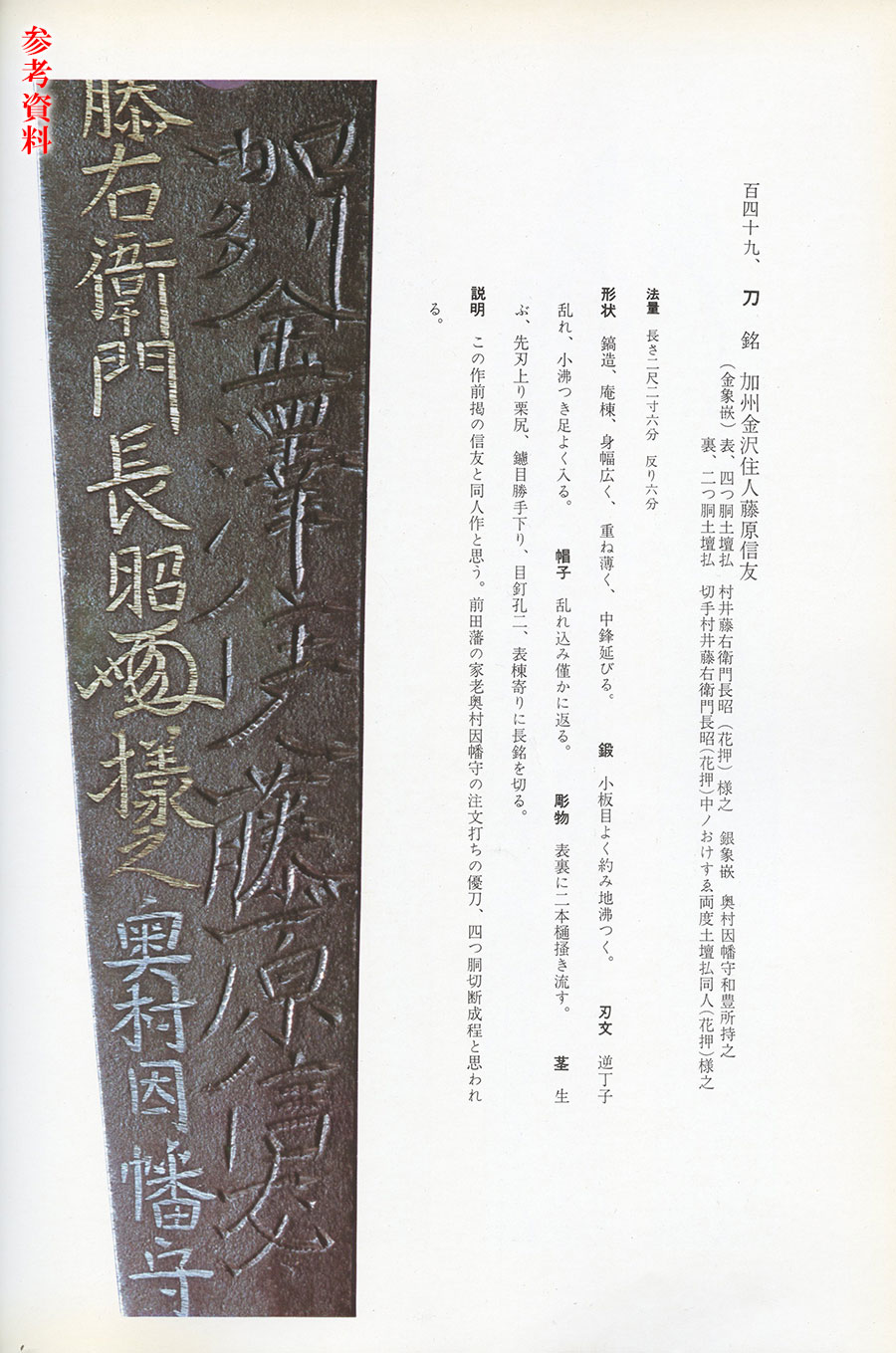
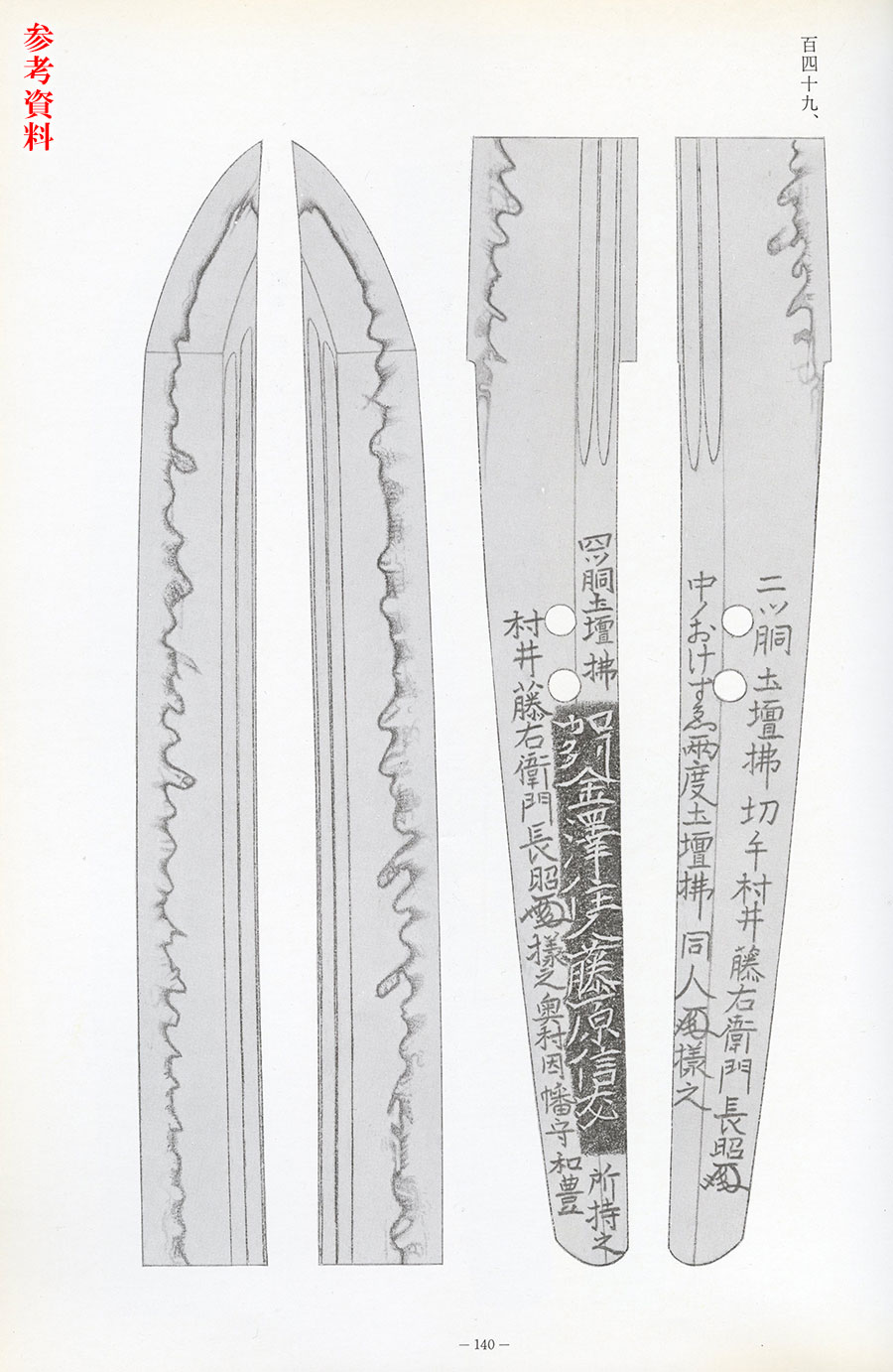
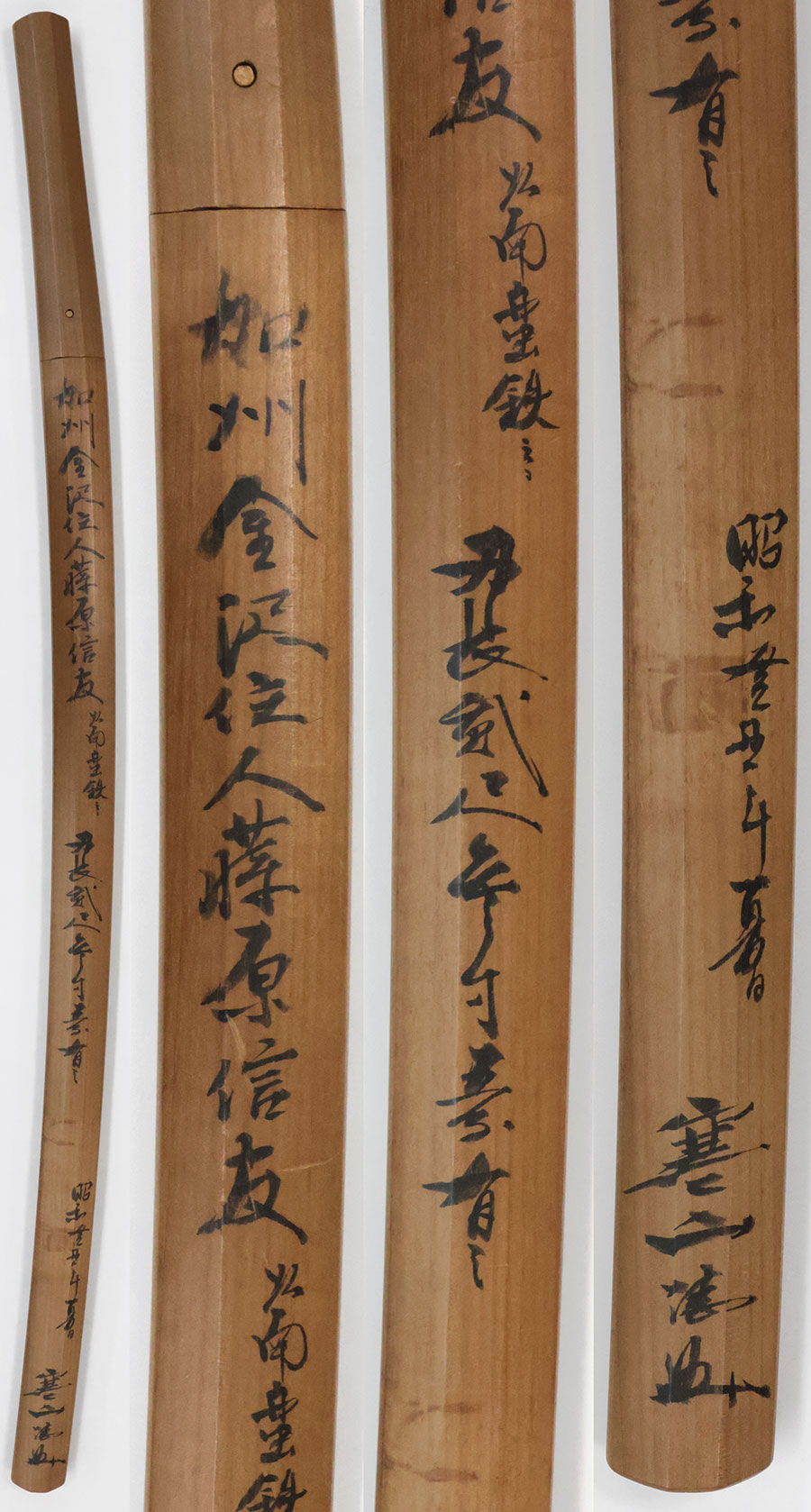
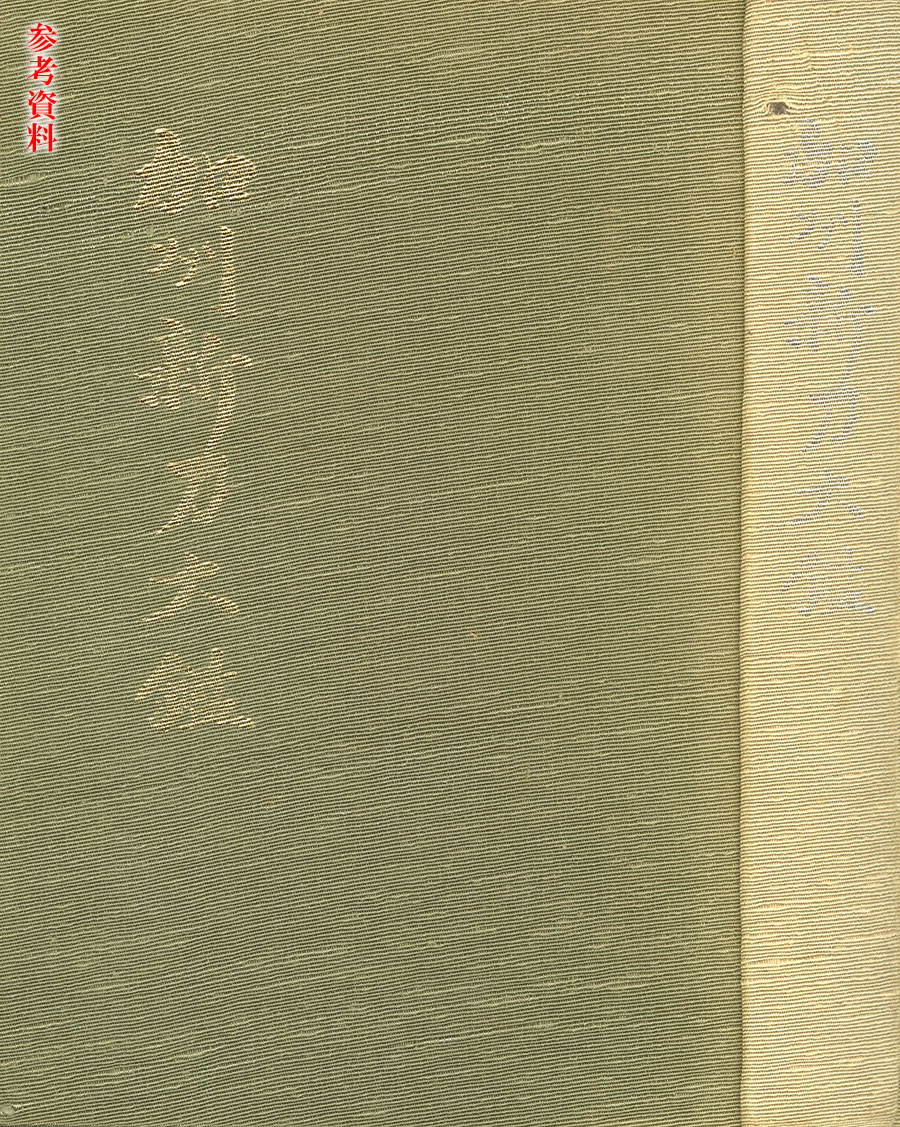
Weight (Toshin only): 710g It has arrived! In the *Kashu Shinto Taikan* (No. 149), a work by Hon-Kashu Kanazawa-ju Fujiwara Nobutomo is listed with a *mei* stating it was owned by Okumura Inaba-no-kami Kazutoyo, a *karo* (elder) of the Kaga Maeda family. This clearly demonstrates the high level of skill and status Nobutomo held within the Kaga Domain during the early Edo period, around the Kanbun era (1661, 365 years ago). Nobutomo's distant ancestor is said to be Kyo Nobukuni; the first generation Nobutomo moved from Echizen to Kaga in Tensho 3 (1575, 451 years ago), exactly at the time of the Battle of Nagashino—the conflict between the allied forces of Oda Nobunaga and Tokugawa Ieyasu against Takeda Katsuyori's army, which was decided by firearms. While the Nobutomo lineage continued for ten generations as a prestigious smithing family in the Kaga Domain, this 4th generation Heiemon Nobutomo was particularly skilled. At the time this sword was made, the country was under *sakoku* (seclusion). Because it was crafted using *nanban-tetsu* (imported steel)—a wonderfully expensive and precious material unobtainable to most at the time—it is understood to be a special-order blade for a high-ranking samurai of the Kaga Domain's lordly class. This sword is in *shinogi-zukuri* with *iori-mune*. The *moto-mihaba* is wide, and the *saki-mihaba* is also wide; the *kissaki* is *chu-kissaki*, presenting a fine *sugata*. The *jigane* is a well-tightened *ko-itame hada* with fine *ji-nie*. The *hamon* is in *nioi-deki* with *gunome-midare* mixed with *saka-choji midare*, including small *tobiyaki*. The *ko-nie* is well-attached with active *ashi*, firing a magnificent, spirited, and flamboyant edge. The Edo-period *koshirae* is also luxurious, adding further splendor to this Nobutomo blade. This sword has been cherished by an old family, but as they have aged, they have entrusted it to us to find a new owner who will treasure it. Because it was made with *nanban-tetsu*, there are some *ekubo* (dimples) in the *ji*, but these are charming characteristics. It is a candidate that would immediately pass *Tokubetsu Hozon Token* certification. We are offering it this time at a special, ultra-low price. Please enjoy this masterpiece.
 NihontoWatchBETA
Keian (1648-1652) · nagasa 71.4cm · sori 1.5cm















Kaga · around 1648-1652
Fujishiro Jo saku · Tōken Taikan top 63%
1 piece on the market now
A Hozon-certified blade judged to show notably superior workmanship and a better state of preservation. The bar is higher: re-tempered blades and most unsigned Muromachi/Edo works are excluded.
The NBTHK (Nihon Bijutsu Tōken Hozon Kyōkai, the Society for the Preservation of Japanese Art Swords) is a public-interest incorporated foundation founded in 1948 and supervised by Japan’s Agency for Cultural Affairs (Bunkachō); it is based at the Japanese Sword Museum in Tokyo. Its expert panels physically examine each submitted work (shinsa) and issue a certificate (kanteishō) ranking it by artistic and historical merit. NBTHK papers are the most widely recognized standard of authentication for Japanese swords and fittings.
NBTHK official siteFor returns due to customer circumstances, the cost is the customer's responsibility. For returns due to our mis-shipment or a defective item, we bear the cost.
Weight (Toshin only): 710g It has arrived! In the *Kashu Shinto Taikan* (No. 149), a work by Hon-Kashu Kanazawa-ju Fujiwara Nobutomo is listed with a *mei* stating it was owned by Okumura Inaba-no-kami Kazutoyo, a *karo* (elder) of the Kaga Maeda family. This clearly demonstrates the high level of skill and status Nobutomo held within the Kaga Domain during the early Edo period, around the Kanbun era (1661, 365 years ago). Nobutomo's distant ancestor is said to be Kyo Nobukuni; the first generation Nobutomo moved from Echizen to Kaga in Tensho 3 (1575, 451 years ago), exactly at the time of the Battle of Nagashino—the conflict between the allied forces of Oda Nobunaga and Tokugawa Ieyasu against Takeda Katsuyori's army, which was decided by firearms. While the Nobutomo lineage continued for ten generations as a prestigious smithing family in the Kaga Domain, this 4th generation Heiemon Nobutomo was particularly skilled. At the time this sword was made, the country was under *sakoku* (seclusion). Because it was crafted using *nanban-tetsu* (imported steel)—a wonderfully expensive and precious material unobtainable to most at the time—it is understood to be a special-order blade for a high-ranking samurai of the Kaga Domain's lordly class. This sword is in *shinogi-zukuri* with *iori-mune*. The *moto-mihaba* is wide, and the *saki-mihaba* is also wide; the *kissaki* is *chu-kissaki*, presenting a fine *sugata*. The *jigane* is a well-tightened *ko-itame hada* with fine *ji-nie*. The *hamon* is in *nioi-deki* with *gunome-midare* mixed with *saka-choji midare*, including small *tobiyaki*. The *ko-nie* is well-attached with active *ashi*, firing a magnificent, spirited, and flamboyant edge. The Edo-period *koshirae* is also luxurious, adding further splendor to this Nobutomo blade. This sword has been cherished by an old family, but as they have aged, they have entrusted it to us to find a new owner who will treasure it. Because it was made with *nanban-tetsu*, there are some *ekubo* (dimples) in the *ji*, but these are charming characteristics. It is a candidate that would immediately pass *Tokubetsu Hozon Token* certification. We are offering it this time at a special, ultra-low price. Please enjoy this masterpiece.
NihontoWatchBETAKeian (1648-1652) · nagasa 71.4cm · sori 1.5cm
Kaga · around 1648-1652
Fujishiro Jo saku · Tōken Taikan top 63%
1 piece on the market now
A Hozon-certified blade judged to show notably superior workmanship and a better state of preservation. The bar is higher: re-tempered blades and most unsigned Muromachi/Edo works are excluded.
The NBTHK (Nihon Bijutsu Tōken Hozon Kyōkai, the Society for the Preservation of Japanese Art Swords) is a public-interest incorporated foundation founded in 1948 and supervised by Japan’s Agency for Cultural Affairs (Bunkachō); it is based at the Japanese Sword Museum in Tokyo. Its expert panels physically examine each submitted work (shinsa) and issue a certificate (kanteishō) ranking it by artistic and historical merit. NBTHK papers are the most widely recognized standard of authentication for Japanese swords and fittings.
NBTHK official siteFor returns due to customer circumstances, the cost is the customer's responsibility. For returns due to our mis-shipment or a defective item, we bear the cost.
