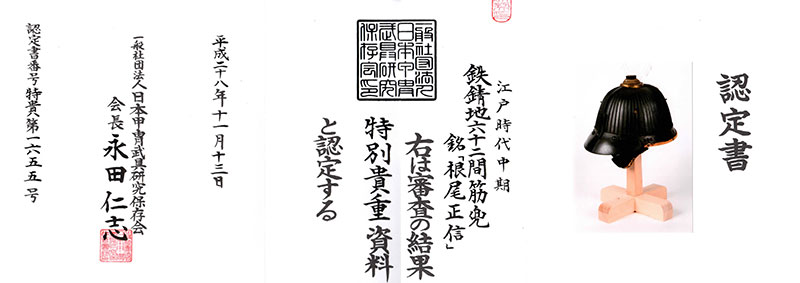
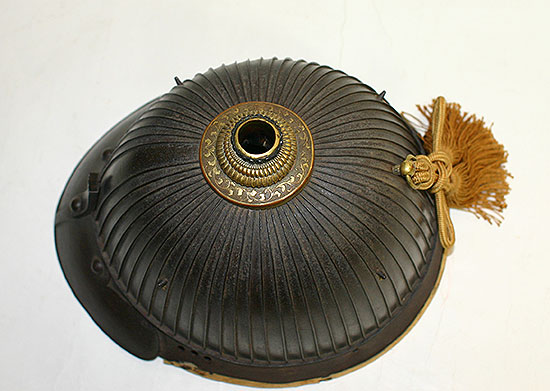
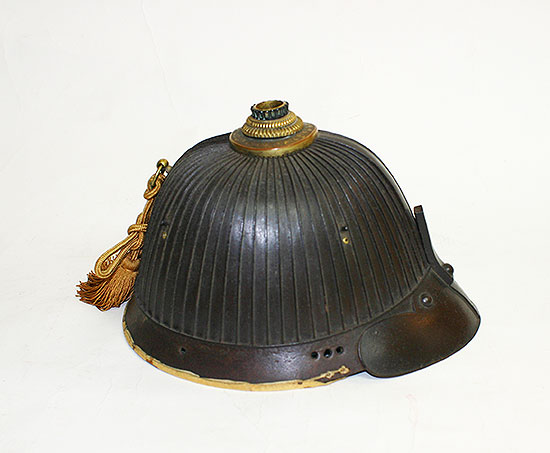
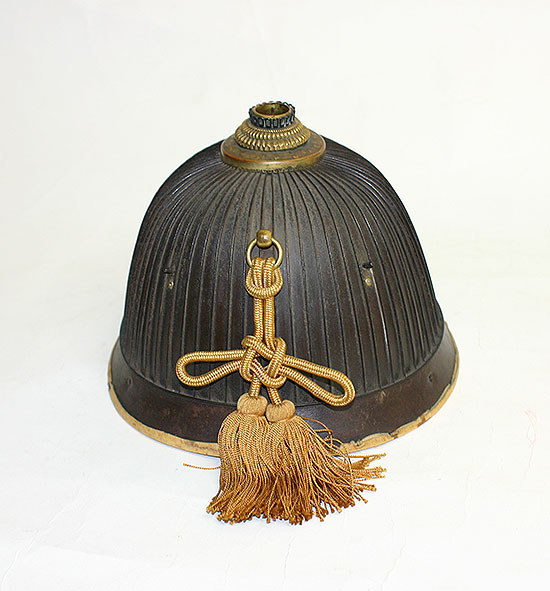
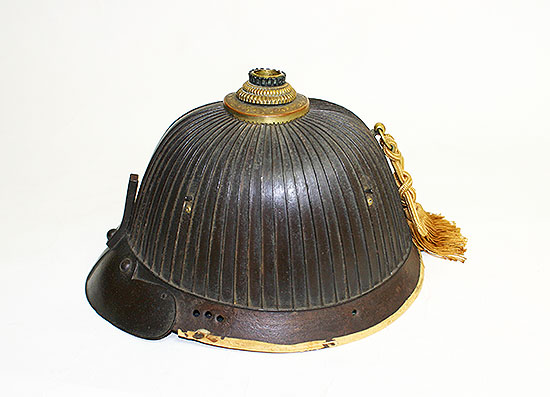
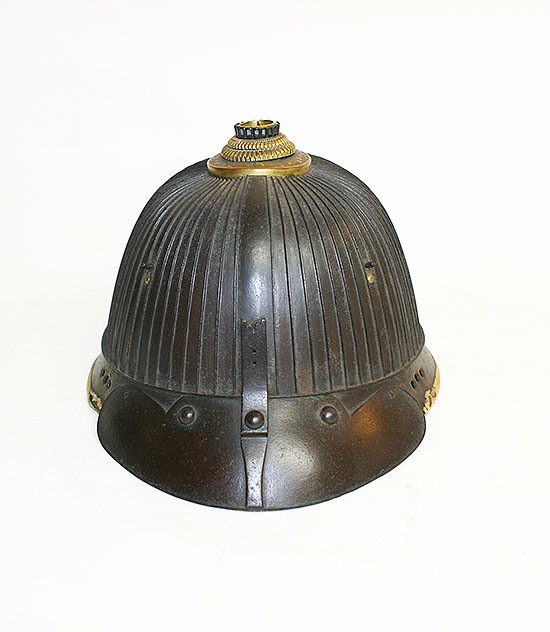
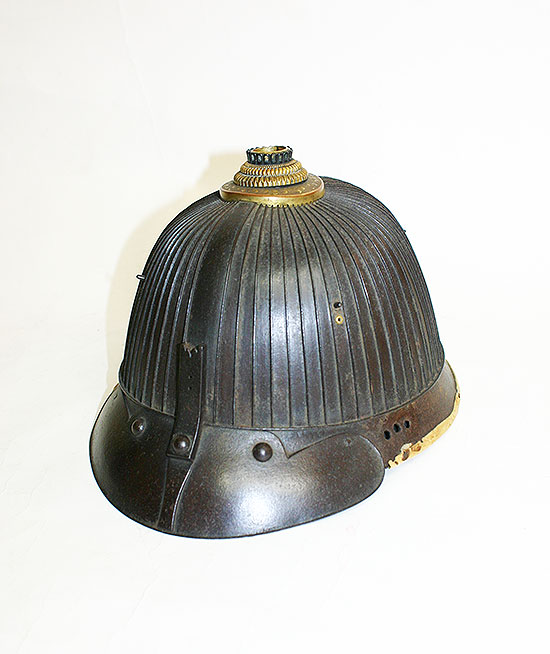
This is an excellent iron russet 62-plate suji kabuto (helmet) signed by Neo Masanobu, an armorer active in Yamato Province (Nara Prefecture) during the Edo period. The Neo school is said to have originated from armorers who moved from the mountainous regions to castle towns after the unification of Japan, naming their school after their hometown of Neo Valley in Mino Province. Masanobu is considered the earliest and most skilled master of the school, known for his precise and elaborate works, including 160-plate kabuto, and robust pieces with excellent forging and triple-layered construction. This particular helmet features a meticulously crafted bowl with a refined, slightly darkened iron texture.
 NihontoWatchBETA
mei · Neo · Edo
Kabuto only
62-plate · Suji-bachi
Neo Masanobu
Signed · On the kabuto bowl
Edo
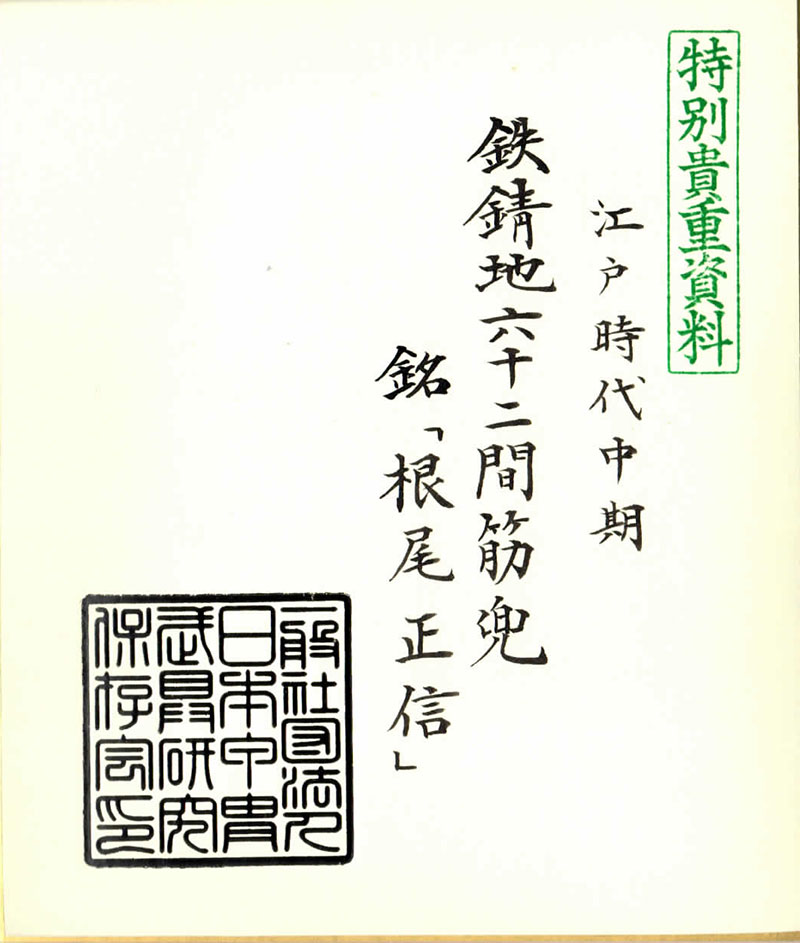
Tokubetsu Kichō Shiryō · Nihon Katchū Bugu Kenkyū Hozon Kai
Especially valuable armour of notably superior workmanship and condition, the third of the five ranks.
Japanese armour is not certified by the NBTHK. The Nihon Katchū Bugu Kenkyū Hozon Kai (the Association for the Research and Preservation of Japanese Helmets and Armour), founded in 1961, is the principal body for armour. Its shinsa grades a piece as 資料 (shiryō, "reference material") across five ascending ranks: Hozon, Kichō, Tokubetsu Kichō, Kōshū Tokubetsu Kichō, and the highest, Jūyō Bunka Shiryō. The 資料 framing reflects the society’s purpose of preserving armour as cultural and historical reference, distinct from the NBTHK’s sword paper tiers.
Customer-initiated returns accepted within two days of arrival; return shipping paid by customer and fees non-refundable. Returns/refunds unavailable for overseas deliveries.
This is an excellent iron russet 62-plate suji kabuto (helmet) signed by Neo Masanobu, an armorer active in Yamato Province (Nara Prefecture) during the Edo period. The Neo school is said to have originated from armorers who moved from the mountainous regions to castle towns after the unification of Japan, naming their school after their hometown of Neo Valley in Mino Province. Masanobu is considered the earliest and most skilled master of the school, known for his precise and elaborate works, including 160-plate kabuto, and robust pieces with excellent forging and triple-layered construction. This particular helmet features a meticulously crafted bowl with a refined, slightly darkened iron texture.
NihontoWatchBETAmei · Neo · Edo
Kabuto only
62-plate · Suji-bachi
Neo Masanobu
Signed · On the kabuto bowl
Edo
Tokubetsu Kichō Shiryō · Nihon Katchū Bugu Kenkyū Hozon Kai
Especially valuable armour of notably superior workmanship and condition, the third of the five ranks.
Japanese armour is not certified by the NBTHK. The Nihon Katchū Bugu Kenkyū Hozon Kai (the Association for the Research and Preservation of Japanese Helmets and Armour), founded in 1961, is the principal body for armour. Its shinsa grades a piece as 資料 (shiryō, "reference material") across five ascending ranks: Hozon, Kichō, Tokubetsu Kichō, Kōshū Tokubetsu Kichō, and the highest, Jūyō Bunka Shiryō. The 資料 framing reflects the society’s purpose of preserving armour as cultural and historical reference, distinct from the NBTHK’s sword paper tiers.
Customer-initiated returns accepted within two days of arrival; return shipping paid by customer and fees non-refundable. Returns/refunds unavailable for overseas deliveries.