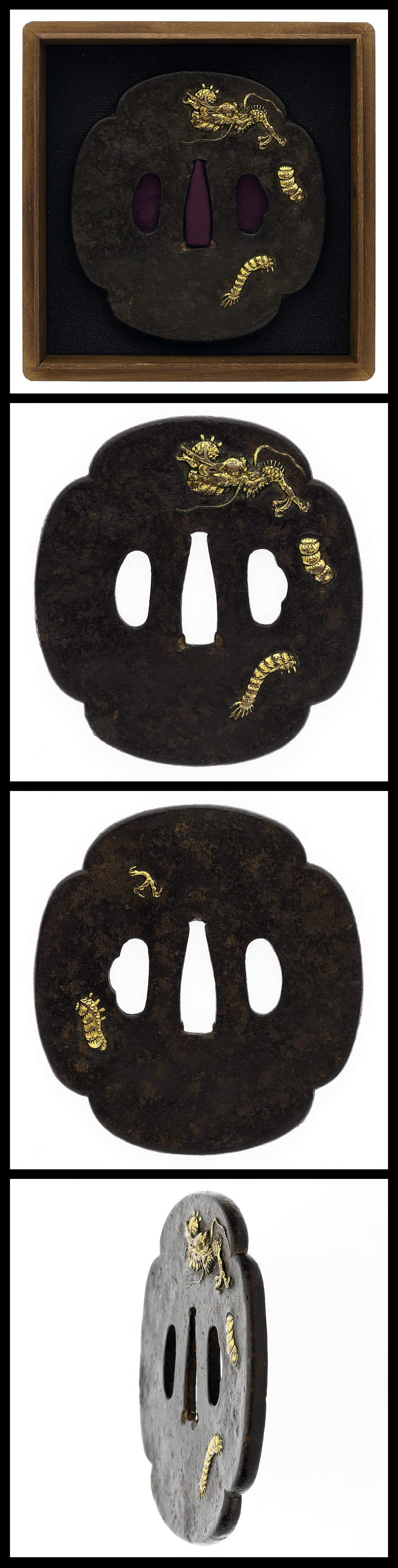
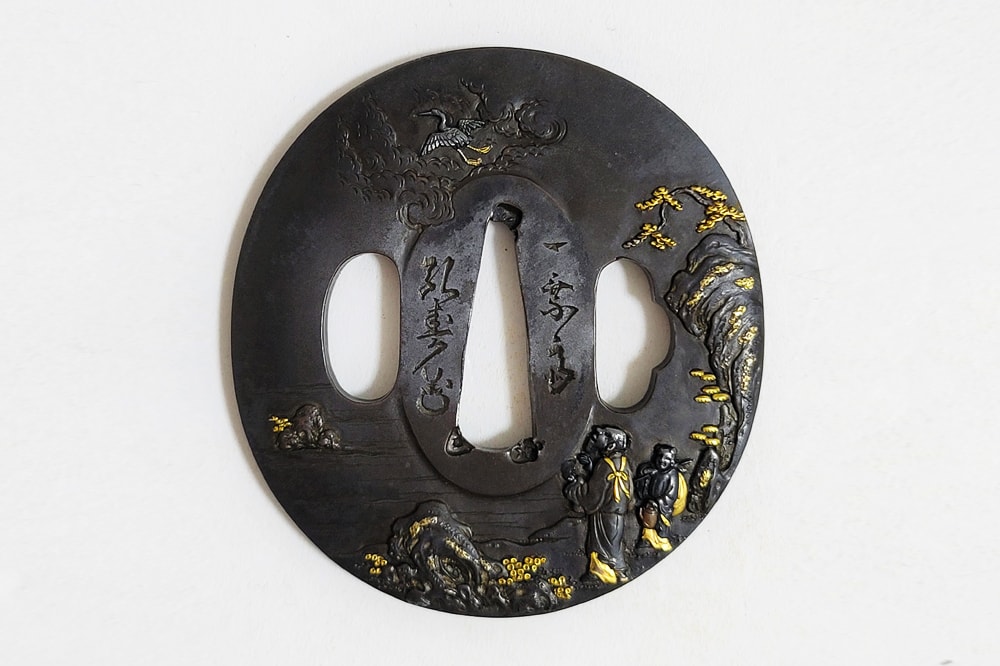
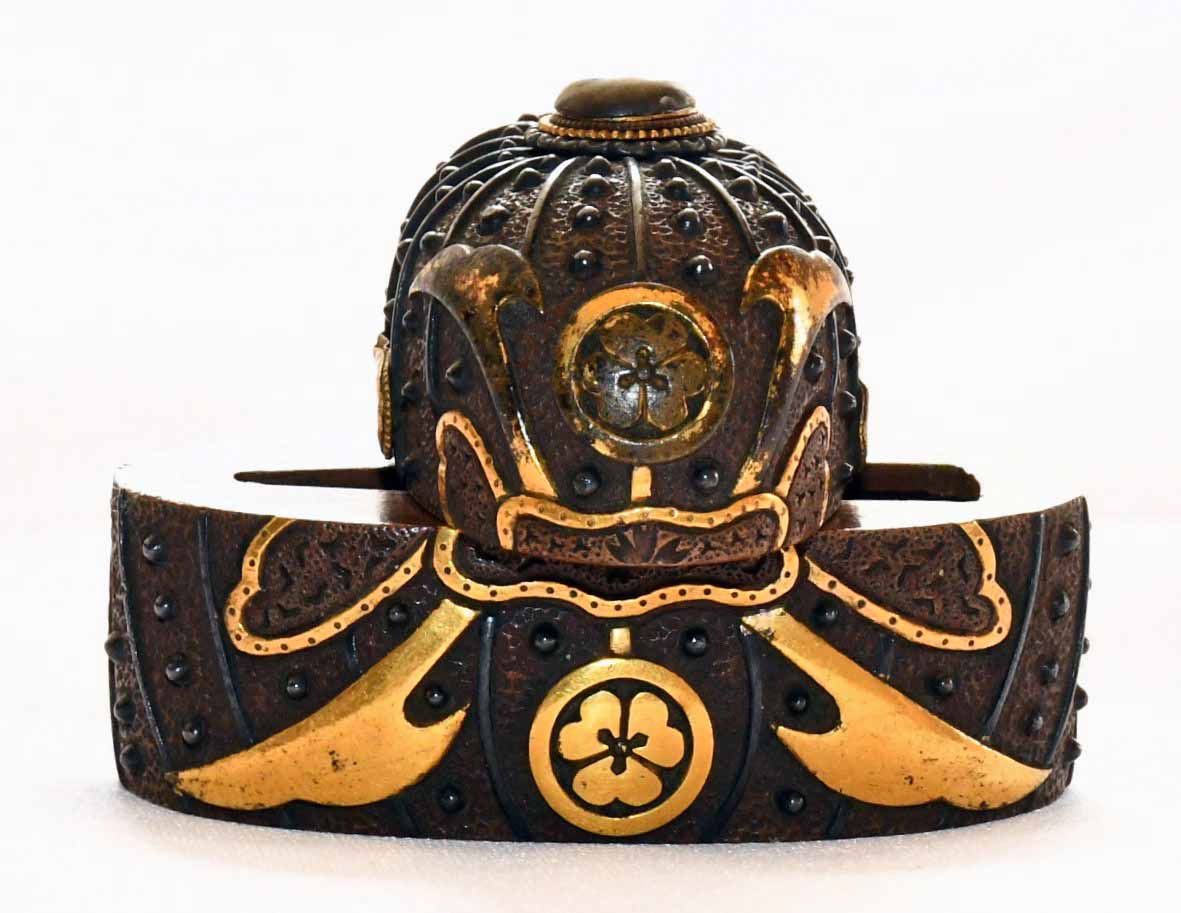
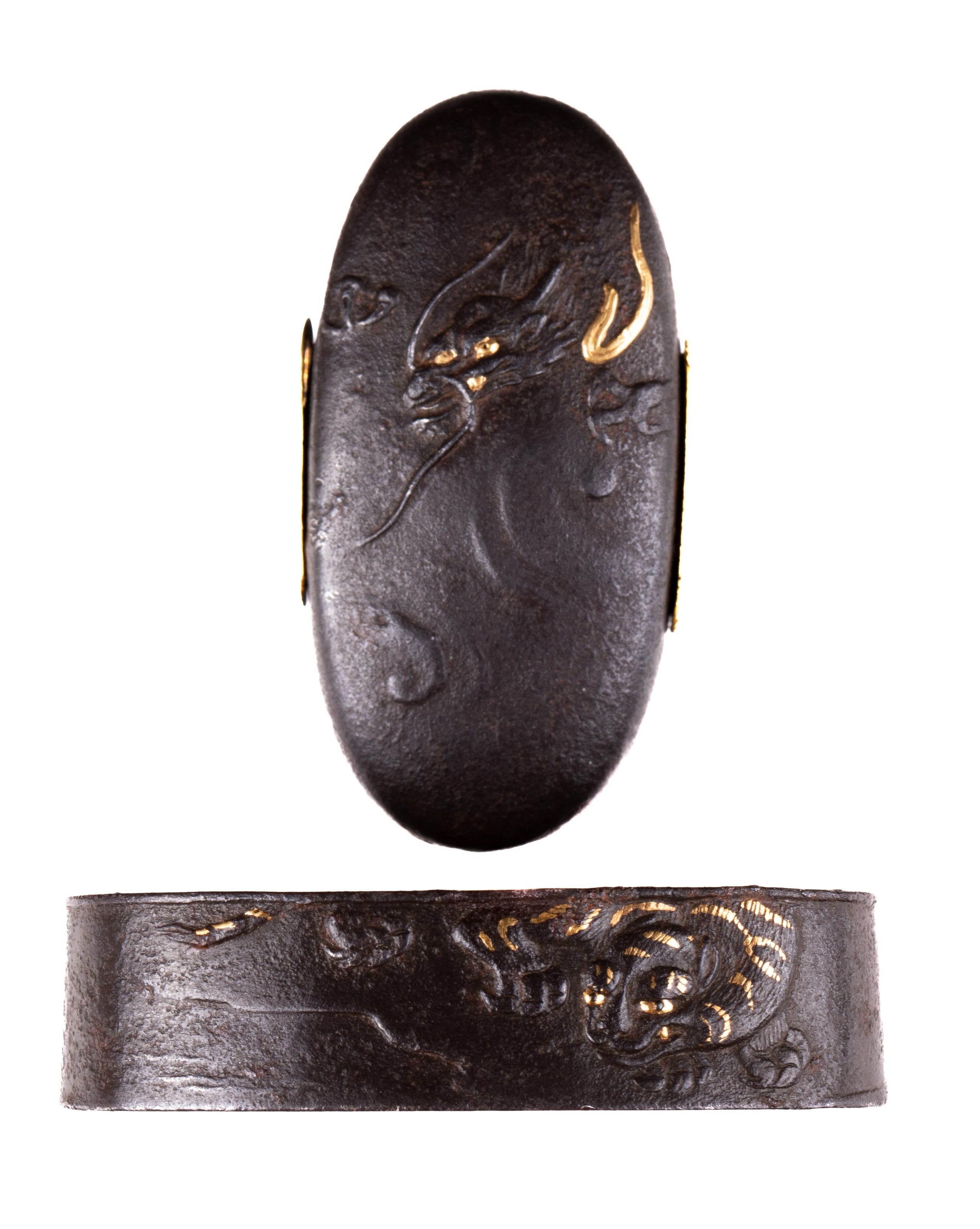
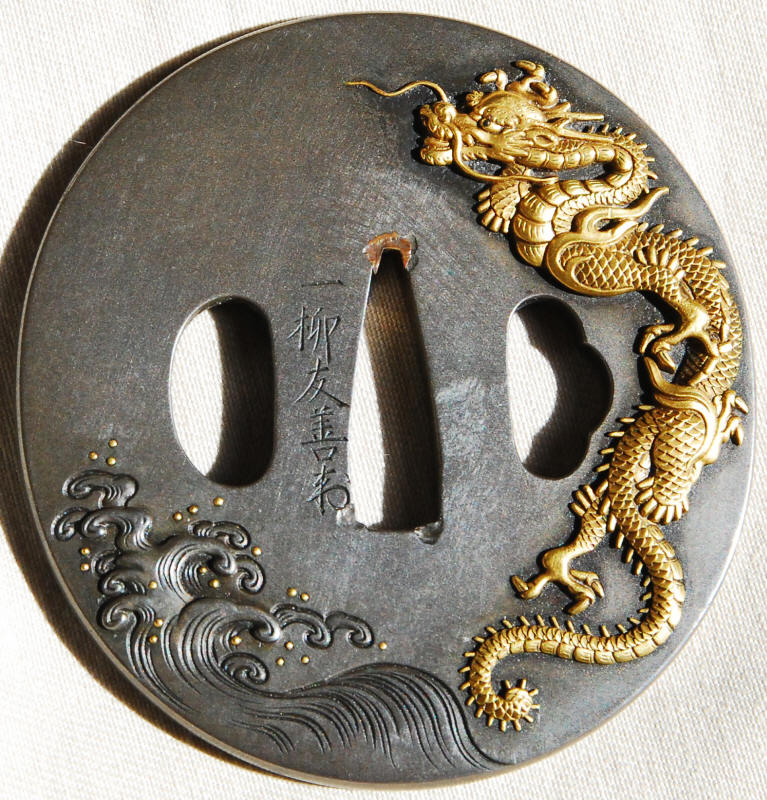
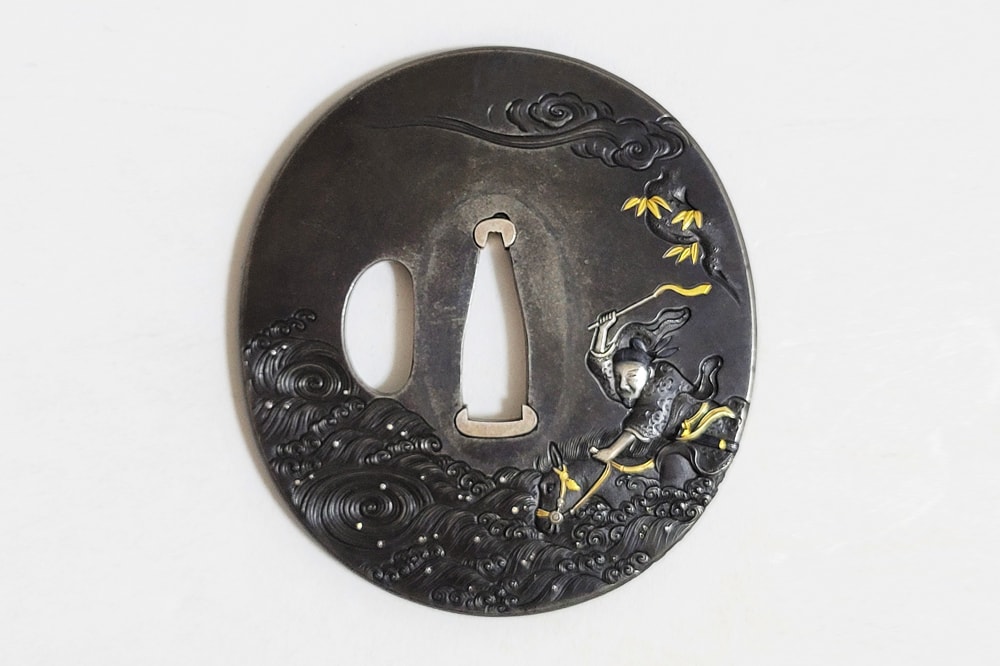
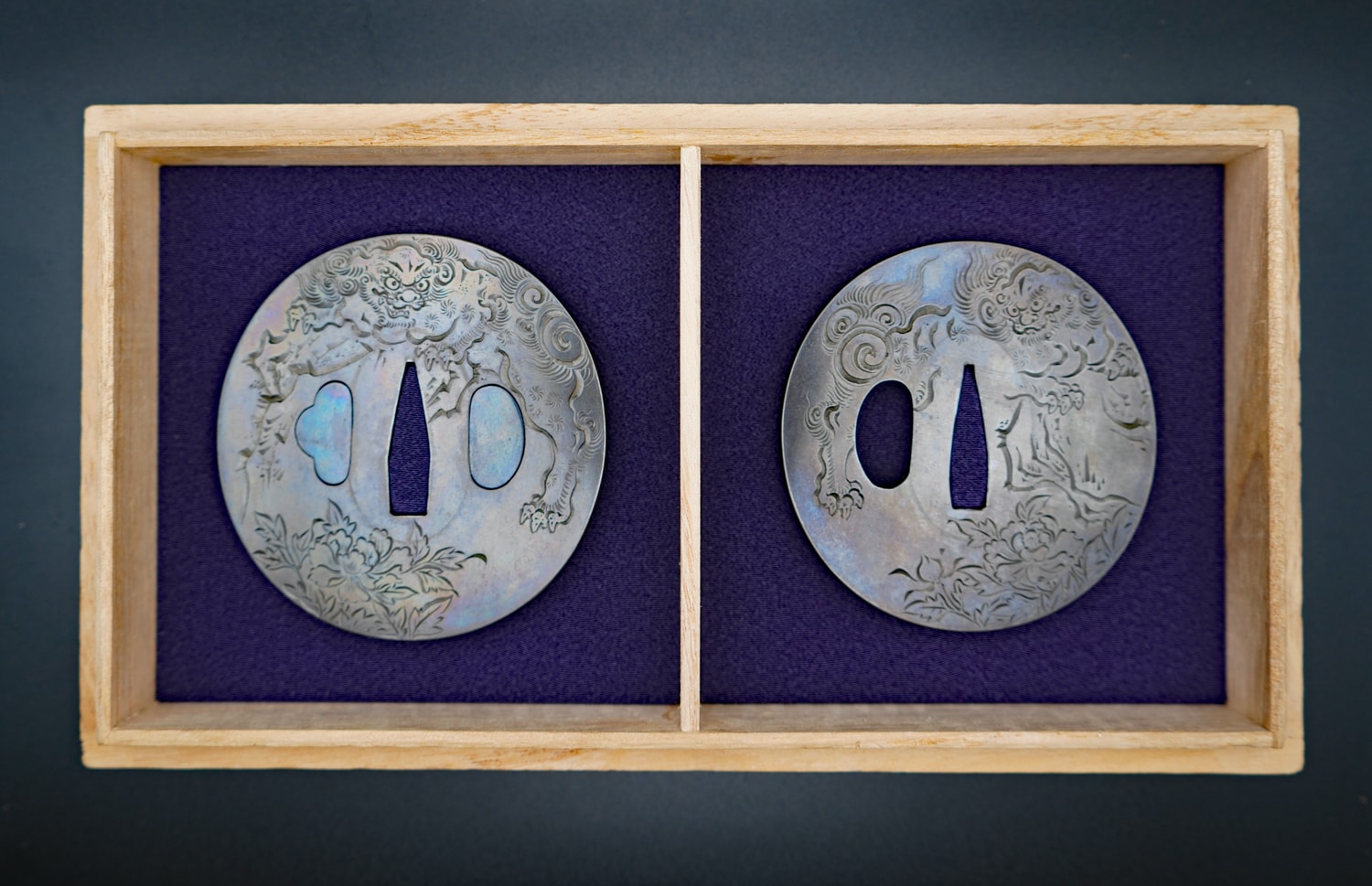
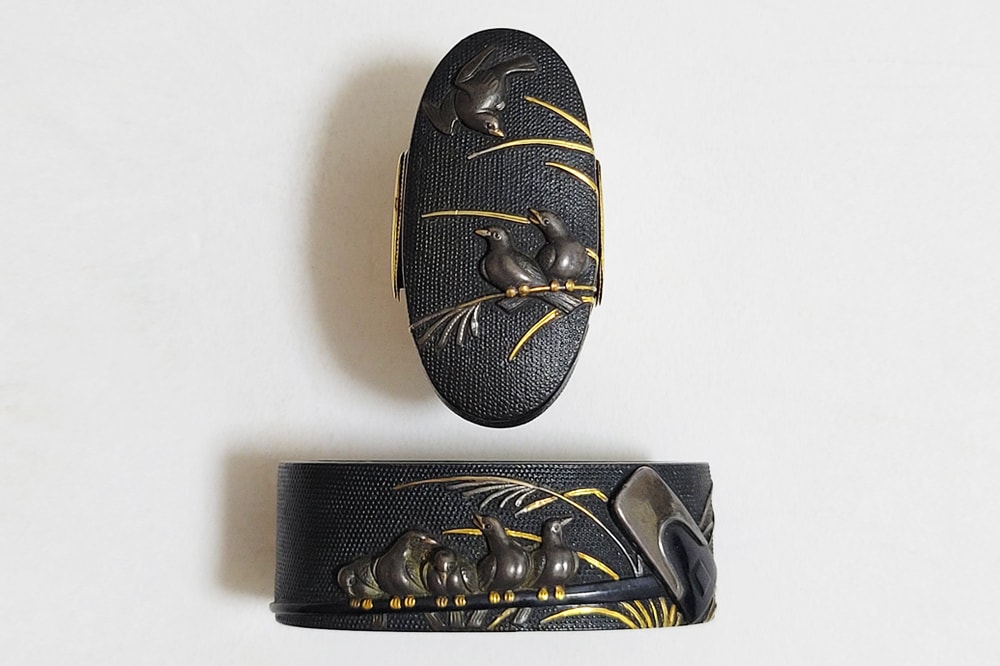
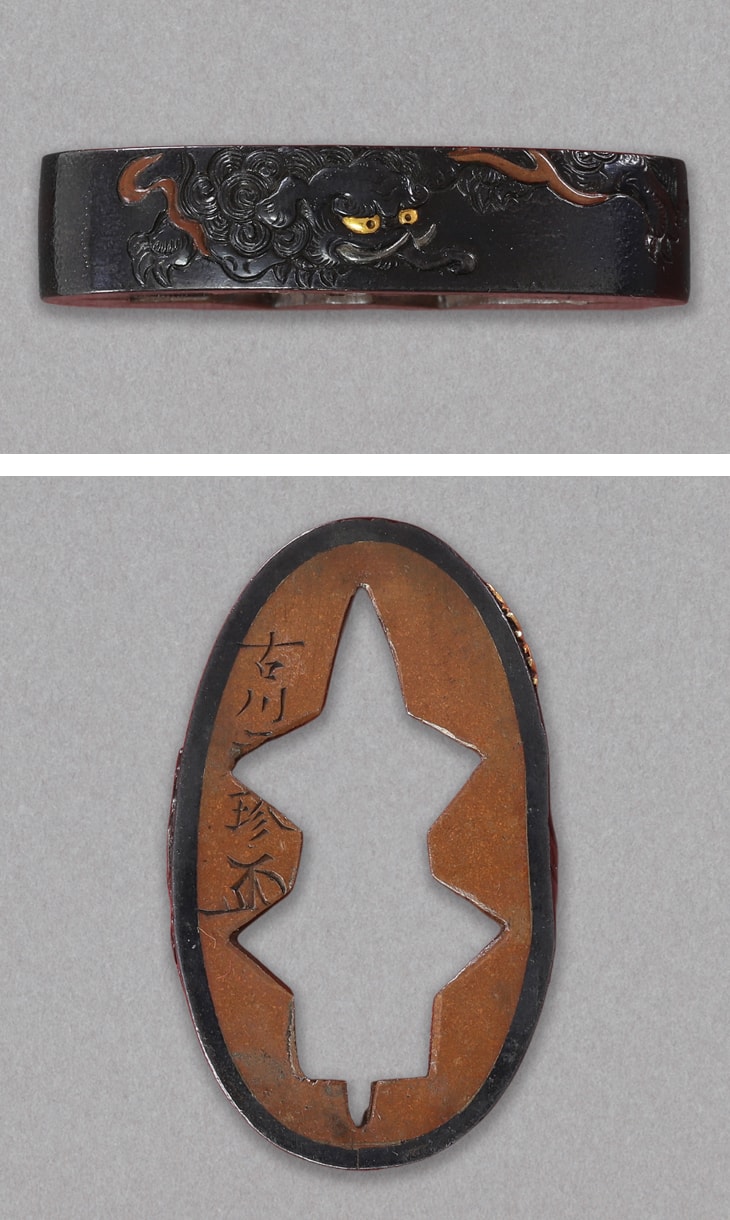
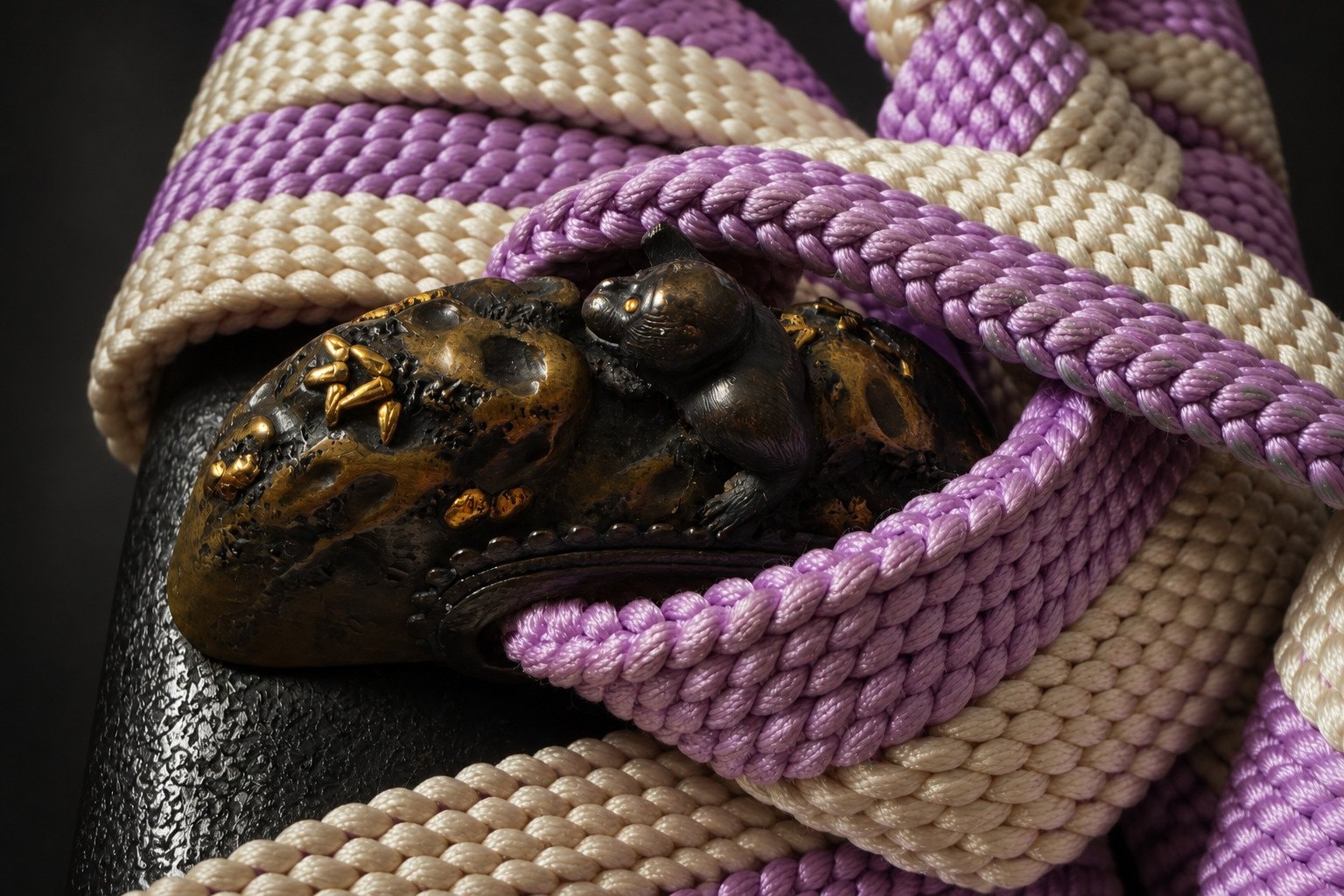
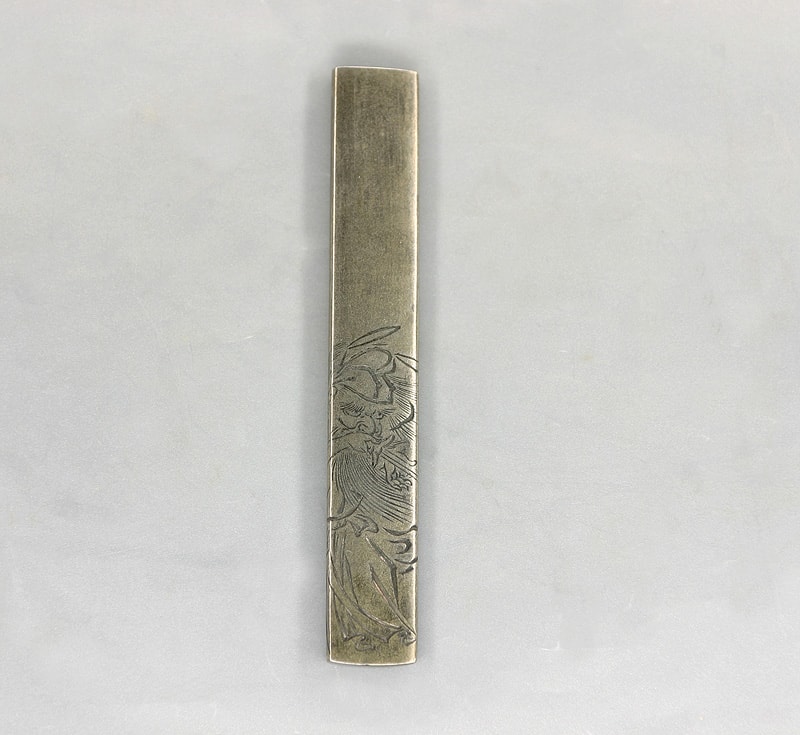
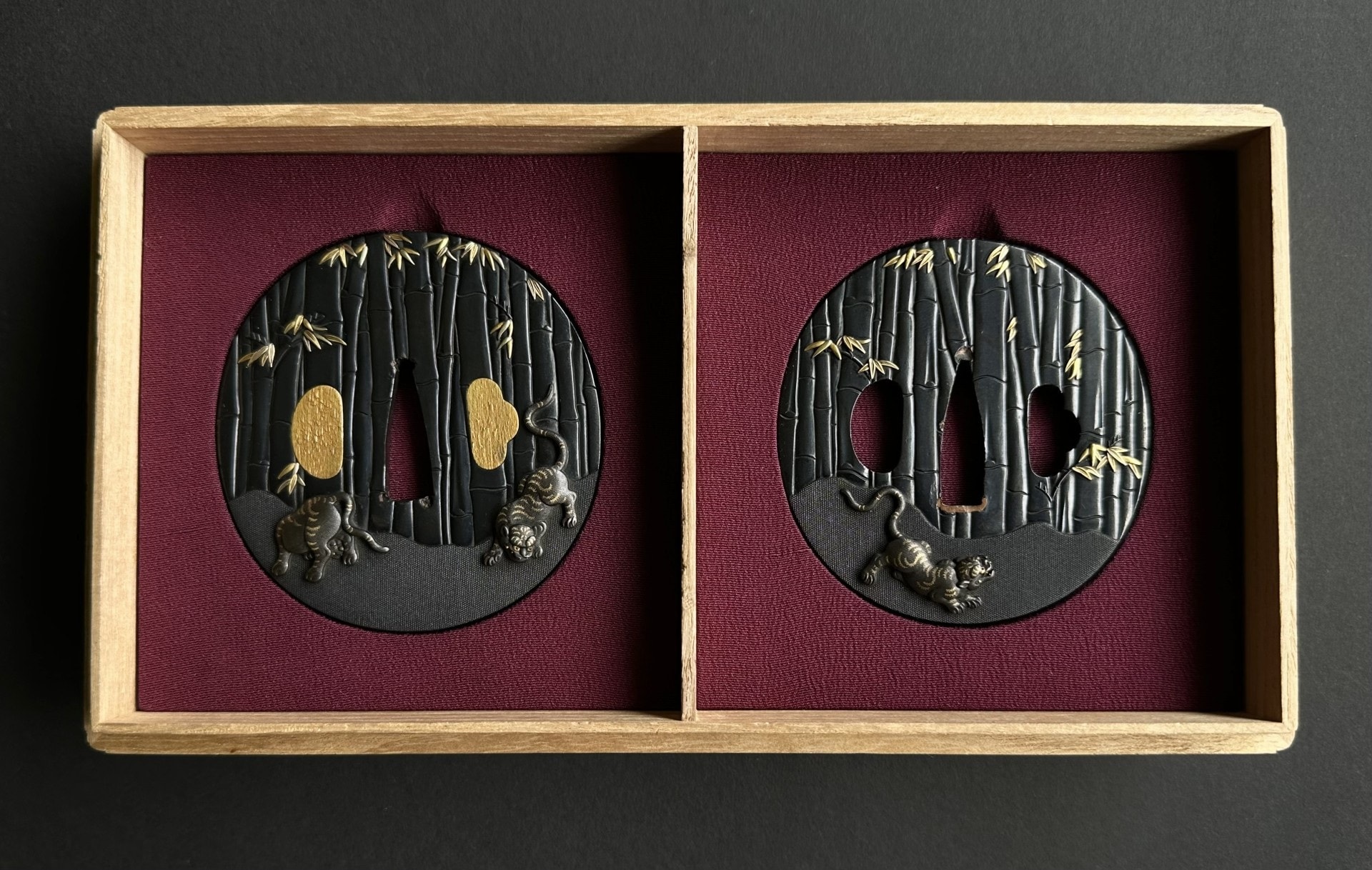
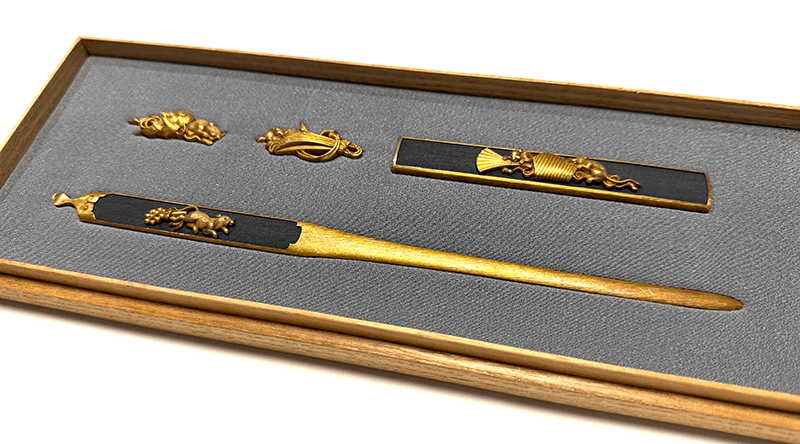
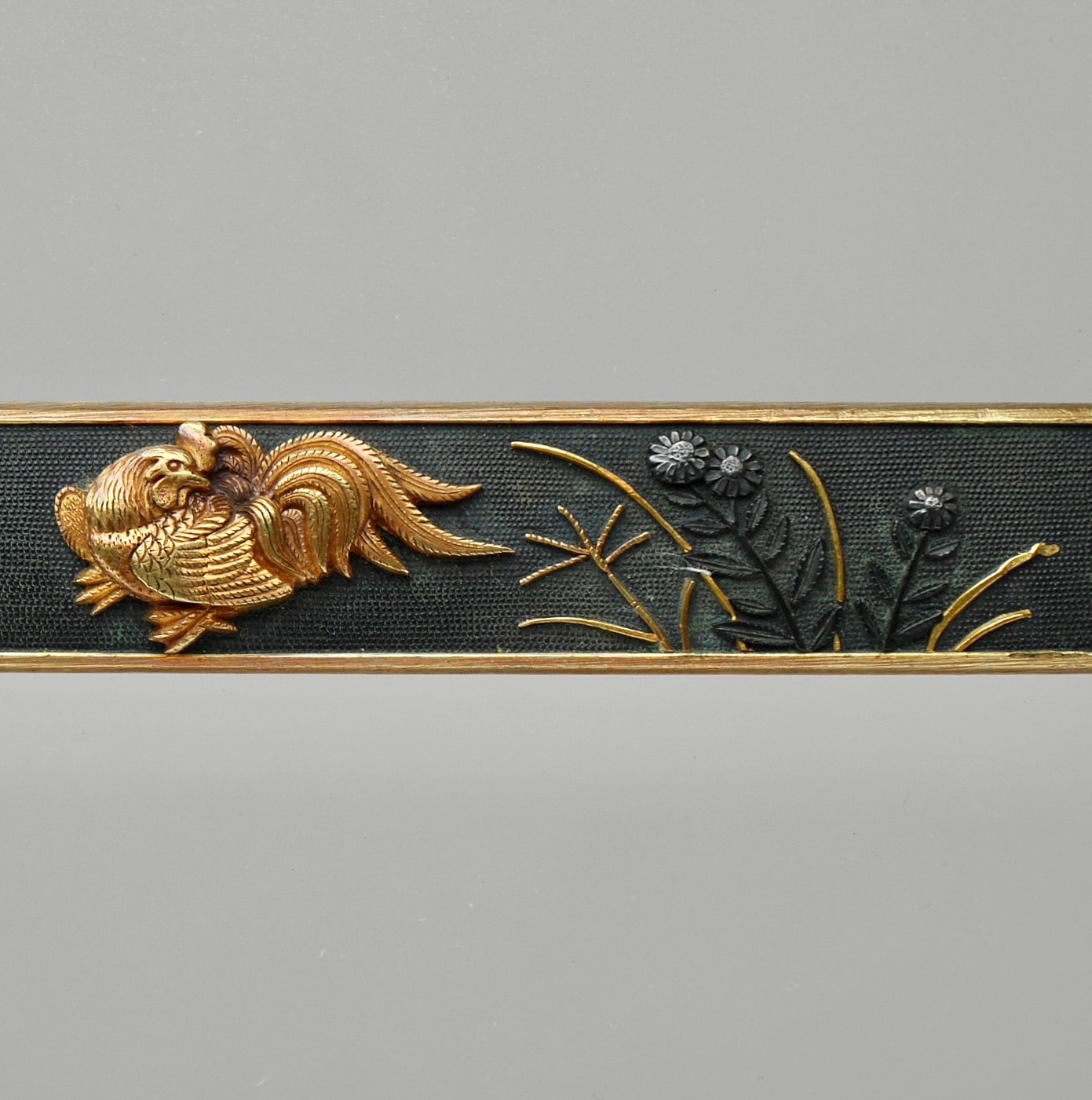
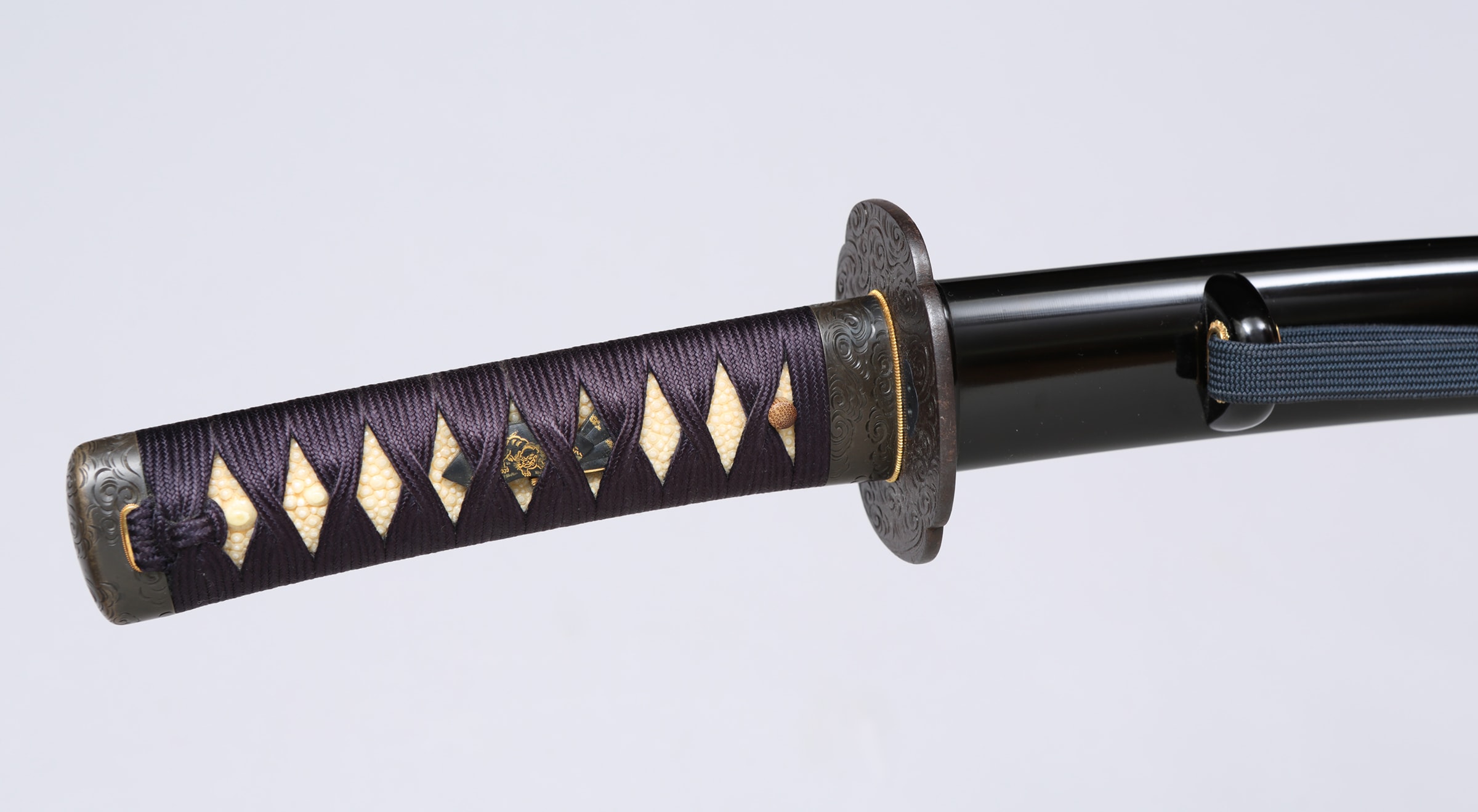
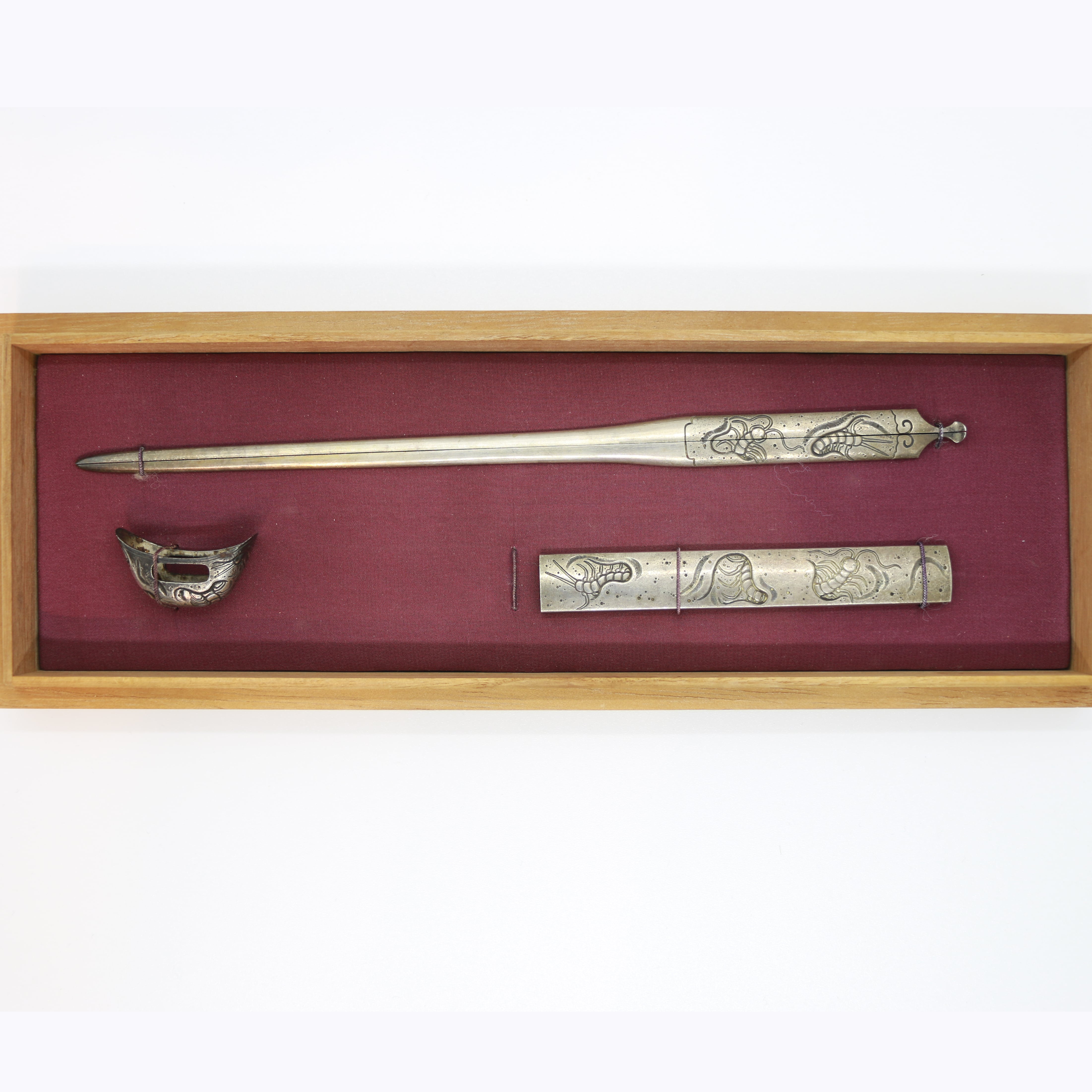
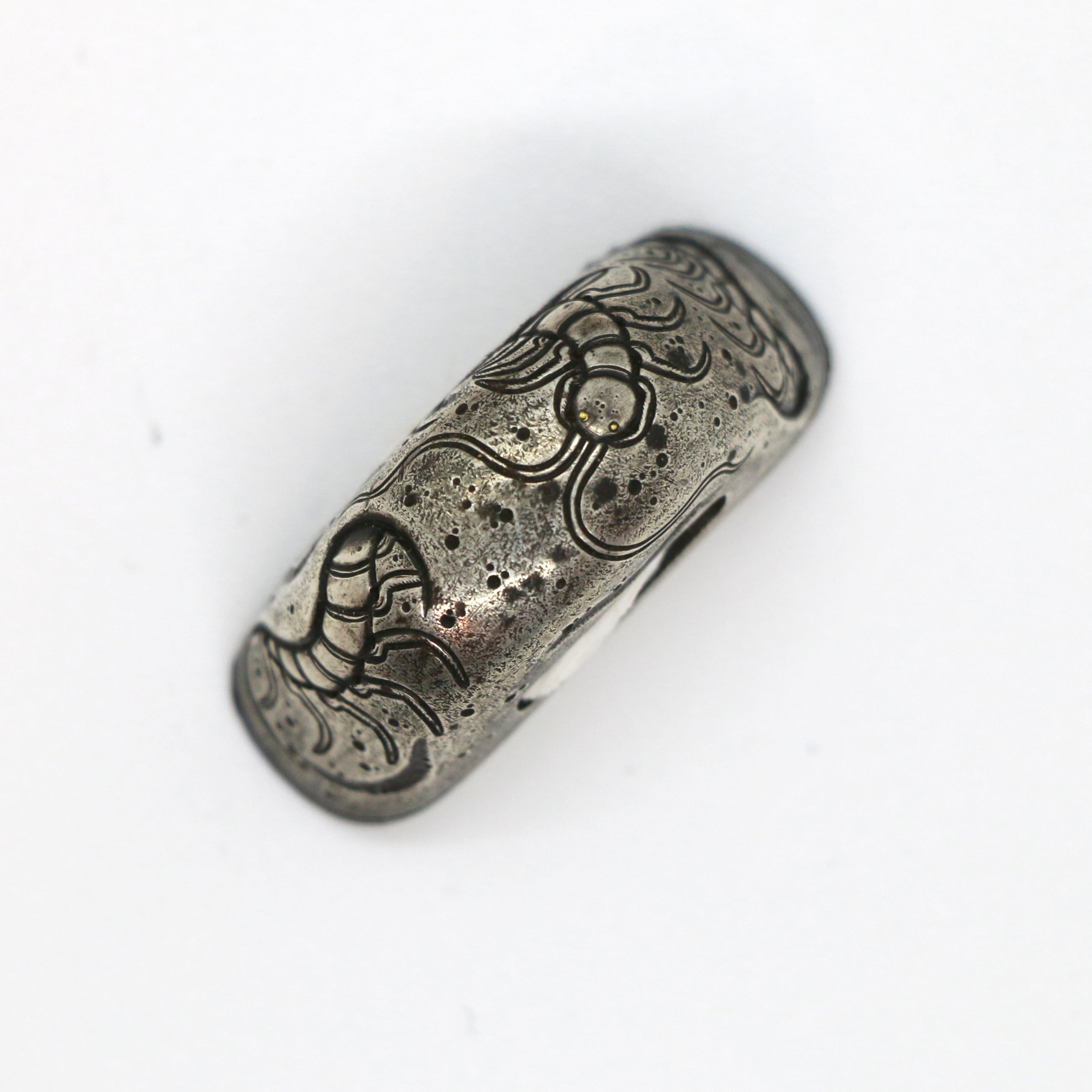
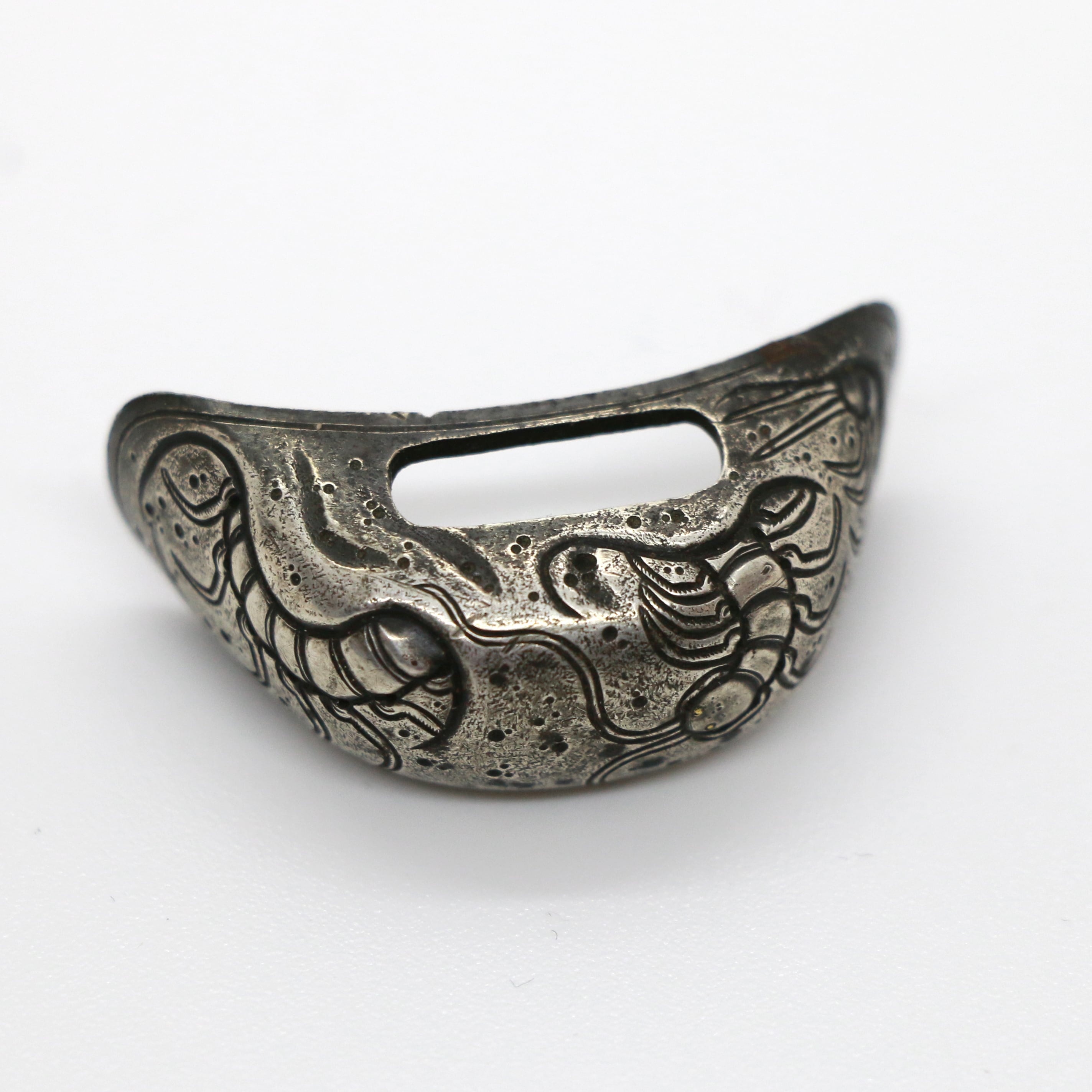
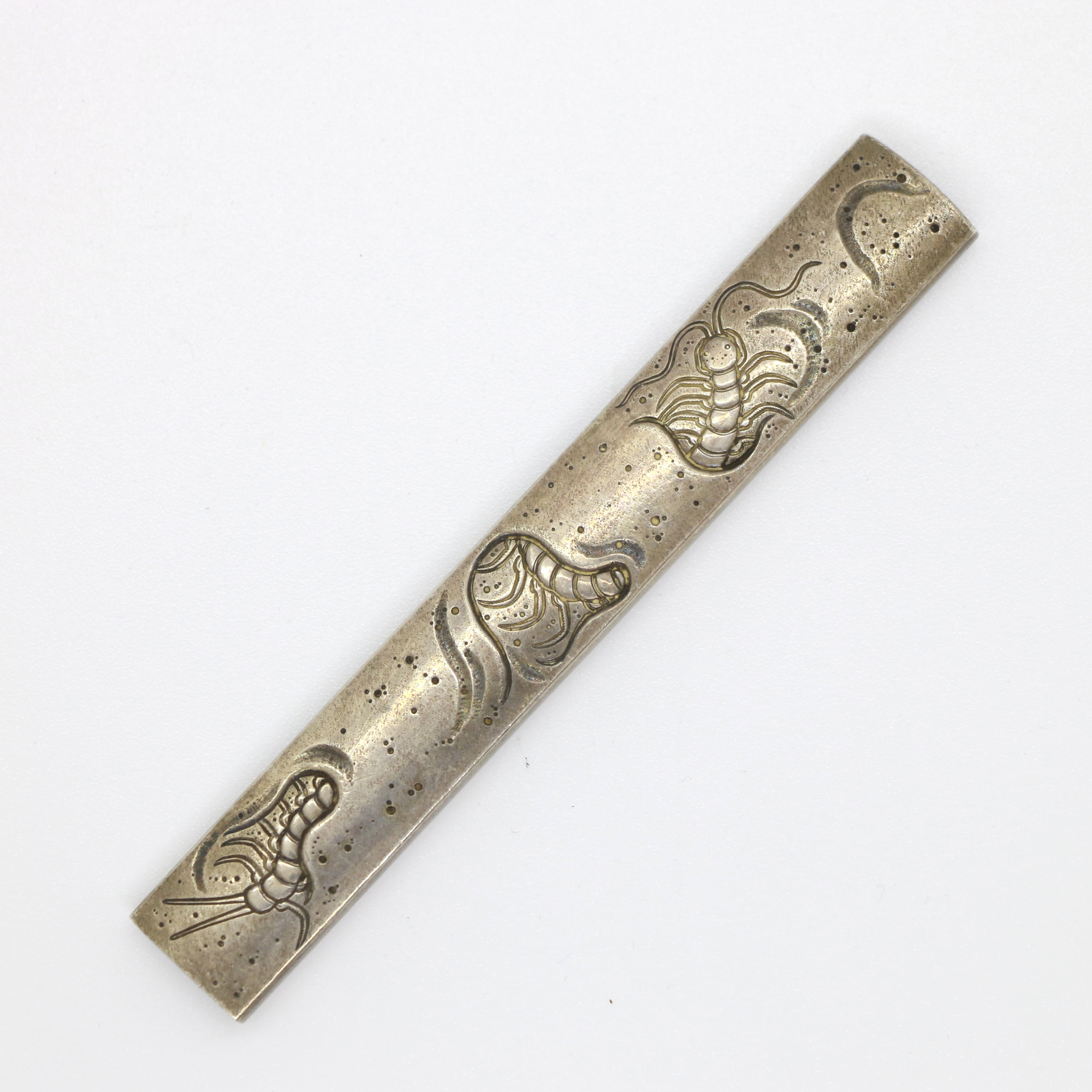
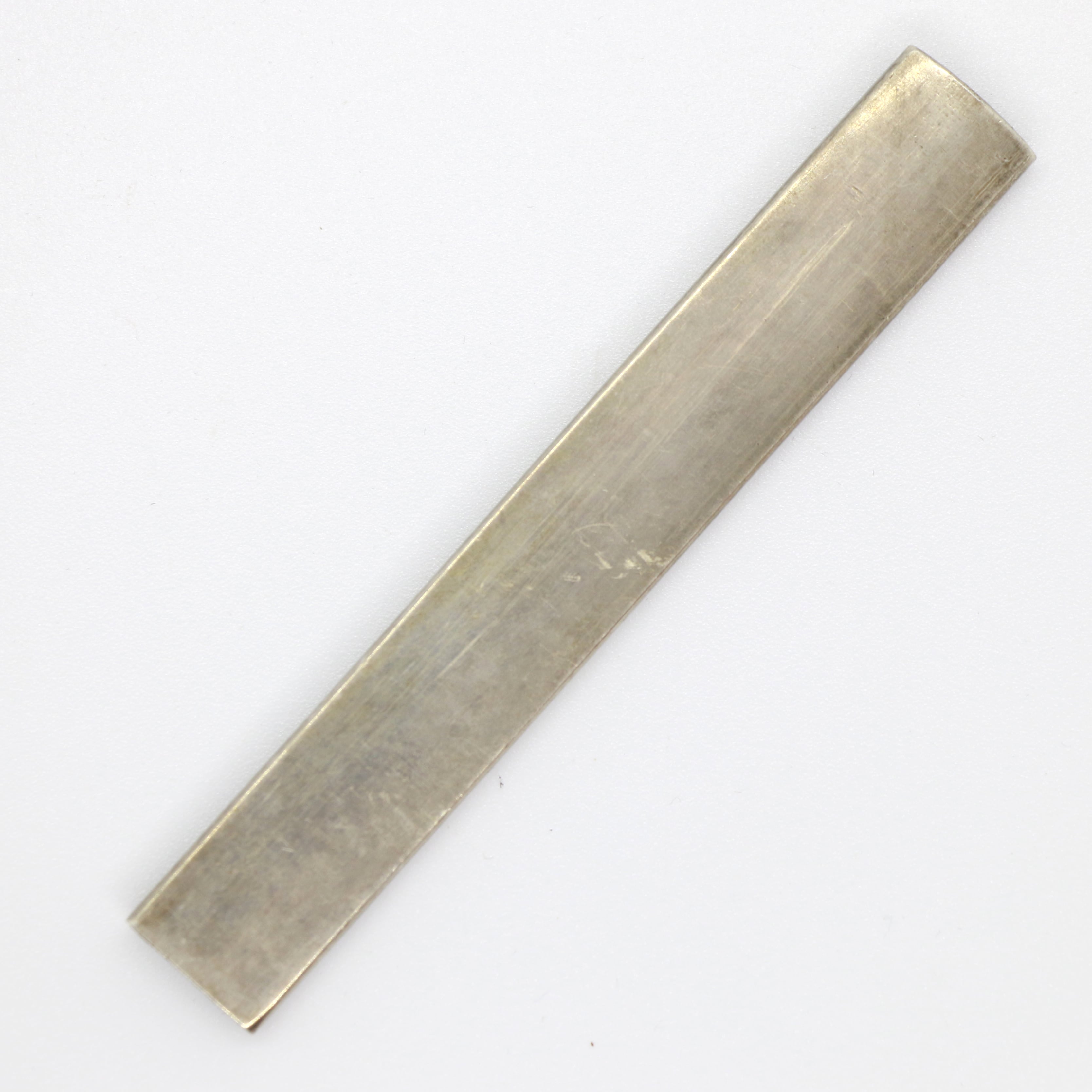
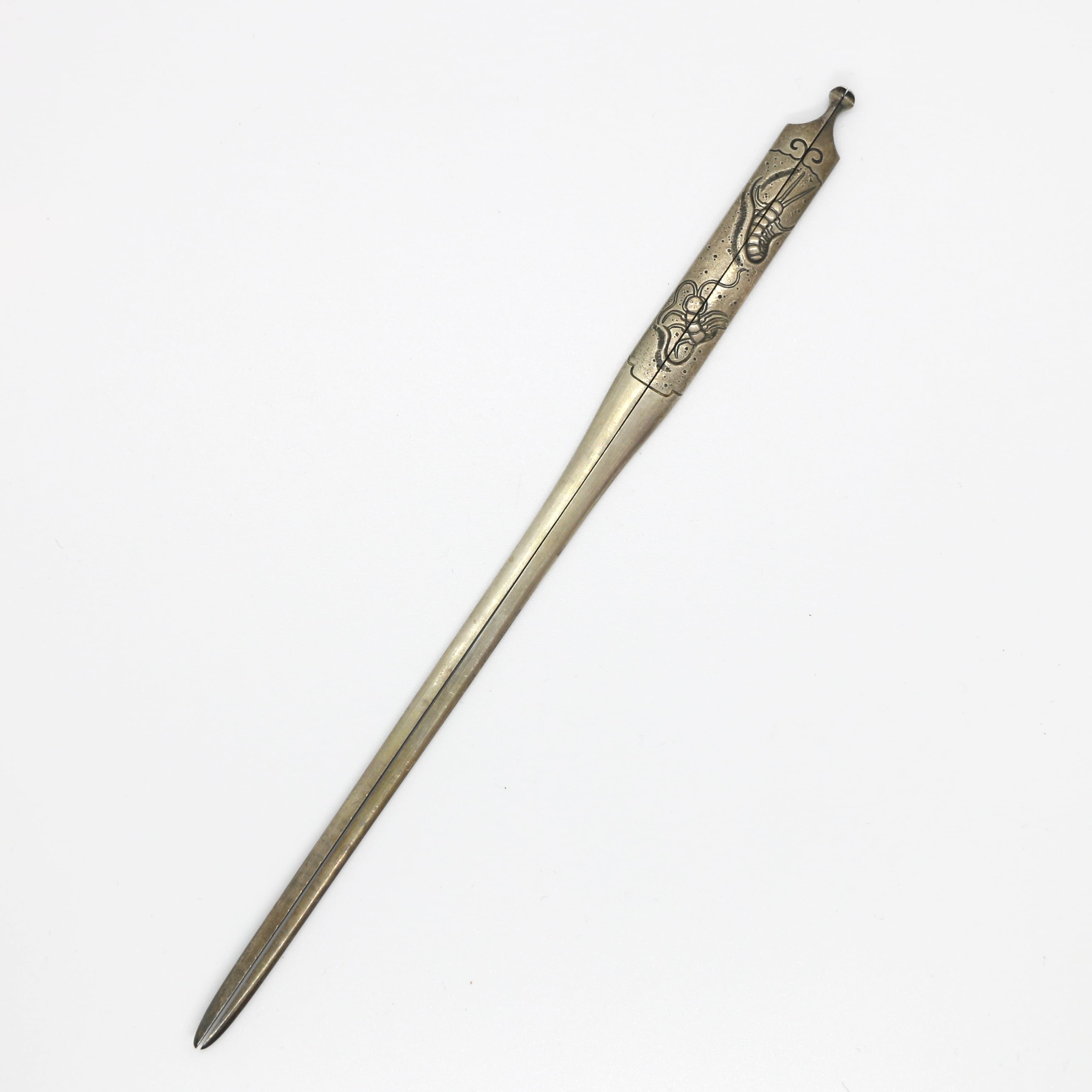
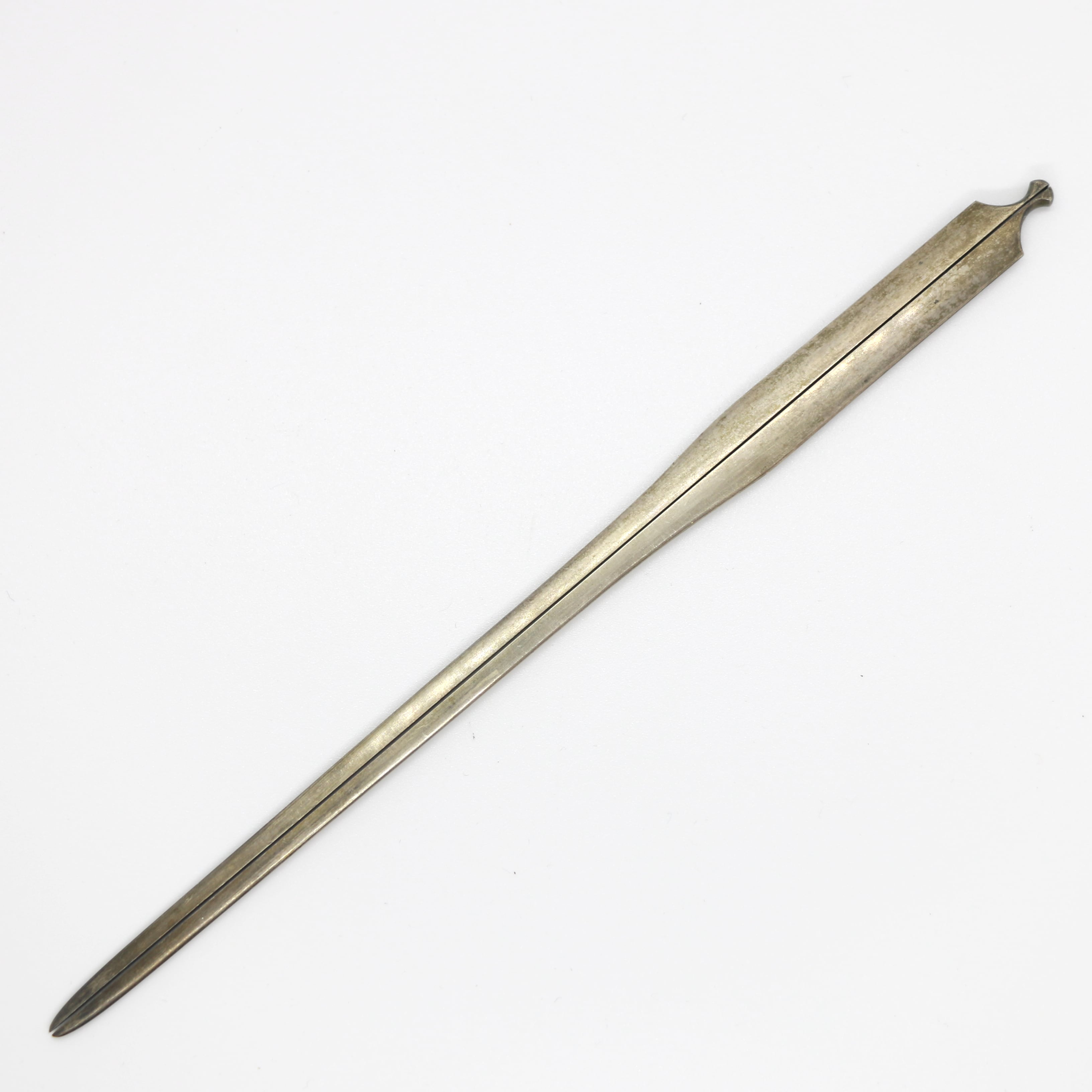
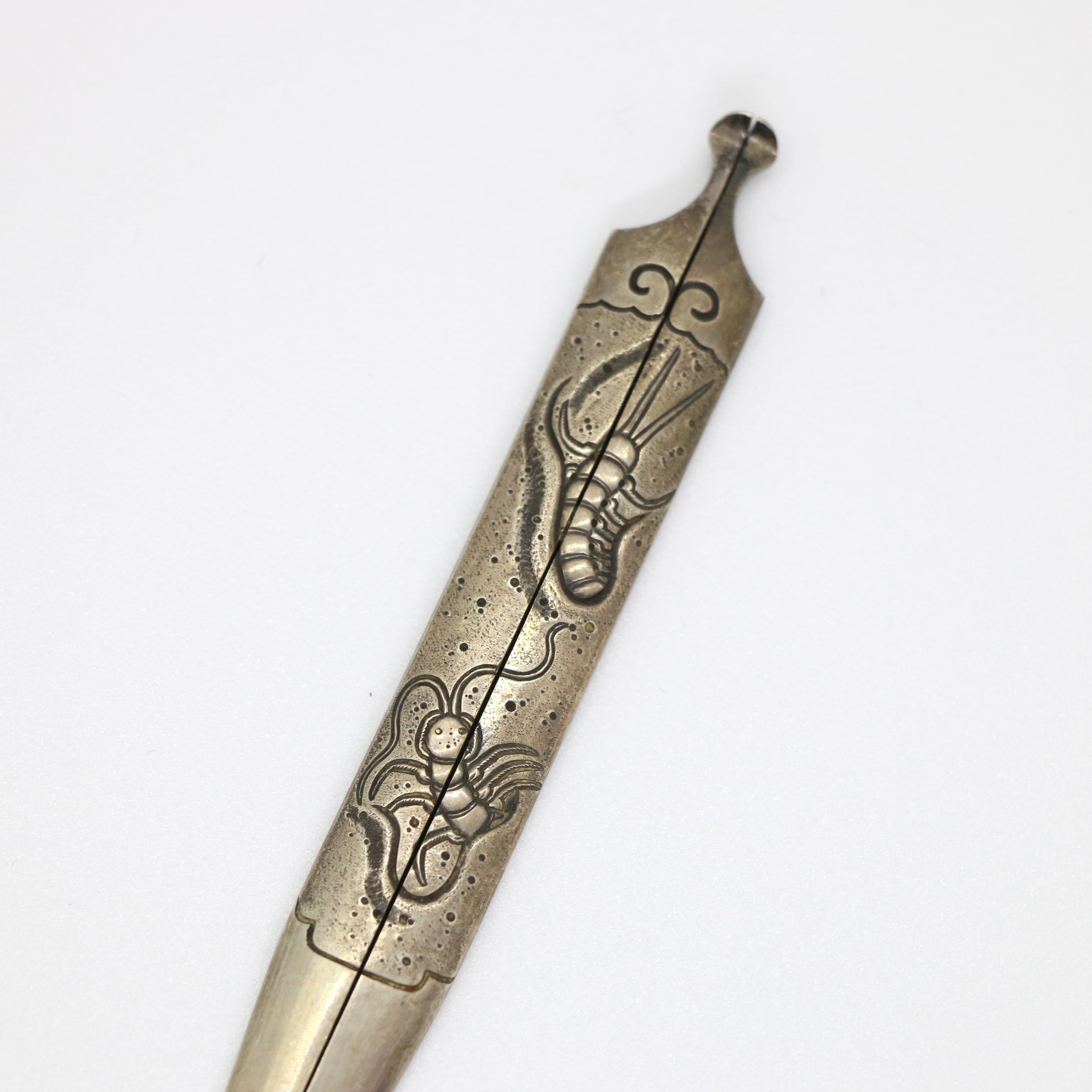
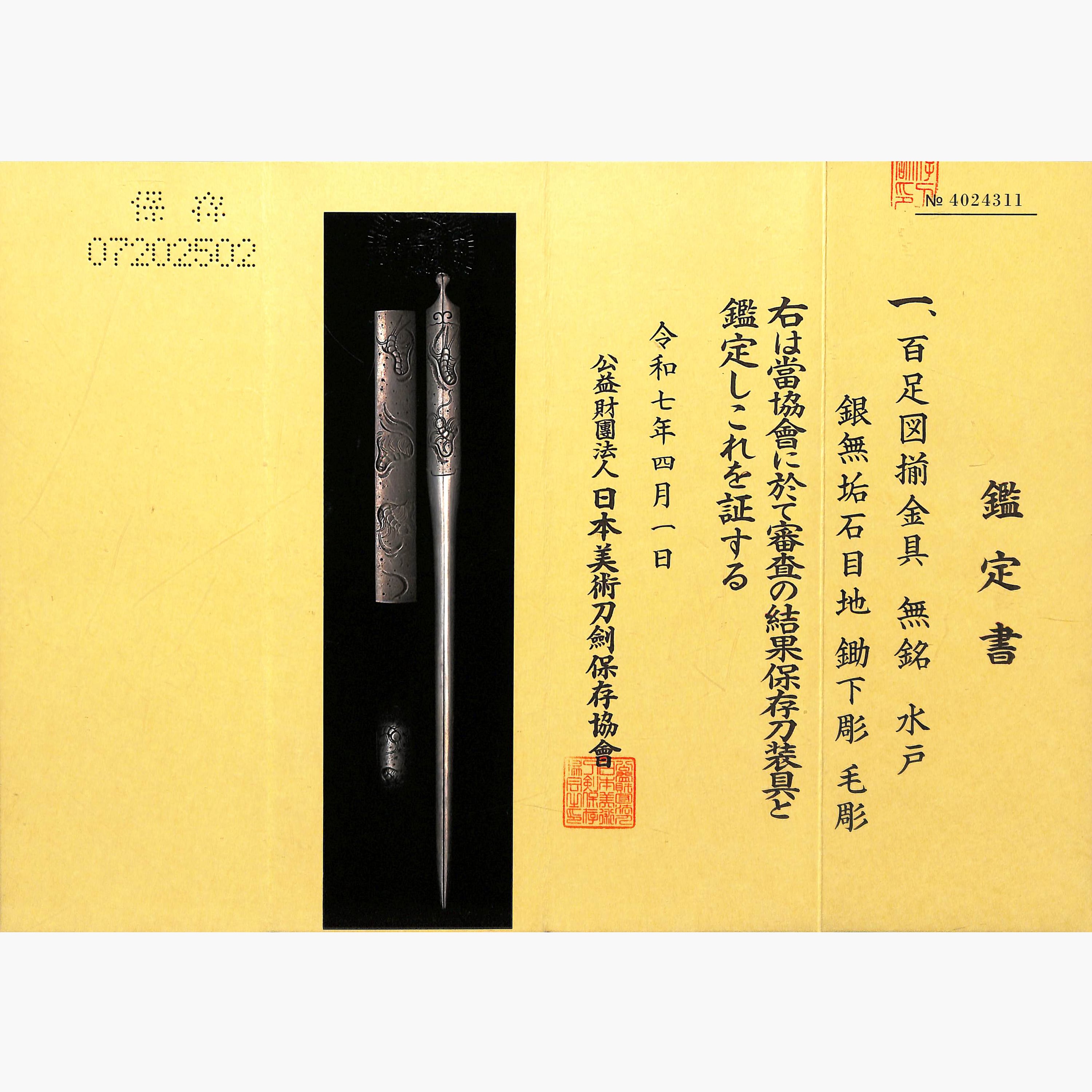
This is a mitokoromono (set of three sword fittings) featuring a centipede design crafted from solid silver. The centipede was a popular symbol among Sengoku period samurai, representing aggression and never retreating. The fittings are unsigned but attributed to the Mito school, and come with an NBTHK Hozon Tosogu certificate.
Certificate reading — 無銘(水戸)
 NihontoWatch
mumei · Mito · Edo
Mito School
Edo
Hitachi
Unsigned
Hozon (NBTHK)
Machibori · Hitachi
78 pieces on the market now
The Mito school of sword-fitting makers emerged as an officially sponsored tradition in the domains of the Tokugawa family's Mito branch, achieving particular prominence in the late Edo period. The school's lineage traces through Shinozaki Katsushige and his successors, who served as goyō horimonoshi (official engravers) to the domain. Unlike the privately patronized workshops of Edo and Kyoto, Mito metalworkers operated within a system of domain service, producing both presentation fittings for formal occasions and richly decorated works for commission. This institutional foundation fostered both technical rigor and stylistic continuity, as masters such as Hagiya Katsuhei and his pupils transmitted the school's methods through direct apprenticeship. The Mito aesthetic is characterized by meticulous shakudō nanako-ji grounds upon which high-relief carving (takabori) is combined with precise gold and silver iroe to yield compositions of exceptional textural depth. The school showed particular mastery in figural subjects—immortals, deities, and mythological beasts—rendered with close attention to anatomical realism and dynamic poses.
The nanako punch-work is notably disciplined, each grain laid in orderly arrangement, while the relief carving rises to striking heights, with elements such as lion manes and peony petals executed in fully three-dimensional chiselwork. Color inlays are applied with exacting accuracy, and thematic coordination across entire fitting sets demonstrates a sophisticated understanding of decorative unity. The Mito school's influence extended well into the Meiji period through the achievements of second-generation masters. Hagiya Katsuhei's circle produced such celebrated artists as Namekawa Sadakatsu and Unno Shōmin, who carried the school's technical standards and stylistic vocabulary into new contexts. The tradition's emphasis on figural carving, inherited from the Tamagawa lineage, and its adherence to orthodox forms for formal presentation fittings established the Mito school as one of the principal regional traditions of late-period Japanese sword-fitting production. Learn more →
| Smith | Era | Designated |
|---|---|---|
| Katsuhira勝平 | 1804-1886 | 13 |
| Shomin勝珉 | 1844-1915 | 11 |
| Teikan貞幹 | — | 5 |
| Tomoyoshi友善 | 1716-c.1920 | 0 |
| Mototane元胤 | — | 0 |
Certifies a genuine blade worth preserving: a signature confirmed correct, or, if unsigned, an era, province, and school that the NBTHK can reliably identify.
The NBTHK (Nihon Bijutsu Tōken Hozon Kyōkai, the Society for the Preservation of Japanese Art Swords) is a public-interest incorporated foundation founded in 1948 and supervised by Japan’s Agency for Cultural Affairs (Bunkachō); it is based at the Japanese Sword Museum in Tokyo. Its expert panels physically examine each submitted work (shinsa) and issue a certificate (kanteishō) ranking it by artistic and historical merit. NBTHK papers are the most widely recognized standard of authentication for Japanese swords and fittings.
NBTHK official siteExcept where the item is defective, we do not accept returns as a rule. In the case of an error on our part, please contact us by email within 3 days of the item's arrival.
¥220,000