Around 1800 Suishinshi Masahide argued in his writings that the craft must return to the old masters’ methods: the fukkotō revival. His greatest successor Naotane worked convincingly in Bizen and Sōshū manners that had been dead for centuries.
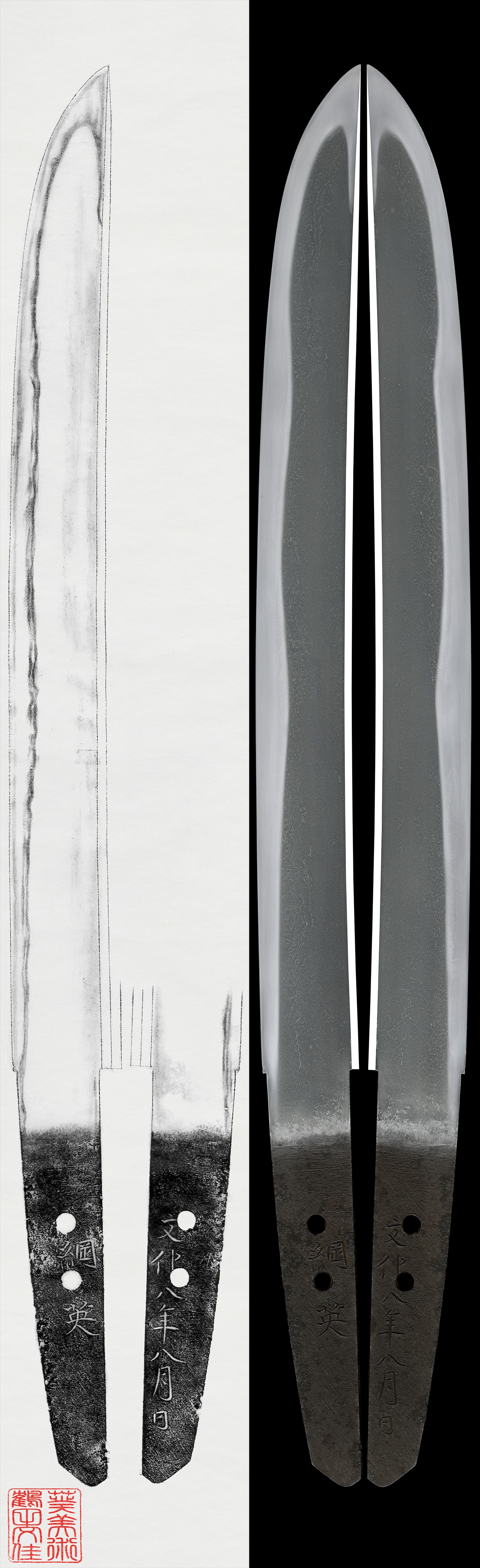
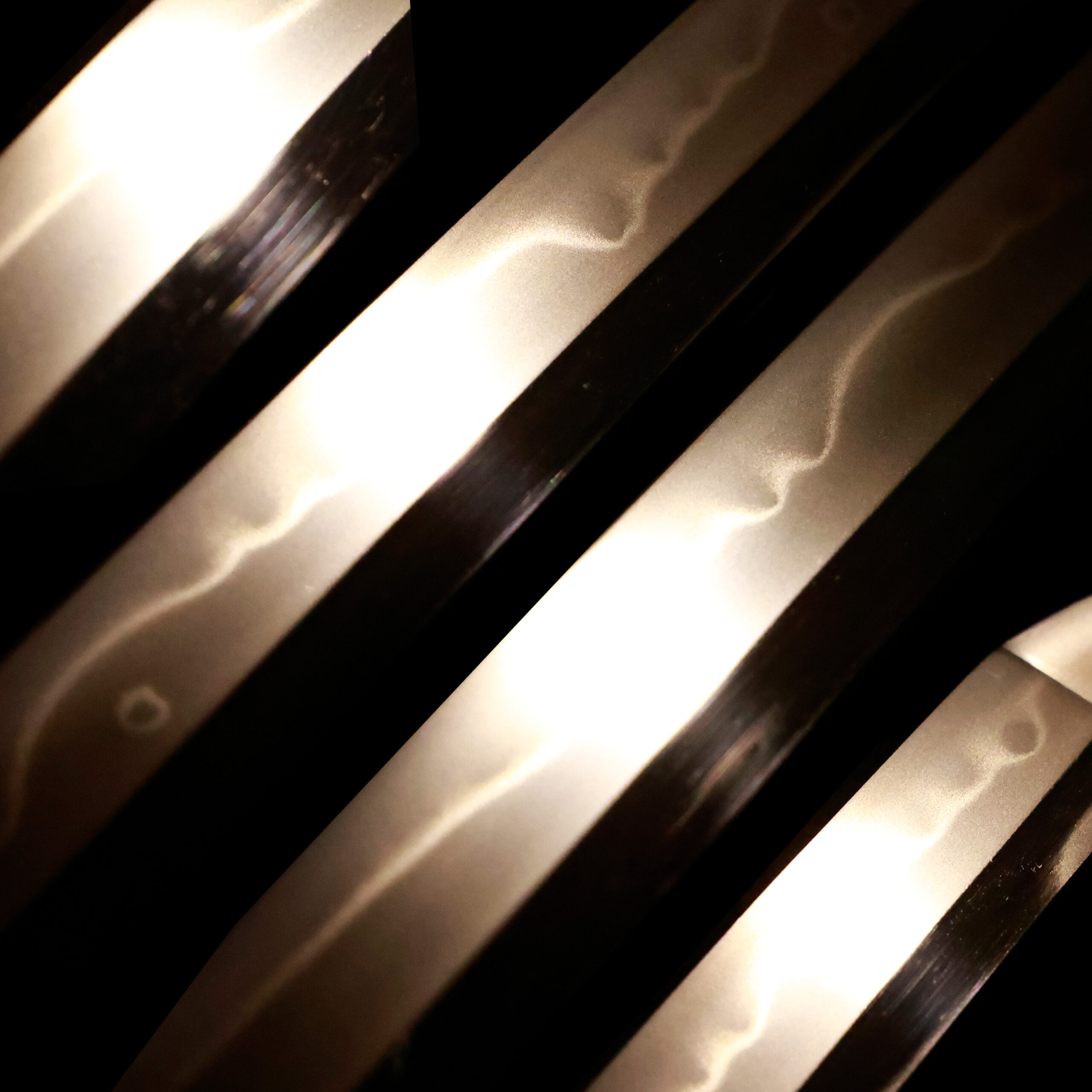
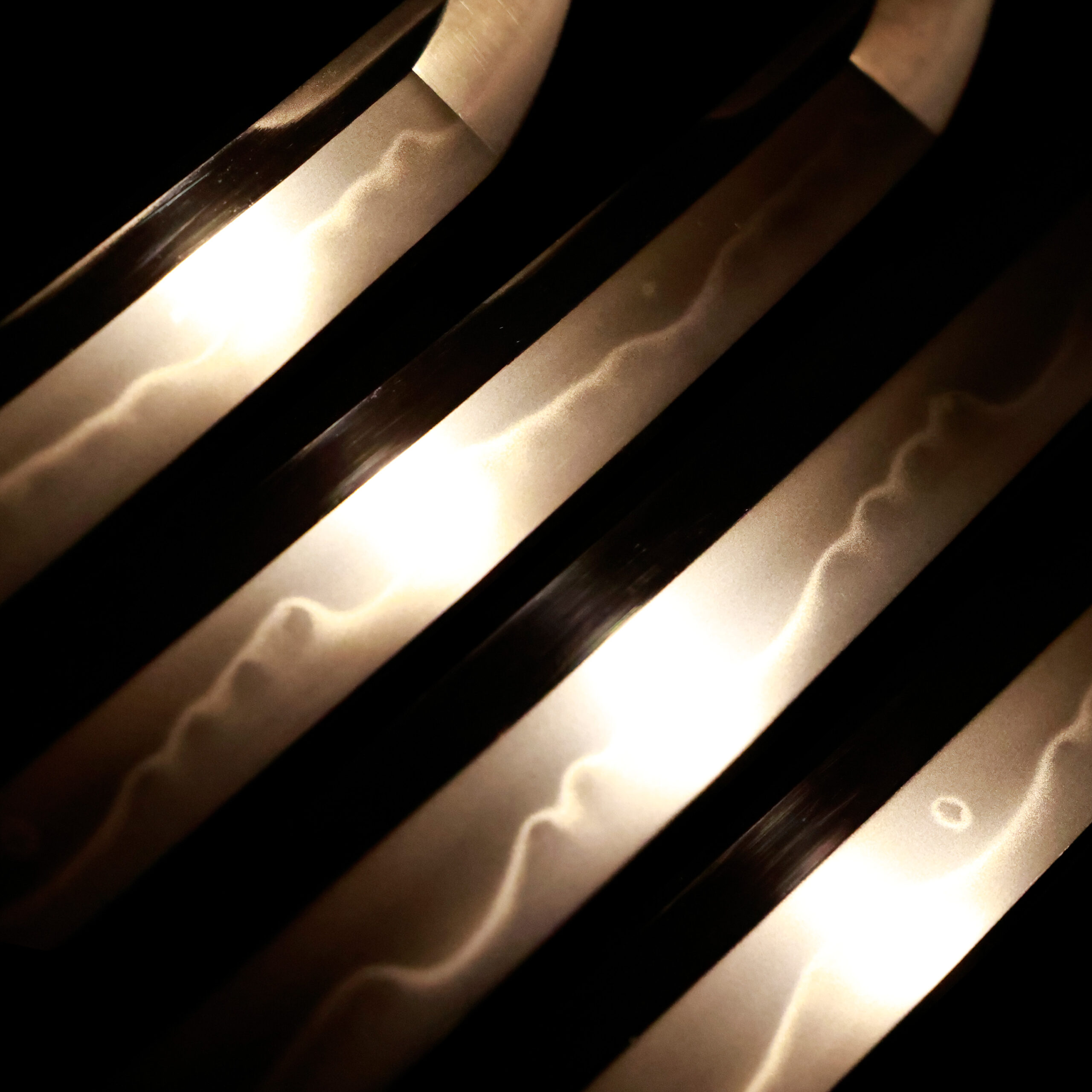
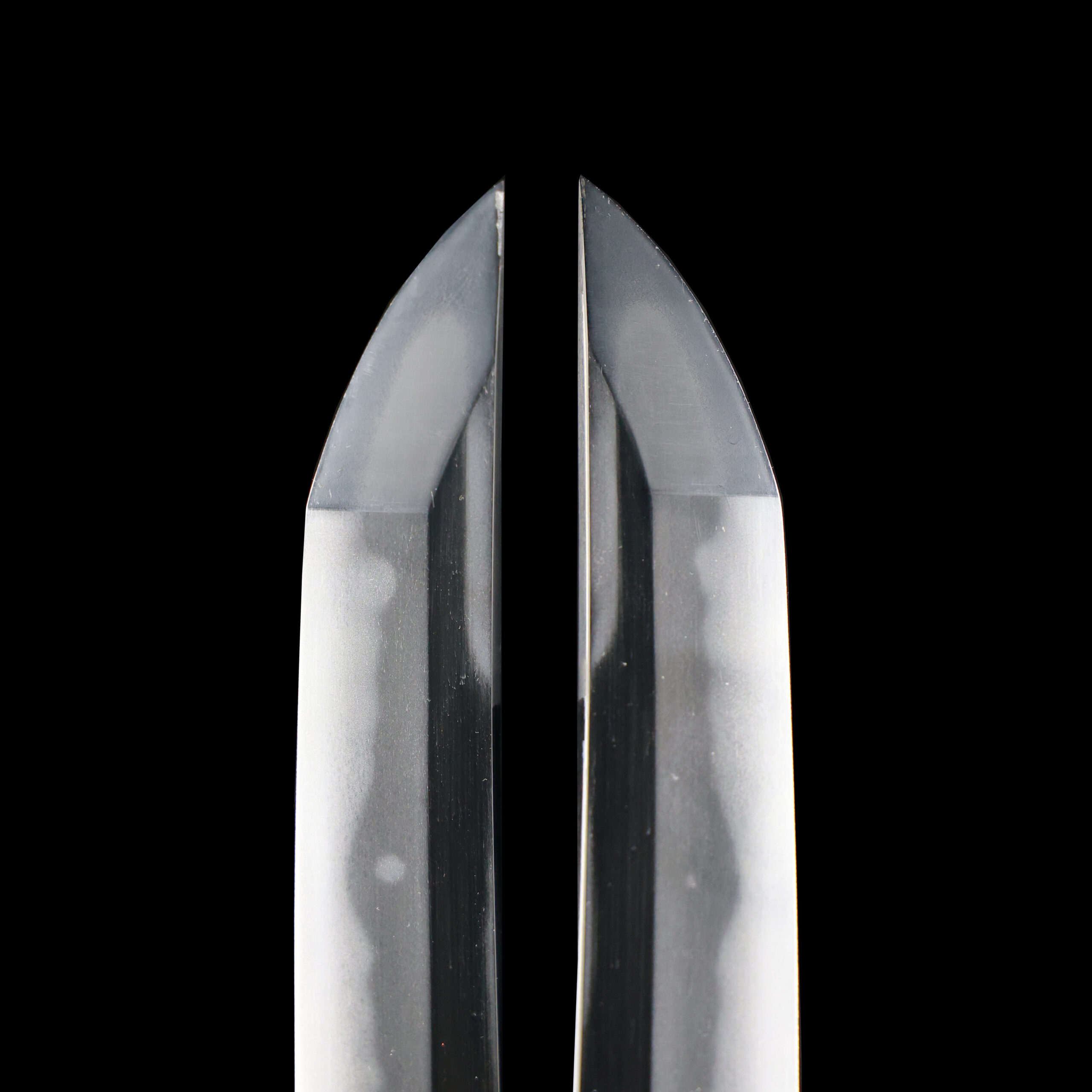
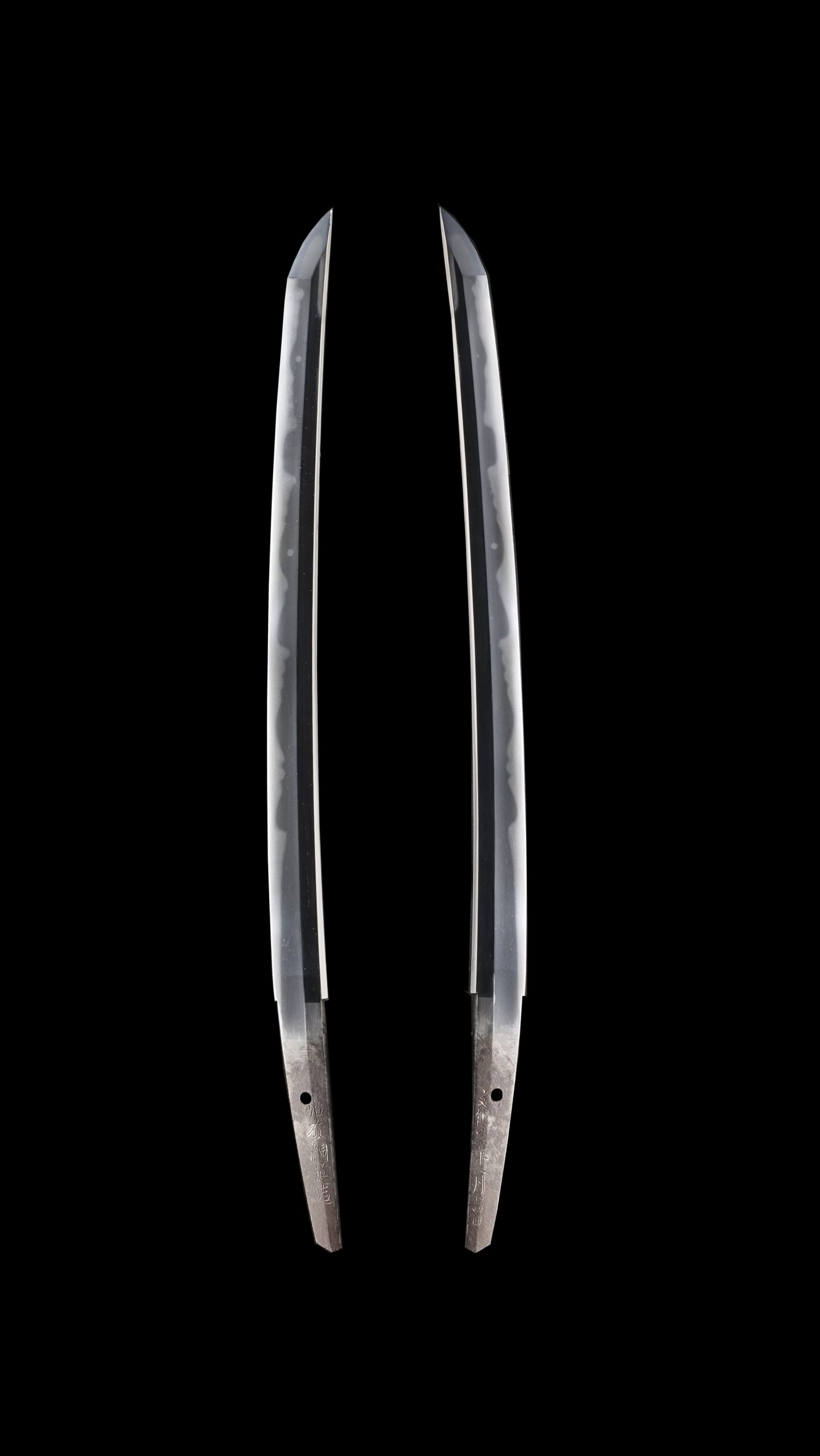
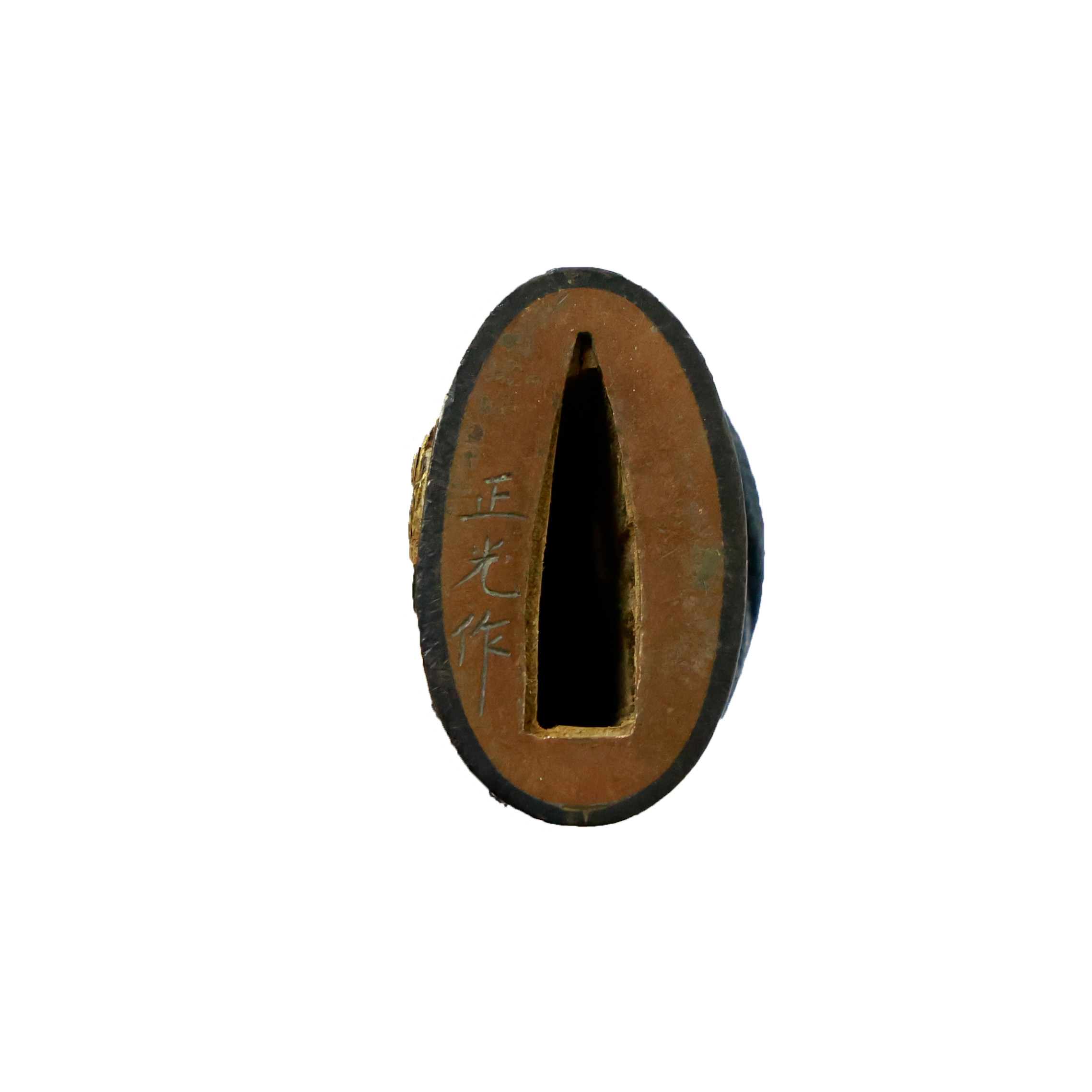
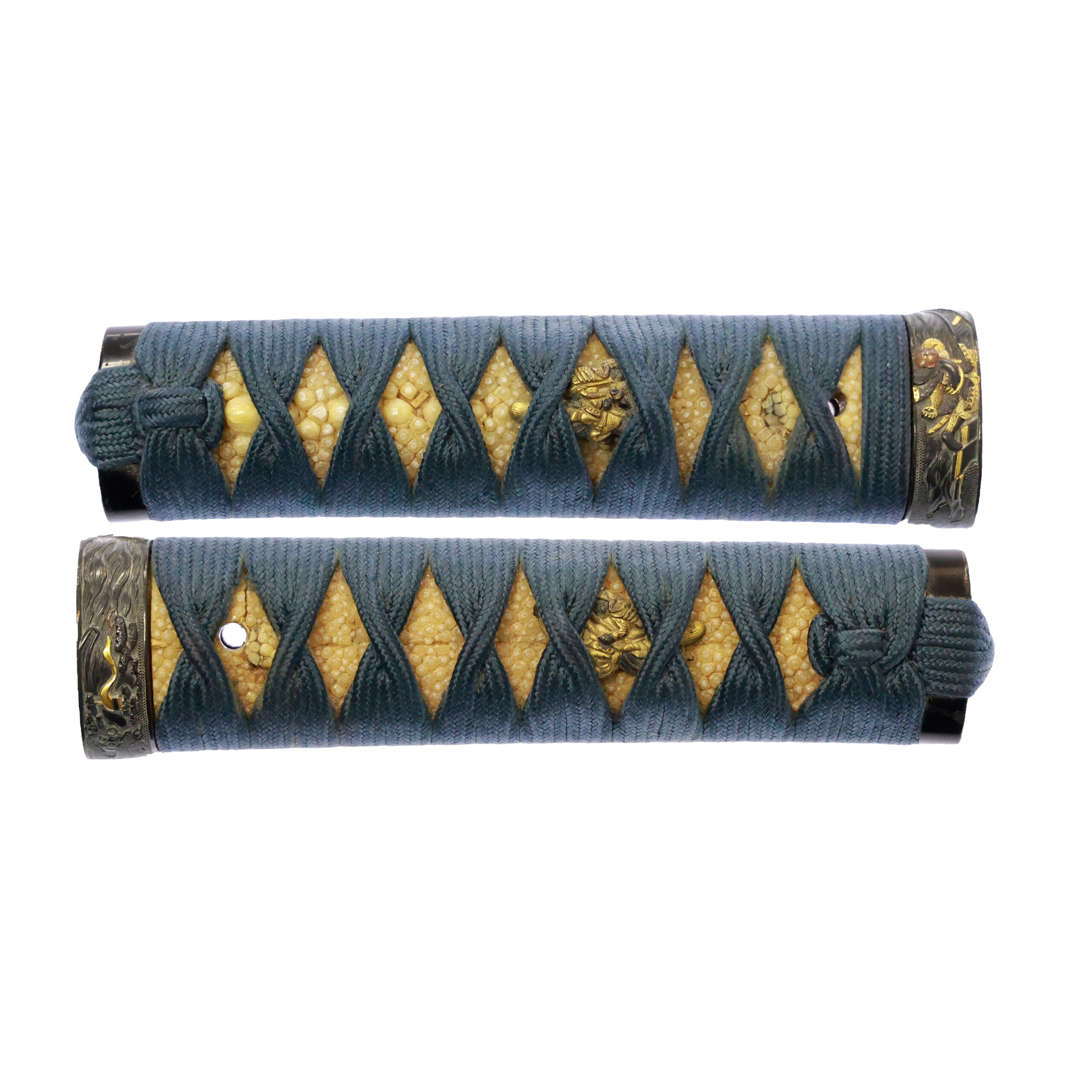
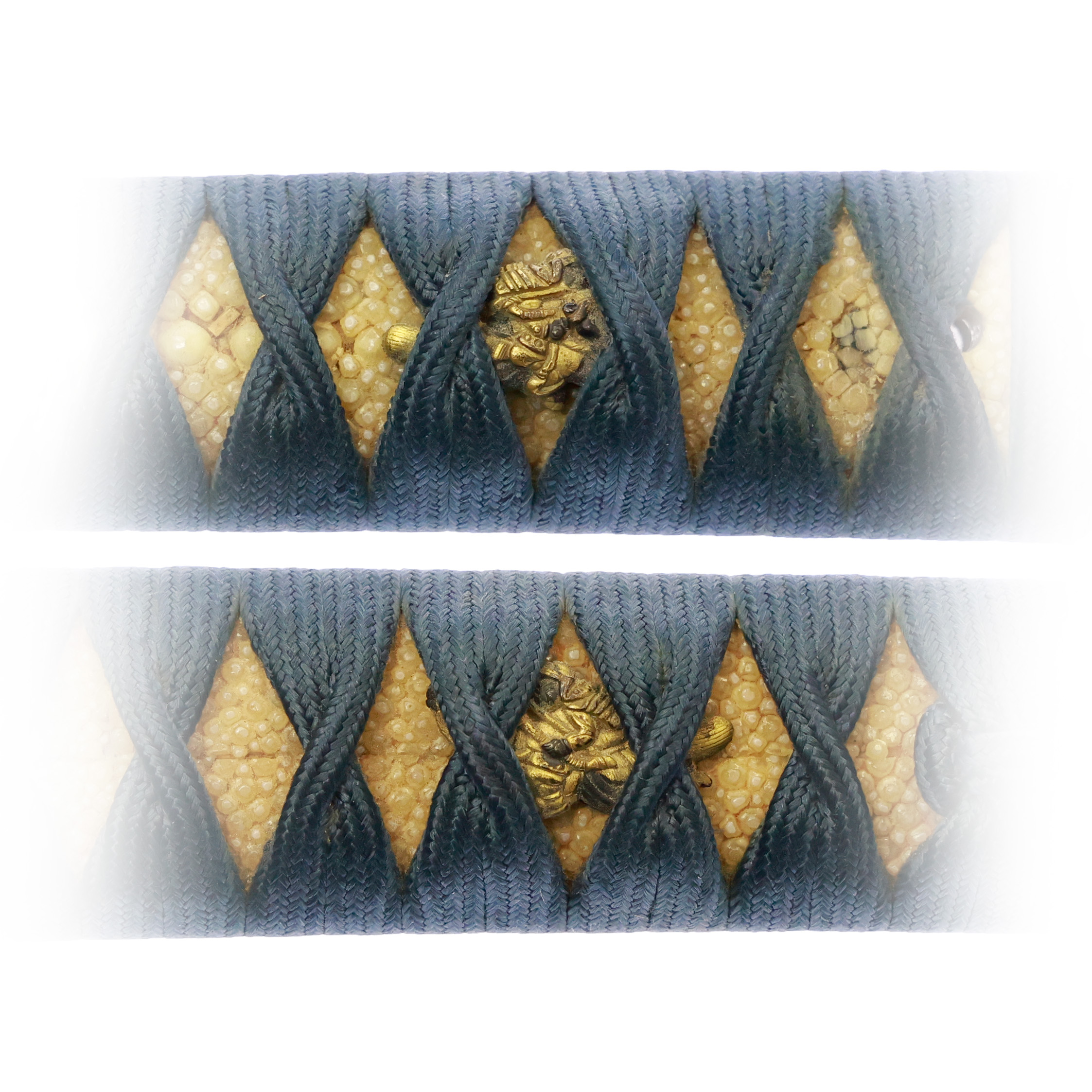
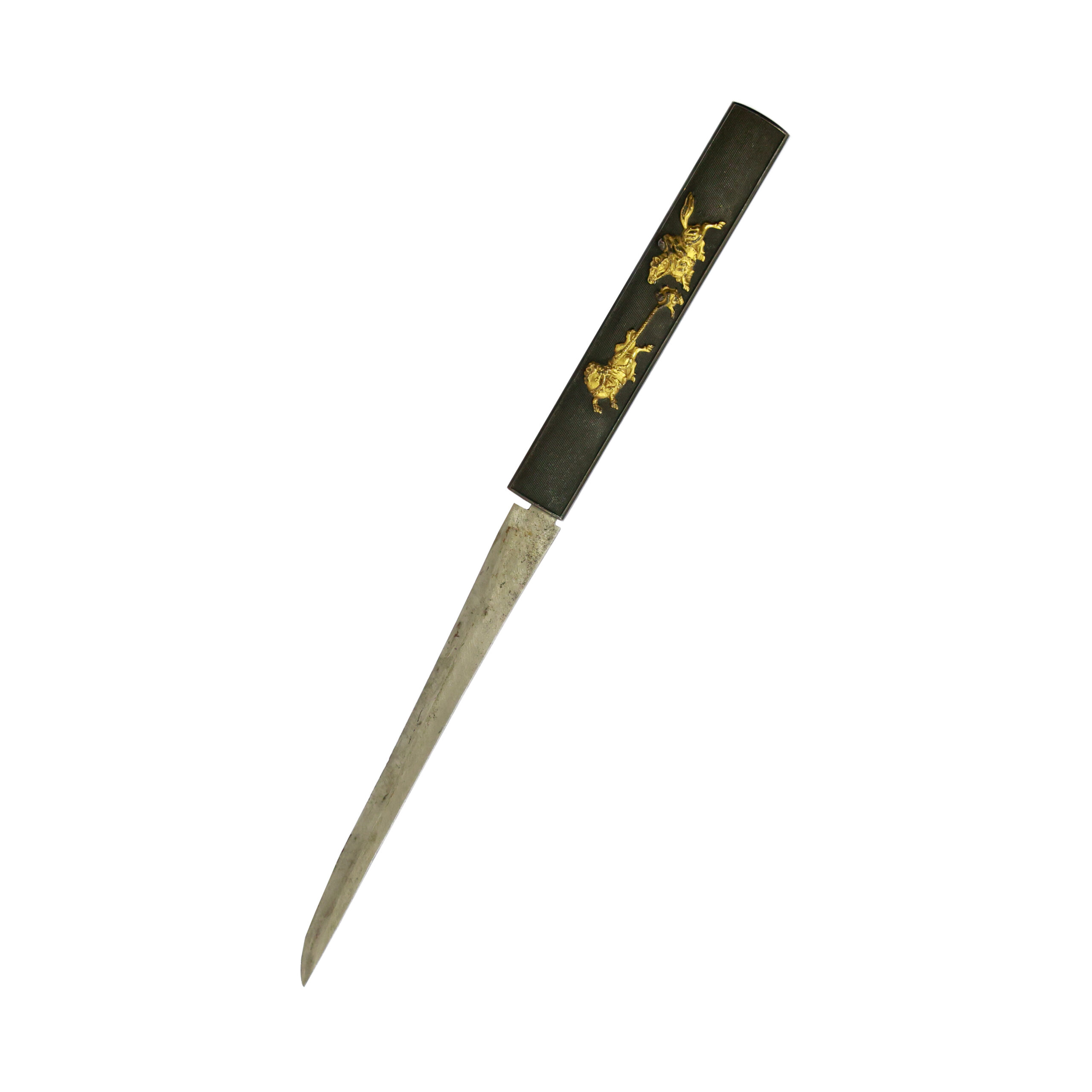
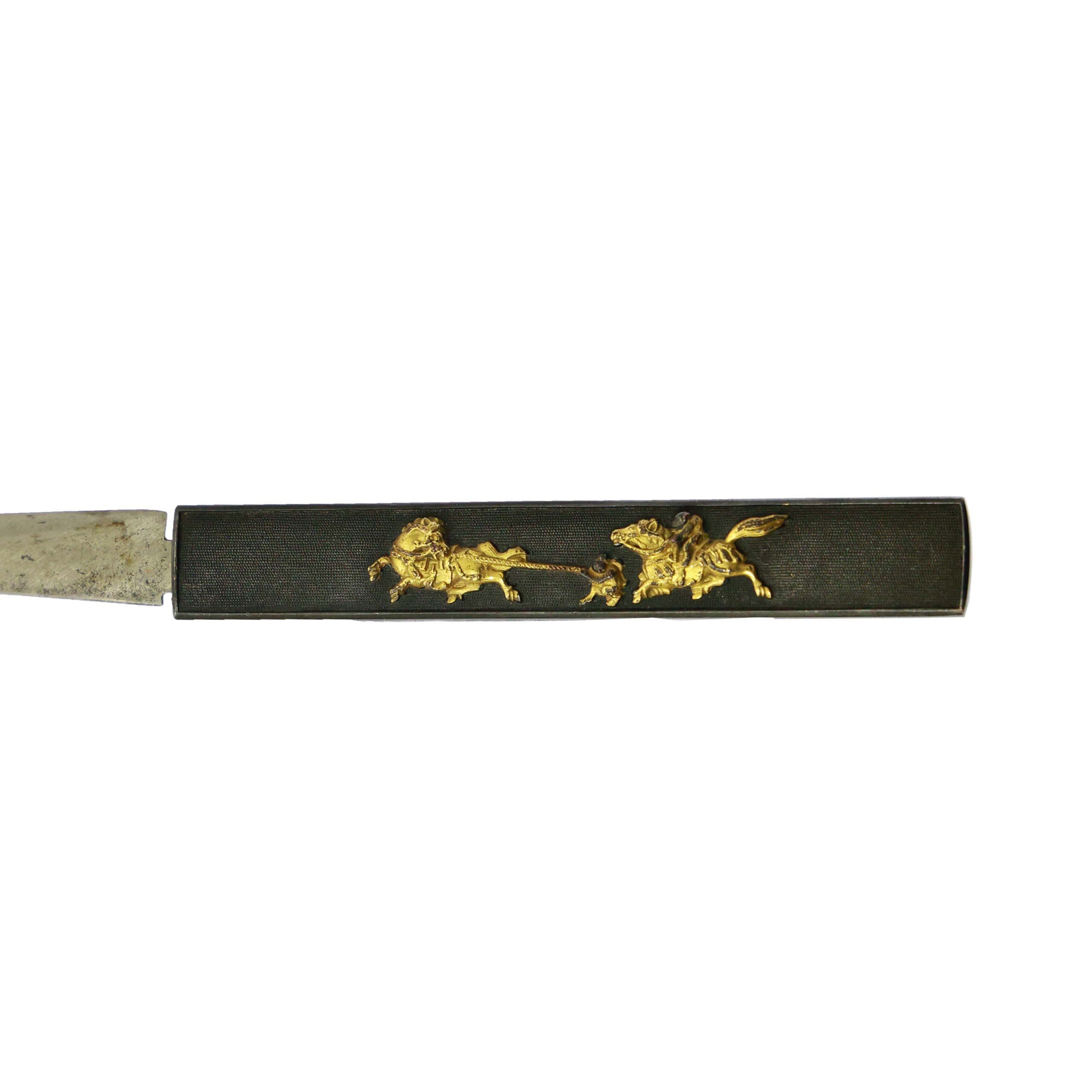
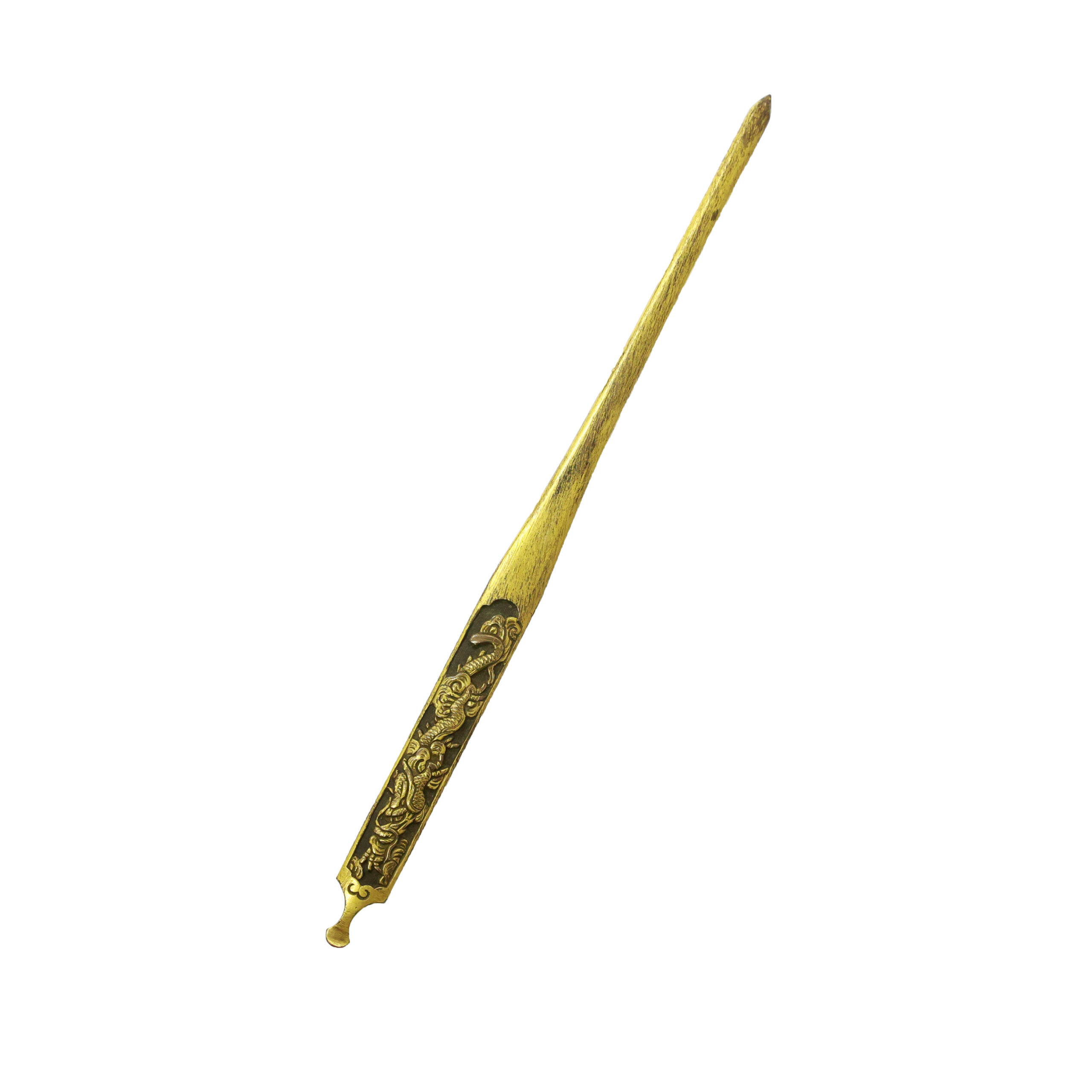
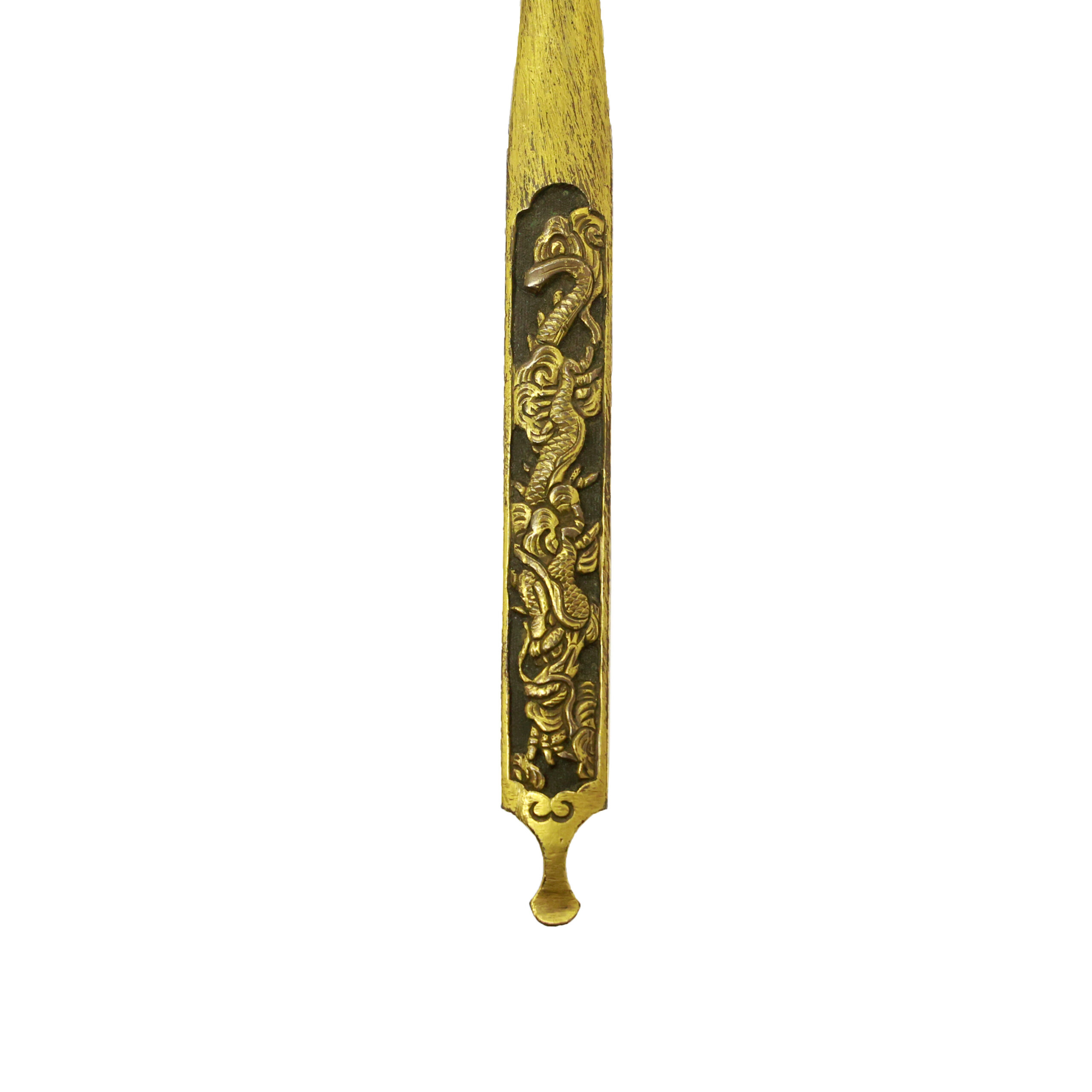
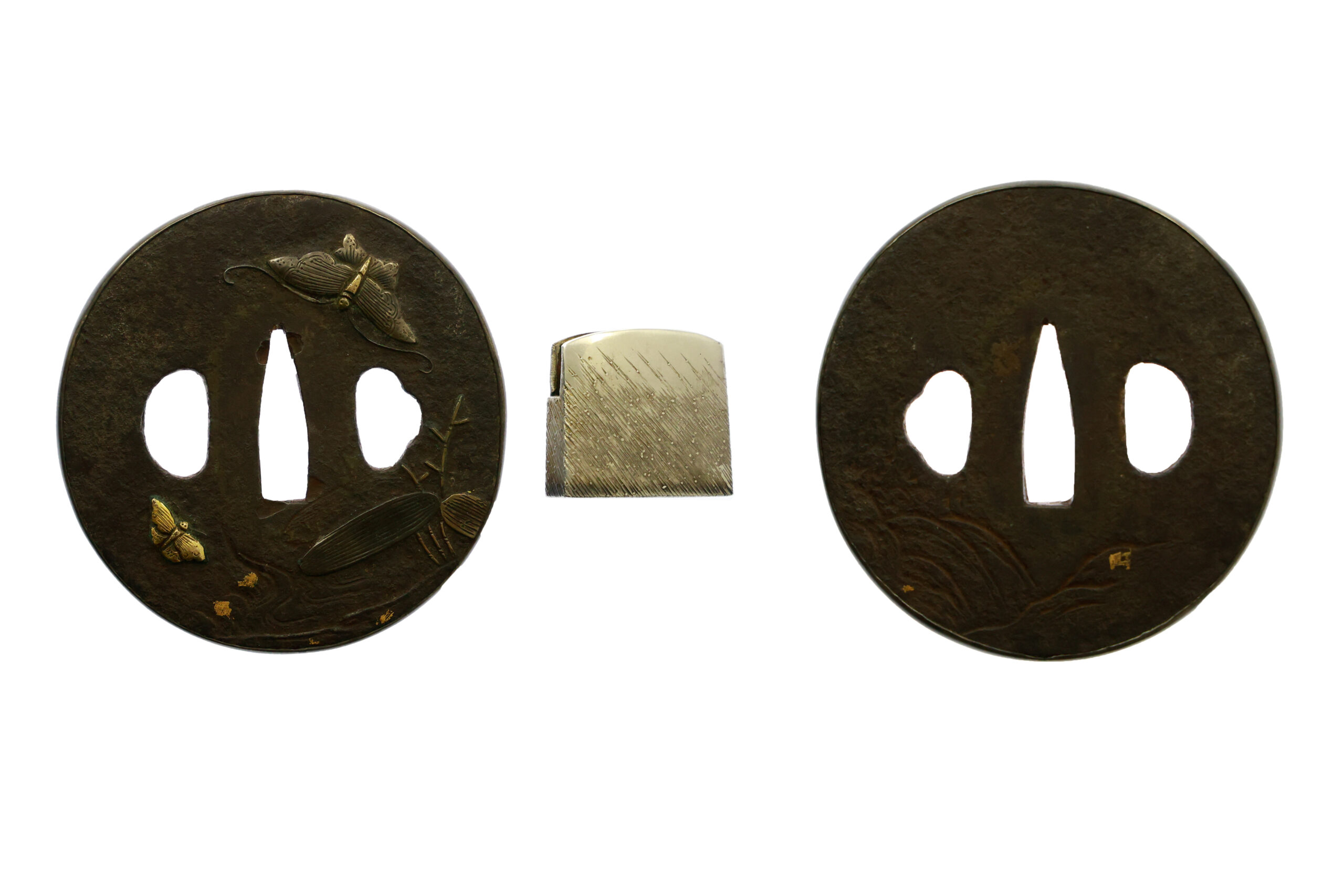
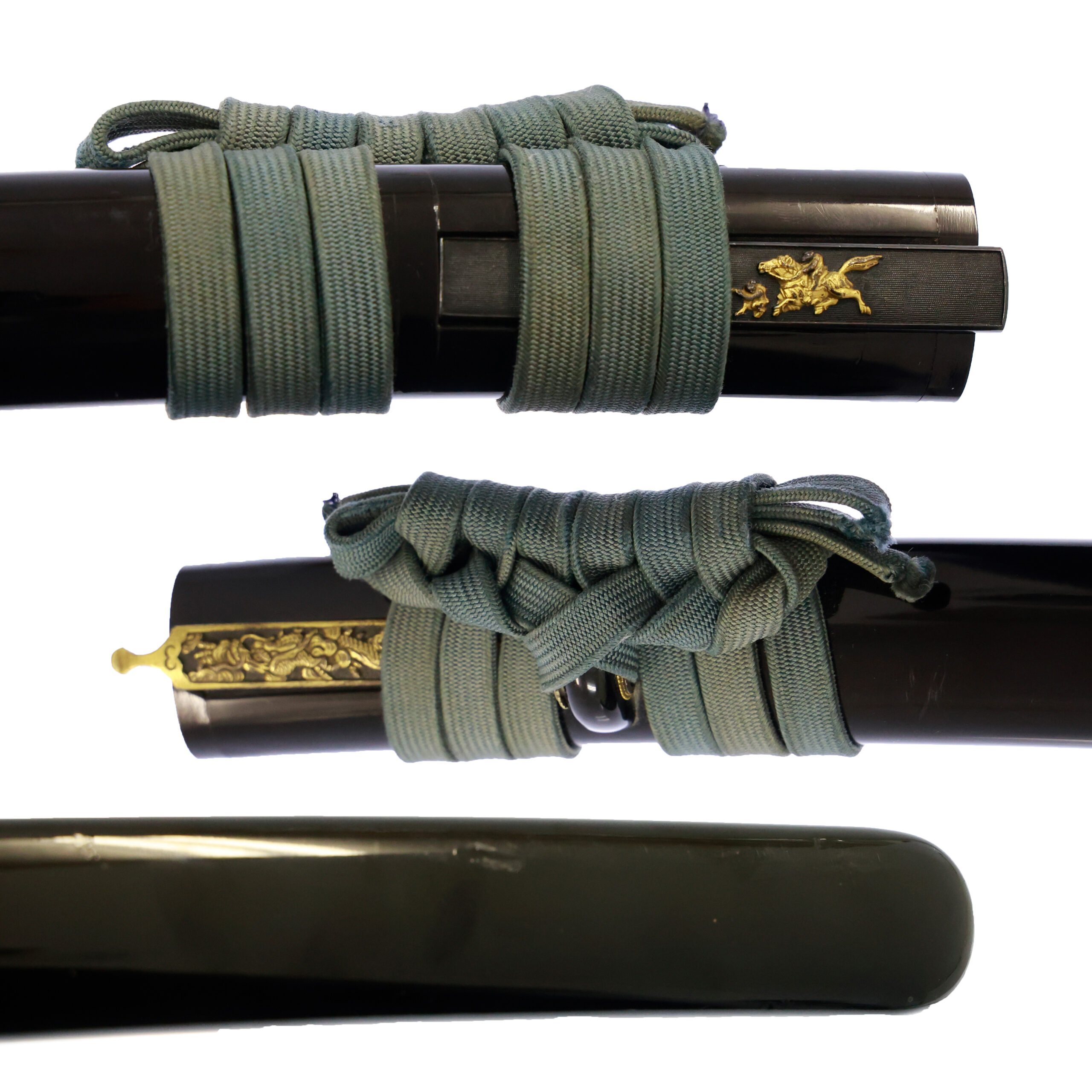
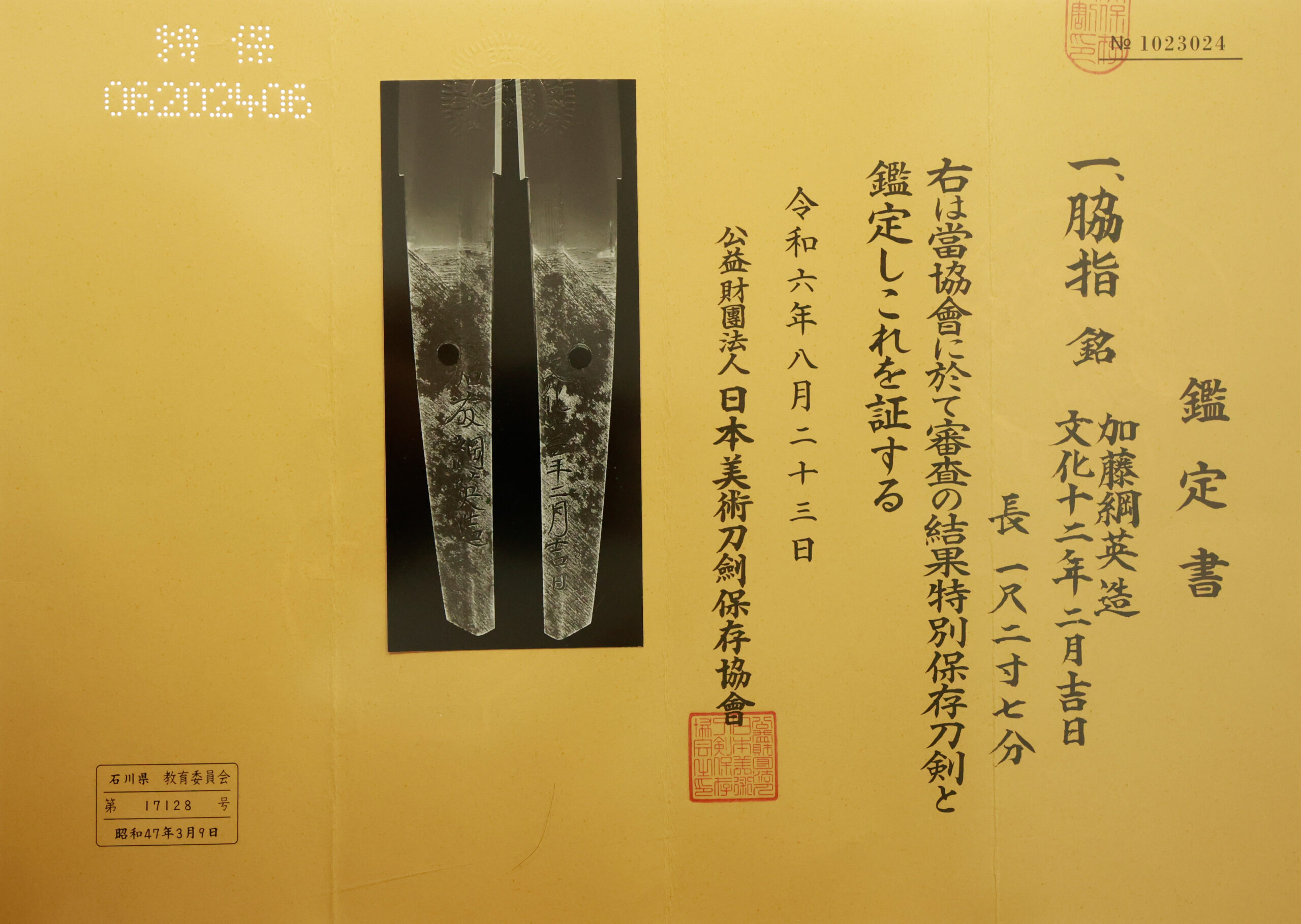
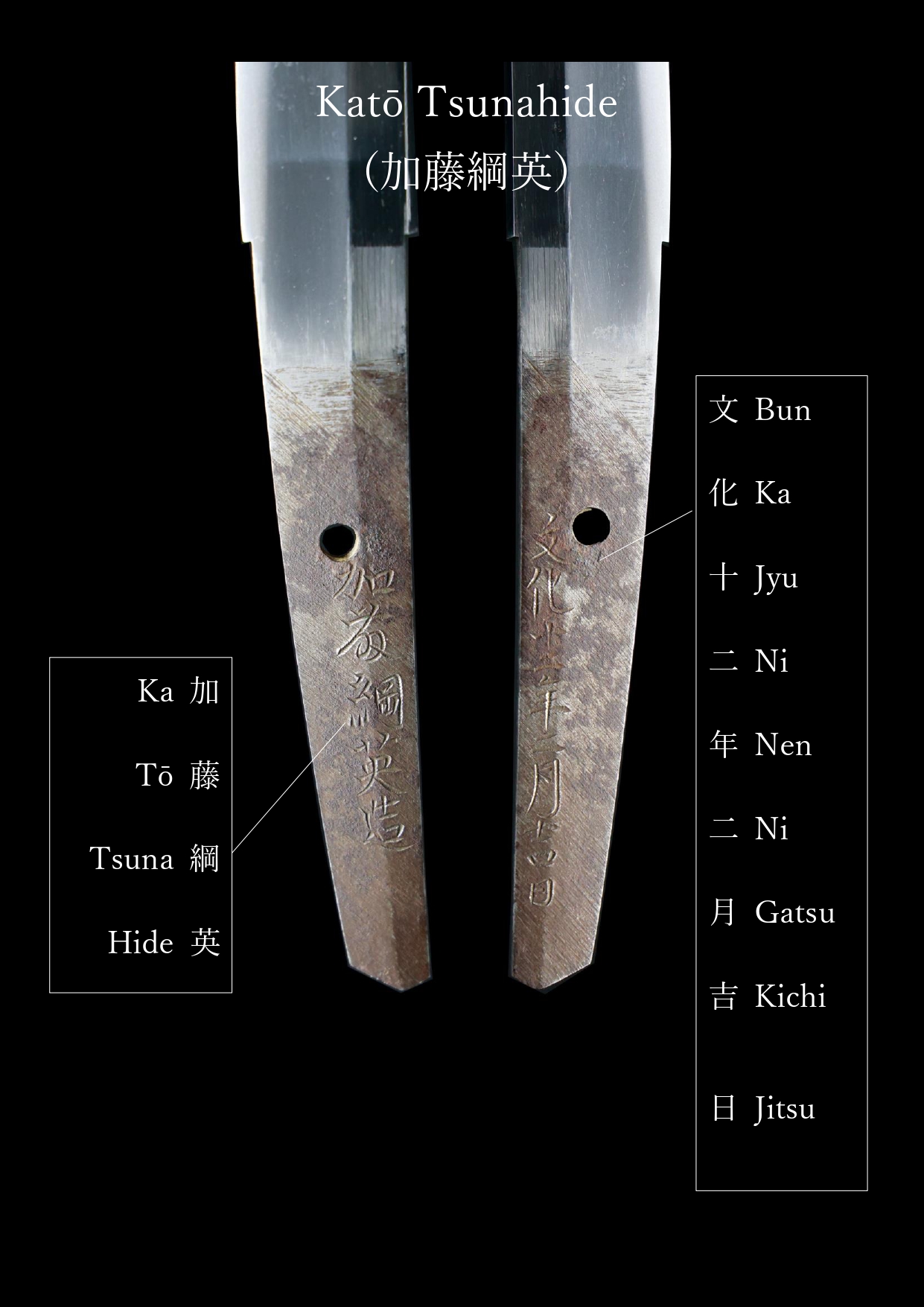
This antique Japanese wakizashi is signed by Kato Tsunahide, a renowned swordsmith active in the late Edo period (1815). It is accompanied by an NBTHK Tokubetsu Hozon Certificate, confirming its authenticity and high artistic value. The blade features a distinctive Toran-midare hamon and comes with both a shirasaya and a koshirae, which includes fittings with a war-themed motif.
 NihontoWatch
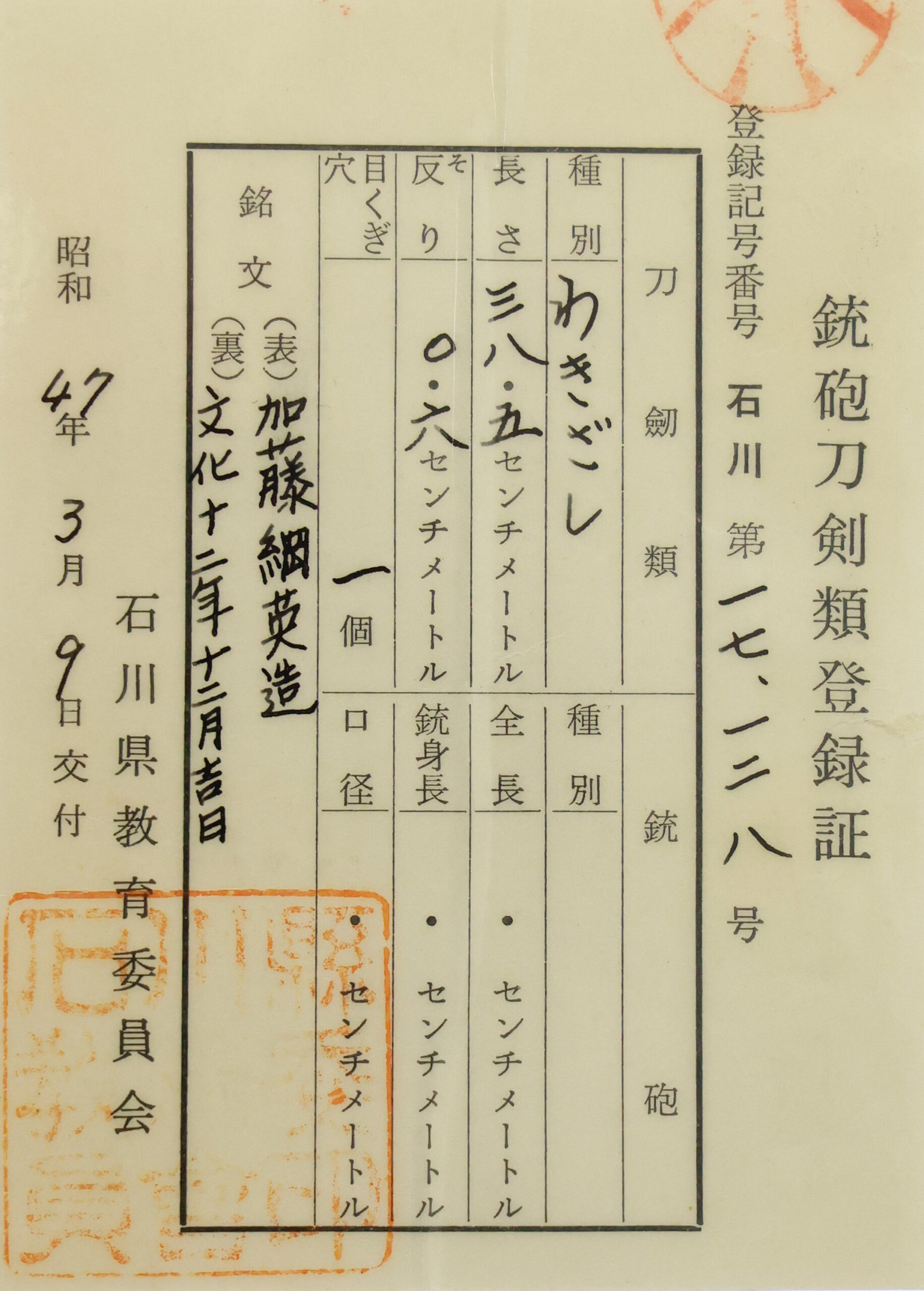
mei · Bunka (1804-1818) · nagasa 38.5cm · sori 0.6cm
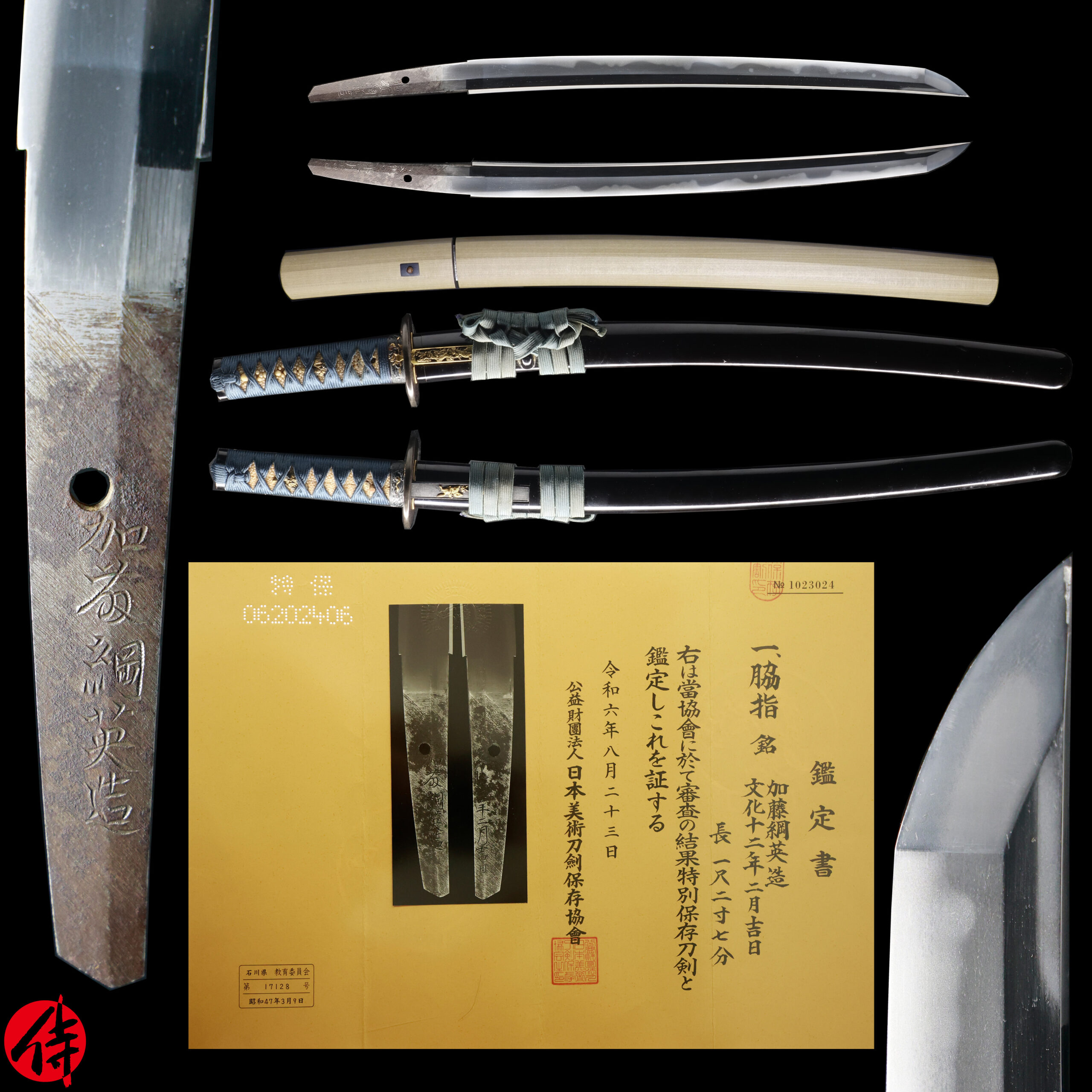
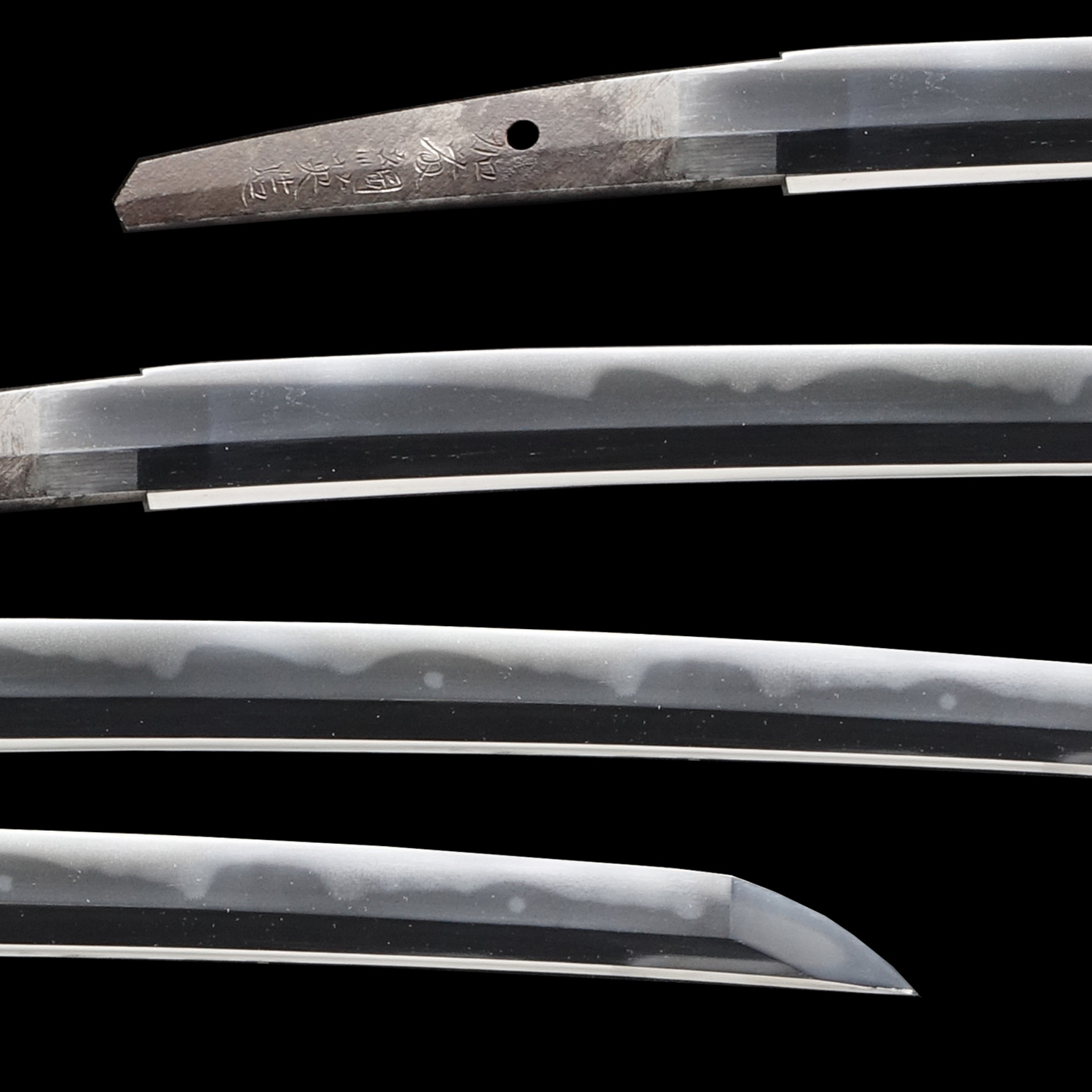
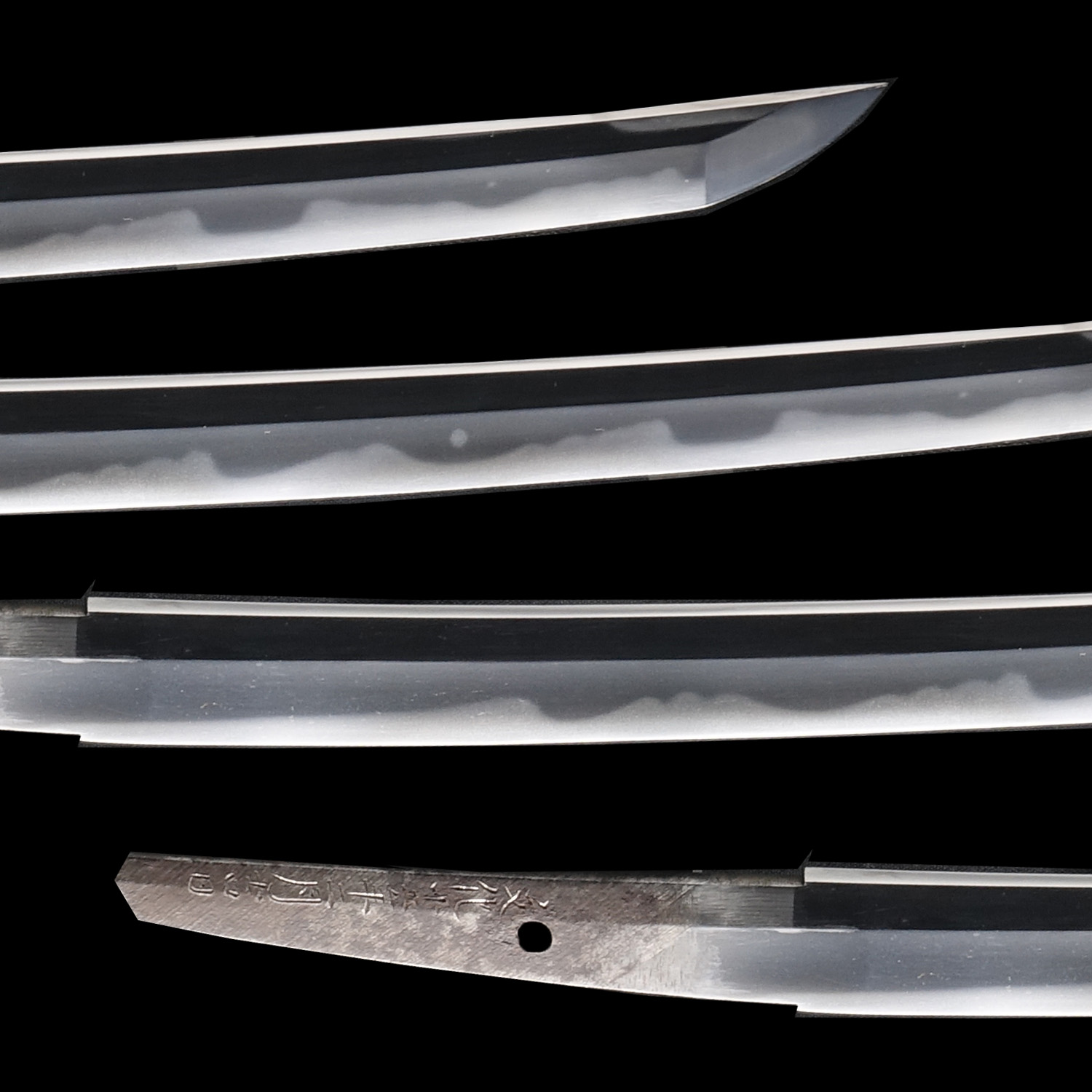
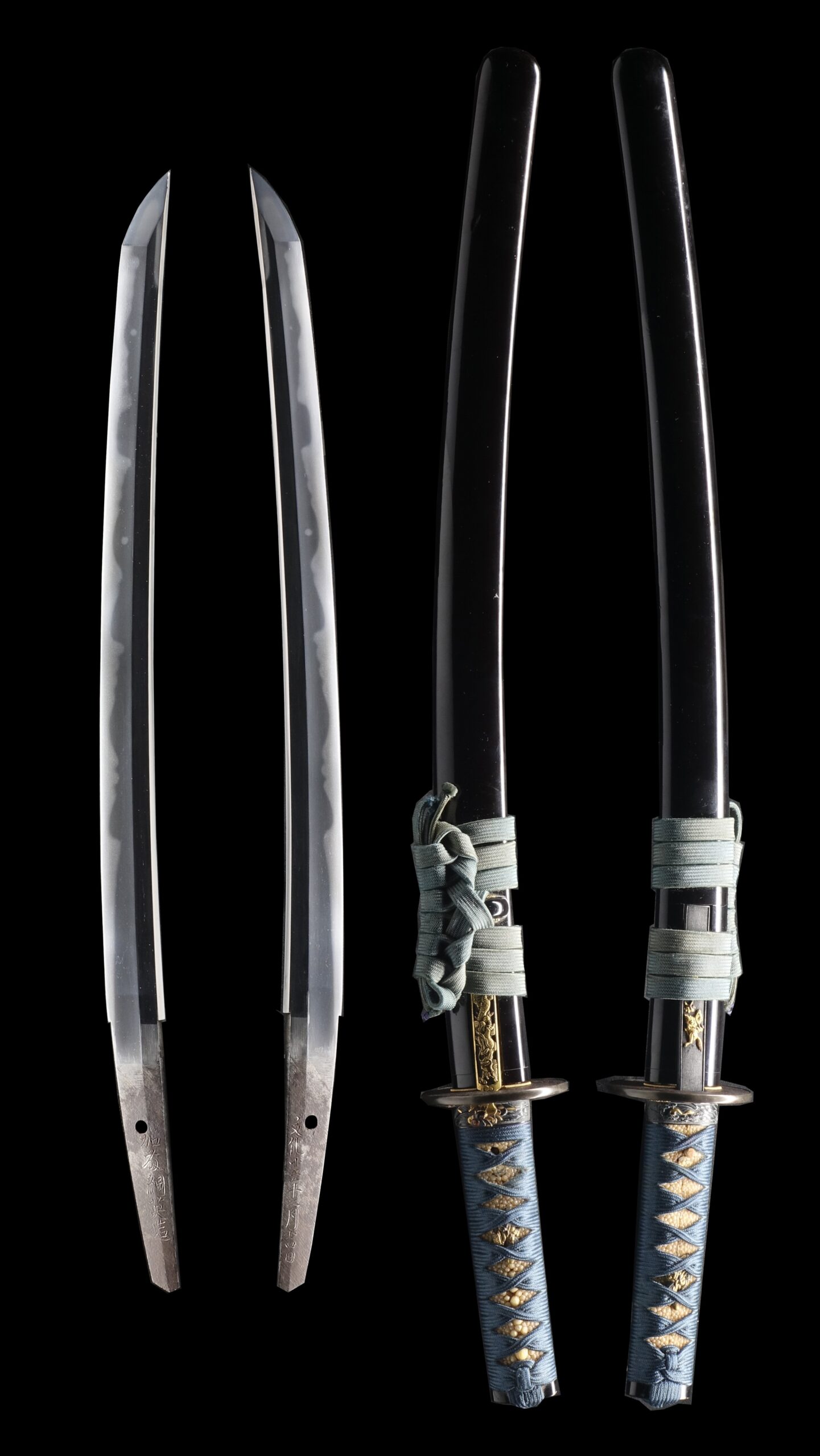
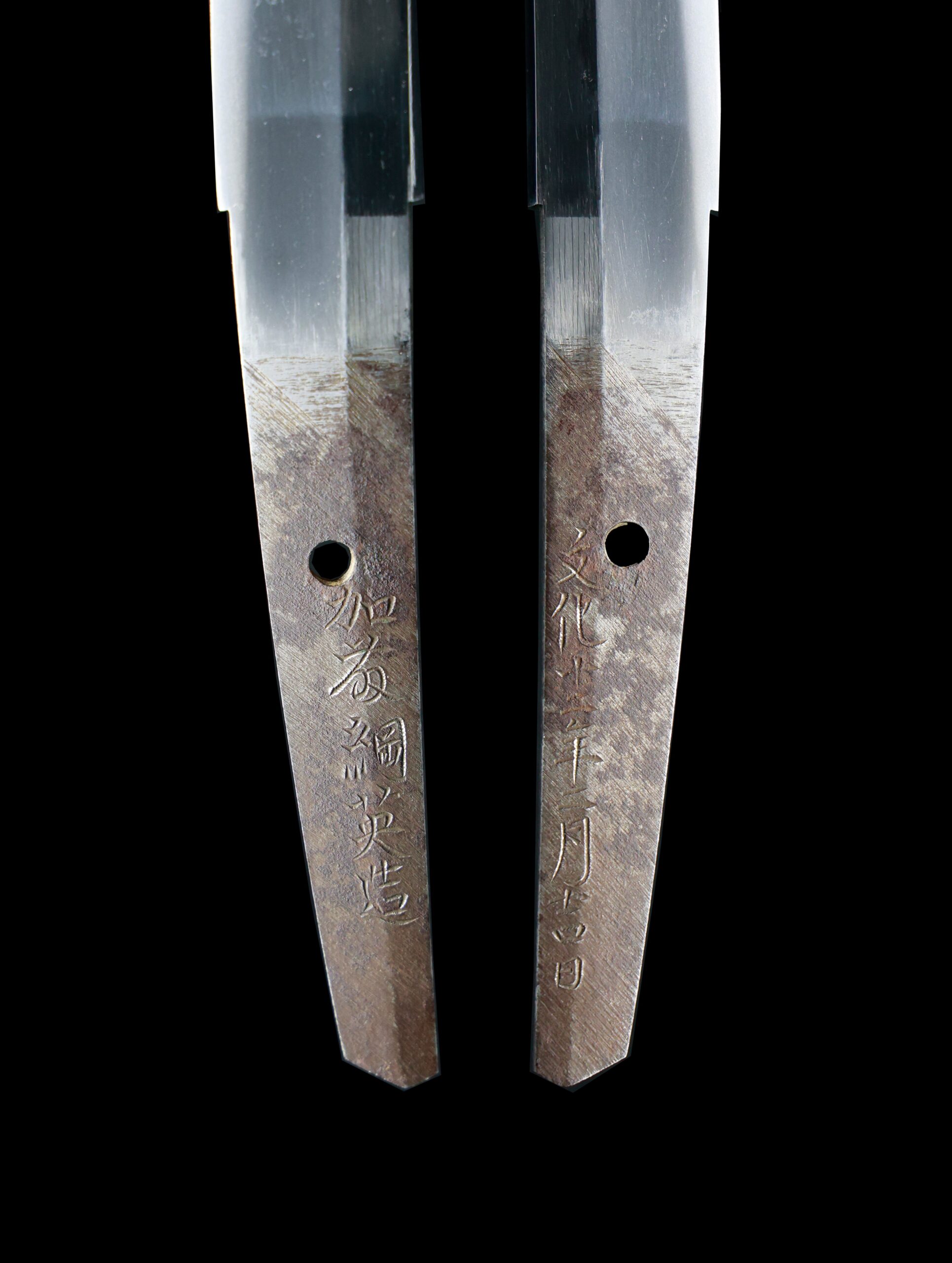
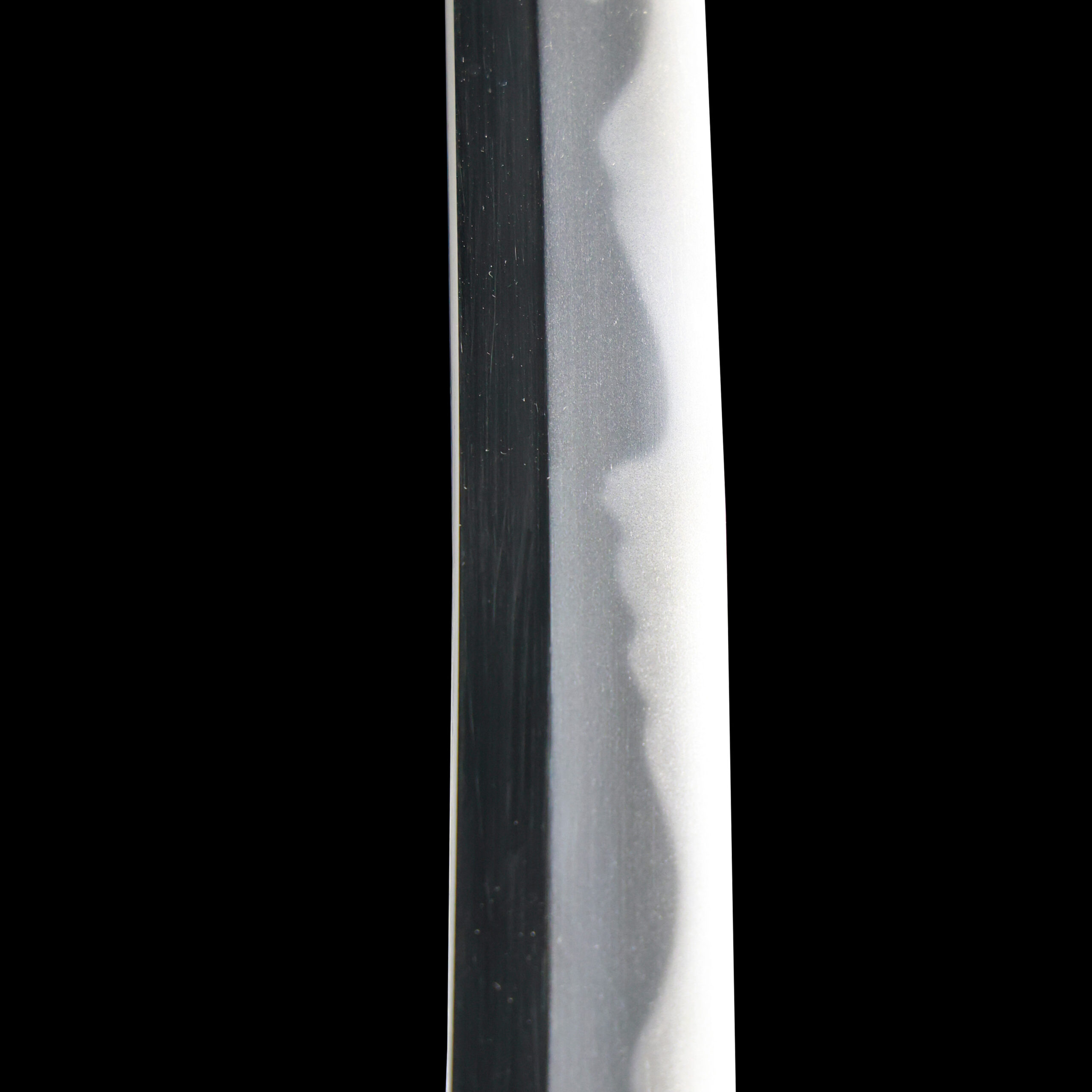
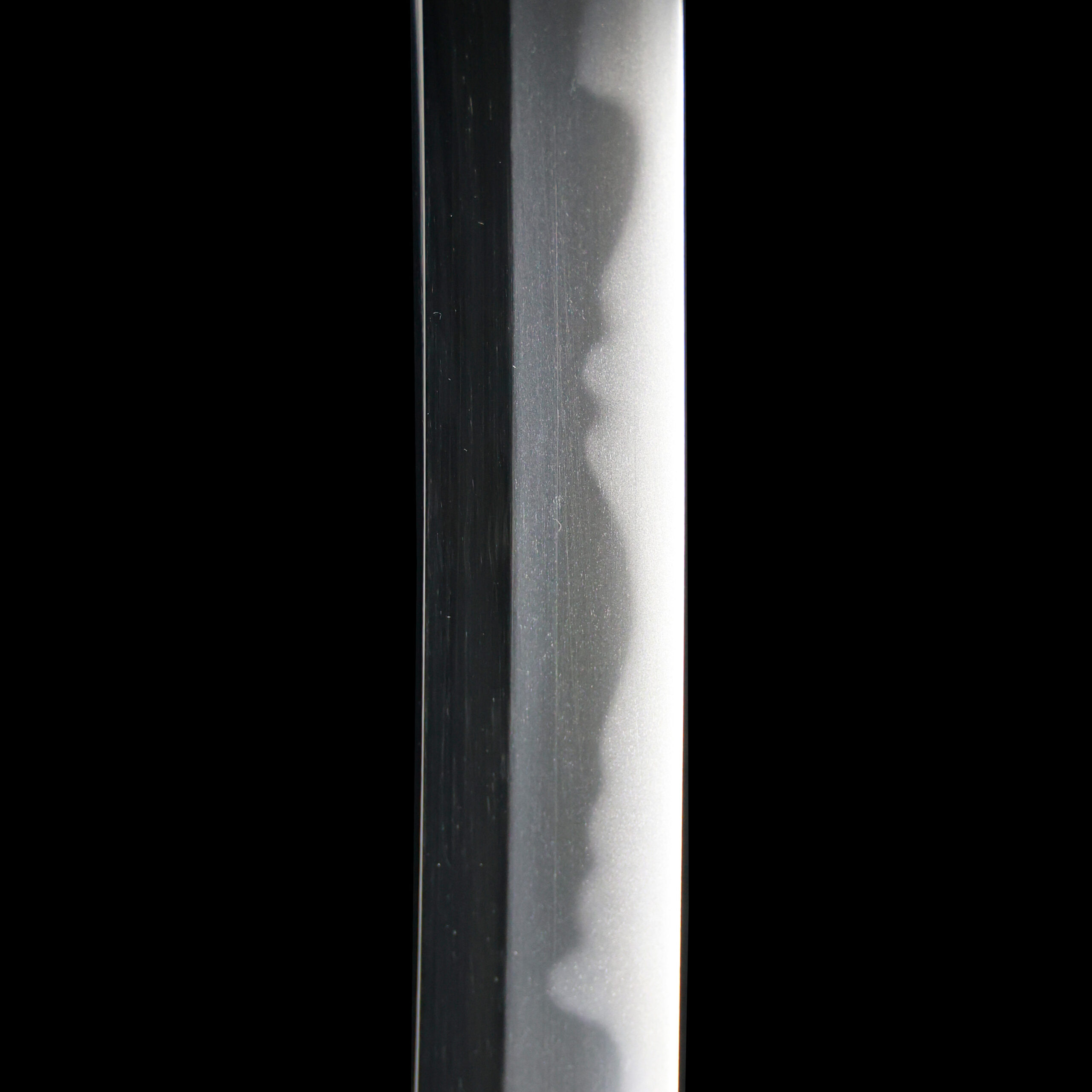
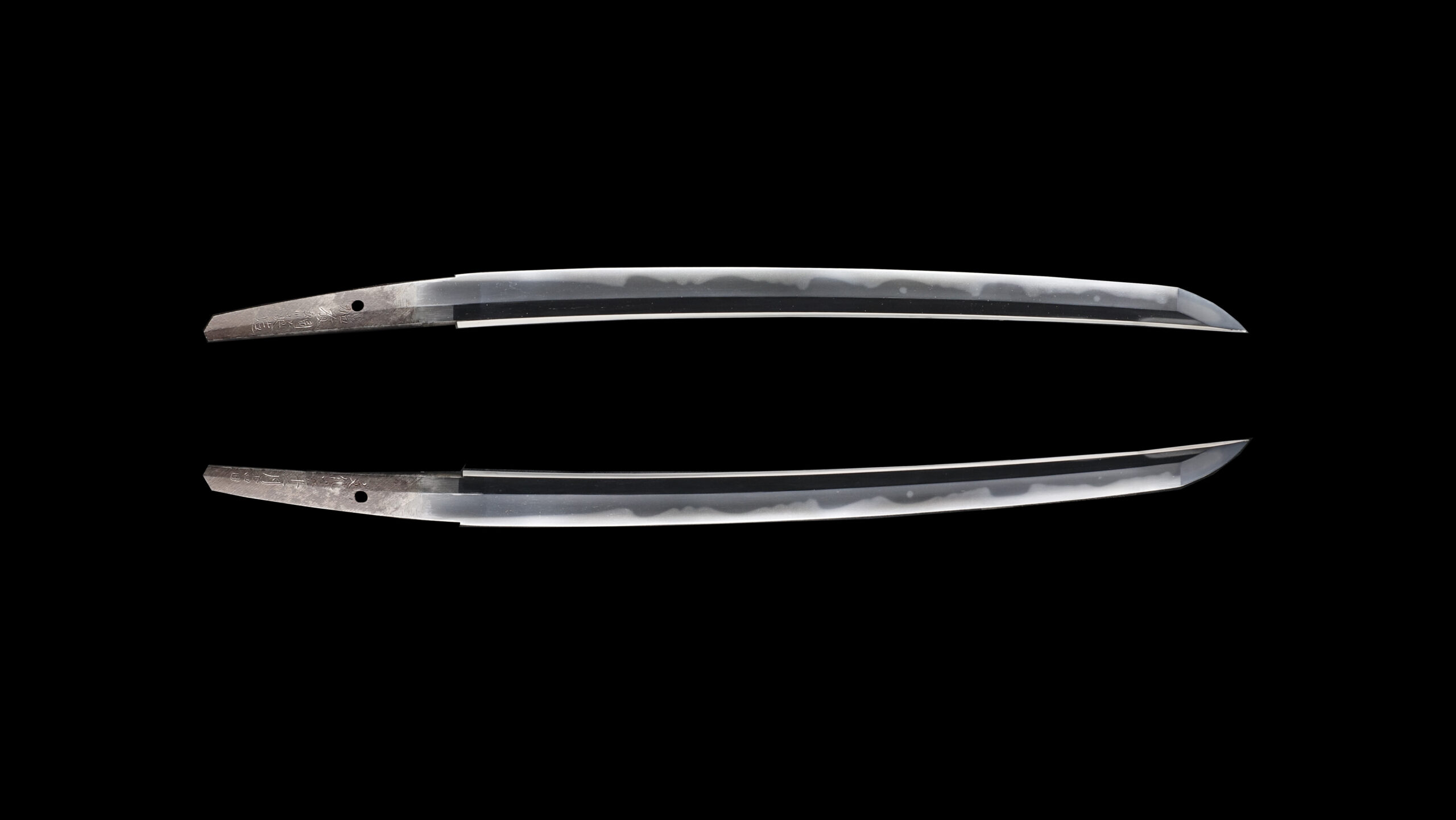
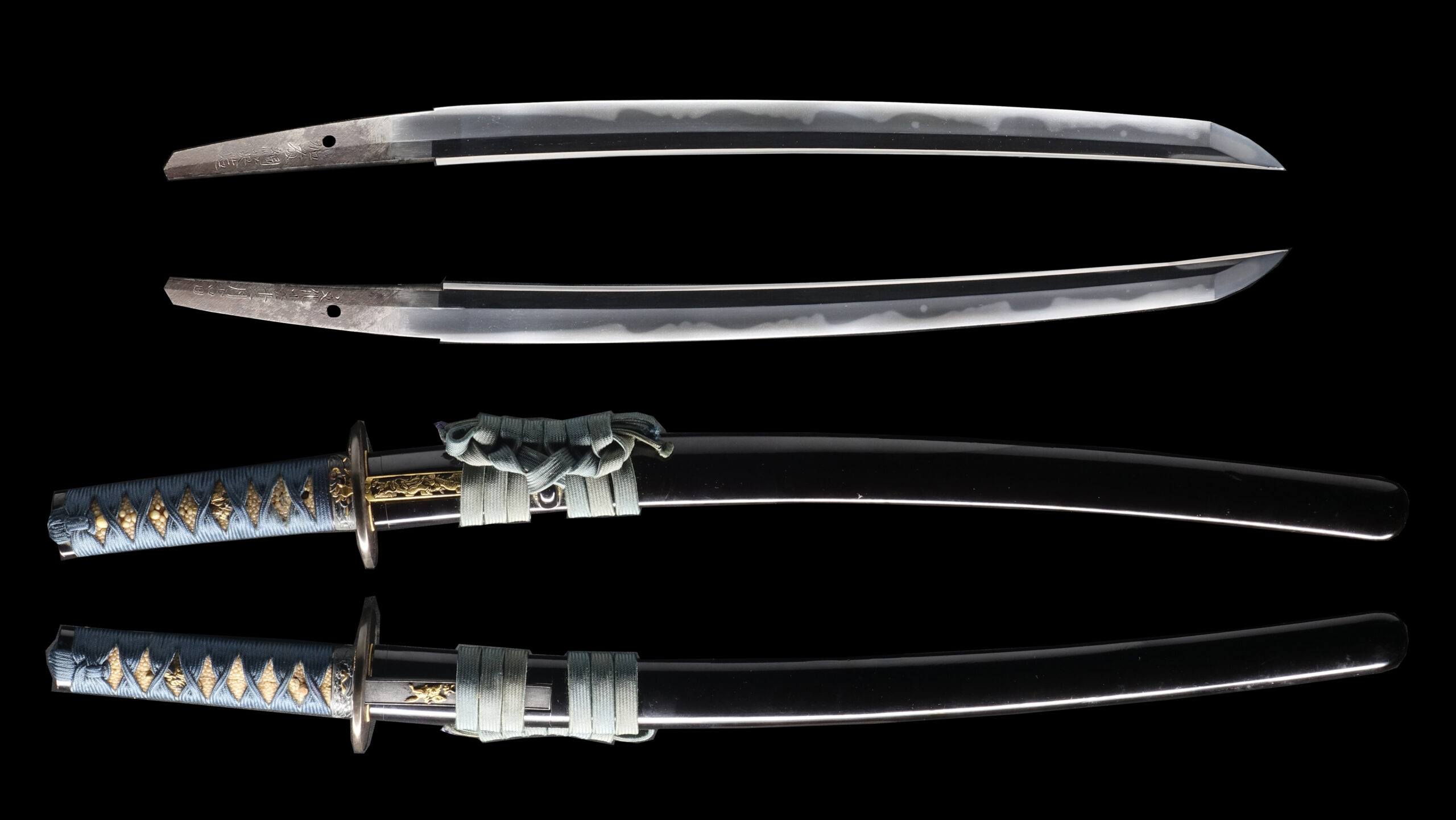
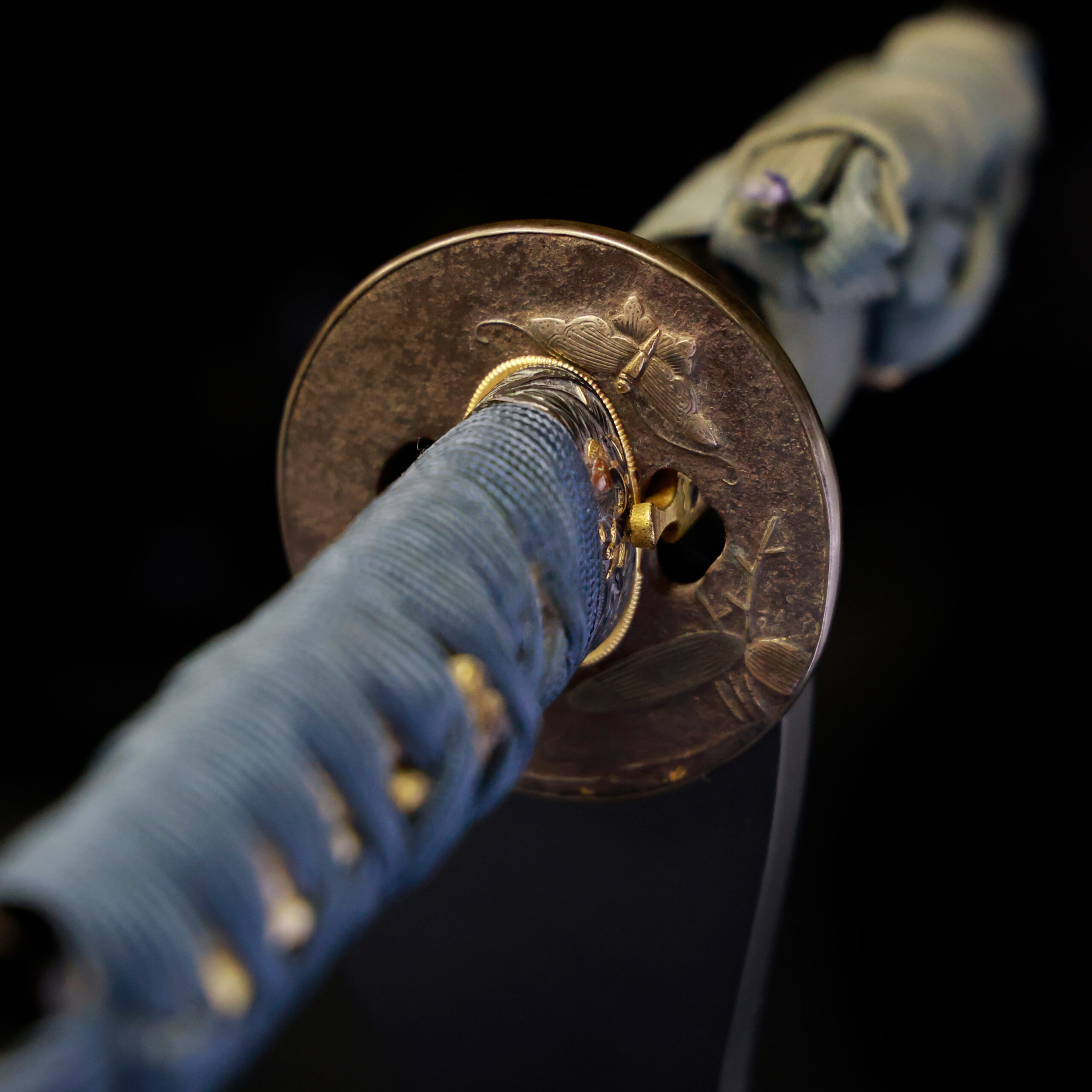
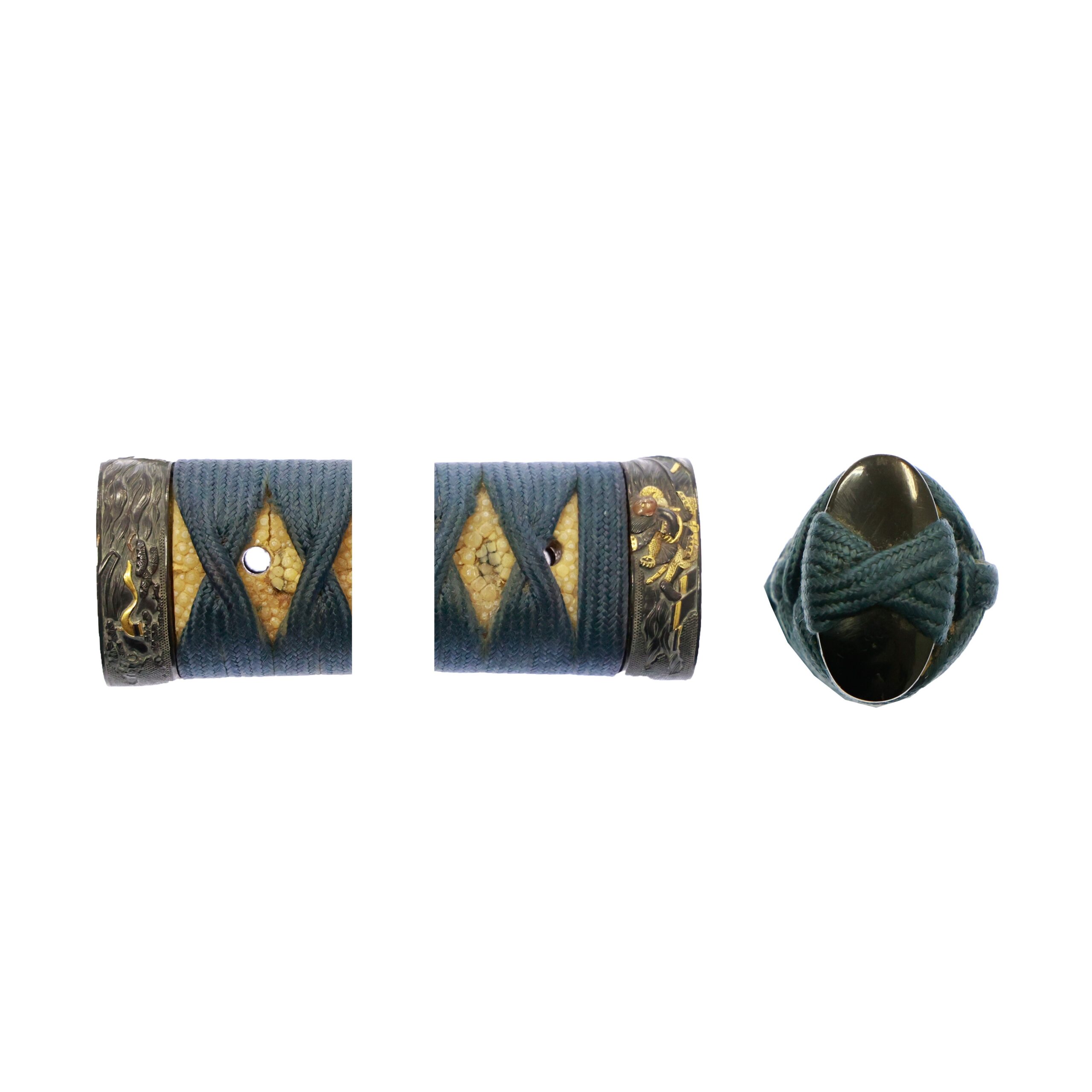
Shinshinto · Musashi · around 1804-1818
Fujishiro Jo saku · Tōken Taikan top 49%
2 pieces on the market now
Where Tsunahide stands among comparable artisans: across all of nihontō, and within tradition, era, and period. The tiers (Foremost · Leading · Major · Notable) weigh official designations from the NBTHK and Japan's Agency for Cultural Affairs, together with historical honors of lasting repute such as the Sansaku and Meibutsu-chō.
Select a lens to see how it's measured.
Shinshinto · Musashi
2 pieces on the market now
| Smith | Era | Designated |
|---|---|---|
| Tsunahide綱英 | 1804-1818 | 1 |
The Shinshintō revival
Around 1800 Suishinshi Masahide argued in his writings that the craft must return to the old masters’ methods: the fukkotō revival. His greatest successor Naotane worked convincingly in Bizen and Sōshū manners that had been dead for centuries.
A Hozon-certified blade judged to show notably superior workmanship and a better state of preservation. The bar is higher: re-tempered blades and most unsigned Muromachi/Edo works are excluded.
The NBTHK (Nihon Bijutsu Tōken Hozon Kyōkai, the Society for the Preservation of Japanese Art Swords) is a public-interest incorporated foundation founded in 1948 and supervised by Japan’s Agency for Cultural Affairs (Bunkachō); it is based at the Japanese Sword Museum in Tokyo. Its expert panels physically examine each submitted work (shinsa) and issue a certificate (kanteishō) ranking it by artistic and historical merit. NBTHK papers are the most widely recognized standard of authentication for Japanese swords and fittings.
NBTHK official siteReturns/exchanges limited to defects caused by shipping (except willful misconduct or gross negligence by the company); customers must contact within 72 hours of receiving the product.
This antique Japanese wakizashi is signed by Kato Tsunahide, a renowned swordsmith active in the late Edo period (1815). It is accompanied by an NBTHK Tokubetsu Hozon Certificate, confirming its authenticity and high artistic value. The blade features a distinctive Toran-midare hamon and comes with both a shirasaya and a koshirae, which includes fittings with a war-themed motif.
NihontoWatchmei · Bunka (1804-1818) · nagasa 38.5cm · sori 0.6cm
Shinshinto · Musashi · around 1804-1818
Fujishiro Jo saku · Tōken Taikan top 49%
2 pieces on the market now
Where Tsunahide stands among comparable artisans: across all of nihontō, and within tradition, era, and period. The tiers (Foremost · Leading · Major · Notable) weigh official designations from the NBTHK and Japan's Agency for Cultural Affairs, together with historical honors of lasting repute such as the Sansaku and Meibutsu-chō.
Select a lens to see how it's measured.
Shinshinto · Musashi
2 pieces on the market now
| Smith | Era | Designated |
|---|---|---|
| Tsunahide綱英 | 1804-1818 | 1 |
The Shinshintō revival
Around 1800 Suishinshi Masahide argued in his writings that the craft must return to the old masters’ methods: the fukkotō revival. His greatest successor Naotane worked convincingly in Bizen and Sōshū manners that had been dead for centuries.
A Hozon-certified blade judged to show notably superior workmanship and a better state of preservation. The bar is higher: re-tempered blades and most unsigned Muromachi/Edo works are excluded.
The NBTHK (Nihon Bijutsu Tōken Hozon Kyōkai, the Society for the Preservation of Japanese Art Swords) is a public-interest incorporated foundation founded in 1948 and supervised by Japan’s Agency for Cultural Affairs (Bunkachō); it is based at the Japanese Sword Museum in Tokyo. Its expert panels physically examine each submitted work (shinsa) and issue a certificate (kanteishō) ranking it by artistic and historical merit. NBTHK papers are the most widely recognized standard of authentication for Japanese swords and fittings.
NBTHK official siteReturns/exchanges limited to defects caused by shipping (except willful misconduct or gross negligence by the company); customers must contact within 72 hours of receiving the product.