Edo was the sword’s age of connoisseurship: the Hon’ami appraisers, the shogunal register of famous blades of 1719, and a thriving literature turned the sword into an object of study even as it ceased to be drawn in war.
 NihontoWatchNihontoWatch
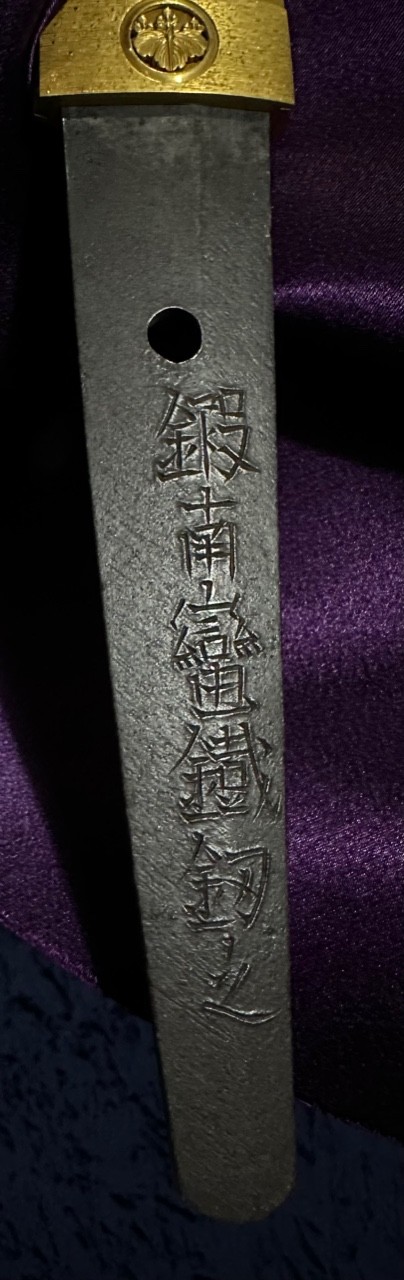
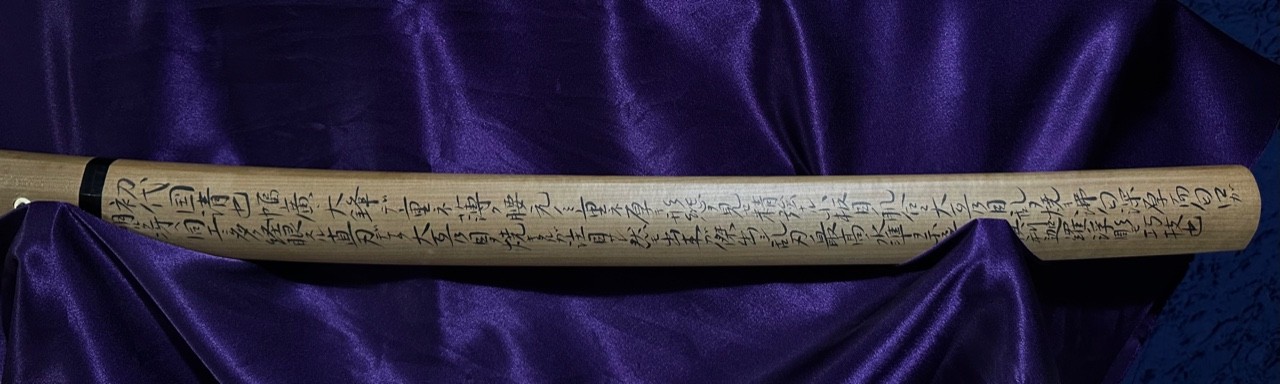
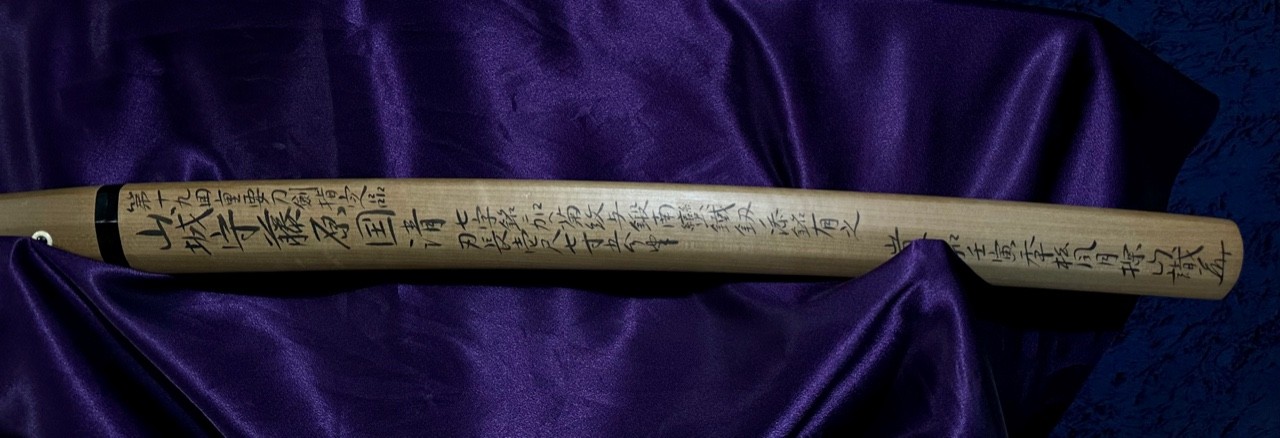
Juyo Explanation Echizen province Kan'ei era(A.D.1624-1643, early Edo period) YAMASHIRO No KUNI KUNIKIYO Shodai ( First Generation, with Kikumon ) Saijo Saku , Most skilled Swordsmith. About 400 years ago Hacho (Edge length) 53.2㎝ Sori (Curvature) approx. 0.91㎝ Moto-haba (Width at Ha-machi) approx. 3.36㎝ Saki-haba(Width at Kissaki) approx.2.91㎝ Kasane (Thickness) approx. 0.73㎝ Engraving: "Naginata-hi ni Kurikara" on the right face (Omote) "Naginata-hi ni Goma-bashi" on the back face (Ura) "Kiri-mon" engraving, pure gold double Habaki Shirasaya (nested style) Certification : NBTHK JUYO TOKEN ( This KUNIKIYO is of the highest level of Juyo ) In the context of the NBTHK (Nihon Bijutsu Token Hozon Kyokai), a Juyo Token (重要刀剣) is a certification for Japanese Swords indicating, that they are of important artistic and historical value. It signifies that a sword is exceptionally well-preserved, of high quality, and deemed worthy of preservation by the NBTHK. This certification is a significant step above the "Hozon" and "Tokubetsu Hozon" levels, and is highly sought after by collectors. Historical information on YAMASHIRO No KUNI KUNIKIYO Shodai ( First generation with Kikumon ) His home was Shinshu (Shinano no Kuni ) Matsumoto, he served MATSUDAIRA TADAMASA and moved to Echigo Takada, and he further followed TADAMASA and moved his residence to Echizen Fukui in Kan’ei Yon nen Nigatsu (1627) https://en.wikipedia.org/wiki/Matsudaira_Tadamasa He was invested Yamashiro no Daijo, and was given the family name of Fujiwara and the 16 petal Kikka Mon which was carved on the top of the Nakago off his Swords. He was then listed as "KIKU KUNIKIYO" in various record’s of these time’s KUNIKIYO specialised in Suguba Hamon’, however works with Midareba Hamon are very rare and this Wakizashi by Kunikiyo has a magnificent Midareba hamon. Midare hamon is a visual signature of a master sword smith's skill and here we have a Meito ( Masterpiece ) Wakizashi. "Saijo Saku" (最上作) denotes the highest level of Sword smithing skill, representing the “supreme” or Grandmaster level of workmanship . Here we have an absolute rare and beautiful , powerful Wakizashi that stands out above the rest. Sayagaki obverse: 第十九回重要刀剣指定品 山城守藤原国清 七字銘ニ加ヘ菊紋与鍛南蠻鐡釼ノ添銘有之 刃⻑壱尺七寸五分半 峕令和壬寅秊松風月探山識「花押」 Dai jūkyū-kai Jūyō-Tōken shitei-hin Yamashiro no Kami Fujiwara Kunikiyo Shichiji-mei ni kuwae kiku-mon yo kono ken nanban-tetsu o kitaeru no soe-mei kore ari. Hachō isshaku shichi-sun go-bu han Toki ni Reiwa mizunoe-toradoshi matsukazetsuki Tanzan shirusu + kaō Jūyō-Tōken in course of 19th Jūyō Shinsa Yamashiro no Kami Fujiwara Kunikiyo This blade bears a seven-character signature, a chrysantyemum crest, and is additionally inscribed that it was forged from nanban-tetsu. Blade length ~ 53.2 cm Written by Tanzan [Tanobe Michihiro] in June in the year of the tiger of the Reiwa era (2022) + monogram. Sayagaki reverse: 初代国清也幅廣・大鋒デ重ネ薄ク腰元ノミ重ネ厚キ形態ヲ見セ精強ナル小板目ノ肌合ニ大互乃 目乱ヲ焼キ沸匂深厚而匂口ガ明ルク冴ヘ同工ニ多ク経眼スル直刃デナク大互乃目ヲ焼キタルガ 注目サレ然モ出来ガ傑出シ乱刃ノ最高ノ水準ヲ示ス者ナラン倶利迦羅ノ浮彫モ巧技也 Shodai Kunikiyo nari. Haba-hiro, ō-kissaki de kasane usuku koshimoto nomi kasane atsuki keitai o mise seikyō-naru ko-itame no hada-ai ni ō-gunome-midare o yaki nie nioi shinkō shikamo nioiguchi ga akaruku sae dōkō ni ōku keigan-suru suguha de naku ō-gunome o yakitaru ga chūmoku-sare shika mo deki ga kesshutsu-shi midareba no saikō no suijun o shimesu mono naran. Kurikara no ukibori mo kōgi nari. This is a work of the first generation Kunikiyo. It is of a shape with wide mihaba, ō-kissaki, and thin kasane, with just the base displaying a thick kasane. The forging structure is a fine and powerful ko-itame and the hardening is a nie-laden ō-gunome-midare with a wide, bright, and clear nioiguchi. Thus, it has to be pointed out that most works of Kunikiyo are hardened in suguha, whereupon this blade displays, as indicated an ō-gunome. The deki is excellent and we have here what can be regarded as the highest level seen with a midareba. In addition, the relief of a kurikara is skillfully engraved as well.
NihontoWatchYamashiro no Kuni Kunikiyo Shodai
Offered by Connoisseur Arms

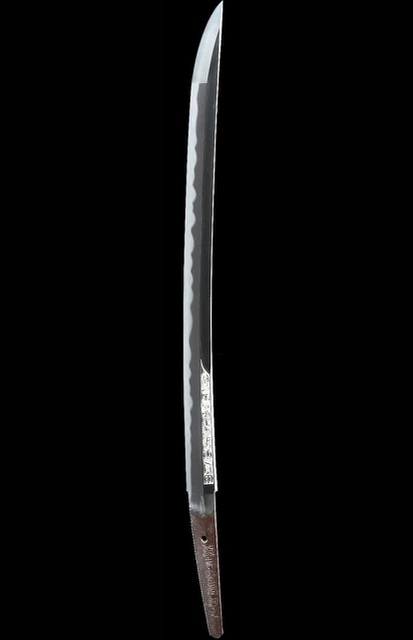
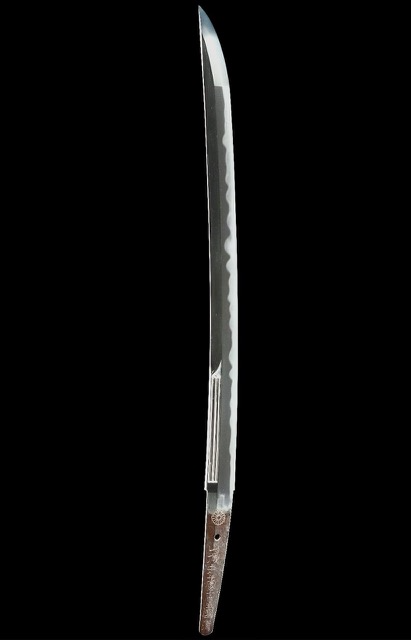
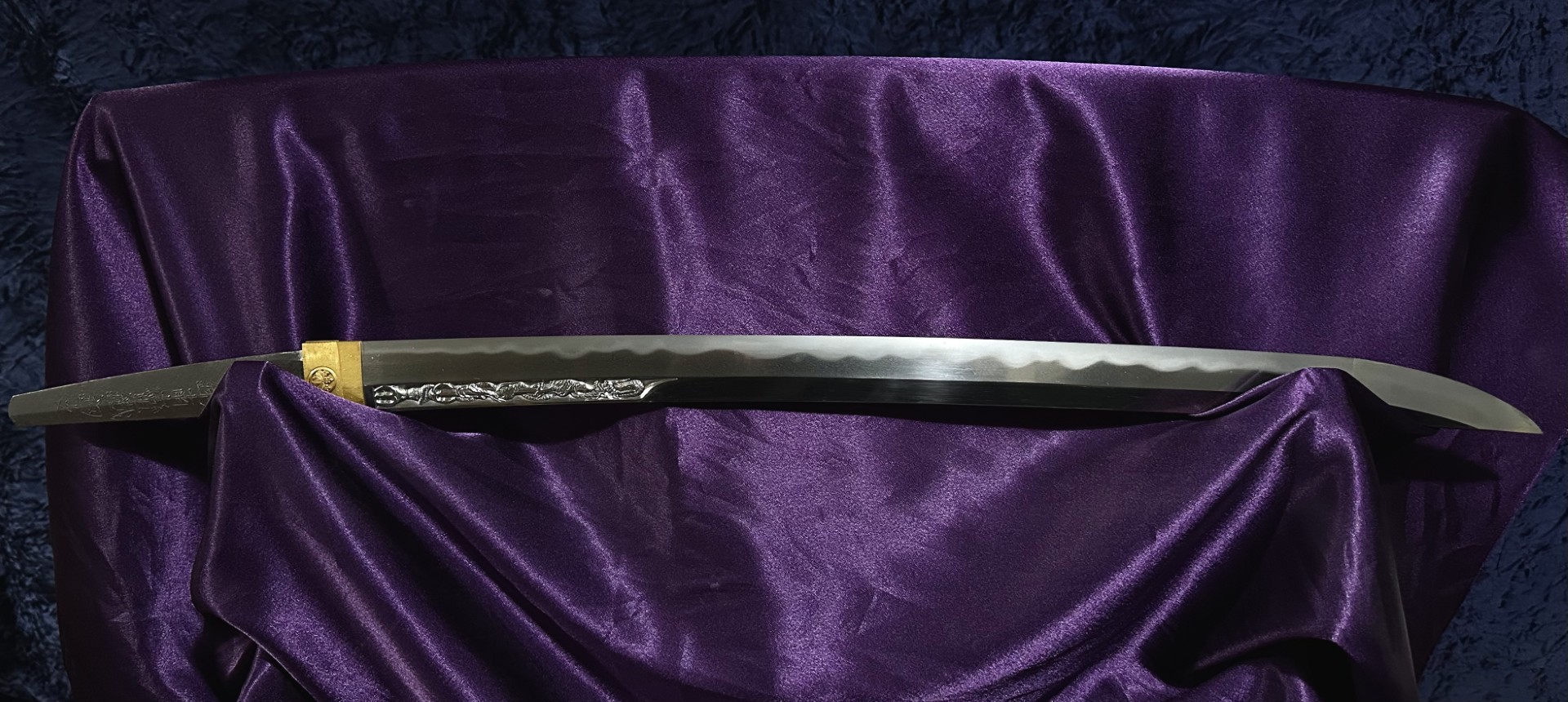
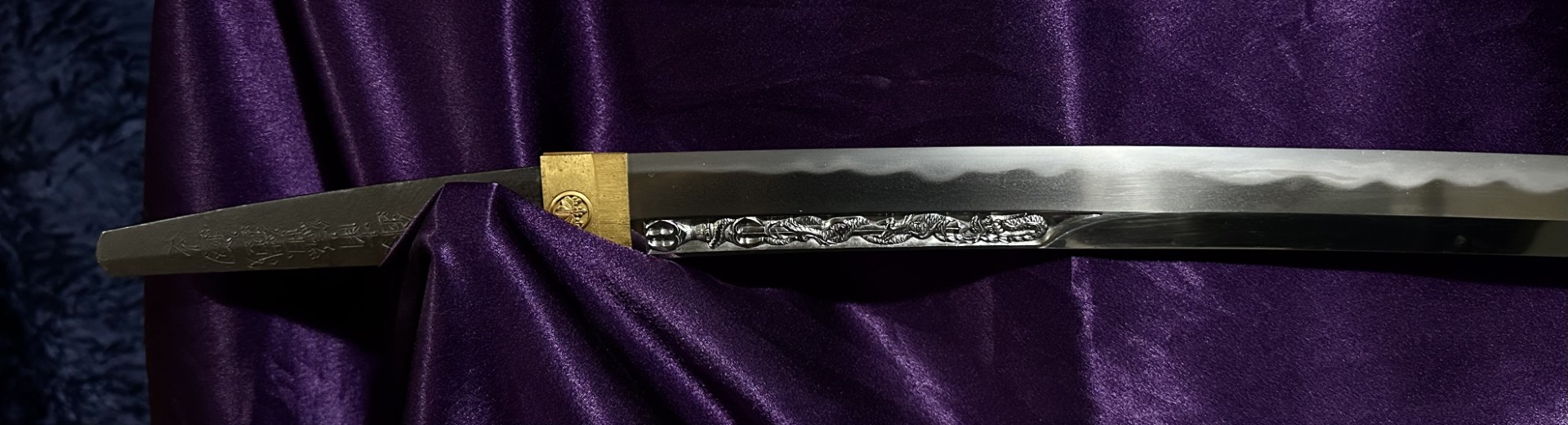
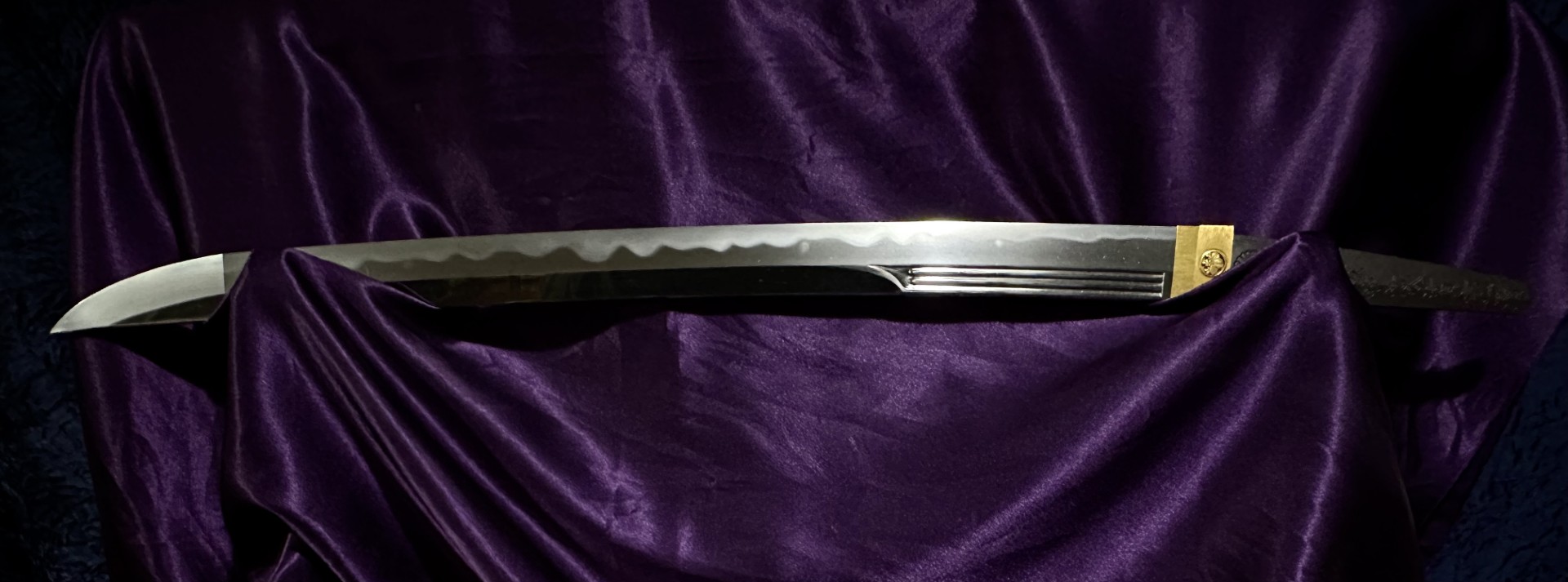
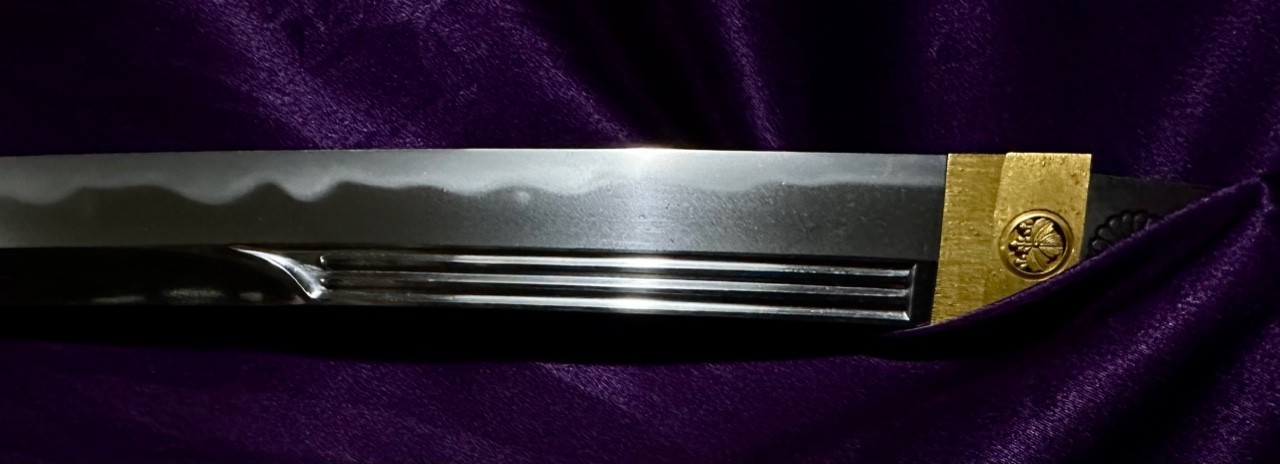
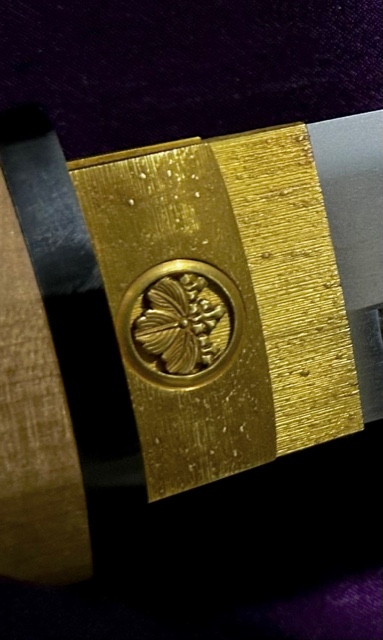
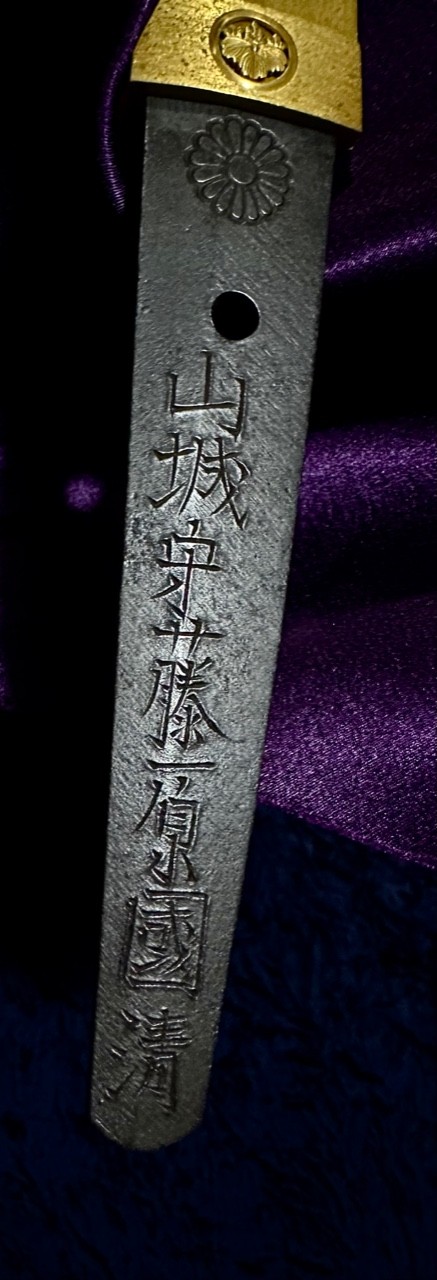
The Edo period (1615 to 1868)
Edo was the sword’s age of connoisseurship: the Hon’ami appraisers, the shogunal register of famous blades of 1719, and a thriving literature turned the sword into an object of study even as it ceased to be drawn in war.
A blade of top-grade workmanship and condition, formally judged to rank with a nationally recognized Important Art Object (Jūyō Bijutsuhin). Awarded only at the NBTHK’s competitive annual examination.
Of Japan’s roughly 2.5 million registered swords, only 12,348 (about 1 in 202) have ever attained Jūyō.
The NBTHK (Nihon Bijutsu Tōken Hozon Kyōkai, the Society for the Preservation of Japanese Art Swords) is a public-interest incorporated foundation founded in 1948 and supervised by Japan’s Agency for Cultural Affairs (Bunkachō); it is based at the Japanese Sword Museum in Tokyo. Its expert panels physically examine each submitted work (shinsa) and issue a certificate (kanteishō) ranking it by artistic and historical merit. NBTHK papers are the most widely recognized standard of authentication for Japanese swords and fittings.
NBTHK official sitePurchases are final and items cannot be returned unless otherwise stated.
Price on request