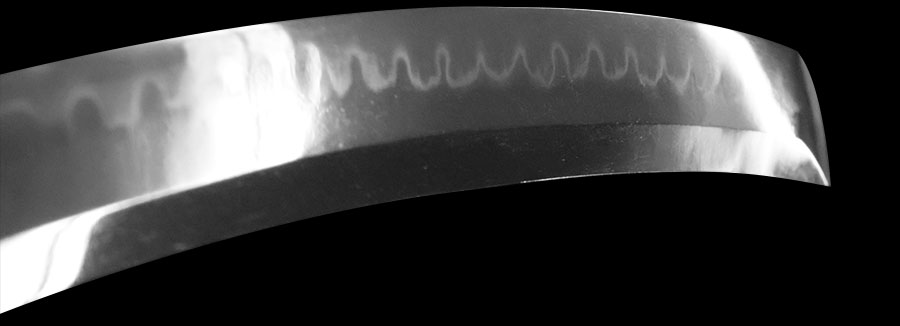
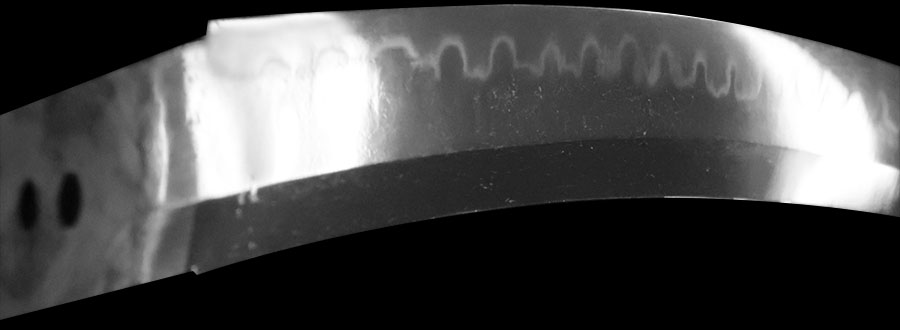
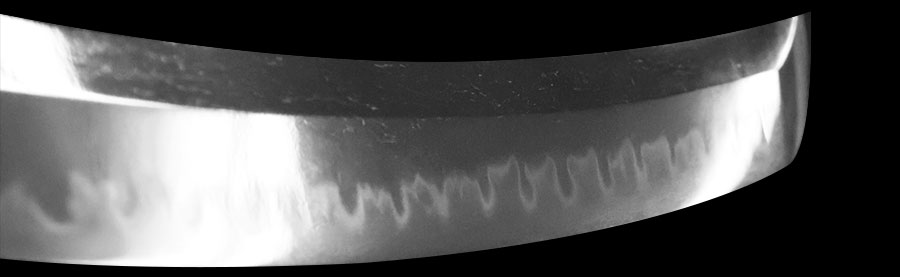
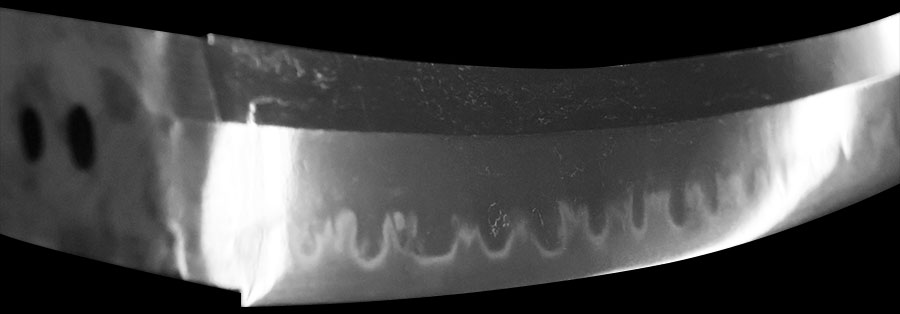
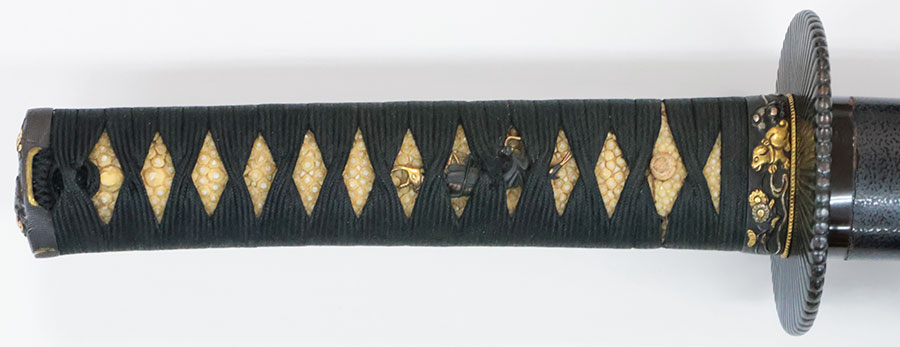
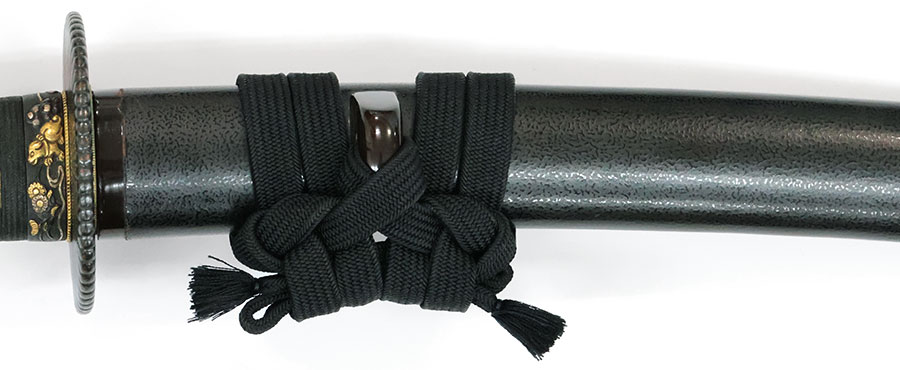
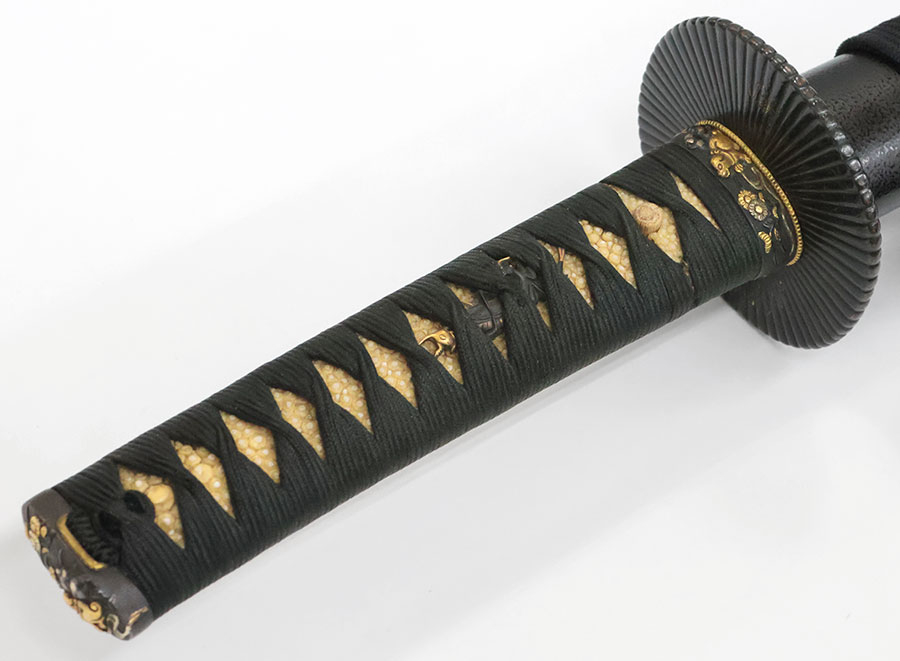
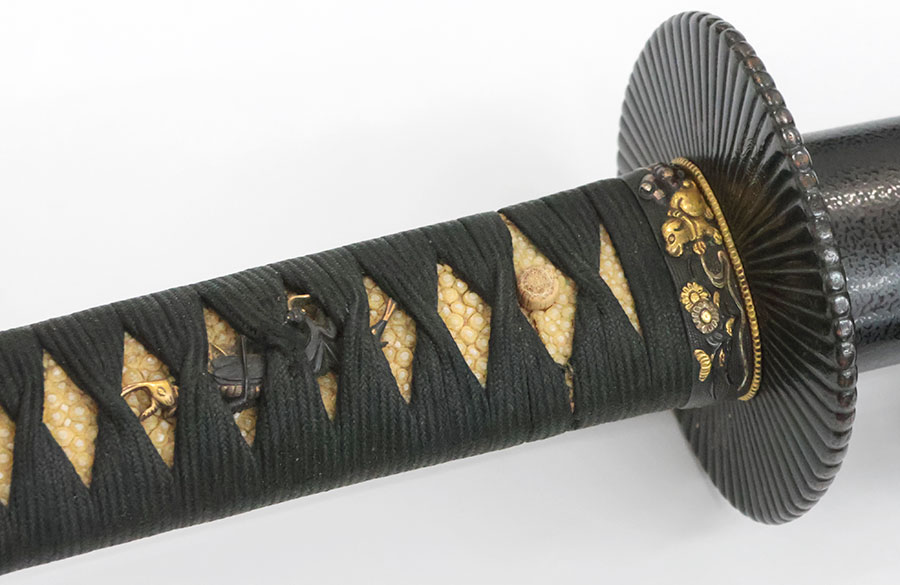
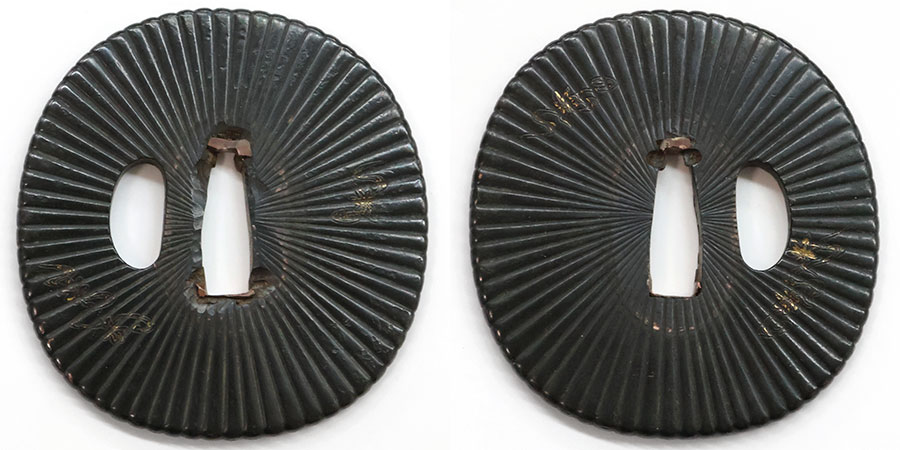
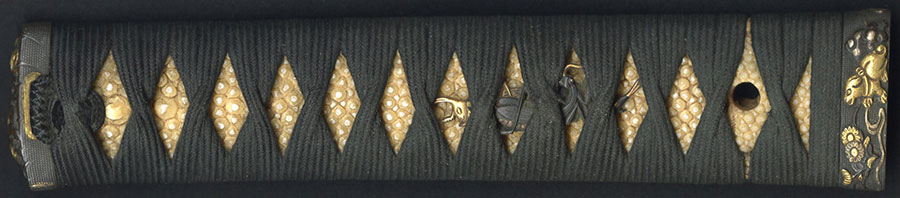
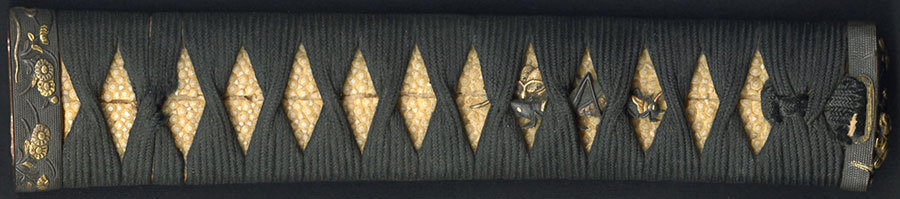
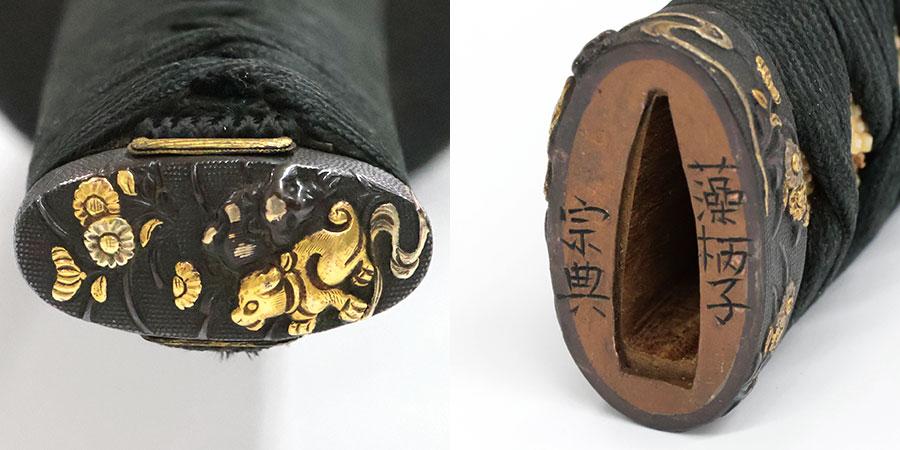
It has appeared, it has appeared! A wakizashi that has been carefully passed down through generations of an old family as a Kaneuji has appeared. This is likely a Kaneuji from the Muromachi period, around the Eiroku era (1560) (466 years ago), a later generation of the master smith Shizu Saburo Kaneuji, who was famous as one of the Masamune Jittetsu during the Nanbokucho period around the Kenmu era (1334) (692 years ago). This work dates exactly to the time when Oda Nobunaga defeated the great lord of Tokai, Imagawa Yoshimoto, at the Battle of Okehazama, laying the foundation for the unification of Japan. This wakizashi exhibits a fine sugata with a difference between the moto-mihaba and saki-mihaba and an extended kissaki. The jigane is a brightly forged itame-hada. The hamon is in nioi-deki with nie, featuring a bright and gorgeous gunome-midare mixed with yahazu-style ha where the yakigashira splits in two, as well as kataochi-gunome style ha. As for the koshirae, the tsuba is an elaborate tetsu-ji with sen-bori (line carving) of a technique I cannot fathom. The fuchi-kashira features a lovely design of dogs and chrysanthemums on a shakudo nanako-ji base. The menuki are shakudo-ji with a design of autumn insects. The kozuka is a do-ji (copper base) with an elaborate inlay of pines and bees. These are housed in an Edo-period kuro-kanshitsu-nuri saya (black dry-lacquer scabbard), which adds further splendor to this Kaneuji wakizashi. On this occasion, the owners from this old family have entrusted us with this Kaneuji wakizashi, which they have cherished for generations, saying, "We have grown old, so please pass this on at a low price to someone who will treasure it." Therefore, we are offering it at a special bargain price. Please do enjoy it.
 NihontoWatchBETA














We could not find an authenticity certificate on the seller’s listing. Japanese swords and fittings are normally papered by the NBTHK (or the NTHK). Without one, the attribution is the seller’s own assessment and has not been independently verified — treat it with caution and ask the dealer about certification before buying.
For returns due to customer circumstances, the cost is the customer's responsibility. For returns due to our mis-shipment or a defective item, we bear the cost.
It has appeared, it has appeared! A wakizashi that has been carefully passed down through generations of an old family as a Kaneuji has appeared. This is likely a Kaneuji from the Muromachi period, around the Eiroku era (1560) (466 years ago), a later generation of the master smith Shizu Saburo Kaneuji, who was famous as one of the Masamune Jittetsu during the Nanbokucho period around the Kenmu era (1334) (692 years ago). This work dates exactly to the time when Oda Nobunaga defeated the great lord of Tokai, Imagawa Yoshimoto, at the Battle of Okehazama, laying the foundation for the unification of Japan. This wakizashi exhibits a fine sugata with a difference between the moto-mihaba and saki-mihaba and an extended kissaki. The jigane is a brightly forged itame-hada. The hamon is in nioi-deki with nie, featuring a bright and gorgeous gunome-midare mixed with yahazu-style ha where the yakigashira splits in two, as well as kataochi-gunome style ha. As for the koshirae, the tsuba is an elaborate tetsu-ji with sen-bori (line carving) of a technique I cannot fathom. The fuchi-kashira features a lovely design of dogs and chrysanthemums on a shakudo nanako-ji base. The menuki are shakudo-ji with a design of autumn insects. The kozuka is a do-ji (copper base) with an elaborate inlay of pines and bees. These are housed in an Edo-period kuro-kanshitsu-nuri saya (black dry-lacquer scabbard), which adds further splendor to this Kaneuji wakizashi. On this occasion, the owners from this old family have entrusted us with this Kaneuji wakizashi, which they have cherished for generations, saying, "We have grown old, so please pass this on at a low price to someone who will treasure it." Therefore, we are offering it at a special bargain price. Please do enjoy it.
NihontoWatchBETAWe could not find an authenticity certificate on the seller’s listing. Japanese swords and fittings are normally papered by the NBTHK (or the NTHK). Without one, the attribution is the seller’s own assessment and has not been independently verified — treat it with caution and ask the dealer about certification before buying.
For returns due to customer circumstances, the cost is the customer's responsibility. For returns due to our mis-shipment or a defective item, we bear the cost.