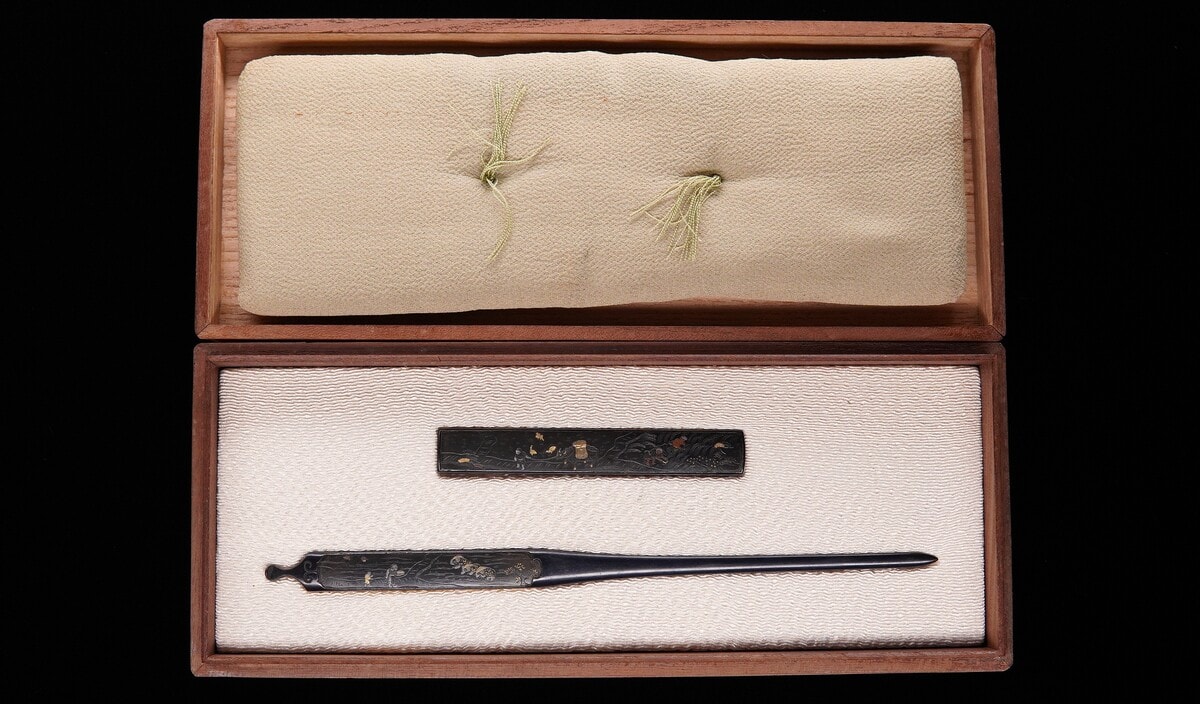
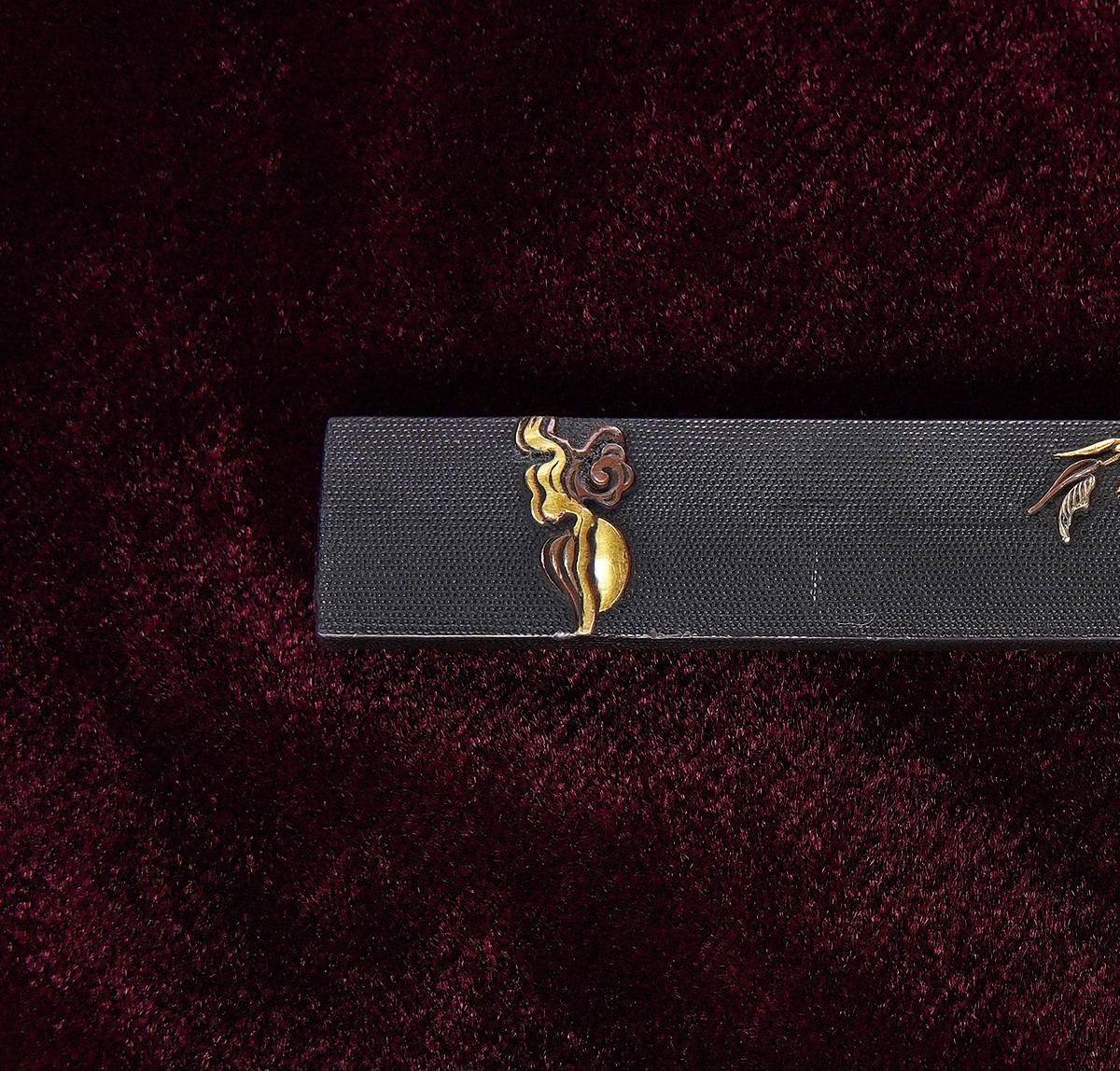
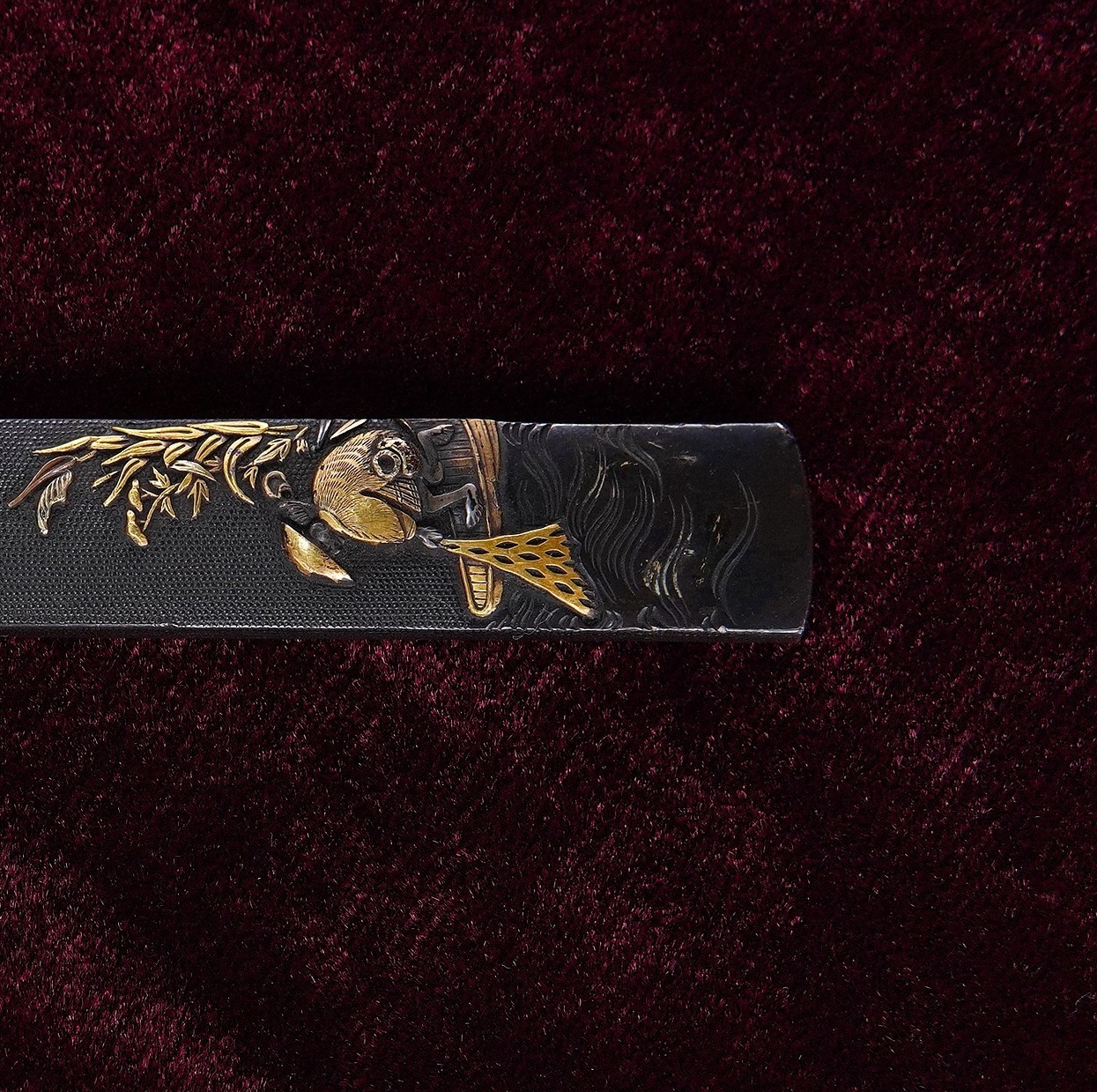
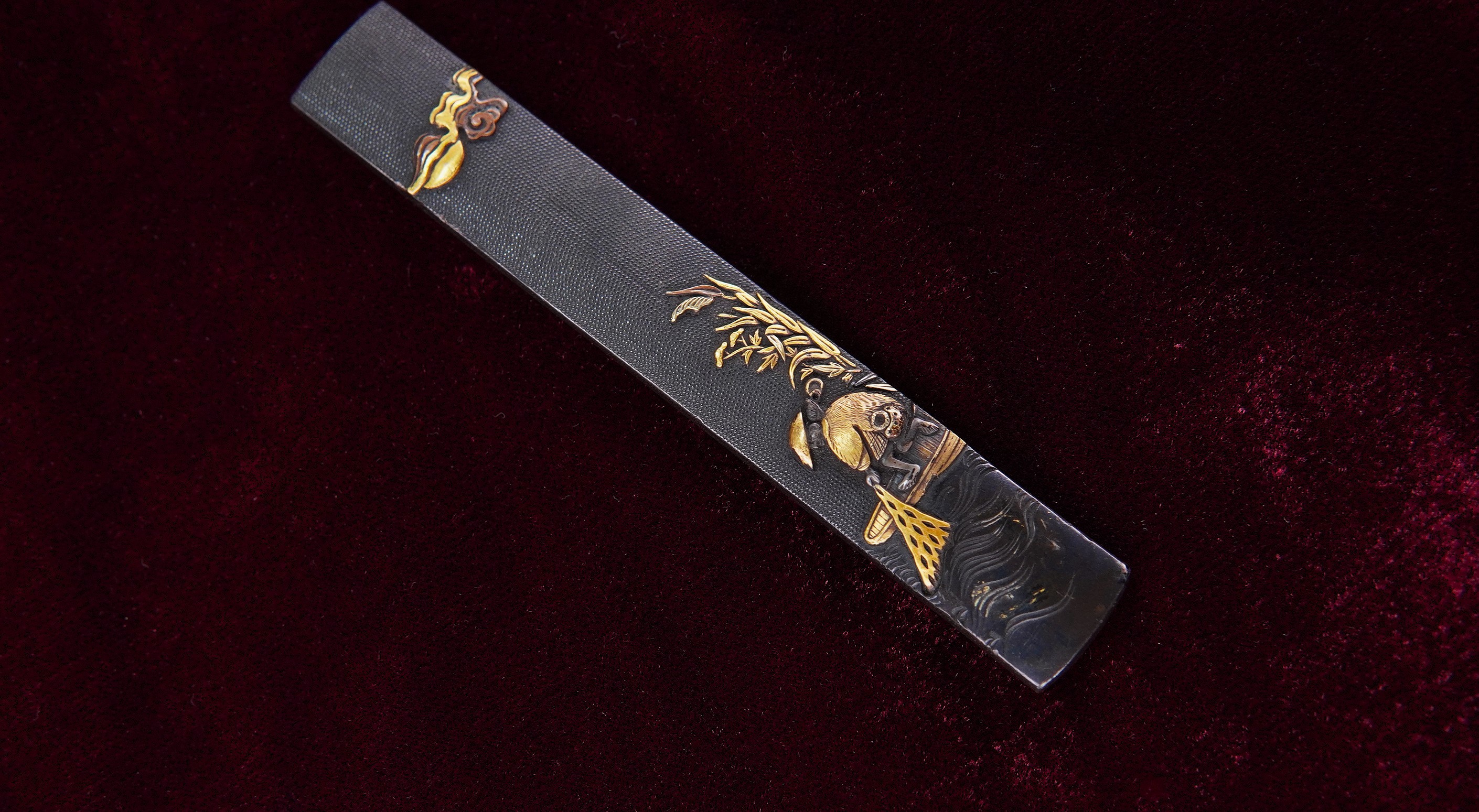
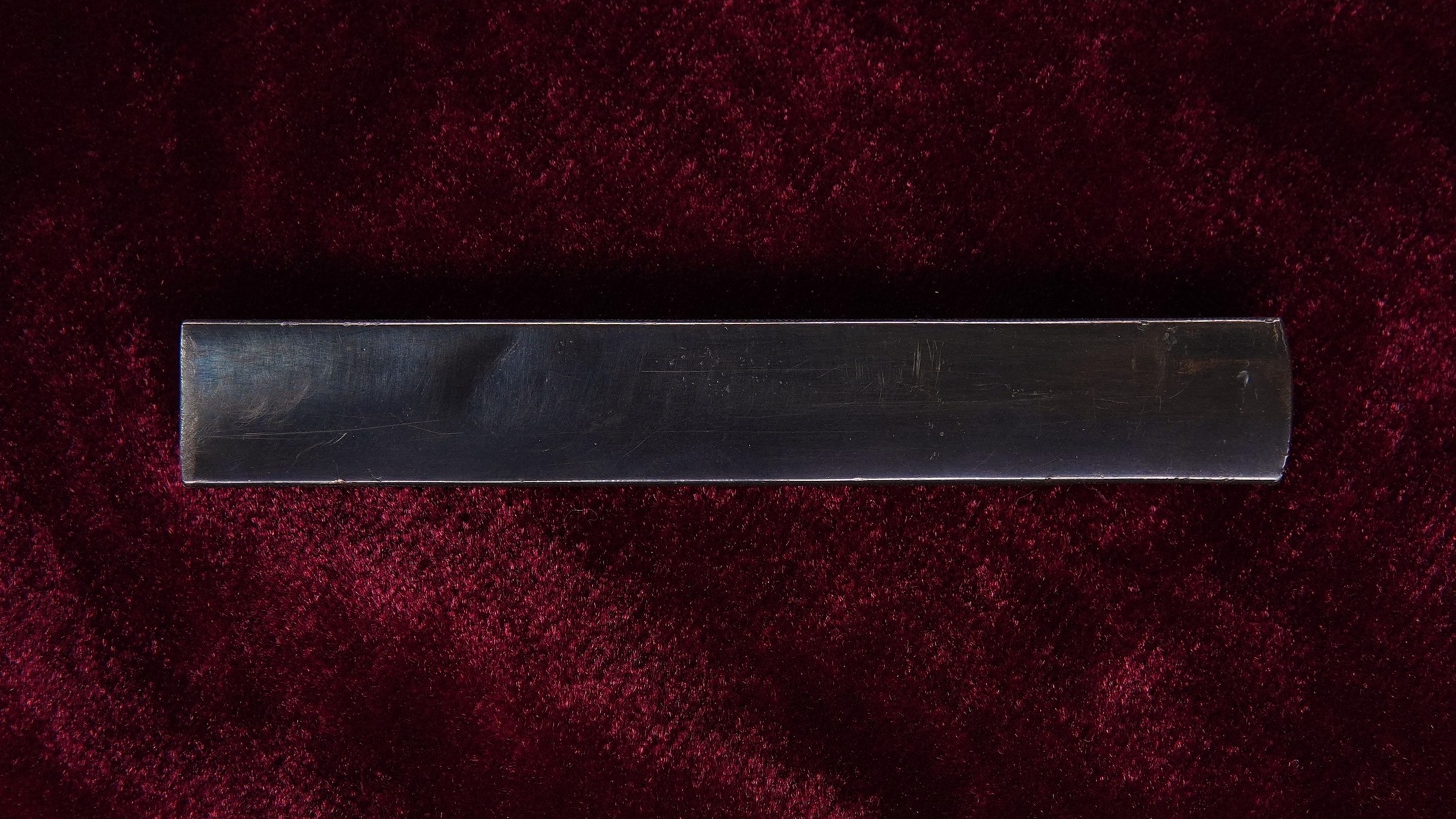
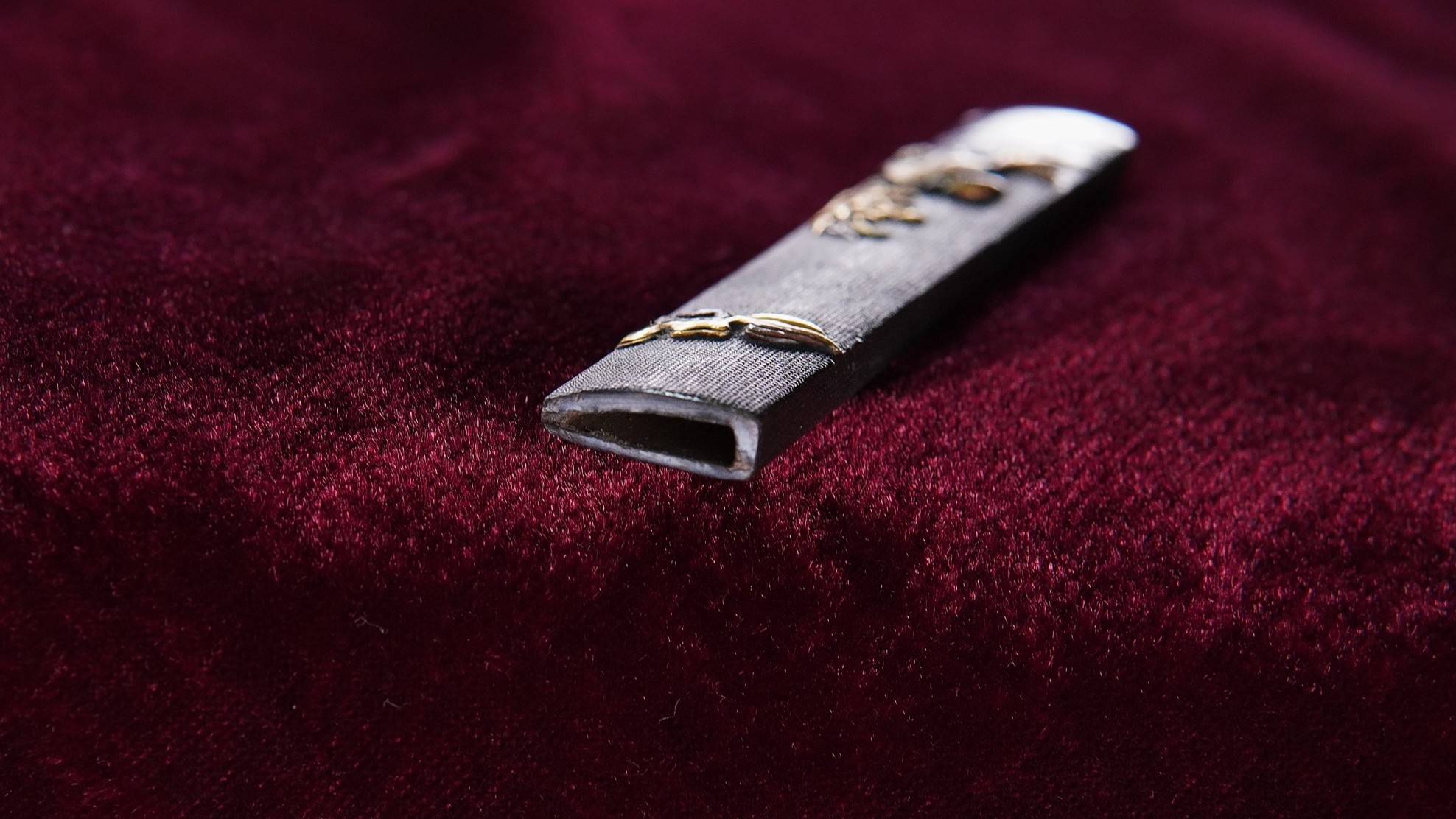
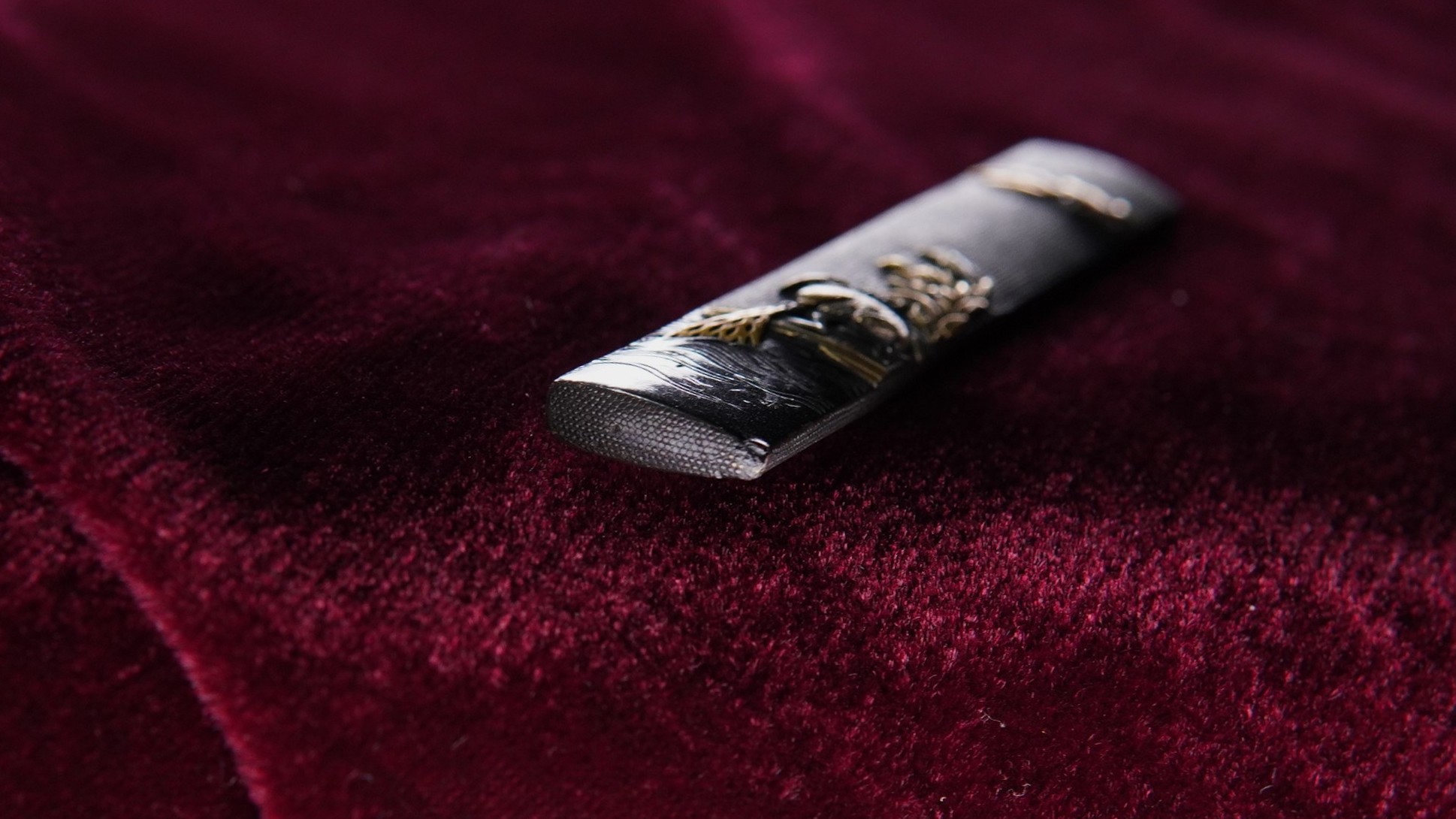
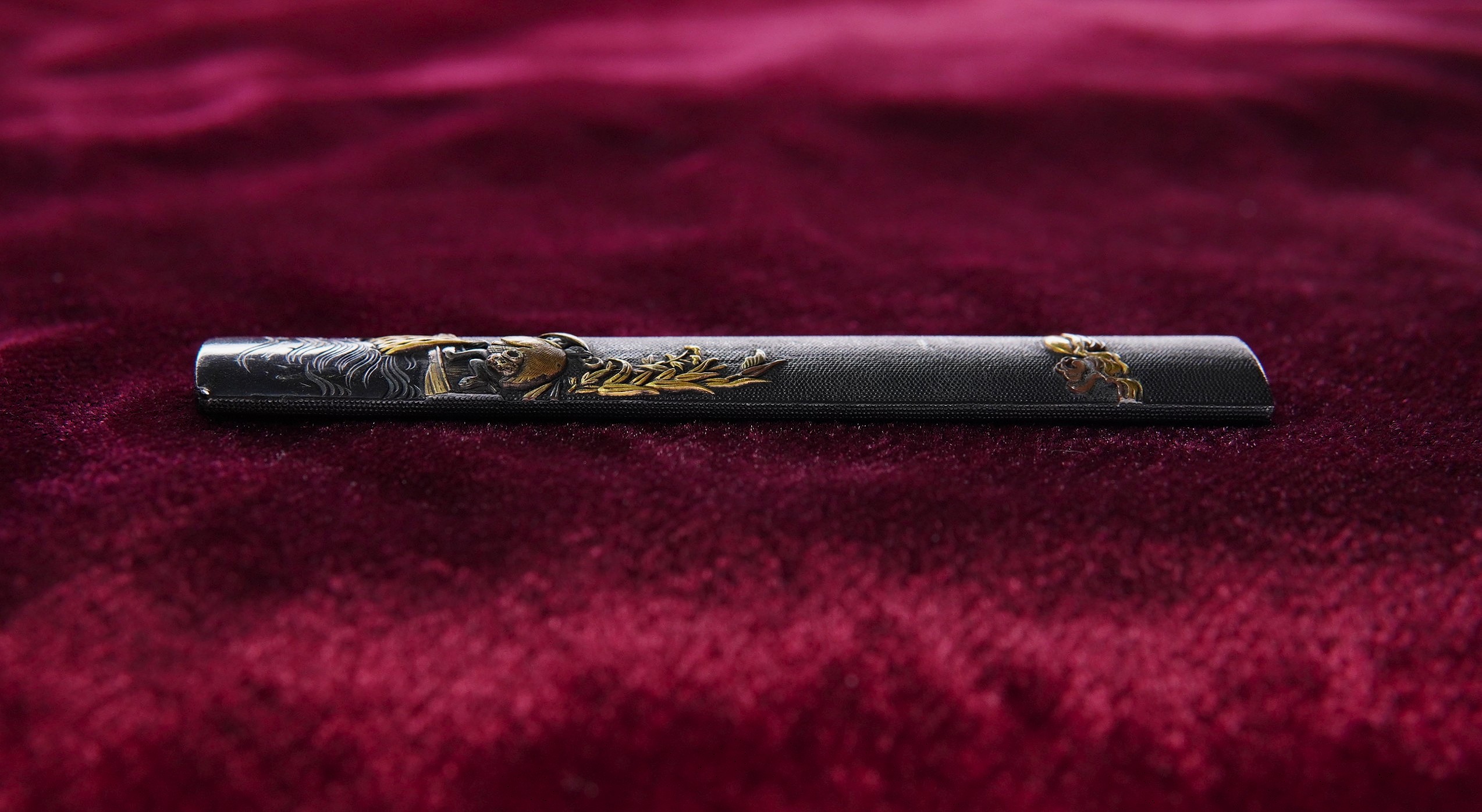
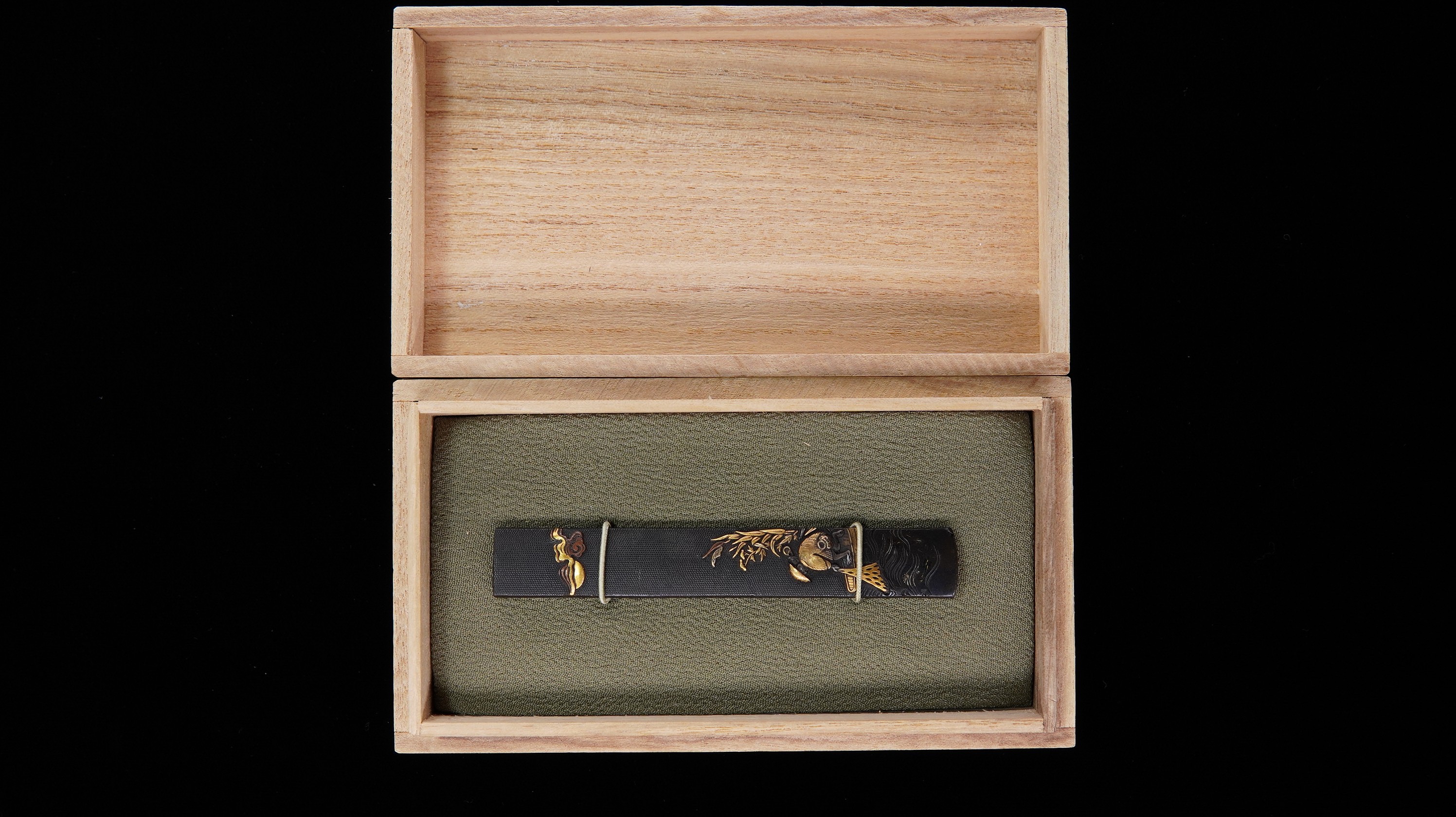
This is an unsigned kozuka by a Kyo-Kinko master from the late Edo period. It features a high-relief carving of a fisherman casting a net from a small boat under the moonlight, with waves on the water's surface expressed in katakiribori. The intricate details of the fisherman's limbs, expression, straw cape, and fish basket showcase various techniques of the Kyo-Kinko school. The kozuka shows signs of use, including dents on the reverse side and a corner of the kojiri, suggesting it was once mounted in a koshirae.
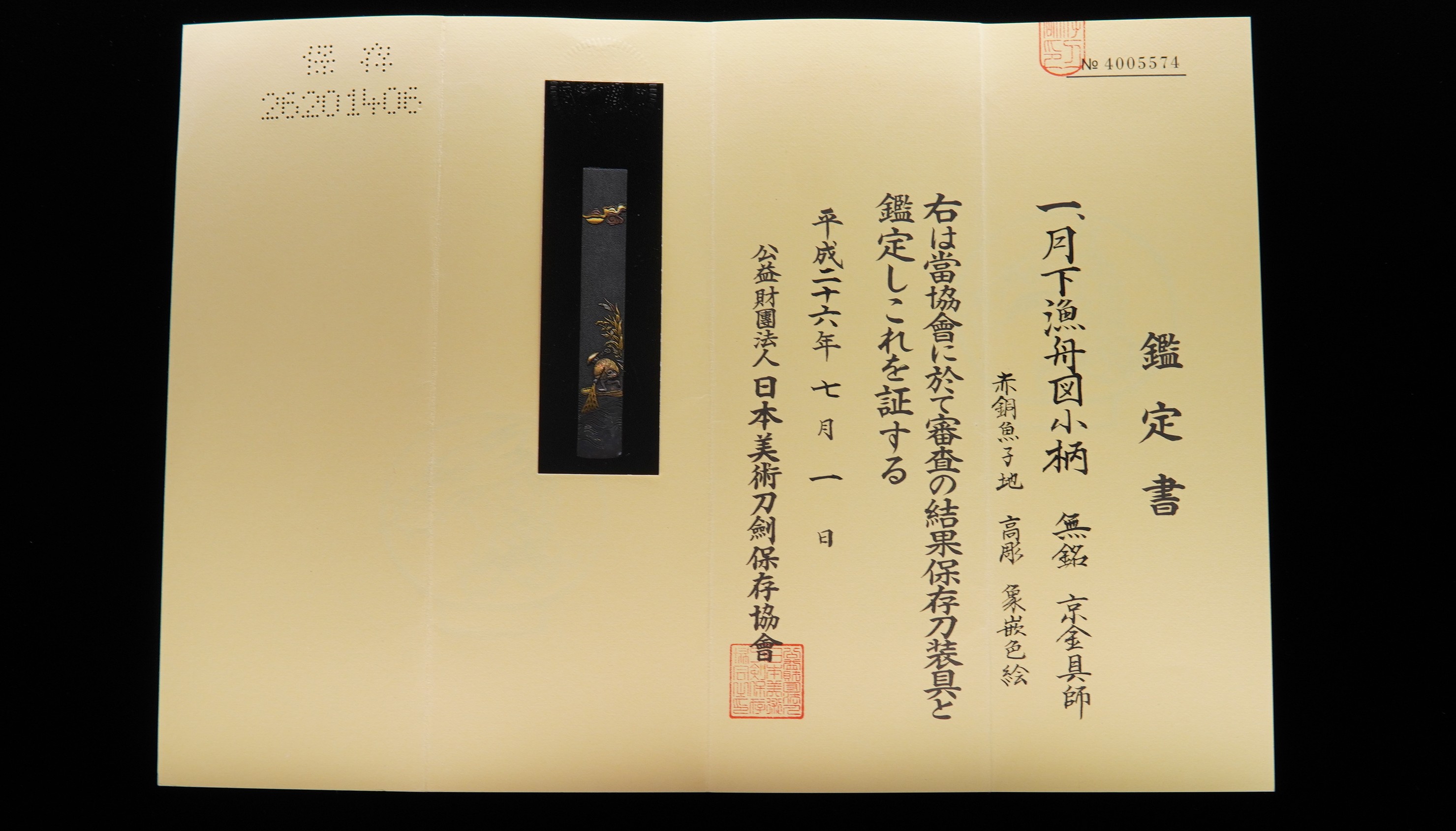
Certificate reading — 無銘(京金具師)
 NihontoWatch
mumei · Kyo-Kinko · Edo


Edo
Unsigned
Hozon (NBTHK)
Certifies a genuine fitting worth preserving: a correct signature, or, if unsigned, an identifiable era and school, with recognized artistic and craft value.
The NBTHK (Nihon Bijutsu Tōken Hozon Kyōkai, the Society for the Preservation of Japanese Art Swords) is a public-interest incorporated foundation founded in 1948 and supervised by Japan’s Agency for Cultural Affairs (Bunkachō); it is based at the Japanese Sword Museum in Tokyo. Its expert panels physically examine each submitted work (shinsa) and issue a certificate (kanteishō) ranking it by artistic and historical merit. NBTHK papers are the most widely recognized standard of authentication for Japanese swords and fittings.
NBTHK official site
¥65,000
This is an unsigned kozuka by a Kyo-Kinko master from the late Edo period. It features a high-relief carving of a fisherman casting a net from a small boat under the moonlight, with waves on the water's surface expressed in katakiribori. The intricate details of the fisherman's limbs, expression, straw cape, and fish basket showcase various techniques of the Kyo-Kinko school. The kozuka shows signs of use, including dents on the reverse side and a corner of the kojiri, suggesting it was once mounted in a koshirae.
Certificate reading — 無銘(京金具師)
NihontoWatchmumei · Kyo-Kinko · Edo
Edo
Unsigned
Hozon (NBTHK)
Certifies a genuine fitting worth preserving: a correct signature, or, if unsigned, an identifiable era and school, with recognized artistic and craft value.
The NBTHK (Nihon Bijutsu Tōken Hozon Kyōkai, the Society for the Preservation of Japanese Art Swords) is a public-interest incorporated foundation founded in 1948 and supervised by Japan’s Agency for Cultural Affairs (Bunkachō); it is based at the Japanese Sword Museum in Tokyo. Its expert panels physically examine each submitted work (shinsa) and issue a certificate (kanteishō) ranking it by artistic and historical merit. NBTHK papers are the most widely recognized standard of authentication for Japanese swords and fittings.
NBTHK official site¥65,000