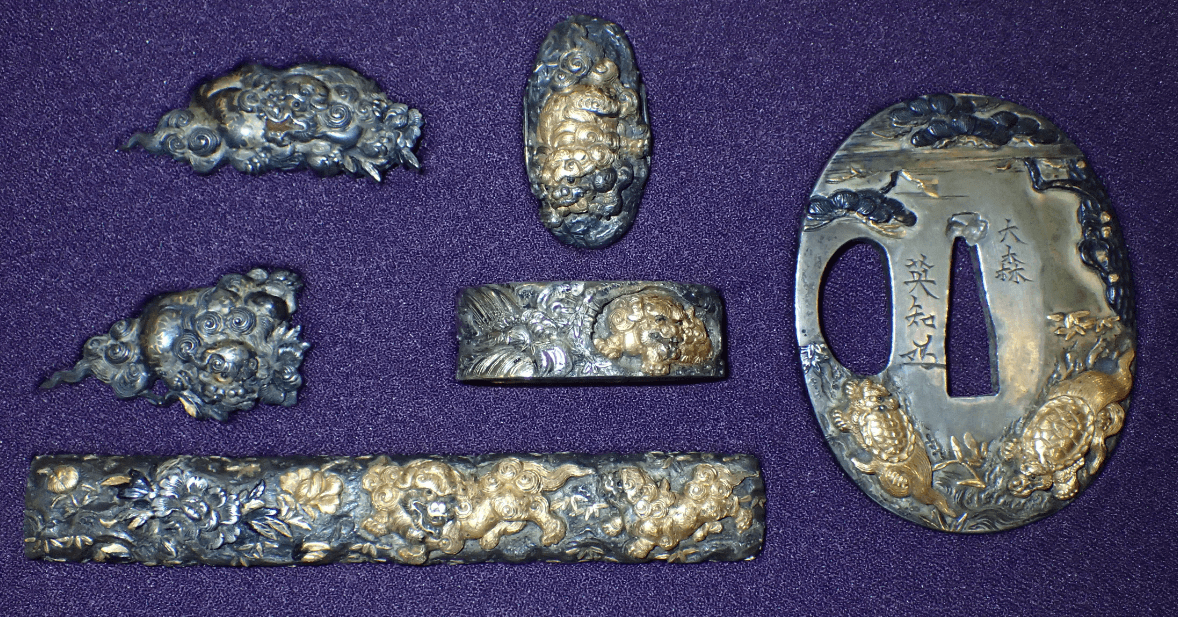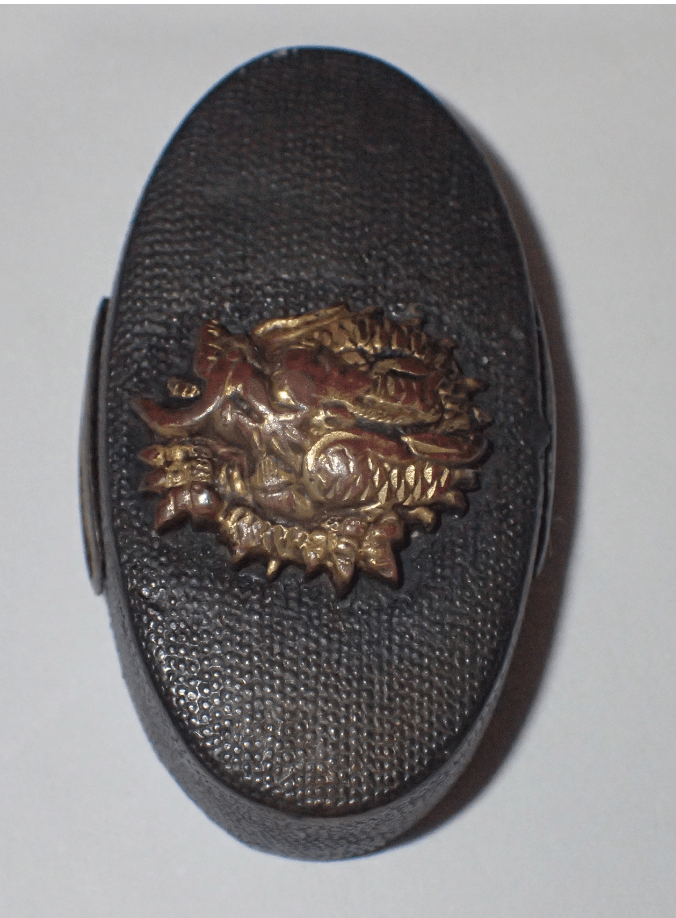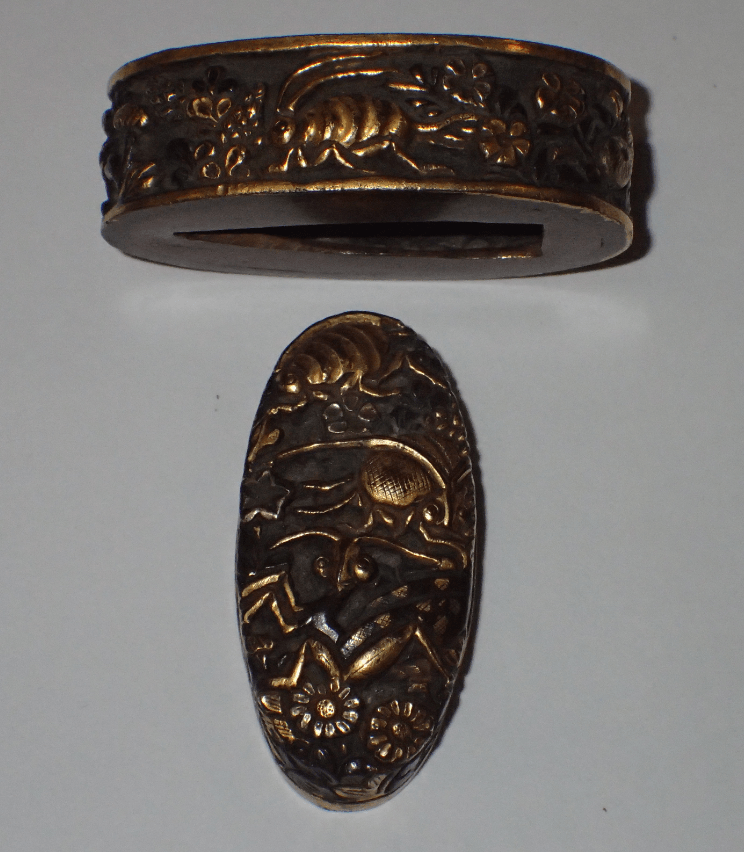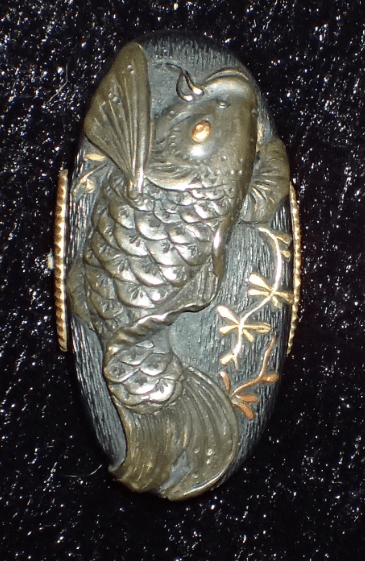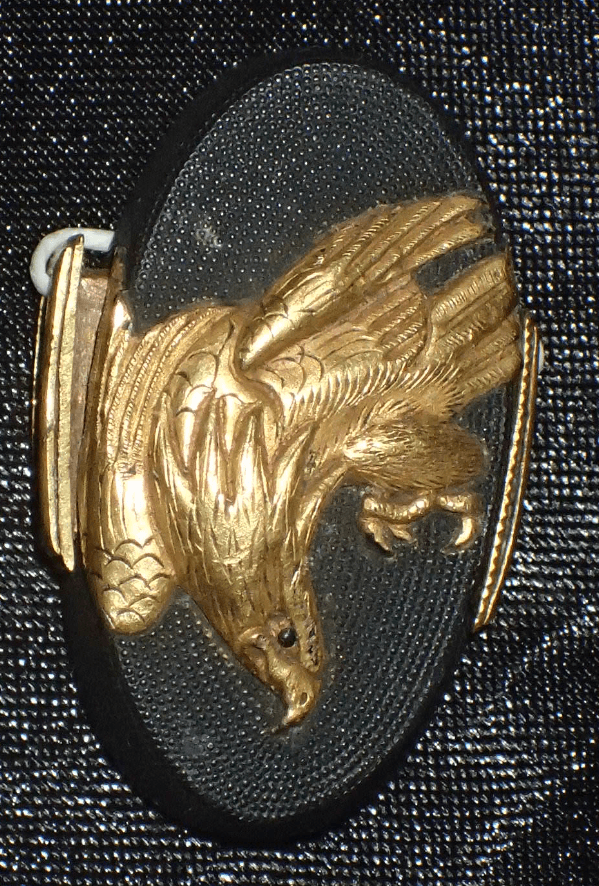
Hawk Fuchi Kashira by Soju
A$3,500
Tracked across 81 dealers worldwide · price history · sold archive
About the maker
Yokoya Soju宗壽
Yokoya Soju was a metalworker of the Yokoya school active in the mid-Edo period, born in Keian 4 (1651) and dying in Kyoho 19 (1734) at the age of eighty-four. He has long been discussed as a disciple connected with both the first-generation Yokoya Soyo and Yokoya Somin; in recent scholarship, he is understood as a disciple of the first-generation Soyo. Soju's career thus places him at the formative heart of the Yokoya lineage, working in the decades surrounding the Genroku era when the school's aesthetic conventions were being defined and transmitted to successive generations. Soju's designated works are unified by a mastery of *takabori* on *shakudo* *nanako-ji* grounds — the technically demanding combination of high-relief carving over finely stippled alloy surfaces that became the signature medium of the Yokoya house. His compositions take natural subjects, particularly bamboo, as their governing motif, rendered in luxuriant growth across complete, unified sets of fittings (*issaku kanagu*). The NBTHK examiners observe that although *shakudo* creates a jet-black world, his bamboo appears to sway in a cool breeze, so that one almost seems to hear its distinctive refreshing sound — an overflowing display of Soju's aesthetic sensibility. Inlay techniques employing various types of *irogane*, gold, and silver lend a taut unity to the overall atmosphere, bringing each piece together in a dignified and well-ordered manner. Soju's importance lies in his capacity to produce rigorously unified *daisho koshirae* — matched long-and-short sword mountings — of the formal *kamishimo-zashi* type, in which every component sustains a single coherent theme across the entire suite. The hereditary *daisho* mounting of the Uesugi family, lords of Yonezawa Domain, is attributed to his hand and exemplifies this integrative vision. The examiners note that *daisho koshirae* preserved with such strict, properly matched uniformity have gradually become scarce, making surviving examples precious. Soju's body of work thus constitutes a distinguished contribution to the Yokoya tradition, embodying the school's commitment to refined sculptural metalwork executed with full artistic commitment in an integrated, unified whole.